With a 99.97 Percentile, Musa Kaleem of Assam Makes History in NEET UG 2025

South Village (Guwahati), ASSAM :
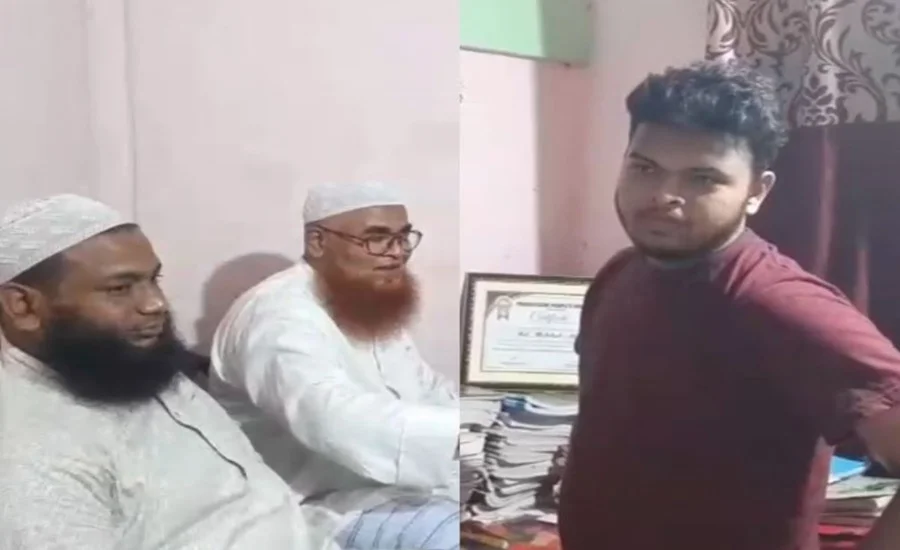
The historic achievement brings pride to his family, the state, and the nation; it proves that dedication, family support, and strong values can lead to exceptional results.

New Delhi / Guwahati :

In a proud moment for Assam and the entire Muslim community, a young boy from the South Village in Guwahati has written his name in the history books. Musa Kaleem, 18, has emerged as the state topper in the National Eligibility cum Entrance Test (NEET-UG) 2025, leaving behind over 42,000 aspirants from Assam. With the 99.97th percentile, Musa’s achievement is not just academic excellence — it is a powerful reminder of the potential of the Muslim youth.

Out of 20.08 lakh students who appeared for the NEET UG exam nationwide, 12.36 lakh students cleared the cut. Among them, Musa stood out in Assam, becoming the number one in the state. Nationally, the top rank went to Mahesh Keshwani of Hanumangarh, Rajasthan. While Mahesh made the nation proud, Musa brought immense joy and hope to Assam by becoming the highest scorer in the state.

Musa’s story begins in Sri Bhumi, Assam, where he was born. His family later moved to South Village in Guwahati. His father, Anwar Hussain, once worked as an engineer in Sri Bhumi. Now, he runs a small cosmetic shop in Guwahati. His mother, Rehana Begum, is a homemaker. Coming from a modest background, Musa’s success becomes even more meaningful.

Speaking to Salam TV, Musa said, “I am very happy. I give all the credit to my parents. Their support never stopped. They stood by me in every moment.”

Musa prepared for the exam at Allen Coaching Institute in Guwahati. Known for his quiet focus and regular study schedule, his teachers describe him as a student who never wasted time. He avoided distractions and remained deeply committed to his goal of becoming a doctor.

At a time when many from the Muslim community face social bias and economic challenges, Musa’s result shines like a ray of hope. His determination sends a clear message: success is possible through effort and discipline, even without wealth or privilege.

Speaking to reporters, Musa said, “My dream is to serve the country. I don’t just want to become a doctor. I want to become someone who helps the poor and stands with those who have no support.”

His words reflect the values many Indian Muslims hold dear—serving humanity, staying humble, and always standing for justice.

Musa’s father, Anwar Hussain, expressed deep happiness over his son’s success. With teary eyes and a proud smile, he said, “I never asked him to run after money. I always told him to become a good human being first. Only then will you become a good doctor.”

His advice is touching. In a world where success is often measured in numbers and bank balances, Anwar Hussain’s simple yet strong message brings back the true meaning of education—character and compassion.

News of Musa’s achievement quickly spread across Assam, especially among the Muslim community. Social media platforms and local mosques were abuzz with congratulations and prayers. From imams to teachers, everyone expressed pride.

Maulana Naseeruddin, an Islamic scholar from Guwahati, said, “This boy has shown what true Islam teaches us—to seek knowledge and to serve mankind. May Allah bless him and make him a source of pride for the community.”

In a time when Muslims are often portrayed unfairly in the media, stories like Musa’s are a reminder of the silent majority who quietly focus on education, ethics, and contribution to the nation.

Local leaders and education officials have praised Musa for his outstanding performance. Assam’s education minister, during a press conference, said, “We congratulate Musa Kaleem. This is a big moment for Assam. He is an inspiration for students across communities and regions.”

Although no government reward has been announced yet, many believe that a talent like Musa deserves both recognition and support for future studies.

For decades, Muslims in India have faced multiple challenges in the field of education—poor access to quality schools, financial constraints, and social discrimination. Yet, despite these odds, young Muslim boys and girls continue to prove their strength.

Educational researcher Dr Sameera Ahmad pointed out, “Musa’s result is part of a quiet revolution. More and more Muslim families are investing in their children’s education, even when they don’t have enough for themselves. This is courage, not just sacrifice.”

Musa Kaleem’s story stands as an answer to those who stereotype Indian Muslims as backward or uninterested in studies. It shows that when given a fair chance, they can lead in merit-based competitions like NEET UG.

Musa plans to join a top medical college to continue his studies. His dream is to work in rural and poor areas where healthcare is still far from reach. He believes that doctors have a duty to serve beyond city hospitals and five-star clinics.

“I want to go where people have no help,” he said. “A real doctor should always be available for the needy.”

This thinking, especially from such a young man, shows maturity and compassion, traits India needs from its future doctors.

Musa Kaleem’s story is not just about topping an exam. It’s a story of dreams, belief, and values. It reminds the country that Indian Muslims are not behind. They are rising, despite hurdles, with dignity and dedication.

The achievement also calls upon society to treat Muslim students fairly, to support their education, and to highlight their success, not just their failures.

As Musa moves forward in his journey to become a doctor, he carries with him the hopes of many—of parents who never gave up, of teachers who believed, and of a community that wants nothing more than peace, respect, and a better future for its children.

“Success will come and go,” Musa said quietly. “But being a good human being is forever.”

source: http://www.clarionindia.net / Clarion India / Home> Indian Muslims / by Mohammad Bin Ismail / June 17th, 2025
Assam: 2 Hafiz-e-Quran from Assam on their way to become doctors

ASSAM :

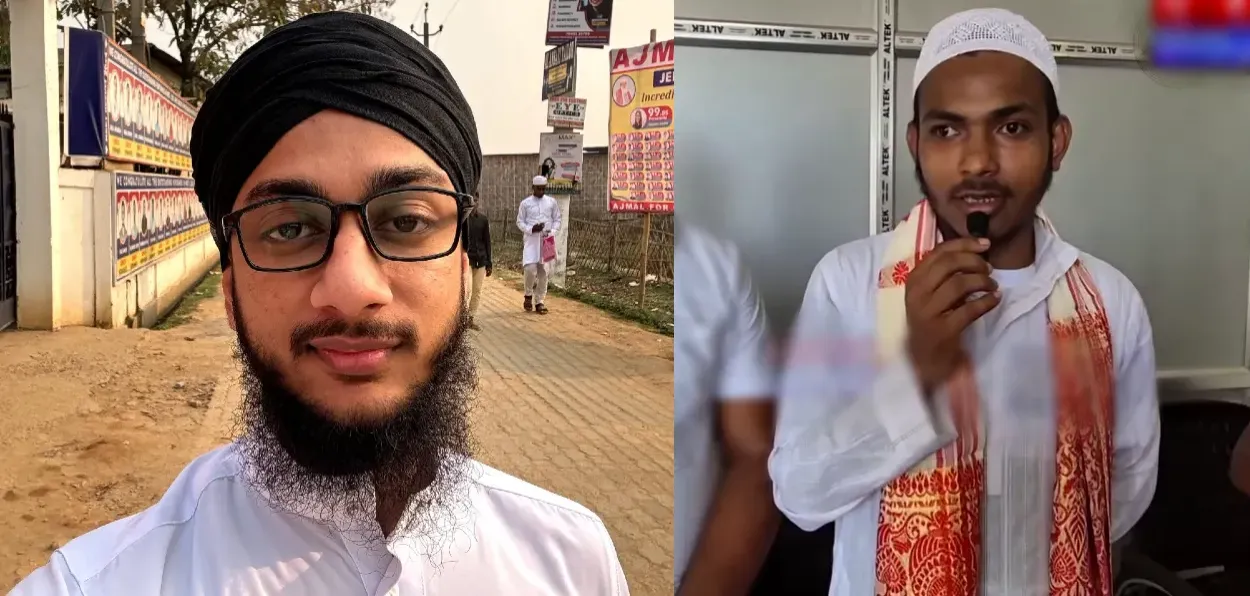
Hafiz Huzaifa Laskar (right) and Hafiz Momtazul Hassan Choudhury

Most people have a misconception that students of madrasa can only become Hafiz or Maulana. Breaking this myth two Hafiz-e-Quran (Degree in memorizing Quran) in Assam have cracked the National Eligibility cum Entrance Test 2025, (NEET) examinations, 2025, and are on their way to joining Medical college to fulfill their dream of becoming doctors.

Hafiz Momtazul Hassan Choudhury and Hafiz Huzaifa Laskar proved that one can become a doctor even after enrolling themselves in a Madrasa.

Thanking his parents and teachers, Momtazul Hassan Choudhury said: “If anyone works selflessly behind their children’s success, it is their parents. At first, when I was weak in studies and did not even know the basic formulae of Mathematics, my brothers Noor Ahmed and Anwar Hussain Laskar helped me.”

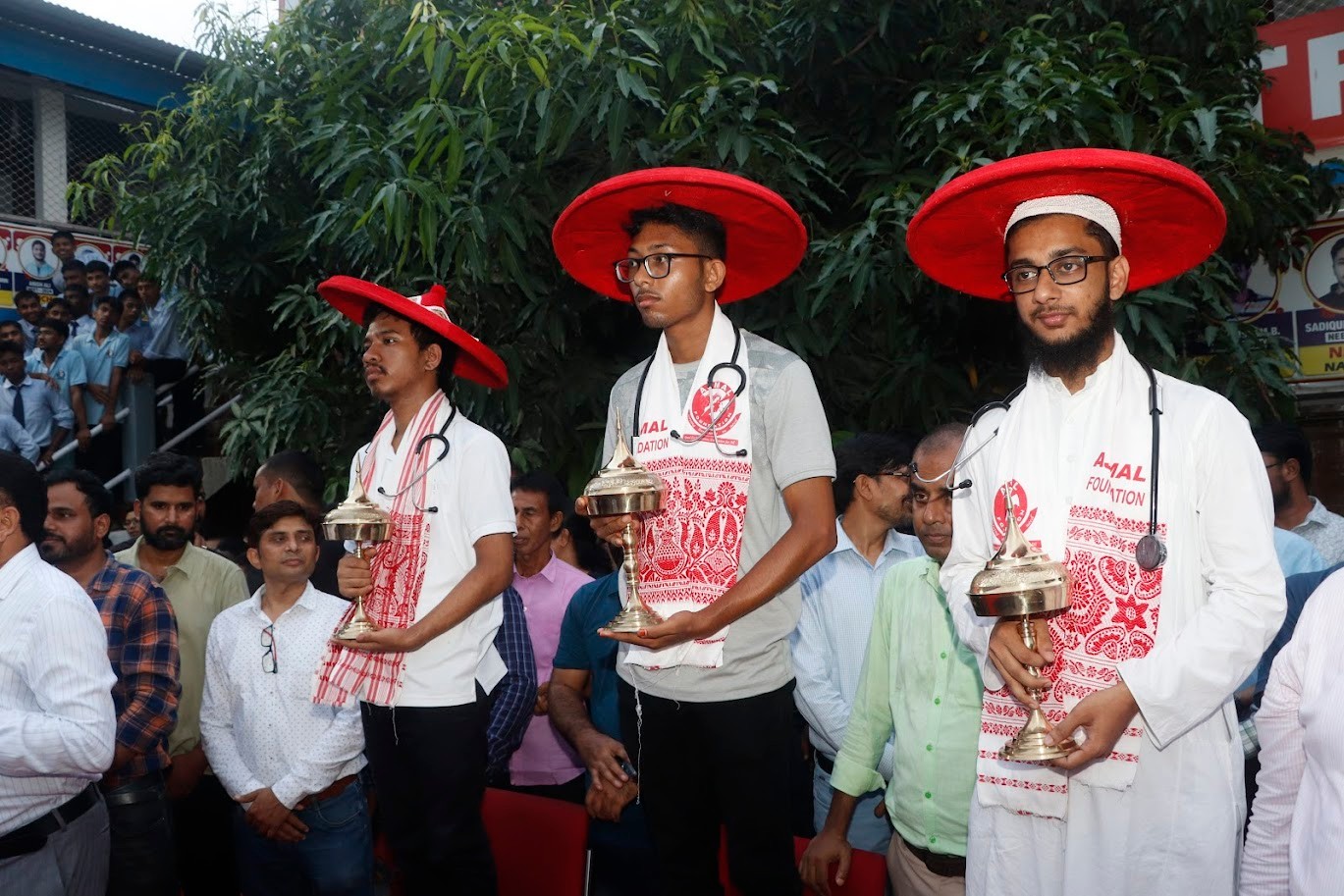
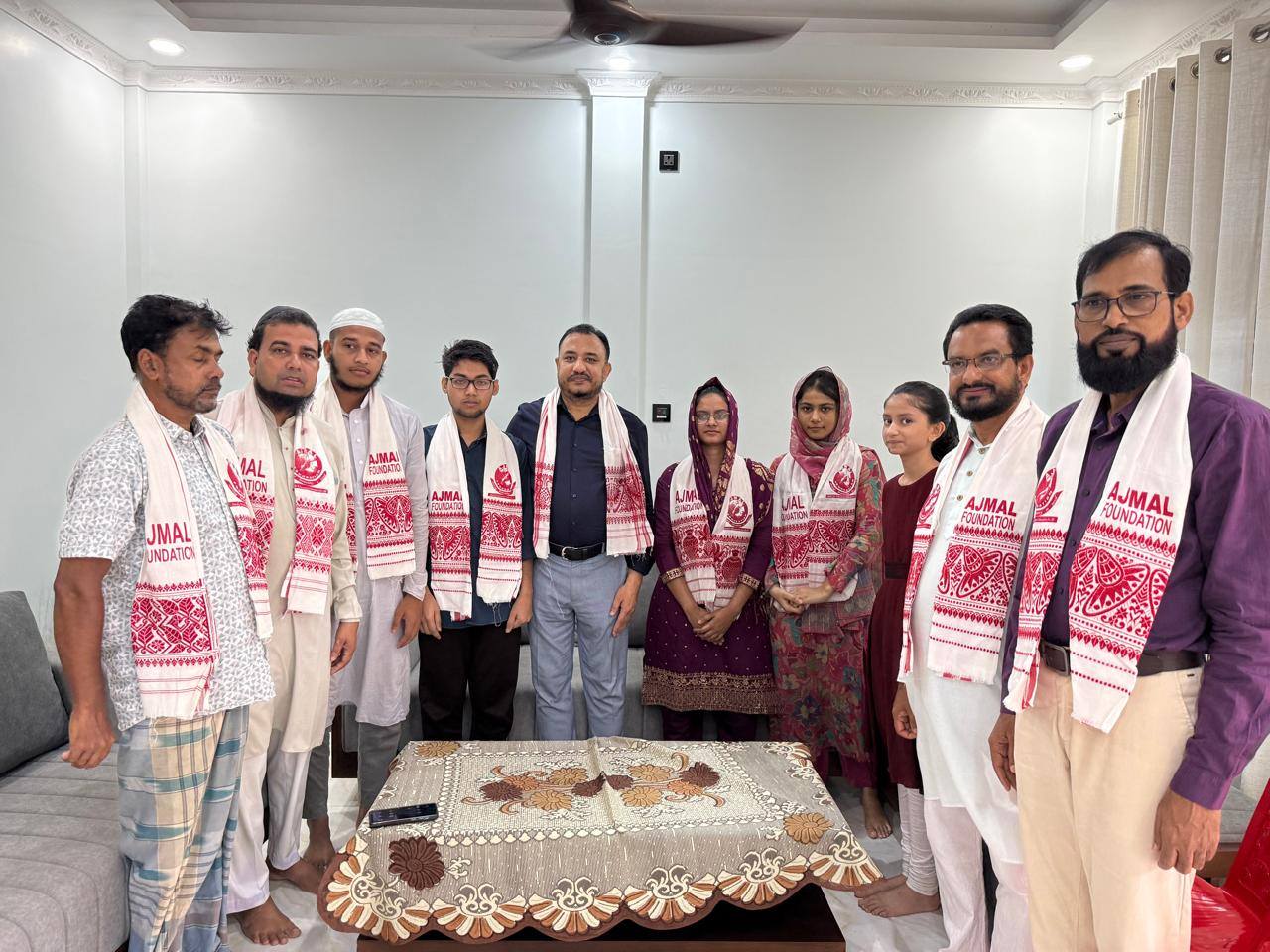
Hafiz Huzaifa with other successful candidates of Ajmal Super40’s andd their guardians and Ajmal Foundation officials

“I want to go further. I want to crack higher examinations. Please pray for me. And I will work tirelessly to be successful,” he added.

Momtazul Hassan Choudhury took the NEET examination after attending coaching classes at the Anfar Super 50 at Hojai in central Assam. This is the second year of the center preparing students for the NEET examination.

This year, Momtazul Hassan Choudhury and seven other students from the centre have cleared the NEET examinations.

Maulana Mustaq Anfar, founder of the coaching center had waived off the fee for Hafiz Momtazul Hassan Choudhury.

On the other hand, Hafiz Huzaifa Laskar of Ganirgram Shantipur in Katigora area of the Cachar district wrote the NEET examinations after preparing at the Ajmal Super 40, another Hojai-based coaching institute. Huzaifa Laskar, son of Abdullah Laskar and Fatima Bilkis Laskar, cleared the NEET with distinction with 547 marks. Huzaifa’s brother Muyaz Laskar recently cracked the JEE examination and is studying at NIT Silchar.

Hafiz Huzaifa Laskar being felicitated along with other successful NEET at Ajmal Super40 in Hojai

Talking to Awaz –The Voice, Islamic scholar Maulana Nurul Amin Qasimi said: “One can pursue general education along with madrassa education. People may not have understood this. Those who want to study for Hafiz, they enroll themselves in madrassas after studying general school till class five or six. A good student completes the Hafiz course in three years. He also pursues general education alongside the standard of Class IX. Once they clear Hafiz, they are promoted to Class IX where they are registered for the High School Leaving Certificate examinations and they concentrate on the rest of their general education from there.”

“There are many examples of students educated in madrasas who have secured good jobs or got good positions in society. So, nowadays people are understanding it and preparing accordingly to become doctors, engineers, professors, etc after completing Hafiz or Maulana courses in madrassas,” Qasimi added.

A total of 22,76,069 students from across India applied for the NEET UG examination this year out of which 22,09,318 took the examinations. 12,36,531 students emerged successful in the examination.

Mohammad Musa Kalim of Assam secured the All India 509th rank in the NEET 2025 examination. Musa Kalim has topped the list of students in Assam. Musa Kalim secured the 99.97 percentile.

From Assam, 41,848 candidates wrote the examination in 2025 and 19,809 cleared it.

source: http://www.awazthevoice.in / Awaz, The Voice / Home> Story / by Ariful Islam, Guwahati / June 20th, 2025

A Madrasa Like No Other: Inside India’s First Inclusive Madrasa for the Deaf, Mute and Blind

Pune, MAHARASHTRA :

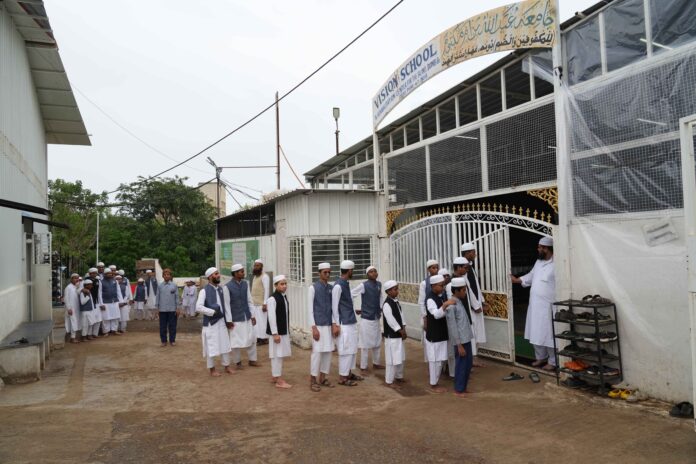
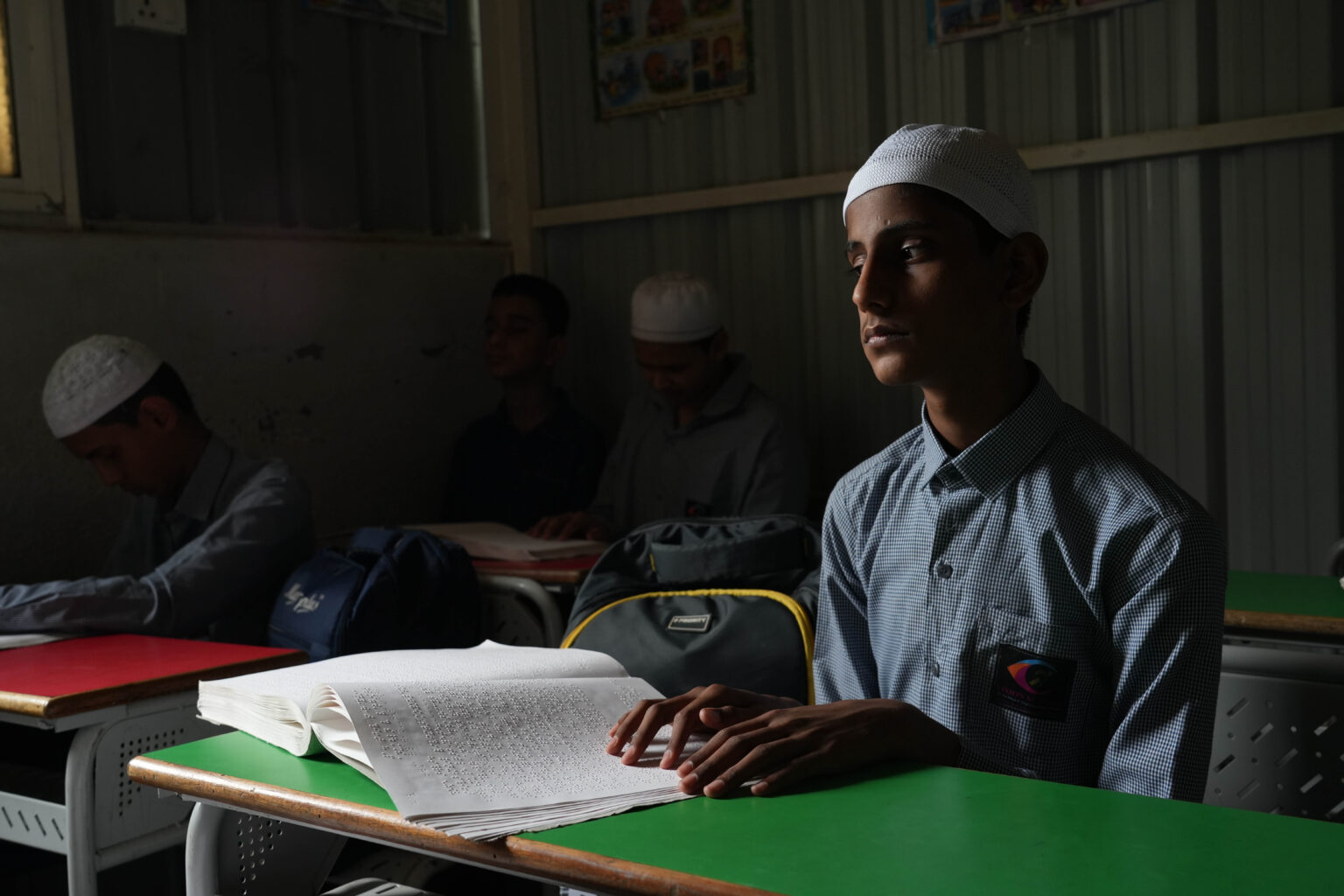
Students at Jamia Abdullah Ibne Umme Maktoom, India’s first inclusive madrasa for differently-abled children in Pune, Maharashtra, walk in a queue as they enter the Vision School campus. The madrasa provides free Islamic and contemporary education to mute, deaf and visually impaired students from 17 states across India.

In Pune, Maharashtra, Jamia Abdullah Ibne Umme Maktoom offers free Islamic and contemporary education to mute, deaf, and blind children from across 17 states—proving that disability is no barrier to dignity, faith, or ambition.

Pune (Maharashtra): 

In a small park in Maharashtra’s Pune, on a Thursday morning in May, a group of well-dressed uniformed students stood barefoot, wearing white skull caps. Many of them were mute or visually impaired. As the national anthem played in the background, the students stood in solemn attention, while others – mute and deaf – used sign language to express the lyrics. It turned the moment into a display of patriotism and unity.

This is the usual beginning of the day at Jamia Abdullah Ibne Umme Maktoom (a religious seminary in Pune), where hundreds of mute, deaf and blind students receive free Islamic and contemporary education.

“It took us years to convince families of the importance of education for their special children,” says Nayeem Ahmad Qasmi, a secretary of the madrasa.

The institution was founded in 2013 with only two children with the vision to uplift differently abled children from across India through inclusive education.

According to the Census of 2011, approximately 2.2% of the population, around 26.8 million people, were identified as living with disabilities.

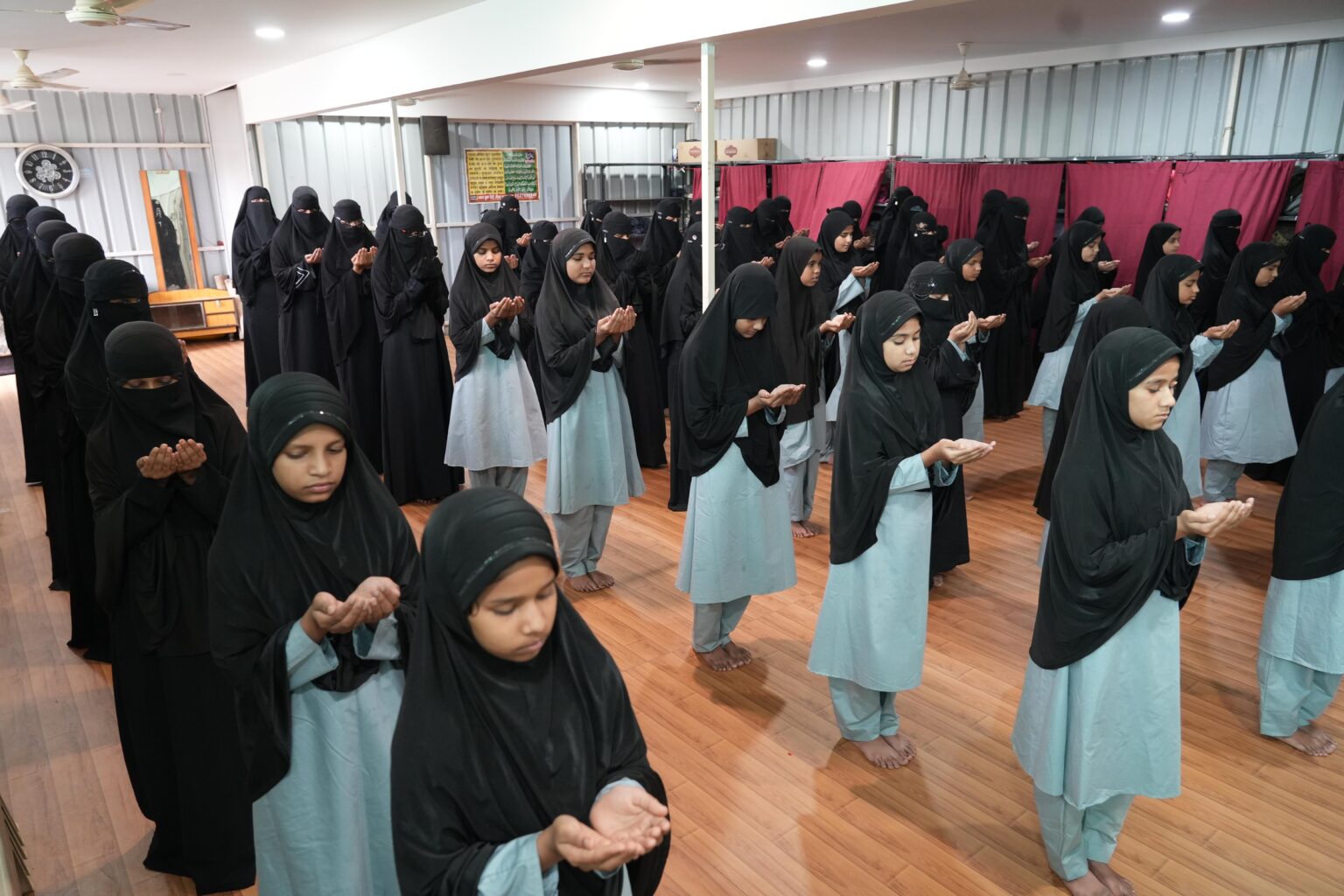
Female students at Jamia Abdullah Ibne Umme Maktoom in Pune, Maharashtra, offer prayers during school hours. The madrasa currently educates over 70 differently-abled girls – many of whom are mute, deaf or visually impaired – providing them with a safe and inclusive environment for both Islamic and contemporary learning.

Unfortunately, many families abandon differently abled children or keep them confined at home – considering them a burden.

“It is the duty of every person to support differently abled children so they can prove their capabilities,” he adds.

Many students come from rural areas in different states, where families often do not know the value of education or the opportunities available to them.

“Before coming to Jamia, I did not know anything about Islamic and contemporary education,” says 18-year-old Rehan Saleem from Jalgaon in Maharashtra.

Many students have received opportunities to present their skills on different platforms across India. Several have represented their school and secured positions in various sectors.

“By the grace of God, I have completed the Hifz-e-Quran (memorisation of the entire holy Quran) at this Jamia and got the opportunity to perform Umrah,” says Rehan.

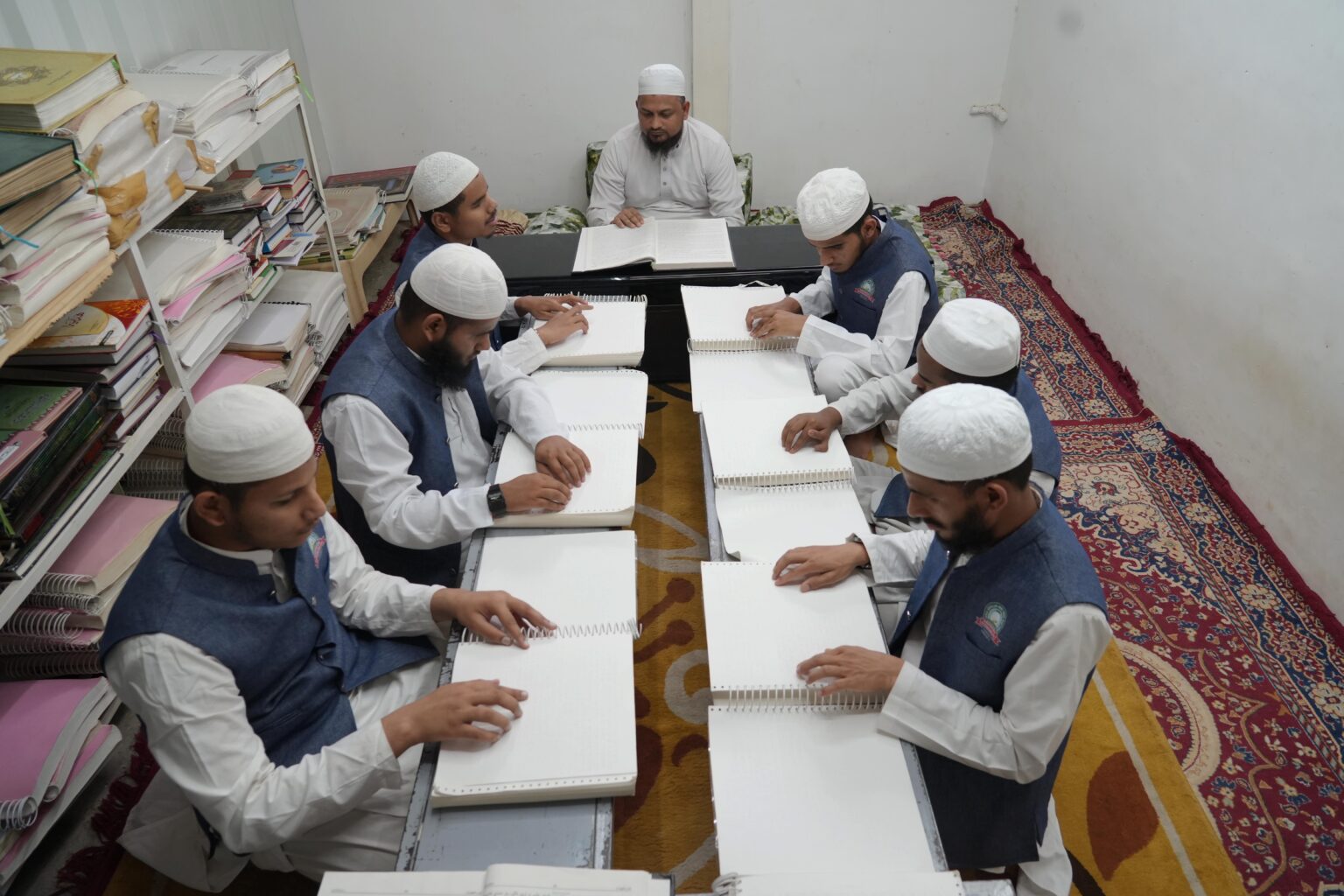
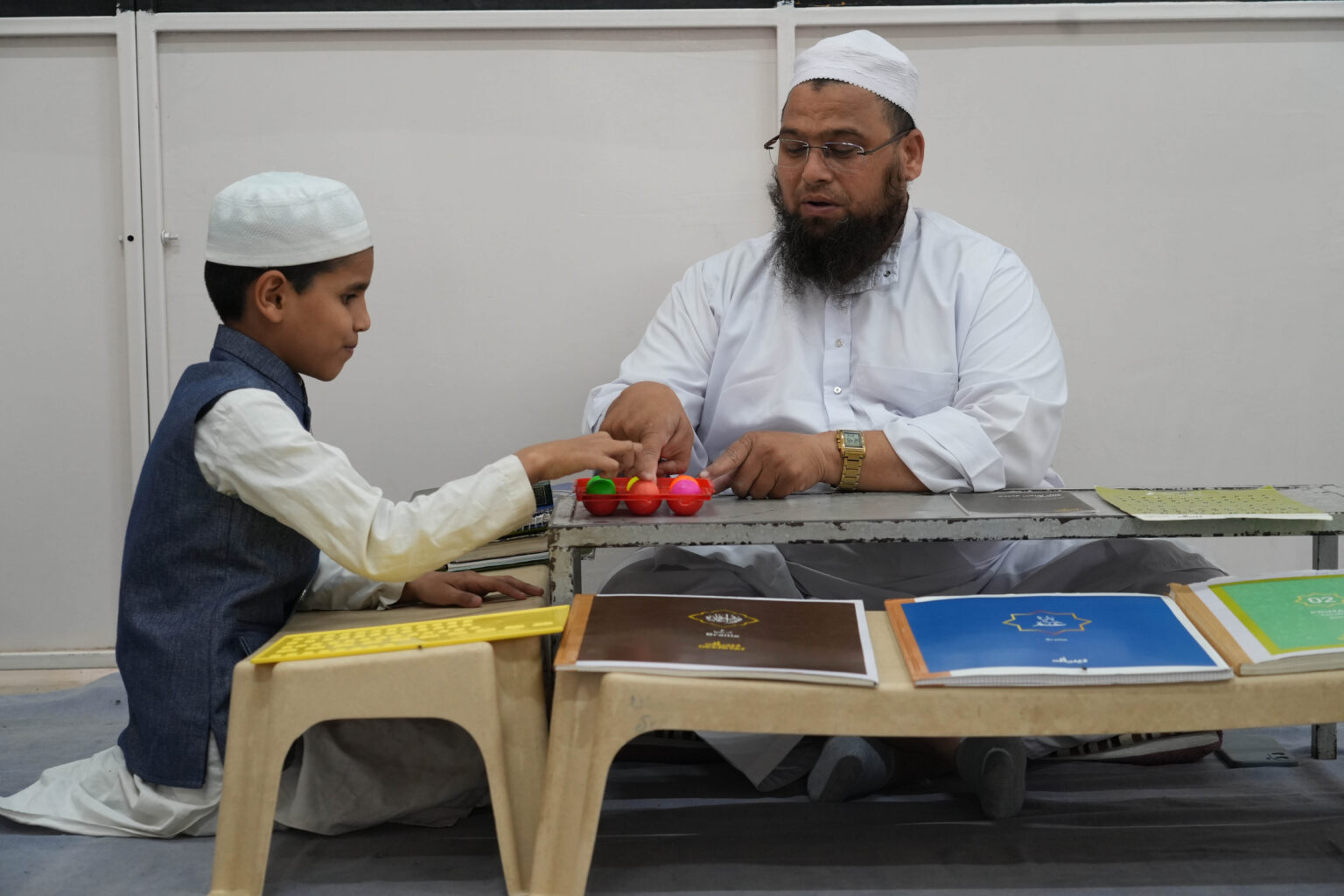
Students at Jamia Abdullah Ibne Umme Maktoom in Pune attend a classroom session where they receive both Islamic and contemporary education, guided by their teacher.

Today, the Jamia hosts 210 mute, deaf and blind students from 17 states across India. The seminary provides free education from Grade 1 to Grade 12, including subjects like science, computers, Islamic studies and advanced education.

Many students have gone on to study at various universities and colleges. For those unable to attend in person, the madrasa has launched an online education programme. Children here are provided with education, food, accommodation and even uniforms free of cost.

“Our mission is to see these children represent the country on every platform one day,” says Qasmi.

Despite the struggle, they have succeeded in building a thriving institution. In 2021, the madrasa launched separate sections for mute, blind and deaf women to ensure inclusive learning environments. Women’s education is just as important as men’s, and this initiative reflects that commitment.

Mubashira Sadiya Khan, who teaches specially abled girls at the madrasa, says, “Women’s education is equally important as male education. These girls are usually occupied with household work at their homes, but we are giving them better education and showing them the purpose of life.”

A young visually impaired student sits attentively in class, beside a Braille slate and stylus used for writing. At Jamia Abdullah Ibne Umme Maktoom, visually impaired children are given tools and support to receive religious and formal education in an inclusive environment.

Since safety is a major concern for women in the country, the madrasa has provided separate rooms for them, with all female helpers to ensure a secure learning environment.

Mubashira adds, “Usually, women are not safe in the country, but here we have created a safe space where they can learn and grow with confidence.”

Despite progress in education, children with disabilities in India often remain invisible – excluded from schools, denied opportunities and treated as burdens. Many end up begging or isolated at home, not by choice, but because society offers them no alternatives.

“We often see them begging on the roads, not because they want to, but because the society has failed to give them a chance,” says Qasmi.

Students in uniform attend class at Jamia Abdullah Ibne Umme Maktoom in Pune, where multiple sessions are held simultaneously in a shared hall to support inclusive learning.

The Jamia has been working to ensure that students with disabilities receive quality education, access to proper infrastructure and opportunities to engage in play and creative activities on campus. Its vision is to provide them with equal opportunities so they can compete and thrive like any other student.

“Our goal was simple – give them dignity, knowledge and a future,” Qasmi explains.

The Jamia is already offering digital learning tools, smart boards and inclusive facilities to ensure that the students receive a modern and accessible education. The institution continues to innovate and expand its reach through technology and tailored teaching methods.

“We have introduced smart boards, digital tools and inclusive classrooms because every child no matter their ability deserves access to quality, modern education,” says Qasmi.

In the current political climate in India, the Muslim community has often been portrayed in a negative light, and madrasa education is frequently misunderstood or dismissed. Despite these challenges, Jamia Abdullah Ibne Umme Maktoom continues to provide quality Islamic and contemporary education to differently-abled children, aiming to empower them with knowledge and confidence.

source: http://www.twocircles.net / TwoCircles.net / Home> Disability / by Suhail Bhat, TwoCircles.net / June 21st, 2025

Lubna Naseer Creates History with First Gold for J&K at National Taekwondo Championship

Churmujroo Village (Beerwah, Budgam), JAMMU & KASHMIR :

Photo Credit: X.Com

Budgam/Dehradun :

In a historic moment for Jammu and Kashmir, Lubna Naseer, a young Taekwondo athlete from Churmujura village in Beerwah, Budgam, has clinched the first-ever gold medal for the Union Territory at the 4th Cadet & Junior National Taekwondo Championship 2025, held in Dehradun, reported the Brighter Kashmir.

Representing the Khelo India Taekwondo Centre under the Jammu & Kashmir Sports Council, Lubna showcased an exceptional performance, defeating top contenders from Gujarat, Delhi, and Madhya Pradesh. In the finals, she delivered a clean sweep against Haryana, securing a flawless victory that highlighted her dominance on the national stage.

Lubna’s journey to the top was anything but easy. Battling a recent injury, she continued training under the dedicated mentorship of her coach, Rohit Sharma. Her perseverance and resilience have earned her praise from sports officials and admiration from across the region.

“This gold medal is not just mine—it belongs to my coach, my parents, my school, and the entire Jammu and Kashmir,” Lubna said, dedicating her win to everyone who supported her.

Looking ahead, the young athlete now aims to represent India in the Asian Games, the World Junior Championships, and eventually, the Olympics. Lubna has also appealed for enhanced sports infrastructure in Budgam, urging authorities to invest in the potential of Kashmiri youth.

Her victory not only marks a personal achievement but also serves as an inspiration for aspiring athletes in the Valley. Lubna Naseer is now a beacon of hope and pride for Jammu and Kashmir, symbolizing what determination and support can achieve.

source: http://www.radiancenews.com / Radiance News / Home> Latest News> Markers of Excellence / by Radiance News Bureau / June 12th, 2025

AIUTC-Gujarat Pays Tribute to Hakim Maulana Abdur Razzaq Qasmi Qureshi

Ahmedabad, GUJARAT :

Ahmedabad:

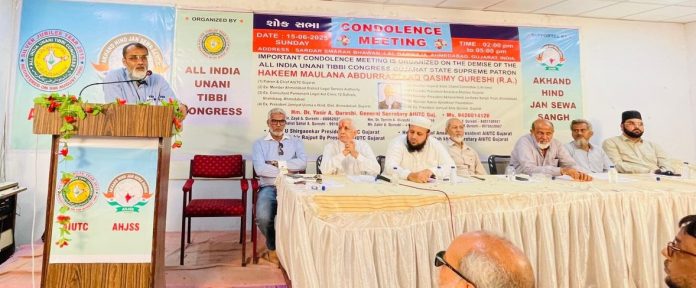
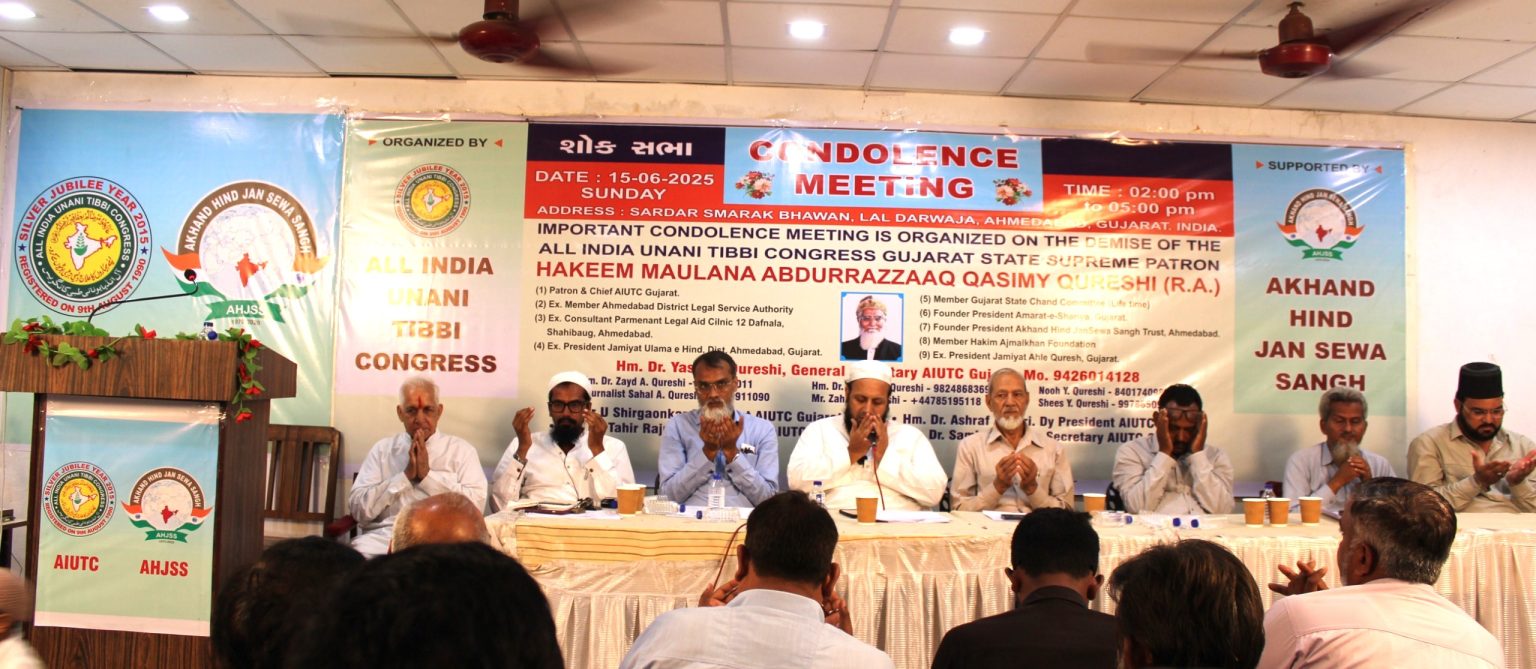
At a programme organised at the Sardar Vallabhbhai Patel Memorial Auditorium here, the All India Unani Tibbi Congress (AIUTC), Gujarat State, paid a rich tribute to Hakim Maulana Abdur Razzaq Qasmi Qureshi in recognition of his services.

The programme was attended by many notable personalities, including Dr. Syed Ahmad Khan (Secretary General, All India Unani Tibbi Congress),  Sajjadah Nasheen Syed Mateen Ahmad Qadri (Ahmedabad), Maulana Rizwan Al-Qasmi (Director, Jamia Ibn Abbas), Shahnawaz Sheikh (Vice Chairman, INC Minority Cell), Mufti Hakim Zaid bin M.A. Razzaq Qureshi, Suhail Tirmizi (Editor, Gujarat Today), Dr. Arun Bhatt (Treasurer, AIUTC-Gujarat), Mirza Haji Israr Baig (Corporator, Ahmedabad), Dr. Ashraf Ali Ansari (Former Member, CCIM), Dr. Muhammad Tahir Rajput (Vice President, AIUTC-Gujarat), Muhammad Imran Kannauji (Press Secretary, AIUTC, New Delhi), Israr Ahmad Ujjaini (National Coordinator, AIUTC)

Other notable attendees included Muhammad Yunus, Hakim Muhammad Murtaza Dehlavi, Hakim Aftab Alam, Dr. Samiullah Pathan, and Dr. Tamim Ahmad Qureshi.

The session was conducted by Dr. Muhammad Yasir Qureshi (General Secretary, AIUTC-Gujarat), who elaborated on the life and services of Hakim Maulana Abdur Razzaq Qasmi Qureshi in detail.

Shahnawaz Sheikh, while highlighting the contributions of Hakim Sahib, stated that Unani medicine was his true field of service. Hence, the most genuine tribute to him would be to actively work toward the promotion of Unani medicine in Gujarat, and he pledged all possible support for this cause.

Syed Mateen Ahmad Qadri, Sajjadah Nasheen of Dargah Ghous Pak, proposed the establishment of a Tibbiya College in Gujarat and expressed hope that the project would be realised soon. He emphasised that such a college was essential for the complete development of Unani medicine in the state.

On this occasion, Purshottam Rupala (Member of Lok Sabha from Rajkot and former Union Minister), a close associate of Hakim Maulana Abdur Razzaq Qasmi Qureshi, also paid tribute. He acknowledged Hakim Sahib’s dedication to Unani medicine and mentioned their personal association. Rupala assured his full support for the promotion of the Unani system of medicine.

source: http://www.radiancenews.com / Radiance News / Home> Latest News> Social Service / by Radiance News Bureau / June 17th, 2025
Uppinangady student selected for international science fair in Japan

Uppinangady (Puttur Taluk, Dakshina Kannada District), KARNATAKA :

Uppinangady: 

Abdul Basith, a student from the Government Model Higher Primary School in Uppinangady, has been selected to represent India at an international science fair to be held in Japan.

Basith had earlier participated in the prestigious INSPIRE Awards MANAK competition, organised by the Department of Science and Technology, Government of India. He showcased his science model during the national-level exhibition held at the IIT campus in Delhi. Following this, he has now been chosen for the international-level “Sakura Science Fair” in Japan, providing him with a rare opportunity to present his innovation on a global platform.

The model developed by Basith is aimed at helping individuals with special needs, particularly those who have lost their hands. His innovation has been widely appreciated for its social relevance and practical utility.

Abdul Basith is the son of Ilyas Pasha, a resident of Kadavinabagilu. He is a Class 10 student of Tanveerul Islam Madrasa located at the Malik Dinar Juma Masjid and also serves as the General Secretary of SKSBV Tanveerul Islam Madrasa.

In recognition of his achievement, SKSBV Tanveerul Islam Madrasa, Uppinangady felicitated him at a special event.

source: http://www.english.varthabharati.in / Vartha Bharati / Home> Karavali / by Vartha Bharati / June 12th, 2025

Barakah NEET Academy’s first batch clears NEET Exam; several qualify for Govt MBBS seats

Mangaluru, KARNATAKA :

Mangaluru: 

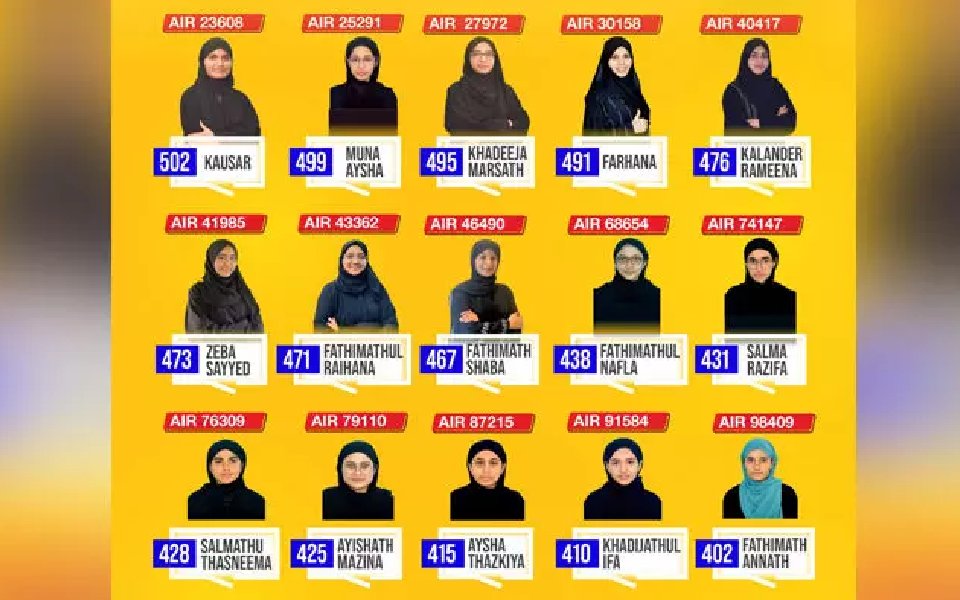
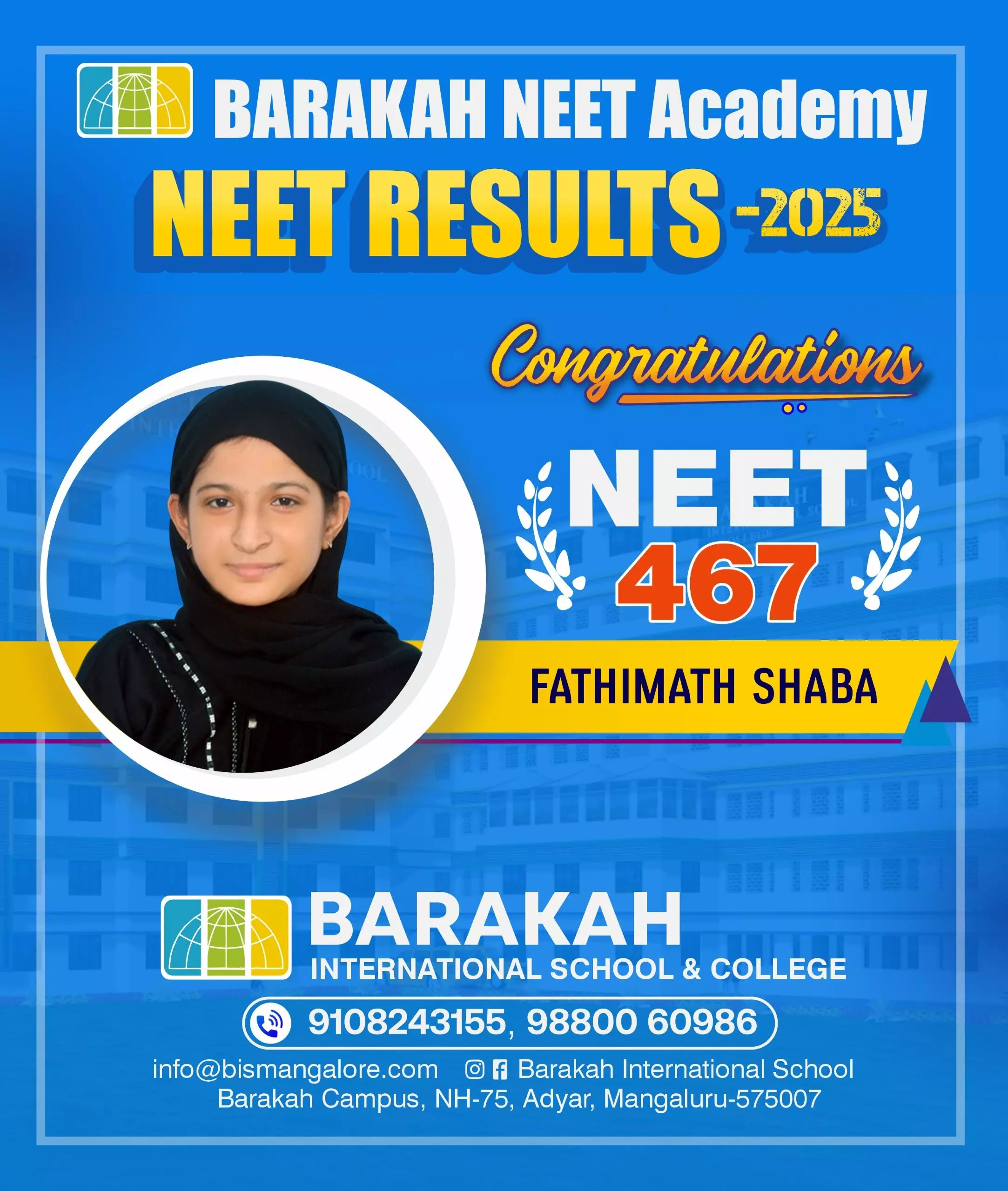
Barakah NEET Academy, a Mangaluru-based coaching institution, has announced that all 32 students from its first batch have cleared the National Eligibility-cum-Entrance Test (NEET) this year.

According to the academy, 25% of the students have qualified for government MBBS seats, while others have secured eligibility for courses like BDS, BAMS, and other medical programs.

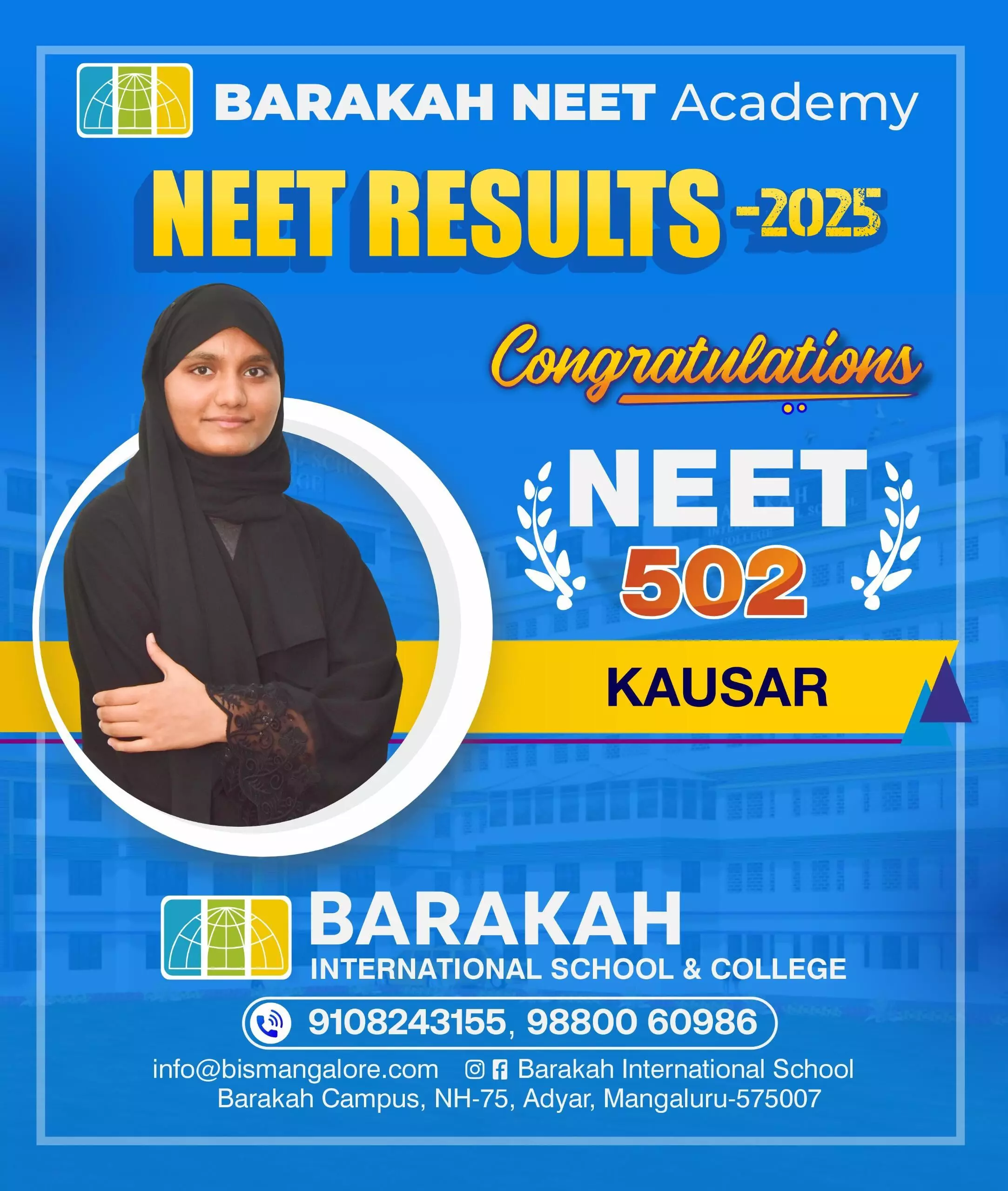
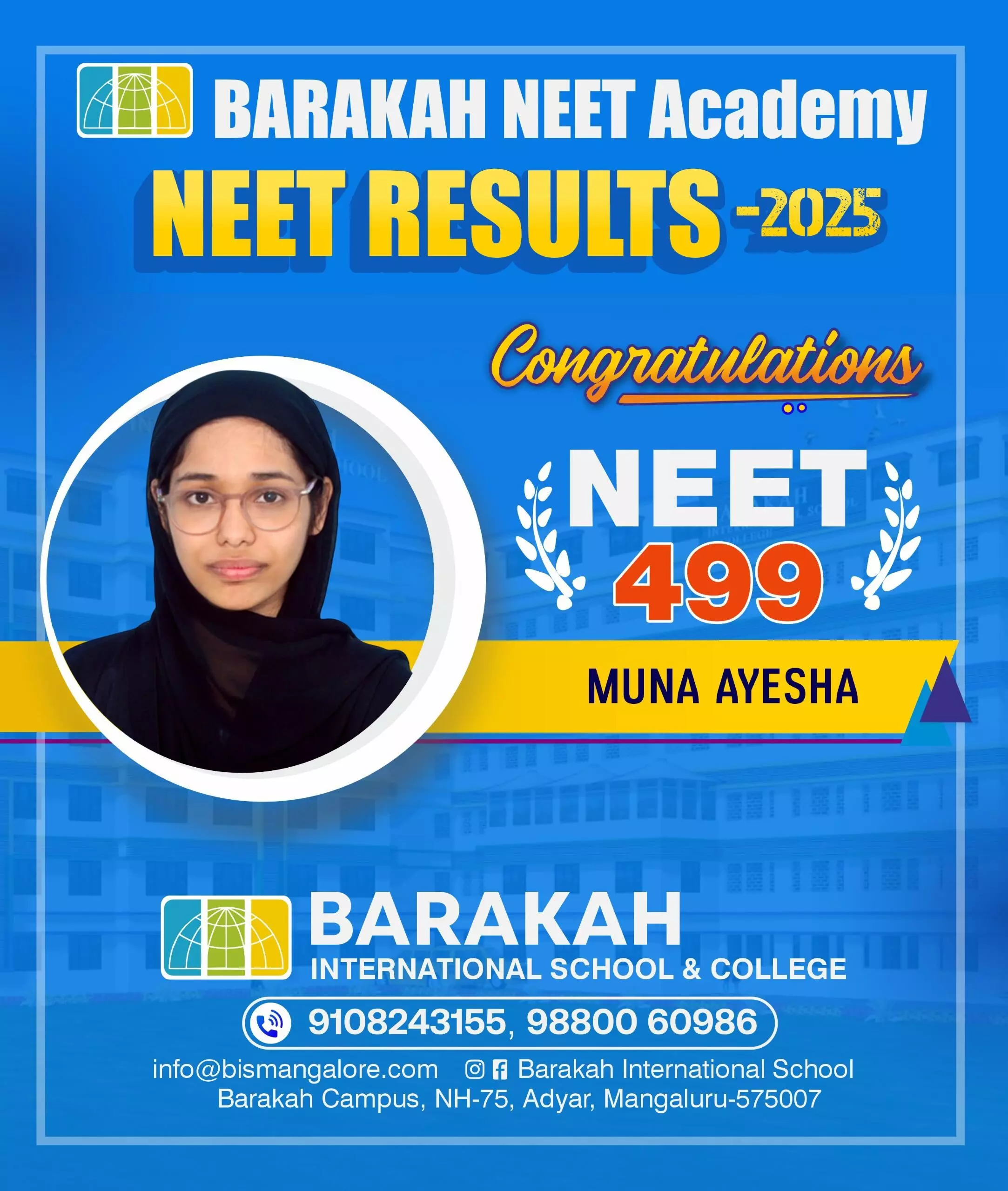
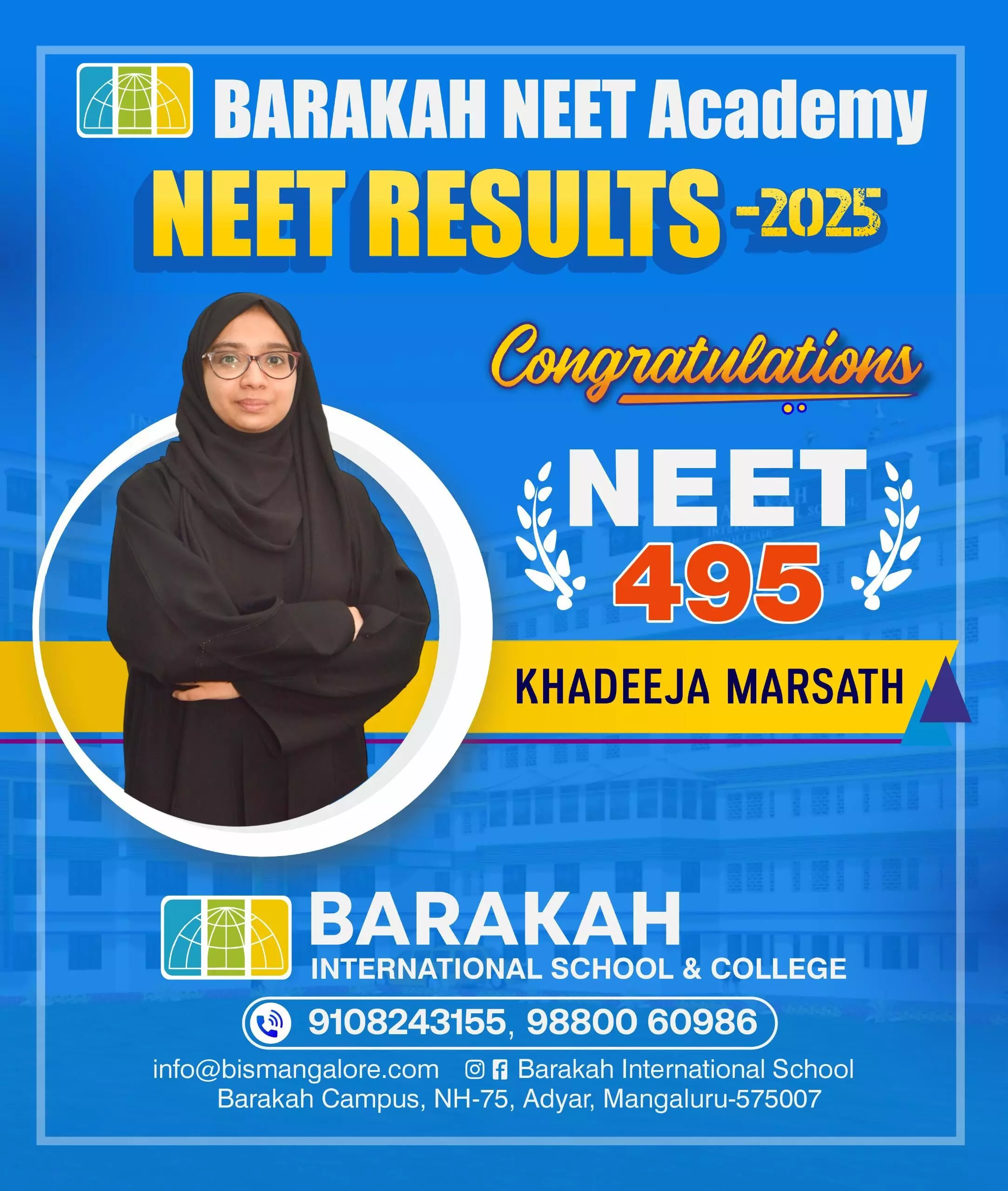
Kausar, a student of the academy, scored 502 marks and emerged as the batch topper. In total, eight students have scored above 460 marks, qualifying for government medical colleges.

The institution, which offers residential NEET coaching along with an Islamic learning environment, said it aims to support students with focused academic guidance and preparation for medical entrance exams.

source: http://www.english.varthabharati.in / Vartha Bharati / Home> Karavali / by Vartha Bharati / June 15th, 2025

Mandya Sensation: Nine‑Year‑Old Sarfaraz Ahmad Wins Gold in Thailand Kickboxing

Mandya, KARNATAKA :

Photo Credit: X.Com

Mandya, Karnataka :

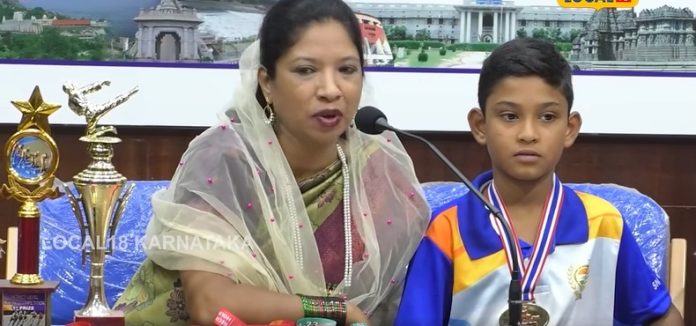
Nine‑year‑old Sayyad Sarfaraz Ahmad, hailing from Mandya in Karnataka, clinched the gold medal in the kickboxing category at the 7th International Thai Martial Arts Games, held in Bangkok, Thailand from May 18–22, 2025. His remarkable victory has brought immense pride to his hometown, reported News18.

The young fighter, son of Muhammad Makki and Sheeba, took up kickboxing at the age of three. Trained at Oshukai Martial Arts Academy, he also trained in skating. Sarfaraz has amassed over 60 medals in district, state, and national competitions—more than 35 in skating and over 25 in kickboxing. His recent international gold highlights his extraordinary dedication and rising talent.

At the Bangkok event, Sarfaraz outperformed competitors in his age group with exceptional skill and composure. His win not only brought honor to India but also earned heartfelt gratitude from him toward his family and coaches.

Mandya’s community celebrated the achievement, calling it a source of inspiration for the region’s youth. With discipline, commitment, and flair at such a young age, Sarfaraz aspires to one day compete in major events like the Olympics.

source: http://www.radiancenews.com / Radiance News / Home> Latest News> Report / by Radiance News Bureau / June 14th, 2025

Maulana Nurul Qasmi’s campaign helps project positive image of Islam, Muslims

ASSAM :

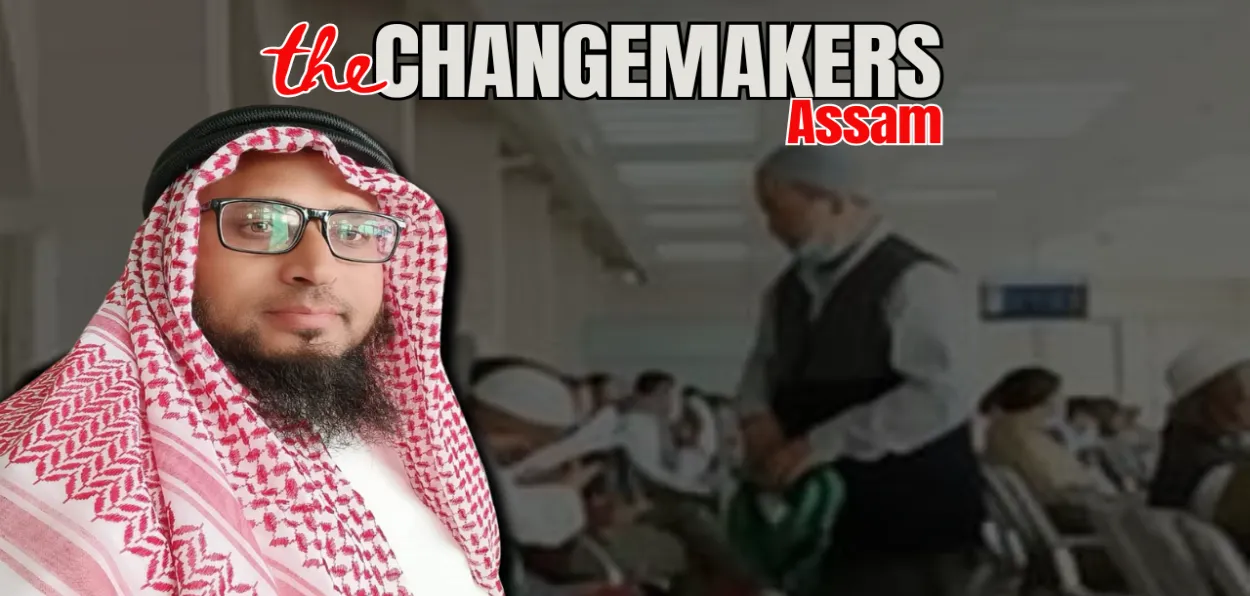
Maulana Nurul Amin Qasimi

Unlike the majority of Muslim youths from Assam who pass out from Darul Uloom Deoband, an Islamic university and seminary in Uttar Pradesh, who often end up joining mosques, madrassas, and other institutions to teach the holy Quran and other Islamic practices, Maulana Nurul Amin Qasimi choose a different path.

He launched a mission to remove misconceptions about Islam and the Muslim community.  He has been preaching Islam in the right form with exceptional and innovative thoughts across Assam.

Many videos of Maulana Nurul Amin Qasimi have already received widespread attention on social media. In these videos, Maulavi is seen explaining the importance of education to the Muslims, the essence of Islam, and translating various verses of the Quran into local Assamese languages for easy understanding of the people.

He has been rendering his inspiring speeches at mosques, Edgars, madrassas, public functions, and other influential platforms.

Maulana Nurul Amin Qasimi during a social campaign

Maulana Nurul Amin Qasimi has recently published the Assamese interpretation and translation of the Holy Quran for Assamese readers. He has also launched the Assamese translation of the Holy Quran in audio format with his voice-over as many people do not read books nowadays due to lack of time.

He has also founded the Islamic Research and Study Center in central Assam’s Tezpur town with a few young men who had received Islamic education with progressive thoughts for society.

Maulana Nurul Amin Qasimi received his primary education from Sootea Higher Secondary School in central Assam’s Sonitpur district and then enrolled himself in Khutaktia Dini Alia Madrasa in Lakhimpur district for Islamic education. After studying there for six years, he enrolled in HojaiJalalia Madrassa. He passed his high school leaving certificate examination or Class 10 final exam in general education while studying at a madrassa in Jalalia Madrasa in Hojai.

After four years of study, he received the rest of his Islamic education at Darul Uloom Deoband Madrasa in Uttar Pradesh. After completing his Islamic education, he started teaching at Markazul Ma-Arif in central Assam’s Hojai district.

While teaching, Qasimi successfully passed his higher secondary examination or Class 12 final exam in general education. He then graduated from Ruphi College and obtained his postgraduate degree from Gauhati University. He is now studying for his PhD at Gauhati University.

In an interview with Awaz-The Voice, Maulana Nurul Amin Qasimi said: “We are Assamese Muslims and we live as Assamese Muslims. There is sometimes confusion about Islam and it is because of some Muslim people that others develop misunderstandings about Islam. Some followers of Islam misinterpret the religion because of their lack of knowledge.

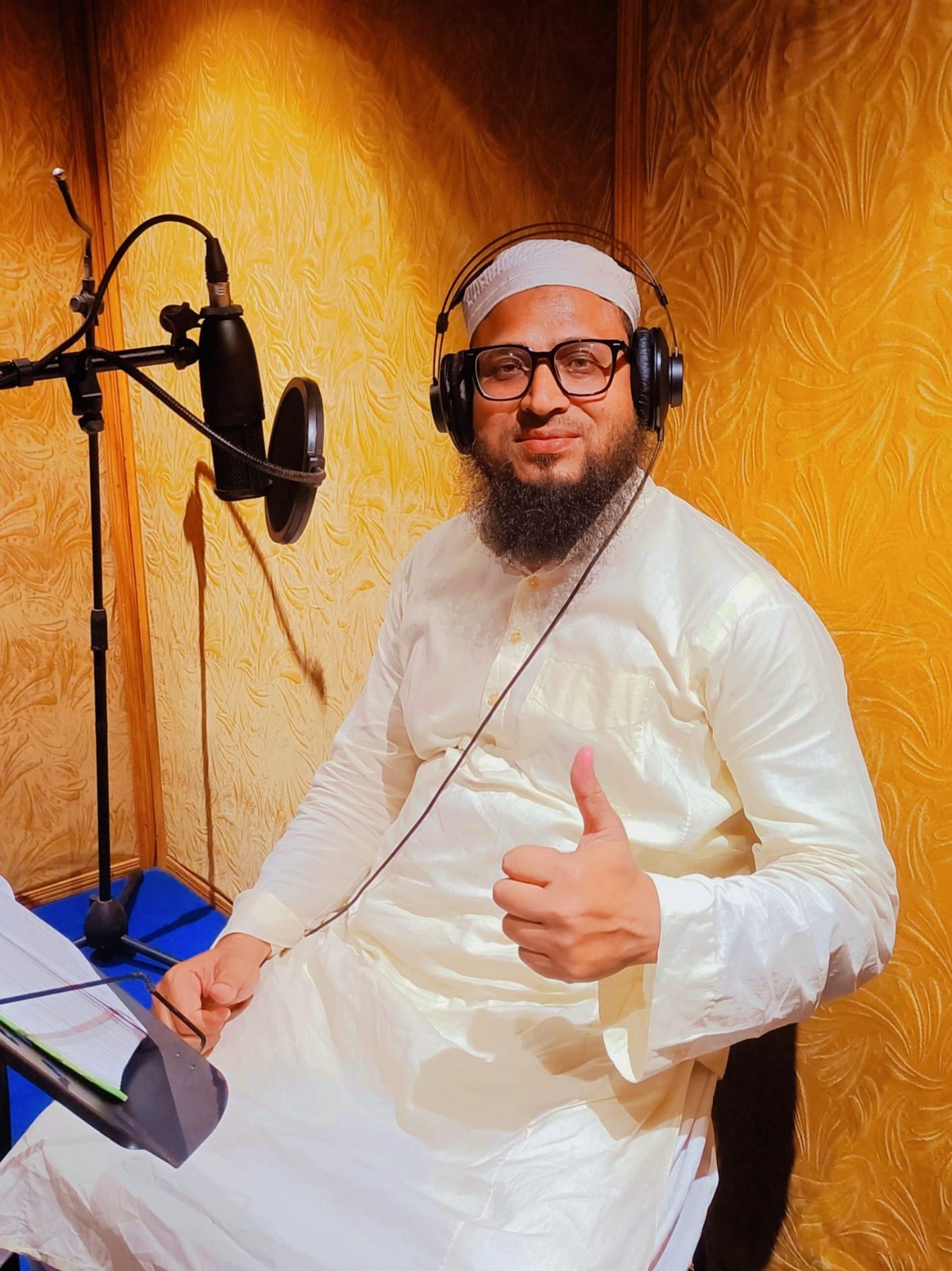
Maulana Nurul  Amin Qasmi recording Holy Quran in Assamese

“I felt the need to enlighten people about the Holy Quran and the true words of Prophet Mohammad. We must present Islam in its true form in our local language. That is why I am making this effort. The Holy Books are in Arabic so it is our responsibility to explain it to everyone in our language.”

When Muslims congregate for the mandatory Jumma Namaz (Friday prayers), the Imam (head priest) gives a sermon called khutbah. He speaks about the principles of Islam, one’s duty towards society, the call for good deeds, respect for other religions, etc. Since the khutbah is rendered in the Arabic language in many mosques, it is difficult for the locals to understand the true meaning of these verses.

“I thought that if the messages of peace, humanity, or statements in khutbah were explained in the simple local language that people could understand, they would benefit and the misconceptions about Islam removed. There are ideological differences over reciting khutbah in Arabic. Some say that it should be explained in the mother tongue. But, according to our Islamic law, since the tradition of reciting the khutbah in Arabic has been going on since the time of the Prophet, it has not changed in some places,” the imam said.

Maulana Nurul Amin Qasimi said it’s important to learn modern general education along with Islamic education. “Muslim society is quite backward in education. In Muslim society, Maulanas or Ulemas are respected and considered religious leaders. So, if Ulemas advise on education, I think everyone will follow them and derive benefits. Our religious leaders have a lot to do in this regard. These matters get less importance in religious congregations. It is compulsory to take the basic education of Islam, but we should also be educated to be good citizens and individuals ready for the future,” he said.

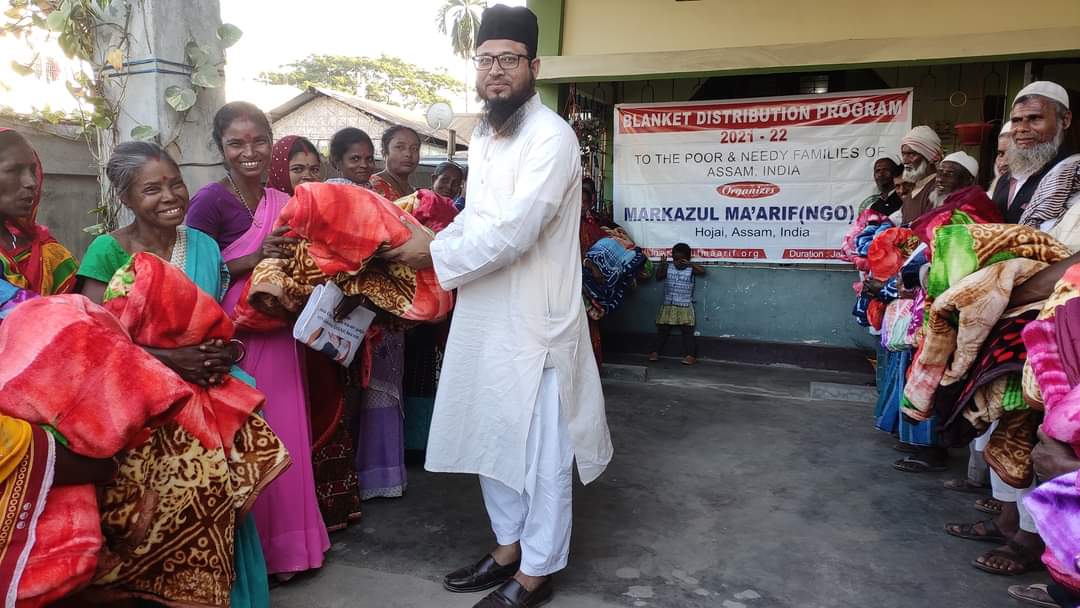
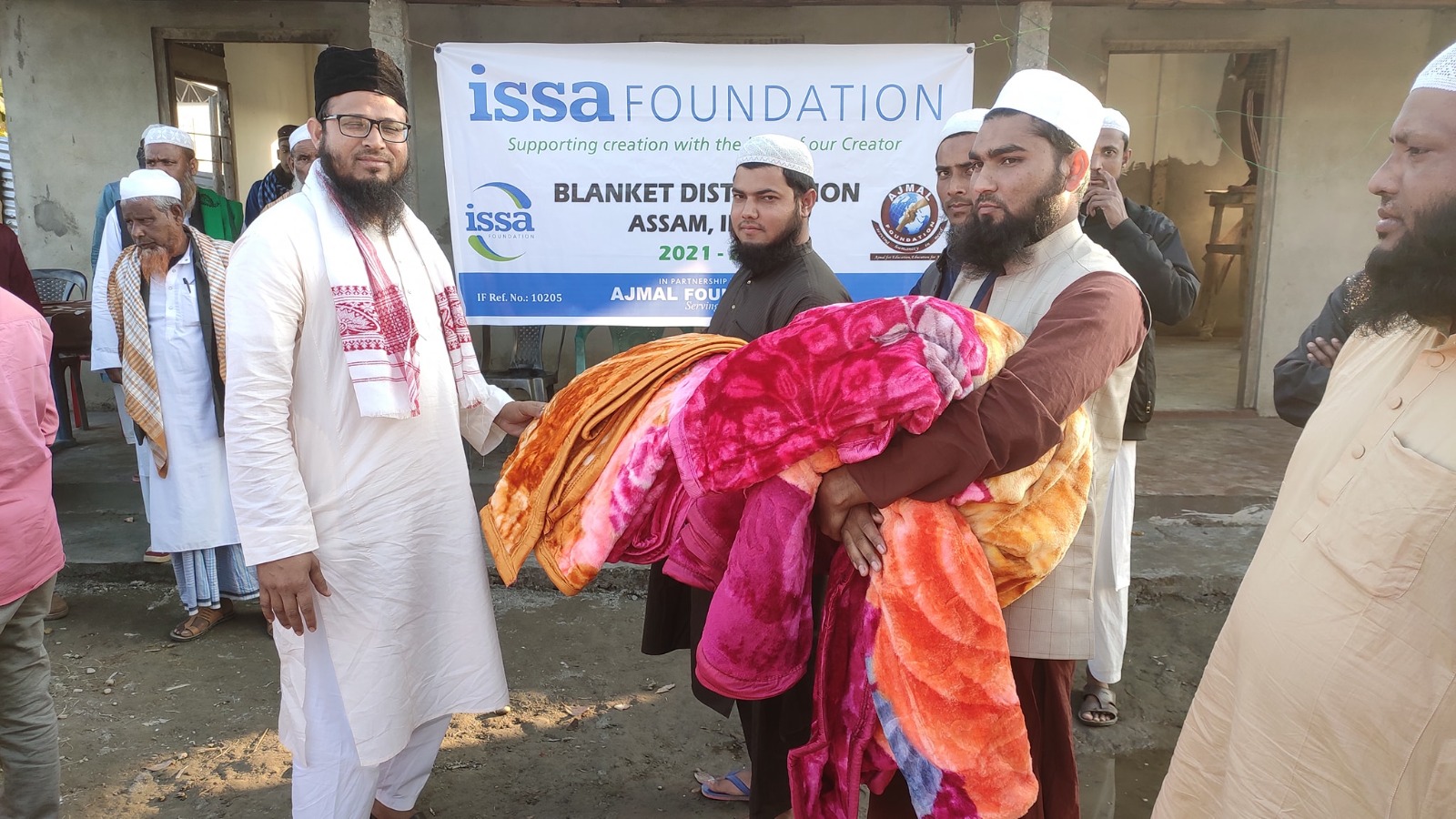
Maulana Nurul Amin Qasimi Distributing blankets

Maulana Nurul Amin Qasimi has been consistently speaking along the same lines in all the religious gatherings he is invited to. “Our Prophet Mohammad commanded us to go up to China for education. The first word of the Holy Quran is Ikra (read). Since our Prophet has allowed us to go to China for education, but, there is no scope for Islamic education in China. So our Prophet has, at the same time, laid special emphasis on IT and modern education besides Islamic education. Now only 4% of Muslim children study in madrassa.

“Not all Muslim children study in madrassa and not all need to study. The 4% must become Maulanas or Hafizs because they will have to uphold the religion in the future. We must educate the remaining 96% of the students’ modern education and establish them as good members of society,” he said.

Apart from the children studying in madrassas or receiving modern education, the Maulana said it is also necessary to think about school dropouts. He said the Muslim community could be rescued from its present condition only through education.

source: http://www.awazthevoice.in / Awaz, The Voice / Home> Stories / by Daulat Rahman, Guwahati / June 15th, 2025

Zainab Hussain, Syeda Sadiya becomes first from Alvi Community to Clear NEET

Nuh District, HARYANA :

Syeda Zainab Hussain and Syeda Sadiya

Syeda Zainab Hussain and her aunt, Syeda Sadiya, of Nuh district in Haryana, have cleared the medical college entrance examination, the NEET 2025, and brought joy and pride to their families and the region, which is among the most backward areas of the country, as declared by NITI Aayog.

These young women’s achievements are all the more historic since they come from the Alvi community – a marginalized group of Muslims. From a lack of land ownership, education, and women’s empowerment, the Alvi community is among the most marginalized communities in Mewat.

Syeda Zainab Hussain has set a record by scoring 551 marks in NEET 2025. She has become the first woman from the Alvi community to clear this coveted examination.

It is often observed that girls in this community are not permitted to pursue education beyond primary level, but Zainab broke this notion, proving all naysayers wrong and becoming a change-maker.

Interestingly, Zainab cracked the exams in the third attempt.

Zainab’s aunt (mother’s sister), Syeda Sadia, scored 536 marks in NEET 2025, proving that this achievement is not just a coincidence, but the beginning of a social change.

Zainab’s father Zakir Hussain is an Assistant Sub-Inspector in Haryana Police and posted in the Security Branch of SP Office Nuh.

The family hails from Kamenda village (Ferozepur Jhirka).

Zainab’s grandfather, the late Jameel Ahmed, was a head guard in the State Bank of India. Raised in such a middle-class family, Zainab’s success in a competitive field like medical examination has become not just a personal victory, but a source of inspiration for girls of her community.

Zakir Hussain says “Zainab has been brilliant in studies from the beginning. Despite failing twice, she did not give up. She learned from every failure and moved forward and this time she passed NEET with good marks and proved that if you have passion, you will get success.”

Similarly, Syeda Sadia also comes from a family of modest means. Her father Haji Israel, who retired in 2016 from the post of driver in Mewat Civil Surgeon Office, left no stone unturned in providing good education to all his daughters.

According to Zakir Hussain, even though his wife is only a matriculation pass, all his sisters are doing MA, double MA and one of his brothers is doing MBBS.

Prominent members of the Alvi community such as District Councilor Sabir Hussain, Jakam Alvi, Ghulam Nabi Azad, Syed Zakir Hussain, and Master Nazim Hussain visited the house of Zainab and Sadia and congratulated them and their families.

Former President of Nuh Bar Association Tahir Hussain Rupdia told media persons after visiting the homes of the two women, “By clearing the NEET examination, they have opened a new path for other girls of the society. This will become an example which will work like a mission in the times to come.”

He also said “In an area like Mewat, where there is a huge shortage of female doctors, when our own daughters become doctors, they will not only treat the women here better, but will also change the thinking of the society. “

Social scientists say Zainab and Sadia’s achievement will boost the education of women in the entire Mewat region, a Muslim-dominated area in Rajasthan.

source: http://www.awazthevoice.in / Awaz, The Voice / Home> Stories / by Yunus Ali / Nuh (Haryana) / June 16th, 2025