Proddatur prodigy excels in sports while balancing academic commitments, with eyes set on the Olympics
New Delhi :
In a time when youth are often told to prioritise studies over sports, Mohammad Ubaid, a 15-year-old from Proddatur in Andhra Pradesh, is proving that both can be pursued successfully. Over the past three years, Ubaid has won nine gold medals in rifle shooting at state and national competitions, all while maintaining a strong academic record. His remarkable achievements are bound to inspire young athletes across India.
Ubaid’s journey in shooting began in 2021, when he attended a summer camp at the George Club in Proddatur. There, under the guidance of his coach Raghavendra, he discovered a passion for the sport. Despite being only in the seventh grade, Ubaid committed himself to hours of daily training, quickly rising through the ranks and gaining recognition for his skills.
“Balancing academics and sports isn’t easy, but I stay disciplined. When I’m not studying, I’m practicing,” Ubaid says, sharing the secret to his success.
His hard work paid off early, with Ubaid winning two gold medals in the open sight category at the Andhra Pradesh State Level Championships in 2022. That same year, he took home another gold in the under-19 category at the SGFI State Level Competition in Rajahmundry, earning a spot at the national competition. He went on to represent his state at the national level in Delhi.
Ubaid’s winning streak continued into 2024. At the Andhra Pradesh State Level Championships, he won four gold medals across multiple categories, including sub-youth, youth, junior men, and men’s divisions. He also claimed a gold in the under-17 open sight category at the SGFI State Level Competition in Rajahmundry, qualifying for the national competition in Indore later this year.
Despite his impressive achievements in shooting, Ubaid remains committed to his education. He trains for four hours every day but temporarily reduced his practice schedule to focus on preparing for his Class 10 board exams. He plans to continue his studies at Vishwa Shanti Junior College in Vijayawada, where he will pursue both his academic and sporting goals.
“I want to compete on the international stage for India at least once in my lifetime. My ultimate goal is to participate in the Olympics, and that drives me every day,” says Ubaid.
With his determination and impressive track record, Ubaid is quickly becoming an inspiration to aspiring athletes across the country. As he prepares for the Under-17 national competition in Indore this December, all eyes will be on this young shooting star who continues to defy expectations.
source: http://www.clarionindia.com / Clarion India / Home> Editors Pick> Indian Muslim / by Mohammad Alamullah, Clarion India / November 29th, 2024
Diwali melas, Ramzan fasts and Christmas feasts went together at Hyderabad’s Nasr School. With her passing on August 16, a quixotic idea seems to have died too.
Courtesy Nasr School/Facebook
Once a week around midday, Maulvi Sah’b would come in through the gates of our school in Hyderabad and class would divide briskly into two and troop off to different parts of the building. Those who were Muslim would be at religious instruction classes with him for the next half hour while the others trudged through moral science lessons. Something similar happened during language classes. We would hear a singsong chorus of “A-salaam-aleikum, Aunty”, from the Urdu classroom as we sat at our Sanskrit or Telugu lessons.
Through my nomadic childhood, I’ve been at many schools. None exemplified the idea of secular India as intensely as this Muslim school in Hyderabad. Begum Anees Khan, who made it so, died in Hyderabad on August 16. Her passing feels symbolic, as if it signifies the death of a quixotic idea.
Anees Khan was not given to seeking the limelight or making speeches. She never spelled out her secularism. It was instinctive: instead of words, there was action. Students of different faiths did their namaz or prayers separately, everything else together. Religion was not denied, but it was shown its rightful place.
When we were at Nasr School, we took all of it for granted, never suspecting goals or visions or manifestoes. It seemed natural for us that school should have both namaz and Diwali melas, that our classmates would fast during Ramzan and feast at Christmas. Maybe this is the reason for my rage and incomprehension when people around me casually describe neighbourhoods and towns as having “too many Muslims” in the way people might say “too many mosquitoes”.
It was not an easy act to pull off in the Hyderabad of the 1980s. Communal riots began on the flimsiest of pretexts and fear would ripple through the school. I remember panic-stricken phone calls to car-owning parents, who arrived and carried away groups of girls to drop them home before the riot came too close. The next day, we would return to school as if nothing had happened.
The school was identifiably Muslim: there was a signboard over the main gate with the name of the school, which means “Victory” in Arabic, inscribed below with a line in Arabic from the Koran, that means, “With God’s help victory is near.” Though murderous vigilantes didn’t roam the streets then, as they do now in certain parts of India, it was still a city divided down religious lines. Creating a school like Nasr was an act of wild courage and imagination.
Begum Anees Khan was born into the Muslim aristocracy of Hyderabad, and was an outlier who broke away from the feudal indolence that, according to an insider, characterised this world. Running a business was unheard of, the genteel lived off inheritances. It was in this milieu that Anees Khan began Nasr in 1965 as a small school in her garden. It became a family enterprise where gradually her sister, her husband, her two daughters and her son became involved. (There are now four branches, including a charitable school.)
Courtesy Nasr School/Facebook
My classmate Saira Ali Khan, whose older sister Fauzia was in that first lot of students along with Anees Khan’s youngest daughter, says there were few other English-medium options for girls then. Most schools were convents where Muslims didn’t want to send their children. Because Anees Khan was one of their own, conservative Muslims felt safe enough to send their daughters to Nasr School even though it was not a religious institution, nor was it exclusively for Muslims. In an act of daring, Anees Khan made it co-educational, but perhaps this was the one dream she had to sacrifice. By my time it was all-girls, though some of the teachers were men.
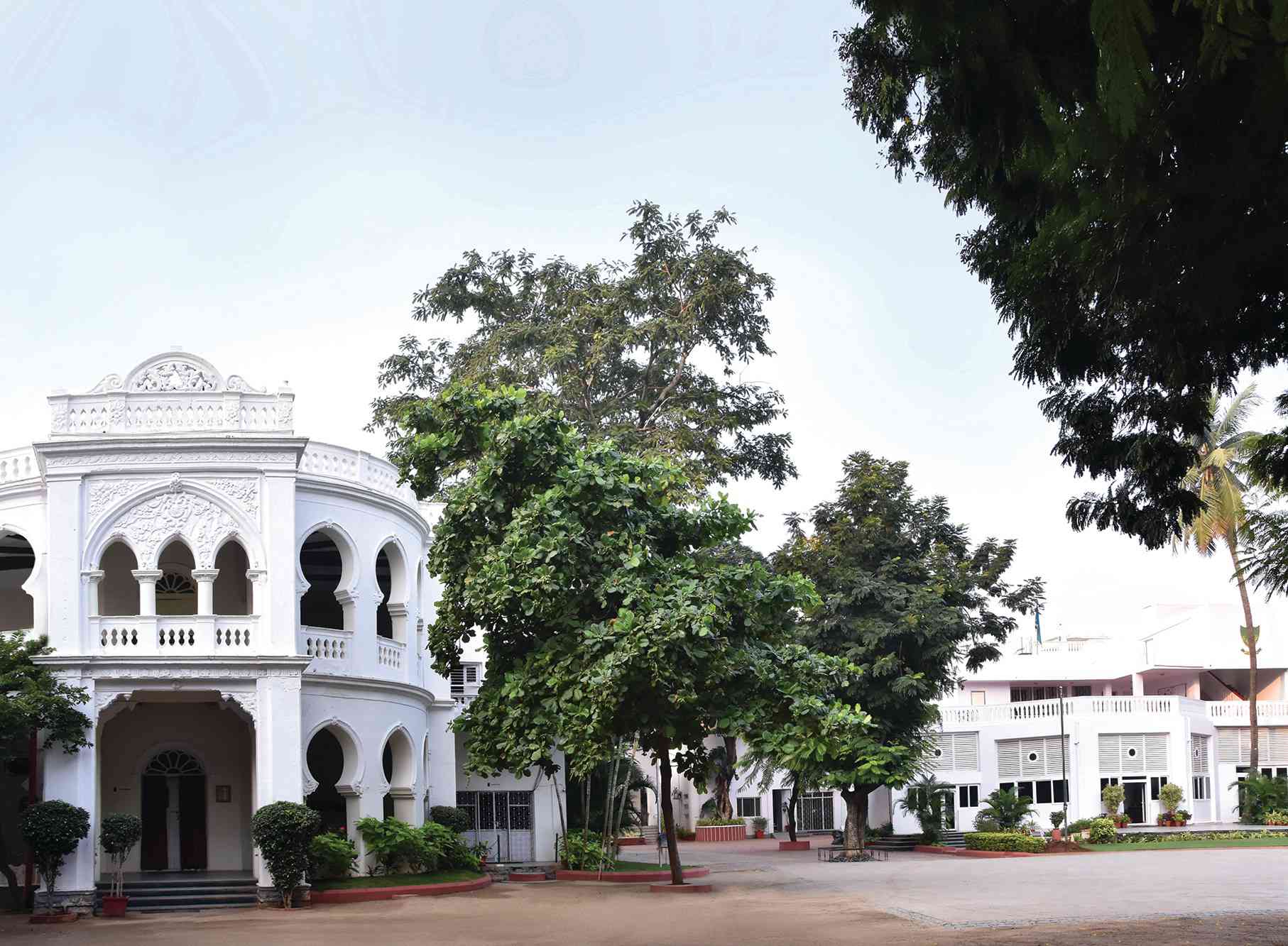
When I joined it in the 1980s, Anees Khan’s own home stood to the right of the school building. This was an old white mansion with an inner courtyard behind the raised entrance, and a playground in front of it. Lines of casuarina trees stood like sentries along the playground, and at the gate was a shack for us to buy deliciacies such as churan and sweets.
Mrs Khan presided over this little empire with the elegance and style that the British queen with her dumpy handbag and hat could only have aspired to. Elahé Hiptoola, a classmate of mine (producer of films such as Hyderabad Blues, Dhanak and Modern Love Hyderabad), has a vivid memory of Mrs Khan’s chiffon saris, her perfume, the remarkable way she exuded authority without ever raising her voice. I remember her telling us to give time and thought to our written signature – it had to make a statement, it was not merely the writing of your name. I wonder now if these were ways in which she had to assert her own identity, with calm firmness, within her deeply conservative world.
Reconciling differences in the school must have taken a great deal of effort for Anees Khan. A few of my classmates arrived in burqas, which they swiftly shed to reveal our standard-issue olive-green tunics or the white sports uniform. There were great disparities in income levels – many students were from landed, feudal families, while others came from humbler backgrounds. There was much swapping at lunch between tiffin-boxes containing venison, dry fruits, and salan, and those with parathas or idlis.
To make sure everyone could afford the school, fees were kept absurdly low, exercise books and stationery were free. Textbooks were handed down from one class to the next until they fell apart from doodles and grease. Even those who could afford new books had to have used ones. Each of us had a desk with a lock and key and we had to leave our books at school, carrying home only the ones we needed.
I now marvel at the imaginative ways by which Mrs Khan taught us to be spirited and daring, to look after our possessions, start small businesses, care for animals, and most of all, enjoy life. During the cool months, classes were cut in half and you could do what you pleased – provided you actually did something, such as painting or gardening or acting.
She made us start a plant nursery, look after animals such as rabbits and geese, collect money and cook food to sell during the Diwali melas. The teachers were given a free hand and some, like Chandra Dorai, our brilliant English teacher, spent whole afternoons making us write stories instead of attending to our grammar books or set texts.
Long before words like creativity and can-do became common currency, Anees Khan had made them a way of being. “It was a girls’ school,” said Elahé Hiptoola, “but she did not keep us secluded or confined. We were sent off to dance at the Asian Games. There was a school trip to Kashmir. She emphasised creativity and originality. She was far ahead of her time.” Very little discipline was enforced, though Hiptoola remembers being summoned to the principal’s room on occasion, and standing outside the thick green curtain at the door of her office, heart thumping, wondering what she had done.
My own memory of this ordeal has crept into my novel, The Earthspinner, which has a character based on Anees Khan. In the book she is called Tasneem Khan, and she has summoned a young student to her room. After their conversation, “she dismissed me with a wearily elegant motion which was both a wave and a gesture towards the door… Her green-blue eyes, usually watchful and impersonal, seemed amused, and maybe she was even smiling a little as she returned her gaze to the open file in front of her.”
What mattered to Begum Anees Khan was humanity, not religion. The school she created was in miniature the secular country that was dreamed up in 1947. With her death, she no longer has to suffer witnessing the destruction of that ideal.
With inputs from Elahé Hiptoola and Saira Ali Khan.
Anuradha Roy is a writer.
source: http://www.scroll.in / Scroll.in / Home> Idea of India / by Anuradha Roy / August 20th, 2023
The philanthropist transformed neglected Wakf properties into exemplary educational institutions
Hyderabad :
Khaja Mohammed Arifuddin, celebrated academician, dynamic educationist and one of the founding members of the 1969 Telangana agitation movement, popularly known as KM Arifuddin, breathed his last on Monday. He was 77.
Arifuddin is irrefutably regarded as one of the most powerful educationists in the history of Hyderabad who helped thousands of families fight darkness by illuminating their minds and homes with education, in the process pioneering ‘modern and Islamic education’, a concept that has now promoted by many institutions largely for commercial merits.
The institutions he founded continue to benefit scores of students, including those from society’s weaker sections at different educational strata.
An advocate by profession in his early career, he employed his legal acumen to prevent the misuse and illegal occupancy of Wakf properties in Hyderabad. As a young activist, Arifuddin raised slogans, protested against exploitation and encroachment of Wakf lands, and pioneered an educational movement nearly 40 years ago that continues its momentum in the form of the Madina Group of Institutions and Global Group of Institutions, where thousands of Muslim and even non-Muslim students had the privilege to access modern education in an institution built on Muslim values and Islamic teachings.
He successfully led the movement in freeing the Wakf properties from illegal occupancy in 1977, and was instrumental in transforming them into educational centres with academic and disciplinary standards unprecedented for any minority institution of the time.
By fighting for winning the case and transforming the Wakf land into an educational centre, he set a prime example on how Wakf properties can be rightly used for the benefit of the community. In his own words, social success can be achieved by “conventional reimbursement of the Waqf properties and education”.
On August 15, 1982, former Governor of Orissa Padmabhushan Mir Akbar Ali Khan laid the foundation stone of the Madina Public School. He set up Madina Public School under the aegis of Madina Education and Welfare Society (MEWS), followed by Madina Degree College for Girls in 1983. Promoting education of girls, and making them self-reliant was his dream. In 1984, Prince Muffakham Jah Bahadur inaugurated the new block of Madina Public School.
His uncompromising academic standards and meticulous discipline helped his altruistic yet relentless educational pursuits in establishing 14 educational institutions from K.G. to P.G., including Madina Public Schools, Global College of Pharmacy, Global College of Business Management, and Global College of Engineering and Technology.
These educational power houses over the years have become the pride of the community under his tenure as the Secretary of Madina Group of Institutions. Several notable leaders of national repute, including former Prime Minister of India Chandrashekhar, former President of India Dr A P J Abdul Kalam, Dr Shankar Dayal Sharma, Farooq Abdullah, Indian’s Union Law Minister Ram Jethmalani were among several others who visited the Madina Public School in the past and appreciated its standards of education.
His patriotic fervour reflected in the several initiatives he pioneered with nationalist sentiment. He conceptualised and granted monthly pensions for freedom fighters of Hyderabad, instituted an educational scholarship of Rs 1 lakh in the name of his deceased son K.M. Razi (IRS) Memorial scholarship for helping aspiring civil service aspirants qualifying the preliminary exams. The Madina IAS Hostel was built for this purpose.
MEWS, as part of its philanthropic initiatives, also provides pensions to widows, funds Muslim and non-Muslim welfare organisations.
In 1989, he constituted the Madina Gold Medal to recognise the talents and achievements of outstanding students at regional and state levels. The first medal was awarded to Dr Ausaf Sayeed in 1989, who is currently the Indian Ambassador to Saudi Arabia. The tradition still continues even after more than 30 years.
He was the co-founder and Editor of Awam, an Urdu daily in the late 90s. His weekly column titled Zara Ghaur Kijiye published in Urdu newspapers in Telangana inculcated social activism among the masses by throwing light on the pressing social and economic issues.
Arifuddin, born to Mohammed Qamaruddin in August of 1944, hopped different government Urdu medium schools to complete his schooling, and post-graduated in Law from the Osmania University in 1974. He was the first Muslim graduate to be elected as the Vice President of Students Union of the Osmania University, and was one of the founding members of the Telangana Separation movement in 1969, for which he served a brief time in jail.
Even until a few weeks before his demise, he kept discussing empowering Muslims and the weaker sections with education, knowledge and by securing berths in Indian Civil Services. Arifuddin is survived by two sons K.M. Fasihuddin, K.M. Minhajuddin and daughter Maria Tabassum who must shoulder the burden of great responsibility Arifuddin left behind in his legacy, while living the life of an ascetic despite all the talents and many intellectual virtues.
Earlier, his body was kept at the Madina Public School he founded in Himayathnagar to allow the public to pay homage. In the evening, Arifuddin’s funeral prayers were offered at the Royal Mosque of Pubic Gardens where a large number of intellectuals, academicians, heads of different educational institutions, former lawmakers, civil servants, alumni of the institution and senior community members were present. He was laid to rest at the Osman Nagar graveyard. The great scholar’s departure is an irreparable loss to the Hyderabadi and the Indian education community.
source: http://www.clarionindia.com / Clarion India / Home> India> Politics / by Syed Khaled Shahbaaz, Clarion India / December 07th, 2020
Prof. (Dr.) Mohammad Rihan, a senior faculty member of AMU, has been appointed Chairperson of BIS Solar Energy Panel
Aligarh:
In a significant development for India’s renewable energy sector, Prof. (Dr.) Mohammad Rihan, a senior faculty member of Aligarh Muslim University (AMU), has been appointed as the Chairperson of the Solar Photovoltaic Energy Systems Sectional Committee (ETD 28) under the Bureau of Indian Standards (BIS).
Prof. Rihan, who previously served as the Member In-charge of Electricity at AMU, is currently on deputation as the Director General of the National Institute of Solar Energy (NISE), an autonomous body under the Ministry of New and Renewable Energy. His appointment is expected to bolster India’s efforts in standardising and advancing solar energy technologies.
The ETD 28 Committee, operating under the Electrotechnical Division Council of BIS, is tasked with developing national standards for photovoltaic systems, encompassing everything from solar energy conversion to electrical system integration. Prof. Rihan’s leadership is anticipated to play a pivotal role in ensuring the reliability, efficiency, and sustainability of India’s solar energy initiatives.
Prof. Rihan’s distinguished career includes roles as Vice Chairperson of the ExCom IEEE UP Section and the IET Delhi Local Network. He has also contributed as a Visiting Scientist at NISE. With his expertise, Prof. Rihan is expected to drive innovation and accelerate India’s transition towards a renewable energy future.
This appointment highlights the growing recognition of academic contributions to India’s renewable energy mission and reinforces AMU’s reputation as a hub of academic excellence in science and technology.
source: http://www.radiancenews.com / Radiance News / Home> Education> Focus> Science & Technology / by Radiance News Bureau / December 07th, 2024
When we talk about Baseball, India is not the country one would think about, but the game is not only catching up in the country, but India also has an internationally recognised umpire.
Meet Shaheen Begum, India’s first internationally recognised baseball umpire.
source: http://www.thecognate.com / The Cognate / Home> Sports / by Shaik Zakeer Hussain / March 20th, 2020
She was elected in 2020 GHMC corporator elections. Shaheen Begum was suffering from health issues and was hospitalized
Hyderabad:
All India Majlis-e-Ittehadul Muslimeen (AIMIM) corporator from the Erragadda Division Shaheen Begum passed away due to a prolonged illness on Tuesday.
She was elected in 2020 in the Greater Hyderabad Municipal Corporation (GHMC) elections. Shaheen Begum was suffering from health issues and was hospitalized, said local media reports.
source: http://www.siasat.com / The Siasat Daily / Home> News / by Tamreen Sultana / June 04th, 2024
Nawab Shafath Ali Khan trains guns to save endangered species
Nawab Shafath Ali Khan Photo: K. Ramesh Babu
No arrogance, no laid back attitude or flaunting his privileged birth. This new age nawab is a quick draw. He can handle physical and mental strain; evidenced by the fact that he can sit motionless for hours at a stretch atop a 20 ft high machan in thick jungle with danger lurking close by.
Nawab Shafath Ali Khan, India’s celebrated hunter refuses to conform to the typical nawabi lifestyle. He doesn’t live in the lap of luxury, instead he loves to wallow in the lap of nature. He displays an unusual obsession for wildlife, conservation and guns.
At his villa in Hyderabad, stuffed trunks, elephant leg footstools and a bison leg pen-stand greet you. Then you are suddenly jolted when a trumpet rings from his mobile. His daily fare at Nilgiri Hills, Masinagudi village to be precise, where he usually stays, include a sighting of spotted deer, sambar, the piercing call of lapwings, chatter of macaques and the occasional roar of a tiger on the prowl. Sure, he is at ease with the sounds, sights and life in the jungles of south India where he has spent most of his 58 years.
Hunting runs into his genes. His grandfather, Nawab Sultan Ali Khan Bahadur, was an honorary elephant hunter for British India while his father, Nawab Arshad Ali Khan, was a target shooter, doyen of horse racing and secretary of Bangalore Turf Club. “I have inherited the love of wildlife and knowledge of flora and fauna from my ancestors,” says Shafath Ali.
At an age when most children love to play with toys, he played with weapons. Those days the nobility was exempted from the Arms Act, and there were 50 odd weapons at his house. No wonder he got a trophy for rifle shooting from the Governor of Madras in 1962 when he was just five years. At 10 he shot a spotted deer in Masinagudi. Since then he has been active in competitive rifle shooting. “Those days game licences were given and hunting blocks allotted. But there was strict code which hunters had to follow,” says Shafath Ali, fresh from the successful tranquillising of a man-eater tigress in Brahmapuri division of Maharashtra.
The only authorised tranquillising expert and culling officer in India, Shafath Ali is always at the beck and call of the forest departments of Bihar, Jharkhand, Madhya Pradesh, Himachal Pradesh, Karnataka and Telangana. If he is not tackling man-eating leopards, rogue elephants, stray tigers and sloth bear, he is training the frontline staff of the forest departments in the use of tranquillising dart gun on stressed tigers and leopards.
The dangerous missions he undertakes are a test of endurance. To work in close proximity of a man eater is perhaps the most dangerous sport. But for the last four decades it has been a way of life for Shafath Ali. “Tears of gratitude that I see in the eyes of poor farmers and forest dwellers give me energy and courage,” he says.
But he couldn’t have handled these death-defying feats without the support of his family. His wife, Begum Shaheen, stands by him with patience and understanding while son, Asghar Ali Khan, is ready to step into his shoes. The duo keep the fire burning at Safari Land Resorts, the family’s chain of restaurants at Ooty even as Shafath Ali is busy answering the call of the wild.
The sharp shooter often finds wildlife activists training guns at him for his trigger-happy ways. “Culling is a tool of conservation,” he explains. The Wildlife Tranqui Force set up by Hitesh Malhotra, head of Forest Force, Andhra Pradesh, of which he is a secretary, is intended to improve wildlife management through tranquillising and safe rescue of endangered animals.
Scientific management of wildlife population, he says, calls for evolving a strategy to deal with excessive wildlife. This is the only way to check the escalating man-animal conflict. It’s not whether animals will survive, it’s whether man has the will to save them. Save it to cherish or leave it to perish.
source: http://www.thehindu.com / The Hindu / Home> News> Cities> Hyderabad> Interview / by J S Ifthekhar / July 27th, 2017
Advocate Shahul Hamid Rehman has been appointed as the Additional Advocate General of Karnataka.
The appointment was made on the orders of Karnataka Governor Thawar Chand Gehlot, as communicated by Adinarayana, Under Secretary of the Law, Justice, and Human Rights Department.
Advocate Shahul Hamid Rehman, a senior legal professional, is the son of the late K. Abdul Rahman and Nebisa.
He completed his law degree at SDM Law College Mangaluru, and gained experience practicing under former Advocate General B.V. Acharya.
source: http://www.english.varthabharati.in / Vartha Bharati / Home> Karavali / by Vartha Bharati / December 02nd, 2024
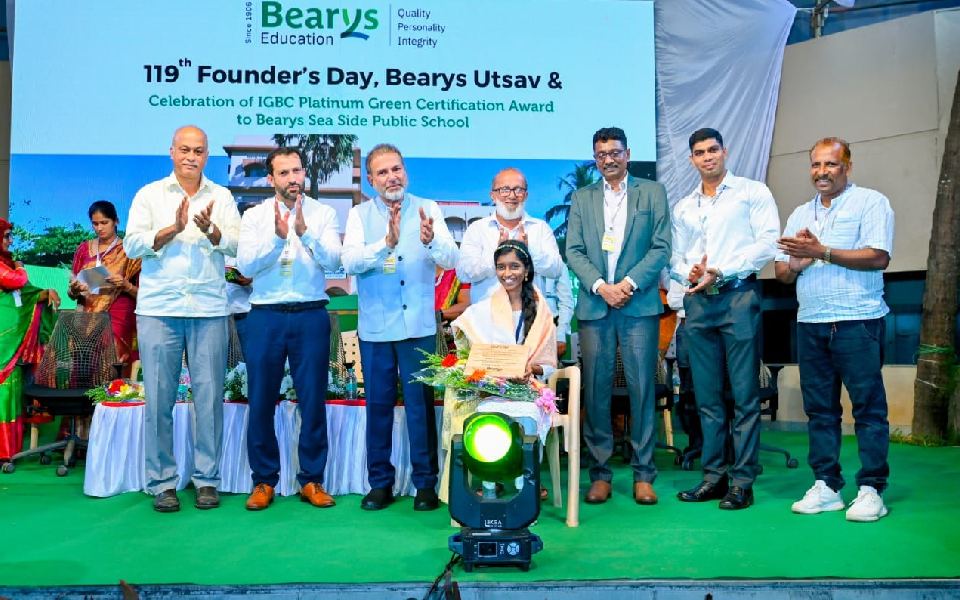
Human life is a journey filled with challenges and triumphs, and through optimism, hard work, and determination, individuals can achieve remarkable success while inspiring others. Sharmin Banu, a student at Bearys B.Ed College in Kodi, Kundapur, has this spirit of achievement and serves as an inspiration to many.
A proud ranger of Udupi district, Sharmin is actively involved with the Bharat Scouts and Guides (BSG). With a background in commerce and education, she serves as an advocate for the World Association of Girl Guides and Girl Scouts (WAGGS) and she advocated for WAGGS first ever Global consultation on Climate Change & Gender.
Sharmin’s commitment to sustainability, a plastic-free world, and gender equality within the framework of the Sustainable Development Goals (SDGs) is evident through her impactful work. Her project, “The Wings of Peace Nature Based Solutions,” earned the prestigious Olave International Award at the World Conference in 2023.
In November 2024, Sharmin was the representative from the Asia-Pacific region selected to represent 10 million Girl Scouts and Guides at the World Conference on Climate Change, held in collaboration with UNICEF in Baku, Azerbaijan. During this event, she was honored as a “Girl Lead Action on Climate Change Advocacy Champion.”
In recognition of her outstanding achievements, Sharmin was recently honored at the Bearys Utsav 2024 by Syed Mohamed Beary, an entrepreneur, environmentalist and educational thinker, as well as the convener of Bearys Group of Institutions. As a further testament to her dedication, Sharmin has been appointed as the brand ambassador for the ongoing ‘Clean Beach – Green Kodi’ campaign, reflecting her unwavering commitment to environmental sustainability.
In the meantime, Syed Mohamed Beary in acknowledging her achievements, expressed his heartfelt prayers: “May her tribe increase, and may she stay blessed always.”
source: http://www.english.varthabharati.in / Vartha Bharati / Home> Karavali / by Vartha Bharati / December 07th, 2024
Lukhmi once served as a ubiquitous starter usually setting the stage for the feast that will follow.
(Image Source: Nom Nom Foodie YouTube Channel)
While Hyderabadi restaurants boast of serving the best, a true Hyderabadi knows that the essence of our culinary heritage is best captured at weddings.
From the biryani and haleem to the ‘shaadiyo waala mittha’, weddings in the city are a grand celebration of flavors. Among these several delicacies, Lukhmi once served as a ubiquitous starter. This flaky, golden pastry served with a filling of spiced kheema or a seekh kebab on the side usually set the stage for the feast that will follow.
However, this iconic dish has quietly slipped off the dastar to make place for more trendy and global flavors. Indeed, its disappearance raises the question: why has Lukhmi become a rare sight on our plates, and what does it say about the new Hyderabad’s tastes?
The rise and fall of Lukhmi
“Legend has it that Lukhmi kebab was introduced during the reign of the Nizams. It was an authentic dish, first crafted by the royal kitchen for the awaam-e-khas– the Nizam’s exclusive gatherings,” says Md Umair Ahmed of Al Maharaja Caterers. Some even say that it was introduced as a unique meaty twist to the evergreen snack Samosa.
Lukhmi was not just a dish but a statement. Served to the select few during royal gatherings, it found its way into the weddings of Hyderabad after the end of the Nizami rule. “Initially, it was a highly coveted item, and only those from well-established families could afford to have Lukhmi on their wedding menus as it required large amounts of meat for preparation,” Umair tells Siasat.com.
Image Source: X
As Hyderabad’s economy increased, Lukhmi gradually became more accessible, finding its way into every wedding. At one point in time, the flaky pastry served as the only starter on the wedding menu, making it more beloved among locals. It was also essential to pre-wedding festivities like Manje and Sanchak, solidifying its position in the shaadi culture.
Around 15 years ago or so, Lukhmi began to face stiff competition from various contemporary dishes. “Today you will find Chinese starters like spring rolls, and chicken sticks taking center stage in the weddings,” he says, “Seafood has also become the popular choice with dishes like dynamite prawns, Apollo fish, Patrani fish, and sauteed prawns.”
This newer menu reflects the globalized taste of today’s generation and their focus on experimenting with diverse flavors moving past traditionalism.
Modern menus of Hyderabadi weddings
What began with ‘at-home’ wedding ceremonies where only Osmania biscuit and chai were served has now evolved into lavish affairs. Today, menus often start with a range of 7 to 8 starters, 6 to 7 main dishes, and at least 3 to 4 desserts, along with drinks like Saudi champagne and flavored mojitos. Live BBQ, Dosa, and Pani Puri counters have also become popular in the past few years.
“Back in the 1980s and 90s, a wedding feast would typically feature no more than five items- simple yet satisfying,” says Umair, “Now, it’s a completely grand affair.”
Hyderabadis’ love for grandeur extends to every detail and even the rare Lukhmi has been reimagined to fit a modern wedding. In the few weddings where the dish still makes an appearance, its presentation has been elevated to a seekh kebab wrapped around a sword and placed above a platter of Lukhmis.
This evolution of menus reflects a larger trend of Hyderabad’s growing desire to embrace luxury and extravagance over nostalgia. As this wedding culture continues to change with the trends, the question remains: will the legacy of Lukhmi be preserved or will it become a mere memory with time?
source: http://www.siasat.com / The Siasat Daily / Home> Lifestyle / by Bushra Khan / December 04th, 2024