Tag Archives: Asaduddin Owaisi – Member of Parliament – India

Muslim Mirror Releases List of 100 Most Influential Indian Muslims 2025; Young Faces Gain Prominence

INDIA :

Muslim Mirror’s 100 Most Influential Muslims of 2025

New Delhi: 

Muslim Mirror has released its much-anticipated annual list of the “100 Most Influential Indian Muslims of 2025,” spotlighting individuals who have made significant contributions to India’s public life across a wide spectrum of fields including politics, culture, education, business, media, religion, sports, and social service. Now in its second edition, the list aims to document influence not merely as power or popularity, but as sustained impact, leadership, and the ability to shape public discourse.

A defining feature of the 2025 edition is the growing prominence of younger achievers, signalling a visible generational shift within Indian Muslim leadership. Alongside established national figures, the list includes emerging voices who have built influence through grassroots activism, professional excellence, digital platforms, legal advocacy, education, and community engagement. Editors associated with the project said this was a deliberate attempt to recognise new centres of influence beyond traditional hierarchies.

The list reflects the diversity and plural character of Indian Muslim society, cutting across geography, ideology, profession, and language. From seasoned politicians and religious scholars to artists, entrepreneurs, academics, and social reformers, the compilation offers a broad snapshot of leadership trends at a time when issues of representation, constitutional values, and social justice remain central to national debate.

Representation Across Sectors

The 2025 list features several eminent academicians and intellectuals who have shaped higher education, policy discourse, and social research. Among them are Abul Qasim Nomani, Ameerullah Khan, Furqan Qamar, Shahid Jamil, and Ubaid-ur-Rahman, recognised for their contributions to education, public policy, and academic leadership.

In the business and entrepreneurship category, the list includes influential names such as Azad Moopan, Azim Hashim Premji, Farah Malik, Irfan Razack, M. P. Ahammed, Mecca Rafiq Ahmed, Meraj Manal, Syed Mohamed Beary, P. Mohammed Ali, Shahnaz Hussain, Tausif Ahmad Mirza, Yusuff Ali, and Ziaullah Sharif. Their inclusion underlines the growing economic footprint of Indian Muslim entrepreneurs, both domestically and globally, spanning sectors from retail and healthcare to infrastructure and consumer goods.

Community leadership remains a strong pillar of the list, with figures such as Arshad Madani, Mahmood Madani, Malik Motasim Khan, Mehmood Pracha, Syedna Mufaddal Saifuddin, Navaid Hamid, Pirzada Md Abbas Siddiqui, Qasim Rasool Ilyas, Sadatullah Husaini, Umer Ahmed Ilyasi, and Yusuf Mohamed Abrahani recognised for their roles in religious guidance, legal advocacy, social mobilisation, and institutional leadership.

Culture, Media, and Public Discourse

In arts and entertainment, globally recognised names such as A. R. Rahman, Aamir Khan, Mammootty, Munawar Faruqui, and Shah Rukh Khan continue to command immense cultural influence, shaping narratives that extend well beyond cinema and music into social consciousness.

The list also acknowledges the growing importance of media and journalism in shaping opinion and challenging dominant narratives. Journalists and commentators such as Arfa Khanam, Irfan Meraj, and Seema Mustafa are recognised for their consistent engagement with issues of democracy, minority rights, and constitutional values.

Religious and Intellectual Scholarship

A significant section of the list is devoted to Islamic scholars and religious thinkers, reflecting their continued influence on moral leadership and intellectual discourse. Names such as A. P. Aboobacker Musliyar, Qasim Nomani, Prof. Akhtarul Wase, Asghar Ali Imam Mahdi Salafi, Asjad Raza Khan, Ibraheem Khaleel Al-Bukhari, Javed Jamil, Khalid Saifullah Rahmani, Khaleelur Rahman Sajjad Nomani, Qamaruzzaman Azmi, Rashid Shaz, Shakir Ali Noori, Shamail Nadvi, and Yasoob Abbas find place for their scholarly work, writings, and public engagement.

Politics and Governance

The political category features leaders cutting across party lines and regions, including Asaduddin Owaisi, Ghulam Nabi Azad, Hamid Ansari, Mehbooba Mufti, Omar Abdullah, Salman Khurshid, Najeeb Jung, Syed Naseer Hussain, Engineer Rashid, Akhtarul Iman, Iqra Hasan, Zameer Ahmed Khan, Rakibul Hasan, K. Rahman Khan, Kadir Mohideen, Mohibullah Nadvi, Md Shafi, Agha Mahadi, Asim Waqar, and Sadiq Ali Shihab Thangal. Their inclusion reflects influence exercised through electoral politics, governance, diplomacy, and legislative advocacy.

Changemakers and Social Reformers

One of the most dynamic sections of the 2025 list is that of changemakers and social reformers, featuring individuals such as Safeena Husain, Shahabuddin Yaqoob Quraishi, Syeda Hameed, Zameer Uddin Shah, Mahbubul Hoque, Sabahat S. Azim, Mehmood Pracha, Faiz Syed, and Zahir Ishaq Kazi, among others. Many of these figures have earned recognition through long-term grassroots work rather than formal authority.

International Booker Prize 2025 winner Banu Mushtaq for Heart Lamp, along with renowned poet Wasim Barelvi, has been placed in the category of Literary Figures.

In sports, iconic names Sania Mirza and Irfan Pathan continue to inspire younger generations through excellence and public engagement beyond the playing field.

Beyond Rankings

The editors emphasised that the list does not claim to be exhaustive, nor does it measure influence solely through fame, wealth, or official position. Instead, it seeks to capture real-world impact, moral authority, intellectual contribution, and the ability to shape conversations within and outside the community.

The annual list has increasingly become a reference point for understanding evolving leadership patterns among Indian Muslims. By foregrounding both established figures and rising talents, the 2025 edition reflects continuity as well as change, underscoring how Indian Muslims continue to contribute meaningfully to India’s democratic, cultural, and social field.

source: http://www.muslimmirror.com / Muslim Mirror / Home> Indian Muslim / by Muslim Mirror / January 15th, 2026
AIMIM wins Local Polls in Khandwa, plays spoiler for Cong in Burhanpur

Hyderabad, TELANGANA / MADHYA PRADESH :

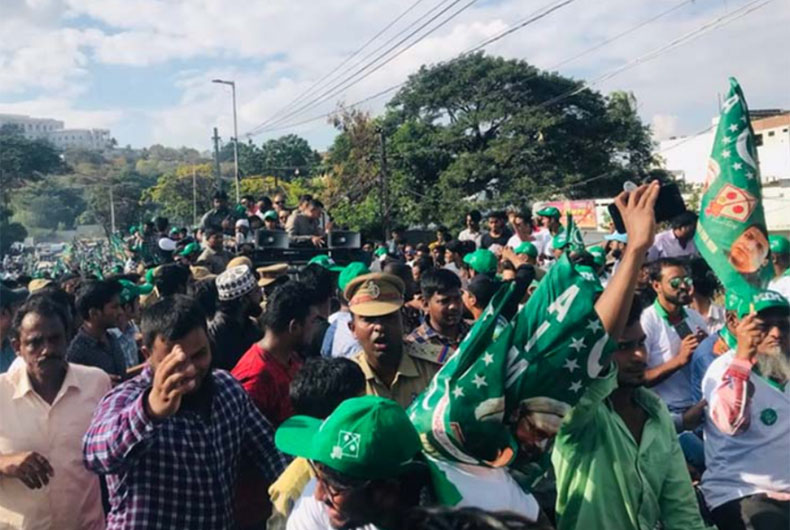
Making entry in Madhya Pradesh (MP) politics, Asauddin Owaisi’s AIMIM won local elections in Khandwa and played a spoiler for Congress in Burhanpur Mayor Elections 2022

Bhopal

Making entry in Madhya Pradesh (MP) politics, Asauddin Owaisi’s AIMIM won local elections in Khandwa and played a spoiler for Congress in Burhanpur Mayor Elections 2022, results of which were announced Sunday.

Khandwa and Burhanpur both have considerable population of Muslims. Khandwa was recently in news for the exodus of migrant labourers for lack of jobs.

The AIMIM candidate, Shakira Bilal, won the election from ward number 14 of the Khandwa Municipal Corporation by defeating her nearest Congress rival Noorjahan Begum by a margin of 285 votes.

Besides fielding its nominee Kaniz Fatima for Khandwa Mayor Election 2022, the AIMIM had fielded candidates in 10 wards of the Khandwa Civic Body that has a total of 50 seats.

Burhanpur Mayor Election Result

In Burhanpur Mayor Elections, AIMIM candidate polled a total of 10,274 votes – a huge number if compared with the margin of 542 votes by which the BJP Mayoral candidate defeated her nearest rival of Congress.

Madhuri Patel got a total of 52,823 whereas Shahnaaz Bano of Congress got 52, 281 votes in Burhanpur Mayor elections 2022.

AAP Debut in MP

Meanwhile, the debutant Aam Aadmi Party (AAP) also made its entry in Madhya Pradesh politics after winning mayoral post of Singrauli Municipal Corporation, the district which is filled with coal mining and also called – ‘energy capital of India’.

AAP candidate Rani Agrawal has won the election for mayoral post against BJP’s Chandra Prakash Vishwakarma.

Polling was held for mayoral posts in 11 municipal corporations, including Bhopal, Indore, Gwalior, Jabalpur, Sagar, Satna, Singrauli, Chhindwara, Khandwa, Burhanpur and Ujjain. A total of 101 candidates are fighting for the mayoral posts.

The counting of votes for the second phase of the MP municipal elections will be held on July 20.

source: http://www.ummid.com / Ummid.com / Home> India / by Ummid.com with input from Agencies / Jujly 17th, 2022

AIMIM wins 7 seats in Ahmedabad civic body on Gujarat poll debut

GUJARAT :

All India Majlis-e-Ittehadul Muslimeen (AIMIM) President Asaduddin Owaisi

Hyderabad MP Asaduddin Owaisi’s All India Majlis-e-Ittehadul Muslimeen (AIMIM) marked its debut in Gujarat polls by winning seven seats in the civic body of Ahmedabad.

Results of polls to six municipal corporations were declared on Tuesday, and AIMIM, which fielded 22 candidates in six wards, ended up with seven wins in two wards.

In Gujarat, each ward of a municipal corporation has four seats.

While a panel of four candidates won in Jamalpur ward, three out of its four contestants won in Maktampura ward in Juhapura area of the city.

Those who won in Jamalpur included former Congress corporators Mohammad Rafiq Shaikh and Mushtaq Khadiwala, while the third victor, Bina Parmar, was a new face.

The AIMIM did not field candidates in Surat, Vadodara, Rajkot, Bhavnagar and Jamnagar, which also witnessed civic polls on February 21 along with Ahmedabad.

Owaisi had addressed a large gathering here as part of AIMIM’s campaign.

(Only the headline and picture of this report may have been reworked by the Business Standard staff; the rest of the content is auto-generated from a syndicated feed.)

source: http://www.business-standard.com / Business Standard / Home> Elections> News / by Press Trust of India, Ahmedabad / February 24th, 2021

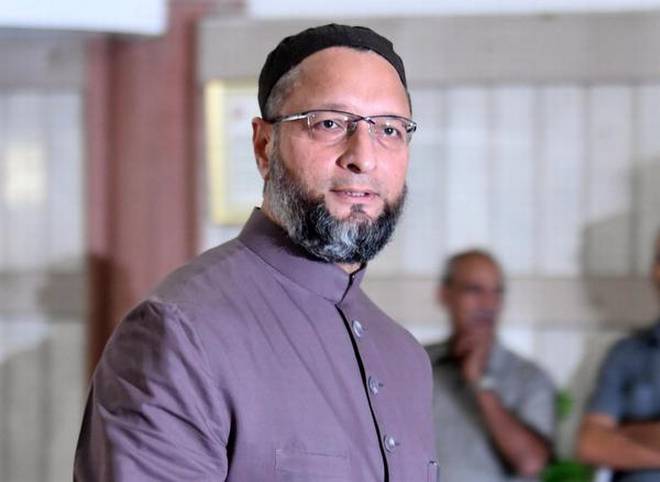
Asaddudin Owaisi | The champion of identity politics

Hyderabad, TELANGANA :

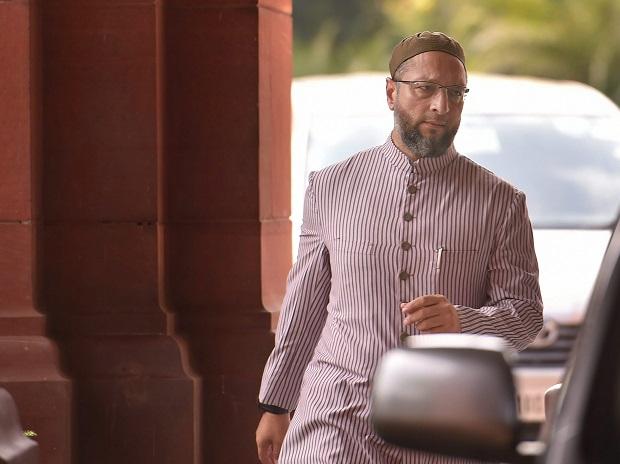
All India Majlis-e-Ittehad-ul-Muslimeen (AIMIM) leader and Hyderabad MP Asaduddin Owaisi. File   | Photo Credit: Sandeep Saxena

The young Owaisi, who wanted to be a lawyer, had to file his nomination papers to contest the 1994 Andhra Pradesh Assembly election

The year was 1994. Two years after the demolition of Babri Masjid in Ayodhya, there was turmoil in the All India Majlis-e-Ittehad-ul-Muslimeen (AIMIM), a party established by Abdul Wahed Owaisi. Members were deserting the AIMIM for not being vocal enough on the demolition of the masjid and there was an outcry that educated Muslims were not coming to join politics.

All eyes were on the 25-year-old Asaddudin Owaisi, Abdul Wahed’s grandson, who had just returned from London after completing a degree in law. “If in the early 1990s, you had told me that I would be contesting elections, I would have said you have gone bonkers,” Mr. Owaisi later said. It was a time when he worked at a denim store on Oxford Street, London, and served meals at McDonald’s to cover the tuition fee.

The young Owaisi, who wanted to be a lawyer, had to file his nomination papers to contest the 1994 Andhra Pradesh Assembly election.

Almost a lifetime since, he had been elected an MLA twice and an MP four times from Hyderabad, a seat that his father Sultan Salahuddin Owaisi represented six times. He has recast the archetype for Muslim leadership. Does he regret giving up law to be a lawmaker? “Regret…? I don’t know… It is a very subjective thing. I don’t regret things in life, you look at the good side of it and go ahead,” Mr. Owaisi said.

Rebirth of the party

The AIMIM is the reincarnation of Majlis-e-Ittehadul Muslimeen that opposed Hyderabad’s accession into the Indian union. Once the Hyderabad State was integrated into India, the party was banned and fell into disarray, many of its leaders migrating to Pakistan. Prefixing ‘All India’ to the MIM, Mr. Owaisi’s grandfather resurrected the party. Mr Owaisi doesn’t fail to remind frequently that the AIMIM is a party of those who did not go to Pakistan.

Years later, the same reason that led to Mr. Owaisi’s entry into politics is also a reason for his party’s expansion. The Congress and the Rashtriya Janata Dal (RJD), who were wary of engaging with Seemanchal voters on the question of the Citizenship Amendment Act (CAA) and the National Register of Citizens (NRC), left a vacuum into which Mr. Owaisi walked in, winning five seats in the Bihar Assembly election.

In his speeches across Seemanchal, he repeatedly asserted that he was the only one to tear off a copy of the “unconstitutional” CAA inside Parliament. He spoke of the “betrayal” by the RJD and the Congress. He delivers his speech in chaste Urdu, a language that is not exactly alien to his Bihari audience but definitely not conversational. His speeches were peppered with invocations of ‘Allah’. The Muslim identity is firmly in place, with a long sherwani, a skullcap and a moustache-less beard. The speech was delivered at a pace and pitch, similar to the Friday sermons by the clergy.

Broader alliance

However, Mr. Owaisi insists that he is not a “Muslim leader”. In a recent interview to The Hindu, he said: “We are not an exclusive Muslim party. I, Asaddudin Owaisi, am not a Muslim leader. I don’t want to be a Muslim leader, that is not my ambition or objective of my political journey.” The AIMIM has been working on forging an alliance between the Muslims, the Dalits and other backward groups.

Nor does he want his politics to be limited to Hyderabad. The AIMIM expanded in Maharashtra in 2012, winning in the Nanded Municipal Corporation election. The party’s success earned him the moniker of being a “BJP agent”, a long leap from supporting the Congress-led United Progressive Alliance during the 2018 no-confidence motion. Mr. Owaisi’s persistent indictment of mainstream parties for taking the ‘Muslim vote’ granted, coupled with the other parties’ attempt to look far more Hindu, has had political dividends for the AIMIM.

“They can call me all they want. It is like water off the duck’s back. During my childhood, RSS workers used to come to our home often, abuse us in an attempt to intimidate me. So, it is part of my growing up years,” he said.

Years ago, Mr. Owaisi may have joined politics unenthusiastically. But on November 10, when the Bihar results came, his 10-year-old son, wearing a similar long sherwani, sat on a chair next to him when he addressed his victory press conference. “He is a child. He wanted to sit with me, so how could I deny him,” Mr. Owaisi said.

He claims he was always an average student. He tries to read, but says that he is a very slow reader and its takes long preparations for him before speaking in Parliament. Despite Hyderabad being his base, Mr. Owaisi doesn’t speak Telugu. He says he has tried many times to study the language with a tutor who used to come to his home in Hyderabad. But politics always overtakes his plans.

source: http://www.thehindu.com / The Hindu / Home> News> States> Telangana / by Sobhana K Nair / November 15th, 2020