Rampur, UTTAR PRADESH :
Raffat Begum was a gifted poet and wrote with the pen name ‘Asmat’ and took advice from Azhar Inayati, a renowned poet of Rampur. She also wrote several barsaati folk songs celebrating monsoons as did Nawab Raza.
The names of brides have vanished from wedding cards in Rampur. So, we are cordially invited to the wedding of ‘Arif Khan, S/o Samiullah Khan to the daughter (no name) of Wahidullah Khan’. Even the names of women are concealed from vocalization by disrespectful male lips. The nameless miasma enveloping our girls is a recent trend in Muslim etiquette of this erstwhile princely state. It negates the ninety year journey the women of the city have traversed–all the tiny and large steps of emerging out of the zenanas, educating themselves and finding a voice. Maybe the unnamed daughter getting married was educated at one of the local women’s colleges established by the erstwhile Nawabs and has ambitions that involve a becoming.
The emancipative journey of Rampur women began with the decision of a queen – Raffat Zamani Begum, wife of Nawab Raza Ali Khan– to leave the confines of the harem and become something more than a name. Nawab Raza (1930-1947), an enlightened ruler fully supported his wife in her decision and was possibly influenced by her in his very western and ‘modern’ outlook. As the princesses and female members of the royal family followed Begum Raffat, there was a filtered down liberation among the women and girls of upper classes, and over the years a snowball effect that touched the lives of the of all classes of Rampur women.
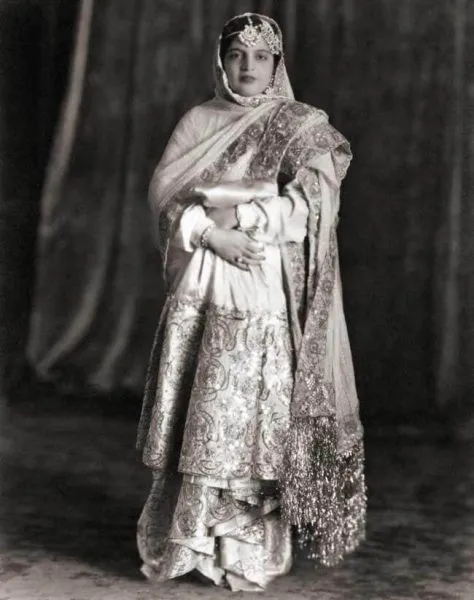
Raffat Begum was the daughter of Sir Abdus Samad Khan, Prime Minister of Rampur under the colonial rule, an impeccable gentleman who traced his antecedents from the Najibabad royal family. She was married to the crown prince, Raza Ali Khan, when she was five and he was six years old. The little bride sat on her grandmother’s lap, her heavy nath supported by her grandmother’s palm as the nikah ceremony was performed. The young daughter in law was granted all the paraphernalia of the future queen while still living with her father and had to attend court on special occasions. At a time when brides were given a new name and a title, her name was changed from Askari Begum to Raffat Zamani Begum.
When Raffat was thirteen, her father in law, Nawab Hamid Ali Khan (1894-1930) demanded that the rukhsati (going away ceremony) be performed. Raffat’s father insisted that they wait at least till the groom had completed his education. Raffat Begum wrote, and is quoted in her sister Jahanara Begum’s memoir, that the relations between the two gentlemen became strained. Finally, Nawab Hamid walked on foot from his Khas Bagh palace to the bride’s house, ‘Rosaville’, and the ceremony which usually took days was performed in a few hours; Raffat Begum left her paternal home amidst songs extolling the valiant Rohilla Nawabs and martyrs of ancient battles.
The teenage couple began their married life often separated by the political intricacies and rules of the harem. Oral history says that they were not allowed to live together for seven years and Raffat Begum was declared infertile after her first son was born. Raza was forced to take a second wife by his father and stepmother. The women of Raffat Begum’s family did not practice strict purda. Her mother was the daughter of the regent of Rampur, General Azamuddin Khan (1888-1891) who had earned the ire of the maulvis of the time for his ‘kristaan’ viewpoint and his championing of female education. Some say he was murdered because of his radical outlook. It is therefore unsurprising that the educated Raffat Begum rejected the claustrophobic harem life she had endured for the first ten years of her married life as soon as Nawab Raza came to power. The couple showed a proclivity towards the ‘modern’ and western lifestyle in all areas and Raffat Begum became a major mover in the drastic transformation of the Rampur durbar, the zenana and Rampur culture. Though not documented in written histories, the influence of Raffat Begum on the dress, cuisine and court etiquettes finds testimony in oral history.
We get a vivid description of the Begum in her stepdaughter , Mehrunnisa Begum’s memoir, ‘An Extraordinary Life.’
Home tutored in English, Persian and Urdu, Raffat Begum entertained distinguished guests at royal banquets and sat for official pictures––the first pictures of women from the royal family. She wore latest western dresses, make up and was a chain smoker –– a ‘modern’ thing to do. In fact, she encouraged her children to smoke as it was considered fashionable. However, some women continued to live in the royal zenana ––more out of lack of choice and under confidence–– but there was no constraint on their movement. Given that Nawab Raza’s predecessor, Nawab Hamid confined his women to a sequestered life behind the laal purda, this was the beginning of a drastic change in the thought process and lifestyle of elite Rampur women.
The young princesses were sent to a boarding school after being brought up by British nannies in a strictly regimented nursery. Emulating the new trend, the elite landowning families and those associated with the court started educating their sons and daughters at boarding schools. So, my mother and her siblings were sent to La Martinere in the 1950s. The 1960’s saw Rampur’s first female doctors, teachers, writers and lawyers ––aspirational models for young girls studying in government colleges now housed in the old palaces and zenanas of yore. Nawab Raza gave a lot of emphasis to education particularly female education and the girls from ordinary families were now sent to girls’ schools in the city after initial misgivings. Covered rickshaws and thelas (carts) transported the burqa clad young ladies to schools. My mother became a doctor in 1967 and the women of my family practiced a flexi-veil where they would cover their heads, sit in curtained cars in Rampur and don sarees and bellbottoms outside of Rampur.
Raffat Begum was a gifted poet and wrote with the pen name ‘Asmat’ and took advice from Azhar Inayati, a renowned poet of Rampur. She also wrote several barsaati folk songs celebrating monsoons as did Nawab Raza. Some of her poetry was published.
Begum Noor Bano, her daughter in law and ex-Member of Parliament, recalls the after-dinner dastan sessions with the children and grandchildren gathered around their beloved ‘Mummy’. The dastans were later written down by a scribe.
Mapara Begum, a court singer, says she would give importance to the lowliest person and welcome everyone with warmth. Which is why she was fondly called Raaj Maata, the queen mother of Rampur.
A few years after Nawab Raza’s death in 1966, Raffat Begum moved back to her father’s place, Rosaville, with her retinue of servants. It was an empty house. Her parents had passed away and her brothers and sisters had left in pursuit of their lives and careers. Life had come a full circle. She passed away at Rosaville in 1986 – an elegant begum, spirited and dignified till the end. Her plaintive lines are still echo on the lips of old timers:
“Aisey beemaar ki dava kya hai,jo batata nahi hua kya hai;
Kaun suntan hai is zamaney mein, kis se kahiye iltija kya hai.”
How can a person who cannot describe her ailment find a cure?
Even if I could find words for my pleas, would my entreaties find listeners.
Receiving yet another invite to the marriage of an anonymous daughter, I tried to remember the names of the wives of acquaintances and distant relatives. I came up with Naeem mamu ki biwi, Munney sahib ki ammi etc. etc. We are all guilty of using the blanket term bhabhi or khala to address the married women of various ages; we are introduced as wives, mothers and granddaughters. I used to laugh at the old style of explaining connections––‘Munney mian ki beti Shaddan Khan ke ghar mein hai’, indicating that Munney mian’s nameless daughter is married to Shaddan Khan. We have accepted an anonymous existence here and it is only logical that our girls get shrouded in namelessness on their wedding day.
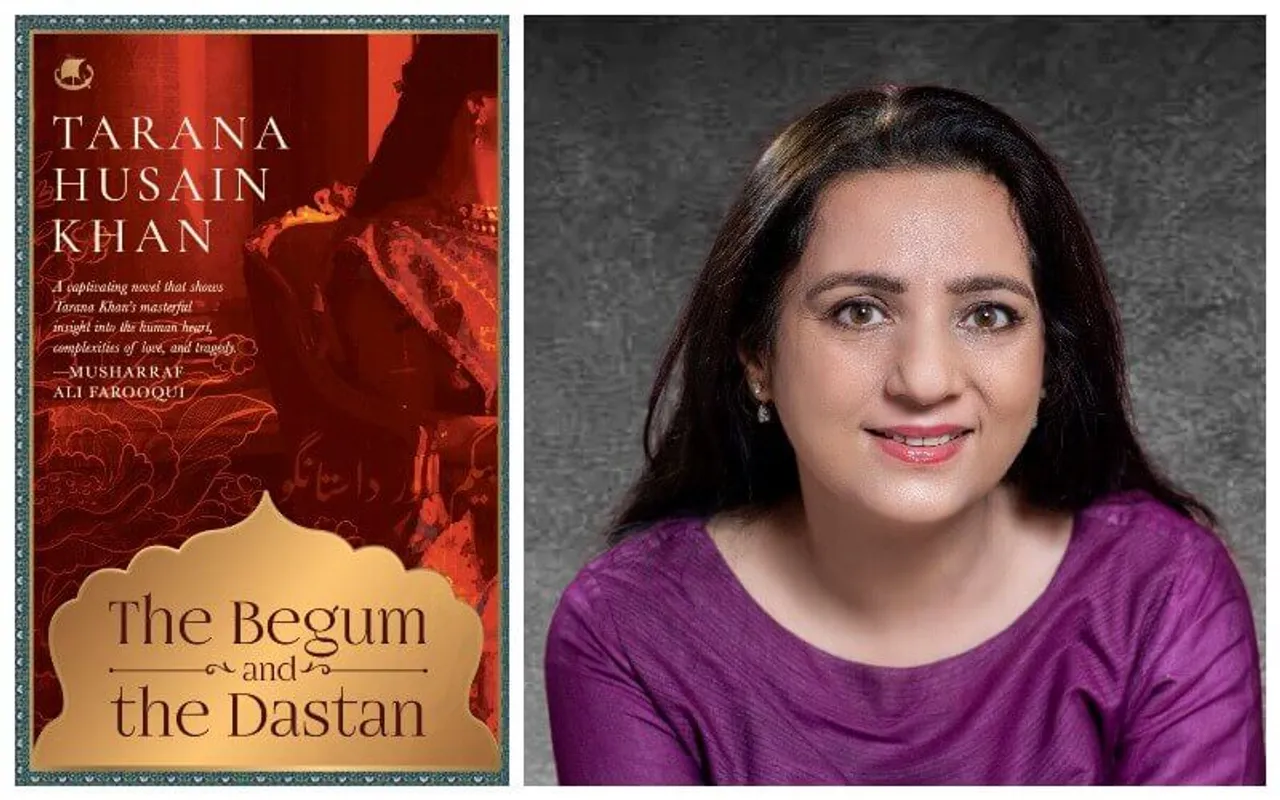
Tarana Husain Khan is a writer and researcher based in Rampur. Her historical fiction ‘The Begum and the Dastan’ has been recently published by Tranquebar. The views expressed are the author’s own.
source: http://www.shethepeople.com / SheThePeople / Home> Books / by Tarana Husain Khan / March 02nd, 2021