Tag Archives: Begum Qudsia Aizaz Rasul

Begum Qudsia Aizaz Rasul: The Only Muslim Woman In India’s Constituent Assembly | #IndianWomenInHistory

Lucknow, UTTAR PRADESH :

Begum Qudsia Aizaz Rasul was one of the 28 Muslim League members to join the Constituent Assembly of undivided India, and she was the only Muslim woman to be a part of the assembly.
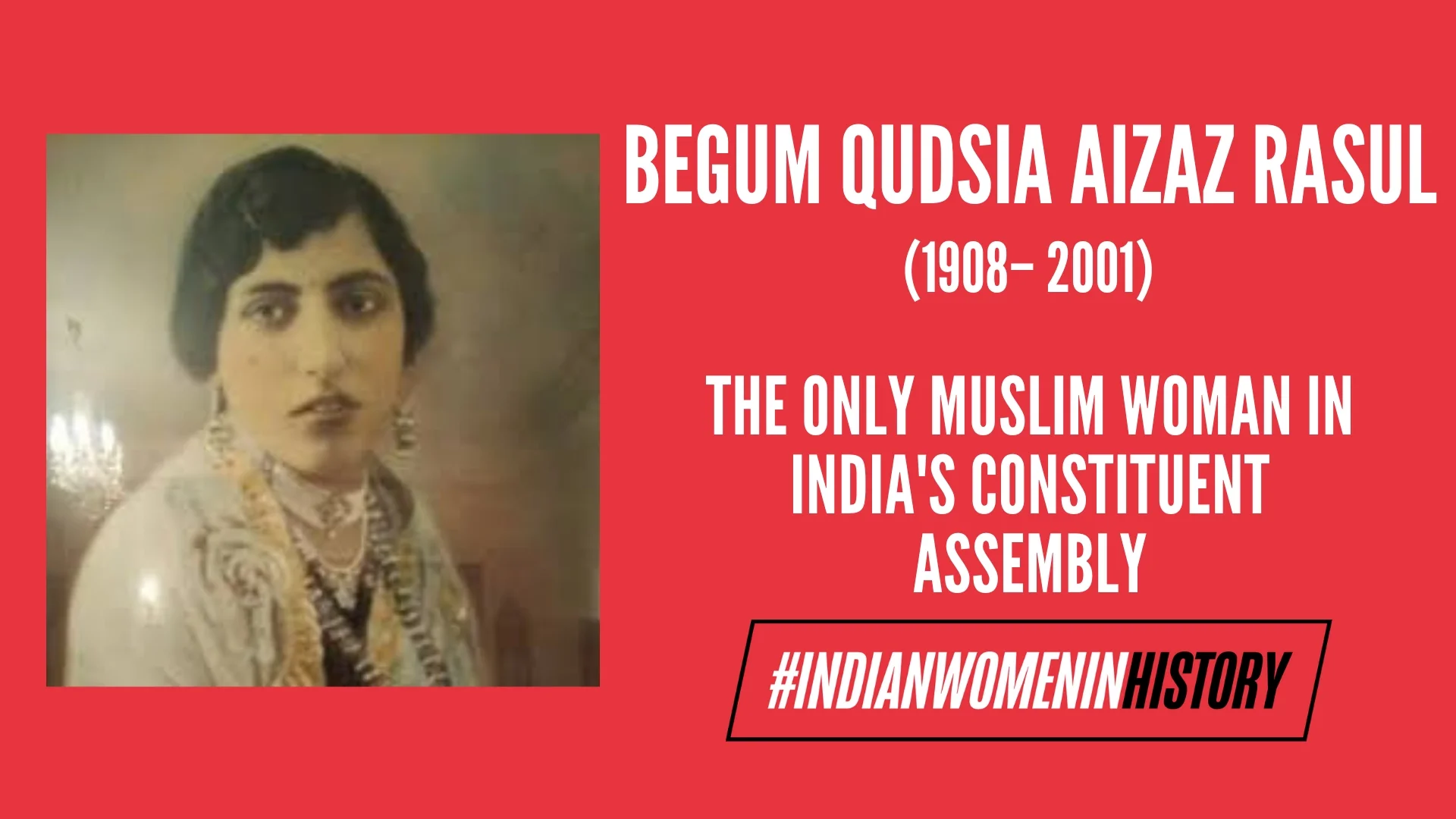
Begum Qudsia Aizaz Rasul was born to the royal family of Malerkotla (situated in erstwhile united Punjab) on 4th April,  1908. Her father was Nawab Zulfiqar Ali Khan. Qudsia had a progressive upbringing and was encouraged from a very early age to lead a modern life, as opposed to several stringent restrictions imposed upon other contemporary Muslim women, such as that of the purdah.

She got married at quite an early age to Nawaab Aizaz Rasul from the erstwhile province of Awadh. Her husband held the position of a taluqdar,  or a landowner. Qudsia had political exposure both before and after marriage, and her formal political participation took place after she got married.
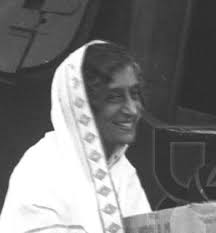
Image Source: Wikivividly

Political Career

Qudsia, along with her husband, joined the Muslim League in mid-1930s, soon after the passing of the Government of India Act in 1935. This was also her official entry into electoral politics, as she contested in the elections of 1937 from the U.P. legislative assembly, where she successfully held her seat till 1952. Aizaz was one of the very few female candidates to have contested and won from a non-reserved constituency during the pre-independent times.

She was the first Indian woman to achieve such feats, and this was truly commendable and noteworthy at a time when most formal political positions were almost implicitly reserved for men.

As an MLA, she also held several important posts, such as the Leader of Opposition (1950 to 1952) and the Deputy President of the Council (1937 to 1940). She was the first Indian woman to achieve such feats, and this was truly commendable and noteworthy at a time when most formal political positions were almost implicitly reserved for men. Moreover, to rise to prominence at a politically significant province such as the U.P. indeed made Qudsia Aizaz Rasul a trailblazer.
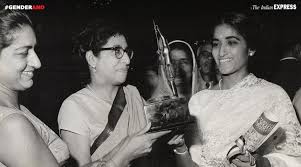
Image Source: Indian Express

She is well known for her progressive, anti-feudal stances, such as the abolition of the zamindari system. Qudsia was a strong advocate for the abolition of communal electorates as well, as she believed it divided the society more than it united – which was counterproductive for the Indian electoral candidates at a time when there was an urgent need of a united Indian front to oppose the colonial rulers. She went on to create a strong and convincing case for the abolition of electoral reservations for religious minorities during her tenure as a member of the Constituent Assembly.

Qudsia was one of the 28 Muslim League members to join the Constituent Assembly of undivided India, and she was the only Muslim woman to be a part of the assembly. Her contributions in the assembly debates remain monumental till date and have been recorded in many official sources.

Her contributions in the assembly debates remain monumental till date, and have been recorded in many official sources.

After the dissolution of the League, she joined the Indian National Congress, and served as a member of the Rajya Sabha from 1952 to 1958. Later, she became a member of the legislative assembly of Uttar Pradesh from 1969 to 1989.
Other Achievements

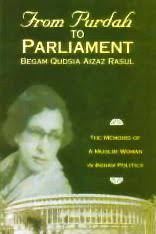
Begum Qudsia Aizaz Rasul is also well known for her autobiography, titled From Purdah to Parliament: A Muslim Woman in Indian Politics. It provides excellent insights into the intersectional aspects of organised politics as it functions in our country. Other than this, she also wrote a travelogue titled Three Weeks in Japan.

Besides her literary prowess, Qudsia had also served as the President of the Indian Women Hockey Federation for over fifteen years, and went on to become the President of the Asian Women’s Hockey Federation.

Begum Qudsia Aizaz Rasul was awarded the Padma Bhushan in 2000 for immense, invaluable contributions to the field of social work.

References

1. From Purdah to Parliament: Begum Aizaz Rasul (A Review) by Radhika Bordia
2. Begum Aizaz Rasul: The only Muslim woman to oppose minority reservations in the Constituent Assembly by Christina George

source: http://www.feminisminindia.com / Feminism in India – FII / Home / by Ekata Lahiri / February 15th, 2019
Muslim Women, Waqf, and the Power of Charitable Legacy: A Forgotten Force in the Shadows of Reform

INDIA :

A New Law, A Timeless Legacy

The Waqf Amendment Act 2025, recently passed by the Government of India, has stirred a wave of public discourse. Promising to regulate and modernize the administration of waqfproperties across the country, the law is being introduced as a means to improve transparency and benefit marginalized communities, especially Muslim women.

However, in this swirl of policy language, governance reform, and bureaucratic oversight, we must not forget a foundational truth: Muslim women have always been central to the waqftradition—not as passive recipients, but as active architects of community transformation.

Waqf as a Tool of Empowerment—Before the State Claimed It

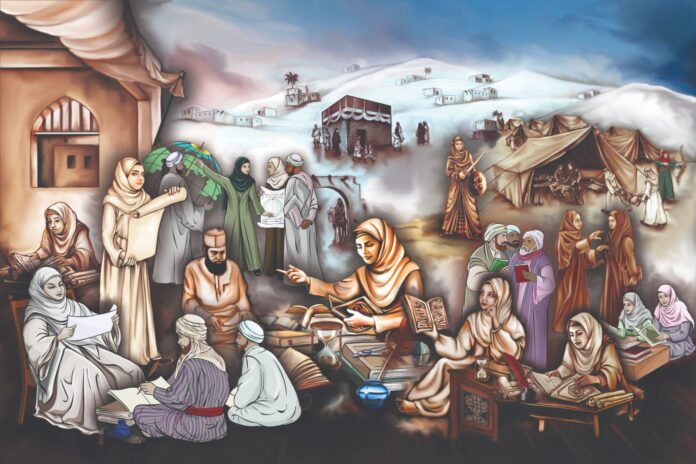
Before governments created waqf boards, before institutional frameworks shaped their regulation, and long before women were officially recognized in policy narratives, Muslim women in India were shaping societies through charitable endowments.

They:

• Founded schools and madrasas for girls and boys alike

• Donated lands and properties for the construction of mosques, shrines, and Sufi lodges

• Built hospitals, water fountains, and orphanages

• Funded scholarships, welfare kitchens, and even public rest-houses for travelers.

This was not mere charity—it was strategic social intervention, embedded in Islamic ethics and guided by a vision of communal upliftment.

👑 Queens of Waqf: A Glimpse into Heroines of Charity and Community Leadership

🏛️ Razia Sultana (1205–1240, Delhi)

India’s only woman Sultan, Razia established educational and civic institutions supported by state waqf. Her leadership emphasized justice, learning, and infrastructure.

🏛️ Jahanara Begum (1614–1681, Delhi)

Daughter of Shah Jahan, she created waqf endowments for Sufi shrines, caravanserais, and public gardens. Her waqf documents are among the earliest female-authored ones preserved in India.

🏛️ Roshanara Begum (1617–1671, Delhi)

Sister to Jahanara, she built Roshanara Garden and a Sufi lodge. She maintained religious institutions through royal waqf.

🏛️ Sultan Jahan Begum (1858–1930, Bhopal)

The last Begum of Bhopal, she modernized education, built hospitals, supported madrasas, and legally registered many waqf properties to support her reforms.

🏛️ Begum Hazrat Mahal (1820–1879, Lucknow)

Regent of Awadh, she protected the city’s religious institutions and supported waqf-based welfare during the 1857 Rebellion.

🏛️ Khair-un-Nissa Begum (18th c., Hyderabad)

Established Khairtabad Mosque and other public works through her waqf. One of the early noblewomen to invest in education and water supply systems.

🏛️ Begum Rokeya Sakhawat Hossain (1880–1932, Kolkata)

A visionary educationist, she established the Sakhawat Memorial Girls’ School using her own resources and informal waqf practices. A true reformer of women’s rights.

🏛️ Begum Sughra Humayun Mirza (1884–1958, Hyderabad)

Urdu novelist and educationist who established the Safdariya Girls School through personal endowment. One of India’s earliest women school founders.

🏛️ Princess Durru Shehvar (1914–2006, Hyderabad)

Ottoman princess and daughter-in-law of the Nizam. Founded the Durru Shehvar Hospital, a major maternity and child-care waqf.

🏛️ Princess Niloufer (1916–1989, Hyderabad)

Ottoman royal by birth and philanthropist. Established Niloufer Hospital for women and children in response to maternal health tragedies.

🏛️ Dr. Uzma Naheed (Contemporary, Mumbai)

Thinker and leader who founded the IQRA International Women’s Alliance. Created vocational and educational centers for women through charitable trusts and waqf-like models.

🏛️ Begum Abadi Bano (Bi Amma) (1850–1924)

Mother of freedom fighters Maulana Mohammad Ali and Shaukat Ali, she supported the Khilafat movement and women’s education through charity and informal waqf support.

🏛️ Begum Qudsia Aizaz Rasul (1909–2001)

Only Muslim woman member of the Indian Constituent Assembly. Promoted educational waqfs and women’s legal rights in independent India.

🏛️ Hamida Habibullah (1916–2018, Lucknow)

Educator, politician, and philanthropist who helped establish Talimgah-e-Niswan, a leading girls’ school, partially supported by endowments and community waqf models.

🏛️ Tayyaba Begum (early 1900s, Hyderabad)

Co-founder of Anjuman-e-Khawateen-e-Deccan, she organized women’s welfare through educational trusts and neighborhood charities alongside Sughra Humayun Mirza.

These women are not anomalies in history. They are evidence of a forgotten mainstream—a rich legacy of Muslim women using waqf, education, and philanthropy to shape the public sphere.

What the Law Misses

The 2025 Amendment claims to create better access for women and transparency in waqfgovernance. Yet, many community members raise concerns about:

• Increased government control over waqf boards

• Reduced autonomy of local Muslim stakeholders

• Weak representation of women in decision-making roles

If reform is truly meant to benefit women, it must not just focus on current access. It must honor and preserve the legacy of those women who built the system through vision, sacrifice, and faith.

Reclaiming the Narrative

As students of history and as researchers in the contributions of Muslim women across disciplines—al-Muhaddithat, scholars, judges, educators, warriors, nurses, and philanthropists—we find it essential to reclaim and highlight this tradition in the current discourse.

This document delves into the intersections of gender, history, law, and social development, spotlighting women’s roles in charitable work and community building through waqf and related institutions.

Our goal is not just to preserve history, but to activate it: to inspire current and future generations to recognize the power of service, leadership, and waqf in reshaping communities. The struggle for recognition today stands on the shoulders of those who built with purpose and gave with dignity.

Conclusion: From Past to Future

Muslim women in India have been pioneers of welfare through the waqf system for centuries. Their work wasn’t performed for applause or public acclaim. It was done with quiet resolve, deep faith, and a vision for lasting impact.

As new policies reshape the landscape of waqf, let us not merely react—we must respond with wisdom, rooted in history and hope. Let the legacy of women like Razia, Jahanara, Durru Shehvar, Niloufer, Sughra, and Uzma guide us in reimagining waqf as a tool not only for preservation—but for progressive, inclusive development.


The author is a Social Worker, Student of History and Educator

source: http://www.muslimmirror.com / Muslim Mirror / Home> Education> Positive Story> Waqf> Women / by M A Lateef Atear / June 04th, 2025

Tales from 20th century ‘path-breaking’ Muslim women on view

INDIA :

Photo Courtsey: social media

New Delhi, (IANS)  :

Stories of conviction and contribution of Indian Muslim women, who “gave up the purdah” and were at “the forefront of the nationalist and feminist discourse” in the past century are on display here.

The exhibition on 21 “pathbreakers” opened for public view on Saturday.

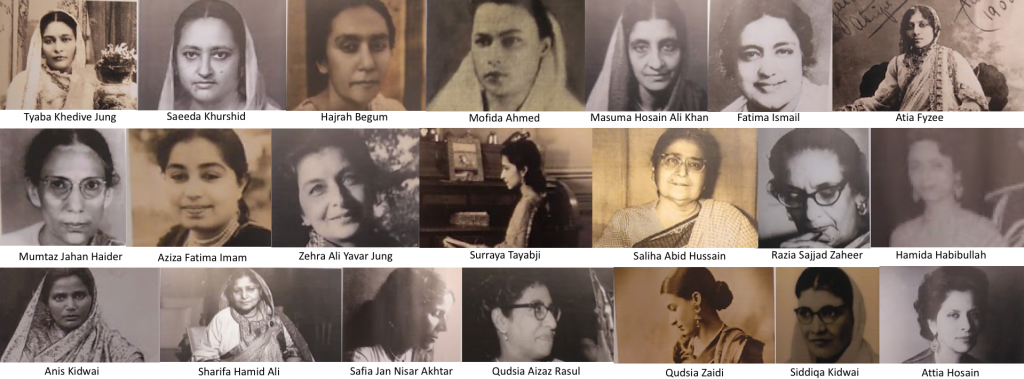
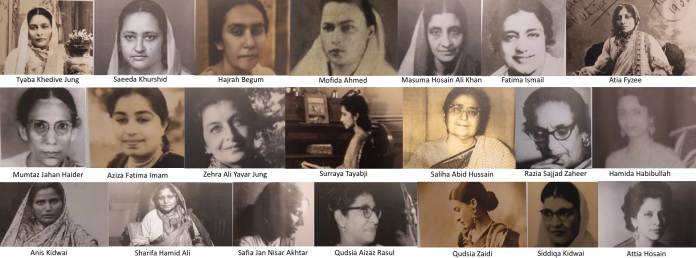
Organised by Muslim Women’s Forum at the India International Centre (IIC), the show “Pathbreakers: The Twentieth Century Muslim Women of India” features women who remain largely unheard of and unsung in the mainstream narrative.

During and after the freedom movement, a note on the exhibition said, many Muslim women shed the ‘purdah’ and became partners in the project to build a new India.

They went on to become writers, teachers, artists, scientists, lawyers, educators, political workers, trade unions, MPs, and MLAs.

“With a few exceptions, most of them have been forgotten in time.”

The show, inaugurated by author-filmmaker Syeda Imam (granddaughter of early 20th century writer-educator Tyaba Khedive Jung), embodies the spirit of the active contribution of these women, and as Imam said, “were not in the recesses of home and kitchen”.

Far from the commonly-held impression of silenced, cloistered and acquiescent women, ‘Pathbreakers’ narrates the stories of strong, determined and engaged women, the note said.

Some of these women include Qudsia Aizaz Rasul, the only Muslim woman member of the Constituent Assembly and author of “From Purdah to Parliament: A Muslim Woman in Indian Politics”; Assam’s first woman MP Mofida Ahmed, elected from Jorhat in 1957; and Aziza Fatima Imam, who served in the Rajya Sabha for 13 years starting 1973.

Why Muslim women?

The exhibition of photographs, text and video installations, points to their significant contribution towards the building of the nation, along with their sisters of other communities, through its freedom struggle, independence and beyond.

“A multiplicity of stereotypes are constructed by diverse actors regarding Muslim women. But the fact is there is no undifferentiated amass’ of Muslim women. Like women of all socio-cultural groups, they too are a divergent, shifting composition of individuals, often dumped in popular parlance into one single heap. This homogenisation has to be rejected,” the note read.

The show also projects video recordings of readings from writings of some of the featuring women.

The organisers, however, said while the participating women might seem elite, it is only the first step in identifying and recognising pathbreakers from all sections.

Featured are Anis Kidwai, Atiya Fyzee, Atia Hossain, Aziza Imam, Fatima Ishmael, Hamida Habibullah, Hajira Begum, Mofida Ahmed, Masuma Begum, Mumtaz Jahan Haider, Qudsia Aizaz Rasul, Qudsia Zaidi, Razia Sajjad Zaheer, Saleha Abid Hussain, Sharifa Hamid Ali, Saeeda Khurshid, Safia Jan Nisar Akhtar, Siddiqa Kidwai, Surayya Tyabji, Zehra Ali Yavar Jung and Tyaba Khedive Jung.

This exhibition was first held here in May, and was supported by the UN Women. The current show is open till December 8.

source: http://www.twocircles.net / TwoCirlcles.net / Home> Indian News> Indian Muslim / by IANS / December 03rd, 2018

Paying Tribute to Pathbreaking, and Forgotten, Muslim Women from the 20th Century

Muslim women who were at the forefront of the nationalist and feminist discourse in the country, during and after the independence movement, were eventually overlooked or excluded from the mainstream narrative.

MWF exhibition featured 21 Muslim women who contributed to nation-building during and after the independence struggle. Credit: Khushboo Kumar

New Delhi:

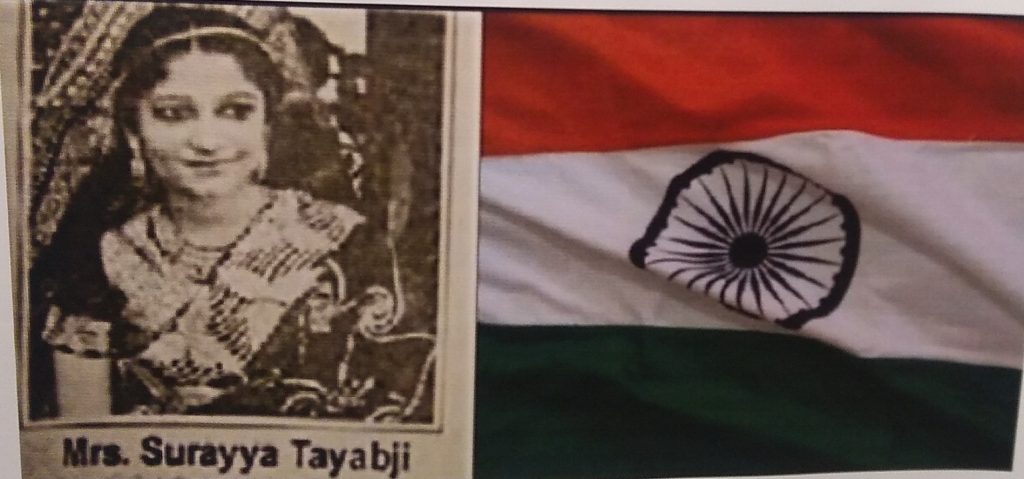
Most Indians today may not be aware that the national flag was designed by a Muslim woman, Surayya Tayabji, an active member of the Indian National Congress. Jawaharlal Nehru assigned this task to Tayabji, and it was her idea to replace the symbol of the charkha used and popularised by Mahatma Gandhi with that of Ashoka Chakra at the centre of the flag. Tayabji felt that the charkha, a symbol of the Congress party, might appear partisan.

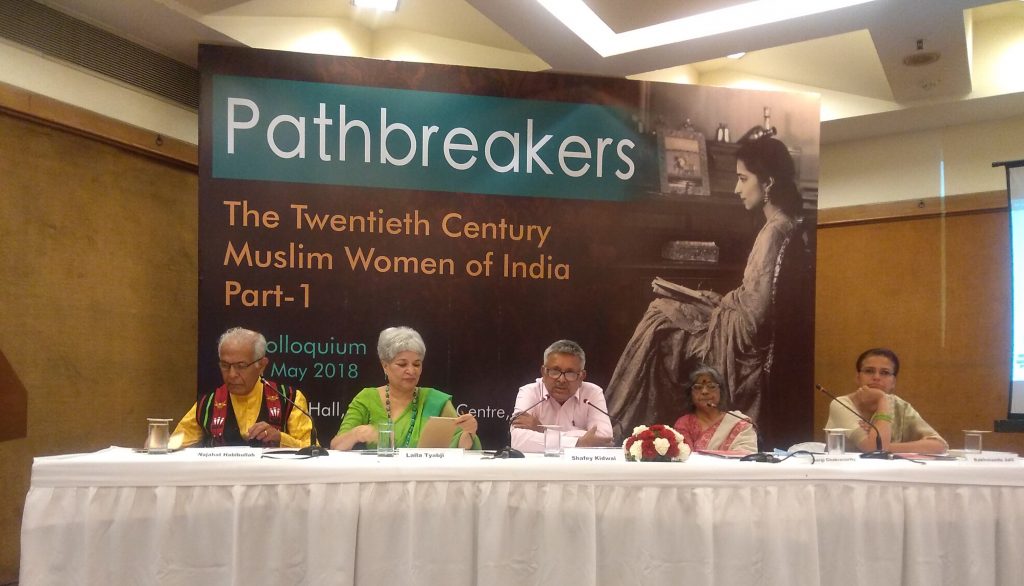
Narratives like this – often forgotten or lost in public memory – were the central theme of a colloquium that was organised by the Muslim Women’s Forum (MWF), an organisation engaged in the advocacy of Muslim women’s rights. Titled ‘Pathbreakers: The Twentieth Century Muslim Women of India’, the colloquium held in partnership with UN Women showcased the achievements of 21 Muslim women in various spheres of public life during and after the independence struggle.

Other women who featured in the exhibition included Saeeda Khurshid, Hamida Habibullah, Aziza Fatima Imam, Qudsia Zaidi, Mofida Ahmed, Zehra Ali Yavar Jung, Razia Sajjad Zaheer, Tyaba Khedive Jung, Atiya Fyzee, Sharifa Hamid Ali, Fathema Ismail, Masuma Hosain Ali Khan, Anis Kidwai, Hajrah Begum, Qudsia Aizaz Rasul, Mumtaz Jahan Haider, Siddiqa Kidwai, Attia Hosain, Saliha Abid Hussain and Safia Jan Nisar Akhtar.

The speakers participating in the discussion talked about the need to reclaim the lost narratives of Muslim women and take control of their representation.

Speaking on the occasion, Seema Mustafa, an Indian print and television journalist, pointed out that these women would not fit even the current stereotypical representation of hijab-clad, oppressed and orthodox Muslim women, who need a messiah to rescue them. Mustafa, in her keynote address, said that these women had broken barriers and challenged patriarchal order in their time; they followed Islam in its liberal spirit, refusing to be shackled by societal norms. Most of them abandoned the purdah system, she said.

Speakers panel for the session ‘Recognising and Nurturing Pathbreakers’ at Muslim Women’s Forum colloquium. Credit: Khushboo Kumari

Stereotypes in modern India

The speakers insisted that the reality was and still is that Muslim women, just like women belonging to any other socio-cultural group in India, do not constitute a monolithic, homogenous entity. They come from diverse backgrounds and subscribe to varying ideologies. Muslim women have been and still are writers, teachers, artists, scientists, lawyers, educators, political workers, legislators in parliament and in assemblies. The speakers said clubbing them under the generic rubric of backwardness was a misrepresentation.

As the regular use of terms like triple talaqhalala and purdah has come to demonstrate subjugation of Muslim women, Islam has acquired the status of the most oppressive religion for women, the speakers said. Muslim women have become an object of pity.

Commenting on Islam and feminism, Farida Khan, former dean of education at Jamia Millia Islamia and former member of the National Commission for Minorities, pointed out that gender oppression is common to all religions. “Why should Islam have the burden of taking on feminism?” asked Khan. She further explained that Islam should be perceived and understood in the social and historical context of the day. Every religion has to and does evolve with time.

Referring to the exhibition, Khan said, “It makes me sad to think that you need to have an exhibition and you need to project these women in a country where they should be well known, where they should be part of the mainstream, where everybody should know their names and know the work they have done.”

Gargi Chakravartty, former associate professor of history in Maitreyi College and author, said, “Muslim women’s political and social contributions in the pre-independence period during the major Gandhian movements or in the field of spreading education, or in the sphere of literary activities, cannot be erased from history.” She shared many anecdotes that came up in her own research about largely unknown Muslim women who have extensively worked among the poor throughout the 20th century and still continue to do so.

An eminent speaker at the colloquium, Rakshanda Jalil, recently wrote a book A Rebel and Her Cause on the life of Rashid Jahan. Jalil spoke of the inspiring life of Jahan, who was a doctor, writer, political activist and member of the Communist Party of India.

Farah Naqvi, member of the Post-Sachar Evaluation Committee (Kundu Committee) 2013-2014, summed up the purpose of the colloquium and the exhibition. “This colloquium is a response. There is a nostalgia about it. But it is not just about the nostalgic nawabi Muslim. It has a political purpose, the colloquium, which is that you cannot allow any one strand of history to be obliterated from this country. Any strand. It could be Muslim women today. It could be someone else tomorrow,” Naqvi said.

Questioning if Muslim women needed to be forced into a separate constituency, Naqvi said it was indeed a tragedy that these women’s contributions were not a part of mainstream knowledge – and that reflected failure on the part of Indian historiography.

Naqvi also pointed out that the undercurrent of the entire exhibition was nation-building because they were “also responding to a moment when Muslims are repeatedly being told that they are ‘anti-national’”. She further explained that against such a background, the Muslim community in general should not take the bait of proving that they are ‘good’ nationalists. Instead they should take pride in the achievements they have made in their respective spheres of work – especially for those who stayed on in India after the Partition.

Wajahat Habibullah, India’s first chief information commissioner and the son of Hamida Habibullah, one of the 21 women featured in the exhibition, talked about Partition and how it divided his family. He said, “It is necessary to remember and nurture the memories of all those Muslim women who then very consciously, despite family pressure and contradictions within the family, opted clearly to be a part of India”.

Contribution to literature, politics and education

The exhibition showed how extensively Muslim women have contributed in the spheres of politics, literature, education and social work.

Many like Saeeda Khurshid, founder of the Muslim Women’s Forum, actively campaigned for the Congress party. Hamida Habibullah was the the president of the Mahila Congress. Few like Aziza Fatima Imam, Fathom Ismail, Anis Kidwai, Siddiqa Kidwai and Qudsia Aizaz Rasul were members of the parliament and legislative assemblies for years.

Rasul was also the only Muslim woman member of the constituent assembly.

Sharifa Hamid Ali founded the All India Women’s Conference (AIWC), with the likes of Sarojini Naidu, Rani Rajwade and Kamaladevi Chattopadhyay, and was involved in its work alongside others like Masuma Hosain Ali Khan and Hajrah Begum – who also founded the National Federation of Indian Women.

These women actively worked with the poor and marginalised sections of society, trying to improve their access to health and education.

Zehra Ali Yavar Jung, who was awarded the Padma Bhushan in 1973, worked to improve the condition of women detainees in Hyderabad’s prisons and presided over a women’s workshop that trained and provided employment to destitute women. Fathom Ismail helped in opening rehabilitation clinics for children suffering from polio. Anis Kidwai worked tirelessly in refugee camps after Partition.

Surayya Tayabji and the Indian national flag displayed at the MWF exhibition. Credit: Khushboo Kumari/The Wire

Mumtaz Jahan Haider, who was appointed the principal of the Aligarh Women’s College in 1937, worked for women’s education her entire life.

Sharifa propagated legal reforms for Muslim women, including raising the age of marriage and drafting a model marriage contract ‘nikahnama‘.

In the field of literature and arts, these women won multiple awards. Razia Sajjad Zaheer, the recipient of the Nehru Award and Uttar Pradesh State Sahitya Academy Award, wrote novels like Sar-e-ShamKante and Suman. Anis Kidwai recieved the Sahitya Kala Parishad Award.

Attia Hossain used to write for PioneerStatesman and Atlantic monthly and wrote several novels, most notably Sunlight on a Broken Column and a short story collection Phoenix Fled. Aliya Fyzee wrote Indian Music (1914), The Music of India (1925) and Sangeet of India (1942) with her husband.

Qudsia Zaidi wrote and translated books for children, with Chacha Chakkan ke Draamae among the most loved ones. She also founded Hindustani Theatre in 1954, the first urban professional theatre company in independent India.

Khushboo Kumari has a BTech in information technology and is pursuing an MBA in marketing from MICA, Ahmedabad. She is an intern at The Wire.

source: http://www.thewire.in / The Wire / Home> History> Religion> Women / by Khushboo Kumari / May 30th, 2018

From Purdah To Parliament: Begum Aizaz Rasul

UTTAR PRADESH :

http://www.ndtv.com/people/from-purdah-to-parliament-begum-aizaz-rasul-1652956?site=full


Begum Aizaz Rasul was the only Muslim woman in the Constituent Assembly that drafted the Constitution.

source: http://www.ndtv.com / NDTV / Home> People / written by Radhika Bordia / January 26th, 2017

The Subaltern Speak

Mumbai, MAHARASHTRA :

A Mumbai-based voluntary group launches a diary about the contribution of Indian Muslim women.

(From right) Book jacket of the diary; one of the inside pages that acts as a separator

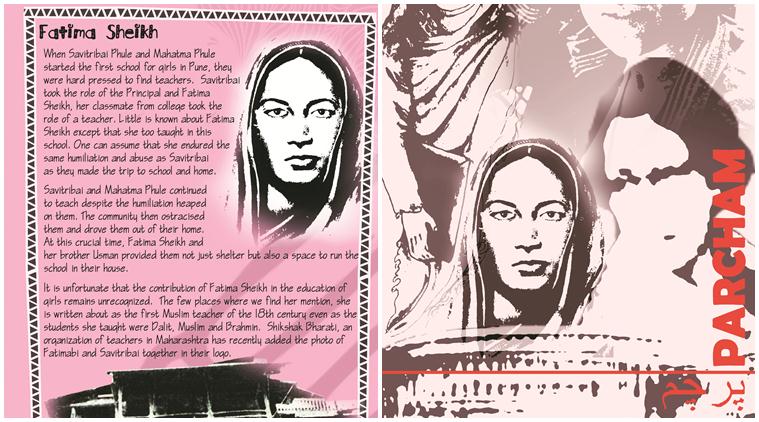
Earlier this week, several Indian intellectuals and feminists paid homage to Savitribai Phule on her 185th birth anniversary. The contribution of the social reformist towards women’s rights, especially in the field of education, is now being recognised. However, Fatima Sheikh continues to be an elusive figure in Indian history. A diary introduced by Parcham Collective — a voluntary group in Mumbra in Thane district — celebrates Sheikh and several other pioneering Muslim women, who have contributed to society but have remained largely unacknowledged.

“In a political environment when the minorities in India, especially the Muslims, are having to prove their allegiance to the country, we hope this diary will reiterate that we aren’t the ‘other’,” says Sabah Khan, one of the co-founders of Parcham Collective, which attempts to break stereotypes based on religion, class, caste and gender. Active since 2012, they have been working with girls and have been successful in using football among adolescents to reclaim public space for the feminine gender and also bridge the gap between Hindus and the dominant Muslim population of Mumbra.

In the diary, Sheikh, a 2016 organiser, is the first Muslim woman, among six. Savitribai’s classmate from college, she not only taught at her school but also gave the Phule couple shelter when they were ostracised by the society for their work. The other women include Rokeya Sakhawat Hossain (1880-1932), Nazar Sajjad Hyder (1894-1967) and Rashid Jahan (1905-1952), among others. Their stories appear with illustrations and act as separators between the diary pages.

The idea of a diary, says Khan, came up earlier in 2015 during a discussion on Muslim women and their contribution to society. “At a time when education of the Muslim girl child is an issue and girls often drop out of school in Mumbra, we wanted to highlight women as role models who would inspire people,” says Khan.

The Parcham Collective team had been trying to unearth names and information of such women for a long time; the information had been tough to come by. It took them three months of research, tapping feminists such as Uma Chakravarti, and the names started to come up.

So there is Rashid Khan, a gynaecologist and writer, who was an inspiration to writers such as Premchand, Ismat Chughtai and Faiz Ahmed Faiz. A member of the Progressive Writers’ Movement, Rashid spoke about the oppression Muslim women faced everyday. As for Begum Qudsia Aizaz Rasul (1908-2001), few are aware that the Indian Women’s Hockey Cup is named after her. A politician from a privileged family, her key contributions include fighting for the abolition of the zamindari system and encouraging sports among women.

This is their first diary, but Parcham Collective wants to make it an annual project, using it to talk about subaltern women. They hope to dedicate the 2017 diary to Muslim women across the world in the arena of sports. “While the diary has been welcomed by feminists, we believe the real success of the project will be if common people purchase it and gain from it,” says Khan. Buyers can visit Parcham Collective’s Facebook page page and place an order for the diary.

source: http://www.indianexpress.com / The Indian Express / Home> Lifestyle> Book / by Dipti Nagpaul D’Souza / January 07th, 2017