Tag Archives: Delhi Sultanate

Roshanara Begum: A Princess or a Powerhouse?

DELHI / INDIA :

The wider Indian audience, including many women in the 21st century believe that this is the most emancipated age of women and the women who proceeded them from centuries gone by were powerless dolls dressed in finery and painted and wooed by the men of the ancient and medieval world. 

Compared to most countries of the world, India has had a longer and a more complex story, where the fortunes of women advanced and regressed from time to time. India is the only country of the time where a Muslim woman was chosen by her father to be the heir of his throne, we are ofcourse referring to Razia Sultan and her father Iltutmish of the Delhi Sultanate period in the 13th century.

After Razia and into the Mughal period, we increasingly see the growing power of the Mughal women which was not just limited to women of the royal family. Many icons of Delhi, some of which are even part of the UNESCO World Heritage Sites have been built by women for their husbands.

Bega Begum was the senior wife of Emperor Humayun, who got his incredible mausoleum built. Similarly Fatehpuri Begum was one of the wives of Emperor Shah Jahan and she has left us with the iconic Fatehpuri Mosque situated at the heart of Chandani Chowk.  

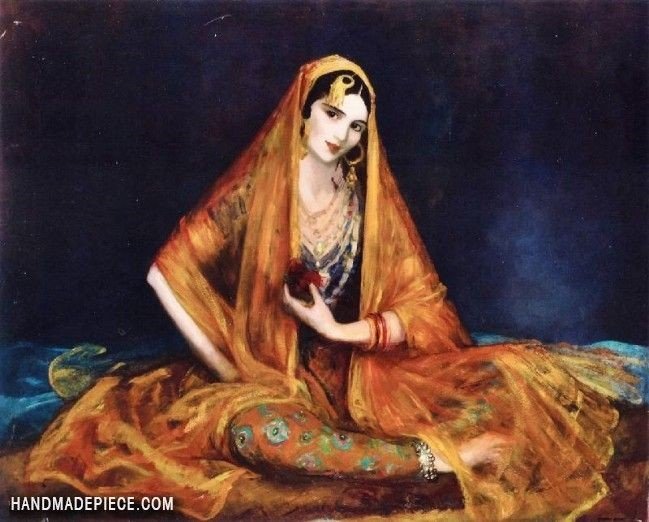
Born in 1617, Roshanara Begum was a Mughal princess and the second daughter of Emperor Shah Jahan and his wife, Mumtaz Mahal. Roshanara was a brilliant woman and a talented poet. She was a partisan of her younger brother Aurangzeb and supported him during the war of succession which took place after Shah Jahan’s illness in 1657. After Aurnagzeb’s accession to the throne in 1658, Roshanara was given the title of Padshah Begum by her brother and became the First Lady of the Mughal Empire. She became a powerful political figure.

Roshanara’s rise to power began when she successfully foiled a plot by her father and Dara Shikoh to kill Aurangzeb. According to history, Shah Jahan sent a letter of invitation to Aurangzeb to visit Delhi, in order to peacefully resolve the family crisis. In truth, however, Shah Jahan planned to capture, imprison and kill Aurangazeb in prison as he viewed his third son as a serious threat to the throne. When Roshanara got wind of her father’s plots, she sent a messenger to Aurangzeb, outlining their father’s true intentions, and warning Aurangazeb to stay away from Delhi.

Aurangazeb was extremely grateful to Roshanara for her timely warning. When the war of succession was resolved in favour of Aurangzeb, she quickly became a very powerful and effective figure at court. Fearing that Dara Shikoh would kill her for her role in the war of succession if he ever returned to power, Roshanara insisted that Aurangazeb order Dara’s execution. Legend has it that Dara was bound in chains, paraded around Chandni Chowk and beheaded. Roshanara then had his bloody head wrapped in a golden turban, packaged neatly and sent to her father as a gift from Aurangzeb and her. Shah Jahan, who opened the package just as he was sitting down to dinner, was so distressed by the sight of his favorite son’s head that he fell unconscious to the floor. He remained in a stupor for many days after the incident.

Eventually, however, Roshanara and Aurangzeb fell out with each other. Mughal princesses were obliged to remain single since the time of Akbar so their offspring would not make a challenge for the throne. Roshanara was rumoured to have taken on lovers, which was not viewed well by Aurangzeb.

After her fall from grace, she chose to leave the court at the Red Fort and built for herself the Roshanara Bagh complex which is about six kilometres from the Red Fort. She was a lover of the arts and music and didn’t prefer the austere lifestyle promoted by Aurangzeb. This is proven by the fact that when one visits Roshanara Bagh the remaining building itself is built in a very romantic style, a Baradari (open on all sides) built surrounded by a pool of water apart from the canals and gardens surrounding it. 

Even within the Baradari the main motif for decorations seems to be nature, one can see remnants of blooms on every wall, arch and even the capitals of the slender pillars. The fades blue, green and red colours gives us an idea as to how brilliant and bright the designs were when Roshanara herself was in residence. 

The main gate of entry into the gardens still has mosaics left on its upper parts, which show that a bright hue of yellow was used apart from the blue, green and red. One can imagine, how this gate shone in the brilliance of the sun with such a colour combination. 

The brief history that has remained about the life of Roshanara Begum shows us what a woman she was and more importantly how open Mughal society was at least for the women of the royal household and nobility. 

The fact that she was capable enough to understand the intrigues of Shah Jahan along with Dara Shikoh in order to get Aurangzeb eliminated shows us that she had a perfect understanding of such matters and how to play a role in it. 

Her warning to Aurangzeb guaranteed her power when he acceded to the throne and in return she became the most powerful woman in the Mughal Empire. The fact that such a rank existed in the first place showcases how Mughal princesses were considered an integral part in the proper functioning of the State. 

She had her own sources of income which no doubt increased after she was bestowed with the rank of Padsha Begum. The fact that she bought land, had a beautiful and very extensive garden complex built for herself and lived a life of luxury shows to us that she was a highly educated woman understanding the complexities of titles, deeds, interests, savings etc.

She even had the power to decide where she wanted to be buried. She didn’t choose a pious cemetery but rather had herself buried within the Baradari of her beautiful gardens, the gardens which we still get to enjoy after more than three centuries of her passing and have made her name immortal in annals of time. 

source: http://www.thewomb.in / The Womb / Home> Blog> Entertainment> Lifestyle / by Barun Ghosh / October 29th, 2020
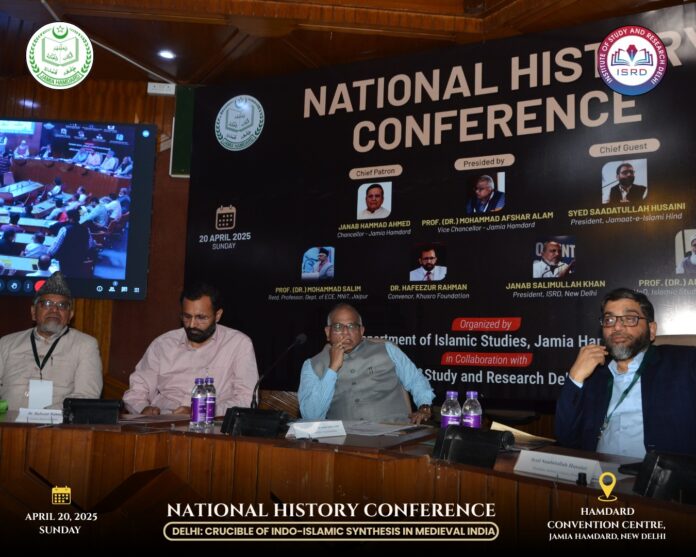
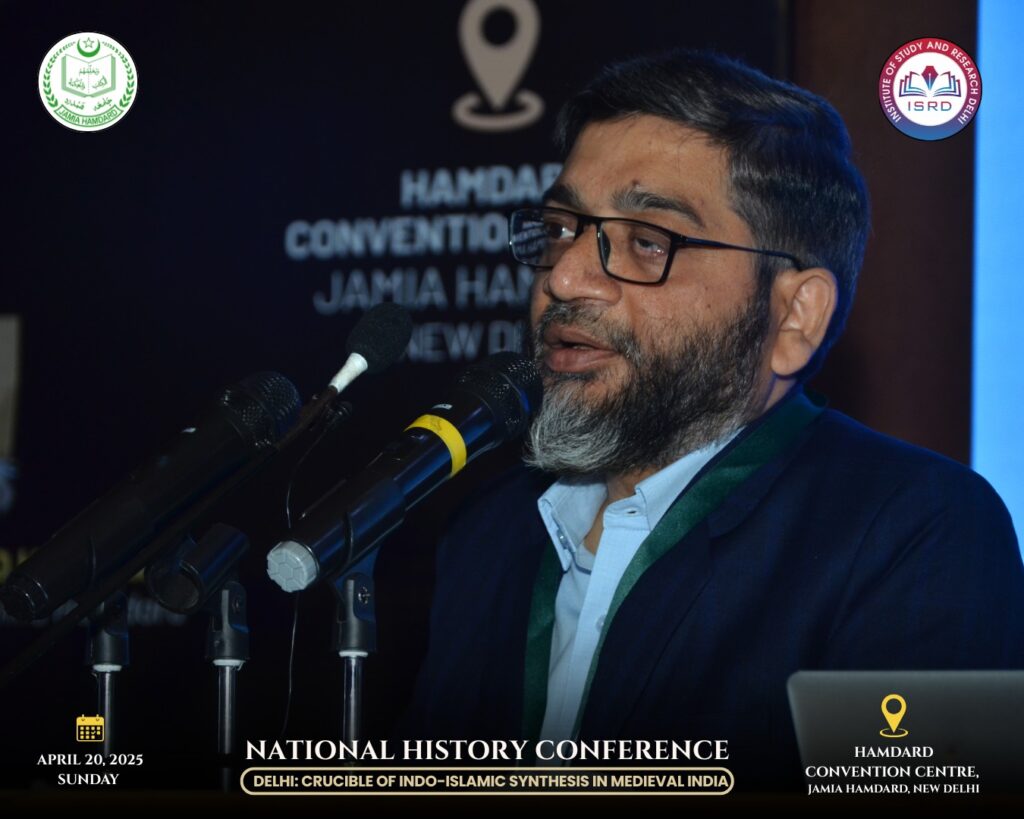
Muslims’ historic contributions highlighted at National History Conference in Delhi

NEW DELHI :

New Delhi :

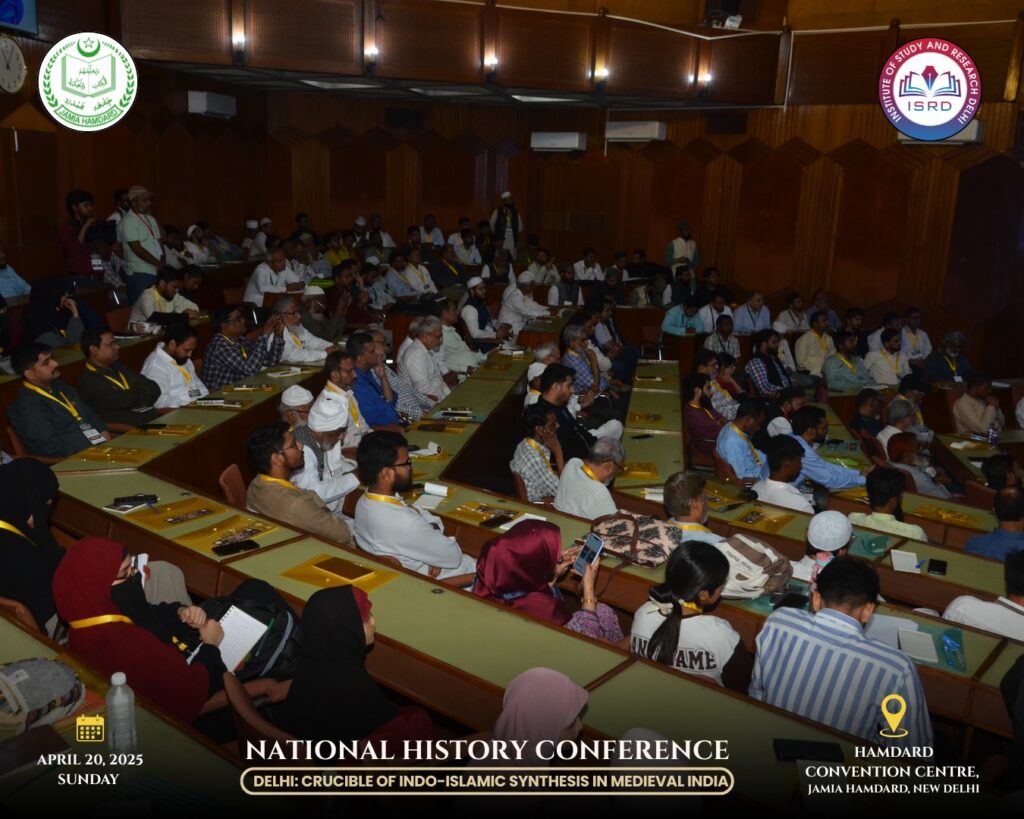
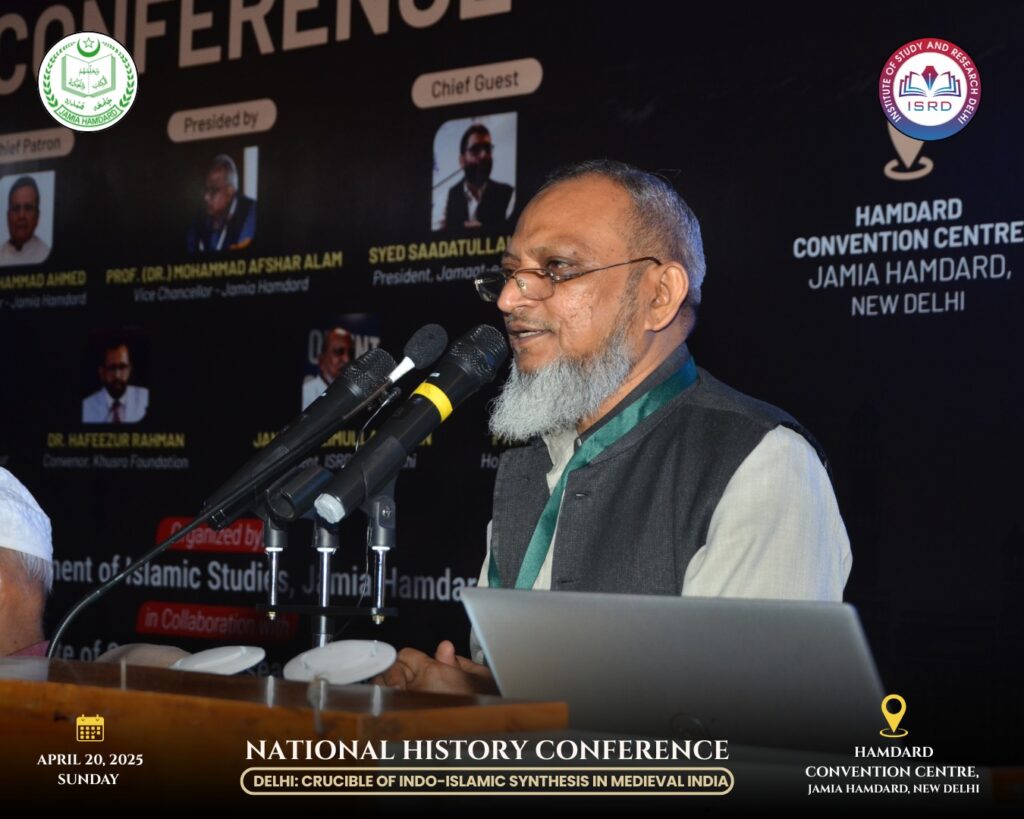
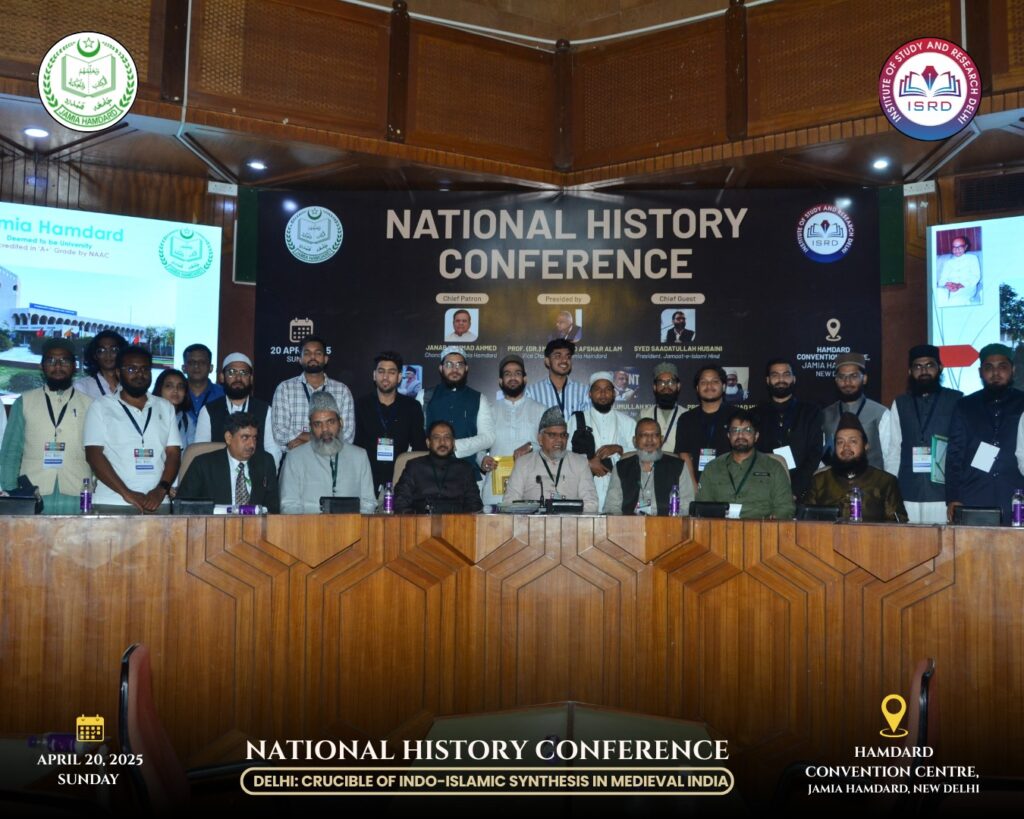
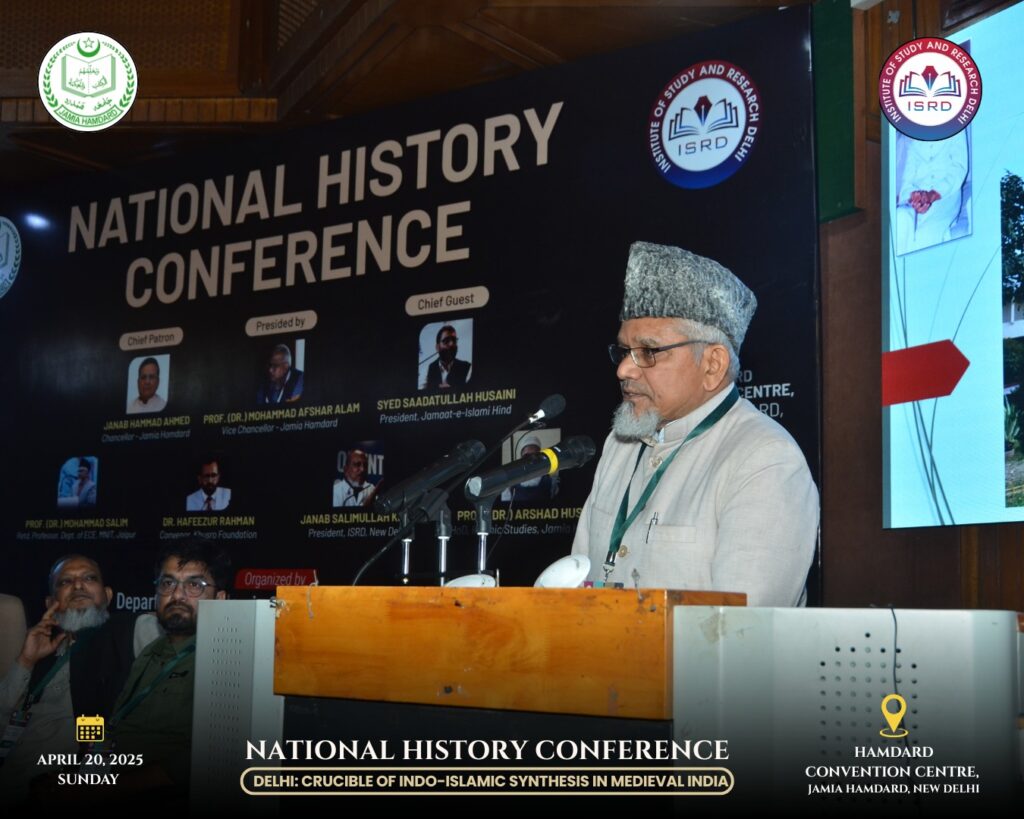
At a landmark one-day national history conference, prominent scholars, professors, and historians Sunday gathered to commemorate the unparalleled contributions of Muslims to India’s cultural and civilizational fabric. Titled “Delhi: Crucible of Indo-Islamic Synthesis in Medieval India,” the conference was hosted by the Department of Islamic Studies, Jamia Hamdard University, in collaboration with the Institute of Study and Research Delhi (ISRD), New Delhi.

Held at the Hamdard Convention Centre, Jamia Hamdard, the conference aimed to explore the profound impact of Islamic heritage on shaping medieval Indian culture, society, and governance, with a special emphasis on Delhi as the epicenter of this cultural convergence.

A wide array of research papers was presented under several sub-themes aligned with the central topic, including the Advent of Islam in North India , Educational Institutions and Knowledge Production, Indo-Islamic  Architecture, Sufi Traditions and Sacred Spaces, Language and Literature, Music and Performing Arts Role in the Freedom Struggle, Calligraphy and Decorative Arts, Culinary Heritage and the Culture of Cuisine, Women’s Contributions, Science and Technology, Mughal Gardens and Economic and Administrative Innovations.

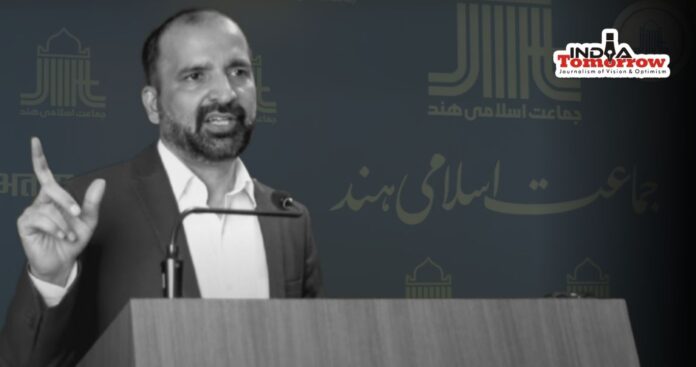
As a chief guest, Jamaat-e-Islami Hind Syed Sadatullah Husaini emphasised that the Quran repeatedly encourages the study of history and historical events to extract lessons and guidance. “If lessons are taken from history, it becomes an asset,” he asserted, adding that history serves as a mirror of society.

Refuting the prevailing negative narratives surrounding Muslims in India, Husaini remarked, “Muslims are not outsiders or foreign invaders. They are developers, not destroyers; builders, not colonizers; inheritors, not intruders.” He highlighted how the Delhi Sultanate acted as a conduit, connecting India with the thriving global centers of knowledge in the Muslim world.

He cited the example of Sanskrit scholars and experts in numerics being recognized and honored in the court of the Abbasid Caliphate. The Arabs, he noted, never appropriated the intellectual achievements of Indian scholars but instead gave them due credit. “Muslim Sultanates helped disseminate India’s hidden treasures of knowledge across the globe,” he stated.

Husaini also praised the architectural marvels of the Delhi Sultanate, such as the Qutub Minar, calling them a testament to the era’s artistic grandeur. He emphasized that the most valuable contribution of Muslim rulers was the promotion of unity and human equality, bringing together people across religions, castes, and classes under a shared identity of humankind—a concept Allama Iqbal referred to as “Wahdat-e-Khaas Quwwat” (special power of unity).

Referencing Maulana Abul Kalam Azad, he recalled Azad’s fervent appeals to Muslims at the time of Partition to remain in India, invoking their emotional and civilizational connection to iconic Islamic monuments such as the Taj Mahal, Red Fort, and Qutub Minar.

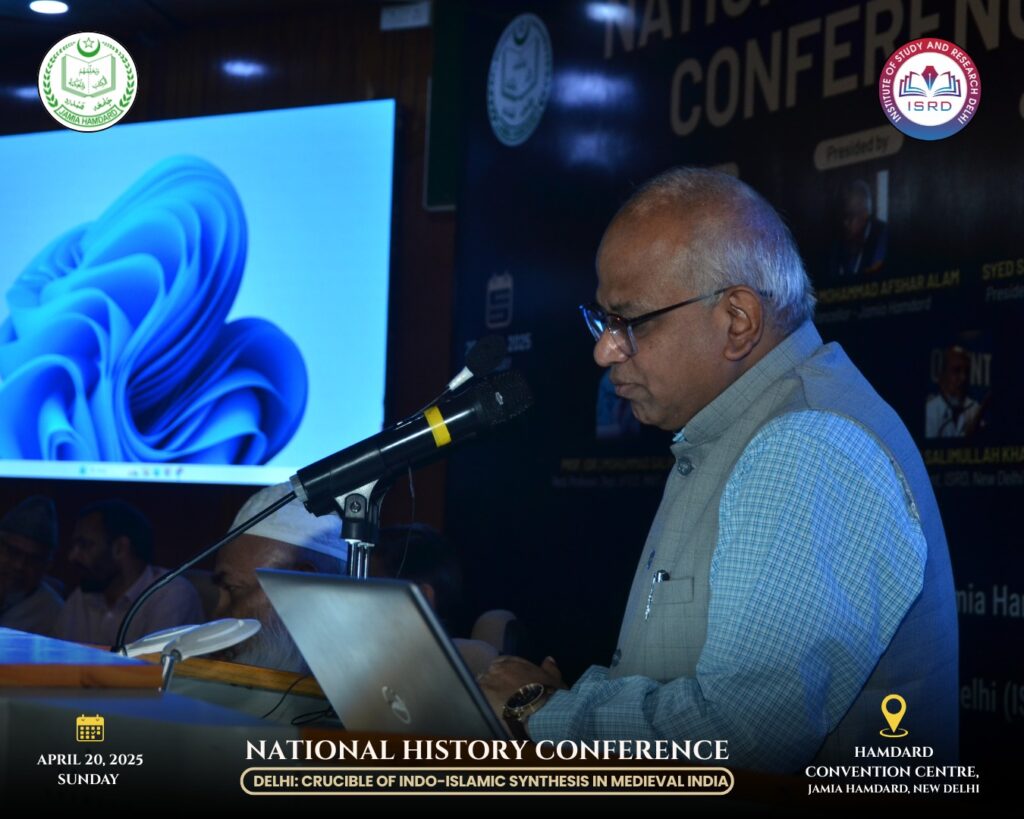
Dr. Afshar Alam, Vice Chancellor of Jamia Hamdard University, presided over the inaugural session. He provided a historical overview of Islamic rule in India, tracing it from Mohammad Ghori’s arrival in the 12th century to the British colonial era, covering the Slave, Khilji, Tughlaq, Sayyid, Lodhi, and Mughal dynasties.

He emphasized how Delhi became the nucleus of Indo-Islamic cultural fusion, with Central Asian and Persian architectural styles merging with indigenous Indian designs. This, he said, resulted in a unique Indo-Islamic architectural identity, visible in the city’s rich heritage.

Alam also elaborated on the contributions of the Islamic period in education, science, music, literature, governance, and social reform, asserting that this synthesis laid the foundation of what is now referred to as South Asian culture. “This fusion didn’t just shape Indian civilization—it gave it depth, diversity, and resilience,” he concluded.

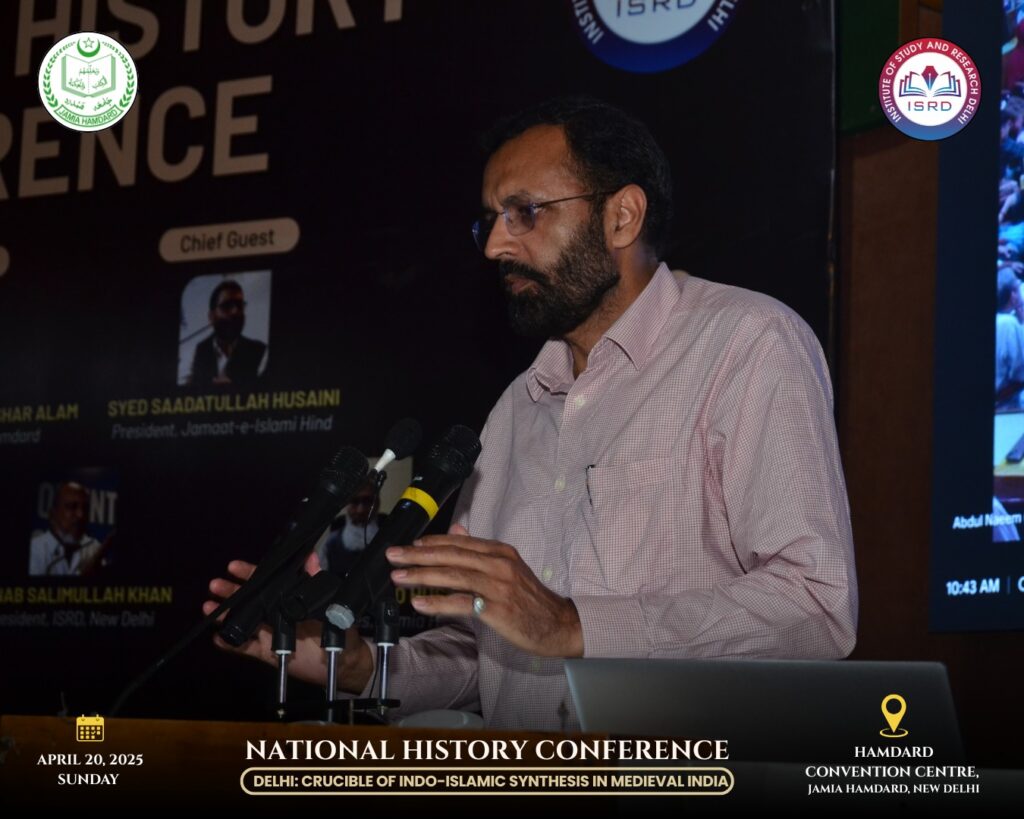
Dr. Hafeezur Rahman, convenor of the Khusro Foundation and an expert in Urdu and Persian, delivered speech as a special guest. He reflected on historiography, distinguishing between pro-establishment and anti-establishment narratives, and praised Islam’s contribution to historical objectivity through the tradition of “Asma al-Rijal” (biographical evaluation of narrators).

He noted, “It is often said that the Mughals gifted India three unparalleled treasures: the Taj Mahal, Mirza Ghalib, and the Urdu language.” Rahman particularly celebrated the role of Sufi saints, especially Hazrat Nizamuddin Auliya and his disciple Ameer Khusrau, a 13th-century polymath and the founding father of the Urdu language. Khusrau, he said, was also a distinguished scholar in astrology, astronomy, and music.

Quoting Khusrau’s oft-repeated teaching from his spiritual mentor—”Agar duniya aap ke raste mein kaante bichhaye, to tum phool bichhao” (If the world throws thorns in your path, you lay down flowers)—he emphasized the Sufi message of love and resilience.

Dr. Hafeezur Rahman further illustrated how cultural synthesis led to creations like biryani and sherwani, both products of Indo-Islamic fusion. He expressed hope that the academic papers presented at the conference would become historical documents in their own right.

Dr. Fazlur Rahman, Assistant Professor in the Department of Islamic Studies, anchored the conference and gave a brief introduction to its aims.

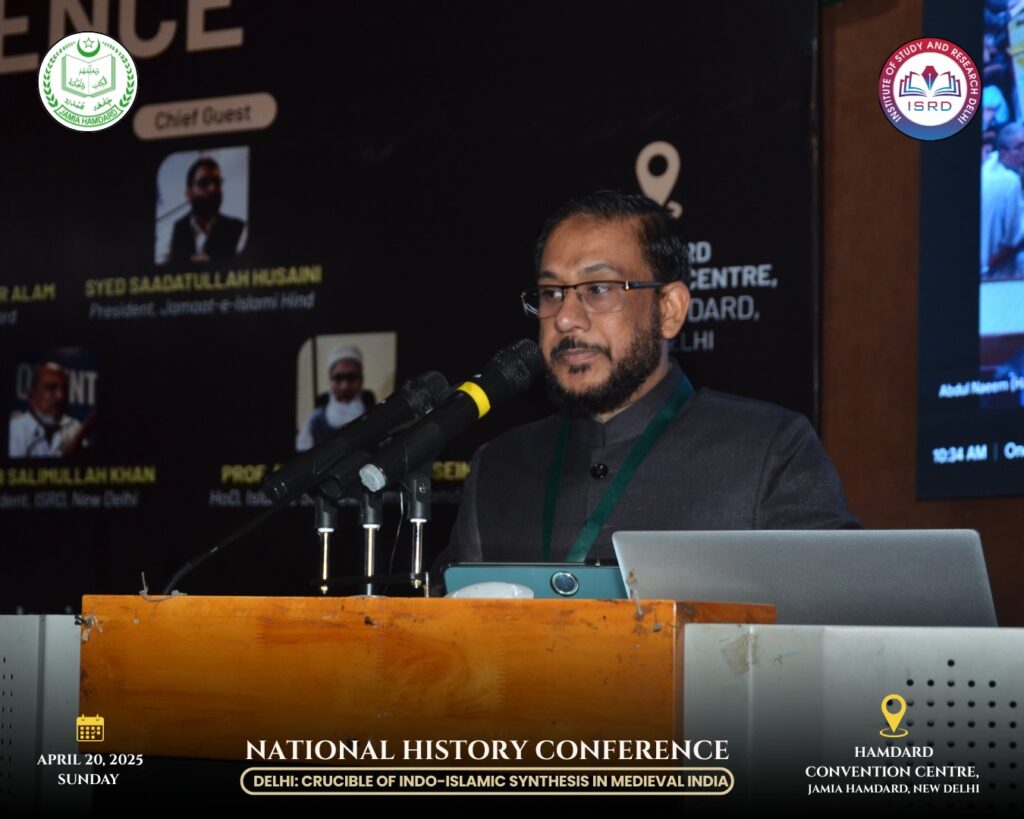
ISRD Secretary and Organizer Asif Iqbal outlined five core objectives and sub-themes of the event. Asif Iqbal emphasized that civilizational interactions—such as those between Islam and Indian culture—often result in positive transformations. He stated that Muslims, while introducing new cultural and civilizational values to the subcontinent, also embraced indigenous practices. “This mutual exchange reshaped the cultural and intellectual landscape of the region,” he said.

ISRD President Saleemullah Khan offered reflections on the ethical teachings of Prophet Muhammad, citing his instruction to Hazrat Ali to return belongings even to those who plotted to kill him during the Hijrah (migration to Madinah). He also quoted Urdu writer Rashidul Khairi, who praised the skills, cooperation, and intelligence of Delhi’s women during the medieval era.

Professor Arshad Hussain, Head of the Department of Islamic Studies at Jamia Hamdard, delivered the welcome address and warmly greeted all dignitaries and guests.

The day featured parallel academic sessions, with 50 research papers presented by scholars and students from institutions including Jamia Millia Islamia (JMI), Aligarh Muslim University (AMU), Jawaharlal Nehru University (JNU), Maulana Azad National Urdu University (MANUU), National Institute of Technology (NIT), Delhi University, and Jamia Hamdard.

Sessions were chaired by eminent professors such as Prof. Obaidullah Fahad (AMU), Dr. Faizan Ahmed (National Archives of India), Dr. Mohiuddin Ghazi (former Dean, Al Jamia Al Islamia, Kerala), Prof. Azizuddin Husain, and Prof. Parvez Nazir. Guest speakers received mementoes, and research scholars were presented with certificates.

In the valedictory session, Prof. Mohammad Salim Engineer, retired professor from MNIT Jaipur, addressed emerging researchers, emphasizing key research ethics—many of which, he noted, align with Islamic principles. These include academic honesty, objectivity, peer review, and depth over volume. “There’s no shortcut to excellence,” he advised. “Hard work can even surpass intelligence.”

In light of the current communal atmosphere, he urged the Muslim community to take charge of creating history, not just recalling it.

Abdul Kalam, co-convenor of the event, delivered closing thanks, while Dr. Shadab Musa, Assistant Secretary of Jamaat-e-Islami Hind, offered a speech reflecting on the present socio-political environment.

source: http://www.indiatomorrow.net / India Tomorrow / Home> Breaking News> Education> National Interest / by Anwarulhaq Baig / April 21st, 2025

Historian Syed Ubaid Exposes Efforts to Rewrite India’s History: ‘A Dangerous Drive to Erase 1000-years long Muslim Influence’

NEW DELHI :

New Delhi:

In a programme at the Jamaat-e-Islami Hind (JIH) headquarters on the theme of “Rewriting History: Fact or Fiction,” historian and author Syed Ubaidur Rahman raised alarm over ongoing efforts to “rewrite” India’s historical narrative—efforts, he asserts, led by right-wing ideologies seeking to diminish the legacy of Muslim rule in India.

Syed Ubaid whose latest book ‘Peaceful Expansion of Islam in India’ was published earlier this year, began by asking, “What is history? And more importantly, what is its role in shaping the future? It is alarming that in this era, when Muslims have little interest in history, some forces are working tirelessly to distort the historical truth.”

He pointed out that the rise of the right wing elements had led to a systematic campaign to dilute nearly a thousand years of Muslim rule in India. “Their basic objective is clear: to erase the history of Muslim influence, whether in architecture, education, science, or culture—from India’s curriculum,” Ubaid emphasized, saying that this was part of a broader strategy to make the history of the Muslim community “invisible.”

Syed Ubaid stated, “Muslims have impacted all aspects of life in India. There was a period of almost 1000 years of Muslim rule during which architecture, education, science, language, food, and every aspect of life were influenced. Today, these very aspects are under attack by these elements. They not only want to rewrite political history but also wish to rewrite all these aspects.”

Weekly Ijtema || Rewriting History: Fact or Fiction || Syed Ubaidur Rahman / source: youtube / jamaat-i-islami hind

Raising a question about why they want to rewrite Indian history, Ubaid referenced Audrey Truschke, a respected historian of South Asian history at Rutgers University, USA who had critiqued the right-wing narrative. Truschke explained that Hindutva ideologues aim to claim Hindus as the only indigenous group in India, excluding Muslims and other minorities. “In their history, India’s past is framed as a glorious Hindu golden age followed by an era of Muslim oppression,” Truschke writes, “This narrative distorts the complex and multi-layered history of India.”

Syed Ubaid emphasized that political and religious identities are often conflated.

Syed Ubaid explains, “Audrey has written that there was no difference between the Muslim rulers and Hindu rulers in terms of religion, neither side attacked the other because of religion. Historian Khaleeq Ahmad Nizami has clearly written in his book that Muslim rulers had no religious or political intent or religious connotation behind their actions.”

Syed Ubaid remarked, “Earlier, the narrative was that Aurangzeb was hateful and tyrannical. But over time, they started painting all Muslim rulers with the same brush, whether it was Akbar, Alauddin Khilji, or any other Muslim ruler, they began targeting them all.”

Highlighting the growing tendency to remove crucial elements of history from school textbooks, Syed Ubaid said, ‘The revision of textbooks is not new. This has been a long-standing agenda of theirs.”

He lamented the sweeping changes that have been made to the school syllabus, stating, “About 30% of school syllabi have been altered. Specifically, content related to the Mughals, political science textbooks, secular ideas, Gandhiji and his assassination, the Delhi Sultanate, all of these aspects have been significantly altered or reduced.”

Highlighting significant changes to the history curriculum, especially in Class 7, where children are first introduced to historical narratives, Syed Ubaid pointed out that the achievements of Mughal kings, such as Humayun, Shah Jahan, Akbar, Jahangir, and Aurangzeb, which had previously been presented in a two-page chart in the history textbook Our Past Too, were removed. Ubaid also mentioned the removal of a chapter on Akbar’s plural politics, which had once depicted the Mughal emperor in a positive light.

Syed Ubaid said, “the Mughals, who had ruled India for almost 350 years, from 1526 to 1857, have been a primary target in these revisions.” He criticized the effort to dilute the significance of the Mughals in textbooks, asserting that while the Mughal rule weakened toward the end, regional rulers such as the Marathas, Rohillas, Tipu Sultan, and Hyder Ali continued to govern with the Mughal imperial mandates.

Refuting the claim that the Mughals were given disproportionate importance in history textbooks while regional kingdoms were underrepresented, Syed Ubaid pointed out that the Vijayanagara Empire in South India and the Kakatiya dynasty from the 15th and 16th centuries were well-documented in textbooks.

However, he observed that regional Muslim kingdoms, such as the Bahmani Empire in the Deccan and the Gujarat Sultanate, both of which played significant roles during the same period, received much less attention in the current syllabus. Despite their rich heritage, these Muslim kingdoms are scarcely mentioned.

Ubaid emphasized that these changes are not confined to schoolbooks but extend to university curricula as well.

Syed Ubaid said, “even at the Aligarh Muslim University, once renowned for its medieval history department, professors are struggling as much of the material has been cut. Senior historian from the AMU, Prof.Irfan Habib has also noted that the entire Delhi Sultanate is now covered in just one sub-unit in unit one at the graduation level.

Citing Prof. Irfan Habib, he noted, “In the revised syllabus, Khilji, Tughlaq, and the invasion of Taimur are now condensed into a single unit. Unit 2 omits significant figures and events, such as Akbar, and instead focuses on figures like Hemu, Vikramaditya, Rana Pratap, Rani Durgavati, and Chand Bibi. Mughals like Jahangir and Shah Jahan have been removed.” Ubaid’s concerns about the erasure of Muslim contributions to India’s history went beyond textbooks.

He criticized the ongoing attempts to rename cities founded during the Muslim rule, such as Faizabad, Aurangabad, Ahmedabad, and Ahmednagar.

Warning that these efforts to distort historical narratives are part of a broader trend, where online platforms will increasingly present biased versions of history, he said, “In the future, when you search for history on platforms like Google or Amazon, you will find only materials based on misrepresentations and backing their narratives.”

Ubaid concluded his speech with a call to action: “We must not allow the erasure of history to continue. We need to encourage our children to read books rooted in historical accuracy, to understand our past, and to defend the truth. We should foster an interest in history and make an effort to include such books in our personal libraries. Just as Muslims teach foundational religious texts to their children, we must ensure historical books are part of their education.”

Beginning his speech, Syed Ubaid outlined four key phases of Muslim history in India: the early arrival of Islam through traders especially in causal India, the establishment of the Delhi Sultanate, the rise of regional sultanates, and the powerful legacy of the Mughal Empire.

source: http://www.indiatomorrow.net / India Tomorrow / Home> Education / by Anwarulhaq Baig / December 03rd, 2024

India’s new UNESCO site museum reveals Mughal emperor’s life, legacy

NEW DELHI :

  • Humayun World Heritage Site Museum in New Delhi opened for visitors on Tuesday
  • Latest addition to 16th-century tomb complex ‘brings alive 700 years of heritage’

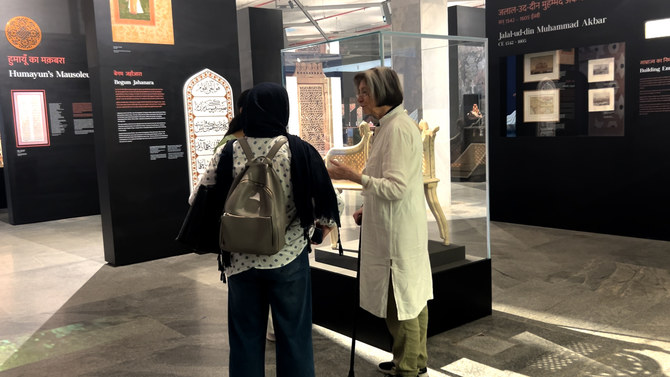
Visitors look at artifacts at the Humayun World Heritage Site Museum — the newest addition in Humayun’s Tomb complex — in New Delhi on July 29, 2024. (AN Photo)

https://arab.news/4zpjh

New Delhi :

The second Mughal emperor Humayun was widely known as an avid reader fond of journeys, architecture, and storytelling. Almost half a millennium after his death, a new museum in the heart of New Delhi highlights his role in shaping India’s cultural heritage.


Opened for visitors on Tuesday, the Humayun World Heritage Site Museum is the newest addition in Humayun’s Tomb complex — a landmark 300-acre area in New Delhi’s Nizamuddin that features dozens of historical monuments and includes Sunder Nursery, a 16th-century heritage park.


The advent of the Mughal dynasty, which ruled the Indian subcontinent between the 16th and 19th centuries, marked the global revival of Islamic architecture, with works that until today are examples of the highest quality and refinement.


Originally from Central Asia, the Mughals carried cultural elements borrowed from Arabs, Persians and Ottomans. As they settled in India, they fused these with the various local styles found in their new domains.


Humayun was the son and successor of Babur, founder of the dynasty, and ruled the empire from 1530 to 1540 and again from 1555 until his death the following year.


The new museum, established by the Agha Khan Trust for Culture and the Archaeological Survey of India, traces Humayun and his descendants’ lives, as well as the 700-year-old history of the whole Nizamuddin locality and its influence on Indian culture.


“There are hundreds of stories to be told, which the stones don’t speak,” Ratish Nanda, conservation architect and projects director at the AKTC, told Arab News. “The idea is to bring alive 700 years of heritage.”


The museum is located in Humayun’s Tomb, a UNESCO World Heritage Site, and the first of the grand mausoleums that became synonymous with Mughal architectural innovations and, three generations later, culminated in the construction of India’s most iconic monument, the Taj Mahal.
About 7 million tourists from across India and abroad visit the complex every year.


“The idea is that people who now visit the World Heritage Site come with a deep understanding of the site,” Nanda said.


“We’ve been able to … combine architectural elements with incredible manuscripts, miniature paintings, calligraphy, textiles, coins, metalware, architectural elements — one is two one scale — with lots of films and digital technology, and models and so on.”


Spanning five galleries, the underground museum has over 500 artefacts sourced from the collections of the National Museum in New Delhi, ASI and AKTC.


“It captures the 700 years of history that is associated with the region of Nizamuddin and the World Heritage site of Humayun’s Tomb …This museum really captures the history,” said Ujwala Menon, AKTC conservation architect.


“The principal gallery talks about Humayun. There’s very little known about this emperor, and one of the things with this museum is to really address that … Then we have a second section of this gallery which talks about the personalities that are associated with Nizamuddin.”


Among the famed figures featured in the second gallery are Nizamuddin Auliya and Amir Khusro.
Auliya was an 13th-century Indian Sunni Muslim scholar, Sufi saint of the Chishti Order, and is one of the most famous Sufis from the Indian subcontinent. His shrine and tomb are located near Humayun’s complex.


Khusro was a 13th-century poet and scholar who remains an iconic figure in the culture of the subcontinent.


Both Auliya and Khusro lived during the period of the Delhi Sultanate, which Humayun’s father conquered, leading to its succession by the Mughal empire. The museum shows how the empire did not come to its bloom in a cultural vacuum, but drew from and incorporated the culture of its predecessors.


“There was this idea of pluralism that existed during the Mughal period,” Menon said.
“And this (museum) really captures all of that.”

source: http://www.arabnews.com / Arab News / Home> World / by Sanjay Kumar / July 31st, 2024

Delhiwale: How many Sultanate kings can you name? Here’s the full list of 32

NEW DELHI :

For 320 years, Delhi was the city of sultans. Here is the list of the 32 rulers and where they rest now.

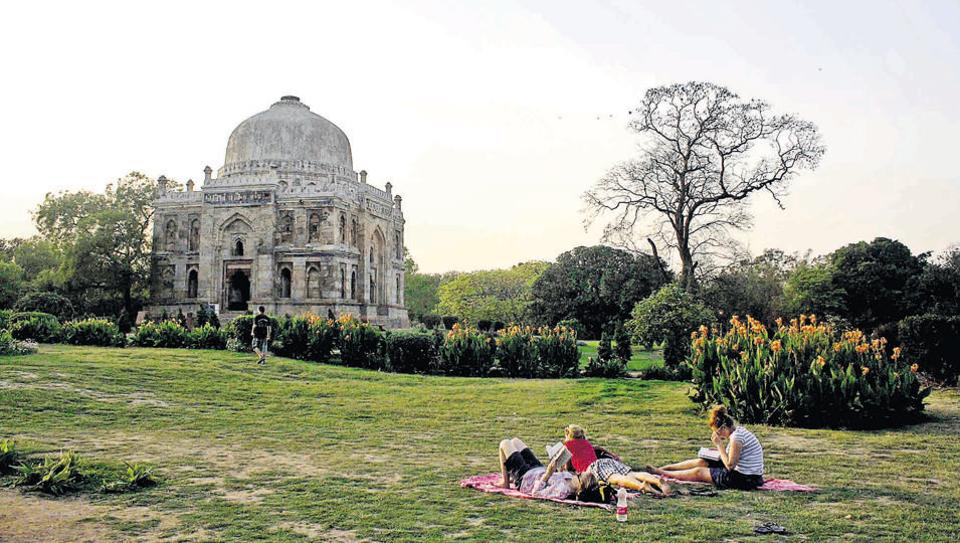
Sheesh Gumbad in Lodhi Gardens.(Mayank Austen Soofi / HT Photo)

The other day, while driving past an obscure monument, a friend demanded to know its name. We had no idea so we bluffed, “Ah, that’s a Lodhi-era tomb!”

The truth is we can’t even list all the Lodhi kings.

In any case, the Lodhi dynasty was part of the more elaborate Delhi Sultanate (not to be confused with ‘Delhi Sultanate’, a so-named member of The Sky Vengers music band). The Delhi Sultanate we are talking about spanned five dynasties, 32 rulers and 320 years. It lasted from 1206 to 1526. Today we give you the names of all the rulers of the Sultanate — one of whom was India’s first woman ruler, while the last was vanquished by Babur, the founder of the Mughal dynasty.

Sultan02MPOs03dec2017

We also used this list to hunt the graves of these Sultanate royals — right here in our city. Of course, it’s not possible to access every king’s tombstone. Quite a few of them were killed in small and big wars, at times far from Delhi. Frustratingly, history books leave no solid evidence of their burial spots.

Some others of these important men turned out to be so insignificant in the long run that their graves have been forgotten, making it impossible to trace them today. Here’s a list of all the rulers, and the graves of those we were able to locate.

SLAVE DYNASTY

Qutbuddin Aibak (1206–1210), buried in Lahore, Pakistan

Aram Shah (1210–1211), killed near Delhi, grave not known

Shams ud din Iltutmish (1211–1236), buried in Qutub Minar Complex, Mehrauli

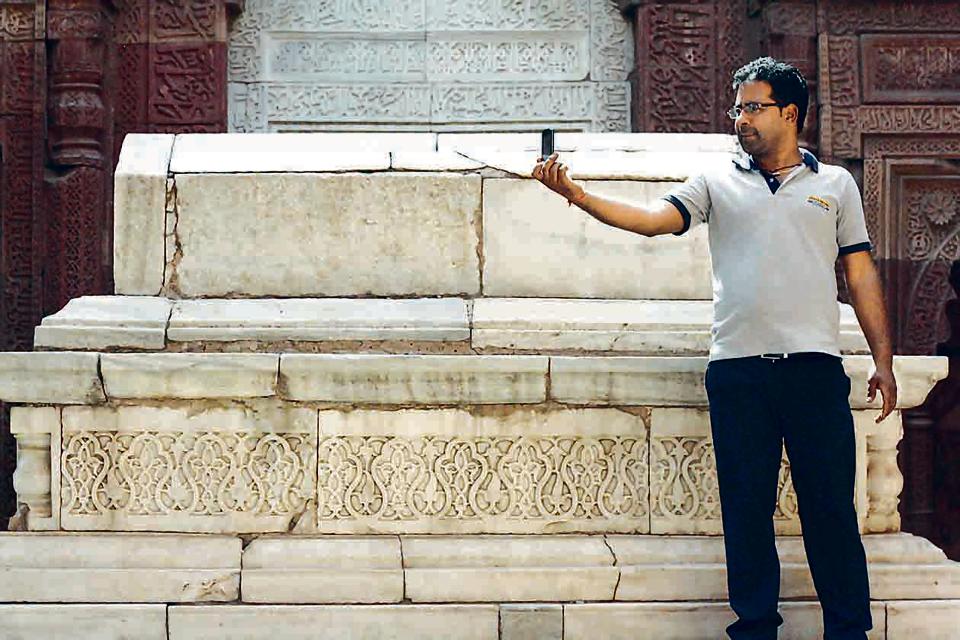
Illtutmish’s tomb in Qutub Minar complex. (Mayank Austen Soofi)

Rukn uddin Firuz (1236), believed to be buried in Sultan Ghari, near Mehrauli

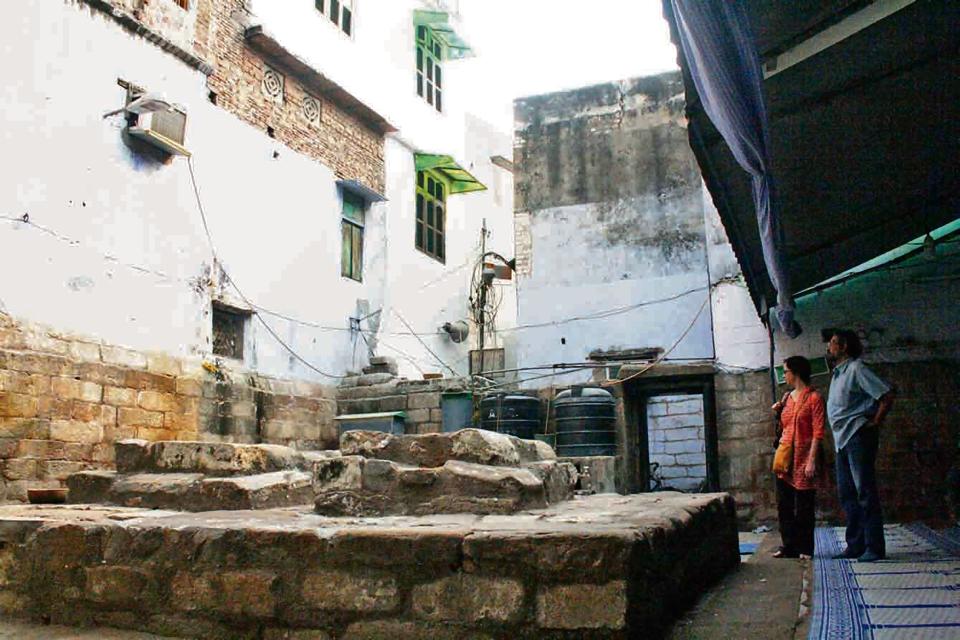
Raziyat ud din Sultana (1236–1240), buried in Bulbuli Khana, Old Delhi

Raziya Sultan’s tomb in Bulbuli Khana, Old Delhi. (Mayank Austen Soofi)

Muiz uddin Bahram (1240–1242), grave not known

Ala uddin Masud (1242–1246), grave not known

Nasir uddin Mahmud (1246–1266), grave not known

Ghiyas uddin Balban (1266–1286), Buried in Mehrauli Archaeological Complex, near Jamali Kamali mosque

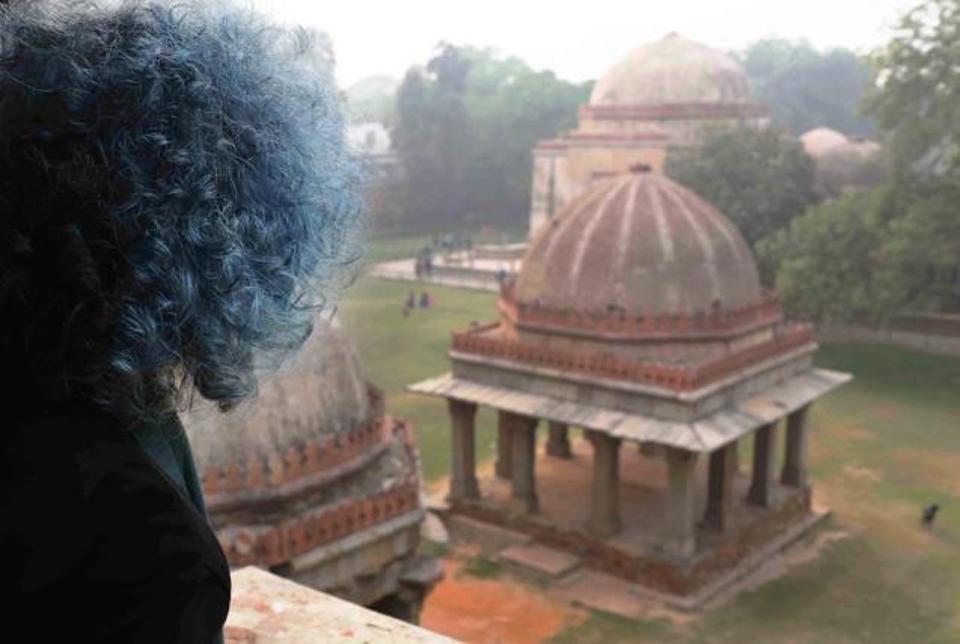
A tomb outside Jamali Kamali complex in Mehrauli. (Mayank Austen Soofi)

Muiz uddin Qaiqabad (1286–1290), grave not known

Kayumars (1290), grave not known

KHILJI DYNASTY

Jalal ud din Firuz Khilji (1290–1296), buried in Delhi but “disappeared “according to HC Fanshaw’e book Delhi, Past and Present

Alauddin Khilji (1296–1316), buried in Qutub Minar Complex, Mehrauli

Qutb uddin Mubarak Shah (1316–1320), grave not known

TUGHLAQ DYNASTY

Ghiyath al-Din Tughluq (1321–1325), buried in Tughlakabad

Muhammad bin Tughluq (1325–1351), buried in Tughlakabad

Mahmud Ibn Muhammad (1351), buried in Tughlakabad

Firuz Shah Tughlaq (1351–1388), buried in Hauz Khas Village

Ghiyas-ud-Din Tughluq II (1388–1389), grave not known

Abu Bakr Shah (1389–1390), grave not known

Nasir uddin Muhammad Shah III (1390–1393), grave not known

Ala-ud-Din Sikandar Shah I (1393), grave not known

Mahmud Nasir uddin (1393–1394), grave not known

Nusrat Shah (1394–1399), grave not known

Nasiruddin Mahmud Shah (1399–1413), not known, Timur invade Delhi in his reign

SAYYID DYNASTY

Khizr Khan (1414–1421), grave not known

Mubarak Shah (1421–1434), buried in Kotla Mubarakpur village

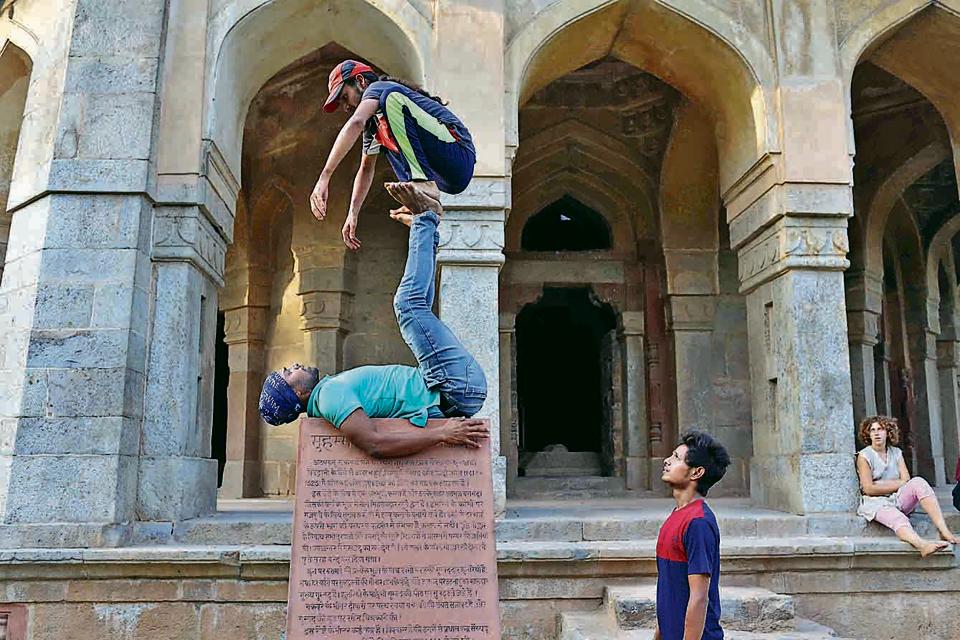
Muhammad Shah (1434–1445), buried in Lodhi Garden

The plaque at Mohammed Shah’s tomb in Lodhi Garden. (Mayank Austen Soofi)

Alam Shah (1445–1451), grave not known, perhaps in Badayun where he died

LODHI DYNASTY

Bahlol Lodhi (1451–1489), Chirag Dilli

Sikander Lodhi (1489–1517), Lodhi Gardens

Ibrahim Lodhi (1517–1526), buried in Panipat, Haryana

source: http://www.hindustantimes.com / Hindustan Times / Home> Cities> Delhi / by Mayank Austen Soofi, Hindustan Times /  December 02nd, 2017