Tag Archives: Dr Farah Usmani – Global Vice President – SAFAR Foundation

Celebrating Unsung Heroes: Indian Muslim Changemakers

INDIA :

AI generated image

Amid our fast-paced lives, there exists a remarkable group of individuals who believe in slow, steady, and consistent efforts to create meaningful change.

These individuals are known as changemakers—people who quietly dedicate themselves to bettering society, far from the spotlight and the noise of daily routine.

They don’t seek fame or recognition. Instead, they focus on making a positive impact in their communities. Often unheard of, these changemakers influence others through their actions, values, and vision for a better world.

Awaz–The Voice is proud to launch a special series starting this Sunday, spotlighting Indian Muslim changemakers of India.

Through their inspiring stories, we aim to shine a light on individuals whose work exemplifies compassion, dedication, and innovation.

Our editorial team has carefully selected these changemakers based on several parameters, including the authenticity of their efforts and the tangible impact they have made.

These are everyday heroes who are addressing pressing social, environmental, and economic challenges—often with limited resources but unwavering commitment.

They are improving access to education, healthcare, and sanitation; they are empowering women, protecting the environment, and uplifting their communities—all without expecting any rewards or recognition. For them, the satisfaction of doing good is reward enough.

Their actions may seem small, but their impact is profound. As the saying goes, “Every drop counts in making an ocean.” Each changemaker is a vital part of the wave of progress that is quietly transforming India.

One of our key criteria in identifying these individuals was whether they are creating tangible change or inspiring others to become changemakers themselves. For us, a changemaker is someone who brings positivity into the world through innovative solutions, leadership, and a commitment to improving lives and systems.

In a world that often celebrates loud success, we believe it’s important to pause and acknowledge those who uphold the highest ideals of humanity. These changemakers serve as a moral compass, reminding us of our own responsibilities to society and to one another.

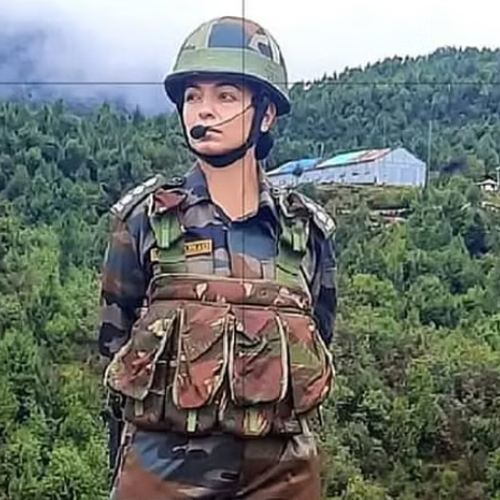
We begin our series with changemakers from Uttar Pradesh, featuring stories like that of Capt. Saria Abbasi, who dreamt of joining the Indian Armed Forces from a young age. After earning her engineering degree and receiving multiple job offers, she chose instead to follow her dream and joined the Indian Army—becoming a role model for countless Muslim women aspiring to serve the nation. She has done challenging missions like serving at Indo-China border post at Tawang in October 2021.

Rubina Rashid Ali, who lives in Aligarh Muslim University’s campus has become a champion for women earning their livelihood out of applique (ornamental needlework in which pieces of fabric are sewn or stuck). She has stood up for them to ensure that these women from poor backgrounds get the wages they deserve.
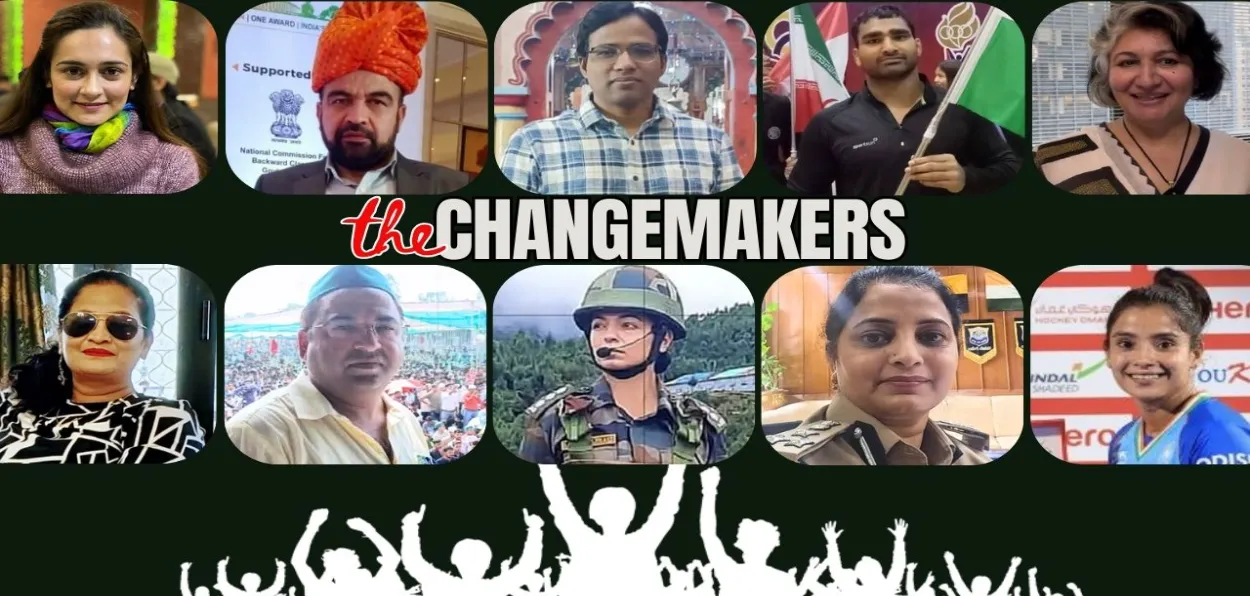
The changemakers of India

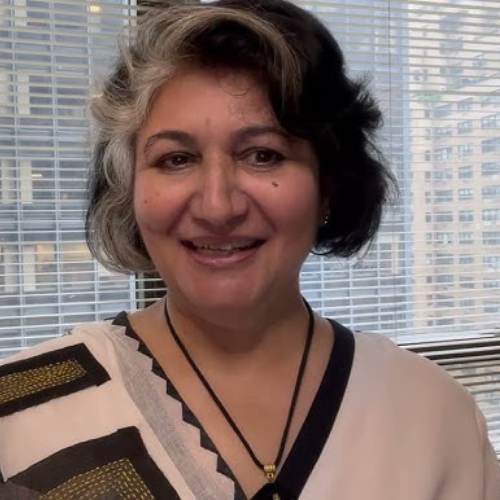
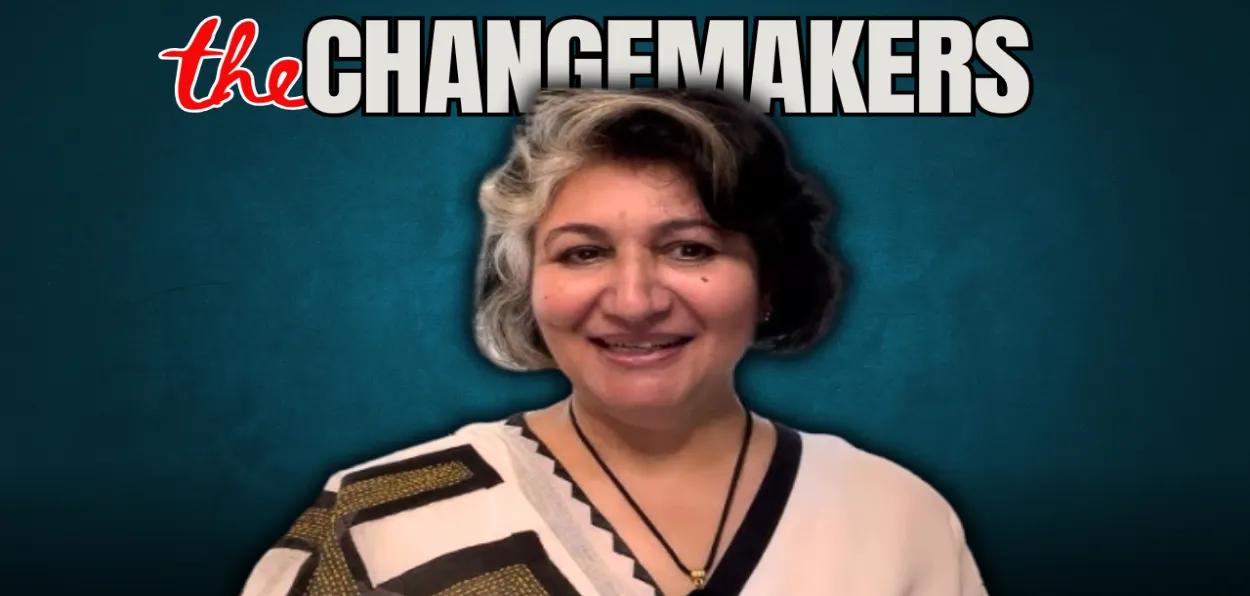
Dr Farha Usmani, a medical practitioner who hails from Aligarh, went to US to pursue her career in the United Nations Population Fund in 2007. Leaving behind her family was a tough call for her. She is the only Muslim woman to have risen to the position of director in the UNFPA. Today, she is making world policies for women’s health and rights. She is the Vice President of SAFAR, an organization that is responsible for the overall advancement and rights of minority and marginalized women and girls in India. 

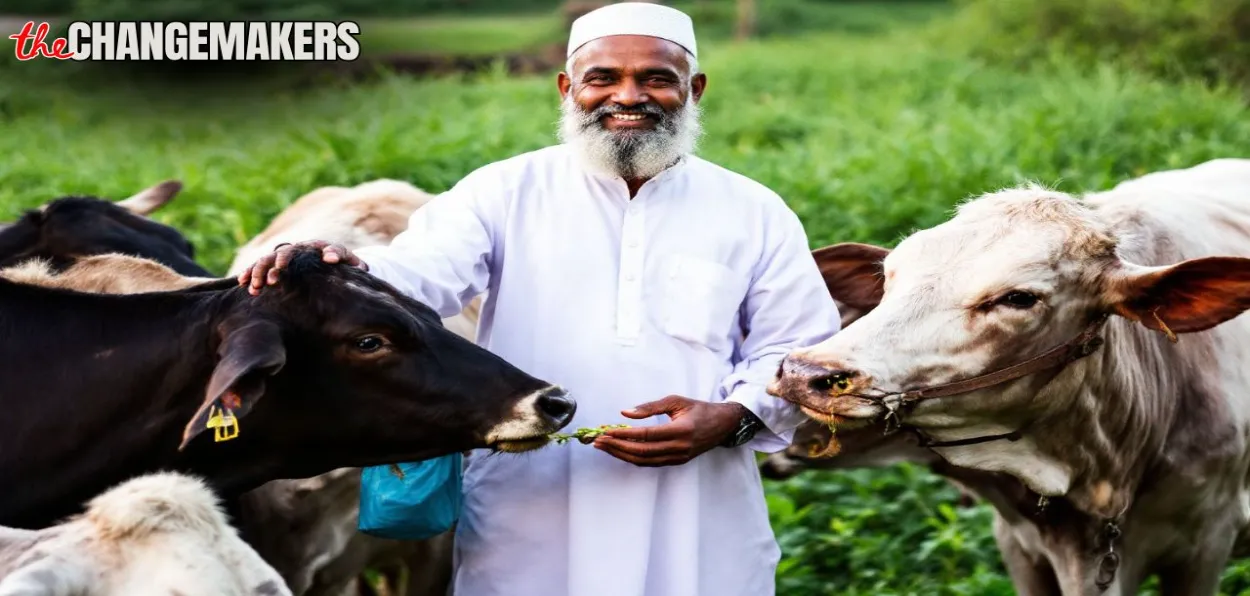
Another inspiring figure is Babban Mian, a businessman who runs a large gaushala (cow shelter) in Bulandshahar, caring for hundreds of cows. Inspired by his late mother’s deep affection for animals, Babban Mian’s work also challenges stereotypes and promotes harmony by offering a different perspective on the Muslim community’s relationship with animal care.

Some of the changemakers will remind you of characters straight from Indian folklore and vernacular literature. People who have been nurtured by Indian civilizational values of compassion and selflessness.

Through these stories and many more, we hope to inspire our readers and celebrate the quiet revolution being led by changemakers who are shaping a better, more inclusive India.

We’d love to hear your thoughts on this series. Write to us at input@awazthevoice.in or engage with us on our social media platforms.

The author is the Editor-in-Chief of Awaz-the Voice portal

source: http://www.awazthevoice.in / Awaz, The Voice / Home> Stories / by Atir Khan, Editor-in-Chief, Awaz-the Voice portal / May 22nd, 2025
10 trailblazers of Uttar Pradesh reshaping India’s future

UTTAR PRADESH :

New Delhi :

While media spotlight often shines on celebrities and politicians, the real engine of India’s progress runs on the resolve of countless unsung heroes who, away from limelight, quietly transform society.

From national defense to grassroots education, sports, science, and civil service, these individuals from Uttar Pradesh show how courage, compassion, and conviction can drive extraordinary change. Here are 10 such trailblazers whose stories deserve to be heard:

Captain Sariya Abbasi: A Woman in Uniform on the Frontlines

Hailing from a small city of Gorakhpur, Uttar Pradesh, Captain Sayria Abbasi broke every convention to join the Indian Army. A graduate in Genetic Engineering and with plenty of job offers and career opportunities from big companies was not enough for her to pursue in life. The call of service for the motherland was too strong to be sacrificed.

The world noticed her as a soldier deployed at the Line of Actual Control (LAC), India-China temporary border, manning an Air Gun. Today, Sariya leads drone-killer teams and operates L-70 anti-aircraft guns on the border. Her journey from an academic achiever to a defender of the nation’s borders is not just about military precision; it’s about shattering glass ceilings and reshaping how India imagines women in uniform.

Dr. Faiyaz Ahmad Fyzie: Voice for the Voiceless Pasmanda Community

Dr. Faiyaz Ahmad Fyziean AYUSH physician, is more than a healer—he is a public intellectual, columnist, translator, and relentless advocate for the Pasmanda (socially backward) Muslim community. Raised in modest conditions, his rise to national recognition is built on fearless writing and tireless grassroots work.

When even the Prime Minister refers to Pasmanda voices, Fyzie’s years of advocacy resonate. His pen continues to empower those whose struggles were long silenced. His work is a call to conscience—and a roadmap for inclusive discourse.

Mohammad Luqman Ali: Wrestling His Way to Glory and Degree

Wrestler Mohammad Luqman Ali, a student of Social Work at Jamia Millia Islamia, is balancing body and brain. Born in Amroha’s tiny village of Mohraka Patti, his father worked on the railways, and his mother gave him religious grounding. Despite limited resources, Luqman’s grit has earned him recognition in India’s wrestling circles.

From the mat to the classroom, his dual commitment shows that excellence doesn’t require compromise. It requires discipline, heart—and a family’s belief in you.

Rubina Rashid Ali: Reviving Mughal-Era Art with a Modern Mission

In a sun-drenched corner of Aligarh, Rubina Rashid Ali has quietly built a movement. Her work in floral appliqué embroidery, a legacy of Mughal art, now supports dozens of women in Aligarh and Rampur. What was once an undervalued craft monopolized by middlemen has been transformed by Rubina into a vehicle for women’s economic empowerment.

Her home resonates not only with the sound of needles and threads but also with the hum of independence. “Real artists were reduced to laborers,” she says. Today, she ensures their hands are not just working — but also earning.

Babban Mian: A Gaushala Keeper Inspired by His Mother’s Love

At Madhu Sudan Gaushalla in Bulandshahr, Babban Mian tends to cows not out of ritual, but reverence — inspired by his late mother Hamidunnisa Begum. “She loved cows like her own children,” he recalls. After she passed away in 2015, Babban vowed to preserve her legacy.

Despite being a Muslim in a Hindu-dominated tradition, he runs a government-recognized shelter rooted in compassion, not controversy. For him, animal welfare is a universal value — not a communal issue. His work quietly redefines what shared culture and interfaith harmony look like.

Khushboo Mirza: From Amroha to the Moon with ISRO

 Khushboo Mirza, scientist at ISRO and part of the Chandrayaan-1 and Chandrayaan-2 missions, is a stellar example of perseverance. After her father’s death when she was just seven, her mother raised three children alone, running a petrol pump and defying social norms.

Khushboo earned a Gold Medal in Electronics Engineering from AMU and was the youngest member of the Chandrayaan-1 checkout team. A practicing Muslim and a symbol of India’s scientific aspirations, she turned down corporate offers to reach for the stars—and took a whole generation of girls with her.

Zaheer Farooqui: A People’s Leader with a Vision for Purkazi

In western UP’s PurkaziZaheer Farooqui is rewriting what local leadership means. As Nagar Panchayat Chairperson, he donated land worth ₹1.5 crore for the area’s first Intermediate College and modernized local schools into PM Shri-certified institutions.

His initiatives go beyond classrooms. From India’s first double-storey government-run cow shelter to a gym for Muslim women, and one of the most sophisticated rural CCTV networks in the region — Farooqui’s governance is a blend of tradition and tech, equity and empowerment. His Tiranga Yatra revives local history, reminding citizens that patriotism is inclusive and action-oriented.

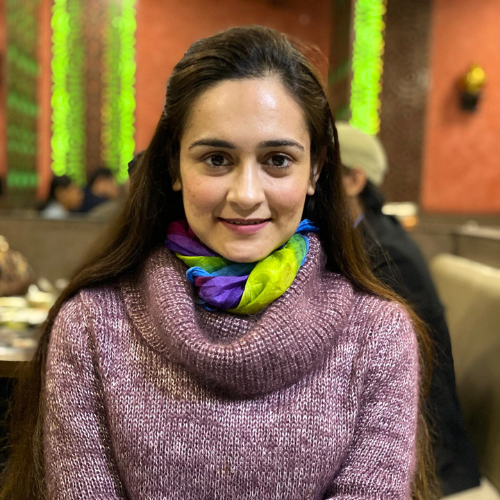
Dr. Farah Usmani: From AMU to Global Health Leadership

On a cold morning in New York, Dr. Farah Usmani stood outside an apartment, a folder in hand, her eyes bright with resolve. The daughter of Uttar Pradesh, she is today a formidable presence in global health policy.

n M.D. in Obstetrics & Gynecology from AMU, Farah sought impact beyond hospital walls. Armed with a Master’s in Health Policy from LSE and the London School of Hygiene & Tropical Medicine, she’s led transformative health initiatives around the world. Her journey is one of intellect guided by idealism — a doctor who chose not just to heal individuals but to reform systems.

Anjum Ara: Bridging Communities Through Compassionate Policing

Hailing from Azamgarh’s Kamharia village, Anjum Ara, a 2012-batch IPS officer, has redefined the image of policing with a human touch. A computer engineer by training, her journey from Integral University to Senior Superintendent of Police in Shimla has been marked by integrity and reform. Known for her work in cybercrime and her community-focused policing model, Anjum is also a fierce advocate for girls’ education.

Together with her husband, IAS officer Yunus Khan, Anjum adopted the cause of Khushdeep, the daughter of a martyred soldier, pledging to support her upbringing. This act of empathy mirrors her professional ethos, proactive, principled, and deeply people-centered.

Mumtaz Khan: From Vegetable Stall to World Hockey Stage

From the bustling alleys of Lucknow’s Cantt area to the turf fields of South Africa, Mumtaz Khan’s journey is pure grit. Once helping her father at a vegetable stall, a single race at school changed her life when Coach Neelam Siddiqui noticed her speed. That moment set her on a course to become a leading forward in India’s Junior Women’s Hockey Team.

Her standout performance at the 2018 Youth Olympics, where she scored 10 goals, earned her national acclaim. Yet, Mumtaz remains rooted, balancing hope and humility as she eyes the Olympics. She is proof that dreams born in dusty streets can blaze across international arenas.

These ten changemakers hail from Uttar Pradesh, from narrow village lanes to bustling metros, from battlefields to laboratories. But they are united by one thing:  quiet, relentless courage. In their lives, we find the India that persists, uplifts, and transforms—not with headlines, but with hard work.

Tap HERE to watch the video

source: http://www.awazthevoice.in / Awaz, The Voice / Home> The Changemakers / by Vidushi Gaur / May 24th, 2025

Farah Usmani’s campaign to break stereotype of Indian Muslim women

Aligarh, UTTAR PRADESH / New York, U.S.A. :

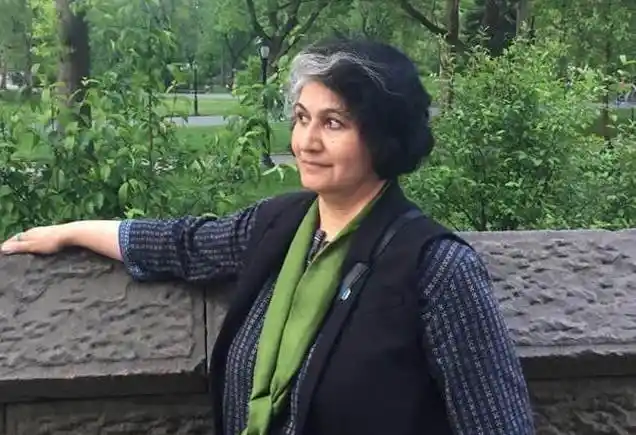
Dr. Farah Usmani

In 2007, Farah Usmani was working at the United Nations headquarters in New York when she made a pivotal decision that sparked a movement aimed at empowering women worldwide through financial independence.

Dr. Usmani, a physician from Uttar Pradesh, relocated to the city six years ago for work. During her search for a rental apartment, she discovered that New York’s rental prices were soaring and becoming unaffordable. After doing some quick calculations, she opted for a low-interest mortgage from the UN Federal Credit Union to purchase an apartment. She ended up buying a two-bedroom apartment in Manhattan, with a monthly mortgage payment that was only slightly higher than the rent she would have paid.

“This slightly higher expenditure (along with a down payment) would enable me to own an asset, and not fritter away my money on rent. It was such a wise decision. Today, 15 years later, I am on track to be a mortgage-free homeowner,” Usmani shared with the Morning Star newspaper. This experience inspired her to launch a campaign aimed at educating women around the globe about the importance of financial freedom and empowering themselves through financial independence.

Today Dr. Farah Usmani is an international health, gender and development expert based in New York.

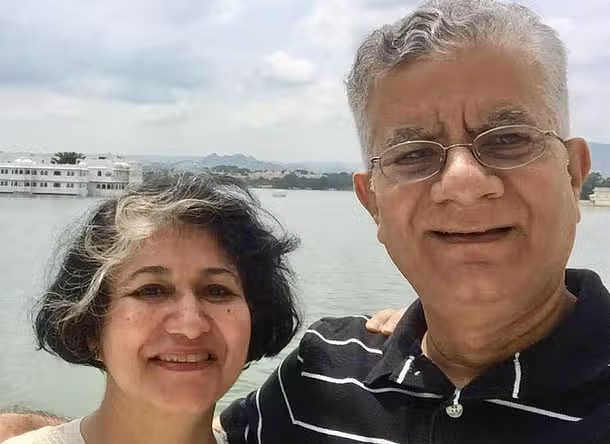
Dr. Farah Usmani with her husband Javed Usmani

Dr. Usmani is also the first Muslim woman from India to work with the United Nations International Civil Service at Director Level. She is the recipient of the 2021 Mahatma Award for Social Impact for her work with women, girls, and minorities.

She has 25 years of experience working with the United Nations International Civil Service with UNFPA, focusing on women and girls and their reproductive health and rights.

Carrying forward her mission to empower women, Dr. Usmani is the Global Vice President of SAFAR Foundation,(Supporting Action for Advancement and Rights), a philanthropic organization focused on uplifting marginalized women and girls.

Tap HERE to watch the video.

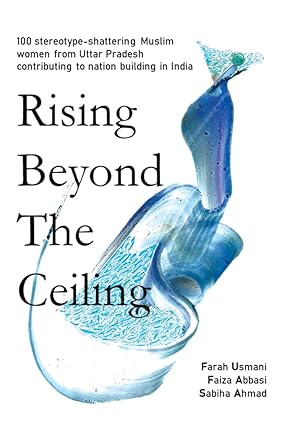
She is the Founder of “Rising Beyond The Ceiling”, a global initiative supported by SAFAR to shine a spotlight on Muslim women of India and contribute towards changing their stereotypical narrative.

The organization has published its first volume on Muslim women from Uttar Pradesh and is working on the rest of the Indian states.

Farah has received several awards and recognitions including the British Council and the Joint-Japan World Bank Merit Fellowships. 

Dr. Farah Usmani

At the UNFPA (United Nations Population Fund), Dr. Usmani played a pivotal role in policy, planning, technical leadership, and health services across more than 50 countries, working on the rights of women and girls. She became the first Indian Muslim woman to reach the Director level in the UN’s International Civil Service in New York.

She noticed that Muslim women were often boxed into stereotypical roles on every platform. Farah made it her mission to break that mold.

“Why are our stories limited to the veil and the home?”

Inspired by this question, Dr. Farah Usmani launched Rising Beyond the Ceiling a global initiative that highlights the achievements of Indian Muslim women, brings their hidden stories to light, and challenges societal stereotypes.

This initiative didn’t stay confined to books or speeches it became a movement. A beacon of hope for every woman in a small town who dreams of a bigger world.

Dr. Usmani believes that money is not just a necessity it is power. She says, “Instead of being afraid of money, we need to befriend it.” Her husband taught her: money that doesn’t generate returns slowly vanishes. And that’s where her journey into financial literacy began.She started investing in tax-free savings, fixed deposits, and NRE (Non-Resident External) deposits. Today, her daughter Saba is also a real estate investor in Manhattan. This is not just a financial legacy it is an intellectual one, building a story of empowerment across generations.

Dr. Usmani has received numerous accolades, including Merit Fellowships from the World Bank and the British Council, and the Mahatma Award in 2021. She has worked globally for the rights of women, minorities, and marginalized girls.

She also serves as the Global Vice President of SAFAR Supporting Action for Advancement and Rights a philanthropic organization focused on uplifting marginalized women and girls.Breaking many gender barriers at different stages in her life, she has the distinction of being the first woman student to top the merit list in the pre-medical examination of the Aligarh Muslim University, where she completed her medical training.

She is the recipient of the 2021 Mahatma Award for Social Impact for her work with women, girls, and minorities.

Farah Usmani comes from a middle-class Muslim Family in Aligarh, Uttar Pradesh.

She holds a Master’s in Health Policy, Planning & Financing given by the London School of Economics & London School of Hygiene & Tropical Medicine & a M.D. in Obstetrics & Gynecology from Jawaharlal Nehru Medical College, Aligarh India. She has certifications in leadership and organizational management from Cornell University, Cranfield School of Management, Stanford University & the American Management Association, New York.

Farah is married to Jawed Usmani, an Indian civil servant, who rose to the position of Chief secretary of the Uttar Pradesh government. They have two children Faraz Usmani and Sabah Usmani.

Dr. Usmani says, “The coins our mothers and grandmothers hid in their mattresses were not just savings they were their attempt at independence.

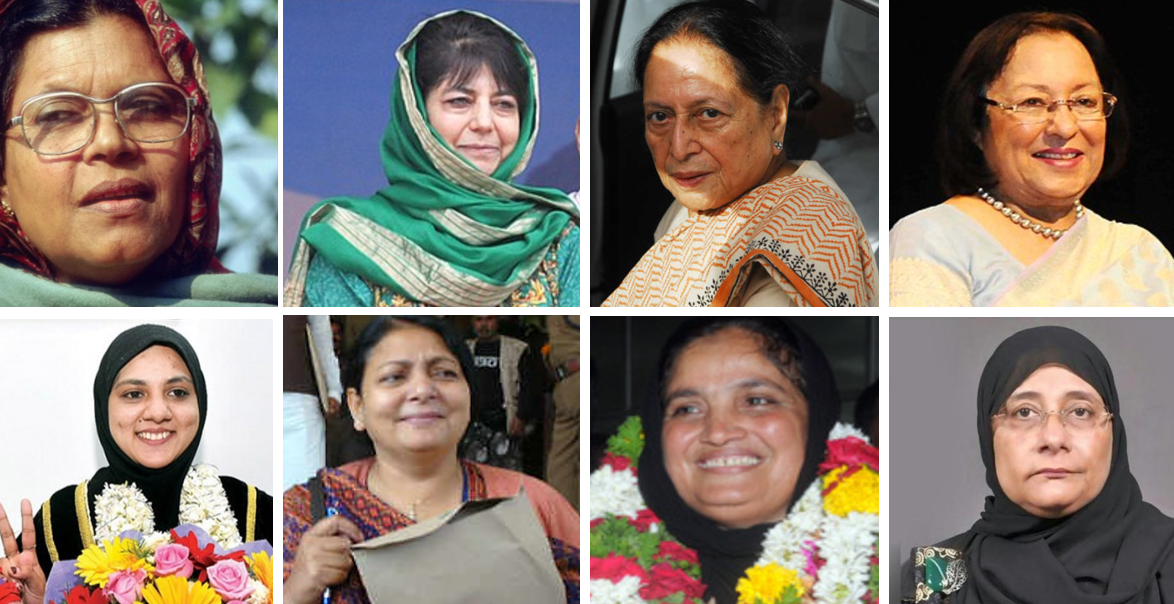
Indian Muslim Women who feature in the list of Rising Beyond the Ceiling 

The “The time has come for women to see money not as shame, but as strength.”

Her mindset, her struggles, her smile they are a source of inspiration for every woman who dreams of flying in an open sky, not a cage.

Dr. Farah Usmani’s story reads like a novel with trials, a determined heroine, a journey of transformation, and a path toward the light.

It teaches us that with courage, even the walls of a house can become the rooftop of the world’s tallest building.

Because when a woman shapes her identity by herself, she doesn’t just create a path for herself but for every generation that follows.

source: http://www.awazthevoice.in / Awaz, The Voice / Home> Stories> The Changemakers / by Onika Maheshwari, New Delhi / June 02nd, 2025