Tag Archives: Indian Muslims

Mamoon’s English medium, co-ed slum school

Tikiapara, Howrah, WEST BENGAL:
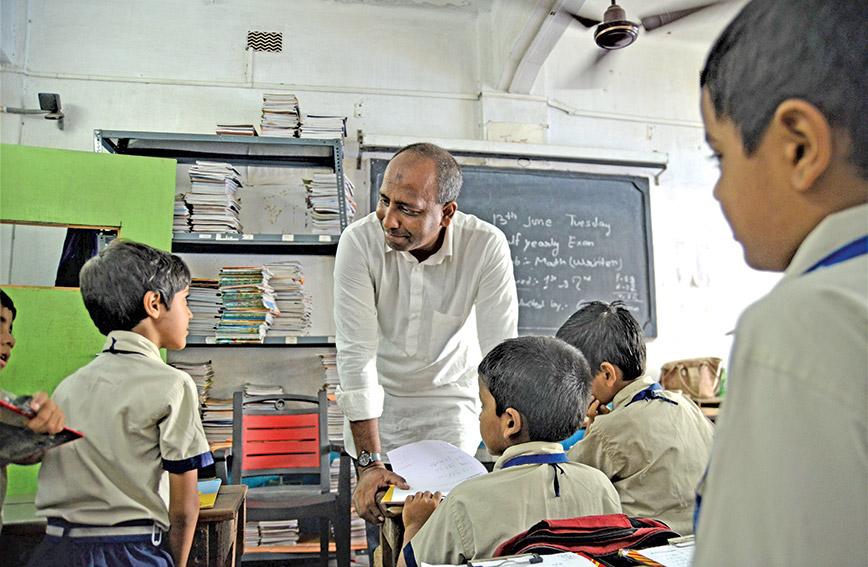
Mamoon Akhtar with students at the Samaritan Mission School in Tikiapara

Innumerable NGOs are helping the needy across the country in different ways. What makes the Samaritan Help Mission in Howrah, which adjoins Kolkata across the Ganga, exceptional is the way in which people of different faiths, nationalities, private initiative, official assistance and corporate help have combined to nurture a vibrant island of hope.

The Samaritan Mission does its work in Tikiapara, a huge slum that runs alongside the railway tracks connecting Howrah Station. It is 80 percent Muslim, poor and intimidated by crime. The mission was founded and is led by Mamoon Akhtar, 46, its secretary, and most of its work is housed on land belonging to the Belilious Trust.

Mamoon’s (everybody calls him so) father was a skilled worker and keen that his son get a good education. So he put Mamoon in one of the area’s leading schools, St Thomas. But he had to leave after reaching Class 7 under humiliating circumstances because his father was out of a job and could not pay the school fees. Mamoon finished high school through open learning and, with his father departed, supported his family by doing odd jobs and offering private tuition. Not being able to complete his formal schooling, enabling others to do so and in the English medium became the driving passion of his life.

Two incidents shaped him. One day, he found a man beating up a woman because she refused to be a drug pusher. Mamoon tried to stop him and got beaten up himself. He was finally rescued by other locals who knew him and called him “Sir” because he taught children. The little boy whose mother Mamoon had tried to save caught up with him and simply said, “I want to study.” He asked the child to come to his house and soon he was running evening classes for 20 children in a spare room. To keep doing so, Mamoon went around the community seeking help and enlisted the services of local girls who had completed school as teachers at `100 per month.

Then, one day, he spotted a newspaper clipping which pictured a lady singing with a group of children. She was Lee Alison Sibley, Jewish wife of someone with the US consulate in Kolkata. Mamoon wrote to her, seeking help; she replied that he should ask the local community. Mamoon wrote again. Eventually, she came, saw what he was delivering from a single windowless room, was overwhelmed, wrote out a cheque for `10,000 and asked a local journalist friend to write about his work. It highlighted the fact that Mamoon taught children from all communities. The article roped in Ramesh Kacholia of Caring Friends Mumbai. Ramesh Uncle thereafter became a permanent mentor.

With what Mrs Sibley gave, Mamoon set up Samaritan Help Mission in 2001, the name inspired by the biblical story he had learnt in school. When Mamoon canvassed for additional help from the community around him he also reaped a bonus — a strong community connect. In 2007 the informal school became the Samaritan Mission School, accredited and recognised by the West Bengal government. Today it is a co-educational English-medium school, affiliated to the state board for secondary education, with an enrolment of 1,300. The big thing is ‘English medium’; Mamoon knows the difference that makes.

Now switch to I.R. Belilious Institution on Belilious Road, covering two acres of land bequeathed by a Jewish couple, Rebecca and Isaac Raphael Belilious (they both departed by 1910, childless), with a football field, basketball court, a water body, a two-storied school building and a bigger one coming up which will take classes up to Class 8. The whole complex comes under the Belilious Trust Estate. As a child Mamoon swam there, to later see the water body turned into a municipal garbage dump, the government school virtually defunct, the whole space gone derelict and a den of drug pushers.     

In 2014 Mamoon and a small group of friends started canvassing the residents of Tikiapara and eventually, on 14 November, Children’s Day, a meeting of a thousand people was held at I.R. Belilious Institution. Also present were the trustees of the institution, the local MLA and the Howrah police commissioner, Ajay Mukund Ranade. The meeting decided to revive the institution, after some debate of course as to why a madrassa should not be started instead of an English-medium school. But Mamoon prevailed and from the next day began the physical clean-up job by the locals through shramdaan with help from the municipality. The police did their own kind of clean-up. In December the trustees and the police commissioner decided to start an English-medium school, also open an evening school, name the effort the Rebecca Belilious English Institution, and hand over its management to the Samaritan Mission.  

As you enter, to the left is a prominent sign indicating it is a banking kiosk of the State Bank of India. The place is filled with women, 7,500 of whom from the adjoining slum have accounts there. A biometric point of sale device enables cash dispensation for those who have Aadhaar registration. Along with education, financial inclusion is also taking place right there. The Samaritan Mission also works as a banking correspondent of Indian Overseas Bank.

Right after the bank outreach is the Rebecca Belilious Charitable Dispensary which treats over 200,000 outpatients a year with help from Howrah government hospital doctors. In it there are well-equipped rooms for ophthalmology, dentistry, cardiac care, gynaecology and general medicine. Why is the place not teeming with people and why is it a bit dark? The reality of non-metropolitan India catches up. There is a power cut on.

All the facilities and construction are fairly new and don’t seem heavily used. The grants are coming but how accessible is the entire facility? The question is answered when I spot in another corner a door marked Jan Aushadhi, an initiative by the Indian government to make available cheap essential generic drugs to all. Inside, the shelves are stacked with medicines and two staffers busily fill prescriptions. All the elements that make up a complete out patient facility are present. Too few people overall? It is a hot midday during Ramzan fasting.

In another corner of the complex is a narrow hall with two rows of sewing and embroidery machines with girls working on them. An instructor is explaining to one of the girls how to work on what looks like a pocket which has to be fixed onto the garment. This is the vocational training centre.

Another doorway bears a key message, a skill development centre facilitated by two police commissioners, Ranade and D.P. Singh. It captures the active and supportive role that the local police played in the work of the Mission.

Next to it is being built a drinking water plant which will use the reverse osmosis process and ration daily entitlements through smart cards. No service is rendered free, explains Mamoon. A token fee is levied to make people realise the value of what they are getting.

After these facilities there is a clean water body (it has been snatched back from extinction) and beyond it is an astro turf football pitch, enabled by the CSR programme of Chevrolet GM. At a second campus 10 km away in Bankra, Ambuja Cement helps run a vocational training centre and the Tata Trust a centre to facilitate the integrated use of technology in education to revive government schools. 

You realise CSR funding helps but it is an additionality. The Mission’s lifeblood comes from its community ownership, aided by faceless philanthropy, all explained to you by a balding, energetic Mamoon, despite undergoing Ramzan fasting, who is fluent in English and Bengali but prefers Hindi if you have it too.

As my tour ends Mamoon makes a critical point. At one stage an Islamic organisation was ready to help but wanted the project to have an Islamic character. Mamoon declined. He says his Mission knows no creed and he is trying to bring about active give-and-take between the two main communities in Tikiapara which live peacefully but separately, a bit aloof from each other. Twenty percent of the slum-dwellers are Hindus but they make up 30 percent of the students of the Mission. That additional 10 percent is a badge that Mamoon can wear with pride. 

source: http://www.civilsocietyonline.com / Civil Society / Home> Spotlight / by Subir Roy, Kolkata / July 03rd, 2017
Mangaluru: HIF releases book titled ‘Big B’ to pay tribute to Late SM Basheer

Mangaluru, KARNATAKA:

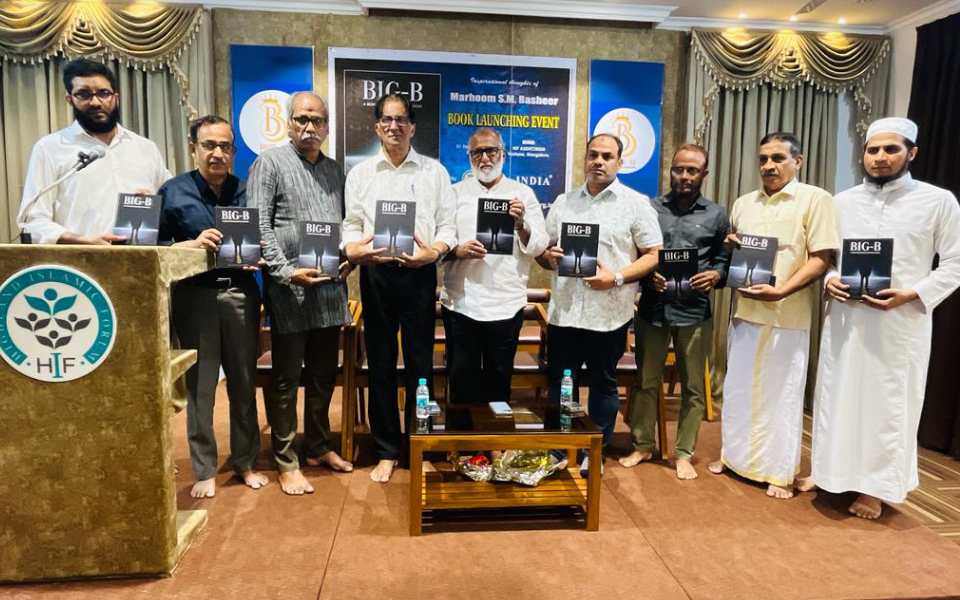
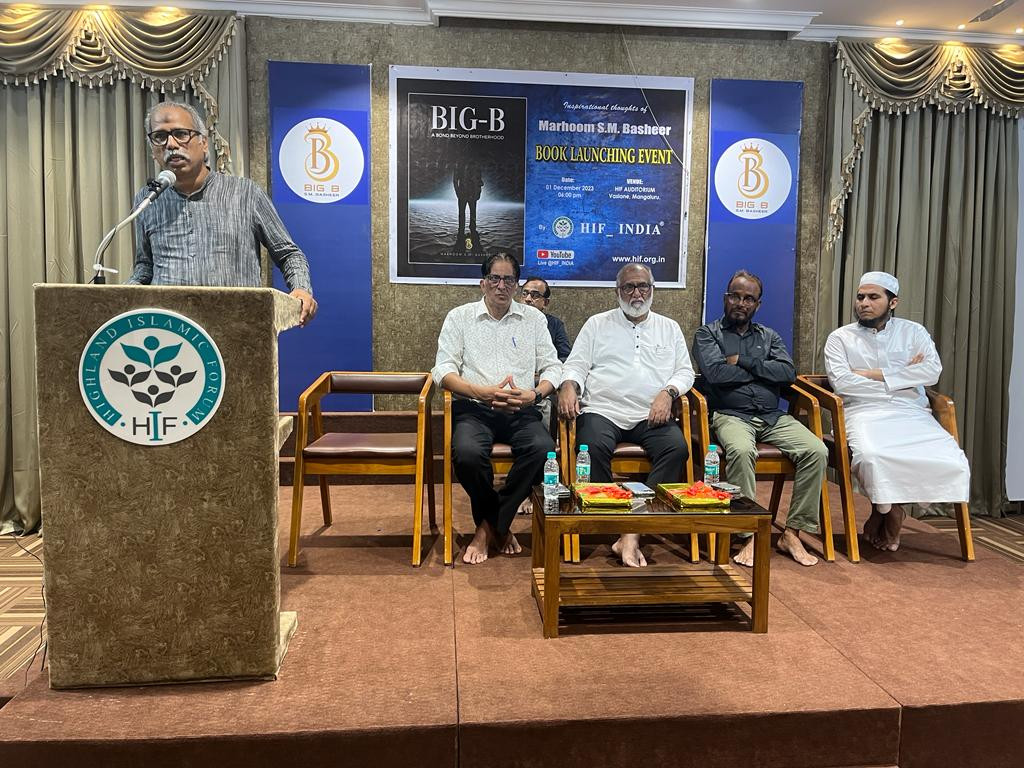
In an event held at the Highland Islamic Forum (HIF) Auditorium in the city, the Highland Islamic Forum (HIF) unveiled a new book titled ‘Big B,’ a tribute to the late SM Basheer.

Subtitled ‘A Bond Beyond Brotherhood,’ the book is centered around the inspirational thoughts and life of Late SM Basheer.

Addressing the gathering at the book launch, NA Muneer, Ex-Chairman of the Kuwait Kerala Muslim Association (KKMA), shared memories of his association with SM Basheer. Muneer spoke about the charismatic personality and powerful aura that SM Basheer possessed, leaving a lasting impact on everyone who met him.

Recalling his memories, Muneer emphasized that even a year after SM Basheer’s passing, he continues to remember and honor the late leader. He praised SM Basheer’s instrumental role in organizing significant events at KKMA and acknowledged his invaluable contributions to the organization while serving as its chief.

Fatah Tayyil, Ex-President of KKMA, also paid tribute to SM Basheer, acknowledging his substantial contributions to the KKMA.

SM Rasheed, Chairman of Bearys Chamber of Commerce and Industries (BCCI), spoke about SM Basheer’s profound influence on people’s lives and commended his contributions to the BCCI.

Other speakers, including Mohammed Ali Uchchil and Rizwan Pandeshwar, shared their views on the life and impact of SM Basheer during the event.

The book ‘Big B’ was released by AK Niyaz, MD of AK Group of Companies, along with HIF India President Adil Parvez, and other guests present at the event.

Hussain Shafi, the author of the book, was felicitated by HIF for his contributions.

HIF also presented a documentary-style short video introducing SM Basheer and showcasing his life.

Prominent figures such as SM Basha, MD of SM Group of Companies, SM Farooq, KK Abdullah, officials, and executive members of KKMA and BCCI graced the occasion.

The event, hosted by AK Shaaz, concluded with supplications led by Moulana Tayyub, Khateeb Ehsan Masjid.

source: http://www.varthabharati.in / Vartha Bharati / Home> Karavali / by Vartha Bharati / December 01st, 2023

Twin daughters of Imam from Kashmir village qualify NEET 2023

Damhal Hanjipora (Watto Kulgam District), JAMMU & KASHMIR:

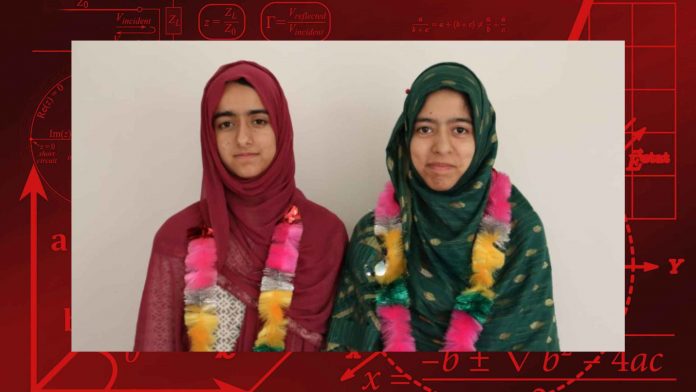
Syed Bismah and Syed Sabiya, twin daughters of an Imam from Damhal Hanjipora in Kulgam district, south Kashmir, have achieved success by qualifying the Undergraduate National Eligibility Cum Entrance Test (NEET) in their first attempt.

The NEET results for 2023 were recently announced, and Bismah and Sabiya secured impressive marks of 625 and 570, respectively.

When asked about their achievement, the siblings expressed their gratitude towards their parents, highlighting their unwavering support throughout their journey to qualify for this prestigious examination. Their parents played a vital role in encouraging and guiding them, making it possible for Bismah and Sabiya to achieve this notable milestone.

“They provided us with whatever we needed to study from childhood. They made a big sacrifice for our future”, Sabiya told local media.

She emphasized the importance of focus in order to qualify for the NEET examination.

“If you want to appear in NEET, you should first check your level and identify your weaknesses. You should discuss your weaknesses with your teachers and also take help from internet to overcome them,” she said.

The father of Bismah and Sabiya, an Imam from Damhal Hanjipora, expressed his immense pride in his daughters’ accomplishment. He acknowledged that he had faced struggles and worked tirelessly to provide support to his daughters throughout their journey. His dedication and hard work were aimed at ensuring that his daughters had the necessary resources, guidance, and encouragement to pursue their dreams of qualifying for the NEET examination. The father’s commitment and efforts played a significant role in enabling Bismah and Sabiya to achieve their goals, and he takes great pride in their success.

“My advice to every parent is that you should provide the best opportunities to your wards for their better future,” he said.

source: http://www.muslimmirror.com / Muslim Mirror / Home> Education> Indian Muslim> Positive Story / by Muslim Mirror Staff / June 14th, 2023

The Father Of Urdu Poetry: The Disputed Disappearance Of Wali Gujarati’s Grave

Ahmedabad, GUJARAT:

The Father Of Urdu Poetry: The Disputed Disappearance Of Wali Gujarati's Grave

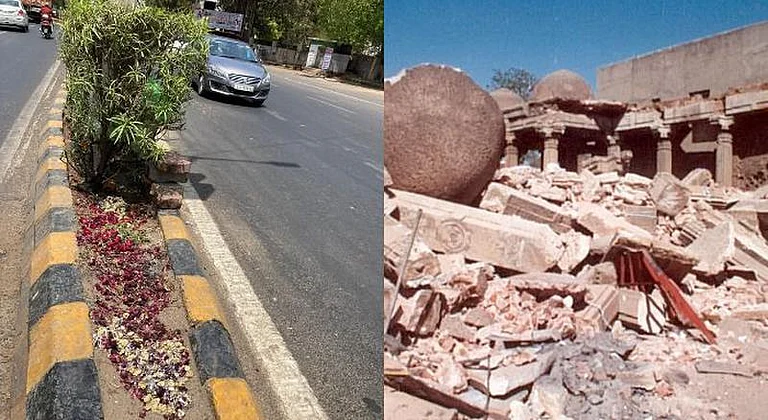
Amidst the busy roads of Gujarat that have thousands of cars passing by every day, there lies a neglected divider that holds reverence for many. A petal-strewn corner on a broken divider signifies the tomb of an Amdavadi poet credited for the advent of Urdu poetry that gave rise to a league of poets like Zauq, Mir, and Mirza Ghalib.

The poet in question is none other than the father of Urdu poetry, Wali Muhammad Wali, whose contribution towards uplifting Urdu poetry to being at par with its Persian counterpart is considered indispensable.

Challenging the notion that elite poetry can only be Persian, Wali opened up a world of poetic possibilities for Urdu poets and his influence can be seen in a piece penned by the Poet Meer Taqi Meer as a tribute to the Urdu Chaucer.

Khugar nahin kuch yun hi hum Rikhta-goi kay/
Mashooq jo apna tha, bashinda-e-Dakhan tha”

(It isn’t casually that I began dabbling in Urdu/I picked it from my lover, a native of the Deccan).

The poetic legend who died 300 years ago was buried in his family graveyard in Ahmedabad after his demise. Post Independence, Wali’s grave was separated from the graveyard and found itself situated in the middle of the road.

While the death and origins of Wani might be disputed, the razing of his grave has been linked to the communal past of Gujarat. Destroyed during the Gujarat violence of 2002, Wali’s grave was part of the riot that saw thousands murdered and the demolition of many significant Muslim shrines and Dargahs. Eliminating any and all signs of the Dargah, roads were built overnight and the atrocities of communal violence were swept under the layers of tar and repairs that ensued.

A Twitter user recently went searching for the shrine and impressively remarked on the presence of the Urdu poet’s legacy that remains etched in the mind of locals. Street vendors, shoemakers, and locals seem happy to guide and give precise directions to the grave for those looking to visit the shrine. Once an ornate shrine, the grave now portrays a sad picture of desolation and jarring neglect that can be blamed on the political powerplay as well as the ‘divide and rule’ ideologies that plague the nation.

One cannot miss the imprint of Wali’s work on Urdu poetry. It remains immortal in the hearts of people and keeps the light of consciousness alive.

source: http://www.homegrown.co.in / Homegrown / Home> #HGExplore / by Riya Sharma / August 08th, 2022

UP 10th Result 2020: Alisha Ansari, Arshad Iqbal, Arshima Sheikh among Top Ten

Lucknow / Kanpur, UTTAR PRADESH:

A total of 33 students from various districts of Uttar Pradesh have found their place in the Class Xth 2020 list of top ten.

Uttar Pradesh 10th Result 2020: 

Three Muslim students – Alisha Ansari, Arshad Iqbal and Arshima Sheikh, have cracked the 2020 UP Matric High School Class 10 exam 2020 and have been included in the list of Top Ten.

A total of 33 students have found their place in the 2020 list of top ten. While Alisha Ansari secured 9th rank, Arshad Iqbal and Arshima Sheikh have bagged the 10th rank in Uttar Pradesh Class 10 Merit List 2020.

Alisha Ansari Mohd Rizwan Fazli of Bal Nikunj Inter College Lucknow has got 564 marks (94%) out of the total 600 marks and jointly shared the 9th rank with five other students

Arshad Iqbal Iqbal Hussain of PT RN MHSS Shahjahanpur and Arshima Sheikh Aftab Ahmad of St Xaviers School Kanpur have got 563 marks (93.83%) and secured the 10th rank with 02 other students.

Uttar Pradesh Class 10 result was Uttar Pradesh Madhyamik Shiksha Parishad (UPMSP) Saturday at 12:30 pm by Dy CM and UP Education Minister Dinesh Sharma.

The overall pass percentage of Uttar Pradesh board Class 10 this year is 83.31 percent – an improvement by more than 3% as compared to last year. In 2019, the overall pass percentage was 80.07%.

Riya Jain Bharat Bhushan of Shri Ram SM Inter College Bagpat has topped the Uttar Pradesh board in 2020 High School or Class 10 (UPMSP Class X) exam result of which is declared today.

Ria Jain has secured 96.67 percent marks to secure the 1st position in the 2020 Merit List.

Abhimanyu Verma Ramhut Verma of Shri Sai Inter College Barabanki came 2nd with 95.83% marks and Yogesh Rajendra Pratap Singh of Sadhbhavna Inter College Barabanki came 3rd with 95.33%.

“All toppers will get laptops and cash rewards”, Dy CM Dinesh Sharma and UP Education Minister said while declaring the result.

source: http://www.ummid.com / Ummid.com / Home> Education & Career / by Ummid.com News Network / June 27th, 2023

Retired man from Bengaluru runs only Indian restaurant in Uzbekistan’s Samarkand

Bengaluru, KARNATAKA / Samarkhand, UZBEKISTAN:

representational image (freepik)

Samarkand (Uzbekistan) (PTI):

Mohammad Naushad, a retired man from Bengaluru had plans to travel the world after completing his tenure in the steel industry. He landed as a tourist in Samarkand a year ago and his quest for his morning masala tea and paratha prompted him to settle here and open the only Indian restaurant in the second-largest city of Uzbekistan.

Called “The Indian Kitchen”, the restaurant came as a respite to Indian students who are studying medicine here and used to miss Indian food. The locals here also fancy the wide-ranging menu from lip dosas to chicken biryani.

“I had no plans to work post-retirement and had no experience of working at a restaurant let alone running one. When I came here as a tourist, I headed out to have my usual breakfast of masala tea and paratha.

“I have travelled to so many countries and have always found some or the other place where Indian food is available. I was surprised to find out that there is not a single eatery or restaurant which serves Indian meals,” 61-year-old Naushad told PTI.

“A week more and the vibrant culture and simplicity of people here, prompted me to give it a shot and now Samarkand is my permanent home,” he added.

According to Naushad, the restaurant receives around 350-400 visitors per day and there are catering orders for weddings and events where having Indian cuisine as an option is a hit here.

His day starts with going to the “bazaar” with his staff to buy groceries as he prefers everything to be cooked afresh at the restaurant.

“There are over 3,000 Indian students in Samarkand and they tell me often that they used to miss Indian meals. The shahi paneer and naan and the rotis used to be a rare sight here. I expected the Indians to love the restaurant but the response I have received from Uzbeks is phenomenal,” he said.

Behind the lip-smacking dishes available at the restaurant is Ashok Kalidasa, a chef who hails from Madras. He earlier used to live in Uzbekistan’s Tashkent and is now settled in Samarkand.

“We enquire from each customer about the kind of spices they like us to use, whether they want it less spicy or tangy because Uzbek food is very different. The effort to customise the popular Indian dishes to their taste is what attracts the local crowd here. Indian students come here because they get their home food and the meals are not expensive,” he said.

Kalidasa says the most popular dishes at the restaurant are “masala dosa” and “chicken biryani” which is much different from the Uzbek “Pilaf”.

Asked about her favourite pick at the restaurant, Zarina, an Uzbek woman, said “I love masala chai”.

While right now the Indian Kitchen offers meals at the restaurant, Naushad has expansion plans.

“We are also thinking of starting a tiffin service for Indian students. Also, we get a lot of tourists. So I am contemplating opening similar setups in Bukhara and Khiva which are popular tourist destinations in Uzbekistan but do not have any Indian restaurants,” he said.

According to the Uzbekistan Embassy in New Delhi, the Indian diaspora in Uzbekistan has more than 5,000 people. In pre-Covid year 2019, over 28,000 Indian tourists visited Uzbekistan. However, the number has crossed over 30,000 this year so far.

source: http://www.english.varthabharati.in / Vartha Bharati / Home> World / November 19th, 2023

Two Circle Network’s Seed Fellow Sufi Parween Wins Laadli Media Award

BIHAR / Kolkata, WEST BENGAL :

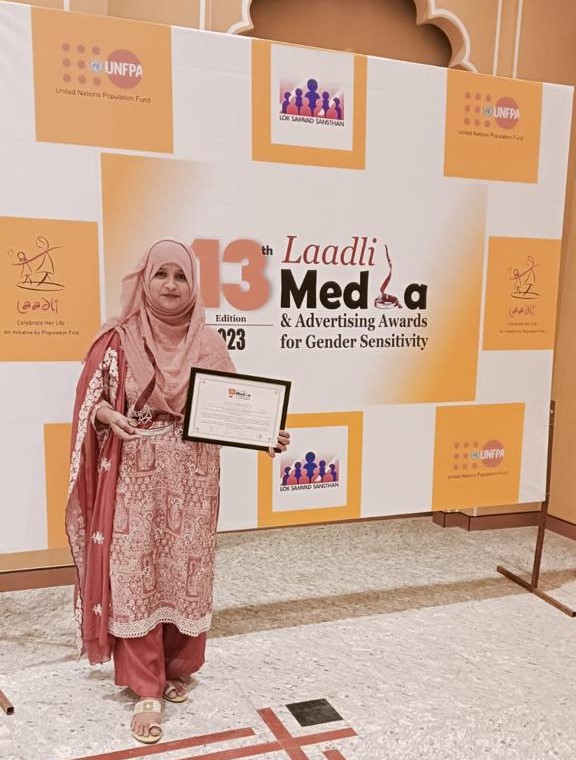
We are happy to announce that TCN’s SEED Fellow Sufi Parween has won the 13th Laadli Media Award for her exceptional contribution to gender-sensitive reporting. 

Her award-winning story, “Bihar: These Muslim women break taboo by learning Madhubani painting – TwoCircles.net,” focuses on a transformative initiative among Muslim women in Bihar who have broken social norms by learning Madhubani painting, the traditional Indian art style.

source: http://www.twocircles.net / TwoCircles.net / Home> Journalism / by TCN News / October 27th, 2023

A Muslim Woman Is Helping Patients of Sickle Cell Disease Get Treatment in MP’s Chhindwara

Chhindwara, MADHYA PRADESH:

At the age of two and a half years, Swaleha Naaz Khan fell down the stairs while playing and broke her hand. This incident marked the first time she visited a hospital. However, for Khan, a patient of Sickle cell disease, it set off a cycle of sickness, incorrect medications, hospital visits, and unsuccessful treatment. Now at 26, she recently completed her M.Sc (Masters in Science) in Computer Science from a private institute in Chhindwara, Madhya Pradesh and helps people fight suffering from Sickle cell disease in this small town of Madhya Pradesh.

Facing Problems in Identifying the Disease

Growing up, she constantly experienced severe body pain. Due to a limited medical infrastructure in the city at that time, doctors were unable to identify the source of her pain.  Her body would frequently stiffen, prompting her father to assume she was possessed by a spirit or djinn. They sought help from hakims and babas in hopes of finding an explanation for her pain but to no avail. Khan and her family went from city to city in order to get her treated. They even travelled to Nagpur in Maharashtra for this purpose. 

Dr. Shrivastav, a doctor at the city government hospital, finally diagnosed Khan with sickle cell disease while she was in 10th grade, after she was brought to the hospital the night before her board exams. “It was for the first time that I received correct treatment,” she went on to say.

The Disease Affected Khan’s Education

Previously, whenever Khan’s condition deteriorated, she was given injections to soothe her unbearable pain. “The injections were given every 8 days, causing me so much pain that I could only sleep on one side. I couldn’t sit down properly. My education was also greatly affected. I often had to miss school,”  she explained. Due to being admitted a day before exams, she flunked in 10th grade. 

Sickle cell disease [SCD] is a hereditary medical condition that persists throughout a person’s life and affects red blood cells, which in turn impacts hemoglobin – the carrier of oxygen in the body. 

Unlike the typical disc-shaped red blood cells found in a healthy person, in SCD, these cells take on a crescent or “sickle” shape. The alteration affects their manoeuvrability in blood vessels, leading to a range of complications such as strokes, vision issues, infections, and bouts of intense pain known as pain crises. 

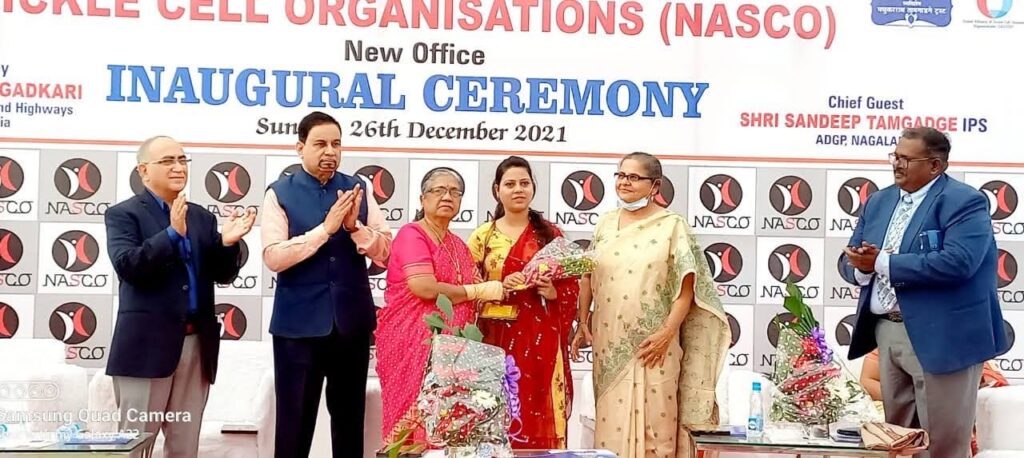
According to Gautam Dongre, Secretary of National Alliance of Sickle Cell Organisations (NASCO), sickle cell disease can cause great damage to people’s lives. “Without accurate diagnosis, individuals with this condition may not live more than 4 years. They can be affected by organ damage within 20 years. Their joints may stop functioning properly, potentially leading to disability. In the absence of proper treatment, it can result in premature death. Otherwise, their entire life may be centered around going between the hospital and home,” said Dongre stressing that timely treatment of the disease is extremely critical.

Creating a WhatsApp Group of Sickle Cell Patients To Help Them

Khan was admitted in 2016, along with two other SCD patients, Deepika and Aishwarya. She had previously thought she was the lone patient suffering from the disease. However, she began to meet more people suffering from the disease. “Aishwarya formed a group of all Chhindwara’s sickle cell patients.  We discovered that there are numerous patients with SCD in that district. At the time, we were only 15-16 years old,” she explained.

After she discovered more than 500 SCD patients in Chhindwara, Khan decided to visit the District Magistrate’s office in order to demand a separate hospital ward for them. She says that when she used to visit the government hospital, they had to purchase everything from outside. The only thing they provided was a bed, which was free. She observed that patients coming from remote villages faced several difficulties in accessing proper healthcare due to this. 

“We demanded for all patients to get access to Dr. Shrivastav. After that, we asked for the availability of medicines. The whole process was really taxing. After going through several offices and facing rejections, medicines were finally made available in the hospital for free. Rarely does anyone need to purchase something from their own pockets,” Khan stated, proudly.

‘Cared for Me as if I Were Her Own Sister’: A Sickle Patient

22-year-old Nazrana Mansuri, a patient suffering from Sickle Cell Disease (SCD) in Chhindwara, recounted her first meeting with Khan at the hospital. Upon learning that Mansuri is an orphan, Khan assumed full responsibility for her operation. “I used to live with my khala (aunt), who worked as a daily wage earner and didn’t have the means to look after me. Swaleha took all my responsibilities. Despite being unwell herself, she stayed with me throughout the night of the operation. She not only brought me food but also cared for me as if I were her own sister. It’s been two years since my operation, and she still feels like family to me,” Mansuri said.

How Extreme Weather Made Khan’s Condition Worse

Khan said that during wintertime, her blood vessels used to thicken causing her extreme pain. 

Dr. Gaurav Kharya, the clinical lead at the Centre for Bone Marrow Transplant and Cellular Therapy, Indraprastha Apollo Hospital, New Delhi, explained that under normal circumstances, sickle cell disease may not pose a problem. However, during hot weather when dehydration occurs, and in extremely cold temperatures when small blood vessels constrict, a crisis can occur. During these episodes, the shape of sickle-shaped cells can become further distorted and obstruct various blood vessels, resulting in the typical symptoms of sickle cell disease.

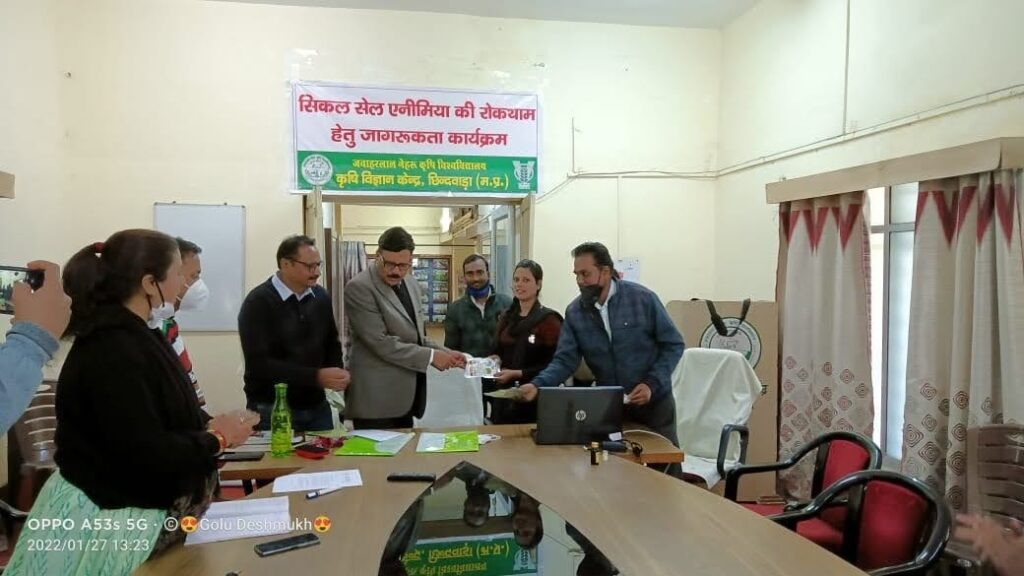
In 2020, Khan joined the National Alliance of Sickle Cell Organisations (NASCO), after meeting Gautam Dongre. Today, she manages all of NASCO’s work in Madhya Pradesh and helps out hundreds of patients of the sickle cell disease with getting them treatment, diagnosis and recovery.

Shaba Manzoor and Nuzhat Khan are independent reporters based in New Delhi, India.

source: http://www.twocircles.net / TwoCircles.net / Home> Indian Muslim> Lead Story> Science-Health> TCN Positive / by Shaba Manzoor & Nuzhat Khan / October 31st, 2023

Book Excerpt: Barsa By Kadeeja Mumtas

Kattoor (Thrissur District),KERALA:

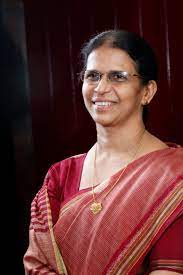
Khadija Mumtaz - Wikipedia

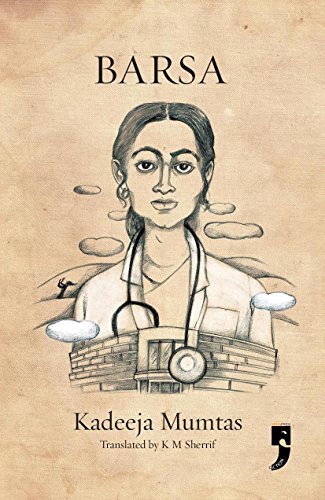
Barsa, written by Kadeeja Mumtas, is the first Malayalam novel to be set in Saudi Arabia and as its introduction states, is a record of “a woman’s scrutiny of Islamic scriptures and Muslim life”.

Barsa, as its introduction states, is the first Malayalam novel to be set in Saudi Arabia. Written by Kadeeja Mumtas and translated into English by K M Sherrif, the book acts as a record of “a woman’s scrutiny of Islamic scriptures and Muslim life”. 

Sabitha, the protagonist of the novel, after moving to Saudi Arabia, starts questioning every aspect of her every day life – including religion.


The novel traces her personal journey as she is caught amidst culture, religion, and personal agency, and struggles to assert her own identity.

One hot afternoon, Rasheed and Sabitha first stepped out like refugees on the large expanse of land surrounding the grand mosque which housed the holy Ka’aba. Other travellers who knew their way hurriedly moved on while the two of them stood hesitantly at the crossroads, unsure of their next step. The coppery glare of the sun sat on their heads like the legs of a giant spider.

Rasheed glanced at Sabitha. He could sense her discomfort in the headscarf and the abaya, looking like a lawyer’s coat, which the Malayali workers at the airport had helped her buy. But he thought that even in those uncomfortable clothes, Doctor Prabhakaran’s niece, with her wheatish complexion, had a particular charm. He wanted to tell her this with a little smile, but with his tongue stuck to the roof of his dry mouth. He just couldn’t do it, which was a pity. If he had, maybe the wrinkles on her forehead would have lost at least one crease.

A yellow taxi backed up and stopped near them. Th e face of a man with a shabby headdress clamped down by a black ring came into view, and an arm jerked out of the window at the driver’s seat. “Fain aabga ruh?” Rasheed guessed he was asking where they wanted to go and replied, “Mudeeriya Musthashfa”—the Health Directorate. He had gleaned the Arabic expression from the conversation he had had in halting English with the Palestinian doctor they had met at the airport emergency service. He had seen Sabitha too write it down in her diary.

“Ta’al ”—come. Th e driver opened the car doors and invited them in. As he could not understand the driver’s sarcastic remark, directed obviously at his fairly large suitcase, Rasheed, with some embarrassment, chose to put it on his lap as he sat down and leaned back comfortably.

As the car sped at breakneck speed, Sabitha felt a tremor run through her, but she suppressed it immediately. She felt helpless at having to depend on a complete stranger, an Arab driver whose language she did not know. But she was also reassured by Rasheed’s presence. They had reached this far, trusting strangers, many of whose languages they did not know.

As they boarded the Saudi Airlines flight to Riyadh from Mumbai, Thambi, the man from their ticketing agents Ajanta Travels, had said reassuringly, “The flight will take about four and a half hours. Someone from the Ministry will be waiting to receive you. There is nothing to worry about, Riyadh is a nice city. Okay then, happy journey!”

From the moment Thambi, with that characteristic city dweller’s way of waving goodbye had raised his hands and walked away, Rasheed and Sabitha had taken comfort in each other’s presence. They could make this journey together only because of their decision to stick to each other, come what may. At the interview in Mumbai, it was Sabitha who was selected first, as a lady gynaecologist. The interview for ophthalmologists had not yet been conducted and, as there were a large number of applicants, Rasheed was not too hopeful of getting in. When she was asked to sign the contract, Sabitha hesitated, “I will sign only if my husband too is selected.” She had by then realised that lady gynaecologists were much in demand. “You sign; even if he is not selected, he can come with you on a family visa and then try for a job there.”

The man at Ajanta Travels, a go-getter, tried to hustle her. “No, I am not that keen to go to the Gulf to work. I will go only if he also gets a job there.” Her stubbornness paid off . An interview was fixed for Rasheed as a special case.


Excerpted with permission from Barsa, by Kadeeja Mumtas, Yoda Press. You can buy this book at 20% off at the FII-Yoda Press Winter Book Sale on 21st and 22nd December 2018 in New Delhi. For more details, check out the sale page.

source: http://www.feminisminindia.com / Feminism In India – FII / Home> Culture> Books / by FII Team / December 21st, 2018

Jaan Nissar Lone receives global humanitarian award for uniting the world through music

Sheeri (Baramulla District) JAMMU & KASHMIR / Mumbai, MAHARASHTRA:

Jaan Nissar Lone receives global humanitarian award for uniting the world  through music | Hindi Movie News - Times of India
Jaan Nissar Lone receives global humanitarian award for uniting the world through music© Provided by The Times of India


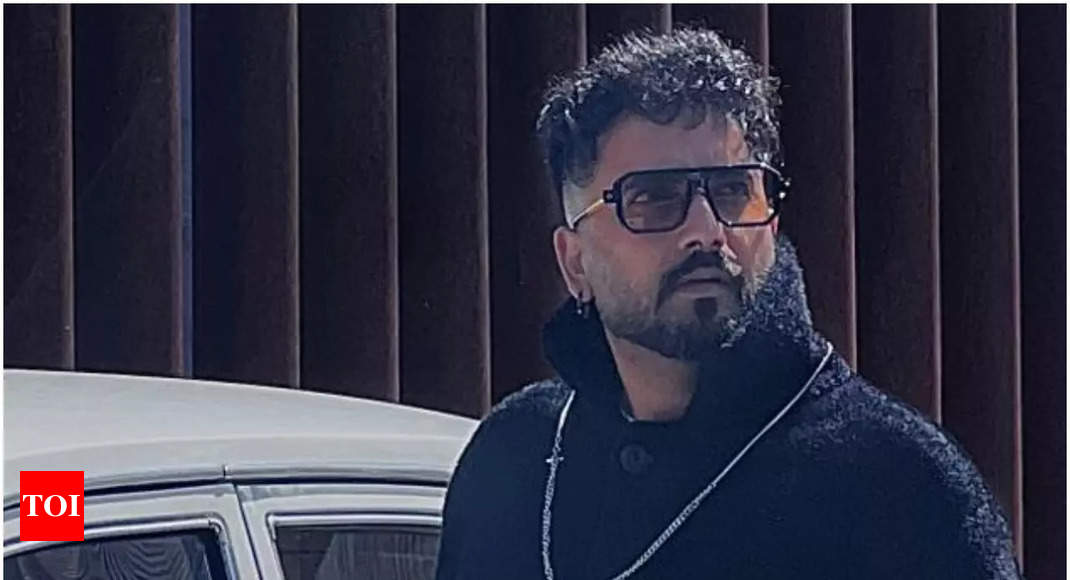
Jaan Nissar Lone was graced with the illustrious global humanitarian award by the World Humanitarian Drive. He is mainly known for his song ‘Harmukh Bartal’ featured in Manoj Bajpai Starrer Webseries ‘The Family Man’. This momentous occasion, graced by esteemed luminaries, reverberated with the essence of his contributions to the realm of music, particularly his role in fostering a sense of unity among diverse populations, including those residing in the picturesque yet troubled valley of Kashmir.

Jaan Nissar Lone’s musical artistry has transcended geographical confines and tugged at the heartstrings of individuals from all walks of life. His melodious compositions served as a wellspring of inspiration, galvanizing countless souls to embark on a journey characterized by love and mutual comprehension, not just for their homeland but for the entire global community. Through his educational music videos, he has empowered a legion of youthful enthusiasts to partake in endeavors aimed at heightening awareness of human unity, thus laying the foundation for a more harmonious and all-encompassing world.

Jaan Nissar Lone receives global humanitarian award for uniting the world  through music | Hindi Movie News - Times of India

The World Humanitarian Drive lauded Jaan’s remarkable endeavors in employing music as a unifying conduit, capable of bridging divides between communities and nations.

The ‘World Humanitarian Drive’ founder Dr Abdul Basit Syed lauded Jaan’s remarkable endeavors in employing music as a unifying conduit, capable of bridging divides between communities and nations. Lone’s journey as a musician and humanitarian transcends borders, languages, and cultures to promote harmony and peace worldwide. His work resonates with people globally, earning him recognition as a symbol of peace and tranquillity.

source: http://www.timesofindia.indiatimes.com / The Times of India / Home> News> Times Entertainment> Hindi> Music / November 08th, 2023