Tag Archives: Jahanara Begum

Raffat Begum: How a begum’s emergence from the harem changed the lives of Rampur’s women

Rampur, UTTAR PRADESH :

Raffat Begum was a gifted poet and wrote with the pen name ‘Asmat’ and took advice from Azhar Inayati, a renowned poet of Rampur. She also wrote several barsaati folk songs celebrating monsoons as did Nawab Raza.
The names of brides have vanished from wedding cards in Rampur. So, we are cordially invited to the wedding of ‘Arif Khan, S/o Samiullah Khan to the daughter (no name) of Wahidullah Khan’. Even the names of women are concealed from vocalization by disrespectful male lips. The nameless miasma enveloping our girls is a recent trend in Muslim etiquette of this erstwhile princely state. It negates the ninety year journey the women of the city have traversed–all the tiny and large steps of emerging out of the zenanas, educating themselves and finding a voice. Maybe the unnamed daughter getting married was educated at one of the local women’s colleges established by the erstwhile Nawabs and has ambitions that involve a becoming.

The emancipative journey of Rampur women began with the decision of a queen – Raffat Zamani Begum, wife of Nawab Raza Ali Khan– to leave the confines of the harem and become something more than a name. Nawab Raza (1930-1947), an enlightened ruler fully supported his wife in her decision and was possibly influenced by her in his very western and ‘modern’ outlook.  As the princesses and female members of the royal family followed Begum Raffat, there was a filtered down liberation among the women and girls of upper classes, and over the years a snowball effect that touched the lives of the of all classes of Rampur women.

Raffat Begum was the daughter of Sir Abdus Samad Khan, Prime Minister of Rampur under the colonial rule, an impeccable gentleman who traced his antecedents from the Najibabad royal family.  She was married to the crown prince, Raza Ali Khan, when she was five and he was six years old. The little bride sat on her grandmother’s lap, her heavy nath supported by her grandmother’s palm as the nikah ceremony was performed. The young daughter in law was granted all the paraphernalia of the future queen while still living with her father and had to attend court on special occasions. At a time when brides were given a new name and a title, her name was changed from Askari Begum to Raffat Zamani Begum.

When Raffat was thirteen, her father in law, Nawab Hamid Ali Khan (1894-1930) demanded that the rukhsati (going away ceremony) be performed. Raffat’s father insisted that they wait at least till the groom had completed his education. Raffat Begum wrote, and is quoted in her sister Jahanara Begum’s memoir, that the relations between the two gentlemen became strained. Finally, Nawab Hamid walked on foot from his Khas Bagh palace to the bride’s house, ‘Rosaville’, and the ceremony which usually took days was performed in a few hours; Raffat Begum left her paternal home amidst  songs extolling the valiant Rohilla Nawabs and martyrs of ancient battles.

The teenage couple began their married life often separated by the political intricacies and rules of the harem. Oral history says that they were not allowed to live together for seven years and Raffat Begum was declared infertile after her first son was born. Raza was forced to take a second wife by his father and stepmother. The women of Raffat Begum’s family did not practice strict purda. Her mother was the daughter of the regent of Rampur, General Azamuddin Khan (1888-1891) who had earned the ire of the maulvis of the time for his ‘kristaan’ viewpoint and his championing of female education. Some say he was murdered because of his radical outlook. It is therefore unsurprising that the educated Raffat Begum rejected the claustrophobic harem life she had endured for the first ten years of her married life as soon as Nawab Raza came to power. The couple showed a proclivity towards the ‘modern’ and western lifestyle in all areas and Raffat Begum became a major mover in the drastic transformation of the Rampur durbar, the zenana and Rampur culture. Though not documented in written histories, the influence of Raffat Begum on the dress, cuisine and court etiquettes finds testimony in oral history.

We get a vivid description of the Begum in her stepdaughter , Mehrunnisa Begum’s memoir, ‘An Extraordinary Life.’

Home tutored in English, Persian and Urdu, Raffat Begum entertained distinguished guests at royal banquets and sat for official pictures­­––the first pictures of women from the royal family. She wore latest western dresses, make up and was a chain smoker –– a ‘modern’ thing to do. In fact, she encouraged her children to smoke as it was considered fashionable. However, some women continued to live in the royal zenana ––more out of lack of choice and under confidence–– but there was no constraint on their movement. Given that Nawab Raza’s predecessor, Nawab Hamid confined his women to a sequestered life behind the laal purda, this was the beginning of a drastic change in the thought process and lifestyle of elite Rampur women.
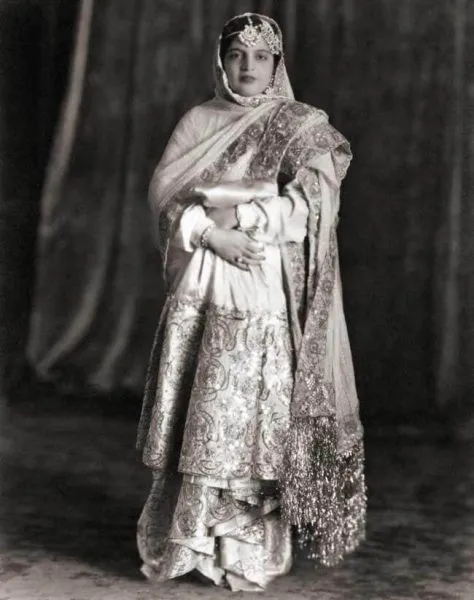
The young princesses were sent to a boarding school after being brought up by British nannies in a strictly regimented nursery. Emulating the new trend, the elite landowning families and those associated with the court started educating their sons and daughters at boarding schools. So, my mother and her siblings were sent to La Martinere in the 1950s. The 1960’s saw Rampur’s first female doctors, teachers, writers and lawyers ––aspirational models for young girls studying in government colleges now housed in the old palaces and zenanas of yore. Nawab Raza gave a lot of emphasis to education particularly female education and the girls from ordinary families were now sent to girls’ schools in the city after initial misgivings. Covered rickshaws and thelas (carts) transported the burqa clad young ladies to schools. My mother became a doctor in 1967 and the women of my family practiced a flexi-veil where they would cover their heads, sit in curtained cars in Rampur and don sarees and bellbottoms outside of Rampur.

Raffat Begum was a gifted poet and wrote with the pen name ‘Asmat’ and took advice from Azhar Inayati, a renowned poet of Rampur. She also wrote several barsaati folk songs celebrating monsoons as did Nawab Raza. Some of her poetry was published.

Begum Noor Bano, her daughter in law and ex-Member of Parliament, recalls the after-dinner dastan sessions with the children and grandchildren gathered around their beloved ‘Mummy’.  The dastans were later written down by a scribe.

Mapara Begum, a court singer, says she would give importance to the lowliest person and welcome everyone with warmth. Which is why she was fondly called Raaj Maata, the queen mother of Rampur.

A few years after Nawab Raza’s death in 1966, Raffat Begum moved back to her father’s place, Rosaville, with her retinue of servants. It was an empty house. Her parents had passed away and her brothers and sisters had left in pursuit of their lives and careers. Life had come a full circle. She passed away at Rosaville in 1986 – an elegant begum, spirited and dignified till the end. Her plaintive lines are still echo on the lips of old timers:

“Aisey beemaar ki dava kya hai,jo batata nahi hua kya hai;

Kaun suntan hai is zamaney mein, kis se kahiye iltija kya hai.”

How can a person who cannot describe her ailment find a cure?

Even if I could find words for my pleas, would my entreaties find listeners.

Receiving yet another invite to the marriage of an anonymous daughter, I tried to remember the names of the wives of acquaintances and distant relatives. I came up with Naeem mamu ki biwi, Munney sahib ki ammi etc. etc. We are all guilty of using the blanket term bhabhi or khala to address the married women of various ages; we are introduced as wives, mothers and granddaughters. I used to laugh at the old style of explaining connections––‘Munney mian ki beti Shaddan Khan ke ghar mein hai’, indicating that Munney mian’s nameless daughter is married to Shaddan Khan. We have accepted an anonymous existence here and it is only logical that our girls get shrouded in namelessness on their wedding day.

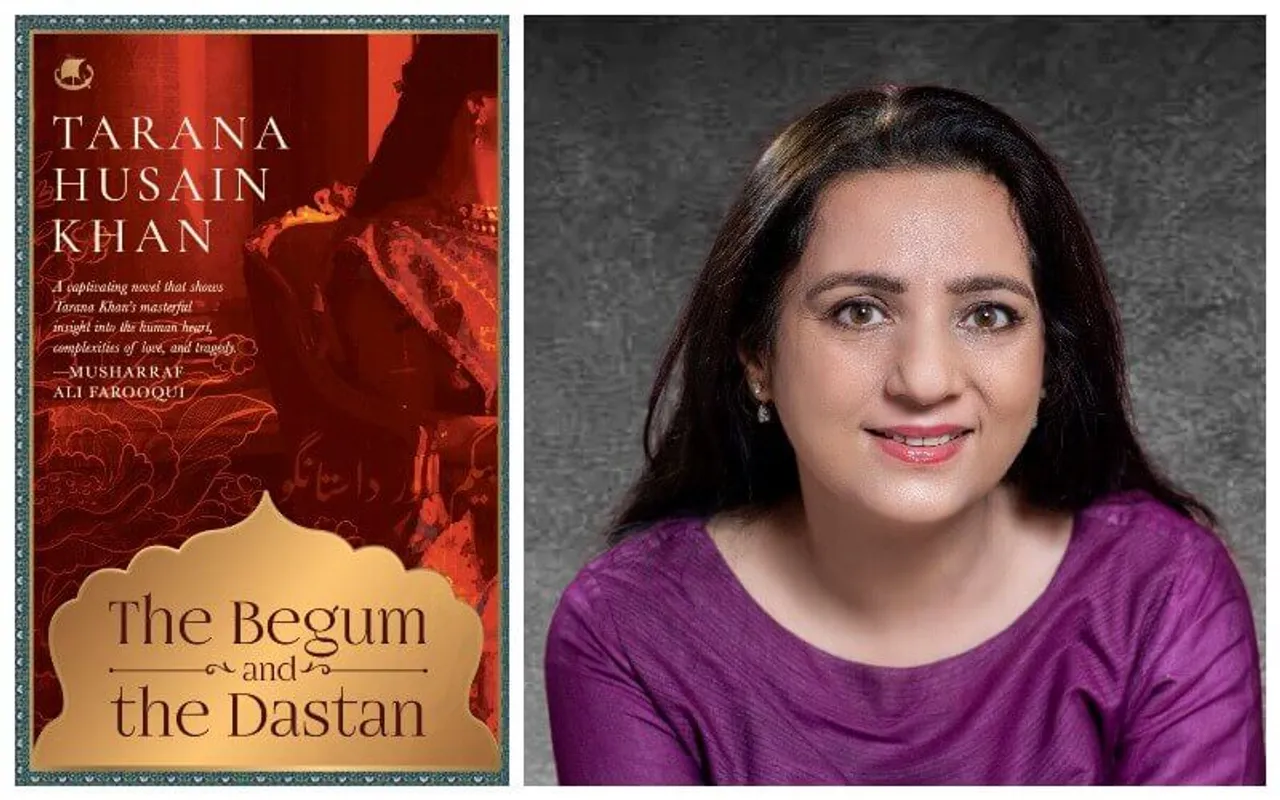
Tarana Husain Khan is a writer and researcher based in Rampur. Her historical fiction ‘The Begum and the Dastan’ has been recently published by Tranquebar. The views expressed are the author’s own.

source: http://www.shethepeople.com / SheThePeople / Home> Books / by Tarana Husain Khan / March 02nd, 2021
Muslim Women, Waqf, and the Power of Charitable Legacy: A Forgotten Force in the Shadows of Reform

INDIA :

A New Law, A Timeless Legacy

The Waqf Amendment Act 2025, recently passed by the Government of India, has stirred a wave of public discourse. Promising to regulate and modernize the administration of waqfproperties across the country, the law is being introduced as a means to improve transparency and benefit marginalized communities, especially Muslim women.

However, in this swirl of policy language, governance reform, and bureaucratic oversight, we must not forget a foundational truth: Muslim women have always been central to the waqftradition—not as passive recipients, but as active architects of community transformation.

Waqf as a Tool of Empowerment—Before the State Claimed It

Before governments created waqf boards, before institutional frameworks shaped their regulation, and long before women were officially recognized in policy narratives, Muslim women in India were shaping societies through charitable endowments.

They:

• Founded schools and madrasas for girls and boys alike

• Donated lands and properties for the construction of mosques, shrines, and Sufi lodges

• Built hospitals, water fountains, and orphanages

• Funded scholarships, welfare kitchens, and even public rest-houses for travelers.

This was not mere charity—it was strategic social intervention, embedded in Islamic ethics and guided by a vision of communal upliftment.

👑 Queens of Waqf: A Glimpse into Heroines of Charity and Community Leadership

🏛️ Razia Sultana (1205–1240, Delhi)

India’s only woman Sultan, Razia established educational and civic institutions supported by state waqf. Her leadership emphasized justice, learning, and infrastructure.

🏛️ Jahanara Begum (1614–1681, Delhi)

Daughter of Shah Jahan, she created waqf endowments for Sufi shrines, caravanserais, and public gardens. Her waqf documents are among the earliest female-authored ones preserved in India.

🏛️ Roshanara Begum (1617–1671, Delhi)

Sister to Jahanara, she built Roshanara Garden and a Sufi lodge. She maintained religious institutions through royal waqf.

🏛️ Sultan Jahan Begum (1858–1930, Bhopal)

The last Begum of Bhopal, she modernized education, built hospitals, supported madrasas, and legally registered many waqf properties to support her reforms.

🏛️ Begum Hazrat Mahal (1820–1879, Lucknow)

Regent of Awadh, she protected the city’s religious institutions and supported waqf-based welfare during the 1857 Rebellion.

🏛️ Khair-un-Nissa Begum (18th c., Hyderabad)

Established Khairtabad Mosque and other public works through her waqf. One of the early noblewomen to invest in education and water supply systems.

🏛️ Begum Rokeya Sakhawat Hossain (1880–1932, Kolkata)

A visionary educationist, she established the Sakhawat Memorial Girls’ School using her own resources and informal waqf practices. A true reformer of women’s rights.

🏛️ Begum Sughra Humayun Mirza (1884–1958, Hyderabad)

Urdu novelist and educationist who established the Safdariya Girls School through personal endowment. One of India’s earliest women school founders.

🏛️ Princess Durru Shehvar (1914–2006, Hyderabad)

Ottoman princess and daughter-in-law of the Nizam. Founded the Durru Shehvar Hospital, a major maternity and child-care waqf.

🏛️ Princess Niloufer (1916–1989, Hyderabad)

Ottoman royal by birth and philanthropist. Established Niloufer Hospital for women and children in response to maternal health tragedies.

🏛️ Dr. Uzma Naheed (Contemporary, Mumbai)

Thinker and leader who founded the IQRA International Women’s Alliance. Created vocational and educational centers for women through charitable trusts and waqf-like models.

🏛️ Begum Abadi Bano (Bi Amma) (1850–1924)

Mother of freedom fighters Maulana Mohammad Ali and Shaukat Ali, she supported the Khilafat movement and women’s education through charity and informal waqf support.

🏛️ Begum Qudsia Aizaz Rasul (1909–2001)

Only Muslim woman member of the Indian Constituent Assembly. Promoted educational waqfs and women’s legal rights in independent India.

🏛️ Hamida Habibullah (1916–2018, Lucknow)

Educator, politician, and philanthropist who helped establish Talimgah-e-Niswan, a leading girls’ school, partially supported by endowments and community waqf models.

🏛️ Tayyaba Begum (early 1900s, Hyderabad)

Co-founder of Anjuman-e-Khawateen-e-Deccan, she organized women’s welfare through educational trusts and neighborhood charities alongside Sughra Humayun Mirza.

These women are not anomalies in history. They are evidence of a forgotten mainstream—a rich legacy of Muslim women using waqf, education, and philanthropy to shape the public sphere.

What the Law Misses

The 2025 Amendment claims to create better access for women and transparency in waqfgovernance. Yet, many community members raise concerns about:

• Increased government control over waqf boards

• Reduced autonomy of local Muslim stakeholders

• Weak representation of women in decision-making roles

If reform is truly meant to benefit women, it must not just focus on current access. It must honor and preserve the legacy of those women who built the system through vision, sacrifice, and faith.

Reclaiming the Narrative

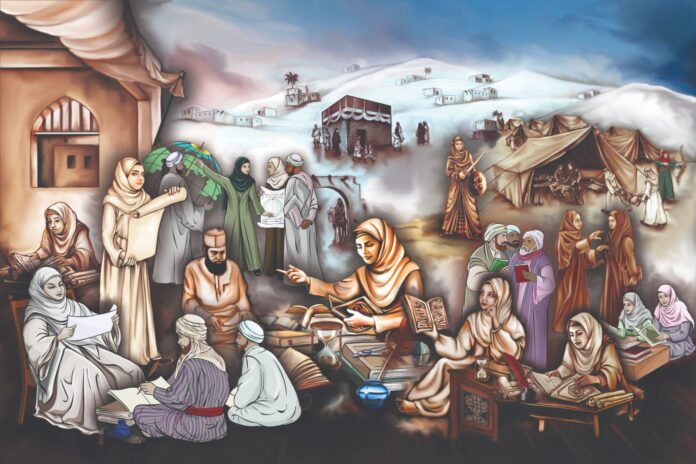
As students of history and as researchers in the contributions of Muslim women across disciplines—al-Muhaddithat, scholars, judges, educators, warriors, nurses, and philanthropists—we find it essential to reclaim and highlight this tradition in the current discourse.

This document delves into the intersections of gender, history, law, and social development, spotlighting women’s roles in charitable work and community building through waqf and related institutions.

Our goal is not just to preserve history, but to activate it: to inspire current and future generations to recognize the power of service, leadership, and waqf in reshaping communities. The struggle for recognition today stands on the shoulders of those who built with purpose and gave with dignity.

Conclusion: From Past to Future

Muslim women in India have been pioneers of welfare through the waqf system for centuries. Their work wasn’t performed for applause or public acclaim. It was done with quiet resolve, deep faith, and a vision for lasting impact.

As new policies reshape the landscape of waqf, let us not merely react—we must respond with wisdom, rooted in history and hope. Let the legacy of women like Razia, Jahanara, Durru Shehvar, Niloufer, Sughra, and Uzma guide us in reimagining waqf as a tool not only for preservation—but for progressive, inclusive development.


The author is a Social Worker, Student of History and Educator

source: http://www.muslimmirror.com / Muslim Mirror / Home> Education> Positive Story> Waqf> Women / by M A Lateef Atear / June 04th, 2025

Will continue to act in films that touch the heart: Dr. Jahanara Begum

ASSAM:

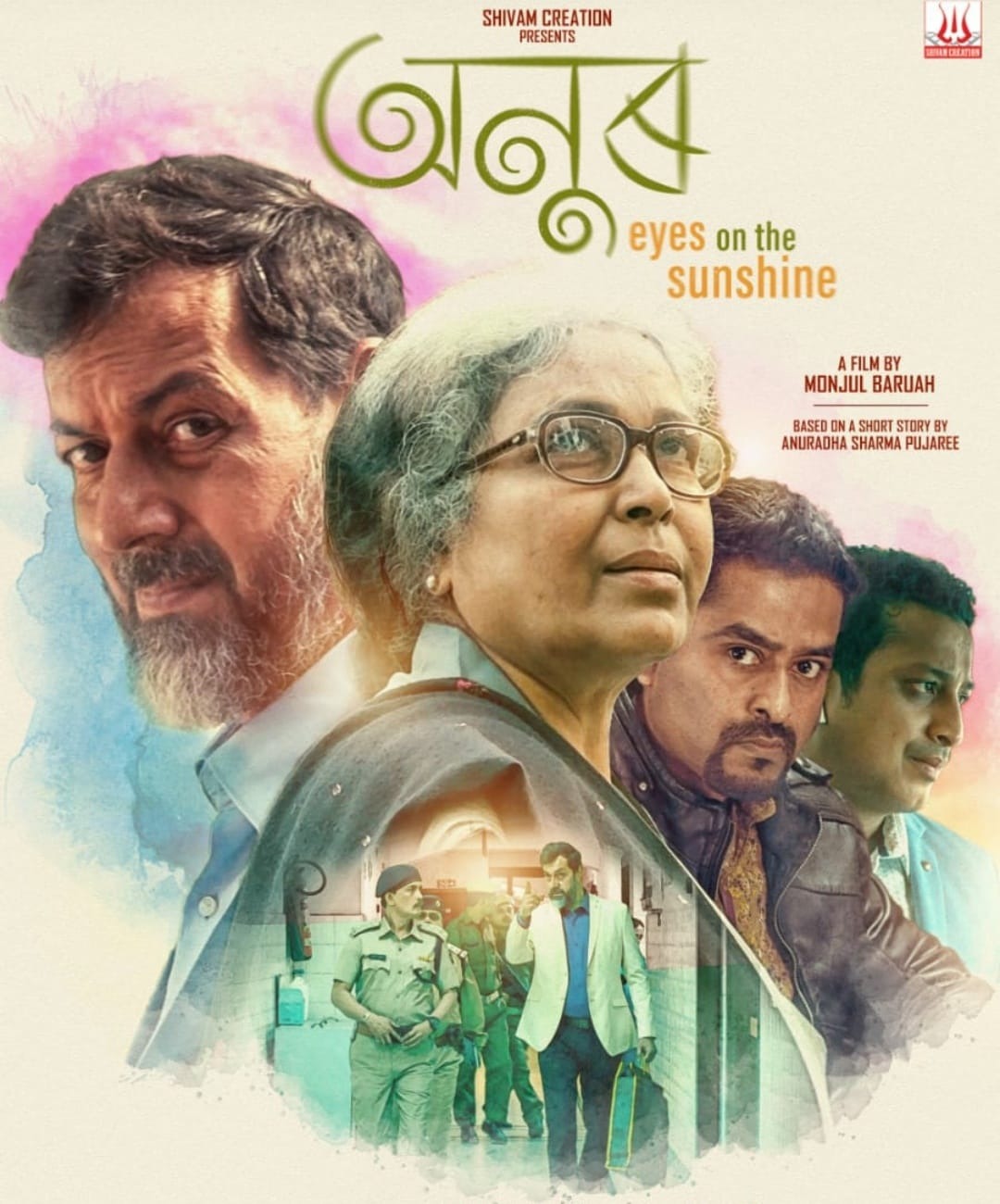
Dr Jahanara Begum in the lead role in film Anur

Dr. Jahanara Begum, a doctor and a well-known actor in Assamese films and theater says she would continue to act in thought-provoking films that touch the heart.

She said this after receiving the prestigious Aideo Handique Award for Best Actress of the Year from the Government of Assam. 

Speaking with Awaz-the Voice Dr. Jahanara Begum said, “I’m a theatre person. Acting is my addiction. I am a doctor by profession. So, I can’t be a professional film actress too often. However, if a producer or director comes to me with a good story and a character, I will act in the film. I am always keen to act in thought-provoking films that touch the heart,” said 

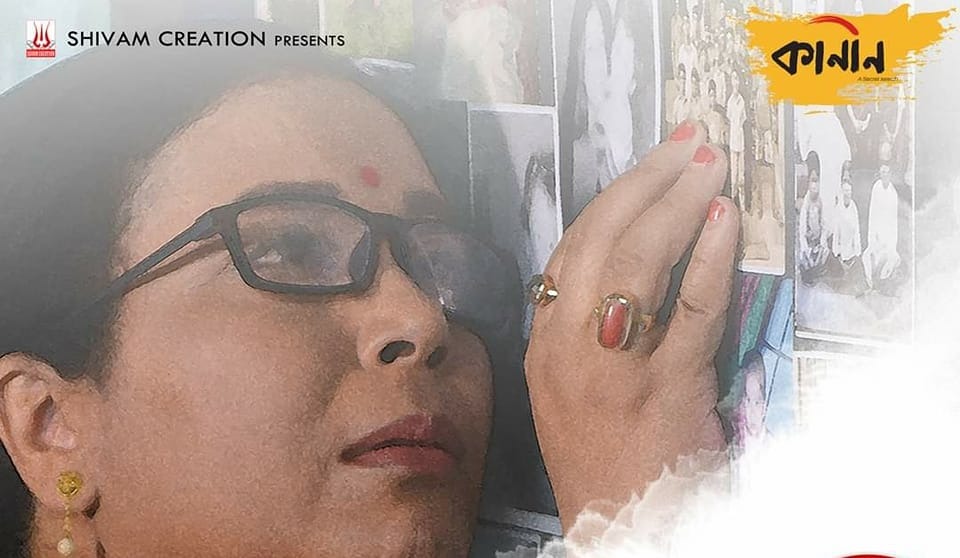
Poster of the film Kanin

She often receives offers to act in films but has never acted in a film that has not touched her heart.

“I acted in the film Kanin in 2018. I am very excited to receive the Best Actress Award from the state government. I would like to thank and congratulate all the cast of Kanin at this moment,” she said. “First of all, I would like to thank Dr. Rita Chowdhury for scripting the story of the film. I cherished her novel Rajiv Ishwar for many years. I had never met Manjul Barua till on an auspicious occasion in 2016 when I handed the novel to him. And Manjul created Kanin with his valuable thoughts. I am grateful to Manjul Baruah. Similarly, my husband Dr. Gopendra Mohan Das took on the major responsibility of making the film, giving love and respect to my imagination. How can I thank him? I don’t have words; I am truly a lucky woman.”

Dr Jahanara Begum, who played the lead role in the hit film Anur, won the Best Actress Award for her role in the 2019 film Kanin. The actress received the prestigious award from Assam Cultural Affairs Minister Bimal Bora at the 8th State Film Awards ceremony held at Srimanta Sankardeva Kalakshetra in Guwahati on March 13.

Dr Jahanara Begum action in Kanin

The film is based on the novel Rajiv Ishwar by Dr. Rita Chowdhury, directed by Manjul Baruah, and produced by Dr. Gopendra Mohan Das. 

Dr. Jahanara Begum won the Best Actress award for 2018 for her lively performance as Mandira Baruah, a woman who became a virgin mother.

“I was yet to play my dream role. Because the characters in the films I have played till then were characters from different novels or stories. When I read Dr. Rita Chowdhury’s novel Rajiv Ishwar, it touched my heart. Similarly, when I read the story Bhalpowar Samay by Anuradha Sarma Pujari, which reflects the loneliness, conflict, and suffering of old age, I wanted to make a film called Anur. I have recently starred in a web series of the same name based on the novel Andolita Akas by Monalisa Saikia. The stories of these films touched my heart and I gave my best to bring the characters to life,” Dr. Jahana Begum said.

She is an avid stage actor despite her medical profession. She received the prestigious Veena Prasad Utkarsh Award last year for her outstanding contribution to the radio, stage, and film industry of Assam. 

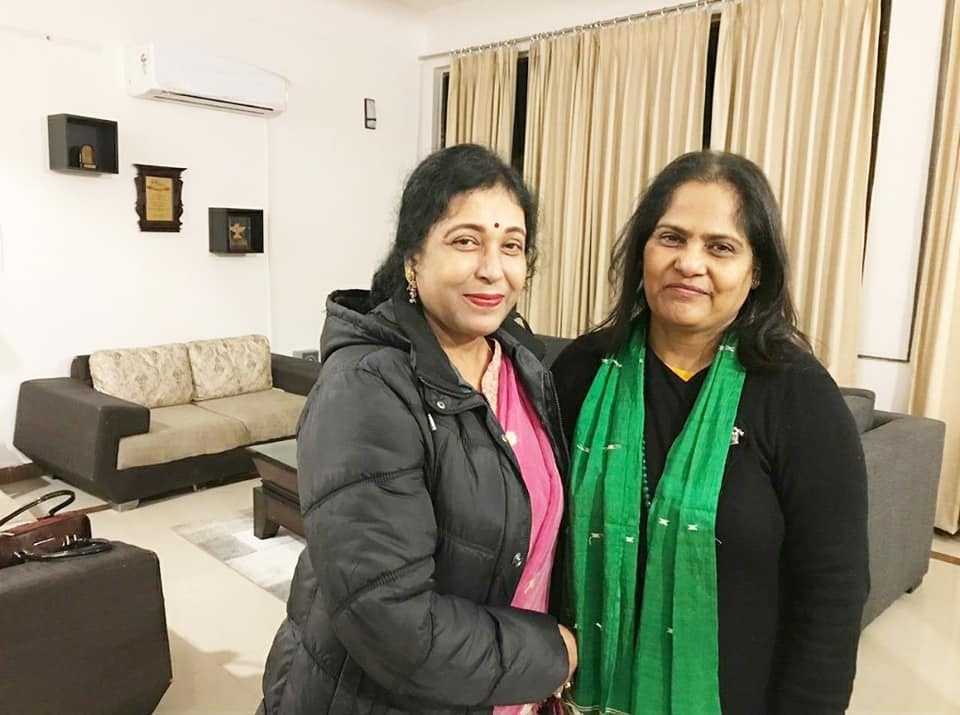
Dr Jahanara Begum with Dr Rita Chowdhary

“It’s probably because of being a doctor that I’ve been able to do other things in my life or theatre on time. It’s my habit to do time work on time. Even if not a doctor, I would have continued to practice theatre even if I was involved in other professions. Because theatre is my life. I cannot live without it. I have to act to survive. Acting is in my soul,” she said.

Dr Jahanara Begum is currently the Deputy Superintendent of Tezpur Medical College.

She made her stage debut at the age of three in a one-act play written by her father. 

She received her MBBS degree from Guwahati Medical College. 

She was awarded the Best Actress award for her wonderful performance in the play Chaknaiya in 1973 while studying in class VIII at Fuleswari Girls High School. 

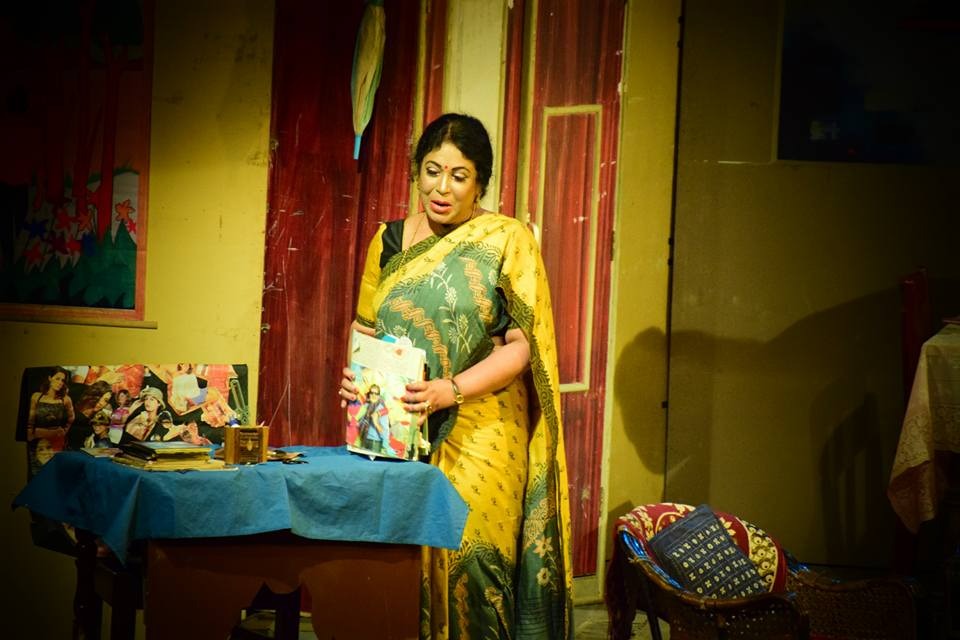
Dr Jahanara Begum acting in a play

She was awarded the Best Actress award for her performance in Chaknaiya in 1973. At that time she was in class VIII at Fuleswari Girls High School. She made her full-time theatre debut at the age of 15 in Guwahati by playing the lead role in Chor of the late Abdul Majid and directed by Shyma Prasad Sharma. She then acted in Rupalim (1978) produced by New Art Player, Mrityunjay (1978) directed by Dhiru Bhuyan of Pragati Shilpi Sangha of Birinchi Bhattacharya directed by Indra Bania in Dipak Sangha.

She was awarded the Best Actress award at Guwahati Medical College for five consecutive years. At the same time, she also started acting in plays for All India Radio Guwahati and had the opportunity to work with famous playwrights 

Dr. Begum, who has acted in nearly 40 plays so far, founded JB Productions in 2009. Since then, she has continuously produced and acted in plays. She is currently rehearsing a play called Raktapushpa. The Marathi play has been translated by Dr Jahanara Begum and is ready for stage performance.

source: http://www.awazthevoice.in / Awaz, The Voice / Home> Story / by Mukut Sharma, Guwahati / March 17th, 2023

Jahanara Begum: The Forgotten Mughal Princess Who Designed Chandni Chowk

DELHI :

She was one of the most powerful women of medieval India, a Mughal princess like no other. And yet, her extraordinary story remains lost in the pages of history.

In an unassuming part of India’s capital city, amidst winding alleys lined with attar and chadar sellers, lies the 800-year-old dargah of Hazrat Nizamuddin Auliya—one of the most revered saints in Sufism. From dusk to dawn, thousands of devotees throng this bustling complex to pay their respects.

Yet, few know that Delhi’s most famous Sufi shrine is also home to the tomb of one of the most powerful women of medieval India, Jahanara Begum.

A writer, poet, painter and the architect of Delhi’s famous Chandni Chowk, Jahanara was a Mughal princess like no other.

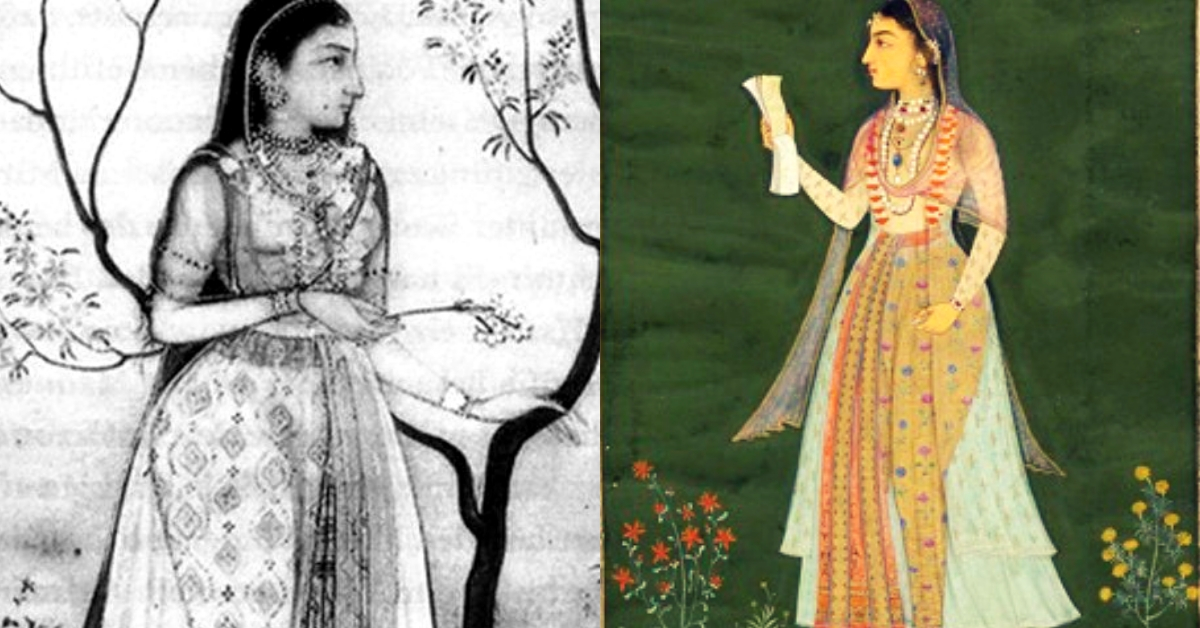
Portraits of Jahanara Begum. Source: Wikimedia Commons

This is her story.

The eldest child of Emperor Shah Jahan and his favourite wife, Mumtaz Mahal, Jahanara was born in Ajmer in 1614. Growing up in one of the richest and most splendid empires in the world, the young princess spent her childhood in opulent palaces, humming with family feuds, battle intrigues, royal bequests and harem politics.

As such, she was well-versed in statecraft by the time she was a teenager.

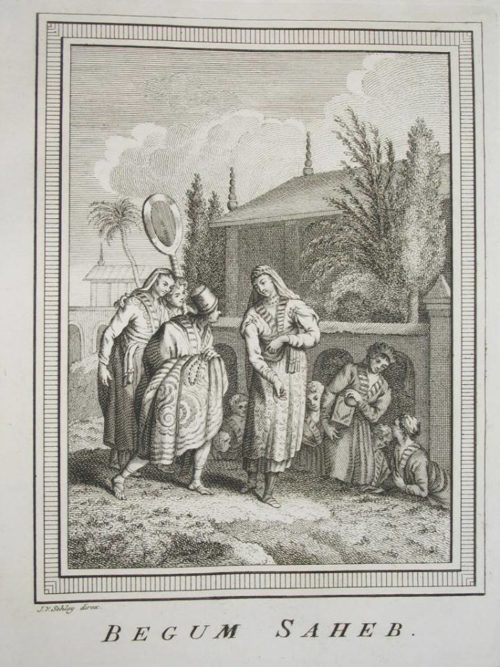
Soon after, Jahanara was appointed Begum Sahib (Princess of Princesses) by her doting parents. She would often spend her evenings playing chess with Shah Jahan, understanding the workings of the royal household, and helping her father plan the reconstruction of other palaces.

As French traveller and physician François Bernier writes in his memoirs, Travels in the Mogul Empire  ,

“Shah Jahan reposed unbounded confidence in his favourite child; she watched over his safety, and so cautiously observant, that no dish was permitted to appear upon the royal table which had not been prepared under her superintendence.”

Jahanara was also especially close to Dara Shikoh, Shah Jahan’s eldest son and her favourite brother. The two shared a love of poetry, painting, classic literature and Sufism.

In fact, she also wrote many books, including a biography of Ajmer’s Sufi saint Khwaja Moinuddin Chishti, displaying her flair for prose.

The Begum Sahib. Source: Royal India Families/Facebook

But tragedy struck the young princess’s life with the untimely demise of her beloved mother, Mumtaz, in 1631. At the tender age of 17, she was entrusted with the charge of the Imperial Seal and made Malika-e-Hindustan Padshah Begum—the First Lady of the Indian Empire—by the shattered Emperor, whose grief kept him away from his royal duties.

It was only on Jahanara’s behest that the inconsolable Shah Jahan came out of mourning.

In the years to follow, she became her father’s closest confidante and advisor. Highly educated and skilled in diplomatic dealings, her word became so powerful that it could change the fortunes of people. Her favour was much sought-after by foreign emissaries.

In 1654, Shah Jahan attacked Raja Prithvichand of Srinagar. Despairing of success in the battle, the Raja sent a plea for mercy to Jahanara. The Princess asked him to send his son, Medini Singh, as a sign of his loyalty to the Mughal Empire, thereby getting him a pardon from the Emperor.

The following year, when Aurangzeb was the viceroy of the Deccan, he was bent on annexing Golconda, ruled by Abdul Qutb Shah. The Golconda ruler wrote an arzdast(royal request) to the Princess, who intervened on his behalf. Qutb Shah was pardoned by Shah Jahan (against Aurangzeb’s wishes) and secured his safety on payment of tax.

Interestingly, Jahanara was also one of the few Mughal women who owned a ship and traded as an independent entity.

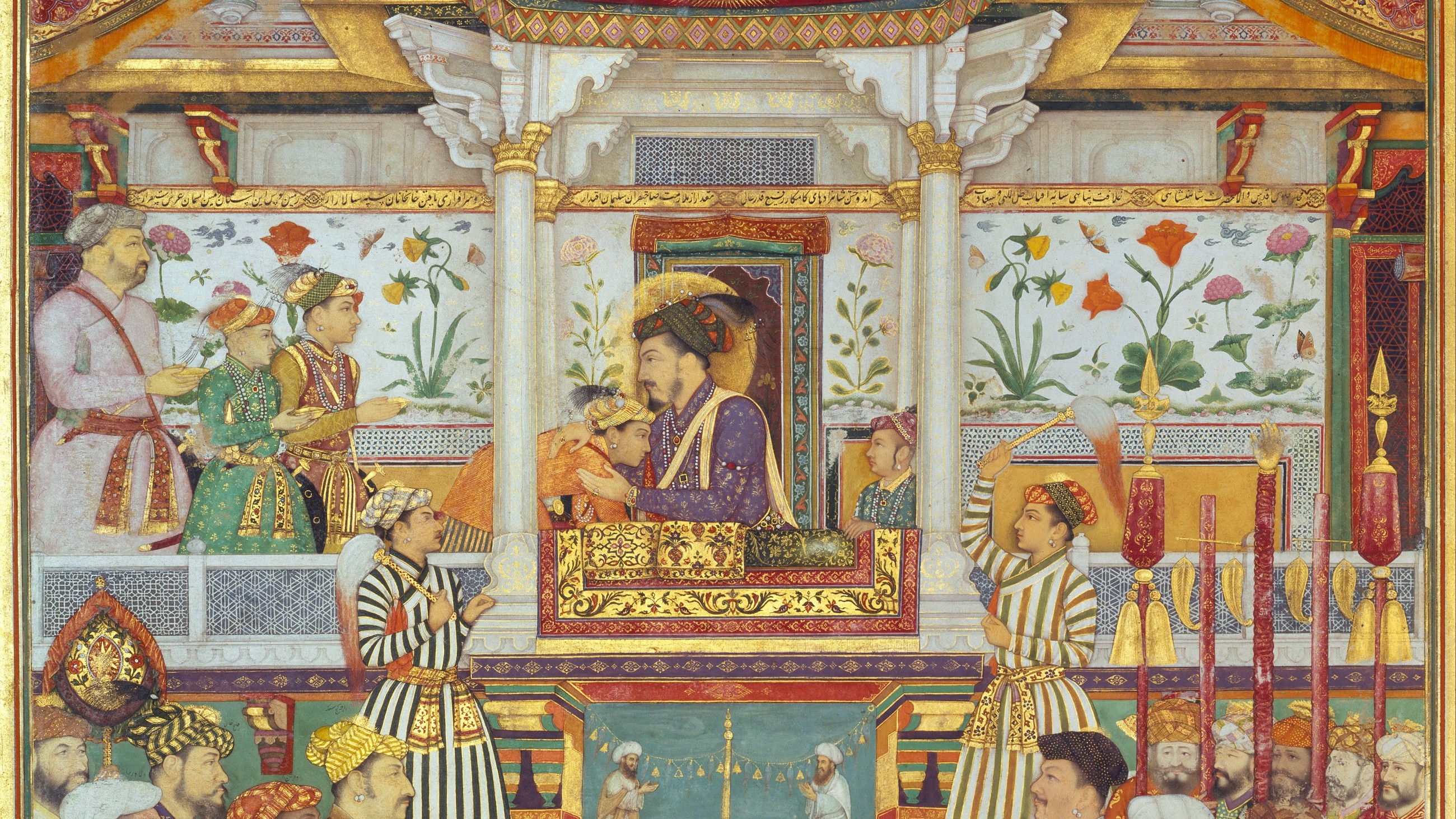
Padshahnama plate 10 : Shah Jahan receives his three eldest sons and Asaf Khan during his accession ceremonies (8 March 1628). Source: Wikimedia Commons

Named ‘Sahibi’ after its owner, Jahanara’s ship would carry the goods made at herkarkhanas (factories) and dock at her very own port in Surat; its revenue and the colossal profits she made via trade significantly boosted her annual income of three million rupees!

In his book Storia Do Mogor, Italian traveller Niccolao Manucci writes, “Jahanara was loved by all, and lived in a state of magnificence.” The book is considered to be one of the most detailed accounts of Shah Jahan’s court.

But Jahanara’s political and economic clout failed to have an impact on the bitter war of succession between her brothers, Dara Shikoh and Aurangzeb. She made several attempts to mediate between them, but as Ira Mukhoty writes in her book Daughters of The Sun , she had “underestimated the corrosive loathing that Aurangzeb has for Dara, whom he blames for his father’s cold criticism throughout his career”.

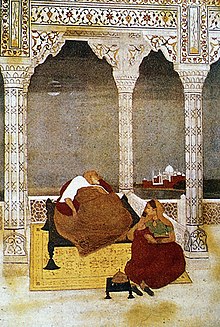
Aurangzeb ultimately killed Dara Shikoh and placed an ill Shah Jahan under house arrest in Agra Fort’s Muthamman Burj (Jasmine Tower). Faithful to her father, Jahanara set aside her lucrative trade and luxurious lifestyle to accompany him into imprisonment.

A constant presence beside Shah Jahan in his exile, she took care of him for eight years, till he breathed his last in 1666.

“The Passing of Shah Jahan” (1902), a painting by Abanindranath Tagore. At the foot of the bed is Jahanara Begum, the daughter of Shah Jahan; the Taj Mahal is in the background. Source: Wikimedia Commons

It says much for her stature in the Mughal court that after Shah Jahan’s death, Aurangzeb restored her title of Padshah Begum and gave her a pension along with the new title of Sahibat al-Zamani (Lady of the Age)—befitting for a woman who was ahead of her time.

Unlike other royal Mughal princesses, she was also allowed to live in her own mansion outside the confines of the Agra Fort.

“Jahanara establishes herself in the city as the most influential woman patron[s] of literature and poetry. She collects rare and beautiful book[s], and her library is peerless. She donates money to charity, especially Sufi dargahs, and carries on a genteel diplomacy with minor rajas who come to her with grievances and gifts,” writes Ira Mukhoty in her book.

Spending her last years in the pursuit of her artistic and humanitarian passions, Jahanara passed away in 1681 at the age of 67 but not before she etched her mark in the annals of history in a manner that would have made her father proud.

She commissioned several architectural spectacles, mosques, inns and public gardens across the Mughal empire.

But she is best remembered as the architect of Old Delhi’s legendary bazaar, Chandni Chowk—which translates to ‘Moonlit Intersection’.

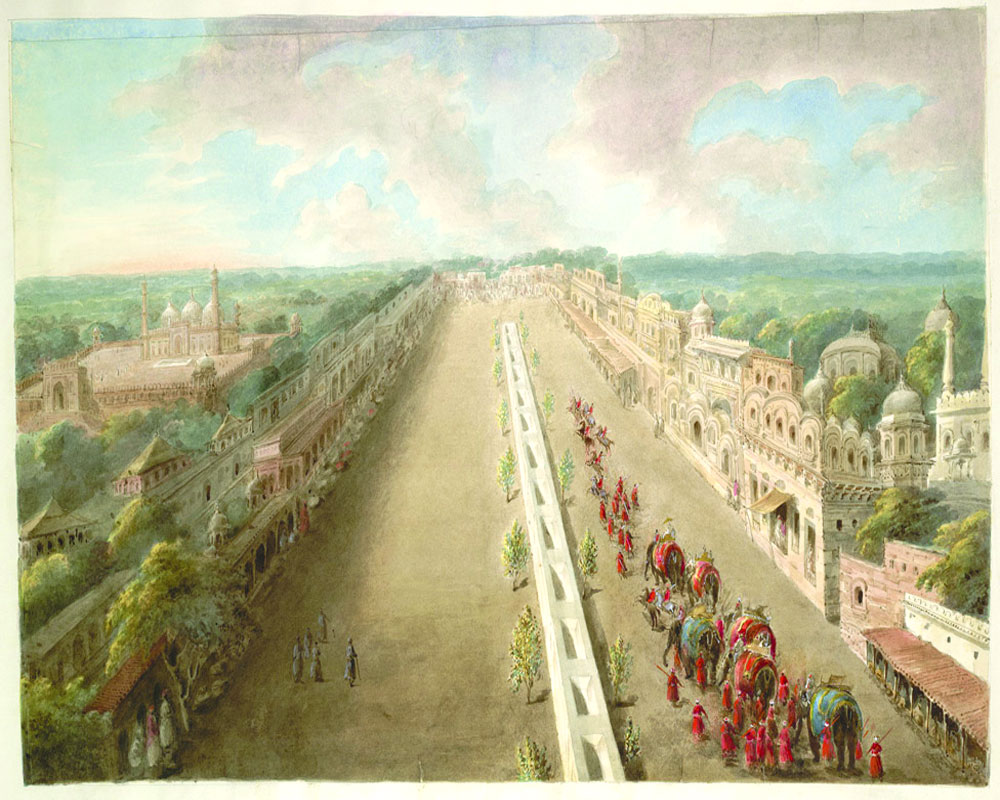
Water colour of Chandni Chowk in Delhi from ‘Views by Seeta Ram from Delhi to Tughlikabad Vol. VII’. Source: British Library

In his book  Shahjahanabad : The Soverign City in Mughal India , Stephen Blake writes,

“The chowk was an octagon with sides of one hundred yards and a large pool in its center. To the north, Jahanara built a caravansarai (roadside inn) and a garden and, to the south, a bath. On certain nights, the moonlight reflected pale and silvery from the central pool and gave to the area the name Chandni Chawk (Silver or Moonlight Square). This name slowly displaced all others until the entire bazaar, from the Lahori Gate to the Fatehpuri Masjid, became known as Chandni Chawk.”

Today, many of Chandni Chowk’s ancient buildings have been torn down, as its lanes brim with new shops and colliding crowds. And yet, somehow it manages to invoke the spirit with which Jahanara lived—the same spirit that helped her survive and thrive amidst betrayals and tragedies.

Interestingly, Jahanara’s resting place in the Nizamuddin Dargah is of her own choosing, just like her character.

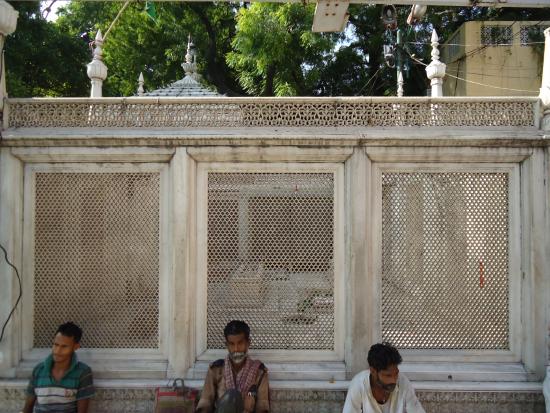
Jahanara’s tomb at the Nizamuddin Dargah. Source

Unlike the giant mausoleums built for her parents, she rests in a simple marble tomb open to the sky, inscribed with her own couplet in Persian:

Baghair subza na poshad kase mazar mara, (Let no one cover my grave except with green grass,)
Ki qabr posh ghariban hamin gayah bas-ast. (For this very grass suffices as a tomb cover for the poor.

Perhaps it is poetic justice that green vines grow on the grave of this extraordinary princess of India.

(Edited by Shruti Singhal)

source: http://www.thebetterindia.com / The Better India / Home> History> Women / by Sanchari Pal / May 24th, 2019

In a masjid during a mutiny

NEW DELHI :

MasjidMPOs21sept2018

In 1857, the mosque built by Shah Jahan’s wife was confiscated by the British

When the city of Shahjahanabad was being built by Mughal emperor Shah Jahan, his wives and daughter were also involved — they built mosques, markets and sarais to embellish the city.

The emperor’s daughter, Jahanara Begum, was the most prolific, and is best known for building the famous Chandni Chowk (moonlit square), a sarai or inn for travellers, and a beautiful garden known as Begum Ka Bagh.

The road to the mosque

Shah Jahan’s wives — Akbarabadi Begum, Sirhindi Begum and Fatehpuri Begum — built mosques in 1650 CE. The Fatehpuri mosque built by Fatehpuri Begum was aligned to the Red Fort — more specifically, to the Diwan-e-Am via the Naqqar khana (drum house) and Lahori Gate. Nobles who came to the court of the public audience had to dismount here and walk up to the court. As this was inconvenient for them, Aurangzeb had a barbican built in front of the Fort’s Lahori Darwaza so that they could dismount closer to it. Shah Jahan, who was then under house arrest in Agra Fort, sent a note to his son saying that the beautiful bride (Qila) had now been veiled.

The road from Fatehpuri mosque to the Fort passed through Chandni Chowk and Urdu Bazar (the original Urdu Bazar was located in front of the Lahori Gate till part of present day Chandi Chowk) and was lined with trees and flowers. These were cut in the beginning of the 20th century. Basheeruddin Ahmed, the writer of Waqeat e Dar ul Hukumat Dehli (1919), lamented that “the trees on both sides of the road provided solace to the inhabitants in the severe Delhi heat with its summer wind, the loo, in which the eagle abandons the eggs and deer become dark.” Today, when you go from the Red Fort to Fatehpuri mosque at the end of Chandni Chowk, you have to navigate your way through the nightmarish traffic, carts with goods, rickshaw-pullers, e-rickshaws, salesmen calling out to passers-by, and busy shoppers.

Crowded outside, peaceful inside

The mosque is next to the Khari Baoli, or spice market, so the entrance is always crowded. However, once inside the masjid, you realise that you’re in a different world — a world in which you feel a sense of peace and which is in stark contrast to the scenes outside.

Apart from the main entrance in the east, there are two other doorways — one in the north and the other in the south. With their arched entrances and parapets, these doorways have obviously seen better days. Shops outside flank them.

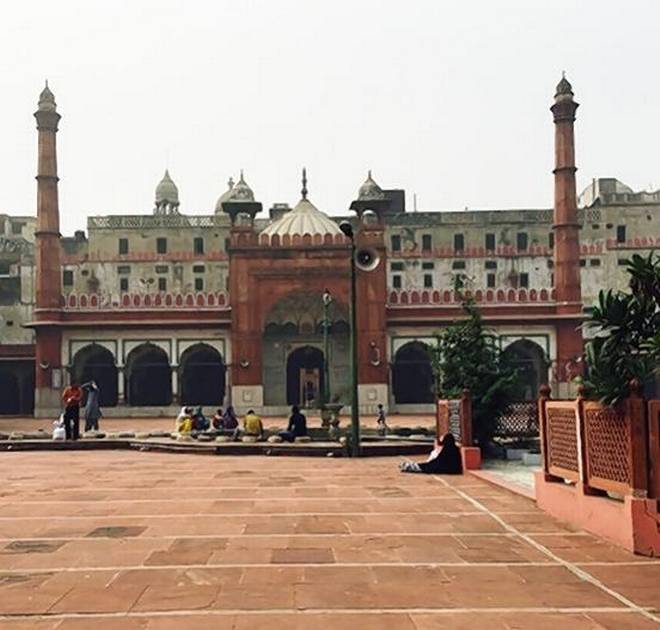
In the courtyard, the first thing that catches the eye is the lovely white dome with its longitudinal green stripes and green lotus finial. A masonry finial crowns it. Though the dome is made not of marble but red sandstone, it has been plastered so perfectly that it gives the impression of being made from marble when seen from afar. Red battlemented parapets run all along the roof in front of the dome.

The mosque, too, is built of red sandstone. Its unique feature is that it is the only medieval mosque with a single dome, flanked by two 80 ft tall minarets on both sides.

The mosque is built on a plinth of 3.5 ft. In the centre is a lofty archway with two wings which have three scalloped arches on each side. The central mihrab (in the direction of the qibla) is deep and high, and gives a beautiful appearance to the interior of the mosque. The pulpit next to the mihrab is the only piece of marble in the mosque. A mukabbir, or platform, was added in front of the main arch later, so that the imam’s words could be repeated from there and reach all those gathered in the courtyard.

There is a huge oblong tank for ablution in the courtyard that used to be fed by the famous Faiz Nahar (canal) in the Mughal era. A red sandstone enclosure next to it has graves of religious leaders who lived, prayed and taught in the mosque. There are galleries, with rooms on the ends on both sides.

From 1857 till today

The Indian sepoys, or ‘rebels’ as the British called them, who had risen up against the East India Company in 1857 had used this mosque. After the fall of Delhi in September that year, the mosque was confiscated by the British, and the courtyard, galleries and arcades on the three sides were put up for auction. As the dispossessed and displaced Muslims of Delhi post-1857 were in no position to buy it, Lala Chunnamal, a rich merchant of Delhi, bought it at the cost of ₹29,000.

In 1873, Anjuman Rashidin Sulah e Kul Islamia applied for return of the mosque. The British government agreed and tried to buy it back, but Lala Chunnamal refused. In 1877, the British offered an increased amount as well as four villages and bought it back from Lala Chunnamal’s son and restored it to the Muslims of the city. The masjid was brought back into use as a masjid, and remains so till today.

source: http://www.thehindu.com / The Hindu / Home> Opinion> Columns / by Rana Safvi / September 16th, 2018

Author Ira Mukhoty’s peek into the Mughal household

NEW DELHI :

Of History and Gastronomy: Ira Mukhoty at Jaypee Vasant Continental’s Paatra restaurant in New Delhi | Photo Credit: SHIV KUMAR PUSHPAKAR

From the resilience of Khanzada Begum to the food habits of Akbar, author Ira Mukhoty reveals many Mughal secrets over a lavish vegetarian meal

Those who suffer from colonial hangover or know their Mughals through movies have an exotic notion about the haramam or harem – a place where many women were housed to please the most important man in the empire. Author Ira Mukhoty, who scans history and mythology to find the status of women in India, counters the perception through a well-argued book, “Daughters Of The Sun” (Aleph). “This idea of ‘oriental harem’ came through the British historians because they had a long association with Islam right from the times of crusades. For them, the Mughals, the Sultans and the Tughlaqs were all the same – part of one Islamic marauding entity. The idea was completely false.”

The whole harem space, she says, evolved from the time of Babur, who wanted his women to be well-educated and was pragmatic about women who ‘fell’ to an enemy. “Over a period of time, when Mughals absorbed some elements of Rajput culture, it became a little different but even then it was completely alien to the oriental idea of a sexual space. Most of these women were in no way sexually available to the Padshah. The harem had relatives, other noble men’s wives; there were servants and attendants…there was a huge collection of women but not to please the emperor,” says Ira, as we settle for an elaborate lunch at Jaypee Vasant Continental’s Paatra restaurant.

The catalyst came from Ira’s previous book, Heroines, where she wrote about powerful women in myth and history. “One of them was Jahanara Begum. I was interested in finding more women like her associated with the Mughal empire.” She found many. But the one story that is most compelling is that of Khanzada Begam, the sister of Babur, whom he left behind with Shaybani Khan as war conquest when he escaped from Samarkand. She remained with Khan for ten years but remained true to her brother’s cause. And when she eventually returned to Babur’s household, her sacrifice and resilience was celebrated. “In fact, she went on to be anointed Padshah Begum of Hindustan during Humayun’s reign,” says Ira.

Powerful women

Women are a neglected lot in our history. Ira says this is not specific to our country. “Around the world, women stories are neglected to a smaller space – it is not just about Mughals or India. You first talk about the kings and and rajas. Women were treated like wallpapers. It is not that I have found something special here. The resources have been there but they have seldom been used to join the dots. For instance, Gulbadan Begum’s biography of her father Babur and brother Humayun was translated from Persian into English in 1907.” She reminds how Jahanara Begum wrote about her Sufi masters in two books. “Her lines are very powerful and erotically charged for Sufis believe in erotic love as means for union with the divine. A 17th Century Muslim woman writing such a powerful language is extraordinary.” Ira has tried to find out first hand information about these women who engaged in diplomacy and patronised the arts. “ I have written about Mughal women who were highly educated, who advised emperors and traded with foreigners. Babur saw them as symbols of Timur legacy. He wanted them to engage in verbal repartees and write poetry.”

Ira says her study of royal firmans reveal that Jahanara Begum asked for permission to go for Haj but it was denied. “Years before her, Gulbadan Begum had made the famous journey that lasted seven years. But by the time of Jahanara, royal women were not encouraged to take this hazardous journey. But she did make a request. I looked at the date and it was one month after her sister Roshanara Begum had died. I wondered that did something come over her.” It is her ability to join these dots that makes Ira’s work much more engaging and accessible than academic works by the likes of Prof Ruby Lal, whom Ira has extensively quoted.

“I try to find a thread between these stories to make fully-rounded characters. With women’s stories you get that sense. However, I tell the reader where I am not sure and am talking about possibilities.” Ira, who studied Immunology in Cambridge University, says her science background has always helped her in research. “It gives me patience. History brings subtlety and nuances which interest me much more. Science is no good for that,” she chuckles. Having said that, she doesn’t believe in speculating. “You should tell the reader where you are not sure even if it breaks the rhythm of the story. If I say it could have happened, I expect the reader to make his own mind.”

A vegetarian these days, Ira undertook ‘walks’ to the Walled City to understand the fragrances and the language of the time gone by. “They might not help you with facts, but they definitely help in writing about a past whose remains are very much part of our ecosystem.” As she appreciates the lavish spread at Paatra, she remembers the meal she had at the Nizamuddin dargah.

Introduction to ghee

Ira hasn’t written much about the Mughal kitchen but she has mentioned some instances which give us an idea of what was cooking. For instance, she captures Humayun’s exile in Persia with Hamida Banu Begum after the embarrassing defeat to Sher Shah Suri. “At one point they were actually cooking horsemeat to survive. But when they went to Persia, they were greeted as kings. Suddenly, the meal changed from fibrous, overcooked horsemeat to the amazing food that the Shah would offer them. When they were leaving, Shah Tahmasp wanted a banquet in Hindustani fashion prepared by his guests. What he liked the most was something called dal khuske which was like matar ka pulao. He tasted ghee for the first time as Persians used to cook in fat.”

Over the years, Mughal food became more and more refined. “There came a time when hens were massaged so that the chicken would be soft and tender. Akbar was a frugal eater who used to have just one meal a day but the time for it was not fixed. At any given time around 100 dishes were kept almost ready for him so that they could be served to the emperor at a short notice.”

Ira, who is now working on a biography of Akbar, says the emperor turned vegetarian under the influence of his Rajput wives. “Luckily for us, we have the Akbar’s biography of Bada’uni. He was a conservative person and his account is not glowing with praise like that of Abu’l-Fazl’s. He could not do what Akbar expected of him. He wrote the biography in secret and it was published during Jahangir’s rule. It is fascinating because it tells truthful things about Akbar. He writes that Akbar is so influenced by his Rajput wives that he gave up meat and indulged in Hindu rituals.” Similarly, she says, Gulbadan Begum’s account is very honest in comparison to a male biographer because she is not looking for building an image for posterity. “She writes very candidly like she explains why Humayun was very angry one day. He believed in astrology and always made the journey when the stars were in right alignment. One day he told the women in harem that they would go on an expedition at such and such time. Unfortunately, his new wife fell off the horse. It took her some time to get back. He got furious. He said he would need some opium to calm down. A male biographer would not have put all this but Gulbadan mentions all these intimate details so that we would know the man not just as a king and a conqueror but also as a father, a husband and a son.”

Ira has emerged at a time when Akbar’s legacy is being questioned and anecdotal history is gaining currency in mainstream discourse. She says hers is not a political book. “I am not trying to push any agenda. However, in this atmosphere, it is not unimportant to hear these stories also to clear many of the prejudices that we may have had. When things remain in anecdotal form, it is easy to manipulate them.”

source: http://www.thehindu.com / The Hindu / Home> Society> History & Culture / by Anuj Kumar / August 31st, 2018