NEW DELHI :
Hue the aake yahin khemazan woh deewaney,
Uthhe the sun ke jo aawaz-e-rehbaraan-e-watan.
(Here pitched their tents those ardent dreamers; Who rose at the first call of their homeland’s liberators)
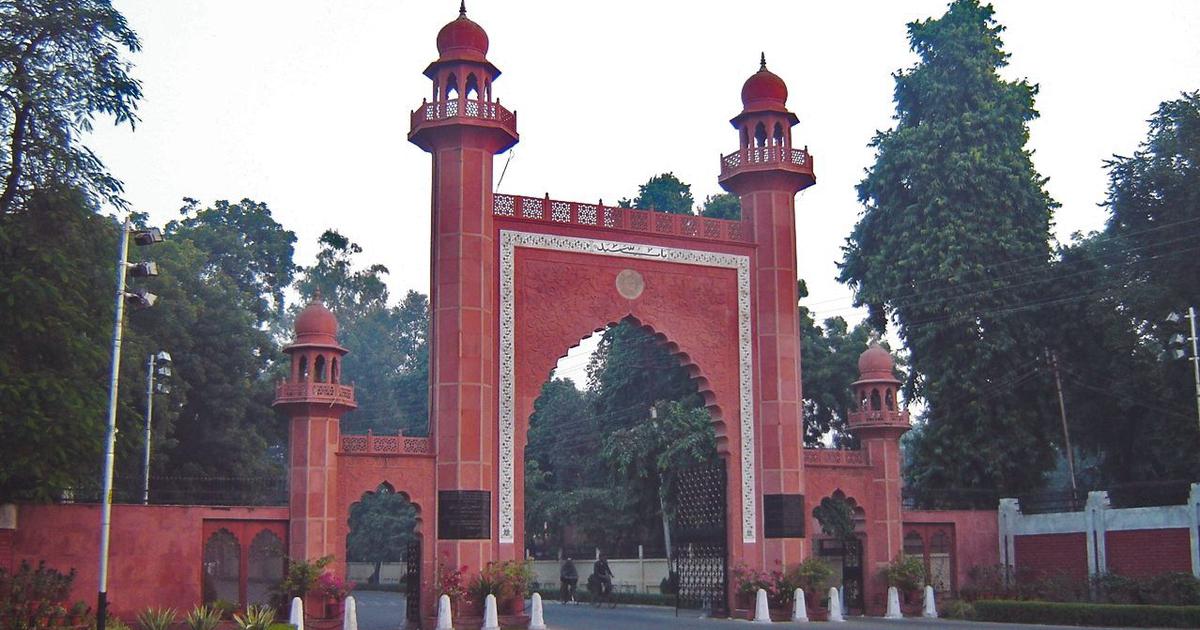
Step through the Centenary Gate, and you enter not just a campus but a living conversation between history and hope. Every lane carries memory; every wall speaks of struggle. Jamia is not made of stone and mortar alone; it is built of ideals, of founders who were freedom fighters and reformers, of teachers who worked for life on modest pay, of students who turned learning into service, and of a dream that education could make a nation free not only in body but in spirit.
Maulana Mohammad Ali Jauhar, Jamia’s first Vice-Chancellor, and a firebrand nationalist who, at the Second Round Table Conference in 1930, declared he would not return to a slave country, a vow he kept, breathing his last in London and resting forever in Jerusalem. His courage gave Jamia its pulse of defiance. Dr. Mukhtar Ahmad Ansari, a physician and President of the Indian National Congress, lent Jamia its healing vision, a belief that education, like medicine, must restore dignity to the human condition. Dr. Zakir Husain, later India’s President, gave Jamia its soul, transforming education into a moral act and underscoring that a teacher’s duty is not to instruct but to awaken.
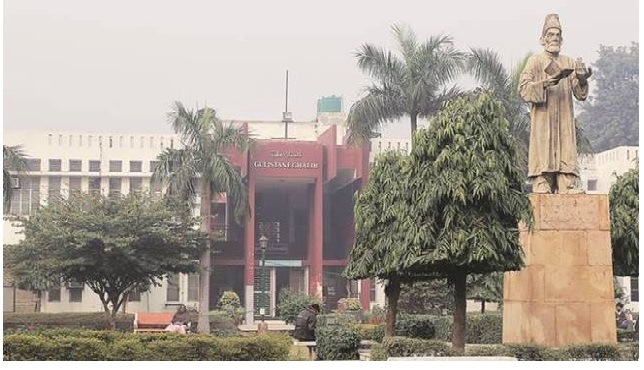
On its 105th foundation day, let me take you on a Jamia tour. The Mohammad Ali Jauhar Marg leads through the majestic Centenary Gate into the heart of Jamia Gulistan-e-Gandhi, whose presence still seems to guide the university he envisioned.
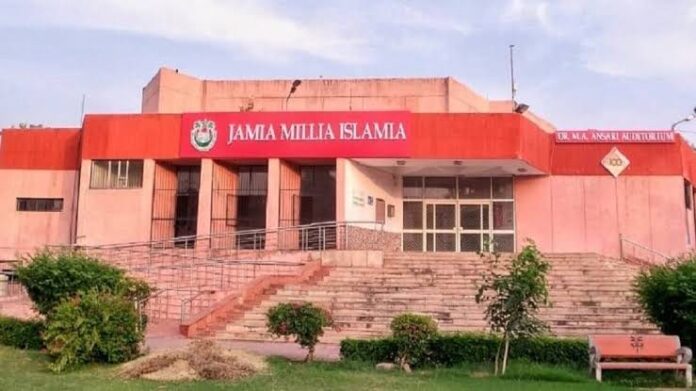
The M.A. Ansari Auditorium stands ahead, alive with the echo of debates, drama, poetry, and protest, a place where generations have learned that knowledge without courage and compassion is incomplete. Nearby, the Mahmoud Darwish, a revered Palestinian poet and voice of resistance, exile, and identity lane winds toward the M.F. Husain Art Gallery, a riot of colour and imagination. The Nehru Guest House still echoes the voices of thinkers who stayed there. Beside it, the Maulana Azad House completes a poetic pairing — Nehru and Azad, once neighbours in prison, now neighbours in memory. Inside, guesthouse rooms are named after figures like Ritwik Ghatak.
The serpentine path leads past the Mohibbul Hasan House and Deen Dayal Kaushal Vikash Kendra and onward to the West Asia Centre, the Ho Chi Minh Conference Hall, Saadat Hasan Manto Lecture Hall, and the Shaikh Sabah Al–Ahmad Al–Jaber Seminar Library, where Jamia’s dialogue with the world continues. Through Jahane Kushuru, you arrive at Gulistan-e-Ghalib, where Ghalib’s statue stands beneath the trees, inscribed with his immortal verse:
Jaam har zarra hai sarshar-e-tamanna mujh se,
Kiska dil hoon ke do aalam se lagaya hai mujhe!
Every particle is intoxicated with longing for me,
Whose heart am I, that both worlds are drawn to me?
Ghalib’s verse mirrors the spirit of Jamia itself, a place that draws seekers from every corner, as if knowledge, memory, and desire converge upon it. A reminder that the soul of a true university is to become the heart of many worlds.
At the center of Jamia stands its intellectual sanctuary, the Dr. Zakir Husain Library; its silence is dense with thought. Not far away, the Sarojini Naidu Centre for Women’s Studies and the Nelson Mandela Centre for Peace and Conflict Resolution remind every visitor that dialogue and equality are central to Jamia’s compass.
Enter through the Qurratulain Hyder Gate, named after the Gyanpeeth award-winning Urdu novelist, and you arrive at the lush green Nawab Pataudi Cricket Ground, with its Virender Sehwag Pavilion, a tribute to the alumnus who brought glory to the nation. Nearby stands the King Abdul Aziz Faculty of Dentistry, a graceful emblem of international collaboration. Around it, hostels named after B.R. Ambedkar, Allama Iqbal, E.J. Kellat, and Obaidullah Sindhi reflect Jamia’s plural legacy, a living reminder that its map is also a moral landscape.
Closer to the metro station, the Noam Chomsky Complex, a reminder that free thought is Jamia’s lifeblood. Next door, the K.R. Narayanan Centre for Dalit and Minority Studies ensures that inclusion here is not a slogan but a lived truth. Through the Mahmud Hasan Gate, named for the scholar who inspired students and clerics to join the freedom struggle and who endured years of harsh imprisonment in Malta — the campus opens into its schools: the Mushir Fatima Nursery, the Abid Hussain School, and the Gerda Philipsborn Day Care Centre, where the smallest minds learn under the same canopy of values that shelter scientist, scholars and philosophers.
Gerda Philipsborn, a German-Jewish educator who left Germany and found a home in Jamia, is fondly remembered as Aapa Jaan. She embodied the university’s transnational conscience, the belief that education builds bridges, not boundaries. Mujeeb Bagh hosts the Ramanujan Science Block, named after the mathematical genius whose brilliance continues to inspire curiosity and wonder across generations. The women’s hostels named after Begum Hazrat Mahal and Aruna Asaf Ali celebrate the courage of women who turned resistance into art and activism. Further on lies the Khan Abdul Ghaffar Khan Enclave, honouring the Frontier Gandhi who preached non-violence not as political expediency but as an article of faith. And in the Munshi Premchand Archives lives the memory of the great storyteller, who wrote Kafan during his stay at Jamia.
Located near the Administrative Block on Khayaban-e-Ajmal, the Jamnalal Bajaj Block honours Jamia’s benefactor, whose steadfast support and financial contributions were instrumental in sustaining the university during its formative years. Within its serene precincts stand the Yasser Arafat Hall, the Edward Said Conference Hall, and the Mir and Tagore Convention Centre, spaces that echo Jamia’s spirit of dialogue, dissent, and cultural encounter, where ideas from East and West, past and present, continue to converse in quiet harmony. Nearby, APJ Abdul Kalam Gate takes you to India’s most reputed Anwar Jamal Kidwai Mass Communication and Research Center, a testament of global cooperation with Canada, which buzzes with cameras, questions, and conversation.
Few universities wear their philosophy so visibly on their map. These names are not labels; they are moral coordinates of a century-old experiment in inclusive education. Each block is a story of struggle; each road a reminder of Jamia’s founding spirit, where taleem (education) and tehreek (movement) are inseparable.
Jamia was not born of privilege; it was born of protest. Founded amid the Khilafat and Non-Cooperation Movements, it was a quiet act of rebellion, an insistence that colonialism would not define the Indian mind. Education at Jamia was never meant to produce clerks for an empire, but citizens of conscience. Zakir Husain, Mohammad Mujeeb, and Abid Husain, three of Jamia’s philosophical pillars, envisioned Nai Talim, a pedagogy that unites head, heart, and hand. Long before “experiential learning” became educational jargon, Jamia built it into its foundation. Knowledge was tied to labour, intellect to ethics, and inquiry to empathy. The Ustadon ka Madrasa, the first of its kind teachers’ training institute, became a living laboratory of this vision, where teaching was not merely a transaction of knowledge but a pursuit of truth, a cultivation of inquiry, and a moral apprenticeship in the art of understanding. It embodied the meaning of a true university, not a place that fills minds, but one that frees them.
In the dark days of Partition, when Delhi burned with fear, Jamia’s students and teachers became healers, offering shelter to the displaced, solace to the broken, and humanity to a city in despair. From those flames emerged a university that made communal harmony its cornerstone.
Perhaps no moment captures Jamia’s moral stature better than its Silver Jubilee in 1946. On that day, Dr. Zakir Husain brought on the same stage Nehru, Asaf Ali, Rajaji, Jinnah, Fatima Jinnah, and Liaquat Ali Khan. At a time when the country teetered on the edge of partition, Zakir Husain’s possible one of the best speeches, “For God’s sake, sit together and extinguish this fire of hatred,” moved them to tears.
To walk through Jamia today is to stroll through the living soul of pluralism, a quiet republic of ideas where liberty, plurality, inclusiveness, and fraternity breathe in every courtyard, in every classroom. Here, Gandhi still converses with Mandela, Chomsky finds his echo in Edward Said, and Ghalib whispers to Mir beneath the shade of red-brick walls. Darwish recites for Tagore, Arafat debates with Ho Chi Minh, Ramanujan solves number puzzles with AJP Abul Kalam, Manto reads his script to Ritwik Ghatak, Prof. Mujeeb debates with Pt. Deep Dayal Upadhyay, Maulana Azad, and Nehru discuss an education roadmap over jasmine tea, and Ambedkar stands in thoughtful dialogue with Sarojini Naidu. It is a rare moral geography, a constellation of minds, where the ideals of freedom, justice, equality and fraternity converge without collision, illuminating the enduring idea of India itself.
While many century-old universities are withering away, Jamia Millia Islamia continues to grow step by step. It carries not only a proud and luminous history, rich in struggle and idealism, but also a radiant present, consistently ranked among the nation’s top universities, with rising scientific citations and breakthrough research that place it firmly on the global academic map.
Yet in a time when higher education bends under market pressures and ideological conformity, Jamia endures as a counter-memory, a quiet act of defiance against becoming a mere factory of certificates. Its administration, faculty, students, staff, and alums continue to zealously guard the Idea of Jamia — where knowledge is pursued, not prescribed; where questions are not censored, and truth is never pre-decided. A true university must protect the space where evidence triumphs over ideology, where disagreement deepens understanding, and where inquiry itself becomes an act of freedom.
The idea of Jamia is not simply a place, a campus, but a proposition that education is not merely obedience or a commodity, but an awakening of the mind and conscience.
To walk through Jamia is to walk through the Idea of India itself – plural, principled, and forever in motion along the path of progress.
“Yahaan pe shamme-hidayat hai sirf apna zameer.”
Here at Jamia, the beacon of guidance is none other than one’s own conscience.
source: http://www.muslimmirror.com / Muslim Mirror / Home> Opinion / by Aftab Mohammad / November 01st, 2025