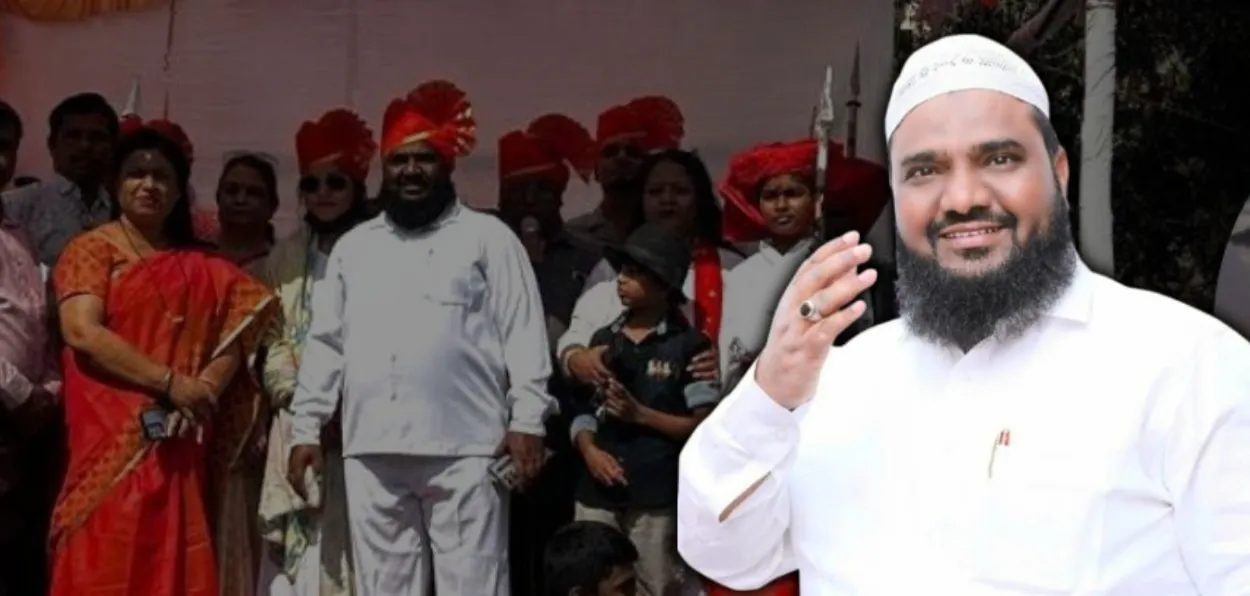
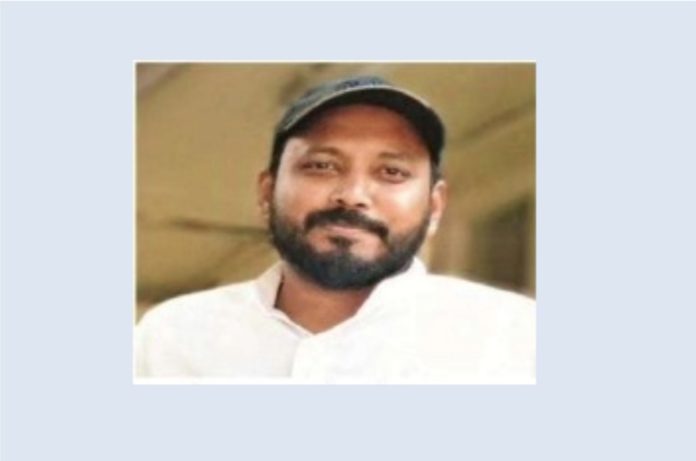
Corporator Haji Ghafoor Pathan, elected from the Muslim-majority Kondhwa Khurd-Kausarbaug ward of the Pune Municipal Corporation, invoked the legacy of Shivaji Maharaj in his very inaugural speech.
Speaking in the Chhatrapati Shivaji Maharaj Hall, he chanted the name of Shivaji Maharaj and delivered a message of inclusive politics. The video of his speech is currently going viral on social media.
Haji Ghafoor Pathan won the mandate from the Muslim-majority populace due to his years of campaigning for Shivaji’s ideals and his progressive stance.
Haji Ghafoor Pathan caught the attention of the house by invoking the name of the Maratha warrior. He congratulated the new office bearers on behalf of all Punekars and his ward. “This house belongs to Chhatrapati Shivaji Maharaj. The Honourable Mayor and Deputy Mayor should take progressive thoughts forward like an ideal King and give justice to all. Opinions, justice, equality, and brotherhood were the main principles of Shivraya’s Swarajya, and I express my wish that the same should be implemented in this house.”
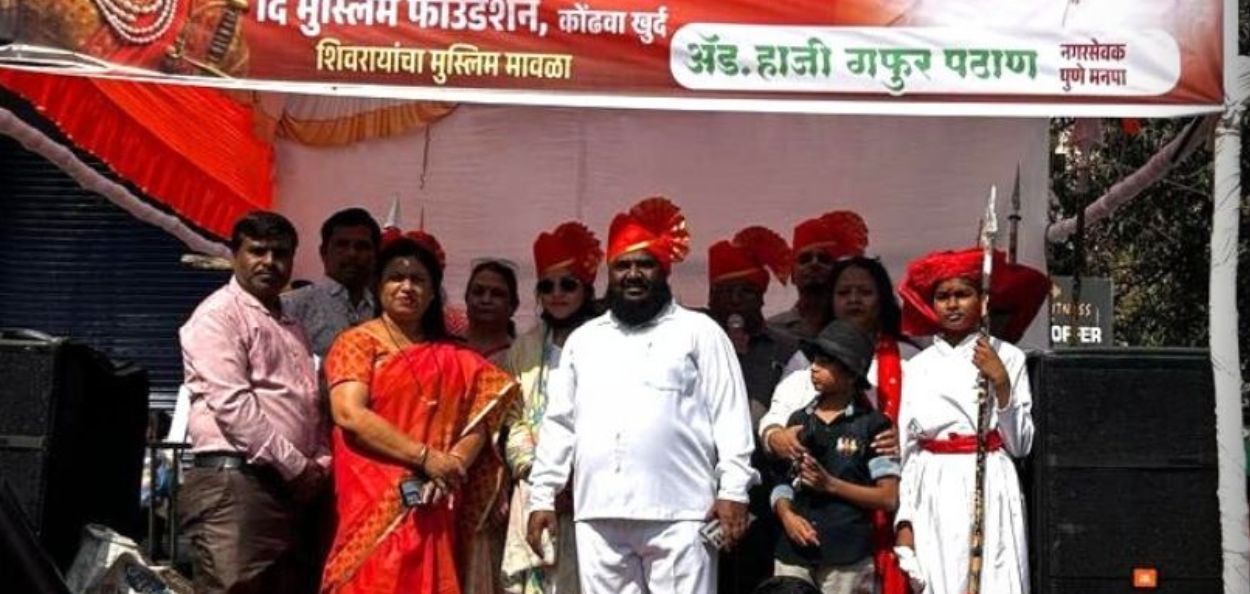
He introduced himself as ‘Chhatrapati Shivaji Maharaj’s Muslim Mavala’ (Muslim soldier/Loyalist of Shivaji Maharaj).
He said, “We always consider welfare for people of all castes and religions in this house. I will always fight for the development of the Kondhwa area. Just as Mavalas of all religions worked in Shivraya’s army, we will continue to serve the city with the same loyalty.”
Ghafoor Pathan has been celebrating Shivjayanti with great pomp in his Muslim-majority Kondhwa area for many years.
The day is celebrated with a statue of the King, a traditional palanquin, a chariot decorated with flowers, and the beats of Dhol-Tasha and Tutari.
Corporator Ghafoor Pathan
This all-faith ceremony is organised on behalf of the ‘Muslim Mavala Foundation’ led by Ghafoor Pathan. Women and school students participate enthusiastically in this. Notably, naming the flyover in Kondhwa after Chhatrapati Shivaji Maharaj was also part of his initiative. Recalling old memories, Corporator Pathan commented on the struggle for development. He said, “Earlier, we all used to be adamant about work in our ward. We have struggled for that. Now conflict must not come in the way of development.”
He requested the administration and group leaders to cooperate for the interest of Punekars and the holistic development of the city. He was particularly insistent that pending works in Kondhwa and the surrounding areas should be accelerated.
Haji Ghafoor Pathan also mentioned his mentor in politics, Ajit Pawar. “We will follow the ideals and precedents set by Respected Dada for five years. We will try to conduct ourselves in this house with Ajit Dada’s thoughts,” he promised the house.
Ghafoor Pathan’s speech in the historic hall of the Pune Municipal Corporation has set a new direction for social harmony and development. By invoking the name and ideals of Chhatrapati Shivaji Maharaj, he has started his journey as a public representative, on an inclusive note.
source: http://www.awazthevoice.in / Awaz, The Voice / Home> Stories / by Bhakti Chalak, Pune / February 16th, 2026
KUWAIT / Raigarh District (MAHARASHTRA) / New Jersey (U.S.A) :
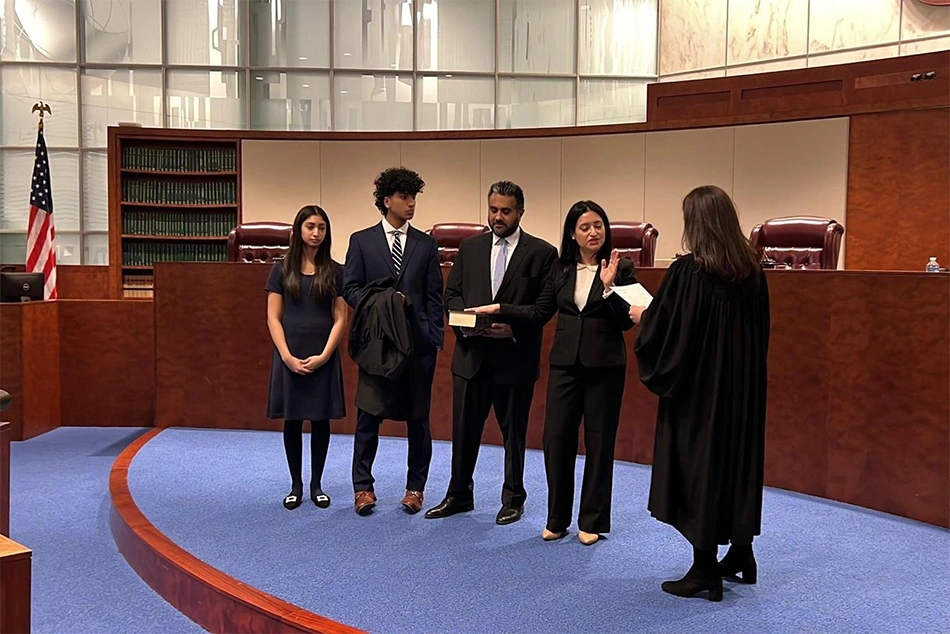
Kokan’s daughter Lubna Qazi Chaudhry took the oath as Administrative Law Judge in New Jersey with her hand placed on The Holy Quran, pledging to uphold constitutional responsibilities.
Mumbai:
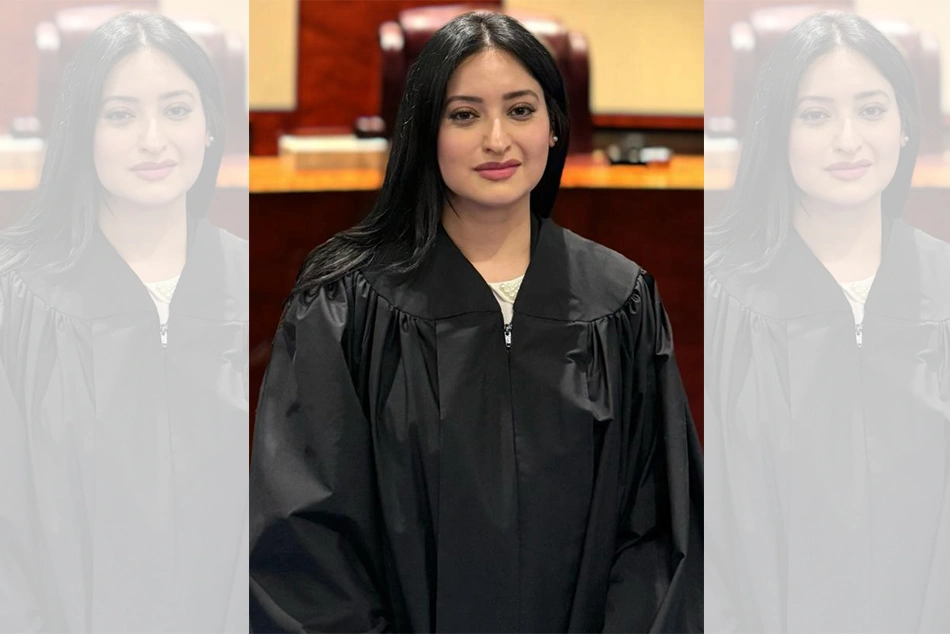
Lubna Qazi, a lawyer originally from Maharashtra’s Raigad district, has created history by taking oath as an Administrative Law Judge (ALJ) in the US state of New Jersey, becoming the first Muslim woman to be appointed to this position in the state. The appointment is being widely regarded as a significant milestone for minority representation in the American judiciary.
The oath-taking ceremony was held recently, where Associate Justice Rachel Wainer Apter of the New Jersey Supreme Court administered the oath. On the occasion, Lubna Qazi placed her hand on the Holy Quran and pledged to faithfully discharge her constitutional duties.
The position of Administrative Law Judge holds considerable importance within the American judicial system. ALJs preside over cases involving decisions of government agencies, administrative disputes and public grievances, delivering rulings based on established legal principles.
Lubna Qazi’s Life Journey
Lubna Qazi’s life journey spans multiple countries and cultures. She was born in Kuwait, where she spent her early childhood with her parents. In 1990, during a school vacation, she travelled to the United States. However, following the outbreak of the Gulf War, the family decided to settle there permanently.
Lubna later pursued her education in California, completed her graduation from the University of California, and earned her law degree from Western State University College of Law.
After marrying Ahsan Chaudhry in 2005, Lubna moved to New Jersey, where she served in various government legal positions for nearly two decades. Recognising her extensive legal experience and professional competence, the Governor of New Jersey nominated her for the post of Administrative Law Judge in 2025.
Lubna Qazi is also distinguished for her linguistic abilities. In addition to English, she is fluent in Urdu, Hindi and Konkani, and has working knowledge of Arabic. Committed to preserving cultural and linguistic heritage, she is personally teaching Urdu and Arabic to her two children at home.
Family Feels Honoured
Expressing his pride, Lubna’s father Inayatullah Qazi said that the entire family feels honoured by her achievement. He described the appointment not merely as a position, but the result of years of hard work, sacrifice and prayers.
Speaking to the correspondent, Inayatullah Qazi said that his family hails from Tala taluka of Raigad district in the Konkan region. He completed his education up to Class VI at Jamia Millia Islamia School, Delhi, and his high school education at Anjuman Islam, Mumbai.
After obtaining a degree in Mechanical Engineering from Government College of Engineering, Aurangabad, in 1975, he moved to Kuwait for employment, beginning his career with an air-conditioning company. After working there for fifteen years, he migrated to the United States with a single suitcase following Iraq’s invasion of Kuwait after the Gulf War, as his children were already in the US at the time. He later ensured higher education for all four of his children.
Inayatullah Qazi said that the family’s roots are deeply embedded in Islamic tradition and that Urdu is spoken with pride at home. He added that Lubna completed recitation of the Holy Quran at the age of seven.
He further shared that around five to six generations ago, their ancestors were sent to the Konkan region as Qazis (judicial authorities) to administer justice without discrimination based on religion, caste or race. Although the profession discontinued a few generations ago, he expressed happiness that his daughter has now proudly revived the family’s judicial legacy.
Lubna Qazi is also the granddaughter of Dr Rehana Ahmed, a noted educationist and Executive Chairperson of the Girls’ Board of Anjuman Islam, Mumbai. Dr Ahmed expressed joy over Lubna’s achievement, stating that it serves as a shining example for young women across the community and will inspire girls to pursue higher education and professional careers. She is widely recognised for her dedicated efforts toward the promotion of girls’ education, particularly within the Muslim community.
Meanwhile, several social and legal organisations, including the Asian Pacific American Lawyers Association of New Jersey, have congratulated Lubna Qazi on her appointment. Observers believe that this development marks a significant step forward in strengthening Muslim and minority representation within the American judicial system.
source: http://www.ummid.com / Ummid.com / Home> United States / by Mohiyuddin Altamash / January 30th, 2026
Advocate Faiz Syed leads new regional initiative inspired by Abdul Wahid Shaikh’s movement for justice and reform.
On 28th September, the Aurangabad (Chhatrapati Sambhaji Nagar) chapter of the Innocence Network, India was formally established, with an ad-hoc committee of 14 advocates led by Advocate Faiz Syed.
Speaking to Muslim Mirror, Syed said, “We felt the urgent need to start this chapter due to the widespread issues of wrongful incarceration, false implication, filing of bogus cases, and arbitrary arrests across the country. When a sole breadwinner or a poor individual is drawn into this legal labyrinth, it becomes incredibly difficult for them to navigate their freedom.”
He added, “Our aim is to provide legal aid and guidance across the Marathwada region and ensure that no instance of wrongful implication goes unchallenged.”
The Innocence Network was founded by Abdul Wahid Shaikh, one of the accused in the 2006 Mumbai train bombings (7/11 case), following his acquittal by the Maharashtra Control of Organised Crime Act (MCOCA) court in 2015. Shaikh spent nine years in Arthur Road Jail before being acquitted. “We had fought the case to the best of everyone’s ability,” he recalled. “Yet, we were convicted. That experience made me question the limits of legal struggle alone.”
As he was released, Shaikh’s co-accused urged him to continue the fight for their freedom—a moral responsibility that, he says, became his life’s mission. After returning to work as a teacher, Shaikh began assisting Advocate Yug Mohit Chaudhry, who led the 7/11 defense in the Bombay High Court. It was during this time that he met Advocate Pari Jata and researcher Sharib Ali, both deeply involved in civil rights work.
Inspired by the global Innocence Network movement, Ali proposed launching an Indian chapter. Together, they began mobilizing civil society to challenge wrongful convictions, especially in terrorism cases. Their first public gathering in Delhi—attended by lawyers, students, scholars, and activists—marked the formal establishment of the Innocence Network India.
The Network describes itself as “an all-India collective of individuals and organisations working for the rights of those wrongfully prosecuted or convicted, especially under charges of terrorism.” Led by exonerees and supported by lawyers, researchers, and civil rights groups, it focuses on criminal justice reform, rehabilitation, and policy advocacy. Its website also archives documents related to the 7/11 case.
Shaikh’s first book, “Innocent Prisoners,” exposed what he described as fabricated evidence by the Anti-Terrorism Squad (ATS) in framing 13 innocent men. The book was widely discussed as a crucial work highlighting the pattern of false implication of young Muslims in terrorism cases.
In 2016, the Network organized its first Innocent People’s Tribunal at the Constitution Club of India, where 16 wrongfully prosecuted individuals testified publicly about their ordeal. The report from this tribunal later informed the Law Commission’s Report No. 277. Another tribunal followed in Kolkata in 2018.
Since 2017, the Network has hosted two annual programs in Mumbai—one on the anniversary of the 7/11 bombings and another, the Shahid Azmi Memorial Lecture, in memory of the lawyer who represented the 7/11 accused. These events feature legal experts, journalists, and filmmakers such as Justice Abhay Thipsay, Hansal Mehta, Yug Mohit Chaudhry, Susan, Nazia Sayed, and Faisal Qazi, among others.
Shaikh has also used books, media, and digital platforms to expand his advocacy. His YouTube channel “Begunah Qaidi” features over 250 videos documenting cases of wrongful incarceration. His “Mobile Legal Aid” helpline operates 24×7, offering immediate support to those facing fabricated charges. “It has already helped prevent several cases of wrongful incarceration,” he noted.
Beyond advocacy, Shaikh continues to assist exonerees with legal representation, education, and rehabilitation. His upcoming books include an autobiography with Roli Books and a collaborative work profiling his co-accused.
Recently, the Innocence Network launched a think-tank to document wrongful incarcerations and misuse of draconian laws. “Our team includes researchers, professors, and lawyers,” Shaikh said, adding that a detailed report is in progress.
Sohail Shaikh, one of the 7/11 exonerees, told Muslim Mirror: “The Innocence Network may have been formally established in 2016, but its roots go back to Arthur Road Jail. Shaikh has only continued the work we all started in prison. The Network’s work made it possible for society to finally recognize our innocence.”
Advocate Shruti, a researcher with the network, emphasized, “The kind of miscarriage of justice in the 7/11 case represents a double injustice—innocent people are tortured while real perpetrators remain free. The Network’s work is vital to restoring ordinary citizens’ faith in justice.”
Shaikh revealed that new chapters of the Innocence Network are being planned in Bangalore, Jalgaon, Jalna, and Hyderabad, set to be launched later this month.
source: http://www.muslimmirror.com / Muslim Mirror / Home> Human Rights> Indian Muslim> Positive Story / by Osama Rawal / October 20th, 2025
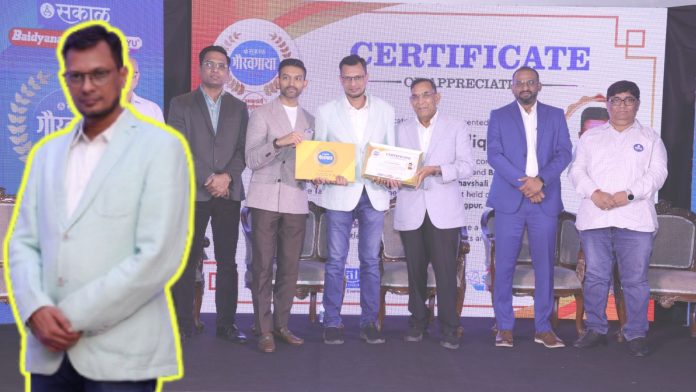
Dr Anwar Siddiqui, head of Panchakarma at Shri KR Pandav Ayurveda College and founder of Kerala Ayurveda & Panchakarma, received the Influential Ayurvedacharya Award from Sakal and Baidyanath. The award recognized his contributions to Ayurvedic medicine and social service.
The event was attended by Union minister Nitin Gadkari, Baidyanath’s managing director Suresh Sharma, and 45 leading Ayurveda doctors from across India. Dr Siddiqui, a BAMS and MD in Panchakarma from Poddar Government Ayurveda College in Mumbai, also holds a Master’s degree in Sanskrit. He has authored the book Ayurvedic Detoxification in Obesity, published in Germany.
With more than two decades of practice, Dr Siddiqui has gained recognition for treating chronic illnesses through Panchakarma therapy. During the Covid-19 pandemic, he helped set up a free hospital in Pachpaoli, strengthening his reputation for service to both healthcare and the community. Dr Siddiqui is a prominent leader associated with Jamaat-e-Islami Hind and a member of its Maharashtra State Advisory Council.
source: http://www.radiancenews.com / Radiance News / Home> Latest News> Report / by Radiance News Bureau / August 24th, 2025
Umar Sheikh’s determination and the school’s support have been vital to his academic achievements
New Delhi :
The Maharashtra State Examination Council’s recent 5th and 8th class scholarship exams witnessed remarkable achievements from students across the state. Among them, 954 students from the Brihanmumbai Municipal Corporation (BMC) schools secured places on the district merit list, with Muslim student Muhammad Umar Sheikh standing out as the top scorer in the 8th class scholarship exam with an impressive 72.79% marks.
This achievement is particularly significant given the exam’s difficulty and the fierce competition from students all over Maharashtra. The 8th class scholarship exam was held on February 9, drawing hundreds of participants. In the 5th class category, Ridhi Kamlesh Mishra from Vakola BMC Hindi Medium school topped with 79.19% marks.
Muhammad Umar Sheikh, a student of Deonar Colony MPS School No. 4 and currently in the ninth grade, secured 236 out of 300 marks, making him the highest scorer in all BMC schools for the 8th grade. This year, out of the 954 successful candidates, 536 were from the 5th grade and 418 from the 8th grade. This is a sharp increase compared to last year’s 405 students who cleared the exams.
Speaking to the media, Muhammad Umar’s father, Muhammad Saleem, shared the challenges their family has faced. “My son has been topping his class in mathematics and science since the beginning. He loves these subjects and has been very focused,” said Saleem. He added that Umar had also topped the 5th class scholarship exam.
Saleem narrated the difficulties faced by the family during the COVID pandemic. “Before COVID, my two children studied at DY Patil School in Nerul, Navi Mumbai. However, due to the loss of income during the pandemic, I could not pay their school fees, and the school stopped their studies. The school even refused to give their transfer certificates because of unpaid fees,” he explained.
With limited options, Saleem moved his family to Govindi in 2021 and struggled to find admission for his children. “It was not easy, but with persistence, I managed to get them admitted to a school here,” he said. Despite the hardships, Saleem is proud of his children’s resilience and achievements. “They are intelligent, and their performance at the new school has been excellent,” he remarked.
When asked about his son’s ambitions, Saleem said, “Umar wants to become a scientist. He has been saying this since the first grade, and with the way he is studying, I believe he will achieve it.”
The school’s principal and staff have expressed great pride in Muhammad Umar’s success. Principal Menal Chaudhary, along with teachers Uday, Ravi, Balu, Prateek, Nitin, and Smithia Madam, congratulated Umar and praised his dedication and hard work. “His success is a source of pride for the entire school,” they said.
This story highlights not only the academic excellence of Indian Muslim students in Mumbai’s government schools but also the obstacles faced by economically weaker families. It also reflects the support provided by committed teachers and principals who encourage students to reach their full potential.
Muhammad Umar Sheikh’s story serves as an inspiration for many young students facing financial hardships, demonstrating that determination and support can lead to success. His achievement, along with the rise in the number of successful students from BMC schools, reflects a positive change in the educational opportunities for Indian Muslim children, who often face social and economic challenges.
In a city known for its diversity, such stories emphasise the need to acknowledge and support the talents and ambitions of minority communities. This achievement sends a message to all that education is the key to overcoming barriers and achieving dreams, regardless of one’s background.
source: http://www.clarionindia.net / Clarion India / Home> Indian Muslims / by Clarion India / July 14th, 2025
Mohammed Nazim Sheikh, 51, is a silent saviour of lives on the Mumbai shores. After selling pav (Mumbai bread) at the Colaba, from early monring till noon, the 51-year-old Mumbaikar, leaves for the beach at the Gateway of India to keep an eye on the sea lovers who might be unknowingly putting their lives at risk.
Like a silent sentinel, he has been guarding the dangerous beach at the Gateway of India for 35 years and has saved more than 300 persons so far.
Nazim says,”They (tourists) come closer to the sea to feel the splash. Once they slip, the tide pulls them into the water,” he says. “If somebody doesn’t rush for their help, they’re gone.”
Nazim started rescuing drowning people at the age of just 16. With the skills of a trained lifeguard and a sense of mission, he pulls people out of the water who are unaware of the dangers and are carelessly near death.
“They come just to feel the splash or to see the view, but one slip is enough, and the wave takes them away. If immediate action is not taken, it is not possible to save them,” he says.
Nazim says he has also recovered about 25 to 30 bodies so far—mostly men. He has witnessed many accidents during festivals.
Nazim’s most memorable rescue operation was in 1996 when he swam across during high tide. For this feat, he was awarded the title of ‘Best Swimmer’. In recent years, especially during the 2022 Ganpati immersion, he saved two people from drowning.
According to hawkers who set up shop around the Gateway of India, Nazim is always the first to arrive. Nowadays, due to social media, tourists often start making videos by crossing the safety barrier, which proves to be dangerous. In such a situation, when someone falls into the sea, the first name that comes to everyone’s mind is Nazim – even before the police or the fire brigade.
A 60-year-old woman who runs a stall in front of the Taj Hotel says: “I have been seeing Nazim for years. He has saved countless lives. Everyone working at the gateway knows that he is the one to call immediately in an emergency.”
A local photographer says, “Earlier they used to patrol right in front of the gateway, but now that area is closed for security reasons. Nowadays they are seen in front of the Taj Hotel where people come to enjoy the ocean waves.”
Another 51-year-old cameraman says: “Everyone working at the gateway knows the moderator and knows when to contact him. The best thing is that whether you call him or not, he arrives on his own.”
However, despite his selfless service Nazim has not received any official government recognition or honor till now. The Nazim said that he has written letters to the Prime Minister and the Chief Minister (Devendra Fadnavis), but no action has been taken.
“Still waiting, nothing has happened,” he shrugs. Many of Nazim’s awards and newspaper clippings have also been lost during the renovation of his house. He finishes selling pav by noon, but as soon as the tide comes in, he becomes alert.
“When someone is in trouble, be it locals or the police, they call me. I am not afraid of the sea. Allah has given me this strength, I just do my job,” he says humbly. Nazim was also part of the rescue team during the 2003 Gateway bombing and helped recover bodies from there.
Today, while beach safety has improved and suicides have declined, Nazim still stands as a silent sentinel on Mumbai’s beaches. “If anything happens, I’m ready,” he says resolutely.
Colaba Senior Police Inspector Pramod Bhaute said, “Nazim works as a lifeguard for us. He is always active and alert. His help has proven invaluable in many cases. He lives in the Jetty area. Mumbai Police says it’s grateful to him for him selfless mission in saving lives.
source: http://www.awazthevoice.in / Awaz, The Voice / Home> Story / by Onika Maheshwari, Mumbai / July 13th, 2025
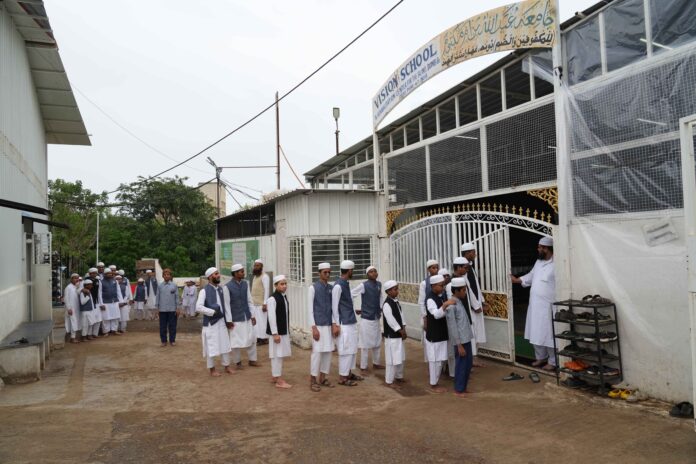
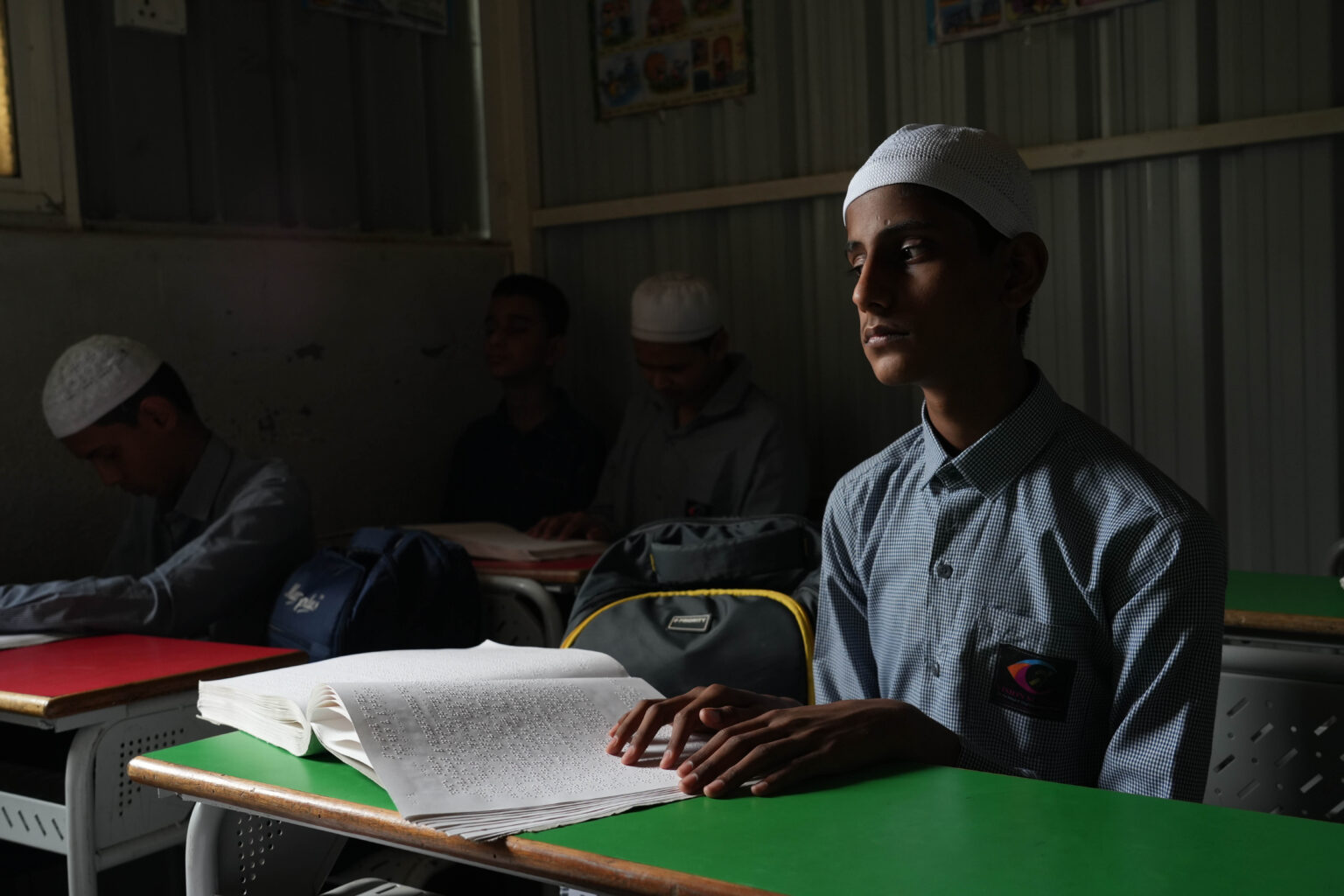
Students at Jamia Abdullah Ibne Umme Maktoom, India’s first inclusive madrasa for differently-abled children in Pune, Maharashtra, walk in a queue as they enter the Vision School campus. The madrasa provides free Islamic and contemporary education to mute, deaf and visually impaired students from 17 states across India.
In Pune, Maharashtra, Jamia Abdullah Ibne Umme Maktoom offers free Islamic and contemporary education to mute, deaf, and blind children from across 17 states—proving that disability is no barrier to dignity, faith, or ambition.
Pune (Maharashtra):
In a small park in Maharashtra’s Pune, on a Thursday morning in May, a group of well-dressed uniformed students stood barefoot, wearing white skull caps. Many of them were mute or visually impaired. As the national anthem played in the background, the students stood in solemn attention, while others – mute and deaf – used sign language to express the lyrics. It turned the moment into a display of patriotism and unity.
This is the usual beginning of the day at Jamia Abdullah Ibne Umme Maktoom (a religious seminary in Pune), where hundreds of mute, deaf and blind students receive free Islamic and contemporary education.
“It took us years to convince families of the importance of education for their special children,” says Nayeem Ahmad Qasmi, a secretary of the madrasa.
The institution was founded in 2013 with only two children with the vision to uplift differently abled children from across India through inclusive education.
According to the Census of 2011, approximately 2.2% of the population, around 26.8 million people, were identified as living with disabilities.
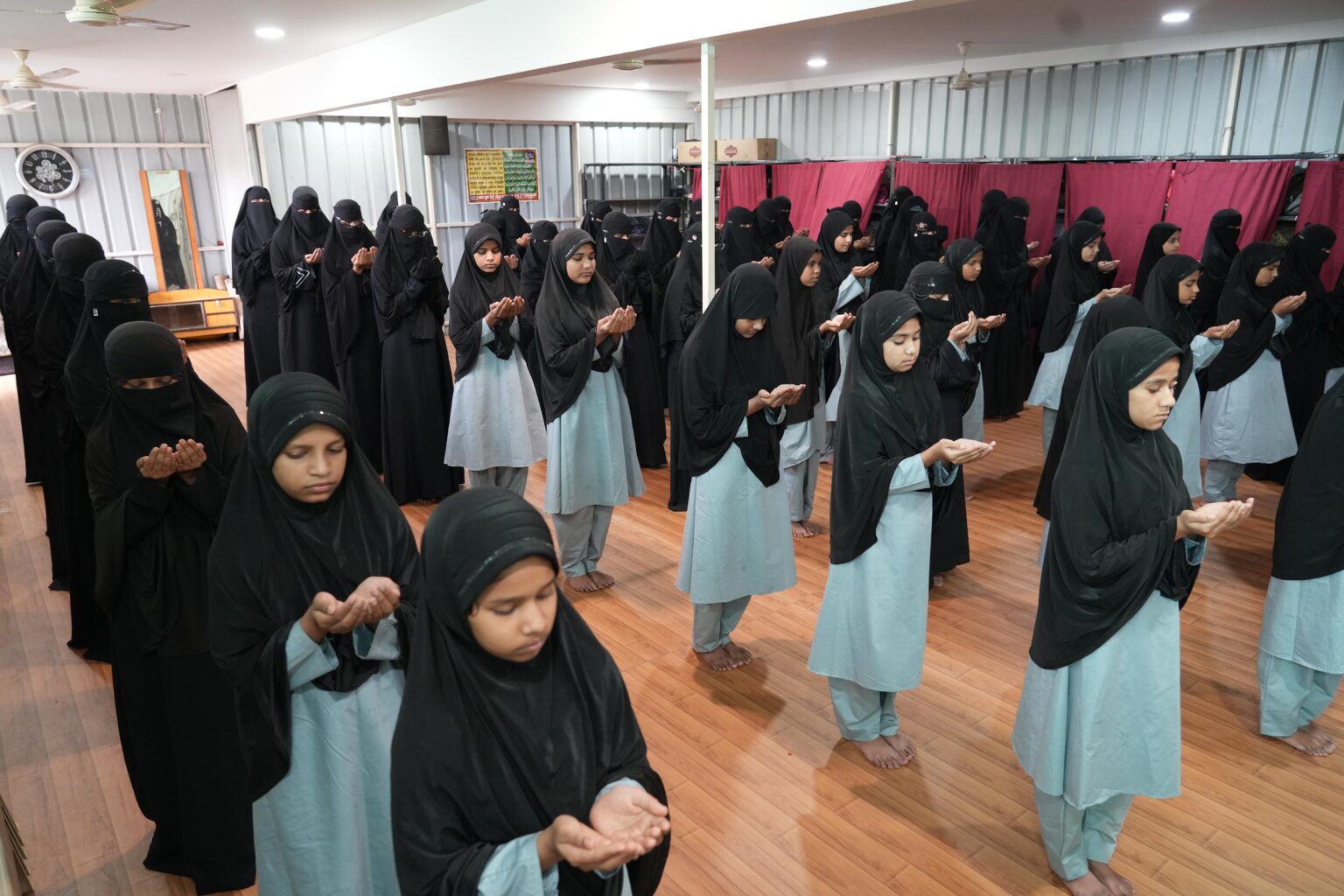
Female students at Jamia Abdullah Ibne Umme Maktoom in Pune, Maharashtra, offer prayers during school hours. The madrasa currently educates over 70 differently-abled girls – many of whom are mute, deaf or visually impaired – providing them with a safe and inclusive environment for both Islamic and contemporary learning.
Unfortunately, many families abandon differently abled children or keep them confined at home – considering them a burden.
“It is the duty of every person to support differently abled children so they can prove their capabilities,” he adds.
Many students come from rural areas in different states, where families often do not know the value of education or the opportunities available to them.
“Before coming to Jamia, I did not know anything about Islamic and contemporary education,” says 18-year-old Rehan Saleem from Jalgaon in Maharashtra.
Many students have received opportunities to present their skills on different platforms across India. Several have represented their school and secured positions in various sectors.
“By the grace of God, I have completed the Hifz-e-Quran (memorisation of the entire holy Quran) at this Jamia and got the opportunity to perform Umrah,” says Rehan.
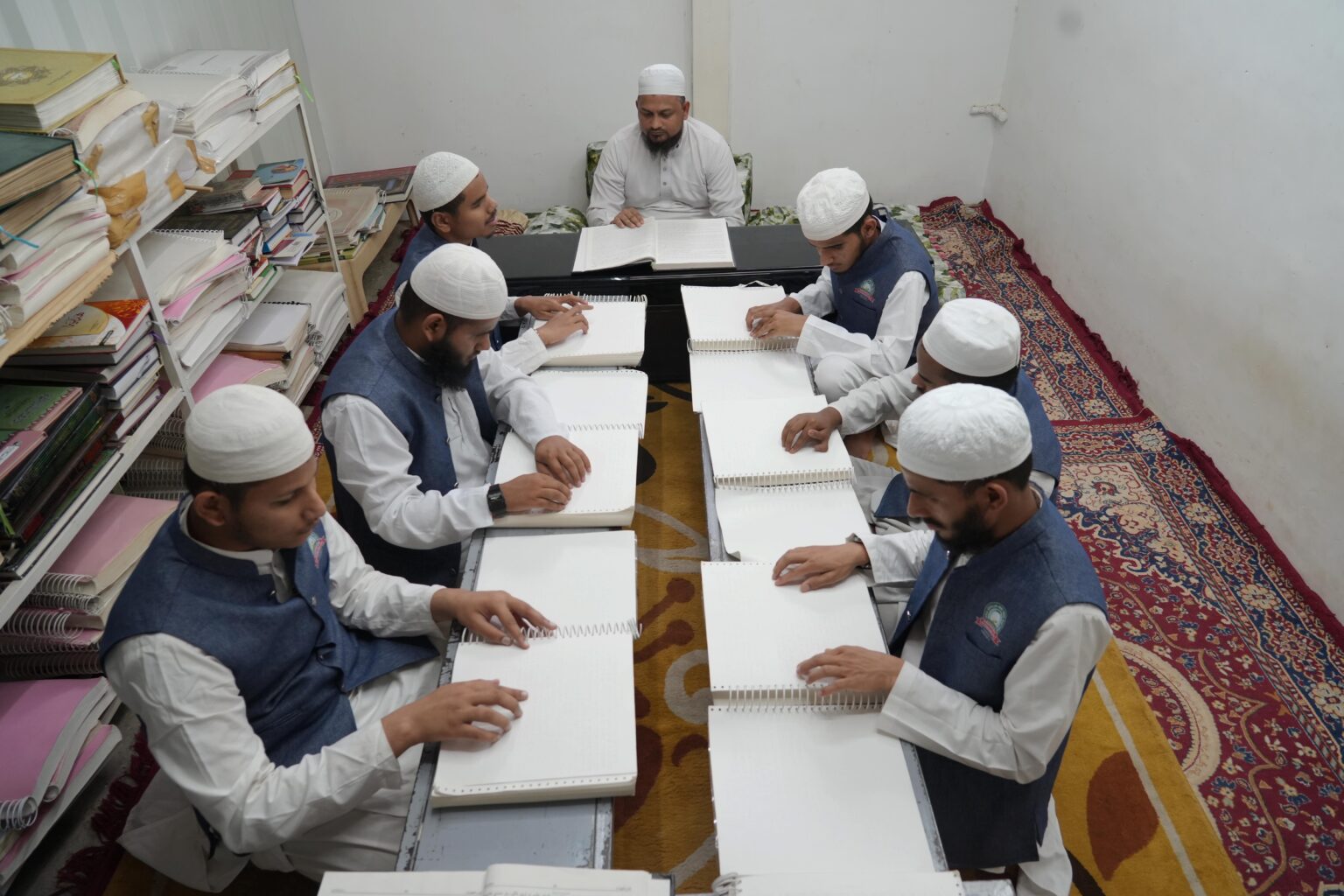
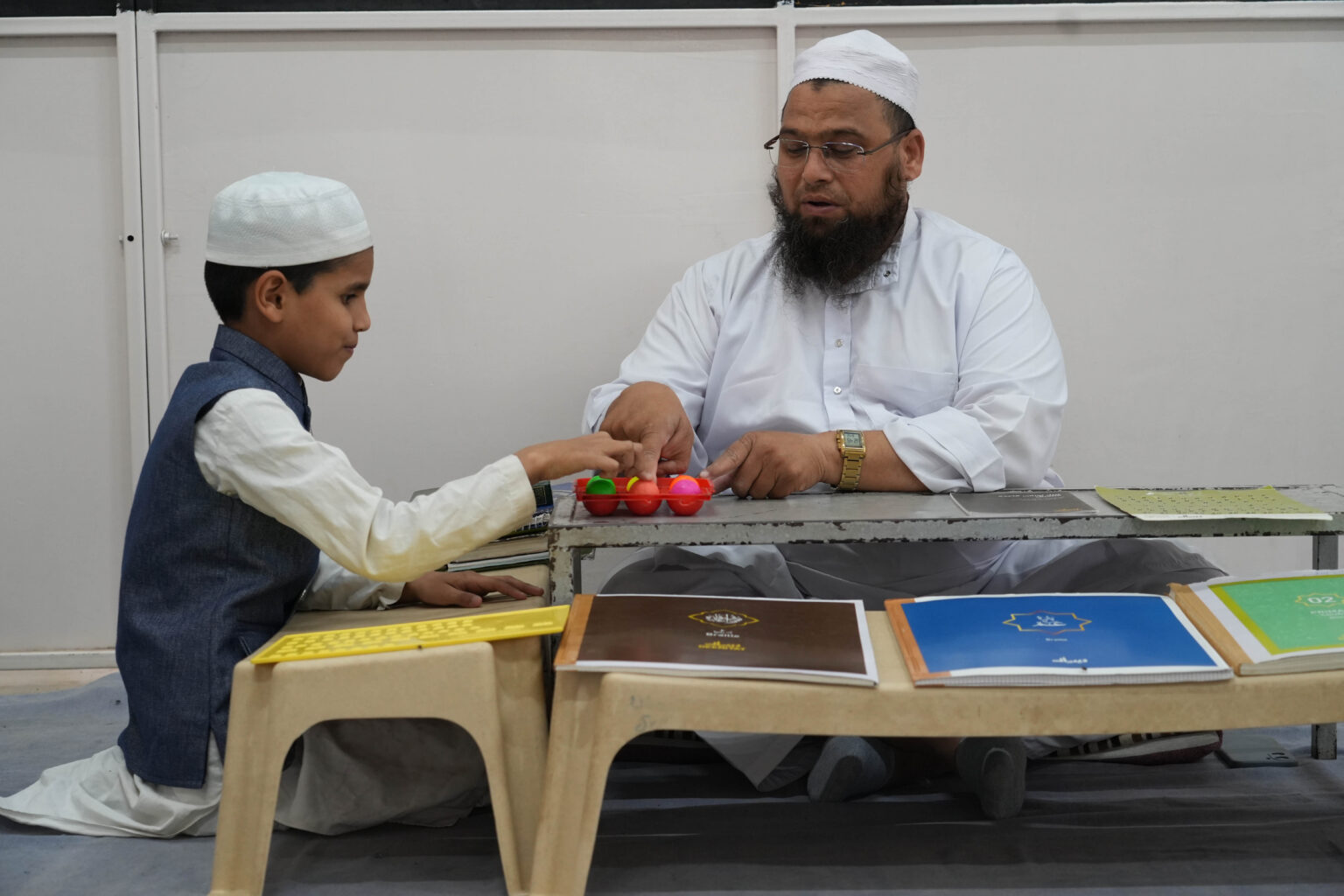
Students at Jamia Abdullah Ibne Umme Maktoom in Pune attend a classroom session where they receive both Islamic and contemporary education, guided by their teacher.
Today, the Jamia hosts 210 mute, deaf and blind students from 17 states across India. The seminary provides free education from Grade 1 to Grade 12, including subjects like science, computers, Islamic studies and advanced education.
Many students have gone on to study at various universities and colleges. For those unable to attend in person, the madrasa has launched an online education programme. Children here are provided with education, food, accommodation and even uniforms free of cost.
“Our mission is to see these children represent the country on every platform one day,” says Qasmi.
Despite the struggle, they have succeeded in building a thriving institution. In 2021, the madrasa launched separate sections for mute, blind and deaf women to ensure inclusive learning environments. Women’s education is just as important as men’s, and this initiative reflects that commitment.
Mubashira Sadiya Khan, who teaches specially abled girls at the madrasa, says, “Women’s education is equally important as male education. These girls are usually occupied with household work at their homes, but we are giving them better education and showing them the purpose of life.”
A young visually impaired student sits attentively in class, beside a Braille slate and stylus used for writing. At Jamia Abdullah Ibne Umme Maktoom, visually impaired children are given tools and support to receive religious and formal education in an inclusive environment.
Since safety is a major concern for women in the country, the madrasa has provided separate rooms for them, with all female helpers to ensure a secure learning environment.
Mubashira adds, “Usually, women are not safe in the country, but here we have created a safe space where they can learn and grow with confidence.”
Despite progress in education, children with disabilities in India often remain invisible – excluded from schools, denied opportunities and treated as burdens. Many end up begging or isolated at home, not by choice, but because society offers them no alternatives.
“We often see them begging on the roads, not because they want to, but because the society has failed to give them a chance,” says Qasmi.
Students in uniform attend class at Jamia Abdullah Ibne Umme Maktoom in Pune, where multiple sessions are held simultaneously in a shared hall to support inclusive learning.
The Jamia has been working to ensure that students with disabilities receive quality education, access to proper infrastructure and opportunities to engage in play and creative activities on campus. Its vision is to provide them with equal opportunities so they can compete and thrive like any other student.
“Our goal was simple – give them dignity, knowledge and a future,” Qasmi explains.
The Jamia is already offering digital learning tools, smart boards and inclusive facilities to ensure that the students receive a modern and accessible education. The institution continues to innovate and expand its reach through technology and tailored teaching methods.
“We have introduced smart boards, digital tools and inclusive classrooms because every child no matter their ability deserves access to quality, modern education,” says Qasmi.
In the current political climate in India, the Muslim community has often been portrayed in a negative light, and madrasa education is frequently misunderstood or dismissed. Despite these challenges, Jamia Abdullah Ibne Umme Maktoom continues to provide quality Islamic and contemporary education to differently-abled children, aiming to empower them with knowledge and confidence.
source: http://www.twocircles.net / TwoCircles.net / Home> Disability / by Suhail Bhat, TwoCircles.net / June 21st, 2025
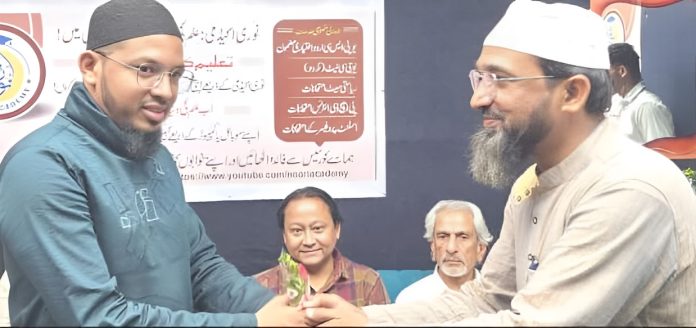
Inauguration of the New Batch at Noori Academy, Malegaon
Malegaon:
Noori Academy, a beacon of knowledge, continues its academic journey under the leadership of Dr. Ataur Rahman Noori. On January 28, 2025, after Maghrib prayers, the inaugural session of the UGC NET June 2025 batch was held at the academy’s headquarters with great enthusiasm. The event witnessed the participation of distinguished educationists, researchers, and scholars, while thousands of students from across India watched it live.
Noori Academy is not just an educational institution but a stronghold for the promotion of Urdu language and literature. Over the years, it has helped more than 500 students clear UGC NET, State SET, PhD entrance, and assistant professor exams, significantly contributing to Urdu research and teaching.
The session began with Quranic recitation, followed by speeches from eminent scholars. Mufti Mujeeb Sir highlighted the academy’s exceptional results, urging students to seize this opportunity. Linguist Saleem Shehzad spoke on modern and postmodern literary discourse, while Dr. Muhammad Husain Mushahid Rizvi called Noori Academy a guiding light for Urdu education.
Dr. Ataur Rahman Noori emphasized the academy’s mission, showcasing its success in both traditional and digital platforms. With 8 million+ YouTube views and a thriving mobile app, Noori Academy continues to shape the future of Urdu education.
source: http://www.radiancenews.com / Radiance News / Home> Education> Focus / by Radiance News Bureau / February 05th, 2025
Many students dream of clearing the civil services examinations but those with small means, a majority of whom are from the Muslim community, can’t afford coaching and guidance from experts for it.
To address this, the Maharashtra State Minority Officers and Employees Association (MRAAKA) has announced its residential coaching classes for students from minority communities who are preparing for competitive examinations for jobs of admissions in higher learning institutes.
For several years, MRAAKA which is registred as Maharashtra Rajya Alpaksankhyak Adhikari – Karmachari Association. has been undertaking social work and spreading awareness among minorities. In its latest initiative, the organization said its classes will be held in Pune for the academic year 2024–25.
MRAAKA President Haji Jatkar said on the initiative, “The organization was founded by a group of Muslim government employees to contribute to the welfare of the minority community. Initially, we collaborated with Anjuman Islam to organize coaching classes. Since 2021, we have partnered with the Haj Committee for this purpose. Our organization is the first government-recognized institution in the country dedicated to working for the upliftment of the minority community.”
He further added, “Students from minority communities, particularly Muslims, face challenges in pursuing higher education. We provide them with hostel facilities, study centers, and financial assistance through scholarships.”
Highlighting the purpose of the initiative, Haji Jatkar said, “While other communities have access to competitive exam academies, there isn’t a single academy of this kind for minority communities in the state. If students from minority communities are given access to quality institutions and proper guidance, they can significantly contribute to the development of society and the nation. It is fulfilling to see our organization providing a platform for minority students to claim their rightful opportunities.”
Asir Sheikh, Assistant State Tax Commissioner and a member of MRAAKA, said, “The challenges faced by minority communities are often discussed, but concrete actions to address them are rare. Bringing minority students into administrative roles is essential for the community’s growth. That’s why our organization has launched this residential coaching program to guide students and help them enter the administrative system,” he said.
He noted, “So far, we have completed two batches of residential coaching classes. Only a limited number of students are selected through a rigorous admission process. Of these, 13 students have successfully cleared competitive exams and secured postings.”
At present applications for the 2024–25 residential coaching classes in Pune are being accepted by MRAAKA. The last date for submission is January 9, 2025. Applicants’ records related to state service exams will be reviewed. Following the scrutiny, 100 students will be shortlisted for interviews, and 25 will be selected.
Preference will be given to candidates who have cleared the preliminary or main state service exams in the past. Additionally, applicants will need to provide caste verification certificates as per government reservation policies.
Any graduate from a minority community who has appeared for the state service preliminary exam and demonstrates potential to succeed can apply. The program is open to motivated students from all branches of study.
The organization works for the welfare of minority employees and aims to increase the literacy rate and overall development of minority communities. It also plans to establish separate libraries for Hindi and Marathi to promote the development of these languages.
Additionally, with the support of central and state governments, MRAAKA encourages sports by providing scholarships and other incentives to athletes from minority communities.
source: http://www.awazthevoice.in / Awaz, The Voice / Home> Stories / by Fazal Pathan / January 05th, 2025
In a remarkable feat, Habibur Rahman, a resident of Malegaon, has outshined 9,000 candidates to clinch the top position in the recruitment exam conducted by the Maharashtra State Waqf Board. Rahman’s achievement underscores his exceptional performance and dedication towards his goal.
The recruitment exam, aimed at filling vacancies for district officers and junior clerks within the Waqf Board, witnessed rigorous competition from aspirants across the state. Rahman’s success stands as a testament to his hard work and preparation.
Expressing his gratitude, Rahman attributed his accomplishment to divine blessings and the unwavering support of his teachers, parents, and relatives. He highlighted the role of study material provided by Sheikh Qamaruddin, editor of Urdu House in Malegaon, in his exam preparation.
Having completed his education from Sheikh Abdul Wadood Primary School and Junior College in Malegaon, Rahman pursued higher studies at Loni’s Parvaraz World Engineering College. While working in Mumbai, he diligently prepared for competitive exams, a journey that has now culminated in his success in the Waqf Board recruitment exam.
Rahman’s stellar performance, in the written examination, is a testament to his academic prowess and determination. His achievement has not only brought pride to Malegaon but has also positioned him as a shining example of excellence in competitive exams.
With Rahman’s success, Malegaon celebrates yet another milestone, reinforcing its position as a hub of talent and academic excellence. As Rahman prepares to embark on this new chapter in his career, his success serves as an inspiration for aspiring candidates across the region.
source: http://www.radiancenews.com / Radiance News / Home> Latest News> Markers of Excellence/ by Zaina Aman / Radiance News Bureau / March 06th, 2024