Tag Archives: Muslim of Uttar Pradesh

A doughty warrior builds a mosque for women

Lucknow, UTTAR PRADESH :
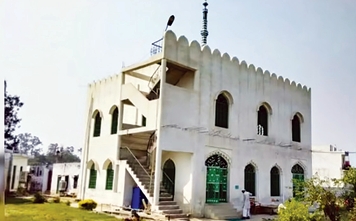
Mosques in Hindi heartland states are an exclusive male preserve. Though Islam doesn’t barentry of women into mosques, they are scrupulously kept away from the holy precincts all across north India. But Amber Mosque in the outskirts of Lucknow challenges this shibboleth. It was founded and built by Ms. Shaista Ambar, a social activist from Lucknow who wouldn’t take such taboos lying down.

Wife of a bureaucrat in Uttar Pradesh, Shaista conceived the idea of a mosque where women could also offer namaz alongside men, in 1995. As a young woman, Shaista would take up social causes during the 1980s and 90s. Construction of a mosque was certainly not on her mental screen. But the rebel in her got awakened when she took a child inside a mosque to introduce him to the collective prayers.

For the imam the sight of woman inside the mosque was no less than a sacrilege. She was ordered out. The outrageous behaviour left a deep imprint on her. Beating a hasty retreat, she vowed to build a mosque where both men and women could pray. She drove straight to Nadwatul Uloom, the world famous centre of Islamic learning in Lucknow seeking an audience with Maulana Ali Miyan, the 7th Chancellor of the seminary and a world re nowned scholar of Islam.

The revered Maulana signalled her to go ahead pledging his full support. Pouring the family’s savings, a 26,000 square feet plot of land was bought in Teli Bagh, 15 kms away from the city centre on the road going to Rae Bareli. She sold away her car and ornaments to raise the required funds. The move gathered support from wider circle of relatives and acquaintances.

Lo and behold! The mosque came up opposite the trauma care centre of the Sanjay Gandhi Post Graduate Institute of Medical Sciences. And it was none other than Maulana Ali Miyan Nadwi who presided over the consecration of the mosque in 1999. (He passed away on December 31, 1999). The mosque can host a congregation of over a thousand persons on a Friday when doughty Shaista Amber ensures her weekly presence.

She presides over the committee taking care of the mosque as the chief mutawalli with several other members of the family. She has resolutely stood against traditional maulvis taking over the management of the mosque. There have been pleas to start a madrassa (Islamic theological school) within the precincts.

She has declined permission and has instead started a dharamshala (stay-homes for wayfarers) within the boundary of the mosque where women attendants of inmates at the Sanjay Gandhi Institute find accommodation at a very reasonable rent. And they could belong to any faith. She says Uttar Pradesh has several thousands of madrassas but no dharamshalas and other such key civic facilities set up by Muslims.

The mosque is open for namaz to Sunnis as well as Shias, the major sects within Muslims. The mosque also runs a counselling centre where family disputes, mainly post-marital, are referred for resolution. Shaista has had differences with the All India Muslim Personal Law Board on several issues pertaining to women’s rights in Islam.

Critical about the rigidity on its outmoded stances, she and several of her supporters set up the All India Muslim Women Personal Law Board nearly a decade ago. The Board has appreciated the law banning the practice of triple talaq at one sitting and has suggested several progressive reforms. One who completed her graduation from the Aligarh Muslim University and later acquired Adib and Kamil certificates, Shaista has willed that her two daughters and son would look after the management of the mosque after her passing away.

Shaista came visiting Bengaluru last May at the invitation of the Azim Premji University for a seminar where this author had a chance meeting as a participant. Log onto www.shaista ambar.com for an overview of her vision and activities. 

source: http://www.newstrailindia.com / News Trail / Home / by M A Siraj / October 19th, 2025
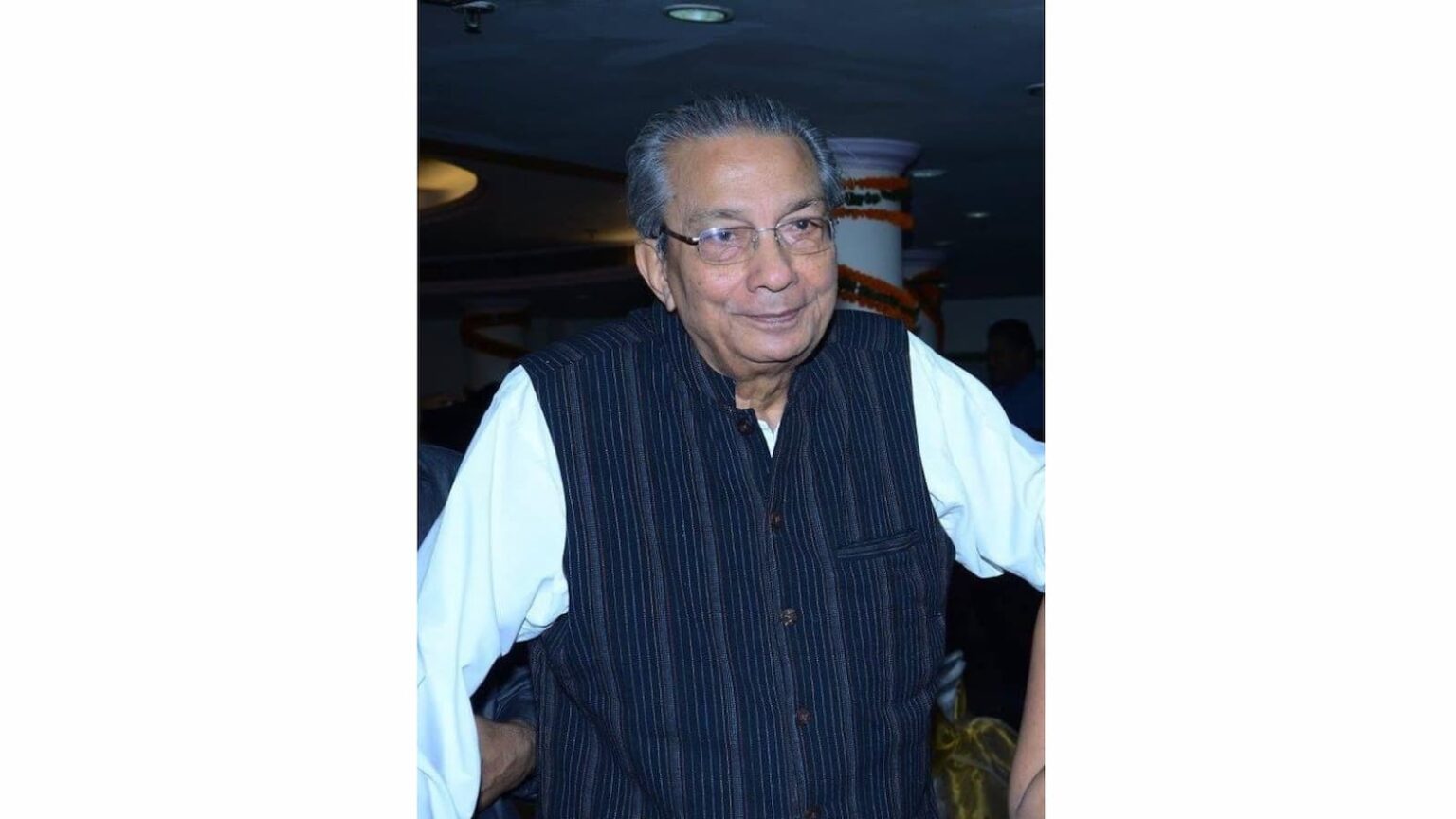
Ather Siddiqi: Journey as a Zoologist, Scholar, and Urdu Literary Maestro

Sahranpur, UTTAR PRADESH / NEW DELHI :

Ather Siddiqi was a researcher of eminence in his field and his research has been nationally and internationally recognised in the scientific world.

Professor Ather H. Siddiqi was born on December 29, 1931, in Saharanpur, Uttar Pradesh. He attained his early education at the Govt. High School, Saharanpur and obtained the degrees of B.Sc. (1950) and M.Sc. (1953) from A.M.U. Topping the university in Science and Zoology, he received two gold medals. He did his PhD in 1956 under the supervision of Professor Babar Mirza from Aligarh Muslim University.

Ather Siddiqi joined the Department of Zoology as a lecturer in 1953. After three years, he joined Purdue University, USA and completed another doctorate in 1958. He became a reader in 1961 and was appointed as a professor in 1977. Prof. Siddiqi also taught at universities in Nigeria and Libya and returned to India in 1980. He served as the Chairman of the Department of Zoology (1985-88) and as the President of the Indian Society for Parasitology. He also served as the Dean of the Faculty of Life Science in 1988-89, finally retiring from his services in 1994.

His scientific work on helminth taxonomy was published by the New York Academy of Sciences in the form of an exhaustive monograph. Despite that, he received his basic training in classical zoology in the early sixties. Later on, he switched to experimental work in parasitology. Ather Siddiqi was a researcher of eminence in his field and his research is nationally and internationally recognised in the scientific world.

Siddiqi’s Immersion in Urdu Writing

Apart from research articles, his popular writing in Urdu started in the 1980s. His first article in Urdu appeared on the life and scientific contribution of his mentor Professor Babar Mirza in the Quarterly “Fikr-o-Nazar” (January 1987). He published two articles in the early years of “Tehzib-ul-Akhlaq”, Aligarh: ‘Ilm-ul-Hayatiat ke Isatiza se Khitab’ (December 1987), ‘Mohammad Babar Mirza-Apnay Chaman ka Aik Deedawar’ (August 1989).

After his retirement in 1994, he devoted himself completely to Urdu writing. His lengthy article, ‘Mashriq say bezar na Maghrib say Hazar Kar’ narrateing the scientific and cultural activities of European countries was serialised in January 2005-June 2006 issues of “Tehzib-ul-Akhlaq”.

Similarly, his Urdu travelogue ‘Saat Haftay Inglistan Main’ (Seven Weeks in England) was published in the June and July 2006 issues of “Tehzib-ul-Akhlaq”. It carried interesting information regarding the scientific and cultural development of England.

His article based on his visit to Spain ‘Undlus Ka Shandaar Mazi’ (The Bright Past of Spain) discussed the scientific and cultural development of medieval Spain.

Ather Siddiqi along with Syed Zillur Rahman, contributed a chapter, ‘Aligarh Muslim University: Development and Progress of Science Teaching and Research, 1877-1947’ in Science and Modern India: An Institutional History, c. 1784-1947 (ed. Uma Das Gupta), Centre for Studies in Civilisation published in 1999.

A Glimpse into his Published Works

He is regularly contributing a literary column ‘Hairat Sarai Ke Kahania’ to “Tehzib-ul-Akhlaq” which consists of the translation of interesting short stories taken from the internet.

Recently, his popular science articles ‘Parasitism: Aik Dilchasp Tareeq Zindagi’ (Parasitism is an Interesting Way of Life) and ‘Yek khuliya Tufailiati Beenariyan’ (Unicell parasitic diseases) appeared in the February 2022 and February 2023 issue, respectively, of the Urdu monthly ‘Aajkal’, Delhi.

After retirement, Ather Siddiqi devoted himself to Urdu writing and authored, translated and edited dozens of books. The names of some of his books are: ‘Kiya aur meri Hayat Kiya’, ‘Lizzat Aabla Pai’, ‘Nishat Aabla Pai’, ‘Hairat Sarai ke Kahaniyan’ (Vol. 1, 2, 3, 4). In 2022, he published “Rah wa Rasam Aashnai”, his last book. He also rendered Retd IAS officer Musa Raza’s book, “Land of Regrets: Kashmir”, in Urdu as “Kashmir Sarzamin Pashemani”.

Ather Siddiqi was one of the best teachers, an internationally acclaimed Zoologist, and a passionate Urdu writer. And above all, he was a wonderful human being. He passed away on 8th November, 2023, in Delhi at the age of 92 years due to old age illness.

References:

 Tehzib-ul-Akhlaq, Aligarh (various issues)
 Science and Modern India: An Institutional History, c. 1784-1947 (ed. Uma Das Gupta), Centre for Studies in Civilisation, New Delhi, 1999.

source: http://www.heritagetimes.in / Heritage Times / Home / by Dr Asad Faisal Farooqui