Tag Archives: Muslims of Bengaluru

MSUB readies to part with long-time Professor Dr. Khaleel

Bengaluru, KARNATAKA / Billings (Montana), USA :

After teaching for over 40 years, Dr. Tasneem Khaleel is retiring
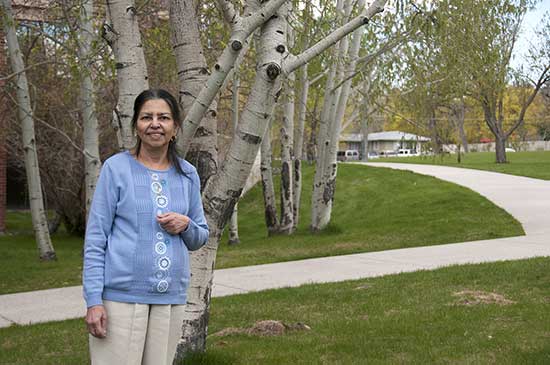
MSUB readies to part with long-time Professor Dr. Khaleel

Retirement party in honor of Dr. Khaleel set for 2 p.m., April 26 in the Beartooth Room in the Student Union Building. Food and refreshments will be served.

Retirement party flyer here

Contacts:

University Relations, 657-2266

MSU BILLINGS NEWS SERVICES — Hanging on the wall in Dr. Tasneem Khaleel’s office are the many awards and accolades marking the dedication and service she has given to Montana State University Billings over the past several decades.

Khaleel is retiring at the end of this semester and her presence and legacy will be with the science department and University for years to come.

Dr. Christine Shearer, dean of the College of Arts and Sciences, said that without the dedication and perseverance of Khaleel, the College and its students would not be where it is today.

“Dr. Khaleel has devoted her professional career to Montana State University Billings in a variety of capacities. She has been a tireless researcher and developer of the internationally-renowned Herbarium, a deeply committed advocate for the sciences and science education, a leader of a complex and diverse unit, and has been a staunch supporter and mentor of female scientists and academic professionals in all disciplines,” Shearer said. “Her tenacity and resilience advanced the College of Arts and Sciences and its programs, including the establishment of the Women’s and Gender Studies Center, which serves the university and the community. Her involvement in Girls-n-Science impacted hundreds of young women planning STEM careers.”

Khaleel has been paving the way for women in STEM since the beginning of her career. She has the honor of being the first woman recipient of a Ph.D from Bangalore University, India, where she graduated with a degree in Botany in 1970.

In 1976, Khaleel would begin her tenure with MSUB, as would her signature project: the establishment, maintenance, and management of the internationally known MSUB Herbarium.

“The Herbarium is one of my professional accomplishments that I am most proud of,” Khaleel said.
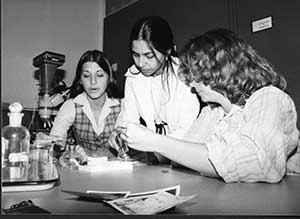
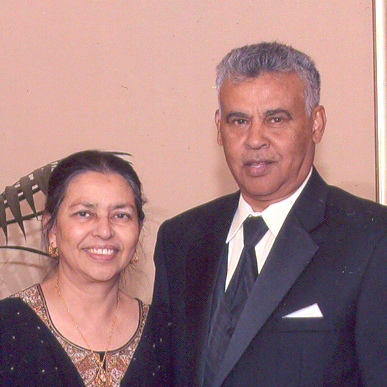
Dr. Tasneem Khaleel, center, assists Heidi Carter, left, and an unknown student during a lab experiment. (Photo circa 1980)

Post-retirement, she will continue being involved in the herbarium, which includes some 16,000 vascular plant specimens, some of which date back to the late 1800s and early 1900s. The Herbarium serves as a tool for basic research in plant systematics, ecology, phytogeography, and evolution.

While Khaleel’s career is highlighted by the 11 years she served as dean for the College of Arts and Sciences, from 2004 to 2014, she has no regrets to returning to the classroom before retirement.

Throughout her time on campus, she moved up from an assistant professor to department chair and says coming full circle made her last two years with students, “the best.”

“I wanted to retire as a faculty member,” Khaleel said. “Having that time as Dean allowed me to hear so many perspectives that my focus shifted when I returned to the classroom. My focus shifted from teaching to learning, to becoming a mentor and being more supportive.

These last two years have been very rewarding.”

This year, Khaleel received the Walter and Charlotte Pippenger Excellence in Innovation Award.

For the last eight years the Tasneem and Shafiq Khaleel Endowment for Scholarships to Science has provided $1,000 awards to two students.

source: http://www.msubillings.edu/ucam/releases.2017/2017apr19Khaleel.htm / University Communications and Marketing / April 19th, 2017 / Montana State Univeristy Billings
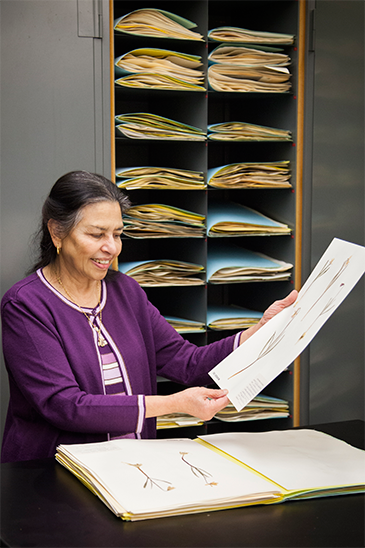
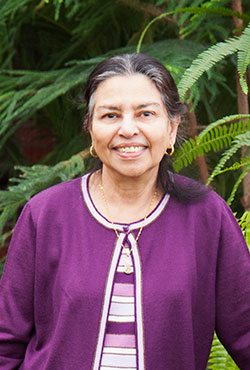
Dr. Tasneem Khaleel – Professor, botany and biology, Billings, MT

Bengaluru, KARNATAKA / Billings (Montana), USA :

Tell me about your education?

My Ph.D is from India, at Bangalore University and I was the first woman to get a Ph.D from that university. I started education at a very young age because I started school when I was about 3. In those days there was not an age limit to start school, when your parents felt you were ready they took you to school. From then on it was up to you. When I started off, there was no kindergarten or pre-school, it was first grade. I sat on the teacher’s lap most of the time because I was so little.

Why did you study botany?

When I was a student in India, botany was a man’s field. They did not really take women in graduate courses for botany because they look at botany as a field science. Since the graduate seats were so limited they didn’t take a whole lot of graduate students. They thought if they took in a girl student, the only option for her would be to teach botany, not go out to the field.  They still looked at women in those days as better at home and in the classroom than in the field. That was a challenge for me. I just wanted to prove to them one could be in the field as well.

When did you know you wanted to become an educator?

Oh I loved teaching right from the beginning. One of the reasons you do your masters in any discipline in India was so that you can teach in college. When I graduated with my masters degree in botany, I was 19 years old at the time and so I went off to find a job. There was one person who was in charge of recruiting and allocating all of the lecturer positions. So I talked to him and said, I need a job but he took one look at me and said, you look like you just came out of high school. He didn’t think I would be impressive enough in front of a classroom and to be able to control a classroom, the kids wouldn’t take me seriously. So I sat there and cried, I wanted the job and he refused to give me something that I had a passion to teach. I didn’t want to keep all the knowledge to myself. So then he said how about if you went and did a Ph.D. and then came back a few years later and by then you will have grown up a bit. I took him up on that option but there was no Ph.D. program at the university so he said he would help start one, which he did. And then we got the university grant fellowship to support me and I did my Ph.D. By then I wasn’t interested in going to him anymore to teach because people were after me to come and teach being I was the first woman with a Ph.D. there.

Tell us about your passion, building the herbarium at MSUB?

The value of the herbarium is based on what plant collections you have in it. When I first came here there were just two wooden cabinets here, with maybe 500 specimens. And they said, this is your herbarium. It was shocking because where I came from there is a whole building dedicated to the herbarium. So I challenged myself to build a herbarium here.  The very first grant I wrote was to buy herbarium cabinets. The next step I did was to call out to local agents here who had small collections to see if they were willing to consolidate to a central location. The US Forest Service, United States Department of Agriculture, Bureau of Land Management and Rocky Mountain College were all very willing to give collections and we incorporated those in our herbarium. Over the years, the herbarium is a part of the national database with about 16,000 specimens.

Of the classes you teach, what is your favorite?

All of my classes are my favorite classes. I love teaching. I teach freshman biology, in fact that’s one of my most favorite classes to be honest. That’s when students are first starting out and I’m introducing them to biology for the first time and to get them excited about that. I really enjoy doing that and it gives me opportunities to mentor students because they’re just starting out. My second most favorite is plant systematics, they are both equally enjoyable classes for me. I just love teaching botany.

source: http://www.msubillings.edu/snapshots/2015-16/Khaleel.htm / msubillings.edu / by Cassie Winter, University Communications and Marketing / October 09th, 2015 / Montana State Univeristy Billings
MCIE Award for Support of Students with Disabilities

Bengaluru, KARNATAKA / Billings (Montana), USA :

Professor Tasneem Khaleel, Ph.D.

Professor Tasneem Khaleel is an extraordinary educator, who has set the standard for excellence among her peers and captured the hearts and impacted the lives of her students through exceptional teaching and caring.

For four decades, Professor Khaleel’s leadership in the Department of Biological and Physical Sciences has been innovative and visionary, influencing generations of science students.

Her absolute passion for supporting her students as well as MSUB’s mission have been recognized with numerous honors and awards. But, this year Dr. Khaleel is the recipient of an award she says she is proudest of—the inaugural Faculty Award for Exceptional Support of Students with Disabilities.

Tasneem’s positive nature and friendly manner are a welcoming presence, explained by her student nominator.

“Dr. Khaleel’s guidance has helped me adapt to college life. She patiently taught me how to use lab equipment and spent extra hours in the lab helping me with my assignments. I have talked to other students with disabilities, and they agree that she goes the extra mile to assure they have a fair chance,” her student nominator said.

“This reward is very meaningful to me,” she said. “These students are special to me. Anybody can teach an ‘A’ student—they just need pointed in the right direction. But to bring a student who has no confidence in their abilities due to his/her disability, who has to compete with the ‘A’ students in class, and to have the courage to come to class everyday. I think this is the biggest reward of teaching.”

She adds that she thinks it takes more courage on the part of the student than that of the instructor.

“The least the instructor can do is be supportive and give these students the self assurance they need to perform. Nothing is beyond their abilities.”

She is an example of someone who does not treat her role simply as a checklist of duties, but a mentor who uses her position to educate, inspire and encourage those around her.

As one colleague notes, “Tasneem is an exemplary educator and leader: She is innovative, she thinks about teaching and learning far beyond her own discipline, and she inspires others to do the same.”

source: http://www.msubillings.edu/faculty/2016/khaleel.htm / Montana State University Billings

The Tasneem and Shafiq Khaleel Endowed Scholarship

Bengaluru, KARNATAKA / Billings (Montana), USA :

Giving back to the community that has supported them for over 30 years was so important to Tasneem and Shafiq Khaleel that they set up an endowed scholarship at MSU Billings in 2006. The Khaleels place a high value on education and where it can take you in life. From the moment Billings, Montana, became their home, they have reached out to the community to share their Indian culture and to offer help to those in need or educate those who would discriminate against them.

Since those early years at MSU Billings, Dr. Tasneem Khaleel has achieved full professor, was chair of the Biological and Physical Sciences department for many years, served as chair of Graduate Studies, and was Dean of the College of Arts and Sciences. Dr. Shafiq Khaleel has built a successful veterinary practice and a rose garden that is the envy of Billings. According to Tasneem, “We both came to this country with an education that has allowed us to be who we are today. If the scholarship allows even one student to achieve his/her goals, it will be one more educated citizen who will have the potential to make a difference.”

The Tasneem and Shafiq Khaleel Endowed Scholarship was designed to help motivated students achieve their goals and ease some of their financial burden in completing their education. The first scholarship was awarded in academic year 2008-2009.

Impact

I am humbled to have been given the opportunity to receive the special scholarship from you both. Dr. Tasneem Khaleel, you have been a role model for me since I had you as my first science class professor at MSUB. I was honored to meet Dr. Shafiq and shake your hand that one afternoon when you picked Dr. Khaleel up from work. The scholarship you both have provided will give me the opportunity to help pay for my college another year at MSUB; it will forever be remembered. Impacting my life to support one more year of school is a stepping stone that will forever support my future endeavors. Again, thank you.” — Sarah G., Biology and Pre-Professional Medicine major

Scholarships

source: http://www.msubillings.academicworks.com / Montana State University University Billings Scholarships

Dr. Samiullah Bags Global Excellence Award

Bengaluru, KARNATAKA :

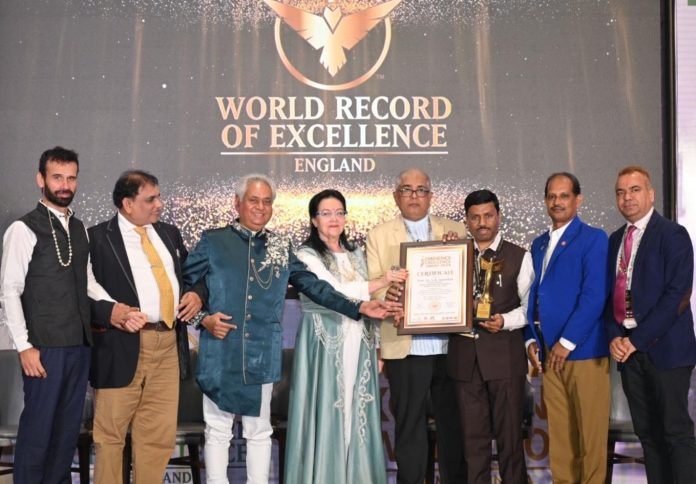
Prof. Dr. A.R. Samiullah (third from R) receives the Eminence Excellence Award

Bengaluru:

Prof. Dr. A.R. Samiullah, Director General, Holistic Medicine Research Foundation, Bengaluru has been honoured for his pioneering contributions in holistic medicine, advancing research and promoting integrative healthcare practices for the well-being of communities.

The World Record of Excellence, a globally recognised organisation from England, successfully hosted the Eminence Excellence Award at the Fairfield by Marriot in Mumbai.

The award ceremony saw a distinguished gathering of individuals from different fields who have made exceptional contributions to the society, innovators and changemakers from across the globe.

Representatives from seven countries attended the event. It was presided over by Prof. Dame Tatyana Maul, Chancellor and Director of Alternative Medicines at Al-Farabi Kazakh National University, Kazakhstan.

source: http://www.radiancenews.com / Radiance News / Home> Awards> Markers of Excellence> Focus / by Radiance News Bureau / December 09th, 2024

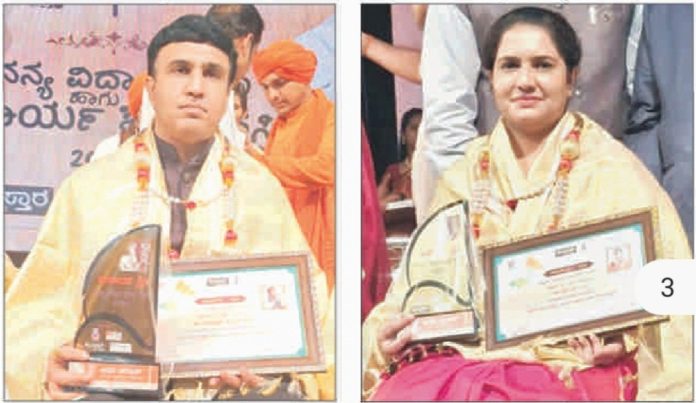
Dr. Farooq Pasha and Dr. Fazilath Uzma, Bag Acharya Shri Award 2024

Bengaluru, KARNATAKA :

Bengaluru:

Under the auspices of Media Study Centre and with the cooperation of Vistara TV and Basaveshwara Parishad, Dr. Mohammed Farooq Pasha, Asst. Prof. Department of Commerce and Management Kengeri and Dr. Fazilath Uzma from Microbiology and Food Technology Department of Bangalore University were awarded with Acharya Shri 2024 in recognition of their services in their respective fields.

Deputy Commissioner of Police (Traffic) Bengaluru South Shiv Prakash Devraju, renowned cardiologist Mahantesh R Chantimath, President of Basava Parishad Uma Devi, former MP Prof. I.G. Sanadi and others were present on the occasion.

Dr. Farooq has authored more 50 books for pre-university and degree courses in Commerce. Dr. Fazilath is a senior research fellow at Bangalore University and has written 11 books on the subject.

source: http://www.radiancenews.com / Radiance News / Home> Pride of the Nation> Awards> Latest News / by Mohammed Atherulla Shariff, (headline edited) , Radiance News Bureau / October 28th, 2024

M.A. Khalid Bags Prestigious Bronze Wolf Award

Bengaluru, KARNATAKA :

Bengaluru :

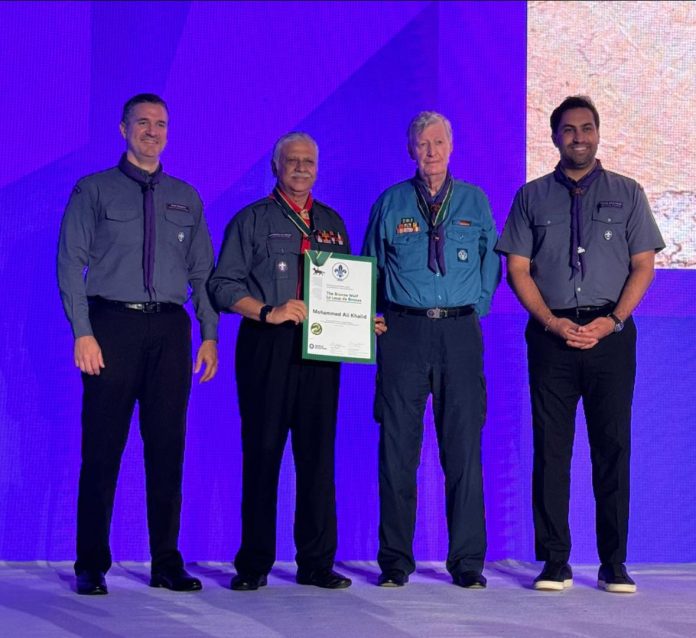
Mr. Mohammed Ali Khalid, a retired Karnataka Administrative Service officer, has been awarded the prestigious Bronze Wolf, the highest international accolade in the field of Scouts and Guides.

This honour, established in 1935, has been conferred upon only 395 individuals worldwide, with Mr. Khalid, Vice-chairperson of the Asia-Pacific Scout Committee, being the fifth Indian recipient.

The Bronze Wolf is awarded for exceptional services to world Scouting, recognising Mr. Khalid’s extraordinary contributions to regional and global task forces aimed at strengthening the scout movement. His dedication to the Scouts and Guides has earned him numerous national and international awards, with the Bronze Wolf being his crowning achievement.

Previous Indian recipients of the award include Smt. Lakshmi Mazumdar (1969), Sardar Lakshman Singh (1986), Ranga Rao (1994), and L.M. Jain (2008). Mr. Khalid’s recognition adds another feather to India’s cap in the global Scouting community.

The award was presented to Mr. Khalid at the World Scout Conference in Cairo, August 23, 2024. His lifelong commitment and professional excellence continue to inspire young people, embodying the values of discipline and service central to the Scout movement.

source: http://www.radiancenews.com / Radiance News / Home> Pride of the Nation> Awards> Focus / by Radiance News Bureau / August 30th, 2024

Preserving Urdu Heritage: A Journey Through Bengaluru’s Muslim Library

Bengaluru, KARNATAKA :

Muslim Library, Bengaluru. Photo by Nabeel Ahmad

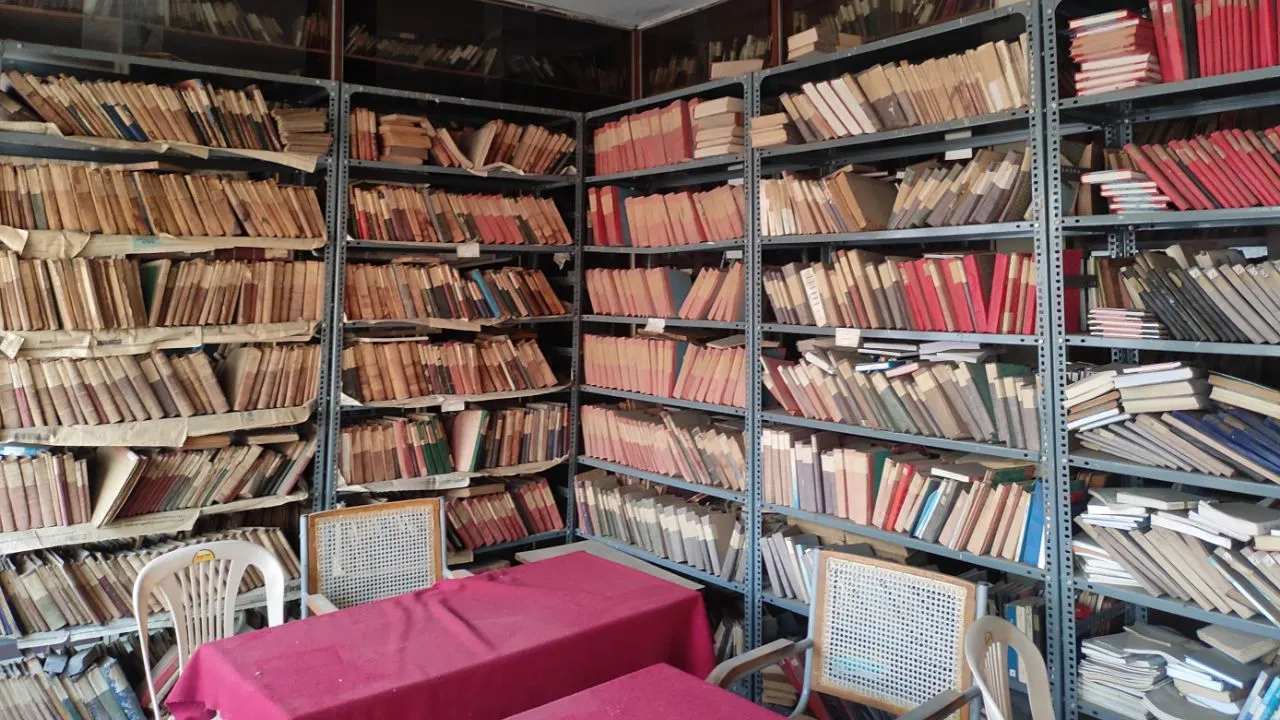
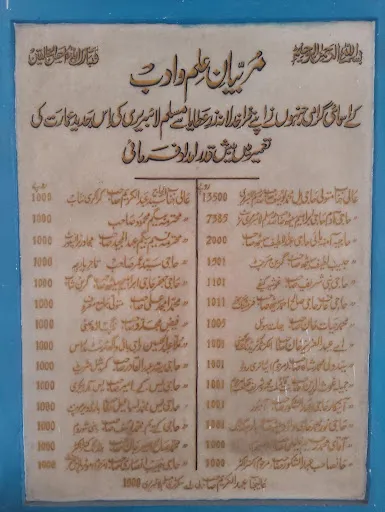
A hundred-year-old Muslim library stands firm in the narrow lanes of Shivajinagar, Bangalore, barely visible from the outside and quite difficult to locate. By asking the locals, one can find a small staircase squeezed between shops leading to the library. You can easily detect the smell of old books on the staircase, and upon entering the library, a sudden sense of calm and peace permeates the bustling market. There have been many highs and lows throughout the library’s long and illustrious history, and in 2014, it celebrated its centenary.

At the beginning of the second decade of the 20th century, a group of intellectuals and benefactors in the city of Bangalore came together to promote the Urdu language and raise educational awareness among Muslims. On 5th May 1912, Bangalore’s Muslim Library was founded. The inaugural conference took place at Maulvi Abdul Ghaffar Sahab’s New Market Road (Char Minar Road) building on 9th May 1912. Five months after its establishment, in 1912, the library moved from the New Market Road building to a shop on Masjid Street, where Madarasa Quwwatul Islam was located.

In January 1929, a significant event took place when Amin-ul Malik Mirza Muhammad Ismail Diwan of the Mysore State presided over a grand meeting at the Globe Theatre (Opera Bazaar) in honour of the poet of the east – Allama Dr Muhammad Iqbal. During this meeting, Allama Iqbal was presented with a letter of appreciation by the library. The library members raised money for Allama Iqbal’s visit and the meeting under the name “Iqbal Fund.” Additionally, the library celebrated its founding anniversary on 9th May 1937, with a grand celebration presided over by Baba Urdu Maulvi Abdul Haq, the Secretary of Anjuman Tarqee Urdu.

The Muslim Library was registered under Registration Act 21-1860 on 3rd May 1935, at the Bangalore office of Joint Stock Companies. To ensure the security and maintenance of the library’s assets, a trust named “Muslim Library Trust, Bangalore” was established and registered under the Indian Registration Act 1-1908 in the office of the Sub-Registrar, Civil Station, Bangalore, on 14th September 1957. Donations were received, and the present building of the library was purchased on 22nd May 1958, although there were concerns about the institution’s stability.

Throughout its 100-year history, many notable and famous personalities from the country and the state have visited the library and expressed their good wishes.

These include Syed Sulaiman Nadvi, Allama Dr Sir Muhammad Iqbal, Maulana Shaukat Ali (Ali Brothers), Maulana Zafar Ali Khan (Director Zamindar-Lahore), Baba Urdu Maulvi Abdul Haq, Professor Abdul Wahab Bukhari, Sagar Nizami, Hazrat Josh Malihabadi, Allama Seemab Akbarabadi, Mirza Yas Yagana Chingizi, Ejaz Siddiqui, Hazrat Jigar Moradabadi, Hazrat Hafeez Jalandhri, Hazrat Amjad Hyderabadi, Maulana Mufti Muhammad Ashraf Ali, and Professor B Sheikh Ali, among others.

Photo by Nabeel Ahmad

The two-storey library houses more than 30,000 books in various languages, though it has a treasured and rare manuscript collection in Urdu and Persian, some of which are even a century old. The library houses rare and valuable books on various subjects, ancient magazines, 1980s newspapers, and manuscripts from the Haidari era. The total number of manuscripts is 29. Some important manuscripts include: Maulvi Abdul Haq bin Saifuddin’s “Completion of Faith and Taqwaity of Faith”, “Al-Tazirat” (Dakhini Urdu), compiled by Hafiz Ahmad bin Muhammad Maghrib in 1235, “Deewan Naziri” (Fari Kalam) by Nazir Neshapuri, “Kaliat Kamal” (Urdu) by Kamal Shah Peer (Dakhini Urdu). Additionally, selected letters from Shaheed Tipu Sultan, written to various friends, are available here. The library also holds many rare books published by the famous publisher Munshi Kishore of his time. Notable among them is “Ajab al-Makhluqat,” published in 1889, and ancient and rare books on medicine such as “Talb Akbari,” Volume I, published in 1895, and the translation of “Makhzan-e-Adawiya” written by Hakeem Muhammad Noor Kareem in two volumes. Moinuddin Farooqi’s books on Islamic medicine are also available in the library.

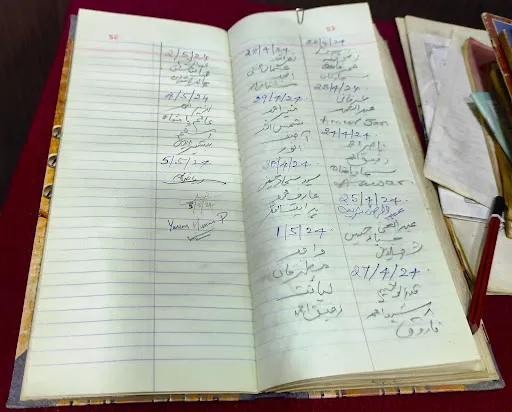
A thick, long register at the entrance with visitors’ signatures in Urdu is a rare sight, but it simply depicts the library’s love of Urdu. Photo by Nabeel Ahmad

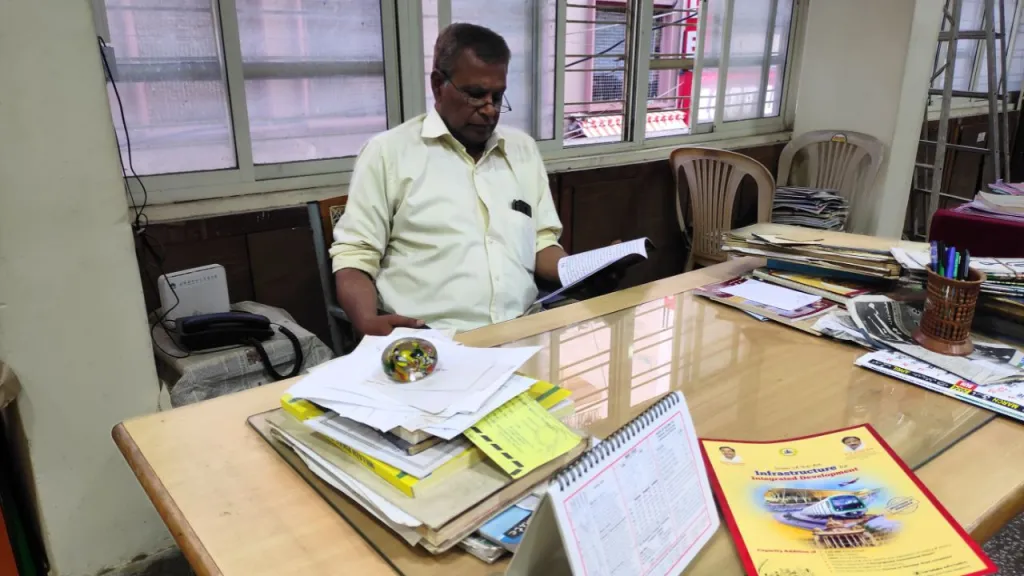
The first person to greet visitors at the library is Muhammad Altaf, the caretaker who has been looking after the library for the past 24 years. Altaf says, “Urdu is the sweetest of all languages, though the new generation is drifting away from it. There was a time when the library used to be filled with readers. However, most of those readers are no longer alive. Only a few PhD scholars now visit the library for their work.”

Photo by Nabeel Ahmad

A place that was previously bustling with activity from city dwellers who devoured Urdu newspapers, magazines, and novels is now desolate and silent. Amidst the haunting stillness, the sound of pages rustling from bygone eras is nearly audible. Altaf bemoaned the slow but steady decline of Urdu readers, citing youth as an example of an audience that values instant gratification more than the more reflective practice of reading, especially Urdu.

Altaf emphasised that parents should encourage their children to learn to read and write Urdu in this era. The new generation needs to pay heed to Urdu; otherwise, the language will gradually go extinct.

Altaf added, “The library is open to the public and provides a lifetime membership for Rs. 1,500. Members can issue the books; however, the older and rare collection is aesthetically stacked on the shelf. Over the years, Urdu lovers in the city have considered this place a haven for learning.”

The Muslim Library is one of the repositories of India’s linguistic and cultural wealth, holding the key to Urdu’s revival. By digitising their precious collections, these forgotten sanctuaries can be transformed into accessible digital archives. Coupled with restoration efforts, proper funding, and community engagement through reading clubs, literary events, and language courses, these libraries can become vibrant hubs of learning and appreciation. Strategic partnerships with the government, corporations, and the public are essential to ensuring their preservation and expansion. With a concerted effort, these libraries can ignite a renaissance of Urdu, reasserting its place as the soul of India’s literary heritage.

source: http://www.thecognate.com / The Cognate / Home> Culture / by Nabeel Ahmad / August 01st, 2024

Former IGP, Poet Khaleel Mamoon, No More

Bengaluru ,KARNATAKA :

Bengaluru :

Khaleel ur Rehman, a noted Urdu poet and former Inspector General of Police, Karnataka breathed his last on Friday after a cardiac arrest.

Born here in 1948 and better known by his pen name Mamoon, he won the 2011 Sahitya Academi Award for his poetry collection Aafaaq ki Taraf. In 2004, Mamoon became the first Urdu writer to win the Karnataka Rajyotsava Prashasti.

After working as a staff artist for All India Radio, Delhi and later working as an Assistant editor of Daily Salar, Mamoon joined the Indian Police Service in 1977 and eventually promoted to IPS and retired as IGP in 2008.

Mamoon has published a number of works. Lissan Falsafe Ke Aine Me on the philosophy of language. Unnees Lillahi Nazmen is a translation of poems written in praise of Prophet Muhammad ﷺ by Scherzade Rikhye. Nishaat-e-Gham is a collections of Ghazals. Kannada Adab is a collection of translations of Kannada language poetry and fiction. His poems are published in ‘La Ilah’ and ‘Andherey Ujaley Mein’ – two voluminous poetry collections.

His poetry stands out for its animated use of everyday images, sometimes shocking metaphors and use of wit that lay bare everyday experiences. His poetic sensibilities are steeped into the sufi-mystical traditions of Indo-Persianate culture. He experimented in the genres of both classical ghazal and azad nazam in a collection Saanson ke paar. He was most prolific in the genre of nazm which he thought suited to articulate the changing experiences of contemporary times – Jism-o-Jaan se doorBanbas ka JhootSaraswati ke Kinare.

He served as the President of Karnataka Urdu Academy during 2008-10. During his tenure, he also edited the literary organ of the Karnataka Urdu Academy Azkaar.

source: http://www.radiancenews.com / Radiance News / Home> Focus / by Mohammed Atherulla Shariff / June 22nd, 2024

Muslim Runners-up in Parliamentary Elections 2024

INDIA :

Around 20 Muslim candidates were runners-up in the 18th Lok Sabha elections. Of them 7 lost to other Muslim candidates and the rest to other candidates.

Two of these were knocked out by Muslim candidates which made a cakewalk for BJP. In Amroha, UP, Danish Ali of INC secured 447836 votes against BJP’s Kanwar Singh Tanwar who got 476506, just 29670 more votes. Whereas BSP’s Mujahid Husain secured 164099 votes and finished third. Another four Muslims were also in the fray as independent candidates who together poled only 4503 votes.

Hafiz Rashid Ahmed Choudhry of INC from Karimganj, Assam lost to BJP’s Kripanath Mallh by just 18360 votes. Whereas the third in row was a Muslim from United Front, Shahbul Islam Choudhry who secured no less than 29205 votes. There were another 10 Muslims in the fray as independent candidates who secured 20162 votes combined. This invites the apolitical Muslim influential individuals’ and organizations’ role in making one strong Muslim candidate winnability bleak.

Shahnawaz of Rashtriya Janata Dal, in Araria, Bihar lost to BJP candidate by 20094 votes. There were five Muslim independent candidates totally scoring 39992 votes.

Mohammad Badruddin Ajmal, AUDF, in Dhubri Assam lost by 1012476 votes. He secured 459409 against the winning candidate Rakibul Hasan’s 14,71,885 votes. There were other eight Muslim candidates from seven different outfits and one independent. All of them put together pooled 486319 votes. Zabed Islam of Asom Gana Parishad who stood third alone secured 438594 votes.

The former Chief Minister of Jammu and Kashmir Mehbooba Mufti lost to National Conference candidate Mian Altaf in Anantnag-Rajouri by a margin of 2,81,794. Another 18 candidates were there to fish in the troubled waters.

Omar Abdulla, National Conference, Baramula lost to Engineer Rasheed, an independent who got 268339, lost by 204142. There were another 19 candidates in the fray.

Waheed ur Rehman Para, Peoples Democratic Party, Srinagar finished second 168450, lost by 188416 votes to Aga Syed Ruhulla of National Conference. Another 19 candidates tried their luck.

Mujahid Alam, Janata Dal (United), Kishanganj, Bihar, ranked second position against Tariq Anwar of INC who secured 343158 votes, lost by 59692 votes. There were another five Muslim candidates who together could not score beyond 45000 votes.

Md Ali Ashraf Fatmi, Rashtriya Janata Dal, Madhubani, Bihar, 2nd position. Lost to BJP. Secured 41483 votes and lost by a margin of 151945 (other Muslim candidates – Md. Waquar Siddiqi of AIMM and Sarfaraz Alam of Akhil Bhartiiya Parivar Party).

Hena Shahab was the only Muslim candidate among the 16 in the fray in Siwan, Bihar. An independent candidate, she scored an impressive figure of 296351 votes but lost to JD(U)’s Vijaylakshmi Devi by 92857 votes.

Mansoor Ali Khan, Indian National Congress, Bangaluru Central, Karnataka finished second, lost to BJP, secured 626208 votes still lost by 32707 votes. It was a straight fight and laser finish despite there were around 21 candidates who together could not cross 45000. In his first attempt, Mansoor has made a tremendous dent in the citadel of three-time BJP MP, Mohan.

AM Ariff of CPI(M) from Alappuzah, Kerala gave a tough fight to one of the general secretaries of Congress, KC Venugopal and secured 341047 votes only to lose by a margin of 63513.

Elamaram Kareem, CPI(M), Kozhikode, Kerala finished second against INC, got 374245 but lost by 146176 votes.

  1. Vaseef and KS Hamza of CPI(M), from Malappuram and Ponnani in Kerala respectively lost to IUML candidates.

Mohammed Faizal PP from Nationalist Congress Party – Sharadchandra Pawar in Lakshadweep fought against Hamdulla Sayeed of INC and lost by 2647 votes.

Imtiaz Jaleel Syed, All India Majlis-E-Ittehadul Muslimeen, Aurangabad, Maharashtra, lost to Shiv Sena, by 134650 votes.

Mohammed Mubarak from All India Anna Dravida Munnetra Kazhagam, Dindugal, Tamil Nadu stood second against CPI(M) candidate.

Md Salim, CPI(M), Murshidabad West Bengal, lost to Abu Taher Khan of TMC by 164215.

source: http://www.radiancenews.com / Radiance News / Home> Latest News> Report / by Mohammed Atherulla Shariff (headline edited) / June 10th, 2024