Tag Archives: Muslims of Bihar

Fasihuddin Balkhi: the forgotten historian of Bihar

Patna, BIHAR :

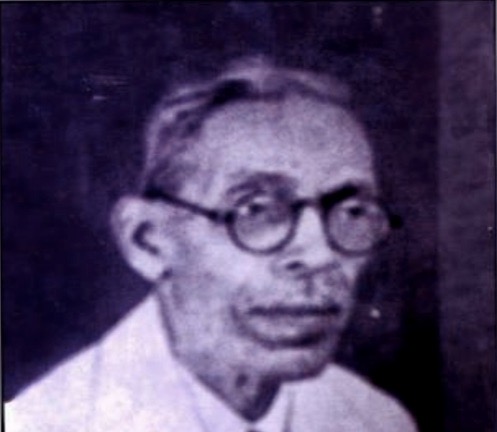
Fasihuddin Balkhi was born in 1885 in Bakshi Mohalla of Patna city. | Picture: Rekhta

Born in Patna, Bihar during the British era, Fasihuddin Balkhi made a tremendous contribution to history-writing in Urdu. Despite this feat, he remains largely unknown to this day. 

Many historians have written about the history of Bihar. After taking a cursory overview of the works written by different scholars, one finds that history writing on Bihar, especially in the Urdu language has not yet received due attention in academic circles. Among many others who have written on Bihar and its history, the notable ones include Fasihuddin Balkhi (1885-1962); Taqi Rahim (1921-99); and Shad Azimabadi (1901-1978).

This piece is an attempt to highlight the life and works of Fasihuddin Balkhi. His work has received scant attention from those working in the Bihar region. His contribution remains largely under-acknowledged and under-explored in the existing literature of the Bihar province.   

Balkhi was born in 1885, the same year that the Indian National Congress (INC) was founded, in Bakshi Mohalla of Patna city. After receiving his early education at home, he went to Calcutta where he completed his higher education. He became a teacher and initially taught at Poona Military School and later in Calcutta Fort William. Later on, he passed the law examination and was employed in the Bihar government. In 1914, he opted for military service which enabled him to visit different parts of the world like Palestine, Egypt, Iraq and Lebanon. 

As India’s independence movement was drawing more followers, Balkhi too joined the movement. In 1921, he became part of the non-cooperation movement. After refusing to accept the post of deputy in Jaunpur, he had to face many hardships. Between 1926-27 he worked as the revenue officer and magistrate in Sarai Kela state.

After retirement, he left his ancestral home and lived the rest of his life till 1962 in his new house in Guzri Bazar Patna city (just behind the present Mohammedan Anglo Arabic school). In the last two years of his life, he worked at Patna University in the department of manuscripts. His hardworking and organizational abilities infused a new spirit in the department. 

Although Balkhi was known as a good teacher and a successful officer, he was primarily a historian and researcher, as he stepped into some areas of research that were hitherto almost invisible. Even the noted Bihar-based historian, Syed Hasan Askari (1901-1990) has acknowledged Balkhi’s scholarly and literary abilities. Unfortunately, most of the works of Balkhi could not reach their desired audience. Some of his works remain unpublished even now.  

Balkhi’s first book Tarikh-e-Magadh was published by Anjuman-e-Taraqqi-Urdu-Hind (Delhi) in 1944. The second book, Tazkira, was published as Tazkira-e-Niswane Hind (1956).

According to one source, he wrote his first work at the age of 25 in 1910 in Urdu on astrology, a rare case in Urdu, titled as Ilmi-e-Najoom. This work is not easily available or accessible to the readers. A pamphlet on the poetry of Shad Azimabadi titled as Inshad-e-Shad (Qaumi Press Bankipore, Patna, 1939) is his signature piece. The pamphlet demonstrates his power of critique. 

Balkhi’s work only gained wider attention after his death. Well-known Urdu publisher Nadeem Bhatti published one of Balkhi’s works Tazkira-e-Hindu Shora-e-Bihar (Poets in Bihar/Urdu) in 1962. Some of Balkhi’s unpublished works such as Dastur-e-Sukhan, a collection of his works on historical places of Bihar province, Aasar-e-Balkhiya, are collected in the book. Several of his scholarly, literary and historical articles are also available in different magazines and journals. A well-researched article on Balkhi’s personality and research guidance was written by Qayyum Khazar for ‘All India Radio Patna.’ Khazar states that “Fasihuddin Balkhi was a great historian and researcher as well as a good poet.”  

Balkhi’s work as historian
Tarikh-e-Magadh is the first book that earned Balkhi fame as a historian. This seminal work in Urdu was published in 1944 by Anjuman Taraqqi Urdu (Delhi), which was then under the supervision of Maulvi Abdul Haq (Baab-e-Urdu). The book chronicles the history of Bihar province from the earliest times (642 BC) up to the second World War in 1943. The book contains as many as twenty chapters. The book is considered one of the most reliable accounts of the history of Bihar in the Urdu language. The work was constructed from authentic historical sources. 

Patna-based historian Imtiaz Ahmad, commenting on the significance of Tarikh-e-Magadh, has said, “It is written authentically and professionally, with proper references from sources (Persian texts).” 

Balkhi also wrote another significant work entitled Wahabi Movement, posthumously published in 1983. This book along with Qeyamuddin Ahmad’s seminal work The Wahhabi Movement in India (1966, reprinted 1994) are the most cited works on the history and role of the Wahhabi movement in India.

Balki’s slim book, despite being confined to the Bihar region, is distinctive in many new ways. The sources he cited are primary and useful, such as letters of Syed Ahmad Shah, Calcutta Review, Indian Muslim by Wilson Hunter, Tazkira-e Sadiqa and biographies of Syed Ismail and Syed Ahmad, the founding fathers of the movement in India.

Emphasizing the legacy left behind by the Wahhabi movement, Balkhi writes, “It is highly interesting to note that the use of three great weapons, namely, non-cooperation, passive resistance and establishing of parallel Govt. which the Congress leaders adopted in their fight against the bureaucracy, was originally advocated and preached by the Wahhabis in 1854.” (p. 16).

Apart from these historical accounts, Balkhi wrote another path-breaking book Tazkirah Niswan-e-Hind (1956) in which he documents the short biographical accounts of the notable women of India. He starts his book with Raziya Sultan of the early 13th century and covers the women from various fields across India such as Askari Begum ‘Hijab’ (Lucknow), Chander Mukhi Bose (Bengal), Lal Ded (Kashmir), Raziya Sajjad Zahir (Rajasthan/Bombay), Bibi ‘Tahira’ (Bihar), etc. This book serves as an important source of information on Indian women and their role in different times of history. 

Balkhi has also written about the lesser-known aspects of Bihar. This can be gauged from his book Patna Ke Katbe in Urdu, published by Khuda Bakhsh Library, Patna in 1993. This book is a unique study of inscriptions found on graves, mosques, and tombs located in Patna. 

Balkhi has made a tremendous contribution to writing the history of Bihar in Urdu. His work serves as a guiding light on the lesser known and under-explored aspects of Bihar. His work needs to be revisited and re-assessed to throw light on many ignored dimensions of Bihar history.

Mohd Hussain Ganie is a PhD student at Aligarh Muslim University (AMU). He tweets at  @GanaiHussain1

source: http://www.twocircles.net / TwoCircles.net / Home> Art-Culture / by Mohd Hussain Ganie, TwoCircles.net / August 12th, 2022
Bihar Collective to Release Booklet “Remembering Muslim Makers of Modern Bihar” in Patna on Feb 23

Patna, BIHAR :

Patna :

In an era of unprecedented majoritarian ascendance and anti-Muslim hatred, Bihar Collective, a platform of intellectuals and activists, has brought out a booklet highlighting the contribution of eminent Muslims in making the modern Bihar in the last 200 years.

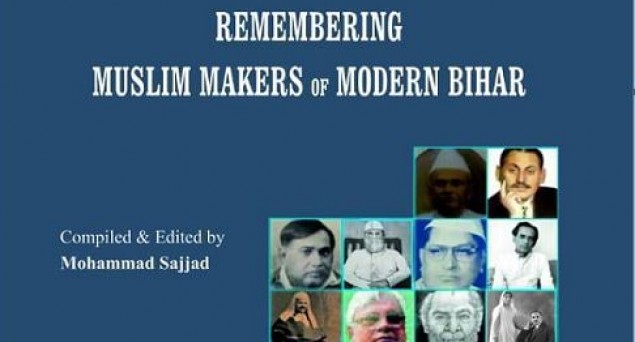
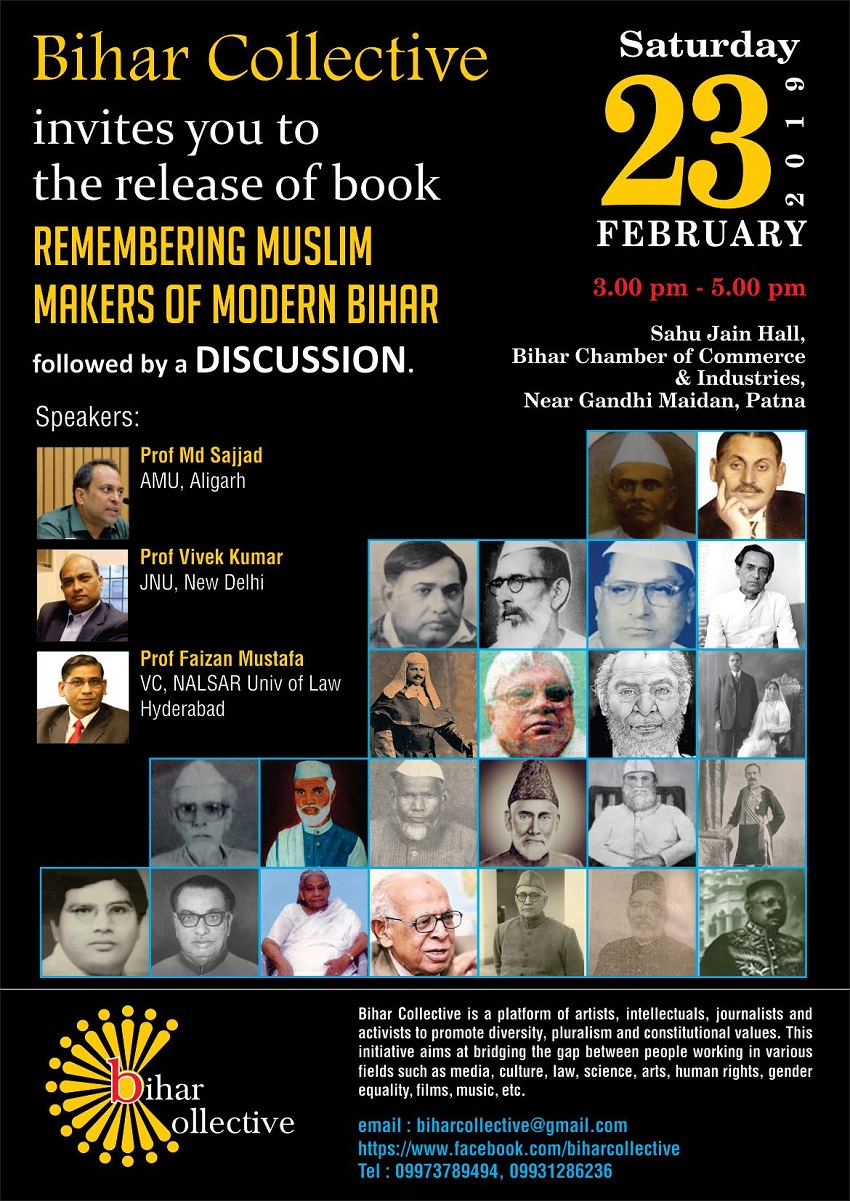
The booklet titled Remembering Muslim Makers of Modern Bihar has been compiled and edited by renowned academician and writer Prof. Mohammad Sajjad on the initiative of Bihar Collective.

The booklet will be released at an event in Patna on Saturday (February 23).

On the occasion, a discussion will also be held with Prof Faizan Mustafa, Vice Chancellor, NALSAR University of Law, Hyderabad; Prof Vivek Kumar, JNU, New Delhi; and Prof Mohammad Sajjad, AMU, Aligarh as panelists.

A Brief about Booklet:


Pre-empting a reasonable question about the title of the booklet, Prof Sajjad, who has compiled and edited it, writes in its preface: “A simple and obvious question that may readily arise is: why only Muslim makers of modern Bihar? Why not others too? This is indeed a valid and pertinent question.”

Responding to the question, he further says: “Candidly put, this is because of an unprecedentedly menacing rise of majoritarianism, bigotry, and anti-Muslim hatred, with open support of the state.

The Muslim identities are ominously threatened. There are also unabated attempts to dilute (or even take away) whatever little accomplishments have been made by the forces of social justice and secularism.

Only the Muslim segment however is threatened by the jingoist, exclusionary, violent nationalists, to be thrown out to another country. As if the other country is a dustbin, owned by these bigots, into which they can throw away everything they dislike! As if only the religious majority constitutes the nation! Notably, these jingoists had aligned with the British and had stayed away from the national movement.”

“Muslim contributions in the nation-making (and in the freedom movement) remain under-acknowledged, forgotten or even omitted. Erasure of their histories and memories seem to have become even more pronounced and vociferous, now, than ever before…The Bihar Collective therefore decided to compile a short profile of these inspiring role models, history-makers…This is small and humble step towards retrieving and restoring the nationalist provincial pantheons bearing Muslim identities,” says Prof Sajjad.

He, however, admits that the list of Muslim heroes of Bihar given in the booklet is not exhaustive as “…many have been left out essentially because of lack of documentations and researches. Not many have left their own accounts/memoirs; the available memoirs/accounts have not written much about all the personalities. In many cases, even otherwise “resourceful” descendants and/or associates of the history-makers have not been able to provide us with adequate (and credible/verifiable) details.”

Prof Sajjad hopes this small exercise may lead to some big academic work on these history-makers. “In short, this kind of venture may be said to be an ongoing exercise. This effort may hope to open up (and obtain) more details about such history-makers and would also get to know about many more of such peoples and processes, we failed to include here in this hastily prepared tiny volume, amidst constraints of resources and time.”

Names of Muslim Makers of Modern Bihar Mentioned in Booklet:
1. Syed Imdad Ali (d.1886]
2. Khuda Bakhsh (1842-1908)
3. Syed Amir Husain (1843-1910)
4. Imdad Imam Asar (1849-1934)
5. Shah Badruddin(1852-??)
6. Syed Ali Bilgrami (1853-1911)
7. Rasheed-un-Nesa (1855-1926)
8. Syed Noorul Huda (1855-1939)
9. Justice Syed Sharfuddin (1856-1921)
10. Shaikh Gulab (1857-1920)
11. Sarfaraz Husain Khan (1860-1931)
12. Maulana Mazharul Haque (1866-1930)
13. Batakh Miyan Ansari (1867-1957)
14. Sir Fakhruddin (1868-1933)
15. Syed Ali Imam (1869-1932)
16. Syed Hasan Imam (1871-1933)
17. Salahuddin Khuda Bakhsh (1875-1931)
18. Shafi Daudi(1875-1949)
19. Khwaja Md. Noor(1875-??)
20. Abdul Wadood (d.1955)
21. Syed Abul Hasan (1878-1960)
22. Sir Sultan Ahmad (1880-1963)
23. Maulana Sajjad (1880-1940)
24. Pir Mohammad Munis (1882-1949)
25. Abdul Bari (1882-1947)
26. Syed Sulaiman Nadvi (1884-1953)
27. Mohammad Yunus (1884-1952)
28. Shah Md. Zubair (1884-1930)
29. Syed Abdul Aziz (1885-1948)
30. Zubaida Begum Daudi (1886-1972)
31. Syed Tafazzul Karim (1886-1964)
32. Mr. Mohammad Shafi (1888-1955)
33. Qazi Ahmad Husain (1889-1961)
34. Dr. Syed Mahmud (1889-1971)
35. Ali Husain Aasim Bihari (1890-1953)
36. Shah Mohammad Umair (1894-1978)
37. Abdul Ahad Mohammad Noor (1894-1975)
38. Hakeem Md. Kabiruddin (1894-1976)
39. Maulana Usman Ghani (1896-1977)
40. Manzoor Ahsan Aijazi (1897-1969)
41. Shah Md Ozair Muni’mi (1899-1961)
42. Maghfur Aijazi (1900-1966)
43. Syed Jafar Imam (1900-1965)
44. Syed Badruddin Ahmad (1901-1983)
45. Mohammad Tahir (1903-???)
46. Syed Jafar Imam (1903-1979)
47. Syed Fida Husain (1904-80)
48. Abdul Qaiyum Ansari (1905-1974)
49. Wajihuddin Minhaji (1907-1984)
50. Syed Md. Aiyub (1910-1964)
51. Abdul Sami Nadvi (1913-????)
52. Abul Hayat Chand (1914-1958)
53. Ahad Fatmi(1915-1980)
54. Zawwar Husain (1916-80)
55. Shafiqullah Ansari (1917-1980)
56. Shah Mushtaq Ahmad (1917-2002)
57. Abdul Ghafoor (1918-2004)
58. Col. Mahboob Ahmad (1920-1992)
59. Taqi Raheem (1920-1999)
60. Zahra Daudi(1923-2003)
61. Shakoor Ahmad (1924-1981)
62. Syed Hasan (1924-2016)
63. Yunus Lohia (1925-2019)
64. Ghulam Sarwar (1926-2004)
65. Syed Shahabuddin (1935-2017)

A Brief about Author:


Prof Mohammad Sajjad teaches late-colonial and post-independent Indian history at the Centre for Advanced Study in History, Aligarh Muslim University. He has written several books including Muslim Politics in Bihar: Changing Contours; and Contesting Colonialism and Separatism: Muslims of Muzaffarpur since 1857.

His articles are published in reputed academic journals from Routledge, Sage, EPW etc. and also in anthologies from the Oxford University Press and Cambridge University Press.

Bihar Collective:
It is a platform of artists, intellectuals, journalists and activists to promote diversity, pluralism and constitutional values. It aims at bridging the gap between people working in various fields such as media, culture, law, science, arts, human rights, gender equality, films, music, etc.
Email: biharcollective@gmail.com
Facebook: https://www.facebook.com/biharcollective

source: http://www.indiatomorrow.net / India Tomorrow / Home> Society / by India Tomorrow / February 21st, 2019

Outstanding Students Honoured with Medals for Academic Excellence in Patna

Patna, BIHAR :

Patna :

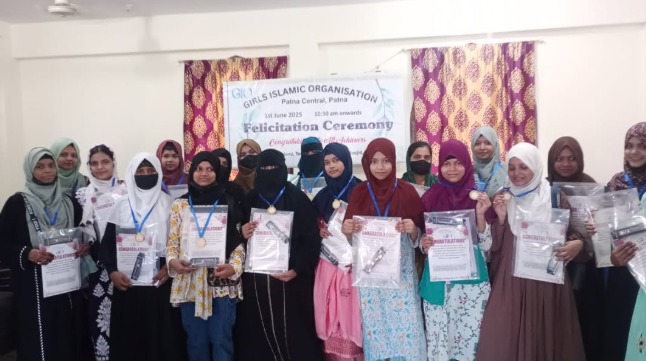
Girls Islamic Organisation (GIO), Sultan Ganj Unit, Patna, organised a felicitation ceremony on Sunday at Markaz-e-Islami, Tekari Road, to honour over 100 meritorious students who secured excellent marks in Class 10 and 12 examinations. The achievers were awarded medals and congratulatory cards in recognition of their academic accomplishments. The event also included guidance sessions to support their future educational journeys.

The chief guest, Mohammad Shehzad from Allied IAS, delivered a comprehensive guidance talk under the theme Care and Guidance, sharing professional and academic opportunities from an Islamic perspective along with practical insights.

Motivational speaker Shazia Ahsan emphasised the value of hard work, self-confidence, and positive thinking in her inspiring speech aimed at empowering the students.

Dr. Zubiesh Firdous, Secretary Women’s Wing Jamaat-e-Islami Hind Bihar, delivered a thought-provoking address on the topic Balancing Deen and Dunya (religion and worldly life). She stressed the need for a harmonious blend of religious and secular education.

Umme Kulsoom, President of GIO Sultan Ganj Unit, introduced the organisation and highlighted its mission of empowering girls and women through education and awareness.

The event was attended by teachers, students, and parents who appreciated the efforts taken by the organisation.

The program began with a spiritual reminder from the Qur’an by Anjum Mukhtar. A soul-stirring na’at (poem in praise of the Prophet ﷺ) was beautifully rendered by Musheerah Fatima, filling the atmosphere with a spiritual essence. Saima Parveen presented an emotionally resonant poem, which was well received by the audience.

The event concluded with closing remarks and a vote of thanks delivered by Shagufta Bano, City Secretary of Patna .

source: http://www.radiancenews.com / Radiance News / Home> Education> Report / by Radiance News Bureau / June 01st, 2025

Book Review: Reclaiming Syncretic Histories – A Journey Through Bihar’s Sufi Landscape

BIHAR :

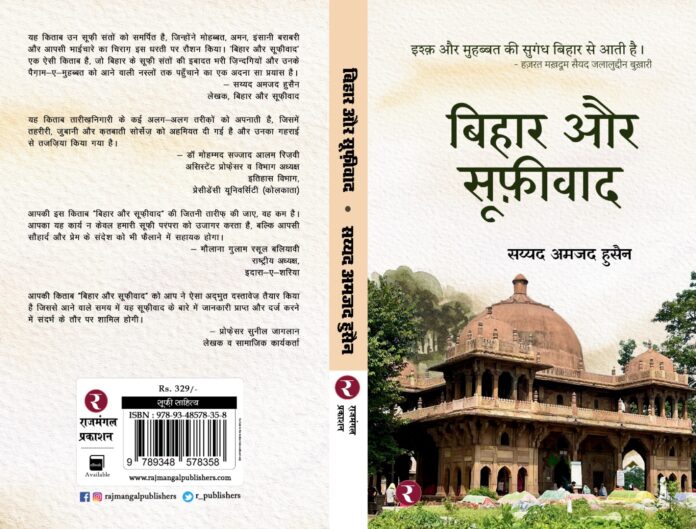
In a time marked by growing communal tensions and polarizing narratives, young author and scholar Syed Amjad Hussain’s book ‘Bihar Aur Sufivad’ arrives not only as a work of history but also as a much-needed spiritual intervention. Spanning more than 300 pages, the book immerses the reader in Bihar’s rich and pluralistic Sufi heritage, offering a profound counter-narrative rooted in peace, love and human dignity.

Bihar is generally remembered for its political agitations and socio-economic challenges, but beneath the surface lies an older, deeper history – a rich tapestry of sufi saints who arrived as early as the 12th century. Through systematic research and a respectful tone, Hussain revives this forgotten spiritual geography.

Beginning with the arrival of Hazrat Peer Shah Mushk Nafah, Hazrat Momin Arif Ansari Yemeni and Hazrat Imam Muhammad Taj Faqih Zubairi Hashmi, followed by the transformative presence of Hazrat Qazi Syed Shahabuddin Suhrawardi Peer Jagjot Kashgari in Fatuha (Patna), the book presents a chronologically overlapping map of Sufi presence in Bihar. These are not mere biographies; they are glimpses into a world where divine love was not only preached but lived, practiced and internalised.

Thematic Depth, Scholarly Rigor

Divided into well-organised sections, ‘Bihar Aur Sufivad’ details the lives of 20 influential sufi saints. Each chapter offers insights into their teachings (taalim), spiritual practices, miracles (karamaat) and most importantly, their social engagements. The saints in Hussain’s work are not passive mystics withdrawn from the world; they are reformers, healers, poets and bridges between communities.

The book also discusses the various sufi orders (silsilas) present in Bihar – Firdausi, Shattari, Husami, Warsi, Chishti, Qadri, Suhrawardi and Naqshbandi – illustrating how each infused its own spiritual philosophy into the soil of Bihar. Of special mention is Hussain’s inclusion of female figures such as Hazrat Bibi Kamal of Kako Sharif, a rare and valuable recognition of women’s contributions to Bihar’s mystic culture.

Language, Tone and Accessibility

Hussain’s writing flows with a gentle rhythm that recalls classical Urdu and Hindi scholarship yet remains accessible to contemporary readers. The prose is rich and poetic without sacrificing academic precision. His background as a researcher is evident in the meticulous citation of works in Persian, Urdu, Arabic, Hindi and English, many of which are obscure or little known to the general public.

This is not a dry academic treatise; it is a living, breathing narrative of spiritual heritage, crafted to engage scholars, young seekers and general readers alike.

Relevance in Today’s India

What makes the book particularly significant is its timing. At a moment when histories are being erased or rewritten to suit political agendas, this book affirms that India’s collective spiritual heritage must not be forgotten. The sufi saints of Bihar transcended caste, creed and religion. Their khanqahs were open to people of all faiths. They preached service, not supremacy.

In this age of ideological divisions, Hussain’s work reminds the bridges that once united communities. It is a call to return – not to nostalgia, but to the ethics of inclusiveness, humility and compassion that the sufis embodied.

‘Bihar Aur Sufivad’ is more than a book; it is a spiritual journey and a historical reclamation. In reviving the voices of Bihar’s forgotten sufi saints, Hussain does more than pay tribute; he builds a bridge for contemporary readers to reconnect with a heritage that offers solutions to some of our most pressing problems.

This book deserves a place not only on library shelves but also in classrooms, living rooms and community discussions. It is an invitation to think, to remember and to heal.

Hussain has not merely authored a book – he has attempted to revive a spiritual legacy and present it afresh to the modern world. This work warrants a place of honour in the study of Indian Islam, Sufism and regional spiritual histories. It is hoped that it will inspire further research, dialogue and, most importantly, personal transformation.

It is strongly recommended for scholars, spiritual seekers and anyone interested in the rich diversity of India’s syncretic traditions.

Book Name: Bihar Aur Sufivad / Author: Syed Amjad Hussain / Publisher: Rajmangal Prakashan / Published: April 27, 2025 / Language: Hindi / ISBN: 978-9348578358 / Pages: 308 / Price: Rs 329

(Dr. Shujaat Ali Quadri is an Indian journalist, deputy director of the Indo-Islamic Heritage Center and the chairman of the Muslim Students Organisation of India)

source: http://www.twocircles.net / TwoCircles.net / Home> Arts & Culture> Book Review / by Dr Shujaat Ali Quadri / May 07th, 2025

Come to Soghra Waqf Estate to Know How It Helps the Needy

Bihar Sharif (Nalanda District) Patna, BIHAR :

Patna:

Muqita, Fatima and Shakila are a few of the over hundred persons who get monthly pension from the Soghra Waqf Estate of Bihar Sharif in Bihar. They are quite thankful for the Waqf Estate but they are not aware about the controversial Waqf (Amendment) Act.

This is just one of the hundreds of Waqf Estates which is providing help to the needy in one or the other way. Apart from the monthly pension, it also provides financial help for medical treatment to the needy.

BBC Hindi recently made a video report about the financial help being provided by the Soghra Waqf Estate.

According to this report Muqita Khatoon is about to turn eighty. Sadly, mother of four sons Muqita lives alone. Twenty-five years back her husband Bashir passed away. Muqita has nothing but the memory of her husband and a few utensils in her rented house. She pays the rent of this single room from the pension of Rs. 600 she gets from Soghra Waqf Estate. She says that many a time she is forced to sleep without any food.

Sogra Waqf Estate was established in the year 1896. Bibi Sogra, an enlightened lady, donated land for Waqf in sixteen districts, including Nalanda, Muzaffarpur, Darbhanga and Nawadah. It is reported that Soghra Waqf Estate consists of around twenty-one thousand acres of land. It is said that Bibi Soghra set priority for women as beneficiary of the Waqf.

Fatima, 66, of village Sabbait in Nalanda district is dependent on the pension she gets from Soghra Waqf Estate. She was deserted by her husband only after three years of marriage. Fatima lived with her father but after he died, she was left helpless. Then she got a pension of Rs. 500.00 per month from the Soghra Waqf Estate. She is happy that someone from her neighbourhood also filled the form for the social welfare scheme of Bihar government from which she gets Rs. 400.00 per month. She is happy to get Rs. 900.00 per month and terms it as ‘bahut rahat’ (big relief).

Soghra Waqf Estate is providing monthly pension for 113 needy persons of Nalanda, Sheikhpura, Nawadah and Gaya districts.

Mokhtarul Haque, Mutawalli of Soghra Waqf Estate, says that there are talks of no representation of women and Pasmanda but it must be said that Bibi Soghra herself was the Mutawalli of this Waqf from 1896 to 17 March 1909. “Thus the leadership was in the hands of a woman.”

Shakila Khatoon lost her husband and son. She is forced to cover her face with a dupatta because of cancer. She is getting financial help from this Waqf Estate for her treatment. She used to make Bidis and smoke it also. She quite emotional says that she gets financial help from the ‘Estate’. “I used to get Rs. 1000-2000 for my treatment. Though it was not a big amount but when you get nothing from other sources, it becomes more important,” said Shakila.

source: http://www.radiancenews.com / Radiance News / Home> Features> Focus / by Md. Sami Ahmad / Radiance News Bureau / May 11th, 2025

Serving as a doctor, Wasim ur Rehman clears UPSC civil service

Katra Block (Muzaffarpur District), BIHAR :

Dr Wasim ur Rehman UPSC Indian Civil Services, AIR 281 ranking

Dr. Wasim ur Rehman cleared the UPSC Civil Services Examination 2024, without coaching and preparing for this difficult examination for Indian Civil Services while serving as a doctor in a hospital. He scored 281st All-India Rank.

“I used to study for 6 to 7 hours daily. It was not easy. I studied after performing 7-8 hours of duty in the hospital. But I think this experience improved my time management. I mostly studied from online content,” Dr Wasim told Awaz-the Voice.

Dr. Wasim was successful in his fourth attempt. He said in his previous appearances, though he sat in the examination, that he was clear that his performance was below the mark, and he hadn’t done enough to make it. “However, I didn’t give up. Each failure made me stronger. My family has always been my strength. Whenever I would get tired, the encouragement of my parents and siblings would push me forward.”

Dr. Waseem ur Rehman is a resident of Katra block of Muzaffarpur district of Bihar. He was born into an educated and middle-class family. His father Haji Saud Azam Rahmani retired as Block Agriculture Officer in the government and mother Jahan Ara Khatoon, retired as headmistress of a government school.

The family environment was conducive to education and excellence. Waseem was inspired to work hard and was goal-oriented from the beginning.

Wasim did her early schooling at Muzaffarpur. Later, he joined a school affiliated with the Aligarh Muslim University (AMU) till the 12th class.

He studied MBBS from Vardhman Mahavir Medical College (VMMC) and Safdarjung Hospital, New Delhi.

Dr. Wasim’s success lay in the fact that he prepared for UPSC without joining a traditional coaching institute. Although he chose Anthropology as an optional subject and joined an online coaching course, he largely remained focused on self-study and digital resources.

Dr. Wasim achieved this success in his fourth attempt.

According to Dr. Wasim, during the UPSC interview, he was asked questions about the famous litchi of his home district, Muzaffarpur. He impressed the interview board with his medical and administrative knowledge and understanding of the local socio-economic context.

Wasim sees his success as a path to serving society and the nation.

For the youth of India, Dr Wasim has a message, “Work hard and honestly; take advice from your elders; move forward in the right direction with dedication and patience. Every goal is difficult, but not impossible. If you keep trying, one day success will happen”.

Dr Wasim has two brothers: a businessman in Muzaffarpur, and the other is studying in a law college in Patna. One of his sisters is a government school teacher, and the other a homemaker.

source: http://www.awazthevoice.in / Awaz, The Voice / Home> Stories / by Mohammad Akram, New Delhi / May 16th, 2025

BSF sub-inspector killed in line of duty laid to rest

Narayanpur Village (Chhapra), BIHAR :

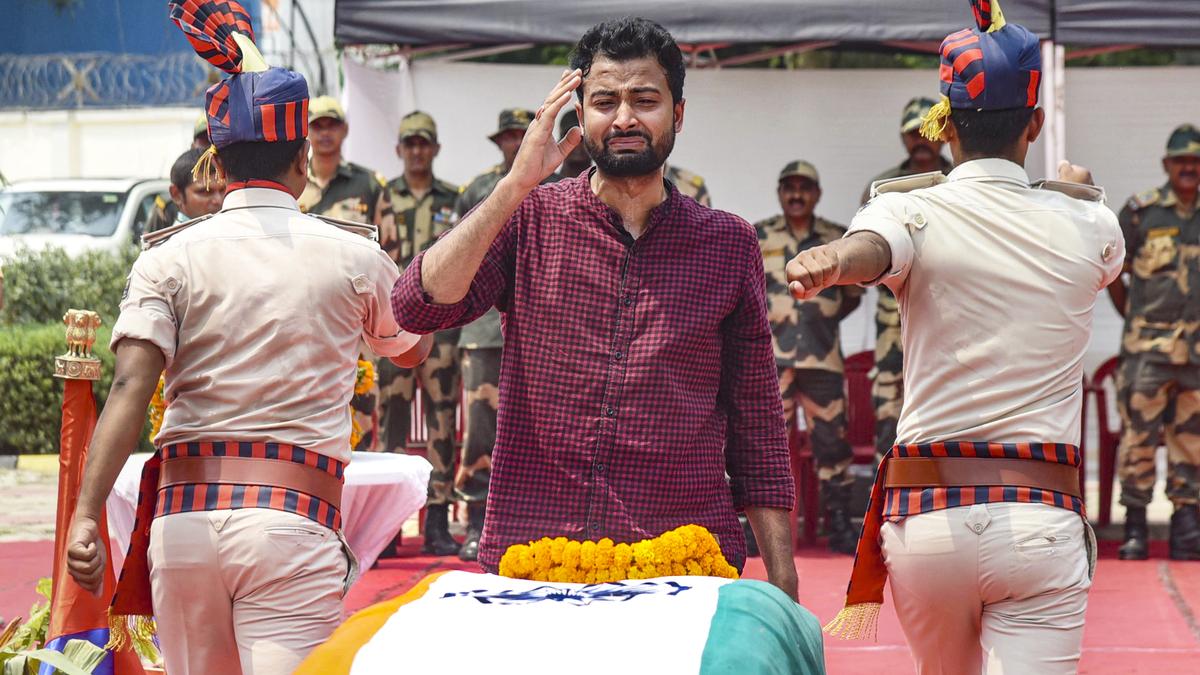
Imtiaz’s last rites were performed in the presence of a large crowd who shouted slogans in solidarity. Tearful, his son Imran Raza says his father sacrificed his life for the country and that he is proud of him.

Imran Raza pays tribute to his father, BSF Sub-Inspector Mohammad Imtiaz, in Patna on May 12, 2025. Imtiaz lost his life in the line of duty in J&K’s Jammu district. | Photo Credit: PTI

Mortal remains of Border Security Force (BSF) Sub-Inspector Mohammad Imtiaz from Chhapra, who was martyred in Operation Sindoor in the R S Pura section of Jammu border, reached Patna on Monday (May 12, 2025).

He was given a guard of honour by the security personnel, and a wreath-laying ceremony was held at Patna airport. Mr. Imtiaz’s son Imran Raza was also present at the airport to receive his body.

Several politicians, including Leader of the Opposition in the Bihar Legislative Assembly Tejashwi Yadav and Shravan Kumar, a Minister in the Cabinet of Chief Minister Nitish Kumar, were present to pay tributes to the martyred Sub-Inspector.

Speaking to the media at the airport, with tears in his eyes, Mr. Raza said, “I am really proud of my father who did not give up till his last breath and sacrificed his life for the country. Last time papa called me at 5:30 a.m. (May 10) saying that terrorists had attacked and his right leg was damaged. I told my father not to lose hope as I was coming to meet him.”

He said, “I boarded the flight for Delhi but when I reached there, I was informed that there was no flight for Jammu. Then I travelled by train. Till 3 p.m., the situation was under control and he was out of danger. I received a call from one assistant commandant at 6 p.m. who informed me that my father was no more. I could not get the chance to even speak to my father in his final moments.”

Mr. Raza broke down while speaking to the media and said that his father last visited the village to celebrate Eid with his family and resumed duty 18 days ago.

‘Army’s befitting reply’1

Mr. Yadav, in his address to the Press, said that the country and Bihar took pride in Mr. Imtiaz’s sacrifice and martyrdom.

“It is because of such brave martyrs that we are all safe today. The nation will always remember their sacrifice. We all should be proud of the Indian army and soldiers the way they gave the befitting reply to Pakistan. This is not for the first time the Indian army has boldly replied to Pakistan, It has happened before as well,” Mr. Yadav said.

Accompanied by RJD Rajya Sabha member Sanjay Yadav, the former Deputy Chief Minister asserted that the Sub-Inspector’s sacrifice also proved that there is unity in diversity in the country.

“Martyr Imtiazji was from Chhapra and we all are proud of him. He has made a big sacrifice as well as given a message that there is unity in diversity in our country. There are different languages, states, religion and caste, but when it comes to the matter of our country, everyone gets united against the enemy, be it Pakistan or terrorists, to win the battle,” Mr. Yadav said.

Minister Shravan said that through Operation Sindoor, the Indian government had ended terrorism and the army had played an important role.

“Mohammad Imtiaz has sacrificed his life while saving the entire nation. Along with Chief Minister Nitish Kumar, the people of the entire country are with his family in this hour of grief,” Mr. Shravan said.

Bharatiya Janata Party (BJP) state president Dilip Jaiswal was also present to pay the floral tributes to the Sub-Inspector.

Later, his body was taken to his native village Narayanpur in Chhapra, where last rites were performed in the presence of a large crowd. People shouted slogans in support while holding the national flag.

source: http://www.thehindu.com / The Hindu / Home> News> India / by Amit Bhelarii, Patna / May 12th, 2025

National seminar on Prof. Abdul Qavi Desnavi on Apr. 1-2 in Bhopal

Desna Village (Block Asthawan – Nalanda District), BIHAR / Mumbai, MAHARASHTRA / Bhopal, MADHYA PRADESH :

Prof. Abdul Qavi Desnavi (November 1, 1930 – July 7, 2011)

Bhopal:

A two-day National seminar is being organised on “Prof. Abdul Qavi Desnavi Hyat Aur Adabi Khidmat” here on April 1 and 2 at Mulla Ramuzi Sanskriti Bhavan, the headquarters of Madhya Pradesh Urdu Academy, (MPUA).

The seminar is being organised by Ilma Education Society, Bhopal under the joint aegis of National Council for the Promotion of Urdu Language, (NCPUL) and MPUA.

Mr. Kailash Sarang, former Rajya Sabha member, will inaugurate the seminar on April 1 at 10 am which will be presided over by Urdu litterateur Prof. Afaq Ahmad.

AThe guests of honour on the occasion include: Mr. Aziz Qureshi, ex-member of Lok Sabha, Mr. Iqbal Majeed, Prof. Shakoor Khan, Prof. Muzaffar Hanafi and Prof. Ateequllah.

Prof. Afaq Husain Siddiqui will deliver the keynote address in the inaugural function while Kausar Siddiqui, director of the organising committee shall welcome the guests. Mr. Ali Mutaqqui Desnavi, the eldest son of late Prof. Abdul Qavi Desnavi will propose vote of thanks.

After the inaugural function there would be two sessions on April 1 and three on the next day. Two-and-a-half dozen scholars and writers from all over India will present their papers in different sessions of the seminar.

They include: Prof. Muzaffar Hanafi (Delhi), Mr. Ayub Waqif (Mumbai), Master Akhtar, Mr. Arif Aziz & Dr. Arjumand Bano Afshan (all three from Bhopal), Prof. Ateequllah (Delhi), Prof. Khalid Mahmood (Delhi), Maulana Syed Sharafat Ali Nadwi (Bhopal), Dr. Yaqoob Yawar (Banaras), Mr. Iqbal Masood, Mr. Rasheed Anjum & Dr. (Mrs.) Razia Hamid (all three from Bhopal), Dr. Saifi Sironji (Sironj), Prof. Manzar Husain (Ranchi), Prof. Afaq Ahmad (Bhopal), Dr. Maula Baqsh (Delhi), Mr. Naseem Ansari (Bhopal), Mr. Zia Farooqui, Mr. Ashfaq Mashhadi, Mr. Khalid Abidi, Dr. Mahtab Alam & Mr. Javed Yazdani (all six from Bhopal), Dr. Mohammad Nauman & Dr. Khalid Mubashshir (both from Delhi), Dr. Abdul Waheed Khan (Jabalpur), Mr. Naeem Kausar, Mr. Khursheed Akhtar (both from Bhopal), Dr. Shan Fakhri (Sironj), Mr. Habib Ahmad & Mr. Inamullah Lodhi (both from Bhopal).

Meanwhile, it may be stated here that Prof. Abdul Qavi Desnavi (November 1, 1930 – July 7, 2011) was an Indian eminent Writer, Critic, Bibliographist, Linguist and Scholar of Urdu language. He has authored more than 50 books on Urdu literature. His books were also translated in other languages. His important work was about Maulana Abul Kalam Azad, Mirza Ghalib, Allama Muhammad Iqbal and litterateurs of Bhopal.

He was recipient of several awards. He received Senior Fellowship from the Union Ministry of Culture, Govt. of India. His great treatise was a voluminous book on one of India’s frontline freedom fighter and first Union Education Minister Maulana Abul Kalam Azad over 900 pages titled “Hayat-e-Abul Kalam Azad” which he penned in the year 2000. It was acclaimed nationally and internationally.

Desnavi was born in Nalanda
Prof. Desnavi was born on November 1, 1930 in village Desna of block Asthawan in Nalanda district Bihar. He belonged to the family of Great Muslim scholar Syed Sulaiman Nadvi, who was one of the eminent historian and biographers of the Islamic Prophet Muhammad (PBUH), during his times. He was the second son of late Prof. S. M. Saeed Raza, who was Professor of Urdu, Arabic and Persian languages in St. Xavier’s College, Mumbai. His elder brother was Prof. Syed Mohi Raza and younger brother was Syed Abdul Wali Desnavi.

Education
Prof. Desnavi had his primary education in Arrah town of Bihar state. After completing his graduation & post-graduation in First Division from St. Xavier’s College, Mumbai, he joined Department of Urdu in Saifia Post Graduate College, Bhopal in February 1961. He went on to become Professor and Head of the Urdu Department of Saifia Post Graduate College. He was well-known literary figure in India and in the Urdu world.

His shining disciples
Many scholars, poets and teachers of today such as lyricist Javed Akhtar, Poet Mushtaq Singh, Prof. Muzaffar Hanafi, Selani Silwatte, Prof. Khalid Mehmood, Prof. Mohammed Naumaan Khan, Prof. Afaq Husain Siddiqui, poet Iqbal Masood, Dr. Iqbal Masood Nadvi, Ahsanuddin Farooqui, Khurshid Akhtar, Mohammed Naseem, Dr. Qamar Ali Shah, Prof. Yaqoob Yawar, Maulana Syed Sharafat Ali Nadvi, Prof. Arjumand Bano Afshan etc. were under his tutelage during their student days in Bhopal and are now sparkling in the Urdu world. Under his guidance many students attained Ph.D. degrees.

He retired in 1990. He was also holding many Honorary positions such as: • Additional Principal of Saifia Post Graduate College, Bhopal.(1983–1985); • Secretary of Madhya Pradesh Urdu Academy, Bhopal (1991–92); • Elected Member Majlis-e-Aam Anjuman Taraqqui Urdu (Hind), New Delhi (1979–1984); • Member of All India Anjuman Taraqui Urdu Board, New Delhi, (1977–1978); • Member of Program Advisory Committee, All India Radio, Bhopal (1978–1979); • Member Executive Council, Barkatullah University Bhopal, (1980–1982); • Chairman of Board of Studies, Urdu, Persian & Arabic, Barkatullah University Bhopal, (1977–1980) and (1984–1985); • Dean Faculty of Arts, Barkatullah University Bhopal, (1980–1982) & • Member Working Committee, Taj-ul-Masajid, Bhopal (1997-2007)

Awards
Prof. Desnavi received many awards in his lifetime such as Shibli Award, Mumbai, 1957; Senior Fellowship, Ministry of Education & Culture, Government Of India for 4 Years, 1979-1983; Sanad “Imteyaz Meer” All India Meer Academy, Lucknow 1981; Nawab Siddique Hasan Khan Provincial Award, Bhopal 1986; Bihar Urdu Academy Award, for recognition of Urdu services (1988–89) & (1989–90); All India “Parvez Shahidi Award” West Bengal Urdu Academy, Calcutta 1998.

His books
The books Prof. Desnavi authored to enrich the Urdu literary world included: Ek Aur Mashriqi Kutub Khana (1954); Hasrat Ki Siyasi Zindagi (1956); Aur Hindustan Jag Utha (1963); Allama Iqbal Bhopal Mein (1967); Mazameen Lisan-un-Sidque (1967); Bhopal Aur Ghalib (1969); Ghalibyaat (1969); Nuskha-e-Bhopal Aur Nuskha-e-Bhopal Sani (1970); Qadir Nama-e—Ghalib (1971); Anis Numa (1973); Ek Shahar Panch Mushahir (1973); Nazr—e-Sajjad (1974); Mota’ala—e—Khotoot—e—Ghalib 1975, (Edition 2nd 1979); Saat TahrireiN (1975); Hindustan MeiN Iqbaliat (1976); Talash-o—Taasur (1977); Mehdi Hassan Efadi (1977); Iqbal Uneesween Sadi MeiN(1977); Mirza Salaamat Ali Dabeer (1977); Bachon Ka Iqbal (1978); Iqbal Aur Dilli (1978); Abdul Haque Banam Mahvi (1980); Nazr-e-Takhallus (1981); Mota’ala-e-Ghobar-e—Khatir (1981); Dhanpat Rai Nawab Rai Premchand (1981); Iqbal Aur Darul Iqbal Bhopal (1983); Iqbaliat Ki Talash (1984); Yadgar—e—Sulaiman (1984); Iqbaliat Ki Talash Publisher, Globe Publishers, Urdu Bazar Lahore, Pakistan (1985); Armoghane-Saifia (Co—Editor) (1986); Abul Kalam Azad (1987); Maulana Abul Kalam Mohiuddin Ahmad Azad Dehlavi (1988); Mahanama Lisan-un-Sidque (1988); Yadgar—e—Azad (1989); Mataihiyat (1989); Talash—e—Azad; Talash-e-Azad, Shaqsiyat, Khidmat, Chand JhalkiaN (1990); Jawaharlal—o—Azad (Co—Editor) (1990); Ajnabi Shahar (1992); Fakhernama (Co—Editor) (1997); Urdu Shairi Ki Gayarah AwazaiN; Masreen wa Mutaliqat Azad; Hayat Abul Kalam Azad (2000); Bombai Se Bhopal Tak (2004); Dur Dais Se (2005); MaiN Urdu Hoon (2006).

His books translated in other languages are: Abul Kalam Azad in Hindi language Translated by Janki Prashad Sharma, Publisher Sahitya Akademi (1987); Abul Kalam Azad in Punjabi language Translated Inder Singh Raz Publisher Sahitya Akademi (1988); Abul Kalam Azad in English language translated by Syeda Syedain Hamid Publisher Sahitya Akademi(1991); Abul Kalam Azad in Maithili language translated by Fazlur Rehman Hashmi, Publisher Sahitya Akademi (1994)

The awards Prof. Desnavi received on his books are: Saat TahrireiN – Uttar Pradesh Urdu Academy Lucknow, 1975; Uneesween Sadi Mein Iqbal – Bihar Urdu Academy Patna, 1977; Mota’ala-e-Khotoot Ghalib – Bihar Urdu Academy Patna, 1979; Mota’ala-e-Ghobar-e-Khatir – Bihar Urdu Academy Patna, 1981; Iqbaliat Ki Talash – Bihar Urdu Academy Patna, 1984, Abul Kalam Azad Academy, Bihar Urdu Academy Patna, 1987; Yadgar—e—Sulaiman – Maghribi Bengal Urdu Academy Calcutta, 1984; Talash—e—Azad – Uttar Pradesh Urdu Academy Lucknow, 1991; Talash—e—Azad – Bihar Urdu Academy Patna, 1991; Talash—e—Azad – West Bengal Urdu Academy Calcutta, 1993; Urdu Shairi Ki Gayarah AwazaiN – Uttar Pradesh Urdu Academy, Lucknow, 1993; & Urdu Shairi Ki Gayarah AwazaiN – Bihar Urdu Academy, Patna, 1993.

Under his guidance the Ph.D. degrees were awarded by Barkatullah University to • Dr. Muzaffar Hanafi – “Shad Arfi Shaksiat Aur Fun” 1974 Published – 1977; • Dr. Hadiqa Begum – “Abdul Rehman Bijnori Hayat Aur Khidmat” 1981 Published – 1984; • Dr. Naseem Shanvi- “Urdu Tanquid Ka Marxi Dabistan” 1981; • Dr. Mohammed Ayub Khan – “Iqbal Aur Gazal Goi” 1982; • Dr. Safia Wadood – “Takhalus Bhopali Hayat Aur Khidmat” 1984 Published – 1993; • Dr. Arjumand Bano – “Riasat Bhopal Aur Mushahir Urdu” 1989; • Dr. Shan Ahmed Fakhri – “Sironj Ki Khidmat” 1990 Published – 1999; • Dr. Yaqoob Ali Khan – “Taraqqui Pasand Shairi Aik Jaiza” 1990 Published – 1997 and • Dr. Mohammed Naumaan Khan – “Bhopal MeiN Urdu Inzamam Ke Baid”1990.

Poems
The poems composed on Prof. Desnavi include: • Pasban-e-Urdu by Rahbar Jaunpuri; • Nazre Abdul Qavi Desnavi by Arshad Siddiqui; • Anjuman Ilm-O-Kamal by Zafar Sahbai; • Herf-e-Khuloos by Kausar Siddiqui; • Shan-e-Imtiaz by Zafar Naseemi; • Qandil-e-Hikmat, Abdul Qavi Desnavi by Wafa Siddiqui;

• Kharaj-e-Tehsin by Arman Akberabadi; • Pahchaan Hai Saifia by Kamil Baihzadi; • Prof. Abdul Qavi Desnavi by Mateen Qurashi Shaheed and • Aik Nazem by Iqbal Masood.

Last breath
Prof. Desnavi died at about 5 am on 7 July 2011 in a private hospital where he was admitted following complaints of old age related diseases. He is survived by his wife, three sons and four daughters and a large number of relatives and literary friends to mourn his loss.

(pervezbari@eth.net)

source: http://www.twocircles.net / TwoCircles.net / Home> Indian Muslim> Literature / by Pervez Bari, TwoCircles.net / March 30th, 2012

Abdullah Bihar Topper in JEE (Main), Says Miles to Go

Aunsi (Bisfi – Madhubani District), BIHAR :

Patna:

Abdullah, known by only his single name, topped the list of successful candidates from Bihar who appeared for the JEE (Main) 2025, Session 2. The result was announced late at night on Friday. He scored 99.9945499 percentile, but he is not in a celebratory mood. He wishes to top the JEE (Advanced), which ensures admission in the best IIT.

Abdullah hails from Aunsi in Bisfi under Madhubani district. His father, Mohammad Sabir Hussain, is an assistant teacher, while his mother, Tarannum, is a homemaker. Abdullah is the eldest among five siblings.

Abdullah is preparing for the next stage of JEE – JEE (Advanced) at Kota, Rajasthan. He is very keen to study Computer Science. He wants to do better in the upcoming test, while his father says that Abdullah also aims to qualify UPSC.

Abdullah, after getting the result, said that he felt very good for it but it was just beginning and he has miles to go. He said that his routine continues to be the same and he was focusing on completing his daily assignments.

Abdullah completed his matriculation from Madhubani and then moved to Kota for his preparation. He secured 90 percent marks in his I.Sc. examination. Abdullah keeps from smartphone as he considers it a distraction.

source: http://www.radiancenews.com / Radiance News / Home> Education / by Radiance News Bureau / April 20th, 2025

Bihar: Senior IPS officer Nurul Hoda resigns in protest against Waqf Law, joins poilitics

BIHAR :

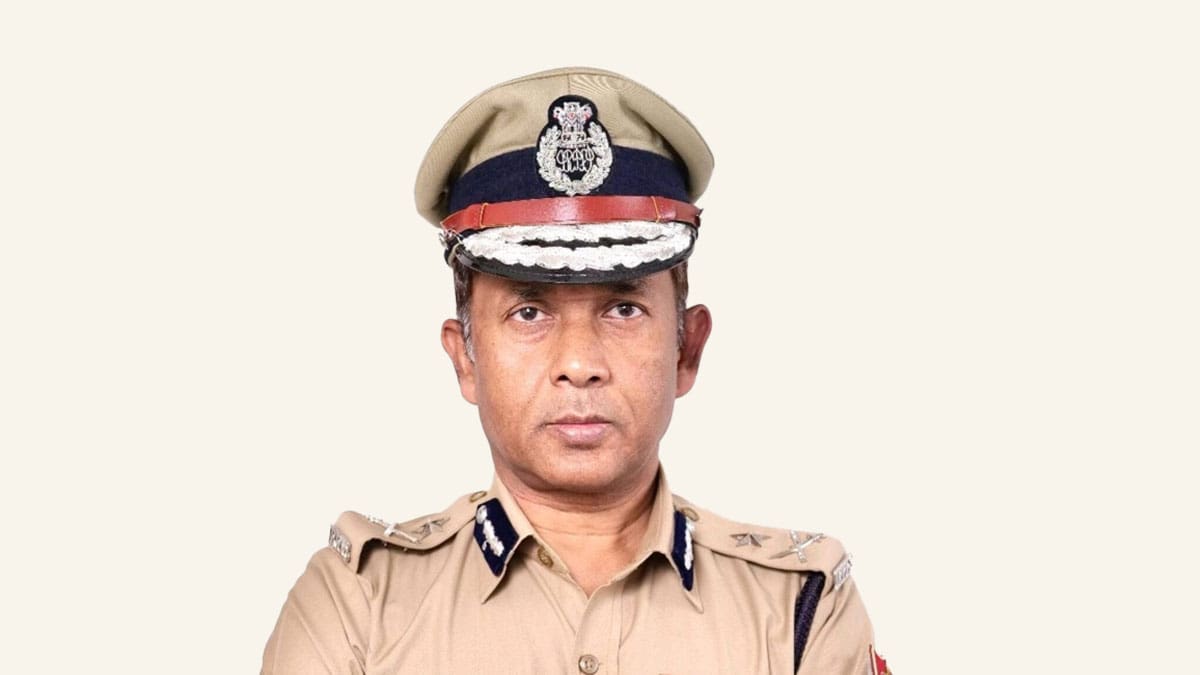
Senior IPS officer Nurul Hoda has resigned from the Indian Police Service in protest against the controversial Waqf law. On Wednesday, he joined the Vikassheel Insaan Party (VIP) led by former minister Mukesh Sahni.

Formerly serving as an Inspector General (IG) in the Railways, Hoda is now set to enter the political battlefield with a mission to represent and lead the Muslim community in Bihar.

Hoda, a 1995 batch officer from Sitamarhi, Bihar, is known for his sharp and dynamic approach.

With 28 years of service in sensitive areas like Dhanbad, Asansol, and Delhi, he has earned awards for his work in railway security, Naxal control, and crime prevention.

He was awarded the Vishisht Seva Medal twice and Director General Chakra. 

Hoda’s resignation comes at a time when political tensions in Bihar are escalating as the state approaches its Assembly elections scheduled for October-November 2025, with the Waqf (Amendment) emerging as a central point of contention.

The ruling JD(U)  has faced a wave of resignations from its Muslim leaders in April 2025, in a protest against the party’s support for the Waqf (Amendment) Act, 2025. 

source: http://www.maktoobmedia.com / Maktoob Media / Home> East India / by Maktoob Staff (headline edited) / April 19th, 2025