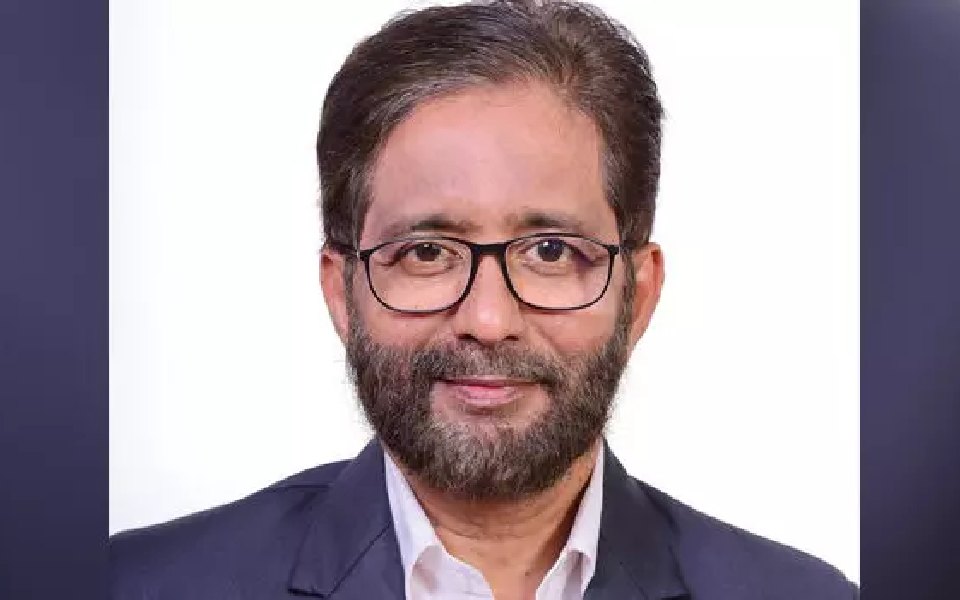
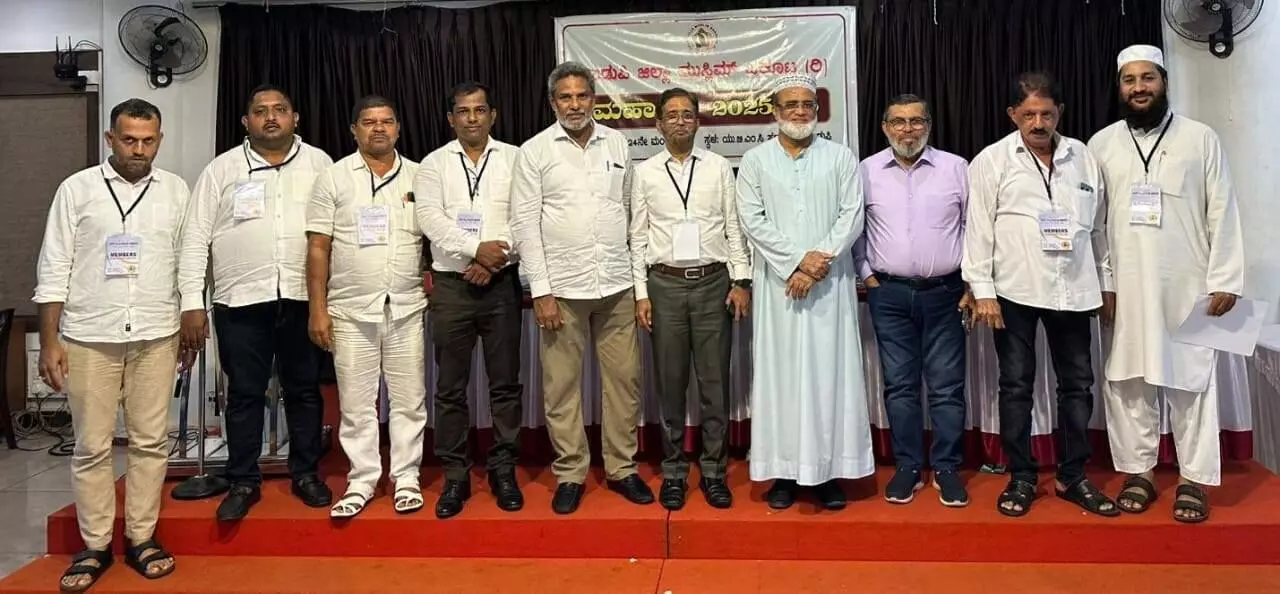
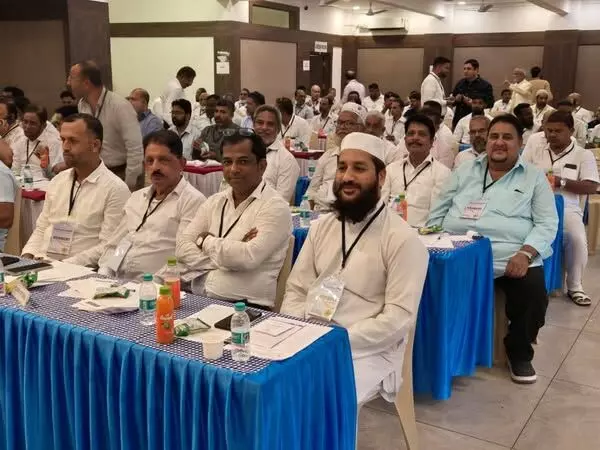
Popular businessman Muhammad Maula has been elected as the new president of the Udupi District Muslim Okkuta for the next two years. The decision was made during the 2025-26 general meeting held at the UBMC hall in Udupi.
M.A. Maula, known for his various social, educational and community activities, has previously served as the general secretary of the Okkuta twice and as the vice-president once.
Additionally, Yaseen Malpe, Idris Hoode, Iqbal Katapady, Rafiq Gangolli and Maulana Zamir Ahmed Rashadi Kandlur were elected as district committee members at the central level.
Taufiq Abdullah Navunda, Dr. Abdul Azeez Manipal, Abdurrahman Kannangar and Khalid Manipura were appointed as representatives of various organizations.
Abdul Aziz Udyawara, Yaseen Bengre, Syed Farid, Iqbal Manna, Shabbir Malpe, Irshad Nejar, V.S. Umar and Adil Hoode were elected as district committee members from Udupi taluk.
From Kundapura, Riyaz Kodi, Dastagir Kandloor, Shaban Hanglur, Mushtaq Hennabailu, and Hanif Gulwadi were elected.
Shabhi Ahmed Qazi, Nasir Ahmed Sharfuddin, Anwar Ali, Muhammad Azam Sheikh, and Muhammad Iqbal from Kaup taluk; Muhammad Ghouse, Ashfaq Ahmed, Nasir Sheikh, Muhammad Sharif Banglegudde, and Muhammad Sharif Renjala from Karkala taluk; Tajuddin Ibrahim, Ibrahim Kota, Asif Baikady, Aslam Haikadi, and Haroon Rashid Sastana from Brahmavar; and Shams Tabrez, Sheikh Fayyaz Ali, Amin Golihole, and Aftab Kiri Manjeshwara from Byndoor taluk, along with Tufail Shahabuddin, were elected.
In the subsequent district committee meeting, Ismail Hussain Katapady, Mustafa Saadi Mulur, T. M. Zafrullah Hoode, Khatib Rashid Malpe, Buaji Muhsin Byndoor, Sheikh Abdullatif Madani, Raihan Trasi, Abu Muhammad Mujawar Kundapur, Peer Saheb Adi Udupi, and B. Muhyuddin Katapady were co-opted as members of the district committee.
Maulana Abdur Raqib Nadvi, the General Secretary of Majlis-e-Islah wa Tanzeem, Bhatkal, oversaw the election process.
The general assembly commenced with the recitation of the Quran by Maulana Zamir Ahmed Rashadi, the vice-president of Udupi district Muslim Okkuta. General Secretary Muhammad Idris Hoode delivered the introductory remarks, followed by Secretary Ismail Hussain, who presented the biennial report. Treasurer Syed Farid then presented the biennial accounts to the assembly. The session concluded with the presidential address delivered by Muhammad Yasin Malpe.
source: http://www.english.varthabharati.in / Vartha Bharati / Home> Karavali / by Vartha Bharati / January 01st, 2025
The Bangalore Press Club has announced the list of recipients of its ‘Press Club Golden Jubilee Award’ and ‘Annual Award,’ recognizing journalists for their outstanding contributions in the field of journalism.
The ‘Golden Jubilee Award’ will be conferred upon popular Journalists Janagere Venkataramaiah, Indudhara Honnapura, Subhash Kevin Rai, G.S. Krishnamurthy, and Dr. Nagesh Basavaraj for their dedicated service to journalism.
In addition, 50 senior journalists have been chosen for the ‘Annual Award,’ including Vartha Bharathi Kannada Daily’s Bengaluru Bureau Chief Prakash C., along with Srikanth Hunasavadi, Yathiraju, Punyavathi H.P., Muhammad Ismail N.A., Raju Malavalli, Anis Nisar Ahmed, Sivakumar Menisakai, among others.
The awards will be distributed by Chief Minister Siddaramaiah at a ceremony to be held at the Press Club premises on the evening of January 12. Deputy Chief Minister D.K. Shivakumar will also be present for the event, according to R. Sridhar, President of Bangalore Press Club.
Meanwhile, The Bangalore Press Club will also confer the ‘Person of the Year Award’ to Minister of Large and Medium Industries M.B. Patil, Energy Minister K.J. George, Women and Child Development Minister Lakshmi Hebbalkar, and Food, Civil Supplies, and Consumer Affairs Minister K.H. Muniyappa.
source: http://www.english.varthabharati.in / Vartha Bharati / Home> Karnataka / by Vartha Bharati / January 03rd, 2025
Senior scholar, thinker, and writer, Prof. Muzaffar Hussain Assadi, who served as the Acting Vice-Chancellor and Dean of the Political Science Department at Mysore University, passed away late Friday night at a private hospital in Bengaluru. He was 63 years old.
Prof. Muzaffar Assadi conducted extensive studies on the lives and lifestyles of tribal communities.
He served as the chairperson of a committee appointed to address the displacement of tribal populations. His research and contributions spanned areas such as agricultural studies, globalization, Gandhian philosophy, political sociology, democratic theories, social movements, comparative governance, Indian politics, human rights, and global political theories, earning him significant recognition.
Hailing from Shirva in Udupi district, Dr. Muzaffar Assadi completed his postgraduate degree from Mangalore University, followed by an M.Phil. and Ph.D. from Jawaharlal Nehru University (JNU), New Delhi.
He later pursued a Rockefeller Fellowship and Post-Doctoral studies at the University of Chicago.
He authored 11 books during his illustrious career.
As the chairperson of the High Court Committee on Tribal Displacement, he submitted an impactful report.
His notable works include Multifaceted Feminist Narratives and Movements in Karnataka, Asmita, among others.
Previously, he served as the Special Officer of the newly established Raichur University.
Prof. Assadi received numerous honors, including the Karnataka Sahitya Academy Award.
source: http://www.english.varthabharati.in / Vartha Bharati / Home> Karnataka / by Vartha Bharati / January 04th, 2025
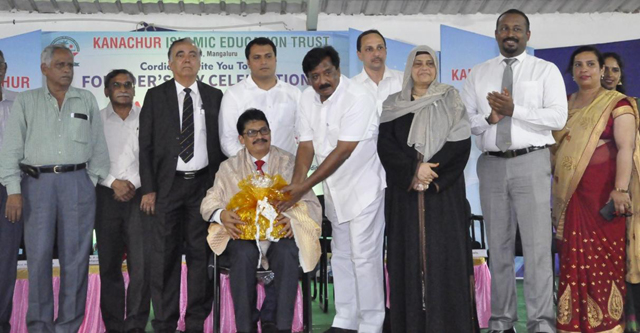
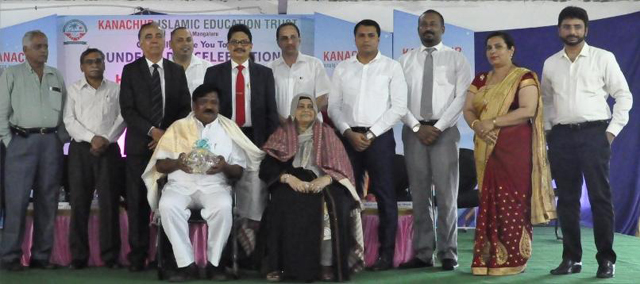
A distinct day in the entire calendar year of Kanachur Group of Institutions, where the integral force of Kanachur Family namely students, staff, faculty, principals and trustees meet as a single unit; to remember and express their gratitude to their leader, chief and founder – Haji U K Monu was recently observed.
Kanachur Islamic Education Trust ®, under its flagship honors the following institutions: 1. Kanachur Institute of Medical Sciences 2. Kanachur College of Nursing Sciences 3. Kanachur College of Physiotherapy 4. Kanachur Institute of Paramedical Sciences 5. Kanachur Institute of Management & Science 6. Kanachur PU College for Women 7. Kanachur Public School 8. Kanachur Primary School 9. Kanachur Pre-Primary School
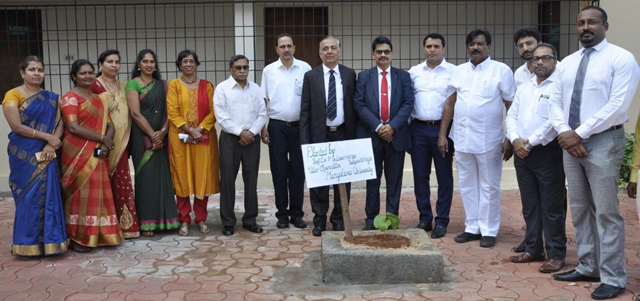
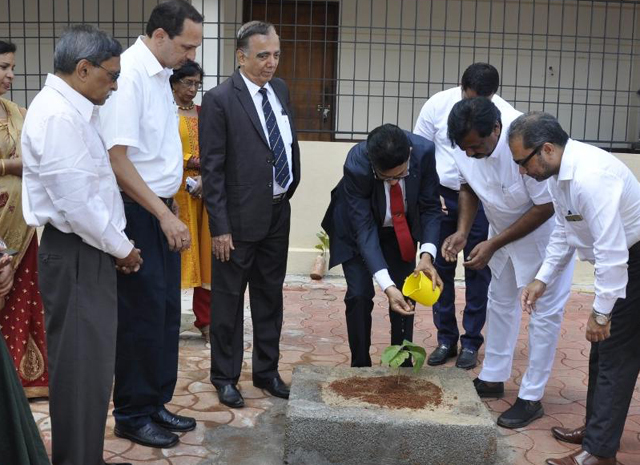
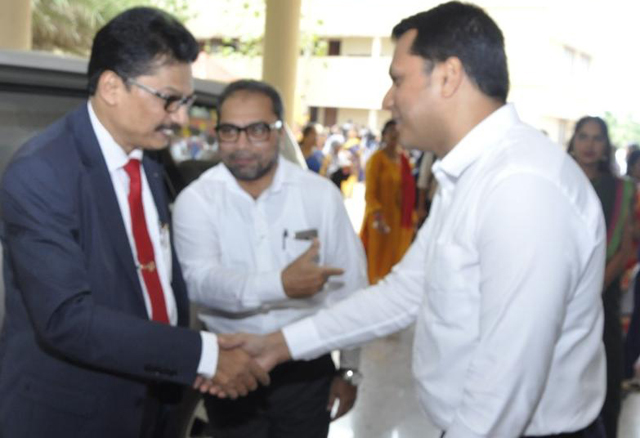
The momentous day started with a Vanamahotsava programme, where the chief guest Prof Dr P Subramanya Yadapadithaya – vice chancellor of Mangalore University planted a teak sapling in the Kanachur Health Education Campus. Prof Yadapadithaya was then welcomed with a ceremonial guard of honor, by the student scouts and guides who did a brilliant job.
A prayer song by the students of Kanachur Public School and a Quranic citation gave this amazing day a head start. Then followed a cultural extravaganza where in the student units of all constituent colleges under the trust displayed excellence and sheer talent, at the Medical College auditorium, Kanachur Academic Block.
Abdul Rahiman, director – Kanachur Institute of Medical Sciences warmly welcomed the entire Kanachur fraternity on and off the dais. He travelled down memory lane to when the trust was formed and he was in his late teens; the dreams that his father carried to offer education to the underprivileged and left no stone unturned to make this 70 acre campus transform into a temple of learning in rural India.
With these few words he welcomed the founder and chairman of the trust. Zohara Monu, trustee – Kanachur Islamic Education Trust; Prof Dr P Subramanya Yadapadithaya – VC, Mangalore University; Prof Dr M Abdul Rahiman, chairman, Advisory Board – Kanachur Academy of General Education and former VC – Kannur and Calicut Universities; Dr H S Virupaksha, dean – Kanachur Institute of Medical Sciences; Dr Sreesha Khandige, associate dean – Kanachur Institute of Medical Sciences; Dr Deviprasad Shetty, medical superintendent – Kanachur Hospital & Research Centre; Dr Rohan Monis, chief administrative officer – Kanachur Hospital & Research Centre; Dr Vivian D’Souza, principal – Kanachur Institute of Paramedical Sciences; Suhail Khan, principal – Kanachur College of Physiotherapy; Prof Renilda Shanti Lobo, principal – Kanachur College of Nursing Sciences; Prof Iqbal, principal – Kanachur Institute of Management & Science; Hemalatha, principal – Kanachur PU College for Women; Vinitha Mathias, principal – Kanachur Public School; Anandi, principal – Kanachur Primary School; Linnet, principal – Kanachur Pre-Primary and Dr Shahnawaz Manipady, HOD – Forensic Medicine were on the dais.
Prof Dr P Subramanya Yadapadithaya was respectfully felicitated by Haji U K Monu. In his chief guest addressal, he hailed the efforts of Kanachur U K Monu. He stressed that in today’s times, just a degree does not suffice. One needs KASH – Knowledge – to be ahead of the race, Attitude – so that all around are amicable, Skills – a mixed skillset and Habits – one that is infectious and aiming for excellence. Today’s era is evidence based and research informed and it is just going to get tougher.
Prof Dr M Abdul Rahiman was the guest of honor for this pompous occasion. He stressed on the fact that U K Monu always stressed on quality and that they as leaders and faculty of Kanachur should support him.
Haji U K Monu and his able life companion Zohara Monu were felicitated by Prof Dr Abdul Rahiman and Shanti Lobo. Later, all the heads of all the constituent institutions paid their floral tributes to them and wished them on the occasion of Founder’s Day. In his presidential address, Haji U K Monu stressed that this day is a special day with all his faculty and students and that he appreciates every hard working person in the institute. He said there is no replacement for hard work and that is the way it should be.
The vote of thanks was given by Dr H S Virupaksha. The event ended with the National Anthem.
Dr Annet, assistant professor – Dept of Microbiology was the emcee.
All the principals, faculty, staff and students were present at the Medical College auditorium. It was a day filled with pride and was very inspiring indeed.
Kanachur Islamic Education Trust ® and their group of institutions are very proactive in helping to realise the dream of the needy students in rural India. This is an active nation building process and education of young minds and their hearts is their mainstay.
In the words of Nelson Mandela ‘Education is the most powerful weapon which can be used to change the world’ which the trustees stand by.
source: http://www.daijiworld.com / DaijiWorld.com / Home> Campusbeat> Mangaluru / by Media Release / July 18th, 2018
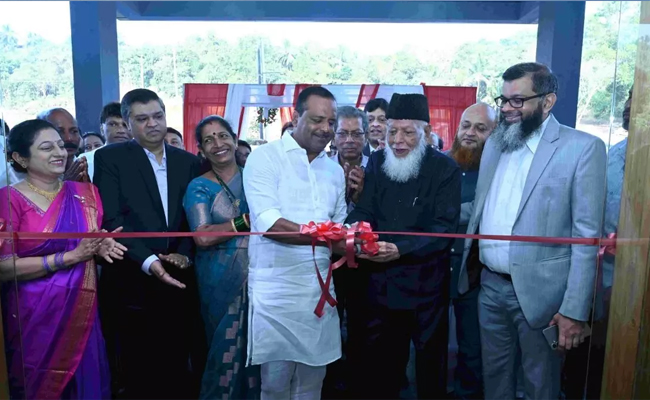
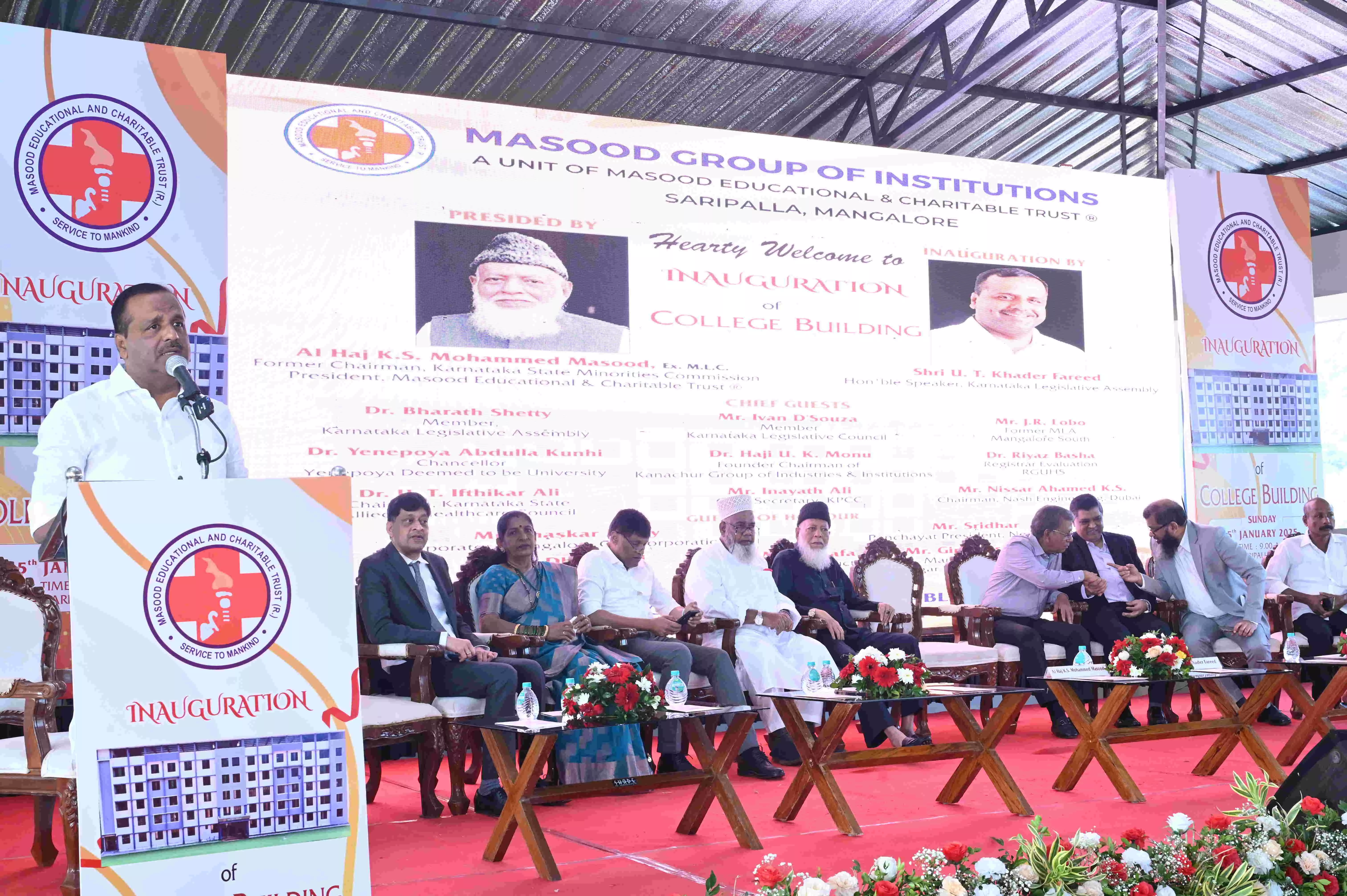
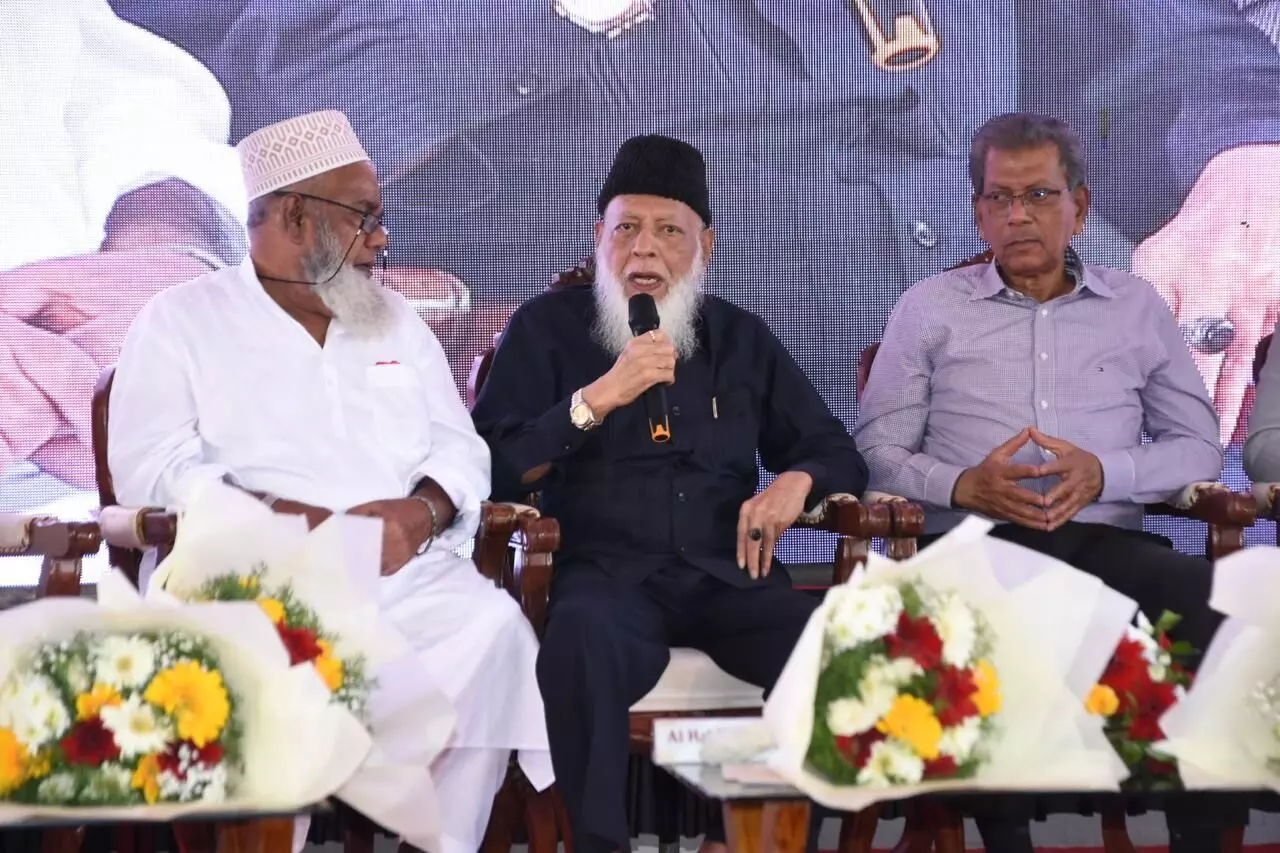
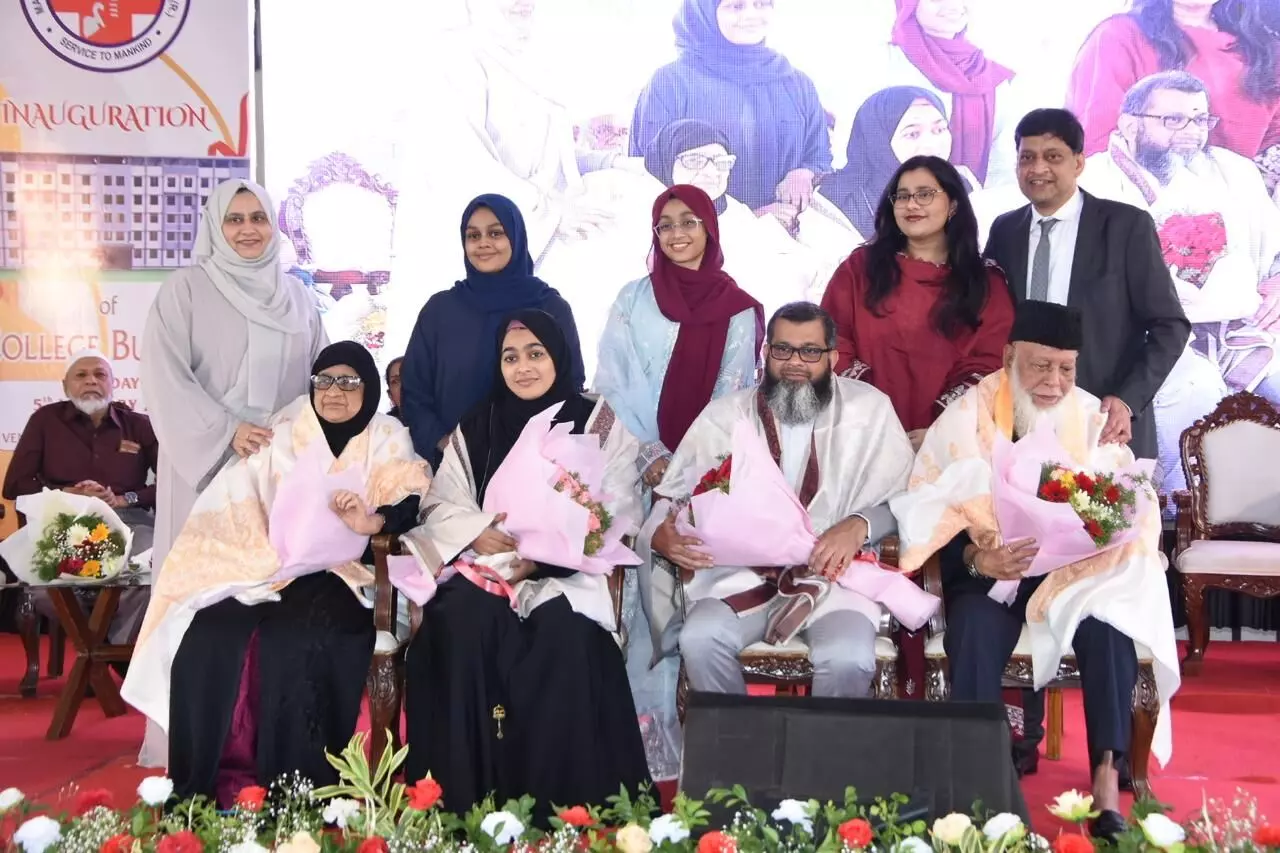
Masood Group of Institutions inaugurated its new campus building on Sunday at Saripalla village, located on the outskirts of Mangaluru city. The event was marked by the presence of several eminent dignitaries, with the Hon’ble Speaker of the Karnataka Legislative Assembly, UT Khader Fareed, formally inaugurating the facility.
Joining the occasion was Dr. Riyaz Basha, Registrar Evaluation, Rajiv Gandhi University of Health Sciences (RGUHS) along with other distinguished guests.ix
Al Haj KS Mohammed Masood, former MLC, ex-chairman of the Karnataka State Minorities Commission, and the President of Masood Educational and Charitable Trust, presided over the event.
During his address, UT Khader Fareed congratulated Al Haj KS Mohammed Masood and his family for their visionary efforts in prioritizing education at a time when it is crucial for the progress of society. He lauded their commitment to creating opportunities for learning and empowering the younger generation.
Khader expressed his confidence that the Masood Group of Institutions would emerge as one of the premier educational establishments in the country, setting benchmarks for excellence in academics and overall development. He urged the students to take their studies seriously, emphasizing that education is the foundation for personal growth and societal advancement.
Highlighting the significance of such initiatives, Khader remarked that starting educational institutions is a form of true patriotism. He stated that by investing in education, the trust is not only nurturing young minds but also contributing to the upliftment and progress of the nation as a whole.
In his address, Riyaz Basha highlighted the growing demand for health sciences education in Karnataka, particularly in the post-COVID era. He noted that the pandemic underscored the critical importance of a robust healthcare system, leading to significant transformations in the state’s health sciences infrastructure. According to Basha, this evolution has positioned Karnataka as a hub for advanced medical education and healthcare services, attracting students and professionals alike.
He observed that India’s healthcare system is gradually transitioning towards a Western model, where the concept of teamwork in medicine is gaining prominence. Basha explained that unlike the traditional approach where the doctor was viewed as the sole authority, the emerging system emphasizes the collaborative efforts of an entire team of health sciences professionals. This shift, he pointed out, places greater responsibility and opportunities on allied health professionals, nurses, technicians, and administrators, making their roles indispensable in delivering holistic patient care.
Basha urged students to view education not merely as a means to attain degrees but as a tool for building strong character and moral values. He emphasized the importance of humility, stating that true education goes beyond academic achievements and is reflected in one’s behavior and attitude. He encouraged students to remain grounded, focus on continuous learning, and contribute positively to society, embodying the essence of education through their actions and interactions.
UT Iftikhar Ali, Chairman of the Karnataka State Allied and Healthcare Council, addressed the gathering with a special request to Riyaz Basha, urging him to consider designating Masood College as an examination center for Rajiv Gandhi University of Health Sciences (RGUHS). He emphasized that such a move would be a significant step forward for the institution, providing convenience to students and enhancing its standing within the academic community.
In addition, Ali took the opportunity to invite everyone present to participate in the inauguration of the Regional Centre of RGUHS in Mangalore, scheduled for January 17. He highlighted the importance of this event in strengthening the presence of RGUHS in the region and its commitment to advancing health sciences education. Ali also reaffirmed his support for Masood Group of Institutions, pledging to assist in every possible way to help the institution achieve its goals and contribute meaningfully to the healthcare sector.
MLC Ivan D’Souza, addressing the gathering, spoke about the highly competitive nature of the world today, emphasizing the importance of providing students with the right environment to excel. He remarked that the facilities and infrastructure at Masood Group of Institutions are designed to create an atmosphere conducive to learning, growth, and overall development.
D’Souza commended the institution for its commitment to nurturing young minds by offering a supportive and stimulating environment that prepares them to meet the challenges of a competitive world. He expressed confidence that the campus would serve as a platform for students to not only excel academically but also to develop the skills and resilience needed to succeed in their chosen fields.
In his presidential address, Al Haj KS Mohammed Masood, President of the Masood Educational and Charitable Trust, extended heartfelt gratitude to everyone who had gathered to celebrate the inauguration of the new campus building. He expressed his appreciation to all dignitaries, guests, faculty, students, and well-wishers for their support and encouragement, which he said has been instrumental in the institution’s journey of growth and excellence.
Masood made a special mention of UT Iftikhar Ali, Chairman of the Karnataka State Allied and Healthcare Council, acknowledging his support and guidance. He thanked Ali for his encouragement and for advocating the inclusion of Masood College as an examination center for Rajiv Gandhi University of Health Sciences (RGUHS).
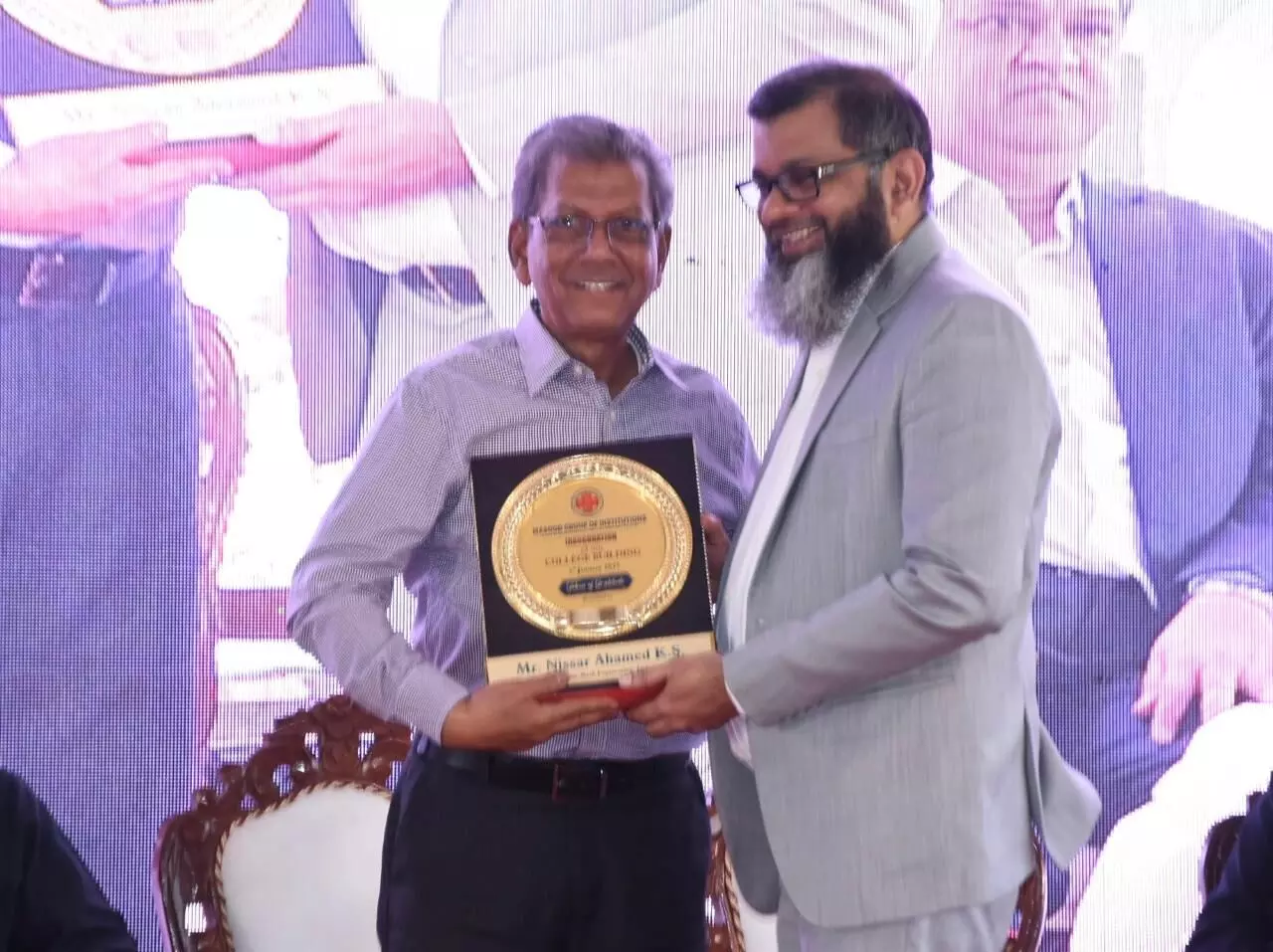
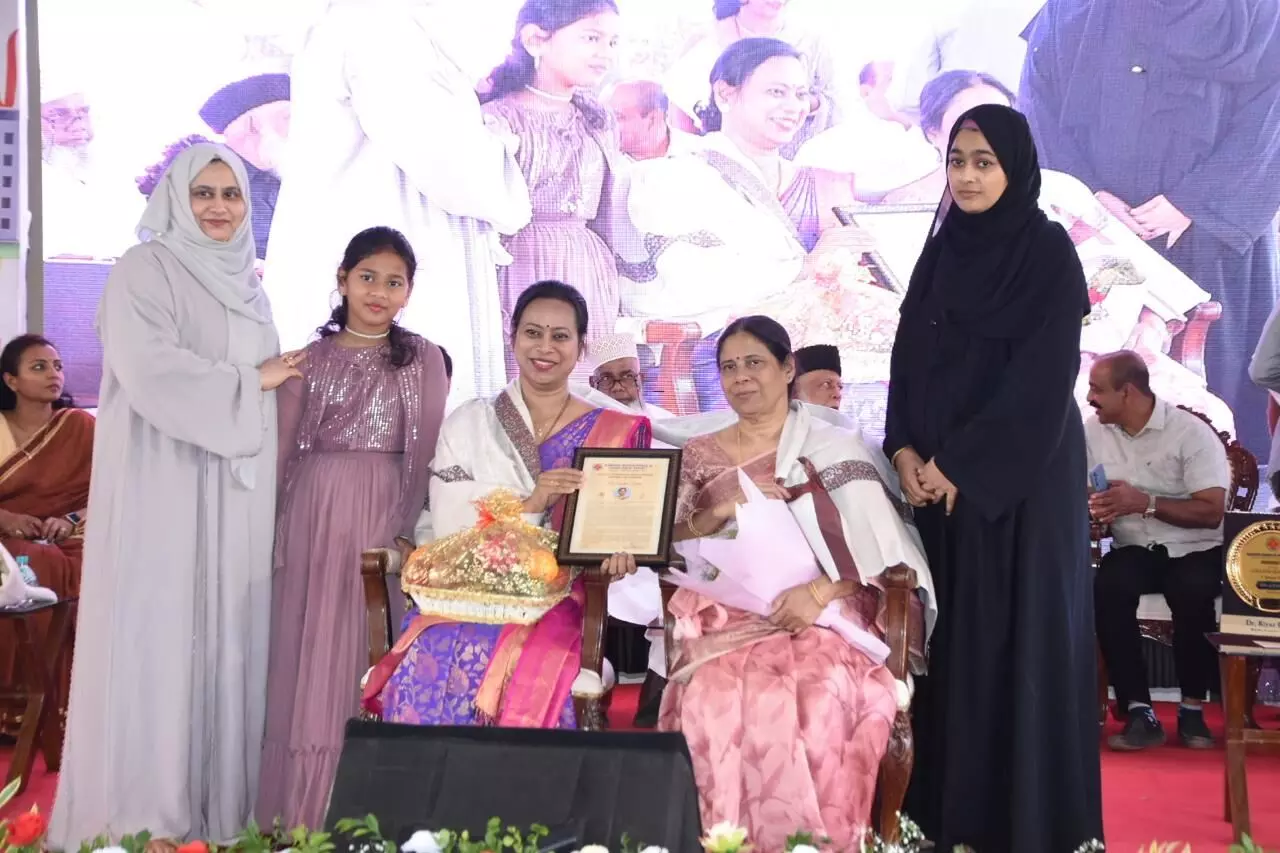
Several members of the staff and those contributing in the construction and development of new campus were felicitated during the event.
Arif Masood, Secretary, of Masood Educational and Charitable Trust welcomed the guests and gathering while his Asif Masood, Trustee of the group presented vote of thanks.
Former MLA of Mangalore South JR Lobo, KPCC General Secretary Inayath Ali, and SM Mustafa of New Bharath Infrastructure addressed the gathering.
Nissar Ahamed KS, Chairman, Nash Engineering Dubai, Bhaskar Moily, Corporator Mangalore City Corporation, Sridhar, Panchayath President Neermarga, Dhanvathi, Ex President Neermarga Panchayath, Dr. Vaishali, Senate Member of RGUHS, Dr. Haji UK Monu, Founder Chairman of Kanachur Group of Industries and Institutions, and others were present during the event.
source: http://www.english.varthabharati.in / Vartha Bharati / Home> Karavali / by Vartha Bharati / January 05th, 2025
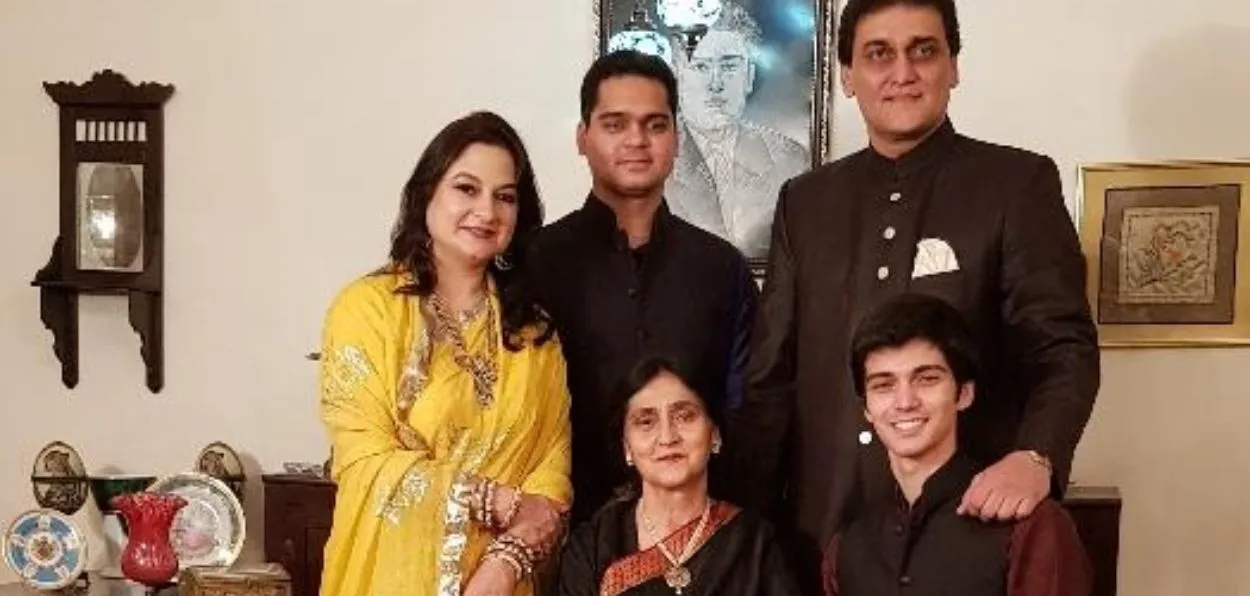
Paigah decendent Faiz Khan with mother Begum Tahira Sirajuddin Khan, wife Nida Fatima Khan, sons Dr. Mohammed Faraaz Khan and Mohammed Kamil Khan
A visit to the scion of the Paigah family and the great-great-grandson of H.E. Nawab Sir Vicar- Ul-Umara Bahadur, Amir-e-Paigah and former Prime Minister of erstwhile Hyderabad state M A Faiz Khan grew up seeing their family as ardent patrons of homegrown textiles, superior garments, and spectacular gems even as history is witness to the global influence of Indian Prince and Princesses.
He says that a visit to Hyderabad’s Salarjung Museum is an exciting part of a scholar’s life, it becomes more meaningful and engaging to realize that the museum itself is an astounding part of history for those researching elite Indian menswear. A visit to his house can easily get one an insight into the Nizam and Paigah family pictures which gives one a peek into the refined taste of the family and made the family stand out in the pages of history.
Faiz Khan says, “India boasts of a rich tapestry of cultural diversity, each thread intricately woven into the fabric of its magnificent royal heritage but the royal families have since long been the custodians of not just history and tradition but also of opulent style and regal elegance.
“Their grandeur, opulence, and penchant for fashion continue to inspire modern-day designers, setting the stage for some stupendous ensembles that blend the allure of the past with contemporary flair.”
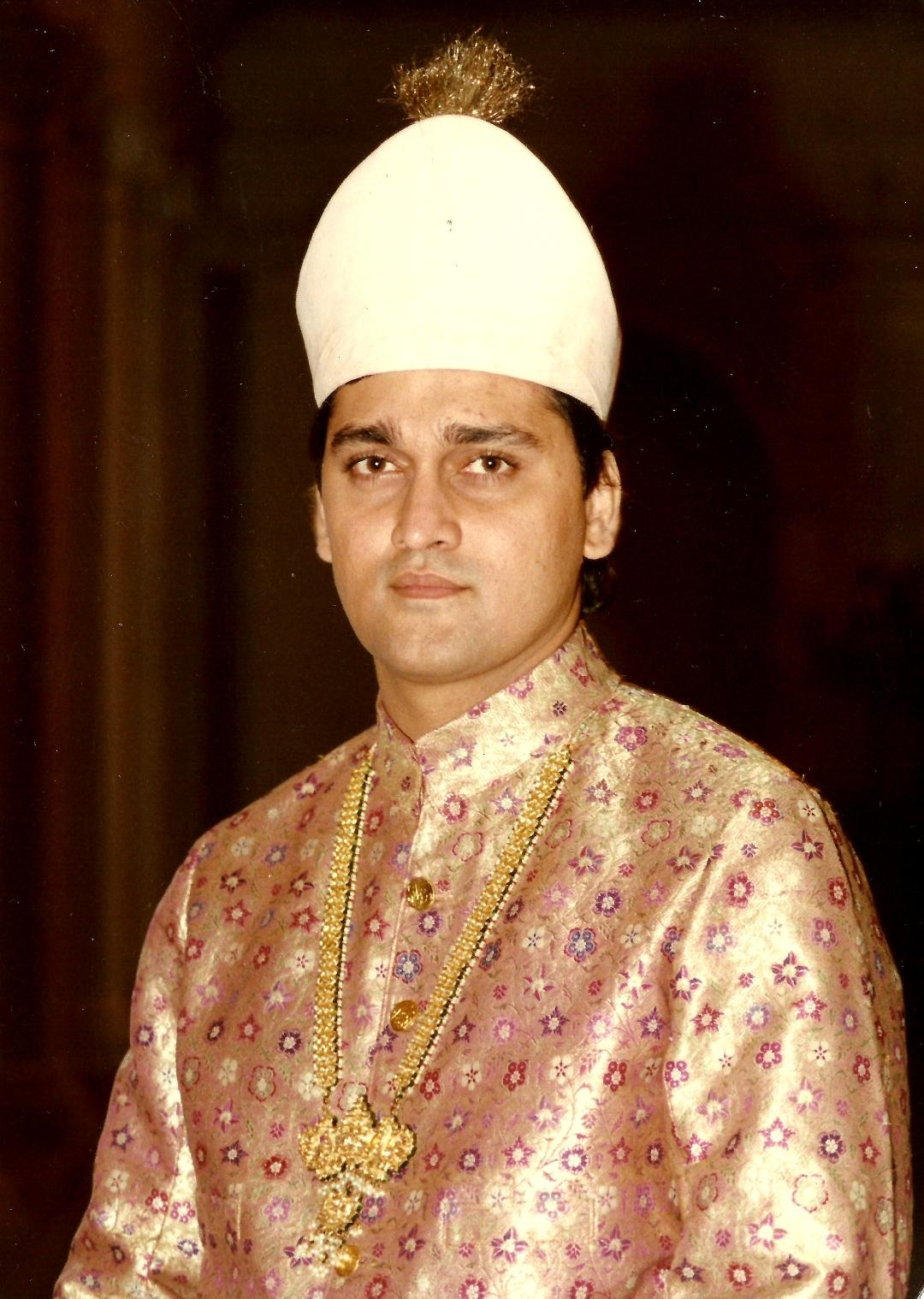
Scion of Paigah Mohammed Abul Faiz Khan wearing a sherwani of his great great grandfather H.E. Nawab Sir Vicar-ul-Umara Bahadur, the fifth Amir of Paigah
He says that the Dress and fashion during the era of the Nizams and the Paigahs included ‘angrakhas’, ‘neema’ and ‘jama’. During the last quarter of the 19th century the ‘achkan’, a fitted cape, and ‘angrakha’ developed with a few improvements into the sherwani which extended slightly below the knee and had four pockets, two upper and two on the sides, and seven buttons in front.
He said that the royals paid homage to the grandeur of their dynasty through their attire. Sherwanis were crafted from rich and regal fabrics like brocade, silk, and velvet which boasted of works like Karchobi, a kind of raised metallic thread embroidery, or Kimkhab a kind of brocade woven with silk and gold or silver threads sometimes set in precious stones too. Gold and silver metals were used in surface ornamentation. Even the weft yarns are said to be of gold and silver wire in himru, mashru and brocade fabrics.
These sherwanis reminiscent of historical figures like the 6th Nizam H.H. Nawab Mir Mahboob Ali Khan or the Paigahs were characterized by intricate embroidery and elaborate embellishments creating an aura of regal elegance. The ‘sherwani’ became very popular among all the public in Hyderabad during the rule of Nizam VI and Nizam VII during the first half of the 20th century. It used to be worn with ‘dastar’ (headgear). The Zari work the timeless elegance and regal grandeur of the noble including the Paigahs added a touch of luxury and opulence.
The colour palettes were inspired by the grandeur of the Nizam’s Palace or the Chowmohalla Palace the first official palace of the Nizam where darbars were held and dignitaries received and from where the administrative offices of the Nizam functioned, which included deep vibrant colours like rich maroon, royal blue and emerald green which symbolized grandeur and elegance then.
Faiz Khan says that the safa an important component of the royal’s attire added a touch of grandeur and lush. Intricately draped, it complemented the colour scheme of the ensemble and featured ornate broaches, echoing the meticulous elegance of the royal era then. Traditional pearls or jewelry including head broaches, often adorned with precious and semi-precious stones evoked the splendor celebrated by royalty and nobility.
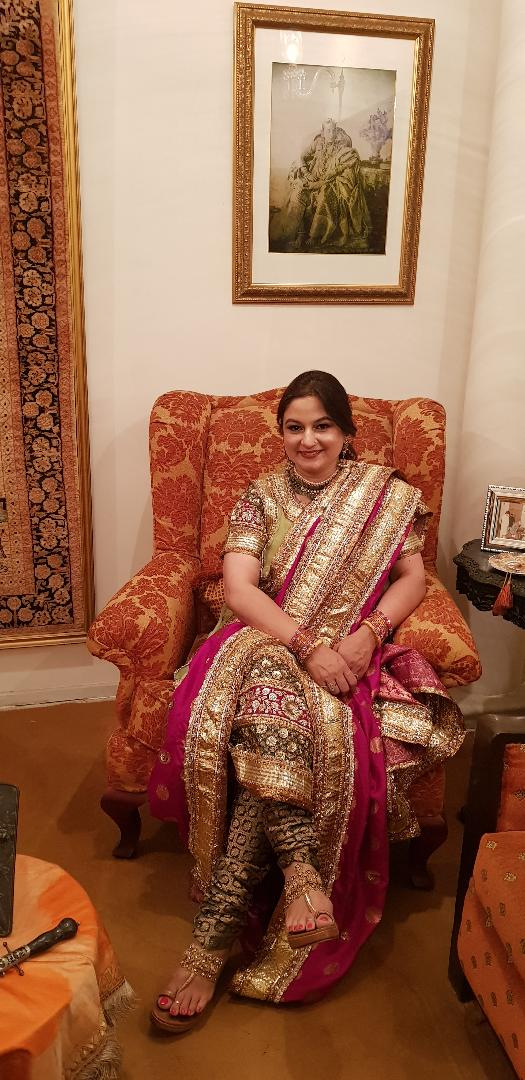
Nida Fatima Khan Granddaughter of Major General Nawab Khusru Jung Bahadur CIE married to Faiz Khan of Paigah is wearing a Chowhashya/ Khafa Dupatta and traditional Jewelry.
Footwear like Mojris or juthis showcased elaborate embroidery and designs These designs continue to embrace these elements by grooms honouring the regal legacy of the then royals and embodying the same style during their weddings even today.
The Jama‘angrakhas’, ‘neema’ the Fez caps and even the head gears known as Dastaar or the Rumi topi have been taken over by the Western attire for day-to-day dressing. Though Sherwani continues to be still popular and worn with a loose ankle-length pyjama or a churidar (legging-like) during festive occasions and Friday prayers sadly it is no longer the power dressing of the 19th century
The Paigah grooms inspired by the then-historical figures adorned themselves with elaborate Polki jewellery head ornament, bajuband, armlets all featuring precious gemstones, which accentuated their royal allure The vibrant colour palette exuded grandeur with bright ruby reds, deep blues, and rich greens transforming grooms into timeless symbols of regal elegance.
The Kimkhab choga the achkans woven in luxury was a different ball game for these men.
Although in possession of immense wealth, it was their refined taste that made some of this Indian royalty and nobility stand out in the pages of history. While the Nizam was the more familiar figure who immediately comes to mind, the Paigahs and their predecessors like Faiz were equally proficient. Faiz Khan adds that the royals were also instrumental in deliberately straying from conventional style norms and introducing it to the women of Indian society at a time when restrictive customs such as the pardah system existed. Here we talk of the cohesive picture of Princess Durru Shehvar, Princess Niloufer, H.E.Lady Vicar –Ul-Umara their iconic style, and how it garnered the attention of designers, legacy brands, and publications from all over the world.
He says that the contribution of the Nizams to textiles is especially noteworthy as he was passionate about good clothes jewellery and delicacies. Nizam Mir Mahboob Ali Khan to store his large collections of clothes built a 240 feet long wardrobe at Purani Haveli Hyderabad in the hallway on either side it had 133 built-in cupboards to accommodate his large collections of clothes shoes, headgear, hats, and accessories.
Today the legacy of the Nizam and the Paigah royals lives on the fashion choices of modern brides and grooms. Inspired by the timeless style of their ancestors, modern brides opt for gharara, sarisKhadaDupatta and sharara that pay homage to the intricate embroidery in zardozi gotta patti work.
The safa reminiscent of the ornate turbans complete their royal look. Traditional leather jootis often in coordinating colours, offer a touch of authenticity making the ensemble a bridge between the past and present.
source: http://www.awazthevoice.in / Awaz, The Voice / Home> Story / by Raja Chotrani / January 05th, 2025
Prof. Nizamuddin Khan receives the prestigious Bhoogol Vachaspati Award at Osmania University Hyderabad
Agra :
Prof. Nizamuddin Khan, former Chairman, Department of Geography, Aligarh Muslim University has been honoured with the prestigious Bhoogol Vachaspati Award, conferred on him by the National Association of Geographers, India (NAGI) at the inaugural function of Indian Geography Congress organised by the Department of Geography, Osmania University, Hyderabad.
The award recognises Prof Khan’s seminal contributions and services in promoting the cause of Geography in India.
Prof. Khan has had an illustrious teaching career spanning over thirty years with a special thrust on agricultural geography, livestock and rural marketing, livelihood generation, poverty reduction, sustainable development in rural regions and environmental studies.
source: http://www.radiancenews.com / Radiance News / Home> Awards> Focus / by Radiance News Bureau / January 01st, 2025
Tonk has been renowned for its calligraphy, a centuries-old art form that has earned the nawabi city an esteemed reputation on the international stage. This rich cultural heritage continues to thrive through the dedication of talented artists.
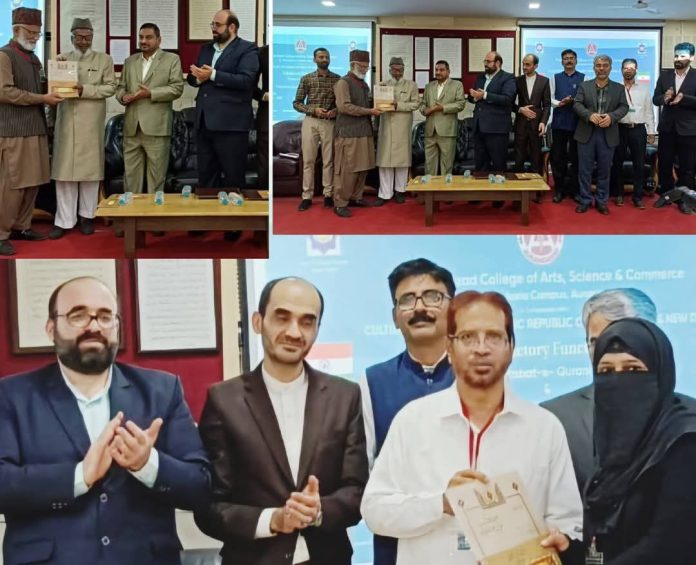
Recently, a national-level calligraphy competition was held in Aurangabad, attracting participants from across India, including Telangana, Maharashtra, Kashmir, and Rajasthan. Ustad Zafar Raza Khan and his student Shahjahan, both from Tonk’s Markaz-Talimul-Khutut institute, represented their city at the Second All-India Quranic Calligraphy Competition. The event was organised in collaboration with Maulana Azad College of Arts, Science, and Commerce (Aurangabad) and the Iran Culture House, Mumbai and New Delhi.
Participants were initially shortlisted based on online submissions of their work. Those selected were invited to the competition held on December 27. Among the contenders, Tonk’s calligraphers distinguished themselves, securing the top two honours and bringing glory to their city.
Ustad Zafar Raza Khan received high praise for his exceptional skill in the Nasta’liq script. While judges unanimously considered his work the finest, he was awarded the second prize due to international competition rules. These rules stipulate that if only one individual meeting the standard for first place remains in the competition, the top prize is withheld, and the second prize is awarded instead.
Shahjahan, another participant from Tonk, triumphed in the Naskh Arabic (Osmani Naskh) script category, winning first prize. Their achievements underscore the exceptional training provided at Markaz-Talimul-Khutut, a new institute established in Tonk on January 1, 2024.
The institute has rapidly gained prominence, thanks to its internationally acclaimed instructors, Ustad Zafar Raza Khan and Ustad Khurshid Alam. Both are celebrated as among the finest calligraphy masters globally. Their dedication has elevated the institute and inspired a new generation of artists to master this ancient art form.
The institute’s officials attribute their success to the hard work of their students and faculty, pledging continued efforts to preserve and promote the art of calligraphy. This achievement is a source of pride not only for Tonk but for Rajasthan and the entire nation.
source: http://www.radiancenews.com / Radiance News / Home> Latest News / by Raheem Khan, Radiance News Bureau / January 01st, 2025
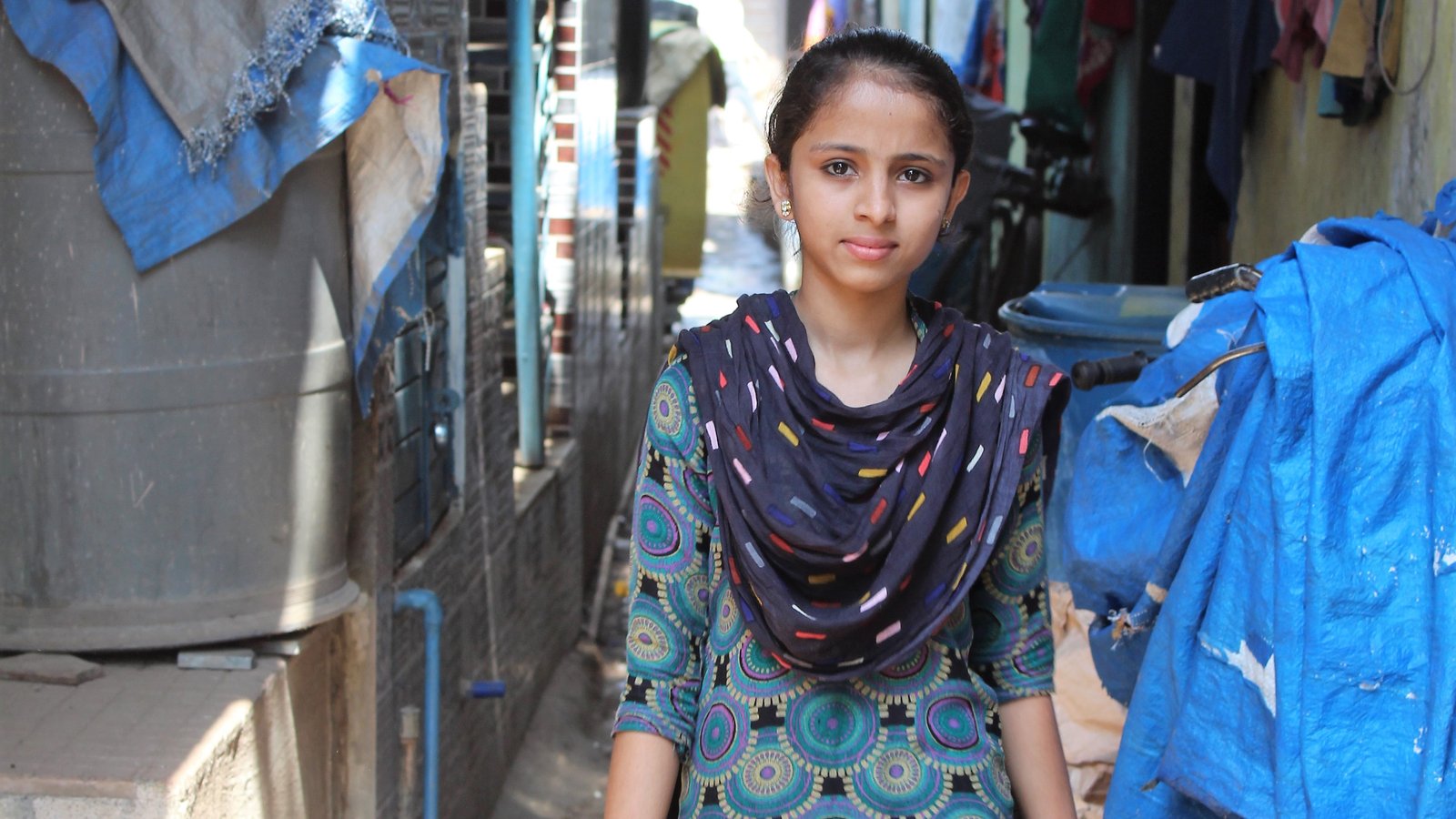
An award winning activist and trainer, Saleha is an inspiration to many !
Period. Just the word alone has the power to make people uncomfortable, but why?
Troubled by the ubiquity of this discomfort, young Saleha decided to take it upon herself to break the stigma and lead the change in her slum in Mumbai city. An inspiring change-maker at 15, the story of Saleha is the clarion call for society at large to start talking about menstruation. It is indeed high time to not just talk but also celebrate these celebrate small steps towards change.
It is shocking that less than half of India’s 355 million menstruating women use sanitary napkins (SNs). These are not mere statistics, but a reality we can no longer ignore. For millions of women in India, the struggle begins with the lack of basic awareness about menstruation and therefore not following the right menstrual health and hygiene practices.
Saleha lives in the Govandi slums, located close to Mumbai’s biggest dump yard, with one of the lowest human development indices of the city. Her brave efforts despite the odds she faces every day may not end the problem that Govandi and even India faces at large but she is surely a part of the solution!
How did it all begin?
Saleha’s journey was not an easy one. Initially, she had minimal support from her family. After marrying off her elder sister, the family was faced with financial difficulties. Then as they faced the choice of sending either Saleha or her brother to school, they did what many families do. She was in class 8th then.
Saleha’s family mindset was only able to change with her extraordinary perseverance coupled with months of consistent effort put forward by Save the Children’s team. Today, Saleha is in class 11th and an active member of Save the Children children’s group in her area.
She was 12 when she first attended a menstruation session in her school.
She recalls: “We were taken to a separate class for the session and boys were not a part of it. I think even if boys don’t menstruate, they too should be educated about it,” says Saleha.
The fact that menstruation is one hush-hush topic that is usually avoided by our parents, teachers and the community.
As an active member of the children’s group, Saleha stood at the forefront of a unique child-led campaign called WASH4LIFE. In this campaign she strongly advocated water and sanitation issues in her community. Saleha has conducted more than 250 sessions on menstrual hygiene and other issues related to water and sanitation-issues over the last three years. She has been able to influence more than 2,500 adolescent girls who have adopted healthy menstrual hygiene practices. She does it through innovative (and fun) methods of messaging such as street plays, photo exhibitions and talk shows – reaching out to over 10,000 community members.
When Saleha first joined the group, she was very fascinated by the program, as it provided an opportunity for her and other children to understand the changes in their body at the time of puberty – something that was not discussed elsewhere. The girls also learned how to use sanitary napkins. She aspired to and then became a trainer very quickly thereafter.
“Twice or thrice a month we conduct sessions for groups of 30 girls. We conduct these sessions after school hours, with each session lasting three to four hours. I made many friends here and also gained confidence.,” she beams proudly.
Saleha remembers, “My father did not speak to me for days when I went against his wishes and conducted training sessions. My mother has only now begun to understand what I stand for. It was tough convincing her, but now she acknowledges the change this has brought about in all our lives.”
Today she has the support from her family, peers, and community.
Her exceptional contribution in various community welfare activities got her the most prestigious award – Savitribai Phule Award. She was also selected as an Ashoka Youth Venturer and will be mentored in leadership skills for one year. More recently she was nominated for the International Peace Prize which she hopes will be a stepping stone for her future endeavours!
Global Citizen India campaigns for better access to menstrual health and hygeine awareness for young girls and women in India. Take action here.
Save the Children, India aims to catalyse a movement for and with children for achieving the greatest improvement in the child rights indicators related to survival, education, development and participation aligning with national and global commitments to tackle exclusion and inequalities.
source: http://www.globalcitizen.org / Global Citizen / Home> Partner> Demand Equity / from Save The Children / April 12th, 2018
Indian carrom team returns triumphant from World Cup in San Francisco, with Rashmi Kumari praising champions Srinivas and Khazima.
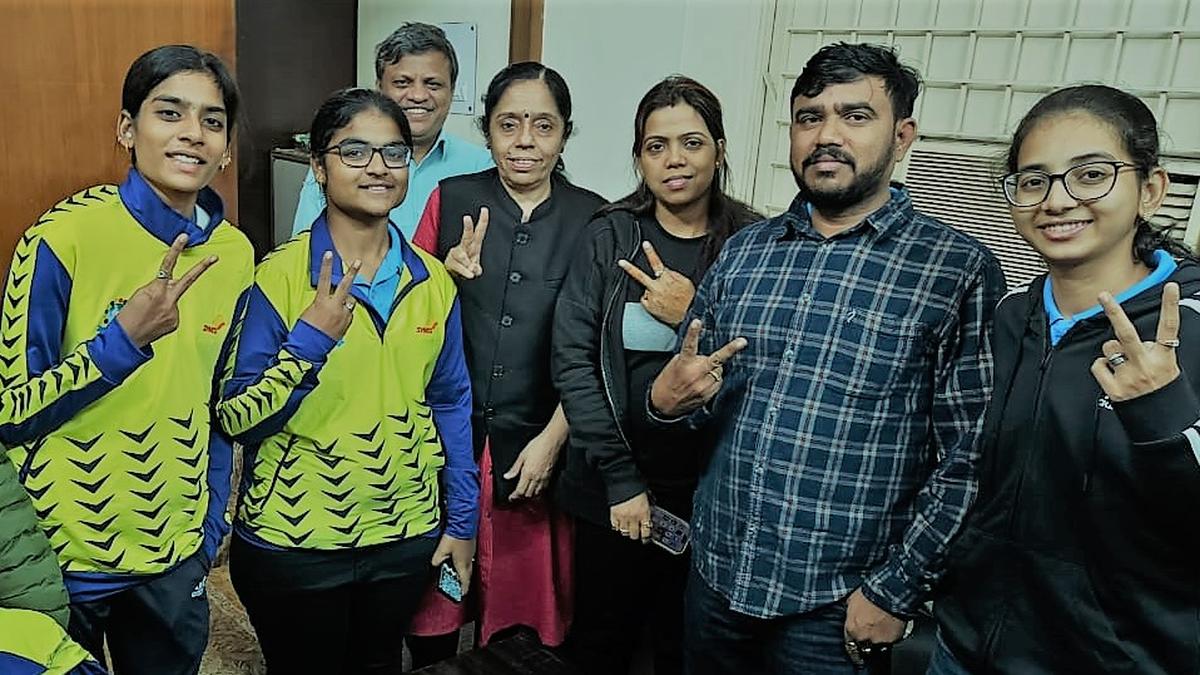
Some members of the World Cup-winning Indian carrom team on return in Delhi on Wednesday (November 21, 2024). From left, K Nagajothi, M Khazima, V Mithra, VD Narayan, Bharti Narayan, Rashmi Kumari, K Srinivas, and Aakanksha Kadam. | Photo Credit: Kamesh Srinivasan
It was a happy homecoming for the champion Indian carrom team from the World Cup in San Francisco, USA, on Wednesday (November 20, 2024).
Even though it was K. Srinivas and M. Khazima who won the individual men’s and women’s titles in a thrilling fashion, it was the World Champion Rashmi Kumari who was singing their praise, appreciating their high-quality game, in a chat with The Hindu.
The evergreen women’s champion Rashmi, who has won the national title 12 times, apart from three World titles, expressed admiration for Srinivas finishing brilliantly with a white slam, to emerge champion after trailing 16-20.
“It was a great finish,” said Rashmi.
On his part, Srinivas said that Mohd. Arif had executed nine slams through the World Cup with his brilliant play, and that he derived great satisfaction in winning in such great style with a slam, not giving the opponent any chance.
The 17-year-old Khazima, a first year student of Justice Basheer Ahmed Sayeed College in Chennai, had won a thriller 25-23, 22-25, 25-24 agaiinst Rashmi in the final for the women’s crown.
“I have great respect for Rashmi. I practised 12 hours a day to prepare for this World Cup. My father Mehboob Basha and former World Champion Maria Irudayam have guided me”, said Khazima, who won the doubles title with V. Mithra.
For one so young, Khazima was quite unselfish and was thinking more about improving the structure of the Chennai Nagar Carrom Coaching centre as and when she gets to meet the Tamil Nadu Chief Minister.
The small structure that gets flooded during the rains, has already produced many national champions, including Khazima’s brother.
It was a triple crown for both Srinivas and Khazima, as they not only won the singles but also the doubles and the team championships. Srinivas won the doubles title with Mohd. Arif.
The secretary of the All India Carrom Federation (AICF), Bharti Narayan, was delighted with the high quality performance of the Indian players, in sweeping every possible medal except one.
“Preeti Jakhotia of the USA played a superb game right through and beat two of our players, V Mithra in the third place match and K Nagajothi in the quarterfinals”, said Bharti.
The secretary general of the International carrom federation, VD Narayan said that the standard of the game was going up globally, and that the USA had done a great job of hosting the World Cup, acquiring 80 boards from India, and changing the frame to blue for a more impressive screen presence.
“We are planning to have the Asian championship every year, like the way Europeans conduct their championship. We have many plans to develop the game”, said Narayan.
“Khazima played a very aggressive game, pulling off many impressive shots. The loss in the final gives me the motivation to train better in the next four years,”, said Rashmi.
source: http://www.thehindu.com / The Hindu / Home> Sport / by Kamesh Srinivasan / November 21st, 2024