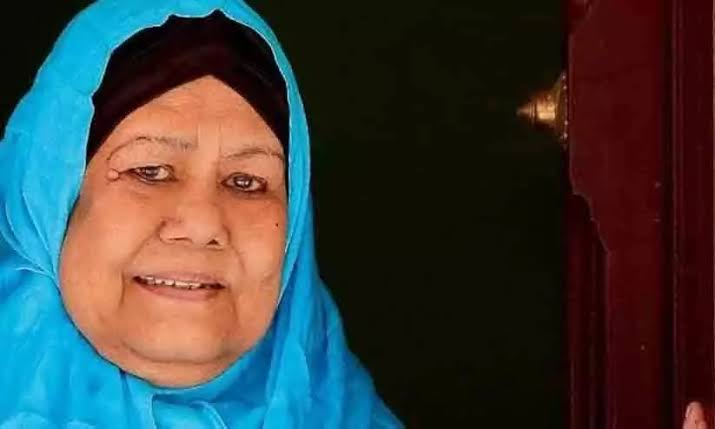
The veteran Maappilapattu singer, Ramla Beegum, passed away at her residence in Kerala’s Kozhikode district on Wednesday, September 27, 2023, at the age of 85.
In addition to her renown as a Maapilapaatu singer, Ramla gained fame as a Kathaprasangam artist, captivating audiences with her unique storytelling style that weaved together tales from both Muslim and Hindu cultures.
Her performances graced stages both nationally and internationally.
To this day, Ramla’s Mappilapattu songs and lyrical narratives, such as “Husnul Jamal Badrul Muneer,” continue to captivate the hearts of art enthusiasts. Some of her most cherished renditions included “Aalam Udayon…” and “Iruloka Jayamaniyum…”
Ramla has performed narrations of literary classics such as Kesavadev’s ‘Odayil Ninnu,’ Kalidas’s ‘Shaakuntalam,’ and Kumaran Asan’s ‘Nalini’ on international platforms.
Her exceptional talent has earned her numerous awards, including the Kerala Sangeetha Nataka Academi Award and the Folklore Academi Award, to name a few.
source: http://www.maktoobmedia.com / Maktoob Media / Home> India / by Maktoob Staff / September 27th, 2023
Purdadtoor Town (Kadapa District), ANDHRA PRADESH:
Dr Khadar Vali, the Millet man of India
Coarse grains or millets are ancient foods which contain key nutrients like vitamins, zinc, beta-carotene, and magnesium. These foods keep blood sugar under control and reduce obesity. If one eats healthy food one can simply avoid disease and medicines.
This is the message from India’s leading agronomist Dr. Khadar Vali, who is also called the Millet man of India.
Dr. Vali is an independent scientist and food expert. He has brought back five species of millet that had disappeared from the world. Today, at 66 years of age, Vali is one of the leading proponents of millet cultivation in the world. He has made world realize the importance of grains.
Millets are available not only in India but everywhere in the world. These are known by different names in each country. To date, people around the world have eaten 200 different types of whole grains.
It’s important to note that the United Nations Food and Agriculture Organization (FAO) declared 2023 as the International Year of Millets at the insistence of India.
Khadar Vali says that the cultivation of millets can solve problems of soil erosion and irrigation also. The food we eat creates an imbalance in blood glucose levels. It makes people sick. But all this can be avoided if we use coarse grains. If you eat millet, you never need medicine.
He says it’s a misconception that coarse grains are food for animals and birds. He says these are super foods that can prevent disease as these contain fiber that cleanses the body. These grains protect the human race and other species. Millets are food for the whole planet.
Fox millet or Bajra
Dr Khadar Vali hails from Purdadtoor town in the Kadapa district of Andhra Pradesh. He has been working for 20 years to revive Sridhanialu, an Indian concept about food habits that are in sync with the nature and the human body.
Earlier, he worked in a good position in the USA. Dr Vali is a post-graduate from the Regional Institute of Education, Mysore, and did his PhD on Steroids from the Indian Institute of Sciences, Bengaluru.
Vali did his postdoctoral research on a fellowship in Environmental Science from the United States. His research focused on the inactivation of deadly chemicals such as Agent Orange and dioxins. His research came at a time when food was becoming increasingly commercialized.
Around 1986-87, Dr. Khadar Vali raised the issue of food-related consequences in society when he came across a case of a girl who started menstruating at the age of 6. He decided to return to his country.
He returned to India in 1997 and worked hard to revive five different varieties of millets in Mysore that were rapidly disappearing. More than two decades later, India’s ‘Milletman’ Dr. Khadar Vali was awarded the Padma Shri on the occasion of the 74th Republic Day celebrations.
Dr. Khadar Vali says that millet has long been part of the mainstream diet but over the past 75 years, corporations marketing rice and wheat have Institutions subjected them to “systematic destruction”.
He has told the world about the benefits of coarse grains along with the negative effects of other grains from his long research on millet. Some points of his research are as follows. His research on food grains has led him to categorized them as negative, neutral, and positive.
Negative: These Grains cause diseases and include paddy rice and wheat. The fiber content of these grains is below 2 percent.
Neutral: Grains don’t cause new diseases, however, can’t help to cure health disorders and diseases. These are jawar, bajra, finger millet, proso millet, etc which carry fiber content from 3 to 6 percent.
Positive: Grains, which help to cure health diseases and disorders. These are Foxtail millets, Barnyard millets, Browntop millets, Little millets, and Kodo millets; which have fiber content from 8 to 12 percent. He named these millets Siri Dhanyaalu. Siri means wealth, which is indirectly health. .
Based on Dr. Khadar Vali’s research and findings, below are the diseases and disorders cured by the positive millets (Siri Dhanyaalu)
Prime Minister Narendra Modi has given the name Shree Anna to coarse grains.
The year 2023 was declared by the United Nations as the International Year of Coarse Grains, after which the Grammy Award-winning Indian-American singer Fallo prepared a song, saluting the efforts of Prime Minister Modi.
In one of his tweets, Fallow mentioned the Prime Minister’s support in producing the song. This song has been prepared with the aim of promoting coarse grains and helping farmers to cultivate them and encouraging efforts to eradicate hunger from the world.
source: http://www.awazthevoice.in / Awaz, The Voice / Home> Story / by Mansooruddin Faridi / October 07th, 2023
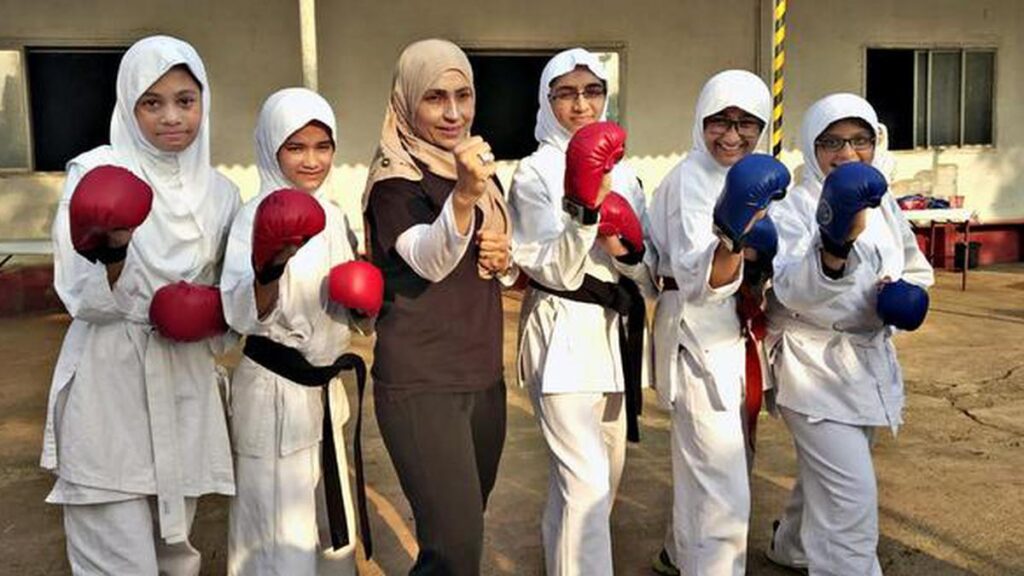
Callisthenics performer, international karate referee, biker, calligrapher who don the headscarf by choice to share stage at YB Chavan auditorium on World Hijab Day
Packing a punch: Shaheen Akhtar, the first female karate referee in south Asia, with her students. (Right)
On Instagram, 19-year-old Haleema Momin calls herself ‘Hijabi Beast’. The athlete from Jogeshwari who performs callisthenics stands out not only for her choice of career but also her attire.
“People who don’t know about Islam assume that hijab is a sign of oppression. For me, the hijab brings a sense of security, strength and dignity. I get a lot of support and attention because of my hijab,” said Ms. Momin, who is trained in powerlifting and martial arts.
Extraordinary feats
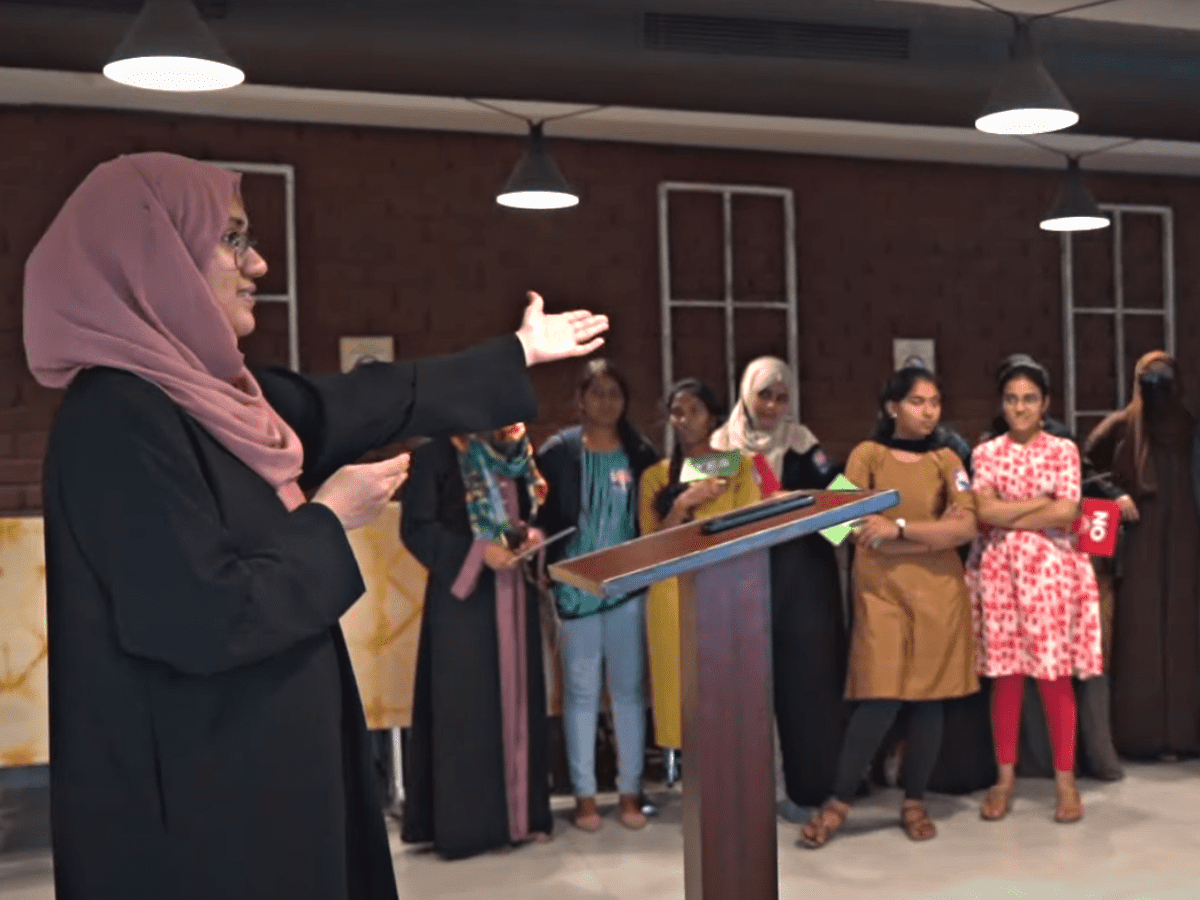
The teenager, who works as a personal trainer, is all set to perform a range of moves like the headstand, handstand, superman push-ups and flips at YB Chavan auditorium on February 1, World Hijab Day. She will share stage with an international karate referee, a biker, a calligrapher and other women who wear the hijab by choice and take pride in it.
The first-of-its-kind event has been organised by the non-profit Al Hadi Organisation with the aim of shattering the popular belief that the hijab is an obligation and not a choice. “I started wearing the hijab at the age of 41. It was a sudden consciousness that dawned upon me and I became a hijabi,” said Mazgaon resident Shaheen Akhtar, a World Karate Federation referee and the first female karate referee in south Asia. Ms. Akhtar was lucky that in the same year, 2014, the World Karate Federation introduced the hijab as a part of the attire for referees. Her 26-year-old daughter, who holds an MBA and works with a multinational company, does not wear a hijab. She said, “My mother always told me that our religion calls for it, but never forced me to wear the hijab. I made my own choice and I will let my daughter make her own choice too.”
The event also aims at highlighting the bias against hijabis in schools, colleges and workplaces. “It took so many years for television channels to have hijabi anchors. Why?,” asked 29-year-old Fatema Zaidi Mirza, an anchor with Channel WIN (World Islamic Network) and one of the presenters at the February 1 event. Ms. Mirza will also share her own story of being asked to remove her headscarf while in school, which later resulted in her parents filing a court case. “Even today, there are so many schools that do not allow Muslim girls to wear the hijab and women are asked to remove it at many places,” she said.
Shabana Sadik Husein Pattawala, founder of Al Hadi Organisation, said the event will bring together women from all Muslim sects. She said, “The message we want to spread is that women can do wonders wearing a hijab, and wearing it does not hide their talent. The speakers and performers at the event will bear testimony to this fact.”
source: http://www.thehindu.com / The Hindu / Home> News> Cities> Mumbai / by Jyoti Shelar / January 29th, 2020
India’s first student-focused non-academic business incubator, Edventure park has incubated 157 student start-ups, out of which 30 have already been launched in the market and more than 10 have raised funding from institutional investors.
Founder and CEO Meraj Faheem told The Siasat Daily that the incubator has an army of campus leads who identify talented entrepreneurs with innovative ideas and provide them with the environment, support, and encouragement that they need.
“We have a four-month-long pre-incubation program where we work with idea-stage start-ups,” he added.
The students come up with ideas, the incubator assesses the ideas and after an application process, there’s a three-round interview process. This is followed by the selection of upto 25 start-up ideas that then go through a four-month-long pre-incubation program.
“On the basis of their progress, Edventure park selects 10 out of the 25 start-up ideas who are then taken to the incubation program, and then the acceleration program,” Meraj Faheem remarked.
source: http://www.siasat.com / The Siasat Daily / Home> News> Hyderabad / by Usama Hazari / June22nd, 2022
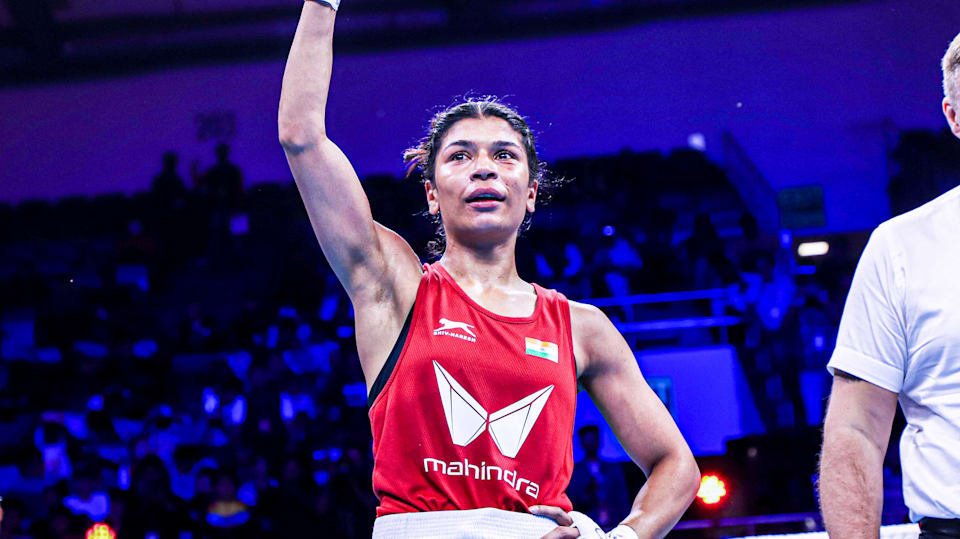
India’s Nikhat Zareen bowed out in the women’s 50kg semi-final after losing 3:2 to Thailand’s Chuthamat Raksat. Parveen Hooda is assured a medal in the women’s 57kg.
(Boxing Federation of India (BFI))
Two-time world champion Nikhat Zareen finished her campaign in the women’s 50kg event with a bronze medal at the Asian Games 2023 boxing tournament in Hangzhou, the People’s Republic of China.
Nikhat Zareen lost her semi-final bout against Thailand’s Chuthamat Raksat by a 3:2 split decision. Zareen and Raksat faced each other in the quarter-finals of the world championships earlier this year and the Indian boxer had come out on top then.
In Hangzhou, both Nikhat Zareen and Chuthamat Raksat started the bout cautiously, the two only able to land soft punches with measured jabs. In the final round, the Thai boxer managed some decisive hooks to take control and won the bout by the barest of margins.
“My experience was great. I had very good bouts in these Asian Games,” Nikhat said. “Today, unfortunately, I couldn’t win the semi-final match against Thailand. But it’s fine, I will take this as a learning lesson.
“I’ll definitely come back stronger. I’ll learn from my mistakes from this competition, and I definitely look forward to that.”
Earlier in the day, Parveen Hooda made it to the women’s 57kg semi-finals by defeating Sitora Turdibekova of Uzbekistan by unanimous decision. The 23-year-old Indian boxer, by virtue of making the top four, secured a maiden Asian Games medal as well as a quota for the Paris 2024 Olympics next year.
However, as National Olympic Committees have the exclusive authority for the representation of their respective countries at the Olympic Games, athletes’ participation at the Paris Games depends on their NOC selecting them to represent their delegation at Paris 2024.
Boxing at the Asian Games 2023 is also a Paris 2024 Olympics qualifier event. In men’s events, the gold and silver medallists in each of the seven weight divisions will be issued a quota to Paris 2024. In the women’s categories, four quotas will be on offer for all categories other than the 66kg and 75kg, for which there will be two berths on offer like men’s.
Parveen Hooda will face Chinese Taipei’s Lin Yu Ting in the semi-finals on Wednesday.
Meanwhile, Jasmine Lamboria missed out on a medal after she lost by RSC (referee stops count) in the women’s 60kg quarters against Ungyong Won of the Democratic People’s Republic of Korea. The Indian boxer endured three standing counts in a space of one minute before the referee stopped the bout.
source: http://www.olympics.com / Olympics.com / Home / by Anurag Peesara / October 01st, 2023
Salima Khan is seen with Dr Pratibha Sharma and her great-grand daughter-in-law
Salima Khan is a new Internet sensation who enrolled herself in Chawli Primary School in Bulandshahr at the age of 92, becoming an inspiration to many.
Bulandshahr (Uttar Pradesh):
Remember Swara Bhaskar’s much acclaimed film “Nil Battey Sannata” released in 2016 where the ace actress goes back to school, attending class right with her daughter much to her dismay?
The plot is “recreated” in real life in Bulandshahr, Uttar Pradesh though for a different reason where a Muslim woman in a video is seen sitting in a classroom with her great-grand daughter-in-law.
Salima Khan is a new Internet sensation who enrolled herself in Chawli Primary School in Bulandshahr at the age of 92, becoming an inspiration to many.
The immediate reason behind Salima Khan’s inspiring endeavour at this age is to receive pension given to elderly citizens under the Indira Gandhi National Old Age Pension Scheme (IGNOAPS).
The government under this scheme gives a monthly pension of Rs. 200 to elderly citizens of 60 to 79 years and Rs. 500 thereafter.
“Amma used to come to me with a request to help her in getting pension. I promised her help provided she come to school every day for at least half an hour and learn something”, the Headmistress told media.
Despite facing a number of age-related issues, including hearing loss and weak eyesight, Salima Khan started coming to school and attend classes.
“Salima is a regular student and is never absent. She is attending the school since the last ten months. In this period, she has learnt a lot of things”, Dr Sharma said.
“Even at this age the interest and dedication with which Salima Khan learns is motivatinf for other students”, she added.
Salima who was unable to recognise letters is now able to write her name with fare fluency and can also confidently count up to 100.
“Acha lagta hai padhna. School aana bahut badhiya lagta hai. (I like to study and attend school)”, 92-year-old Salima Khan said in the video now going viral.
Inspired by Salima Khan, as many as 25 other women of the village, including her daughter-in-laws, have decided to go to school.
source: http://www.ummid.com / Ummid.com / Home> Education & Career / by ummid.com news network / September 29th, 2023
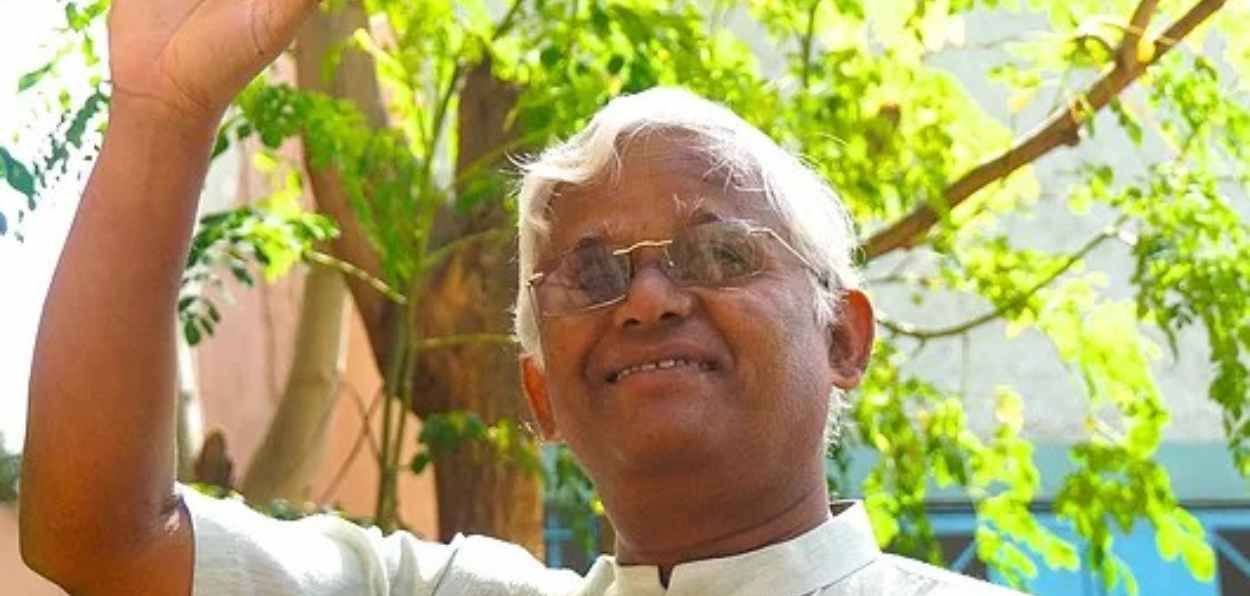
Assam’s Nazneen Yasmin and Dr. Baharul Islam Barbhuyan are among the scientists who contributed to making the ISRO’s Chandrayaan-3 land on the South Pole of the Moon.
Nazneen Yasmin, who is from a middle-class family of central Assam’s Nagaon district joined the ISRO after cracking the toughest selection test two years ago. The young scientist has been involved in radar tracking in the launch department of ISRO for more than a year.
But the journey was not easy for Nazeen Yasmin. While she was on maternity leave for her firstborn about six months ago, she was recalled for crucial operations at least twice and she took her child along.
Despite facing the challenges of married life and the post-pregnancy phase Nazeen was very passionate about the Chandrayyan-3. Many a time, Nazeen worked from home by keeping her baby in her lap.
Naznin Yasmin, daughter of Abul Kalam Azad and Manzila Begum of Maherpar near Juria in the remote Nagaon district received her appointment letter as a scientist at the ISRO headquarters in Swar Sriharikotha, Andhra Pradesh around two years back.
Naznin Yasmin received her primary education at Nuruddin Furkania JB School, Juria in Nagaon district in central Assam. She performed brilliant results in the matriculation or Class X final exam from Kadamani Town High School in 2007. She passed the Class XII exam from Alphabita Science Junior College in 2009 with letter marks in several subjects in the science stream. She later obtained her B.Tech in Electronics from NITS Mirza College, Guwahati in 2013 and her M.Tech in First Division from Tezpur University.
Along with working in various private scientific institutions, Nazneen passed the National Eligibility Examination under the University Grants Commission in 2018 and also qualified for the Junior Research Fellowship of the Government of India.
Nazneen Yasmin, who had dreamed of becoming a scientist since childhood, said she was inspired by the success of India’s first female astronaut Kalpana Chawla. She urges the younger generation not to think of themselves as weak and prepare themselves to get a place in the leading institutions of the country through hard work.
Also, Nazneen was inspired by the life and work of former President Dr. APJ Abbul Kalam, who came from a family with modest means, a family source said.
On the other hand, Dr. Baharul Islam Barbhuiyan of south Assam’s Hailakandi has proved that all dreams come true if a person chases them and works hard.
Baharul, 45 is a resident of Syedband II Khand village situated about 5 km from Hailakandi town. He is the pride of the Hailakandi district.
Baharul Islam’s name came into the spotlight after India’s Chandrayaan-3 spacecraft made history by landing on the south pole of the moon on Wednesday evening. He is a prominent scientist at ISRO. He is one of the scientists who played an important role in the success of Chandrayaan-3
Speaking to Awaz-the Voice Assam from ISRO headquarters in Bangalore, Baharul Islam said he was proud to be involved in a historic work that set a record in the space world. He said students have always been interested in space and after the successful landing of Vikram on the South Pole of the Moon. “Success of Charayaan-3 will result in an increase of interest and curiosity about space science among the younger generation,” he said.
He earned his B.Sc from SS College, a Masters in Mathematics from Aligarh Muslim University, PhD from Gujarat University before joining the ISRO.
Baharul’s parents were teachers and they created an environment of science at their home from the very early stage of their son. His father, Moinul Haque Barbhuiyan, has passed away. Mother Rehana is old yet she is excited about her son’s achievement.
“There are no words to express my joy at the moment. I never thought such a day of success would come. People have been calling us since Wednesday,” said Baharul’s brother Enamul Haque.
source: http://www.awazthevoice.in / Awaz, The Voice/ Home> Story by ATV / posted by Aasha Khosa / August 26th, 2023
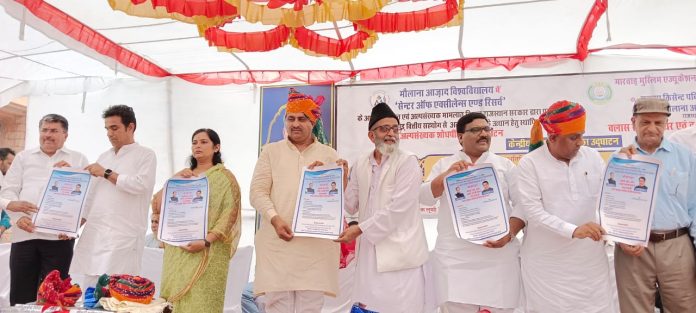
In a major initiative set to generate new avenues, the Jodhpur-based Maulana Azad University, which is the first private university established by the Muslim community in Rajasthan, has set up a Minorities Research Chair for conducting targeted studies and research on the issues, problems and challenges confronting the minority communities in the state. The research chair will make important recommendations after its studies.
The Minorities Affairs Department of the Congress government in Rajasthan has sanctioned Rs. 2 crores as financial assistance for the research chair. The university was established by the Marwar Muslim Educational & Welfare Society (MMEWS) at Bujhawar village on the outskirts of Jodhpur in 2013. The institution of higher education is now imparting education to more than 15,000 students belonging to Muslim and other less privileged communities in multiple disciplines of studies.
The Minorities Research Chair will function under Maulana Azad University’s Centre of Excellence and Research, for which Chief Minister Ashok Gehlot had granted Rs. 15 crores in 2022. The research chair, which is expected to make a meaningful intervention for the development of Muslims and other minorities, is the brainchild of noted educationist Mohammed Atique, who is the MMEWS Chief Executive Officer and the Founder-Chancellor of Maulana Azad University.
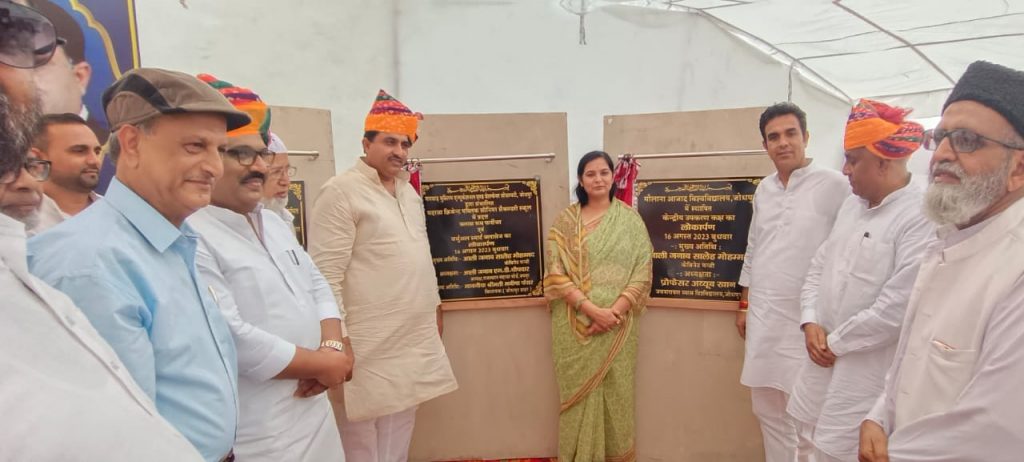
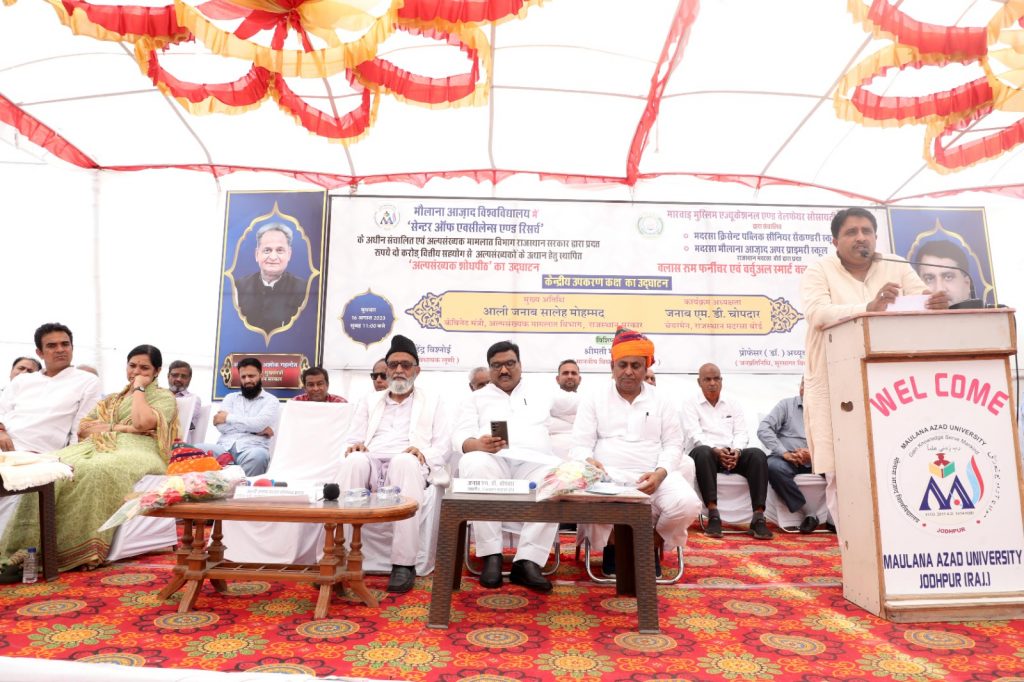
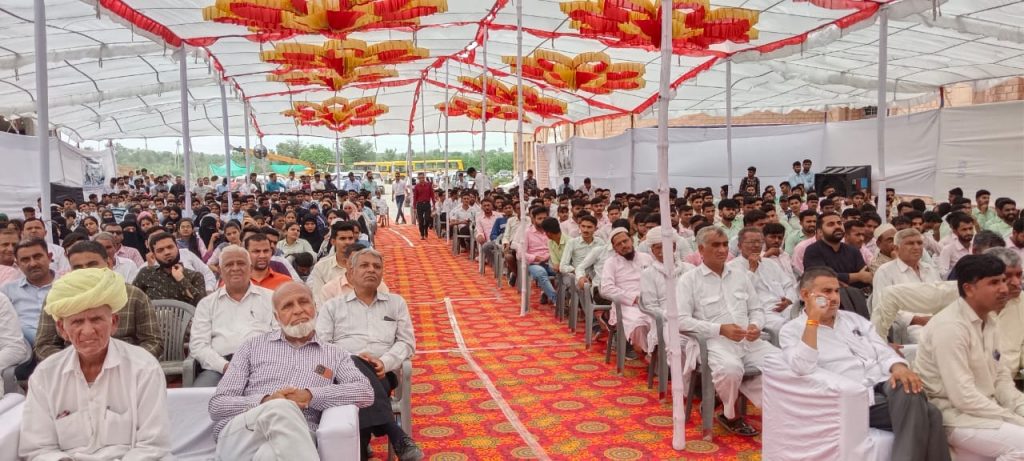
The research chair was inaugurated at a grand function organized on the university premises in the presence of Rajasthan Minorities Affairs Minister Saleh Mohammed, Rajasthan Madrasa Board Chairman M.D. Chopdar, several MLAs, public representatives, government officers, educationists, distinguished citizens, journalists and social activists on August 16. The university is already running M.Phil and Ph.D. programmes in various streams.
In his address, Saleh Mohammed said the Maulana Azad University, which had made consistent progress during the last 10 years, was another name for high-quality scientific education in the future. The Minorities Research Chair would prove to be extremely beneficial for research and education in the areas crucial for the development of minority communities, he said.
After the research chair’s inauguration, the Central Equipment Room of the university’s Faculty of Pharmacy, and the classroom furniture and virtual smart classes of Crescent Public School and Maulana Azad Upper Primary School run by MMEWS were dedicated to the students. A poster of the foreign language training programme under the Chief Minister’s Minority Language Proficiency and Communication Skills Development Scheme was also released on the occasion.
Mr Atique said the Maulana Azad University was making sincere efforts to achieve the goal of “education for all” with a clear objective that no child from the weaker sections of any community should be deprived of education because of the lack of basic facilities. University president Jameel Kazmi said the research chair would review the progress of the government’s schemes for the development of minority communities and evaluate their achievements and success, besides identifying the obstacles in their implementation.
Presiding over the function, M.D. Chopdar described Atique as “Sir Syed” of the modern era while pointing out that the initiatives taken under his leadership in Jodhpur had made a record of sorts. He said the Madrasa Board was taking steps for the modernization and development of madrasas, for which the MMEWS was rendering full cooperation to it. Chopdar also flagged off a vehicle carrying the furniture supplied by the Madrasa Board to various schools in the city.
Luni MLA Mahendra Singh Bishnoi, Jodhpur City MLA Manisha Panwar and Congress leader from Soorsagar Assembly constituency, Ayub Khan, were special guests at the function. All of them praised the stellar role played by the MMEWS and Maulana Azad University in improving the educational standard of the Muslim community in Jodhpur. A large number of distinguished citizens from Barmer, Jaisalmer, Pokhran and Phalodi in western Rajasthan also came to attend the function.
The MMEWS, established in 1929 during the pre-Independence era, runs as many as 330 educational, health and social institutions. Atique has been instrumental in easing the lives of more than 45,000 youths through these institutions working in varied fields of education, health care, community development, rural development, waste-to-wealth initiatives and skill development programmes during the last four decades.
The then ruler of Jodhpur princely state, Maharaja Umaid Singh, was the patron of MMEWS and had gifted a school named ‘Durbar Muslim School’ to the Society in 1936. The Rajasthan government allotted five acres of land to the MMEWS in 1978, on which the Maulana Abul Kalam Azad Muslim Senior Secondary School was constructed.
Since then, the MMEWS has established several institutions, including the Industrial Training Institute, Nursing College, Pharmacy College, B.Ed. College, Mai Khadija Hospital, Rahmatul-Lil-Alameen Blood Bank, Marwar Adarsh Gaushala and Bujhawar Veterinary Hospital.
The MMEWS established the university in 2013 with the intention of providing higher education to the most deprived and marginalized sections of society.
The first president (Vice-Chancellor) of Maulana Azad University was the noted Islamic scholar from New Delhi, Akhtarul Wasey. The current president, Jameel Kazmi, hailing from Jaipur, has taken steps for interdisciplinary studies while maintaining the indigenous ethos and the spirit of plurality in the university’s functioning.
About 45,000 students have so far passed out from the MMEWS group of institutions and become doctors, engineers and business people and entered other professions as well. Some of them have also established nursing homes and clinics in remote rural areas, which are often ignored in the government’s development plans. Maulana Azad University has set the motto, “Gain Knowledge and Serve Mankind”, for itself.
source: http://www.indiatomorrow.net / India Tomorrow / Home> Education / by the India Tomorrow Correspondent / August 25th, 2023
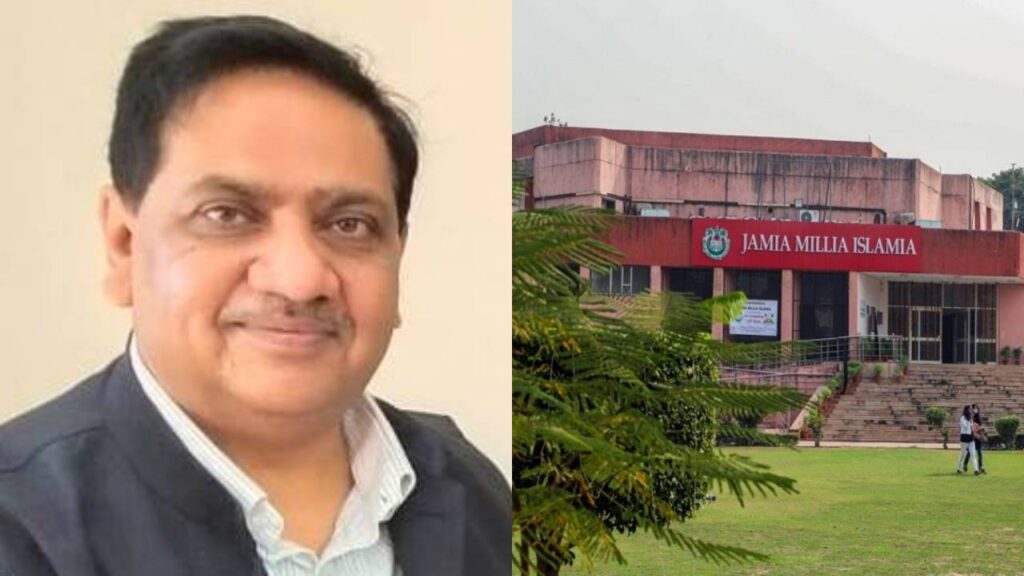
Professor Shehzad Anjum, Department of Urdu, Jamia Millia Islamia (JMI) is a renowned critic, researcher and the senior most Professor of the department.
Parvez Shahidi Award:
Professor Shehzad Anjum, Department of Urdu, Jamia Millia Islamia (JMI) has been conferred the prestigious ‘Parvez Shahidi Award’ of the West Bengal Urdu Academy for his great work in Urdu language. He is a renowned critic, researcher and the senior most Professor of the department.
JMI Vice Chancellor Professor Najma Akhtar, faculty members and students congratulated Professor Anjum for their great achievement.
Professor Anjum is one of the few prominent writers of the present era whose writings are thought-provoking.
Some of his published books are Urdu Ke Ghair Muslim Shaura-o-Udaba, Ahad Saz Shaksiyat: Sir Syed Ahmed Khan, Deedawar Naqqad: Gopi Chand Narang, Azadi Ke Baad Urdu Shairi, Azhar Inayati: Ek Sukhanwar Shayar, Ehtisham Hussain Ki Takhliqi Nigarishat, Tanqeedi Jehaat, Urdu Aur Hindustan Ki Mushtarka Tahzeebi Virasat, Rabindranath Tagore: Fikr-o-Fan, have been published.
He successfully completed the “Tagore Research and Translation Scheme” started by the Ministry of Culture, Government of India as the Coordinator, Department of Urdu, JMI. It is a historic, exemplary and proud achievement in the field of Urdu literature.
Professor Anjum also authored several monographs including Muhammad Ali Johar, Syed Ehtisham Hussain and Syed Muhammad Hasnain for Sahitya Academy, Delhi, Altaf Hussain Hali for Urdu Academy, Delhi, West Bengal Urdu Academy, Mirza Ghalib for Kolkata and Urdu Directorate. The Kalam Hydari monograph for Patna is particularly noteworthy. Several books translated by him have also been published. He also wrote a literary column on non-Muslim Urdu poets and writers for the daily ‘Inqlab’, Delhi, for about two and a half years.
source: http://www.shiksha.com / Shiksha / Home> News> College / by Anum Ansari, Asst Mgr Content, New Delhi / September 09th, 2022
Distinguished Indian scholars have congratulated Grand Mufti of India, Sheikh Abubakr Ahmad on being conferred with Hijrah Award, the Malaysia’s highest civilian honour for Influential Muslim Scholars worldwide.
Indians have also welcomed Malyasian Government’s gesture on giving honour to the proponents of moderate Islam.
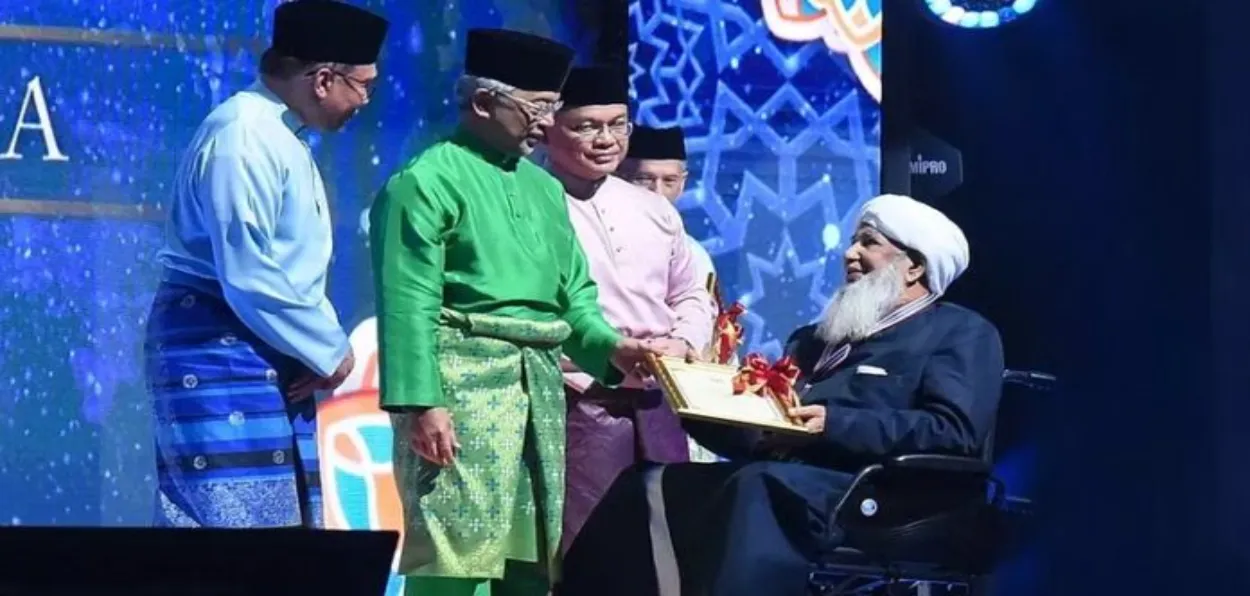
Grand Mufti of India, Sheikh Abubakr Ahmad was conferred with Hijrah Award, Malaysian King Al-Sultan Abdullah Sultan Ahmad Shah presented the award at a grand ceremony held at the Kuala Lumpur World Trade Centre.
The event was attended by Prime Minister Anwar Ibrahim, Minister of Religious Affairs Dr Muhammad Nahim bin Mukhtar among many others.
In a grand ceremony Sheikh Abubakar was felicitated with the prestigious international award for his significant contributions in the field of Islamic knowledge, social development, and peacebuilding.
The Hijrah award committee also acknowledged the educational activities Sheikh Abubakr and his organizations initiated among various communities in India.
Upon receiving the award, Sheikh Abubakr Ahmad expressed his delight and stated that this is an international recognition for Indian community and their contributions to humanity.
Last year, Hijrah award was given to Dr Sheikh Mohammed bin Abdul Karim Al Issa, Secretary General of the Muslim World League, who recently visited India upon the invitation of Indian Government.
Dr Abdul Hakeem, son of Sheikh Abubakr Ahmad, said congratulatory messages are coming in from all over the world, people of various faiths are saying he is deserving of the award for his services as a scholar for the downtrodden and the backward community.
Sheikh Abubakr Ahmad has successfully established a multi-discipline institute for education, health, agriculture, technology, hospitality, and spirituality together in one city.
He has also contributed to the Prime Minister Modi’s vision of a smart city. “The award is an honour to India as Sheikh has always represented India’s multi-cultural diversity and unity in several countries in the world,” he added.
President of Interfaith Harmony Foundation of India, Dr Khwaja Iftekhar Ahmad said: Sheikh Abubakr is running a chain of religious and modern education institutes in Kerala including an orphanage. This puts him in the category of a highly distinctive Indian Muslim religious scholar, who deserves many honours for his services towards the field of education.
He has done a remarkable thing by establishing in a few hundred acres of land a knowledge city in Kerala. It is an eye-opener for those who wish to contribute in the field of education.
“I congratulate the King of Malaysia for conferring him the award. It is an honour for Indian and an honour for the freedom that minorities enjoy in India,’’ he added.
Haji Syed Salman Chishty, Chairman – Chishty Foundation, said: “It is a well-deserved recognition for his significant contributions to Islamic knowledge, social development, and peacebuilding. His educational initiatives have positively impacted various communities in India, and this award is a proud moment for the Indian community and their contributions to humanity.
Grand Mufti Sheikh Abubakr Ahmad’s dedication to promoting Islamic knowledge and fostering social development has truly made a lasting impact. The recognition bestowed upon him by the Malaysian King Al-Sultan Abdullah Sultan Ahmad Shah highlights the global influence of his work as an influential Muslim scholar.
The Hijrah Award’s history of honoring notable figures like Dr Sheikh Mohammed bin Abdul Karim Al Issa further solidifies the significance of this recognition. With influential personalities like Sheikh Abubakr Ahmad and Dr Sheikh Mohammed bin Abdul Karim Al Issa collaborating and fostering dialogue between nations, it enhances interfaith relations and promotes mutual understanding.
Zafar Mahmood, noted Islamic scholar and former civil servant, said: “The Malaysian award is a recognition of Sheikh Abubakr Ahmad for his remarkable work in the field of education and social harmony. Recognition of efforts in the field of education uplift is heartwarming. It also elevates our spiritual level because of the spiritual mandate.’’
Sheikh Abubakr Ahmad is widely respected not only in religious fraternity of Muslims but by the people of all communities. His contribution in interfaith dialogue is noteworthy.
source: http://www.awazthevoice.in / Awaz, The Voice / Home> Story / by Awaz, The Voice / July 20th, 2023

_(1).jpg)

_and_Baharul_Islam_Barbhuyan_(right0.webp)