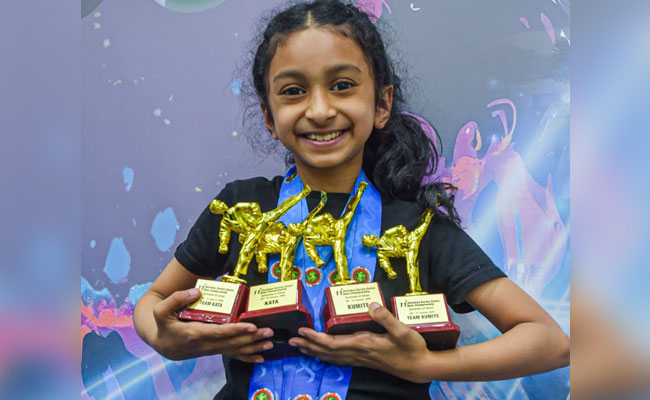
Indian karateka Zaara Vasim Assadi emerged as the standout performer at the International Karate Open Championship held as part of the Muscat Night Festival, clinching four gold medals in a remarkable display of skill and consistency.
The prestigious tournament saw participation from around 400 athletes representing 24 clubs across multiple countries. Amid intense competition, Zaara, aged just 10, created history by becoming the only girl at the championship to secure gold in all four categories she competed in individual Kata, individual Kumite, team Kata, and team Kumite.
Zaara’s achievement adds to her already impressive record. She has remained undefeated in Kata since the age of five, underlining her long-standing dominance in the discipline. Her performances were widely praised for technical precision, discipline, and composure well beyond her age.
Training at The Champ Sports & Arts in Muscat, Zaara’s journey has become a source of inspiration for young martial artists, reinforcing the idea that dedication and passion can overcome age-related barriers in competitive sport.
The championship also served as a platform for cultural exchange, bringing together athletes and spectators from diverse backgrounds and celebrating the unifying spirit of karate.
Zaara Vasim Assadi is the daughter of Vasim Assadi and Hasra Sana and hails from Udupi. She is the granddaughter of Zikriya Assadi.
source: http://www.english.varthabharati.in / Vartha Bharati / Home> Gulf / by Vartha Bharati / February 02nd, 2026
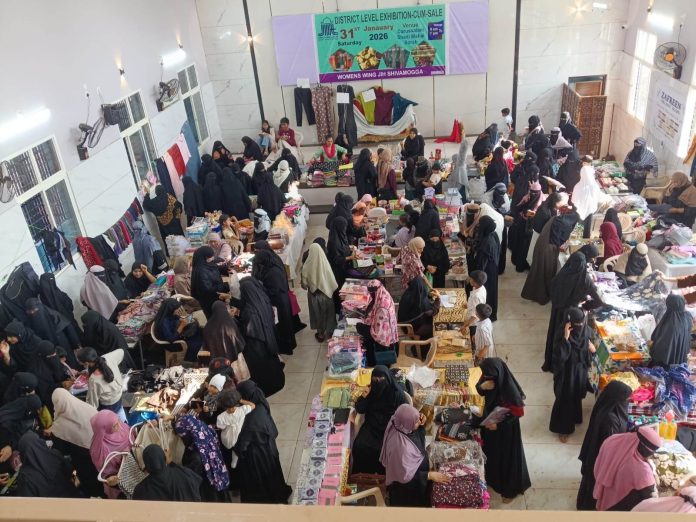
A one-day Exhibition-cum-Sale was organised by the Women’s Wing of Jamaat-e-Islami Hind, Shivamogga District. The exhibition was inaugurated by the State Secretary of the Women’s Wing, Jamaat-e-Islami Hind, Mohtarma Taskeela Khanum.
The objective of such programmes is to economically strengthen and empower women. In the context of rising inflation, unemployment, and poverty, it was emphasised that addressing these challenges is a shared responsibility, and that women must play an effective role alongside men in the nation’s economic development.
The organisers highlighted that such exhibitions provide women with practical business experience, opportunities to interact with people from diverse backgrounds, and support in developing entrepreneurial ideas. These platforms also enable women to engage in halal business practices within the limits of Shari’ah, while facilitating growth through networking and referrals.
Islam permits women to engage in business, including running enterprises from their homes, as reflected in Islamic history through the example of Khadijah bint Khuwaylid رضی الله عنها, a successful businesswoman. Islam also encourages honest and ethical business practices for both men and women.
Nearly 100 women from across the district set up stalls showcasing clothing, handbags, fancy items, abayas, home-made products, and more. A food court offering a wide variety of food items was another major attraction. Members, associates of Jamaat-e-Islami Hind, and women entrepreneurs from different parts of the district actively participated in the exhibition.
The women-exclusive exhibition attracted around 3000 women visitors, who actively shopped at the stalls. The event was described as highly encouraging, as it highlighted the talents, skills, and entrepreneurial potential of women.
Such exhibitions form part of the organisational plan of Jamaat-e-Islami Hind to promote women’s empowerment. Efforts will be made to strengthen the women entrepreneurs’ network.
Feedback received from participants reflected a high level of satisfaction, with many expressing a desire for similar programmes to be organised regularly. Participants particularly appreciated that the exhibition was organised by women, for women, and exclusively for women, creating a comfortable environment that enabled them to conduct business with confidence.
The organisers were widely appreciated, and participants expressed eagerness to remain connected and take part in future programmes. The total sales from all stalls amounted to approximately ₹3 lakh during the one-day exhibition.
The programme concluded on a positive note, reinforcing the importance of such initiatives in promoting women’s economic empowerment and community development.
[The writer of this report is Member Mashavrati Board Karnataka, and District Organiser of JIH Women’s Wing Shimoga]
source: http://www.radiancenews.com / Radiance News / Home> Entrepreneurship> Focus / by Naseema Begum / February 01st, 2026
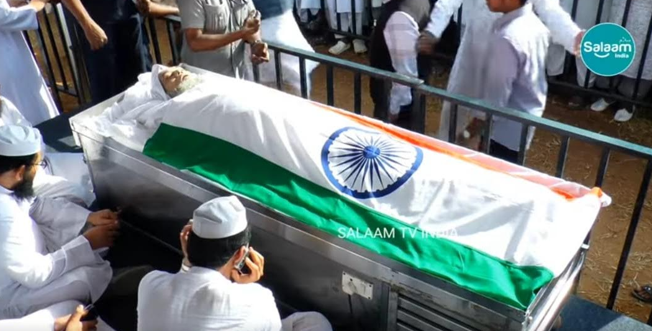
Chief Minister Siddaramaiah paid his last respects to Hazrat Maulana Sagheerr Ahmed Khan Rashadi, Amir-e-Shariat of Karnataka and rector of Darul Uloom Sabilur Rashad, expressing deep grief over his passing. He conveyed condolences to the bereaved family and prayed for strength and patience during the period of mourning.
Recalling the life and work of the late scholar, the Chief Minister said Maulana Rashadi devoted his entire life to Islamic education, moral guidance, and the cause of communal harmony. He described him as a respected religious scholar and social leader whose influence reached far beyond classrooms and institutions. According to Siddaramaiah, the Maulana’s scholarship and counsel shaped generations of students and earned respect across religious and social communities.
Several senior leaders and officials attended the prayers, including Ministers K J George and Zameer Ahmed, Chief Minister’s Political Secretary Naseer Ahmed, and Additional Chief Secretary Anjum Pervez. Their presence underlined the regard held for the late Maulana within the administration and public life.
Community leaders also joined the gathering. Among them were Dr Belgami Mohammed Sa’ad, state president of Jamaat-e-Islami Hind Karnataka, Maulana Ifteqar Qasmi, president of Jamiat ul Ulema Karnataka, along with scholars and representatives from different walks of life.
The mortal remains of Maulana Sagheerr Ahmed Khan Rashadi were laid to rest at the burial ground within the Darul Uloom Sabilur Rashad campus.
The funeral prayer drew thousands of students from across Karnataka, fellow scholars, and members of the public.
His son, Maulana Zubair Ahmed Khan, led the prayer in an atmosphere marked by grief and reverence.
Speakers described the late Maulana as a symbol of knowledge, humility, and lifelong service whose legacy will guide future generations.
source: http://www.radiancenews.com / Radiance News / Home> Latest News> Report / by Radiance News Bureau / January 14th, 2026
Muslim Mirror’s 100 Most Influential Muslims of 2025
New Delhi:
Muslim Mirror has released its much-anticipated annual list of the “100 Most Influential Indian Muslims of 2025,” spotlighting individuals who have made significant contributions to India’s public life across a wide spectrum of fields including politics, culture, education, business, media, religion, sports, and social service. Now in its second edition, the list aims to document influence not merely as power or popularity, but as sustained impact, leadership, and the ability to shape public discourse.
A defining feature of the 2025 edition is the growing prominence of younger achievers, signalling a visible generational shift within Indian Muslim leadership. Alongside established national figures, the list includes emerging voices who have built influence through grassroots activism, professional excellence, digital platforms, legal advocacy, education, and community engagement. Editors associated with the project said this was a deliberate attempt to recognise new centres of influence beyond traditional hierarchies.
The list reflects the diversity and plural character of Indian Muslim society, cutting across geography, ideology, profession, and language. From seasoned politicians and religious scholars to artists, entrepreneurs, academics, and social reformers, the compilation offers a broad snapshot of leadership trends at a time when issues of representation, constitutional values, and social justice remain central to national debate.
Representation Across Sectors
The 2025 list features several eminent academicians and intellectuals who have shaped higher education, policy discourse, and social research. Among them are Abul Qasim Nomani, Ameerullah Khan, Furqan Qamar, Shahid Jamil, and Ubaid-ur-Rahman, recognised for their contributions to education, public policy, and academic leadership.
In the business and entrepreneurship category, the list includes influential names such as Azad Moopan, Azim Hashim Premji, Farah Malik, Irfan Razack, M. P. Ahammed, Mecca Rafiq Ahmed, Meraj Manal, Syed Mohamed Beary, P. Mohammed Ali, Shahnaz Hussain, Tausif Ahmad Mirza, Yusuff Ali, and Ziaullah Sharif. Their inclusion underlines the growing economic footprint of Indian Muslim entrepreneurs, both domestically and globally, spanning sectors from retail and healthcare to infrastructure and consumer goods.
Community leadership remains a strong pillar of the list, with figures such as Arshad Madani, Mahmood Madani, Malik Motasim Khan, Mehmood Pracha, Syedna Mufaddal Saifuddin, Navaid Hamid, Pirzada Md Abbas Siddiqui, Qasim Rasool Ilyas, Sadatullah Husaini, Umer Ahmed Ilyasi, and Yusuf Mohamed Abrahani recognised for their roles in religious guidance, legal advocacy, social mobilisation, and institutional leadership.
Culture, Media, and Public Discourse
In arts and entertainment, globally recognised names such as A. R. Rahman, Aamir Khan, Mammootty, Munawar Faruqui, and Shah Rukh Khan continue to command immense cultural influence, shaping narratives that extend well beyond cinema and music into social consciousness.
The list also acknowledges the growing importance of media and journalism in shaping opinion and challenging dominant narratives. Journalists and commentators such as Arfa Khanam, Irfan Meraj, and Seema Mustafa are recognised for their consistent engagement with issues of democracy, minority rights, and constitutional values.
Religious and Intellectual Scholarship
A significant section of the list is devoted to Islamic scholars and religious thinkers, reflecting their continued influence on moral leadership and intellectual discourse. Names such as A. P. Aboobacker Musliyar, Qasim Nomani, Prof. Akhtarul Wase, Asghar Ali Imam Mahdi Salafi, Asjad Raza Khan, Ibraheem Khaleel Al-Bukhari, Javed Jamil, Khalid Saifullah Rahmani, Khaleelur Rahman Sajjad Nomani, Qamaruzzaman Azmi, Rashid Shaz, Shakir Ali Noori, Shamail Nadvi, and Yasoob Abbas find place for their scholarly work, writings, and public engagement.
Politics and Governance
The political category features leaders cutting across party lines and regions, including Asaduddin Owaisi, Ghulam Nabi Azad, Hamid Ansari, Mehbooba Mufti, Omar Abdullah, Salman Khurshid, Najeeb Jung, Syed Naseer Hussain, Engineer Rashid, Akhtarul Iman, Iqra Hasan, Zameer Ahmed Khan, Rakibul Hasan, K. Rahman Khan, Kadir Mohideen, Mohibullah Nadvi, Md Shafi, Agha Mahadi, Asim Waqar, and Sadiq Ali Shihab Thangal. Their inclusion reflects influence exercised through electoral politics, governance, diplomacy, and legislative advocacy.
Changemakers and Social Reformers
One of the most dynamic sections of the 2025 list is that of changemakers and social reformers, featuring individuals such as Safeena Husain, Shahabuddin Yaqoob Quraishi, Syeda Hameed, Zameer Uddin Shah, Mahbubul Hoque, Sabahat S. Azim, Mehmood Pracha, Faiz Syed, and Zahir Ishaq Kazi, among others. Many of these figures have earned recognition through long-term grassroots work rather than formal authority.
International Booker Prize 2025 winner Banu Mushtaq for Heart Lamp, along with renowned poet Wasim Barelvi, has been placed in the category of Literary Figures.
In sports, iconic names Sania Mirza and Irfan Pathan continue to inspire younger generations through excellence and public engagement beyond the playing field.
Beyond Rankings
The editors emphasised that the list does not claim to be exhaustive, nor does it measure influence solely through fame, wealth, or official position. Instead, it seeks to capture real-world impact, moral authority, intellectual contribution, and the ability to shape conversations within and outside the community.
The annual list has increasingly become a reference point for understanding evolving leadership patterns among Indian Muslims. By foregrounding both established figures and rising talents, the 2025 edition reflects continuity as well as change, underscoring how Indian Muslims continue to contribute meaningfully to India’s democratic, cultural, and social field.
source: http://www.muslimmirror.com / Muslim Mirror / Home> Indian Muslim / by Muslim Mirror / January 15th, 2026
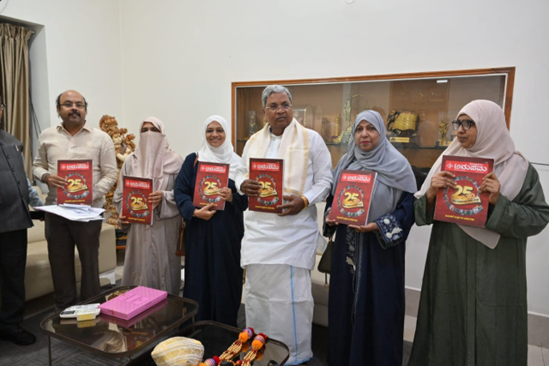
Anupama, the state’s only women’s monthly Kannada magazine run entirely by Muslim women, has completed 25 years. To mark this milestone, Chief Minister Siddaramaiah released a special silver jubilee issue, reflecting on its 25-year journey of success, in Bengaluru on Thursday.
Speaking at the event, the Chief Minister congratulated the team, saying, “There are only a handful of Muslim women in journalism. In such a scenario, it is highly commendable that the Anupama Women’s Monthly, run by women from the Muslim community and has successfully completed 25 years.”
Shahnaz M., the editor of Anupama, also spoke at the occasion. “The implementation of the ‘Guarantee’ schemes for women in the state has brought about significant changes in their lives. On behalf of the Anupama team and all women, I extend my gratitude to the government led by CM Siddaramaiah for their commitment to women’s development,” she stated.
The event was attended by Naseer Ahmed (Political Secretary to the CM), MLA Dr. Yathindra Siddaramaiah, BMTC Vice-Chairman Niket Raj Maurya, and Anupama’s sub-editors Samina Uppinangady, Sajida Momin, and Kulsum Abubakkar. Other notable attendees included S.M. Muthalib, Faisal Ismail, and Saleem Bolangadi.
source: http://www.radiancenews.com / Radiance News / Home> Latest News> Report/ by Radiance News Bureau / January 10th, 2026
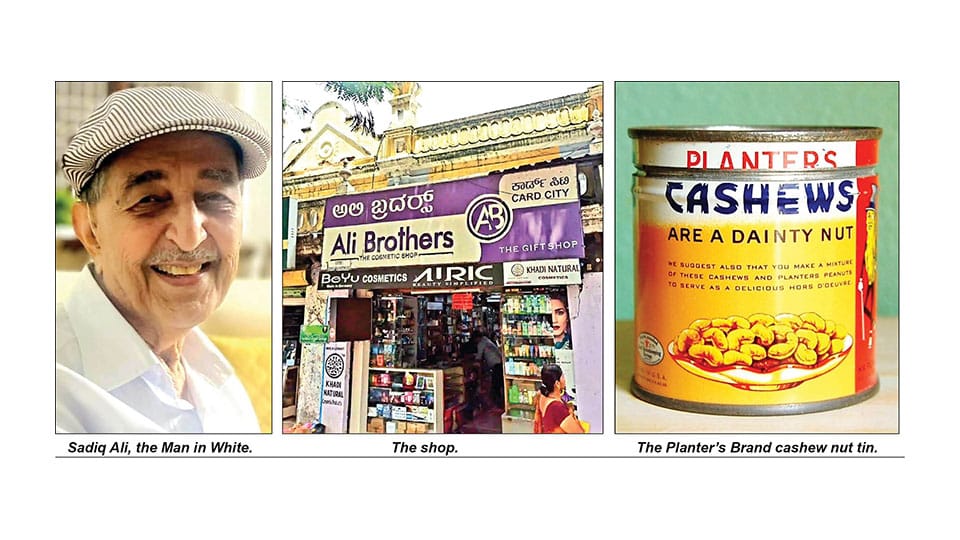
In the passing away of Mr. Sadiq Ali, the proprietor of Ali Brothers, last week, our city has perhaps lost one of its most long-standing icons, because his shop is one of the few shops that have stood almost unchanged, over the longest period of time, in the front façade of our iconic Devaraja Market building.
Out of the nearly seventy business establishments that stand in that row, only about a dozen still stand unchanged and because of my own long-standing familiarity with that place, I can name almost all of them and in the right order too. And, if I have got my observations right, while all the good old, surviving shop owners that I knew of there, slowly stopped showing up at their shops over the years, with the passage of time and passing away of their own good health, Mr. Sadiq Ali was the only shop owner there, who was present in his shop every day, the longest.
He once told me how his father had first started the shop in Mercara and later established the present shop here as a branch and how the original one was wound up later, due to the difficulty the family faced in managing it.
Although I stopped visiting his shop many years ago because of the severe parking problem in the Devaraja Market area, I used to meet Mr. Sadiq Ali quite regularly at the meetings of the Alumni Association of the St. Philomena’s College where we both studied, although two full decades apart. He would never miss any of these meetings and over the past many years, he would be proudly introduced as the oldest alumnus showing up at them!
Riding his trusted blue and white Lambretta, he would be among the first persons to make an appearance at the auditorium and be among the last ones to leave, after shaking hands with all the others there. A most humble and soft-spoken man, he was so soft-spoken that you had to strive hard to hear him. But he stood out most for his two very unique attributes that remained unchanged, all through his life; his attire and his smile. He was always dressed in pristine white and he could never be seen without his disarming smile!
As far as I am concerned, I can safely say that I have known him all my life and I say this because my mother must have carried me in her arms into his shop while I was an infant, until I began to walk in there myself, holding her or my dad’s hand. That is how old my association is, with the man I’m writing about today. He was so close to our family that just a few months ago, he had come home to meet my mother and spend some time with her.
Ali Brothers was the place where we, like most other Mysoreans then, used to do almost all their shopping for soaps, toiletries, cosmetics, chocolates, greeting cards and some condiments too. Being an agent for vehicle insurance, until the advent of online insurance, Mr. Sadiq Ali was the man who used to manage all our vehicle insurance renewals.
He was so meticulous that he would maintain a record of the renewal dates of all his customers’ vehicles and he would call them up well in time, to seek their consent for renewal, which he would do and then personally deliver the policies to them.
Until a very similar store, Mohan Bhandar came on the scene across the road, in the year 1963, all the goodies, dear to my heart then, could only be found at Ali Brothers and nowhere else and these included Cadbury’s chocolates, Parry’s toffees, Kissan jams and tomato sauce, Polson’s butter, corn flakes and most of all, the Planter’s and Cocktail brand of salted cashew-nuts that came in a sealed tin, that had to be opened with its own key, soldered on its top!
In a most interesting arrangement, this slotted key used to peel off a narrow band of metal from around the tin that would leave its top as a very useable lid after the can was opened.
We still have a couple of those cans lying around in our estate house, as relics and memories of the good old days, gone by. While my parents used to keep coins in one of them, in the other, I used to store my spare stock of the carefully selected, round pebbles for the omnipresent catapult, that I would always have around my neck. And mind you, at that time, this contraption was not just omnipresent but my most omnipotent weapon too!
At the end of the day, when it was time for me to be put to bed, my dad had to take it off my neck and place it under my pillow along with its red ammo bag, before tucking me in and beginning his reading of that day’s bedtime story, from my huge collection of Read Aloud series of story books, which I have carefully preserved to this day!
It is a different matter that my state of wakefulness would never ever last through the full story, which invariably had to be continued the next day!
Falling asleep was so easy then, while I was a child and I often ponder over this blissful time, during the times when I lie tossing in my bed, on the few occasions when sleep eludes me now.
That is when I am reminded of Shakespeare who in Henry IV, says; O sleep, O gentle sleep, Nature’s soft nurse, how have I frightened thee, that thou no more will weigh my eyelids down and steep my senses in forgetfulness?
e-mail: kjnmysore@rediffmail.com
source: http://www.starofmysore.com / Star of Mysore / Home> Columns, Over a cup of evening Tea / by Dr K Javeed Nayeem MD / November 16th, 2025
From A Dreamer’s World | Photo Credit: Special Arrangement
A brilliant blue fish glides in a patch of orange pumpkins, another lies still among lilac orchids hoping his camouflage allows him to blend in. These are a few finned beauties artist Shoeb Dastagir has depicted in his solo show A Dreamer’s World.
“I find fish quite calming and I can spend hours looking at them; that is why I began capturing them in my paintings,” says Shoeb, adding he spends a lot of time at the aquarium in Mysore Zoo. “I enjoy watching videos of aquatic life on my phone, too.”
He reels off their names — bumblebee goby, oscars and arowanas, tiger fish, a Brunei beauty and a shark — and how they are all a part of this show. “I am a Piscean, so no matter how hard life gets, fish are a calming refuge for me,” says the artist. “Fish are always calm, going about their lives despite the confines of their surroundings.”
Shoeb Dastagir | Photo Credit: Special Arrangement
He talks about his love for “sunny colours such as tangerine orange, avocado green, icy blue and buttery yellows”. All these hues and more are to be found in his works that exude a touch of whimsy and play out in a fantastical land where an astronaut steps around teacups, fish nestle between blue pea and pearls, and an old-model television sits atop a bouquet of yellow roses.
Though Shoeb draws his inspiration from the natural world, a lot of his art is birthed in his vivid imagination that fuel his compositions of poetry, prose and songs as well. According to his mother Ayesha Dastagir, all these creative interests lead Shoeb to produce bigger and detailed paintings. “One can see a lot of mystical characters apart from the animals and fish, of course. I believe it is his subconscious, sensitivity and imaginary fantasy world that combine to produce something new and different.”
Most of the works in A Dreamer’s World have been executed using pastels and watercolours on paper over the the greater part of a year. Though Shoeb used to paint with oils and canvas, this change in medium came about when he moved from Bengaluru to Mysore, and working on paper seemed a more viable option as space was a constraint at the new place.
From A Dreamer’s World | Photo Credit: Special Arrangement
The artist, who signs his works as Schoeb, his official name which is often misspelt, is currently working on a series of portraits.
The upcoming / current exhibition comprises 24 pieces on display apart from a few others which are a part of the series and are available for sale at the gallery.
A Dreamer’s world by Shoeb Dastagir will be on display at MKF Museum of Art, Bengaluru from November 8-19. Entry free, Mondays closed.
source: http://www.thehindu.com / The Hindu / Home> Entertainment> Art / by Ruth Dhanraj / November 06th, 2025
Saniya Samreen receiving a Gold Medal from Justice Dinesh Maheshwari, Chairperson of the Law Commission of India and former Judge of the Supreme Court, at the 9th Convocation of the Central University of Karnataka (CUK) held on Saturday. | Photo Credit: ARUN KULKARNI
Defying all odds, Saniya Samreen, daughter of a fruit vendor from Aland town in Kalaburagi district, bagged the Gold Medal in Master of Commerce (MCom) at the 9th convocation ceremony of the Central University of Karnataka (CUK) held on Saturday.
She received the medal from Justice Dinesh Maheshwari, Chairperson of the Law Commission of India and former Judge of the Supreme Court, in the presence of Vice-Chancellor Battu Satyanarayana, Registrar R.R. Biradar and Controller of Examinations Kota Sai Krishna, on Saturday.
Ms. Samreen, who completed her schooling and college education in Aland before joining CUK for her postgraduate studies, said that her achievement was a result of perseverance and family support.
“All of my achievements are the result of hard work, dedication, and the unwavering support and guidance from my family and mentors,” she with gratitude during her interaction with media representatives on the sidelines of the convocation.
Her father, Mr. Shamu Bagwan, earns his livelihood as a fruit vendor, while her mother, Mrs. Raziya Begum, is a homemaker. “My parents’ constant belief in me has been the driving force behind my success,” Saniya added.
Saniya, who has also qualified both the Karnataka State Eligibility Test (KSET) and the National Eligibility Test (NET) for assistant professor, said she wishes to build her career in academia.
“I aspire to contribute to the field of commerce through teaching and by shaping future professionals,” she said.
source: http://www.thehindu.com / The Hindu / Home> News> India> Karnataka / by The Hindu Bureau / November 08th, 2025
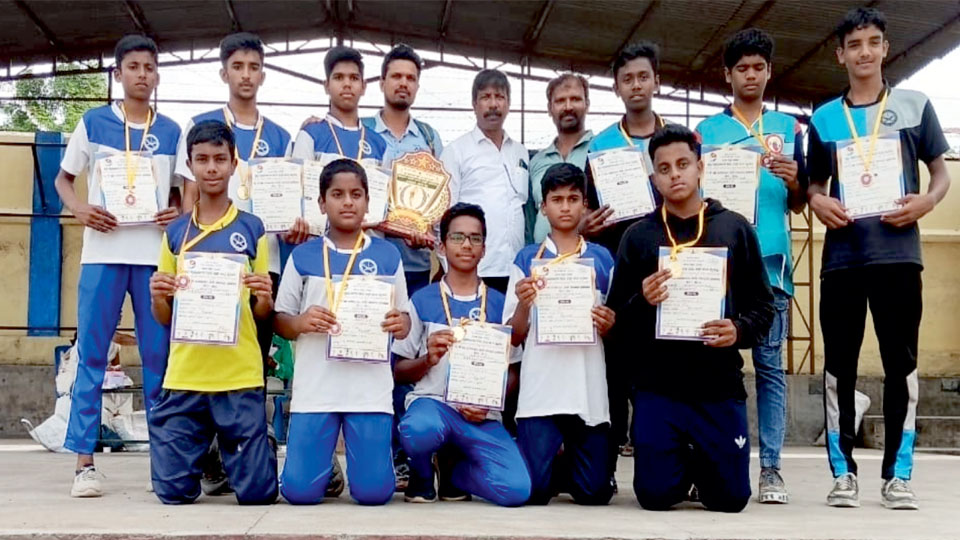
Boys team of Al-Kareem School won the Taluk-level U-17 Throwball Tournament for Boys organised at St. Philomena’s High School recently.
The team defeated Ramakrishna Ashram in the final match.
Members of the team included Mohammed Attaulla (Captain), Farhan Khan (Vice-Captain), Mohammed Junaid, Mohammed Nadeem, Afreed Ahmed Khan, SinnanShariff, Roshan Ali, Mohammed Toufiq, Zaid Ahmed and Zayan Ahmed.
source: http://www.starofmysore.com / Star of Mysore / Home> Sports / November 10th, 2025
Mangaluru, KARNATAKA / Kozhikode, KERALA / Dubai, U.A.E :
Shabana Faizal with her husband Faizal Kottikollon
New Delhi :
Mangalore-based Shabana Faizal has emerged as the youngest woman among India’s top 10 philanthropists, according to the EdelGive Hurun India Philanthropy List 2025.
She has donated ₹40 crore (approximately $1.5 billion) through the Faisal & Shabana Foundation to education, health, and social development.
Shabana Faisal’s journey from being raised in a small town in Mangalore to co-leading a global enterprise is about he hard work and ambition.
Her entrepreneurial journey began in 1995 as a retailer of unique, speciality and luxury products. After leading the company for eight successful years, she decided to team up with her husband, entrepreneur Faizal Kottikollon, and support him in running the world-class foundry, Emirates Techno Casting (ETC).
Shabana took charge of all human resources and administrative processes at ETC, where she created a significant impact in shaping the company’s business success.
In her role as Vice Chairperson of KEF Holdings, she is actively involved in guiding the business’s growth strategy across global markets. Deeply committed to social improvement, Shabana and her husband founded the Faizal & Shabana Foundation in 2007, with the vision of ‘Giving to Create Impact’.
At 53, Shabana’s work has placed her among some of the most influential women in India’s philanthropy world, including Rohini Nilekani, Kiran Mazumdar-Shaw and Bina Shah.
EdelGive Foundation, in collaboration with Hurun Research Institute, recently released the 12th edition of the EdelGive Hurun India Philanthropy List 2025.
The list honors India’s most generous individuals and families. Over the past three years, 191 philanthropists have donated a total of ₹10,380 crore, representing an 85% increase in contributions.
The education sector continues to lead as the top donor, receiving ₹4,166 crore from 107 donors.
Shabana is the mother of four children – Sophia, Sara, Zakaria, and Zarina – but continues to play an active role in business and philanthropy. Her work makes her one of India’s most influential female philanthropists, exemplifying how professional leadership and a commitment to giving can combine to create widespread social impact.
The EdelGive Hurun India Philanthropy List 2025 states that the top 25 donors contributed ₹50,000 crore in just five years, or an average of ₹46 crore per day. Mumbai leads in philanthropy, contributing 28% of total donations, followed by New Delhi and Bengaluru.
source: http://www.awazthevoice.in / Awaz, The Voice / Home / posted by Aasha Khosa / November 10th, 2025