Tag Archives: Muslims of Lucknow

A mahal called farangi: A story from another time, of another Lucknow almost forgotten

Lucknow, UTTAR PRADESH:

The Telegraph visits the haveli where the Khilafat and Non-Cooperation movements came to be mergedThe Telegraph visits the haveli where the Khilafat and Non-Cooperation movements came to be merged.
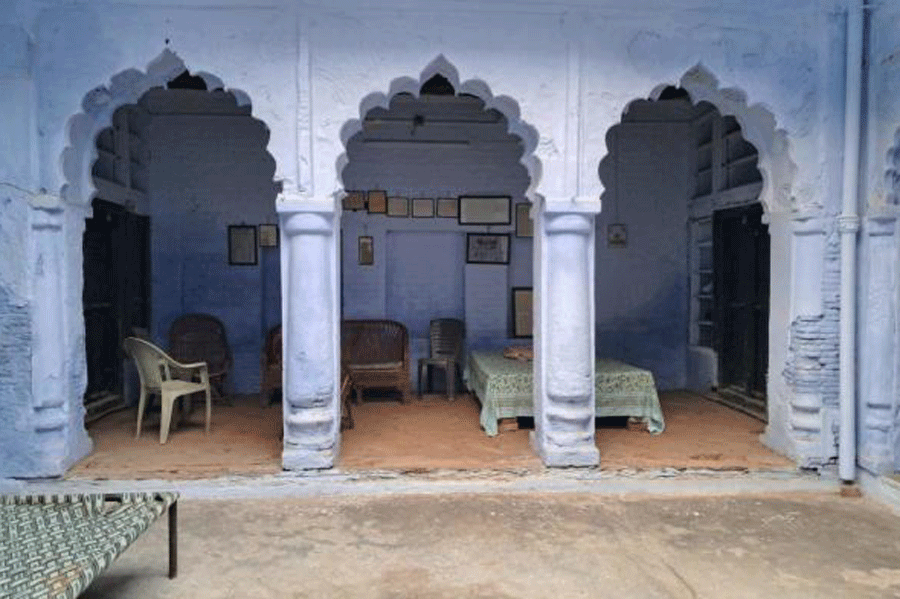
Farangi Mahal in Lucknow. / Photo courtesy: Adnan Abdul Wali

Stepping into Farangi Mahal in Lucknow after skirting rows of low-priced chikankari salwar kameez shops and their steady din is somewhat like stepping into the stillness of a forest after having left a busy city. Only, Farangi Mahal is anything but a forest. It is a cluster of buildings that hold within them a bit of history that has been almost forgotten, as the past often is in India, obscured by new settlements or construction, or billboards, if not demolished altogether.

In Farangi Mahal the past is difficult to see also because of the turn Indian politics has taken.

I am part of a group from Calcutta visiting Lucknow last October.

Inside Farangi Mahal, located in the old neighbourhood of Chowk, we enter its elegant and serene courtyard. The lime-and-mortar white exterior is tinged with a blue, peeling off in places. The afternoon sun slants down on the pillared arches and the exposed bricks but does not take away from the fragile beauty of the structure.

Adnan Abdul Wali, a member of the family that owns the house, the Farangi Mahalis, ushers us into the courtyard. His Urdu and Hindi are as impeccable as his courtesy. He is a direct descendant of Maulana Abdul Bari Farangi Mahali, who was a leader of the Khilafat Movement.

Farangi Mahal’s story, however, goes back beyond the nawabs and the British. It was occupied by French merchants during the rule of Mughal emperor Aurangzeb and that is how it got its name. The merchants, owing to some offence, lost the property and Aurangzeb gave it to Abdul Bari’s ancestors, who needed a safe haven.
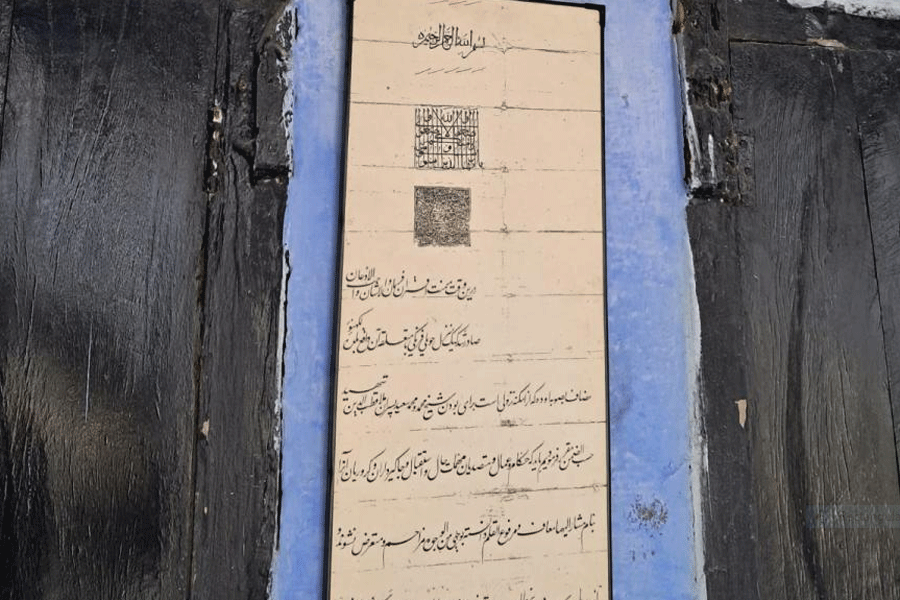
The farman issued by Mughal emperor Aurangzeb decreeing that Bari’s ancestors could live here / Photo courtesy: Adnan Abdul Wali

“The Khilafat movement started from here,” says Wali. Farangi Mahal is where the idea of joining the Khilafat Movement and the Non-Cooperation Movement was born and Abdul Bari was the architect of the plan. It was a glorious moment of Hindu-Muslim unity in Indian history and Lucknow played its part in it.

Abdul Bari, an eminent religious scholar who belonged to the tradition of highly respected scholars from his family, was also an astute politician. He had travelled across many Muslim countries and was acutely aware of the impact of British imperialism on the Islamic world.

In March 1919 came the Rowlatt Act, which was to be followed by the horrors of the Jallianwala Bagh massacre in April 1919, one of the events that would lead Mahatma Gandhi to launch the Non-Cooperation Movement. Before that happened, a large number of Muslims in India were already disturbed by the threat of the dismemberment of the Ottoman Empire in Turkey following World War I and the jeopardised future of the Caliph, the Ottoman head of state, who is nominally the supreme religious and political leader of Sunni Muslims across the world. Turkey had been defeated by the Allied Forces, which included the British.
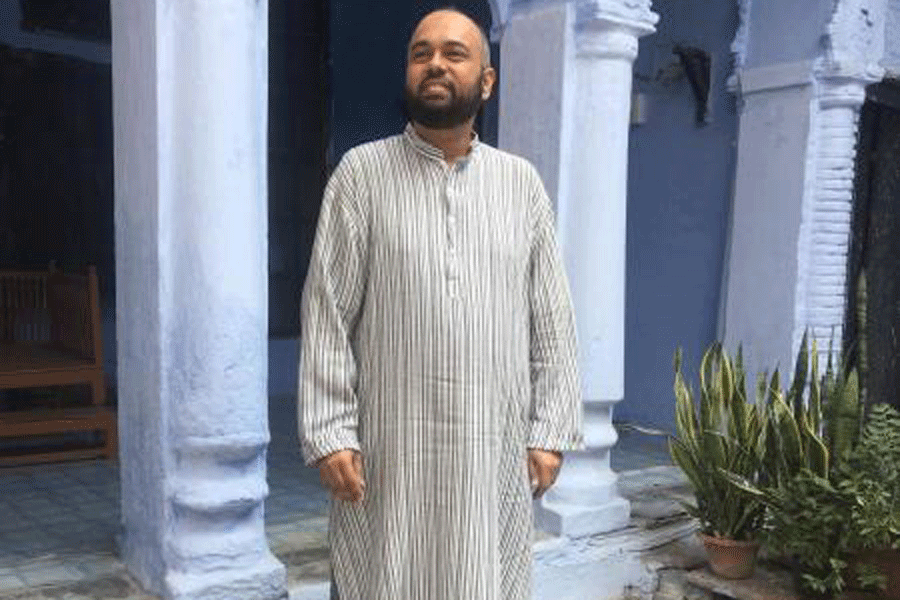
Adnan Abdul Wali, a direct descendant of Abdul Bari and the family that owns the house. / Photo courtesy: Adnan Abdul Wali

Abdul Bari was convinced that in India, Muslims needed to be made aware that the fate of the Ottoman Empire was their religious concern — and the articulation of the Khilafat (Caliphate) cause needed a larger, national platform.

From around 1919, Abdul Bari was raising support in the countryside, says Francis Robinson, a historian who specialises in Islam in South Asia. Abdul Bari had founded a newspaper for the purpose. But more importantly, he wanted to woo Gandhi to the Khilafat struggle.

Gandhi came to stay in Farangi Mahal for the first time in March 1919 and within six months, Abdul Bari had won him over, says Robinson. This also led to a period of a very special friendship between the two men, which was rooted not only in a common political cause but also shared spiritual beliefs and a love for mysticism, as embodied in Sufi philosophy.

Politically, the campaign for Khilafat and Gandhi’s stamp on it saw Abdul Bari reaching the height of his influence during 1919 and 1920.

Abdul Bari and his Farangi Mahal relatives, with the help of the lawyer Chaudhri Khaliquzzaman, drew up the constitution of the All-India Central Khilafat Committee, says Robinson. “He devoted enormous effort first to persuade the Khilafat Committee to adopt non-cooperation as a policy and second, at the Allahabad meetings in June (1920), in persuading the committee to accept Gandhi as chair of the group that was to put non-cooperation into action,” adds Robinson.

From then on till September 1920, Abdul Bari successfully campaigned to organise a significant Muslim presence at the Calcutta Special Congress, which was held from September 4 to 9, 1920. The session passed the resolution of the Non-Cooperation Movement with a demand for Swaraj. The Khilafat Committee and the Congress came together with non-cooperation as the common goal.

After March 1919, Gandhi stayed at Farangi Mahal three times, recounts Wali proudly. Other leaders such as Jawaharlal Nehru, Maulana Abul Kalam Azad and Sarojini Naidu stayed here as well. During Gandhi’s second visit, in September 1919, Muslims in the area abstained from cow slaughter during Bakrid as a mark of respect to Gandhi and appreciation for his support to the Khilafat cause. “Abdul Bari had requested Muslim families to make the gesture,” says Wali.

This was somewhat different from the recent celebration of November 25 as No Non-Veg Day by the BJP government in Uttar Pradesh. The announcement was made to honour the birth anniversary of Sadhu T.L. Vaswani and slaughterhouses and meat shops were required to remain closed that day. There is a world of difference between giving up meat voluntarily and being forced to do so, as there is between non-violence and violence. But such distinctions perhaps do not make much sense anymore in Lucknow, once the capital of nawab-ruled Oudh, now ruled by the BJP with Yogi Adityanath at its helm. Like the No Non-Veg Day, the city has several streets and institutions named after lesser-known Hindu saints.

Abdul Bari is said to have introduced Gandhi to the sufi saint Bakhtiyar Kaki, disciple and successor to Moinuddin Chishti. Three days before his death, Gandhi delivered his last public address at the shrine of Bakhtiyar Kaki in Mehrauli.

Abdul Bari had earlier invited Gandhi to Ajmer, where Chishti is enshrined. At Ajmer Sharif Dargah, Gandhi is said to have experienced his first qawwali on Chishti. It was there that he asked Abdul Bari about Bakhtiyar Kaki. He had first visited Ajmer Sharif in 1921 and would visit it again.

In 1922, after the Chauri Chaura incident, Gandhi withdrew the Non-Cooperation Movement. Abdul Bari did not relent; he was not sparing of Gandhi either, says Robinson, but one has to remember his politics was primarily religious in inspiration. His influence declined steadily from this time and he died in 1926, a disappointed man, according to Robinson.

His name is often seen missing now from the roll call of prominent Khilafat leaders.

And yet Abdul Bari was not only a politician but also an eminent educator, Wali reminds. His ancestors had established a madrasah that became well-known all over the Islamic world and had introduced a syllabus, Dars-e-Nazami, which became a much-respected system of learning.

As a revered teacher in his family tradition, Abdul Bari introduced major changes to the curriculum by stressing the learning of Western sciences and discouraging rote learning.

Wali breaks down. It is very difficult to reconcile the present with the past, he says. Lucknow was never a utopia; communal riots had broken out here around the time of Gandhi’s visits to Farangi Mahal. But now the very fabric of society has changed, he feels. He reads from an Urdu book, and though the meaning of the words remains elusive, the music lingers. Farangi Mahal, with Wali bent over his book, look almost unreal.

But Farangi Mahal still stands, held up by its ancient, sturdy, flat bricks, and memory. Some things stay.

source: http://www.telegraphindia.com / The Telegraph Online / Home> Culture / by Chandrima S Bhattacharya / January 07th, 2024
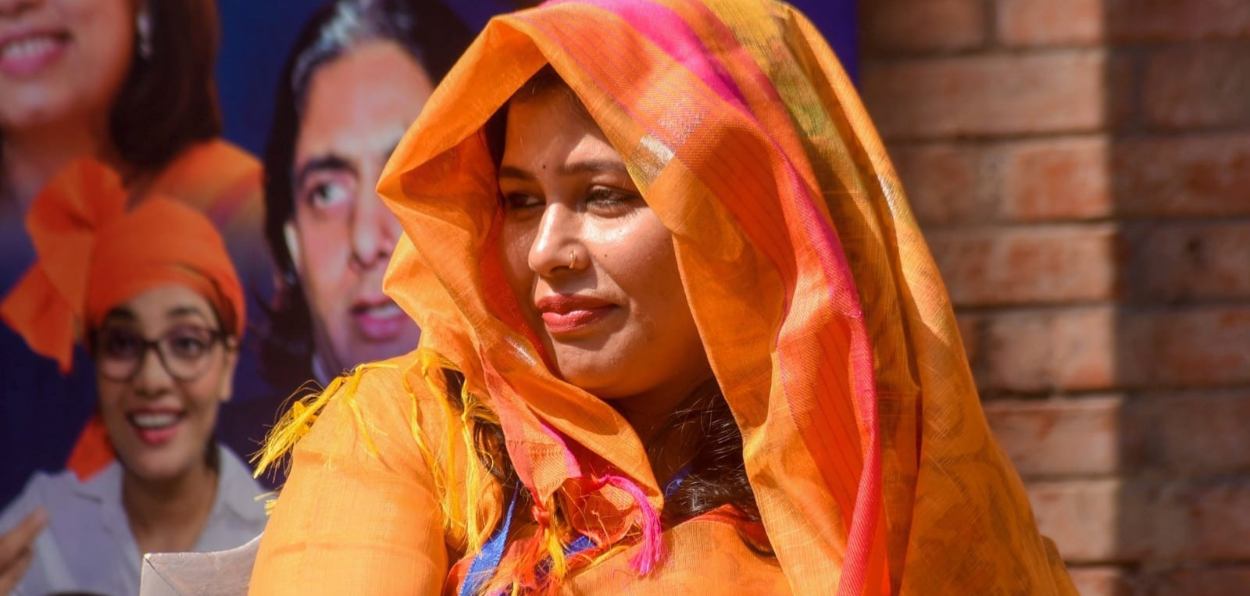
Sabahat Afreen curated a women’s world sans fear and restrictions in her stories

Siddharthnagar District / Lucknow, UTTAR PRADESH:

Author Sabahat Afreen

Sabahat Afreen’s life will make you believe in the adage: where there is a will there is a way. Being born into an educated and prosperous family, Sabahat realized early in her life that her family was not open to women coming out of the four walls of the house, bracing against all odds to create their identity. She was raised seeing all women in her family in purdah.

However, somewhere in her heart, Sabahat Afreen was like a Secret Superstar of the Hindi movie by that name. Afreen was raised in a small village in Siddharthnagar district of Uttar Pradesh by her advocate father and a homemaker mother.

Sabahat Afreen started living in purdah in 10th class and after passing her 12th standard, She was not supposed to move out of the house alone. This resulted in her not attending college and opting for home study and writing examinations as a private student for her graduation years.

She was completing her master’s degree when she got married. Her husband’s family was politically connected and prosperous. She could have easily lived in comfort; Sabahat did not like to dress up like a doll wearing jewelery and expensive sarees and lounging around all day.

She said, “My mother was fond of reading and writing. She had an impact on me too. I used to write poems and stories in my childhood. Mom and Dad always encouraged me. It is a different matter that my works were never sent for publication as they didn’t believe in getting a picture of their daughter printed in the newspaper.”

Sabahat Afreen with her book

She also realized the environment in her in-laws’ house was less conservative. “My father-in-law knew that I write, so he used to gift me a diary and pen; my husband also supported me.” She told Awaz-the Voice.

After marriage, she opened a secret account on Facebook and did not use her pictures for the DP. “I started writing stories on Facebook, my posts went viral. Someone suggested that I should send my stories to Neelesh Misra, (Editor, Gaon Connection, lyricist, and storyteller). His storytelling was popular. I emailed my story to him and he liked it. From that point, I was in his circle.”

Like Insia Malik (Played by Zaira Wasim) of Aamir Khan’s 2017 film Secret Superstar, she revealed her talent to the world by hiding her identity. Soon Sabahat Afrin was writing audio series, stories, and books for magazines and many apps across the country. She moved her two little daughters out of the closed environs of the village to Lucknow.

As it happens in such cases, most of the people who had opposed her once now praise and respect her. Her family is proud of her.

Recently her first story collection Mujhe Jugnuon Ke Desh Jaana Hai (I Want to Go to the Land of Fireflies)(Rujhan Publications, Rajasthan) was released. In it, Sabahat imagines in this country of fireflies women are also enjoying the same freedom as men, the doors of their hearts cannot be guarded, they too have the freedom to remarry after divorce, and they have the right to decide if they want to return to their husband’s house after feeling unwanted there.

Sabahat Afreen with friends

Her stories are set in the backdrop of Muslim culture, but she manages to show that when it comes to the status and rights of women, it’s the same every year. Sabahat wants to free the fireflies from the clenched fists of Afreen women.Her first remuneration of Rs 30,000 as a writer was encouraging for Sabahat. She felt that being financially strong should be the priority of a woman. Now she shares her pictures on social media and with her stories.

Sabahat has written amazing stories that she must have picked up from around her and kept in the secret chamber of her heart to let them metamorphose into another form. Her stories look familiar to readers; after reading each one of her stories, the reader feels that he has seen these incidents.

Sabahat has adapted one such incident into a captivating story. The story Khoobsurat auratein (Beautiful Women) starts with this sentence – “even good looks are like a punishment, wherever she went people’s eyes were fixed on her.’ The heroine of the story, Alia, is very beautiful.”

Sabahat Afreen with her daughters

Women are at the center of all Sabahat’s stories. The joys and sorrows of a woman, her dreams, her desire to fulfill them and social restrictions are the key elements in her stories. Sabahat is seen breaking these restrictions and traditions. Women in her stories are silent protesters except for Alia from her story Beautiful Women. However, they encounter opposition and in some cases, it’s also effective.

Sabahat becomes emotional while narrating her stories. She wishes to create a world for women where they have the freedom to fulfill their wishes and make their dreams come true. Her stories reflect her progressive thoughts.

Sabahat says that she never went to the market alone and yet when people knew about her through her stories, she felt confident to move to a big city with her daughters. “I reached Lucknow and rented out an apartment and enrolled my daughters in a good school. Today my daughters are studying, and life has become a bit easier for all three of us.”

source: http://www.awazthevoice.in / Awaz, The Voice / Home> Story / by Onika Maheshwari, New Delhi / January 03rd, 2024

Lucknow topper Alisha Ansari scores 94% in UP Board Class 10 exams, shares secret

Lucknow, UTTAR PRADESH:

Uttar Pradesh Class 10 Result 2020:

Lucknow topper Alisha Ansari has remained distant from social media sites to score 94% in board exams.

Lucknow topper Alisha Ansari scores 94% in UP Board Class 10 exams, shares secret

Class 10 student Alisha Ansari has secured the first rank in Lucknow and ninth in Uttar Pradesh with a score of 94 per cent. Apart from sheer hard work and support from parents, Alisha has had remained distant from social media websites, including Facebook, Twitter, and Instagram to attain this position.

Alisha, who comes from a middle-class family, has a younger brother and an elder sister. Her father, Mohammad Rizwan Fazli, is a teacher in a private engineering college and her mother, Shabana Ansari, is a housewife.

Kanti Mishra, Principal, Bal Nikunj Inter College, said, “Alisha has been a hardworking student. Also whenever she had a doubt in the subject, she would immediately ask school teachers.”

Appreciating her hard work and talent, her mother, Shabana Ansair, told, “We have always given our daughters equal opportunities to study.”

Moreover, she shared that she would want her daughter to become a doctor and it is just the beginning of her journey of success.

Also, her father, Mohd. Rizwan Fazli, expressed his happiness, saying that he is extremely proud of her daughter.

source: http://www.indiatoday.in / India Today / Home> News> Education Today> News / by Ashish Srivastava, Lucknow (UP) / June 27th, 2020

JNU Sociologist Imtiaz Ahmad Passes Away

Lucknow, UTTAR PRADESH / NEW DELHI:

Ahmad’s book, Caste and Social Stratification Among Muslims in India, is celebrated as pioneering work in the field. 

Imtiaz Ahmad (1940-2023). Photo: Twitter/@syedurahman

New Delhi: 

Imtiaz Ahmad, renowned scholar who taught political sociology at the Jawaharlal Nehru University in India, has died. He was 83.

Ahmad’s book, Caste and Social Stratification Among Muslims in India, is celebrated as pioneering work in the field.

Ahmad got his BA and MA degrees from the Lucknow University in 1958 and 1960 respectively. He started as a senior research analyst at the Institute of Economic Growth at the Delhi University in 1964 and two years later, became a lecturer in sociology in the same university.


After three years as visiting professor of anthropology at the University of Missouri in the US, Ahmad joined JNU as associate professor in political sociology in 1972. He became a professor in the department in 1983 and taught there for three decades.

Among his numerous publications are those which throw light on Muslim empowerment, minority rights, the role of education among Muslims, how Islamic ideologies mesh with social realities, how Muslim women are studied in India and communalism.

Ahmad also wrote critically on the Gujarat riots of 2002 in particular and communal politics in general. His work has been lauded as having shed light on the composite culture of India.

source: http://www.thewire.in / The Wire / Home> Education> Society / by The Wire Staff / June 19th, 2023

Zafaryab Jilani, who argued in Ram Janmabhoomi case, dies at 73: ‘Soft-spoken but never soft in court’

Lucknow, UTTAR PRADESH:

Jilani died during treatment at Lucknow’s Nishat Hospital in Qaiserbagh and is survived by daughter Maria Rehan, sons Najafzafar Jilani and Anaszafar Jilani, and wife Azra Jilani. The family resides in Qaiserbagh. Jilani was buried at the Qaiserbagh graveyard late Wednesday evening.

All India Muslim Personal Law Board (AIMPLB) secretary and senior advocate died at a Lucknow hospital on Wednesday after a prolonged illness followed by a fall in May 2021 during which he suffered brain haemorrhage. He was 73.

Jilani, a former Additional Advocate General for Uttar Pradesh, was the convenor of the Babri Masjid Action Committee and had argued in the Ram Janmabhoomi case in different courts over decades.

Jilani died during treatment at Lucknow’s Nishat Hospital in Qaiserbagh and is survived by daughter Maria Rehan, sons Najafzafar Jilani and Anaszafar Jilani, and wife Azra Jilani. The family resides in Qaiserbagh. Jilani was buried at the Qaiserbagh graveyard late Wednesday evening.

“He had multiple health issues for which he was being treated. He had a urinary tract infection which had spread to his lungs. His kidney and brain were also affected. All these issues started after he fell in May 2021 and suffered brain haemorrhage,” said a family member.

Jilani, a native of Malihabad town, was among the decorated alumnus of Aligarh Muslim University, from where he got his law degree.

He will be remembered for his soft-spoken nature and his in-depth knowledge of law, said his colleagues and peers.

Senior advocate SFA Naqvi said, “He was among the most soft-spoken and kind-hearted people I knew. There was a grace about him which is hard to put in words. But his arguments were never soft in court, and he had the law on his fingertips. We have lost a pioneer in law, and he will be missed.”

“During his time as the Additional Advocate General, even when I was arguing against him, he forgot all about it once we were outside the court. Then, we would go back to being friends. He always kept what happened in court to the courtroom only,” added Naqvi.

After the Supreme Court verdict in the Ram Janmabhoomi case in November 2019, Jilani had remarked, “The judgement has just been pronounced, it says a lot of things about the Constitution and about secularism. We are very dissatisfied with this judgement. Article 142 does not let you do this.”

After a special CBI court on September 30, 2020 acquitted all 32 surviving accused in the Babri Masjid demolition case, citing lack of evidence, Jilani had told The Indian Express , “The verdict is wrong. It is against the law and evidence (in the case). It is an erroneous judgement. However, a judgement is a judgement. We will avail the remedy available. The remedy is with the High Court. It has the power to reverse the judgement and we will go to the High Court.”

Advocate Rakesh Chaudhary, former president of the Oudh Bar Association, Allahabad High Court, said that Jilani had a great equation with everyone in the court. “He was a very helpful person, who never took anything personally. He had great sportsmanlike spirit,” said the lawyer.

Sarah Haque, a Delhi-based lawyer who worked alongside Jilani on the Babri Masjid case before the Supreme Court, said he was one of the kindest and most respected members of the Bar. “His demise is a huge loss to the legal fraternity. He was extremely passionate in his craft and made commendable efforts towards the pursuit of justice,” she said. “His attention and commitment to the Babri matter was laudable and he will be remembered forever.”

source: http://www.indianexpress.com / The Indian Express / Home> News> India / by Asad Rehman, Lucknow / May 18th, 2023

Aaesha Munawar of Lucknow gets a place in the Indian Olympic Association

Lucknow, UTTAR PRADESH:

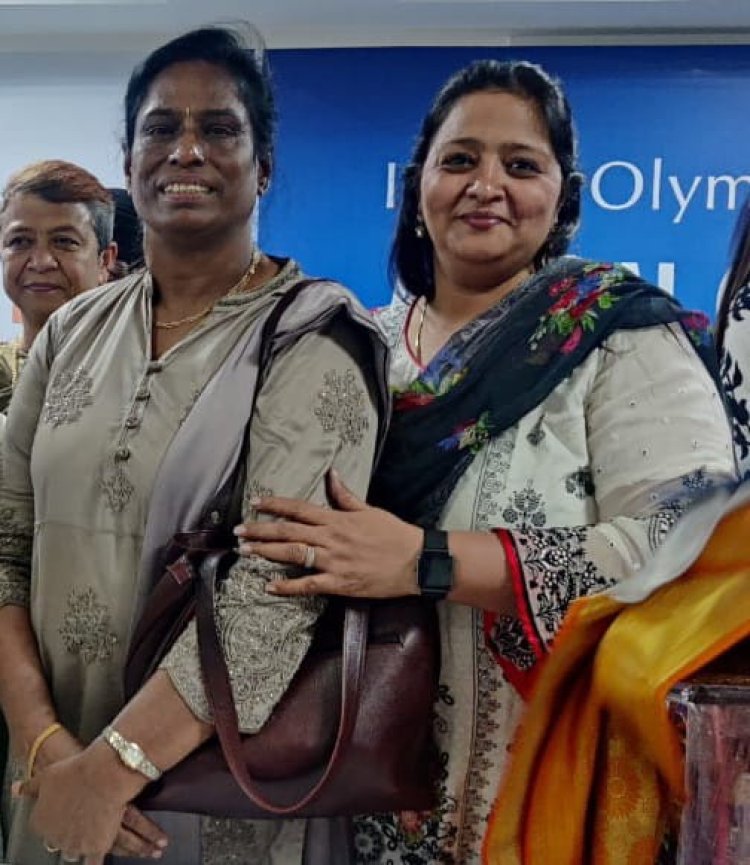
P.T.Usha, President IOA and Aaesha Munawar (R)

Lucknow :

Mrs. Aaesha Munawar, General Secretary, U.P. Judo Association, has been nominated as a member of the Infrastructure Committee of the Indian Olympic Association. 

Mr. Amitabh Sharma is the Chairman of this Committee. Apart from Aaesha Munawar, the other members are Mr. Bhola Nath Singh, Mr. Vaghish Pathak, Mr. Akhil Kumar, Mr. Ravi Bengani and Dr. Amit Bhalla. This Committee will serve till the year 2026. 

This is for the very first time that a female Judoka from U.P. has been nominated in an IOA committee. 

Mrs. P.T. Usha , President,IOA ; Mrs. Alaknanda Ashok , Joint Secretary, IOA; Mr. Harpal Singh and Mr. Bhupendra Singh Bajwa – Executive Council Member, all congratulated Mrs. Aaesha  on her nomination. 

 Munawar Anzar, CEO,  U.P. Judo Association. 

source: http://www.ismatimes.com / Isma Times / Home> News> National / by Afzal Shah Madudi / March 13th, 2023

Mohd Aryaan Tariq shares first rank in 12th CISCE Examination 2023

Lucknow, UTTAR PRADESH:

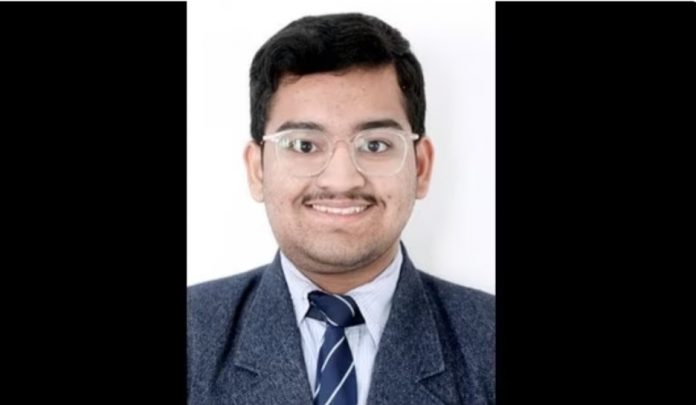
Mohd Aryaan Tariq jointly shares the first rank with four others in ISC. ( Photo courtesy HT )

In the results announced yesterday, a total of 98,505 students participated in the Council for Indian School Certificate Examinations 2023.

Of them, five students shared the top most rank with all scoring 99.75% marks.

Mohd Aryaan Tariq, Montessori Inter College, Rajajipuram, Lucknow is one of the top most scorers in the examination.

Riyya Aggarwal (Guwahati), Ipsita Bhattacharya (Thane), Shubham Kumar Aggarwal (Bhaktinagar) and Manya Gupta (Kolkata) are the other ones.

Tariq informed media that he regularly spent four hours daily for his studies. He remained cut off from social media to focus on his academic preparation.

He scored perfect 100 in chemistry, physical education and biology and hauled 99 out of 100 each in English and biotechnology.

Congratulations to all the successful students and good luck to those who couldn’t do better this time.

source: http://www.muslimmirror.com / Muslim Mirror / Home> Indian Muslim> Positive Story / by Muslim Mirror / May 15th, 2023

Jalna’s first Muslim doctor still tends to homegrown cotton crop

Dadhegaon (Jalna District) , MAHARASHTRA :

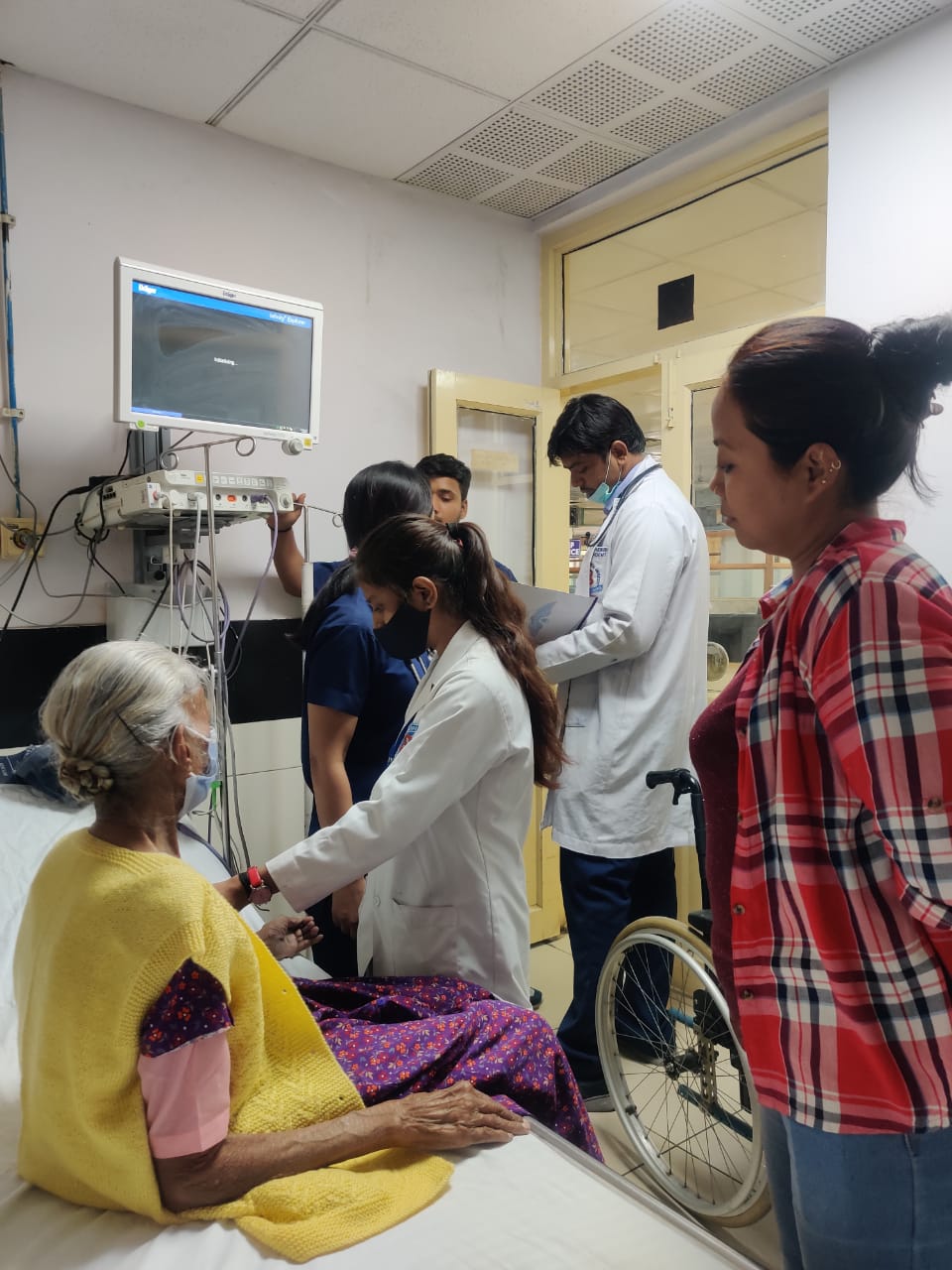
Dr Shaikh Yunus in the I.C.U of King George’s Medical University, Lucknow

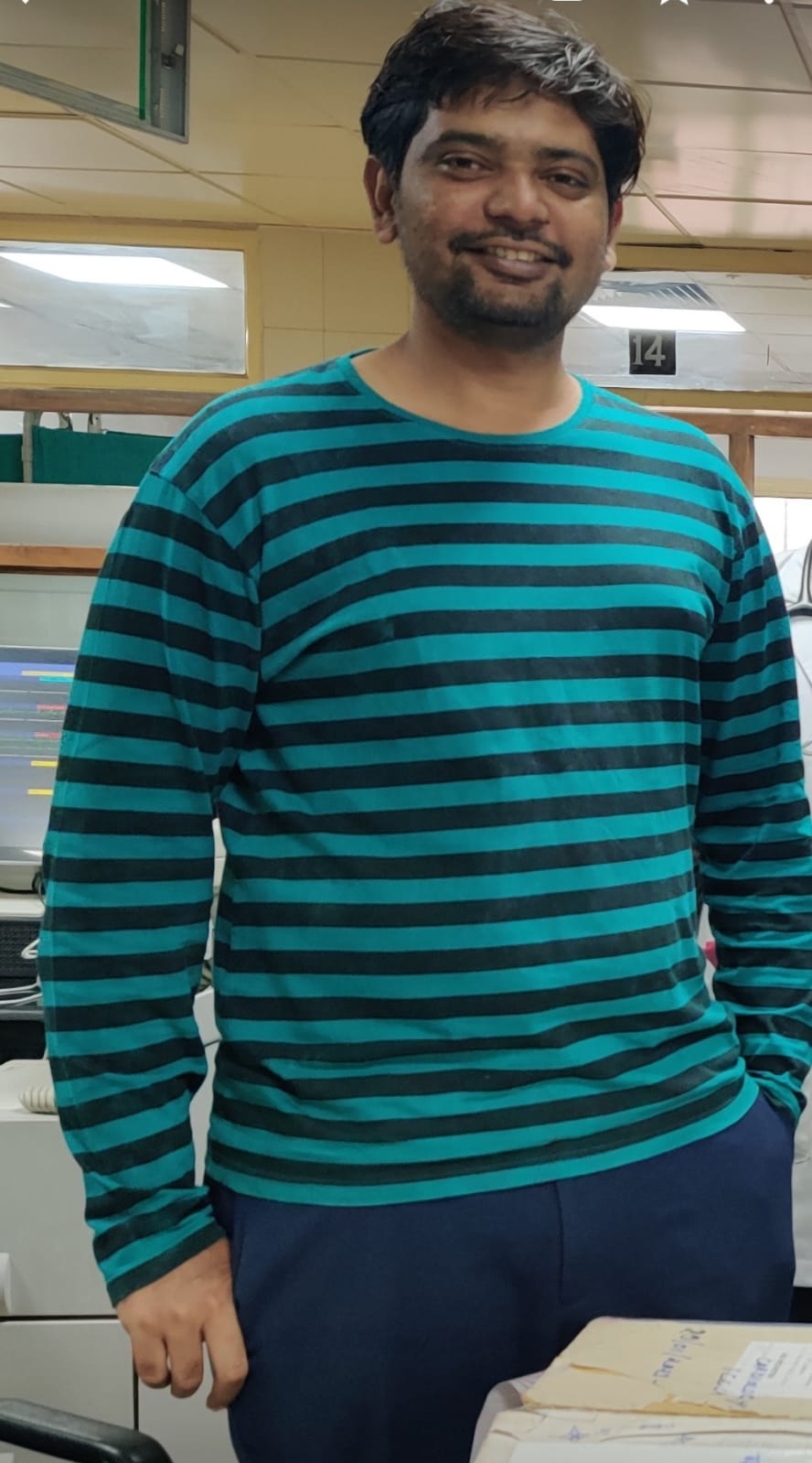
Dr Shaikh Yonus, a Senior Resident in the Cardiology department of the prestigious King George’s Medical University, Lucknow, is the first Muslim doctor from the Jalna district of Central Maharashtra. He completed his MBBS degree in 2015.  

This is no small accomplishment for this cheerful 34-year-old doctor who studied in a village school till Class X. His father even borrowed money to fund his medical education. 

Shaikh grew up sowing cotton with his father Khudbuddin and elder brother Aslam in their four-acre land in Dadhegaon in Jalna district.  

As a schoolboy, he remembers his relatives insisting that he be sent to a Madrasa along with their children. But Shaikh wanted to attend a regular school and his father respected his wish. He was always drawn to the science stream and chose his career path when he was in Class X. 

Shaikh says that in his backward village of 800 people there was hardly anyone holding a high post. “Thankfully, my seniors in school had become career-minded and some become teachers. They inspired me to focus on my ambition.’’ 

Shaikh struggled against all odds and cracked the Medical college entrance test.

Dr. Yunus says, “It was a huge struggle. My father who passed away in August 2022, at the age of 62, was a cotton farmer. Because of the challenges that cotton farmers face in Maharashtra, he was on the brink of starvation. We are four siblings – two brothers, and two sisters. In 2008, my father’s annual income was Rs 30,000. It was difficult for him to pay Rs 3000 for my monthly room rent and living expenses for a year and annual fee of Rs 12,000 for professional coaching in Aurangabad for entrance examination of the medical college.”

Shaikh’s coaching cost Rs 50,000 per year. His father even took a loan of Rs 30,000 to fund his coaching.

This promising cardiologist says students in the village aspiring to study after Class X had to move out. So did Yunus. He then began studying in Ambad Taluk, 20 kilometres away from home, for Class XI and XII.   

Although Shaikh managed to get an annual minority scholarship of Rs 25,000 for his six-year MBBS course in Government Medical College, Nagpur, he still had to depend on his father for Rs 3000 every month to meet his living expenses.

Looking back at his struggle, he says, “My father had limited means. Saving money to marry my sisters and having to set aside Rs 2000 for my fee was a huge challenge but he never let it bother me. The annual fee for MBBS was Rs 18,000. The annual hostel fee was Rs 4000. The remaining amount was spent on buying books. I still had to depend on Rs 2000 every month from my father. I could hardly afford to travel to my village. I was homesick but meeting my family members was a luxury. So, once in six months, I would take a 16-hour long journey by train to meet my family.’’ 

Shaikh’s first earning came after the final year of MBBS at Government Medical College in Nagpur. “During the year-long internship, the government was paying us Rs 6000 a month. After this, I appeared in the NEET examination for MD in Medicine. I got 104th rank in the country. There were only 26 seats for MD in Medicine in Maharashtra. “I got a chance to pursue MD for three years in Government Medical College in Miraj near Pune. I completed MD in 2020,’’ he recalls. 

The competition for DM (Doctorate in Medicine) is even more difficult. Out of the 3,000 students who apply for DM in Cardiology every year, only one-tenth get through. KGMU admits only eight students every year after a nationwide selection. Dr Shaikh is among the eight doctors who was selected for DM in Cardiology in KGMU. 

Dr Yunus is the only doctor in his extended family. “My father studied till class X but he stood behind me like a rock. He was determined to do whatever he could to help me fulfil my dreams. My sisters who are now married, studied only till Class IV or V. My mother, Shaheen is a homemaker. She too hardly studied. My elder brother did his postgraduation in Hindi from Dr Baba Saheb Ambedkar University in Aurangabad but was not able to find a job. So, he took to cotton cultivation.’’ 

Although Dr Yunus is satisfied that his hard work helped him crack the examination, he deeply regrets that he was not able to save his father’s life last year. “I was on I.C.U. duty when I got a call from my family that my father was unwell. When I made a video call to the doctor who was attending to him in a private hospital, 50 km from my village home, I realized that he was critical. He had pneumonia.  I specialize in treating these diseases but I could not save his life. This is a lifelong regret.’’ 

Dr Shaikh Yunus (in the lab coat) going through the records of a patient in KGMU, Lucknow

Like most of his colleagues, Dr Yunus who is in the second year of DM, has unbelievable duties in the Cardiology department of KGMU. “The disease burden is huge and the number of patient consultations and admissions is huge. There have been times when my colleagues and I have come for duty on Sunday and left on Friday. On an average, we see 400 patients in OPD (Monday to Saturday) and 200 in emergency who are coming from all over the country and even Bhutan, Nepal and Saudi Arabia.’’ 

He also wishes that more young students from Jalna district would join the medical stream and become doctors. “ It has been eight years from the time I finished my MBBS but so far,  I have come across only two students from my district who were enrolled for MBBS courses in private universities in China or Russia. Only those students who are unable to crack the competitive examination in India, go there. I know how I have studied. I would sleep only five hours. ‘’ 

In February 2022, Dr. Yunus married Mahjabin, his junior who is now a surgical gynecologist in Bans-Bareilly in Uttar Pradesh. Dr. Yunus’ family who attended the wedding in Bareilly is extremely proud that their son and daughter-in-law are doctors. “ I first accompanied them on the train from Jalna to Delhi. That was the first time they saw the national capital. In so many years, that was the first time that they travelled outside the State. They enjoyed visiting Uttar Pradesh also. It was a 26-hour long journey.’’ 

Mahjabin who is working at Ram Manohar Lohia Institute of Medical Sciences in Lucknow is deeply appreciative of Dr Yunus’ struggle. “ When I visited my in-laws after my marriage and after my father-in-law’s demise, I felt that they were very proud of the fact that both of us are doctors.’’  

Dr. Yunus’s elder brother Aslam Shaikh is very proud of him. Aslam told this correspondent over the phone from his village “Other than my brother, no student from Jalna district has been able to get selected in competitive examination to enroll in MBBS.”

Aslam earns Rs 60,000 a year from cotton cultivation and supports a family of five. “I send my son, Arhaan Aslam Shaikh, 12 km away to study in an English medium school. My daughter, Jiya is only two and a half years old. I want them to become doctors like my brother and his wife. ”

After becoming a specialist, Dr Yunus has not forgotten his roots. He tends to his father’s farmland whenever he visits home. Ths doctor’s heart beats for the farmers of India.

source: http://www.awazthevoice.in / Awaz, The Voice / Home> Story / by Tripti Nath, Lucknow / March 24th, 2023

Urdu Scientific Society felicitates Dr. Kausar Usman at Lucknow

Lucknow, UTTAR PRADESH:

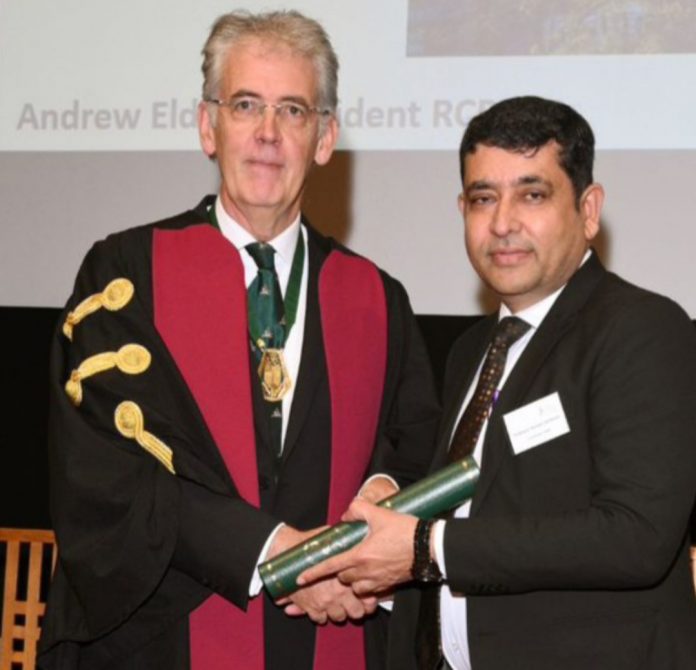
At a meeting of the Urdu Scientific Society, attended by prominent Doctors of Lucknow, Dr. Kausar Usman of King George Medical University, Lucknow was felicitated for the honor he received as a Fellow of the Royal College of Physicians, Edinburgh.

Presently working as a Professor of Internal Medicine at one of the prestigious medical institutions of India King George’s medical university, Dr. Usman is known for his expertise in the field of Medicine in general and Diabetes in particular. In 2016, Dr. Usman became the first Muslim Professor in the medicine department of King George’s Medical University, Lucknow.

Dr. Usman has participated actively in several national and international investigations and has a very solid foundation in research. Numerous national and international publications have published his work. He has more than 70 Publications to his name.

Prior to joining King George’s Medical University as a teaching faculty member, he worked in reputable medical institutions like Indraprasth Apollo Hospital in New Delhi.

In 2017, Dr. Usman had received a Fellowship Award FACP (Fellow of American College of Physicians) in San Diego, California.

Senior Urdu Scientific Society office bearers Padma Shri Dr. Mansoor Hasan, Maulana Khalid Rasheed, Dr. Iqtedar Farooqi, and Dr. Shakir Hashmi congratulated Dr. Usman for his extraordinary achievements.

source: http://www.muslimmirror.com / Muslim Mirror / Home> Indian Muslim> Positive Story / by Muslim Mirror Network / December 13th, 2022

India’s first ‘Gate Woman’ Mirza Salma Baig is icon of dignity

Lucknow, UTTAR PRADESH :

Mirza Salma Baig at her workplace

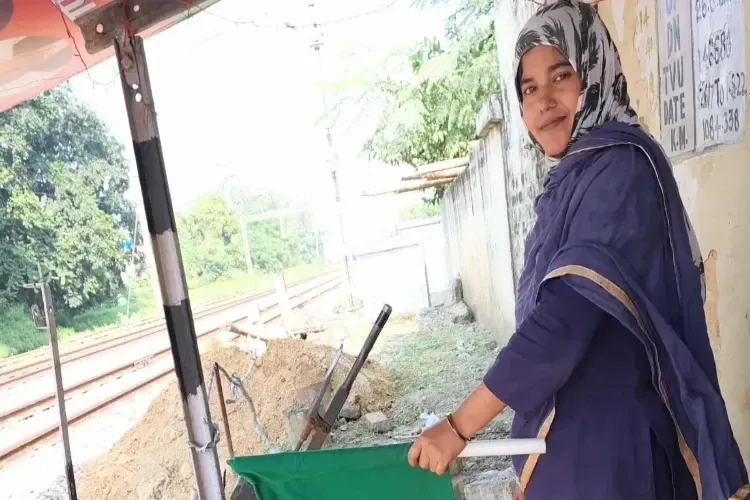
Mirza Salma Baig is India’s first woman to man the Railway crossing. She is stationed at Malhore Railway Crossing, one of the busiest intersections of railway and road traffic, located a few kilometers from Lucknow, the capital of Uttar Pradesh.

Salma Baig, 29, a mother of a toddler, has been working at this crossing for the past 10 years.

Seeing a hijab-clad woman turn a heavy wheel to shut the gate when the train is about to arrive at that point and then open it for pedestrians and other road traffic, the onlookers often stop to take selfies with her.

People show respect to Salma Baig for her job. Seeing her for the first time, many people stop to just look at how she works.

Mirza Salma Baig was appointed as the country’s first Gate Woman in 2013 at the age of 19. She hails from Lucknow, Uttar pradesh.

Malhore crossing is a busy intersection between railway track and the city road and it’s challenging to control and direct the traffic. She has to frequently close the gate for the vehicular traffic as many trains cross this point all through the day. Salma turns a heavy wheel with a lever to close the gate and then unwinds it to open it.

The gates open as soon as the train passes. Salma says that while closing and opening the gate, she has to take care not to hurt anyone. She stands with a red and green flag in hand until the train has crossed the gate.

Interestingly, many people had questioned Salma’s appointment in 2013 as the newspaper reports of 2013 suggest.

Mirza Salma Baig opening the railway gate

The railway authorities had to clarify that this job was always open to women but not many serious contenders for this job had ever applied.

Salma’s father Mirza Salim Baig was also a gateman at the Railway crossing. Due to hearing impairment and other ailments, he had to take voluntary retirement much earlier than it was due. Salma’s mother had suffered a stroke and after father’s retirement, there was no bread winner in the family.

At this stage the Indian Railways offered Salma a job. Salma quit her studies and accepted it. Her relatives were angry but she chose what was best for her and the family under the given circumstances.

She credits her parents for her success.

Salma is proud of her 10-year career and smiles when asked about the snide comments made by many when she first joined.

When she started working at the crossing, the staff told her that being a girl she would not be able to open the crossing gate. They told her that a train passes this crossing every one minute and many predicted she would leave the job in four days. Salma worked hard and never gave up.

She has been standing here for the last 10 years. Salma says, everyone in the staff has become her supporter.”

She performs her 12-hour long duty with full responsibility and competence. Salma says that girls should have the same freedom as housewives.

source: http://www.awazthevoice.in / Awaz, The Voice / Home> Women / by M Mishra, Lucknow / November 07th, 2022