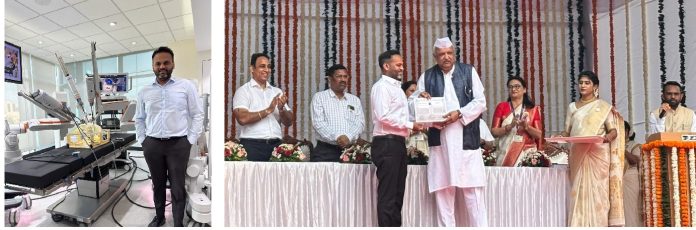
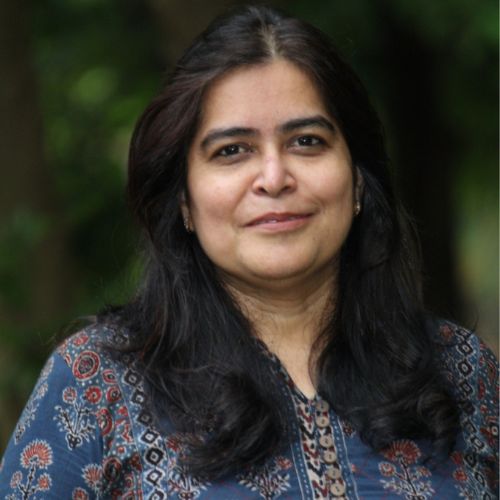
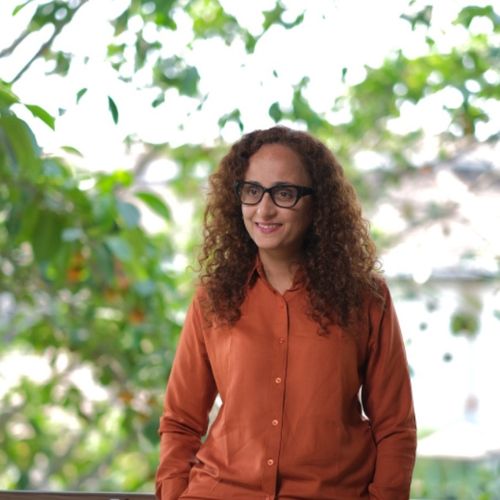
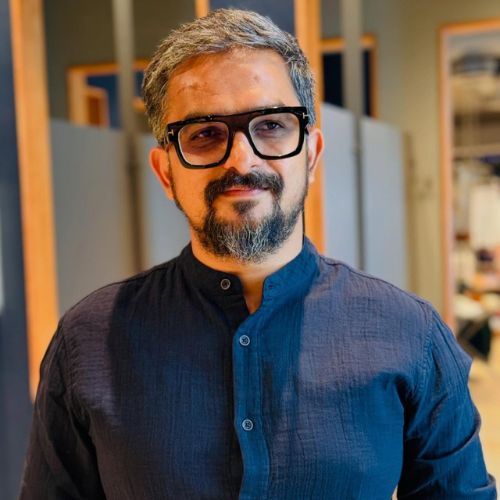
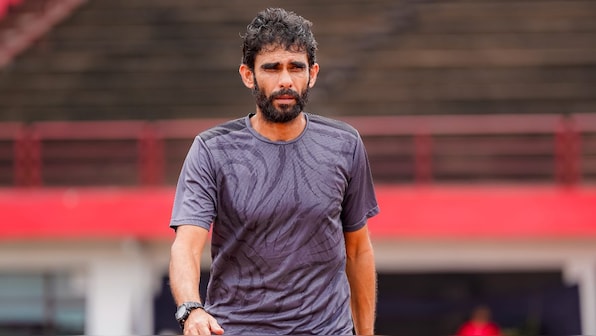
Grant Government Medical College and Sir J J Group of Hospitals marked Republic Day with an academic honour for Dr Kashif F Ansari, who received the Best Assistant Professor award from the Dean of the institution. The recognition reflects his teaching record, clinical service, and role in advancing minimally invasive surgery at one of the city’s largest public hospitals.
Dr Ansari serves in the Department of General Surgery and has built a profile in laparoscopic gastrointestinal surgery and laser proctology. Colleagues credit his structured teaching, steady operating room leadership, and work with postgraduate trainees for the award.
The honour follows a major institutional milestone in April 2025, when JJ Hospital performed its first robotic surgeries. Dr Ansari formed part of the core surgical team that completed three complex procedures using robotic systems under senior mentorship and institutional guidance. The operations marked the hospital’s entry into advanced technology based surgery with a focus on affordable public care.
Dr Ansari completed his MS in General Surgery at D Y Patil Medical College, Kolhapur, and later trained in advanced laparoscopic and minimal access surgery. His professional record includes service as Honorary Consultant at Prince Ali Khan Hospital, Masina Hospital, Apollo Hospital, and Noor Hospital. He earlier worked as Senior Resident at Cooper Hospital, Nair Hospital, and Ambedkar Memorial Hospital.
He holds fellowships with national surgical bodies and life memberships with leading professional associations. His research work on difficult laparoscopic cholecystectomy has appeared in a peer reviewed journal.
Faculty members said the award highlights the role of young Muslim medical professionals in public health institutions and their contribution to modern surgical care.
source: http://www.radiancenews.com / Radiance News / Home> Latest News > Report / by Radiance News Bureau / January 27th, 2026
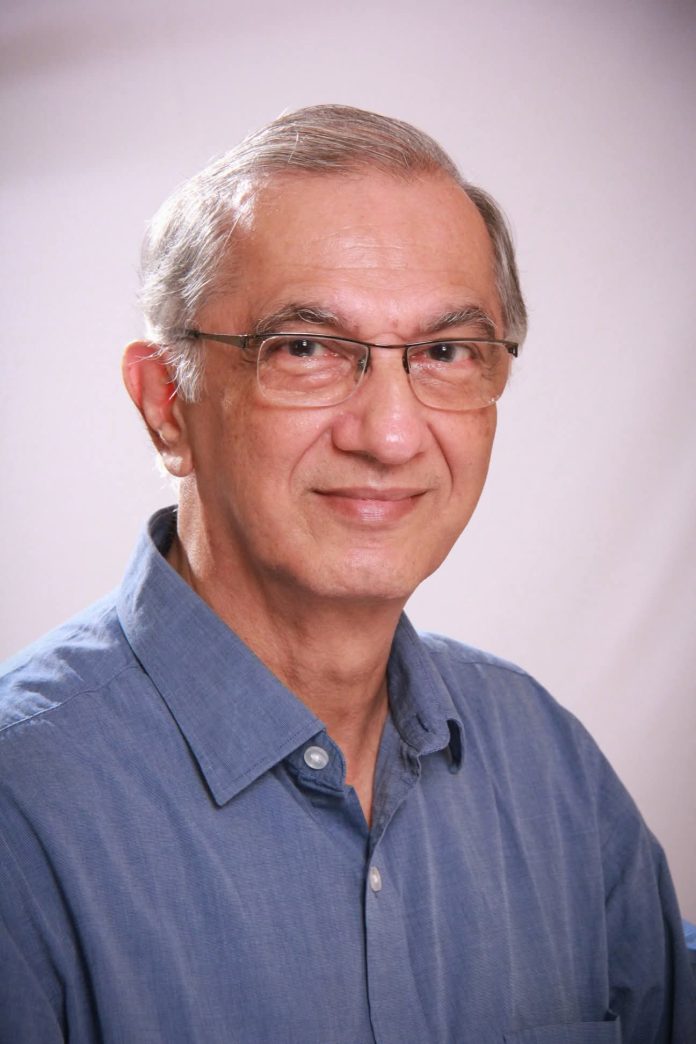
IIT Bombay has marked a proud moment with the conferment of the Padma Shri on Prof Juzer M. Vasi, former Deputy Director and senior academic of the institute. The national honour recognises his lifelong contribution to science and engineering, with a strong focus on semiconductors, microelectronics, and solar energy research.
Prof Vasi has served Indian academia for over four decades. He remains associated with IIT Bombay as Professor Emeritus in the Department of Electrical Engineering. His work spans nanoelectronics, solar photovoltaic deployment in India, global solar PV systems, nanocrystal-based solar cells, and the reliability of solar modules. These areas hold strong relevance for sustainable development and energy access.
An alumnus of IIT Bombay, Prof Vasi completed his B.Tech in 1969. He earned his Ph.D. in Electrical Engineering from The Johns Hopkins University in 1973. His academic journey reflects deep commitment to knowledge and public service, values strongly rooted in the Islamic tradition of ilm and community benefit.
Prof Vasi joined IIT Bombay as an Assistant Professor in 1981. He rose through the ranks to serve as Professor, Head of the Electrical Engineering Department, and later as Deputy Director from 2006 to 2009. He also taught at IIT Delhi and served as Visiting Assistant Professor at Johns Hopkins University.
Students and colleagues regard him as a dedicated teacher and institution builder. His leadership strengthened academic standards and research culture at IIT Bombay.
The Padma Shri recognises sustained excellence and service to the nation. For the Muslim community, Prof Vasi’s achievement stands as a reminder of the impact of scholarship, discipline, and ethical pursuit of knowledge in public life.
source: http://www.radiancenews.com / Radiance News / Home> Latest News > Report / by Radiance News Bureau / January 27th, 2026
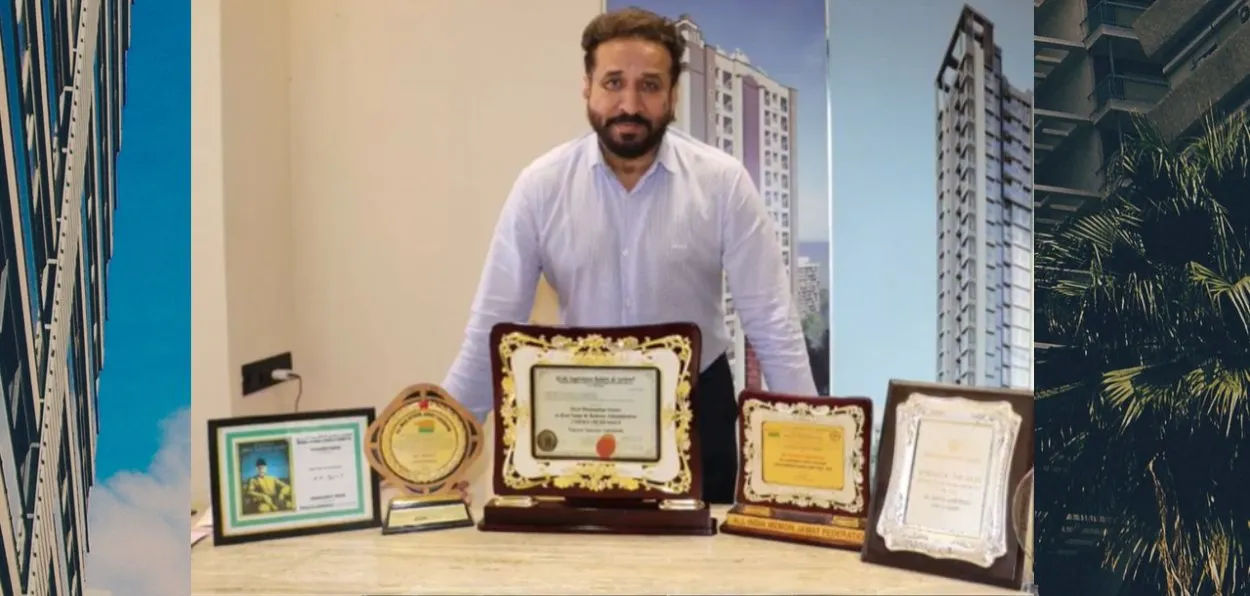
Parvez Suleman Lakdawala, founder CEO, Grace Group of Companies
Mumbai :
Mumbai-based real estate developer Parvez Suleman Lakdawala, who has played a significant role in building homes for slum dwellers, has received an Honorary Doctorate from the University of Sorbonne of France at the British Parliament for his extraordinary work in real estate and housing infrastructure particularly in slum redevelopment, over the last three decades.
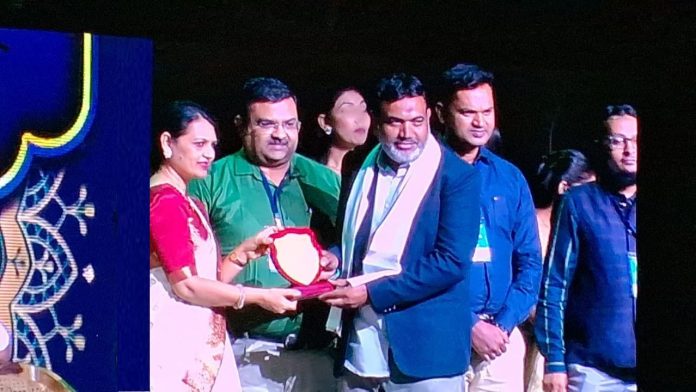
He was given this award during the ‘Sorbonne International Convention’ held at the ‘House of Lords’ in London by the French higher education institution ‘Ecole Supérieure Robert de Sorbonne.’
Speaking about the honour, he said, “I never even dreamt that I would receive such an honour.”
This institution is known worldwide for granting degrees based on professional experience. Speaking after accepting the honorary degree, Lakdawala said, “This is a global success for the slum rehabilitation work I have done through SRA schemes. I have been in this business for 30 years and have completed the construction of 32 buildings so far.”
Parvez Lakdawala was born into poverty in a small hutment in Bandra when conditions in the slums were sub-human, and the residents had to struggle for basic amenities like water.
Parvez recalls that there was a filthy settlement outside his house, and the condition of the household was very poor. For children living in such conditions, even dreaming big was considered a crime.
However, Parvez never let his poverty weaken his resolve to rise above his circumstances.
Despite the fear of dropping out due to poverty, Parvez held onto his education. Studying while living in a slum, he completed his education. Not many know that Parvez Lakdawala, the successful businessman, is a law graduate.
The law gave him discipline in life and the knowledge to fight against injustice. He often says that he prospered in life only because of education.
In 1989, he laid the foundation of the Grace Group of Companies and started working in the real estate sector.
Sorbonne University campus
Around 1995, he worked for the Slum Rehabilitation Authority of Mumbai (SRA) to provide highly subsidized apartments to slum dwellers. At that time, not many builders were willing to work there. Today, he has completed projects of more than 32 grand buildings in Mumbai.
He gave a new face to the homes of the poor by implementing new designs, modern amenities, and innovative concepts.
Earning money was never his sole aim. Having experienced poverty, he empathized with the poor. That is how he bears the educational expenses of thousands of poor children. For parents who cannot afford to pay their children’s school or college fees, Parvez Lakdawala has become a ray of hope. “Allah has given to me so that I can give it back to society,” he says.
During the Corona lockdown, when the entire country was under the shadow of fear, Parvez Lakdawala was working in the streets.
Thousands of labourers with their small children were walking towards their villages. Parvez arranged for vehicles and buses for them. He transported more than 3000 people to their homes.
He also ensured the travelers got food and water. For this work, he received appreciation not only from Mumbai but also from states like Rajasthan.
In a city like Mumbai, where even dreaming of a home is a luxury, Parvez Lakdawala has helped thousands of families get their rightful homes. His journey builds buildings worth crores today, starting from a 250-square-foot house.
The most important aspect of Parvez Lakdawala’s work is the self-respect he has given to the common man. Recalling old memories, he says, “Earlier, people living in slums used to feel ashamed about their address. They regretted their living conditions. Today, when the same people enter flats equipped with all amenities, they proudly disclose their address to others. Giving them the property they deserve and a sense of security gives me the most joy.”
Parvez Lakdawala’s mantra is: Your intention is more important than your destiny. If your intention is good, God comes to your aid and grants you success.
source: http://www.awazthevoice.in / Awaz, The Voice / Home> Stories / by ATV / posted by Aasha Khosa / January 09th, 2026
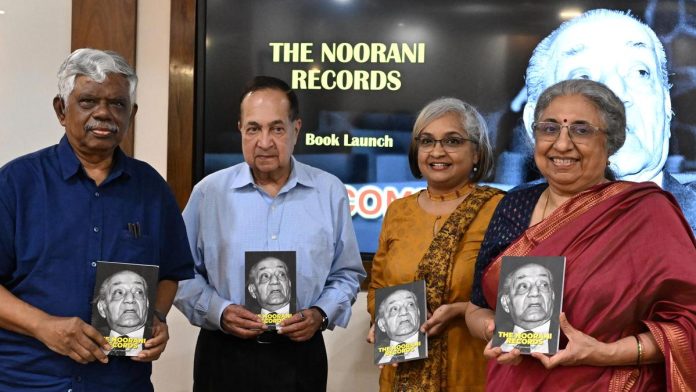
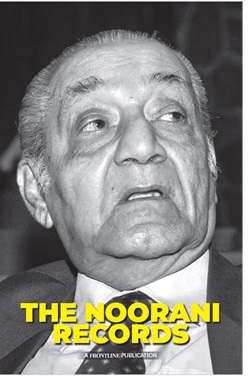
The Hindu Group’s Frontline magazine has launched The Noorani Records, a collection of essays by the late lawyer and constitutional expert A.G. Noorani (1930–2024). The book was released at The Hindu’s head office in Chennai on November 11. N. Ram, Director of The Hindu Publishing Group, presented the first copies to retired Madras High Court judges Justice K. Chandru and Justice Prabha Sridevan.
Justice Chandru praised Noorani’s ability to explain complex legal and political ideas in simple language that appealed to both experts and lay readers. Citing Noorani’s writings on the Rashtriya Swayamsevak Sangh (RSS) and Mahatma Gandhi, he urged that such essays be introduced to students to counter historical distortion and promote constitutional awareness. He also recalled Noorani’s detailed account of the trial of the Ali brothers during the Khilafat Movement, which reflected Hindu–Muslim unity.
Justice Sridevan remarked that Noorani’s work could inspire reflection and change among readers. She said his clarity of thought and disciplined writing offered valuable lessons for young lawyers.
N. Ram described Noorani as a passionate journalist and an uncompromising voice in legal and political commentary. He recalled that Noorani preferred handwriting his articles, ensuring precision and punctuality in his contributions to Frontline. Editor Vaishna Roy called him an erudite jurist whose essays combined intellectual depth with accessibility.
pix: thehindu.com
The book, released on the first anniversary of Noorani’s passing, compiles some of his finest columns for Frontline. It is available for purchase through The Hindu’s online bookstore.
source: http://www.radiancenews.com / Radiance News / Home> Latest News> Report / by Radiance News Bureau / November 13th, 2025
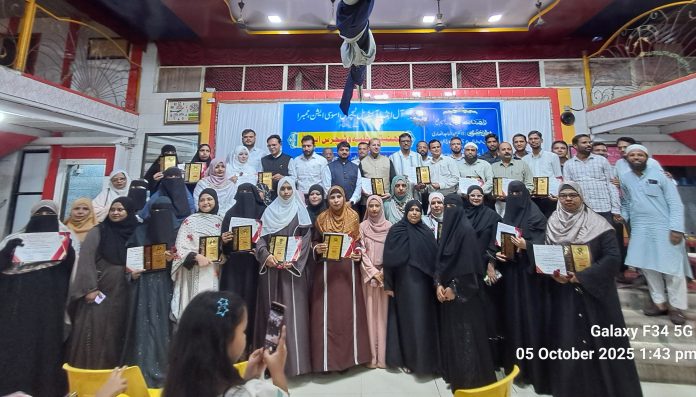
The Maulana Afzal Hussain Ideal Teachers Award 2025 and Students’ Felicitation Programme were held here Sunday to celebrate dedicated educators and outstanding students.
Teachers play a pivotal role in shaping a nation’s future, and societies that honour their teachers set a benchmark for others to follow.
Reflecting this spirit, the All India Ideal Teachers Association (AIITA), which has been active in Mumbra since 2019, organised the event to recognise exemplary teachers for their service and commitment to education.
The award is named in the memory of Maulana Afzal Hussain, a distinguished educationist and author of several books. This year, the AIITA Mumbra Award Committee selected 26 teachers from various institutions for the honour. The awards, presented annually on World Teachers’ Day, cover multiple categories including Primary, Secondary, and Headmaster levels, from schools in Mumbra, Thane, and Mumbai Municipal Corporation areas.
The Award recipients at the level of private educational institutions included Khan Safia (Al-Ehsan School), Altaf Patel (Abdullah Patel School), Lubna Khot (Central Public School), Khan Sadaf (Rafiqah School), Qazi Alia (Dr. Asadullah School), Syed Rizwana (Mumbra Public School), Syed Feroza (National School), Sheikh Zaheer (Nice School), Zahida Chotani (Patel School), Ansari Nasreen (Sameeya English School), Rukhsanda Khan (Saadia School), Shabana Azmi (Shoaib School), and Sadiqa Sheikh (Saadia Primary School).
In the Mumbai Category, the Award recipients included Arshia Shah (Vakola Municipal School), Mehboob Makandar (Vanoba Bhave School), and Ismail Bagwan (Anjuman Khair-ul-Islam School),
In the Thane Municipal Corporation Category, the Award recipients included Fatima Naz (TMC 116), Halima Qazi (TMC 117), Tabassum Khan (TMC 124), Syed Sameena (TMC 125), and Sufyan Ansari (TMC 40),
Thane Headmaster Category, the Award recipients included Mansoori Tehzeeb (Sameeya School), Ansari Tasneem (TMC 13), Syed Sana (Leader School), and Sheikh Khairul-Nisa (Abdullah Patel School).
A posthumous award was also conferred upon Late Naheed Fatima Zainuddin Jamali Sahiba of Abdullah Patel School in recognition of her lifelong contribution to education.
The event was presided over by Advocate Jasim Sheikh, with Dr. Abdul Majid Ansari serving as the Chief Guest. Distinguished guests included Professor Javed Sheikh (JIH Local Ameer of Mumbra), Khan Najma (President, GIO Mumbra), and Ansari Nasir of Khidmat Khalq Trust.
In addition to teacher awards, students from 24 schools were felicitated for their academic achievements in the 10th and 12th board examinations.
The event, held at Sania Hall, witnessed an enthusiastic turnout of teachers, students, and community members. Members of AIITA Mumbra and the Markazi Talimi Board Mumbra played a key role in organising and ensuring the success of the programme.
source: http://www.radiancenews.com / Radiance News / Home> Pride of the Nation> Awards> Latest News / by Radiance News Bureau / October 07th, 2025
Urdu journalist Zameer Ahmed Khan Jaleel Ahmed Khan has received the Maharashtra Rajya Urdu Sahitya Academy’s Exemplary Journalism Award 2020 for his dedicated contribution to Urdu journalism. He described the award as recognition of all sincere individuals serving society through honest and conscious reporting.
Khan, known for his association with Roznama Inquilab, Munsif TV, and MCN Urdu News, expressed gratitude to his teachers, colleagues, and readers. He said their encouragement and prayers strengthened his resolve to pursue truth and integrity in journalism.
Speaking about his professional journey, Khan said his goal has always been to guide journalism in a positive and dignified direction. He emphasized that journalism should be rooted in honesty and social awareness to enlighten the community with knowledge and justice.
He thanked Allah for the success and prayed for continued sincerity and dedication in serving society through the power of the pen. Khan also urged his peers to maintain faith and commitment to the principles of truth and responsibility in media work.
The award highlights the importance of Urdu journalism in promoting social consciousness and ethical reporting, and serves as inspiration for young journalists to pursue their work with humility and integrity.
source: http://www.radiancenews.com / Radiance News / Home> Pride of the Nation> Awards> Latest News / by Radiance News Bureau / October 10th, 2025
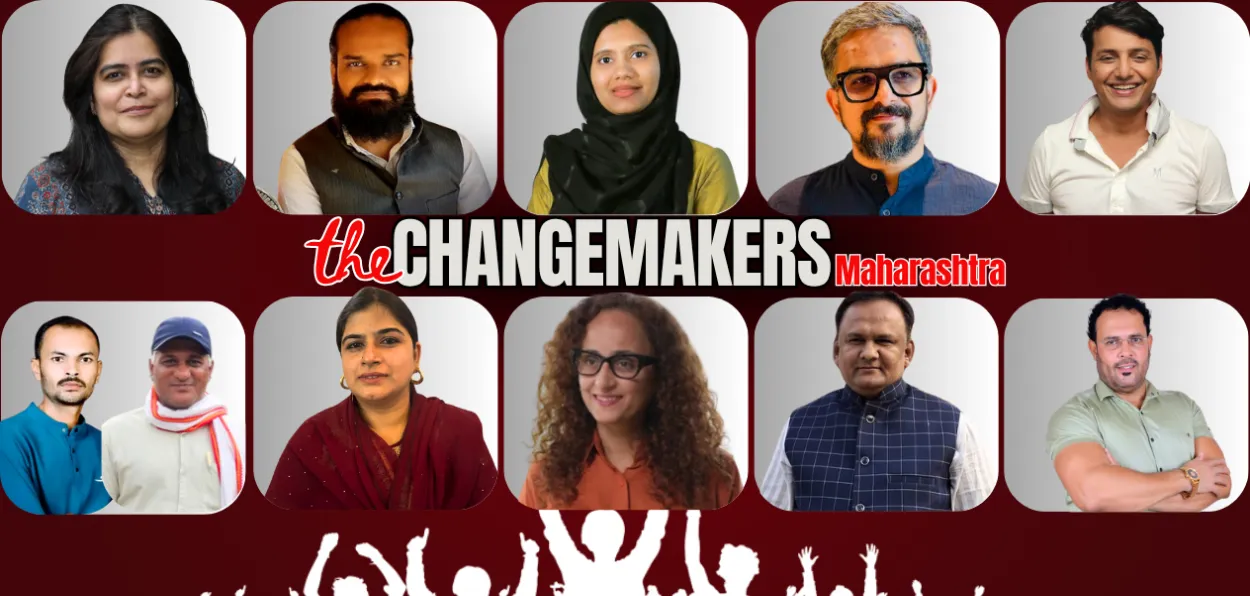
Awaz-The Voice, through its ‘The Changemakers’ series, has introduced readers to inspiring figures from Uttar Pradesh, Assam, and Jammu & Kashmir.
Starting July 6, we will feature ten remarkable changemakers from Maharashtra.
These individuals not only embody the state’s vibrant and progressive legacy but are also shaping a future that is tolerant, equitable, harmonious, and inclusive.
Working quietly away from the limelight, their impactful contributions are being brought to the public through Awaz-The Voice. Here’s a glimpse into their inspiring journeys.
Dr. Farah Anwar Husain Shaikh
Dr. Farah Anwar Husain Shaikh leads the Mis Farah Charitable Foundation in Pune’s Dapodi, delivering health, education, and disaster relief to communities. Her bold advocacy for Muslim women’s right to pray in mosques challenges deep-rooted traditions, earning her a doctorate in social work and women’s empowerment. Her story is that of the struggle for equality, Farah’s tireless efforts are transforming lives and reshaping Pune’s social landscape, making her a beacon of grassroots change.
Paigambar Shaikh
Rationalist Paigambar Shaikh is redefining tradition with his “Economic Qurbani” initiative from Pune, transforming the Eid al-Adha sacrifice into a force for community growth. By channeling resources into education, microfinance, and health camps, he blends faith with practicality. He is inspired by the Satyashodhak movement. His innovative approach fosters sustainable development and communal harmony in Maharashtra’s far-flung areas, marking him as a visionary changemaker.
Marziya Shanu Pathan
Marziya Shanu Pathan, 24, is an activist. From leading a march for Malala Yusufzai at age 12 to organizing the vibrant Mumbra-Kausa Children’s Festival, she champions women and youth in her township. Her blend of fiery activism and community initiatives is uplifting Mumbra, proving her dedication to a brighter, more inclusive future.
Hazrat Ali Sonikar and Munir Shikalkar
In Sangli’s agricultural heartland, Hazrat Ali Sonikar and Munir Shikalkar are empowering the Muslim community through grassroots activism. Hazrat rallies youth with awareness campaigns and workshops, while Munir bridges gaps with local authorities to secure resources. Their collaborative manifesto, amplifying education and employment, is reshaping the future of the community, showcasing the power of local action.
Sakib Gore
In Badlapur, Maharashtra, Sakib Gore is lighting up lives through his ‘Vision Friend Sakib Gore’ initiative, driven by his grandmother’s struggle with blindness. With a belief that glasses are more than a fashion statement—they’re a lifeline to sight—he’s brought eye exams to 2.6 million people, distributed 1.7 million free spectacles, and facilitated 63,000 free cataract surgeries. His ‘Devabhau’ glasses, priced at just 33 rupees, earned him global acclaim and the ‘System Leader Award’ at a World Summit in Kathmandu. Reinvesting every profit into free glasses for the poor, Sakib’s mission is simple but profound: to lift the visually impaired out of darkness, one pair of eyes at a time.
Sarfaraz Ahamad
Solapur’s Sarfaraz Ahamad, a 41-year-old historian, brings Maharashtra’s Deccan heritage to life through his eight books. His books include the acclaimed Hyder Ali, Tipu Sultan, and The Sultanate-e-Khudadaad. As a founder member of the Ghaziuddin Research Center which promotes objective historical research. His writings in Marathi, Hindi, Urdu, and English captivate readers. Sarfaraz’s work is reviving cultural pride and inspiring a new generation of scholars.
Sabah Khan
Sabah Khan’s NGO Parcham based in Mumbara, empowers girls through football, challenging norms and building confidence among them. Khan, 50, fosters gender equality and religious harmony, securing a dedicated football field and launching the Savitri-Fatima Foundation to support education and economic growth. Sabah’s transformative work offers Mumbra’s youth a vibrant path to self-discovery.
Afroz Shah
Mumbai’s Afroz Shah, a 42-year-old lawyer, turned Versova Beach into the site of the world’s largest clean-up, removing 20 million kilograms of trash. Afroz Shah Foundation now tackles rivers and waste culture, earning him the UN’s ‘Champion of the Earth’ title. From slums to schools, his “dates with the ocean” inspire thousands, proving one man’s grit can spark a movement.
Dr. Sabiha Inamdar
In Nashik, 43-year-old Dr. Sabiha Inamdar, an intimacy and relationship coach, is breaking taboos around sexual wellness. She creates safe spaces for women and couples to discuss intimacy and emotions openly. What makes Dr. Sabiha’s work important is her commitment to normalizing healthy conversations around sex, emotions, and interpersonal connection—especially for women. Her workshops shift mindsets, fostering healthier relationships and emotional well-being across Maharashtra.
Hussain Mansuri
Mumbai’s Hussain Mansuri, a 40-year-old philanthropist with 7.8 million Instagram followers, spreads compassion across the city’s streets. From feeding street kids to caring for stray animals, his quiet acts of kindness, rooted in Islamic values, touch countless lives. Whether delivering meals near Tata Hospital or comforting the grieving,
Hussain’s selfless mission ripples far beyond Mumbai.
source: http://www.awazthevoice.in / Awaz, The Voice / Home> The Changemakers / posted by Aasha Khosa, ATV / July 05th, 2025
After confirming his appointment a few days back, AIFF has announced that Khalid Jamil has signed a full-time two-year contract to be the Indian football team coach.
The AIFF has announced that Khalid Jamil will be a full-time coach for the Indian men’s football team. Image: AIFF
Former midfielder Khalid Jamil has signed a full-time two-year contract to be the new Indian men’s football team coach, the All India Football Federation (AIFF) confirmed on Wednesday. Jamil, who was Jamshedpur FC’s coach in the Indian Super League (ISL), was picked as the top candidate by the AIFF Executive Committee on 1 August , but both parties were yet to agree on terms.
“I am both deeply proud and immensely privileged to have been entrusted with the responsibility of leading our national team,” Jamil said in an AIFF media release on Wednesday. “Over the years, I’ve had the opportunity to train Indian players, and I’ve grown to understand their strengths and weaknesses intimately.
“These insights will be fundamental to everything we do as we prepare for the CAFA Nations Cup and the upcoming crucial Asian Cup Qualifiers against Singapore.”
Jamil to start tenure with CAFA Nations Cup
Jamil was picked by the AIFF ahead of India coach Stephen Constantine and Slovakian tactician Stefan Tarkovic. He will be the first Indian to coach the men’s national team after Savio Medeira in 2012.
The first training camp for the Indian football team under Jamil will start on 15 August at the Dravid-Padukone Centre for Sports Excellence in Bengaluru. The list of probables is expected to be announced soon.
Jamil’s first assignment as India coach will be the CAFA Nations Cup, where India are set to face hosts Tajikistan (August 29), IR Iran (September 1) and Afghanistan (September 4) in Group B.
In the October FIFA Window, India are scheduled to play AFC Asian Cup 2027 qualifiers against Singapore (October 9 and 14).
Jamil’s coaching and playing career
While he doesn’t have the experience of coaching a national team, the 48-year-old has had an extensive management career at the club level, coaching Jamshedpur FC, NorthEast United FC, Aizawl FC, East Bengal FC, Mohun Bagan AC and Mumbai FC. With Aizawl FC, he won a historic I-League title in 2016-17.
He also helped Jamshedpur reach the Kalinga Super Cup 2025 final and the semi-finals of the ISL play-offs 2024-25.
As a player, he played 15 times for India, after making his debut in the 1997 SAFF Championship in Nepal, which the Blue Tigers won.
In his club career, Jamil won the National Football League, two Federation Cups and two IFA Shields with Mahindra United.
He also played for Air India and Mumbai FC. In the Santosh Trophy, Jamil represented Maharashtra, with whom he won the title in 1999.
source: http://www.firstpost.com / FirstPost. / Home / by FP Sports Desk / August 13th, 2025
Umar Sheikh’s determination and the school’s support have been vital to his academic achievements
New Delhi :
The Maharashtra State Examination Council’s recent 5th and 8th class scholarship exams witnessed remarkable achievements from students across the state. Among them, 954 students from the Brihanmumbai Municipal Corporation (BMC) schools secured places on the district merit list, with Muslim student Muhammad Umar Sheikh standing out as the top scorer in the 8th class scholarship exam with an impressive 72.79% marks.
This achievement is particularly significant given the exam’s difficulty and the fierce competition from students all over Maharashtra. The 8th class scholarship exam was held on February 9, drawing hundreds of participants. In the 5th class category, Ridhi Kamlesh Mishra from Vakola BMC Hindi Medium school topped with 79.19% marks.
Muhammad Umar Sheikh, a student of Deonar Colony MPS School No. 4 and currently in the ninth grade, secured 236 out of 300 marks, making him the highest scorer in all BMC schools for the 8th grade. This year, out of the 954 successful candidates, 536 were from the 5th grade and 418 from the 8th grade. This is a sharp increase compared to last year’s 405 students who cleared the exams.
Speaking to the media, Muhammad Umar’s father, Muhammad Saleem, shared the challenges their family has faced. “My son has been topping his class in mathematics and science since the beginning. He loves these subjects and has been very focused,” said Saleem. He added that Umar had also topped the 5th class scholarship exam.
Saleem narrated the difficulties faced by the family during the COVID pandemic. “Before COVID, my two children studied at DY Patil School in Nerul, Navi Mumbai. However, due to the loss of income during the pandemic, I could not pay their school fees, and the school stopped their studies. The school even refused to give their transfer certificates because of unpaid fees,” he explained.
With limited options, Saleem moved his family to Govindi in 2021 and struggled to find admission for his children. “It was not easy, but with persistence, I managed to get them admitted to a school here,” he said. Despite the hardships, Saleem is proud of his children’s resilience and achievements. “They are intelligent, and their performance at the new school has been excellent,” he remarked.
When asked about his son’s ambitions, Saleem said, “Umar wants to become a scientist. He has been saying this since the first grade, and with the way he is studying, I believe he will achieve it.”
The school’s principal and staff have expressed great pride in Muhammad Umar’s success. Principal Menal Chaudhary, along with teachers Uday, Ravi, Balu, Prateek, Nitin, and Smithia Madam, congratulated Umar and praised his dedication and hard work. “His success is a source of pride for the entire school,” they said.
This story highlights not only the academic excellence of Indian Muslim students in Mumbai’s government schools but also the obstacles faced by economically weaker families. It also reflects the support provided by committed teachers and principals who encourage students to reach their full potential.
Muhammad Umar Sheikh’s story serves as an inspiration for many young students facing financial hardships, demonstrating that determination and support can lead to success. His achievement, along with the rise in the number of successful students from BMC schools, reflects a positive change in the educational opportunities for Indian Muslim children, who often face social and economic challenges.
In a city known for its diversity, such stories emphasise the need to acknowledge and support the talents and ambitions of minority communities. This achievement sends a message to all that education is the key to overcoming barriers and achieving dreams, regardless of one’s background.
source: http://www.clarionindia.net / Clarion India / Home> Indian Muslims / by Clarion India / July 14th, 2025
After a difficult childhood and early careers in aviation and the hotel industry, Hussain Mansuri found his true calling—serving humanity. Today, he stands as a prominent social media influencer and a beacon of hope for many in need.
Widely recognized for his philanthropic efforts, especially in supporting children battling cancer, Mansuri’s heartfelt videos have touched millions on Instagram. “Main sirf insaniyat ka farz ada kar raha hoon,” he says emotionally. “I am only fulfilling the duty of humanity.”
Mansuri’s life journey is a testament to resilience. He completed his schooling at Cardinal Gracious High School in Mumbai and later graduated from Rizvi College. Even as a child, he had a deep passion for photography and storytelling. However, financial struggles meant he had to work while still in primary school.
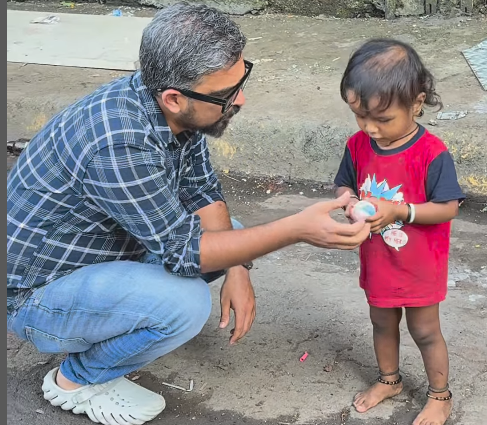
Hussain Mansuri with flower sellers
“I remember those days when I wore second-hand clothes just to get by,” he recalls. “But I focused on my education and eventually landed a job with Jet Airways.”
To support his family, Hussain also worked as a waiter and took on various odd jobs. During this time, he developed a profound sense of compassion and a desire to help those less fortunate.
“I saw people chasing wealth endlessly, yet they lacked true satisfaction,” he says. “And very few were willing to help strangers without expecting anything in return.”
Hussain lives by the principle: “Tu bas dua kama, phir tujhse amir koi nahi”—Just earn blessings, and then no one is richer than you. Guided by this philosophy, he began helping those in need—even when his means were limited.
Hussain Mansuri with a child
During the COVID-19 pandemic, when many were left without food or medical support, Hussain stepped up. He distributed essentials to the homeless, sick, and starving.
He continues to offer financial aid to cancer patients, particularly at Tata Memorial Hospital, supports underprivileged children’s education, and provides food, clothing, and care to the elderly, regardless of caste, religion, or background.
It is this unwavering dedication that has earned him the title, Ambassador of Humanity.
Though his actions are modest in scale, their impact is profound. His videos not only provide immediate relief to those in need but also inspire millions to develop empathy and a sense of social responsibility.
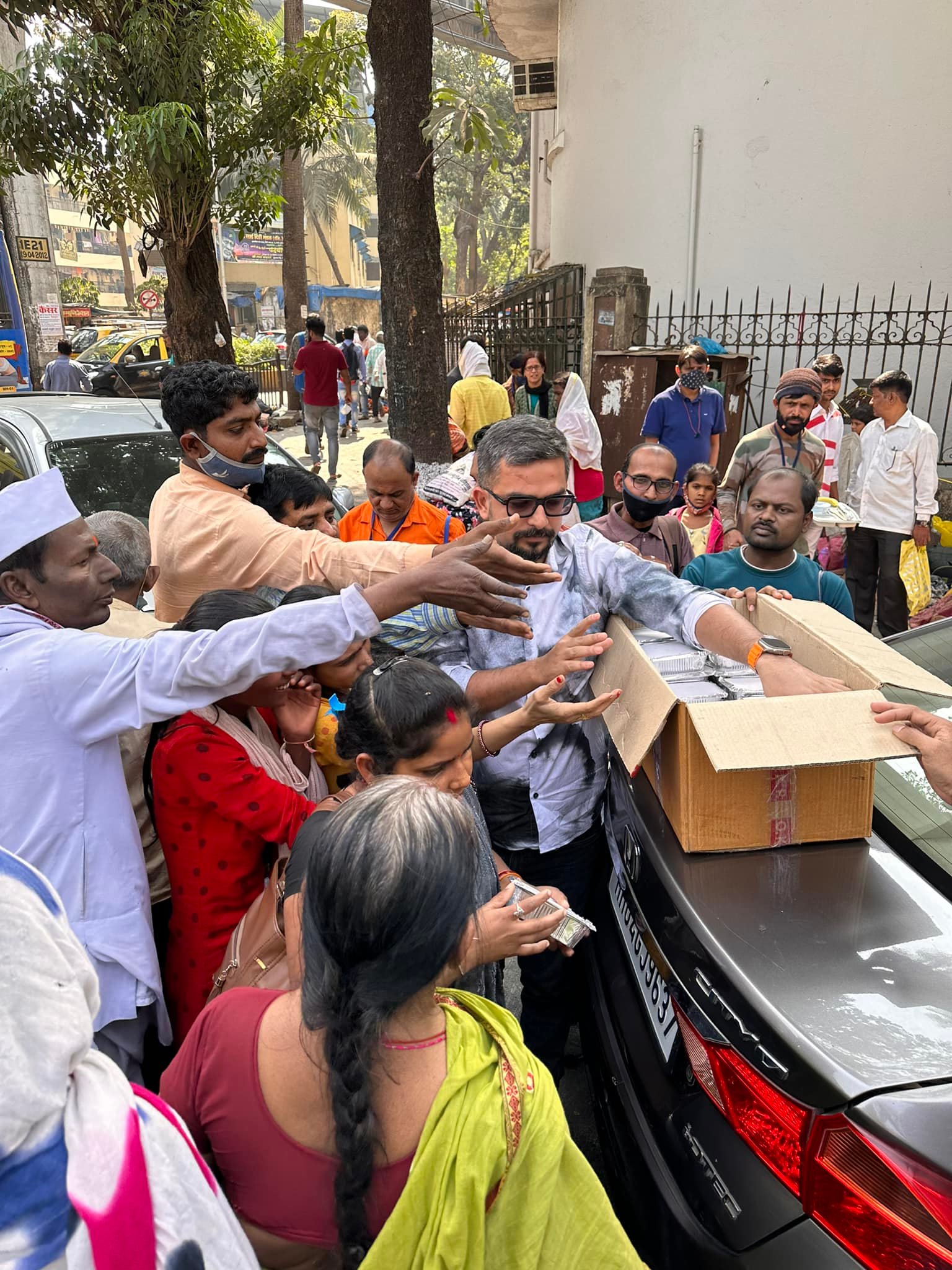
Hussain Mansuri distributing food packets
In one powerful video, Hussain is seen picking up discarded images of Hindu deities from the roadside and respectfully immersing them in water. This simple act of communal respect resonated deeply with viewers across faiths, earning widespread admiration and sending a message of unity at a time when it’s most needed.
With a growing community of over 12.3 million followers on Instagram, Hussain’s digital presence serves as a platform for social change. “When I started, I used to share some photos and personal stories,” he says. “People started connecting with them. Over the years, that small start has grown into something beautiful—like a second family.”
source: http://www.awazthevoice.in / Awaz, The Voice / Home> The Changemakers, Maharashtra / by Fazal Pathan / July 16th, 2025