Maj Gen SM Hasnain’s contributions to the Indian Army, including his leadership of the 4 Garhwal Rifles, were remembered with reverence.
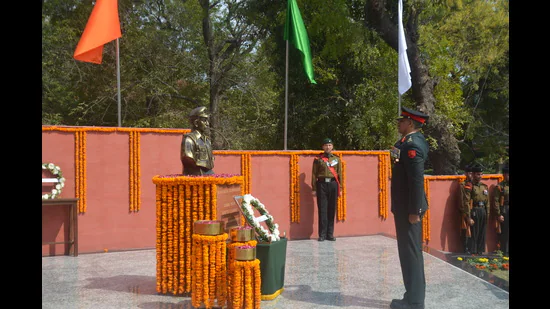
Tributes being paid to Maj Gen Syed Mahdi Hasnain on Sunday. (HT)
A solemn remembrance and memorial service was conducted at Prayagraj Military station to honour the legacy of Maj Gen Syed Mahdi Hasnain here on Sunday. The service paid tribute to his distinguished military career and unwavering commitment to duty.
Maj Gen SM Hasnain’s contributions to the Indian Army, including his leadership of the 4 Garhwal Rifles, were remembered with reverence, said Group Captain Samir Gangakhedkar, public relations officer (defence), Prayagraj region.
The speakers reflected on his valour during WW-II and his role in safeguarding refugees during the Partition. In his sterling military career Maj Gen SM Hasnain commanded a Mountain and an Infantry Brigade, an illustrations Mountain Division and was the first Inspector of Infantry at Army Headquarters. The service served as a reminder of Maj Gen SM Hasnain’s enduring impact on the nation, the Indian Army and Prayagraj town where he lived his post service life, he added.
Lt Gen NS Raja Subramani presided over the function as the Colonel of the Regiment of the Garhwal Rifles and Garhwal Scouts and paid his tributes to the legend.
Lt Gen (Retd) Syed Ata Hasnain, son of Maj Gen SM Hasnain, also served the Indian Army in his father’s regiment and went on to command the prestigious 15 Corps. Presently, he continues his service to the nation as member of the National Disaster Management Authority.
source: http://www.hindustantimes.com / Hindustan Times / Home / by HT Correspondent, Prayagraj / February 26th, 2024
Educated at Allahabad University, the daughter of a State Bank of India officer credits self-study, family support and disciplined preparation to secure first rank
New Delhi :
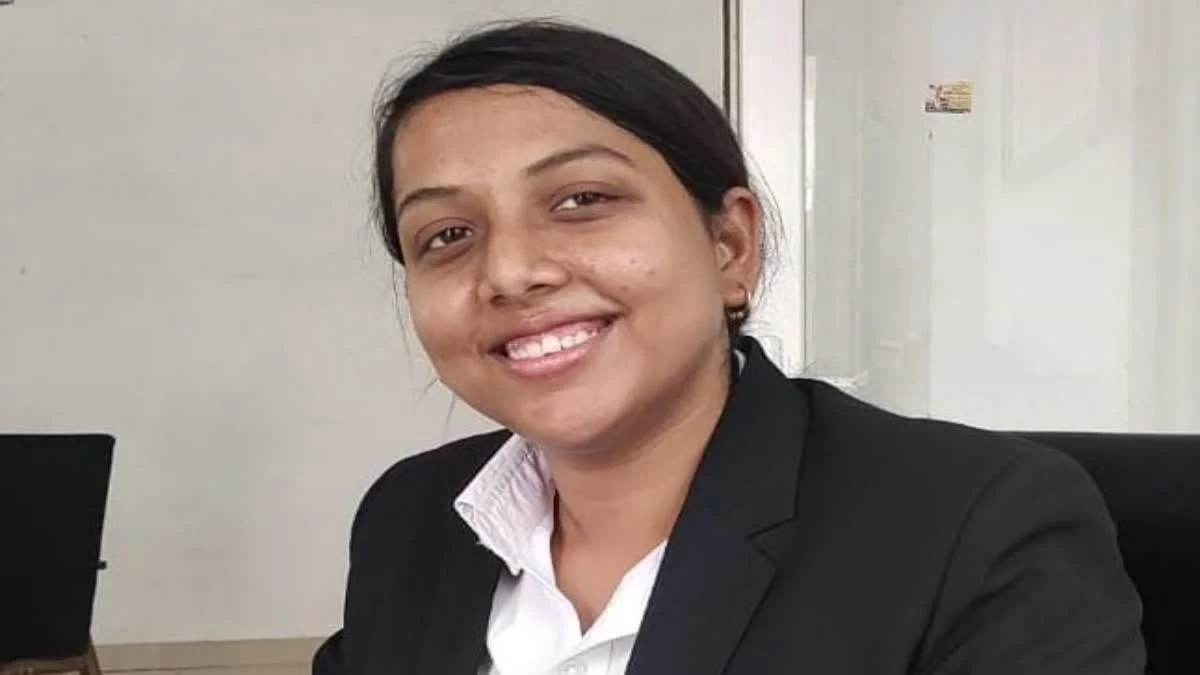
In a story of determination, faith and steady hard work, Anjum Ara from Prayagraj in Uttar Pradesh has secured first rank in the Chhattisgarh Provincial Judicial Service Examination, becoming a judge and bringing pride to her home state. Her success has been widely celebrated in Prayagraj, where neighbours and well-wishers described her achievement as a moment of honour for the city.
Anjum, who comes from an educated Muslim family, said her journey was shaped by a personal loss that changed the direction of her life. Her uncle, whom she lovingly called Bade Abu, served as an Additional District Judge. His death left a deep impact on her and inspired her to choose the path of judicial service. “I used to call him Bade Abu,” Anjum recalled. “After he passed away, I made up my mind that I would become a judge like him and serve society.”
She completed her early schooling at Central Academy in Jhunsi town in Prayagraj District before pursuing her BA and LLB from the University of Allahabad. Reflecting on her university years, Anjum said the Law Faculty played a major role in shaping her approach towards legal studies. “The Law Faculty taught me to understand the law, not just memorise it,” she said. “Our professors focused on practical learning. That helped me a lot in the judicial exams.” She added that because of the strong academic environment at the university, she did not feel the need to rely on costly coaching institutes. “If your basics are clear, you can prepare on your own,” she said.
Her father, Shamim Ahmed, works as an assistant manager at the State Bank of India, while her mother, Akhtari Begum, is a homemaker. Anjum described her parents as her biggest support system. She said her preparation was entirely self-driven and disciplined. “I studied five to six hours every day with full focus,” she explained.
For the mains examination, she focused strongly on judgment writing. She regularly practised answer writing and carefully studied judgments delivered by local courts in Chhattisgarh to understand how decisions are framed. “I practised writing answers regularly. I also studied judgments from local courts in Chhattisgarh to understand how decisions are structured,” she said. She also credited her habit of reading newspapers daily for helping her during the interview stage. “Current affairs helped me respond confidently,” she added.
At home, her family ensured that her studies were never disturbed. “They made sure there was no noise while I studied. They always encouraged me, especially when I failed in the Rajasthan and Delhi judicial exams,” Anjum said. Her father said the family never allowed disappointment to take over. “We always believed in her ability. Failure is part of life. We told her not to lose hope,” he said. Her mother added, “She worked very hard day and night. We only tried to give her a calm environment.”
Before achieving success in Chhattisgarh, Anjum faced setbacks in other states. She admitted that those failures were painful but also important lessons. “Failures taught me where I was lacking,” she said. “Instead of getting upset, I improved my answer writing and strengthened my understanding of the law.” Her perseverance paid off when the results were declared and she secured the top rank in the state.
Residents in Prayagraj expressed pride in her achievement. A neighbour said, “This is a proud moment for the entire area. She has shown that with hard work, anything is possible.” A former teacher from the University of Allahabad said, “Anjum was always sincere and focused. Her success proves that strong academic grounding and discipline make a real difference.”
Now appointed as a judge, Anjum says her goal is to carry out her duties with honesty and integrity. “I want to fulfil my responsibilities towards society through the judiciary with sensitivity,” she said. “Justice should be fair and humane.” Her achievement is being seen as an inspiration, particularly for young women from minority communities who dream of entering the judiciary.
Anjum also shared advice for aspirants preparing for judicial services. She urged students to build a strong grasp of the basic language of law. She advised regular answer writing practice for the mains examination and stressed the importance of understanding how court judgments are read and written. She encouraged students to maintain a routine of five to six hours of focused study daily and not to lose heart in the face of failure. “There is no easy way,” she said. “You have to stay focused and believe in yourself.”
From the classrooms of Prayagraj to securing the top rank in Chhattisgarh, Anjum Ara’s journey reflects discipline, patience and family support. As she prepares to take her place on the bench, many young aspirants now look to her story as proof that steady effort and belief in one’s goal can turn a dream into reality.
source: http://www.clarionindia.net / Clarion India / Home> Editor’s Pick> Indian Muslims / by Mohammad Bin Ismail / February 23rd, 2026
Setting a rare example in communal harmony, the Muslim community in Prayagraj has extended a helping hand to the pilgrims stranded in the city after the stampede in the ongoing Maha Kumbh on Mauni Amavasya, in which more than 30 persons have died.
Muslims have opened their homes, mosques, dargahs and public spaces to accommodate the Hindu pilgrims needing help and depicted the laudable Islamic spirit of compassion during the crisis.
The tragedy of stampede occurred in Prayagraj in the night intervening January 28 and 29 when the pilgrims rushed to participate in the ritual of bathing and taking a dip in the confluence of Ganga and Yamuna rivers during the night. The people sleeping and sitting on the ground near the rivers were trampled by huge swells of devotees coming towards them in the darkness.
Significantly, the selfless service from the Muslim community for the Hindu pilgrims has come when they were facing a financial and social boycott during the Maha Kumbh. Muslims have been kept away from the Kumbh festivities with an open boycott and banned from taking up the event-related employment works. Despite this, the local Muslims have disregarded their exclusion and are providing food, shelter, and medical aid to stranded pilgrims.
Reports emerging from Prayagraj say that Muslims have actively come forward to the rescue of pilgrims caught in distress. They are offering food, water, clothes, medicine, and even shelter to the devotees, displaying an unshaken commitment to humanitarian values. Videos and pictures circulating on social media depict local Muslims distributing essential supplies and aiding the pilgrims, defying efforts to sow division.
The Muslim community in Prayagraj, earlier known as Allahabad, has historically played an active role in Kumbh Mela, which has benefited both Hindus and Muslims socially and economically. The event had long provided business opportunities for Muslim shopkeepers, transporters and labourers. This year, calls for their boycott from certain religious figures led to their exclusion from trade and services at the event. Even Muslim shopkeepers who attempted to operate discreetly were targeted and harassed.
Despite being told that they were not welcome in the Maha Kumbh and the labour force being denied work, Muslims have not turned their back on the Hindus in the hour of need. Following the stampede, several mosques, including Jama Masjid at Chowk and another in Khuldabad, were opened to house distressed pilgrims.
Moreover, Muslim volunteers have set up food stalls and medical aid stations to assist the injured and hungry. A community-run ‘bhandara’ (free meal service) has been organised, serving hundreds of devotees irrespective of religion. Even the Muslim medical professionals have also stepped forward to help, and a local physician, Dr. Naz Fatima, has turned her clinic into a relief centre, offering free treatment to injured devotees.
The stampede in Maha Kumbh led to a complete collapse of arrangements made for the devotees and their entry to the venue was stopped. Whoever had reached at a nearby point, he was stopped there. In such a situation, Muslims living in more than 10 areas in the city showed a big heart and opened the doors of mosques, shrines, dargahs, imambaras and their homes for 25,000 to 26,000 devotees. Arrangements were made for people to stay and food, water and tea were provided to them, while those who needed medicines were taken care of.
A news report carried in ‘Dainik Bhaskar’ newspaper stated that ‘bhandaras’ were organised for pilgrims in more than 10 areas. On the night of January 28, there were 8 crore people in the 10 km area of the Maha Kumbh. After the stampede, the highways got jammed and all the vehicles carrying the pilgrims came to a halt. A large number of people had to spend the night on the roads.
The devotees had to spend the night of January 29 also on the road. In this situation, the Muslims accommodated the Hindu pilgrims in Khuldabad Sabzi Mandi Mosque, Bada Tazia Imambara, Himmatganj Dargah and Chowk Mosque, 10 km away from the fair area. Some pictures and videos of this were also circulated on the social media platforms.
People of the Muslim-dominated localities, such as Nakhas Kohna, Roshanbagh, Himmatganj, Khuldabad, Ranimandi and Shahganj, accommodated the devotees in their homes. A local resident, Irshad, said: “They were our guests, we took full care of them.” Bahadur Ganj locality’s Mohammed Irshad said: “After the stampede that night, we realised that a large number of people were in trouble. Where would they go in the cold night? After this, mosques and dargahs were opened. Many people were given shelter in Muslim homes. Arrangements for their stay and food were made. Later, bhandaras were organized. They were guests of Prayagraj; we tried to take full care of them.”
The news report in ‘Dainik Bhaskar’ quoted a Muslim man, Masood Khan, as saying: “Muslims were following their religion by helping out the people in need.” Masood Ahmed, a teacher from Chowk area, said: “Such a big event is being organised in Prayagraj. That night when it was time to help, we all worked together. Food stalls were set up. Muslims came forward to help as a gesture of humanity.”
“Our aim was that the people who have come here should not face any problem of accommodation. There should not be any problem of food and water. This is our responsibility. The elderly people walking on foot were helped, they were taken to the places for stay. We just wanted that whoever goes back from here should take the message of humanity with them,” Masood Ahmed said.
Another local resident, Afsar Mahmood, living in Khuldabad area, said: “While earlier it was announced that Muslims should not enter Maha Kumbh, ultimately the fair itself came to the Muslim localities.” Moinuddin of Chowk area said: “The Muslims of Prayagraj only wanted that whoever is coming here should not spend the night under the open sky, so everyone opened the doors of their homes. This is an example of harmony.”
Mohammed Azam of Civil Lines area said: “Food was arranged at night in front of Hari Masjid. People were suffering from cold that night. As many blankets and quilts as possible were made available. We only wanted that they should not face any problem. Arrangements for their food were also made at night.”
The spirit of mutual support was not limited to providing shelter, as the arrangements were made for food, water, and medicines for those in need. Hundreds of blankets were distributed to protect people from the cold. Local Muslim organisations, social activists, and common citizens actively participated in this initiative, making the relief efforts even more effective.
The assistance provided by Muslims in Prayagraj was not just a humanitarian aid, but it also sent a strong message of communal harmony, unity, and human values to the society. The devotees not only appreciated this generosity but also described it as a symbol of India’s rich composite culture, where different communities consider each other’s hardships as their own responsibility.
source: http://www.indiatomorrow.net / India Tomorrow.net / Home> News / by Correspondent India Tomorrow / February 02nd, 2025
The less fancied 27-year-old Rahman dished out a cool calculated performance to outshine the experienced Pasha and smoothly cruise to a deserving 25-0, 21-16 without much ado.
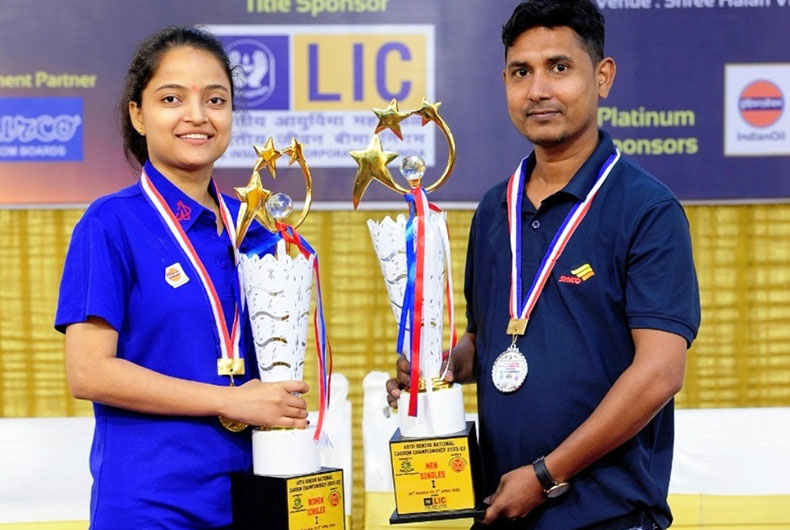
Unassuming sixth seed Abdul Rahman of Uttar Pradesh cornered all the glory recording an authoritative straight sets victory against international and fourth seed Zaheer Pasha of Reserve Bank of India (RBI) in the men’s singles final of the 49th Senior National Carrom Championship on Monday.
The less fancied 27-year-old Rahman dished out a cool calculated performance to outshine the experienced Pasha and smoothly cruise to a deserving 25-0, 21-16 without much ado and clinch his maiden crown in the national championship organised by the All-India Carrom Federation (AICF) and hosted by the Maharashtra Carrom Association (MCA).
In the women’s competition, international and fifth seed Kajal Kumari of PSPB (Petroleum Sports Promotion Board) overcame the spirited challenge from fourth seed Nilam Ghodke of JISL (Jain Irrigation System Limited) snatching victory in two closely-contested sets, 15-12, 17-10 to emerge champion.
Pasha, who had knocked out teammate and top seed Prashant More in the semi-finals, was erratic and surprisingly missed some easy shots which proved to be his downfall.
In contrast, Rahman played steadily and confidently executed his shots and gradually gained the momentum which he hung on to throughout the contest, which turned out to be a one-sided affair.
In the first set, Rahman settled down quickly and won the first six boards to pocket the set 25-0 and open up a 1-0 lead. Pasha showed signs of fighting back as he won the opening two boards to take an 8-0 lead in the second, but Rahman bounced back and steadily won the next three and with the eight points won on the fifth board he jumped to a 20-8 points lead.
Pasha managed to win four points in the sixth to narrow the lead to 12-20, but he lost a close seventh board as Rahman led 21-12 going into the 8th and final board. Pasha was left with an uphill task of getting 10 points from the final board and he tried his best but lacked consistency and with that, his hopes of staying alive faded away. Rahman capitalized on every chance to sink his black coins and ensure his success.
Meanwhile, Mantasha Iqbal of AAI (Airports Authority of India) defeated Debagani Tamuly of DASCB (Defence Accounts Sports Promotion Board) 8-25, 19-15, and 22-11 in the women’s third-fourth place match.
In the men’s third-fourth place match, Maharashtra’s Sandeep Dive defeated World champion and top seed Prashant More of RBI 25-19, 18-1.