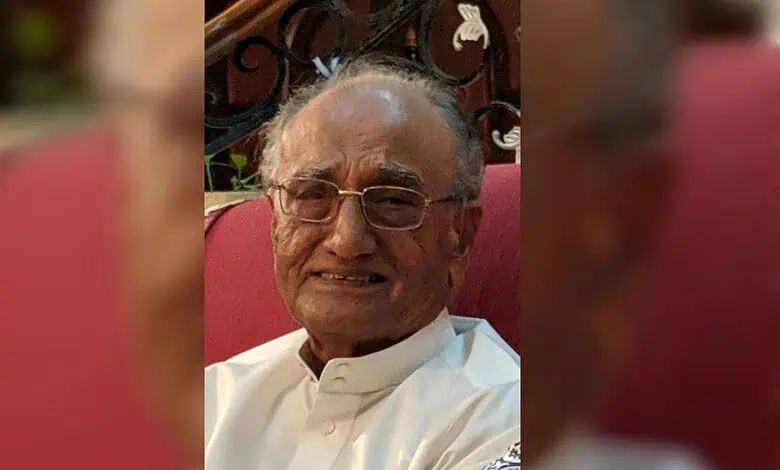
Cardiologist Dr Mohammad Iqbal Sanai served King Khaled bin Abdulaziz and prominent Saudi families for decades.
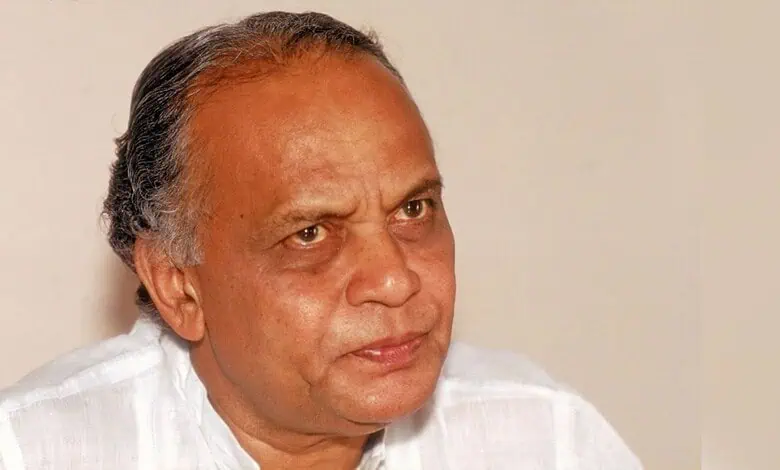
Dr Mohammad Iqbal Sanai.
Hyderabad:
Renowned cardiologist Dr Mohammad Iqbal Sanai, who served the Saudi royal family and several prominent families in the Kingdom, passed away in Hyderabad on May 14, 2026. He was 95.
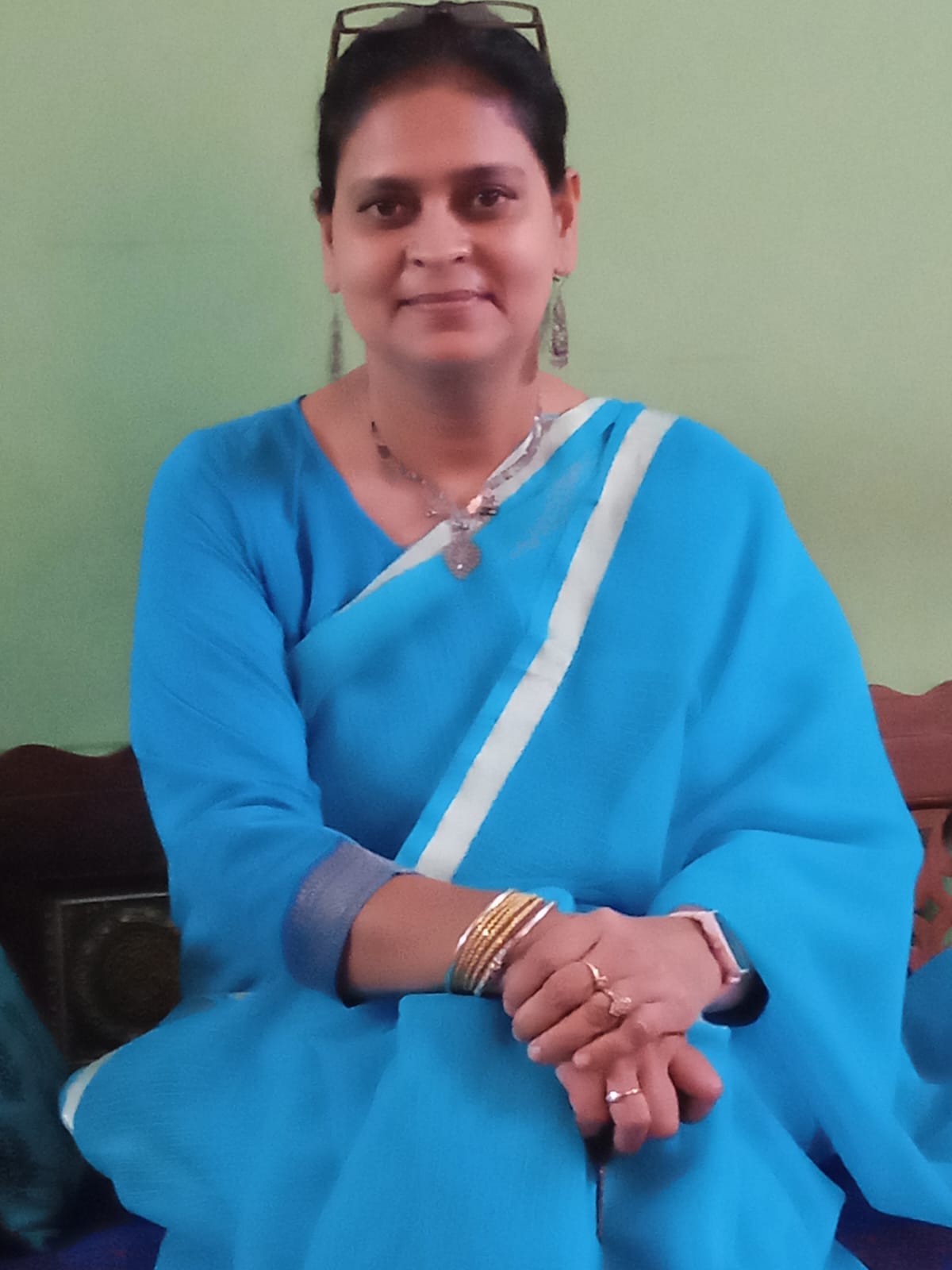
According to his son, who spoke to Siasat.com, Dr Sanai is survived by his wife, Bader Babu Khan, daughter of late Khan Bahadur Abdul Kareem Babu Khan, and their four children.
Born in 1931, Dr Sanai completed his MBBS in 1955 before moving to Scotland for higher studies. He earned his MRCP in Cardiology from the University of Edinburgh in 1960.
He began his medical career as a government doctor in Warangal and later worked at Osmania Hospital in Hyderabad.
Career in Saudi Arabia
Dr Sanai moved to Jeddah in 1965, where he emerged as one of the city’s earliest specialist cardiologists. He became closely associated with several well-known business families, including the Bin Mahfouz, Binladin, Bugshan, Sharbatly, Ali Reza, Zainal and Gabel families.
In the early 1970s, he started attending to then Crown Prince Khaled bin Abdulaziz and later became his family physician.
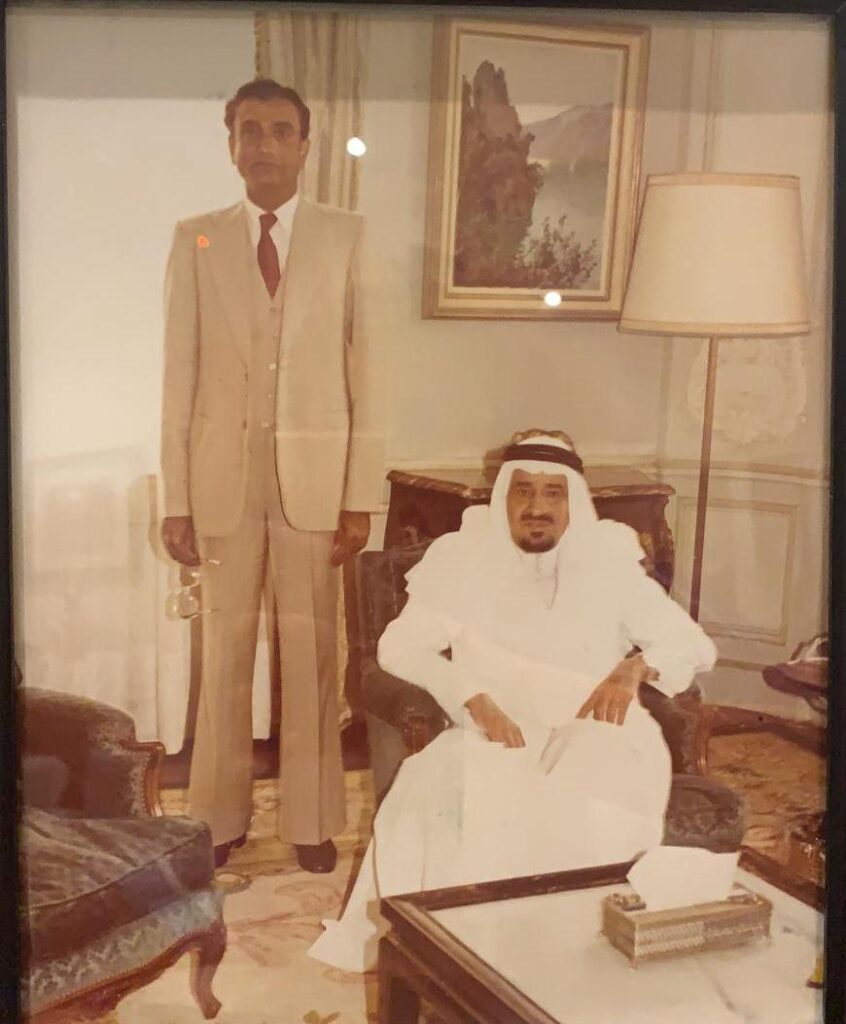
In 1978, Dr Sanai was appointed full-time physician to King Khaled bin Abdulaziz and remained in the role until the monarch’s death in 1982.
Dr Mohammad Iqbal Sanai with King Khaled bin Abdulaziz.
Recognition and retirement
The Saudi government granted Dr Sanai citizenship in 1976 in recognition of his contribution to healthcare services in the Kingdom.
Following a medical career spanning over five decades, he retired in 2007. He was widely respected for his professionalism, dedication and compassionate care.
source: http://www.siasat.com / The Siasat Daily / Home> News> Hyderabad / by Sakina Fatima / May 19th, 2026
Candidates who appeared for the exam can check their results on the official website.
Representational image
Hyderabad:
The Telangana Council of Higher Education (TGCHE) announced the TG EAPCET 2026 results and list of toppers on Sunday, May 17 at 11 am.
Candidates who appeared for the exam can check their results on the official website. The exam for the Agriculture and Pharmacy (A&P) streams was held on May 4 and 5, and from May 9 to 11 for the Engineering stream.
List of TG EAPCET 2026 toppers
Apart from results, the list of toppers in both Engineering and Agriculture & Pharmacy streams was also released.
Engineering stream toppers with marks:
M Rushi (156.63532)
Bejugama Anshul (148.708176)
Maraka Vamsidhar Reddy (147.056336)
Jonnala Roshan Manideep Reddy (144.445408)
Adula Sai Nikith (143.307835)
Mallavarapu Aasna (143.289441)
Vivan Sharad Mahiswari (142.926964)
Telluri Shreyas Reddy (140.249202)
Bommireddy Sameeraj Reddy (139.856143)
Rapolu Jayanth Shekhar (139.781223)
Toppers in Agriculture & Pharmacy stream
Following is the list of TG EAPCET 2026 Agriculture & Pharmacy stream toppers with marks:
Mukkaram Ahmed (150.177079)
Taduri Nivrut Sai Venkat (43.439842)
Sahiti Geetika Gunithi (142.354904)
Mayuk Jayasimha (139.780946)
Amair Anas (137.400516)
Nathan Sheba Jerusha (137.242821)
Periketi Anuraag (136.672659)
Bura Sai Sharan (135.216625)
Maruthi Satya Srikar (134.971629)
Rutumbika Mohanty (134.576582)
Download TG EAPCET 2026 results
To download the TG EAPCET 2026 results, follow these simple steps:
Visit the official website of TG EAPCET (click here).
Enter hall ticket number, registration number and date of birth
Click on ‘View Results’ to download thre results.
source: http://www.siasat.com / The Siasat Daily / Home> News> Telangana / by Sameer Khan / May 17th, 2026
A young Muslim student from Maharashtra’s Dhule district has brought pride to his hometown after securing second rank in the first-year MBBS examination at the All India Institute of Medical Sciences (AIIMS), Delhi.
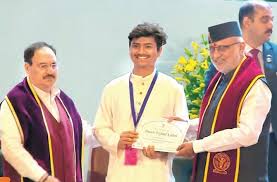
Ansari Fahad Kaleem achieved the distinction at one of India’s most prestigious medical institutions and was honoured during the 51st convocation ceremony of AIIMS Delhi held at Bharat Mandapam.
Fahad was felicitated by Vice President C.P. Radhakrishnan and Union Health Minister J. P. Nadda in recognition of his outstanding academic performance.
His success has become a matter of pride not only for his family but for the entire Dhule district, where many residents have described him as an inspiration for students from modest backgrounds.
People close to Fahad say he showed academic promise from an early age and remained deeply committed to his studies throughout school.
He scored 94.6 percent in Class 10 and later secured 97.6 percent in Class 12.
Fahad also cleared the NEET examination in his first attempt with an impressive score of 711 marks, earning admission to AIIMS Delhi, widely regarded as one of the country’s top medical institutions.
Despite the intense academic pressure at AIIMS, Fahad maintained his disciplined approach and secured second rank in the first-year MBBS examinations.
Sources said the difference between the first and second rank holders was only four marks.
Fahad comes from a middle-class family. His father works as an accountant at Dhule Medical College.
Teachers and local residents said his achievement demonstrates how determination and consistent hard work can help students from ordinary backgrounds compete at the highest national level.
Speaking in an interview, Fahad credited faith, discipline and consistency for his success.
“The secret of success is consistency, hard work and trust in Allah,” he said.
Educationists in Maharashtra praised Fahad’s achievement, saying students like him inspire younger generations, especially those from minority and economically weaker communities.
A senior teacher from Dhule said, “Fahad’s success proves that talent exists everywhere. With dedication and family support, students can achieve remarkable success even in the toughest competitive environments.”
His achievement comes at a time when discussions around the NEET examination and medical admissions continue across the country. Amid those debates, Fahad’s story has been widely welcomed as a positive example of academic excellence and perseverance.
Residents in Dhule said the honour received by Fahad on a national platform has motivated many younger students to dream bigger and pursue higher education with confidence.
Several social and educational organisations have also congratulated Fahad and his family on the achievement.
Community members said his journey reflects the growing emphasis on education among Indian Muslim families and the determination of students who continue to excel despite financial and social challenges.
For many young students in Maharashtra and beyond, Fahad Kaleem’s success at AIIMS Delhi is now being seen as a powerful example of how perseverance, family support and commitment to education can open doors to the country’s finest institutions.
source: http://www.clarionindia.net / Clarion India / Home> Editor’s Pick> Indian Muslims / May 16th, 2026
Infrastructure of Compassion: A Forgotten Chapter of Bombay’s Past A story of faith, service, and a legacy that still lives
Bombay, at the turn of the 20th century, was a city in motion. Ships lined its docks, trains poured into its stations, and its markets drew traders from across the region. But alongside this restless movement of commerce was another, quieter stream of people – men and women who arrived not for trade, but for a journey of faith. They had come for Hajj.
From distant towns and villages across India, pilgrims travelled for days to reach the city. Many had never stepped beyond their regions before. They arrived with hope, with savings gathered over years, and with a deep sense of purpose. Yet, what awaited them in Bombay was not ease, but uncertainty.
By the early 20th century – around 1909, when the Musafirkhana was being conceived – Bombay had already become a major departure point for Indian pilgrims. Steamships operated by the British India Steam Navigation Company regularly carried Haj pilgrims from Bombay to Jeddah. Yet, despite the growing frequency of these voyages, space on ships was limited and uncertain. Pilgrims often had to wait in the city for days or weeks before securing passage, turning Bombay into a place of anxious waiting before a sacred journey.
Unlike today, when a pilgrim can contact an agent, arrange a visa, book accommodation, and board a flight directly to Jeddah or Madinah, the journey in those days began with waiting. There were no confirmed departures, no fixed schedules. Pilgrims first had to reach Bombay and then remain there – sometimes for days, often for weeks – until a ship became available.
In the crowded lanes near the docks, around Crawford Market and the Mandvi belt, they gathered in large numbers. Some found temporary shelter; many didn’t. Pathways became resting places. Open spaces turned into sleeping grounds. The city moved around them, but for them, time seemed to pause.
Contemporary accounts from the period speak of steamers departing from Bombay’s docks, carrying hundreds of pilgrims at a time – ships that symbolised both hope and uncertainty, as not everyone who arrived in the city could board them immediately.
Among them were the well-to-do, but also the poor, the elderly, and the vulnerable. Some had spent years saving for this journey. Others had come with the support of family and community. But once they reached Bombay, their differences faded. All of them shared the same uncertainty as well as hope.
In the language of faith, these pilgrims were known as ضیوف الرحمٰن — the Guests of Allah. Serving them was considered an honour, a noble act that carried both spiritual and social meaning. Yet here they were, waiting in conditions that did not reflect that dignity.
It was in these very streets that a man began to notice them. He was a businessman, part of Bombay’s vibrant trading world. Every day, he passed through these lanes on his way to work. At first, the sight may have seemed like a part of the city’s routine. But over time, it stayed with him – the faces, the waiting, the quiet endurance.
This was Mohammed Haji Saboo Siddique. He belonged to a family originally from Kutch, part of the Gujarati Memon community – widely known for its deep engagement in trade and its long-standing tradition of philanthropy. Like many from this community, his family had migrated to Bombay in search of opportunity, becoming part of the city’s growing commercial life while remaining rooted in a culture of giving. What he saw was not just a crowd. It was a need.
In the ethical framework of Islam, service to people is not seen as an optional virtue, but as a responsibility. The Prophet Muhammad ﷺ is reported to have said, “The best of people are those who are most beneficial to others.” This simple teaching has shaped generations of quiet, often unseen acts of service across communities.
For Saboo Siddique, the condition of these pilgrims was not just a social concern; it was a moral call. These were ضیوف الرحمٰن. To ease their hardship was not merely an act of kindness; it was a duty. And so, he chose to act.
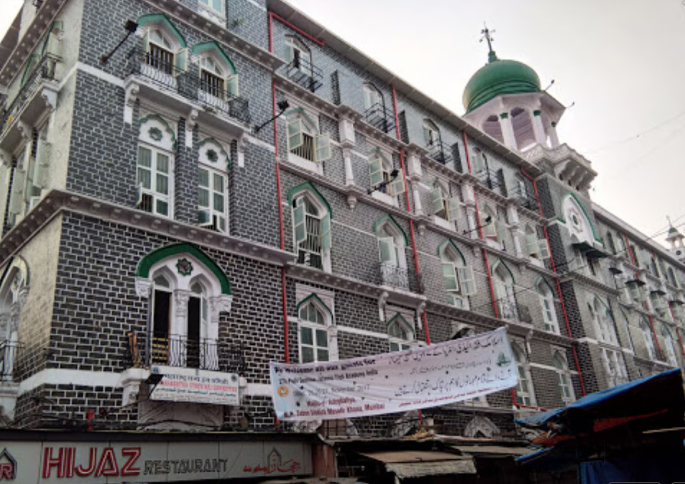
In the early years of the 20th century, he set aside a large sum – five lakh rupees, a remarkable amount for that time – to build a facility that would offer pilgrims what they lacked: dignity. The land he selected was not by chance. Located near Crawford Market, close to railway routes and within reach of Bombay Port, it stood at the very point where the pilgrims’ journey paused.
On that land Saboo Siddique built a four-storey structure – the Haji Mohammed Saboo Siddique Musafirkhana. It was not built for grandeur. It was built for purpose.
The Musafirkhana provided rooms, basic facilities, and a place to pray. For pilgrims who had spent days in uncertainty, it offered relief. It allowed them to rest, gather themselves, and prepare for the journey ahead. Over time, it became known quietly as a gateway – a place from where many took their final step towards Makkah.
But what gave this institution its strength was not only its structure. It was the spirit with which it was built.
Rooted in sincerity – Ikhlas – the Musafirkhana continued to serve pilgrims year after year, decade after decade. Long after its founder had passed, it remained a place of care. It witnessed the journeys of thousands, and over time, countless pilgrims who passed through its doors.
Saboo Siddique’s vision, however, did not end with pilgrims. He understood that service must reach beyond a single moment. It must touch different stages of life. Alongside shelter, he invested in education – establishing what would later become the M.H. Saboo Siddik Technical Institute, where young people could gain skills and build their futures.
He also turned his attention to healthcare. Historical records connected to his legacy note that he built six maternity homes across Bombay to serve poor women who had little access to medical care. At a time when safe childbirth facilities were limited, especially for the poor, this was a deeply significant intervention. It reflected a broader understanding of social responsibility – one that included not only travellers and students, but also mothers, families, and the most vulnerable.
Over time, these maternity homes became part of the city’s public health system. They were taken over and managed by the Bombay Municipal Corporation, and records continue to reflect this legacy. One such institution, the Haji Mohammad Haji Saboo Siddiqui Maternity Home, remains listed in municipal records in Prabhadevi. Another, at Imamwada, later developed into the M.H. Saboo Siddique Maternity & General Hospital, continuing to serve the public.
This continuity gives his work a rare depth. The same man who cared for pilgrims on their way to a sacred journey also cared for mothers bringing new life into the world. The same vision that built a shelter also built pathways for education and health.
As the years passed, the nature of travel changed. Ships gave way to flights. Systems became organised. Pilgrims no longer needed to wait in the same way. The long pauses that once defined the journey disappeared.
The Musafirkhana, in its original role, was no longer essential. But it did not fade away. The sincerity with which it had been built gave it a new life. The same building that once sheltered pilgrims began to host students – young men who had come to the city in search of education. Their journey was different, but their need was just as real.
In this transformation lies the true strength of Saboo Siddique’s legacy. He did not build for a moment. He built with intention.
Very little is known about his personal life. His family, his private world, remain largely absent from public records. But perhaps that absence is itself meaningful. It reflects a time when people were remembered not for what they owned, but for what they gave.
His institutions became his story. In a city where land was valuable and opportunity abundant, he chose to create something that would serve others – quietly, consistently, and without expectation.
The journeys have changed. The waiting has ended. But the intention remains. And it continues to serve.
source: http://www.radiancenews.com / Radiance News / Home> Focus / by Mohammed Talha Siddi Bapa / May 04th, 2026
Seohar Town (Bijnor District), BRITISH INDIA / NEW DELHI :
For too long, a handful of names have dominated the history of the years leading up to 1947 with Gandhi, Nehru, Jinnah, Patel being the most-often cited.
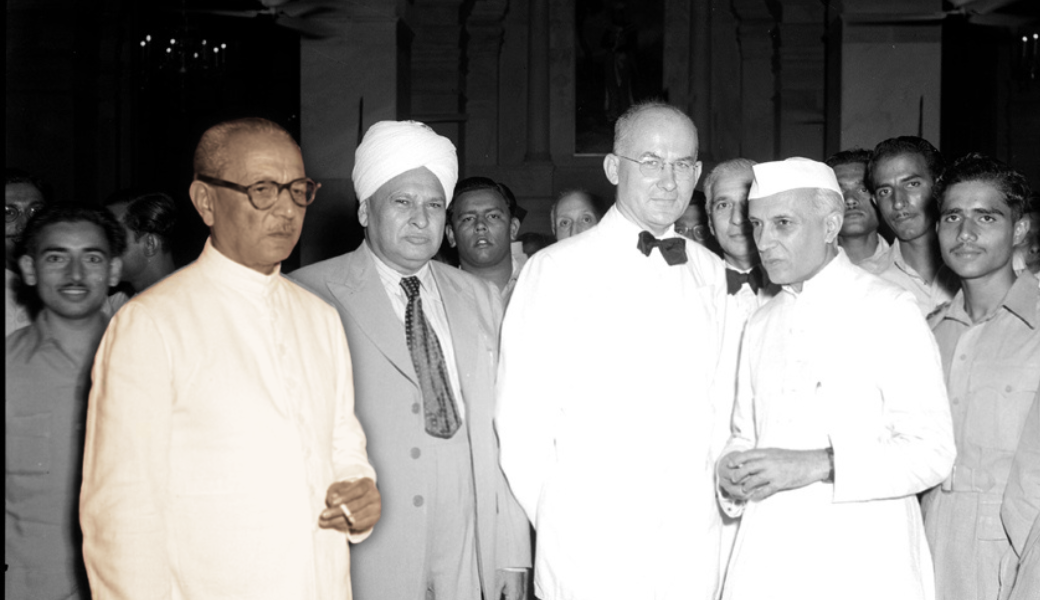
Pandit Jawaharlal Nehru and others at Governor-General‘s Dussehra reception held at Government House, New Delhi on September 29,1949. At extreme left is Asaf Ali, the then Governor of Orrisa. Edited via Canva. Photo: Photo Division, Govt. of India
For several years I worked in a publishing company situated on the bustling Asaf Ali Road, a road that serves as a cordon sanitaire between the squalor of Old Delhi and the (relative) order of New Delhi. Once an important business hub, by the time I went to work there in the late 1980s, this long stretch of colonnaded corridors with a warren of densely-packed offices wore an unmistakably grubby, down-at-heel look. At the head of the road, stood the statue of Asaf Ali in a derelict enclosure near Delhi Gate (or Dilli Gate as the locals pronounced it). The dark statue, generously speckled with startlingly white droppings from the many pigeons that frequent this neighbourhood, looked forlorn, especially so with the shervani-clad, bespectacled figure standing with hands clasped in a peculiarly supplicatory posture.
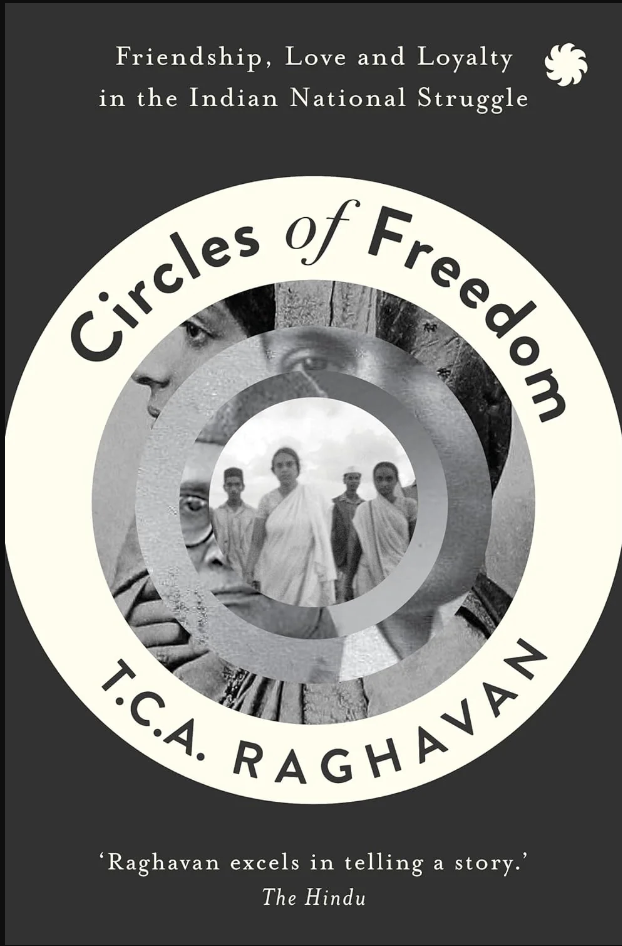
TCA Raghavan, Circles of Freedom: Friendship, Love and Loyalty in the National Freedom Struggle, Juggernaut (2024)
I must confess that in the four years I worked at Asaf Ali Road and passed this statue twice a day, morning and evening, it evoked no curiosity in me and I knew virtually nothing about Asaf Ali. Perhaps, his wife Aruna Asaf Ali’s name seemed more familiar given that she was still alive and active. I suspect I was not alone in this. For most people in Delhi, Asaf Ali is a forgotten footnote from long-ago history lessons, one of the many ‘obscure’ people who were part of the national freedom struggle. If the situation is so dismal in Delhi, where he had lived and worked, a city that had been home to his ancestors, I suspect it can only be worse in the rest of the country.
In writing Circles of Freedom: Friendship, Love and Loyalty in the National Freedom Struggle, TCA Raghavan corrects an old wrong. For far too long the tall poppies of the freedom movement have overshadowed the countless others who devoted their entire lives to the cause of independence and struggle against colonial rule. For too long, a handful of names have dominated the history of the years leading up to 1947 with Gandhi, Nehru, Jinnah, Patel being the most-often cited.
Over the past decade, with history being rewritten by new, dominant players, new names are being invoked and icons fashioned from often slender resources. In this unseemly clamour for space and recognition, some names have almost slipped through the crevices of the popular imagination, neglected and overlooked by the professional historian or, at best, relegated to the lowest rungs in a carefully crafted hierarchy of heroes. A park or a road named after the lesser-known evokes neither curiosity nor interest in their lives and the place they occupied in the shaping of a young nation. Asaf Ali (1888-1953) is one such person.
Raghavan’s book, however, is not a straightforward biography for it is not about Asaf (as the author calls him) alone. Instead, he chooses to tell his story through five protagonists who were inextricably tied by the threads of friendship and solidarity: Asaf Ali, Sarojini Naidu, Syud Hossain, Syed Mahmud and Aruna Asaf Ali. While Aruna enters this narrative quite late when she marries the much older Asaf, the other four meet in England just before the Great War where the three men have gone to study and Naidu, recuperating from an illness, is the erudite diva, eloquent poet, ardent nationalist and a veritable magnet for impressionable young men dreaming impossible dreams.
Over the next four decades, they meet, write long letters to each other, take a lively interest in each others’ lives and careers but ‘what gave meaning to their lives,’ as Raghavan notes in his conclusion, ‘was the great enterprise they chose to become part of’. And so it was the freedom struggle that not just formed the core of their relationship but also, in effect, shaped their lives. Were it not for this one singular, overwhelming zeal to seek freedom for their country, they could very well have lived other lives: Naidu would have remained a dulcet-voiced poet, both Asaf and Mahmud successful and wealthy barristers, Hossain a journalist and Aruna a do-gooder with no special qualifications. But such were the exigencies of the times that all five were caught up in different ways and different degrees with the national freedom struggle and that singular ‘great fight’ defined their lives.
With three extremely well-received books behind him – Attendant Lords: Bairam Khan and Abdur Rahim – Courtiers and Poets in Mughal India, The People Next Door: The Curious History of India’s Relations with Pakistan and History Men: Jadunath Sarkar, G. S. Sardesai, Raghivir Sinh and Their Quest For India’s Past – Raghavan, a former diplomat, can recreate history with the aplomb of a master story-teller and the meticulousness of a professional historian. Here, he weaves the events of the tumultuous years leading up to Independence with the lives of his five principal characters, keeping Asaf at the centre of his concern. Through Asaf, he teases out the nuances and dilemmas of the moderate Muslims in India who refused to be enamoured by the lures and promises of the Muslim League and remained steadfast in their devotion to the Congress and, by extension, Nehru.
The extreme deference that the nationalist Muslim leaders displayed towards Nehru is noted; each time a Muslim leader attempted to bring the ‘communal problem’ to Nehru’s notice, the latter would brush aside these concerns by saying, ‘The real problem is a political problem – the conflict between an advanced organisation like the Congress and a politically reactionary organisation like the League.’ Concerns of leaders such as Asaf who believed ‘self determination was preferable to a union that was forced’ were disregarded. Mindful of the suspicion that Muslim leaders within the Congress evoked amongst their colleagues, Raghavan notes, ‘Because he was a Muslim, the impression among some was that he was a fifth columnist for the League’. The coming of independence didn’t make it any easier for those Muslims who chose to stay on in India. Nationalism increasingly began to mean thinking and living in the Congress way and none other. Those who lived or thought another way came to be regarded as anti-national, a phenomena we see repeated in the New India that is Bharat, except that it is the ruling Bharatiya Janata Party that has replaced the ideological hegemony of the Congress.
Different readers will possibly take different things from this book: the broad brush strokes that delineate milestone moments from modern Indian history, Gandhi’s irresistible call to Quit India, the unfurling of the national flag at Gowalia Tank by a young Aruna that catapults her to national fame, the detailed account of jail-life for a group of high-profile, political prisoners inside the Ahmadnagar fortress, a meticulous dove-tailing of accounts from different sources and disparate perspectives to create a bright, colourful and immensely readable patchwork quilt of modern Indian history, and much else in this engrossing book.
I, however, was left with an ineffable sadness and a sense that the more things change, they remain the same – at least for India’s Muslims. Despite his many sterling qualities of heart and mind, despite a fine legal education, Asaf neither made a mark as a lawyer or a politician. Though seemingly destined for greatness, having aided fate by preparing himself assiduously for a life devoted to the larger good, Asaf never quite scaled the heights he aspired to. The few successes that came his way, such as a seat in the Constituent Assembly (from Delhi) or fighting high-profile cases such as those of Bhagat Singh or Shaikh Abdullah, were marred by controversy or a smaller share in the limelight than he felt he deserved. The mantle of statesmanship that should have fallen on him with the passing of Dr Ansari and Hakim Ajmal Khan, both national leaders from Delhi like him, and a seat at the high table that should have been offered to him as a veteran Muslim leader, did not happen.
Given the price paid by far taller leaders in the Congress – such as C. Rajagopalachari and Bhulabhai Desai – for showing initiative and thus offending the party high command, shows the extent to which the Congress, not unlike the League, was becoming a personality-dominated organisation. Asaf’s case was compounded – to use a modern expression – by the optics; his timorousness, his ‘going to pieces’ fretting with worry over his wife during his long years of incarceration, his marital woes, the shadow of mistrust and suspicion that clung to him all his life combined to create a persona that failed to inspire confidence.
For all his loyalty to Nehru, Asaf was not chosen for any cabinet position or placed on any important committee. Instead, he was sent as Ambassador to Washington, brought back to serve as Governor of Orissa and then sent again as Ambassador to Sweden where he died barely a few months into his tenure.
Just as being a moderate Muslim defined Asaf’s public persona, so did his marriage to Aruna. From a political novice she rapidly transformed into a stormy petrel causing immense anxiety, consternation and eventually a sadness in her husband. Raghavan is to be credited for staying steadfastly away from prurient gossip and portraying the changing contours of the marriage objectively: ‘… in fact the relationship had started changing quite early in the marriage and here Aruna’s own political journey was the driving factor.’ Reading between the lines of Raghavan’s carefully crafted text, one picks up the whiff of misogyny in the higher echelons of our national leadership. While acknowledging Aruna’s bravery and patriotism, Gandhi saw her as a ‘perpetual rebel’ and Nehru went so far as to call her ‘hysterical’ on one occasion – something Aruna never forgot.
Incidentally, Gandhi, who was vehemently opposed to inter-religious marriages and had opposed his son Manilal’s relationship with Fatima (a Gujarati Muslim) and Hossain’s alliance with Nehru’s sister Sarup Rani (later known as Vijay Lakshmi Pandit), endorsed Asaf’s marriage to Aruna. Read Circles of Friendship to find out why.
Rakshanda Jalilis a Delhi-based writer, translator and researcher.
source: http://www.thewire.in / The Wire / Home> Books / by Rakshanda Jalil / August 29th, 2024
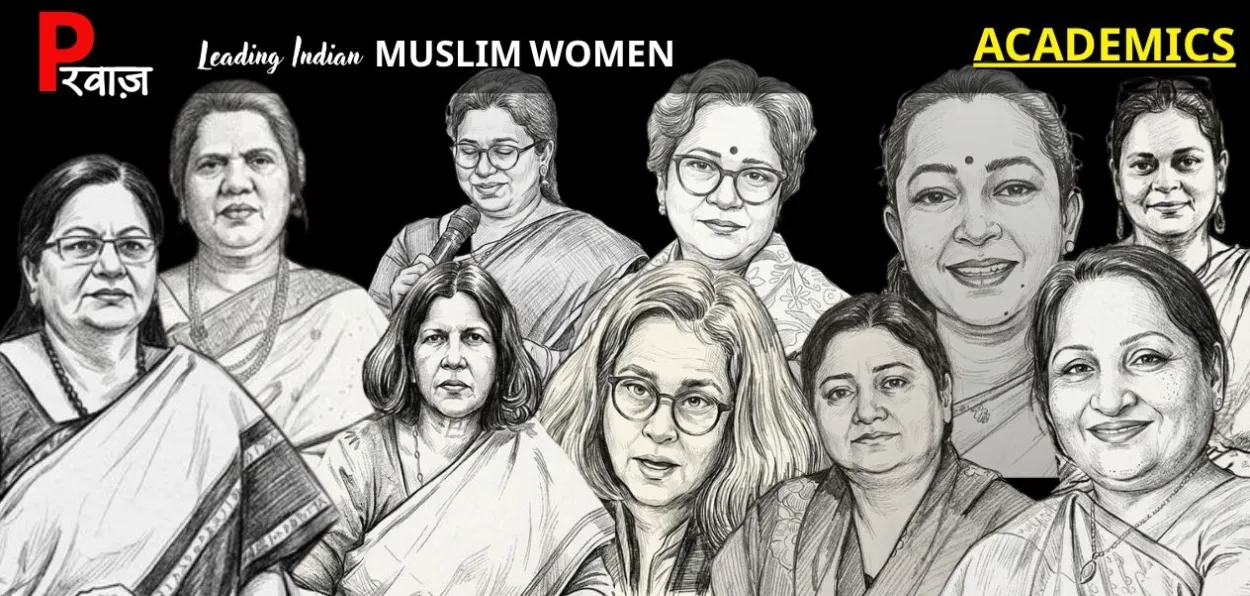
In its series Parvaz, Awaz-the Voice brings you stories of remarkable Muslim woman academicians, whose work across India’s universities, research institutions, and centres of learning, has redefined scholarship.
Their journeys span literature, history, science, social reform, diplomacy, and educational leadership, yet they are united by a shared belief that knowledge must serve society. Through classrooms, research labs, policy platforms, and grassroots engagement, these women have not only broken barriers but have created pathways for future generations.
Here is an introduction to ten selected Muslim Women Academicians of India:
Arjumand Ara :
Arjumand Ara stands as a distinguished scholar of language, literature, and feminist thought. A professor at University of Delhi, she has translated more than twenty major literary works and earned the Sahitya Akademi Translation Award in 2021.
Through her scholarship, she has built enduring bridges between Urdu and Hindi while preserving literary heritage and amplifying women’s voices.
Syed Tanveer Nasrin :
Syed Tanveer Nasrin has brought together scholarship, diplomacy, and social activism with rare distinction. Serving at University of Burdwan, she strengthened India’s cultural ties with the Maldives during her tenure in Malé while emerging as a respected voice on women’s rights, minority identity, and interfaith harmony.
Educated at Presidency College, Jadavpur University and JNU, she specializes in Gender Studies.
Abeda Inamdar :
Abeda Inamdar chose service over security when she left a prestigious government career to dedicate herself to education.
Through the Maharashtra Cosmopolitan Education Society and the celebrated Azam Campus, she has transformed educational opportunities for thousands of girls and marginalized students, creating institutions that continue to uplift generations.
Benazir Tamboli :
Benazir Tamboli turned personal adversity into a lifelong mission of empowerment and justice.
Through her work with the Muslim Satyashodhak Mandal and educational institutions, she has emerged as a fearless advocate for Muslim women, constitutional rights, and progressive social reform.
Naima Khatoon :
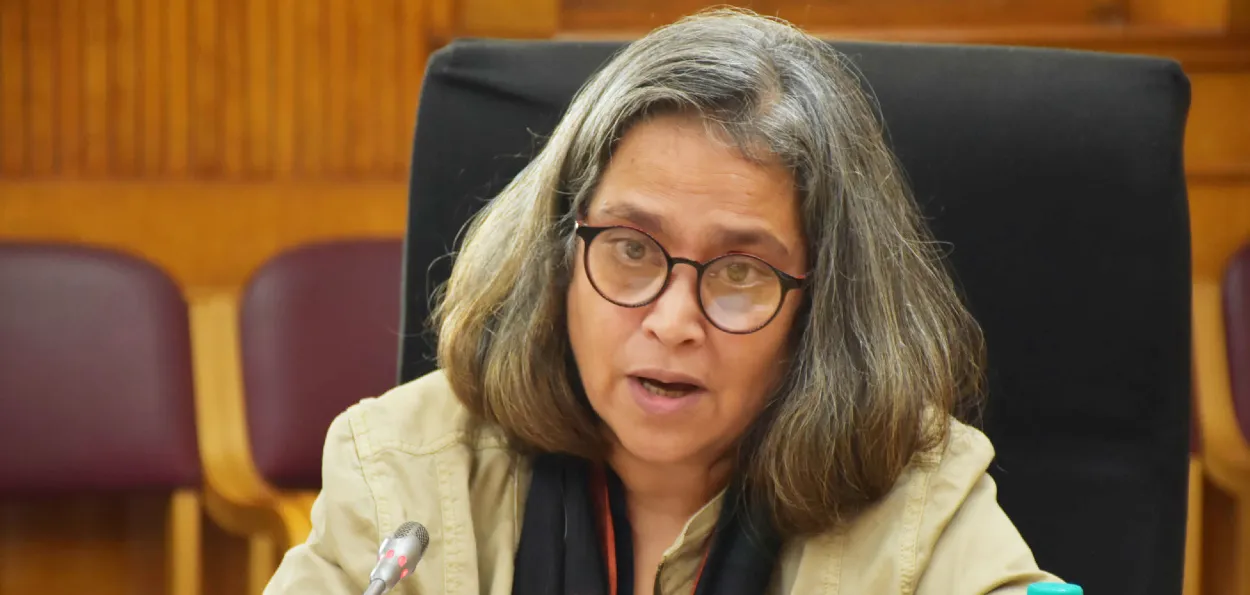
Naima Khatoon created history in 2024 by becoming the first woman Vice Chancellor of Aligarh Muslim University.
A renowned psychologist, author, and academic leader, she is steering institutional reforms, research excellence, and women’s empowerment while modernizing one of India’s most iconic universities.
Najma Akhtar :
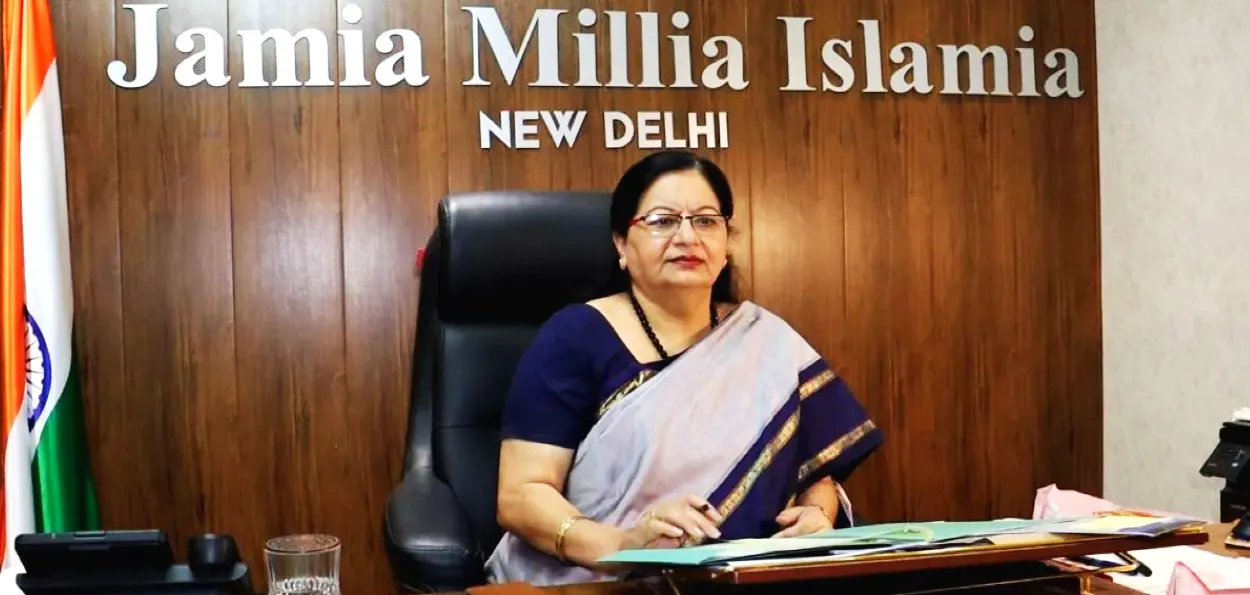
Najma Akhtar broke another glass ceiling as the first woman Vice-Chancellor of Jamia Millia Islamia. A recipient of the Padma Shri, she introduced transformative reforms, expanded professional education, and helped shape Jamia’s emergence as a globally respected academic institution.
She is also the first woman to hold the post in JMI. In 2022, she was awarded with Padma Shri by the Government of India.
Nilofer Khan :
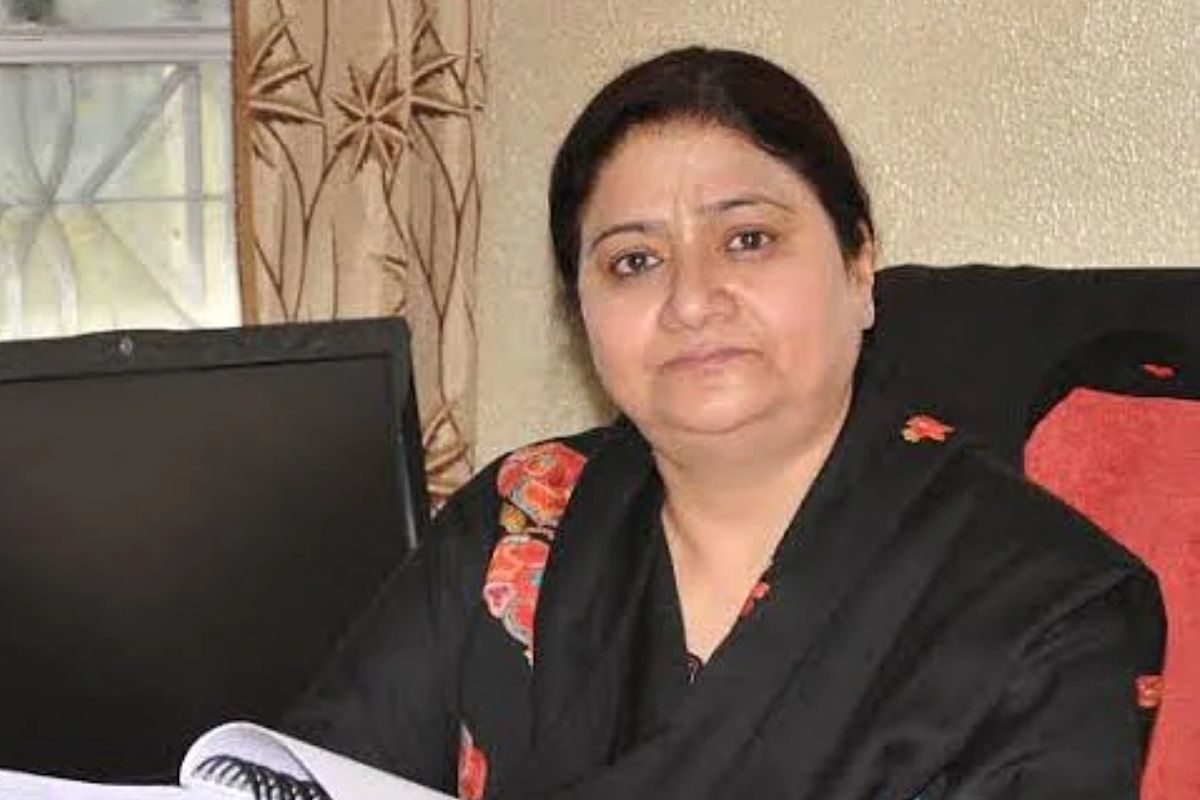
Nilofer Khan became the first woman to lead the University of Kashmir, marking a historic moment for higher education in the region. With nearly four decades of academic service and over a hundred research publications, she continues to inspire women to aspire to leadership in academia.
Shahida Murtaza :
Shahida Murtaza has spent over three decades documenting the realities of marginalized women across southern India. A former Dean at Maulana Azad National Urdu University, she has turned ethnographic research into a powerful mission for gender justice, awareness, and grassroots empowerment.
Sofia Banu :
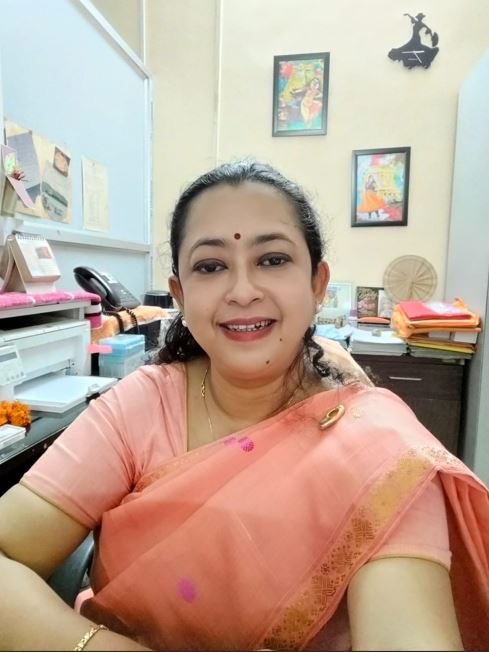
Sofia Banu represents the growing force of women in scientific innovation. As an Associate Professor at Gauhati University, her groundbreaking work in biotechnology, biodiversity, and agricultural sustainability is creating real-world impact while inspiring young scientists across Northeast India.
Syed Mubin Zehra :
Syed Mubin Zehra has established herself as a leading scholar, author, and public intellectual. Serving at Atma Ram Sanatan Dharma College of the University of Delhi she continues to shape national conversations on gender equality, education, and social harmony through scholarship, advocacy, and global academic engagement.
source: http://www.awazthevoice.in / Awaz, The Voice / Home> Parvaz> The Changemakers / posted by Aasha Khosa / May 09th, 2026
The unkindest cut came in September 2018. When Kamaluddin passed away in Hyderabad, he was denied a state funeral, the minimum courtesy and standard practice for senior government personalities.
M Kamaluddin Ahmed
Long before Telangana became a reality, before slogans echoed across university campuses and political parties, there was M Kamaluddin Ahmed, who raised his voice for the region’s forgotten villages and neglected people.
History is often unkind to people who speak early. Several prominent names have become synonymous with the decades-old “struggle” for a separate Telangana, but it was Ahmed who stood up first and raised the issue of neglected farmers.
A son of Telangana’s rural soil, Ahmed carried the cause to Parliament, warning about the deep inequalities between Telangana and Andhra Pradesh decades before statehood was achieved.
And now, he is slowly fading away from the history books of Telangana statehood formation.
Hyderabad’s young men and women who completed their schooling in the late 1960s and early 1970s would recall the “Telangana agitation” that played havoc with many lives. That period was marred by hunger strikes, violence and police firing. Even the then dynamic M Channa Reddy would soon fade in the minds of the people of this region.
The simmering anger of the region’s original populace was, however, far from extinguished, as the justifiable demand for a separate “Telangana” state remained a pipe dream. Though the movement for a separate state gained fresh momentum again in the 2000s, it was not until June 2014 that the Telangana state finally became a reality.
He spoke for rural Telangana till his last breath
Right from the early 1960s to the 1990s, Kamaluddin Ahmed continued his work for the people of Telangana at the grassroots level.
He was an MLA from Cheriyal and Jangaon in 1962 and 1967, respectively. He was MP from Warangal/Hanamkonda during 1980, 1989 and 1991-96, before becoming the Union minister of state (civil supplies and public distribution) and minister of state (commerce).
Between 1985 and 1989, in his capacity as chairman of the National Agricultural Cooperative Marketing Federation of India (NAFED), he ensured fair representation of local issues at the central level. In 1994, he was made president of the then Andhra Pradesh Congress Committee (APCC).
Ahmed’s focus on irrigation projects brought great benefit to the highly arid farmland areas of Telangana. The greening of the hitherto arid belt of Karimnagar-Warangal, thanks to the Sriram Sagar Project (irrigation/hydroelectric power), was largely due to his untiring initiatives on the ground.
Most importantly, it is worth noting that during the Lok Sabha debates to commemorate the 50th anniversary of India’s Independence on September 1, 1997, it was Kamaluddin Ahmed who highlighted the continued backwardness of the “real” Telangana, especially in comparison with the far more advantaged and favoured Andhra region.
In 2001, Ahmed went on to become a member of the Planning Commission.
In addition to his political acumen, Ahmed was a well-read scholar who was fluent in Telugu, Urdu and English, an ideal combination for a Telangana statesman. His interest in sher-shayarimade him special to many from across the political spectrum. One of them was former prime minister AB Vajpayee, who handpicked Ahmed to be India’s Ambassador to Saudi Arabia during 2002-04.
Telangana’s rural son deserted
However, this exposition at the key parliamentary forum resulted in a backlash that was grossly unfair not only to the cause of Telangana, but also to the individual whose voice had never been acknowledged in the annals of the fight for Telangana statehood.
Post September 1997, Kamaluddin Ahmed’s former allies and even close colleagues and friends — many of whom had shared his vision — not only deserted him but also sought to discredit him in every way possible.
Most of them had already switched to an anti-separate Telangana stance. The abrupt lack of support was reflected in Ahmed losing the 1998/99 Lok Sabha election, which came as a rude surprise even to the man himself. Deeply saddened by the behaviour of his close friends and senior leaders, Ahmed opted for early retirement from active politics.
For such a singular crusader of the cause of Telangana, the injustices heaped on Ahmed are beyond enumeration — injustices that defy all reason. To be denied credit where due is commonplace in every sphere of human endeavour, but the targeted “erasure” of a senior leader with a remarkable track record can only be construed as vendetta.
Kamaluddin Ahmed passed away without a proper farewell
The unkindest cut came in September 2018. When Ahmed passed away in Hyderabad, he was denied a state funeral, the minimum courtesy and standard practice for senior government personalities. The “new-born” state saw no need to honour one of the foremost champions who had relentlessly argued for its very identity. Sadder still, the lapse raised no eyebrows.
With the Congress now back at the helm in Telangana, there is ample opportunity to set the record straight and accord M Kamaluddin Ahmed the recognition and credit he fully deserves. The annals of the Telangana movement would remain incomplete without the name of this selfless crusader for the region’s identity and economic development.
This was the voice of a true son of the soil, not that of an opportunistic politician. And this was a full decade before the Telangana Rashtra Samithi (TRS) gave its clarion call for a separate Telangana.
“Telangana Shining” is a label that we see everywhere in Hyderabad today. However, few in this bustling South Indian city of 7 million would remember, even if faintly, that statehood for this region did not come easy.
source: http://www.siasat.com / The Siasat Daily / Home> News> Telangana / by Raziuddin Ahmed / May 14th, 2026
The hijab ban in schools and colleges was also on the agenda, but the State government revoked it this week.
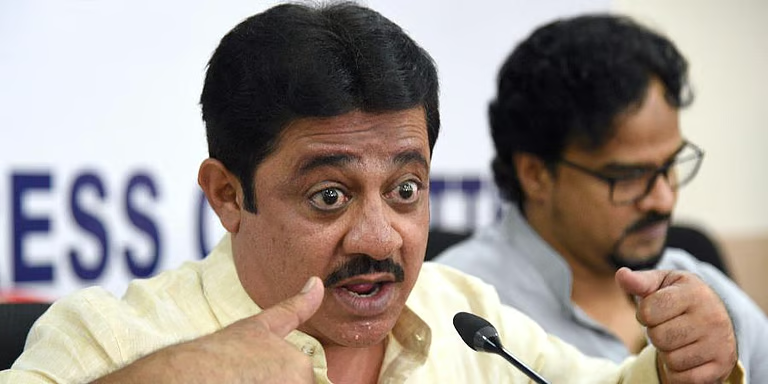
Congress MLA Zameer Ahmed Khan (Photo | EPS
Bengaluru :
With members of the Federation of Karnataka State Muslim Organisations set to release a report on the performance of the Congress-led government under Siddaramaiah in implementing promises made in the party manifesto, there is a growing sentiment among sections of the community that the collective Muslim leadership within the government has failed.
Tanveer Ahmed of the organisation said the Congress has been in power for three years, and had released its manifesto in 2023. “We have done research on whether they have fulfilled their manifesto promises,’’ he said.
The report, to be released on Saturday, will include ten points, including the promise to act against organisations spreading communal hatred, take up the cow slaughter law, 4 per cent Muslim reservation (category B) promise, anti-conversion law, budget for minority educational institutions, and other issues. The hijab ban in schools and colleges was also on the agenda, but the State government revoked it this week.
According to Ahmed, these promises were are not fulfilled. Asked if the convention has been organised due to the brouhaha over denial of the Davanagere South bypoll ticket to a Muslim candidate, and the party’s action against Muslim leaders, he said there is no link.
“We have been preparing this report for the past eight months,’’ he said. However, he said the issue could come up during the convention.
Meanwhile, senior Congress leaders are alleging that this convention is backed by Housing Minister Zameer Ahmed Khan and MLC Naseer Ahmed. Post the Davanagere bypolls, Naseer was removed from the post of CM’s political secretary, and a section of leaders had also criticized Zameer Ahmed for not actively campaigning for the party candidate.
Tanveer Ahmed said their convention is not people centric, but focuses on issues. “The collective Muslim leadership has failed. They were elected by the same Muslim community, but have done nothing in return,” he said.
source: http://www.newindianexpress.com / The New Indian Express / Home> Karnataka / by Express News Service / May 16th, 2026
A group of autorickshaw drivers, vendors and masons under Bijapur Youth Coverage pooled funds and labour to build a house for a destitute widow and her children, supporting families every month through community contributions.
The image on the left shows the old condition of the home , the image on the right is the new house.
Vijayapura :
At a time when many wait for government assistance to change their lives for the better, a group of daily wage workers from Shahapeti in Vijayapura is on a mission — to help the poorest of the poor in society.
Under the banner of Bijapur Youth Coverage, the group, comprising autorickshaw drivers, vegetable vendors, painters, automobile mechanics, carpenters and masons, who struggle to make a modest living themselves, has built a house for a poor Hindu widow, who has been living in a deplorable condition with her three children.
Kasturi Rudagi, a domestic worker from Shahapeti, lost her husband a few years ago. She had been living with her children in a crumbling hut.
“After the death of her husband, Kasturi began working as a domestic help to raise her son and two daughters. Unfortunately, she suffered a stroke that rendered her immobile. This forced her to depend on others for help,” Mehboob Bagwan, a vegetable vendor, said.
Bagwan, who is part of the group, said, “Seeing Kasturi’s plight, we decided to help her. We collected nearly Rs 1.5 lakh, while masons and other construction workers from the group constructed a small house for her. Our efforts have won many hearts.”
Bagwan said Kasturi’s elder son, who is around 14, quit school some time ago and is now working to take care of his mother and sisters, who are studying in a government school.
While masons, centring workers, carpenters and electricians built the house for free, others in the group made donations and raised money for the noble cause, he said.
Members of Bijapur Youth Coverage hand over the house to Kasturi Rudagi
The proposal to build the house was initiated by Fayaz Honnutagi, Babulal Chaudhary, Mateen Meeradhe, Babajan Ukkali, Sadik Chaudhary and Zubair Mogare of the group, Bagwan said. Every month, members contribute Rs 100 each towards a fund set up by the group. It offers financial help to the needy, besides providing groceries to at least five families every month.
“For us, nothing is bigger than humanity. People from all communities are with us. Our members are only rich in heart. We are not doing this for publicity, we only want to do something good for society,” said Fayaz of Bijapur Youth Coverage.
source: http://www.newindianexpress.com / The New Indian Express / Home> Good News / by Firoz Rozindar / May 17th, 2026
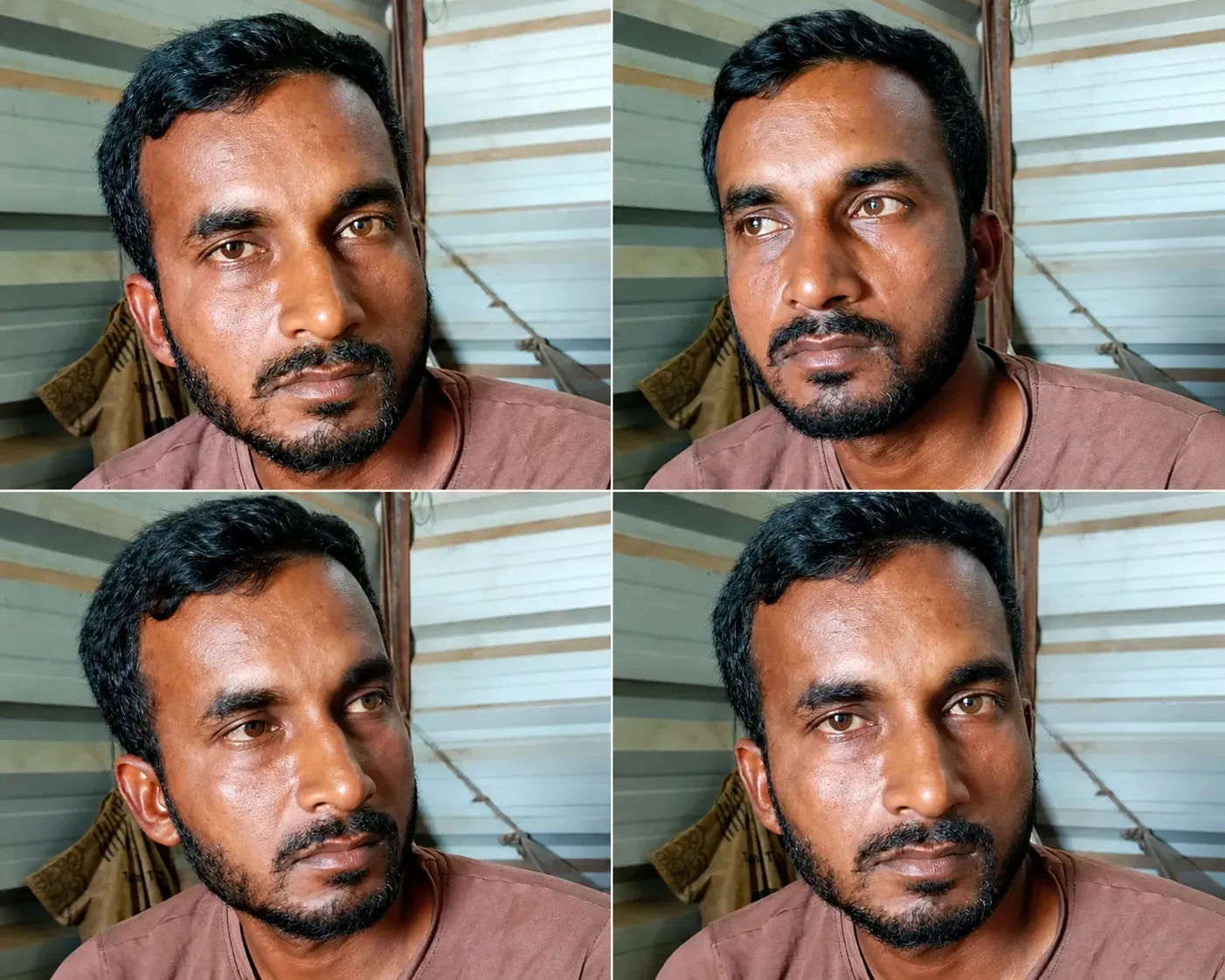
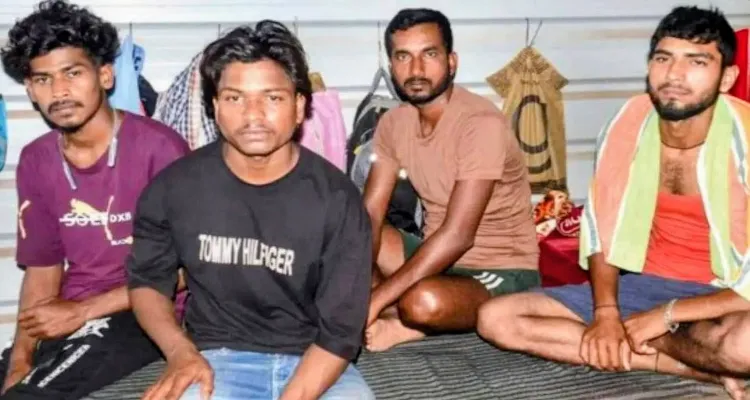
Nine people have died so far in the Bargi Dam accident in Jabalpur, Madhya Pradesh, while relief and rescue operations are underway. As soon as the accident was reported, a labourer was the first to start the rescue operation. Before the rescue team arrived, Ramzan, who was busy constructing a bridge, risked his life to save the lives of many people and did this work with great courage.
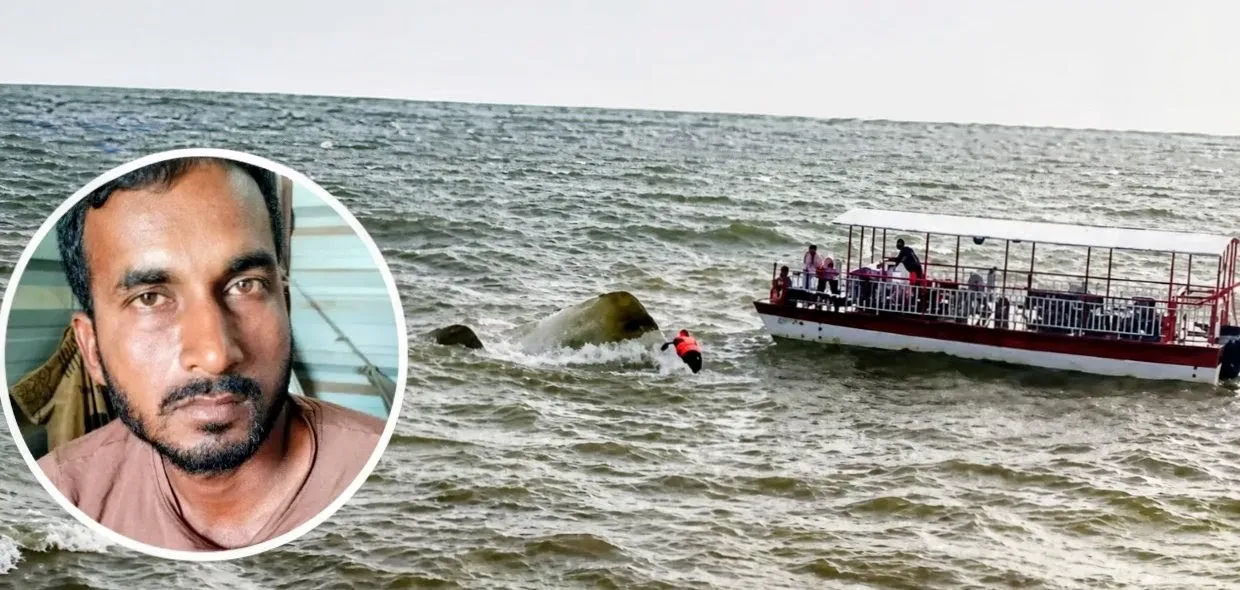
In fact, a bridge construction work was going on a short distance from where the accident took place near Bargi Dam. When the workers saw the cruise ship sinking, a laborer immediately jumped into the water without any resources to save the people and started the rescue work.
Ramzan, a resident of West Bengal, said that he saw the cruise ship sinking with his own eyes. He immediately took a rope and jumped into the dam from a height of about twenty-five feet. He pulled out six people, four of whom survived while two could not survive.
After visiting the scene, the Chief Minister of Madhya Pradesh announced that those who tried to save the drowning people would be given a reward of Rs 51,000 each.
Bandar Kumar Yadav, who was present at the scene, said that he was a resident of West Champaran and about thirty-five workers were working there. Seeing the cruise ship going out of control, he called out to the pilot to stop and asked his colleagues to bring a rope, but the pilot did not listen and went ahead, after which the cruise ship sank.
After that, several workers and colleagues went into the water to help Rajkumar from Bihar and Shewanath from Gorakhpur said that the cruise had already capsized before they reached it. Some passengers had already fallen into the water and were pulled out by the workers.
Those working on a project under the central government’s Jal Jeevan Mission, were just a short distance from the spot where the cruise ship capsized. They responded within moments and immediately formed a makeshift rescue team.
Armed with only ropes, the workers, displaying extraordinary courage and human spirit, jumped into the raging waves and were able to safely pull out about a dozen passengers in the critical initial moments of the accident, as described by locals.
Among these selfless heroes was 22-year-old Ramzan from West Bengal, whose daring leap was one of the most iconic scenes of the rescue. He tied a rope to his body and jumped from a cliff about 25 feet high, swimming through the stormy waters to reach the stranded passengers.
“I saw the boat sinking and didn’t waste a moment,” Ramadan said, speaking to The Times of India. “I immediately picked up a rope and jumped into the water. He was able to pull out six people, four of whom survived while two could not be saved.”
The accident occurred on Thursday when a cruise ship capsized in a dam due to strong winds and a storm.
Twenty-five people were rescued safely in the incident, while nine bodies have been recovered. Police are investigating the matter.
source: http://www.awazthevoice.in / Awaz, The Voice / Home> Stories / by Aasha Khosa / May 03rd, 2026