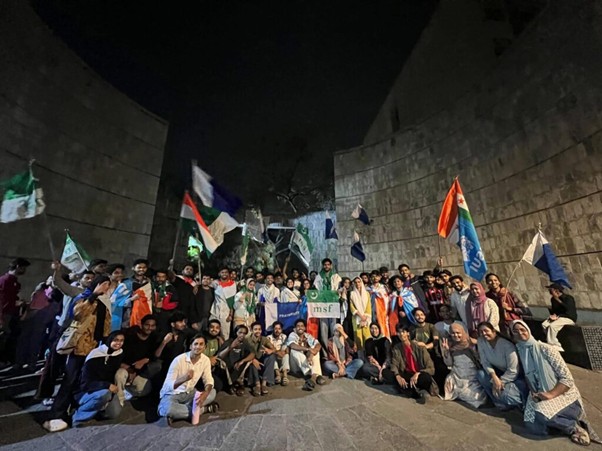
The Awaaz Alliance—comprising the Fraternity Movement, Muslim Students Federation (MSF), and the National Students’ Union of India (NSUI)—has won all Central Panel posts in the English and Foreign Languages University (EFLU) Students’ Union elections, defeating the right-wing student group Akhil Bharatiya Vidyarthi Parishad (ABVP).
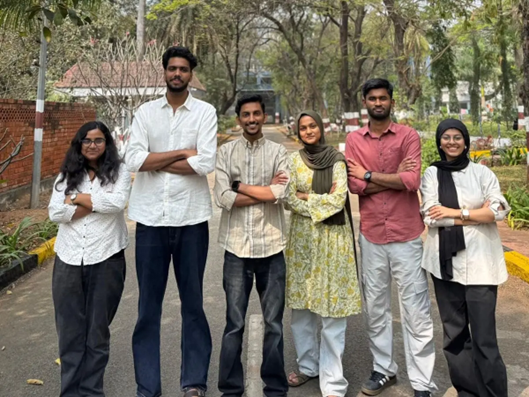
Harshad Shibin NK a PhD student from the Fraternity Movement has been elected as the new Students’ Union president.
Irfan Shajudheen from MSF a student of BA (digital communication) won the post of general secretary, while NSUI’s Sonu Raj 2year BA (English) student was elected vice-president. Other winners include MSF’s Haleemathu SS Adiya studying BA Arabic (Joint Secretary), Fraternity Movement’s Ayisha Neha (Cultural Secretary), and NSUI’s Udita Purkait (Sports Secretary).
ABVP finished second in all seats, while the Left student group Students’ Federation of India (SFI) emerged a distant third across all positions.
“This historic victory demonstrates the growing unity of democratic student forces committed to safeguarding campus diversity, social justice, and students’ rights. The mandate clearly rejects the politics of hatred and polarisation and affirms the students’ aspiration for an inclusive, egalitarian, and vibrant campus culture,” the Fraternity Movement said in a statement.
The newly elected panel members said they are committed to working tirelessly for academic welfare, gender justice, minority rights and democratisation of campuses.
source: http://www.radiancenews.com / Radiance News / Home> Latest News> Report / by Radiance News Bureau / February 07th, 2026
Belonging to a conservative Muslim family, it was hard for Fatima Ahmed to break the shackles but she made sure to follow her dreams and do all that she ever wanted. From travelling the world to living like a “gypsy” and creating her very own niche in the world of art, Ahmed has lived her life on her terms. Read about this feisty and inspiring artist.
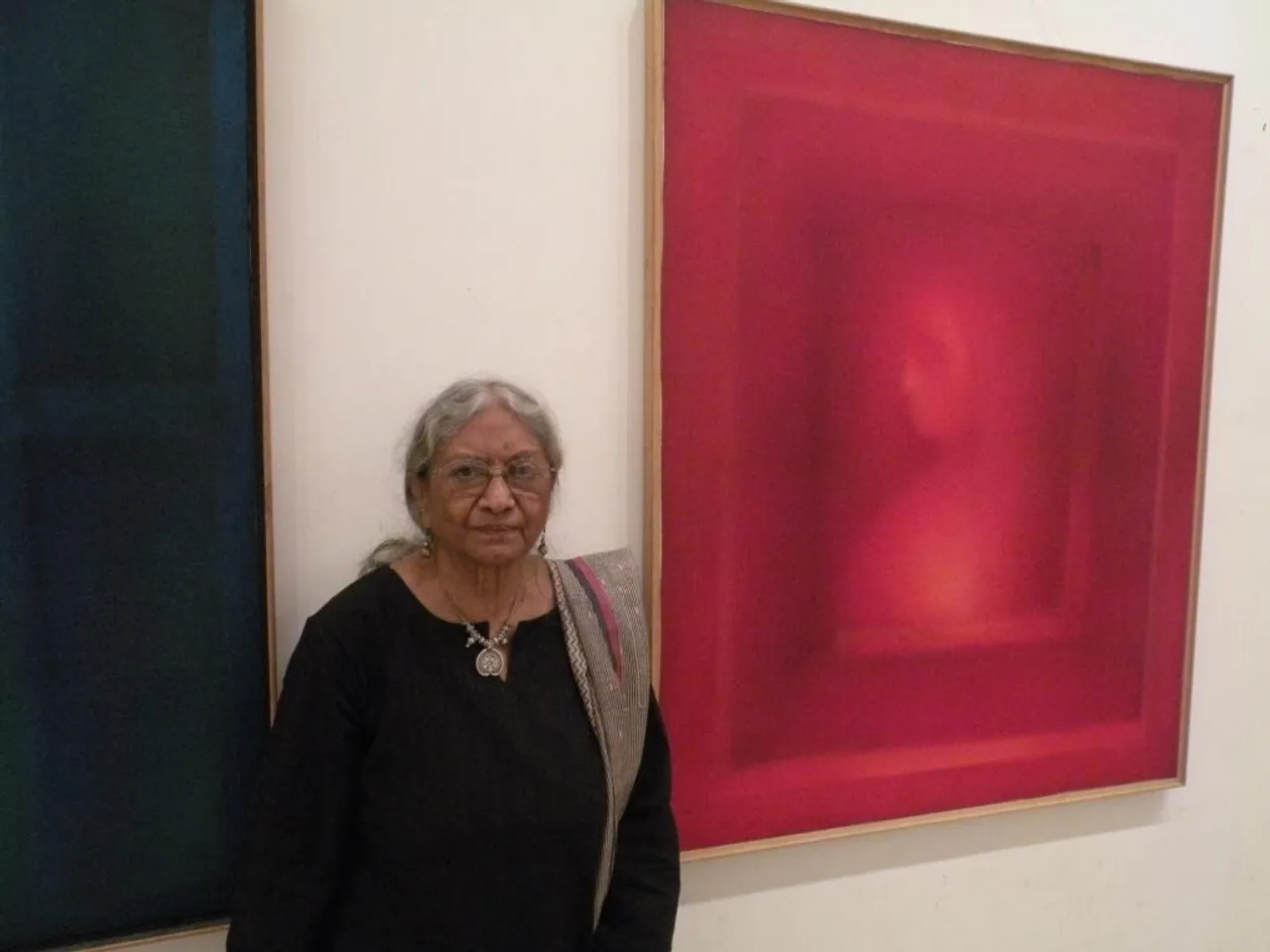
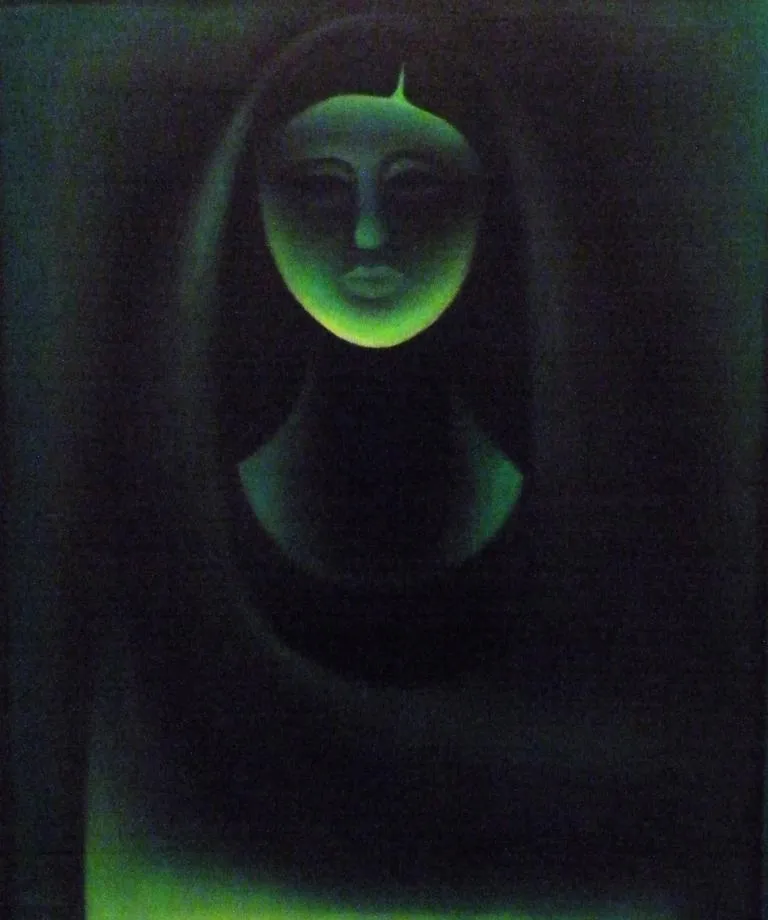
Legendary rebel artist and writer Fatima Ahmed, who is nearing 80, is a picture of contrasts. While she is fun-loving and full of life, her paintings are still and silent. (Credit: Surekha Kadapa- Bose\WFS)
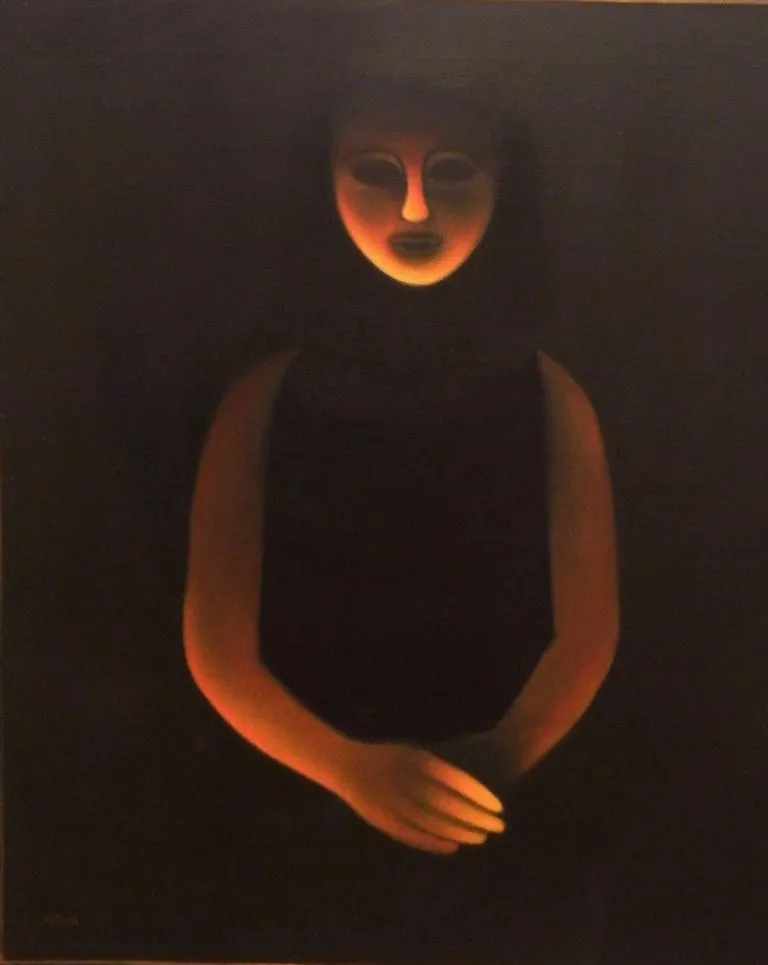
‘If only silence could speak’ goes the adage. Well, here silence does speak – and how! Soft, hazy, elusive images of women gaze steadily from the confines of their canvas making the much-mesmerised onlooker feel as though they would simply vanish if s/he so much as blinked. The women in red, pink, beige oil paints look ethereal, delicate and yet they convey power, strength – much like the woman who has created them.
“Space and light are very important to any work of art, especially paintings,” explains legendary rebel artist and writer Fatima Ahmed, whose latest oil canvases were on display in Mumbai recently. She continues, “In life, there has to be some mystery. Everything shouldn’t be very obvious and spoken out loud. In my works I don’t like clutter, loud colours or screaming. I like my paintings to be as subtle as a whisper.”
“Let me start by saying I simply love to eat the crisp crust of a samosa,” she says, with twinkle in her eyes, before adding, “Now as far as the silence in my work is concerned, throughout my life I have been more of an observer. I was a recluse during my childhood as I didn’t have anyone to share my thoughts and feelings with. I was a rebel for everyone around me and way back in the middle of last century it wasn’t a good sign.”
Coming from a conservative Muslim family in Hyderabad, Ahmed never really fit in because she was a free spirit who believed in equality. Her father was a Collector under Nizam Osman Ali Khan, Asif Jah VII, the last Nizam of Hyderabad.
In her joint family, daughters were married off in their early teens within the extended family. Moreover, as the Ahmed family was very highly placed within the Nizam’s palace, its members, too, were treated as royalty, which was never acceptable to her.
“I just couldn’t tolerate treating those employed in our household as slaves. Besides, women in that era didn’t have any say in any sphere of life and were forced to blindly follow all the dictates of men without questioning them. I certainly wasn’t going to do that,” she says emphatically, her voice betraying the anger she still feels towards the strict patriarchal rules they were made to adhere to in that period.
The women in red, pink, beige oil paints look ethereal, delicate and yet they convey power, strength. (Credit: Surekha Kadapa-Bose\WFS)
So Ahmed grew up with vivid visions of freeing everyone who was treated as a lesser human being. “Quite unknowingly, I was influenced by socialism,” she remarks. And at that age she had also made up her mind that she would rather die than marry one of her cousins. According to her, the one good thing her father did was to enrol her in the Government Mahaboobia Girls School, the foremost learning institution at that time. “Our teachers taught us out of syllabus and gave us the freedom to think. I didn’t like Hyderabad then but I loved my school,” says the artist, who is nearing 80.
It was there that she developed a deep love for drawing, painting and the classical Indian dance form Kathak, all of which she learnt without the approval of the family elders. The dance classes came to an end as soon as her father came to know.
“Unfortunately, my mother had a stroke at the time. And though I did have a large family of sisters, brothers, cousins and aunts, I could never really converse with any of them or share my true feelings,” she elaborates.
After school, as Ahmed refused marriage outright, she was grudgingly allowed to join college. But there again she met with another hurdle. She wasn’t interested in any of the usual subjects of science and wanted to join College of Fine Arts, which, of course, wasn’t permitted. So she found a way to get in. Mischievously she narrates, “I forged my father’s signature on the application form but the principal detected my lie and quizzed me. When he understood that I was really interested in the arts and saw a painting I had done of a litter of puppies, he relented.”
The demise of her parents made her leave home and Hyderabad for good. “I certainly didn’t want to stay back and be bossed around by my brothers and other family members,” she says about her escape to Bombay in early 1960s.
Admitting that the Hyderabad of today has changed considerably, the ageing artist nonetheless doesn’t think there is much difference still in the way girls from poor Muslim families are treated, “While girls from well-to-do homes get an education, are fashionable, go abroad, mingle with the rest of the world, this is not true of the low income Muslim families. They still live in a very male dominated society and this is not only restricted to Hyderabad or India but all over the world.”
Her arrival in Bombay and the “gypsy lifestyle” she led for the next two decades saw her engage closely with the world of art and writing. “I really didn’t exploit the kind of opportunities that came my way. I just took life one day at a time by living it on my own terms,” recalls Ahmed especially referring to her two-year stint in London where she painted, went through a financial crisis and then discovered spiritualism.
Fatima Ahmed, whose latest works were part of a recent exhibition, ‘If only silence could speak’, likes her paintings to be as subtle as a whisper. (Credit: Surekha Kadapa- Bose\WFS)
Despite those struggles, great success has come to her. She has held innumerable exhibitions in Mumbai, Delhi, Chennai, Hyderabad, Bhopal, London, Mauritius, Dubai, Hong Kong, Russia and South Africa, among many other places. Her works have been auctioned by Christies and are part of several private collections and state galleries, including the National Gallery of Modern Art (NGMA) in Delhi, Birla Art Akademi, Kolkata, the Stuttgart State Library and Masanori Fukuoka Museum in Japan.
What or who has influenced her art over the years? Initially, Ahmed says she was influenced by Gauguin, Cezanne, Van Gogh and Modigliani. But she consciously stayed away from those influences, as she felt “there was no fun in copying others”, and developed her own style.
Once she got back from London to Mumbai she caught up with many of her journalist friends. One of them was late Khushwant Singh, with whom she argued, fought and enjoyed interacting. It was he who encouraged her to get into writing. She started by translating works of Ismat Chugtai, Saadat Hassan Manto, Kaifi Azmi and other Urdu literary greats into English. This paved the way for to her write the semi-autobiographical, ‘In Haleema’s Words’. It was on one of her reporting assignments that she visited the Rajneesh Ashram in Pune, which has become her permanent home now.
Personally, Ahmed may be less of a rebel these days but her works more than make up – though still and silent they exude the quiet strength of women.
Written by Surekha Kadapa-Bose for Women’s Feature Service (WFS) and republished here in arrangement with WFS.
source: http://www.thebetterindia.com / The Better India / Home> Art / by Surekha Kadapa-Bose / December 14th, 2014
In a world increasingly fragmented by invisible walls and bitter divides, two young men from Nampally recently proved that the pulse of humanity beats stronger than the fear of death. Mohammad Imtiaz and Habib didn’t just save lives; they offered the world a profound lesson written in soot and sacrifice: “Humanity is the greatest religion of all.”
The Dance of Death
The day began like any other, but it quickly turned into a nightmare as a ferocious fire broke out in the narrow lanes of Nampally. As the sky turned black with smoke and the screams of trapped children pierced the air, a crowd gathered. Many watched in horror, paralysed by the spectacle of the “dance of death.”
But Imtiaz and Habib did not hesitate. They didn’t stop to ask the names of the children or the faith of their parents. To them, they weren’t “someone else’s children”; they were simply young lives on the verge of being extinguished.
A Sacrifice for the “Tender Buds”
Driven by a singular, frantic urge to protect the innocent, the duo plunged into the inferno. Witnesses describe a scene of pure heroism: two shadows moving through the orange glow, determined to pluck “tender buds” from the jaws of a fiery end.
They succeeded in their mission – the children were brought to safety. But in a cruel twist of fate, the fire that failed to claim the little ones took the lives of their saviours. Imtiaz and Habib breathed their last, leaving behind grieving families and a city in mourning.
The Message in the Blood
These were young men with dreams, parents waiting at home, and a future ahead of them. Yet, in that defining moment, they chose “the other” over themselves. Their sacrifice sends a stinging rebuke to a society often blinded by communal friction. Through their actions, they declared that their faith was one that gives life, not one that takes it.
As the saying goes, “It is better to light a candle than to curse the darkness.” Imtiaz and Habib became those candles. They burned out, but in doing so, they ignited a flame of empathy in thousands of hearts.
Our Debt to the Martyrs
The question now remains: How do we honour such a colossal sacrifice?
State Recognition: It is imperative that the government supports their families and recognises their bravery with posthumous gallantry awards.
A Living Tribute: The truest monument we can build for them is not made of marble, but of mindsets. To truly salute Imtiaz and Habib, we must purge the religious prejudice from our hearts and learn to see the human before the creed.
In the ashes of Nampally, a grim tragedy occurred. But from those same ashes, a story of immortal love has risen – one that Hyderabad, and the nation, must never forget.
source: http://www.radiancenews.com / Radiance News / Home> Features > Focus / by Radiance News Bureau / January 29th, 2026
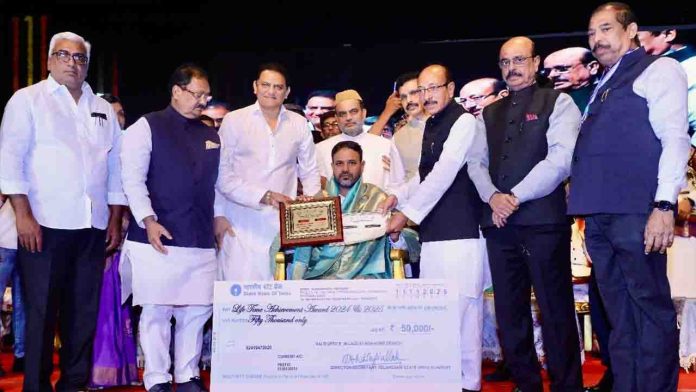
The Telangana Urdu Academy celebrated Minority Welfare Day at Ravindra Bharathi by presenting the first-ever Lifetime Achievement Award in the Digital Media category to veteran journalist Mohammed Akram Ali, popularly known as Azad Reporter Abu Aimal.
The award, instituted under the Revanth Reddy-led Congress government, marks the growing recognition of digital journalism’s role in promoting awareness and preserving Urdu culture. The award includes a memento, a citation, and a cash prize of Rs. 50,000, presented by Minister for Minorities Welfare Mohammed Azharuddin.
Mohammed Akram Ali was honoured for his decades-long contribution to digital journalism and his consistent efforts to advance Urdu language and literature through online media platforms. His work has been widely regarded as instrumental in connecting Urdu-speaking audiences with contemporary issues through accessible and credible digital channels.
The event was attended by several senior officials and community leaders, including Advisor for Minorities Welfare Md Ali Shabbir, Secretary of Minorities Welfare Department B. Shafiullah, Urdu Academy President Taher Bin Hamdan, Haj Committee Chairman Khurso Pasha, and CMFC Chairman Deepak John.
Syed Ghouse Mohiuddin, General Secretary of the Digital Media Publishers and Broadcasters Federation, congratulated Abu Aimal and praised the government for acknowledging digital media professionals.
The Telangana Urdu Academy announced plans to continue recognising contributors in emerging digital sectors to motivate younger generations and strengthen Urdu’s presence in modern media spaces.
source: http://www.radiancenews.com / Radiance News / Home> Latest News> Report / by Radiance News Bureau / November 12th, 2025
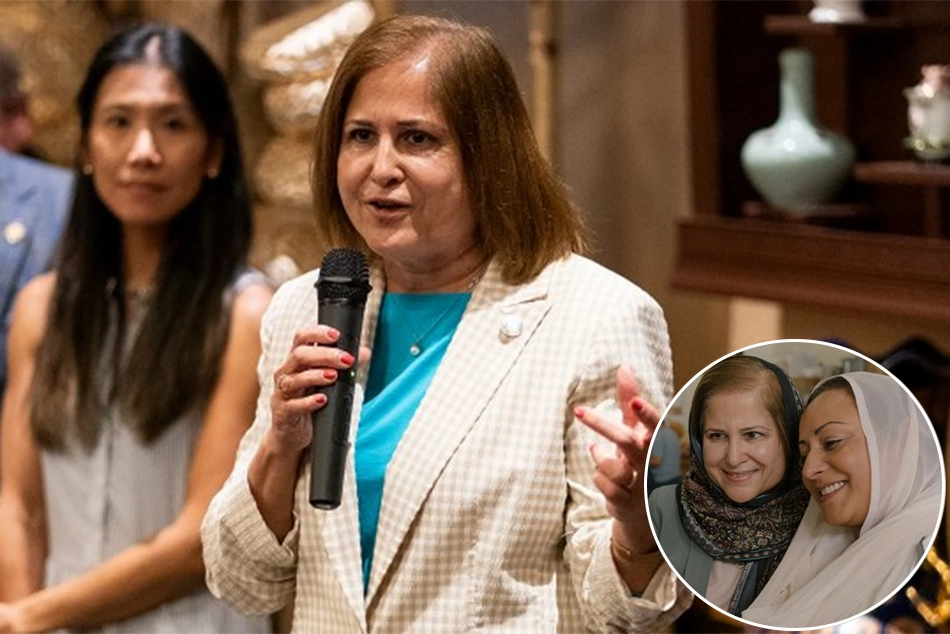
Indian-American Ghazala Hashmi, who is closely linked with the prestigious Aligarh Muslim University (AMU), has won the Virginia Lieutenant Governor 2025 Election result of which was declared on Monday.
Virginia:
Indian-American Ghazala Hashmi, who is closely linked with the prestigious Aligarh Muslim University (AMU), has won the Virginia Lieutenant Governor 2025 Election result of which was declared on Monday.
A Democrat Party candidate, Ghazala Hashmi, defeated Republican candidate and the state’s first gay statewide nominee, John Reid, to become first Muslim and first South Asian American elected as Lieutenant Governor of Virginia, a Republican stronghold.
Ghazala Hashmi polled over 55% votes as against her nearest rival John Reid who got the support of around 44.7% voters. Hashmi had earlier defeated five primary challengers in June, narrowly winning the nomination with 28% of the vote, as per the final result of the Virginia Lieutenant Governor Election 2025.
Ghazala Hashmi was the first Muslim woman to be elected to the Virginia State Senate following her stunning victory over sitting Republican Senator Republican Glen Sturtevant in the 2019 U.S. elections.
Ghazala Hashmi was born in India and emigrated to the US as a child with her family. She is also a former director of the Center for Excellence in Teaching & Learning at Reynolds Community College.
Ghazala Hashmi’s AMU Link
Ghazala Hashmi was born to Zia Hashmi and Tanveer Hashmi in Hyderabad in 1964. She spent her childhood days at her maternal grandparents’ house in Malakpet, Telangana.
She migrated to the United States with her mother and older brother as a 4-year-old child to join her father in Georgia.
Ghazala Hashmi’s mother, Tanveer Hashmi, is an alumna of Osmania University’s Women’s College in Kothi from where she did BA and B.Ed before migrating to the United States.
Ghazala’s father Professor Zia Hashmi is the alumnus of Aligarh Muslim University (AMU) from where he did MA and LLB. He completed his PhD in International Relations from University of South Carolina and soon after began his university teaching career. He retired as the Director of Centre for International Studies which he founded.
Ghazala Hashmi is married to Azhar Rafiq. The couple have two adult daughters – Yasmin and Noor – who both graduated from Chesterfield County Public Schools and the University of Virginia.
According to information available on her official website, Ghazala Hashmi is an experienced educator and an advocate of inclusive values and social justice. Her legislative priorities focus on public education, voting rights and the preservation of democracy, reproductive freedom, gun violence prevention, environmental protection, housing, and affordable healthcare access.
Hashmi spent nearly 30 years as a professor, first teaching at the University of Richmond and then at Reynolds Community College. At Reynolds Community College, Hashmi also served as the Founding Director of the Center for Excellence in Teaching and Learning (CETL).
Former Minister, MLA and BRS leader KT Ramarao has congratulated Ghazala Hashmi on her victory.
“This is massive! From Malakpet to Virginia… Congratulations to Ghazala Hashmi on becoming the first Indian-American Lieutenant Governor of Virginia. There is nothing more beautiful when democracies celebrate diversity of the world”. KTR wrote on X.
source: http://www.ummid.com / Ummid.com / Home> United States / by ummid.com news network / November 05th, 2025
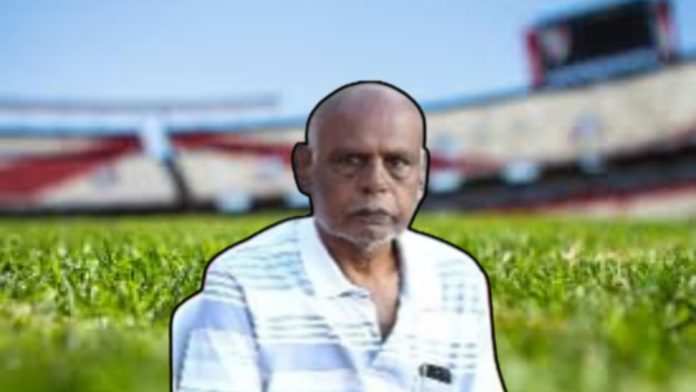
Former national footballer Syed Ahmed Khan passed away at the age of 64. He is survived by two daughters and a son.
Ahmed was a prominent player who represented the Police team for nearly three decades. His long career and consistent performance earned him respect in the football community. Teammates and officials remember him as a disciplined player who dedicated his life to the sport.
The Telangana Football Association expressed condolences to his family and acknowledged his contribution to the game. Football lovers in the region recalled his role in strengthening the Police team and inspiring younger players during his career.
His death is a significant loss for the local sporting fraternity. Community members paid tribute to his achievements and extended support to his family.
source: http://www.radiancenews.com / Radiance News / Home> Latest News> Report / by Radiance News Bureau / September 01st, 2025
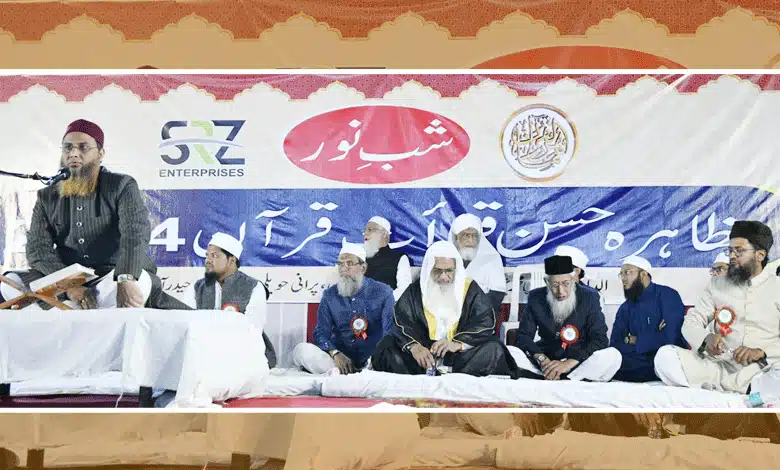
Hazrat Maulana Ghiyas Ahmad Rashadi Sahib, President of Safah Bait-ul-Mal and Manbar-Mihrab Foundation, was felicitated for his completion of the Tafsir al-Quran by Qari Muhammad Abdul Rahman Shahid Sahib and his brothers.
On the evening of December 31, 2024, a grand “Shab-e-Noor” Quranic Recitation event was held at the vast Dar-ul-Shifa Football Ground in the city. The event was presided over by Ustaad-ul-Qura’ Hazrat Maulana Qari Muhammad Ali Khan Sahib (may his blessings last) with the patronage of Mufti Hafiz Sadiq Mohiuddin Sahib (may his blessings last). The event featured renowned internationally acclaimed Qaris from the city, who presented their recitations.
Hazrat Maulana Jafar Pasha Sahib, Hazrat Maulana Hassan Farooq Sahib, respected Mir Zulfiqar Sahib (Charminar MLA), and respected Riyaz-ul-Hassan Afandi Sahib (MLC) participated as distinguished guests.
The Qaris presented their remarkable recitations until 2 AM, with a large crowd of both common people and elites in attendance.
Hazrat Maulana Ghiyas Ahmad Rashadi Sahib, President of Safah Bait-ul-Mal and Manbar-Mihrab Foundation, was felicitated for his completion of the Tafsir al-Quran by Qari Muhammad Abdul Rahman Shahid Sahib and his brothers.
The program concluded with a special prayer from Ustaad-ul-Qura’ Hazrat Maulana Qari Muhammad Ali Khan Sahib.
source: http://www.munsifdaily.com / Munsif News 24×7 / Home> Hyderabad / by Syed Mubashir / January 01st, 2025
Another area where his enthusiasm manifested itself was in exploring the religious history of meteors.
Mohammad Abdur Rahman Khan
The night sky has been one of the oldest sources of wonder. Through the ages men and women have looked up to the stars and been filled with curiosity and awe. This peculiar awe inspired by the diamond-studded vault has also inspired a number of distinct disciplines and practices. From hobbies like stargazing to highly systematised knowledges like astronomy and astrology and several cosmological myths in every major world religion have all been inspired by the awe one feels for the “heavens”. When we write the history of our all-too-human interest in the night skies, however, we usually parse these various practices and knowledges into neat silos.
Stargazing is seen to be an activity proper to children and hobbyists. Religious cosmologies are mostly left to theologians or historians of religion. Astronomy becomes the province of the savant. Even if some traffic between these distinct groups and their practices may be allowed in earlier eras, the distinctions seem to have become watertight by the 20th century. And that might be why no one today remembers Mohammad Abdur Rahman Khan.
A passion for meteors
In the last decade of British rule in India, Khan published a whopping ten papers and reports in Nature, the preeminent scientific journal of the time. Khan only had a bachelor’s degree to his name and had taught all his life at the Osmania College, away both from the then-new research institutions like the IISc and the old universities like those at Calcutta, Bombay, or Madras.
By the end of the 1940s, however, Khan had become well-known to the international scientific community. Besides his regular contributions to Nature and other scientific publications, he had also been elected a Fellow of the Royal Astronomical Society and appointed a Research Associate at the Institute of Meteoritics at the University of New Mexico. In 1936 and again in 1948 Khan was invited to present papers at the annual meetings of the Society for Research on Meteorites in the United States.
Khan’s passion was meteors. He had first become interested in them as a schoolboy at the Madrasa-i-aliya in Hyderabad in the late 1880s.
Later, the arrival of Halley’s Comet in 1910 reinvigorated his interest in astral phenomena and he set about translating Sir John Herschel’s Outlines of Astronomy into Urdu. It was also the time when he began to systematically observe the night skies. In 1940, by then nearly 60 years old, he reported to Nature that he had spent a total of 103.25 hours over 152 nights observing the skies that year. As a result, in just that single year, he had observed and mapped the paths of 1390 meteors!
Apart from personal observations, Khan managed to put together a network of other amateur observers who regularly sent him their observances as well. One 1945 publication, for example, contained observations from MM Ali Beg, a school headmaster, MA Latif Khan, a lawyer, and MT Ali, an official in the Finance Department of Hyderabad. What Khan had thus managed to do was link up a number of hobbyists and turn them into data collectors. Here was an early example of what would later sometimes be called “citizen science”, i.e., incorporating lay citizens into the task of scientific knowledge production.
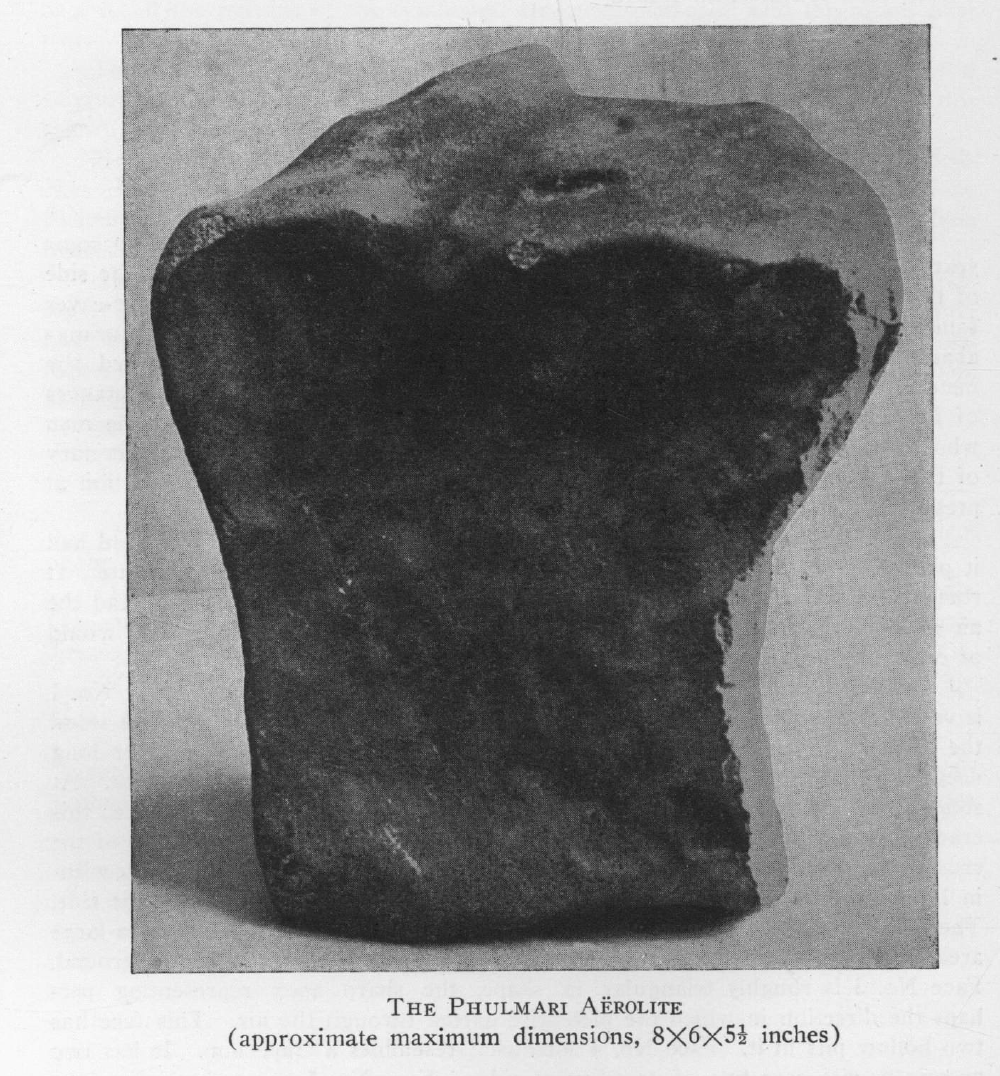
The study of meteors at the time depended not only upon the mapping of aerial pathways and frequencies but also on the study of the actual meteorites. Here again, Khan utilised his social networks to great advantage. In August 1936, for instance, he received from Maulvi Abdul Hag Saheb an aerolite that had fallen a couple of years ago onto a farm near the village of Phulmari in Aurangabad district. At other times, he heard of an old meteor shower in an area and personally went to search for meteorites. Since, unfortunately for Khan, the ground had been flattened in the intervening years, he offered a financial reward to the local villagers to induce them to part with any pieces of the old “shooting star” that anyone might have kept back.
The Phulmari aërolite.
Not satisfied with simply collecting local meteorites, Khan also started buying rarer meteorites from international dealers. He bought several pieces, for instance, from Wards’ Natural Science Establishment – a dealership trading in rare scientific specimens based at Rochester. On another occasion, possibly in the 1920s, he paid the then-princely sum of $24 to a dealer in Denver for some rare meteorites. His collection, in time, became a significant scientific resource. The eminent physicist Satyendra Nath Bose, remembered today as the discovery of the “boson”, once borrowed some meteorites from Khan’s personal collection for x-ray analysis at Bose’s laboratory at Dhaka University. What is also noteworthy is that Khan financed his collection entirely out of his salary as a college teacher. The prices charged by foreign dealers, the financial rewards given to locals etc. all came out of his personal finances.
Yet, Khan had not been a rich man. He came from a scholarly family with roots originally in Ghazni. His ancestors had then served the Nawabs of Arcot before switching to British employment upon the fall of Arcot. The family had been comfortably off as a result of employment in the British military and civil establishments. But Khan’s father had died suddenly when he was still in college, putting the entire family in straightened circumstances. A small scholarship given to him by the government allowed him to tide over the lean period. Always a very good student, he was able to find employment soon after graduation and thus eventually mend his financial circumstances. That neither this experience of precarity nor the relatively modest salary of a college teacher discouraged him from spending lavishly on the collection of meteorites is a testament to the depth of his passion.
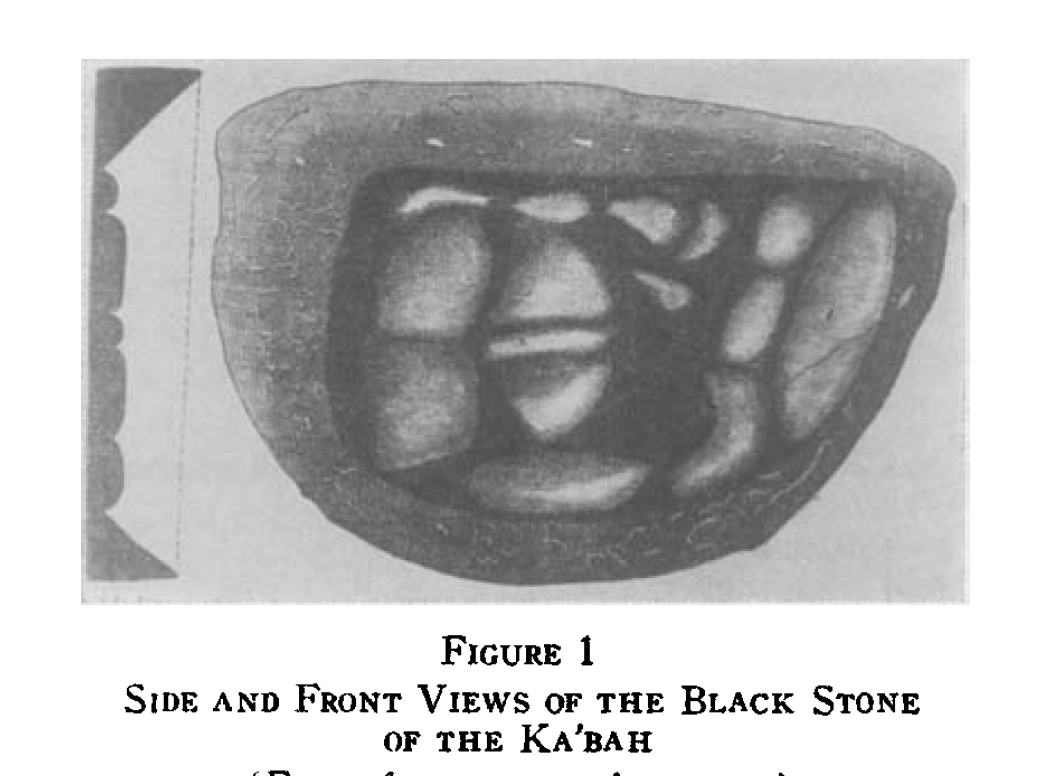
Spending hours staring at the night sky or shelling out generous sums for buying meteorites did not exhaust Khan’s passion for the topic. A third area where his enthusiasm manifested itself was in exploring the religious history of meteors. Hailing from a scholarly family and being educated in classical Persian and Arabic, Khan sought to document and analyze the reports of meteorites in religious texts. One of his most interesting studies in this regard comprised attempts to establish the meteoric origins of the holy black stone of Ka’aba in Mecca. Though he was far from being the first one to propose the theory, it was to his credit to bring both scientific knowledge about meteors and classical textual references together to try to establish the case.
Side and front view of the black stone of the Ka’bah.
A node at which several disparate worlds came together
Khan’s career as a man of mid-20th-century science is a curious blend. At one level he is a hobbyist who managed to keep alive an interest in stargazing that arose as a child. On another level, he is a man brought up in an old Islamic scholarly culture with an abiding antiquarian interest in classical works in Arabic and Persian. At a third level, he is a figure in a global scientific network organised in the form of scientific societies, research institutes, and scholarly journals. Above all, however, he was a node. A node at which several disparate worlds came together. The worlds of hobbyists and scientists, the worlds of antiquarians and astronomers, the worlds of old Hyderabad and modern America, to name only a few.
As a node connecting these heterogeneous worlds, he is reminiscent of an early modern practitioner of natural history. A kind of meta-discipline that predated the birth of modern science, natural history combined the collection of specimens, particularly of exotic and rare objects, with textual studies of classical texts. It was largely displaced by the middle of the 19th century when modern, organised, and increasingly professionalised science took its place. Disciplines gradually became more specialised, collections became institutionalised, and scholarly enquiry became less interested in classical precedents to their topics. The relish with which Khan is said to have displayed his personal collections of meteors to visitors, like SN Bose, after lavish Hyderabadi dinners, or the way he would recite both Sa’adi’s poetry and talk about meteorites at the same event, clearly recalls a world of early modern natural history than modern, scientific astral sciences.
The success of Khan’s career demonstrates the incompleteness of the transitions from natural history to modern science. The former, it would seem, could continue to coexist with modern scientific practices. Moreover, it could even inspire new modes of participatory citizen science, thereby turning dilettantism into a valuable resource for cutting-edge scientific work.
Astronomy was once called the Queen of the Sciences. But the Queen always had more lowly siblings, like stargazing, that remained outside the hallowed halls of science. Remembering Khan and his likes reminds us that on occasion the Queen did in fact meet and learn from her humbler siblings.
Projit Bihari Mukharji is the Head of the Department and a Professor of History at Ashoka University.
source: http://www.scroll.in / Scroll.in / Home> Reading Science / by Projit Bihari Mukherji / August 05th, 2025
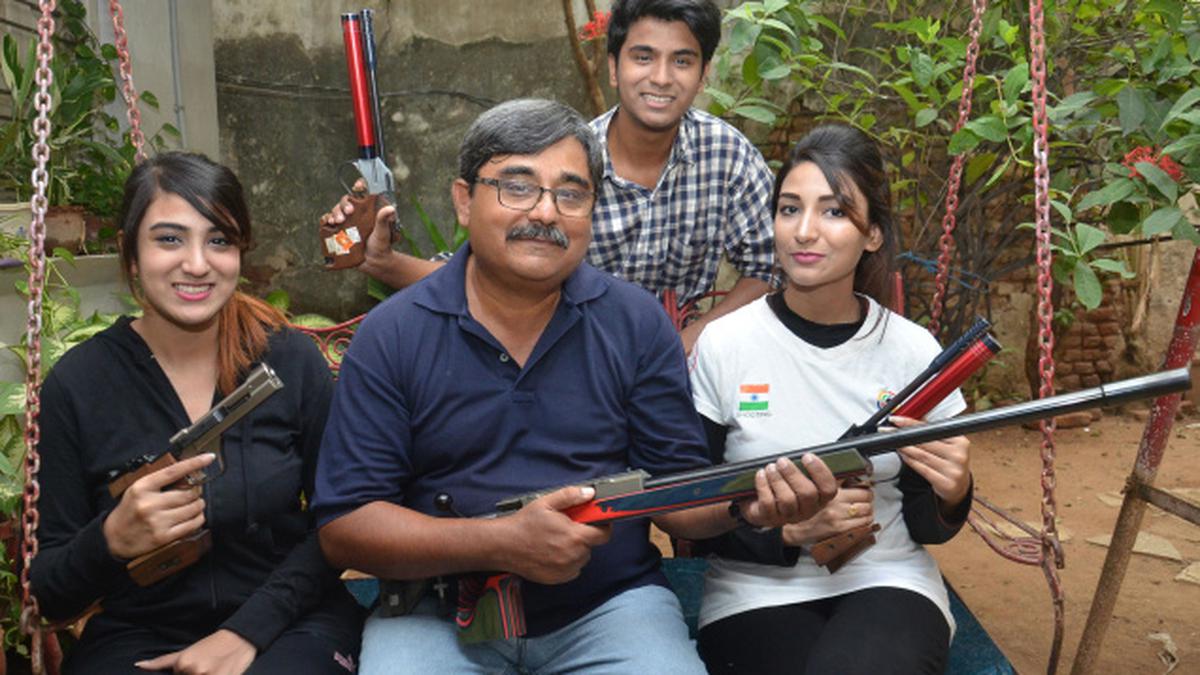
Siblings Nargis Fatima, Saba Fatima and Mohammed Zainulabedein on charting their own path in shooting
Narjis Fatima, A.M. Zainulabedin, and Saba Fatima with their father and coach Abbas / Photo: Nagara Gopal
On the first floor of Aga Mohammed Hussain’s house, Saba Fatima aims at the target as her sister Nargis Fatima and brother Mohammed Zainulabedein watch on. “I am very strict during practice and keep giving instructions,” laughs Saba. The trio do not indulge in the usual brother-sister spats and instead regularly practice on the home trainer range installed at home. These siblings make Hyderabad proud with their shooting achievements.
Interestingly, they are fulfilling their father Hussain’s dreams. Hussain has been shooting for the past 16 years and is a renowned shot. “Since I was into shooting, the children saw me and got guidance. The biggest advantage was that the weapons were at home,” recalls Hussain on how his children took to shooting. He also adds that his fatherly instincts do not come in the way of coaching. “When I am coaching I tend to forget I am their father. I am disciplined and strict and the results show. The only reason they have come up in the field at such a young age is because of their perseverance, discipline and dedication,” he says.
While Nargis Fatima won her first national medal at the age of 11, her aim is to make it to the Olympics. “By God’s grace both Saba and Zain are in the Indian national squad,” states Hussain. Saba, whose ranking is no. 4 is practicing to take part in shooting championship later this year. “Only the top three are sent by the sports ministry and she will be going at her own cost,” says Hussain.
Recently Saba, a D. Pharm student couldn’t go to Germany because of her final year exams. “D. Pharmacy is worse than medicine; it is a five-year course and I told her not to take it because she has to study a lot,” adds the father. However, he is more than glad with Zain’s performance and feels he will bring in laurels to the country. “Zain, whose ranking is number 5 is going for selection trials; Next year, he will be representing the country but getting into the Indian squad itself is a big achievement,” he points out.
Hussain speaks of his recent visit to Uttar Pradesh. “Youngsters are working very hard and one can see them practicing for even six hours,” he adds.
What do the girls do when not shooting? “I study or attend family parties,” laughs Saba. She feels Indian women shooters are charting their own path. “There is Heena Siddhu, who is making us proud,” she beams.
On the importance of having calm nerves during shooting, Hussain says, “For shooting, one needs a temperament that is extraordinarily soft and a synchronisation of multiple things; about 20 things happen in a fraction of a second and one needs to hone the technique and register it in the sub-conscious mind. Conscious mind is very powerful and the moment you shoot with it, you tend to lose everything. One needs to blindly follow what one has put in the training. Ninety percent shooters fail because they get excited and go in for score and don’t get the technique,” he explains.
source: http://www.thehindu.com / The Hindu / Home> Features> Metroplus / by Neerja Murthy / October 18th, 2016
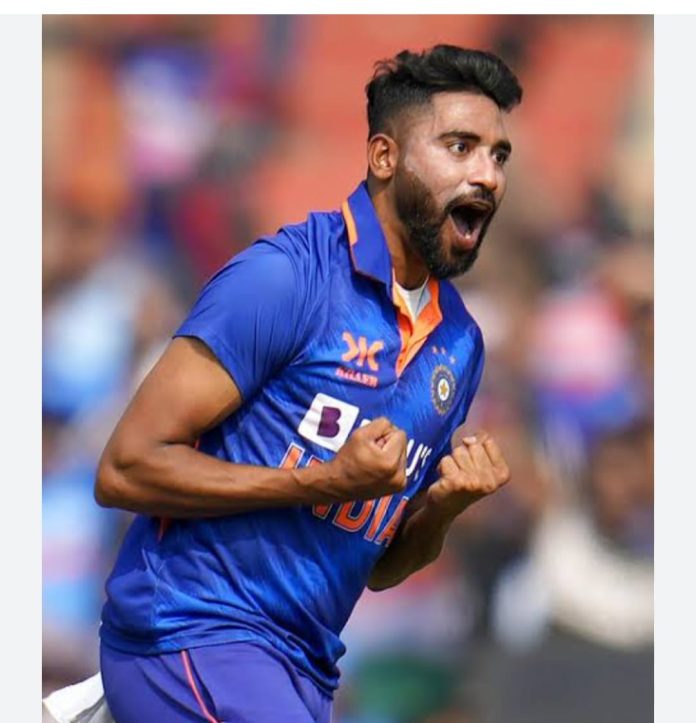
Mohammed Siraj scripted history with a stunning display of fast bowling at Edgbaston, claiming 6/70 to bowl out England for 408 in the second Test of the 2025 Anderson-Tendulkar Trophy. His fiery spell handed India a strong 180-run first-innings lead.
With Jasprit Bumrah absent, doubts hovered over India’s bowling attack. But Siraj, supported by Akash Deep’s four wickets, kept India firmly in control. This came despite a massive 303-run partnership between Harry Brook and Jamie Smith.
Siraj dismissed key English batters, including Zak Crawley, Joe Root, and Ben Stokes. He then ran through the tail, removing Brydon Carse, Josh Tongue, and Shoaib Bashir.
This six-wicket haul is the first by a visiting pacer at Edgbaston since 1993. It is also the third-best performance by an overseas fast bowler at the venue.
At 31, Siraj joins an elite group of Indian pacers with five-wicket hauls in England. The others are Amar Singh, Chetan Sharma, Bhuvneshwar Kumar, and Ishant Sharma. This is his fourth five-for in Tests and his best performance in England.
Despite the long stand from Brook and Smith, India’s pace attack—led by Siraj—remained disciplined and aggressive. They kept the pressure on England and are now in a strong position to level the series.
India will aim to carry this momentum forward as the match enters a crucial phase.
Siraj’s brilliance echoes his historic Asia Cup 2023 performance—where he delivered one of the finest spells in a tournament final. His rise now mirrors the legacy of legends like Chaminda Vaas and Anil Kumble.
Siraj has firmly established himself as India’s new pace spearhead.
source: http://www.radiancenews.com / Radiance News / Home> Latest News> > by Mohd. Naushad Khan / July 05th, 2025