Syed Abdul Rahim and Ajay Devgn in the poster of Maidaan
In an era of Indians recognizing their unsung heroes and reviving their memories, a biopic on Syed Abdul Rahim, India’s most successful football coach, is all set to be released on June 23.
The teaser of the film Maidaan featuring Ajay Devgn as the legendary coach of the Indian national football team was released by Zee Films recently. It has already crossed 35 million views of YouTube in five days.
Under Syed Abdul Rahim’s guidance, the Indian team was rated as one of the most powerful teams in the sport, and the period – 1952-1962 turned out to be the golden period of Indian football.
The teaser opens with the resounding music of A R Rahman and the powerful image of the Indians playing Yugoslavia (a country now spilt into Bosnia and Herzegovina, Croatia, Macedonia, Montenegro, and Serbia) in heavy rain.
It seems the bare-footed Indians lost the match against Yugoslavia as Rahim (Ajay Devgn) is shown in tears in the teaser. The film is produced by Bonny Kapoor.
According to reports, from his early days, this Hyderabad-born Rahim spotted talented boys on the football fields of Hyderabad and trained them to cobble up an Indian team.
With him as the coach of the national team, India finished fourth in the Melbourne Olympics and won the gold medal in the Asian Games of 1962 beating Japan and Korea.
Although Rahim is credited for ushering in the Golden Era of Indian football, he passed away unsung. He was never conferred with any award and many say he was too focused on coaching and never mingled with leaders or influencers to get noticed by them.
Maidaan’s teaser is a 90-second clip that tells the story of a fight against the odds by Rahim and his Indian team. The trailer opens with monochrome shots from the 1952 Summer Olympics held in Helsinki (Finland). India fared badly on that occasion and lost 10-1 to Yugoslavia in the preliminary round.
The resounding defeat did not discourage Rahim; instead, it brought out his fighting spirit.
He studied the training methods used by the European teams. Rahim studied their training and tactics and then modified the same to suit Indian conditions. He realized that Indian players had less physical stamina and there was no point copying the European methodology.
Rahim adapted the European ways to suit the Indians and it worked wonders. It must have taken Rahim’s meticulous planning and precision in training the Indians that helped the team perform great in the next Olympic Games in 1956 when India defeated Australia
On 1st December 1956, India stunned the world with the team’s excellent performance and defeating host Australia 4-2. Ace striker Neville D’Souza scored a hat trick and Krishnaswamy scored one goal.
This match is an abiding memory of the glorious era of Indian football.
Today, Indian football fans are disappointed to see Australia plays in the final phase of the FIFA World Cup while India has dropped to the bottom. Indian team employs expensive foreign coaches and support staff but the results are not commensurate with the efforts and expenses.
Sources said the filmmakers had consulted the Football legend’s son S.S. Hakim who died in 2021. Hakim was an Air Force officer who had played in the Olympics and was a highly qualified coach and referee too.
In the film, Ajay Devgn speaks the Hyderabadi (Deccani) version of Urdu. After many delays due to the pandemic and other reasons, the film is scheduled for a theatrical release on 23rd June 2023.
source: http://www.awazthevoice.in / Awaz, The Voice / Home> Story / by ATV, posted by Aasha Khosa / April 15th, 2023
Nauman Akram and his welfare group have chosen hospitals and passenger terminals to extend help by offering food, water and juices as a moral responsibility to those fasting.
Iftar food bag given to fasting relatives of a patient at a hospital in Raipur. (Photo | Express)
Raipur :
During the ongoing sacred month of Ramadan, when Muslims engage in observing fast, a former well-known hockey player devotes his time with his small team of youths to reach out to those who keep fast staying in hospitals while enduring challenging or difficult situations and provide them with Sehri (before sunrise meal) and Iftar (after sunset food) daily.
Nauman Akram’s Raipur-based welfare group believes that a large segment of the Muslim population may not be blessed with enough food and provision since they usually have little except to work hard to make ends meet during Ramadan.
Akram, also a former national hockey umpire, has chosen hospitals and passenger terminals to extend help by offering food, water and juices as a moral responsibility to the fasting people who are away from their homes and essentially need the support that brings them some solace during the pious month.
“We visit big hospitals like Raipur AIIMS, Dr Bhimrao Ambedkar hospitals among others to distribute small food bags among the patients and their fasting families. We also interact with Muslim travellers. The food packets are prepared by us daily. The distressed relatives of patients or the travellers in buses or elsewhere are already in demanding situations. So, any small support raises their morale and brings them some comfort”, he said.
Akram also solicits assistance from various Muslim groups through social media to lend a helping hand for his noble task. “Sehri particularly remains much in demand as finding the food post-midnight is really a major problem for the fasting people in hospitals or any passenger. So we prepare and distribute it by 3 am”, he added.
The menu of Sehri usually comprised chapatis, egg curry or bhurji, biryani and fruits. Similarly, iftar food contains dates, fruits, samosa, baked items and juices among others. Religious scholars have appreciated the service citing that the month of Ramadan is also about compassion for others, caring for the needy and sharing with empathy.
source: http://www.newindianexpress.com / The New Indian Express / Home> Good News / by Ejaz Kaiser / Express News Service / April 11th, 2023
Guru Dutt’s masterpiece ‘Pyaasa’ (1957), just before its soulful dirge on relationships, shows two poets reciting ‘shers’.
The elder one later also politely reprimands a guest for his snide remark at the “servant” (Dutt), who had begun humming “Jaane woh kaise log the..”, declaring: “Mian, shayri koi daulat-mando ke jagir thodi hai”. Though unnamed, his appearance, sher, and comment were enough to identify him.
Urdu Poetry and Social Reach
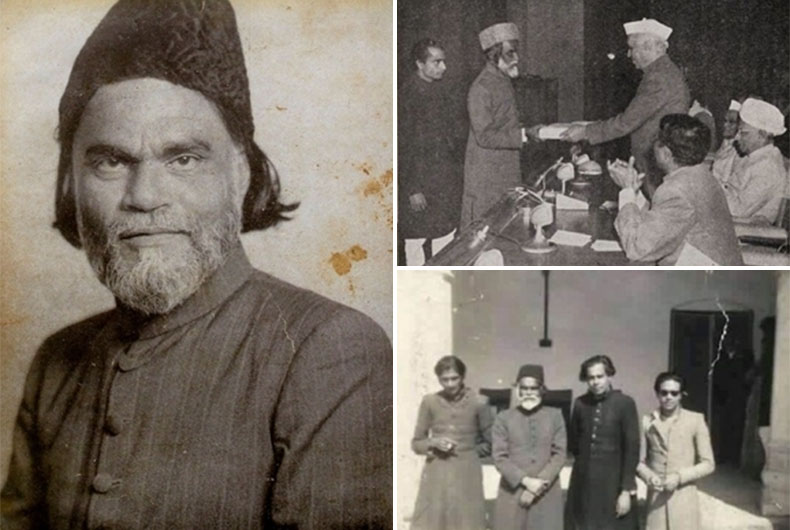
The unnamed actor was representing Ali Sikandar ‘Jigar Moradabadi’, who, in his heyday, was so known by his persona – an intense gaze but an air of absent-mindedness too, groomed beard but slightly unkempt long hair, traditional garb and courtly behaviour, as well as poetry, that he could be shown without being named.
‘Jigar’ is seen as the last standard-bearer of the classical ghazal, or the ghazal’s classical tradition, but was rather a ‘bridge’, between its highpoint in the mid-19th century and its transition to the 20th century and beyond.
He was also a connecting link between Urdu poetry and its widening social reach as the dialogue the character utters shows – and is followed by him encouraging Dutt to continue:
“Tum kuch keh rahe the, barkhurdar. Chup kyun ho gaye. Kaho, kaho..”
Jigar Moradabadi – Real Life
This was true in real life too – a young Jigar took instruction from Nawab Mirza Khan ‘Dagh Dehlvi’ – who had participated in mushairas with Ghalib and Zauq – and himself later, mentored poets like Asrar-ul-Hasan Khan ‘Majrooh Sultanpuri’, Jan Nisar Akhtar, and others.
And then like many contemporaries, he did not write for films, yet his work willy-nilly figured in them. While “Kaam aakhir jazba-e-beikhtiyar aa hi gaya/Dil kuch is surat se tadpa unko pyaar aa hi gaya” was used in ‘Pyaasa’, in ‘Daag’ (1952), the Hasrat Jaipuri-written “Ham dard ke maaron ka, itna hi fasana hai/Peene ko sharaab-e-gam, dil gam ka nishana hai” seemed inspired by his “Ham ishq ke maaron ka itna hi fasana hai/Rone ko nahi koi hasne ko zamana hai”.
Then, ‘Be-Raham’ (1980) used this sher – along with most of its ghazal which begins: “Ik lafz-e-mohabbat ka adna yeh fasana hai/Simte to dil-e-aashiq phaile to zamaana hai”. Another master sher in this is “Yeh ishq nahi aasan itna hi samajh lijiye/Ek aag ka darya hai aur dub ke jaana hai.”
Before that, Shyam Benegal’s ‘Junoon’ (1979), the 1857 drama starring Shashi Kapoor, used his ghazal, “Ishq ne todi sar par qayamat.”
How Jigar’s Prime Couplets became popular in films?
But, the prime example was how the prime couplet of ‘Jigar’ became most known to film buffs after actor Raj Kumar made it a dialogue, delivered in his bombastic, drawling style: “Ham ko mita sake yeh zamaane mein dam nahi/Ham se zamana khud hai zamaane se ham nahi.”
Born in April 1890 in Moradabad, ‘Jigar’ was the son of Syed Ali Nazar, who worked in the Law Department and was inclined to poetry too, being a disciple of Khwaja ‘Wazir Lakhnavi’.
After elementary education, including in English, he worked as a salesman for a local spectacles dealer. Later, he turned to poetry full-time, settling in the town of Gonda, where he found in noted poet Asghar Hussain ‘Asghar Gondvi’ a mentor of sorts. He was a familiar face in mushairas all over the country till the mid-1950s, when he began slightly distancing himself from shayri, ahead of his death in September 1960.
‘Jigar’, as mentioned, was a paladin of the classical tradition, and as such, his shayri usually dwelt on love and other facets of the human condition. As he said:
“Un ka jo farz hai vo ahl-e-siyasat jaane/Mera paigham hai mohabbat jahan tak pahunche.”
Yet, while he used the usual tropes associated with the topic, he imparted his own stamp on them with his own stylistic variations.
One of these was paradox. Take:
“Atish-e-ishq woh jahannum hai/Jis mein firdaus ke nazaare hai”, or “Kamaal-e-tishnagi hi se bujha lete hai pyaas apni/Isi tapte huye sahra ko ham darya samajhte hai”, or even “Mohabbat mein yeh kya maqam aa rahe hai/Ki manzil pe hai aur chale jaa rahe hai” and “Usi ko kehte hai jannat usi ko dozakh bhi/Woh zindagi jo haseenon ke darmiya guzre”.
“Abad agar dil na ho to barbad kijiye/Gulshan na ban sake to bayaban banaiye” is another example.
Then, ‘Jigar’ frequently resorted to some deft wordplay and situations: “Tere jamaal ki tasveer khinch doon lekin/Zabaan mein aankh nahi aankh mein zabaan nahi”, “Suna hai hashr mein aankh use be-parda dekhegi/Mujhe dar hai na tauheen-e-jamal-e-yaar ho jaaye”, and “Aghaaz-e-mohabbat ka anjaam bas itna hai/Jab dil mein tamanna thi ab dil hi tamanna hai.”
Vivid imagery was another strength: “Baithe huye raqeeb hai dilbar ke aas-paas/Kaaton ka hai hujum gul-e-tar ke aas-paas” and “Har taraf chaa gaye paigham-e-mohabbat ban kar/Mujh se achhi rahi qismat mere afsanon ki.”
And ‘Jigar’ could use rhetorical devices, like repetition to good effect, as in: “Dil hai kadmon par kisi ke sar jhuka ho ya na ho/Bandagi to apni fitrat hai Khuda ho ya na ho”, “Kabhi un mad-bhari aankho se piya tha ik jaam/Aaj tak hosh nahi, hosh nahi, hosh nai” and sometimes, alliteration: “Hai re majbooriyan mahroomiyan nakaamiyan/Ishq aakhi ishq hai tum kya karo ham kya karen.”
At other times, he could be engagingly simple: “Garche ahl-e-sharab hain ham log/Yeh na samjho kharab hain ham log”, or “Pehle sharab zeesht thi ab zeesht hai sharab/Koi pila raha hai piye ja raha hoon main.”
And a philosophical outlook can always be discerned. It may be active like: “Kya husn ne samjha hai kya ishq ne jaana hai/Ham khaak-nashinon ki thokar mein zamana hai” and “Apna zamana aap banate hai ahl-e-dil/Ham vo nahi jin ko zamana bana gaya”, or a bit resigned: “Jo un pe guzarti hai kis ne use jaana hai/Apni hi musibat hai apna hi fasaana hai”, “Maut kya ek lafz-e-bemaani/Jisko mara hayat ne maara”, and “Yeh misraa kaash naqsh-e-har-dar-o-deewar ho jaaye/Jise jina ho marne ke liye taiyar ho jaaye.”
There is much more to enjoy in the extensive corpus of ‘Jigar’, whose own epitaph could be: “Hami hab na honge to kya rang-e-mahfil/Kise dekh kar aap sharmaiyega.”
source: http://www.ummid.com / Ummid.com / Home> International / by Vikas Datta / IANS / April 16th, 2023
The film ‘Alzahravi’ bagged the best film award in the category of Best Visual Effects and Animation whereas ‘Polymer, the Promise of PDMS’ has been recommended for a citation.
Hyderabad:
Two films of the Instructional Media Centre, Maulana Azad National Urdu University (MANUU) produced under the MANUU Knowledge Series have won accolades at the 24th CEC UGC Educational Video Festival organized by Consortium for Educational Communication (CEC), an Inter-University Centres set up by the University Grants Commission.
The film ‘Alzahravi’ bagged the best film award in the category of Best Visual Effects and Animation whereas ‘Polymer, the Promise of PDMS’ has been recommended for a citation under the Best Film Documentary award category along with the other three films.
According to Rizwan Ahmad, Director, IMC, the film Alzahravi by Omer Azmi, Producer IMC explores the life, struggles, and achievements of the renowned scholar, Alzahravi, and his contributions to the field of medicine.
Polymer, the Promise of PDMS by Obaidulla Raihan, Cameraperson, is a thought-provoking film based on a research output by researchers from the Central University of Hyderabad, where they have developed a polymeric material which is graphene base media mists smart composite material which will revolutionise the technology in near future.
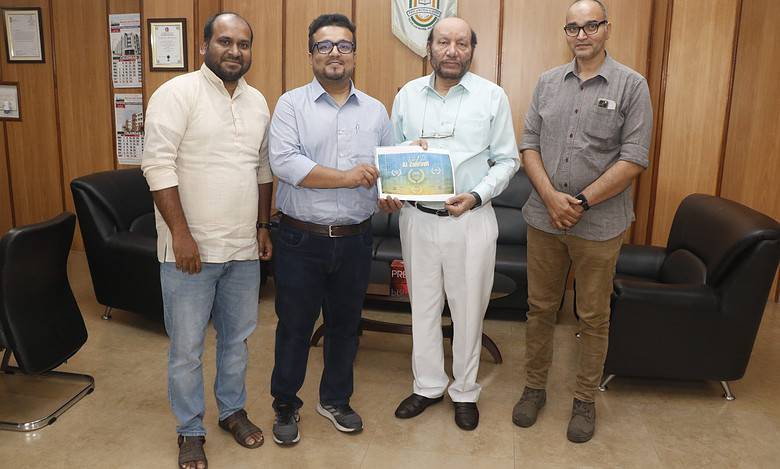
Prof Syed Ainul Hasan, the Vice-Chancellor, congratulated the centre on this achievement and said IMC is steadily gaining recognition for its unique and thought-provoking approach to digital media. Appreciating the Media Centre Team’s effort who met him today at his office the Vice-Chancellor expressed the hope that the MANUU knowledge Series will continue to inspire and educate audiences and contribute to the growth and development of Urdu and dissemination of knowledge.
Rizwan Ahmad said both films were also selected previously at various film festivals nationally and internationally. This honour is a testament to the hard work and dedication of the directors of the films and the entire team. MANUU Knowledge Series aims to promote the Urdu language and culture, as well as highlight important issues and stories through the medium of film, a press release said.
source: http://www.siasat.com / The Siasat Daily / Home> News> Hyderabad / by Indo Asian News Service (IANS) / April 12th, 2023
Hameda is the first female and the fourth millionaire to win the guaranteed one million Dirhams under the new prize structure.
38-year-old Hameda Begum (Photo: Gulf News)
Abu Dhabi:
A 38-year-old United Arab Emirates (UAE)-based Hyderabadi woman has been revealed as the winner of one million Dirhams (Rs 2,22,28,303) in the weekly Mahzooz draw.
The winner of the draw Hameda Begum– matched five out of the six winning numbers during the 122nd weekly Mahzooz draw held on Saturday, April 1.
Hameda Begum, from Hyderabad, India, who works as a medical coder in UAE. She has been living in the UAE’s capital Abu Dhabi from the past three years.
“I’ve never entered a raffle or won anything in my life so this has been a delightful surprise to me. For me, this is a dream come true, and I can’t believe it,” Hameda told Gulf News.
Hameda is planning to spend her winning for her four children’s education and secure her family’s future.
Hameda is the first female and the fourth millionaire to win the guaranteed one million Dirhams under the new prize structure.
On March 4, the draw revamped its prize pool, introducing a new feature where every week one participant becomes a guaranteed millionaire.
source: http://www.siasat.com / The Siasat Daily / Home> News> Hyderabad / posted by Sakina Fatima / April 17th, 2023
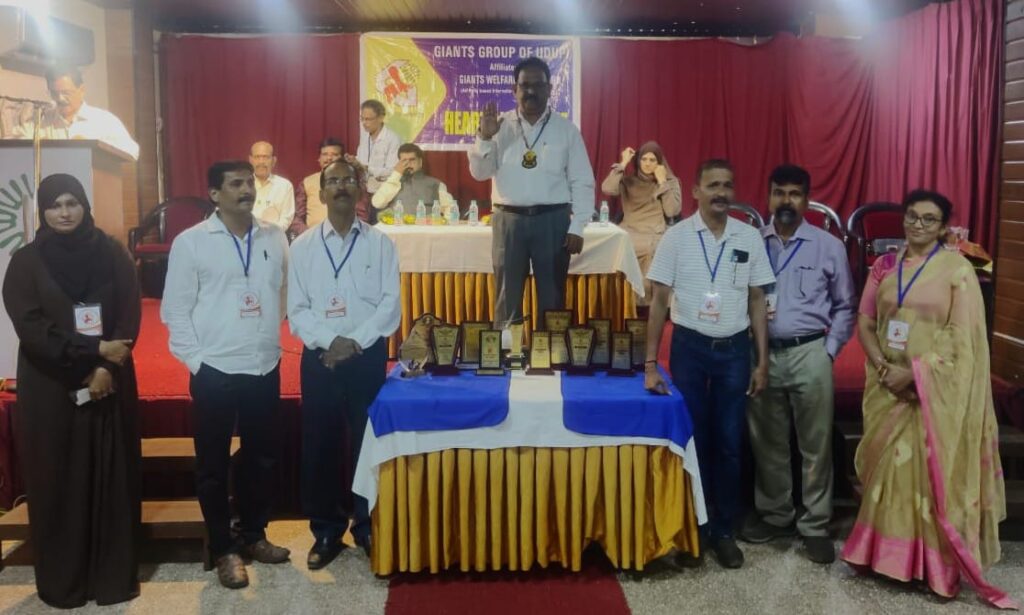
M Manna Iqbal was on Monday reinstalled as the President of the Giants Group of Udupi for the year 2023, in a ceremony held at the Woodlands Hotel here in the city.
Dinkar K Amin, a Central Committee member of the Giants Welfare Foundation was present as the Chief Guest of the event while Vasudev Mahale, Unit Director of Federation 6 was the installation officer at the ceremony.
Former Federation President Jayarajprakash was the keynote speaker at the event while Dr. Junaida Sulthana, Academic Head, MET, Udyavara, Udupi, Tejeshwar Roa, Federation vice-president, and Lakshmikanth Beskoor, Federation coordinator were present as the guests of honor.
Four women – Dildar Akbar – Special Needs School, Udupi, Sushma Gopalkrishna – Police Inspector Udupi Women’s police station, Bindu Thankappan, Advocate, Shaila Amanna, Asha Nilaya, Udupi – were also felicitated for their outstanding services and selfless contribution towards the society.
The new committee of the Giants Group Udupi was also formed. Yashwant Salian and Vincent Saldana were appointed vice-presidents, Roshan Ballal. Director of Administration, Vadiraj, Joint Director of Administration, Ganesh Ural, Director of Finance, Dayanand Kalmady, Joint Director of Finance. Prabhakar Bangera, Liyaqath Ali, Vinay Kumar Poojary, Zeenath, Geetha Rao, and Diwakar Sanil took oath as Directors.
Roshan Ballal presented the annual report while Vivek Kamath proposed a vote of thanks and compered the event.
The event was followed by an Iftaar arrangement for the members and audience.
source: http://www.english.varthabharati.in / Vartha Bharati / Home> Karavalii / by Vartha Bharati / April 18th, 2023
Sikri Village (Nagar Pahari Tehsii, Bharatpur District),RAJASTHAN:
Wajib Ali.
Jaipur:
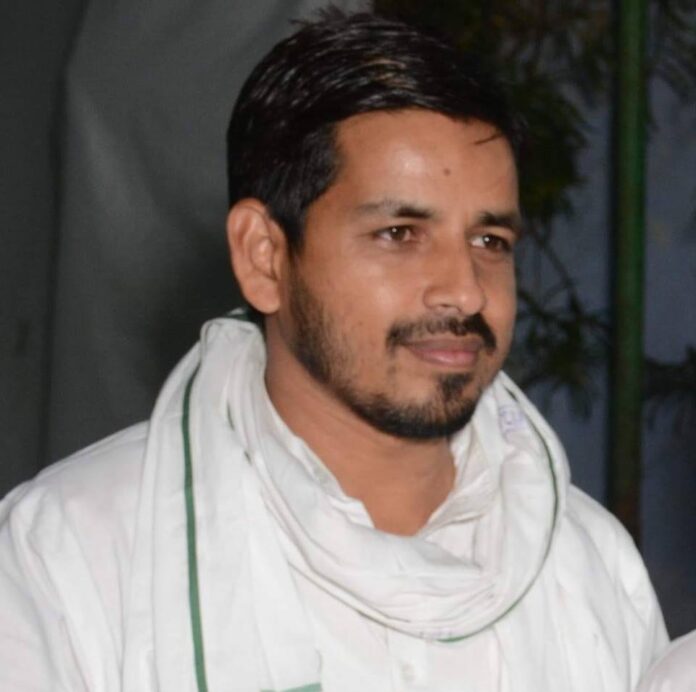
A successful young Indian Muslim educationist from Australia, who has made his way into the Rajasthan Assembly as an MLA with the dream to bring about a change at his native place, has made a mark by improving social conditions in the Meo-dominated region in the eastern part of the state. The MLA from Nagar constituency in Bharatpur district, Wajib Ali, 40, defies the image of typical politicians.
Born in a Meo Muslim family of Nagar block’s Sikri village, Ali had left his native place to pursue higher studies in 2005, when he first went to New Delhi’s Jamia Millia Islamia and later migrated to Australia. He came back to Bharatpur in 2013 and contested the State Assembly election as a National People’s Party candidate, but he lost to Bharatiya Janata Party’s sitting MLA Anita Singh.
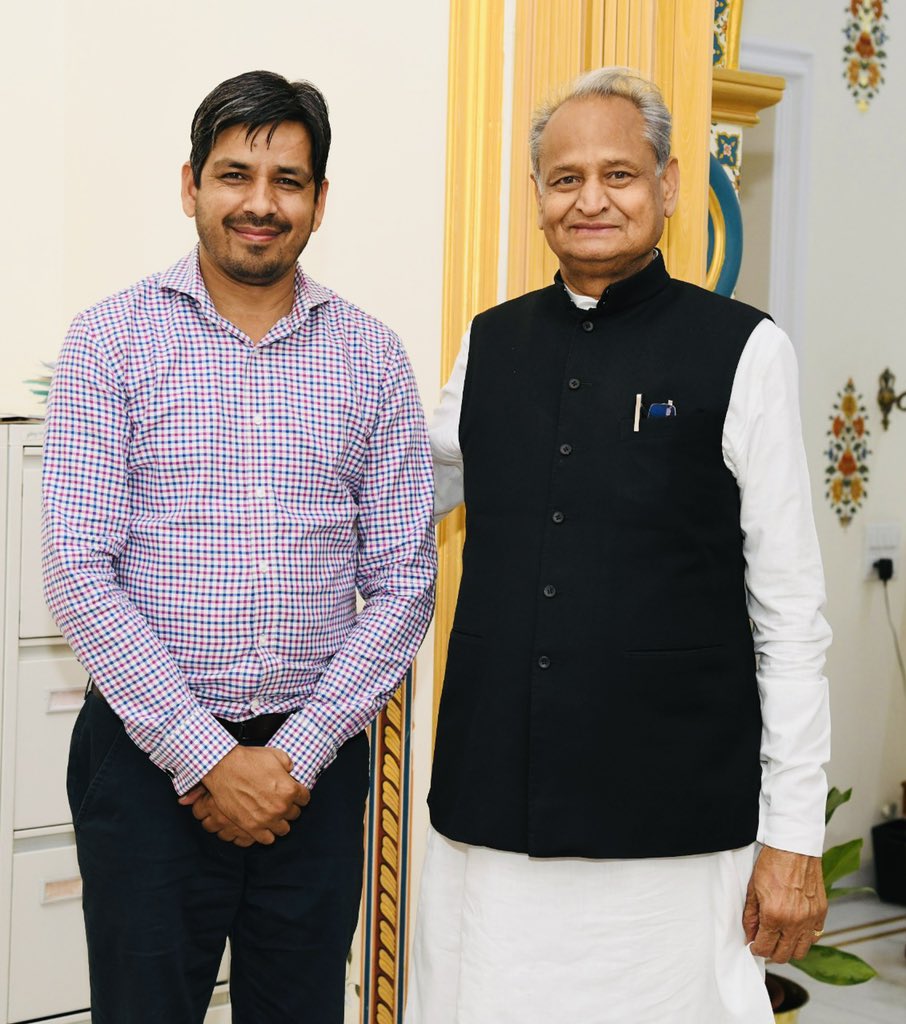
MLA from Nagar constituency Wajib Ali with Chief Minister Ashok Gehlot
Ali has a thriving real estate business in Australia and he runs eight colleges and a school, along with his two brothers, in the cities such as Sydney, Melbourne and Brisbane. He led a successful election campaign in the rural heartland during the December 2018 Assembly polls and was elected an MLA on the Bahujan Samaj Party’s ticket from the Nagar seat.
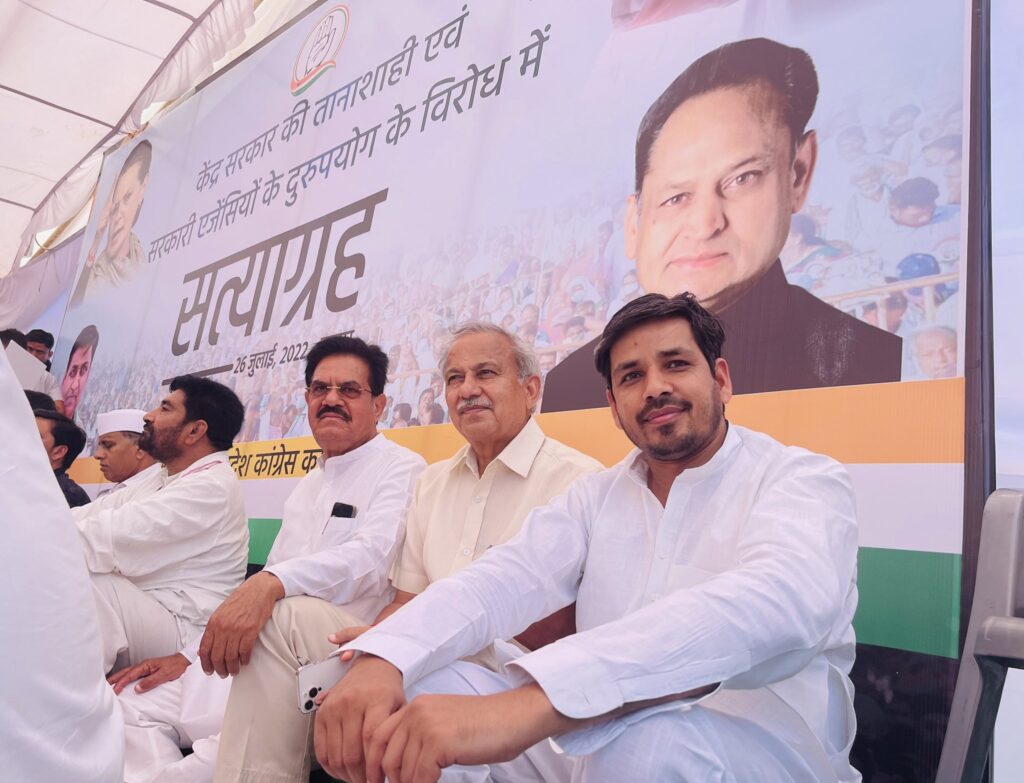
In 2019, Ali defected to the ruling Congress along with five other BSP MLAs while declaring that all of them wanted to ensure the State Government’s stability. The move came amid reports of the BJP trying to lure the BSP MLAs in a bid to repeat a Karnataka-type upheaval in Rajasthan. Ali and his fellow MLAs also supported Chief Minister Ashok Gehlot during the political crisis in 2020, caused by the rebellion of the then Deputy Chief Minister Sachin Pilot, and voted for the Congress candidates in the Rajya Sabha elections held in June 2022.
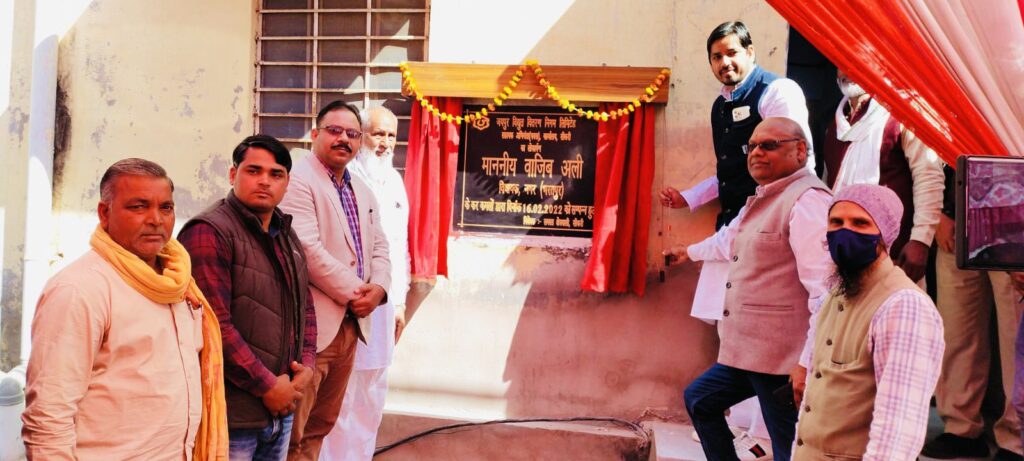
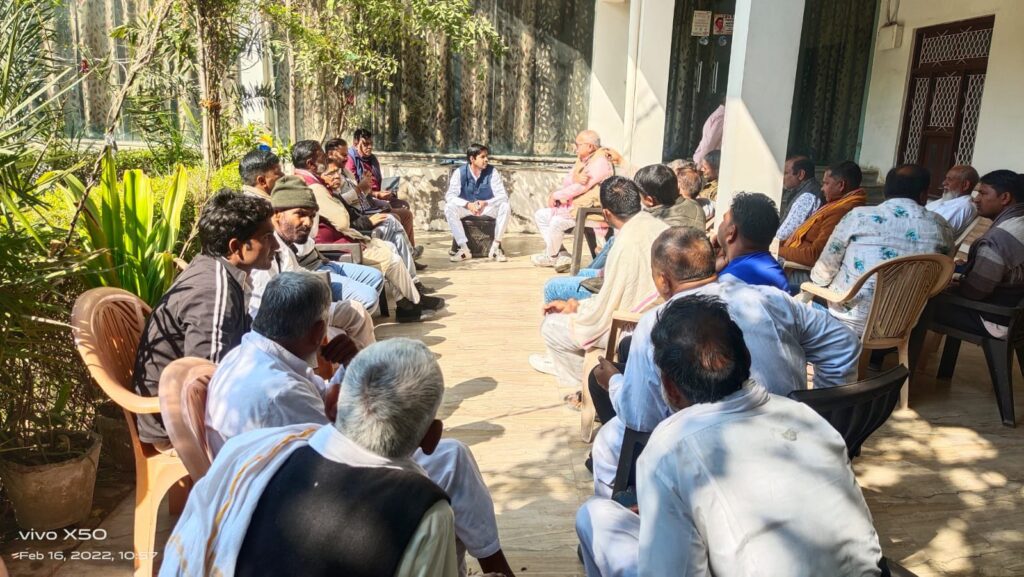
Ali was later appointed the Chairperson of the Rajasthan State Food Commission in August 2022. He has been active in the Meo-dominated region since 2013, extending support to the people’s struggles and raising their issues with the Government authorities.
Ali says that he had come back to India with the desire to make a difference in people’s lives and improve the social conditions in eastern Rajasthan. “This is the most backward area in Rajasthan and the basic facilities are lacking here. Moreover, the people belonging to the Meo Muslim community are treated with suspicion,” he says.
In his election campaign, Ali succeeded in convincing the voters about his honest intentions. “People from all castes voted for me in Nagar constituency, where Muslims comprise 20% of population. The voters were convinced that I had sacrificed my comforts in Australia to do something for them,” he says with a sense of satisfaction.
“Moreover, I have defeated the idea of communalism and hate campaign, which is used for climbing up the ladder in politics. Common people have reposed faith in me,” Ali says. In the election results, BJP’s Anita Singh was relegated to the third position, while Samajwadi Party’s Nem Singh was the runner-up. Having secured 62,644 votes, Ali won with a margin of 25,467 votes.
Ever since his election, Ali has focused on education and health in his constituency in order to raise the standard of living of the villagers. “I have been working for improving the quality of Government education system. Private education is not a solution. Even if I open schools and colleges in Nagar, it cannot serve the numbers. Only a robust Government education set-up can benefit everyone,” he points out.
As regards the health sector, the condition of Government facilities was earlier pathetic in the villages, where 95% of the women’s delivery cases were referred to private hospitals. Ali’s interventions at various levels have helped improve the situation. He has also brought relief to Muslims and other marginalised groups by raising their issues on various forums.
Ali has drawn the attention of Government authorities to the law and order situation and corruption in various offices with public dealing. He has sought to utilise his position as an MLA for betterment of society and setting the things correct on various occasions. He recently raised the issue of suspension of an Urdu teacher, Amin Kayamkhani, with the Education Minister when the teacher drew the Minister’s attention to the Urdu subject being sidelined in the schools.
As a result of Ali’s sustained efforts, a large number of announcements were made for the development of the Nagar Assembly constituency in the 2023-24 State Budget presented in the Assembly last month. The announcements included construction of a hostel for girls belonging to minority community and a new sub-district hospital, establishment of an Agriculture College, installation of a faecal sludge treatment plant and upgradation of Khoh and Jaluki village panchayats as sub-tehsils.
The selfless and dedicated work by Ali in the eastern Rajasthan region both before and after his election as an MLA has set an example of how the young educated Muslims can bring a change by entering the multifarious fields of public service. The common people in Nagar constituency, who have reposed faith in Ali’s leadership, are hopeful that he will set new standards of public service and bring a new identity to the backward region.
source: http://www.indiatomorrow.net / India Tomorrow / Home> News> Society / by India Tomorrow Correspondent / March 31st, 2023
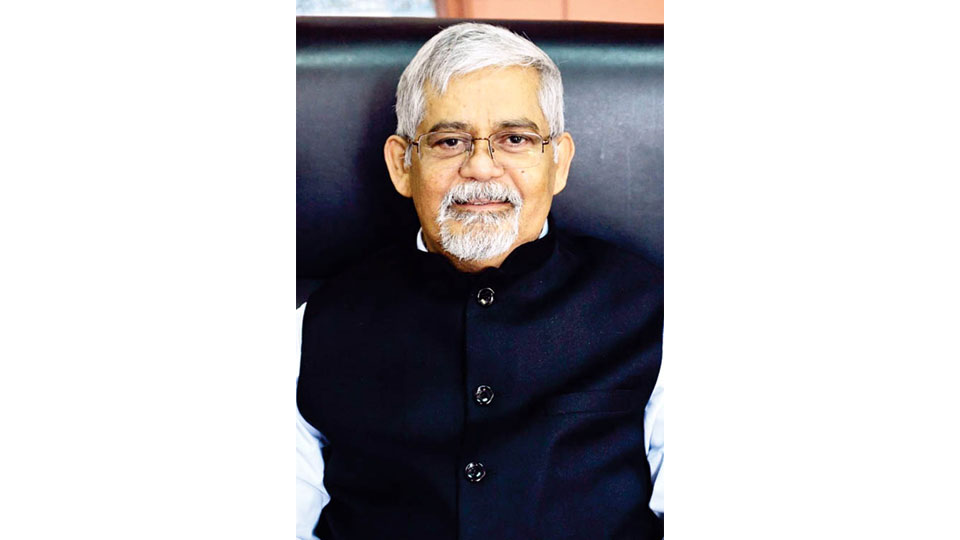
Prof. Muzaffar Assadi, former acting Vice-Chancellor and currently Dean of the Faculty of Arts and senior-most Professor at the University of Mysore, was elected unopposed as the President-Elect of the Indian Social Science Academy for the year 2024-2025. He was formerly its Vice-President.
Indian Social Science Academy (ISSA) was founded in 1974 with the goal of evaluating, integrating and disseminating scientific knowledge about man, society and nature in relation to India’s specific circumstances and fostering harmony between social sciences, natural sciences and technology. ISSA is the only institution in the world that defines science as social and encompasses all fields of natural, social and behavioural sciences.
ISSA organises the Indian Social Science Congress (ISSC) every year with the goal of discovering, developing and disseminating science of Nature. The UGC, DST, ICSSR, ICHR, ICPR, INSA, ISRO, CSIR and ICMR are supporting ISSA.
Prof. V.K.R.V. Rao, one of the greatest economists in India and founder of the Delhi School of Economics, Institute of Economic Growth, and Institute of Social and Economic Change in Bengaluru, is among its former Presidents.
A Professor in the Department of Studies in Political Science, Prof. Assadi is also the Chairperson of the Department of Studies in Public Administration, University of Mysore and in-charge Chairperson, Department of English.
Prof. Assadi is a native of Shirva, Udupi Taluk, and a former student of St. Mary’s Institutions and Hindu Higher Elementary School in Shirva. He graduated from Mangalore University, JNU, New Delhi and University of Chicago.
source: http://www.starofmysore.com / Star of Mysore / Home> News / (headline edited) / April 10th, 2023
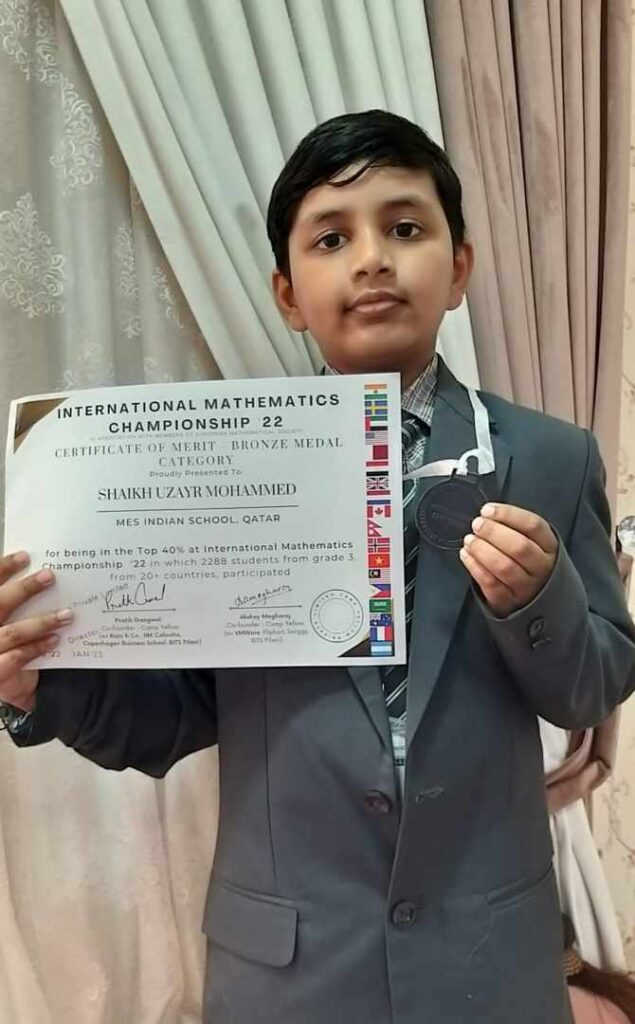
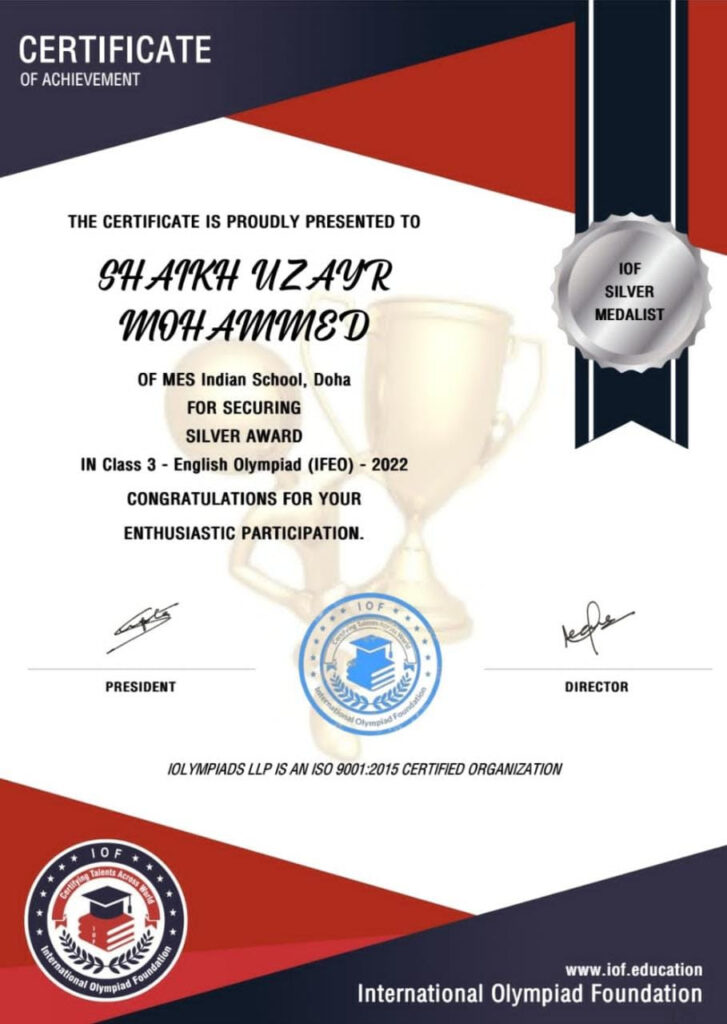
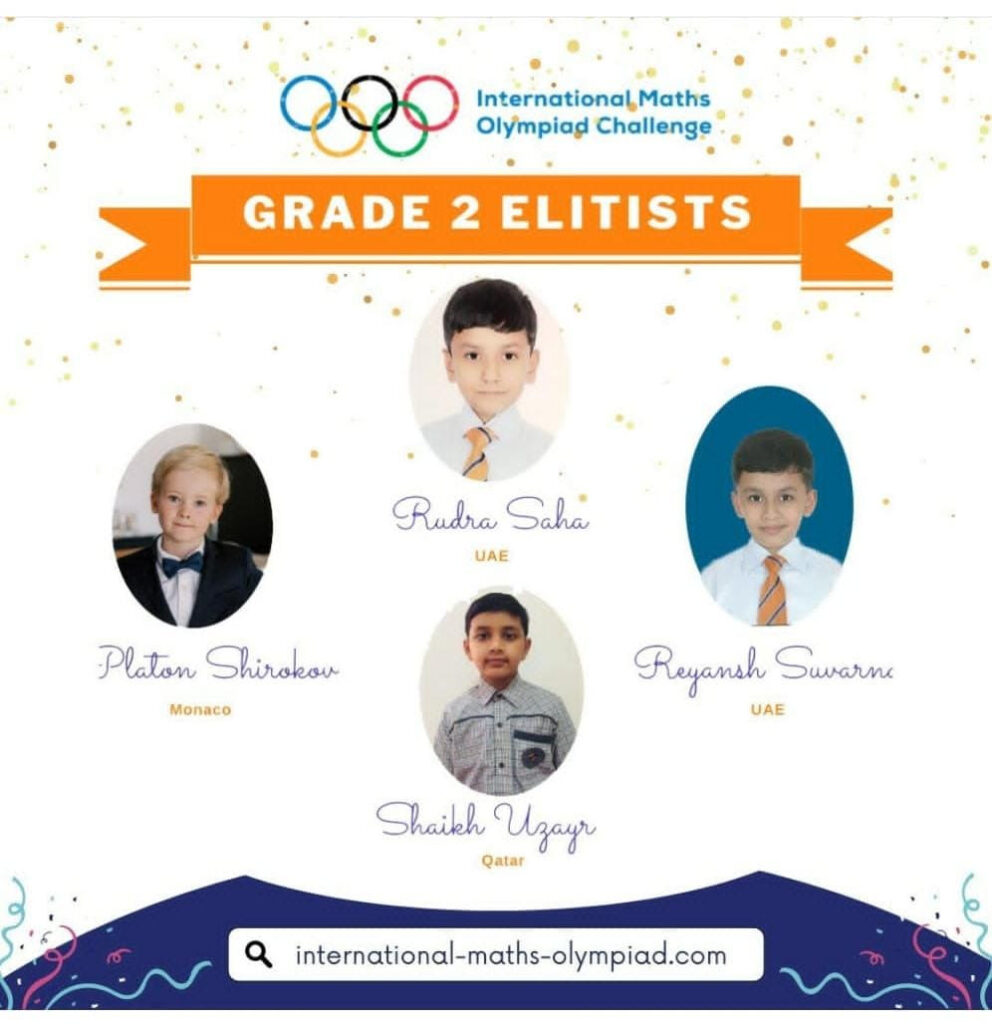
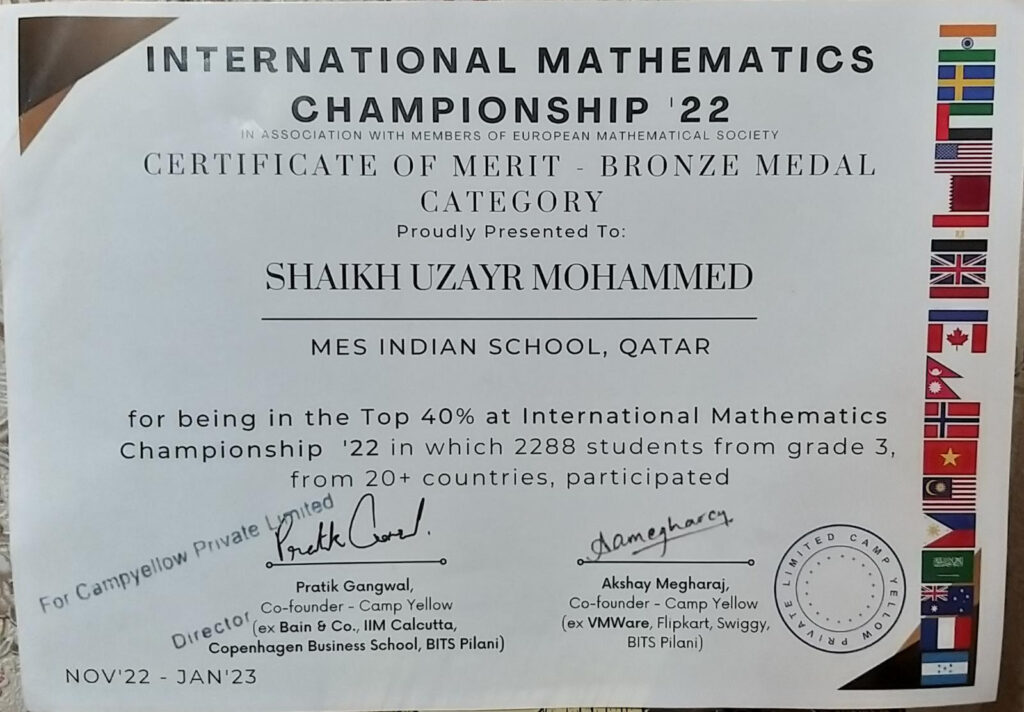
A Mangaluru student, Shaikh Uzayr Mohammed, studying in Qatar has won Bronze Medal at the International Mathematics Championship 2022.
Uzayr is a grade 3 student of MES School, studying in Qatar. He hails from Kankanady in Mangaluru.
The championship was held in December 2022 and the results were announced on Monday, February 20, 2023.
A total of 2288 students from over 20 countries had participated in the championship organised by Champ Yellow, wherein Uzayr secured a place in top 40%, thereby securing a rank in Bronze Medal category.
source: http://www.english.varthabharati.in / Vartha Bharati / Home> Karavali / by Vartha Bharati / February 20th, 2023
Discussions and debates, critiques and readings, held at haunts of Urdu books and writing around the country have been interrupted rudely.
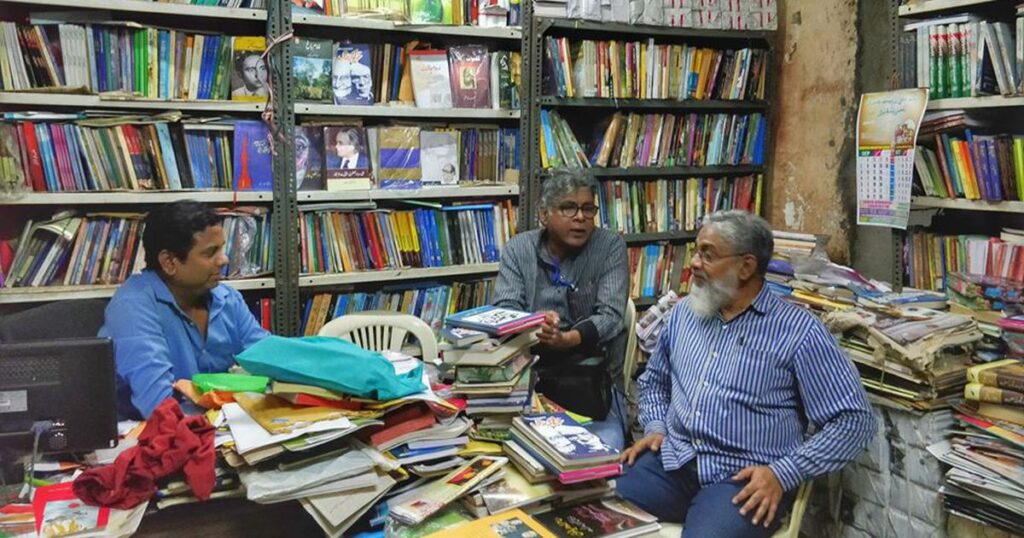
(From left) Shadab Rashid, Urdu drama writer Aslam Parvez, and Shakeel Rasheed at Kitabdaar | Mahtab Alam
In Malegaon
On the first Saturday of every month, the textile city of Malegaon in northern Maharashtra used to become home for lovers of Urdu literature, who meet to discuss, debate and critique new writings in the language, mostly by local writers. Organised under the aegis of Anjuman Muhibban e Adab (Association of Literature Lovers), the gathering began at around 9 pm, and went on till midnight.
Between 30 and 50 people – both writers and readers – would come together, a number that would at times go up to as many as 100 or even 150. Asif Iqbal Mirza, the secretary of the Anjuman, said the practice began 25 years ago on the suggestion of local journalist and editor Samiullah Ansari, who published new Urdu fiction in his weekly, Hashmi Awaz.
Over the years, the publication had emerged as a popular local magazine for young and budding writers to publish their works. The weekly, now in its 35th year of publication, had a considerable fan following and readership at the time. Ansari then suggested that admirers of the magazine form a group comprising readers as well as writers.
The group was initially named Anjuman Muhibban e Hashmi Awaz (Association of Admirers of Hashmi Awaz), but within a few years, its following grew to encompass more than just the readers of the magazine, and in 1998 it was rechristened Anjuman Muhibban e Adab, Malegaon. “Ansari sahib formed the Anjuman so that writers could get their new works critiqued by readers before getting them published in the weekly,” Mirza ssid.
Back then, Mirza himself wrote for a local children’s newspaper called Khair Andesh. But his association with the Anjuman helped him grow into a prolific Afsana Nigar, a short story writer. He was 17 when the group was formed; in the past 25 years, he has written and published more than 200 short stories in different publications.
Apart from Anjuman Muhibban e Adab, there are two more literary groups in Malegaon that held regular meetings until the lockdown was declared in March. No such meetings have been held since then. “Unlike earlier, we now have enough time to read and write. But the irony is we don’t have the opportunity to discuss and publish them,” said Mirza, who also runs a printing business. Several local publications had to halt their issues, including Hashmi Awaz, owing to the lockdown.
According to Mirza, although social media outlets such as WhatsApp and Facebook have, to some extent, helped to keep in touch with fellow writers and readers, the literary life of Malegaon has come to a standstill, since a large number of local writers and readers came from the working class and worked in local looms. “The year 2020 is the silver jubilee of my literary career. I had plans to publish a collection of my short stories, but thanks to the pandemic, that will not happen this year,” Mirza said with a great sense of despair.
In Mumbai
Both readers and writers have felt a deep loss during the pandemic. His love of books took Shakeel Rasheed, editor of the Urdu daily Mumbai Urdu News, to various bookshops in and around the Mohammad Ali Road area of Bombay. “Visiting bookshops was a part and parcel of my life. I feel a deep loss when I don’t visit them,” he said. For him, bookstores are not just spaces to buy books, but they also served as addas for readers and writers. As soon as some relaxations were in place, he rushed to the stores. “Par ab pahle wali baat nahi rahi,” said Rasheed. “Things are not as they were before.” The pandemic has made it more difficult to meet new people.
Shadab Rashid’s Kitabdaar publications and bookstore in Temkar Street of Nagpada was one such adda for Urdu writers in Mumbai, as was Maktaba Jamia on Sandhurst Road West. Today, Kitabdaar and a few other bookshops have opened their stores for a few hours every few days, while Maktaba Jamia remains closed. “Due to lack of public transport and fear of the pandemic, people cannot come to Kitabdaar,” Shadab said. He also edits the quarterly literary magazine Naya Waraq, founded by his late father and noted journalist and writer Sajid Rasheed.
Shadab Rashid said the lockdown brought significant hardships and losses to Urdu publishers and distributors. “It is not that people don’t want to read Urdu books anymore – the problem is they cannot buy them,” he said. “I have received lots of online orders, but I cannot fulfill them because I rely on postal services as they are the cheapest means of delivery, but the services are not fully functional yet.” His online Urdu bookshop kitabdaar.com is one of the few digital distribution platforms for Urdu books exclusively in India. Another such platform, urdubazaar.in, was recently launched from Delhi.
Owing to the discontinuation of physical interactions between readers and writers, people have lost touch with each other, since not all Urdu writers are active on social media, Shakeel Rasheed told me. “We have lost many good writers during this period and found out about their demise several days later,” he added. “Moreover, we could not participate in their last journeys.”
In Hyderabad
Another writer recounted similar thoughts after the death of noted Urdu satirist Mujtaba Hussain in Hyderabad on May 27. Hussain was awarded the Padma Shri in 2007 for his contributions to Urdu literature, but in December 2019, he announced he was returning the award to protest the enactment of the contentious Citizenship Amendment Act. “[T]he democracy for which I fought is under attack now and the government is doing that,” he had said, “that’s why I don’t want to associate the government with me.”
In Hyderabad, another centre of Urdu writing, literary activities have come to a similar halt due to the pandemic. Publications like Shagoofa, a monthly magazine of satirical writing, have been temporarily discontinued since the lockdown.
In Delhi
In Delhi, too, the pandemic has left an adverse impact on Urdu writing. Khan Rizwan, a poet and a known “addebaaz” from Delhi, loved participating in and organizing adabi addas (literary gatherings). He misses visiting the Nai Kitab book store, located in one of the many bylanes of Jamia Nagar, which is one of the famous addas for Urdu lovers in the city. Run by veteran writer and publisher Shahid Ali Khan, Nai Kitab is a haven for young and old writers alike, Rizwan said, as Shahid sahib treated them alike. “It is not just a bookshop but an institution where one got to meet noted writers and lovers of Urdu literature,” he said.
Rizwan would visit the shop at least twice a week, and meet a new literature enthusiast or writer, or find out about a new book or risala /parcha (journal/magazine). “I miss the black tea and chips that Shahid sahib served us with love and affection,” he recalled. “He is a storehouse of information, and several veteran writers were his friends, so he would tell us stories all the time.”
I couldn’t agree more with Rizwan. I have been visiting Nai Kitab once every few months for more than a decade now, and on each of my visits, after asking khabar-khairyat, Shahid sahib would say, “Achcha aap bahut dino baad aayen hain, ye nayi kitaabein aayi hai dekh lein (Since you’ve come after a long time, here are some new books).” Last year, when I visited the bookshop around this time, he directed me towards dozens of books written by noted Urdu satirist Fikr Taunsvi and Shaukat Thanvi. I immediately bought all of them, as they were usually out of print and seldom available.
As the person in charge of the Maktaba Jamia, the publication division of Jamia Millia Islamia in Bombay, Shahid Sahib befriended writers and poets like Jan Nisar Akhtar, Meena Kumari, Sahir Ludhianvi and Jagan Nath Azad. Some of them were regular visitors to the Maktaba Jamia. Though he moved to Delhi after serving the Maktaba for several decades, he did not stop hosting literature lovers. He then founded Nai Kitab publishers and a quarterly journal by the same name.
It was in 2007 at his bookshop that I first chanced upon Shamsur Rahman Faruqi’s celebrated novel Kai Chand The Sare Aasman, later translated into English as The Mirror of Beauty by the author himself. The novel went on to become a major critical and commercial success.
Faruqi was also associated with the Nai Kitab journal as chairperson of its advisory council and would visit the shop once in a while. The journal eventually stopped publication owing to Shahid sahib’s failing health, but he continued with the bookstore as it was like “oxygen for him”, he had once told me.
Waiting for freedom
Some writers have managed to turn the lockdown into a creatively productive period. “Personally, the pandemic has proved as a blessing in disguise as I read books I wanted to for years and finish other important work, such as recording videos of Urdu literature lectures,” says Khalid Mubashir, a poet and assistant professor of Urdu literature at Jamia. He quickly added, however, this was not common, as most writers and poets were stuck at home, either because of their age or in fear of the pandemic. “Moreover, not all writers have access to technology and books like I do. I am fortunate enough to have friends who helped me with technology to do something substantial during this period.”
Mubashir’s videos, as many as 60 of them, are each about 30 minutes long, and cover the history, evolution and development of Urdu and its literature in the subcontinent. Though the lectures are prepared keeping in mind the need and syllabus of Urdu literature students, ordinary Urdu lovers can also benefit from them. All lectures are available on the YouTube channel Safeer e Adab.
Similarly, although younger poets like Mohammed Anas Faizi from old Delhi have been trying to keep Urdu literature gatherings going by using social media, online addas do not have the feel and impact of offline and in-person gatherings. “Technology and social media can only help to a certain extent. Online gatherings, mushairas and addas cannot substitute for the real ones, no matter how well they are done,” he said.
With apologies to Faiz Ahmad Faiz, what the Urdu writers, poets and addebaaz seem to be telling the pandemic is:
Gulon Mein Rang Bhare Baad e Nau Bahar Chale Chale Bhi Jao Ki Gulshan Ka Karobar Chale
Mahtab Alam is a multilingual journalist and until recently was the executive editor of The Wire Urdu. His Twitter handle is @MahtabNama.
This series of articles on the impact of the coronavirus pandemic on publishing is curated by Kanishka Gupta.
source: http://www.scroll.in / Scroll.in / Home> Publishing and the Pandemic / by Mahtab Alam / July 14th, 2020