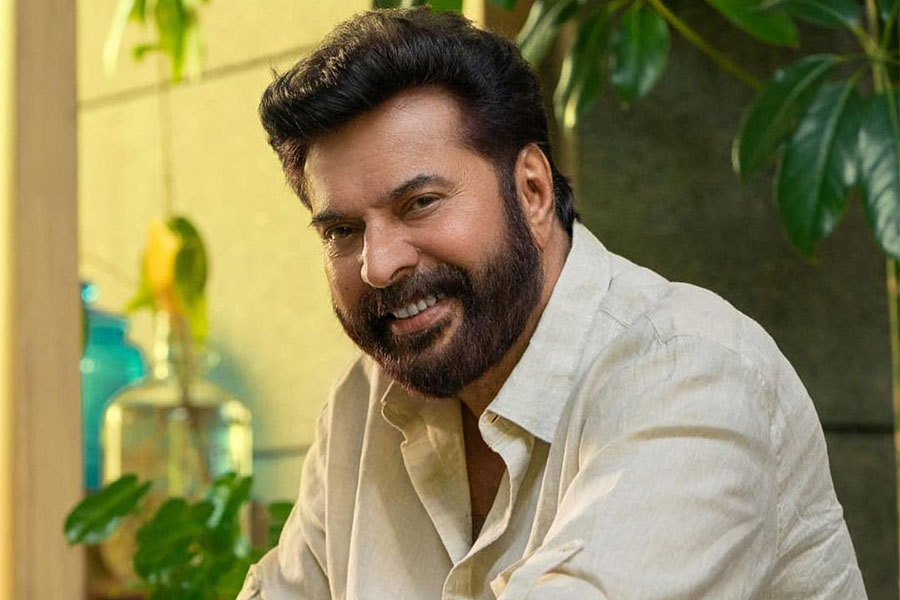
Fondly called ‘Mammukka’ by his fans and those close to him, the 74-year-old actor described the award as ‘unexpected’.
Malayalam superstar Mammootty, who was conferred the Padma Bhushan on Sunday, said he was “very happy” and that there was “nothing greater than the country honouring one”.
Fondly called ‘Mammukka’ by his fans and those close to him, the 74-year-old actor described the award as “unexpected” while speaking to a TV channel.
Wishes poured in on social media as news spread about the honour, which was conferred on Mammootty for his contributions to the field of art. “My friend Mammootty has now become Padma Bhushan Mammootty. Congratulations to my friend,” actor-politician Kamal Haasan wrote on X.
“Congratulations, Mammukka! And thank you for showing us how boundaries are broken, and challenges are taken up with a smile! You’re our pride and one of a kind,” actress Manju Warrier wrote in a Facebook post.
Later, at the Kerala State Film Awards ceremony, Mammootty was congratulated by Chief Minister Pinarayi Vijayan and Culture Minister Saji Cherian. In his address at the event, Vijayan said Mammootty had been honoured by the country with the Padma Bhushan.
“The Kerala cabinet is happy it could take part in this joyous development, as we have been recommending him for the award for the past several years. Everything has its time. Heartfelt congratulations to him. No one in the history of Indian cinema has performed such diverse characters as he has,” the Chief Minister said.
Mammootty has acted in over 400 films across languages including Malayalam, Tamil, Telugu, Kannada, Hindi and English, in a career spanning more than five decades.
He is a recipient of three National Awards, several state awards, and two honorary doctorates, apart from Padma Shri.
Mammootty made his film debut in 1971 with Anubhavangal Paalichakal. His most recent big-screen outing was Kalamkaval.
source: http://www.telegraphindia.com / The Telegraph Online / Home / by The Telegraph, Entertainment Web Desk / January 26th, 2026
Mangaluru, KARNATAKA / Kozhikode, KERALA / Dubai, U.A.E :
Shabana Faizal with her husband Faizal Kottikollon
New Delhi :
Mangalore-based Shabana Faizal has emerged as the youngest woman among India’s top 10 philanthropists, according to the EdelGive Hurun India Philanthropy List 2025.
She has donated ₹40 crore (approximately $1.5 billion) through the Faisal & Shabana Foundation to education, health, and social development.
Shabana Faisal’s journey from being raised in a small town in Mangalore to co-leading a global enterprise is about he hard work and ambition.
Her entrepreneurial journey began in 1995 as a retailer of unique, speciality and luxury products. After leading the company for eight successful years, she decided to team up with her husband, entrepreneur Faizal Kottikollon, and support him in running the world-class foundry, Emirates Techno Casting (ETC).
Shabana took charge of all human resources and administrative processes at ETC, where she created a significant impact in shaping the company’s business success.
In her role as Vice Chairperson of KEF Holdings, she is actively involved in guiding the business’s growth strategy across global markets. Deeply committed to social improvement, Shabana and her husband founded the Faizal & Shabana Foundation in 2007, with the vision of ‘Giving to Create Impact’.
At 53, Shabana’s work has placed her among some of the most influential women in India’s philanthropy world, including Rohini Nilekani, Kiran Mazumdar-Shaw and Bina Shah.
EdelGive Foundation, in collaboration with Hurun Research Institute, recently released the 12th edition of the EdelGive Hurun India Philanthropy List 2025.
The list honors India’s most generous individuals and families. Over the past three years, 191 philanthropists have donated a total of ₹10,380 crore, representing an 85% increase in contributions.
The education sector continues to lead as the top donor, receiving ₹4,166 crore from 107 donors.
Shabana is the mother of four children – Sophia, Sara, Zakaria, and Zarina – but continues to play an active role in business and philanthropy. Her work makes her one of India’s most influential female philanthropists, exemplifying how professional leadership and a commitment to giving can combine to create widespread social impact.
The EdelGive Hurun India Philanthropy List 2025 states that the top 25 donors contributed ₹50,000 crore in just five years, or an average of ₹46 crore per day. Mumbai leads in philanthropy, contributing 28% of total donations, followed by New Delhi and Bengaluru.
source: http://www.awazthevoice.in / Awaz, The Voice / Home / posted by Aasha Khosa / November 10th, 2025
In the Western view, Jihad is depicted within a framework of communal hostility and destruction, but in the documents of Malabar it is a word of interfaith harmony and peaceful coexistence, Abbas said.
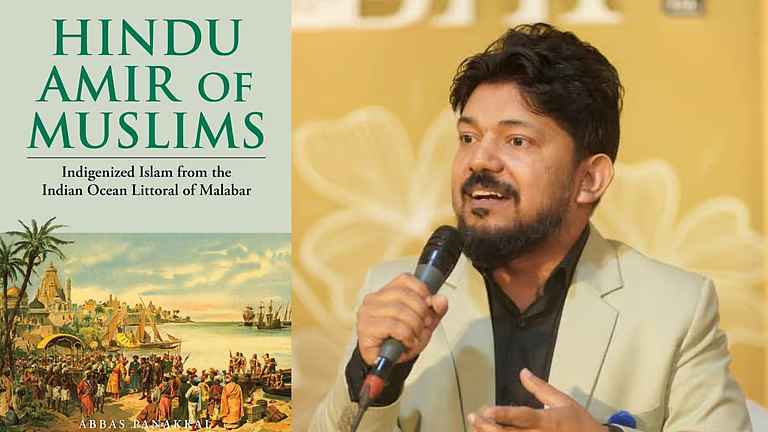
Author of the book ‘Hindu Amir of Muslims: Indigenised Islam from the Indian Ocean Littoral of Malabar’ Abbas Panakkal.Photo | Special Arrangement
Kozhikode :
Contradicting popular narratives put forth by extremist Islamic organisations and the West that portray Jihad as a violent aggression on non-Muslims to establish the supremacy of Islam, is a one originating in Kerala that describes the unified efforts of Muslims and non-Muslims to protect a Hindu king.
Historian Abbas Panakkal’s intriguingly titled book Hindu Amir of Muslims: Indigenised Islam from the Indian Ocean Littoral of Malabar counters the argument that a non-Muslim cannot be the Amir of Muslims, quoting the works of Islamic scholars such as Sheikh Zainuddin Makhdoom and Qazi Muhammad. Some Muslim organisations assert that a true believer should at least strive mentally to establish an Islamic rule, otherwise his/her Islam will remain incomplete.
Abbas argues that Islamic scholars around the sixteenth century had called for Jihad against the Portuguese when the intruders locked horns with the Zamorins. In the Western view, Jihad is depicted within a framework of communal hostility and destruction, but in the documents of Malabar it is a word of interfaith harmony and peaceful coexistence, Abbas said.
“Qazi Muhammad’s poem Fat’hul Mubin narrates an incident during the attack on Chaliyam fort, built by the Portuguese. Zamorin was the ruler and the Muslims had taken a vow to sacrifice their life in the fight for the king. On hearing this, the Hindus felt sad and said that Muslims should not let Muslims die as they are the minority. Finally, they decided to fight together,” Abbas said.
The Qazi conducted prayers for the king and requested all Muslims to pray for the non-Muslim sovereign. He criticised Muslim kings, who signed treaties with the Portuguese and supported their cruelties, the book says.
“Here, jihad was declared to support the local ruler, irrespective of his religion. It was not to crown a Muslim ruler or to turn a Darul Harb into a Darul Islam. Within the Kingdom of Zamorin the Jihad became a tool of accord and interreligious cohabitation,” the book says.
Abbas quotes an incident narrated in Fat’hul Mubin to show the camaraderie between Hindus and Muslims during the siege of the Chaliyam fort.
Zamorin’s mother wrote a letter to the Muslim leaders seeking their intervention and important warriors of the times including Kunjali Marakkar, Umar Anthabi and Abdul Azeez gathered at a mosque in Kozhikode along with the officials of Zamorin to discuss the war strategies.
Tufat al-Mujahidin by Sheikh Zainuddin Makhdoom II, written in the sixteenth century, narrates the privileges enjoyed by Muslims under the rule of Zamorin. Proper burial was given to the bodies of Muslim offenders as per the Islamic custom while the bodies of non-Muslim criminals were left to be consumed by wild animals, says the book.
“Non-Muslim rulers actively supported the construction of mosques and the organization of religious observances, and the state provided funding for the salaries of qazis (judges) and other religious officials, such as mu’addins (callers to prayer). In this pluralistic context, where Muslims enjoyed considerable freedom and leniency,” the book said.
source: http://www.newindianexpress.com / The New Indian Express / Home> Kerala / by MP Prashanth /August 06th, 2025
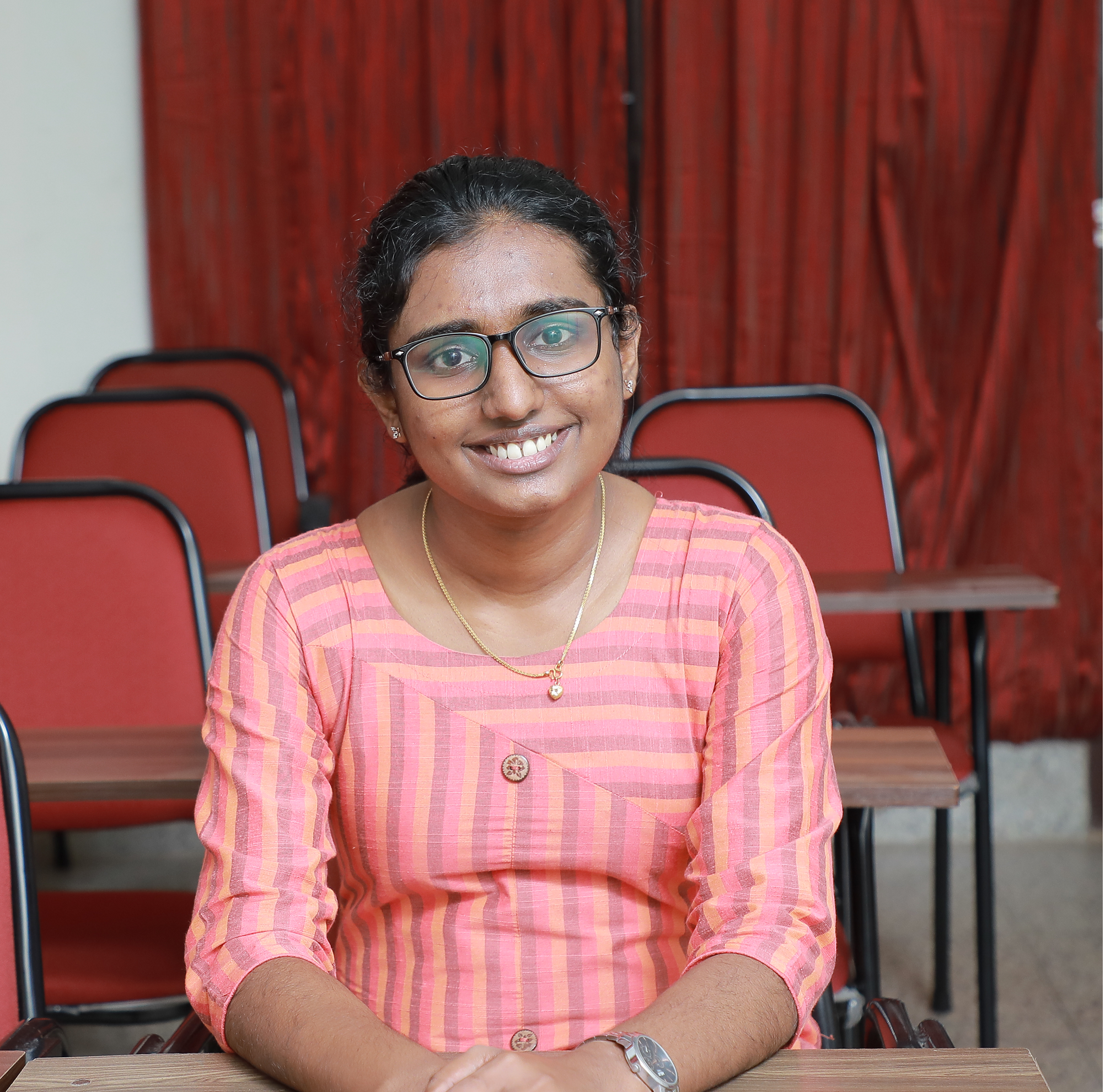
P Hiba, the Muslim girl from Manjeri in Malappuram district, who topped the 2015 Kerala Medical Entrance Examination, while dedicating her success to her late father said she wanted to become a doctor with social commitment.
“I want to be a good doctor with social commitment and will use the opportunity to serve the society”, Hiba said while talking to reporters after the results.
“If you are driven by stern decision towards something, you will get for sure,” she added.
As per the state medical entrance exam results declared Wednesday, P. Hiba of Malappuram scored 954.7826 and stood first in the list.
Hiba had not expected the rank. “I was confident that I could make it to a government medical college in the State,” she said, without hiding her surprise at winning the first rank.
Hiba completed her Class 12 last year with 98 per cent marks from the Manjeri GBHSS and worked hard for the entrance examination last year.
She had joined an entrance examination centre at Pala in the beginning but left it owing to home sickness. She then joined Bhabha Institute of Sciences at Manjeri which proved to be a key factor in her success.
Hiba is keen to join MBBS at the Government Medical College, Kozhikode. But she is waiting for the results of the All India Medical Entrance Examination. She would not be in two minds if she gets admission at All India Institute of Medical Sciences (AIIMS), New Delhi.
Hiba was followed by Marium Rafi from Aluva who stood second with 944.3478. The third rank went to Ajeesh Sabu from Kollam, who also scored 944.3478.
Mariam termed her victory as grace of Allah and help and support extended by the parents and sister. She told a local news website that she never expected such an achievement.
Mariam is also preparing for the All India Medical Entrance Examination and will join All India Institute of Medical Science (AIIMS) if she is blessed with a chance.
source: http://www.ummid.com / Ummid.com / Home> India / by ummid.com news network (headline edited) / May 22nd, 2015
The Indian Union Muslim League (IUML) formally opened its first national headquarters in Daryaganj, marking a major step in expanding its role in Indian politics. The five-storey building, named after party founder Qaid-e-Millat Mohammed Ismail Saheb, was inaugurated by National Affairs Committee Chairman Panakkad Syed Sadik Ali Shihab Thangal in the presence of MPs, MLAs, and leaders from across the country.
The IUML, founded in 1948, has until now confined its activities largely to Kerala and Tamil Nadu. In Kerala, it has played an influential role for decades, partnering with both Congress-led and Left-led coalitions. Its participation in government helped secure significant progress for Muslims in education, business, and social development.
To introduce itself in North India, IUML will hold a public meeting at Jawaharlal Nehru Stadium with senior leaders of the INDIA bloc, including Sonia Gandhi, Priyanka Gandhi, and Akhilesh Yadav. Senior advocate and MP Kapil Sibal will deliver a keynote address on “Election Fraud: Death of Democracy.”
IUML leaders said the party plans to engage OBC, Dalit, and minority communities while tackling the challenge of operating in a more polarized political environment. They stressed that the IUML is open to all communities and already has non-Muslims in leadership roles in Kerala.
Analysts believe the Delhi headquarters signals a long-term strategy to counter the influence of AIMIM and provide an alternative Muslim-led voice within the INDIA alliance framework. The move is expected to amplify IUML’s national presence and influence in the coming years.
source: http://www.radiancenews.com / Radiance News / Home> Latest News> Report / by Radiance News Bureau / August 24th, 2025
Among the change makers from Kerala are pioneers and achievers in various fields of life. They have either been trying to bring about changes in society or the fields of business. They have used music, literature, and sometimes love to bring humanity closer, to spread joy and peace.
The list includes social activists, singers, spiritual mentors, lawyers, teachers, and even IAS officers.
Ayisha Abdul Basith
Ayisha sings Naat or Islamic devotional songs, and at the age of 20, she has enthralled listeners in over 80 countries. Born in Kerala, Ayisha has migrated to Abu Dhabi, where she is pursuing spiritual music as a way to universal peace and joy, as she puts it.
Safna Nazruddin
She dreamt of becoming someone who could help the disadvantaged sections of society. Safna Nazruddin thought being an IAS officer would help her achieve that goal.
And she took her dream so seriously that at the age of 23, she became Kerala’s youngest Muslim IAS officer.
PC Musthafa
He wanted to pull his family out of their poverty. Growing up in rural Wayanad, watching his father toil in the fields as a farm labourer, he wanted to change his parents’ lives for the better.
When he completed his studies at IIM, he started small with his cousins in a 500 square feet room, selling 100 packets of idli batter to 30 shops in Bangalore.
Today, he is the king of idli batter supplying in more than 10 countries outside India and reigning over a 4000 crore business.
VP Suhara
VP Suhara has been fighting for changes in the Muslim personal law and is one of the petitioners appealing for equality of gender in the matter of succession rights.
She says she is not very optimistic, but she is not ready to give up her fight.
Kadeeja Mumtaz
Kadeeja is a novelist who won the Sahitya Academy award for her novel. But today she has taken to activism on a full-time basis, and her main preoccupation is with bringing different religious communities together to improve mutual understanding and communication.
Advocate Sukkur
Advocate Sukkur did the unthinkable when he remarried his legally wedded wife just to make a point to all his fellow Muslims.
He wanted to tell them that they can overcome the barriers to succession rights of their daughters by remarrying their spouses under the Special Marriages Act.
Noor Jaleela
Noor means light, and the luminous smile on Noor Jaleela’s face echoes her name. She was born without her four limbs. But her smile does not betray any such disability. She has been a model for courage and creativity in the worst circumstances.
She has been an influencer and also an artist, and a singer.
Padma Shri Mumtaz Ali
Mystic and spiritual mentor Padmashri Mumtaz Ali, or Sri M as his followers call him, hails from Thiruvananthapuram and heads a spiritual group called Satsang Foundation. His spiritual pursuits and his work among the people as a symbol of the oneness of humanity and the divine have made him transcend all man-made boundaries and divisions.
He has become an example of universal oneness and love as his life’s work and teachings appeal to people of different nationalities and religions. He asks them to continue following their religion while practising meditation and other spiritual pursuits to realise themselves.
Hadiya Hakeem
Can a football mean anything other than a game? Well, Hadiya Hakeem has turned a football into a statement for the empowerment of women.
She is a freestyle football performer born in Kozhikode who has overcome all possible barriers of gender, nationality, and religion through her talents and her hard work in excelling in a unique kind of performance.
Onampally Faisy
Progressive scholar and Sanskrit enthusiast Onampally Faisy has tried to transcend boundaries by promoting interfaith education in his madrassa. A well-known scholar from Thrissur in Kerala, he has been working towards building bridges of understanding and communication between Muslims and other communities in Kerala.
Since he believes in becoming the change he wants, he started teaching holy texts of other religions in his madrassas in order to remove the veil of ignorance and bring communities closer.
source: http://www.awazthevoice.in / Awaz, The Voice / Home> The Changemakers / by Sreelatha Manon / August 17th, 2025
Valanchery Munnakkal (Malappuram District), KERALA /Aligarh, UTTAR PRADESH :
Dr Munawar Hanih, an ICSSR post-doctoral researcher under the mentorship of Professor T.N. Satheesan, Dean, Faculty of Arts, Aligarh Muslim University, has been selected for the 2023 Mahakavi Moinkutty Vaidyar Mappila Kala Akademi Literary Award
Aligarh:
Dr Munawar Hanih, an ICSSR post-doctoral researcher under the mentorship of Professor T.N. Satheesan, Dean, Faculty of Arts, Aligarh Muslim University, has been selected for the 2023 Mahakavi Moinkutty Vaidyar Mappila Kala Akademi Literary Award, instituted by the Mahakavi Moinkutty Vaidyar Smarakam under the Department of Culture, Government of Kerala.
He is being honoured for his scholarly work Malayala Sufi Kavitha, a significant contribution to the study of Mappila literature and arts.
The award will be presented at a ceremony in September 2025.
Dr Hanih holds an MA and PhD in Malayalam from AMU’s Department of Modern Indian Languages and has served as Assistant Professor of Malayalam at Sir Syed College, Taliparamba, Kerala.
source: http://www.radiancenews.com / Radiance News / Home> Pride of the Nation> Awards / by Radiance News Bureau / August 14th, 2025
Let us not forget him in a hurry. Let us not reduce him to a paragraph in history books. Instead, let us pass on his memory like a worn volume of Pavangal, read and reread, loved and lived, whispered from one generation to the next.
Vakkom Majeed (1909-2000). Photo: From KM Seethi’s archive.
Vakkom Majeed passed away on July 10, 2000.
“He never went out without a book under his arm, and he often came back with two.”
— Victor Hugo, Les Misérables
In the long and rolling corridors of memory, some lives stay like verses, opening out slowly, sentence by sentence, chapter by chapter, never quite closing. Vakkom Majeed’s was one such life. A life commemorated not only by its fearless engagement with history, but by its quiet, intense companionship with books. On the 25th anniversary of his passing, as we also mark the 100th year of Pavangal, the Malayalam translation of Victor Hugo’s Les Miserables , it feels almost providential to recall him through the pages he so often inhabited.
Majeed Sahib, as many called him with reverence, moved with a book always kept under his arm, a bulwark against ignorance, a lamp in times of doubt. And among the many volumes he read and reread, Pavangal held a sacred space. Nalapat Narayana Menon’s 1925 translation of Hugo’s masterpiece was more than literature to him. It was revelation. He had devoured the original edition in his youth, and its characters never left him – Valjean’s anguish, Javert’s moral rigidity, the revolt in the streets of Paris, the quiet dignity of suffering souls. When he spoke of Pavangal, it was with a fervour one reserves for scripture. He did not read the novel, rather he lived it.
A.P. Udayabhanu, a veteran freedom fighter of Kerala, once described Majeed as a “moving encyclopaedia with at least one book in his hands.” But Majeed Sahib was more than a repository of knowledge. He was a seeker, a provocateur of conscience, a gentle fire that never flickered out. I have the sweetest of memories of my time spent with him, from childhood itself, I remember the rhythm of his voice as he discussed Bertrand Russell’s three-volume autobiography, Churchill’s sprawling accounts of World War II, or the 10-volume correspondence of Sardar Patel. There was never a trace of vanity in his learning. He read not to impress but to illuminate. And when he shared his readings – Azad’s Tarjuman al-Qur’an, Muhammad Asad’s Road to Mecca, M. N. Roy’s The Historical Role of Islam, Arthur Koestler’s The Yogi and the Commissar, or Hugo’s Pavangal, like many – he spoke with the urgency of a man who felt truth must never be hoarded.
Born on December 20, 1909, in the storied Poonthran Vilakom family of Vakkom near Chirayinkil (Travancore), S. Abdul Majeed inherited a legacy of reform and resistance. His uncle, Vakkom Abdul Khader Moulavi, had already lit the flame of renaissance among Kerala Muslims. From his schooldays at St. Joseph’s High School, Anjengo, young Majeed was pulled into the vortex of reform movements and the call of the Indian freedom struggle. By the time the Quit India movement broke out, he was already a marked figure in Travancore, arrested, jailed, and later jailed again for resisting the plan of “Independent Travancore.”
But what set him apart – what made him more than just another freedom fighter – was the deep moral imagination that animated his politics. His understanding of rebellion was not ideological. It was profoundly ethical. Like Victor Hugo, he believed that human dignity must stand unshackled before the majesty of any state or creed. He condemned the ‘two-nation theory’ not because it was politically inconvenient but because it was morally vacuous. To him, the soul of India was plural, secular, and indivisible.
In 1948, he was elected unopposed to the Travancore-Cochin State Assembly from Attingal. But when his term ended in 1952, he walked away from practical politics, choosing instead the solitary path of reading, reflection, and moral clarity. While others sought power, Majeed Sahib sought wisdom. And in doing so, he became more relevant with age. Over the next decades, he would immerse himself in the philosophical and historical writings of Bertrand Russell, the radical humanism of M. N. Roy, and the emancipatory visions of Narayana Guru. He called for a “return of Ijtihad”, a freedom of thought within Islamic traditions, and dreamed of a society beyond caste and creed.
He never became rigid in doctrine. His politics was never a fixed ideology, but a conversation between ideas and reality. In our many conversations, I recall his thoughtful analysis of the Malabar Rebellion. He agreed with the thesis that it was fundamentally a revolt born of agrarian injustice but he was deeply saddened by its later communal turn. For him, the tragedy of history was when righteous anger was manipulated into sectarian hatred.
And always, there was a book in his hand. Always, a passage to quote. Always, a memory to share.
The last three decades of his life were his most contemplative. He reread the classics, interrogated nationalist histories, and engaged with young minds who came to him for guidance. To them, he gave not slogans but questions. When he spoke of Jean Valjean’s redemption, it was a commentary on our prison system. When he discussed Javert’s suicide, it became a parable about the dangers of legalism without compassion. When he recalled Fantine’s fall, it was a scathing critique of social hypocrisy.
He never forgot the moment when he visited the Indian National Army hero Vakkom Khader in the Madras Central Jail. It was Majeed Sahib who brought back Khader’s last letter to his father before his hanging, a task that broke his heart and steeled his resolve.
In 1972, when the nation celebrated the silver jubilee of independence, Majeed was awarded the Tamrapatra by Prime Minister Indira Gandhi. Later he was deeply perturbed by the excesses of Emergency.
There was no trace of ceremony in his life. No pursuit of fame or favours. He lived in quiet dignity, read in solitude, and died in obscurity, on July 10, 2000. He left behind not an estate, not a political dynasty, but an idea of what it means to live ethically, read deeply, and act justly.
Today, as we remember him, the centenary of Pavangal seems to carry the tenor of prophecy. One hundred years since Jean Valjean entered Malayalam letters, and twenty-five since Vakkom Majeed left this world, the two seem braided, one fictional, one real, both intensely human. Majeed Sahib was Kerala’s own Valjean: hunted by regimes, misunderstood by many, but ultimately redeemed by the fire of truth and the grace of humility.
Let us not forget him in a hurry. Let us not reduce him to a paragraph in history books. Instead, let us pass on his memory like a worn volume of Pavangal, read and reread, loved and lived, whispered from one generation to the next.
For in remembering Vakkom Majeed, we remember the best of what we once hoped to be.
K.M. Seethi is director, Inter University Centre for Social Science Research and Extension (IUCSSRE), Mahatma Gandhi University (MGU), Kerala, India. Seethi also served as Senior Professor of International Relations, Dean of Social Sciences at MGU and ICSSR Senior Fellow.
source: http://www.thewire.in / The Wire / Home> History / by K.M. Seethi / July 11th, 2025
Pallikkere (Kasargod District) / Kozhikode, KERALA / Dubai, U.A.E :
Kozhikode:
PA Ibrahim Haji, one of the most prominent businessmen, educational entrepreneurs, and philanthropists of India and the Middle East, passed away on Tuesday in Kozhikode aged 78.
According to the reports, Ibrahim Haji was first hospitalized on December 11 in Dubai Healthcare City on December 11 after he suffered a major cardiac arrest. He was later shifted to MIMS Hospital in Kozhikode on December 20. He breathed his last on Tuesday afternoon at the hospital.
Ibrahim Haji was the founder vice-chairman of Malabar Gold and Diamonds. He also served as the director of Chandrika newspaper, vice-chairman of Indus Motors, and founder chairman of PACE Group of Institutions.
Born in Pallikkara in Kasaragod district on September 6, 1943, Ibrahim Haji migrated to the Gulf in 1966 where he set up the successful textile, garment, and jewelry businesses. He ventured into the education sector with the launch of Pace Group of Institutions in 1999. At present, 20,000 students from 25 countries pursue many courses in various PACE institutions in India, United Arab Emirates, and Kuwait. In Kerala, the group owns RIMS International School in Kannur, PACE Residential School, and Blossom Public School, both in Manjeri. The group also owns the PA College of Engineering, PA College of Pharmacy, PA Institute of Physiotherapy, PA Polytechnic, and PA First Grade College in Mangaluru in Karnataka.
His mortal remains will be kept for public viewing at his house in Kuttikkattoor in Kozhikode till 3 pm.
Burial will take place at Vettekkad Juma Masjid in Manjeri after 4pm.
source: http://www.english.varthabharati.in / Vartha Bharati / Home> Karavali / by Vartha Bharati / December 12th, 2021
Riding a strong anti-incumbency wave, Congress candidate Aryadan Shoukath emerged triumphant in Kerala’s Nilambur by-election, securing 77,737 votes and defeating CPI(M)’s M. Swaraj by a margin of 11,077 votes in a closely fought contest.
Nilambur’s former MLA, P.V. Anvar, the whistleblower who exposed the alleged corruption of the Left Front government and whose resignation in January triggered this by-election, garnered 19,760 votes, while CPI(M)’s M. Swaraj secured 66,660 votes.
BJP candidate Mohan George finished fourth, trailing behind the Congress, CPI(M), and P.V. Anvar, with 8,648 votes.
The constituency, which falls within the Wayanad Lok Sabha seat represented by Congress’s Priyanka Gandhi, had 10 candidates registered, with 75.87 per cent polling.
Aryadan Shoukath continued to hold a steady lead over his main rival, CPI(M) candidate M. Swaraj, even in areas traditionally considered LDF strongholds.
With this victory, Shoukath, the son of late Congress veteran Aryadan Muhammed—who represented Nilambur from 1987 to 2016—has not only reclaimed Nilambur for the Congress but also secured its first by-election gain from the LDF since 2021, breaking a streak in which it had only managed to retain its sitting seats.
The election, which Kerala Opposition Leader V.D. Satheesan described as the “semifinal to the coming Kerala Legislative Assembly election,” is seen as crucial as it reflected public sentiment on the nine-year rule of the Pinarayi Vijayan-led LDF government.
A loss in the by-election would have dealt a blow to Satheesan, who had firmly rejected Anvar’s bid to align himself with the UDF in Nilambur.
However, by securing around 19,000 votes, P.V. Anvar showcased his continuing influence in Nilambur, a constituency he had represented since 2016 as a CPI(M)-backed Independent.
His performance highlighted his stronghold in the region and even prompted KPCC president Sunny Joseph to remark, “The UDF has not shut its doors on P.V. Anvar.” In many ways, Anvar’s candidacy split the anti-LDF votes, some of which might otherwise have gone to the Congress.
The bypoll outcome is crucial for both the ruling CPI(M)-led LDF government and the Congress-led Opposition UDF, as Kerala heads towards Assembly elections in April–May 2026. The Congress’s victory in the by-election serves as a major boost to its efforts to end the Pinarayi Vijayan regime, which is aiming for a third consecutive term.
source: http://www.maktoobmedia.com / Maktoob Media / Home> India> South India / by Maktoob Staff / June 23rd, 2025