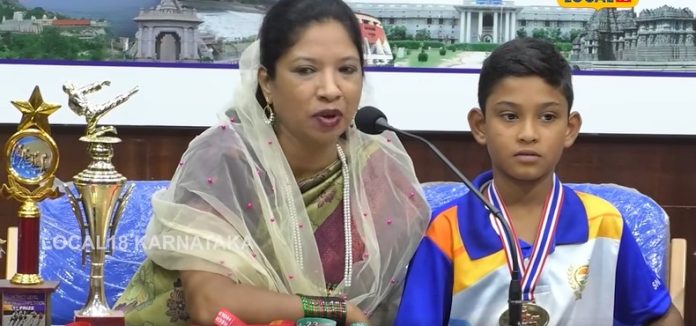
Nine‑year‑old Sayyad Sarfaraz Ahmad, hailing from Mandya in Karnataka, clinched the gold medal in the kickboxing category at the 7th International Thai Martial Arts Games, held in Bangkok, Thailand from May 18–22, 2025. His remarkable victory has brought immense pride to his hometown, reported News18.
The young fighter, son of Muhammad Makki and Sheeba, took up kickboxing at the age of three. Trained at Oshukai Martial Arts Academy, he also trained in skating. Sarfaraz has amassed over 60 medals in district, state, and national competitions—more than 35 in skating and over 25 in kickboxing. His recent international gold highlights his extraordinary dedication and rising talent.
At the Bangkok event, Sarfaraz outperformed competitors in his age group with exceptional skill and composure. His win not only brought honor to India but also earned heartfelt gratitude from him toward his family and coaches.
Mandya’s community celebrated the achievement, calling it a source of inspiration for the region’s youth. With discipline, commitment, and flair at such a young age, Sarfaraz aspires to one day compete in major events like the Olympics.
source: http://www.radiancenews.com / Radiance News / Home> Latest News> Report / by Radiance News Bureau / June 14th, 2025
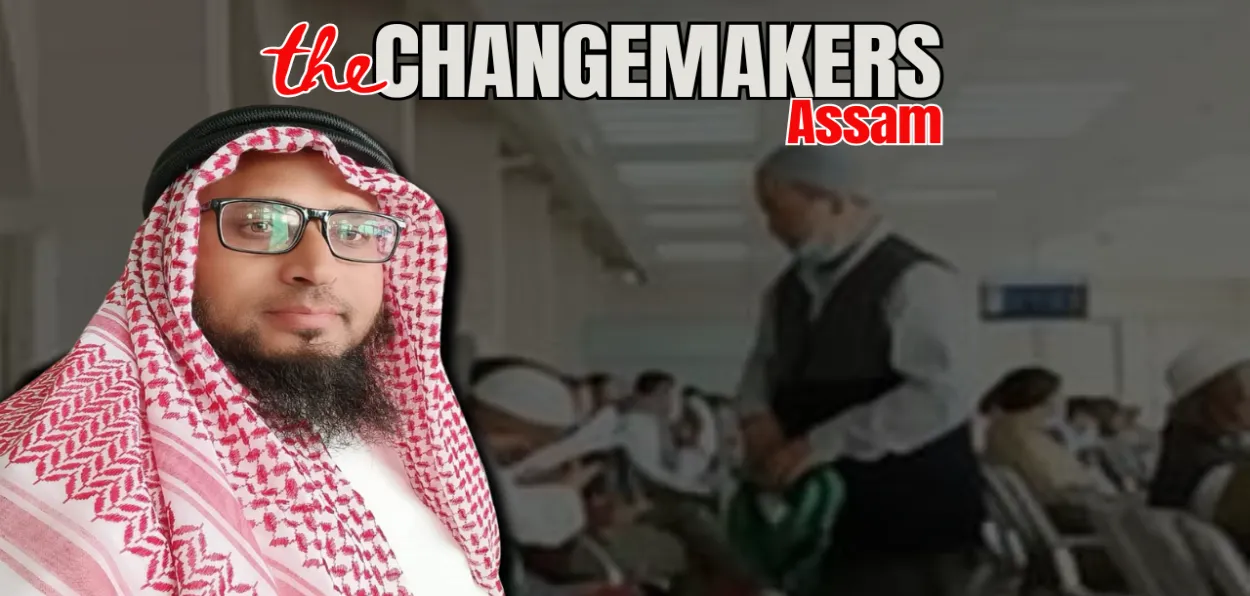
Unlike the majority of Muslim youths from Assam who pass out from Darul Uloom Deoband, an Islamic university and seminary in Uttar Pradesh, who often end up joining mosques, madrassas, and other institutions to teach the holy Quran and other Islamic practices, Maulana Nurul Amin Qasimi choose a different path.
He launched a mission to remove misconceptions about Islam and the Muslim community. He has been preaching Islam in the right form with exceptional and innovative thoughts across Assam.
Many videos of Maulana Nurul Amin Qasimi have already received widespread attention on social media. In these videos, Maulavi is seen explaining the importance of education to the Muslims, the essence of Islam, and translating various verses of the Quran into local Assamese languages for easy understanding of the people.
He has been rendering his inspiring speeches at mosques, Edgars, madrassas, public functions, and other influential platforms.
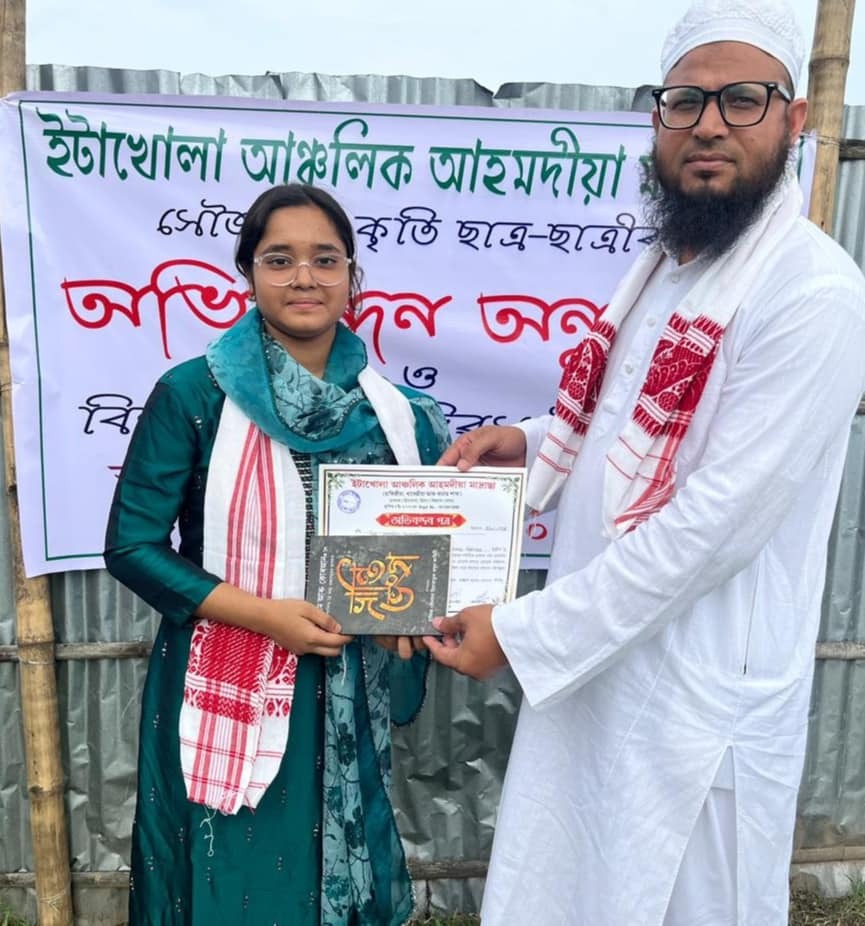
Maulana Nurul Amin Qasimi during a social campaign
Maulana Nurul Amin Qasimi has recently published the Assamese interpretation and translation of the Holy Quran for Assamese readers. He has also launched the Assamese translation of the Holy Quran in audio format with his voice-over as many people do not read books nowadays due to lack of time.
He has also founded the Islamic Research and Study Center in central Assam’s Tezpur town with a few young men who had received Islamic education with progressive thoughts for society.
Maulana Nurul Amin Qasimi received his primary education from Sootea Higher Secondary School in central Assam’s Sonitpur district and then enrolled himself in Khutaktia Dini Alia Madrasa in Lakhimpur district for Islamic education. After studying there for six years, he enrolled in HojaiJalalia Madrassa. He passed his high school leaving certificate examination or Class 10 final exam in general education while studying at a madrassa in Jalalia Madrasa in Hojai.
After four years of study, he received the rest of his Islamic education at Darul Uloom Deoband Madrasa in Uttar Pradesh. After completing his Islamic education, he started teaching at Markazul Ma-Arif in central Assam’s Hojai district.
While teaching, Qasimi successfully passed his higher secondary examination or Class 12 final exam in general education. He then graduated from Ruphi College and obtained his postgraduate degree from Gauhati University. He is now studying for his PhD at Gauhati University.
In an interview with Awaz-The Voice, Maulana Nurul Amin Qasimi said: “We are Assamese Muslims and we live as Assamese Muslims. There is sometimes confusion about Islam and it is because of some Muslim people that others develop misunderstandings about Islam. Some followers of Islam misinterpret the religion because of their lack of knowledge.
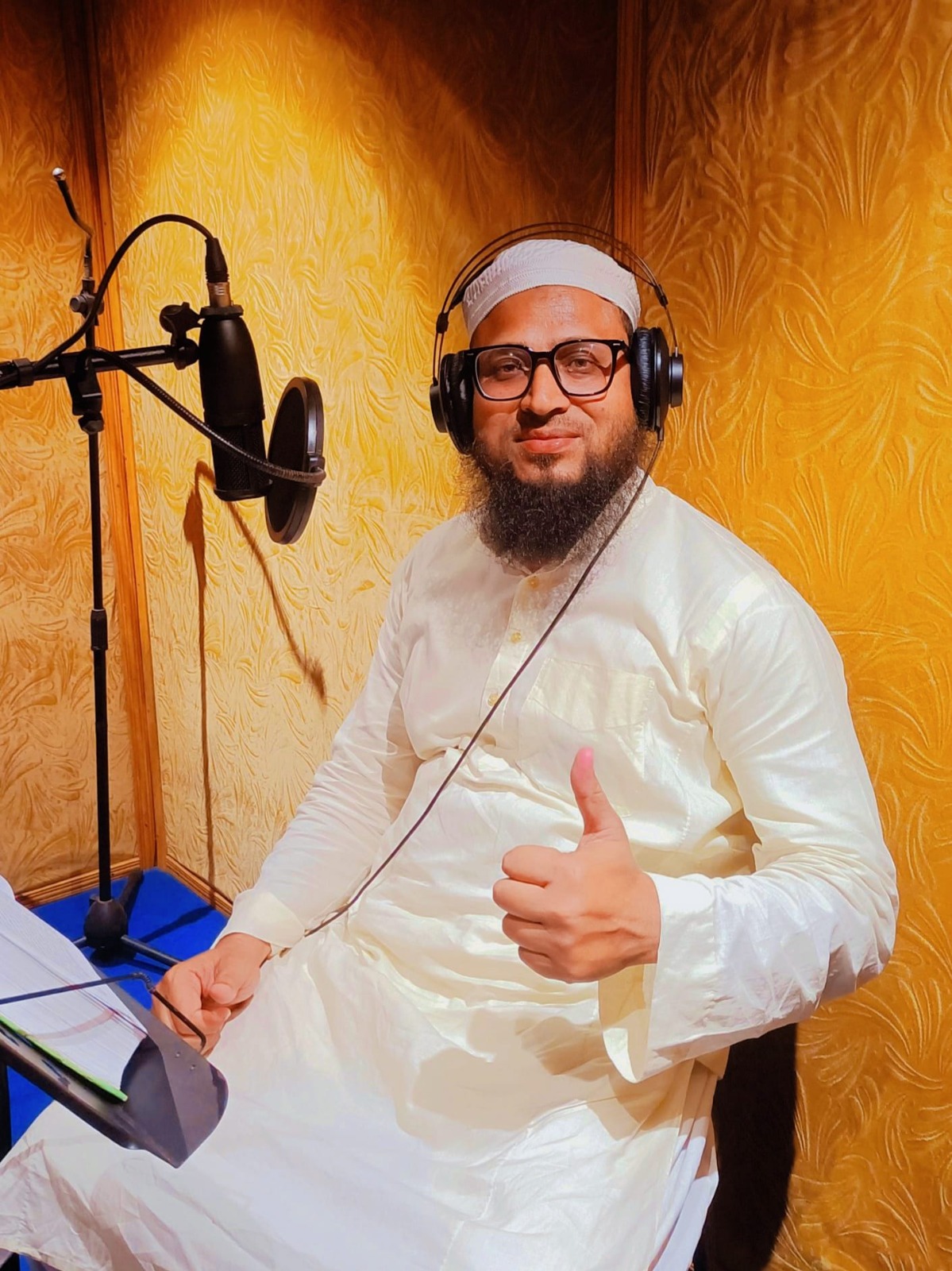
Maulana Nurul Amin Qasmi recording Holy Quran in Assamese
“I felt the need to enlighten people about the Holy Quran and the true words of Prophet Mohammad. We must present Islam in its true form in our local language. That is why I am making this effort. The Holy Books are in Arabic so it is our responsibility to explain it to everyone in our language.”
When Muslims congregate for the mandatory Jumma Namaz (Friday prayers), the Imam (head priest) gives a sermon called khutbah. He speaks about the principles of Islam, one’s duty towards society, the call for good deeds, respect for other religions, etc. Since the khutbah is rendered in the Arabic language in many mosques, it is difficult for the locals to understand the true meaning of these verses.
“I thought that if the messages of peace, humanity, or statements in khutbah were explained in the simple local language that people could understand, they would benefit and the misconceptions about Islam removed. There are ideological differences over reciting khutbah in Arabic. Some say that it should be explained in the mother tongue. But, according to our Islamic law, since the tradition of reciting the khutbah in Arabic has been going on since the time of the Prophet, it has not changed in some places,” the imam said.
Maulana Nurul Amin Qasimi said it’s important to learn modern general education along with Islamic education. “Muslim society is quite backward in education. In Muslim society, Maulanas or Ulemas are respected and considered religious leaders. So, if Ulemas advise on education, I think everyone will follow them and derive benefits. Our religious leaders have a lot to do in this regard. These matters get less importance in religious congregations. It is compulsory to take the basic education of Islam, but we should also be educated to be good citizens and individuals ready for the future,” he said.
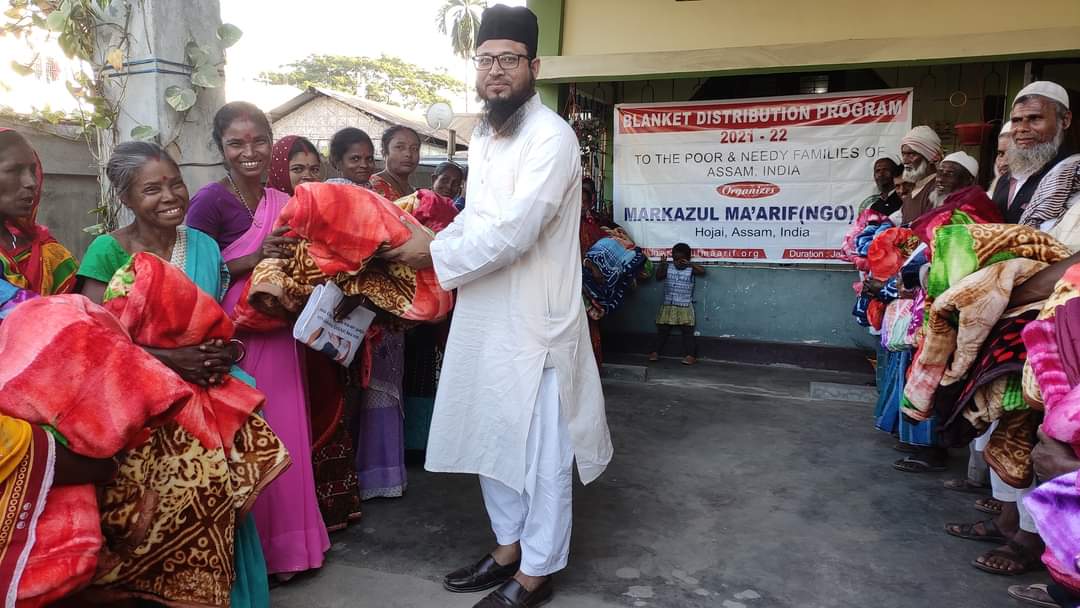
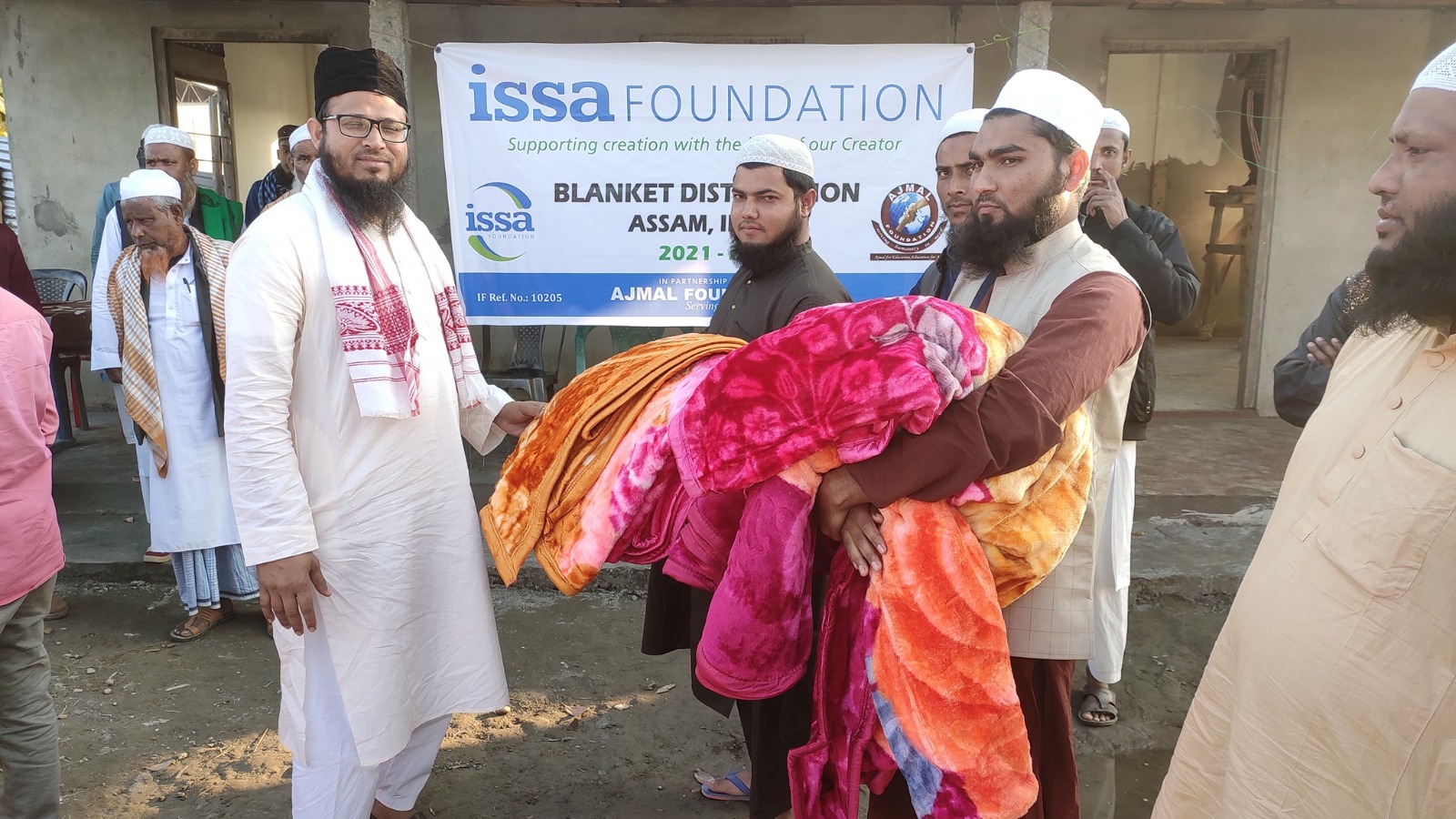
Maulana Nurul Amin Qasimi Distributing blankets
Maulana Nurul Amin Qasimi has been consistently speaking along the same lines in all the religious gatherings he is invited to. “Our Prophet Mohammad commanded us to go up to China for education. The first word of the Holy Quran is Ikra (read). Since our Prophet has allowed us to go to China for education, but, there is no scope for Islamic education in China. So our Prophet has, at the same time, laid special emphasis on IT and modern education besides Islamic education. Now only 4% of Muslim children study in madrassa.
“Not all Muslim children study in madrassa and not all need to study. The 4% must become Maulanas or Hafizs because they will have to uphold the religion in the future. We must educate the remaining 96% of the students’ modern education and establish them as good members of society,” he said.
Apart from the children studying in madrassas or receiving modern education, the Maulana said it is also necessary to think about school dropouts. He said the Muslim community could be rescued from its present condition only through education.
source: http://www.awazthevoice.in / Awaz, The Voice / Home> Stories / by Daulat Rahman, Guwahati / June 15th, 2025
Syeda Zainab Hussain and her aunt, Syeda Sadiya, of Nuh district in Haryana, have cleared the medical college entrance examination, the NEET 2025, and brought joy and pride to their families and the region, which is among the most backward areas of the country, as declared by NITI Aayog.
These young women’s achievements are all the more historic since they come from the Alvi community – a marginalized group of Muslims. From a lack of land ownership, education, and women’s empowerment, the Alvi community is among the most marginalized communities in Mewat.
Syeda Zainab Hussain has set a record by scoring 551 marks in NEET 2025. She has become the first woman from the Alvi community to clear this coveted examination.
It is often observed that girls in this community are not permitted to pursue education beyond primary level, but Zainab broke this notion, proving all naysayers wrong and becoming a change-maker.
Interestingly, Zainab cracked the exams in the third attempt.
Zainab’s aunt (mother’s sister), Syeda Sadia, scored 536 marks in NEET 2025, proving that this achievement is not just a coincidence, but the beginning of a social change.
Zainab’s father Zakir Hussain is an Assistant Sub-Inspector in Haryana Police and posted in the Security Branch of SP Office Nuh.
The family hails from Kamenda village (Ferozepur Jhirka).
Zainab’s grandfather, the late Jameel Ahmed, was a head guard in the State Bank of India. Raised in such a middle-class family, Zainab’s success in a competitive field like medical examination has become not just a personal victory, but a source of inspiration for girls of her community.
Zakir Hussain says “Zainab has been brilliant in studies from the beginning. Despite failing twice, she did not give up. She learned from every failure and moved forward and this time she passed NEET with good marks and proved that if you have passion, you will get success.”
Similarly, Syeda Sadia also comes from a family of modest means. Her father Haji Israel, who retired in 2016 from the post of driver in Mewat Civil Surgeon Office, left no stone unturned in providing good education to all his daughters.
According to Zakir Hussain, even though his wife is only a matriculation pass, all his sisters are doing MA, double MA and one of his brothers is doing MBBS.
Prominent members of the Alvi community such as District Councilor Sabir Hussain, Jakam Alvi, Ghulam Nabi Azad, Syed Zakir Hussain, and Master Nazim Hussain visited the house of Zainab and Sadia and congratulated them and their families.
Former President of Nuh Bar Association Tahir Hussain Rupdia told media persons after visiting the homes of the two women, “By clearing the NEET examination, they have opened a new path for other girls of the society. This will become an example which will work like a mission in the times to come.”
He also said “In an area like Mewat, where there is a huge shortage of female doctors, when our own daughters become doctors, they will not only treat the women here better, but will also change the thinking of the society. “
Social scientists say Zainab and Sadia’s achievement will boost the education of women in the entire Mewat region, a Muslim-dominated area in Rajasthan.
source: http://www.awazthevoice.in / Awaz, The Voice / Home> Stories / by Yunus Ali / Nuh (Haryana) / June 16th, 2025
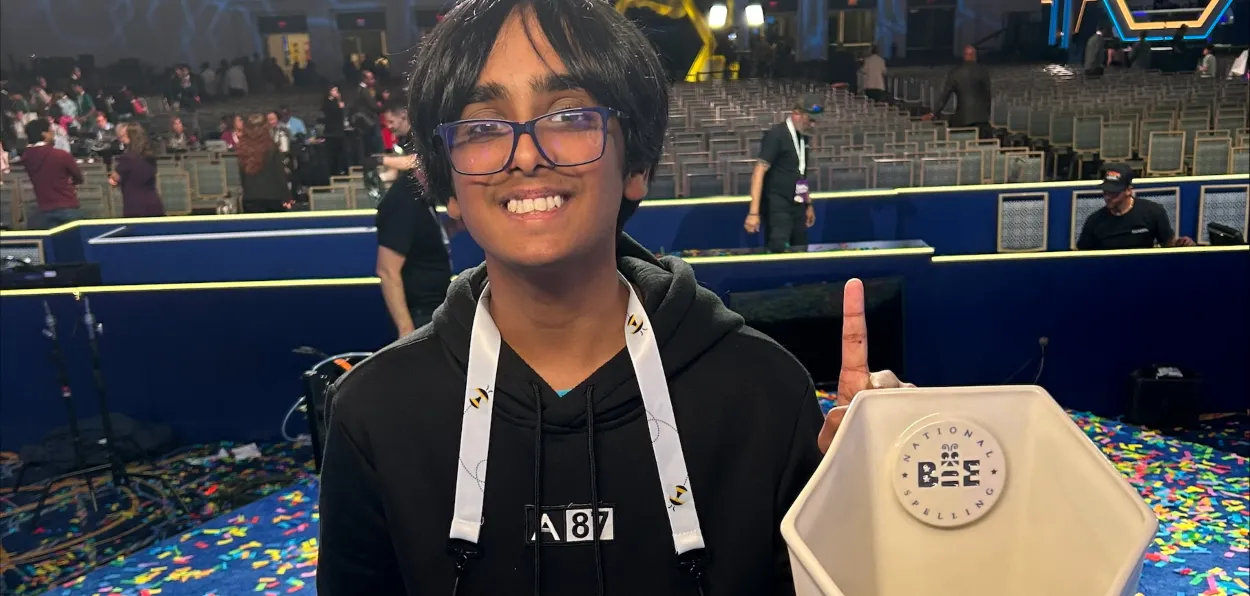
Faizan Zaki, Winner of the won the 2025 Scripps National Spelling Bee competition, USA
New Delhi
Indians continue to dominate the spelling competitions in the USA, as the 13-year-old Non-Resident Indian with roots in Hyderabad Faizan Zaki won the 2025 Scripps National Spelling Bee competition in the USA.
Faizan Zaki lives in Dalla, Texas, and was the runner-up in the competition last year.
Faizan made it among 243 who made it to the national contest in Maryland on the Bee’s
Faizan won a prize of US$ 50,000 (about Rs 42.78 lakh) by spelling the difficult French word ‘ Éclaircissement’ in the final round.
With three spellers left on the Bee, Sarvdanya Kadam, and Sarv Dharavane kept getting their words wrong, leaving Faizan two words away from victory. The first was “Commelina”, but instead of asking the usual questions—definition, native language—to ensure he knew it, Faizan let his showman instincts take over.
“K-a-m,” he said, then stopped himself. “Okay, let me do this. Oh, shoot!”
“Just ring the bell,” he told Chief Justice Mary Brooks, who did so.
“So now you know what happens,” Brooks said, and the other two spellers returned to the stage.
Afterward, standing next to the trophy with confetti at his feet, Faizan said: “I’m definitely going to have nightmares about this tonight.”
Even the pronouncer Jacques Bailly tried to slow Faizan down before his winning word “éclairsissement,” but Faizan didn’t ask a single question before spelling it correctly, and after saying the last letter he pumped his fists and fell to the stage.
Faizan’s winning moment was captured in the pictures posted on X:
This year the bee celebrates its 100th anniversary, and Faizan may be the first champion to be remembered more for getting the word wrong than getting the word right.
“I think he cared too much about his aura,” said Faizan’s friend Bruhat Soma, who beat him in a “spell-off” tiebreaker last year.
Faizan had a more nuanced explanation: after not preparing for the spell-off last year, he over-improvised by focusing on speed during his study sessions.
Although Bruhat was fast when needed last year, he followed the familiar playbook for champion spellers: asking thorough questions, spelling slowly and metronomically, and showing little emotion.
Faizan’s father, Zaki Anwar, said: “He’s the best. I really believe that. He’s really good, man. He’s been doing this for so long and he knows the dictionary.”
After a little drama at last year’s contest before suddenly going into a spell-off, Scripps changed the rules of the contest, giving the judges more leeway to finish the contest before going into a tie-breaker.
This is Faizan’s winning spelling:
Faizan Zaki, previous runner-up, wins 2025 Scripps National Spelling Bee
source: youtube.com/ Scripps News
The nine finalists performed well. During one stretch, six spellers got 28 words correct in a row and there were three perfect rounds during the finals. The last time a single perfect round occurred was in the infamous 2019 competition, which ended in an eight-way tie. Sarv, an 11-year-old fifth-grader from Dunwoody, Georgia, who ultimately finished third, would have been the youngest champion since Nihar Janga in 2016. He has three years of eligibility remaining.
Like Faizan, who parents came from Hyderabad, Telangana, 30 of the past 36 champions are Indian Americans, a streak that began with Nupur Lala’s win in 1999, which was later featured in the documentary Spellbound.
Lala was one of dozens of past champions who attended this year and signed autographs for spellers, families, and bee fans to honor the anniversary.
Adding the $25,000 prize for second place to the winner’s $52,500 purse, Faizan raised his bee earnings to $77,500. What did he spend the most on with his winnings last year? A $1,500 Rubik’s Cube with 21 squares on each side. This time around, he said he’ll donate a larger portion of his winnings to charity.
Faizan has been spelling for more than half his life. He took part in the 2019 competition at age 7, gaining entry through a wild-card program that has now been discontinued. He qualified again in 2023 and made it to the semifinals before finishing second last year.
“One thing that sets him apart is that he’s really passionate about it. In his spare time, when he’s not studying for the bee, he’s really looking up old, outdated words that are unlikely to be asked for,” Bruhat said.
source: http://www.awazthevoice.in / Awaz, The Voice / Home> Stories / by Aasha Khosa / May 31st, 2025
Hafiz Saffan Delhiwala, from Taj Manzil, Raj Talkies Road in Tonk, has made his city proud. He scored an outstanding 97 percentile in NEET 2025. Son of Asma Khan and Sarfaraz Delhiwala, Saffan will be the first doctor in both his maternal and paternal families. His success reflects his hard work and the power of combining religious and modern education.
Saffan’s journey is inspiring. His parents deeply valued Islamic education. In class 7, they pulled him out of school. He then joined a madrassa to memorize the Quran. For three years, he focused on Hifz. During this time, his mother continued his school studies at home. This helped him stay in touch with academics.
After three years, Saffan completed his Hifz. He rejoined school a year behind his classmates. But he didn’t give up.
Saffan says Hifz improved his mind. “I lost one year, but memorizing the Quran sharpened my brain,” he said. It helped him with memory and understanding. These skills helped him crack NEET. He believes the focus and discipline from Hifz were key to his success.
Asma Khan said their decision was bold and risky. But her husband, Sarfaraz, fully supported it. “We wanted Saffan to get both Islamic and modern education,” she said. “It was tough, but Sarfaraz’s support and Saffan’s effort made it happen.”
Sarfaraz praised his son’s teachers. He said their role was vital — from school to madrassa to coaching. “We are grateful to all his teachers,” he said.
Saffan’s grandparents, Saifuddin Delhiwala and Razia Saif, were filled with pride. “He is the first doctor in the family,” they said. “We hope he will serve the poor and be ready to help those in need.”
Tonk is celebrating Saffan’s success. He belongs to the well-known Taj family. He is the grandson of famed photographer Ahsan Rashid Khan and social worker Najma Ahsan. He is also the nephew of social worker Mohsin Rashid Tonk. His result has made the entire community proud.
Hafiz Saffan’s story is a model for youth. He shows that one can balance deen and duniya. His effort, family support, and good teachers helped him succeed. Scoring 97 percentile in NEET 2025, he achieved his dream. His city and family are proud of him. People in Tonk believe he will become a devoted doctor and continue to inspire others.
source: http://www.radiancenews.com / Radiance News / Home> Latest News / by Radiance News Bureau / June 15th, 2025
Kodangallur, KERALA / Fulat(Phulat)Village (Muzaffarnagar District), UTTAR PRADESH :
Recently, I had the opportunity to visit Vision International Academy (VIA), situated in the village of Fullat in Muzaffarnagar district, Uttar Pradesh. It was a journey I had long awaited. Spending time with the children there—even briefly—was a moving experience. Before me sat over 300 Huffaz—young children who had committed the Qur’an to memory. But the academy is not merely a Hifz institution. As the name “Vision” suggests, it embodies a deeper insight into human potential, blending spiritual excellence with academic brilliance.
Mammooty Anjukunnu
That evening, while returning to Darul Uloom Deoband, I received a call from Babukka. He sounded emotional. He had called to express his joy—not just about my visit to Vision or meeting the students—but about something much greater. Because what I had visited was not just another educational center. It was a mission. A dream. And behind it stood the journey of a visionary man.
Let me tell you that story.
A man from Kodungallur, Kerala—Ameer Ahmad Babu Manappat—never imagined that his life would take a turn into the field of Islamic education. A former student of Aligarh Muslim University, he was first struck by the concept of Hifz during a visit to Delhi. Intrigued, he began exploring madrasas in Saharanpur, Deoband, and surrounding areas of North India. He wanted to understand the intellectual capacity of Huffaz. People had told him these children possessed extraordinary memory and brilliance.
However, while interacting with them, he found something amiss. These bright children, despite having memorized the entire Qur’an, were often unaware of the world outside. And he, in turn, was a stranger to theirs. This encounter exposed a painful reality: two different worlds existed—and there was a vast, unbridged distance between them.
In North India, the term “madrasa” is broad and includes Hifz centers, Arabic colleges, and basic religious schools. Many children are enrolled in such madrasas without access to formal education. They might learn basic arithmetic or science, but there’s little focus on academic rigor or integration. Most teachers remain confined to their own disciplines. The idea of combining Qur’anic and modern education barely exists.
Ameer Babu, grandson of Kerala’s renowned Muslim reformer Manappat Kunhahammad Haji, felt a growing sense of responsibility. He believed that Huffaz—gifted with sharpened intellect and memory—deserved access to high-quality general education. Their potential, he thought, could be channeled for the upliftment of society and the community.
He spent months researching and, with experts, developed an innovative bridge course—an academic fast-track that compresses eight years of schooling into one. After two more years, students would be ready for the 10th-grade public examination.
Many doubted his vision. He met numerous religious scholars and explained the idea, but most dismissed it. “We already teach school subjects,” they would say. “What more do you want?”
In reality, over 35,000 Huffaz graduate annually from madrasas in Uttar Pradesh alone. Yet less than 10% of them appear for the 10th-grade board exams. Most do not pursue further education. Many end up in manual labor, small trades, or low-income jobs.
Still, Ameer Babu did not abandon his mission.
His journey brought him to Fullat, near the UP-Delhi border, home to a vast madrasa campus named Jamia Shah Waliullah, founded by Maulana Kaleem Siddiqui, a renowned scholar and spiritual leader. The madrasa is located in the birthplace of Imam Shah Waliullah Dehlawi, one of the greatest Islamic scholars in Indian history.
When Ameer Babu shared his vision with the people there, he was told, “Let Hazrat come, he will help you.” Soon, Hazrat arrived—dressed in white, with a radiant smile and graceful demeanor. It was Maulana Kaleem Siddiqui himself.
After listening carefully, Maulana asked Ameer Babu:
“Ameer Saab, what do you want?
Land? Buildings? Some support?”
Then he stood up, led him to a nearby three-acre plot of land adjacent to the madrasa, and asked: “Is this enough?”
That was the beginning.
In August 2017, Ameer Babu admitted 76 Huffaz in the first batch. The results were astounding. These students, with their incredible memory skills, were able to learn up to 1,500 words a week. They completed an entire year’s academic syllabus in just 13 to 18 days, using innovative learning techniques. Simultaneously, their Qur’anic memorization was maintained through a dedicated revision system (daura).
Under the Open School system, the first batch achieved a 92% pass rate in the 10th-grade board exams. Encouraged, they transitioned to the more rigorous UP State Board—and the pass rate rose to 96%. Then, Vision shifted to the CBSE curriculum, and the first batch passed with a 100% success rate.
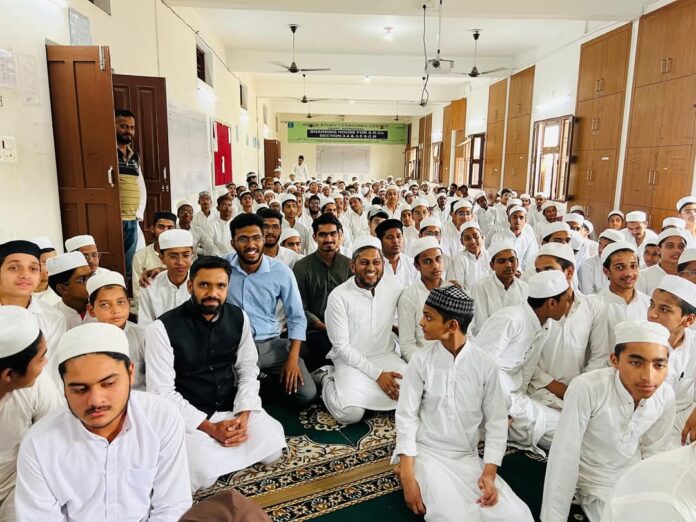
Classes were expanded to include Plus One and Plus Two, with both Science and Humanities streams. Today, more than 300 Huffaz are enrolled at VIA.
Among its graduates:
2 are now in medical colleges
7 in engineering colleges
8 in law schools
Over 50 in various Arts & Science colleges
Vision’s students now come from across seven Indian states. They are fluent in English, academically competitive, and grounded in Qur’anic values.
Last year, during Ramadan, 235 VIA students led Taraweeh prayers as Imams in 17 Indian states, including Kerala—showcasing both their spiritual and intellectual discipline.
Some of these students have now joined the SAFI Institute in Kerala, where Ameer Babu serves as Vice Chairman—an ongoing experiment in integrated education. His goal is to nurture a generation of confident, competent Muslim youth who carry the Qur’an in their hearts and knowledge in their minds.
During my visit, Babukka shared with me his dream—to build 100 such institutions across India for Huffaz. I responded with a story.
In 1992, Balbir Singh, a leader in the mob that demolished the Babri Masjid, returned to his village a hero. But his father rejected him. His wife left. Disgraced and broken, he eventually arrived at Maulana Kaleem Siddiqui’s khanqah in Fullat. There, he broke down and wept. He embraced Islam and became known as Mohammad Aamir.
Following Maulana’s advice, Aamir joined Tablighi Jamaat for four months. Later, he told Maulana:
“Hazrat, I was one of those who demolished Babri Masjid. I must build 100 mosques to atone.”
Before his death in 2021, Mohammad Aamir fulfilled that dream.
Now, from the same khanqah, Ameer Babu has set out on his own mission—to build 100 schools for Huffaz.
When Maulana Kaleem Siddiqui’s dawah efforts began shaking the status quo, the authorities arrested him under fabricated charges. That is a different story altogether.
But Ameer Babu carries on, undeterred.
He serves— the Qur’an, and those who carry it within.
source: http://www.muslimmirror.com / Muslim Mirror / Home> Education> Positive Story / by Mammooty Anjukunnu / June 07th, 2025
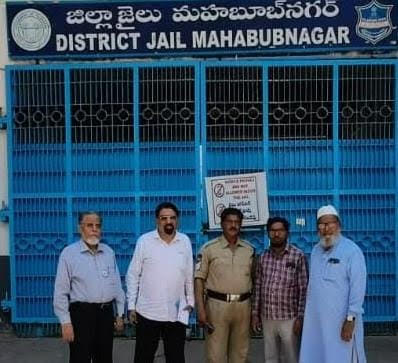
The Movement for Peace & Justice (MPJ) Telangana has reaffirmed its commitment to supporting justice and rehabilitation by providing monetary and legal assistance to first-time Muslim offenders seeking bail across various jails in Telangana. In the year 2024–2025 alone, MPJ facilitated the release of 57 such prisoners.
The organisation, which has consistently worked to aid the underprivileged segments of society, specifically limits its legal and financial support to individuals charged for the first time with non-heinous crimes. Those involved in grave offenses such as rape, murder, or digital financial frauds are excluded from MPJ’s assistance programs, irrespective of their first-time offender status.
In addition to helping individuals secure bail, MPJ Telangana previously extended support to prisoners who had completed their sentences but remained behind bars due to an inability to pay court-imposed penalties.
Beyond legal aid, MPJ Telangana has also taken several humanitarian steps. The organisation distributed general knowledge books, Islamic literature in Urdu and Telugu, stationery, and sports items to inmates. Notably, educational materials were also provided for children living with their incarcerated mothers at the Chanchalguda Special Prison for Women.
Expanding its outreach, MPJ Telangana provided general aid to 121 underprivileged families, educational support to children of 41 daily wage laborers, and medical aid to 59 impoverished families in the state.
MPJ Telangana continues to serve as a vital support system for the marginalized, promoting both justice and rehabilitation with dignity and compassion.
source: http://www.radiancenews.com / Radiance News / Home> Latest News / by Reliance News Bureau / June 11th, 2025
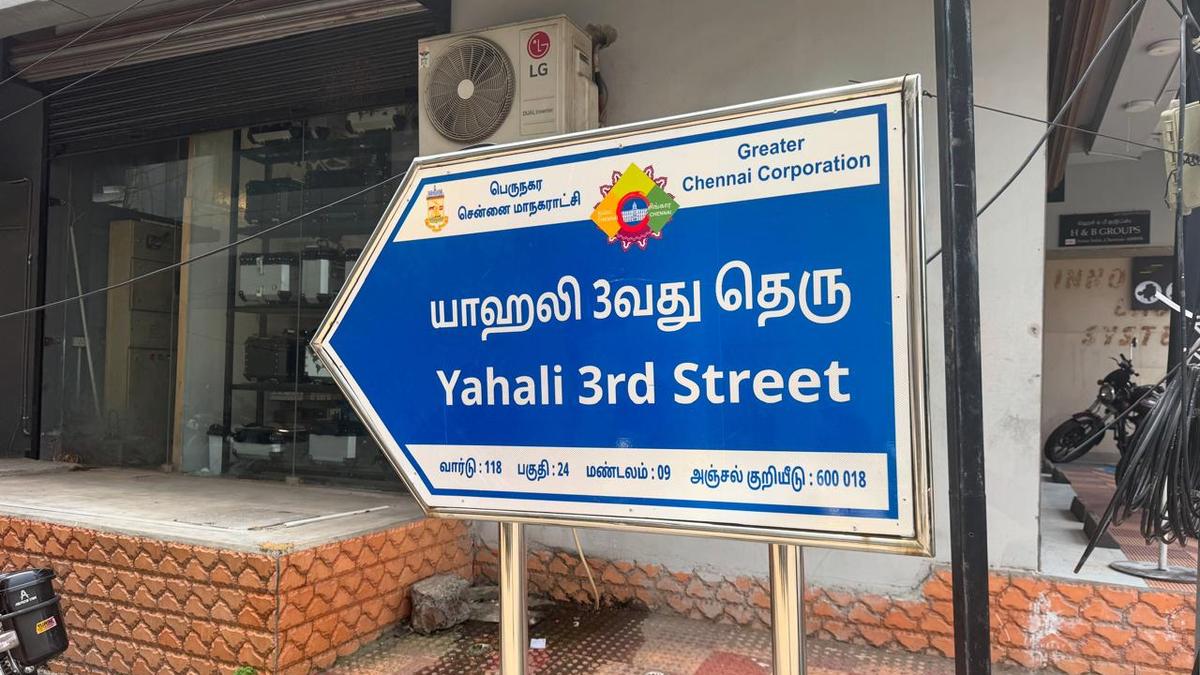
The correct name is Yahya Ali Streets – 1, 2 and 3, and they take their names from Justice Yahya Ali of the High Court of Madras. | Photo Credit: Special Arrangement
The street sign says it all – Yahali 3rd Street. There are three of them, all connecting Anna Salai with G.N. Chetty Road, at Teynampet, very close to Semmozhi Poonga. Only Yahali is not the correct name. Google Maps has compounded matters further. You need to search under Yaya Hali Street if you need to find it. The correct name is Yahya Ali Streets – 1, 2, and 3, and they take their names from Justice Yahya Ali of the High Court of Madras.
The learned judge is not in public memory. When I spoke to a friend on this, he said that the Internet has no reference to such a judge, and I guess that would mean such a person did not exist. But he did. And when he died as a sitting judge in 1949, the High Court convened to condole his passing. The brilliant barrister and then Public Prosecutor V.L. Ethiraj led the mourners. He dwelt on the “keen intellect, great learning, profound human understanding and exquisite courtesy we found in that frail figure.” But to get full biographical details, we need to turn to the speech of an illustrious contemporary, V.C. Gopalaratnam, who spoke on behalf of the Madras Advocates Association.
Yahya Ali was born in August 1893 in Nellore, his father serving as Assistant Secretary in the Finance Department of the Nizams of Hyderabad. He graduated in History and Economics from the Presidency College in 1916 and then qualified in Law. He set up practice in Nellore and became Government Pleader and Public Prosecutor. He was a member of the Madras Legislative Council as well. In between, he became Chairman of Nellore Municipality, his election being testimony to the regard he enjoyed from all residents of the town. It was a place notorious for communal tension, and being a Hindu majority, it was considered impossible for a Muslim to win the ballot.
In 1926, Yahya Ali became District Judge, being posted in that capacity to various parts of Madras Presidency. His specialisation in matters concerning finance led to his being appointed by the then Imperial Government in 1942 as the Chairman of the Appellate Income Tax Tribunal where he equipped himself “with a thorough and exhaustive knowledge of Income Tax Law and Procedure.” In 1945 he became a judge of the High Court of Madras. It is interesting to note that he sat in judgment till the last day of his life, taking ill on April 21, 1949, and passing away the next day.
While these details are from Gopalaratnam’s speech during the condolence meet, we learn some more from what the then Chief Justice P.V. Rajamannar had to say. Yahya Ali, he noted, was a connoisseur of Telugu poetry and “he was a deeply cultured person – culture with the best ingredients of what I may call Moghul culture – urbanity, catholicity and instinctive love of all that was beautiful.”
What was his link to Teynampet? He was at the time of his death Mutawalli (trustee or guardian) of the Teynampet Mosque in which his family had taken a deep interest. It was also in the precincts of this mosque that Yahya Ali was buried. And eventually, a locality was named after him. And from there, the name has morphed phonetically as it were, to what it is now with street names changing accordingly.
I wish the Corporation would be more careful with street signs. We have suffered enough mutilation with truncation of many names to initials, morphing of others, and of course, name changes at the drop of a hat.
source: http://www.thehindu.com / The Hindu / Home> News> Cities> Chennai>My Madras / by Sriram V / June 11th, 2025
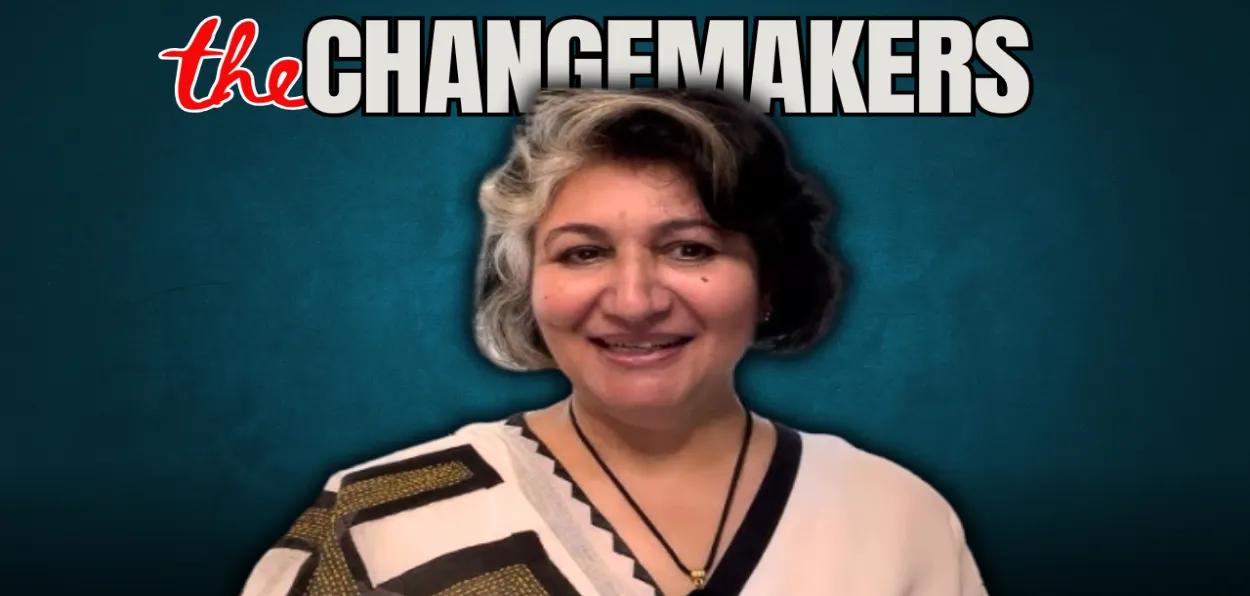
In 2007, Farah Usmani was working at the United Nations headquarters in New York when she made a pivotal decision that sparked a movement aimed at empowering women worldwide through financial independence.
Dr. Usmani, a physician from Uttar Pradesh, relocated to the city six years ago for work. During her search for a rental apartment, she discovered that New York’s rental prices were soaring and becoming unaffordable. After doing some quick calculations, she opted for a low-interest mortgage from the UN Federal Credit Union to purchase an apartment. She ended up buying a two-bedroom apartment in Manhattan, with a monthly mortgage payment that was only slightly higher than the rent she would have paid.
“This slightly higher expenditure (along with a down payment) would enable me to own an asset, and not fritter away my money on rent. It was such a wise decision. Today, 15 years later, I am on track to be a mortgage-free homeowner,” Usmani shared with the Morning Star newspaper. This experience inspired her to launch a campaign aimed at educating women around the globe about the importance of financial freedom and empowering themselves through financial independence.
Today Dr. Farah Usmani is an international health, gender and development expert based in New York.
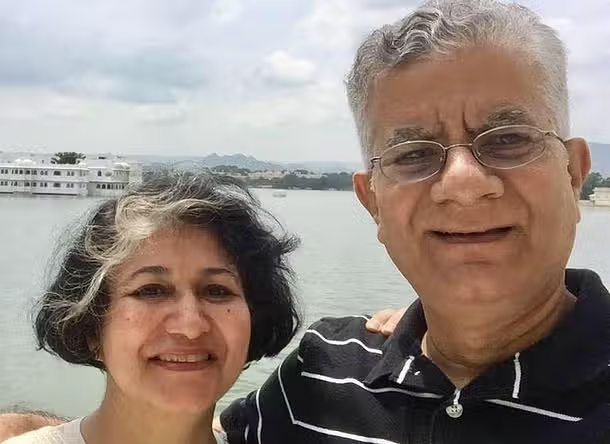
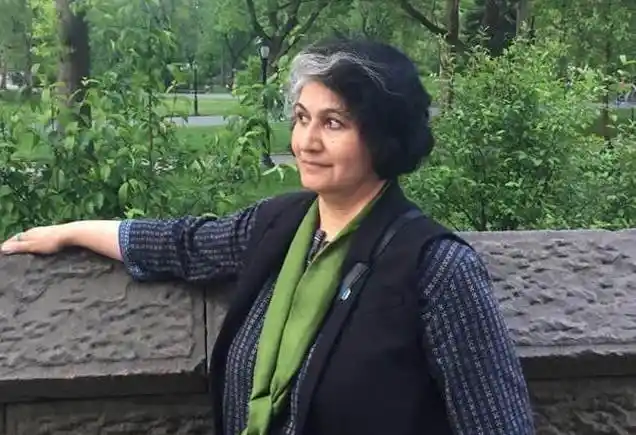
Dr. Farah Usmani with her husband Javed Usmani
Dr. Usmani is also the first Muslim woman from India to work with the United Nations International Civil Service at Director Level. She is the recipient of the 2021 Mahatma Award for Social Impact for her work with women, girls, and minorities.
She has 25 years of experience working with the United Nations International Civil Service with UNFPA, focusing on women and girls and their reproductive health and rights.
Carrying forward her mission to empower women, Dr. Usmani is the Global Vice President of SAFAR Foundation,(Supporting Action for Advancement and Rights), a philanthropic organization focused on uplifting marginalized women and girls.
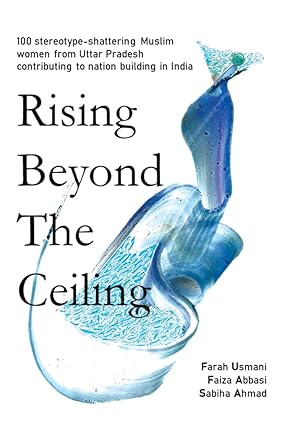
She is the Founder of “Rising Beyond The Ceiling”, a global initiative supported by SAFAR to shine a spotlight on Muslim women of India and contribute towards changing their stereotypical narrative.
The organization has published its first volume on Muslim women from Uttar Pradesh and is working on the rest of the Indian states.
Farah has received several awards and recognitions including the British Council and the Joint-Japan World Bank Merit Fellowships.
Dr. Farah Usmani
At the UNFPA (United Nations Population Fund), Dr. Usmani played a pivotal role in policy, planning, technical leadership, and health services across more than 50 countries, working on the rights of women and girls. She became the first Indian Muslim woman to reach the Director level in the UN’s International Civil Service in New York.
She noticed that Muslim women were often boxed into stereotypical roles on every platform. Farah made it her mission to break that mold.
“Why are our stories limited to the veil and the home?”
Inspired by this question, Dr. Farah Usmani launched Rising Beyond the Ceiling a global initiative that highlights the achievements of Indian Muslim women, brings their hidden stories to light, and challenges societal stereotypes.
This initiative didn’t stay confined to books or speeches it became a movement. A beacon of hope for every woman in a small town who dreams of a bigger world.
Dr. Usmani believes that money is not just a necessity it is power. She says, “Instead of being afraid of money, we need to befriend it.” Her husband taught her: money that doesn’t generate returns slowly vanishes. And that’s where her journey into financial literacy began.She started investing in tax-free savings, fixed deposits, and NRE (Non-Resident External) deposits. Today, her daughter Saba is also a real estate investor in Manhattan. This is not just a financial legacy it is an intellectual one, building a story of empowerment across generations.
Dr. Usmani has received numerous accolades, including Merit Fellowships from the World Bank and the British Council, and the Mahatma Award in 2021. She has worked globally for the rights of women, minorities, and marginalized girls.
She also serves as the Global Vice President of SAFAR Supporting Action for Advancement and Rights a philanthropic organization focused on uplifting marginalized women and girls.Breaking many gender barriers at different stages in her life, she has the distinction of being the first woman student to top the merit list in the pre-medical examination of the Aligarh Muslim University, where she completed her medical training.
She is the recipient of the 2021 Mahatma Award for Social Impact for her work with women, girls, and minorities.
Farah Usmani comes from a middle-class Muslim Family in Aligarh, Uttar Pradesh.
She holds a Master’s in Health Policy, Planning & Financing given by the London School of Economics & London School of Hygiene & Tropical Medicine & a M.D. in Obstetrics & Gynecology from Jawaharlal Nehru Medical College, Aligarh India. She has certifications in leadership and organizational management from Cornell University, Cranfield School of Management, Stanford University & the American Management Association, New York.
Farah is married to Jawed Usmani, an Indian civil servant, who rose to the position of Chief secretary of the Uttar Pradesh government. They have two children Faraz Usmani and Sabah Usmani.
Dr. Usmani says, “The coins our mothers and grandmothers hid in their mattresses were not just savings they were their attempt at independence.
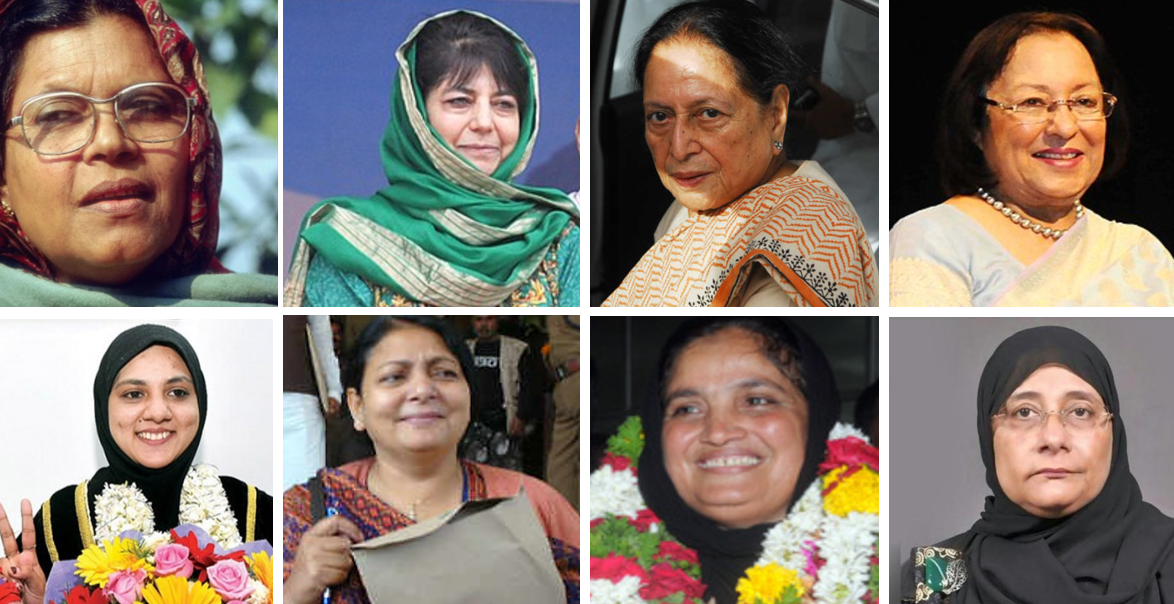
Indian Muslim Women who feature in the list of Rising Beyond the Ceiling
The “The time has come for women to see money not as shame, but as strength.”
Her mindset, her struggles, her smile they are a source of inspiration for every woman who dreams of flying in an open sky, not a cage.
Dr. Farah Usmani’s story reads like a novel with trials, a determined heroine, a journey of transformation, and a path toward the light.
It teaches us that with courage, even the walls of a house can become the rooftop of the world’s tallest building.
Because when a woman shapes her identity by herself, she doesn’t just create a path for herself but for every generation that follows.
source: http://www.awazthevoice.in / Awaz, The Voice / Home> Stories> The Changemakers / by Onika Maheshwari, New Delhi / June 02nd, 2025
The Muslims of North eastern India are a spirited community and are contrinuting immensely to the nation building.
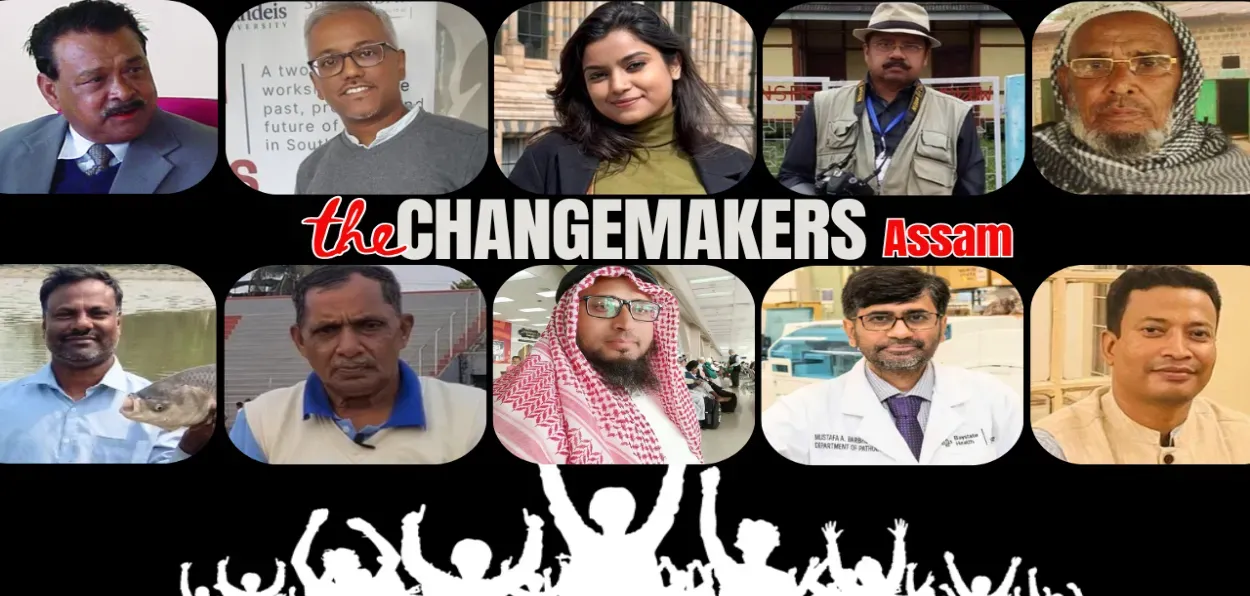
Here are ten Muslims whose stories inspire others and make us look at human spirit differently.
Abid Azad
After his work in the bank, this young professional roams around various places in Assam to feed the hungry. Since the days of COVID-19 and the consequent lockdown, Azad has been providing food to those on the streets, hospitals, and others in need. He distributed meal packets to patients and their attendants at the Gauhati Medical College and Hospital (GMCH) for Iftar, and also delicious foods for Hindus and people from other faiths.
Ahmed Ali
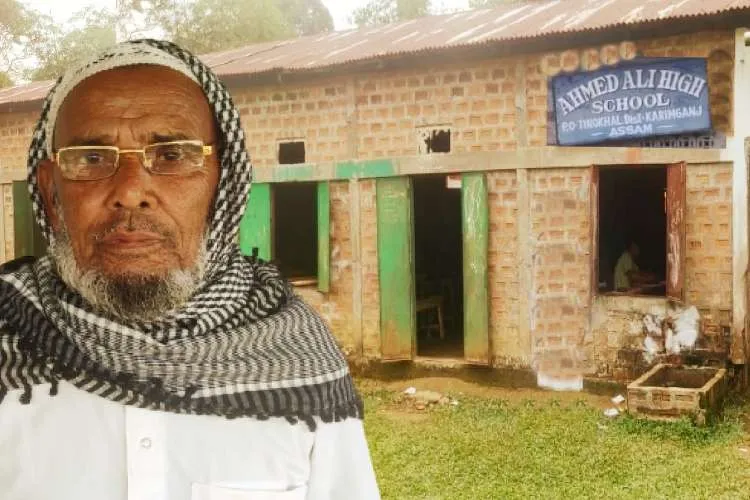
The presence of Ahmed Ali, an unlettered rickshaw puller from Assam who has built a chain of schools in and around his native village, at the Republic Day celebrations in New Delhi on January 26 this year caught the attention of everyone. The Government of India had invited him as a special guest for his extraordinary services to society. He has built a chain of educational institutions from his earnings to encourage children to go to school.
Prime Minister Narendra Modi mentioned Ahmed Ali, a resident of a rural village in the Sribhumi district of southern Assam, in his monthly radio program ‘Mann Ki Baat’. Ahmed Ali used his earnings from pulling the rickshaws to support his family and established nine schools in southern Assam. Due to poverty, Ahmed Ali remained unschooled, but he wanted to ensure nobody in his society had to remain illiterate.
Nazrul Haque
He has been recently honored with the prestigious Assam Gaurav Award by the State Government for his outstanding achievements in fish farming and employment generation. Haque, who began his entrepreneurial journey with just Rs 10,000, has successfully overcome numerous challenges and now owns multiple fisheries. His dedication to aquaculture has not only contributed to the fishery sector’s growth in Assam but also provided job opportunities to hundreds of unemployed youths.
Nabab Ali
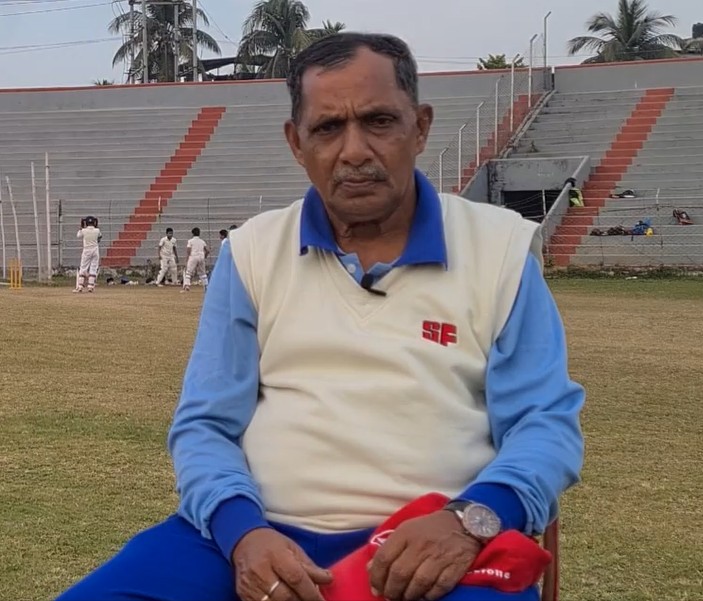
If Dronacharya awardee the late Ramakant Achrekar, the celebrated coach of legendary cricketer Sachin Tendulkar, had the privilege of nurturing the cricket legend’s son Arjun too, so did Assam’s very own Achrekar, Nabab Ali, who has not only molded former Assam Ranji captain Parag Das but also his son Riyan Parag to be the first ever cricketer from Assam to be in Team India. Fondly called Nababda (Brother Nabab) by one and all in the cricket circles, Nabab Ali may not have hit too many centuries and half centuries during his brief cricketing career, but he has cracked more than a ton as far as the number of quality cricketers he has produced for Assam as well as India.
Dr. Mustafa A Barbhuyan
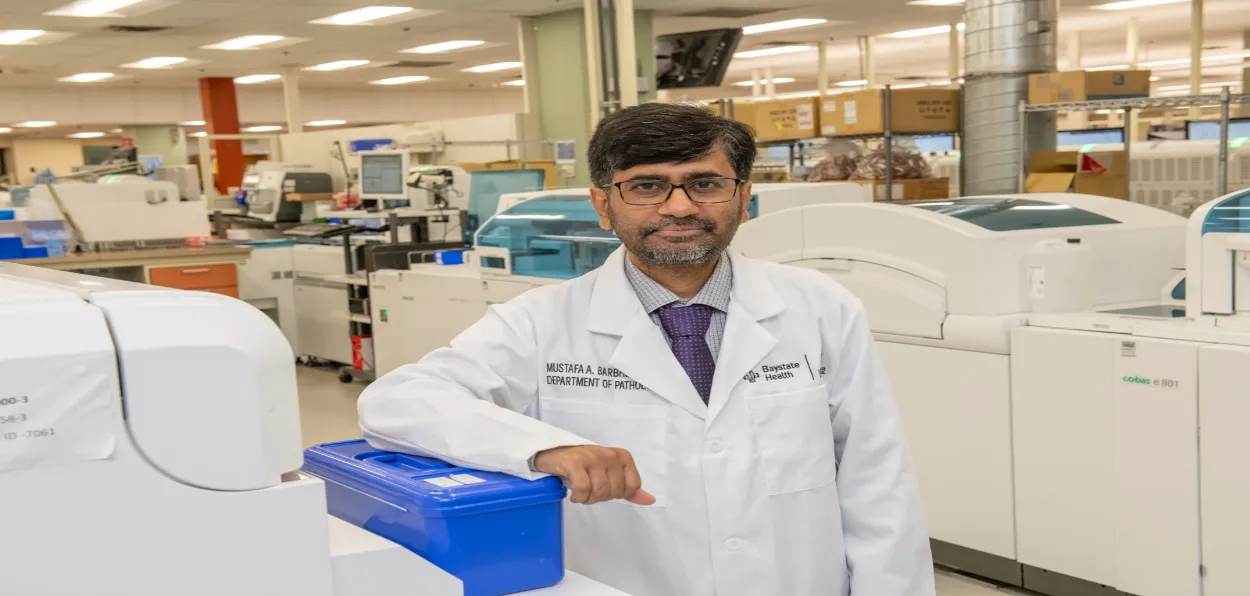
Hailing from a remote village in southern Assam’s Hailakandi district, Dr. Mustafa A. Barbhuiya has been selected among the top 100 most influential people in Pathology, specifically, as one of the Top 20 Heroes of Pathology in the US for this year.
Syedullah Nongrum
He is the voice of Khasi Muslims and a bridge between communities in Meghalaya. Nongrum spearheaded the construction of Madina Masjid, the only glass mosque in India. This magnificent structure situated in Shillong, not only serves as a place of worship but also houses an Islamic learning center, a school for underprivileged children, and a higher education college with modern facilities in science, arts, and technology.
The mosque is the only glass mosque in India, and reportedly the first glass mosque in Asia, making India the third country to have a mosque built of glass
Arshel Akhtar
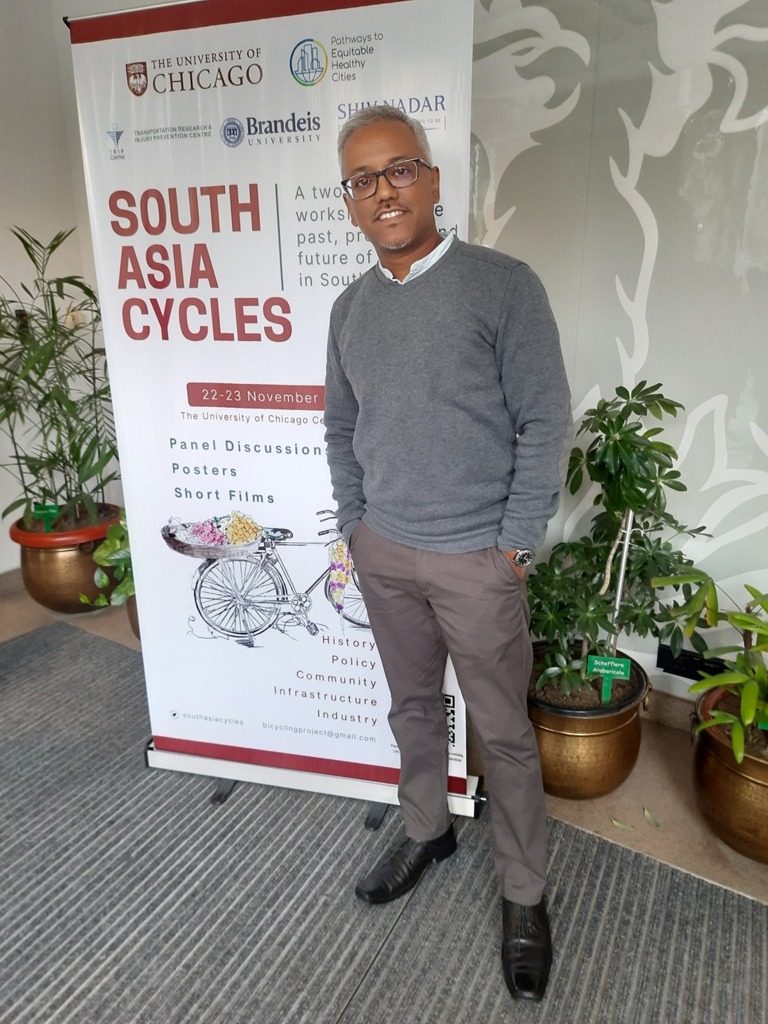
Arshel Akhtar wants to make cycling a priority for Guwahati residents and is working on creating a narrative on it. From working across diverse areas like Information and Technology, software development, banking, and share investing, Arshel was appointed as the first ‘Bicycle Mayor’ of Guwahati in 2018. He continues to find solutions to urban mobility issues through his non-profit organizations, Pedal for a Change and The Green Lane Foundation. Akhtar has formed an active citizens group called the Bicycle Councillors of Guwahati, which will work together to make cycling a safe, accessible, and aspirational mode of transport among all sections of society.
Nahid Afrin
She first shot to fame when she became the second runner-up in the 2015 edition of Indian Idol Junior. In 2016, she made her debut as a playback singer in Bollywood with the film Akira starring Sonakshi Sinha in the lead role. In 2024, Nahid Afrin was appointed as UNICEF India’s Youth Advocate, marking a significant milestone in her career. Nahid, along with three other Youth Advocates, will work with Bollywood’s star actor Kareena Kapoor-Khan, who is named as the National Ambassador by UNICEF.
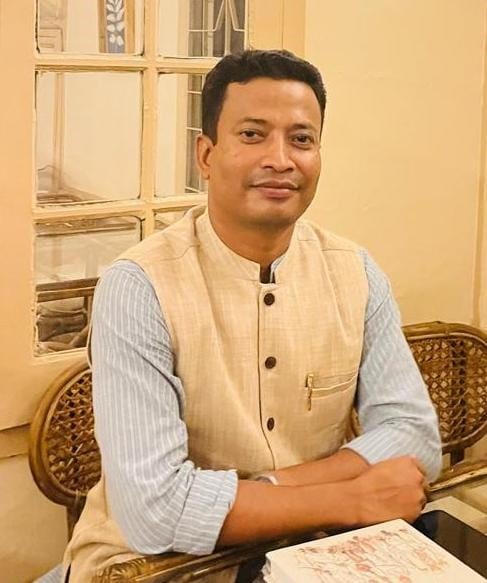
Maulana Nurulamn Qasimi:
At a time when there are many misconceptions about Islam in society, Maulana has tried to dispel those by clearly explaining the principles and ideals of Islam. Maulana Nurul Amin Qasimi is a cleric who preaches Islam in the right form with exceptional thoughts.
Dr. Anwaruddin Choudhry
Dr. Anwaruddin Choudhury, who retired as the Commissioner and Secretary to the Government of Assam, has acquired the nickname of “The Birdman of Assam.” He is the first in Assam to write books on the birds of North Eastern States. His studies have contributed to the conservation and awareness of various bird species. He has authored 28 books, 50 technical reports, and more than 900 articles and scientific papers.
Choudhury, 63, had played a pivotal role in protecting habitats and declaring the white-winged wood duck as the State bird in Assam in 2003.
source: http://www.awazthevoice.in / Awaz, The Voice / Home> Stories> The Changemakers / posted by Vidushi Gaur / June 08th, 2025