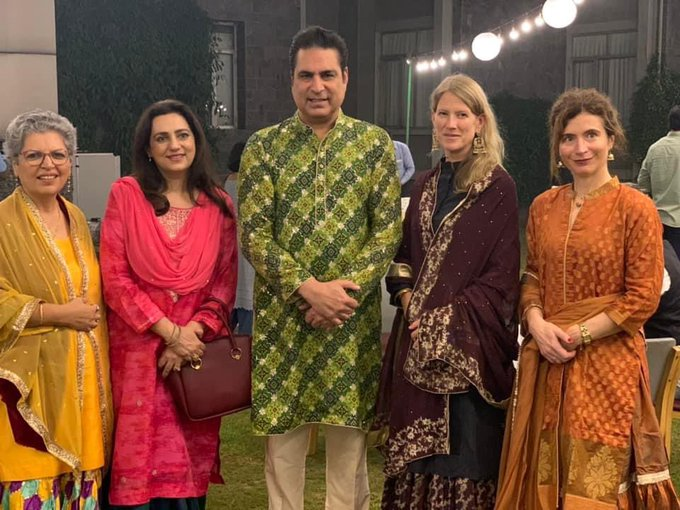
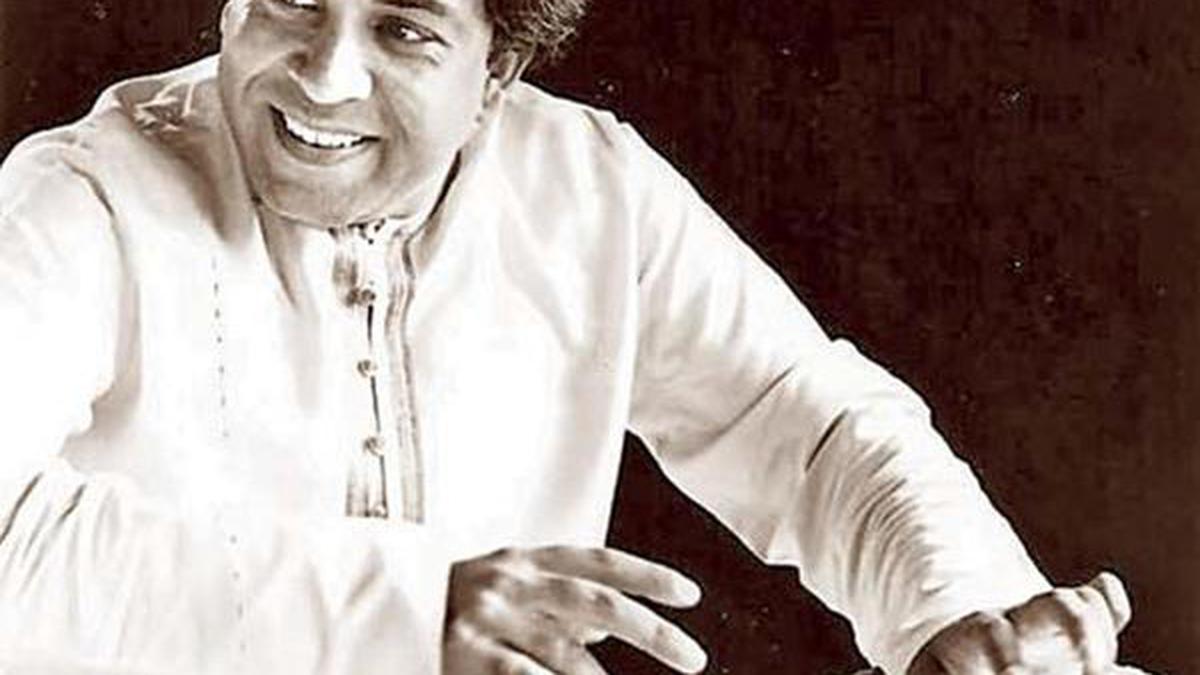
A former footballer and a veteran sports administrator, Hakim suffered a stroke and was being treated at a hospital in Gulbarga.
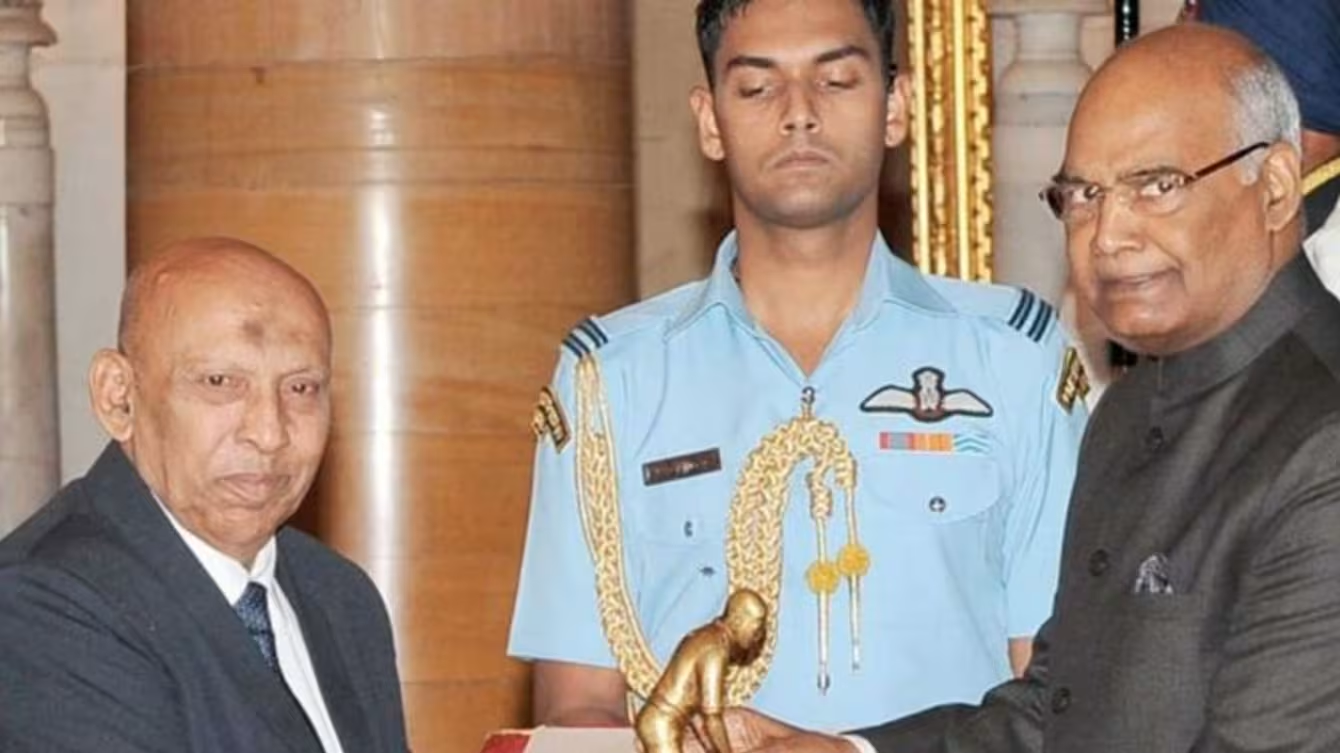
picture: SAI / Hakim received the Dhyan Chand award in 2017
Former Indian footballer and Olympian Syed Shahid Hakim passed away at the age of 82 in Gulbarga, Karnataka, on Sunday morning.
SS Hakim, who represented India at the 1960 Rome Olympics, was being treated at a hospital after suffering a stroke two days back.
“He suffered a cardiac arrest at 8 AM today and passed away at 8:30 AM,” Sadia Syeda, wife of Hakim, told Sportstar.
SS Hakim played an integral role for the development of football in India both as a footballer and a coach. He was awarded the Dhyan Chand Award for Lifetime Achievement in Sports and Games in 2017.
Born in Hyderabad, SS Hakim was the son of legendary coach Syed Abdul Rahim, who guided India to two Asian Games gold medals and the semi-final of the 1956 Melbourne Olympics
During his playing days, SS Hakim won the Santosh Trophy in 1960 while plying his trade for Services football team and continued to play till 1966. He also played for City College Old Boys and Indian Air Force at club level.
The highlight of SS Hakim’s international career was the 1960 Rome Olympics. The Hyderabadi was a member of the Indian team, coached by his father.
India failed to make it past the group stages at Rome but famously held France to a 1-1 draw.
SS Hakim turned to coaching after his playing days, following the footsteps of his father.
A former assistant coach of the Indian national team, Hakim managed the Durand Cup-winning side of Mahindra and Mahindra in 1998 and also coached Salgoacar and Bengal Mumbai FC.
Along with coaching, the Hyderabadi was a FIFA referee and officiated at the 1988 AFC Asian Cup in Qatar.
A former squadron leader of the Indian Air Force, Hakim also held the role of Regional Director of Sports Authority of India, Kolkata.
Hakim ‘saab’, as he was fondly called, is survived by his wife and two daughters.
source: http://www.olympics.com / Olympics.com / Home / by Aarish Ansari / August 22nd, 2021
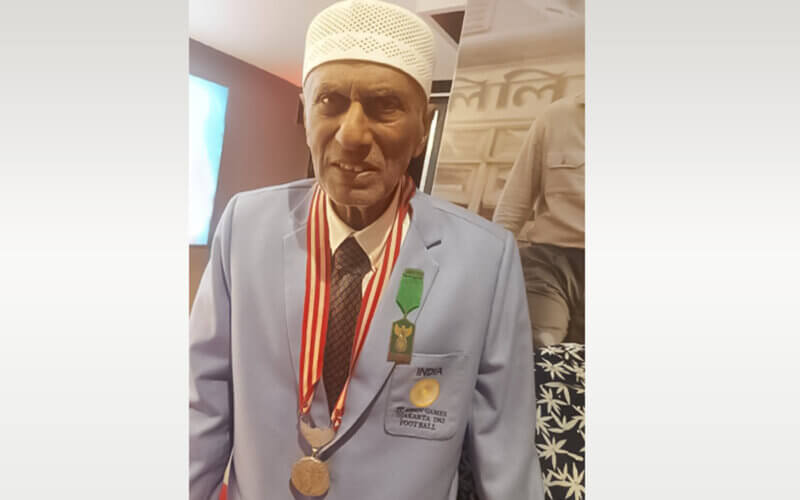
The All India Football Federation condoled the death of former India midfielder DMK Afzal, who passed away, on Wednesday, May 7, 2025. Afzal is survived by his wife.
An excellent midfielder of his times, Afzal was a part of the gold medal-winning India team at the 1962 Asian Games in Jakarta, Indonesia. Afzal has two appearances in the India shirt, making his debut against the Republic of Korea in the group stage of the 1962 Asiad.
Condoling Afzal’s death, AIFF President Shri Kalyan Chaubey said, “D.M.K. Afzal was a fine midfield maestro of his times, and served the beautiful game with the utmost passion and dedication. I extend my sincerest condolences to his family in this sorrowful hour.”
At the domestic front, Afzal has the distinction of winning the Santosh Trophy with Andhra Pradesh in 1965. With his club, Andhra Police, he won the Durand Cup (1961), Rovers Cup (1962, joint winners), and the DCM Trophy (1965).
He later moved to Kolkata with East Bengal, and won the Calcutta Football League (1966), IFA Shield (1966), Rovers Cup (1967), Durand Cup (1967), Sait Nagjee Trophy (1968), Kerala FA Shield (1968), and the Bordoloi Trophy (1968).
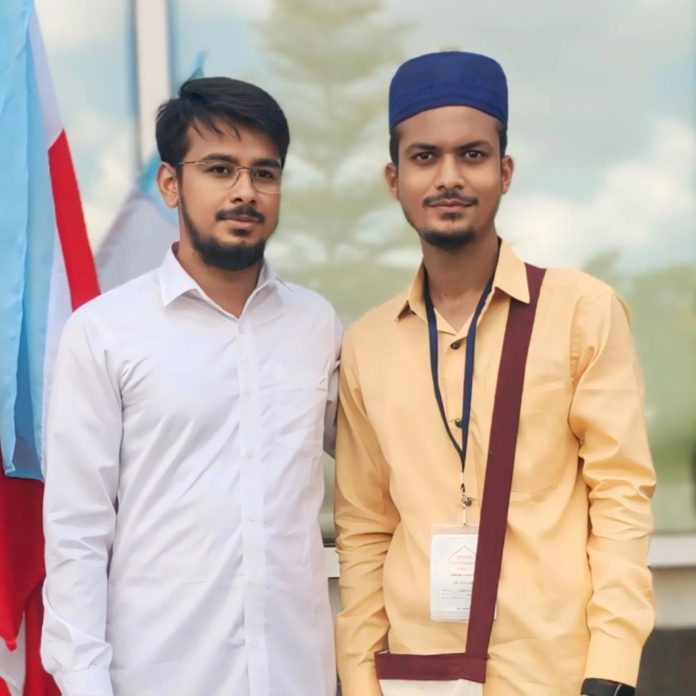
The Students Islamic Organisation (SIO) Telangana conducted its elections for the term 2025-26 here Tuesday. Chaired by Dr. MKM Zafar, President of JIH Telangana, and Abdul Hafeez, National President of SIO India, the meeting elected Mohd Faraz Ahmed, a Political Science graduate from MANUU, as Zonal President for the term 2025-26. Faraz Ahmed has a notable record of service, having previously served as State Secretary, SIO Telangana, and Secretary SIO Nizamabad. His contributions to SIO’s organ, Rafeeq-e-Manzil, have also been widely recognised.
Mohd Hammaduddin, a student of M. Pharm, was appointed Zonal Secretary. He brings with him extensive experience, having served as President of SIO Hyderabad and as a member of ZAC.
The Zonal Advisory Council (ZAC) members for the 2025-26 are Ashfaq Ahmed, Dr. Osaid Waseem, Suhaib Ahmed Khan, Umar Shahroz, Adv. Ghiyasuddin, Musab Abdul Rahman, Sohail Rizwan, Irfan Khan, Hussain Shahbaz, Abdus Salam Shakir, Samaan Rafid, Qayamuddin, Abdul Khaliq Subhani, Faheemuddin Sufi, Faizan Khan, Azeem Khan, Faisal Khan, Fazl-ul-Bari Irfan.
These leaders took their oath of responsibility during the event, with Dr. MKM Zafar offering prayers for their success.
source: http://www.radiancenews.com / Radiance News / Home> Latest News> Report / by Radiance News Report / December 04th, 2024
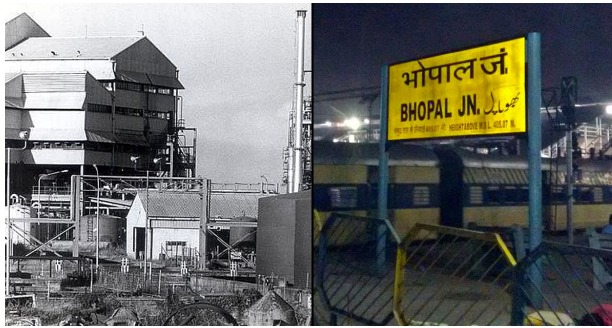
FORGOTTEN HERO OF BHOPAL GAS LEAK TRAGEDY: The saviour Ghulam Dastagir, the Deputy Station Superintendent at Bhopal Railway Junction who saved thousands of lives on December 2 and 3 went unrecognised and was buried in the history.
Much has been said and written about the fateful Bhopal Gas Leak Tragedy in 1984 that claimed around 5,479 lives while affecting over six lakh people with serious skin disorders. However, the saviour Ghulam Dastagir, Deputy Station Superintendent at Bhopal Railway Junction, who saved thousands of lives on December 2 and 3,1984 went unrecognised and was buried in history.
Ghulam Dastagir’s case isn’t an isolated one as thousands of Muslim freedom fighters who sacrificed their lives for the cause of Indian freedom struggle were more often than not either concealed or forgotten by the Union Government on one pretext or the other. This scribe flipped through the pages of history to zero in on the world’s deadliest industrial tragedy which sent shockwaves among the people across the globe.
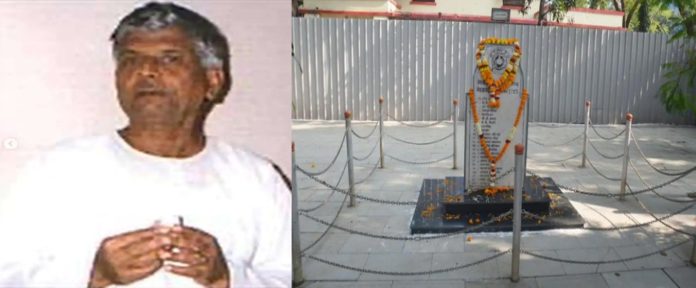
Even after four decades after the Union Carbide Factory gas leak episode, the scars still remain in the hearts of the victim families. What is irking is the fact that a memorial erected at Bhopal Railway Junction for 23 railway men, who lost their lives while rescuing people, have been inscribed but there is hardly any mention about Ghulam Dastagir who played a pivotal role in the rescue operations on the dreadful day.
Sources from various news portals revealed that a deadly gas leak from the Union Carbide factory engulfed the Bhopal city, killing thousands and injuring many more. Amidst the chaos and panic, one man acted swiftly and bravely to save lives: Gulam Dastagir, Deputy Station Superintendent at Bhopal Railway Junction. Few people know that during the Bhopal gas tragedy, a heroic stationmaster risked his own life to save others. But for him the causalities in the catastrophe would have been much higher.
On the fateful night of December 2, 1984, Ghulam Dastagir found himself in the midst of routine paperwork. Little did he know that this night would forever alter the course of his life. As the Bombay-Gorakhpur Express was due to arrive, Dastagir’s routine took a drastic turn when he sensed something was amiss. His swift action would soon prove to be the difference between life and death for many. Upon stepping out of his office, Dastagir experienced burning eyes and a bitter throat – a tell-tale sign that something was terribly wrong. Shockingly, he discovered the lifeless form of Dhurva, the station superintendent, in his cabin. Acting swiftly, Dastagir communicated with nearby stations to halt incoming trains, potentially saving countless lives. Despite the looming danger, he ordered the immediate departure of the Gorakhpur-bound train, ensuring the safety of its passengers.
As the deadly gas claimed the lives of 23 station staff members, including Dastagir’s own son, he and his team worked tirelessly to manage the crisis. Despite struggling to breathe, Dastagir remained composed, coordinating medical help, and providing a ray of hope in the face of impending doom. The station became a scene of chaos as large crowds desperately sought escape from the poisonous air, and Dastagir’s leadership became a beacon of strength.
While Dastagir’s selfless actions spared countless lives, the tragedy took a heavy toll on him personally. The toxic gas led to health issues, with a lump forming in his throat, and subsequent years were marked by frequent hospital visits. The heavy personal cost included the loss of his son to the gas and another developing a permanent skin infection. Despite the challenges, Dastagir continued to exhibit resilience until his demise in 2003.
At Bhopal Junction, a memorial stands in honour of 23 railway personnel who lost their lives on that tragic night. Unfortunately, Ghulam Dastagir’s name doesn’t grace the memorial, as his demise occurred nearly two decades later. However, during those critical hours in December 1984, Dastagir exemplified the truth in Gerard Way’s famous quote, proving that heroes emerge from ordinary people who rise to extraordinary challenges.
Meanwhile, Netflix’s series, “The Railway Men” made headlines based on the Bhopal gas tragedy of 1984. Amidst the widespread acclaim for the show, this review reflects on one of the unsung heroes of that tragic night – the deputy station master of Bhopal railway station, Ghulam Dastagir. His extraordinary actions saved lives and offered a glimmer of hope in the face of an unimaginable disaster.
Shadab Dastagir, youngest son of late Dastagir, while speaking to a media in 2023, said that his father’s heroic role in the entire episode on Bhopal Railway Junction on the night intervening December 2 and 3, 1984, has mainly remained unsung.
“Little official acknowledgment and appreciation came his way in these four decades. And now when an OTT series has been made on the episode, it is upsetting that we were never consulted about the actual happenings,” he told The Week.
“I have watched the teaser and the official trailer and I can make out that the character being portrayed by Kay Kay Menon is based upon my father. But then we are highly apprehensive as to how much close to truth the character has been made,” Shadab, who is into the family business of chemicals and fertilisers, said.
He also mentioned that the family had already sold out the copyright of a script on Dastagir’s life and work – based on narration by his father himself during his lifetime – to a production house called Small Box Media. The Mumbai-based production house was planning a full-length movie based on the script when YRF cut in with the miniseries.
A forgotten hero whose sense of duty and commitment saved countless lives, Dastagir’s story deserves to be recognised and remembered by his fellow countrymen.
[The author is former Indian Express and Deccan Chronicle chief]
source: http://www.radiancenews.com / Radiance News / Home> Focus> Social Service / by M Rafi Ahmed / September 02nd, 2025
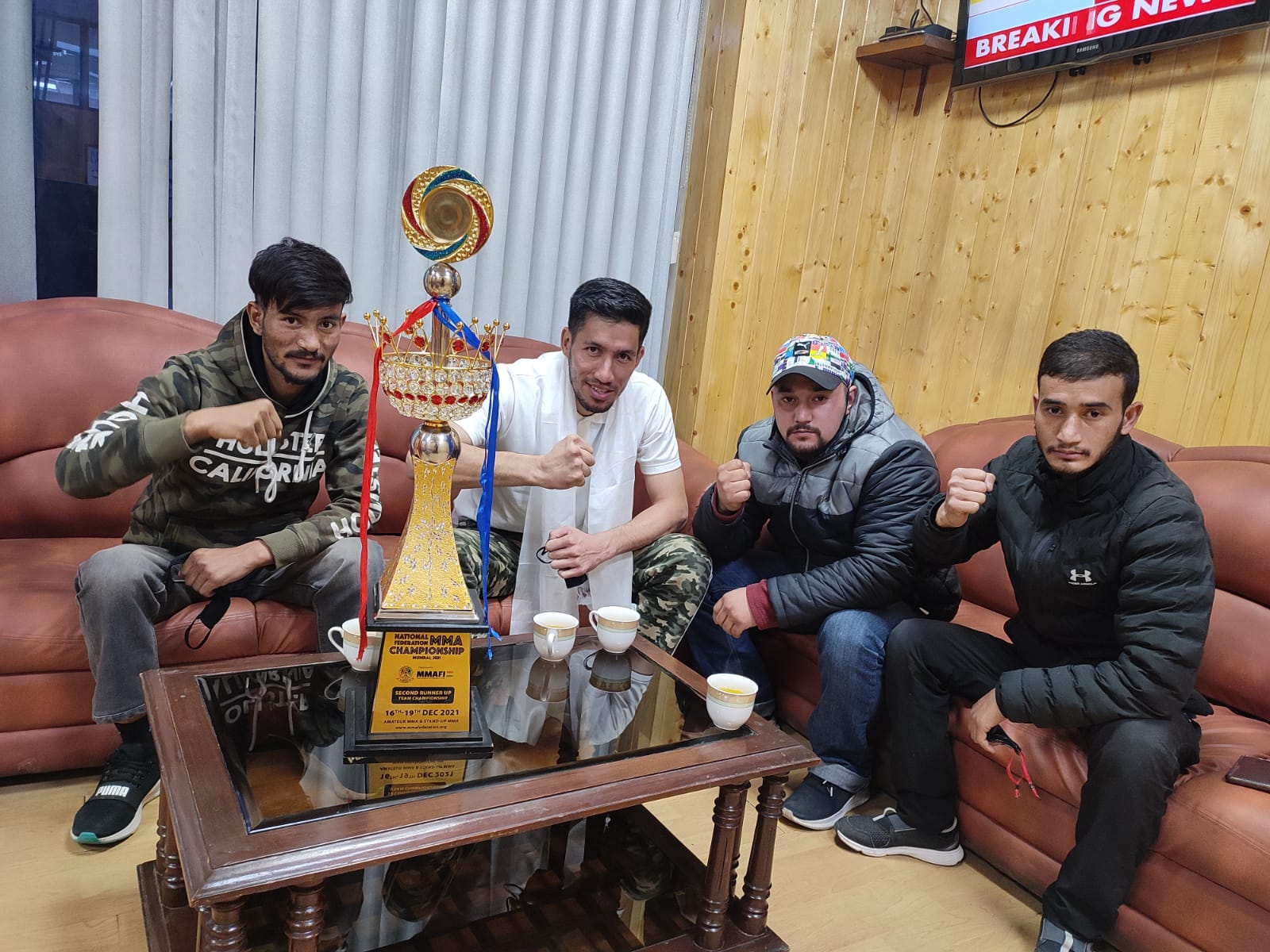
Coach Mahdi Nasiri (In the center) flanked by Murtaza Ali Khuddam, Ali Akbar and Mohammed Hasnain.
Ladakh, now the Union Territory, has registered its name on the national stage for reasons other than the Kashmir conflict and continued Line of Actual Control (LAC) standoff with China. A three-member team from the UT has gained the third position at the National Mixed Martial Arts Championship held in Mumbai this week. The team won a total of four medals — one gold, one silver, and two bronzes.
Murtaza Ali Khuddam has won the Gold Medal in the 79 kg category by knocking down his opponent in the 1st round of the final match. Other medalists are Ali Akbar and Mohammed Hasnain.
Their success is due to their grit, determination, and willpower. This reporter spoke with the Gold medalist Murtaza Ali Khuddam and his coach Mahdi Nasiri on their journey.
The Winners and the coach with their trophy and medals
Nasiri and Khuddam hail from the Kargil district. Mahdi said that he has been a UFC Mixed Martial Arts fighter for long and now coaches and mentors youth who are attracted to the sport. “I developed a passion for this game by watching and reading about international stars and started to self-train in my teenage years. Slowly, I gained confidence and got in touch with known sportsmen of my region.
“They were impressed with my skills and coached me further. Then, on someone’s advice, I went to Iran and spent five years learning and participating in various competitions there,” said Nasiri.
He added that when Bollywood personalities, Raj Kundra and Shilpa Shetty, organised Super Fight League in 2012, he participated in it and won a gold medal. “Besides, I also won medals in some other events, but my life didn’t change as this sport is not widely played and promoted in India. Plus, the required facilities are scarce. I used to practice alone in a makeshift arena and by watching videos. There was no support from the government or a private organisation. Yes, some individuals used to lend support,” said Mahdi.
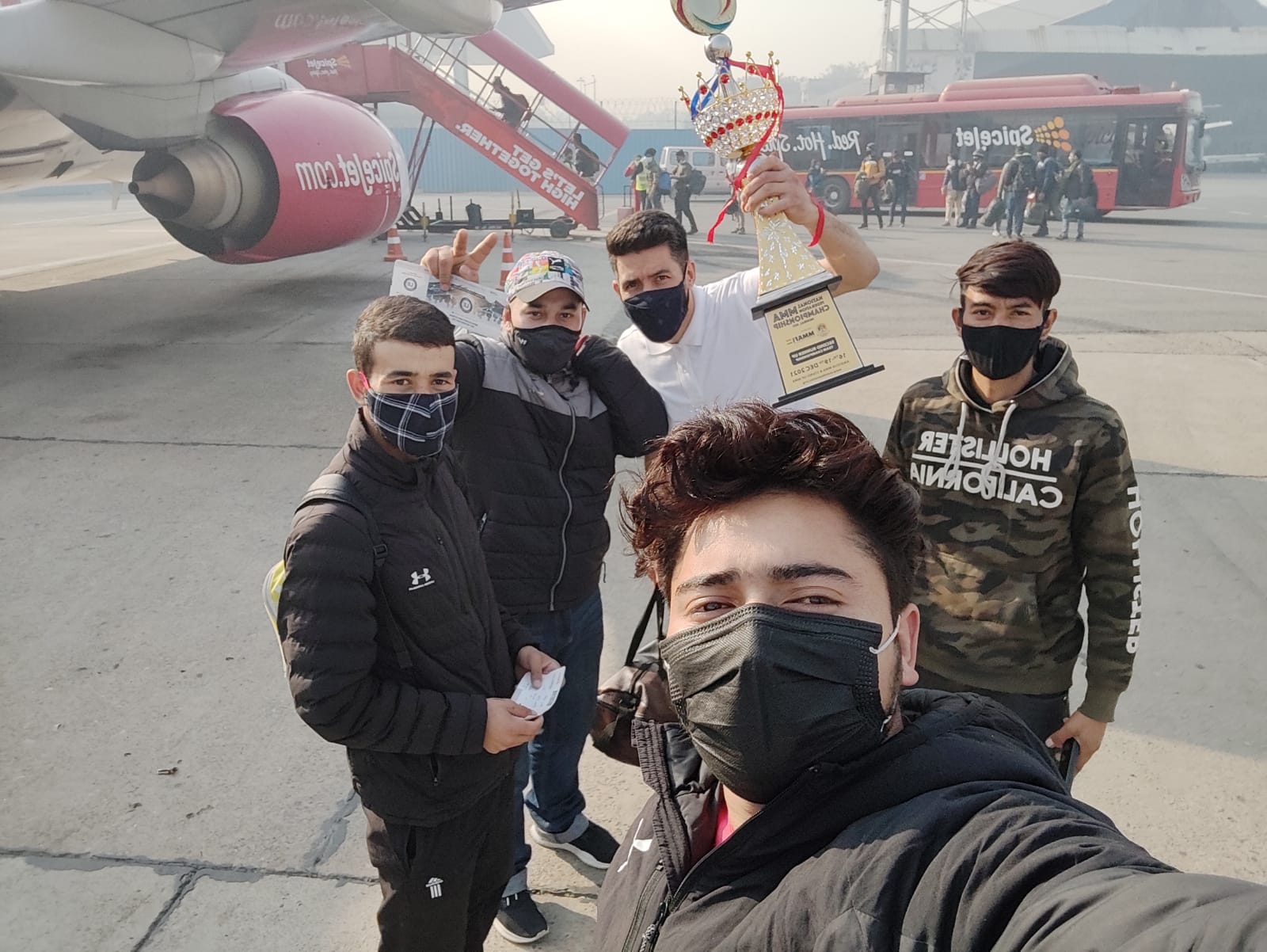
The winning team being received at Airport
Mahdi shared with us some videos that showed him practicing and training in a makeshift arena covered with polyethylene sheets to secure players against cold.
Mahdi has become a professional coach. “I hope our performance in MMAFI would improve things. It has already caught the attention of the government.
“Lieutenant Governor RK Mathur in a tweet has appreciated the team for the brilliant performance, particularly of Murtaza Ali Khuddam. Local federation for MMA too is upbeat and would help in uplifting the game and lives of players,” said Mahdi.
Murtaza Ali Khuddam, the gold-medallist, and star of the tournament said, “We grew up watching international star Khabib and Mahdi Bhai playing this very difficult sport. They have been our inspiration. Whatever know about fighting, I have learned from Mahdi Bhai, whether it is elbow strike, ground, and pound, back control, armbar, sprawl, etc.
The team waiting to fly – at the airport
“We had nothing in the name of facilities except a makeshift arena but, we had a lot of determination to prove our mettle. We knew that once we make our mark, our path will be illuminated. See, today as we returned to our hometown, around 200 vehicles had come to receive us. We hope this euphoria will earn attention for MMA in our country too,” Khuddam said.
He also said that for becoming an MMA fighter, the most important is physical strength. “I had built that by following a certain diet regime suggested by Mahdi Bhai,” he said.
The Mixed Martial Arts championship was organised by the Mixed Martial Arts Federation of India (MMAFI).
Khuddam, who is the youngest of his three siblings, said he or the other MMA players from Kargil did not receive any support from the Ladakh Sports authorities. “But, we were not hopeless. Our medal-earning performance will pave the way for a better future. The government will wake up too,” he said.
source: http://www.awazthevoice.in / Awaz, The Voice / Home> Stories / by M Anas, New Delhi / December 25th, 2021
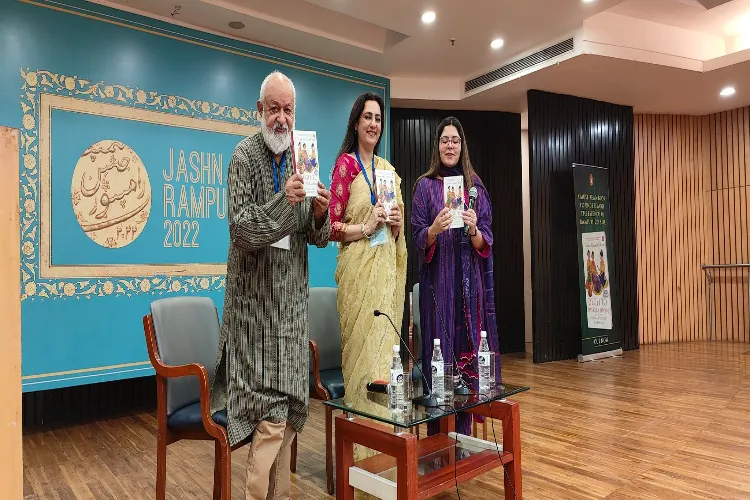
Away from the hustle and bustle of the national capital Delhi, the food lovers gathered in Delhi’s India International Center to discuss the food – delicacies, genres and history – all day. It was for the release of Dr. Tarana Hasan Khan’s book ‘Deg to Dastarkhwan: Stories and Recipes from Rampur.
In this era of pizza, burger, and fast foods, we seems to be forgetting traditions of the Shahi, Mughlai and old delicious food.
Dr. Tarana Hasan Khan is one of the few to write on Dastarkhwan – the Indian cusine. She is also cultural historian.
Dr. Tarana Hasan Khan and her book
Her other book is: The Begum and the Dastan.
Dr. Tarana says It took her three years to cover the forgotten recipes of Rampur for the book. There is a chapter on rice and spices in this book.
Famous food writer Pushpant Pant also participated in the book launch ceremony. The program started with welcome address by Swati Pal, Principal of Janki Devi Memorial College.
She also discussed the problems faced in writing the book on the ‘forgotten foods of Rampur’ were mentioned. Yusuf Saeed and Naseema Naqvi had a long conversation on this subject. This was followed by a discussion on the history of the foods between Dr. Tarana and Pushpant Pant.
Dr. Tarana specially thanked Pushpesh Pant for attending the program and joining the discussion on delicious food. He has written about Pushpent Pant by posting on Twitter:
Much before I became an admirer of Ustad Zakir Hussain, I was a devoted fan of Ustad Shafaat Ahmed Khan. The reason was simple. Growing up in New Delhi, I had the chance to see the tabla maestro regularly when I was a teenager, often with luminaries like santoor monarch Pandit Shivkumar Sharma, flautist Pandit Hariprasad Chaurasia and sarod maestro Ustad Amjad Ali Khan.
After moving to Mumbai, I continued to attend Khan’s shows, and interacted with him twice as a music journalist. It came as a huge shock when he passed away on July 24, 2005, at the untimely age of 51, after a bout of hepatitis. Among classical music lovers, memories of Khan’s music remains fresh. Coming Wednesday, on his 14th death anniversary, Pancham Nishad is organising a tribute concert at the Veer Savarkar auditorium, Shivaji Park. It will feature vocalist Sanjeev Chimmalgi and tabla maestro Swapan Choudhuri, whose performance was a highlight of the Ustad Allarakha birth centenary celebrations on April 29.
I first heard Khan perform in 1977 when I was 14, at the Shri Ram Centre, New Delhi. He was accompanying Shivkumar Sharma on Raag Bhoopali. It was the first time I heard the santoor and the experience was magical. I didn’t understand the technicalities, but was totally enraptured. Both Sharma and Khan became my heroes. The same show also featured violinist N. Rajam and vocalists Rajan and Sajan Mishra, with different tabla accompanists. So imagine my joy. I told my parents to take me to more concerts, and very often, Khan would perform.
Senior aficionados often talked about Khan representing the Delhi gharana, and Hussain being associated with the Punjab school. It made no difference to me, until I started writing about them. I also had the good fortune of seeing tabla players like Kishen Maharaj, Anindo Chatterjee and Suresh Talwalkar perform.
My first meeting with Khan took place in the early 2000s, when he was to perform at the Gunidas Sangeet Sammelan at Nehru Centre, Worli. While the interview was formal, he was delighted to see an ardent admirer like me. “People normally try to find fault in my technique. You are different,” he had joked. The second encounter was at Sharma’s birthday celebrations in 2004. It was a select gathering of about 25 people. This was where I discovered what a fantastic mimic Khan actually was.
He narrated hilarious incidents about musicians. One of them was about a senior instrumentalist who was yelled at by an elderly foreign lady at the Amsterdam airport because he was humming the notes of Raag Bageshri a tad loudly.
When Sharma pointed out that he was mimicking those not present at the party, prompt came the reply, “If I mimic you, you won’t let me play at your shows. My career will finish,” stated Khan clearly.
source: http://www.thehindu.com / The Hindu / Home> Entertainment> Music / by Narendra Kusnur / July 18th, 2019