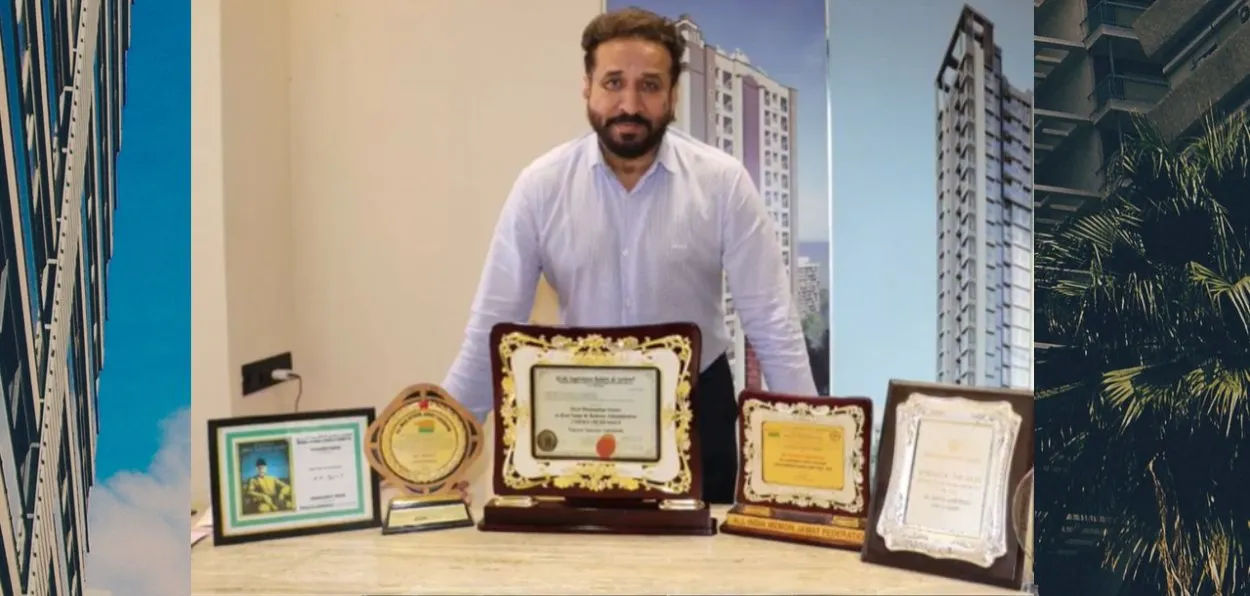
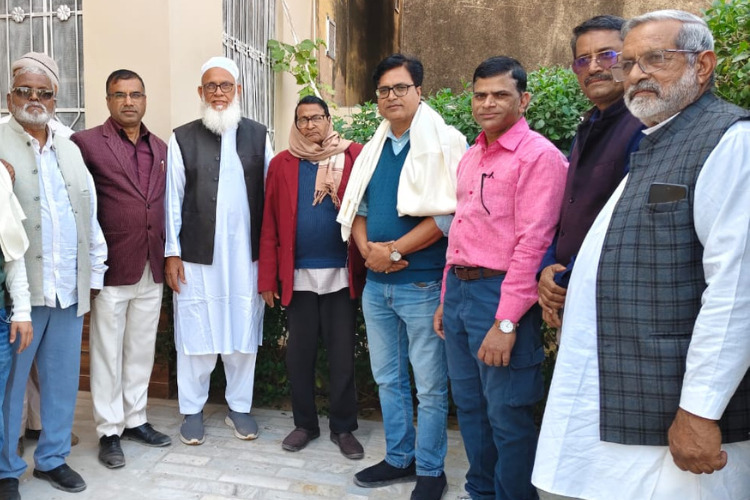
Parvez Suleman Lakdawala, founder CEO, Grace Group of Companies
Mumbai :
Mumbai-based real estate developer Parvez Suleman Lakdawala, who has played a significant role in building homes for slum dwellers, has received an Honorary Doctorate from the University of Sorbonne of France at the British Parliament for his extraordinary work in real estate and housing infrastructure particularly in slum redevelopment, over the last three decades.
He was given this award during the ‘Sorbonne International Convention’ held at the ‘House of Lords’ in London by the French higher education institution ‘Ecole Supérieure Robert de Sorbonne.’
Speaking about the honour, he said, “I never even dreamt that I would receive such an honour.”
This institution is known worldwide for granting degrees based on professional experience. Speaking after accepting the honorary degree, Lakdawala said, “This is a global success for the slum rehabilitation work I have done through SRA schemes. I have been in this business for 30 years and have completed the construction of 32 buildings so far.”
Parvez Lakdawala was born into poverty in a small hutment in Bandra when conditions in the slums were sub-human, and the residents had to struggle for basic amenities like water.
Parvez recalls that there was a filthy settlement outside his house, and the condition of the household was very poor. For children living in such conditions, even dreaming big was considered a crime.
However, Parvez never let his poverty weaken his resolve to rise above his circumstances.
Despite the fear of dropping out due to poverty, Parvez held onto his education. Studying while living in a slum, he completed his education. Not many know that Parvez Lakdawala, the successful businessman, is a law graduate.
The law gave him discipline in life and the knowledge to fight against injustice. He often says that he prospered in life only because of education.
In 1989, he laid the foundation of the Grace Group of Companies and started working in the real estate sector.
Sorbonne University campus
Around 1995, he worked for the Slum Rehabilitation Authority of Mumbai (SRA) to provide highly subsidized apartments to slum dwellers. At that time, not many builders were willing to work there. Today, he has completed projects of more than 32 grand buildings in Mumbai.
He gave a new face to the homes of the poor by implementing new designs, modern amenities, and innovative concepts.
Earning money was never his sole aim. Having experienced poverty, he empathized with the poor. That is how he bears the educational expenses of thousands of poor children. For parents who cannot afford to pay their children’s school or college fees, Parvez Lakdawala has become a ray of hope. “Allah has given to me so that I can give it back to society,” he says.
During the Corona lockdown, when the entire country was under the shadow of fear, Parvez Lakdawala was working in the streets.
Thousands of labourers with their small children were walking towards their villages. Parvez arranged for vehicles and buses for them. He transported more than 3000 people to their homes.
He also ensured the travelers got food and water. For this work, he received appreciation not only from Mumbai but also from states like Rajasthan.
In a city like Mumbai, where even dreaming of a home is a luxury, Parvez Lakdawala has helped thousands of families get their rightful homes. His journey builds buildings worth crores today, starting from a 250-square-foot house.
The most important aspect of Parvez Lakdawala’s work is the self-respect he has given to the common man. Recalling old memories, he says, “Earlier, people living in slums used to feel ashamed about their address. They regretted their living conditions. Today, when the same people enter flats equipped with all amenities, they proudly disclose their address to others. Giving them the property they deserve and a sense of security gives me the most joy.”
Parvez Lakdawala’s mantra is: Your intention is more important than your destiny. If your intention is good, God comes to your aid and grants you success.
source: http://www.awazthevoice.in / Awaz, The Voice / Home> Stories / by ATV / posted by Aasha Khosa / January 09th, 2026
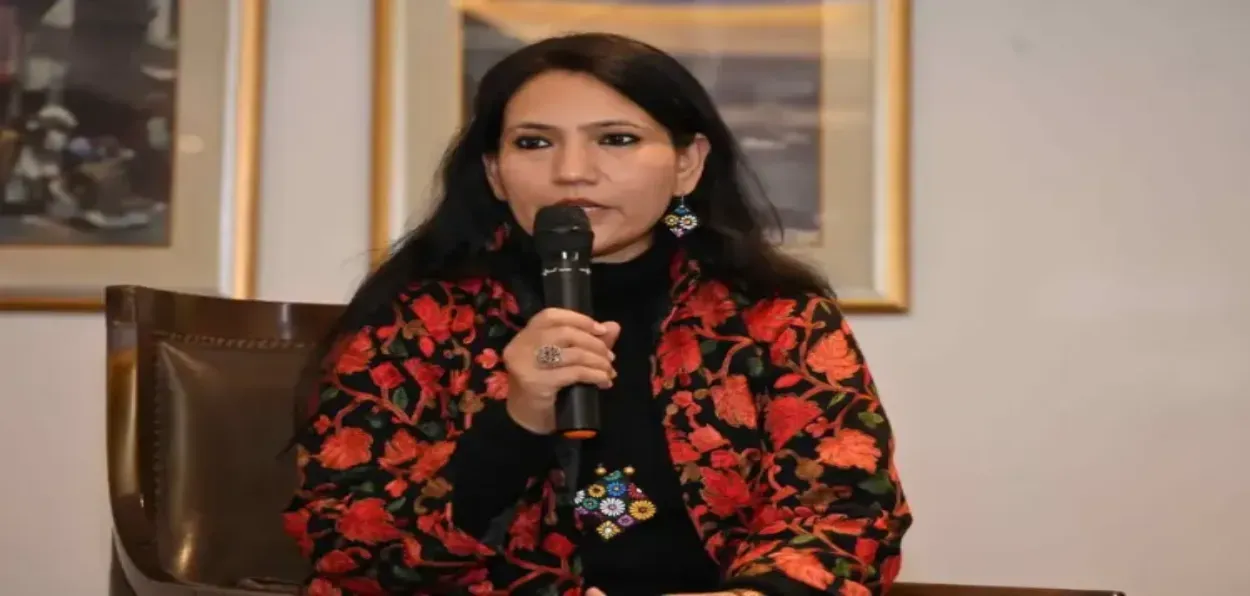
Coming from a small town and making a mark on the national scene, writer-journalist Tasneem Khan brings women’s concerns to the forefront through her journalism and literature. Her narratives are sensitive, clear, and attempt to offer solutions. Her writing and television programmes do more than narrate women’s struggles; they challenge social mindsets and inspire change.
Here are excerpts from an exclusive conversation with her:
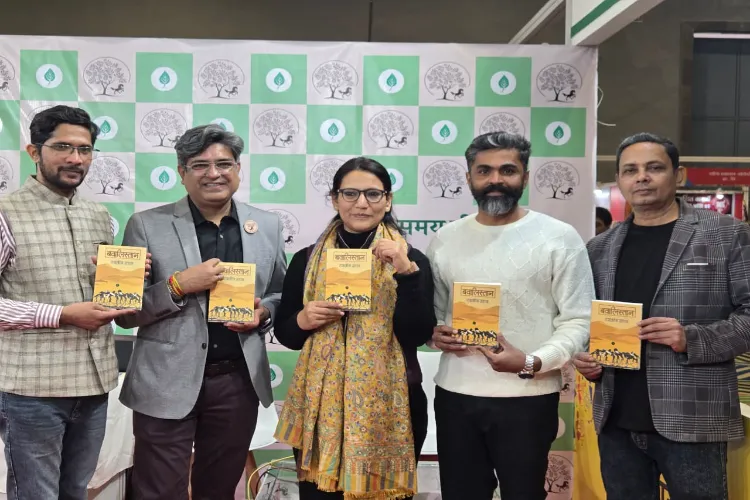
Let’s begin with Bwalistan. What is it about?
Bwalistan is a collection of stories rooted in Rajasthan, particularly its desert life. These stories belong to a distinct literary tradition that deeply portrays the complexities and struggles of life in the Thar Desert. Rajasthan’s desert is not just a physical landscape—it is defined by its people, culture, traditions, and way of life, all of which give it a unique identity.
Coming from a small town, it isn’t easy to make a mark in journalism and literature. How did your journey begin?
A: It’s true that paths have never been easy for women. I come from Didwana tehsil in Rajasthan’s Nagaur district. Though I grew up in a small town, my parents were educated, and our home had a culture of reading and learning. My mother’s love for books shaped me deeply. Growing up among books sharpened my ability to think, debate, and reason. I also won several awards during my school and college years.
When did you choose journalism as a career?
I formally entered journalism in 2005. From the very beginning, I was drawn to women-centric issues. I consistently wrote on gender sensitivity, domestic violence, and women’s social rights. For me, journalism is not just about reporting news; it is about engaging in dialogue with society.
Your television programmes gained special recognition. Could you tell us about them?
A: I hosted a programme called Samar Shesh Hai, which discussed women’s social and political concerns. Later, my regular show on Patrika TV, Aadhi Duniya, Poori Baat – with Tasneem Khan, became quite popular. The aim was to present women not merely as victims, but as thinking, reasoning individuals.
For which report did you recently receive the Ladli Media Award?
I received the award for my show “When Will Domestic Violence Go into Lockdown?”, presented by Population First and UNFPA. The jury felt the report exposed a harsh truththat during lockdown, women faced another terrifying pandemic inside their homes: domestic violence.
Your writing focuses less on complaints and more on solutions. How did this approach develop?
I don’t want to merely describe women’s pain. I believe writing should point toward solutions. If even one woman finds a way forward through my work, I would consider my life meaningful.
You began novel writing in 2015. How special is Mere Rehnuma to you?
A: Mere Rehnuma is extremely close to my heart. Published by the Jnanpith Trust, it was selected in a young writers’ competition. I became the second woman writer from Rajasthan whose debut novel was published by Jnanpith. Through this novel, I tried to establish that women’s empowerment cannot come through financial independence alone without a change in social mindset, empowerment remains incomplete.
Research has been conducted on this novel. How did that feel?
A: It was a matter of great pride that Mere Rehnuma became the subject of PhD and MPhil research. It reaffirmed my belief that my writing has connected at both academic and social levels.
Could you tell us about your other works and awards?
A: My short story collection Dastaan-e-Hazrat Mahal was published in 2019 and earned me the Chandrabai Award. In 2021, I received the Shakuntalam Award from the Rajasthan Progressive Writers’ Association. My stories have been translated into several languages. Rukh-e-Gulzar was translated by the Indian Translation Council, while The Blue of Silence was published in a Pakistani Urdu magazine and won the Mirror Award. My story My Share of Moonlight will soon appear in a collection by Oxford University Press.
What is your writing process like?
I observe people around me very closely their characters, pain, and struggles shake me from within. Until that restlessness finds words, I find no peace. That unrest gives birth to my stories.
What role did your parents play in your life?
My parents have been my greatest support. At difficult turns, they always encouraged me. I firmly believe parents’ education plays a decisive role in shaping a child’s future. I have seen many girls unable to move ahead simply because their parents did not value education.
The heroine of Mere Rehnuma is in search of liberation. How do you view this liberation?
A: For me, liberation is not just personal; it is social. Until society learns to accept strong women, their freedom will remain incomplete. If my writing can guide even one woman in this direction, that will be my greatest achievement.
You recently interacted with readers during the ‘Chaturang #LockdownLive’ session on Facebook. How was that experience?
The Rajasthan Forum organised the session. I spoke openly about my education, career, and literary journey. I emphasised that becoming a writer requires years of preparation, deep reading, and psychological analysis of society. I also read excerpts from my novel Ai Mere Rehnuma. The interaction was deeply personal and immensely inspiring for me.
Tasneem Khan’s journey shows how words, when driven by empathy and purpose, can challenge patriarchy, reshape thought, and quietly spark a revolution, one story at a time.
source: http://www.awazthevoice.in / Awaz, The Voice / Home> Stories / by Onika Maheshwari, New Delhi / January 19th, 2026
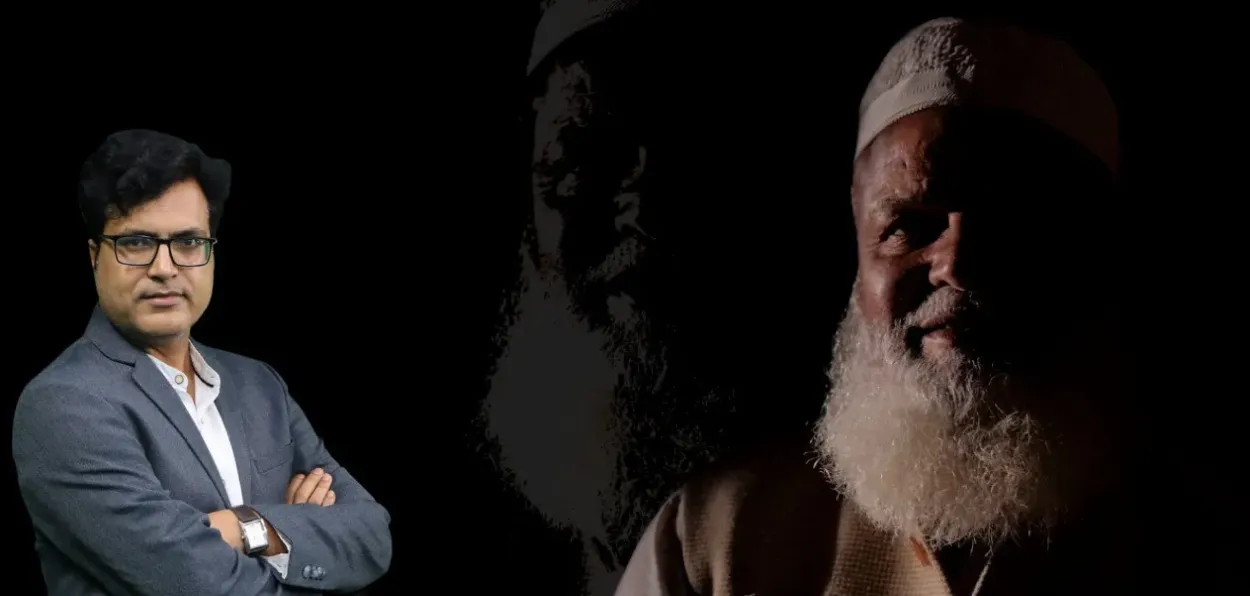
Manjit Thakur, Director of the Kayamkhani Bravehearts
New Delhi :
“There is no Kayamkhani who has been hit with bullets in his back,” says a veteran of the Indian Army, who like many others of his community have dedicated his life to uniform, discipline, and service to the nation.
This documentary, Kayamkhani Bravehearts is the saga of the Kayamkhani, a Muslim community from Rajasthan, whose first preference for a career is military or Police and who consider service to the nation as a matter of pride and responsibility. For them, patriotism is not just a slogan, but a tradition passed down through generations. The documentary is documentation of the story of these valiant sons of the soil who defended the country at the border, faced enemy bullets head-on, and who consider martyrdom an honour.
The first glimpse of the documentary, a 33-second teaser, is enough to send shivers down the spines of viewers. The teaser suggests that this film will not merely be a presentation of facts but an experience steeped in emotion, sacrifice, and patriotism. Watching it, viewers will not only be filled with pride but will also be compelled to understand that in defending the nation, only duty matters, not religion.
The history of the Kayamkhani Muslim community of Rajasthan is replete with valour, discipline, and service to the nation. Almost every family in this community has been connected to the armed forces in some way. The dream of the youth here is not to become a big businessman or an officer in a high-ranking government position, but to serve their motherland by joining the Indian Army, paramilitary forces, or the police.
Watch the teaser here:
Manjit Thakur, director and screenwriter of the documentary, states that soldiers from the Kayamkhani community have so far earned four Shaurya Chakras, 18 Sena Medals, and five Vishisht Seva Medals.These figures would be a source of pride for any community, but for the Kayamkhanis, they represent not just honour, but a symbol of responsibility.When it comes to sacrifice, this community has not lagged.
In Danduri village, which is now known as the “village of soldiers,” 18 Kayamkhani Muslims were martyred for the country. Similarly, 10 martyrs each from Jhajhot and Nua villages also laid down their lives for their motherland. These figures are not just numbers, but represent the tears of those mothers, the pride of those families, and the essence of the soil that gave birth to such brave sons.
The documentary presents the stories of these martyrs in a deeply sensitive and impactful manner. The camerawork, editing, and graphics are of a high standard, emotionally connecting the viewers to the narrative. Research, hard work, and authenticity are evident in every frame.
Before making this documentary, the Awaz-The Voice team conducted comprehensive research. Under the leadership of Editor-in-Chief Atir Khan, the team spent a long time researching, delving into history, and understanding the ground realities. The documentary was shot over several days in different villages of Rajasthan. The filming continued late into the night to present the true lifestyle, struggles, and pride of this community to the world.
The documentary also reveals several surprising facts. For example, Kayamkhani Muslims consider cows their most valuable asset and cannot even imagine harming them. This fact shatters the stereotypes that are often formed in society without proper understanding.
Manjit Thakur recounts that when the team arrived in the Kaimkhani villages, they were welcomed with a sense of pride and warmth. The villagers not only welcomed them wholeheartedly but also openly shared their stories, pain, and pride. This trust became the soul of the documentary.
Speaking about the documentary’s objective, Atir Khan sais that in today’s world, negativity has become the unique selling proposition of news. In this environment, Awaz-The Voice is the sole platform which brings forth positive stories of cooperation, and peaceful coexistence from India and around the world.
Awaz team with locals in a Rajasthan Village
He believes that beyond the walls of faith, caste, region, and language, Indians have many shared concerns, challenges, and dreams for the future that have the potential to bring people and communities together. Awaz-The Voice’s content promotes progressive, positive, and nation-building ideas not only in India but also among Muslim communities abroad.
This documentary is an extension of that very idea—an attempt to amplify the voice of true patriotism, a voice often drowned out by the noise of hatred. This film reminds us that the uniform has no religion, and every drop of blood shed for the country is purely Indian.
On release, this documentary will undoubtedly not only move viewers but also make them think, feel proud and energise them to serve the nation. This is not just the story of the Kayamkhani community, but the story of an India where the country comes first.
source: http://www.awazthevoice.in / Awaz, The Voice / Home> Stories / by Manjit Thakur / posted by Aasha Khosa, ATV / January 17th, 2026
Kanathil Jameela, CPI(M) leader and sitting MLA of Koyilandy, passed away late on Saturday at a private hospital in Kozhikode. She was 59.
Jameela, who had been undergoing treatment for cancer, was admitted to the intensive care unit earlier this week. Hospital authorities confirmed that she died around 11.30 pm.
An MLA, former district panchayat president, and one of the most prominent women leaders of the CPI(M) in Kozhikode, Jameela had a long public life that spanned local governance, women’s mobilisation, and welfare work.
During her administrative tenure, she oversaw several notable programmes, including Snehasparsham for kidney patients, a cancer screening drive for women, the KARUNA initiative for humane stray-dog management, a mission to end landlessness, and schemes promoting sports and education.
Jameela had been a district committee member of the CPI(M). She was also the State vice-president of the All-India Democratic Women’s Association.
The CPI(M) state leadership condoled her death, calling it an “irreparable loss.”
Jameela made active interventions in issues concerning the people, Chief Minister Pinarayi Vijayan said. As a leader of the All India Democratic Women’s Association, she was keen to bring to the fore issues concerning women. She garnered respect for her simplicity and friendship across party lines, Vijayan said.
Leaders across parties also issued statements remembering her as an accessible and grounded representative of the coastal constituency.
According to party sources, Jameela’s body will be taken to her residence today. Public homage will be held at the CPI(M) district committee office in Kozhikode and later at the Koyilandy Town Hall.
source: http://www.maktoobmedia.com / Maktoob Media / Home> India / by Maktoob Staff / November 30th, 2025
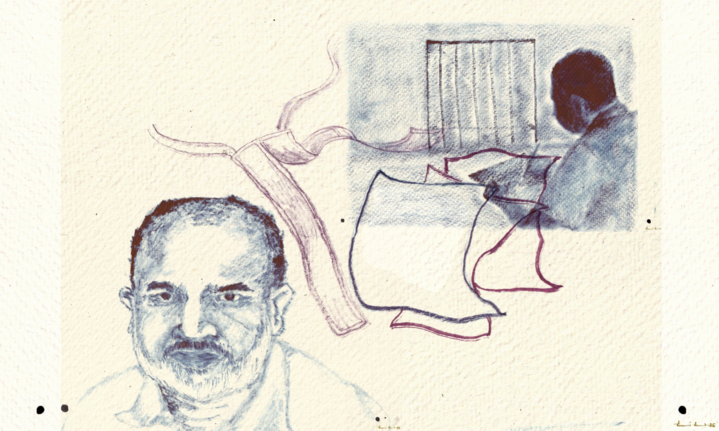
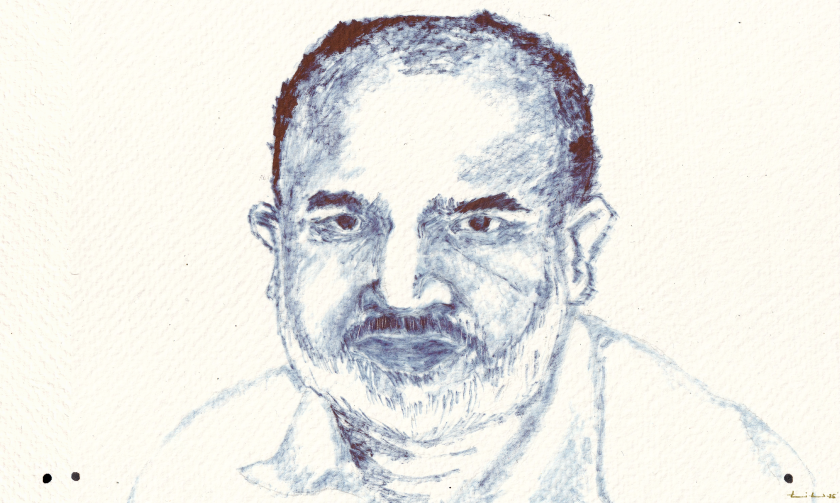
42-year-old Ehtesham Qutubuddin Siddiqui, who was a death row convict for nearly a decade before being acquitted by the Bombay high court earlier this month, reflects on time in prison.
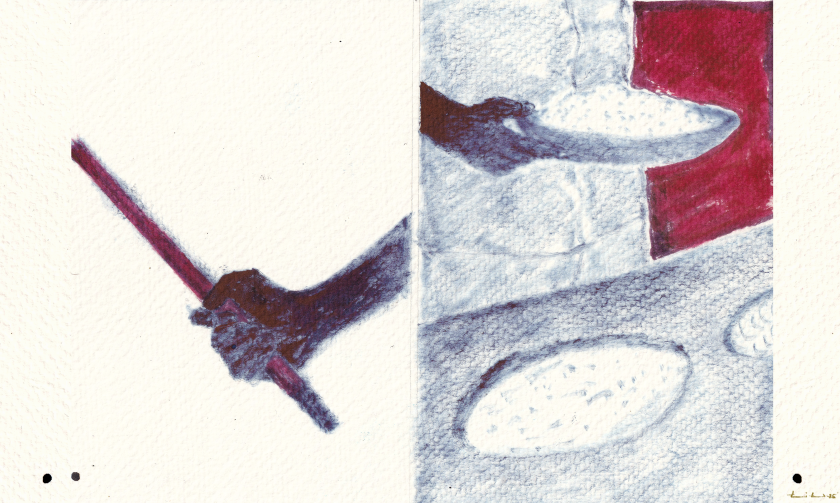
Illustration: Pariplab Chakraborty
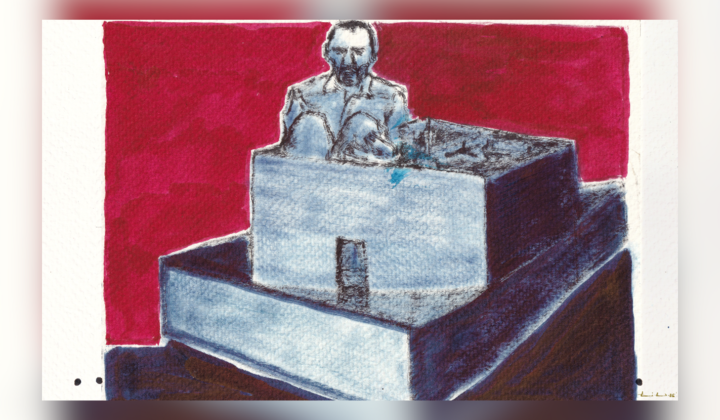
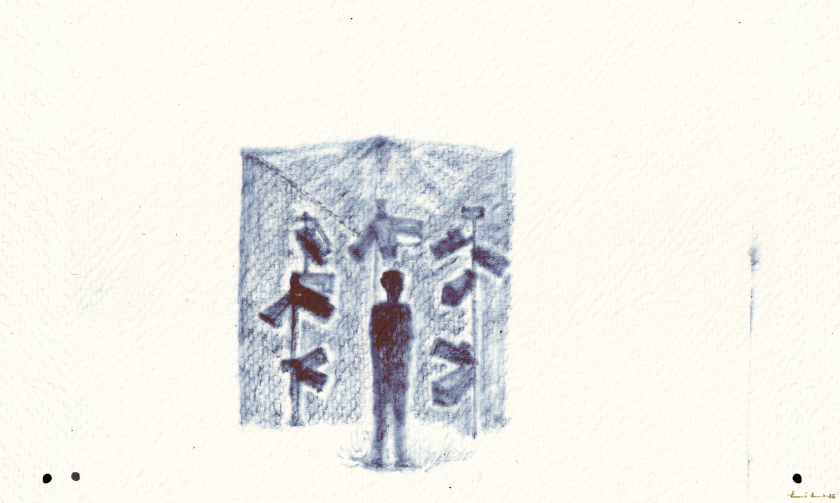
A tiny 80-square-feet room, fitted inside a compact V-shaped enclosure known as the phansi yard (gallows yard) of Nagpur Central Prison, served as “home” for 42-year-old Ehtesham Qutubuddin Siddiqui for nearly a decade. In 2015, soon after a special Maharashtra Control of Organised Crime Act (MCOCA) court sentenced 12 individuals – five men, including Siddiqui, to death, and the remaining seven to life imprisonment – in the 2006 Mumbai serial train blasts case, he was transferred to Nagpur jail.
All 12 men were acquitted by the Bombay high court on July 21.
Siddiqui describes his decade-long solitary confinement as a place that made him feel “safe.” “In the existing political atmosphere, especially as Muslim men convicted on terror charges, this isolation was the only way we could have stayed safe in jail,” he feels.
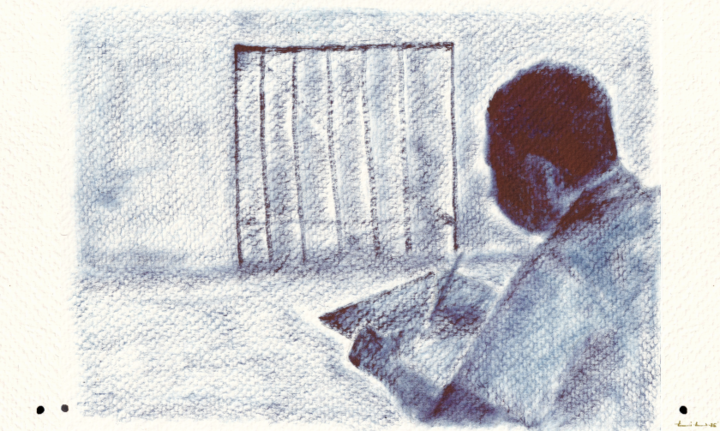
Illustration: Pariplab Chakraborty
An incarceration spanning two decades
Reflecting on his two decades of incarceration – nine years as an undertrial prisoner in Mumbai and then as a death row convict in Nagpur – Siddiqui says that while the trial took nearly a decade, the transition from undertrial to death row prisoner was “quite sudden.”
“One minute, we were jostling for space in the overcrowded prison barracks in Mumbai (until the lower court’s verdict), and suddenly, we were thrown into solitary confinement. It was a very small room but it was still ours. It had an attached bathroom, a ceiling fan and a tubelight,” he says, describing the prison room.
Solitary confinement in India is unconstitutional. Even for death row convicts, it is permissible only after their mercy petition is rejected by the President of India. In the serial train blasts case, the death penalty had not yet been confirmed by the High Court but they were still subjected to solitary confinement. “But none of this really matters. It’s a common practice. The moment a person is given a death sentence, the prison authorities transfer them into the phansi yard,” Siddiqui says, as he recalls the names of many death row convicts housed in the 30 tiny solitary cells near his.
Illustration: Pariplab Chakraborty
“Many lacked proper legal representation and were simply abandoned here after the trial court imposed a death sentence. They would arrive here horrified, thinking this was where they would be hanged the very moment they reached there.”
It became almost a duty of other death row convicts like Siddiqui to explain legal procedures, offer advice, and calm newcomers in the phansi yard. Siddiqui says he saw many come and go over those ten years. “Almost all were eventually acquitted in their appeals before higher courts,” he points out.
Siddiqui’s observation is in sync with different studies on the Indian judicial system and capital punishment. The Death Penalty reports that the NLU- Delhi’s Project 39A (now renamed as The Square Circle Clinic after it shifted its base to NALSAR University of Law, Hyderabad), a criminal justice research and legal aid programme released every year has long established the pattern of death penalties getting either commuted to life or lesser punishment or in many cases, simply ending up in acquittals.
Siddiqui recalls his interactions with five men from the Shinde family, who were sentenced to death by a trial court in a rape and murder case, only to be later acquitted by the Supreme Court. The Shindes, from a Nomadic Tribal community, endured 16 years of incarceration, 13 as death row convicts.
“They would keep asking me what I thought of their case, and I would keep reassuring them they’d be out soon. That simple fact made them so happy.” The Shindes were acquitted in 2019 following a strongly worded Supreme Court judgment. Among them, Ankush Maruti Shinde, was only 17, a minor, at the time of his arrest.
Experienced sustained physical torture
Siddiqui says the hope that their innocence would eventually be proven kept them going. “We too survived prison life on that one hope. After all, how long could justice evade us?” he asks.
Siddiqui experienced both extremes of prison life: sustained physical torture in Mumbai’s Arthur Road Jail (complaints about which led to the transfer of the then-jail superintendent, Swati Sathe) and a relatively calmer existence with better food and living conditions in Nagpur. “I’m not romanticising prison life, but Nagpur’s prison was certainly a lot better. Which also means prisons can be made liveable if one wished,” he says.
Illustration: Pariplab Chakraborty
But his co-defendant Kamal Ansari’s death during the second wave of the COVID-19 outbreak in 2021 shook him. “Everyone around us was falling sick. Kamal fell sick and was moved to the hospital ward. He never returned.”
Illustration: Pariplab Chakraborty
Siddiqui says most of the men implicated in the case were unknown to him at the time of arrest. “But as circumstances brought us together, we eventually became each others’ support system,” he adds. The police and jail officials, he claims, tried hard to turn them against each other. “And the frustration does eventually get to you. So, each time we reached a point of anger or frustration against each other, we would simply stop talking. That helped us cool off, and rework on our relationship,” he shares.
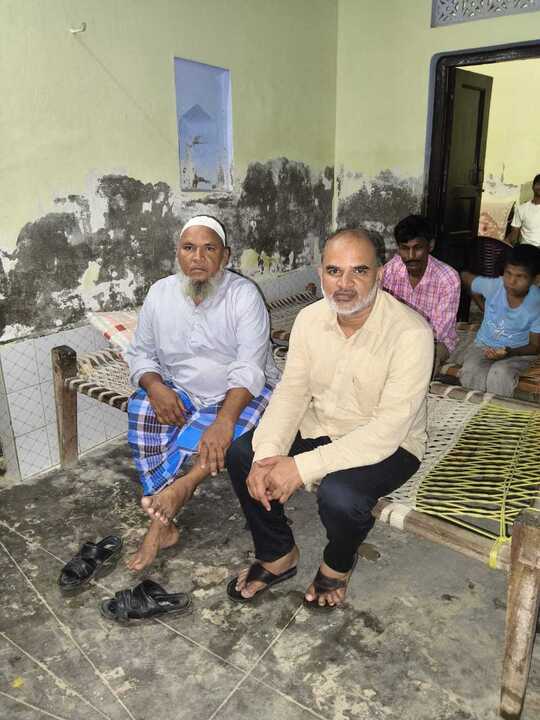
Ehtesham Qutubuddin Siddiqui with his father at their family house in Jaunpur. Photo: By arrangement
In Nagpur, Siddiqui had no trouble accessing writing materials. So he wrote extensively. His book, Horror Saga, which details his prison life and the botched up trial, was published last year. He has a manuscript ready for his next book. He has also translated several others while incarcerated.
How did he access books and research materials in jail? “I deviced a unique method,” he says, with a sense of pride. Siddiqui filed nearly 6,000 Right to Information (RTI) applications over two decades, primarily to gather evidence against the investigating agency, which helped debunk the police’s case, and also to access books published by the government press.
Earned over 20 degrees while in prison
A college dropout at the time of his arrest, Siddiqui has since earned over 20 degrees, including several Master’s, Bachelor’s, and Diplomas. In 2001, while in his third year of a Chemical Engineering program, he was arrested for a few days for alleged involvement with the Students Islamic Movement of India (SIMI), an organisation banned that year, leading to the overnight criminalisation of many men from the Muslim community.
Since then, Siddiqui says he tried several times to complete his education and earn a formal degree, but it didn’t happen. “So, in jail, I made full use of the time to gain as many degrees as I could,” he shares.
As strange as it may sound, among the first undergraduate degrees that Siddiqui enrolled himself was Tourism. “I wanted to keep my brain stimulated somehow and not let the incarceration consume me. So, I went on this rage of enrolling myself for every opportunity that was made available,” he recalls. He knew how to read Urdu, Arabic but didn’t possess a formal degree.
“So, I got one while in jail.” Siddiqui, who worked as a Desktop Publishing (DTP) operator as a local publishing house in Mumbai, now holds an MBA degree, master’s degrees in English Literature, Sociology, Marketing, and Financial Management, and diplomas in Nutrition and Mass Communication, among others. He is in the final semester of a three-year law degree.
Illustration: Pariplab Chakraborty
If not studying, Siddiqui would take care of the small garden outside the barrack. “Those plants were the only pretty thing to look at,” Siddiqui laughs. The prison rules don’t allow assignment of any work to a death row convict. Which means, even though Siddiqui worked, he was not paid for his labour.
According to the Maharashtra state’s revised prison rules, a convicted prisoner is paid up to Rs. 65 per day, although a paltry sum and much lower than the minimum wages standards, yet some money that most incarcerated people look forward to to lead a dignified life in jail or to take back home at the end of their jail term.
Having spent nearly two decades in different prisons of Maharashtra, Siddiqui says the level of surveillance is “simply unnerving” now. “You will find hundreds of cameras loom overhead. Even a slight movement for exercise inside your barrack is instantly tracked, and jail officials confront you with a barrage of questions,’ he says.” Surveillance doesn’t stop here.
Abdul Wahid Shaikh, one of 13 arrested in this case and acquitted in 2015, and several other terror accused have had to install multiple CCTVs inside and outside their homes to simply shield themselves from police harassment.
Illustration: Pariplab Chakraborty
‘Since release, every experience feels new’
On July 21, when the high court acquitted the 12 men, their release orders were immediately executed – an unusual move. In many cases, even after the court order reaches jail authorities, releases are delayed, just to allow the state to file an appeal in the higher court. “Maybe they just wanted us out. The Solicitor General of India, Tushar Mehta, stating before the Supreme Court that the state no longer wanted us in jail is quite telling,” Siddiqui points out.
Illustration: Pariplab Chakraborty
Since his release, every experience feels “new,” Siddiqui says. He and his co-defendant, Shaikh Mohammed Ali Alam Shaikh, boarded a flight from Nagpur to Mumbai. “Hairaan kar diya Mohammed Ali ne (Mohammed Ali exhausted me),” he laughingly shares, as he narrates the experience of tasting freedom for the first time in two decades. “He was so excited he simply couldn’t stop talking. I worried his chatter would draw attention. I told him, ‘Bhai, agle ek ghanta shaant rehna (Brother, stay calm for the next hour).”
At Mumbai airport, they were met by a media frenzy. “We didn’t know how to handle this sudden attention; the last time we experienced anything like this was two decades ago at the time of our arrest,” Siddiqui says. In Mumbai, they had the chance to take a train to reach the Jamiat Ulema-i-Hind (an organisation that provided legal aid to the men all along) office but chose not to. When asked why, Siddiqui pauses but says nothing.
Illustration: Pariplab Chakraborty
At the time of his arrest, Siddiqui lived in Mira Road, but he now stays with his family in Younuspur, Jaunpur district, Uttar Pradesh, where his parents, four siblings, and, most importantly, his wife, Sabina, reside. Siddiqui and Sabina were married for less than a year at the time of his arrest in 2006. Siddiqui was only 23 at the time of his arrest, Sabina even younger.
‘She stood by me, and my parents cared for her as their own’
“In those 19 years, I must have told her many times this could be an endless wait and that I wouldn’t hold it against her if she sought a divorce. But she was steadfast. She stood by me, and my parents cared for her as their own,” Siddiqui says. He calls Sabina the “real hero” of his story. “Her resilience and trust in me was so deep.I can’t express my gratitude enough,” he tells The Wire.
Returning to Younuspur was an emotional homecoming. “When I got home, we just cried. We barely talked; we just cried for many hours.” Relatives and well-wishers have been visiting non-stop. “I don’t recall most faces, but it would be rude to say so, so I simply nod. When I was behind bars, these individuals offered support and solidarity to my family. Now they are here again to celebrate my freedom. It’s all too surreal,” he says.
Siddiqui might have returned with close to two dozen degrees, but the future still looks “uncertain,” he admits. “Finding a job might not be possible. Maybe I will consider pursuing a legal profession,” he thinks aloud. But for now, he says he wants to just return to writing those many stories he has. “The ones I’ve safely kept locked inside me for so many years.”
source: http://www.thewire.in / The Wire / Home> English>Rights / by Sukanya Shantha / July 27th, 2025
Hamidullah Shariff who translated the Qur’an into Telugu in 1985 died recently in his home town in a village in Guntur district of Andhra Pradesh.
Hamidullah Sharif is well versed in Arabic, Persian, Urdu, Telugu and English languages and is considered a scholar particularly of Arabic, Urdu and Telugu.
The Telugu translation of Qur’an is named or titled Divya Qur’an.
He was also a member of Andhra Pradesh’s Jamat-e Islami Hind Majlis-e Shoora.
source: http://www.milligazette.com / The Milli Gazette / Home> Community News> Obituaries / May 02nd, 2026
The AIMIM won 33 seats in Chhatrapati Sambhajinagar, 21 in Malegaon, 15 in Amravati, 13 in Nanded, 10 in Dhule, eight in Solapur, six in Mumbai, five in Thane, two in Jalgaon, and one in Chandrapur.
Asaduddin Owaisi / PTI
Asaduddin Owaisi’s door-to-door campaign and the sting of narrow defeats in previous polls energized the workers of All India Majlis E Ittehadul Muslimeen (AIMIM) in the Maharashtra civic elections, resulting in the party winning 114 seats across the state, its leader Shareque Naqshbandi said on Friday.
The AIMIM won 33 seats in Chhatrapati Sambhajinagar, 21 in Malegaon, 15 in Amravati, 13 in Nanded, 10 in Dhule, eight in Solapur, six in Mumbai, five in Thane, two in Jalgaon, and one in Chandrapur.
Winning 80 seats in earlier civic polls gave the party an idea of the temperament of the urban voter, which also helped, Naqshbandi told PTI.
“Initially, AIMIM faced a challenge from its own people over candidature in Chhatrapati Sambhajinagar. Later, the presence of Asaduddin Owaisi and his rallies in potent pockets resulted in AIMIM winning 33 out of 37 seats we contested here. We have bagged wins from Mumbai to Chandrapur this time,” he said.
Owaisi dedicated more time to the campaign compared to 2015 and managed to overcome dissidence by speaking to disgruntled leaders and convincing nearly 70 percent of them, Naqshbandi said.
“The rest had already moved ahead by joining other political parties. We brought these people together and this got converted into votes. There were divisions among the opposition parties, which proved to be an opportunity to us. Moreover Asaduddin Owaisi went door to door in the areas where we were contesting. He pointed out local civic issues in smaller rallies which appealed to the voter,” he added.
Narrow losses, like the one faced by Imtiaz Jaleel in the 2024 assembly elections from Aurangabad East, had hurt workers who put in extra efforts, Naqshbandi said.
Speaking on the Chhatrapati Sambhajinagar civic poll results, former MP Jaleel said the BJP was fighting with the aim of ending the Shiv Sena here.
“The BJP had money and resources but they had a target to end Shiv Sena led by Eknath Shinde. They severed the alliance at the last moment and achieved their target. Now Shiv Sena is behind us here. They have 4-5 MLAs, one MP and a minister here. But they could do nothing and people have answered them through votes,” he told reporters.
The people of the city have stood with AIMIM for the past 12 years, resulting in 33 wins, Jaleel added.
“We are the second biggest party in the city after BJP. We have given candidature to the ordinary people here and they have won here. This is a tight slap to those political parties who gave candidature to their relatives. While the opposition called AIMIM communal, we made people from the Hindu community win seats,” he said.
source: http://www.telegraphonline.com / The Telegraph Online / Home> India / by The Telegraph Online Web Desk & PTI / January 16th, 2026
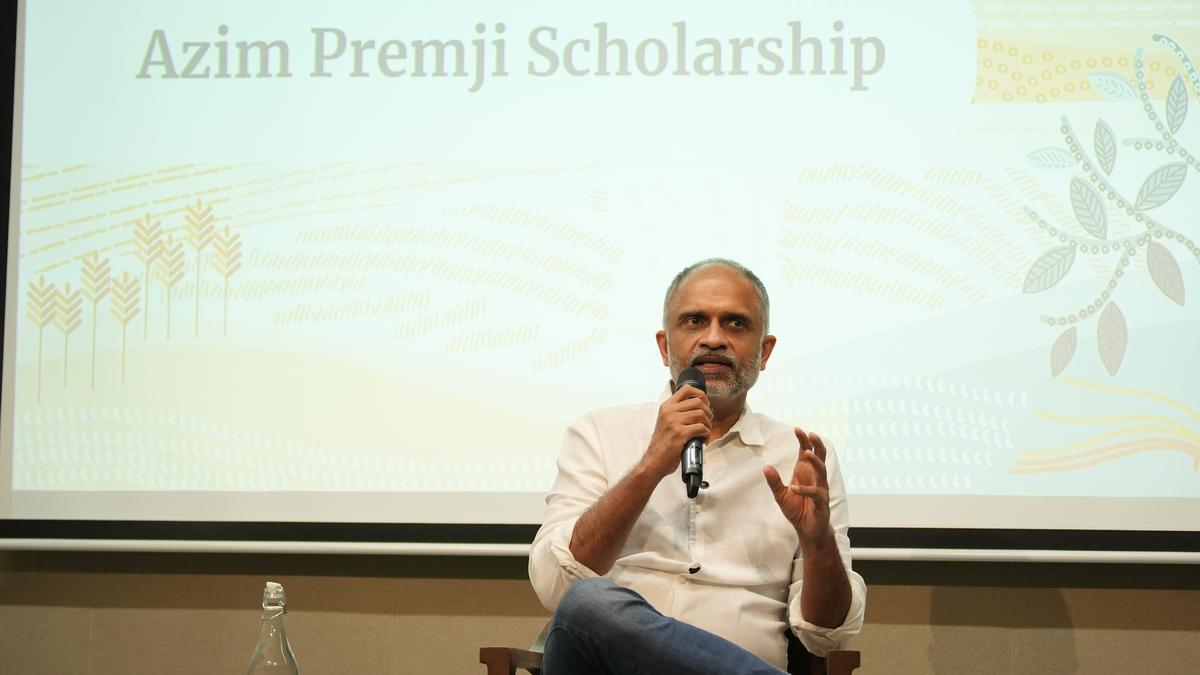
The Azim Premji Foundation on Thursday announced the Azim Premji Scholarship for up to 2.5 lakh girl students from government schools across 18 States for pursuing higher education.
A scholarship of ₹30,000 will be given annually to girl students who have passed their 10th and 12th examinations in government schools and have received admission in a bona fide higher education institution (HEI). These bona fide HEIs will include all government HEIs and selective private HEIs as well. The ₹30,000 scholarship will continue for the duration of the girl’s college/university programme, so long as the girl successfully continues in the programme.
“There is no additional criteria or eligibility for the candidates. We are not conducting any exams or checking the financial backgrounds of the students,” said Anurag Behar, the Chief Executive Officer of the Azim Premji Foundation.
He stated the reason for such a type of screening was that more than 90% of government school children come from disadvantaged backgrounds. The scholarship aims to ease some of the financial burdens of girl students pursuing a higher education, rather than focus on too many checklists or screening processes.
He also noted that while primary school admissions for girls were almost equal to those of boys, higher education admission numbers showed a lesser percentage of girls. “Tuition fees are often waived off or given at a discount for girls from disadvantaged financial backgrounds. But additional expenses like commute, clothes, books etc discourage them from pursuing their higher education,” he explained.
A pilot test of the ‘Azim Premji Scholarship’ was launched in 2024-25 across certain districts of Madhya Pradesh, Uttar Pradesh, Rajasthan, and Jharkhand, where over 25,000 girls were selected for the scholarship. For the academic year of 2025-26, the scholarship has officially been launched across 18 States, some of which include Arunachal Pradesh, Assam, Bihar, Karnataka, Telangana, Tripura, Odisha, and Mizoram.
The application process for 2025-26 will start in September 2025. Students can apply online. The scholarship program is a ₹2,250 crore commitment across three years by the foundation, and is likely to be expanded to cover the entire country in coming years.
source: http://www.thehindu.com / The Hindu / Home> News> Cities> Bengaluru / by The Hindu Bureau / May 16th, 2025
The Foundation has set a target of spending ₹4,000 crore over the next five years to build and operate a 1,000-bed charitable super-speciality and multi-organ transplant hospital in Bengaluru.
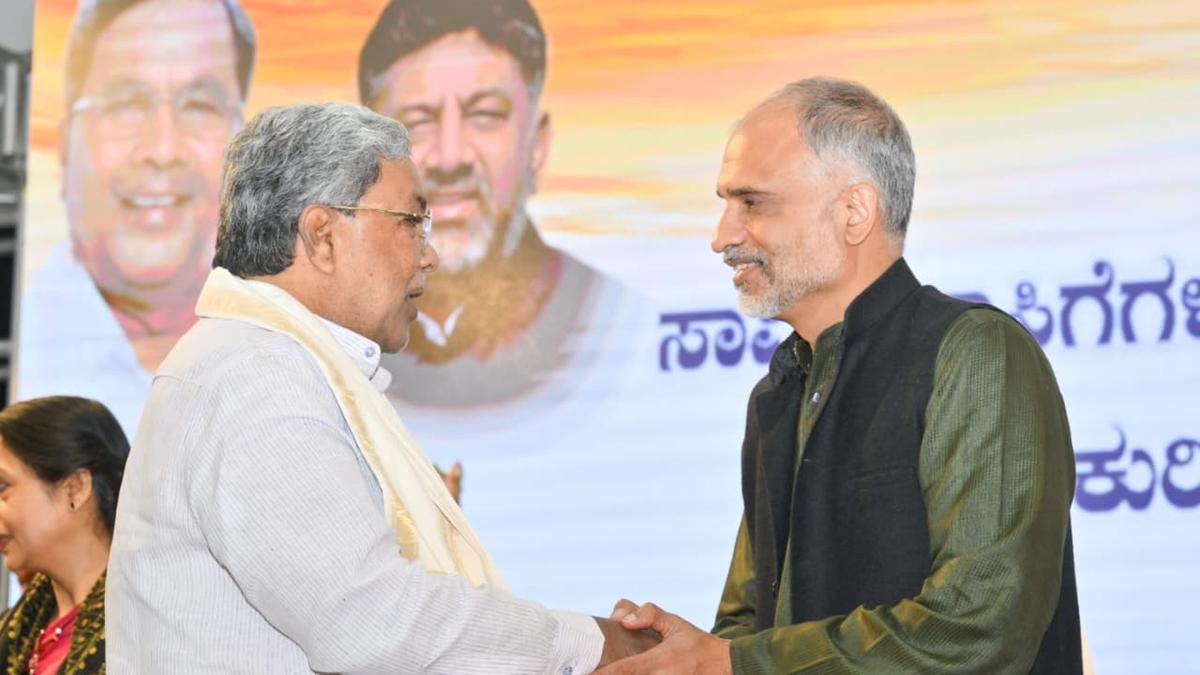
Chief Minister Siddaramaiah with Anurag Beharm, CEO, Azim Premji Foundation, at a ceremony in Bengaluru on Saturday. | Photo Credit: SPECIAL ARRANGEMENT
Chief Minister Siddaramaiah said the Azim Premji Foundation has set a target of spending ₹4,000 crore over the next five years to build and operate a new 1,000-bed charitable super-speciality and multi-organ transplant hospital in Bengaluru.
The hospital will come up on 10 acres within the Rajiv Gandhi Institute of Chest Diseases campus in Bengaluru, which the government has agreed to lease to the Foundation for 99 years, he announced on Saturday after the Medical Education Department and the Foundation signed a Memorandum of Understanding (MoU) for the construction and management of the facility.
Mr. Siddaramaiah said the State was grateful to the Foundation and to Azim Premji ‘for undertaking this noble initiative’, and for deciding to run the facility free of cost. The Foundation will invest ₹1,000 crore on building the hospital and more over the years to run the facility, he said.
Over the last 25 years, the Foundation has supported teacher training, contributed ₹1,500 crore to the government’s egg distribution scheme in schools in 2024, and extended annual scholarships of ₹30,000 each to students from government colleges under the Deepika scheme, the Chief Minister added.
Public systems key
Anurag Behar, CEO, Azim Premji Foundation, emphasised the importance of strengthening public systems, saying private initiatives cannot compensate for weak public infrastructure.
“The foundation believes that public systems are central to a good society. Our commitment is to work with the government to strengthen them,” he said, pointing out that healthcare begins with ASHA workers, primary health centres, and preventive work in communities. “Hospitals are critical, but the first goal must be to prevent people from falling ill,” he said.
Mr. Behar praised Karnataka as ‘one of the three most proactive States’ the Foundation works with. He noted that the Foundation’s 25-year engagement in Karnataka has shown progress most visibly in grassroots work in, among other places, Surpur and Sindagi.
Transplant hub
Medical Education Minister Sharan Prakash R. Patil said the proposed hospital will provide transplant services across multiple organs, with 70% of procedures free of cost and the remaining 30% at minimal rates on the lines of the autonomous Sri Jayadeva Institute of Cardiovascular Sciences and Research and the Kidwai Memorial Institute of Oncology.
He said more than 5,000 patients in Karnataka are currently awaiting kidney transplant, and over 1,000 require liver transplant.
Dr. Patil added that the project aligns with the government’s larger roadmap to strengthen tertiary healthcare. “We have set a target of establishing one medical college, one super-speciality hospital, one trauma centre, and one cancer hospital in every district,” he said.
At present, Karnataka has 22 government medical colleges, 10 super-speciality hospitals, eight trauma centres, and eight cancer centres, and is ‘halfway through’ with the plan. He said the State intends to transition towards a universal health coverage model, as in the UK, in the coming decade.
This article has been updated to rectify a factual error
source: http://www.thehindu.com / The Hindu / Home> News> India>Karnataka / by The Hindu Bureau / January 18th, 2026