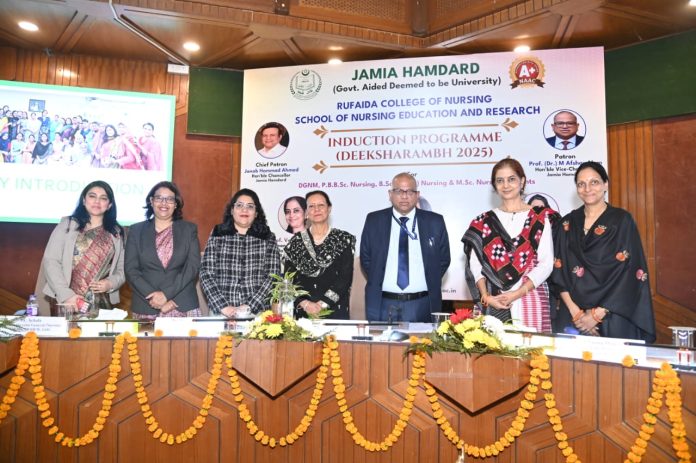
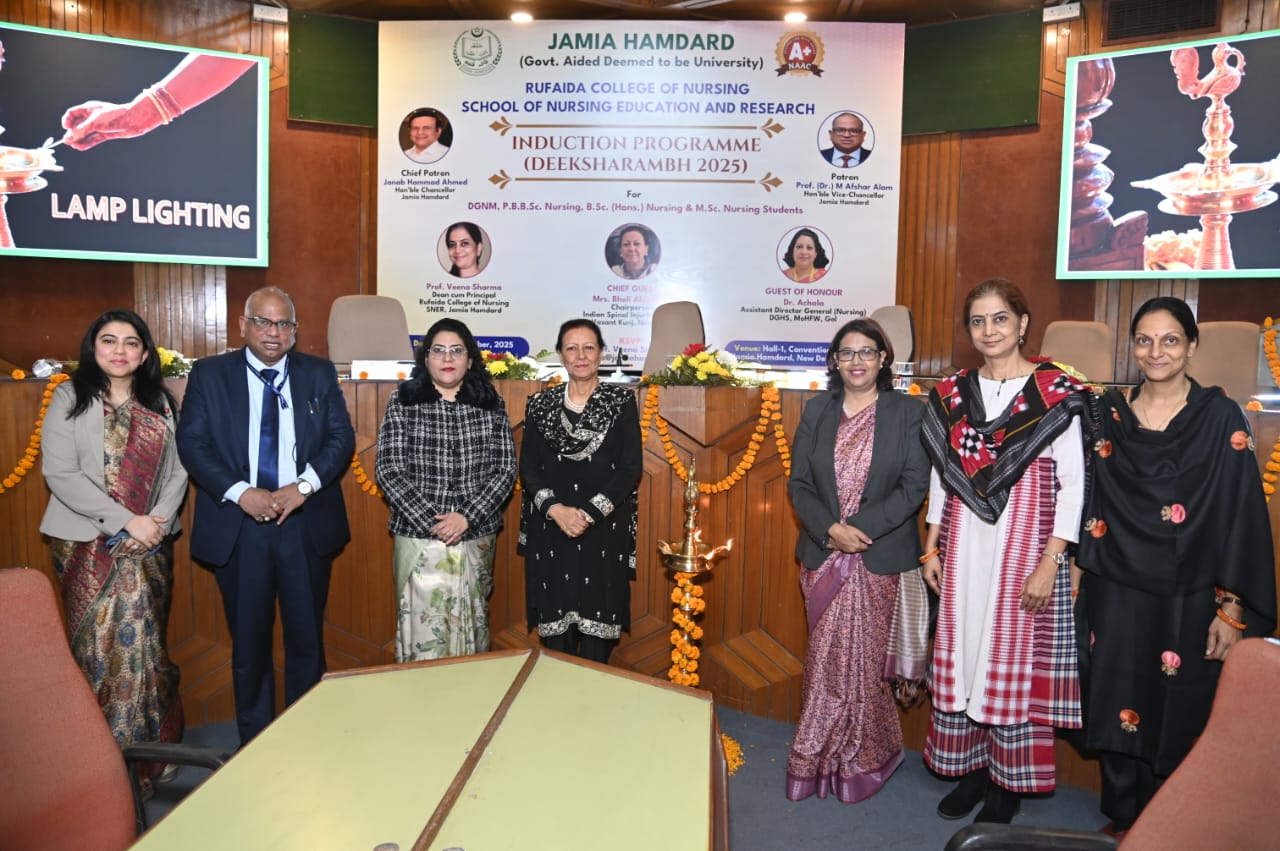
Rufaida College of Nursing, Jamia Hamdard organised its Induction Programme for M.Sc. Nursing, B.Sc. (Hons.) Nursing, Post Basic B.Sc. Nursing, and DGNM First-year students on November 24 at the Convention Centre, Jamia Hamdard, New Delhi. A total of 176 students participated in the programme.
The Chief Guest for the programme was Mrs. Bholi Ahluwalia, Chairperson, Indian Spinal Injuries Centre, Vasant Kunj, New Delhi. The Guest of Honour was Dr. Achala, Assistant Director General (Nursing), DGHS, Ministry of Health and Family Welfare, Government of India.
The inaugural ceremony commenced with the recitation of the Holy Qur’an by Imam Sahib of Rabia Mosque, followed by the Hamdard Tarana presented by the nursing students.
In her welcome address, Prof. Veena Sharma, Dean-cum-Principal, Rufaida College of Nursing, School of Nursing Education & Research, greeted the newly admitted students and paid homage to the university’s founder, Late Hakeem Abdul Hameed. She highlighted the college’s remarkable achievements, strong national ranking, and consistent 100% placement record. She encouraged students to make full use of academic and professional opportunities available at Jamia Hamdard.
In her address, Mrs. Ahluwalia praised the students for choosing a profession rooted in service and emphasised the vital, compassionate role nurses play in healthcare.
Dr. Achala congratulated the new batch and described the induction as the beginning of a transformative journey. She urged students to remain engaged academically and participate actively in extracurricular activities.
In his presidential address, Prof. (Dr.) M. Afshar Alam, Vice Chancellor, Jamia Hamdard, welcomed the students to the NAAC “A+” accredited university. He highlighted the rigorous curriculum and dedicated faculty at Rufaida College of Nursing, reminding students that university life fosters critical thinking, compassion, discipline, and leadership.
The programme concluded with a vote of thanks delivered by Ms. Jamal Fatima Hashmi, Assistant Professor, followed by the national anthem.
source: http://www.radiancenews.com / Radiance News / Home> Education> Latest News / by Radiance News Bureau / November 24th, 2025
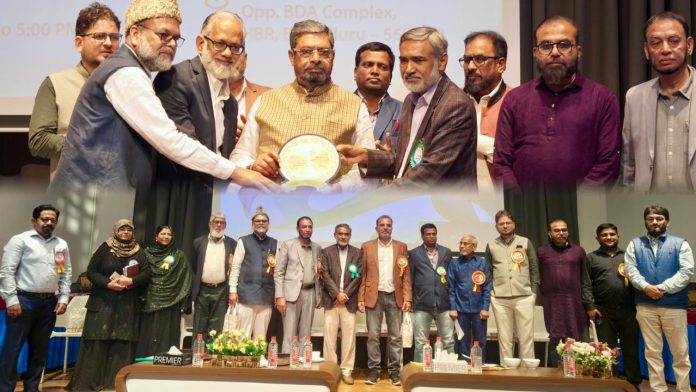
The Federation of Minorities Educational Institutions (FMEI), Bangalore Chapter, successfully organised the School Leaders Award Conference 2026 on January 17 at Bearys Suhardha Bhavan here. The conference witnessed the participation of over 150 management leaders and eminent educationists representing Muslim educational institutions across Bengaluru.
The Chief Guest, Mr. Naseer Ahmed, Member of Legislative Council (MLC) and Political Advisor to the Chief Minister of Karnataka, lauded the role of private unaided schools in delivering quality education despite limited resources. He stated that the consistent performance of these institutions reflects their discipline, dedication, and strong educational commitment. Congratulating FMEI, he observed that collective organisation of Muslim educational institutions enhances their political and social influence.
Presiding over the conference, Mr. Syed Tanveer Ahmed, senior educationist, emphasised that a strong collective platform enables Muslim educational institutions to assert their concerns more effectively at policy and governance levels. He urged institutions to rise above sectarian differences and focus on academic excellence, institutional growth, collective welfare, and social responsibility.
Delivering the keynote address, Mr. Muhammad Asifuddin, General Secretary, FMEI Karnataka Chapter, stated that the primary objective of the conference was to recognise and encourage the valuable services of Muslim educational institutions through awards, motivating them towards further progress. On the occasion, school leaders were felicitated with awards presented by the distinguished guests.
A memorandum highlighting key demands was submitted by FMEI through Mr. Naseer Ahmed to the Departments of Education and Minority Welfare. The memorandum included demands such as relaxation in renewal of school recognition, simplification of Minority Status Certificate issuance, enhancement of the Pre-Matric Scholarship budget to over 1000 crore rupees in the 2026–27 financial year, allocation of government land and infrastructure grants for Muslim schools, doubling of budgets for Post-Matric and Overseas Education schemes, and direct online submission of applications for Madrasa Modernisation without intermediaries. Mr. Naseer Ahmed assured that he would take up these issues with the Chief Minister and concerned ministers. The memorandum was also released to the media.
Addressing the gathering, Maulana Dr. Maqsood Imran Rashadi, Imam and Khateeb of City Jamia Masjid, Bengaluru, stressed that Muslim educational institutions must integrate moral and religious education alongside modern academics. Dr. Belgami Mohammed Saad, President, Mansurah Educational and Welfare Trust, highlighted that a holistic institution is one that nurtures knowledge, Islamic values, and character simultaneously.
Dr. Mohammad Taha Mateen, Trustee, Taqwa Educational Trust, underscored the importance of strong collective platforms, noting that FMEI serves as a credible and effective organisation to address educational, social, and policy-related challenges faced by Muslim institutions.
During the academic session, Dr. Benazir delivered an insightful PowerPoint presentation titled “Connecting Schools with the Community,” underlining the crucial role of schools in holistic community development.
Prominent members of the organising committee present included Mr. Iqbal Ahmed (President, FMEI Bengaluru), Mr. Haroon Basha (Secretary, FMEI), Mr. Riyaz Ahmed Ron, Syed Basharat Ahmed, Mr. Aslam Hekkari (Udupi), Maulana Abdul Ghaffar Hamid Umri, Mr. Atiq Pasha H, Mrs. Reshma Iqbal, Syed Ejaz, Syed Munir, Mr. Zulfiqar Ahmed, Dr. Zohaib Javed Khan, Mohammad Altaf Ahmed, and Mr. Iftikhar Sharif, among others.
The programme concluded with a vote of thanks by Dr. Fareeda Rahmatullah, expressing gratitude to the chief guest, dignitaries, delegates, education leaders, media professionals, and participants. The conference strongly reaffirmed that organised educational leadership is vital for social development and effective policy advocacy.
source: http://www.radiancenews.com / Radiance News / Home> Education> Report / by Radiance News Bureau / January 18th, 2026
Behind the lively performance lies a powerful story of courage, hussain operates from a wheelchair, yet runs his business with independence, confidence and sharp skill.
Hussain
Hyderabad’s food culture has always been rich, vibrant and full of character. From royal biryanis steeped in history to late-night street snacks bursting with flavour, the city’s culinary identity is celebrated across India. Now, Hyderabad has another reason to feel proud as Hussain, famously known as “Fire Paan Wala” represented the city on the national stage through MasterChef India Season 9.
Hussain, the founder of the viral Hussain Paan Parlour, made a fiery impression during the auditions of MasterChef India 9, which premiered on January 5, 2026.
Hussain stunned judges Vikas Khanna, Ranveer Brar and Kunal Kapur with his unique preparation of a paan which he crafted using lit cloves and a specialised filling technique refined over years of practice.
When he served the flaming paan to chef Ranveer Brar himself, the studio watched in awe. As the flame flickered and aromas filled the air, Ranveer tasted the paan with a smile, praising its flavour, creativity and bold presentation. The judges applauded Hussain’s confidence and art.
Hussain is a world record holder for creating over 1,000 varieties of paan. His pan parlours are located in Tolichowki and Banjara Hills. People come not only to eat paan, but to watch a show unfold. He is frequently hired for weddings and special events, where his unique paan experience adds a touch of excitement.
Hussain’s signature fire paan, briefly set aflame before serving, turned a simple mouth freshener into a thrilling experience. What began as a small street-side business soon became a Hyderabad sensation, attracting locals, tourists and food vloggers alike.
Hussain is instantly recognisable, not just for his paan, but for his unique style. He dresses in shiny, eye-catching outfits, wears a chunky gold necklace and a large gold bracelet on one hand, and moves with the flair of a performer. As he prepares paan, he adds rhythm, small dance steps and dramatic hand gestures, transforming food service into street theatre. Long before television fame, he was already a star on Hyderabad’s roads.
Behind the lively performance lies a powerful story of courage. Hussain operates from a wheelchair, yet runs his business with independence, confidence and sharp skill. His physical limitation never became a reason to slow down. Instead, it became part of his strength.
Stepping from a busy paan counter into the intense MasterChef kitchen was a bold leap one that has earned him admiration across the country.
This season also features other inspiring differently-abled contestants, including Manisha Sharma, who uses cooking as therapy while living with secondary Parkinson’s disease, and Ratna Tamang, a Nepali chef who cooks despite losing both hands. Their journeys have turned MasterChef into a tribute to the human spirit.
source: http://www.siasat.com / The Siasat Daily / Home> Siasat.com> Entertainment / by Shefali Shivasharan / January 18th, 2026
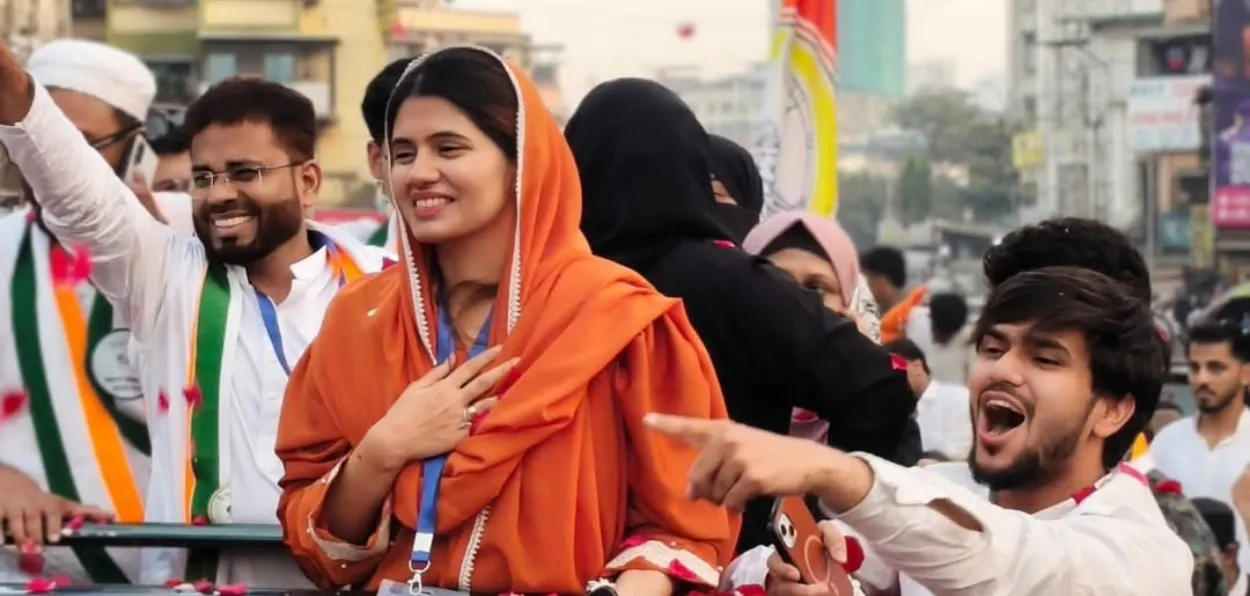
Marziya Shanu Pathan, with her supporters after winning the BMC election
In a remarkable political debut, 24-year-old Marziya Shanu Pathan, representing the NCP (Sharad Pawar faction), has emerged victorious in the BMC elections from Ward 32, Mumbra. Her win not only marks a milestone for young women in politics but also highlights the growing influence of grassroots activists in local governance.
Marziya’s victory has drawn widespread attention, particularly on social media, where she became a viral figure during the campaign, often compared to other young political personalities such as Sahar Yunus Sheikh of the AIMIM. Known for her activism and social work, Marziya has spent years working with the MSPare Foundation, focusing on women’s empowerment, civic engagement, and community development in Mumbra. Her campaign, rooted in public outreach and advocacy, resonated strongly with local voters.
Adding a historic touch to the win, Marziya’s father, Ashraf “Shanu” Pathan, also secured his seat in the same election, creating a dual-family triumph that has captured the imagination of the community. The Pathans’ success reflects a blend of youthful energy and political experience, signalling a new wave of leadership in the region.
Political analysts say Marziya’s win challenges traditional stereotypes and demonstrates that young women from minority communities can not only compete but lead in local politics. Her election is being hailed as a step forward for representation and inclusive governance in the Mumbai civic landscape.
source: http://www.awazthevoice.in / Awaz, The Voice / Home / by Ashhar Alam / January 17th, 2026
Grand Mufti Kanthapuram A P Aboobacker Muslyar with politician Ramesh Chennithala during the Kerala Yatra
New Delhi :
Kanthapuram A.P. Abubacker Musliyar, the Grand Mufti of Sunni Muslims of India, received the first Sree Narayana Guru Brotherhood Award, instituted by Swami Saswathikananda Cultural Centre, during the ongoing Kerala Yatra.
The 16-day Paamjam Insaniyat Kerala Yatra, is an ongoing state-wide campaign by the Kerala Muslim Jamaat to mark the centenary of the Sunni Jamiat Ulema.
The award was presented by SNDP Yogam former president Gokulam Gopalan, Yogam former board member Adv. S. Chandrasenan, and Saswathikananda Cultural Center director Adv. V.R. Anoop at the reception venue of Kerala Yatra at Kayamkulam.
— Sheikh Abubakr Ahmad الشيخ أبوبكر أحمد (@shkaboobacker) January 15, 2026
Advocate V. R. Anup is the director of Swami Saswatikananda Cultural Centre.
Addressing the ceremony, Gokulam Gopalan said that Sheikh Abubakar Ahmed is a leader who has promoted a specific development model. This model enables the empowerment of all communities and social progress. He said that Sheikh Abubakar Ahmed has rendered valuable services for the promotion of human values, brotherhood, peace and a prosperous society in the state.
CK Vidyasagar, Jury Chairman, said that Sheikh Abubakar Ahmed promoted fraternal coexistence with other communities in the light of the moral and jurisprudential principles of Islam.
He said that this role has strengthened Kerala’s tradition of social harmony.
Ramesh Chennithala posted images of Kerala Yatra by Jamaat on X:
Participated in the concluding ceremony of the Kerala Yatra led by the Indian Grand Mufti, the revered Kanthapuram A P Aboobacker Muslyar as part of the centenary celebrations of Samastha Kerala Jamyathul Ulama.
Advocate V. R. Anoop said that the lofty ideals of Sree Narayan Guru’s philosophy are prominent in various communities. He said that constructive social engagement can bring about a meaningful change in Kerala.
Sheikh Abubakar Ahmed regretted that the boundary between communal identity and sectarianism was rapidly weakening. He said that sectarianism arises when religion is used for political gain.
He added that receiving the award named after Sree Narayan Guru further strengthens his sense of responsibility.
source: http://www.awazthevoice.in / Awaz, The Voice / Home / by Aasha Khosa / January 17th, 2026
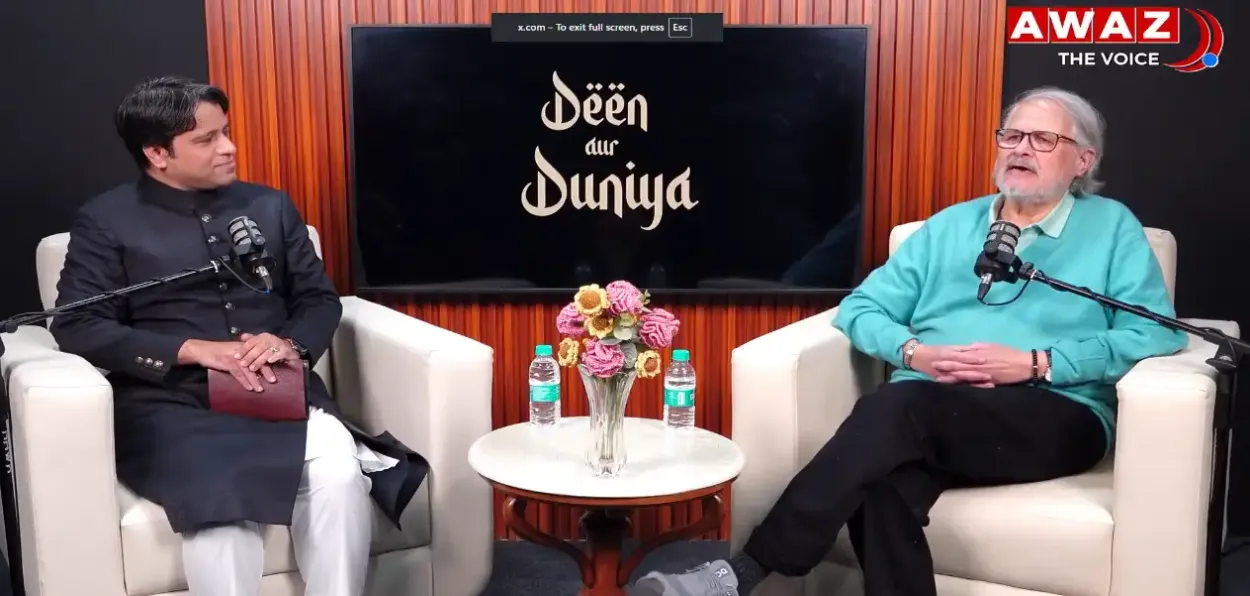
Saquib Salim and Najeeb Jung in Deen aur Duniya podcast
New Delhi :
The first episode of Awaz-The Voice’s new podcast series “Deen aur Duniya” was launched on Saturday evening. The programme has emerged as a serious attempt to understand and bridge the perceived divide between deen (faith) and duniya (society and civic life) within the Indian Muslim community.
The clarity, balance, and intellectual depth of the very first episode firmly established the podcast as a meaningful platform for thoughtful dialogue. The inaugural guest has Najib Jung, former Lieutenant Governor of Delhi, former IAS officer, and former Vice Chancellor of Jamia Millia Islamia, speaking candidly on crucial issues concerning Indian Muslims, democracy, education, and the Constitution to Saquib Salim.
At the heart of the discussion was the question of the Indian Muslim community and the idea of the “mainstream.” Najib Jung challenged the very premise of this debate, asserting that Indian Muslims have never been outside the mainstream. In his words, “First, it is important to understand what this ‘mainstream’ actually means.
“When were we ever outside it? I am a resident of India, and I have always been part of the mainstream.” He said that in an ancient and pluralistic civilisation like India, considering any community as an outsider is itself a flawed notion.”
He described it as a major irony and tragedy that in the Indian Subcontinent, the minorities are not given their due and they face dicrimination.
Najib Jung believes that the Indian Muslim community needs to move beyond the misconceptions surrounding its own identity. He emphasised that Muslims must understand that their identity is not separate from the identity of the nation. Self-acceptance and self-respect, he said, are what give any community the strength to move forward.
Speaking about young Muslims with clarity andf firmly, he said today’s Muslim youth should not live with any complex. “If a Muslim youth today considers himself inferior, that is his own shortcoming, not someone else’s,” he said. According to him, if one’s patriotism is questioned or one is viewed with suspicion, the response should come through confidence, hard work, and conduct, not through complaints or a sense of inferiority.”
The discussion also touched upon the issue of atrocities against minorities in Pakistan and Bangladesh. On this, Najib Jung offered a measured response, saying it is completely illogical to expect Indian Muslims to answer for what happens in neighbouring countries. “No mature and sensible society makes such demands,” he said. He made it clear that if injustice or oppression occurs anywhere in India, raising a voice against it is the responsibility of the entire society, not of any single community.
While speaking on Indian democracy and its secular character, Najib Jung highlighted the concept of fraternity enshrined in the Preamble of the Constitution as the most crucial element.
He said fraternity is even more important than secularism because it is what binds society together. “Fraternity means moving forward together, and that is the soul of our Constitution,” he noted. According to him, India’s freedom struggle was the result of a collective effort, and the rights enshrined in the Constitution are equal for all citizens, irrespective of religion, caste, or social background.
On the issue of education, Najib Jung’s concern and vision appeared both broad and thoughtful. He said education should not be limited to degrees or technical skills alone. Expressing concern over changes in history textbooks, he warned that incorrect history can mislead children’s thinking and shape their personalities in the wrong direction. Education, he stressed, should aim to develop the ability to think and reason, with subjects like history, philosophy, and sociology playing a vital role.
Referring specifically to the Muslim community, he described the growing awareness around education as a positive sign. He said that today the community is far more conscious about the education of its children than before, whether in government schools, private institutions, or madrasas. The changes taking place even in rural areas, he added, offer hope for the future.
Discussing the economic and social situation, Najib Jung observed that slow but visible change is taking place within the Muslim community. He noted that a large number of Muslim youth are now moving into medicine, engineering, and other professional fields. While acknowledging that economic hardship remains a major obstacle, he said the desire to progress is clearly evident within the community.
On the role of the government, he said that serious and concrete affirmative action is required to address the social backwardness of the Muslim community. He expressed regret that the necessary seriousness has not been shown in this direction so far. Just as special policies were formulated for Dalits and other marginalised sections, he said, there should be well-planned efforts for the Muslim community as well.
See the Full Podcast here:
Towards the end of the programme, Najib Jung delivered a positive and inspiring message. He said Muslims must learn to stand on their own feet, a process that has already begun over the past one-and-a-half to two decades. From small businesses to higher education, the community is striving to carve out its space.
He emphasised that unless a community becomes economically and socially empowered, it cannot assert its demand for equal rights with strength.
source: http://www.awazthevoice.in / Awaz, The Voice / Home / by Saqib Salim / January 18th, 2026
Muslim Mirror’s 100 Most Influential Muslims of 2025
New Delhi:
Muslim Mirror has released its much-anticipated annual list of the “100 Most Influential Indian Muslims of 2025,” spotlighting individuals who have made significant contributions to India’s public life across a wide spectrum of fields including politics, culture, education, business, media, religion, sports, and social service. Now in its second edition, the list aims to document influence not merely as power or popularity, but as sustained impact, leadership, and the ability to shape public discourse.
A defining feature of the 2025 edition is the growing prominence of younger achievers, signalling a visible generational shift within Indian Muslim leadership. Alongside established national figures, the list includes emerging voices who have built influence through grassroots activism, professional excellence, digital platforms, legal advocacy, education, and community engagement. Editors associated with the project said this was a deliberate attempt to recognise new centres of influence beyond traditional hierarchies.
The list reflects the diversity and plural character of Indian Muslim society, cutting across geography, ideology, profession, and language. From seasoned politicians and religious scholars to artists, entrepreneurs, academics, and social reformers, the compilation offers a broad snapshot of leadership trends at a time when issues of representation, constitutional values, and social justice remain central to national debate.
Representation Across Sectors
The 2025 list features several eminent academicians and intellectuals who have shaped higher education, policy discourse, and social research. Among them are Abul Qasim Nomani, Ameerullah Khan, Furqan Qamar, Shahid Jamil, and Ubaid-ur-Rahman, recognised for their contributions to education, public policy, and academic leadership.
In the business and entrepreneurship category, the list includes influential names such as Azad Moopan, Azim Hashim Premji, Farah Malik, Irfan Razack, M. P. Ahammed, Mecca Rafiq Ahmed, Meraj Manal, Syed Mohamed Beary, P. Mohammed Ali, Shahnaz Hussain, Tausif Ahmad Mirza, Yusuff Ali, and Ziaullah Sharif. Their inclusion underlines the growing economic footprint of Indian Muslim entrepreneurs, both domestically and globally, spanning sectors from retail and healthcare to infrastructure and consumer goods.
Community leadership remains a strong pillar of the list, with figures such as Arshad Madani, Mahmood Madani, Malik Motasim Khan, Mehmood Pracha, Syedna Mufaddal Saifuddin, Navaid Hamid, Pirzada Md Abbas Siddiqui, Qasim Rasool Ilyas, Sadatullah Husaini, Umer Ahmed Ilyasi, and Yusuf Mohamed Abrahani recognised for their roles in religious guidance, legal advocacy, social mobilisation, and institutional leadership.
Culture, Media, and Public Discourse
In arts and entertainment, globally recognised names such as A. R. Rahman, Aamir Khan, Mammootty, Munawar Faruqui, and Shah Rukh Khan continue to command immense cultural influence, shaping narratives that extend well beyond cinema and music into social consciousness.
The list also acknowledges the growing importance of media and journalism in shaping opinion and challenging dominant narratives. Journalists and commentators such as Arfa Khanam, Irfan Meraj, and Seema Mustafa are recognised for their consistent engagement with issues of democracy, minority rights, and constitutional values.
Religious and Intellectual Scholarship
A significant section of the list is devoted to Islamic scholars and religious thinkers, reflecting their continued influence on moral leadership and intellectual discourse. Names such as A. P. Aboobacker Musliyar, Qasim Nomani, Prof. Akhtarul Wase, Asghar Ali Imam Mahdi Salafi, Asjad Raza Khan, Ibraheem Khaleel Al-Bukhari, Javed Jamil, Khalid Saifullah Rahmani, Khaleelur Rahman Sajjad Nomani, Qamaruzzaman Azmi, Rashid Shaz, Shakir Ali Noori, Shamail Nadvi, and Yasoob Abbas find place for their scholarly work, writings, and public engagement.
Politics and Governance
The political category features leaders cutting across party lines and regions, including Asaduddin Owaisi, Ghulam Nabi Azad, Hamid Ansari, Mehbooba Mufti, Omar Abdullah, Salman Khurshid, Najeeb Jung, Syed Naseer Hussain, Engineer Rashid, Akhtarul Iman, Iqra Hasan, Zameer Ahmed Khan, Rakibul Hasan, K. Rahman Khan, Kadir Mohideen, Mohibullah Nadvi, Md Shafi, Agha Mahadi, Asim Waqar, and Sadiq Ali Shihab Thangal. Their inclusion reflects influence exercised through electoral politics, governance, diplomacy, and legislative advocacy.
Changemakers and Social Reformers
One of the most dynamic sections of the 2025 list is that of changemakers and social reformers, featuring individuals such as Safeena Husain, Shahabuddin Yaqoob Quraishi, Syeda Hameed, Zameer Uddin Shah, Mahbubul Hoque, Sabahat S. Azim, Mehmood Pracha, Faiz Syed, and Zahir Ishaq Kazi, among others. Many of these figures have earned recognition through long-term grassroots work rather than formal authority.
International Booker Prize 2025 winner Banu Mushtaq for Heart Lamp, along with renowned poet Wasim Barelvi, has been placed in the category of Literary Figures.
In sports, iconic names Sania Mirza and Irfan Pathan continue to inspire younger generations through excellence and public engagement beyond the playing field.
Beyond Rankings
The editors emphasised that the list does not claim to be exhaustive, nor does it measure influence solely through fame, wealth, or official position. Instead, it seeks to capture real-world impact, moral authority, intellectual contribution, and the ability to shape conversations within and outside the community.
The annual list has increasingly become a reference point for understanding evolving leadership patterns among Indian Muslims. By foregrounding both established figures and rising talents, the 2025 edition reflects continuity as well as change, underscoring how Indian Muslims continue to contribute meaningfully to India’s democratic, cultural, and social field.
source: http://www.muslimmirror.com / Muslim Mirror / Home> Indian Muslim / by Muslim Mirror / January 15th, 2026
From a small-town reporter in Sathupally to a voice of conscience in the city, Mohammad Mujahid’s journey is a lyrical testament to the power of the written word in an age of discord.
Hyderabad:
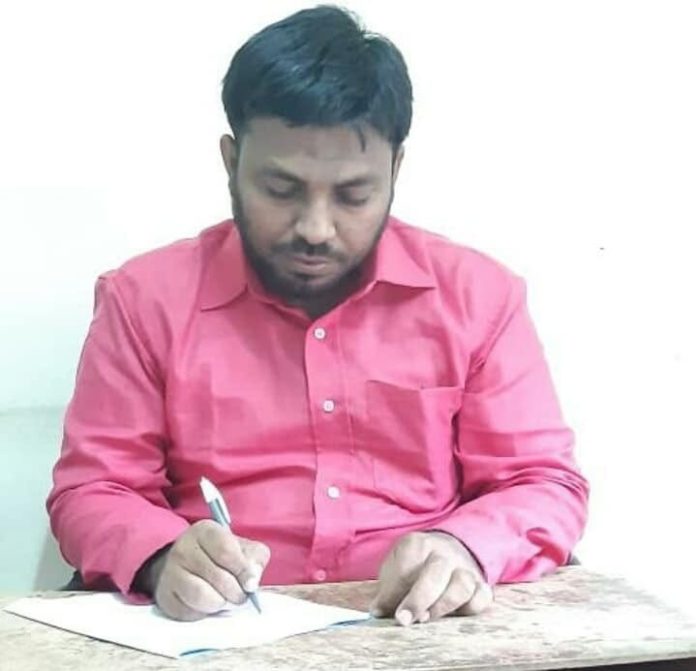
In a world increasingly divided by invisible walls, Mohammad Mujahid is a man busy building bridges. His tools aren’t mortar and stone, but the elegant curves of the Telugu script and an unwavering belief in the human spirit.
What began two decades ago as a young man’s quest for truth in the dusty lanes of Khammam district has today blossomed into a significant literary movement – one that seeks to replace prejudice with poetry and fear with understanding.
The Genesis of a Vision
The spark for Mujahid’s odyssey was a profound spiritual mandate. Inspired by the Prophet Muhammad’s ﷺ exhortation – “Convey from me, even if it is a single word” – Mujahid didn’t just find a career; he found a calling.
Starting in 2000 as a contributor for the Eenadu daily, he realised early on that the greatest distance between two communities is often a lack of shared language. He chose to bridge this gap by bringing the essence of Islamic thought to the Telugu masses, stripping away the dense layers of Urdu and Arabic to reveal universal truths in a tongue that felt like home to millions.
Mujahid’s writing is characterised by a rare “soul-to-soul” connection. He doesn’t just inform; he heals.
The Myth-Buster: Through seminal works like ‘Islam Velugu’ (The Light of Islam) and ‘Islam Jeevana Tarangalu’ (The Rhythms of Islamic Life), he has acted as a literary surgeon, delicately removing the tumours of misconception and Islamophobia that often plague social discourse.
The Gardener of Souls: His work ‘Balavanam’ (The Children’s Garden) is perhaps his most tender contribution. It is an investment in the future, teaching children that values like kindness, honesty, and empathy are the true universal languages.
The Social Poet: When the journalist in him meets the poet, the result is a stinging yet hopeful commentary on contemporary issues. His verses don’t just rhyme; they reason.
A Chorus of Approval
It is rare for a writer to find equal resonance among religious scholars and secular literary icons. Mujahid has achieved exactly that.
The legendary Jnanpith Awardee C. Narayana Reddy (CiNaRe) once found his style captivating, while the eminent Qur’an translator Sheikh Hamidullah Sharif saw in him a powerful ally for truth. From historians like Syed Naseer Ahamed to veteran editors like Ejaz Aslam, the consensus is clear: Mujahid’s pen is a social necessity.
For Mujahid, the journey is far from over. He remains a man on a mission, driven by the philosophy that silence in the face of social decay is complicity.
“The message of peace isn’t the property of a religion; it is the inheritance of humanity,” he often says. In his modest workspace, the scratching of his pen continues to be a defiant sound against the noise of hate.
At a time when the fabric of society feels frayed, Mohammad Mujahid reminds us that a single individual, armed with an honest pen and a heart full of harmony, can still rewrite the story of a nation. His life is not just a biography; it is a blueprint for coexistence.
source: http://www.radiancenews.com / Radiance News / Home> Features> Focus / by Saad Mohsin / January 14th, 2026
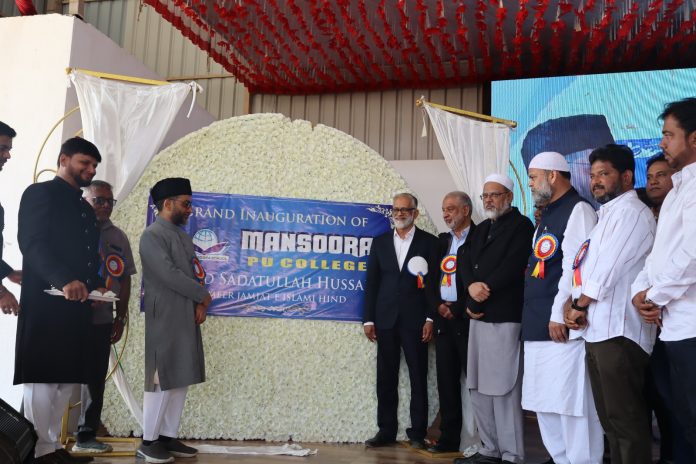
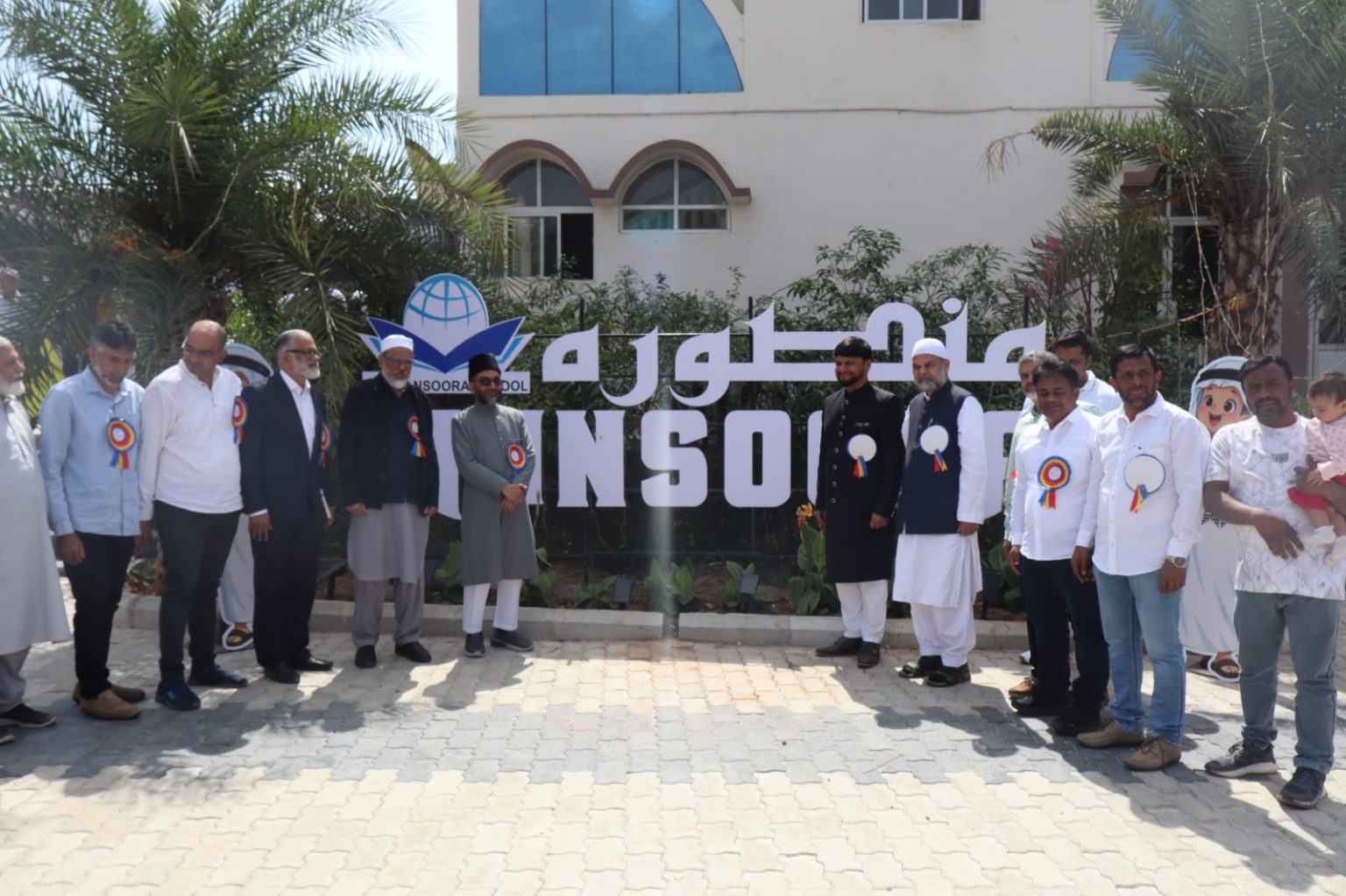
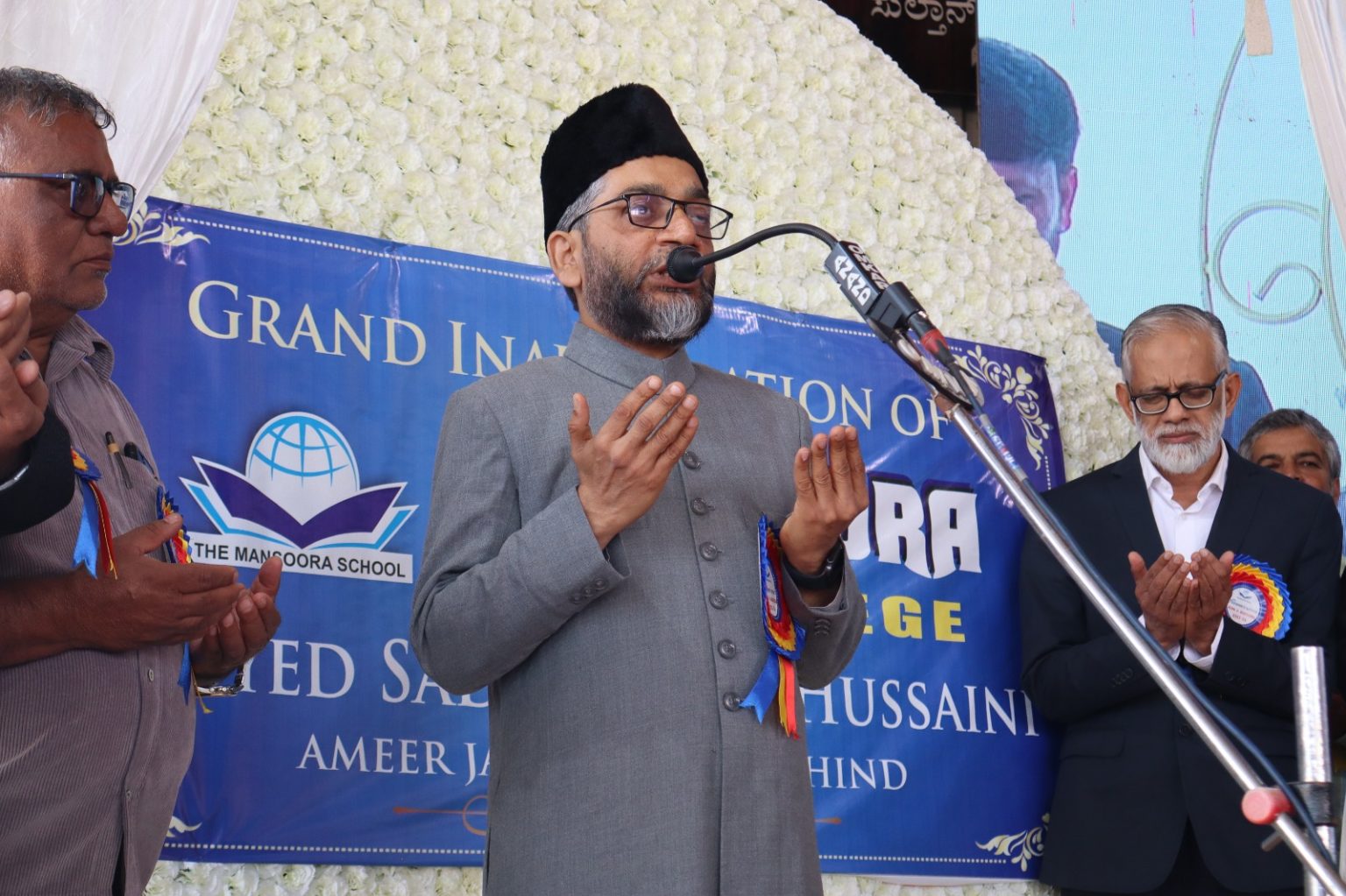
In the gently rolling landscape of Karnataka’s Hassan district, a new academic chapter is being added to a legacy that is already four decades old. With the launch of Mansoora PU College at Alur, an institution long associated with school-level education is extending its vision to the crucial pre-university stage, responding to a growing demand for integrated, value-oriented higher secondary education in the region.
Located on a sprawling campus off the Bengaluru–Mangaluru highway, the new PU college is part of the educational ecosystem nurtured by The Mansoora School, which itself grew out of an initiative started nearly 40 years ago by Jamaat-e-Islami Karnataka circles. What began as the Islamia Arabic College and later evolved into an English-medium school up to Class 10 has now expanded to include pre-university education under the Mansoora name.
Speaking about the motivation behind the expansion, Dr. Taha Mateen, Vice-Chairman – Mansoora Educational Trust, explains that the move was shaped by both continuity and necessity. Many students completing their secondary education were seeking PU colleges that combined academic rigour, competitive exam preparation, and an environment aligned with their cultural and ethical values. “The idea was not just to add another college,” he notes, “but to create a protected, focused academic space where students can prepare seriously for their future.”
Academic Focus with Competitive Readiness Mansoora PU College opens admissions for the 2026–27 academic year with science and commerce streams that reflect current aspirations among students and parents. The college offers PCMB, PCMC, and EBAC combinations, along with integrated coaching for national and state-level competitive examinations such as NEET, JEE, and KCET. This integrated model aims to reduce the burden of parallel coaching by aligning board curriculum with entrance exam preparation.
Faculty recruitment has been positioned as a cornerstone of the project. According to the management, experienced and well-qualified teachers have been brought in, with special attention to mentoring students who may need additional academic support. There is also a stated emphasis on encouraging girls’ participation in science streams, an area where access and retention often remain challenges in semi-rural regions.
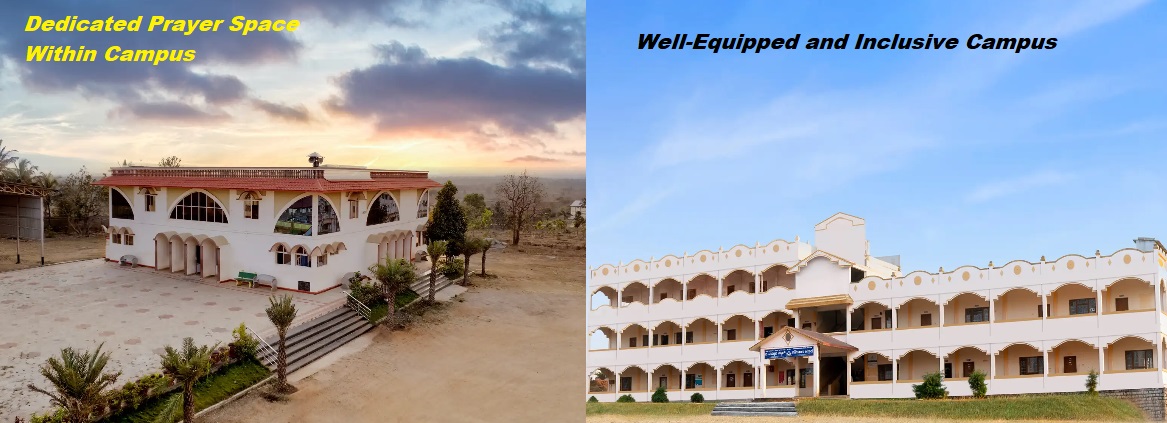
Campus Life and Infrastructure One of the distinguishing features of the new PU college is its fully residential model, with separate hostels and facilities for boys and girls. The girls’ campus includes a residential hostel, exclusive mess, separate classrooms, science and computer laboratories, a library, play areas, and a dedicated namaz hall. Facilities for boys similarly include residential hostels, a masjid, science and computer labs, library, playfields, and a football ground.
The wider campus, described as lush and peaceful, is equipped with CCTV surveillance, first-aid and doctor visit facilities, and structured recreational spaces. The intention, Dr. Mateen explains, is to offer an environment that is academically focused while being insulated from distractions associated with excessive device use and unsupervised digital exposure.
Education with Ethical Grounding What sets Mansoora apart, its trustees argue, is the attempt to integrate modern education with ethical and religious grounding. Alongside regular academics, the broader Mansoora educational framework includes Deeniyath education, Quranic studies with tajweed, memorisation of daily duas, and structured Islamic studies from the middle grades onward. While the PU college itself focuses primarily on board and competitive curricula, it functions within this larger institutional ethos.
Sports and physical education also form part of campus life, with facilities for football, volleyball, karate, skating, and indoor games, reflecting an understanding that academic excellence is closely tied to physical and mental well-being.
Independence and Institutional Identity Interestingly, despite informal support and goodwill from well-known coaching ecosystems, the management has consciously chosen to retain an independent identity. Dr. Mateen points out that the decision to operate under the Mansoora name, without external branding, was deliberate. “We felt the institution has its own credibility and history. We wanted to build on that legacy rather than borrow another’s,” he says.
Access, Fees, and Outreach The college has announced a structured and relatively moderate tuition fee, with early-bird concessions and additional scholarships for meritorious students. Separate hostel fees apply. Admissions are currently open, with limited seats, and the management encourages interested families to visit the campus, interact with faculty, and assess the facilities firsthand.
Situated in Alur, around 200 kilometres from Bengaluru and well connected to Mangaluru, Mansoora PU College positions itself as a regional hub for students seeking a blend of academic ambition, residential discipline, and value-based education.
As Karnataka’s educational landscape continues to diversify, the launch of Mansoora PU College reflects a broader trend: institutions rooted in community histories adapting to contemporary educational demands, while attempting to hold on to the principles that defined their beginnings.
Further details can be obtained from: https://puc.mansoora.in/
source: http://www.radiancenews.com / Radiance News / Home> Education> Features> Focus> Report / by Radiance News Bureau / January 14th, 2026
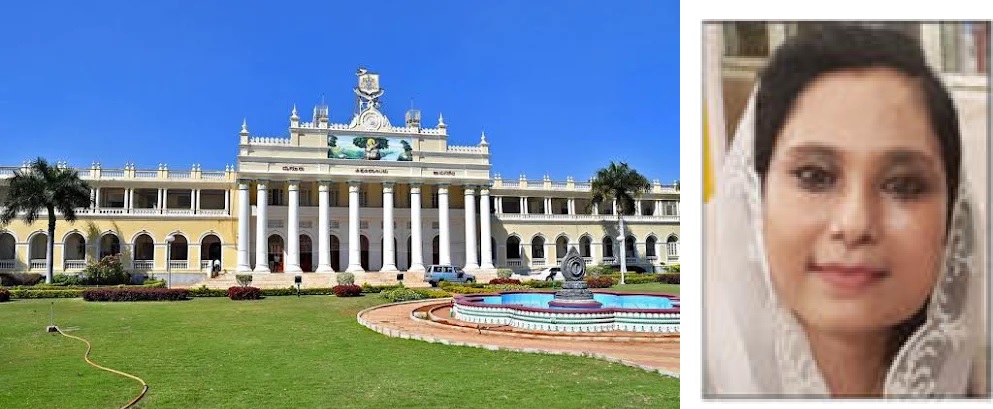
Noor Aisha has been awarded a Doctorate degree in Bio chemistry, marking a significant milestone in her academic and professional journey. The achievement has been widely welcomed by academic circles, social activists, and well-wishers who see it as a moment of pride and inspiration, particularly for young women aspiring to higher education.
According to the details, Noor Aisha is the first Muslim girl to secure a doctorate degree in Science Stream of Mysore University after several years.
Noor Aisha has remained actively engaged in academic and intellectual pursuits from an early age. Throughout her career, she has demonstrated a keen interest in learning, research. Colleagues and mentors describe her as hardworking, disciplined, and deeply committed to academic excellence.
Speaking on the occasion, her parent Mohammed Ali and Noor Jahan expressed happiness over her success, stating that the achievement is not only a personal accomplishment but also a source of motivation for many students, especially women, who face social and economic challenges in pursuing higher education. They emphasized that Noor Aisha’s journey highlights the importance of perseverance, determination, and family support in achieving academic goals.
source: http://www.radiancenews.com / Radiance News / Home> Education> Latest News> Report / by Radiance News Bureau / January 12th, 2026