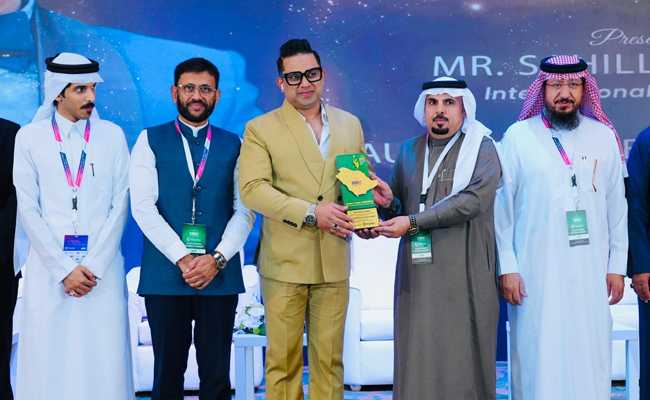
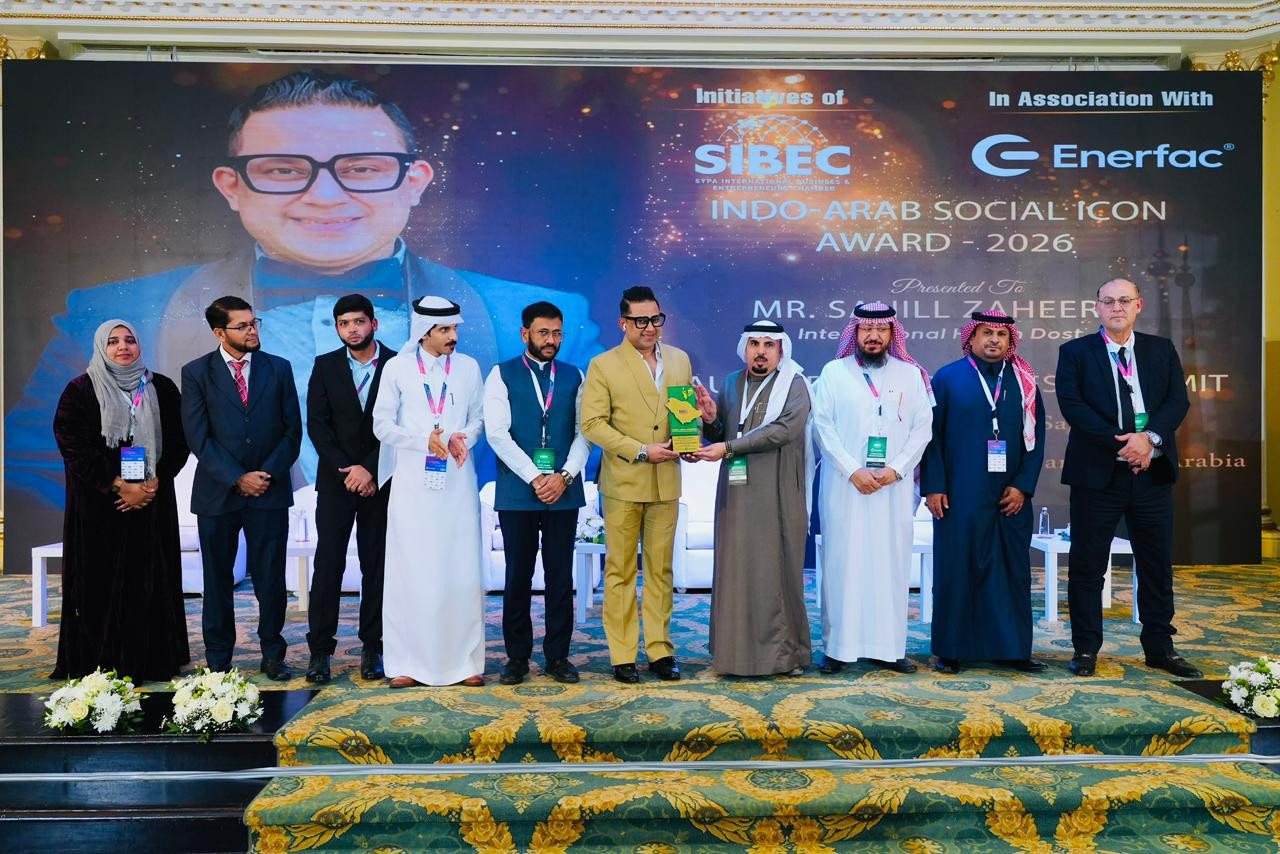
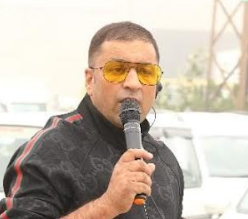
International host Sahill Zaheer was honoured with the Indo Arab Social Icon Award at an international gathering held in Al Khobar on February 7, where the Saudi Arabia Chapter of SIBEC – SYPA International Business & Entrepreneurs Chamber was officially launched.
SIBEC is a global business and economic collaboration platform that brings together entrepreneurs, investors and professionals to strengthen cross-border partnerships. The Saudi chapter launch was organised in association with Enerfac Solutions.
Enerfac Solutions, led by CEO Nazurudin Ahamed and Director Sivaprakash Umapathy along with its board members and team, describes itself as a company focused on ethical business practices and inclusive growth. The organisation has been supporting entrepreneurs, small and emerging businesses as part of its CSR initiatives, while encouraging partnerships and industry development. Company representatives said its approach centres on responsible business and ensuring that growth benefits the wider community.
Sahill Zaheer, who works as a host and event manager, has earlier been associated with Namma TV as a VJ and with Radio Mirchi 98.3 FM as an RJ. Over the years, he has hosted national and international shows, corporate events and award functions. He has shared stage space with singers such as Sonu Nigam, Udit Narayan and Shreya Ghoshal. He has also anchored events connected to cricket tournaments, including T10 and T20 formats and IPL-related programmes.
Recently, he hosted the Festival of Cricket – Women’s Edition in Al Khobar, described as the first women’s cricket celebration of its kind in the Kingdom of Saudi Arabia.
The award was presented in recognition of his contributions as a host and his involvement in international events connecting Indian and Arab audiences.
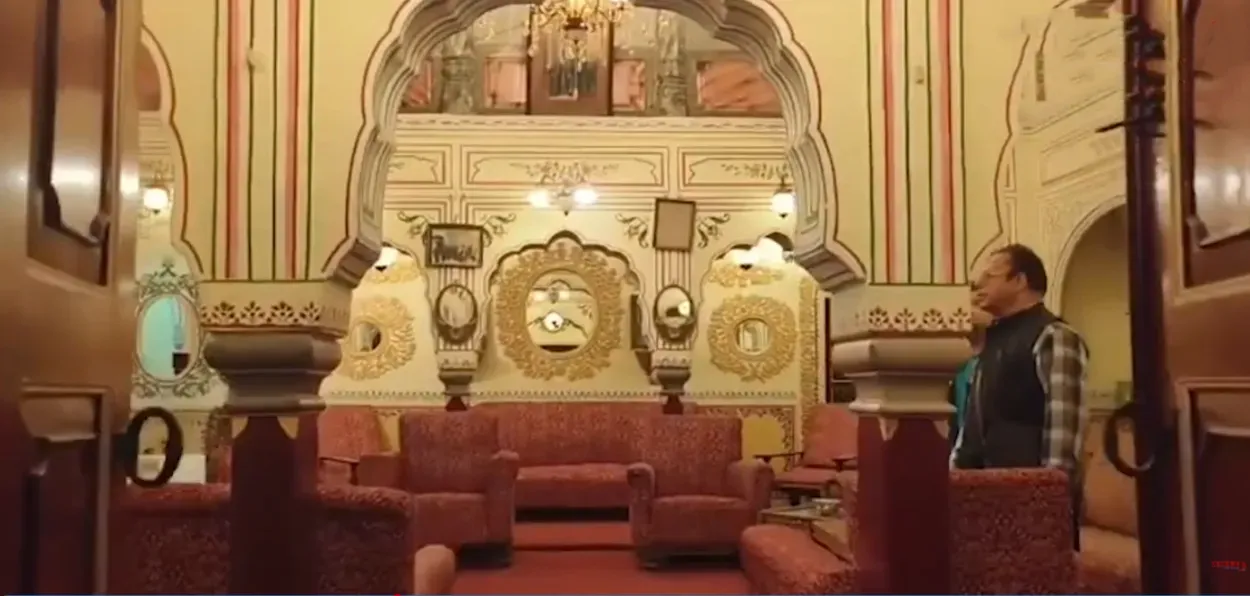
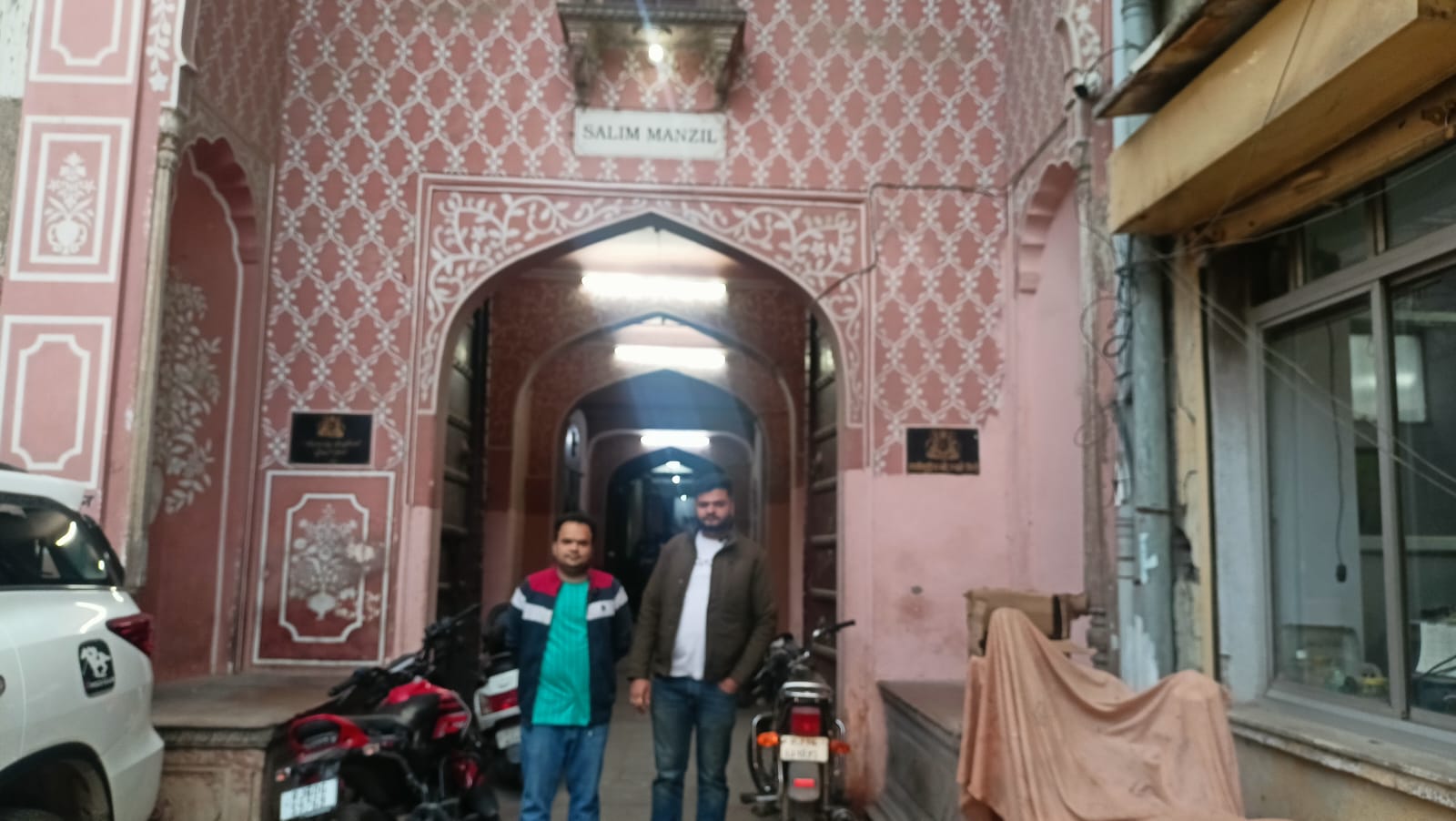
In the bustling streets of Jaipur at Haldio Ka Rasta, Johari Bazar, time suddenly seems to stand still. Amidst ancient stone walls, arched doorways and the stillness of history, stands the Salim Manzil, a majestic building which is a living legacy of more than two centuries.
The mansion houses a relic – a cap of Imam Hussain, the grandson and son-in-law of the Prophet Muhammad; it adds to its importance.
The story behind the ‘blessed cap’ reaching the haveli is interesting and part of its rich history.
The entrance to Salim Manzil
In the early 17th century, an ancestor of today’s inmates of Salim Manzil treated an Iranian king. The King wanted to reward him with gold, silver and valuable gifts, but he declined the offer and instead requested the cap of Hazrat Imam Hussain.
The King presented the relic and a certificate with the royal seal to him as a reward.
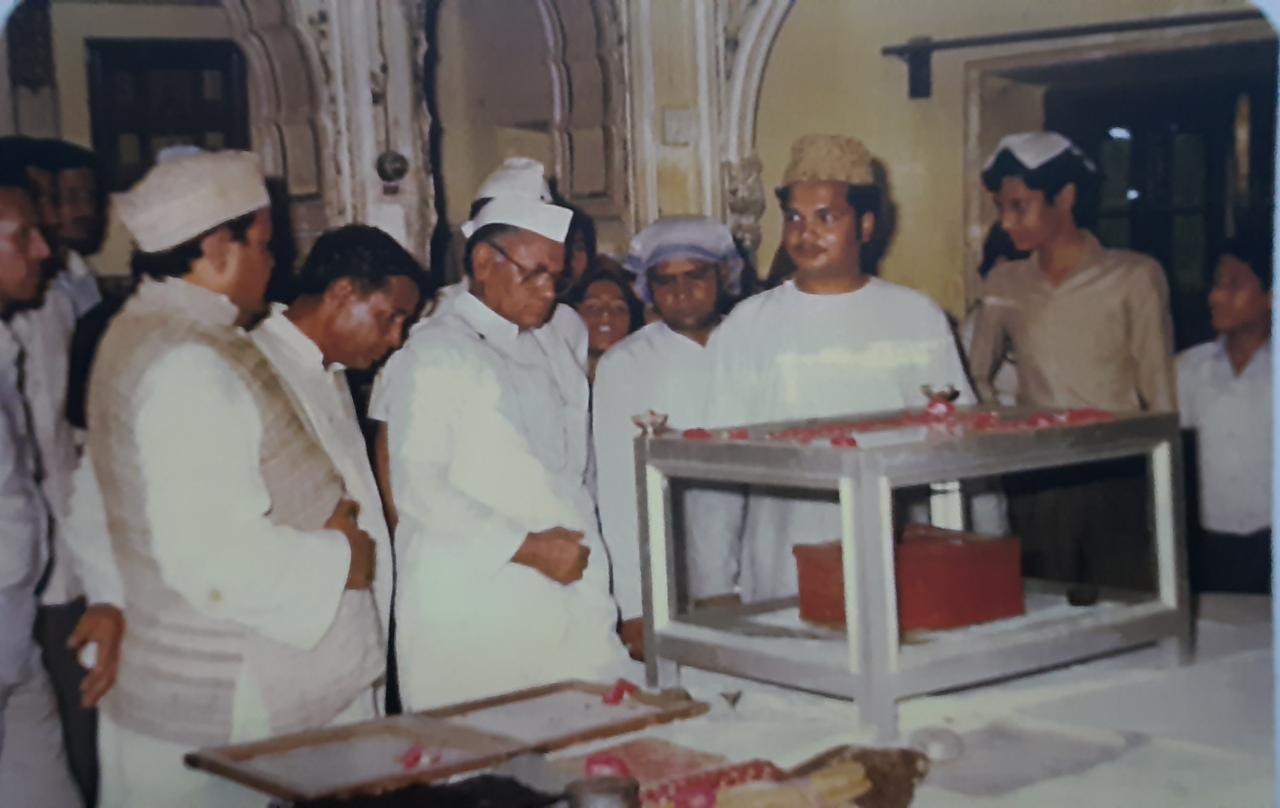
Since 1876, this blessed hat has been preserved in Saleem Manzil in a special glass-framed box kept in a hall called “Kala-e-Mubaraq”.
Every year on the 9th and 10th of Muharram, it is opened to the public. In those days, Salim Manzil is turned into a pilgrimage centre, and its air filled with spirituality.
People viewing the Blessed Cap of Hazrat Imam Ali
Today, Moinuddin Khan, 33 and his younger brother, Hussamuddin Khan, 27, are living in the mansion. The two brothers are not only maintaining this legacy, but also modernising its upkeep and display of artefacts.
Moinuddin Khan says that his ancestors came to Jaipur from Delhi around 1812 AD. At that time, Maharaja Jagat Singh of Jaipur State granted them a fiefdom and honour to his elder brother, Hakim Wasil Ali Khan.
This honour was for Wasil Ali Khan’s academic and medical expertise, and he was admitted to the Royal Court. One of the ancestors was the head of the intelligence department of Jaipur State, a sensitive position. He was responsible for the State’s security, political activities and gathering information needed for administration.
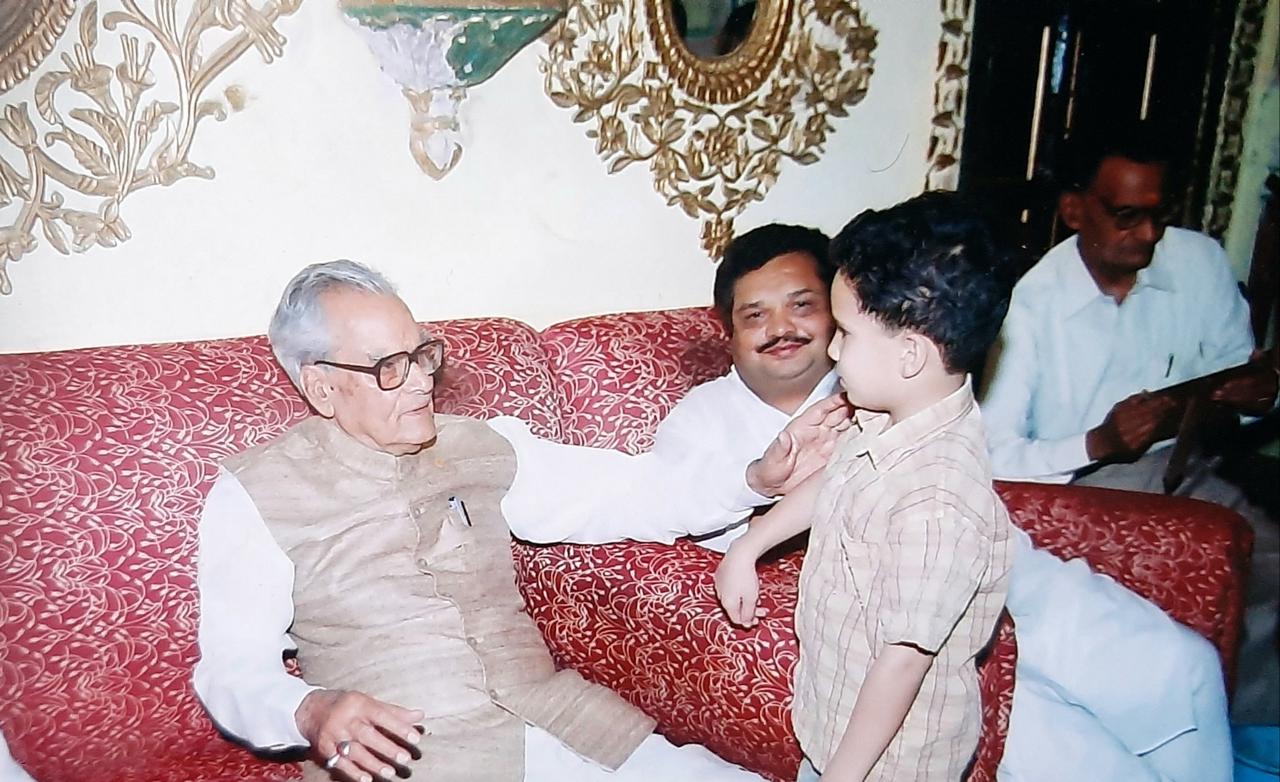
Bharion Singh Shekhawat with the inmates of Salim Manzil
Later, his son, Salim Ali Khan, worked in the same position.
The construction of Saleem Manzil began in 1867, and it was completed within three years. Spread over an area of about a bigha, the building was gifted by the Maharaja of Jaipur. Even today, the haveli’s traditional Rajasthani carvings, arches, high ceilings and lattice windows are a testimony to the architectural craftsmanship of that era.
Over time, many havelis were converted into commercial hotels, but Saleem Manzil retained its original identity. The family also received offers to convert it into a hotel, but they preferred to preserve the spirit of the heritage rather than market it.
Visitors inside the Salim Manzil
The mansion has been used as a set by many filmmakers for movies and web series. Moinuddin says he acted for the role of Sri Krishna in one of the web series. “We have a strong foundation in religion, but we also remain connected with art and dialogue.”
A large hall is decorated, the rooms are filled with the fragrance of perfume and roses, and the pilgrimage begins with Milad Sharif.
Devotees from Gujarat, Maharashtra and other parts of the country also arrive here. In those days, Shia Muslims read prayers and distribute Tabarak.
Moinuddin says that we consider it more of a trust than an inheritance. It is both an honour and a responsibility for us.
Many important persons have visited Salim Manzil. They include President Giani Zail Singh, Chief Ministers Haridev Joshi and Shiv Charan Mathur, Bhairav Singh Shekhawat (Vice President), Natwar Singh (Minister), Najma Haibabullah (Rajya Sabha Chairperson), and Supreme Court Justice Gyan Sudha Mishra.
Head of the family, late Naseemuddin Khan, popularly known as Pyare Mian, founded the All-India Hakeem Ajmal Khan Memorial Society to perpetuate his family’s legacy of Unani medicine and social service.
Today, Moinuddin and Husamuddin Khan are trying to connect this heritage with modern dialogue. They are planning to build a new hall for better management of the pilgrimage during Muharram.
They are sharing information about this heritage with the world through social media and digital means for transparency.
Amid myriad historic monuments of Jaipur, Salim Manzil is unique since it not only preserves the relics of history but is also a pilgrimage centre.
source: http://www.awazthevoice.in / Awaz, The Voice / Home> Stories / by Farhan Israeli, Jaipur / February 21st, 2026
From Facebook posts to life-saving campaigns, he built a community rooted in purpose
Bengaluru :
Do you remember when Instagram was just about pictures, with no reels, stories, or videos? Suhail Rasool vividly remembers it; it feels like yesterday. A Bengaluru-based content creator, Suhail began his digital journey on Facebook in 2009, long before the term ‘influencer’ became common, and carried that momentum onto Instagram, where he carved out his own space.
Currently known online as @suhailrasool on Instagram, he has grown into one of Bengaluru’s most recognised digital storytellers. What sets him apart is not just the numbers but the heart behind his work. His content brims with energy, relatability and an unmistakable sincerity. From lifestyle and travel to personal vlogs, Suhail weaves stories that feel lived in and real. He has consistently mobilised his audience to support medical treatments, social causes, and relief efforts, proving that influence can spark genuine change when guided by empathy.
Stormy start “I had a Facebook page in 2009-10. Most of the posts on that page reached nearly 60,000 likes,” recalls Suhail. He joined Instagram on March 10, 2014, when the platform was still basic. “There were no Reels, no IGTV, no collaborations, no links, just photos,” he explains the struggle of the lack of features. Later, Instagram added 10-second videos.
“You had to fit everything into those 10 seconds, and there was no sharing option. People had to follow you to watch.” “In 2016, Snapchat introduced Stories, and Instagram quickly adopted the feature. That’s when I really started posting daily Stories, 10 to 15 a day,” he says. “I’ve kept it up ever since. Back then, I was a lot more energetic too,” he laughed and highlighted how consistency is key on social media.
Using platform for a purpose Suhail Rasool began raising funds in 2020, focusing on life-saving procedures such as heart, kidney, liver, and lung transplants. Over the years, these efforts grew into a community movement that helped save countless lives. Looking back, he sums it up simply: “We saved a lot of lives.” During the peak of the COVID crisis, he and his team mobilised resources at an extraordinary scale.
They distributed nearly 7,500 ration kits, each worth about Rs 1,200, raising close to Rs 75 lakh in just three days. “Every Bangalorean who was in trouble with COVID made sure they reached us,” he recalls. Beyond food relief, the team organised ventilator beds, ICU beds, and other essential medical support for those in urgent need. Suhail also mentioned how a friend’s trust, later taken forward in his memory, enabled them to expand their efforts.
Among the initiatives was donating ambulances, made free of cost at a time when prices had soared and access was limited. “Even now, that ambulance has been kept free of service in our area,” he says, a lasting reminder of their work during the pandemic.
A creator who speaks He admits inspiring many followers through his platform to speak out on sensitive issues, particularly around communal harmony. He emphasises that political agendas have created unnecessary divides and distracted the youth from focusing on progress. His message remains consistent and simple: “We are all one. It is one country, and we need to stand together for its development.”
“I’m very active on my Stories, I have the highest reach there, and even on IGTV. I still call it IGTV,” says Suhail with a smile. His Instagram Stories draw some of the largest audiences in Karnataka and even across South India. On average, each story is watched by nearly 1,80,000 people, and even his daily updates often cross the one lakh mark. Unlike many creators, he focuses less on Reels or posts and instead relies on the consistency of his Stories, which his followers watch religiously. This is how he has managed to build a strong base of loyal followers.
Idea over a chai “Mehfil is one big concept in my life,” said Suhail. For years, he and his friends, Fazal and Fanoos, created lighthearted content, but as they grew older, they wanted something more sustainable. At the time, few brands believed in Instagram marketing, yet Suhail kept supporting small businesses and young influencers. By 2021, his Stories reached nearly 1,50,000 viewers, and creators constantly sought his support. That inspired him to bring everyone under one roof.
Along with his friends, he registered a company and built a platform for bakers, designers, makeup artists, and entrepreneurs to showcase their work. “As we are gathering everyone, I called it Mehfil,” he says with pride. The first gathering took off like a rocket, with a sea of people storming in and all the businesses booming. Then they held three more Mehfils, and the next one is at the end of this year. By forging his own path, he has not only built his own success but also opened doors for countless aspiring creators online.
source: http://www.newstrailindia.com / News Trail / Home / by Bhavana M / September 07th, 2025
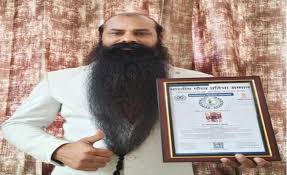
Dr Mohammad Ishaq, a well-known physician from Shahpura in Rajasthan, has been honoured with the Indian Pride Talent Award 2026 for his unique work in beard and moustache art, promotion of local culture, and dedicated social service. The award was presented during a virtual programme organised recently by Jeevan Jagruti Seva Sansthan, Jaipur.
Dr Ishaq, also known as ‘Mr Beard Man’ of Shahpura, is not only recognised for his distinctive designer beard and moustache styles but also for his efforts to take Rajasthani art and culture to national and international platforms. The award, organisers said, was given for his “art, cultural contribution, and service to society”.
The news of the award has created a sense of happiness across Shahpura. Residents, social workers, and youth groups have congratulated Dr Ishaq, calling the honour a matter of pride for the town.
“This award is not just for me, it belongs to Shahpura,” Dr Mohammad Ishaq said. “Whatever I have achieved is because of the love and support of the people.”
Locals say Dr Ishaq’s journey shows how talent rooted in local culture can earn global recognition.
National Fame
Dr Mohammad Ishaq Khan is a medical professional by training, but his identity goes far beyond his clinic. Over the years, his designer beard and moustache styles have become his signature. Through this art form, he has represented Shahpura and Rajasthan across India.
He has won several awards at local, state, and national levels. Recently, he secured first position in a moustache competition held at the internationally known Pushkar Fair, where participants from across the country and abroad took part.
“Pushkar was special,” he said. “Winning there gave me confidence that our traditional styles still have value.”
Dr Ishaq is widely credited as the first person to introduce funky and designer beard styles in India as a separate competitive category.
After his participation, beard and moustache competitions across the country began, including dedicated categories for funky and designer beard styles.
According to organisers of the India Beard Club, this change helped attract new talent and gave a fresh direction to traditional competitions.
“Dr Ishaq changed the way these competitions are seen,” said an organiser associated with the India Beard Club. “He brought creativity and discipline together.”
National Championship
One of the most important achievements in his career came at the India Beard Club National Championship, where around 60 participants from different states competed.
Dr Mohammad Ishaq secured first place in the designer beard category, bringing national attention to Shahpura.
“That moment was unforgettable,” he recalled. “Standing on that stage, I felt I was carrying my city and my culture with me.”
Beyond competitions, Dr Ishaq has worked to promote Rajasthani art, culture, and traditional appearance through his beard and moustache styles.
Last year, he played a small group role in the Bollywood actor Saif Ali Khan’s film Laal Kaptaan. Though brief, the appearance was important for him.
“Cinema reaches people everywhere,” he said. “I wanted our Rajasthani look to be seen by a wider audience.”
Shahpura Beard Club
To support young artists and keep traditional art forms alive, Dr Ishaq established the Shahpura Beard Club last year.
The club aims to guide new artists, organise local events, and provide a platform for those interested in beard and moustache art.
“Many young people have talent but no guidance,” he said. “The club is meant to support them and keep our culture alive.”
Members of the club say Dr Ishaq personally mentors newcomers and encourages discipline and respect for tradition.
Alongside his artistic work, Dr Mohammad Ishaq has also been deeply involved in public life. He has served as a municipal councillor in Shahpura for the last ten years.
During this time, he has taken part in health camps, cleanliness drives, and local welfare programmes.
“Service to society is part of my duty,” he said. “Being a doctor and a councillor gives me a chance to help people in different ways.”
Residents say he is easily approachable and regularly attends to public concerns.
Faith, Culture, and Service
Community leaders say Dr Ishaq’s work challenges stereotypes and presents a positive image of Indian Muslims.
“He represents our culture with dignity,” said a local social worker. “His success shows that Muslims are contributing positively in every field.”
Dr Ishaq himself believes culture and service go hand in hand.
“My beard is not just fashion,” he said. “It reflects identity, tradition, and self-respect.”
The Indian Pride Talent Award is given to individuals who have made meaningful contributions in their respective fields while also serving society.
Organisers said Dr Ishaq was chosen for his rare combination of art, cultural promotion, and social commitment.
“He has turned a traditional art into a modern platform,” said a representative of Jeevan Jagruti Seva Sansthan. “At the same time, he remains connected to social work.”
Celebration Across the City
After the announcement, congratulatory messages poured in from across Rajasthan and beyond. Local traders, youth groups, and cultural organisations welcomed the honour.
“Shahpura feels proud today,” said a shopkeeper. “He has taken our city’s name to places we never imagined.”
Dr Mohammad Ishaq says he wants to continue promoting culture and guiding young talent while staying active in social work.
“Awards give encouragement, but the real work continues,” he said. “I want to do more for society and for our culture.”
His journey, supporters say, proves that dedication, creativity, and service can go together.
As Shahpura celebrates its “Mr Beard Man”, Dr Mohammad Ishaq’s story stands as an example of how local identity, when carried with pride and purpose, can earn national and international respect.
source: http://www.clarionindia.net / Clarion India / Home> Editor’s Pick> India / by Team Clarion / February 11th, 2026
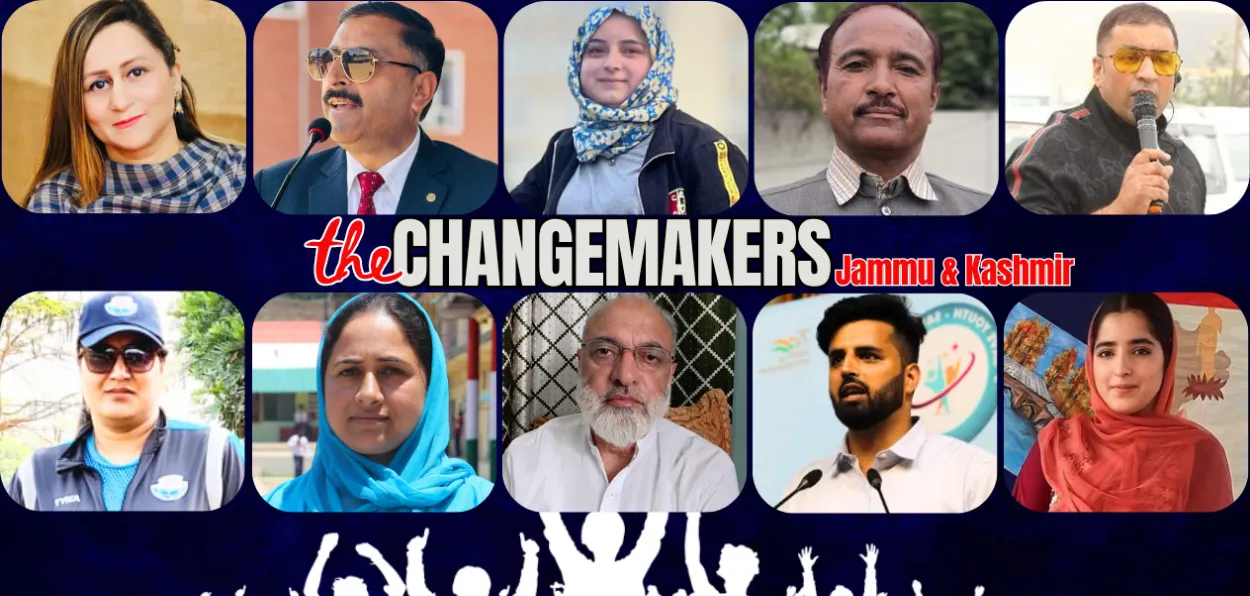
In a land shaped by upheaval—where countless dreams were long overshadowed in remote corners—a silent revolution is underway. Far from the spotlight, a group of remarkable individuals is reshaping the social fabric of Kashmir. They are quietly overcoming obstacles, challenging norms, and inspiring countless others with their unwavering commitment to progress.
Sakeena Akhtar
Sakeena Akhtar is a trailblazer who has shattered deep-rooted gender norms in Kashmir, where women in sports—particularly cricket—have historically faced stigma and exclusion. From being the only girl playing cricket in the narrow lanes of Munawarabad to becoming India’s first female National Cricket Coach from Jammu and Kashmir, her journey is a powerful testament to resilience, courage, and transformation.
Seerat Tariq
At just 19, Seerat Tariq has turned her personal journey of artistic expression into a movement for empowerment and cultural revival. With national records and international accolades to her name, she uses her platform to amplify the voices of others—especially young women in conflict zones—helping them discover their strength and creativity through art.
Shabnam Kausar
In a conflict-ridden region, Shabnam Kausar stands as a beacon of purpose-driven leadership. Starting with just four students and no infrastructure, she transformed the Army Goodwill School in Bandipora into a nationally recognized educational institution. Her story exemplifies the transformative power of education, vision, and resilience.
Suhail Saeed Lone
Born in Bandipora and scarred by the violence of militancy, Suhail Saeed Lone could have succumbed to disillusionment. Instead, he channeled his trauma into storytelling through cinema. Now working in Mumbai’s film industry, he uses the medium to share narratives of courage, sacrifice, and patriotism, turning pain into powerful, purposeful expression.
Sarwar Bulbul
Sarwar Bulbul is preserving and redefining Kashmir’s spiritual and cultural legacy through the timeless medium of music. As a celebrated Naat Khwan and founder of the Bulbul Academy of Performing Arts (BAPA) in rural Rafabad, he mentors underprivileged youth in Kashmiri classical, Sufi, and devotional music—ensuring that age-old traditions are passed on with reverence and relevance.
Irtiqa Ayoub
Irtiqa Ayoub is changing the game—literally—for women in Kashmir. As the region’s youngest Rugby Development Officer, she challenges patriarchal norms in a male-dominated sport. Her work promotes empowerment, equality, and confidence among young women, showing that sports can be a powerful platform for social change.
Anissa Nabi
Anissa Nabi seamlessly fuses public service with personal passion. As a JKAS officer and Chief Sports Officer, she champions grassroots sports development across Jammu and Kashmir. A marathoner and fitness advocate, she founded the Wondrous Women community and serves as an ambassador for the Fit India Movement—proving that leadership thrives on action, inclusivity, and inspiration.
Ghulam Nabi Tantray
Ghulam has launched educational institutions such as a B.Ed. college in Bandipora and the Doon International School in Jammu to mentoring rising sports stars like Tajamul Islam, Ghulam Nabi Tantray has made community empowerment his life’s mission. In times of crisis, he has stepped up with compassion and aid. Despite accolades at the national and international levels, he remains deeply rooted in his community—proving that true leadership begins with purpose, not position.
Mohammad Hafeez Furqanabadi
Mohammad Hafeez Furqanabadi has dedicated his life to transforming society through education and compassion. In an environment where girls’ education was often discouraged, he visited homes personally to shift mindsets and advocate for equality. As a teacher and founder of a charitable trust, he has provided free education and resources to countless underprivileged children—regardless of religion or background—promoting communal harmony and opportunity.
Wajahat Farooq Bhat
Once a stone-pelting teenager driven by rage and radical ideologies, Wajahat Farooq Bhat’s life took a transformative turn after an unexpected encounter with SSP Imtiyaz Hussain in Baramulla in 2018. As a young man from Sheeri village near Baramulla, Wajahat grew up amid narratives of jihad, revenge, and martyrdom, reinforced by mosque sermons and community glorification of violence. However, a deeply personal moment, witnessing the hypocrisy of a local cleric, and later, a heart-to-heart with the soft-spoken SSP during his NCC stint, triggered his awakening. Imtiyaz’s message. Today, he leads Jammu and Kashmir Save Youth Save Future, a grassroots organisation that has helped deradicalise over 3,000 Kashmiri youth. Wajahat aspires to take his mission global, to inspire hope where despair once reigned.
These changemakers may not often make headlines, but their impact is undeniable. Through courage, creativity, and conviction, they are not only rewriting narratives in Kashmir but also illuminating a path for others to follow. Their stories are a reminder that even in the most challenging environments, transformation is possible—quietly, steadily, and powerfully. In the days to come Awaz-The Voice will bring their detailed stories for our readers.
source: http://www.awazthevoice.in / Awaz, The Voice / Home> Stories / by ATV, posted by Aasha Khosa / June 22nd, 2025
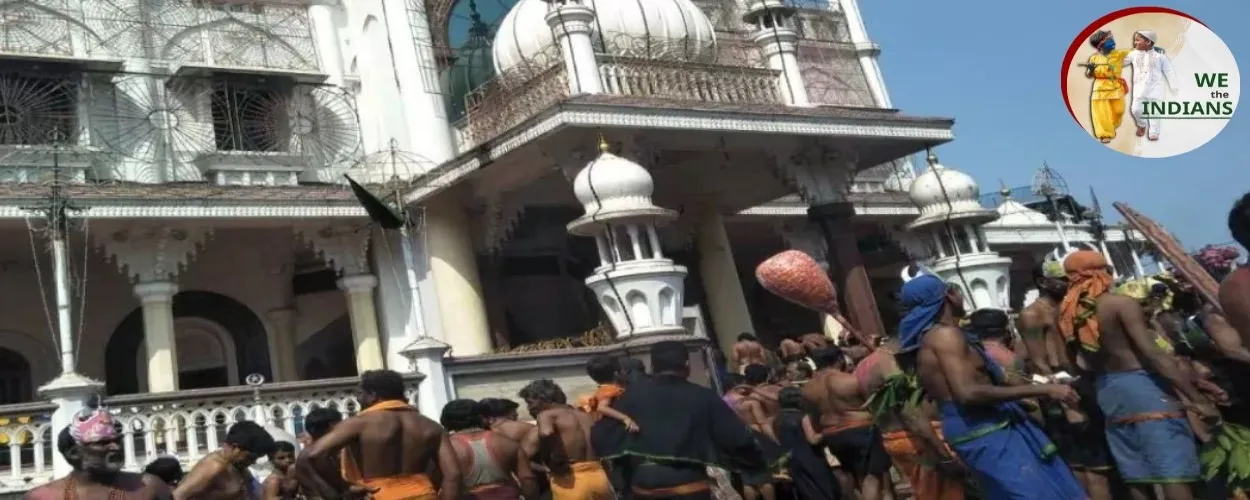
Pilgrims on way to Ayyappa shrine in Sabrimala at Vavar mosque, Erumeli, Kerala
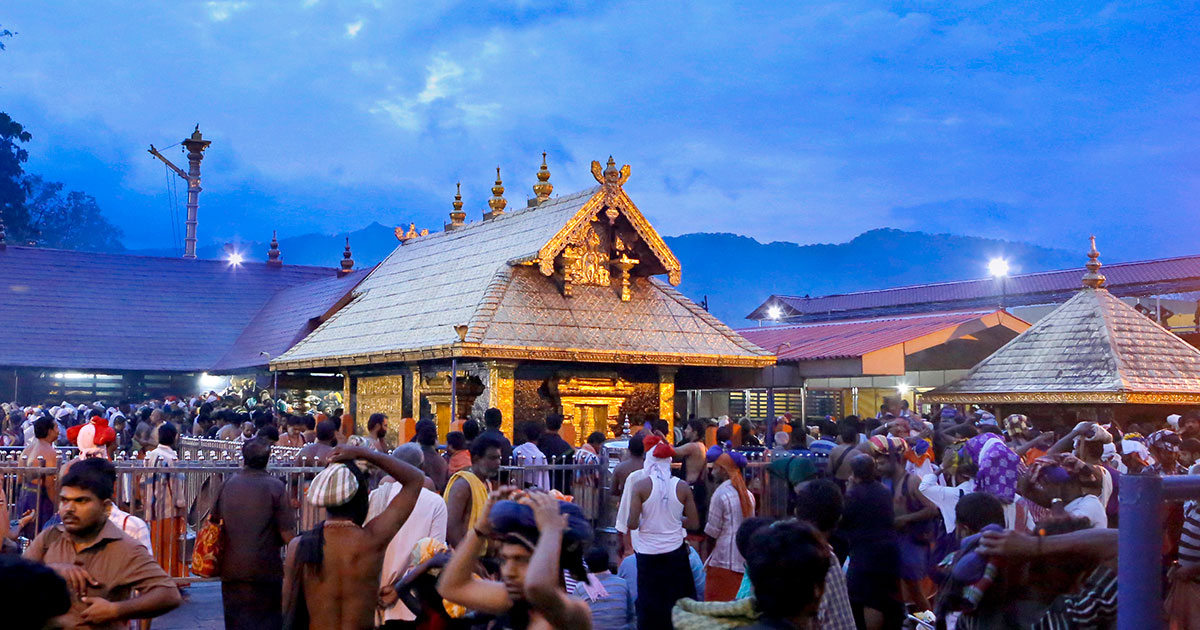
I had waited to go to Sabarimala, a hilltop shrine dedicated to Lord Ayyappa in Kerala’s Pathanamthitta district, for a long time. Lord Ayyappa, the deity of truth and righteousness, is described as the son of Shiva and Mohini (the female avatar of Vishnu). He was said to have been adopted by the local king of Pandalam.
Ungorgettable Experiences
As a youngman, Ayyappa abdicated the crown and renounced the palace to vanish into the forests of Sabarimala to live a celibate and ascetic life. It’s in deference to Ayyapa’s celibacy that women are not allowed there till they turn 55.
After a 41-day mandatory fast, I joined my sister and her husband for the pilgrimage. The pilgrims wear black clothes and carry a bundle containing a couple of coconuts filled with ghee and other offerings for the deity.
We carried the bundle on our heads at the start of the four-kilometre uphill trek. We were not supposed to remove it before reaching the shrine.
At the crack of dawn, after breaking coconuts at the local shrine to ward off all obstacles, we left for the shrine.I was thrilled at the thought of visiting some of my favourite temples and shrines on the route, some of which I had only heard of but never visited.
Lord Ayyapa temple at Sabrimala
Holding our heavy bundles (kettu) on our heads, we stopped at Chottanikakara, Vaikom, and Ettumanoor shrines.
Soon we were at Erumeli. According to legend, Ayyappa defeated the demoness Mahishi (sister of Mahishasura) here. The name Erumeli is comes from Eruma-kolli—“the place where the buffalo-demon was slain.”
At Erumeli, the road streamed with pilgrims, mostly men and children, all clad in black. They had bright colours smeared on their faces, held colourful feather arrows, and danced to drum beats as part of a ceremonial dance called Petta thullal to mark the victory of the warrior Ayyappa over enemies and bandits.
We too swayed lightly, trying to shake off our inhibition-clad egos.
Holding arrows, wild leaves, and smeared in bright colours, we walked towards a temple there dedicated to a deity called Shastha. Shastha is an ancient protective warrior deity worshipped in Kerala even before the incarnation of Ayyappa. Ayyappa is considered a modern avatar of Sastha and is now almost synonymous with Sastha.
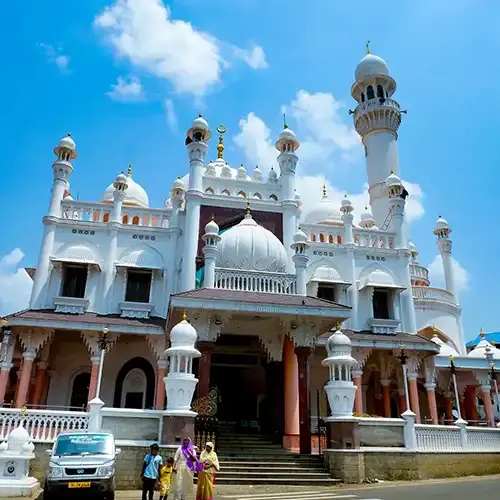
Vavar Juma Mosque, Erumeli
As we walked towards the temple, I was surprised. Were we at the threshold of a temple or a mosque? I saw taps for the ritual cleansing ceremony (wuzu) and a handful of Muslims saying namaz through the glass windows. It was a mosque.
We lined up respectfully outside the mosque. It was Vavar Palli (Vavar mosque), my brother-in-law explained.
Vavar was a close associate of Ayyappa. Their friendship is celebrated in folklore and devotional movies. Vavar was a Muslim, and thus the story gets significant.
“Vavar Swami may have worshipped at the mosque. That is why he is associated with the mosque,” Nasruddin Musaliyar, who traces his lineage from Vavar, explained to me when I spoke to him a few days later.
I felt pure joy at seeing Hindus offering respect outside a mosque and making offerings before worshipping the Shastha temple. After breaking a coconut at the Shastha temple, we began our long trek towards the Ayyappa shrine on Sabarimala.
It took us four or five hours, followed by a long five-hour wait in the crowd. Anyway, we had darshan in the morning. When we came out of the temple, another surprise awaited.
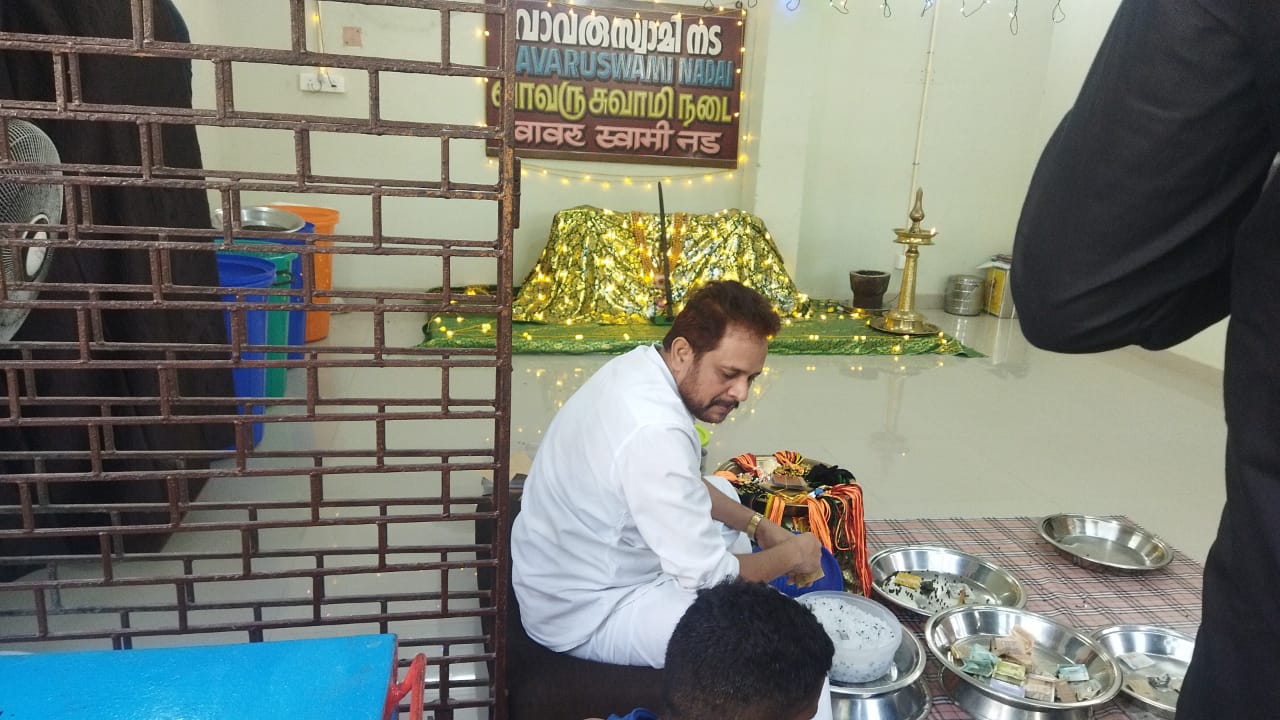
The shrine dedicated to Vavar Swamy
I found myself standing outside a small shrine just outside the Ayyappa temple. It was like a dargah, but I was told that it was called Vavarpadi, or the threshold of Vavar, a memorial to Ayyappa’s friend.
Pilgrims stopped to offer prayers and accept prasad of sugar candy and pepper. The man giving the prasadam said he was a descendant of Vavar and managed his tomb. He gave me his father’s number and asked me to speak to him for details about the shrine.
Nasruddin Musaliyar said that Vavar was part of a group of Arab settlers who were close to Lord Ayyappa.”This shows that the highest authority at that time accepted Vavar despite his different faith or origin,” Musaliyar said.
“Vavar Swami’s tomb and a mosque at Erumeli, where Vavar is said to have prayed, just cry out loud to us today that two faiths can co-exist and respect each other. All religions believe that there is one God. And that almighty wants to tell us that Hindus, Christians, and Muslims can co-exist in harmony,” he added.
Emotions well up as Mursliyar says that neither Ayyappa nor Vavar had asked anyone to build shrines and pray to them. These shrines represent the principle that they did not see any difference between man and man.
Author (left) with her sister and brother-in-law on the way to Sabrimala
Shrines and differences are man-made. “The Muslims don’t worship at Vavars shrine as they believe only in Allah,” he said.
There is no evidence that Vavar was buried there, though the royal records claim so. This shrine is symbolic, he says.
Ayyappa is believed to have renounced the throne, family, and palace to live as an ascetic in Sabarimala’s forests and merged with Sastha. He loved and honoured Vavar, expecting his devotees to do the same. In these times of religious tensions, such traditions continue thanks to a deity who rejected differences of caste and religion and loved everyone as human beings.
After darshan at Sabarimala, pilgrims feel lightheaded as they have all offered their heavy burdens at the shrine.
Perhaps they have removed something else also besides the kettu —the thought of differences itself.
They go as Hindus to worship a Hindu god but return feeling more than just a Hindu…a more complete human being, who embraces all differences.
source: http://www.awazthevoice.in / Awaz, The Voice / Home> Stories / by Sreelatha Menon / December 29th, 2025
Belonging to a conservative Muslim family, it was hard for Fatima Ahmed to break the shackles but she made sure to follow her dreams and do all that she ever wanted. From travelling the world to living like a “gypsy” and creating her very own niche in the world of art, Ahmed has lived her life on her terms. Read about this feisty and inspiring artist.
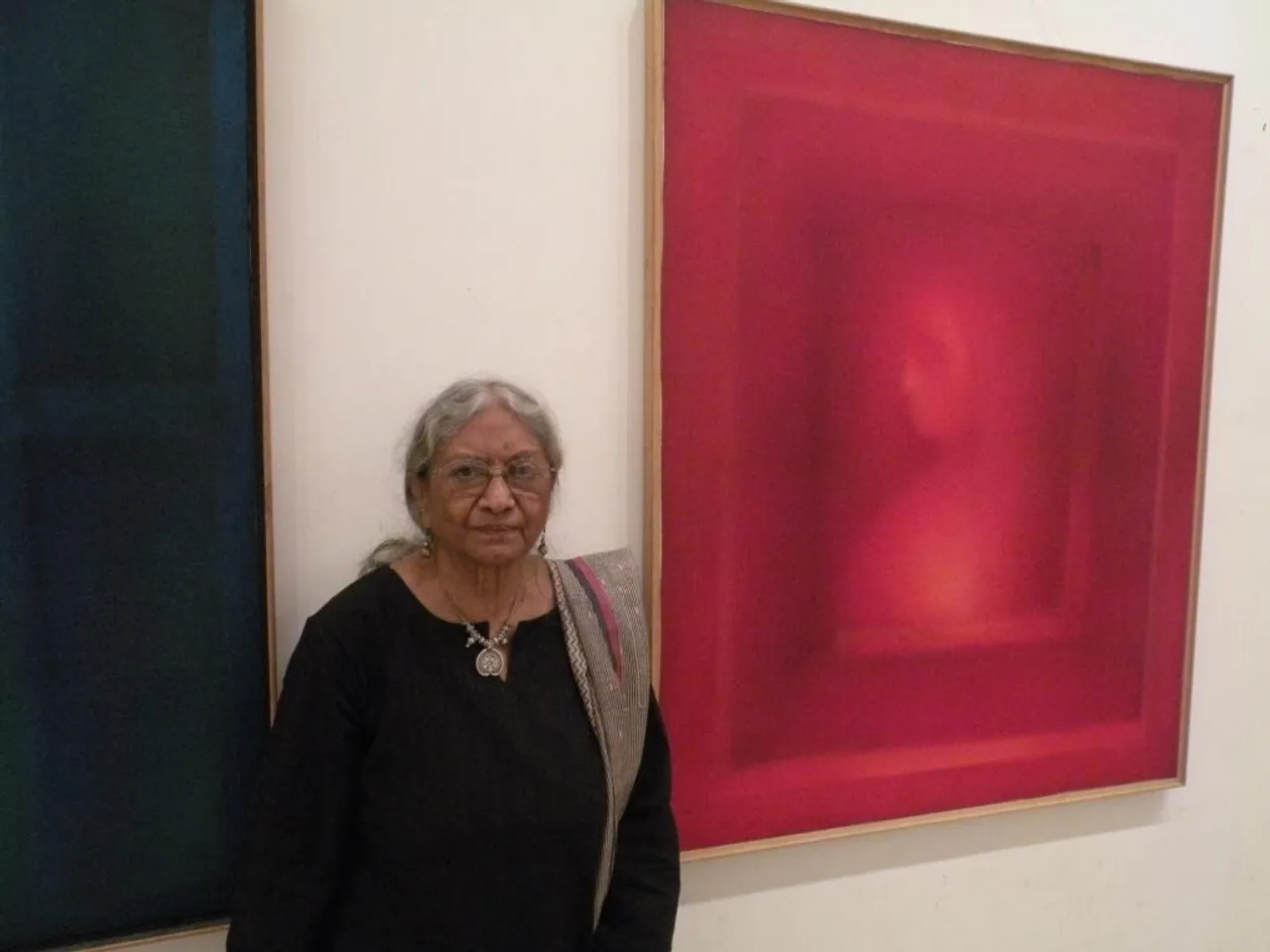
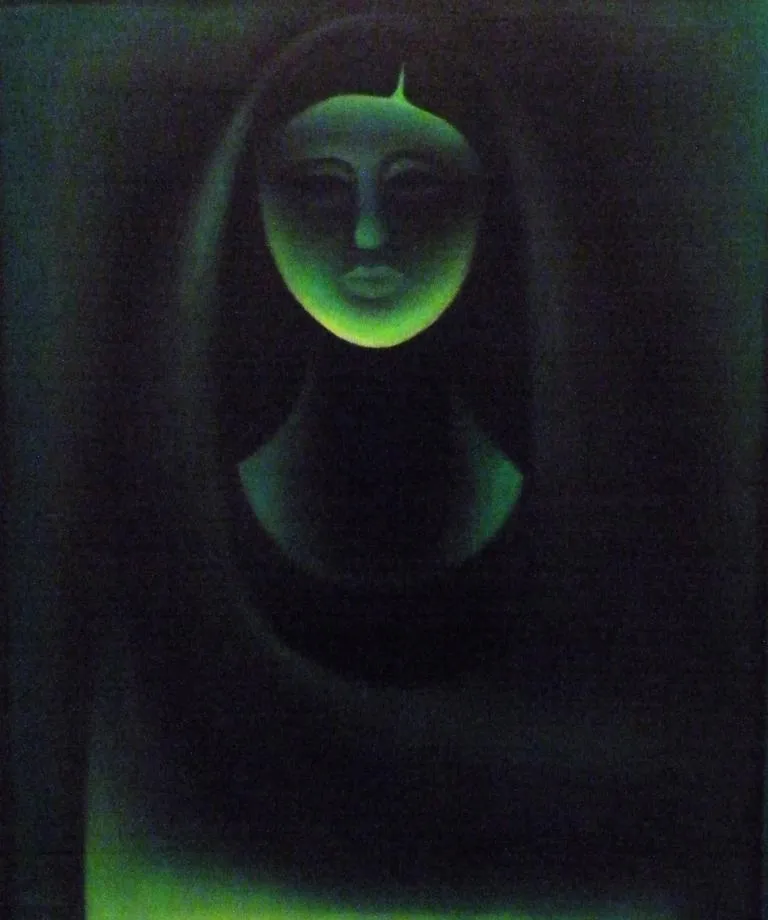
Legendary rebel artist and writer Fatima Ahmed, who is nearing 80, is a picture of contrasts. While she is fun-loving and full of life, her paintings are still and silent. (Credit: Surekha Kadapa- Bose\WFS)
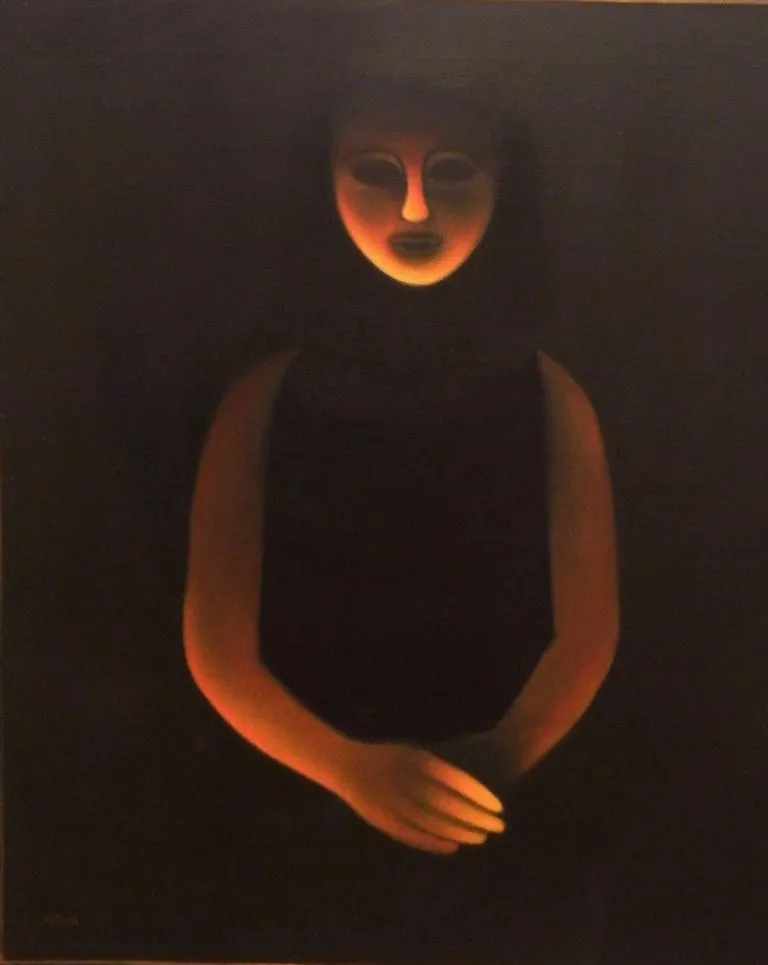
‘If only silence could speak’ goes the adage. Well, here silence does speak – and how! Soft, hazy, elusive images of women gaze steadily from the confines of their canvas making the much-mesmerised onlooker feel as though they would simply vanish if s/he so much as blinked. The women in red, pink, beige oil paints look ethereal, delicate and yet they convey power, strength – much like the woman who has created them.
“Space and light are very important to any work of art, especially paintings,” explains legendary rebel artist and writer Fatima Ahmed, whose latest oil canvases were on display in Mumbai recently. She continues, “In life, there has to be some mystery. Everything shouldn’t be very obvious and spoken out loud. In my works I don’t like clutter, loud colours or screaming. I like my paintings to be as subtle as a whisper.”
“Let me start by saying I simply love to eat the crisp crust of a samosa,” she says, with twinkle in her eyes, before adding, “Now as far as the silence in my work is concerned, throughout my life I have been more of an observer. I was a recluse during my childhood as I didn’t have anyone to share my thoughts and feelings with. I was a rebel for everyone around me and way back in the middle of last century it wasn’t a good sign.”
Coming from a conservative Muslim family in Hyderabad, Ahmed never really fit in because she was a free spirit who believed in equality. Her father was a Collector under Nizam Osman Ali Khan, Asif Jah VII, the last Nizam of Hyderabad.
In her joint family, daughters were married off in their early teens within the extended family. Moreover, as the Ahmed family was very highly placed within the Nizam’s palace, its members, too, were treated as royalty, which was never acceptable to her.
“I just couldn’t tolerate treating those employed in our household as slaves. Besides, women in that era didn’t have any say in any sphere of life and were forced to blindly follow all the dictates of men without questioning them. I certainly wasn’t going to do that,” she says emphatically, her voice betraying the anger she still feels towards the strict patriarchal rules they were made to adhere to in that period.
The women in red, pink, beige oil paints look ethereal, delicate and yet they convey power, strength. (Credit: Surekha Kadapa-Bose\WFS)
So Ahmed grew up with vivid visions of freeing everyone who was treated as a lesser human being. “Quite unknowingly, I was influenced by socialism,” she remarks. And at that age she had also made up her mind that she would rather die than marry one of her cousins. According to her, the one good thing her father did was to enrol her in the Government Mahaboobia Girls School, the foremost learning institution at that time. “Our teachers taught us out of syllabus and gave us the freedom to think. I didn’t like Hyderabad then but I loved my school,” says the artist, who is nearing 80.
It was there that she developed a deep love for drawing, painting and the classical Indian dance form Kathak, all of which she learnt without the approval of the family elders. The dance classes came to an end as soon as her father came to know.
“Unfortunately, my mother had a stroke at the time. And though I did have a large family of sisters, brothers, cousins and aunts, I could never really converse with any of them or share my true feelings,” she elaborates.
After school, as Ahmed refused marriage outright, she was grudgingly allowed to join college. But there again she met with another hurdle. She wasn’t interested in any of the usual subjects of science and wanted to join College of Fine Arts, which, of course, wasn’t permitted. So she found a way to get in. Mischievously she narrates, “I forged my father’s signature on the application form but the principal detected my lie and quizzed me. When he understood that I was really interested in the arts and saw a painting I had done of a litter of puppies, he relented.”
The demise of her parents made her leave home and Hyderabad for good. “I certainly didn’t want to stay back and be bossed around by my brothers and other family members,” she says about her escape to Bombay in early 1960s.
Admitting that the Hyderabad of today has changed considerably, the ageing artist nonetheless doesn’t think there is much difference still in the way girls from poor Muslim families are treated, “While girls from well-to-do homes get an education, are fashionable, go abroad, mingle with the rest of the world, this is not true of the low income Muslim families. They still live in a very male dominated society and this is not only restricted to Hyderabad or India but all over the world.”
Her arrival in Bombay and the “gypsy lifestyle” she led for the next two decades saw her engage closely with the world of art and writing. “I really didn’t exploit the kind of opportunities that came my way. I just took life one day at a time by living it on my own terms,” recalls Ahmed especially referring to her two-year stint in London where she painted, went through a financial crisis and then discovered spiritualism.
Fatima Ahmed, whose latest works were part of a recent exhibition, ‘If only silence could speak’, likes her paintings to be as subtle as a whisper. (Credit: Surekha Kadapa- Bose\WFS)
Despite those struggles, great success has come to her. She has held innumerable exhibitions in Mumbai, Delhi, Chennai, Hyderabad, Bhopal, London, Mauritius, Dubai, Hong Kong, Russia and South Africa, among many other places. Her works have been auctioned by Christies and are part of several private collections and state galleries, including the National Gallery of Modern Art (NGMA) in Delhi, Birla Art Akademi, Kolkata, the Stuttgart State Library and Masanori Fukuoka Museum in Japan.
What or who has influenced her art over the years? Initially, Ahmed says she was influenced by Gauguin, Cezanne, Van Gogh and Modigliani. But she consciously stayed away from those influences, as she felt “there was no fun in copying others”, and developed her own style.
Once she got back from London to Mumbai she caught up with many of her journalist friends. One of them was late Khushwant Singh, with whom she argued, fought and enjoyed interacting. It was he who encouraged her to get into writing. She started by translating works of Ismat Chugtai, Saadat Hassan Manto, Kaifi Azmi and other Urdu literary greats into English. This paved the way for to her write the semi-autobiographical, ‘In Haleema’s Words’. It was on one of her reporting assignments that she visited the Rajneesh Ashram in Pune, which has become her permanent home now.
Personally, Ahmed may be less of a rebel these days but her works more than make up – though still and silent they exude the quiet strength of women.
Written by Surekha Kadapa-Bose for Women’s Feature Service (WFS) and republished here in arrangement with WFS.
source: http://www.thebetterindia.com / The Better India / Home> Art / by Surekha Kadapa-Bose / December 14th, 2014
Jubuni Village (Rampurhat subdivision of Birbhum District), WEST BENGAL :
Feroza Begum
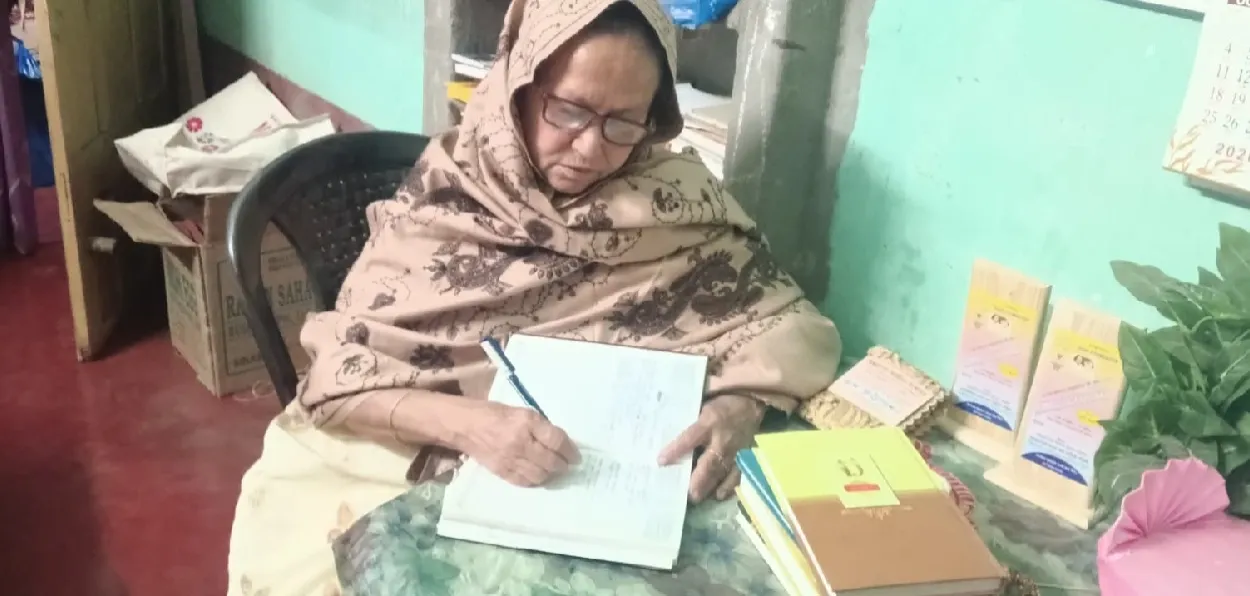
Firoza Begum’s language of protest against the harsh realities of rural India, gender inequality, and family adversity is a strong statement. The poet and writer in her, though, has emerged from a phase of struggle.
She was born into a respectable family in Jubuni village of Rampurhat subdivision of Birbhum district, West Bengal. Her parents, Abdul Hakim Mallick and Arestun Bibi, faced poverty, disease, and social uncertainty, due to which her childhood was difficult.
The struggle for survival of her family and relatives during the terrible smallpox epidemic influenced and triggered a humanitarian spirit in her.
In her childhood, when women’s education was neglected in rural society, she completed her schooling. She broke many social barriers. The discrimination and neglect she faced while in school ignited the spirit of rebellion in her, which, in due course, made the language of her writing sharp, protestant and sensitive.
Feroza Begum with an award
In 1974, she married Nurul Haque Mallick, a science-minded teacher. With her husband’s liberal attitude and inspiration, she managed to balance both her family life and pursuit of literature. She made sure her four daughters got educated and financially independent, self-reliant. Although her husband’s death in 2016 left a deep void in her life, she did not stop pursuing literature.
Since 1992, Firoza Begum has been regularly writing poems, songs and essays. Her writings have been published in various literary magazines of Murshidabad, Rampurhat and Kolkata, Pragati, Trinayani, Kalam, Bhabbana, Sangbad Darpan, Roddur, Arpan, etc.
Besides, she is also a regular participant in the radio and television programs and has received recognition beyond her hometown and community.
The poetry collection “Nayantara” published in 2010) and “Aparajita” published in 2014) clearly reflect the struggle of women, the adversities of life, and the human spirit.
She proofread and published the book, despite illness and limitations, and it reflected her perseverance.
Firoza Begum has received several honours and awards in recognition of her contribution to literary endeavours.
The reception by the Bhabna O Anubhavber Dana newspaper of Rampurhat, the Rokeya Award from the Roddur newspaper, certificates from various radio stations in Kolkata and Baharampur, the Ambedkar Shilpi Ratna Award from New Barrackpore, and the recent “Best Bengali” award from the Asha Foundation are important recognitions of her literary and humanitarian activities.
The life of poet Firoza Begum is not just the autobiography of a writer, it is a courageous document of a struggling woman. Her pen still bears witness to the fact that even in the deep darkness of adversity, education, humanity and literature are capable of illuminating the path of humanity.
source: http://www.awazthevoice.in / Awaz, The Voice / Home> Stories / by Dev Kishore Chakraborty / February 03rd, 2026
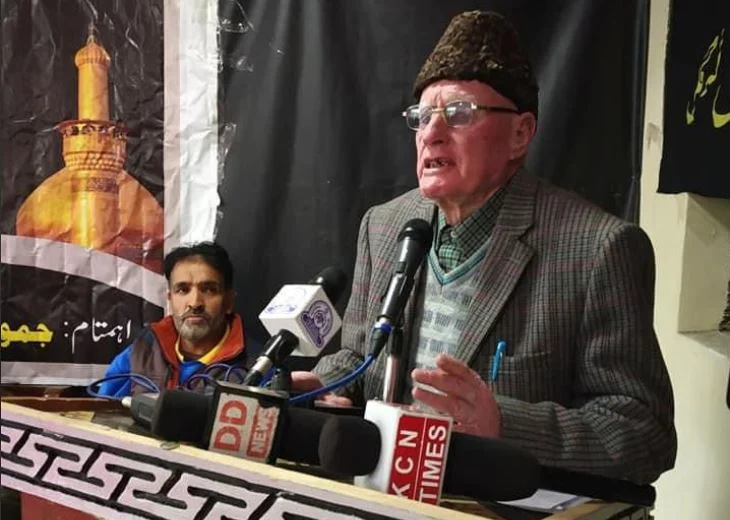
A heartfelt Condolence Meeting in memory of the late Haji Khawaja Abdul Hamid Tanveer, the eminent scholar, writer, and poet of Kargil, Ladakh, was held today at the Ladakh Cultural Academy Hall, Kargil.
This gathering brought together the literary and cultural community of Kargil, including esteemed writers, poets, and cultural activists, who paid their deepest respects and expressed heartfelt condolences for the loss of this iconic literary figure.
Haji Khawaja Abdul Hamid Tanveer, who passed away today morning in Srinagar, Kashmir, was remembered for his immense contributions to literature and culture. Known as an “ocean of knowledge,” his prose and poetry were celebrated for their depth, wisdom, and literary craftsmanship. His work left a lasting impact on Kargil’s cultural identity, inspiring both his contemporaries and the younger generations.
The attendees honored the late scholar’s memory with a solemn two-minute silence, and “Surah-e-Fatiha” was recited to pray for his departed soul’s peace. His legacy as a guiding light in Kargil’s literary circles was acknowledged by all, with deep admiration for his significant contributions to the region’s literary heritage.
Distinguished individuals present at the meeting included Padmashree Dr. Akhoon Asgar Ali Basharat, State Awardee Ghulam Ahmed Jawan, Alhaj Aga Sayed Hadi Shah, Muhammad Hussain Rehnuma, Muhammad Hussain Fayaz, Nazir Hussain (Deputy Secretary, LAACL), Muhammad Ali Tak (OSD/Under Secretary), Department of Tourism & Culture, UT Ladakh, Zakir Hussain (HA, LAACL), Gulzar Hussain Mendoktsar, Shafaqat Ali, and others.
In his speech, Alhaj Aga Sayed Hadi Shah highlighted that the late Haji Khawaja Abdul Hamid Tanveer was not only a respected literary scholar but also his personal mentor and a guiding influence in the field of literature. He was closely associated with All India Radio (AIR) Kargil, the J&K Cultural Academy, and the Ladakh Cultural Academy, leaving behind a rich legacy of cultural contributions.
On this occasion, both Padmashree Dr. Akhoon Asgar Ali Basharat and Muhammad Hussain Rehnuma paid tribute to the late poet by reciting a special poem dedicated to his memory and achievements.
The entire region of Ladakh grieves the loss of this legendary writer and poet. His wisdom, knowledge, and literary legacy will forever be cherished, serving as a source of inspiration for generations to come. His contributions to the field of education, particularly his role as Zonal Education Officer (ZEO) in Kargil, were also acknowledged with deep respect, reflecting his unwavering dedication to the community he served with passion and commitment.
source: http://www.boldnewsonline.com / Bold News / Home> Art & Culture / by Bold News Online Desk / November 16th, 2024
Tragically, Munawar Ali Khan Sahib died at the peak of his career, at the age of 59 in Kolkata in 1989.
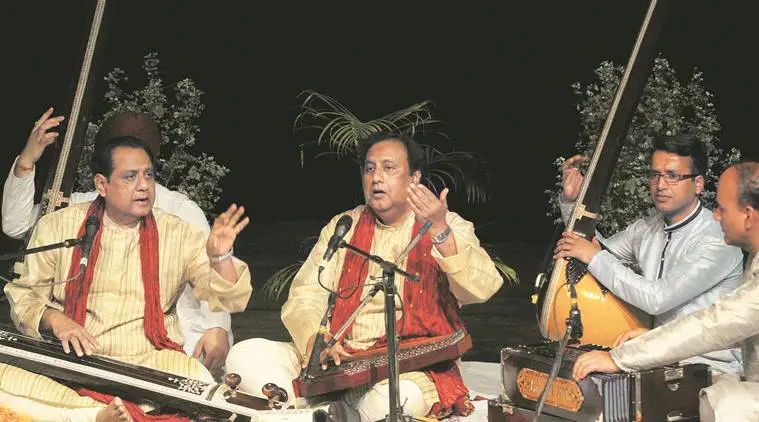
Artistes perform at Tagore Theatre in Sector 18, Chandigarh, on Saturday. Express
Triveni Sangeet Sabha paid a homage to late Ustad Munawar Ali Khan of Kasur Patiala Gharana on Sunday evening at Tagore Theatre. An audio-visual presentation on Ustad Munawar Ali by Niharika Popli was projected. This was followed by vocal recitals by Ustad sahib’s son Raza Ali Khan and his two nephews Ustad Mazar AlI and Awaad Ali Khan. Chandigarh-based Primila Puri, his disciple, also sang.
Ustad Munawar Ali Khan was born in 1930 in Lahore. He was the son of the legendry maestro Padmabhushan Ustad Bade Ghulam Ali Khan and trained under his father and his uncle Ustad Barkat Ali Khan. Munawar Ali Khan had a full-throated, powerful voice with open aakar, which adapted itself to different styles of bandishes like khayal, thumri, dadra and after his father’s death in 1968, he became a worthy representative and the ‘Khalifa’ of the Kasur Patiala Gharana. He created many khyals, thumris, geets and ghazals and sang brilliantly difficult ragas of his gharana and also created a new raga named Malini Basant.
Tragically, Munawar Ali Khan Sahib died at the peak of his career, at the age of 59 in Kolkata in 1989. The Kasur Patiala legacy is now carried on by his son Raza Ali Khan and his nephews Jawaad Ali Khan, Mazhar Ali Khan and Naqi Ali Khan.
source: http://www.indianexpress.com / The Indian Express / Home> News> Cities> Chandigarh / by Express News Service / March 18th, 2018