From Facebook posts to life-saving campaigns, he built a community rooted in purpose
Bengaluru :
Do you remember when Instagram was just about pictures, with no reels, stories, or videos? Suhail Rasool vividly remembers it; it feels like yesterday. A Bengaluru-based content creator, Suhail began his digital journey on Facebook in 2009, long before the term ‘influencer’ became common, and carried that momentum onto Instagram, where he carved out his own space.
Currently known online as @suhailrasool on Instagram, he has grown into one of Bengaluru’s most recognised digital storytellers. What sets him apart is not just the numbers but the heart behind his work. His content brims with energy, relatability and an unmistakable sincerity. From lifestyle and travel to personal vlogs, Suhail weaves stories that feel lived in and real. He has consistently mobilised his audience to support medical treatments, social causes, and relief efforts, proving that influence can spark genuine change when guided by empathy.
Stormy start “I had a Facebook page in 2009-10. Most of the posts on that page reached nearly 60,000 likes,” recalls Suhail. He joined Instagram on March 10, 2014, when the platform was still basic. “There were no Reels, no IGTV, no collaborations, no links, just photos,” he explains the struggle of the lack of features. Later, Instagram added 10-second videos.
“You had to fit everything into those 10 seconds, and there was no sharing option. People had to follow you to watch.” “In 2016, Snapchat introduced Stories, and Instagram quickly adopted the feature. That’s when I really started posting daily Stories, 10 to 15 a day,” he says. “I’ve kept it up ever since. Back then, I was a lot more energetic too,” he laughed and highlighted how consistency is key on social media.
Using platform for a purpose Suhail Rasool began raising funds in 2020, focusing on life-saving procedures such as heart, kidney, liver, and lung transplants. Over the years, these efforts grew into a community movement that helped save countless lives. Looking back, he sums it up simply: “We saved a lot of lives.” During the peak of the COVID crisis, he and his team mobilised resources at an extraordinary scale.
They distributed nearly 7,500 ration kits, each worth about Rs 1,200, raising close to Rs 75 lakh in just three days. “Every Bangalorean who was in trouble with COVID made sure they reached us,” he recalls. Beyond food relief, the team organised ventilator beds, ICU beds, and other essential medical support for those in urgent need. Suhail also mentioned how a friend’s trust, later taken forward in his memory, enabled them to expand their efforts.
Among the initiatives was donating ambulances, made free of cost at a time when prices had soared and access was limited. “Even now, that ambulance has been kept free of service in our area,” he says, a lasting reminder of their work during the pandemic.
A creator who speaks He admits inspiring many followers through his platform to speak out on sensitive issues, particularly around communal harmony. He emphasises that political agendas have created unnecessary divides and distracted the youth from focusing on progress. His message remains consistent and simple: “We are all one. It is one country, and we need to stand together for its development.”
“I’m very active on my Stories, I have the highest reach there, and even on IGTV. I still call it IGTV,” says Suhail with a smile. His Instagram Stories draw some of the largest audiences in Karnataka and even across South India. On average, each story is watched by nearly 1,80,000 people, and even his daily updates often cross the one lakh mark. Unlike many creators, he focuses less on Reels or posts and instead relies on the consistency of his Stories, which his followers watch religiously. This is how he has managed to build a strong base of loyal followers.
Idea over a chai “Mehfil is one big concept in my life,” said Suhail. For years, he and his friends, Fazal and Fanoos, created lighthearted content, but as they grew older, they wanted something more sustainable. At the time, few brands believed in Instagram marketing, yet Suhail kept supporting small businesses and young influencers. By 2021, his Stories reached nearly 1,50,000 viewers, and creators constantly sought his support. That inspired him to bring everyone under one roof.
Along with his friends, he registered a company and built a platform for bakers, designers, makeup artists, and entrepreneurs to showcase their work. “As we are gathering everyone, I called it Mehfil,” he says with pride. The first gathering took off like a rocket, with a sea of people storming in and all the businesses booming. Then they held three more Mehfils, and the next one is at the end of this year. By forging his own path, he has not only built his own success but also opened doors for countless aspiring creators online.
source: http://www.newstrailindia.com / News Trail / Home / by Bhavana M / September 07th, 2025
As the year draws to an end, we have compiled a brief list of the Indian Muslims who have been in news during 2021.
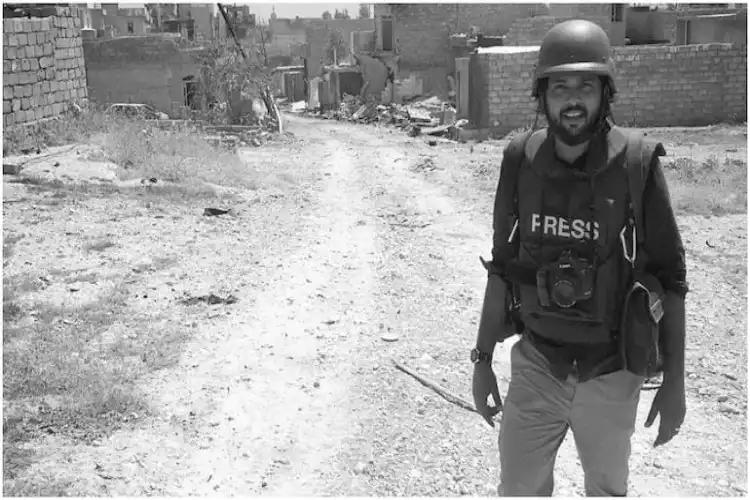
Danish Siddiqui :
Danish Siddiqui was a Pulitzer Award winning photojournalist from New Delhi, who was killed by Taliban while covering the war in Afghanistan. An alumnus of Jamia Millia Islamia, Siddiqui was one of the country’s most well known photographers who documented the Rohingya refugee crisis, Covid deaths and the Delhi riots to win several awards. In July 2021, Reuters assigned him documentation of the Afghanistan War as an embedded journalist with Afghan Special Forces. On July 16, Siddiqui was killed in action. Governments of India, USA, Afghanistan and United Nations expressed grief and shock on his death and thousands joined his funeral procession in DelhI.
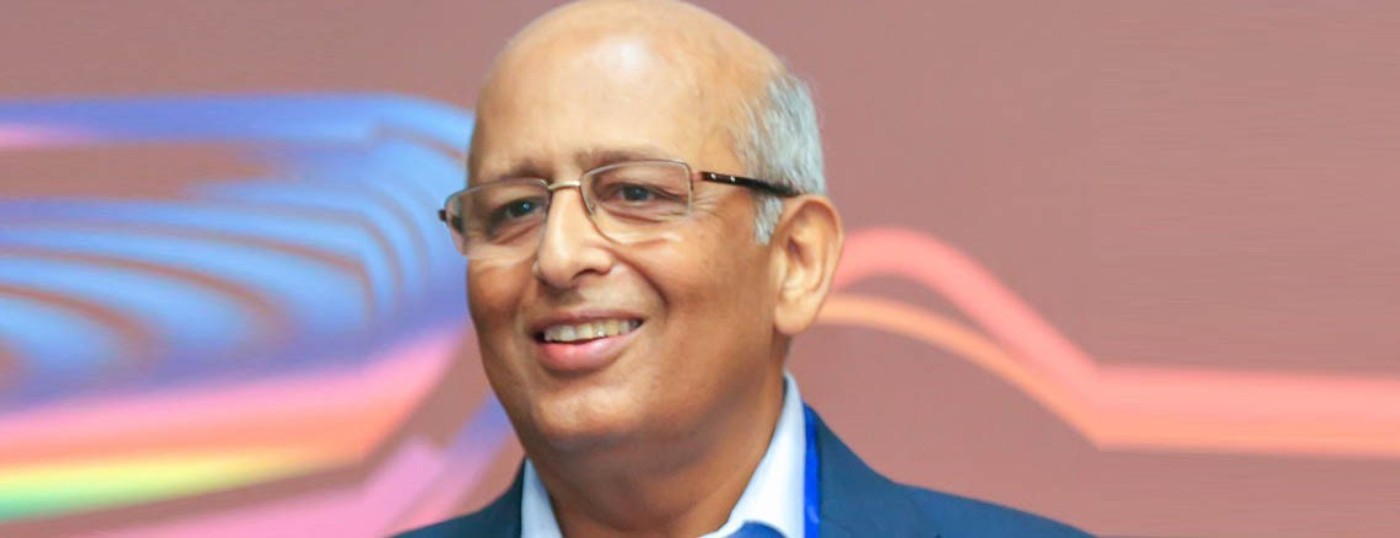
Dr Shahid Jameel :
Dr. Shahid Jameel is a world renowned virologist and is one of the leaders of India’s fight against Covid-19. The Covid-19 outbreak has thrown new challenges to the scientific community. When the Government of India set up an Indian Sars-Cov-2 Genomics Sequencing Consortium (INSACOG), which consists of 38 laboratories to monitor the genomic variations in the SARS-CoV-2, Jameel was appointed as the head of its scientific advisory group. He served the INSACOG in this position till May, 2021 and still advises different government and non-government bodies in strategising the war against Covid-19.
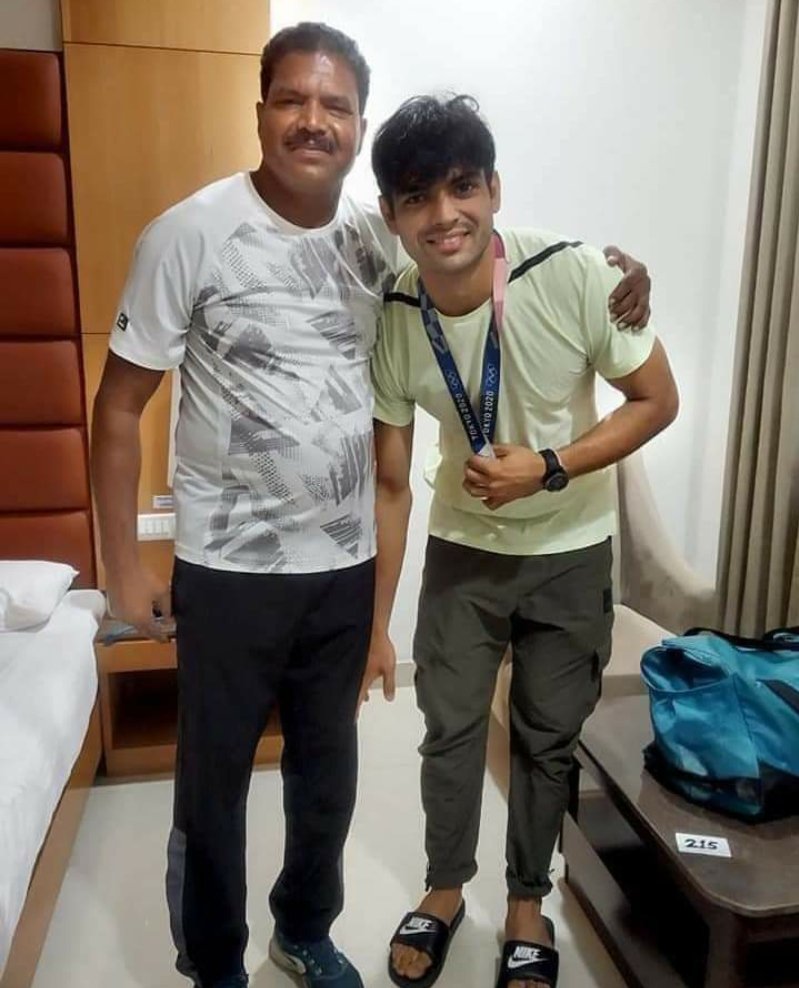
Coach Naseem Ahmed with Olympian Neeraj Chopra
Naseem Ahmed :
Naseem Ahmed: On 7 August, 2021, Neeraj Chopra threw Javelin for 87.58 mts. and became the first Indian to win an Olympic Gold in track and field events. With this success, Naseem Ahmed of Panchkula also hit the headlines. Ahmed was his first coach, who coached Chopra for almost six years at Tau Devi Lal Sports Complex in Panchkula. It was under his guidance that Chopra turned into an athlete from a chubby child. After returning to India, Chopra went to meet and receive blessings from his coach.
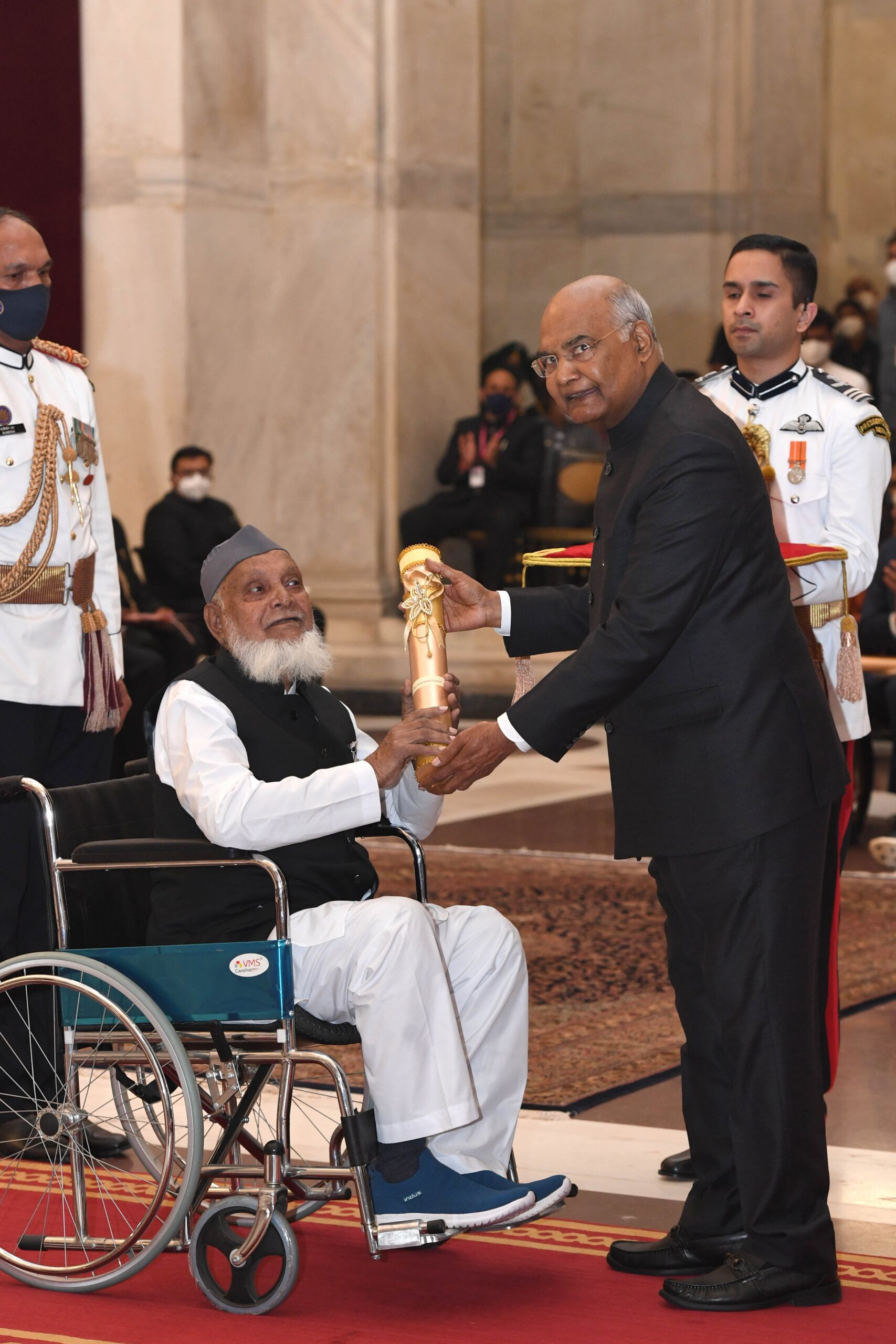
Mohammad Shareef alias Shareef Chacha receiving Padma Shri from President Ran Nath Kovind
Mohammad Shareef :
Mohammad Shareef is a bicycle mechanic from Faizabad, Ayodhya and hit the news headlines this year for receiving Padma Shri, the fourth highest civilian award in India, from the President Ram Nath Kovind. In 1992, his son was murdered and was eaten by animals as nobody claimed it. This incident moved him so much that he took it upon himself to perform the last rights of unclaimed dead bodies. In the last 28 years, he has performed the last rights of more than 25,000 unclaimed dead bodies according to their religions.
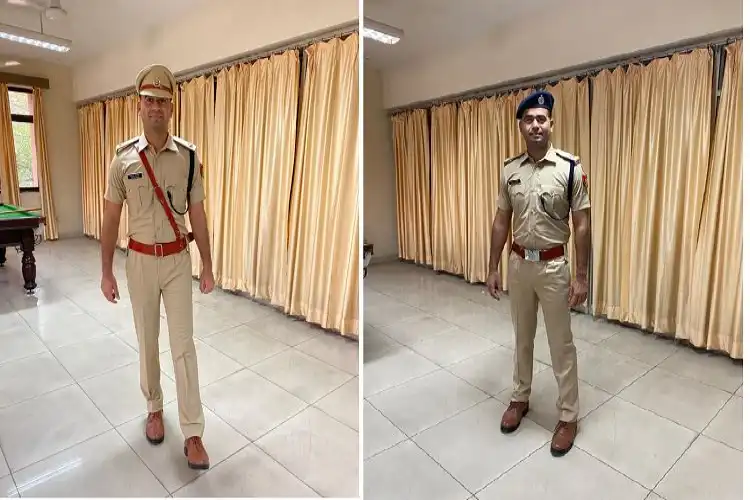
Firoz Alam as an IPS officer (Left) and as a Constable of the Delhi Police (Right)
Firoz Alam :
Firoz Alam’s story is straight out of a fiction, where his character bears resemblance to those played on screen by several film stars. Alam, a resident of Hapur in U.P, was a constable with Delhi Police since 2010. In 2014, he started preparing for UPSC CSE. The work pressure and family responsibilities did not allow him to devote full time to the studies, like many availing coachings could do. After five unsuccessful attempts, in his sixth attempt he qualified UPSC CSE and joined as an IPS officer. His inspiring journey from a constable to IPS had taken the nation by a storm when he joined the training after leaving the job as constable.
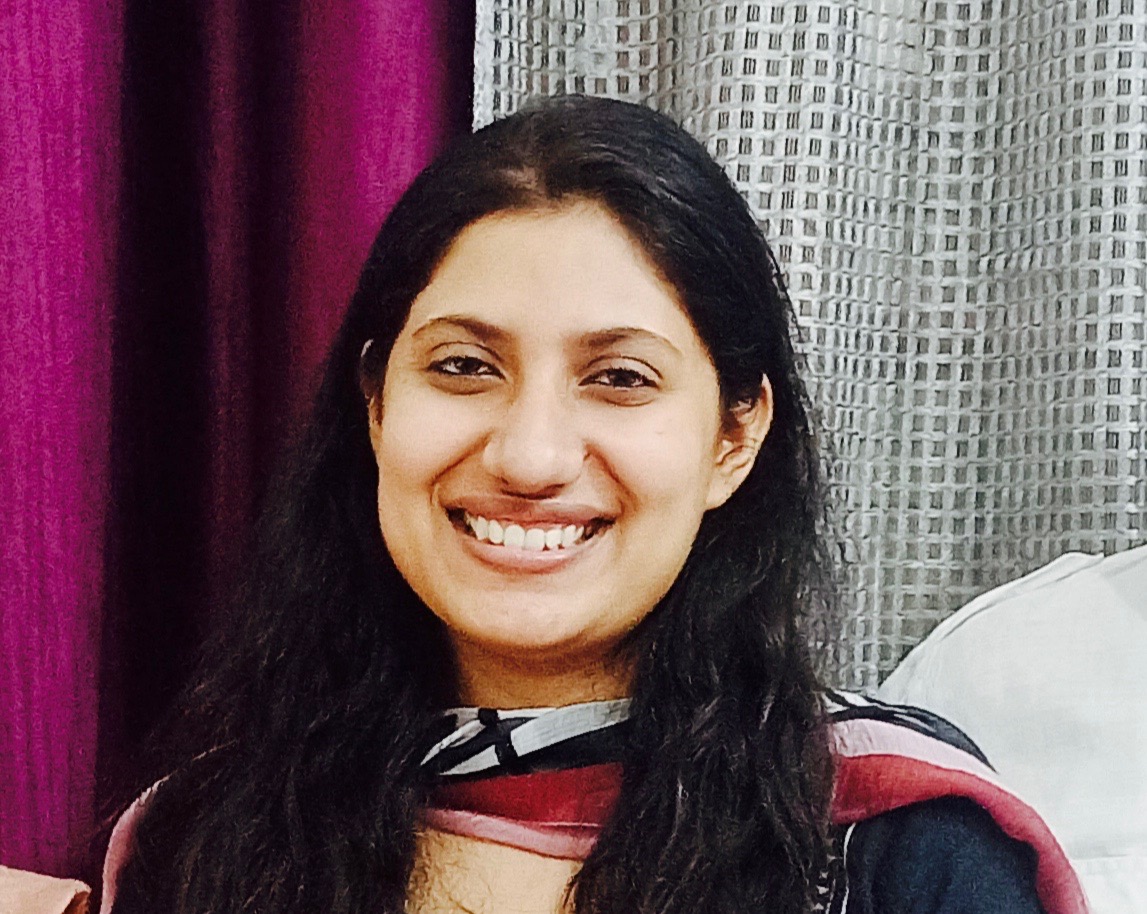
Sadaf Choudhary
Sadaf Choudhary :
Sadaf Choudhary came into limelight when the UPSC CSE results were declared in September and she secured 23rd rank. She was the highest rank holder among Muslims this year and will become an IAS officer. It must be kept in mind that since independence only 179 Muslims have secured ranks to get IAS allotted to them.
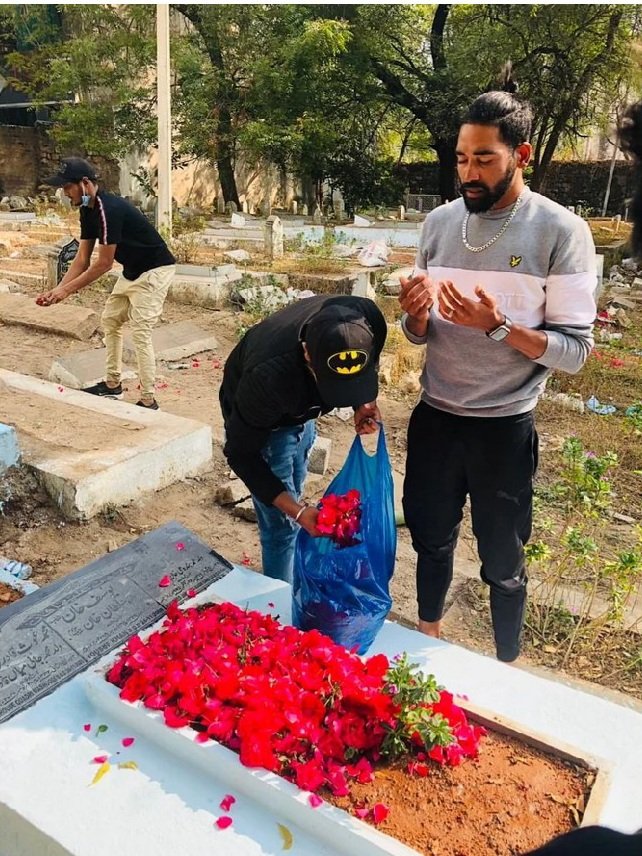
Mohammed Siraj praying at the gave of his father
Mohammed Siraj :
Mohammed Siraj is an Indian cricketer from Hyderabad who made it to the headlines in January by becoming the highest wicket taker from India during the India – Australia Test Match Series in Australia. To claim his 13 scalps, he played only three of the four tests in the series. The fact that his father had died just before the series and he was given an option to return to the country, which he declined citing his commitment to the nation made it even more special.
In the last test match at Brisbane, he bagged five Australian wickets to script a historic win and became a national hero. The headlines of the sports column were filled with his heroics, commitment and ability. Since then he has been a regular feature of the Indian Cricket team as a pacer.
source: http://www.awazthevoice.in / Awaz, The Voice / Home> Stories / by Saquib Salim / December 30th, 2021
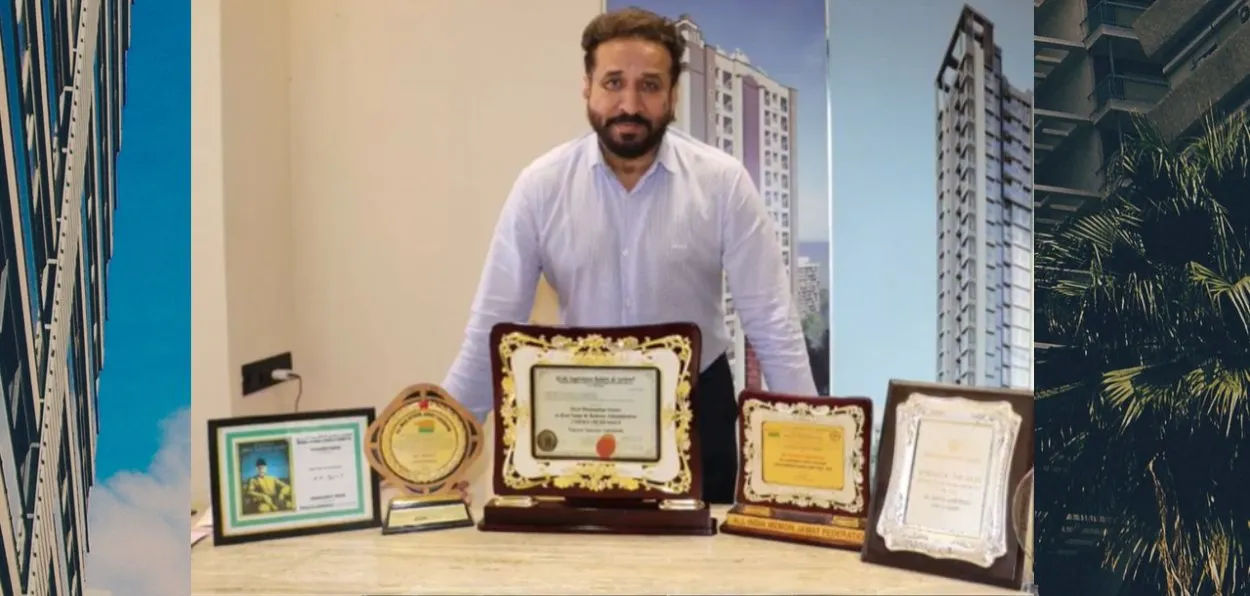
Parvez Suleman Lakdawala, founder CEO, Grace Group of Companies
Mumbai :
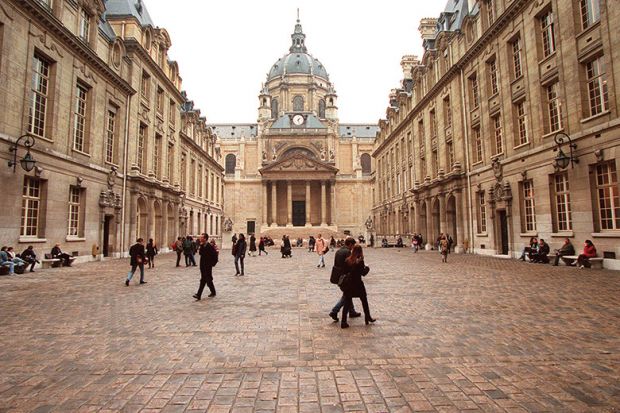
Mumbai-based real estate developer Parvez Suleman Lakdawala, who has played a significant role in building homes for slum dwellers, has received an Honorary Doctorate from the University of Sorbonne of France at the British Parliament for his extraordinary work in real estate and housing infrastructure particularly in slum redevelopment, over the last three decades.
He was given this award during the ‘Sorbonne International Convention’ held at the ‘House of Lords’ in London by the French higher education institution ‘Ecole Supérieure Robert de Sorbonne.’
Speaking about the honour, he said, “I never even dreamt that I would receive such an honour.”
This institution is known worldwide for granting degrees based on professional experience. Speaking after accepting the honorary degree, Lakdawala said, “This is a global success for the slum rehabilitation work I have done through SRA schemes. I have been in this business for 30 years and have completed the construction of 32 buildings so far.”
Parvez Lakdawala was born into poverty in a small hutment in Bandra when conditions in the slums were sub-human, and the residents had to struggle for basic amenities like water.
Parvez recalls that there was a filthy settlement outside his house, and the condition of the household was very poor. For children living in such conditions, even dreaming big was considered a crime.
However, Parvez never let his poverty weaken his resolve to rise above his circumstances.
Despite the fear of dropping out due to poverty, Parvez held onto his education. Studying while living in a slum, he completed his education. Not many know that Parvez Lakdawala, the successful businessman, is a law graduate.
The law gave him discipline in life and the knowledge to fight against injustice. He often says that he prospered in life only because of education.
In 1989, he laid the foundation of the Grace Group of Companies and started working in the real estate sector.
Sorbonne University campus
Around 1995, he worked for the Slum Rehabilitation Authority of Mumbai (SRA) to provide highly subsidized apartments to slum dwellers. At that time, not many builders were willing to work there. Today, he has completed projects of more than 32 grand buildings in Mumbai.
He gave a new face to the homes of the poor by implementing new designs, modern amenities, and innovative concepts.
Earning money was never his sole aim. Having experienced poverty, he empathized with the poor. That is how he bears the educational expenses of thousands of poor children. For parents who cannot afford to pay their children’s school or college fees, Parvez Lakdawala has become a ray of hope. “Allah has given to me so that I can give it back to society,” he says.
During the Corona lockdown, when the entire country was under the shadow of fear, Parvez Lakdawala was working in the streets.
Thousands of labourers with their small children were walking towards their villages. Parvez arranged for vehicles and buses for them. He transported more than 3000 people to their homes.
He also ensured the travelers got food and water. For this work, he received appreciation not only from Mumbai but also from states like Rajasthan.
In a city like Mumbai, where even dreaming of a home is a luxury, Parvez Lakdawala has helped thousands of families get their rightful homes. His journey builds buildings worth crores today, starting from a 250-square-foot house.
The most important aspect of Parvez Lakdawala’s work is the self-respect he has given to the common man. Recalling old memories, he says, “Earlier, people living in slums used to feel ashamed about their address. They regretted their living conditions. Today, when the same people enter flats equipped with all amenities, they proudly disclose their address to others. Giving them the property they deserve and a sense of security gives me the most joy.”
Parvez Lakdawala’s mantra is: Your intention is more important than your destiny. If your intention is good, God comes to your aid and grants you success.
source: http://www.awazthevoice.in / Awaz, The Voice / Home> Stories / by ATV / posted by Aasha Khosa / January 09th, 2026
Well-known Mangaluru-based entrepreneur and philanthropist Hashim Khan (45) passed away due to a heart attack in his native village in Uttar Pradesh on Tuesday.
Khan had travelled to his hometown to attend a family function when he reportedly suffered a massive cardiac arrest.
He is survived by his wife, three sons, and a daughter.
Having arrived in Mangaluru at a young age in search of work, Hashim Khan gradually built a successful business and earned wide respect in the city’s business circles. Beyond entrepreneurship, he was equally known for his acts of generosity and social commitment.
During the Covid-19 pandemic, Khan personally distributed food supplies and essential items to needy families, winning the admiration of many.
His untimely demise has left a deep void among the city’s business community and those who benefited from his charitable work.
source: http://www.daijiworld.com / Daijiworld.com / Home> Karnataka / by Daijiworld Media News Network – Mangaluru / November 05th, 2025
It was a hot, restless afternoon in New Delhi – the kind where the sun presses down with such fury that even the breeze seems to hide. The air was thick with chants, placards, and purpose. Students from across the capital’s universities had gathered in protest – a voice of defiance against the rising wave of mob lynchings sweeping through India, backed by extremist ideologies. Amid the sea of young faces, I noticed a small group that stood out. They were not university students in jeans and t-shirts, but madrasa students in simple white kurtas and skullcaps, holding banners of peace and justice.
They had come all the way from Deoband, a quiet town that has long been a lighthouse of Islamic learning, to stand shoulder to shoulder with victims’ families. Among them was a young scholar whose calm presence carried a certain gravity: Moulana Mehdi Hasan Aini Qasmi.
Our meeting was brief, just a few words exchanged, a handshake perhaps, but something about him stayed with me. I didn’t know then that this quiet madrasa graduate would one day become the face of a remarkable educational revolution in India.
The Seeds of Brotherhood
Two years later, in 2018, the Students Islamic Organisation of India (SIO) held its grand All India Conference in New Delhi, themed “Reclaiming Dignity | Designing the Future.” Among the audience of fiery youth and intellectuals, Mehdi Hasan was invited as a representative of madrasa students – being the President of the Abna-e-Madaris (Old Boys’ Association of Deoband).
When he spoke, his words carried the depth of tradition and the urgency of modern times. After the session, we found ourselves in a long conversation about faith, education, and the future of Muslim youth. That day, a brotherhood was born – one that would travel far beyond Delhi’s conference halls.
Soon, he invited me to Deoband. What began as a visit turned into a revelation. We walked through the majestic gates of Darul Uloom Deoband, met students immersed in their studies, and discussed the evolving role of Islamic education in a rapidly changing India. It was there I saw the spark – Mehdi’s vision was clear: to bridge the gap between traditional Islamic scholarship and the demands of modern society.
From Streets to Seminars
Between 2019 and 2020, our journey turned into a mission. Together, we travelled across India – from the quiet corners of Tripura to the bustling lanes of Telangana – addressing crowds, organising awareness drives, and speaking against hate, Islamophobia, and discrimination.
Then came the storm – COVID-19. India went silent. The streets emptied. Institutions shut their doors. But we refused to stop. Our activism simply changed form. While the world was locked down, we were reaching out – distributing relief, helping stranded students, and connecting youth through virtual spaces.
One late-night discussion during those months became the turning point.
“If people have time,” I said thoughtfully, “why can’t we bring madrasa education online? Why can’t we empower teachers who have no income now? Why can’t we teach our youth skills to survive?”
That one why became a revolution.
Over the next two years, the spark spread like wildfire. Under Mehdi’s leadership, IIAD organised over ten national workshops across India, reaching thousands of students from Aurangabad to Delhi. These workshops covered topics far beyond theology – from Education to Entrepreneurship and Islamic Thought to Social Leadership.
One such event, the Aurangabad Education Expo, became a milestone in connecting madrasa students with mainstream educational opportunities. Through these sessions, IIAD began to carve a new narrative for Islamic learning – one that embraced progress without compromising on principles.
The Birth of an Idea
Our first online programme, “Education to Entrepreneurship,” was meant to be a small initiative – a bridge between learning and livelihood. But the response was beyond imagination. Hundreds of madrasa students and teachers joined from every corner of India.
We realised we had touched a nerve – there was a hunger for knowledge, a thirst for relevance. In 2022, we organised an offline workshop in Bidar at Shaheen Group of Institutions for madrasa students. To our surprise, several attendees were already running small businesses – many of whom had attended our first online sessions back in 2020.
One night, Moulana Mehdi and I sat in deep conversation till Fajr. The sky turned from ink to gold as we reached a decision that would change everything: to start a full-fledged online institute for Islamic education and leadership and the name finalised was “India Islamic Academy Deoband” and now it is a brand in Madaris Circles.
But Mehdi had already taken the first step. Before our official launch, he had begun teaching small groups online – offering a Basic Islamic Foundation Course (3 months) and an Advanced Islamic Studies Course (6 months). Within weeks, the response exploded. Students from across India – and even abroad – joined.
And then, in 2021, the dream took shape.
Multi-Dimensional Mehdi
Many madrasa teachers benefited from IIAD’s programmes and became self-sustained, empowered to teach and earn through digital platforms. Watching this transformation unfold, I became deeply impressed by Moulana Mehdi Hasan’s multifaceted personality.
As a student, he had marched with his friends in protests; later, he organised them. As a social activist, he raised his voice fearlessly and even faced police cases. Through his advocacy work within Muslim organisations, he united madrasa youth under a shared purpose – to stand up for justice, particularly during the anti-CAA movement, where he became a leading voice representing madrasa student unions.
During the pandemic, the COVID-19 crisis his alumni group at Darul Uloom Deoband established a help-desk that handled thousands of calls, distributed oxygen cylinders and fought misinformation – reinforcing his role as a frontline community leader, he turned compassion into action as a social worker, extending relief to the needy.
As a writer and journalist, he penned articles and books that shaped public discourse in Urdu media. And as an entrepreneur, he became the very example he urged others to follow – transforming his vision for empowering madrasa students into a thriving digital institution.
The Rise of IIAD – India Islamic Academy Deoband
The official launch of India Islamic Academy Deoband (IIAD) was not just the founding of an institution; it was the dawn of a new era. For the first time, a madrasa-based initiative had embraced technology to take classical Islamic education to every home.
The story of IIAD began in 2017, when a vision was realised – to bridge authentic Islamic scholarship with modern accessibility. What started as a modest initiative soon blossomed into a movement that redefined faith-based learning for the digital era.
By 2019, IIAD proudly celebrated the first wave of scholars graduating from its inaugural Aalim programme, ready to serve their communities with knowledge and integrity. The academy’s turning point came in 2021, when it launched its Global Digital Campus – a state-of-the-art online learning platform that connected students and scholars across continents.
And by 2024, that vision had grown into a vibrant global community – a growing Ummah of over 5,000 students from diverse countries, all united by the pursuit of knowledge and purpose.
The journey of IIAD stands as a testament to how faith, when paired with foresight and innovation, can transform education and empower generations.
What began with few offline and online courses soon expanded into a vast ecosystem. Today, IIAD offers 15 specialised courses – blending Islamic scholarship with modern subjects like media, leadership, and entrepreneurship. The courses are taught in Urdu and English.
From the official website, one can see how IIAD evolved with a clear mission – to empower the next generation of Muslim scholars, entrepreneurs, and thought leaders. The vision was simple yet revolutionary: “To make Islamic learning accessible, practical, and globally relevant.”
But Mehdi’s ambition didn’t stop there.
The Expanding Vision
He founded the Abna-e-Madaris Educational Trust, a platform that supports social and educational initiatives across India. Through it, he organised relief programmes, training sessions, and mentorship circles for youth.
He also launched Deoband Dastak, an online Urdu news portal that amplifies the voices of the unheard and highlights stories of reform within the madrasa ecosystem. His pen became his sword – through articles, opinions, and books – shaping discourse and reclaiming narratives.
Now, as IIAD moves forward, the academy is preparing to launch a course on Artificial Intelligence for Madrasa Students and a Crash Course on Entrepreneurship, opening doors that were once unimaginable in traditional settings.
To further strengthen academic and intellectual pursuits, Moulana Mehdi established another pioneering platform – the Deoband Educational and Research Foundation (DERF). The foundation aims to promote rigorous scholarship, interfaith dialogue, and academic research rooted in Islamic tradition while engaging contemporary challenges. Through DERF, Mehdi envisions nurturing a new generation of Muslim researchers who can think critically, write powerfully, and contribute meaningfully to global discourse.
A Bridge Between Two Worlds
What makes Moulana Mehdi Hasan Aini Qasmi truly remarkable is not merely what he built – but what he bridged.
For centuries, madrasa and modern education were seen as parallel lines – never meeting. But through his courage, vision, and relentless work, Mehdi made them intersect. He became the bridge, connecting heritage with progress, theology with technology, tradition with transformation.
From joining protests as a young activist to leading educational innovation as an entrepreneur, his journey is not just a personal success story; it is a blueprint for a generation.
Today, when I see students from humble madrasa backgrounds speaking about startups, media literacy, and AI ethics, I see his reflection in every one of them.
He has proven that change doesn’t always come from power or privilege. Sometimes, it begins with a simple idea shared between two friends – on a sleepless night – under a sky just beginning to brighten.
Humanitarian Impact
Beyond education and activism, Mehdi Hasan’s compassion flows into the heart of social service. Through his initiatives and trusts, hundreds of struggling families found hope. 300 families had their kitchens lit through ration kits during Ramadan-ul-Mubarak; 100 families were gifted festive joy on Eid al-Fitr; and 50 Imams and Mu’azzins were honoured with Eid gifts. During Eid al-Adha, 200 households were provided Qurbani meat and essentials, while 15 destitute women received full maternity care with dignity.
Each month, 15 orphaned madrasa students are sponsored, 50 talented youth receive scholarships, and teachers of five Makatib-e-Qurani are paid regular salaries, ensuring that the flame of knowledge never dims.
Even during disasters, his team reached out, sending 100 blankets and supplies to flood victims in Punjab, a testament to his unshakeable belief that service to humanity is service to faith.
And that, perhaps, is the story of Moulana Mehdi Hasan Aini Qasmi – a madrasa graduate who dreamed beyond walls, taught beyond classrooms, and built bridges where there were once only divides.
source: http://www.radiancenews.com / Radiance News / Home> Entrepreneurship> Features> Focus / by Syed Azharuddin / October 23rd, 2025
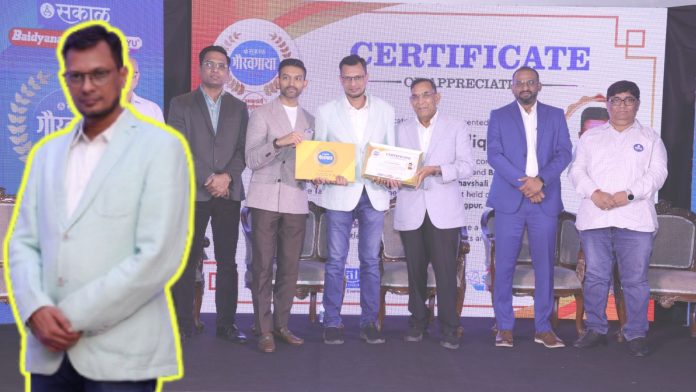
Dr Anwar Siddiqui, head of Panchakarma at Shri KR Pandav Ayurveda College and founder of Kerala Ayurveda & Panchakarma, received the Influential Ayurvedacharya Award from Sakal and Baidyanath. The award recognized his contributions to Ayurvedic medicine and social service.
The event was attended by Union minister Nitin Gadkari, Baidyanath’s managing director Suresh Sharma, and 45 leading Ayurveda doctors from across India. Dr Siddiqui, a BAMS and MD in Panchakarma from Poddar Government Ayurveda College in Mumbai, also holds a Master’s degree in Sanskrit. He has authored the book Ayurvedic Detoxification in Obesity, published in Germany.
With more than two decades of practice, Dr Siddiqui has gained recognition for treating chronic illnesses through Panchakarma therapy. During the Covid-19 pandemic, he helped set up a free hospital in Pachpaoli, strengthening his reputation for service to both healthcare and the community. Dr Siddiqui is a prominent leader associated with Jamaat-e-Islami Hind and a member of its Maharashtra State Advisory Council.
source: http://www.radiancenews.com / Radiance News / Home> Latest News> Report / by Radiance News Bureau / August 24th, 2025
After a difficult childhood and early careers in aviation and the hotel industry, Hussain Mansuri found his true calling—serving humanity. Today, he stands as a prominent social media influencer and a beacon of hope for many in need.
Widely recognized for his philanthropic efforts, especially in supporting children battling cancer, Mansuri’s heartfelt videos have touched millions on Instagram. “Main sirf insaniyat ka farz ada kar raha hoon,” he says emotionally. “I am only fulfilling the duty of humanity.”
Mansuri’s life journey is a testament to resilience. He completed his schooling at Cardinal Gracious High School in Mumbai and later graduated from Rizvi College. Even as a child, he had a deep passion for photography and storytelling. However, financial struggles meant he had to work while still in primary school.
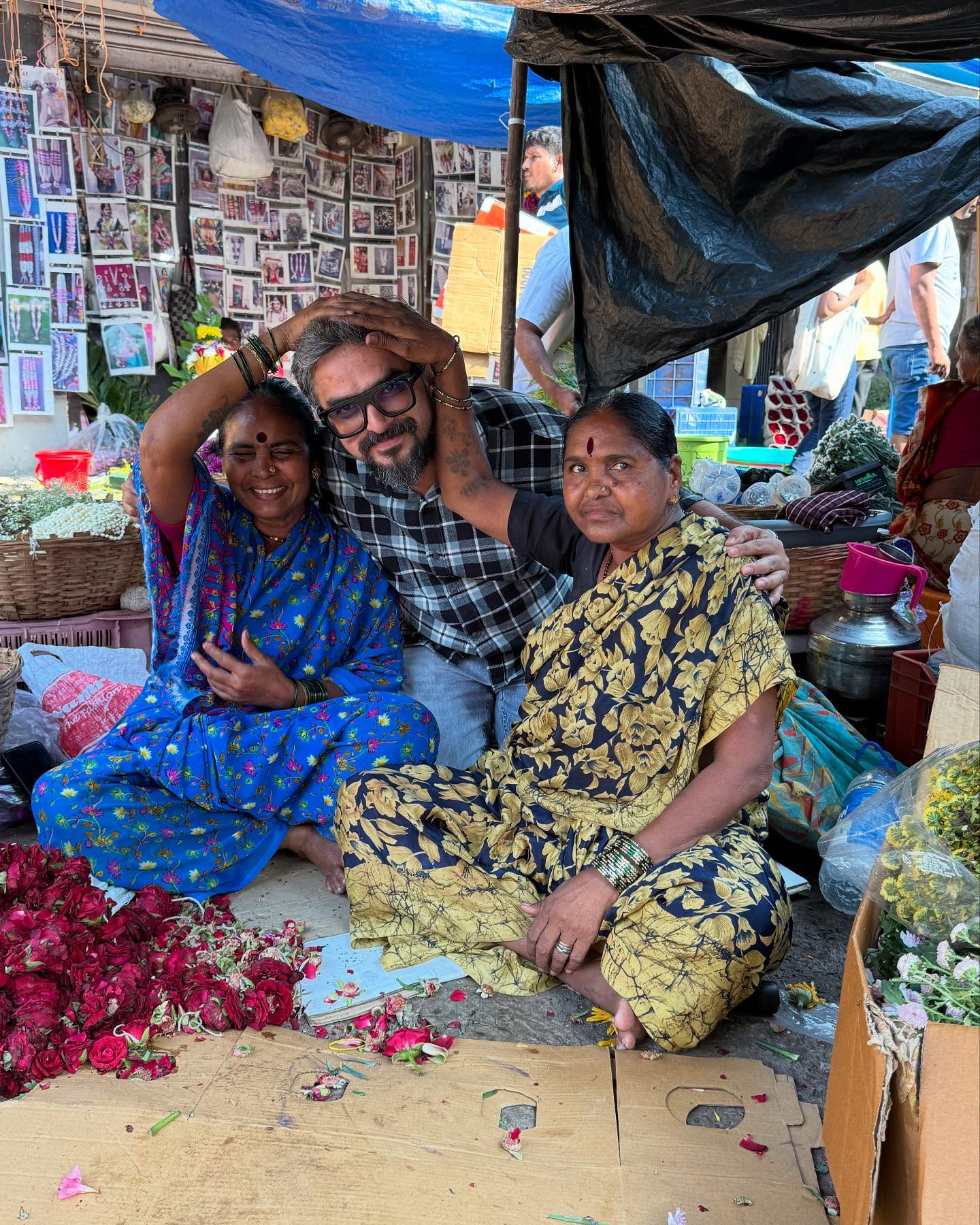
Hussain Mansuri with flower sellers
“I remember those days when I wore second-hand clothes just to get by,” he recalls. “But I focused on my education and eventually landed a job with Jet Airways.”
To support his family, Hussain also worked as a waiter and took on various odd jobs. During this time, he developed a profound sense of compassion and a desire to help those less fortunate.
“I saw people chasing wealth endlessly, yet they lacked true satisfaction,” he says. “And very few were willing to help strangers without expecting anything in return.”
Hussain lives by the principle: “Tu bas dua kama, phir tujhse amir koi nahi”—Just earn blessings, and then no one is richer than you. Guided by this philosophy, he began helping those in need—even when his means were limited.
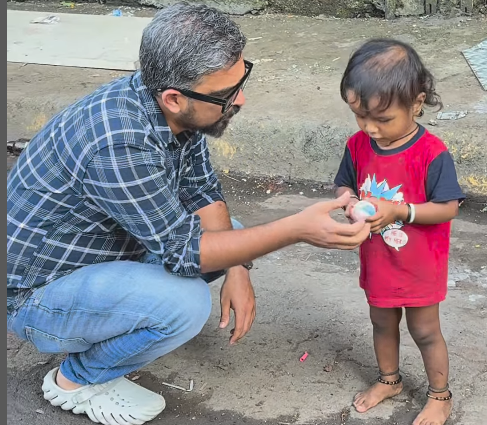
Hussain Mansuri with a child
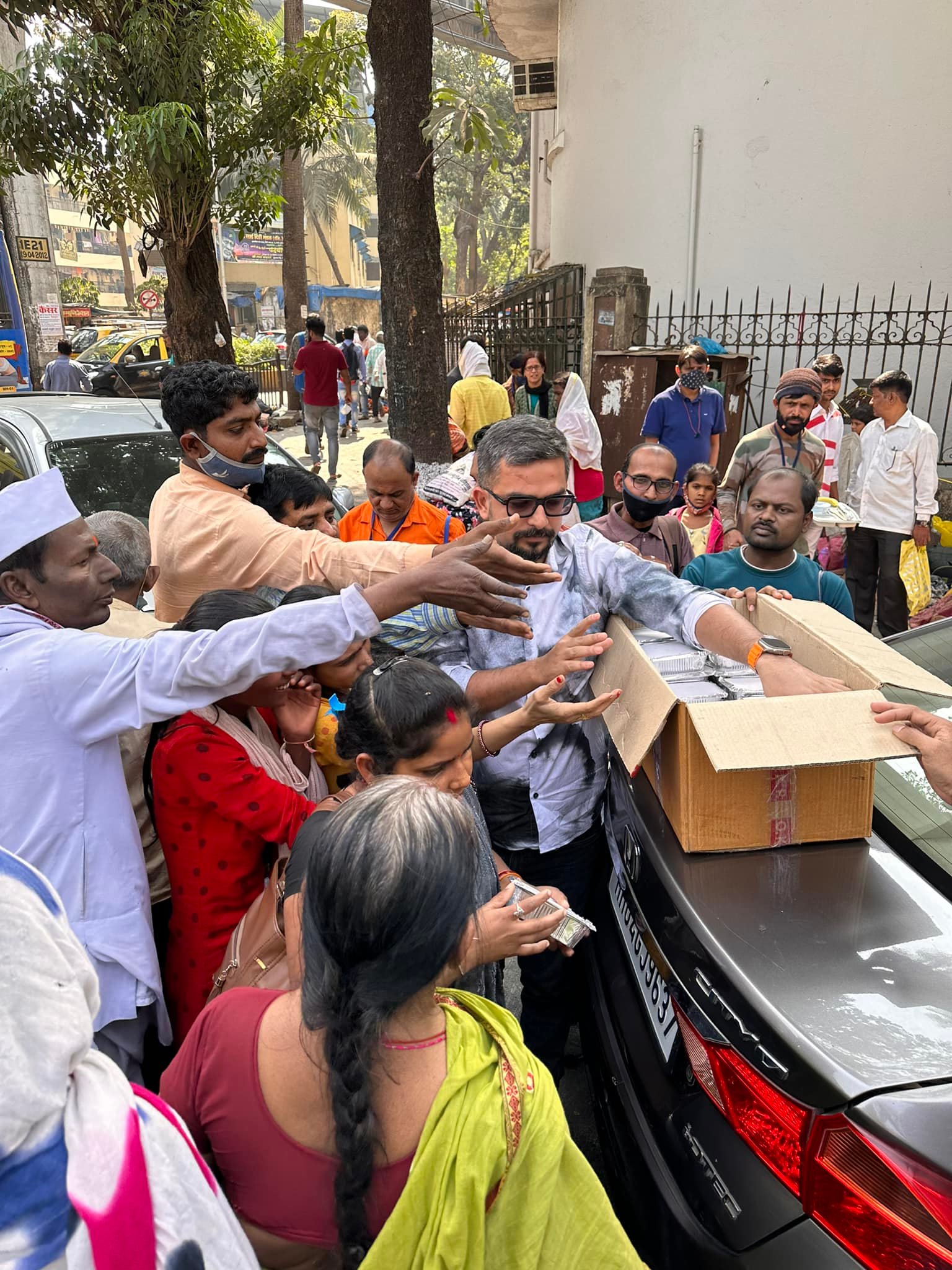
During the COVID-19 pandemic, when many were left without food or medical support, Hussain stepped up. He distributed essentials to the homeless, sick, and starving.
He continues to offer financial aid to cancer patients, particularly at Tata Memorial Hospital, supports underprivileged children’s education, and provides food, clothing, and care to the elderly, regardless of caste, religion, or background.
It is this unwavering dedication that has earned him the title, Ambassador of Humanity.
Though his actions are modest in scale, their impact is profound. His videos not only provide immediate relief to those in need but also inspire millions to develop empathy and a sense of social responsibility.
Hussain Mansuri distributing food packets
In one powerful video, Hussain is seen picking up discarded images of Hindu deities from the roadside and respectfully immersing them in water. This simple act of communal respect resonated deeply with viewers across faiths, earning widespread admiration and sending a message of unity at a time when it’s most needed.
With a growing community of over 12.3 million followers on Instagram, Hussain’s digital presence serves as a platform for social change. “When I started, I used to share some photos and personal stories,” he says. “People started connecting with them. Over the years, that small start has grown into something beautiful—like a second family.”
source: http://www.awazthevoice.in / Awaz, The Voice / Home> The Changemakers, Maharashtra / by Fazal Pathan / July 16th, 2025
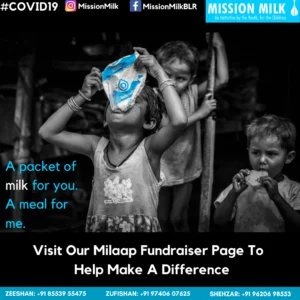
In an interview with The Global Hues, three cousins from Bengaluru – Zeeshan Javid, Zufishan Pasha, and Shehzar Sheriff shared their incredible journey of mission milk ensuring milk supply to impoverished kids in their city since the onset of the first lockdown in April 2020.
In what would arguably be the largest mass exodus in the history of independent India, the plight of migrant workers and their kids — stranded, exhausted, physically battered, mentally drained, forced to travel hundreds of miles on foot, often on hungry stomachs and with no money to get by — brought to the fore the vulnerability, dread, and agony of millions. As the centre and state governments tried their best to ensure the supply of essentials to the needy, milk (a basic source of nutrition for kids ) was being overlooked.
Realizing the urgency of this salient requirement, these young cousins from Bengaluru began Mission Milk in April 2020. The idea of Mission Milk originated with a ration distribution drive that was conducted by the families of this trio. Zufishan recounts how once while conducting these drives, a group of really poor migrant workers had approached them with the woes of their children who often had to go to bed hungry as it wasn’t always plausible to make arrangements to cook the dal and rice that they would receive through the ration kit distribution.
“We are lucky enough to be in a situation where we don’t necessarily have to worry about basic needs such as food,” says Zeeshan. It was a sense of empathy and personal responsibility they felt regarding the condition of poverty-stricken children going hungry during the pandemic that birthed the idea of “Mission Milk”. Today, they are distributing about 500 liters of milk a day throughout the city.
Why Milk?
While brainstorming ways to help out these kids, they came up with the idea of distributing milk. Compared to ration kits, which would sometimes cost up to 3000 rupees per kit, milk was relatively cheap. Moreover, distributing milk which costs around rupees 37 per liter would allow for more people to help out at their capacity. Even a child could help out the needy with milk by saving up some money from his weekly allowances. This would allow for a wider network to join hands with the initiative and amplify its reach.
Remaining faithful to their tagline “By the youth, For the children”, they aspired to take the mission in a direction that surged youth participation, not only for the sake of the children but also for their personal growth as humble individuals. Mission Milk believes in giving back to society by helping the distraught in times of need, such as the pandemic. It teaches one humility and compassion and makes one feel grateful about their own situation.
A Movement To Inspire
Zeeshan, the co-founder of Mission Milk tells us that their goal was to spark a nationwide movement where people felt stirred enough to organize similar initiatives in their cities to help out the needy. He tells us that theirs is not an organization with any secrets which aspires for popularity or recognition. They have put up several videos on their platform showcasing methods to implement such initiatives anywhere in the country. The idea behind its inception is to galvanize people, especially the youth, to take prompt actions in improving the condition of their immediate neighborhoods.
The goal is to allow this movement to set off the build-up of similar organizations like theirs which work dedicatedly in their areas & capacities for the benefit of those hit severely by the pandemic. In the words of Shehzar (co-founder, Mission Milk) “It has been the immense motivation received from donors, milk angels ( anybody who has been involved with mission milk), and the joy on children’s faces that has kept them going at it tirelessly”.
Functioning Of Mission Milk
The first step involves the collection of funds which is followed by a survey to analyze the number of families and kids in a designated area who could benefit from the initiative. To make this happen, local volunteers are chosen who have a better idea about the demographics of the area and are aware of the location of dairy points. An agreement is set up with the dairy partner regarding the designated packets that the local volunteers would be buying to distribute.
A decentralized and adaptable approach is used whereby the local volunteers are free to buy and distribute milk as per the requirement of the community. For example, migration workers who were leaving for train stations as the lockdown was announced last year, were provided with tetra milk packets that guaranteed longevity and did not require refrigeration or heating to be consumed. Taking assistance from the already available databases of various NGOs, they could ensure better reach to those in need. It helped them nearly double their reach.
A decentralized approach of Mission Milk makes local and NGO volunteers work hand in hand in surveying new places and estimating their requirements.
After getting repeated requests from orphanages throughout Bangalore, they have recently started distributing milk to around 5 orphanages in different parts of the city during the second wave of the pandemic.
source: youtube.com
COVID-19 Care :
Their job simply doesn’t end at distributing milk. With the help of local volunteers, information regarding covid-19 safety is spread throughout the communities they serve. The volunteers make sure to make use of masks, sanitizers, and gloves not just for their own safety but also to set an example for these communities.
Overcoming Barriers
“Funding was a roadblock initially but things fall in place once you get into the thick of things and begin the work”
Zeeshan exclaimed. Updates about their activities are regularly given to the donors through texts to maintain accountability and trust. The creation of a fundraising page was premier in helping them gather enough funds to get the mission started. With the second wave of the pandemic hitting people much closer to home, it was not feasible to gather enough volunteers to do the job. This situation was grappled with by seeking help from local NGO volunteers who were dedicated enough to carry out these services during the pandemic.
Delivering milk before it gets spoiled was another challenge that was overcome by coordinating timings with the local milk vendor and making timely deliveries. Future plans of this organization involve getting registered as an authentic company or a trust to spread their reach nationwide and help as many as possible.
source: http://www.theglobalhues.com / The Global Hues / Home> Interview> Magazine / by The Global Hues / May 31st, 2021
Dr. Syed Anwar Khursheed, a renowned Indian physician based in Saudi Arabia, has been honoured with the prestigious Pravasi Bharatiya Samman Award 2025, the highest recognition given by the Government of India to overseas Indians. This accolade celebrates his exceptional contributions to healthcare, community welfare, and fostering stronger ties between India and Saudi Arabia.
With an illustrious career spanning over 45 years, Dr. Khursheed has held pivotal roles, including three decades of service at King Faisal Hospital and 10 years as a Royal Protocol Physician at the National Guard Hospital. During the COVID-19 pandemic, he was a beacon of support for the Indian diaspora, offering essential healthcare, vaccine advocacy, and 24/7 consultations. He also provided unwavering support to Indian pilgrims during Hajj, offering medical assistance at Mina and Arafat for over 30 years. Notably, he served as the personal physician to King Abdullah of Saudi Arabia.
Dr. Khursheed’s contributions extend beyond healthcare to education and community development.
He established the International Indian School in Taif, promoting academic excellence and cultural integration for Indian expatriates.
His philanthropic endeavours include supporting underprivileged Indians through collaborations with organisations such as the Gulbarga Welfare Society and MESCO.
Since January 2021, he has also served as Vice President of the Saudi-Indian Healthcare Forum, an initiative under the Embassy of India in Riyadh.
Fluent in Arabic and deeply connected to Saudi culture, Dr. Khursheed has been a vital link between India and Saudi Arabia, enhancing bilateral relations in the domains of healthcare, education, and entrepreneurship. His recognition with the Pravasi Bharatiya Samman Award underscores his lifelong dedication to the Indian community abroad and his role in elevating India’s global stature.
source: http://www.radiancenews.com / Radiance News / Home> Pride of the Nation> Awards> Latest News / by Radiance News Bureau / January 12th, 2025
Charity groups have been trying to ensure that poor do not go to bed hungry amid nationwide lockdown.
File photo
New Delhi :
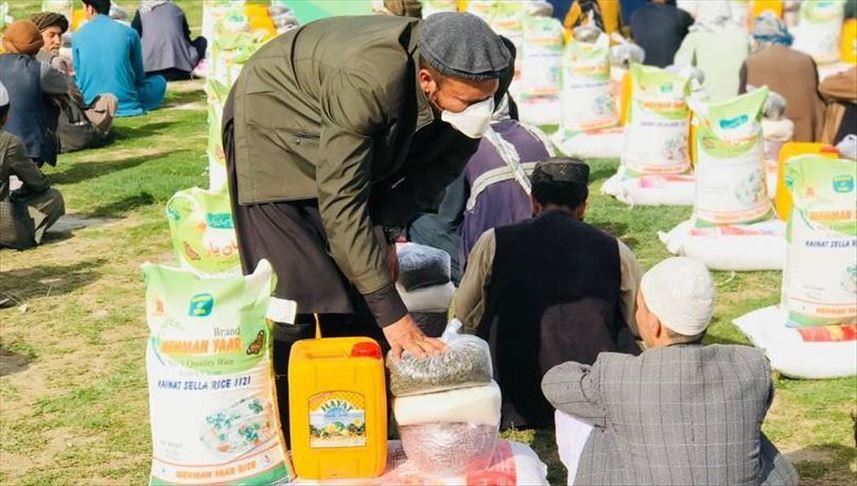
Muslim charities and other voluntary organizations are helping the poor in India during a nationwide lockdown aimed at curbing the spread of the novel coronavirus.
As of Thursday, the death toll from the coronavirus had reached 423 and the number of positive cases 12,456, according to data compiled by the U.S.-based Johns Hopkins University.
As the Indian government extended the lockdown until early May, the poor and migrant workers who survive on daily wages do not even have enough money to support basic household expenses.
With no work during the last three weeks in the first phase of the shutdown, they have suffered the most sitting idle at home.
Prime Minister Narendra Modi said on Tuesday that implementation of the lockdown would be strictly guaranteed in the coming days to ensure that the virus does not spread to new areas. It means more difficult days for the deprived sections of society.
Laborers and migrant workers were left without food and shelter when Modi suddenly declared a 21-day nationwide lockdown last month. The lockdown was set to end on April 14 but has been extended until May 3.
Helping those in need
But soup kitchens and charity groups came to their rescue. Apart from various organizations in India, Muslim charity groups and individuals in their personal capacity have been trying to ensure these people do not go to bed hungry.
The Humanitarian Relief Society is involved in relief operations during the lockdown in various districts in the southern state of Karnataka.
Its general secretary, Mohammed Makakada, said they have distributed $200,000 worth of food items to the poor.
“We give food kits to the poor. A single kit contains food items worth around $16 (1,200 rupees). These were given to poor people and migrant workers from other states,” Makakada told Anadolu Agency.
“We plan to continue our relief work until May 3. We are also working with Jamaat-e-Islami Hind, [a Muslim organization], and they are assisting the poor and other migrant workers regardless of their religion,” he added.
The Amoomat Society, another charity based in Hyderabad city in the southern state of Telangana, has been distributing cooked food to around 200 people daily.
Most of them are migrant workers from different states in India who got stuck in Hyderabad due to the sudden lockdown, said the group’s general secretary Khalida Parveen.
“We are giving them ready-to-eat food as they are very poor and don’t have anything to eat. We will continue to offer this food to them, as it will be impossible for them to survive without help,” Parveen told Anadolu Agency.
“Earlier, we faced some problems because of police restrictions. But now they have permitted us to distribute food,” she added.
Students Islamic Organization of India is also helping the needy during these difficult times.
“Being a student organization, initially, we worked to provide food and temporary accommodation to students as the lockdown was sudden and several students were stranded in their rented rooms or hostels and needed support. Later, we decided to help migrant laborers. We continued our work to provide succor to them. We are carrying out relief work in different cities,” said the organization’s general secretary Syed Azharuddin.
Azharuddin said their organization has been providing cooked food as well as rations or food supplies to laborers besides helping them obtain rations being provided by the government.
“We helped around 100,000 laborers, most of them from the states of Bihar, West Bengal and Uttar Pradesh. We are working in 24 states with 1,000 helpline centers and around 10,000 volunteers,” he told Anadolu Agency.
“Till now, we have reached out to about 50,000 families with ration kits, as many state governments announced they would provide help to the workers but delayed in issuing the rice and wheat to the poor,” he added.
Free meal at bread bank
The Roti (Bread) Bank of Bhopal in the central state of Madhya Pradesh to fight hunger is also working diligently to provide food to the needy at this time. The NGO was founded in 2018 by Muslim philanthropist Mohammad Yasir to provide free food to the poor.
Following the lockdown, 500-700 people are having their meals daily at the center.
Yasir said his work increased almost three-fold after the lockdown as so many people have been rendered jobless and depend on the NGO for their meals.
He explained how some people have come forward to help the needy.
“We tell people that while cooking food at their homes, they should prepare some extra food and donate it to us. They give us the food and we give that food to the people visiting us,” Yasir said.
Anyone in need can come and have a meal there.
source: http://www.aa.com.tr / Anadolu Ajansi / Home> Asia Pacific …latest on coronavirus outbreak / by Shuriah Niazi / April 16th, 2020