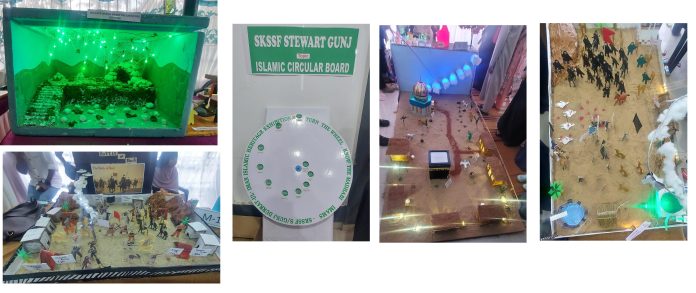
An Islamic Heritage Exhibition titled “Durrat-ul-Iman” was organised by the SKSSF Stewart Gunj Unit in South Andaman between 17 to 19 October, with the active participation of all Madrassas under ARJM . The event served as a vibrant platform for students to present creative and educational displays reflecting Islamic history, knowledge, and spirituality.
The exhibition featured a range of thematic models and interactive setups, including an artificial Qabr (grave) designed by youth members, a matching board circuit highlighting the teachings and details of the four Imams of Islam, a quiz corner, a selfie point, and a video presentation on “The Signs of Qayamat.”
Among the exhibits, the Isra-wal-Meraj display drew particular attention for its detailed depiction of the Prophet’s journey from Mecca to the heavens. Visitors praised the effort and imagination that went into the presentation, which combined learning with deep spiritual reflection.
The exhibition was organized to foster Islamic education, encourage creativity among students, and strengthen community engagement through faith-based learning. With overwhelming response from people, the exhibition was widely appreciated by the public for its innovative displays and spiritually enriching atmosphere.
source: http://www.radiancenews.com / Radiance News / Home> Latest News> Report / by Radiance News Bureau / October 23rd, 2025
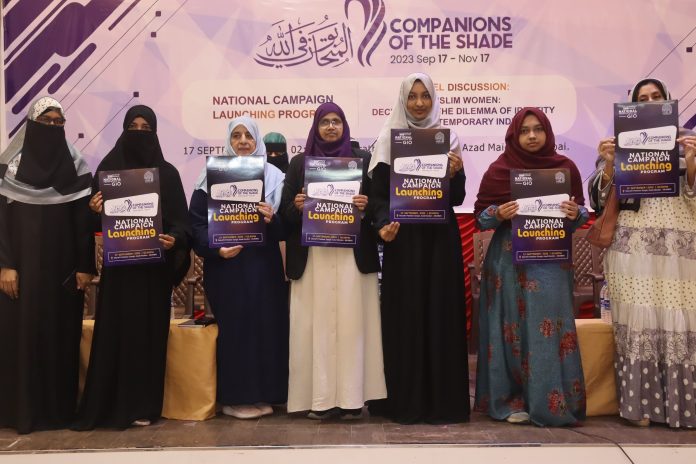
The National Federation of Girls Islamic Organisation (NFGIO) organised a national campaign titled “Connecting Hearts Eternally in Relishing Islamic Sisterhood’ (CHERISH)” with the theme المتحابون في الله which translates to ‘those who love each other for the sake of Allah’.
Mumbai :
The National Federation of Girls Islamic Organisation (NFGIO) organised a national campaign titled “Connecting Hearts Eternally in Relishing Islamic Sisterhood’ (CHERISH)” with the theme المتحابون في الله which translates to ‘those who love each other for the sake of Allah’. The launching program of the campaign was held at Marathi Patrakar Sangh here Sunday.
The program commenced with the soulful recitation of the verses from the Holy Quran by Uzma Sagri (Regional In-charge, GIO Mumbai Region), followed by the welcoming words by Anamtha Ahmed (General Secretary, GIO MSZ).
Sister Samar Ali (General Secretary, NFGIO) shed light on the aims and objectives of the campaign.
Advocate Sumaiya Roshan, National President NFGIO addressing the program
The launching program was inaugurated by Adv. Sumaiya Roshan, (President, NFGIO), detailing the core intentions planned to be achieved through the campaign.
Adv. Sumaiya explained the goal of the campaign as to establish a secure and encouraging community for Muslim sisters. They must unite to confront the world’s obstacles and thrive with their steadfast faith. Unfortunately, in present times, practising and expressing one’s faith can be arduous and often unaccepted. This leaves many Muslim women feeling alienated from society.
Through sisterhood, women can discover and embrace their authentic selves as creations of the Almighty. They can find their purpose in life and ways to achieve it. The Almutahabbuna Fillah – Companions of the Shade campaign aims to promote righteous friendships among sisters. These friendships go beyond selfish worldly needs and are blessed by Allah. They can be a means of earning His pleasure and becoming successful in both this life and the Hereafter.
The phrase Almutahabbuna Fillah means “those who love each other for the sake of Allah.” It is narrated that on the Day of Judgement, there will be no shade except for the shade of Allah. Among the seven types of people who will be under His shade are two people who love each other for the sake of Allah.
The program further had felicitation addresses by Mrs. Rahmathunnissa A., National Secretary, JIH. She mentioned the contributions put forth by the Girls Islamic Organization from its formation in 1984 in developing and enhancing a healthy society. The organization has been working towards the goal of enhancing the community and developing them to serve for the betterment of the whole of humanity.
It was followed by the address of Mr. Mohammed Zafar Ansari, Secretary, JIH Maharashtra, followed by the concluding address of Khan Shaheen Jattu, Vice President, NFGIO.
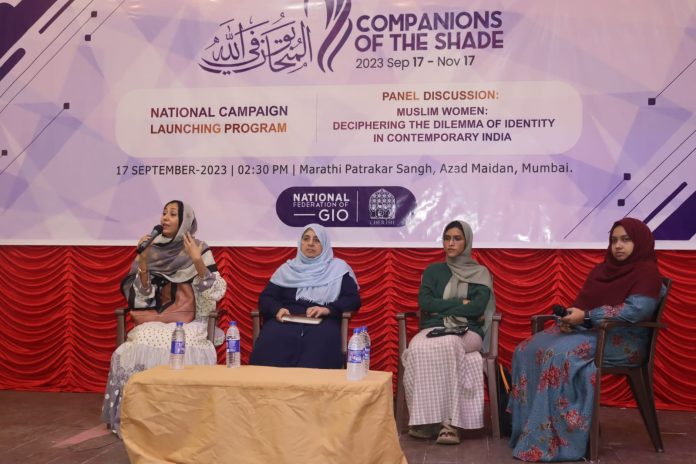
The panel discussion held with Advocate Huriya Patel, Uzma Naheed, Haniya Anwar and Samar Ali
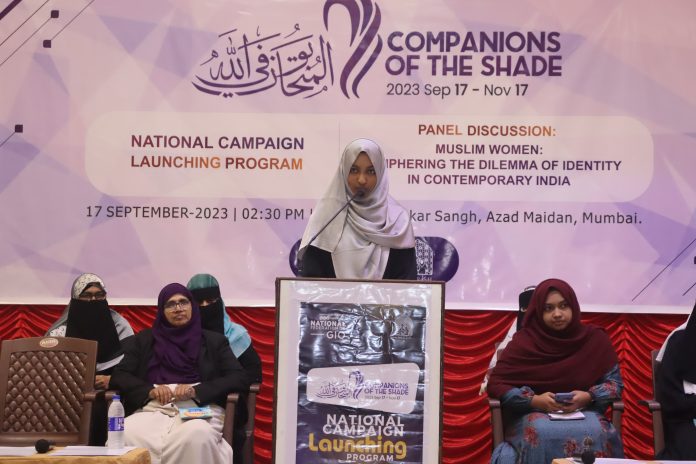
A panel discussion titled “Muslim Women: Deciphering the Dilemma of Identity in Contemporary India” was conducted with Samar Ali as the moderator as part of the event. Samar stated the aim of the discussion as to bring forth powerful and socially engaging Muslim women icons and establish the idea of empowerment through their presence in the public sphere.
The panellists included Mrs. Uzma Nahid (Executive Director, Iqra Education Foundation), Adv. Huriya Patel (Advocate, Bombay High Court) and Ms Haniya Anwar (Student leader, TISS Mumbai).
Uzma Nahid encouraged the audience to be revolutionary thinkers and to focus on getting educated and enlightened on the necessity of financial development for the overall empowerment of women.
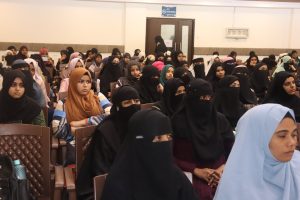
The audience listening to the discussion at Marathi Patrakar Sangh, Mumbai
Adv. Huriya Patel mentioned the lack of legal awareness among the women community and pointed out the importance of embracing one’s identity and beliefs without compromising values and ethics to build successful career platforms.
Haniya Anwar inspiringly brought forth the challenges faced by Muslims in general and women with visible Muslim identity in particular on Indian campuses. She shared her experience faced while contesting for the post of Equal Opportunity Cell of Students Union, TISS Mumbai.
The panel discussion was concluded by Mrs. Rahmathunnissa A., who highlighted that if one is ready to change the society, nothing can stop them.
The program concluded with a vote of thanks by Aamna Khanam (Secretary, NFGIO) who thanked everyone for their enormous support for the historical event.
source: http://www.radiancenews.com / Radiance News / Home> Latest News / by Aaliyah Rumane / September 20th, 2023
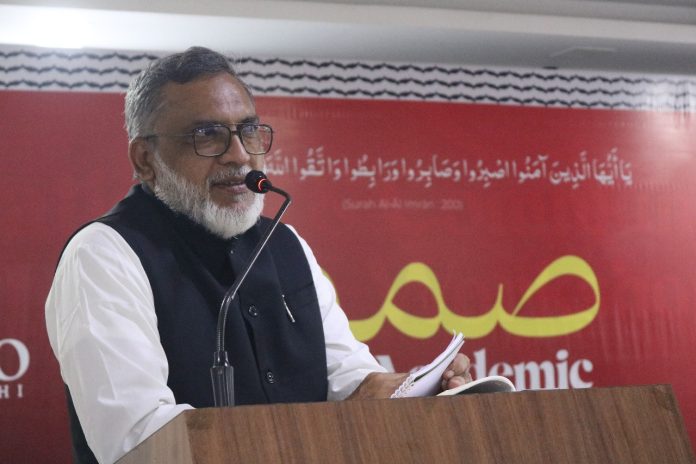
Malik Moatasim Khan, Vice President, JIH, addressing the Sumud Academic Conference organised by SIO Delhi Zone
New Delhi:
The Students Islamic Organisation of India (SIO), Delhi Zone, organised the Sumud Academic Conference at Jamaat-e-Islami Hind headquarters, bringing together over 100 students and scholars from Delhi University, Jamia Millia Islamia, Jamia Hamdard, and other institutions across the region.
The daylong event, themed “Reminding Muslim Students to Re-evaluate, Reimagine and Reconstruct Campuses,” featured paper presentations, panel discussions, and keynote addresses. Speakers focused on contemporary challenges faced by Muslim students, particularly issues of identity, saffronisation, and the growing privatisation of higher education.
Prominent speakers included Malik Moatasim Khan, Vice President, JIH; Dr. Roshan Mohiuddin, National Secretary, SIO India; Dr. Khan Yasir, Faculty, IISR; Hammad Yasir, independent researcher; Mohd. Alfauz, Doctoral Fellow, JMI; and Fawaz Shaheen, Lawyer & Researcher, among others.
In his address, Malik Moatasim Khan spoke on “The Idea of a University Under Siege: Privatisation and Saffronisation in Indian Education,” stressing that while privatisation has some positive aspects, its negative impacts are far more serious, whereas saffronisation poses an unmitigated threat to education.
Dr. Khan Yasir, Faculty, IISR (C) addressing the Sumud Academic Conference organised by SIO Delhi Zone
Dr. Khan Yasir, in his session “From Campus to Ummah,” argued that students should rethink education as more than a pursuit of employment, urging them to explore knowledge and alternative models of livelihood beyond the narrow frame of job-seeking.
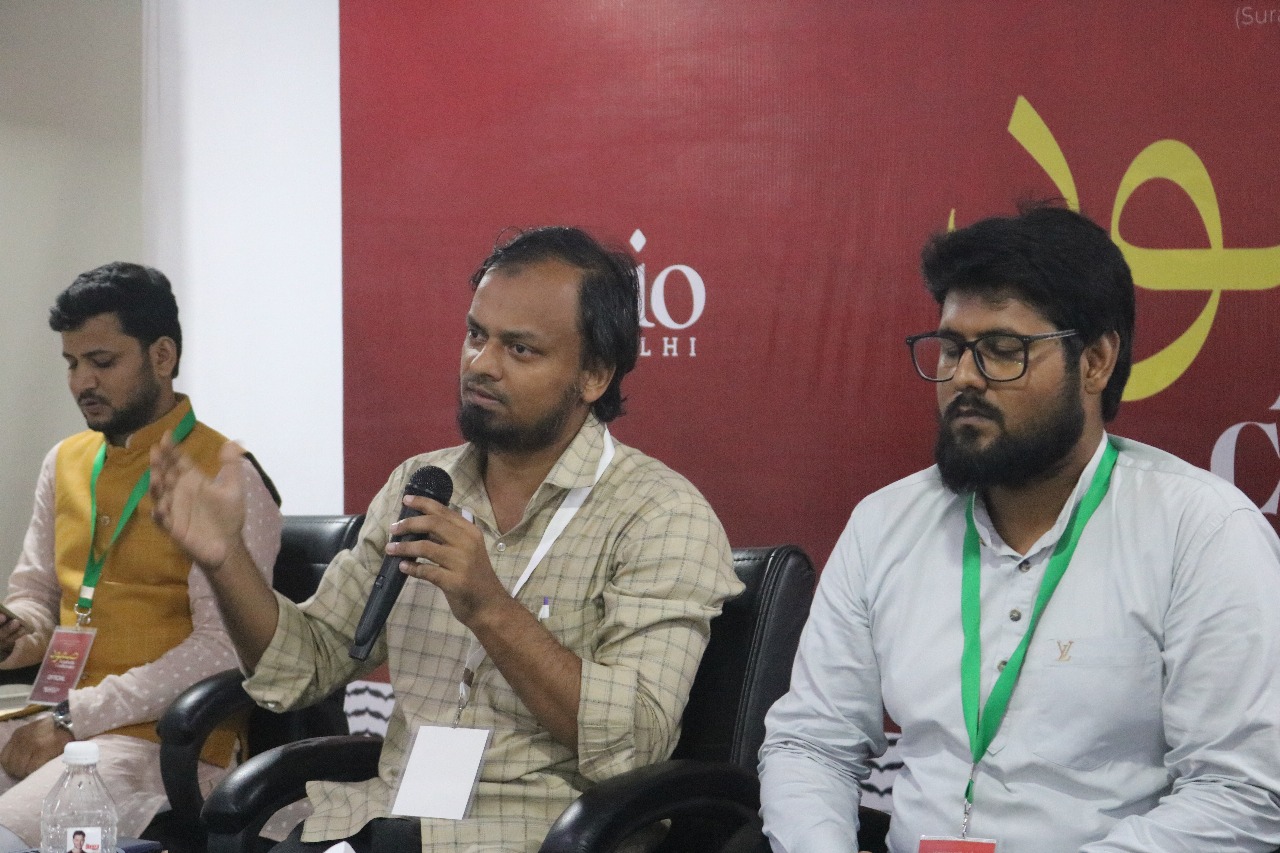
A panel discussion titled “Faith in Flux: Navigating Identity in the Modern Campus” featured Dr. Roshan Mohiuddin, Fawaz Shaheen, and Mohd. Alfauz, with an interactive Q&A and open-floor session encouraging student participation.
A view of the audience
Paper presentations formed another highlight, with young researchers presenting their work under the review of Hammad Yasir. Topics ranged from navigating identity and the role of students in shaping intellectual futures, to the broader challenges of “universities under siege.”
The conference underscored sumud – steadfastness and perseverance – as a guiding principle for Muslim students to confront academic and political pressures while upholding democratic and secular values. Organisers emphasised that the event was not only about imparting knowledge but also about integrating student perspectives into the broader discourse.
Concluding the event, SIO Delhi Zone described the conference as a vital platform to prepare students for the realities of campus life, urging them to remain resilient in the face of rising challenges.
source: http://www.radiancenews.com / Radiance News / Home> Education> Latest News> Report / by Radiance News Bureau / September 25th, 2025
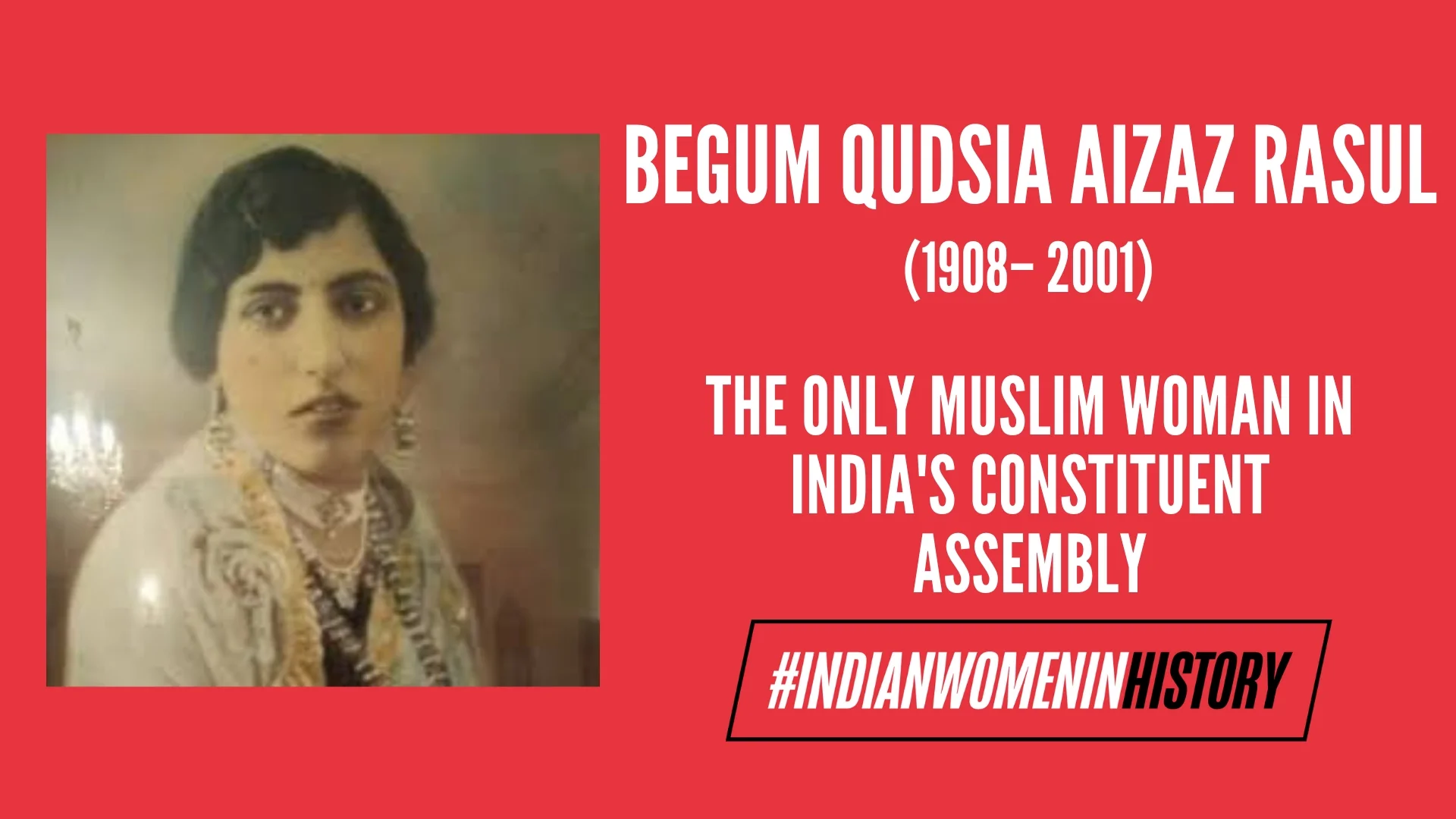
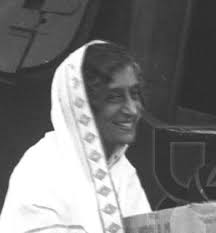
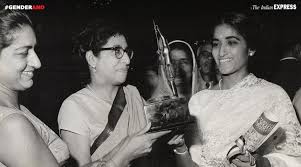
Begum Qudsia Aizaz Rasul was one of the 28 Muslim League members to join the Constituent Assembly of undivided India, and she was the only Muslim woman to be a part of the assembly.
Begum Qudsia Aizaz Rasul was born to the royal family of Malerkotla (situated in erstwhile united Punjab) on 4th April, 1908. Her father was Nawab Zulfiqar Ali Khan. Qudsia had a progressive upbringing and was encouraged from a very early age to lead a modern life, as opposed to several stringent restrictions imposed upon other contemporary Muslim women, such as that of the purdah.
She got married at quite an early age to Nawaab Aizaz Rasul from the erstwhile province of Awadh. Her husband held the position of a taluqdar, or a landowner. Qudsia had political exposure both before and after marriage, and her formal political participation took place after she got married.
Qudsia, along with her husband, joined the Muslim League in mid-1930s, soon after the passing of theGovernment of India Act in 1935. This was also her official entry into electoral politics, as she contested in the elections of 1937 from the U.P. legislative assembly, where she successfully held her seat till 1952. Aizaz was one of the very few female candidates to have contested and won from a non-reserved constituency during the pre-independent times.
“
She was the first Indian woman to achieve such feats, and this was truly commendable and noteworthy at a time when most formal political positions were almost implicitly reserved for men.
“
As an MLA, she also held several important posts, such as the Leader of Opposition (1950 to 1952) and the Deputy President of the Council (1937 to 1940). She was the first Indian woman to achieve such feats, and this was truly commendable and noteworthy at a time when most formal political positions were almost implicitly reserved for men. Moreover, to rise to prominence at a politically significant province such as the U.P. indeed made Qudsia Aizaz Rasul a trailblazer.
She is well known for her progressive, anti-feudal stances, such as the abolition of the zamindari system. Qudsia was a strong advocate for the abolition of communal electorates as well, as she believed it divided the society more than it united – which was counterproductive for the Indian electoral candidates at a time when there was an urgent need of a united Indian front to oppose the colonial rulers. She went on to create a strong and convincing case for the abolition of electoral reservations for religious minorities during her tenure as a member of the Constituent Assembly.
Qudsia was one of the 28 Muslim League members to join the Constituent Assembly of undivided India, and she was the only Muslim woman to be a part of the assembly. Her contributions in the assembly debates remain monumental till date and have been recorded in many official sources.
“
Her contributions in the assembly debates remain monumental till date, and have been recorded in many official sources.
“
After the dissolution of the League, she joined the Indian National Congress, and served as a member of the Rajya Sabha from 1952 to 1958. Later, she became a member of the legislative assembly of Uttar Pradesh from 1969 to 1989.
Other Achievements
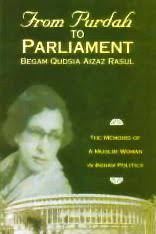
Begum Qudsia Aizaz Rasul is also well known for her autobiography, titled From Purdah to Parliament: A Muslim Woman in Indian Politics. It provides excellent insights into the intersectional aspects of organised politics as it functions in our country. Other than this, she also wrote a travelogue titled Three Weeks in Japan.
Besides her literary prowess, Qudsia had also served as the President of the Indian Women Hockey Federation for over fifteen years, and went on to become the President of the Asian Women’s Hockey Federation.
Begum Qudsia Aizaz Rasul was awarded the Padma Bhushan in 2000 for immense, invaluable contributions to the field of social work.
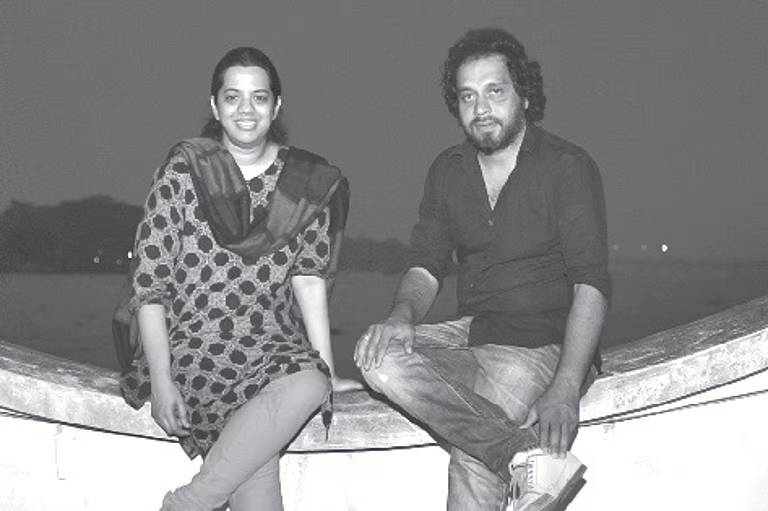
Zoya talks about life with artist Riyas Komu, secretary of the Kochi Biennale Foundation
Zoya met Riyas Komu when they were both in the same class at the Sir JJ School of Art in Mumbai in the 1990s. “What I noticed immediately was that he had a zest and an infectious energy,” says Zoya. “Since he was from Kerala, there was an element of rawness – a kind of innocence – about him, unlike most of my other classmates.”
They were drawn to each other, because of their mutual interest in world cinema. “We attended a lot of film festivals together, and admired the films of Mohsen Makhmalbaf and Andrei Tarkovsky,” she says.
And they gradually fell in love even though they belonged to different backgrounds. Zoya’s parents are from Uttar Pradesh, but they have been settled in Mumbai for a long time, while Riyas is the son of politician M M Komu in Thrissur.
The fact that Zoya did not know Malayalam was not a hindrance for Riyas. Whenever he would come across an interesting article in a Malayalam magazine, he would translate it so that Zoya could also enjoy it. “Thanks to Riyas, I have read [Vaikom Mohammed] Basheer in an English translation,” says Zoya. “He is one of my favourite authors. I loved ‘Poovan Banana (Poovanpazham)’.”
The couple got married on April 7, 2001. And for their honeymoon, they came to visit Riya’s large family, of seven brothers and two sisters. “I am an only child, so it was an interesting experience to become part of a large family,” she says. “The language and culture were so different. You are into and still not into the family. Sometimes, it was difficult to comprehend things, but at the same time, it was quite engaging.”
What ensured Zoya’s assimilation was because she loved Riyas intensely. “He is not obsessed about art only,” she says. “Riyas has an open mind and is interested in all subjects, be it football, theatre, films, literature, and about people and happenings in his village and the world.”
And unusually, for a Malayali, Riyas gives Zoya the mental and physical space to be herself. “Riyas wants me to have my own views and feel free,” she says. “That is the case with the people who work with him. As a result, everybody feels at ease with Riyas.”
In Mumbai, on an ordinary day, Riyas gets up at 8 a m. Following breakfast, he goes to his studio: it could be the one where his sculpting works are done, or his painting studio, both of which are in the suburb of Dahisar. “If he starts work on a painting, he will spend hours on it, and continues labouring on it through the night,” says Zoya. “That is how he likes to work.”
Of course, an artist leads a different life, as compared to a banker or a businessman. “Every day is fluid,” says Zoya. “You have discipline, but you don’t have rigidity. The advantage is that you can do whatever you like, but there are different responsibilities, as compared to a person working in an office. You have to manage your own life.”
In effect, Riyas is the star of his own show. “But the only time he feels pressure is when there is a show coming up, and the works are not ready,” says Zoya.
Not surprisingly, Zoya has a few favourites, among Riyas’ works. One of them, which was displayed at the 2007 Venice Biennale, is a set of paintings called, ‘Petro Angel’. This was inspired by the plight of Iranian women, as shown in the film, ‘The Circle’ (2000). “He has been able to portray the different emotions of women very well,” says Zoya.
Riyas, himself, has gone through an emotional roller-coaster because he, along with Bose Krishnamchari, struggled to set up the landmark art event, the Kochi-Muziris Biennale. “He was asked to take the responsibility, and did so,” says Zoya. “Riyas knew that it was important not only for him or Kerala, but for establishing an art culture in India.”
Incidentally, because of Riyas’s preoccupation with the Biennale, Zoya has moved to Kochi with their four-year-old daughter Mariyam. “I am happy to be here and am proud of what Riyas has achieved,” she says.
source: http://www.newindianexpress.com / The New Indian Express / Home> Kochi / by Shevlin Sebastian / December 24th, 2012
BanuMushtaq was accompanied by Chief Minister Siddaramaiah, several ministers in the state cabinet, among others.
Banu Mushtaq inaugurated the Mysuru Dasara festival.
Mysuru :
The famous Mysuru Dasara festival commenced in the city and palaces on Monday with religious and traditional fervour, with International Booker Prize-winning writer Banu Mushtaq inaugurating the festivities.
Banu Mushtaq inaugurated the festivities during the auspicious “Vrushchika Lagna” by showering flowers on the idol of goddess Chamundeshwari, the presiding deity of Mysuru and its royals, amid chanting of Vedic hymns by priests, at the premises of Chamundeshwari temple atop the Chamundi Hills here.
Celebrated as ‘Nada Habba’ (state festival), the 11-day Dasara or ‘Sharan Navaratri’ festivities are expected to be a grand affair this year, showcasing Karnataka’s rich culture and traditions, coupled with reminiscence of royal pomp and glory.
In the inaugural event, Banu Mushtaq was accompanied by Chief Minister Siddaramaiah, several ministers in the state cabinet, among others.
Earlier, Banu Mushtaq, along with Chief Minister and other dignitaries, visited the Chamundeshwari temple and offered prayers to the goddess, referred to as the “Naada Devate” (state deity), ahead of the inaugural.
(This story has not been edited by NDTV staff and is auto-generated from a syndicated feed.)
source: http://www.ndtv.com / NDTV / Home> News> India News / by Press Trust of India / September 22nd, 2025
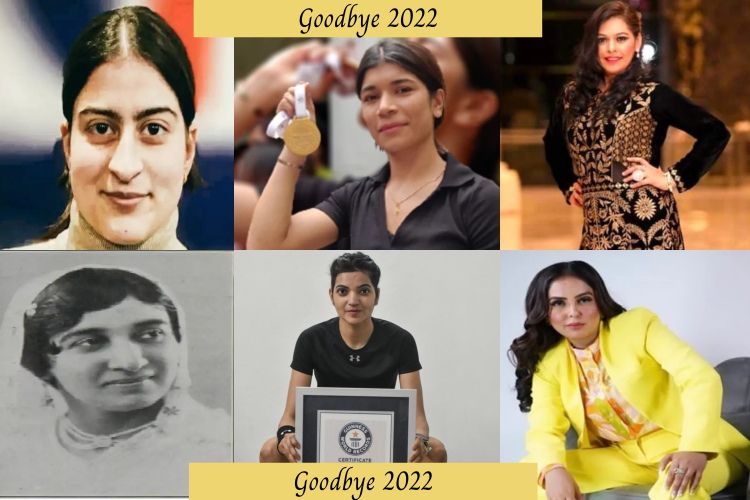
As we gear up to bid goodbye to the year 2022, here’s an about-turn to look at the most influential Muslim women who with their girt and strength have embedded their names in history.
Meet Mehr Sheikh from being a news anchor working with a company in Noida, Uttar Pradesh, to setting up her office in front of the same company, she has come a long way. She is presented as one of India’s youngest mainstream female motivational speakers, founder-director of Papr Network, and Editor-in-Chief of Nikology, a YouTube channel with nearly 2 million subscribers.
From being routed in regular corporate life to breaking the barriers and taking running as a full-time profession Sufiya Sufi set many records. From being the fastest female to run the Indian Golden Quadrilateral Road in 6 days, 12 hours, and 6 minutes to taking up the challenges of running continuously 200 km in Qatar and later running across the globe she has come a long way.
With many beauty pageants coming back to India in 2022, Tabassum took the podium a notch up when she represented India as one of the jury members in a beauty event held in South Korea’s Seoul
In the field of sports, Nikhat brought laurels to India as apart from winning the gold at the world championship, she won gold at the National Championship, the CWG and the Stranjde Memorial championship.
Do not marry your sisters, daughters, and other relations to men as their second wives or to those who are inclined on marrying another woman for no reason.” Hundreds of Muslim women unanimously passed the above resolution moved by Begum Jahanara Shahnawaz at the 7th All India Muslim Ladies Conference in 1920.
The All India Muslim Ladies Conference was established in 1914 under the presidentship of Begum Sultan Jahan, the ruler of Bhopal, and the leadership of women like Begum Waheed, Abru Begum, and Begum Shafi to bring social, educational, and economic reforms among Muslim women. Within six years of its inception membership of the Conference increased from a few dozens to hundreds. These women raised money to open and maintain girls’ schools in different parts of India and formed a public opinion in support of education.
Apart from the white robe of a doctor and the operation theatre, Dr. Jahanara Begum, a prominent obstetrician of Assam, also dons colourful costumes and has a wide stage to perform. Away from the hospitals and clinics, Dr. Begum has made theatre a part of her life despite her hectic professional schedule. While she has healed thousands of people as a doctor, she has also impressed numerous playwrights and audiences as an actor.
Syeda Salva Fatima – Amazed at her confidence, he decided to give wings to her dreams and she was enrolled in the Andhra Pradesh Aviation Academy in 2007. Despite failures, she remained undeterred and finally completed her training. She logged in 200 hours of flying in the Cessna 152 aircraft and 123 Hours of solo flight. She says,My best moment was when I flew for the first time. Also, every time I fly the big bird Airbus 320 in command, that’s the best feeling ever!
Farida Jalees, the founder of Lucknow Mahila Sewa Trust, who had boldly four startups during the Covid-19 lockdown to sustain the livelihoods of some 2.5 lakh women associated with her self-help group, said, “we have never felt these two (festivals) are different. We endeavor to make Jeevika Bakers viable and for this, I have been making use of every festival to sell baked foods under a canopy in marketplaces.”
Dr.Muhammad Raziul Islam Nadvi is a renowned Urdu author advocates Muslim women’s participation in mosques and namaz
Naseem Shafaie, the only Kashmiri woman to get the Sahitya Akademi award and the recipient of this year’s State Award for Literature rues that the Kashmiri language is being ignored by natives who prefer to speak with their children in Urdu (Hindustani) and not in their mother tongue. She laments that the language was not getting due treatment by its natural speakers. “Let all read it and be it our language,” she told Awaz-the Voice. She said there is a general trend among people in Kashmir to speak in the Urdu (Hindustani) language to their children at their homes.
source: http://www.awazthevoice.in / Awaz, The Voice / Home> Stories / by Shaista Fatima, New Delhi / December 29th, 2022
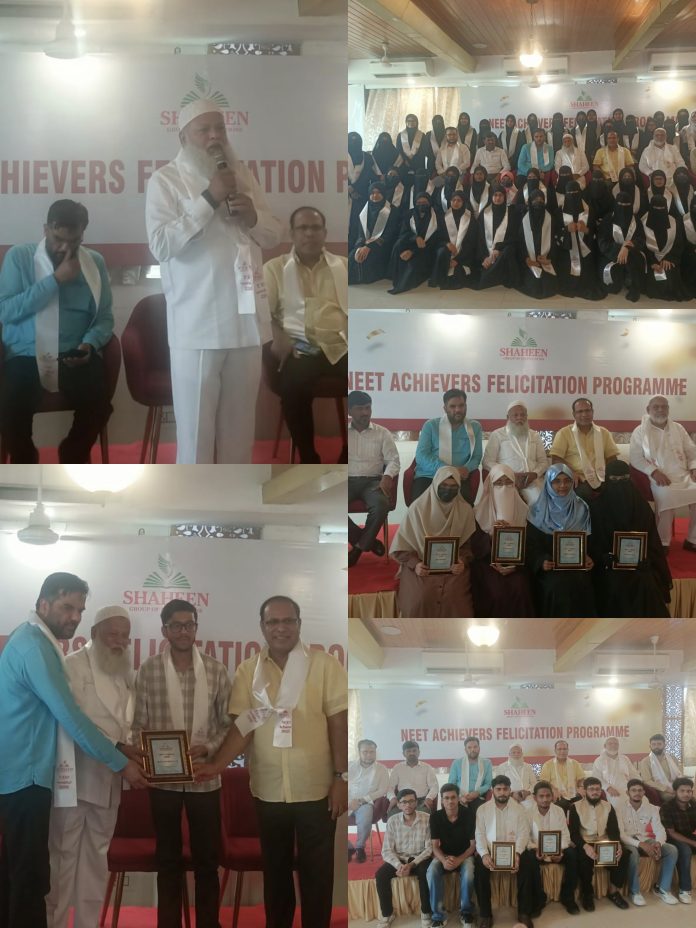
Shaheen Academy organised a grand event to honour its NEET achievers. The ceremony celebrated the students’ success and dedication.
The event was attended by educationists and community leaders. Among them was Abdul Qadeer, founder and chairman of Shaheen Group of Institutions.
In his keynote speech, Abdul Qadeer praised students and faculty. He stressed that education should not just be for earning. “Education can uplift society and spark social change,” he said. “It plays a key role in national growth and development.”
He reaffirmed Shaheen Academy’s mission: to offer value-based, holistic education. He said students must grow into responsible citizens and future leaders.
Abdul Qadeer urged students to look beyond personal success. He asked them to engage in social service and nation-building.
He also made a heartfelt appeal against lavish weddings. “Don’t spend lakhs on grand celebrations,” he said. “Use that money to educate your children, neighbours, and the poor.”
He called education the true celebration. “Transforming lives through education is the real joy,” he added.
He also underlined the need for wider educational outreach. “Five or six institutions are not enough,” he said. “We need 5,000 organisations working for value-based education. Shaheen must have 500 branches to transform society.”
Kaleemul Hafeez, Chairman of Al-Hafeez Educational Academy, also spoke. He compared Abdul Qadeer’s work to that of Sir Syed Ahmad Khan. “Abdul Qadeer Sahib is continuing that legacy to educate a new generation,” he said.
Noor Nawaz, founder of The Hind Guru Academy, echoed the same spirit. He reminded students of the idea of Rabbul Alamin—Lord of all worlds. “Be ambassadors of Prophet Muhammad ﷺ,” he said. “Show compassion, honesty, and service in all you do.”
The event ended with a special honour for teachers and staff of Shaheen Academy. Their hard work was praised as a key part of the students’ success.
The celebration not only recognised academic achievement but also highlighted education’s role in building a better society.
source: http://www.radiancenews.com / Radiance News / Home> Latest News> Report / by Radiance News Bureau / June 28th, 2025
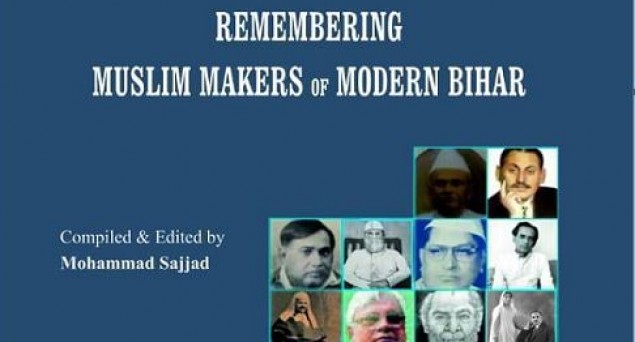
In an era of unprecedented majoritarian ascendance and anti-Muslim hatred, Bihar Collective, a platform of intellectuals and activists, has brought out a booklet highlighting the contribution of eminent Muslims in making the modern Bihar in the last 200 years.
The booklet titled Remembering Muslim Makers of Modern Bihar has been compiled and edited by renowned academician and writer Prof. Mohammad Sajjad on the initiative of Bihar Collective.
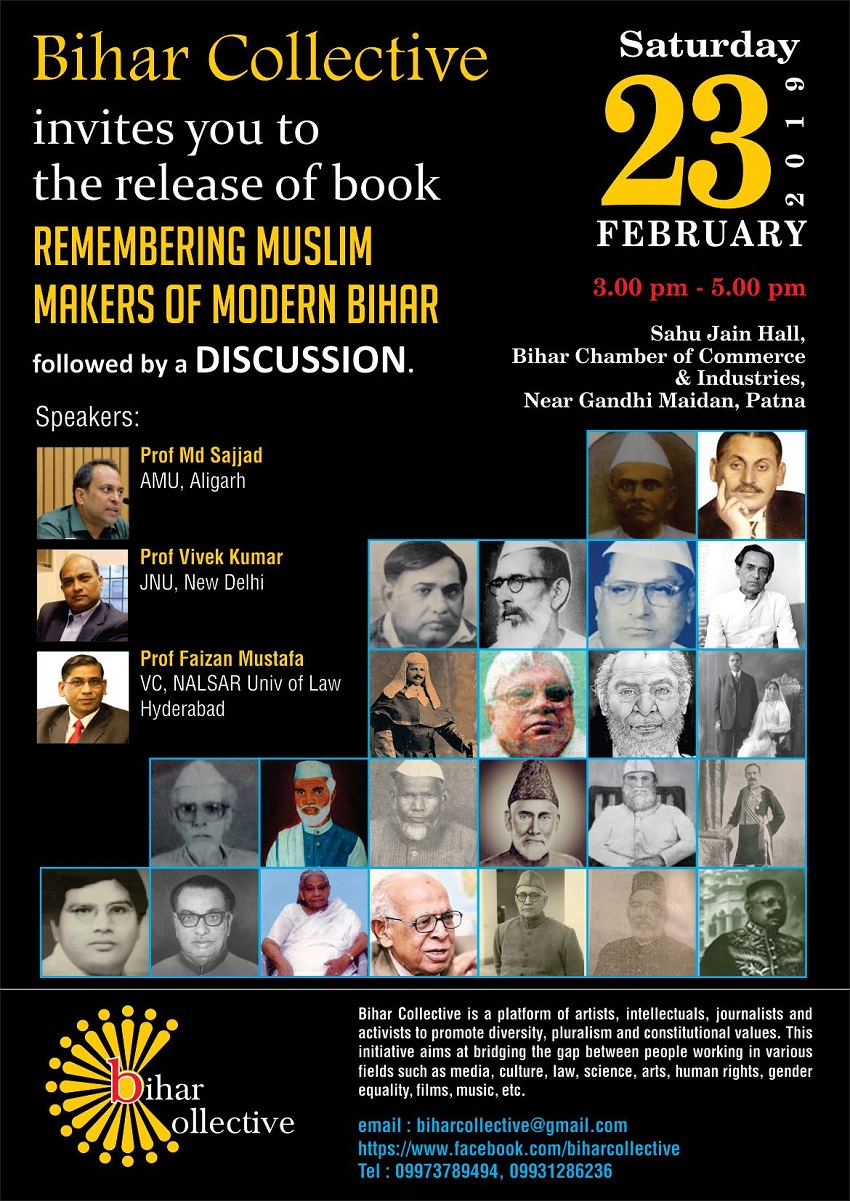
The booklet will be released at an event in Patna on Saturday (February 23).
On the occasion, a discussion will also be held with Prof Faizan Mustafa, Vice Chancellor, NALSAR University of Law, Hyderabad; Prof Vivek Kumar, JNU, New Delhi; and Prof Mohammad Sajjad, AMU, Aligarh as panelists.
A Brief about Booklet:
Pre-empting a reasonable question about the title of the booklet, Prof Sajjad, who has compiled and edited it, writes in its preface: “A simple and obvious question that may readily arise is: why only Muslim makers of modern Bihar? Why not others too? This is indeed a valid and pertinent question.”
Responding to the question, he further says: “Candidly put, this is because of an unprecedentedly menacing rise of majoritarianism, bigotry, and anti-Muslim hatred, with open support of the state.
The Muslim identities are ominously threatened. There are also unabated attempts to dilute (or even take away) whatever little accomplishments have been made by the forces of social justice and secularism.
Only the Muslim segment however is threatened by the jingoist, exclusionary, violent nationalists, to be thrown out to another country. As if the other country is a dustbin, owned by these bigots, into which they can throw away everything they dislike! As if only the religious majority constitutes the nation! Notably, these jingoists had aligned with the British and had stayed away from the national movement.”
“Muslim contributions in the nation-making (and in the freedom movement) remain under-acknowledged, forgotten or even omitted. Erasure of their histories and memories seem to have become even more pronounced and vociferous, now, than ever before…The Bihar Collective therefore decided to compile a short profile of these inspiring role models, history-makers…This is small and humble step towards retrieving and restoring the nationalist provincial pantheons bearing Muslim identities,” says Prof Sajjad.
He, however, admits that the list of Muslim heroes of Bihar given in the booklet is not exhaustive as “…many have been left out essentially because of lack of documentations and researches. Not many have left their own accounts/memoirs; the available memoirs/accounts have not written much about all the personalities. In many cases, even otherwise “resourceful” descendants and/or associates of the history-makers have not been able to provide us with adequate (and credible/verifiable) details.”
Prof Sajjad hopes this small exercise may lead to some big academic work on these history-makers. “In short, this kind of venture may be said to be an ongoing exercise. This effort may hope to open up (and obtain) more details about such history-makers and would also get to know about many more of such peoples and processes, we failed to include here in this hastily prepared tiny volume, amidst constraints of resources and time.”
Names of Muslim Makers of Modern Bihar Mentioned in Booklet: 1. Syed Imdad Ali (d.1886] 2. Khuda Bakhsh (1842-1908) 3. Syed Amir Husain (1843-1910) 4. Imdad Imam Asar (1849-1934) 5. Shah Badruddin(1852-??) 6. Syed Ali Bilgrami (1853-1911) 7. Rasheed-un-Nesa (1855-1926) 8. Syed Noorul Huda (1855-1939) 9. Justice Syed Sharfuddin (1856-1921) 10. Shaikh Gulab (1857-1920) 11. Sarfaraz Husain Khan (1860-1931) 12. Maulana Mazharul Haque (1866-1930) 13. Batakh Miyan Ansari (1867-1957) 14. Sir Fakhruddin (1868-1933) 15. Syed Ali Imam (1869-1932) 16. Syed Hasan Imam (1871-1933) 17. Salahuddin Khuda Bakhsh (1875-1931) 18. Shafi Daudi(1875-1949) 19. Khwaja Md. Noor(1875-??) 20. Abdul Wadood (d.1955) 21. Syed Abul Hasan (1878-1960) 22. Sir Sultan Ahmad (1880-1963) 23. Maulana Sajjad (1880-1940) 24. Pir Mohammad Munis (1882-1949) 25. Abdul Bari (1882-1947) 26. Syed Sulaiman Nadvi (1884-1953) 27. Mohammad Yunus (1884-1952) 28. Shah Md. Zubair (1884-1930) 29. Syed Abdul Aziz (1885-1948) 30. Zubaida Begum Daudi (1886-1972) 31. Syed Tafazzul Karim (1886-1964) 32. Mr. Mohammad Shafi (1888-1955) 33. Qazi Ahmad Husain (1889-1961) 34. Dr. Syed Mahmud (1889-1971) 35. Ali Husain Aasim Bihari (1890-1953) 36. Shah Mohammad Umair (1894-1978) 37. Abdul Ahad Mohammad Noor (1894-1975) 38. Hakeem Md. Kabiruddin (1894-1976) 39. Maulana Usman Ghani (1896-1977) 40. Manzoor Ahsan Aijazi (1897-1969) 41. Shah Md Ozair Muni’mi (1899-1961) 42. Maghfur Aijazi (1900-1966) 43. Syed Jafar Imam (1900-1965) 44. Syed Badruddin Ahmad (1901-1983) 45. Mohammad Tahir (1903-???) 46. Syed Jafar Imam (1903-1979) 47. Syed Fida Husain (1904-80) 48. Abdul Qaiyum Ansari (1905-1974) 49. Wajihuddin Minhaji (1907-1984) 50. Syed Md. Aiyub (1910-1964) 51. Abdul Sami Nadvi (1913-????) 52. Abul Hayat Chand (1914-1958) 53. Ahad Fatmi(1915-1980) 54. Zawwar Husain (1916-80) 55. Shafiqullah Ansari (1917-1980) 56. Shah Mushtaq Ahmad (1917-2002) 57. Abdul Ghafoor (1918-2004) 58. Col. Mahboob Ahmad (1920-1992) 59. Taqi Raheem (1920-1999) 60. Zahra Daudi(1923-2003) 61. Shakoor Ahmad (1924-1981) 62. Syed Hasan (1924-2016) 63. Yunus Lohia (1925-2019) 64. Ghulam Sarwar (1926-2004) 65. Syed Shahabuddin (1935-2017)
A Brief about Author:
Prof Mohammad Sajjad teaches late-colonial and post-independent Indian history at the Centre for Advanced Study in History, Aligarh Muslim University. He has written several books including Muslim Politics in Bihar: Changing Contours; and Contesting Colonialism and Separatism: Muslims of Muzaffarpur since 1857.
His articles are published in reputed academic journals from Routledge, Sage, EPW etc. and also in anthologies from the Oxford University Press and Cambridge University Press.
Bihar Collective: It is a platform of artists, intellectuals, journalists and activists to promote diversity, pluralism and constitutional values. It aims at bridging the gap between people working in various fields such as media, culture, law, science, arts, human rights, gender equality, films, music, etc. Email: biharcollective@gmail.com Facebook: https://www.facebook.com/biharcollective
source: http://www.indiatomorrow.net / India Tomorrow / Home> Society / by India Tomorrow / February 21st, 2019
Dr Thumbay Moideen was honoured for transforming the Thumbay Group into a global model of purpose-driven entrepreneurship in healthcare, education & Research.
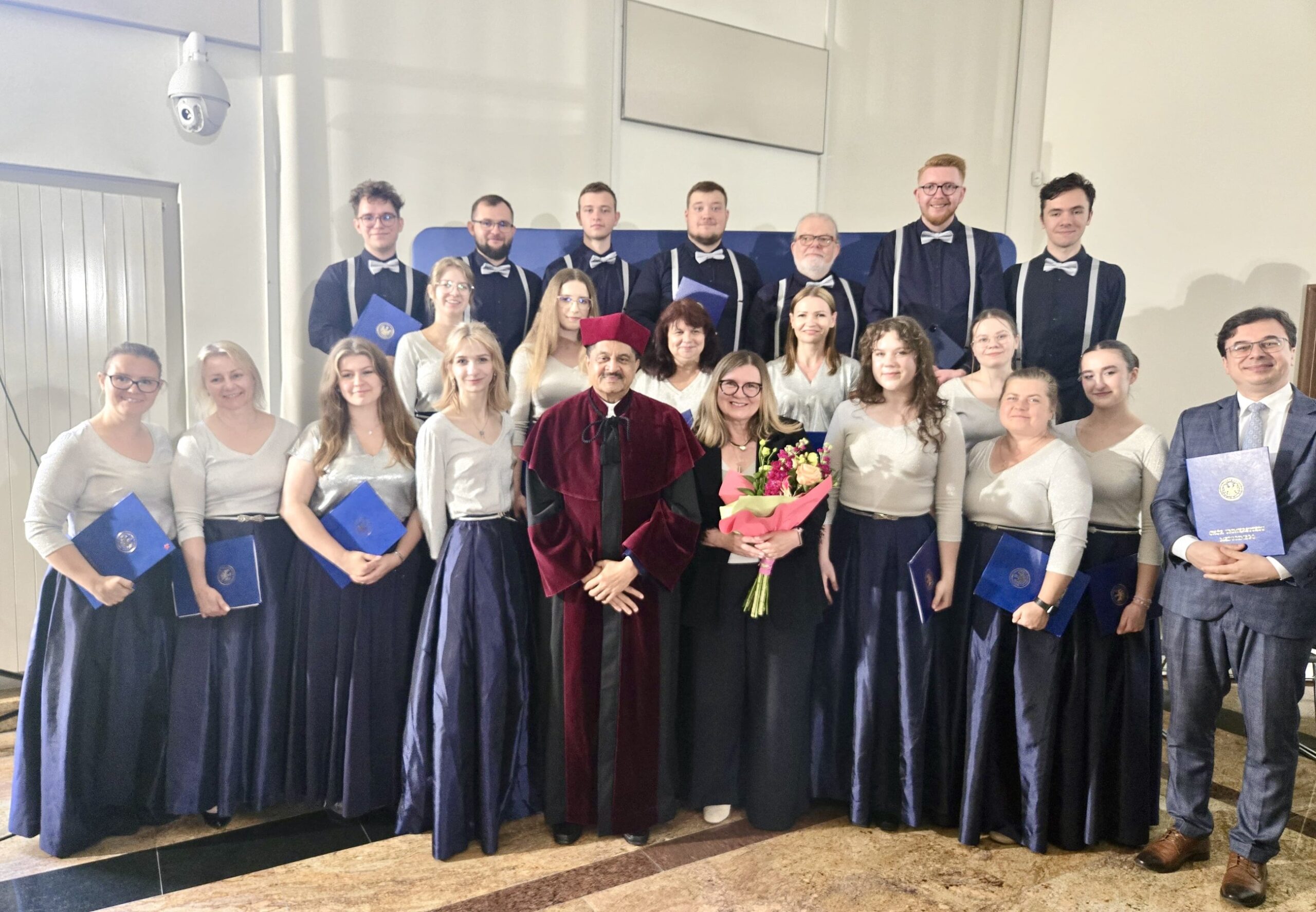
In a moment of immense pride and global recognition, Dr. Thumbay Moideen, Founder and President of Thumbay Group, has been conferred his Fifth Honorary Doctorate, this time by the prestigious University of Lublin, Poland.
This accolade reaffirms his unmatched contributions to global healthcare, medical education, and Research for the community development.
The honorary doctorate was awarded in recognition of Dr. Moideen’s extraordinary leadership in establishing the First Private Academic Health Sytem and the region’s largest private medical university — and for transforming Thumbay Group into a global model of purpose-driven entrepreneurship in healthcare, education & Research.
Under his visionary leadership, Thumbay Group has impacted millions across more than 175 nationalities, offering compassionate care, research excellence, and world-class medical training.
The University of Lublin acknowledged Dr. Moideen’s pioneering efforts in integrating innovation with empathy, notably through the Thumbay International Research Grant (TIRG) — an initiative investing AED 3 million annually in areas like cancer immunology, AI in healthcare,precision medicine and many more Area’s of Research.
From a young entrepreneur in Karnataka to being celebrated as the most respected Indian Muslim and leading Beary in the world, Dr. Thumbay Moideen’s journey is a testament to what’s possible when faith meets action. Recognized as the leading NRI from Karnataka in the Gulf region, he is admired not just for his accomplishments, but for the values that drive them.
Once someone who measured success through projects and milestones, he has evolved into a changemaker who defines impact by how many lives his work touches.
With this latest recognition, Dr. Moideen joins an elite group of globally honoured visionaries who have reshaped industries while staying rooted in service, humility, and impact.
This doctorate reflects not only his entrepreneurial brilliance but also his enduring belief that health and education are fundamental rights, not privileges.
Speaking at the ceremony, Dr. Moideen said: “If our work has empowered others to dream, to heal, to grow, then I consider it a success. It’s no longer about how far I’ve gone, but how many I’ve taken along. I want Thumbay Group to be remembered as a force that empowered the underprivileged, raised the standards of education, healthcare & Research.”
The vision of Thumbay Group is to deliver excellence by building a seamless ecosystem of education, healthcare, and innovation. From its flagship Gulf Medical University to hospitals, labs, rehabilitation centers, and AI-driven research programs, the Group continues its mission of shaping the future of healthcare —the Group plans to Double its Healthcare capacity and expand its all business to grow 5 fold and have a global presence.
source: http://www.gulftoday.ae / Gulf Today / Home> News / by Gulf Today, Staff Reporter / June 18th, 2025