Category Archives: Events, Exhibitions, Conferences (wef. Nov 18th, 2021)

Faizan Zaki with roots in Hyderabad wins 2025 US Spell-bee competition

Hyderabad, TELANGANA / Dallas (Texas), U.S.A :
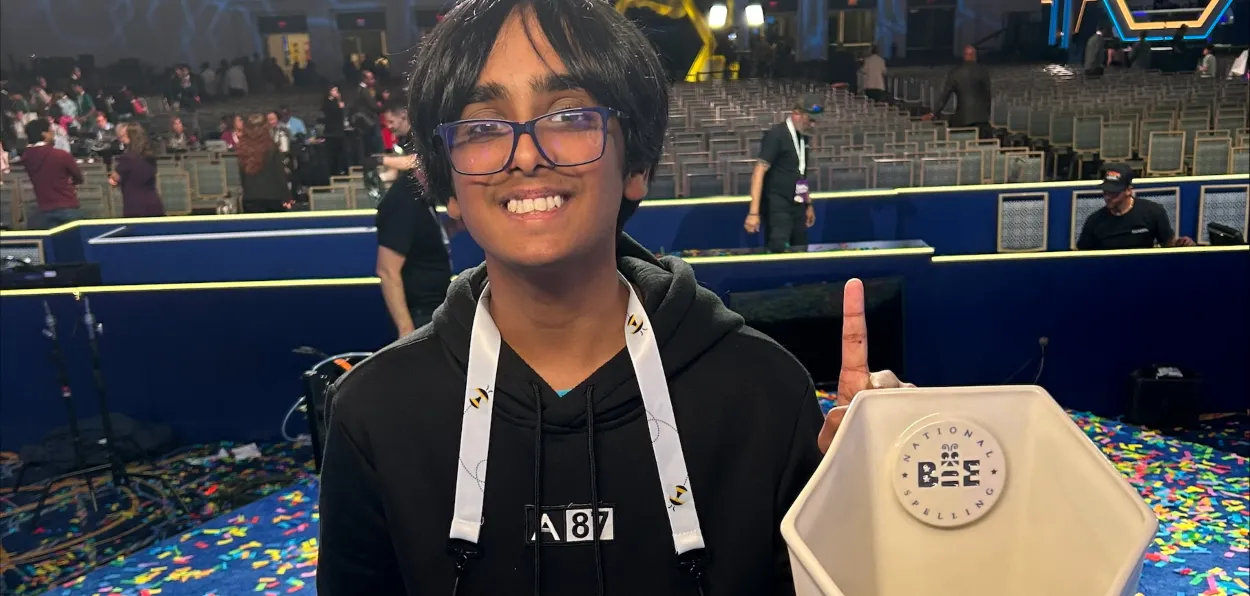
Faizan Zaki, Winner of the won the 2025 Scripps National Spelling Bee competition, USA

New Delhi

Indians continue to dominate the spelling competitions in the USA, as the 13-year-old Non-Resident Indian with roots in Hyderabad Faizan Zaki won the 2025 Scripps National Spelling Bee competition in the USA.

Faizan Zaki lives in Dalla, Texas, and was the runner-up in the competition last year.

Faizan made it among 243 who made it to the national contest in Maryland on the Bee’s

Faizan won a prize of US$ 50,000 (about Rs 42.78 lakh) by spelling the difficult French word ‘ Éclaircissement’ in the final round.

With three spellers left on the Bee, Sarvdanya Kadam, and Sarv Dharavane kept getting their words wrong, leaving Faizan two words away from victory. The first was “Commelina”, but instead of asking the usual questions—definition, native language—to ensure he knew it, Faizan let his showman instincts take over.

“K-a-m,” he said, then stopped himself. “Okay, let me do this. Oh, shoot!”

“Just ring the bell,” he told Chief Justice Mary Brooks, who did so.

“So now you know what happens,” Brooks said, and the other two spellers returned to the stage.

Afterward, standing next to the trophy with confetti at his feet, Faizan said: “I’m definitely going to have nightmares about this tonight.”

Even the pronouncer Jacques Bailly tried to slow Faizan down before his winning word “éclairsissement,” but Faizan didn’t ask a single question before spelling it correctly, and after saying the last letter he pumped his fists and fell to the stage.

Faizan’s winning moment was captured in the pictures posted on X:

This year the bee celebrates its 100th anniversary, and Faizan may be the first champion to be remembered more for getting the word wrong than getting the word right.

“I think he cared too much about his aura,” said Faizan’s friend Bruhat Soma, who beat him in a “spell-off” tiebreaker last year.

Faizan had a more nuanced explanation: after not preparing for the spell-off last year, he over-improvised by focusing on speed during his study sessions.

Although Bruhat was fast when needed last year, he followed the familiar playbook for champion spellers: asking thorough questions, spelling slowly and metronomically, and showing little emotion.

Faizan’s father, Zaki Anwar, said: “He’s the best. I really believe that. He’s really good, man. He’s been doing this for so long and he knows the dictionary.”

After a little drama at last year’s contest before suddenly going into a spell-off, Scripps changed the rules of the contest, giving the judges more leeway to finish the contest before going into a tie-breaker.

This is Faizan’s winning spelling:

Faizan Zaki, previous runner-up, wins 2025 Scripps National Spelling Bee

source: youtube.com/ Scripps News

The nine finalists performed well. During one stretch, six spellers got 28 words correct in a row and there were three perfect rounds during the finals. The last time a single perfect round occurred was in the infamous 2019 competition, which ended in an eight-way tie. Sarv, an 11-year-old fifth-grader from Dunwoody, Georgia, who ultimately finished third, would have been the youngest champion since Nihar Janga in 2016. He has three years of eligibility remaining.

Like Faizan, who parents came from Hyderabad, Telangana, 30 of the past 36 champions are Indian Americans, a streak that began with Nupur Lala’s win in 1999, which was later featured in the documentary Spellbound.

Lala was one of dozens of past champions who attended this year and signed autographs for spellers, families, and bee fans to honor the anniversary.

Adding the $25,000 prize for second place to the winner’s $52,500 purse, Faizan raised his bee earnings to $77,500. What did he spend the most on with his winnings last year? A $1,500 Rubik’s Cube with 21 squares on each side. This time around, he said he’ll donate a larger portion of his winnings to charity.

Faizan has been spelling for more than half his life. He took part in the 2019 competition at age 7, gaining entry through a wild-card program that has now been discontinued. He qualified again in 2023 and made it to the semifinals before finishing second last year.

“One thing that sets him apart is that he’s really passionate about it. In his spare time, when he’s not studying for the bee, he’s really looking up old, outdated words that are unlikely to be asked for,” Bruhat said.

source: http://www.awazthevoice.in / Awaz, The Voice / Home> Stories / by Aasha Khosa / May 31st, 2025

How a 71-year-old Muslim villager’s “hoarding” of everyday objects won a coveted spot at the V&A Museum in London

Kelepara Village (near Hoogly), WEST BENGAL :

Ohida Khandekar’s Dream Your Museum, an installation and film about her uncle’s collection won the V&A’s Jameel Prize for contemporary art and design inspired by Islamic traditions.

Selim Khandakar with his grand-niece and the trunks housing his collection. | Photo Credit: Anand Kumar Ekboty

Selim Khandakar, 71, has always dreamt of making a museum in his village for the 12,000-plus objects he has collected over 50 years. A small portion of that collection has now reached one of the best museums in the world — the Victoria & Albert Museum (V&A) in London — thanks to his artist niece, Ohida Khandakar. 

Ohida, 31, has turned her uncle’s lifelong obsession into an installation and film — Dream Your Museum — which won the V&A’s prestigious Jameel Prize for contemporary art and design inspired by Islamic traditions. The work is not just a tribute to what seems to be her uncle’s calling; it also challenges colonial museum structures and asks whether ordinary, personal objects deserve a place in museums. Can museums be flexible and inclusive spaces, showcasing the narratives of minority communities and customs? Are private collections the exclusive privilege of the rich?

The installation and film, ‘Dream Your Museum’, at the Victoria & Albert Museum (V&A) in London.

Selim worked as a doctor’s compounder in Kolkata and started collecting random objects from the year 1970. A stamp exhibition piqued his interest first, prompting him to start collecting them. He also came across an exhibition of vintage objects from Mallik Bari, one of Kolkata’s heritage homes. “It was a record of what objects were used in the ancient times and how lives were led,” Selim tells me over a Zoom call from his home in Kelepara, a village near Hooghly, West Bengal. “It inspired me to start collecting whatever felt like a record of the common person’s life and times. From bus tickets to stamps to refills of pens, I wouldn’t throw anything away.” 

An assortment of rare and mundane items makes up Selim’s collection. Old clocks, inscribed ceramics, vintage records and music players, letters dating back to Partition, perfume bottles, crystal rocks, hand fans, stamps, handbills, ink pots, cameras, train tickets, receipts, even matriculation answer sheets from the 70s!

Selim Khandakar surrounded by the objects he has collected over the years. | Photo Credit: Anand Kumar Ekboty

Gramophones to baby clothes

Much of Selim’s collection is housed in tin trunks and scattered across his home in Kelepara. It sometimes becomes a ‘travelling museum’ for people in the village to explore and interact with the objects as Selim takes them around. There is curiosity, awe, some ridicule, some laughter, and from those who understand history and record keeping, even encouragement.

Ohida’s film captures Selim walking through village fields with his trunk, stopping by the river to rinse some crystal stones, and holding them up to the sun. “Where did you find these, nanu?” asks Maria, his grand-niece, who appears in the film. “In the graveyard,” Selim replies.

Selim Khandakar walking through village fields with his trunk. | Photo Credit: Anand Kumar Ekboty

Ohida, who studied art at the Government College of Art & Craft, Kolkata, and Jamia Millia Islamia, New Delhi, says it is sometimes hard to understand what keeps her uncle going. Is it hoarding, as his exasperated family has often believed? She and Selim don’t think so. Instead, he thinks his collection, much like Dream Your Museum, is about storytelling. “Collecting is my way of showing people from my village a glimpse of things from around the world,” Selim notes. “Like rare coins dating back to the Mughal period or vintage perfume bottles from around the world. Often people here do not get a chance to go to cities to see such things. That’s what has always kept me going.”

Selim Khandakar’s house that was destroyed after a cyclone.. | Photo Credit: Anand Kumar Ekboty

Once displayed in his modest mud house, now destroyed after a cyclone, Selim’s possessions came close to being discarded by his family until Ohida decided to document it digitally. She reacquainted herself with both her uncle and his collection when stuck at home during the pandemic. To her artist’s eye, it is a compelling one, given its range — from gramophones to baby clothes from the 80s. “It even has a bunch of fingernails [Selim’s own] in a box. It reminds me of Marcel Duchamp’s Dadaist Fountain exhibit [1917], where he displayed an upside-down urinal. Such objects challenge conventional notions of what belongs in a museum. These items, including a broken plate passed down through generations, show the power of storytelling through objects.”

Selim laughs when asked about the fingernails. “I had once visited an exhibition where I saw art made with fingernails and thought I would do the same with mine. It made me curious, so I kept them.”

What makes a museum?

Curiosity has been the driving force behind Selim’s obsession and this is what Ohida celebrates in her work. Maria accompanies Selim throughout the film, asking him curious questions about the objects in his collection, an attempt to peek into his mind. Ohida started filming Dream Your Museum as an entry for the 2022 Berlin Biennale, where it was received well, eventually landing her the V&A award.

Filmmaker Ohida Khandakar

Growing up in Kelepara, Ohida hadn’t stepped inside a museum until she came to study art in Kolkata. “I had achieved my dream of studying art and moving beyond a village where many women still had no voice and were married off early. It made me wonder — was there a limit to our dreams? Was there a limit to the dreams of my uncle, a rural, aged Muslim man?”

With the funds from the award, Ohida is now hoping to create a museum for her uncle’s collection and a cultural space in the village. “We need accessible museums that work as alternative spaces for the narratives of rural minority communities; as safe spaces for women without opportunities; to engage those who might not typically visit traditional museums due to a lack of knowledge, distance or financial constraints.”

In Dream Your Museum, her camera gently films Selim among his collections in his crumbling ancestral home. He expresses frustration at having no permanent place even after 50 years to showcase his prized collection. “I’ll now make a museum on the moon,” he declares.

The writer is a freelance journalist and the co-author of ‘Rethink Ageing’ (2022).

source: http://www.thehindu.com / The Hindu / Home> Entertainment> Art / by Reshmi Chakraborty / April 20th, 2025

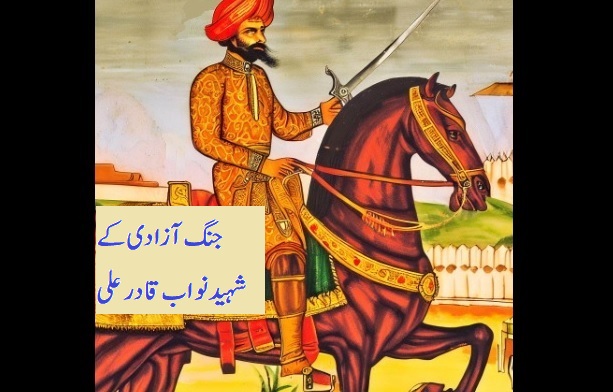
Forgotten martyrs: Nawab Kadar Ali, his companions were hanged by British at Sitabuldi fort in Nagpur

Nagpur, MAHARASHTRA :

More than seven decades after India achieved independence, the role of innumerable martyrs and freedom fighters who gave their blood and offered lives for the motherland, needs to be remembered. 

Many of them got harsh punishments, didn’t get proper last rites, remain forgotten and even those whose sacrifices are known, don’t have monuments or memorials built in their memory.

The martyrdom of Nawab Kadar Ali, and his companions, who planned attack on residency and to take on the East India Company forces in Nagpur, also needs to be recalled. They were hanged here for their role in 1857–the first war of independence.

Though there is no monument named after them and no big memorial, they remain heroes in public memory. The fort that had been a base of 118 Infantry Battalion for years, is opened on three days including August 15 and January 26. Thousands of people arrive on these days, and also pay visit to the grave and offer their respects.

The flame for independence was already lit. History books mention that soon after Meerut, the anger was palpable among soldiers and citizens in this region too. On June 13 1857, a large gathering took place near Mission High School. The soldiers too were anxious and ready. 

Scared, some of the East India Compnay officials ran towards Kamptee Cantonment, while others went inside the Sitabuldi Fort. It was due to treachery that the attack plans had been leaked and the news reached British officers. More EIC forces were called from other places to control and overpower the rebels.

Rani Baka Bai, wife of late Raghoji II, was supporting the British and issued a warning that anyone abetting or aiding the revolutionaries would be arrested and handed to the East India Company. It’s a long story and how the soldiers and citizens suffered, refused to name the leaders of the movement. 

Historical texts say that the signal of a fire balloon was decided. But after the traitors gave information to East India Company officers, Plowden, the commissioner, ordered a regiment to move into the city. The irregular calvary at Tali was dismayed. Major Arrow tried to get information from ring leaders but no one gave names.

Baka Bai summoned all her relations, and dissuaded them with threats. This chilled the spirit of public. However, later when Company officials’ strengthened their hold, the rebels were identified. Arms were collected and after inquiry, Dildar Khan, Inayatullah Khan, Vilayat  Khan and Nawab Kadar Ali were tried and executed.

KILLED, HANGED, BURIED IN A COMMON PIT

The Gazetteer briefly mentions that ‘tucked away between the easter walls of the inner fort and the barracks is a large grave known as Nav Gazah Baba…the grave of Nawab Kadar Ali…and his eight associates..who were killed and hanged by the ramparts of the fort due to their role in the war of independence”. 

“They were all buried in a common pit, nine yards long. The fort recalls to our mind the memory of the brave soldiers who fought in an attempt to preserve the independence of the mother land”. It was treachery that was responsible for the arrests and the punishment.  Those who helped the British, got ‘jagirs’ as rewards.

Ghulam Rasool ‘Ghamgeen’, the poet, wrote these lines in Farsi :

Choo.n Qadar Ali Khan Ameer Kabeer
Shud-az-tohmat, ahl-e-balwa aseer

Bajurm shiraakat girafaar shud
Chau mansoor, Hallaj, bar-daar shud

Duaa’e shahaadat ba-raahe Khuda
shab w roz mi kard aa.n mahtada


Khirad guft ee.n misra-e-silk-e-noor
Za-daar-e-jafaa shud ba-daar-e-suroor

The last couplet of this long Persian verse, brings out the ‘tarikh’, the year of execution. The complete verse is mentioned in Dr Mohammad Sharfuddin Sahil’s book ‘Tarikh-e-Nagpur’. It shows the impact of the hangings on the people in the region. Nagpur is geographillcally considered to be a part of Central India and is the biggest city in Vidarbha region of Maharashtra.

The fort for a long period remained the base of 118 Infantry Battalion of Territorial Army. Every year, on August 15 and January 26, fort is opened for public so that it can pay respect to the freedom fighters. It’s also opened on May 1 i.e. Maharashtra Day. [Illustration is representive]

source: http://www.newsbits.in / NEWS Bits / Home> Top News / by Shams Ur Rehman Alavi / August 15th, 2021

‘Expertise’ CEO Muhammad Ashif Karnire awarded ‘Global Beary of Business Youth Icon’ award

Mangaluru, KARNATAKA / SAUDI ARABIA :

Dubai: 

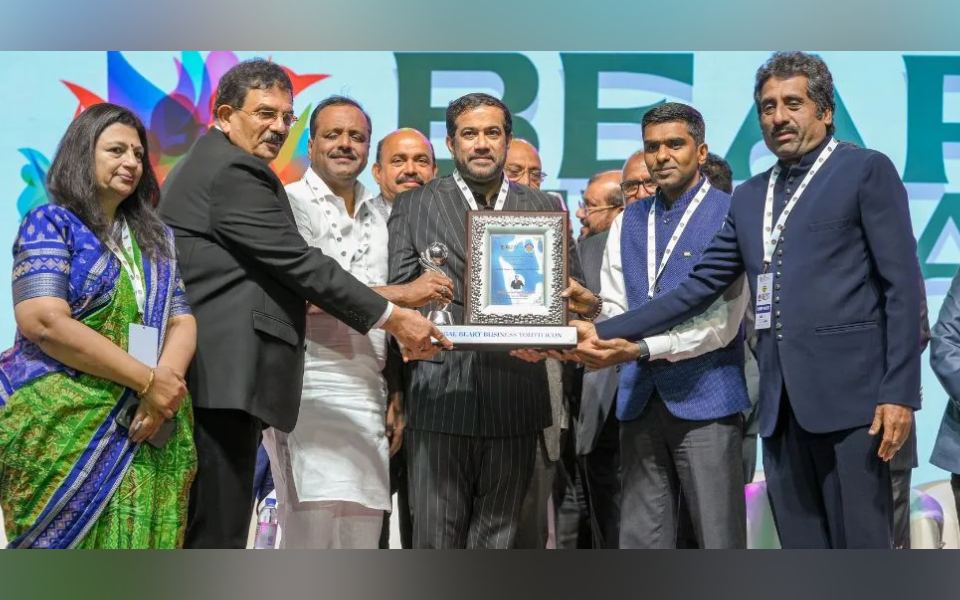
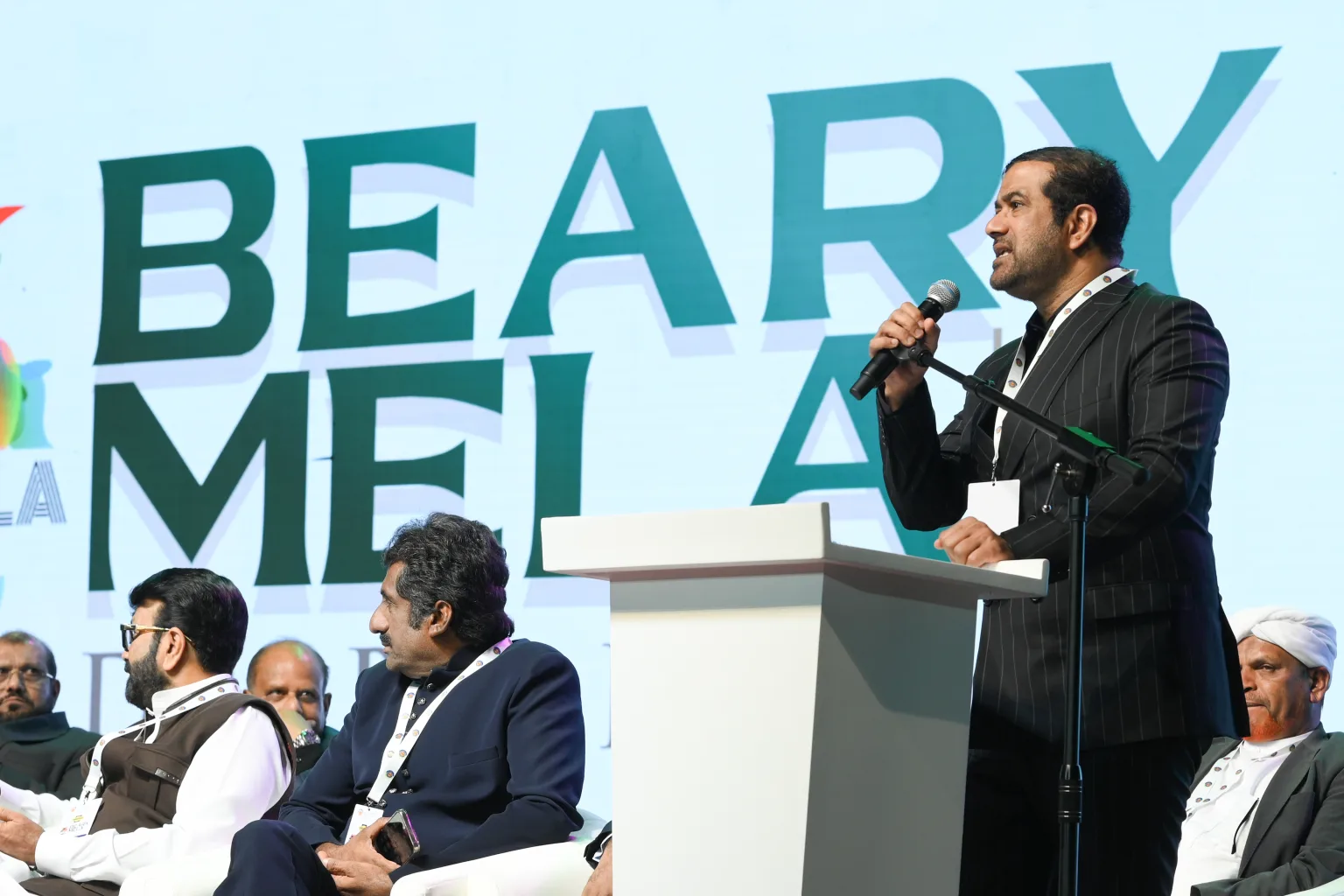
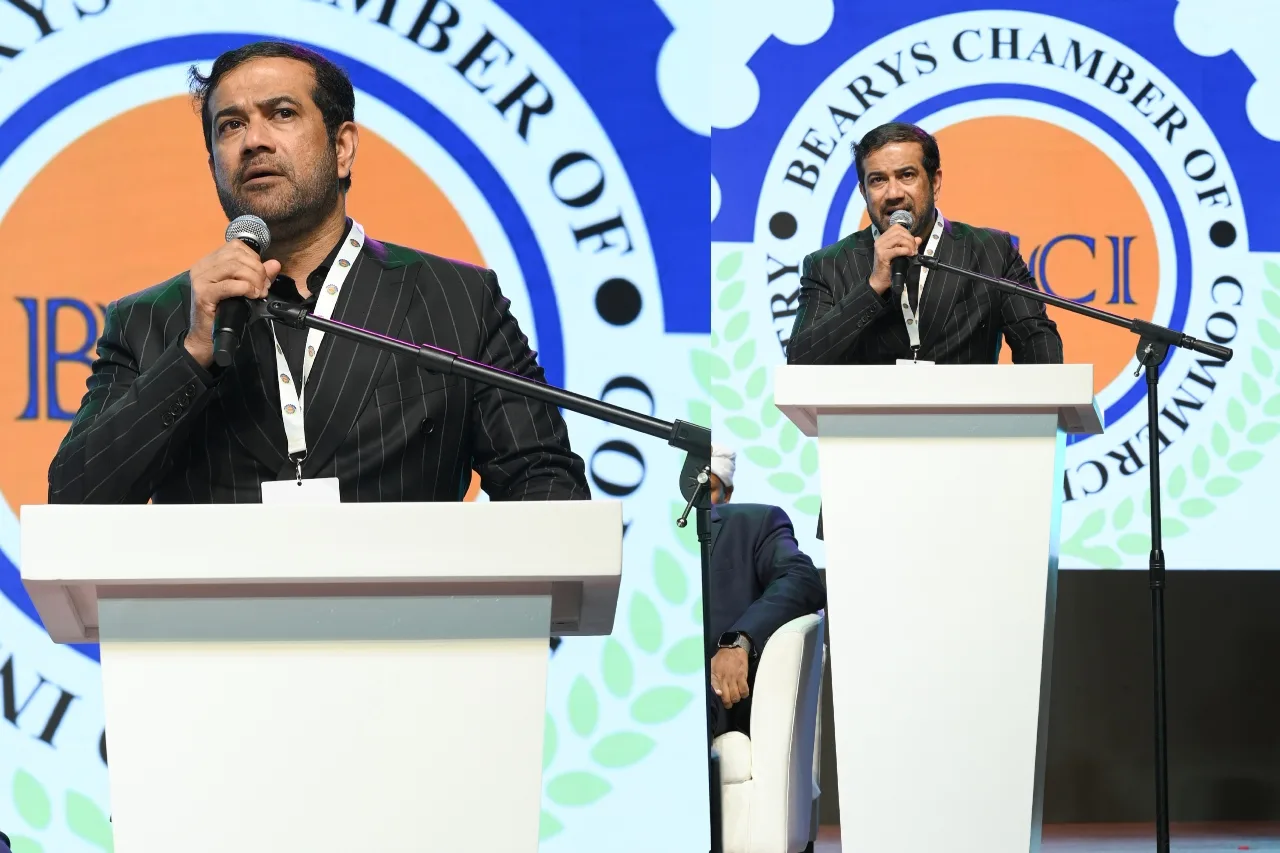
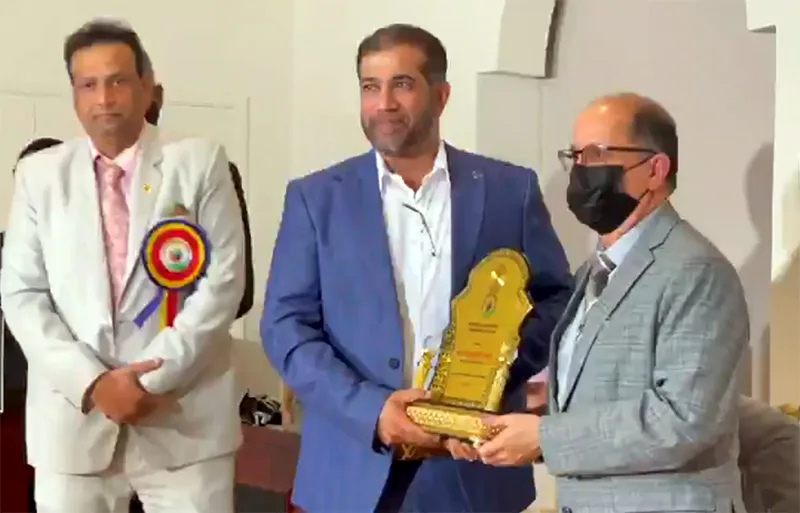
Muhammad Ashif Karnire, CEO of Saudi Arabia-based Expertise Contracting Company Limited, was honoured with the prestigious ‘Global Beary of Business Youth Icon’ award at the Beary Mela 2025. The event was held on Sunday at the Etisalat Academy Grounds under the auspices of the Bearys Chamber of Commerce & Industry (BCCI), UAE.

Karnataka Assembly Speaker UT Khader graced the event as the Chief Guest.

Karnataka Education Minister Madhu Bangarappa, Indian Ambassador to Dubai Satish Kumar Sivan, State Hajj Minister Rahim Khan, Bengaluru Shanthi Nagar MLA NA Haris. Vice-President of the Government’s Non-Resident Indian Directorate Dr. Aarti Krishna, social worker Dr. Ronald Colaco, Thumbay Group founder president Dr. Thumbay Moideen, renowned non-resident Indian businessman and CEO of Al Muzain, Saudi Arabia, Zakaria Jokatte, Expertise Contracting Limited Director K.S. Sheikh Karnire, UAE Bearys Chamber of Commerce & Industry (BCCI) UAE Unit President Hidayat Addoor and others were present on the occasion.

The award recognized Muhammad Ashif Karnire’s exceptional contributions to the industry and his outstanding achievements. Karnire, who heads the prestigious Expertise company in Jubail, Saudi Arabia, had previously been honoured in 2021 by Dr. Ausaf Saeed, the Indian Ambassador to Saudi Arabia, for his community services and professional excellence.

Founded in 2008, Expertise is a leading industrial services provider in Saudi Arabia, employing over 15,000 professionals and operating more than 7,500 pieces of equipment. The company serves a wide range of industries, including petrochemicals, oil and gas, fertilizers, steel, cement, water treatment, and power generation. Headquartered in Jubail Industrial City, Expertise has established a strong presence with branches across Saudi Arabia.

source: http://www.english.varthabharati.in / Vartha Bharati / Home> Gulf / by Vartha Bharati / February 14th, 2025

Jamia Hamdard established the Asian Federation of Societies for Alternatives to Animal Experiments

NEW DELHI :

New Delhi :Prof

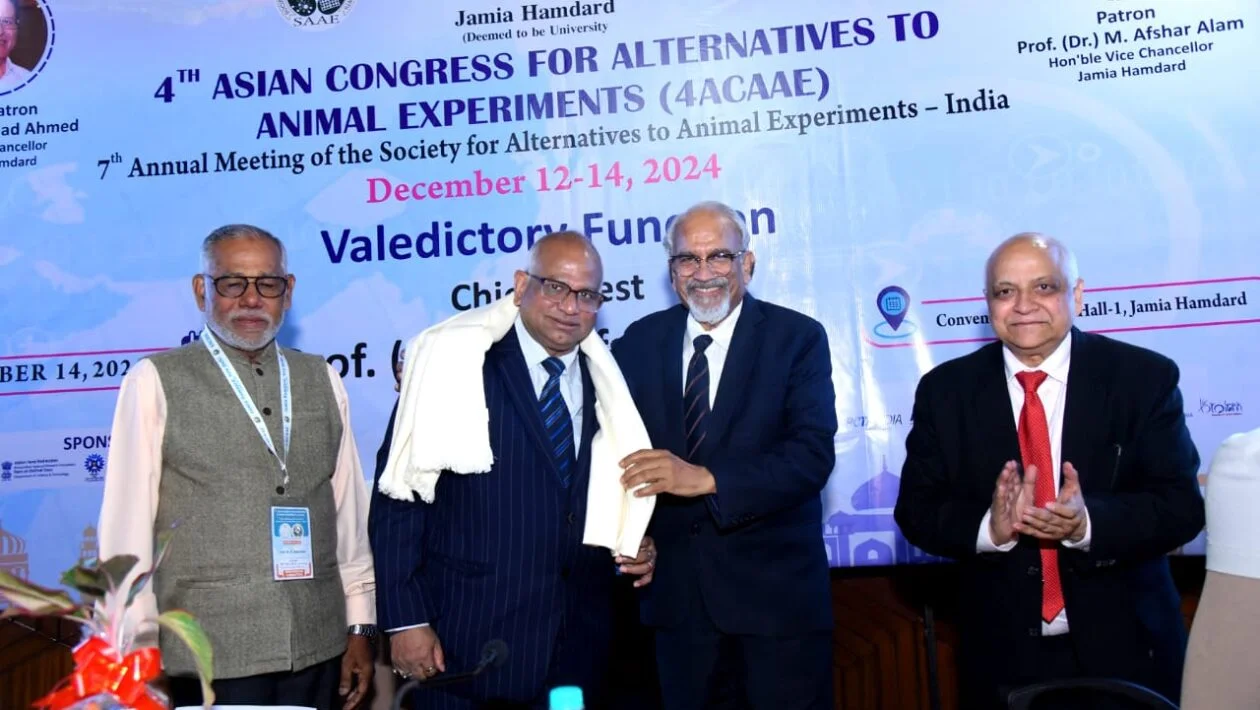
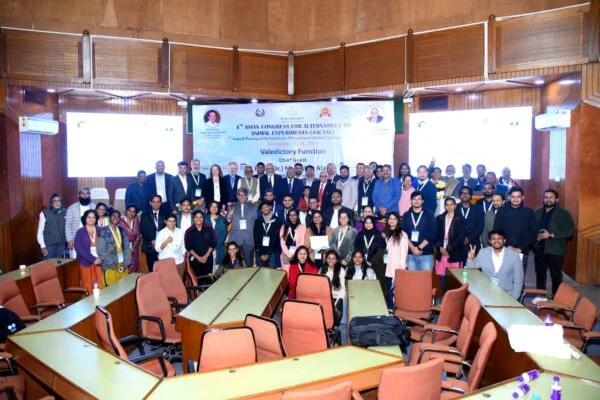
The valedictory function of the 4th Asian Congress for Alternatives to Animal Experiments held at Jamia Hamdard Convention Centre where Prof. (Dr.) M. Afshar Alam, Vice-Chancellor, Jamia Hamdard was the Chief Guest of the programme.

Organizing secretary Prof. S. Raisuddin informed that this congress is being held for the first time in India. During this congress the founding members of the society and representatives from India, China, Japan, and South Korea signed a joint declaration to establish the Asian Federation of Societies for Alternatives to Animal Experiments (AFSAAE).

Well-wishers from societies working for alternatives from America, Europe, and Sri Lanka also wished good link to the foundation. All the representatives were felicitated by the Organizing Secretary. Prof. Y.K. Gupta and Dr. M. A. Akbarsha graced the occasion as Guest of Honour.

Prof. Y. K. Gupta urged the scientists to understand the pain of Animals while using them for scientific experiments.

Dr. Akbarsha announced the next meeting to be held at Hyderabad. Prof. Raisuddin presented a detailed report of 3 days deliberations during the conference. He also announced various awards for best presentations by young scientists. Dr. Christian Pellevoisin, Scientific Director, MatTek & CEO Urbilateria France sponsored best poster presentation awards and cash prizes to the budding scientists. Dr. Kristie Sullivan, Vice President, Education and Outreach, Institute for In Vitro Sciences, USA and Prof Winfried Neuhaus, member of the Austrian Commission for Animal Experimentation also appreciated the successful organization of the Congress.

Prof. (Dr.) M. Afshar Alam, Vice Chancellor congratulated the Organising committee members for the successful organisation of the conference. He appreciated the patronage of Janab Hammad Ahmed, Chancellor, Jamia Hamdard and financial support of Hamdard National Foundation along with other funding agencies for enabling Jamia Hamdard to develop alternative models of animal experiments.

Programme ended with vote of thanks by the Organising Secretary and National Anthem.

source: http://www.taasir.com / Taasir.com / Home> Education / by Taasir News Network / December 15th, 2024

JNMC Pharmacology Department Shines at IPSCON-2024 with Awards and Research Excellence

Aligarh, UTTAR PRADESH :

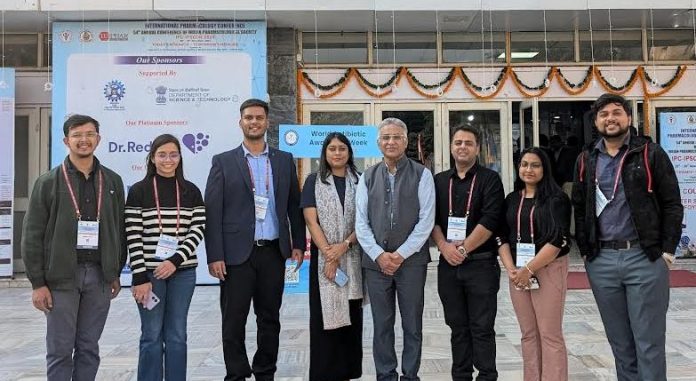
PG students of Department of Pharmacology with chairman Prof S Ziaur Rahman during the IPSCON 2024

Aligarh:

The Department of Pharmacology at Jawaharlal Nehru Medical College (JNMC), Aligarh Muslim University (AMU), achieved a distinction at the Indian Pharmacological Society Conference (IPSCON-2024), held at AIIMS, New Delhi, from November 28 to 30.

Faculty members and residents actively participated, showcasing their research acumen and academic prowess.

Prof. Syed Ziaur Rahman, Chairman of the Department, received the Dr. SB Pandey Oration Award and delivered a lecture titled “Exploring Medicinal Plants for Morphine De-addiction,” which drew recognition for its innovative approach. Additionally, Prof. Rahman also chaired a scientific session.

Dr. Jameel Ahmad, Assistant Professor, presented his research on “Evaluation of the Effectiveness of Different Inhalers in Patients with Chronic Obstructive Pulmonary Disease,” comparing their performance across varied age groups.

Dr. Syed Shariq Naeem, Assistant Professor, delivered a lecture on “Microplastics: Emerging Challenge for Pharmacology,” addressing critical environmental and health concerns.

Dr. Irfan Ahmad Khan shared his study on “Evaluation of Radio-Contrast Agent-Induced Adverse Reactions in Patients Undergoing Radiological Procedures.”

Residents, including Dr. Aditya Vikram Singh, Dr. Ammar Khalid, and others, presented their research, while several participated as delegates, enriching their academic exposure.

source: http://www.radiancenews.com / Radiance News / Home> Awards> Education> Latest News / by Radiance News Bureau / December 04th, 2024

AMU Faculty Elected Prof Subuhi Khan as Academic Secretary of ‘Society for Special Functions & their Applications’

UTTAR PRADESH :

Professor Subuhi Khan Elected as Academic Secretary of the Executive Council

Aligarh:

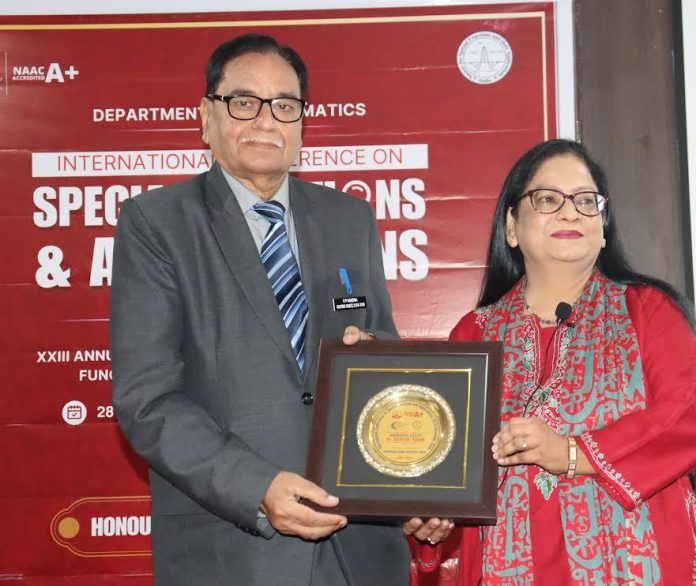
Prof. Subuhi Khan from the Department of Mathematics, Aligarh Muslim University (AMU), has been elected as the Academic Secretary of the Executive Council (2024-27) of the Society for Special Functions & Their Applications.

The Society plays a role in coordinating national and international research in special functions and promoting their application in mathematics, science, and industry.

Prof. Khan also delivered a talk at the International Conference on Special Functions & Applications (ICSFA-2024) held at Vivekananda Global University, Jaipur. Her presentation, “Exploring a Degenerate Family of 2-Variable Appell Polynomials Using an Algebraic Perspective,” highlighted the significance of degenerate forms in mathematics and their applications in differential equations and probability theory.

The conference witnessed participation from eminent scholars and researchers from Italy, Thailand, Nigeria, and across India.

Prof. Khan also chaired a technical session of invited speakers, contributing to the success of the 23rd annual meeting of the Society.

source: http://www.radiancenews.com / Radiance News / Home> Latest News> Report / by Radiance News Bureau (headline edited) / December 02nd, 2024

India’s First International Conference on Indian Muslims’ Contributions to Nation-Building to be Held in Bidar

Bidar, KARNATAKA :

Bidar :

The Shaheen Group of Institutions is set to host a groundbreaking international conference on November 30 and December 1, 2024, in Bidar, Karnataka.

Touted as India’s first event of its kind, the conference aims to spotlight the contributions of Indian Muslims in critical sectors such as education, politics, media, economics, IT, social services, and madrassa education, envisioning their role in shaping a developed India by 2047, the centenary of the nation’s independence.

The conference will serve as a platform for thought leaders, intellectuals, and influencers from India and abroad to network and exchange ideas. Attendees will deliberate on the community’s potential to drive transformative change in various fields, aligning with India’s vision for growth and development.

This pioneering event highlights the Shaheen Group’s commitment to fostering dialogue and collaboration within the Indian Muslim community to contribute effectively to the nation’s progress.

source: http://www.thehindustangazette.com / The Hindustan Gazette / Home> News> Education / by Shifa (image source: shaheengroup.org) / November 27th, 2024

The Great Mughals review – dazzling decorous delights waft you to paradise

INDIA :

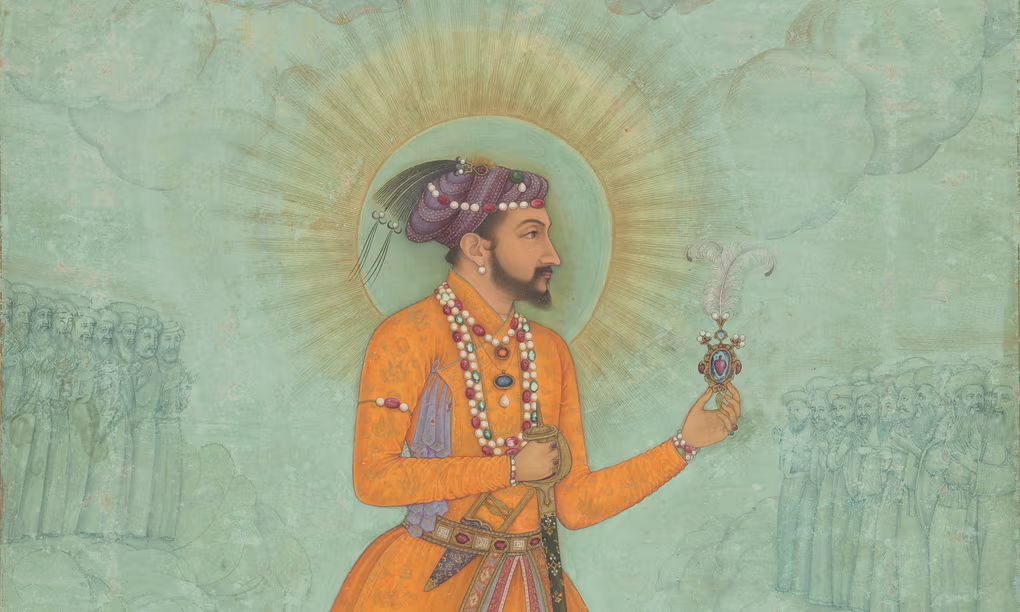
Shah Jahan, the fifth Mughal emperor, who built the Taj Mahal to commemorate his favourite wife. Photograph: The Trustees of the Chester Beatty Library, Dublin

V&A, London
Romance, bloodshed and religious curiosity is distilled in these lovely artefacts from the mighty military reign with a love of beauty and culture

This exhibition wafts you to the paradise that Shah Jahan, fifth of the Muslim emperors of much of modern India and Pakistan, wanted to create on Earth. A floor-covering decorated with red poppies sets the scene for this idyll of calmness. A rippled stone panel with myriad water spouts had me dreaming of fruit trees and pavilions while I was cooled by a stone jali screen that once filtered air through one of his buildings. These lovely objects help to fill in for his masterpiece, which for obvious reasons can’t be here: the Taj Mahal.

It is shown on a big screen above the portable delights, twinkling white in the hazy Agra sky. Shah Jahan famously built it as a mausoleum for his favourite wife, Mumtaz Mahal, who died in childbirth in 1631; his tomb is there beside hers. It may be familiar but this piece of architectural heaven captivatingly distils the extraordinary civilisation that a warlike dynasty from Central Asia bequeathed to the world.

The original founder of Mughal power led his armies from Kabul into northern India. When this first empire collapsed it was resurrected by Akbar, first of the exhibition’s “great” Mughal rulers, who combined military might with a love of culture and beauty that his successors would share.

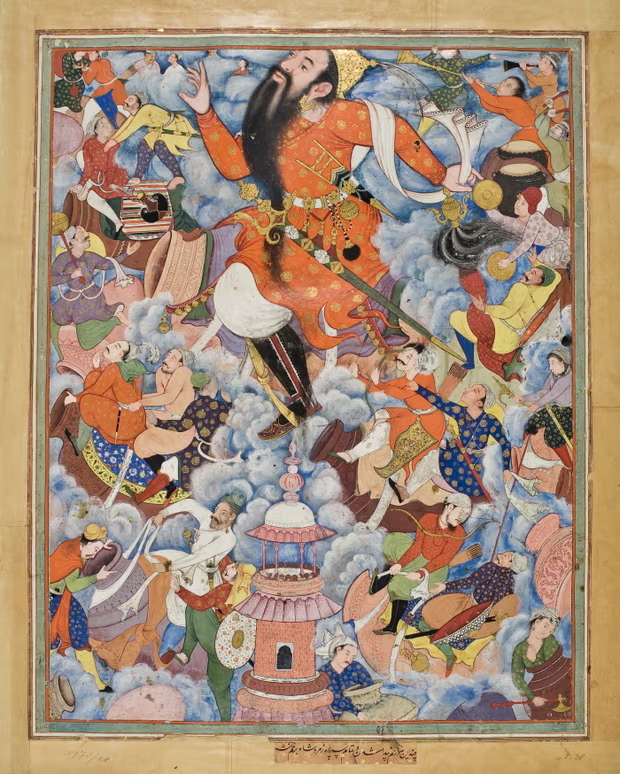
The giant Zumurrud Shah flees with his army, from the Hamzanama, circa 1562-1577. Photograph: MAK/Georg Mayer

Akbar was illiterate but that didn’t stop him employing Hindu and Muslim artists to create a library of illuminated manuscripts. He had readers to tell him what the words said; anyway you can follow the epics he favoured from the ravishing illustrations. In a scene from one of his favourite story cycles, the Hamzanama, a giant with a long beard and bright red coat is chased away through the clouds by Hamza’s army.

The court painting style started by Akbar combines closely observed reality with transporting fantasy. A princess of Kabul lowers her hair for a lover to climb up against a brilliantly realistic garden where ducks swim in a rectangular pool, while above rises a dreamlike mountain landscape and a palace floating in the sky.

In the reign of Akbar’s successor, Jahangir, who came to the throne a couple of years after James I was crowned in England, a natural historical and scientific curiosity sharpens the paintings. In about 1612, a North American turkey cock reached the court and the renowned artist Mansur painted it. The bird – with its orange head, long drooping beak and fan tail – seems to pose as patiently for its portrait as Jahangir himself does in a painting of him studying a globe.

The Great Mughals were interested not just in globes but the globe. They embraced religious complexity and did not expect the Hindu population to convert to Islam. In fact, these curious rulers were attracted to Hindu mythology and mystics. In a painting entitled A Muslim Pilgrim Learns a Lesson in Piety from a Brahman, the pilgrim walks through a rolling north Indian landscape where he encounters a Hindu mystic lying in the road in true spiritual humility. The Mughals were also attracted to the mystic Islamic Sufi movement. That is represented here by a Sufi dervish’s drinking horn and Sufi-inscribed tiles from a now-vanished mosque in Lahore.

Their art absorbed influences from Persia to Renaissance Europe. Portuguese merchants are depicted visiting the Mughal court and, more mysteriously, speaking with angels as the court artists try to make sense of their strange Christian religion.

The exchange went both ways. A Mughal round shield, covered in lustrous mother of pearl patterns and pictures, has been lent by the Bargello Museum in Florence. This dazzling luxury object entered the collection of the Medici family in the 1590s.

This shield never saw battle, plainly, but the Mughals didn’t create their gorgeous world without bloodshed. Many weapons here are opulent and lethal: curved daggers with jewel-encrusted hilts and scabbards, “punch daggers” with floral decoration.

Art itself could be a fantasy of killing. There’s a portrait of Jahangir standing on a globe, shooting an arrow at close range at the severed head of his enemy Malik Ambar. This never happened, but the painting may have eased the emperor’s desire for revenge against this formerly enslaved Ethiopian who rose to be regent of a sultanate and a thorn in Jahangir’s flesh.

When the battles are won and the day’s hunting is over, you drink wine from a jade cup poured from a slender-necked ewer and walk in the gardens to be soothed by the pitter patter of fountains. Where is paradise? A Mughal court poet offered an answer you might agree with by the end of this show: “It is here, it is here, it is here.”

 The Great Mughals: Art, Architecture and Opulence is at V&A South Kensington, London, from 9 November to 5 May

source: http://www.theguardian.com / The Guardian / Home> Art> Review / by Jonathan Jones / November 06th, 2024

Tiger, Tyger: A Tipu Sultan birthday story

Srirangapatna, KARNATAKA :

On November 10, the 274th (or 273rd) birthday of Tipu Sultan was celebrated peacefully in his erstwhile capital, Srirangapatna, amid heavy security.

The date of his birth is disputed – there is little agreement on whether it is November 10, November 20, or December 1, or whether that event happened in 1750 or 1751. (File photo)

This past Sunday, November 10, the 274th (or 273rd) birthday of Tipu Sultan was celebrated peacefully in his erstwhile capital, Srirangapatna, amid heavy security. The security was necessary because Tipu has become, in recent years, a polarizing and politicised figure, with successive state governments casting him alternately as monster and Messiah. Even the date of his birth is disputed – there is little agreement on whether it is November 10, November 20, or December 1, or whether that event happened in 1750 or 1751.

Be that as it may, one well-documented fact about Tipu is that he commissioned, around 1795, the famous Tipu’s Tiger, a mechanical automaton built by local craftsmen using local materials, possibly with inputs from French engineers. It featured a painted wooden tiger mauling a man who, judging from his costume, was decidedly European. The hollow toy housed various mechanisms that were worked by the turning of a crank handle. Each time it was turned, one of the man’s arms moved up, seemingly in a (futile) bid for self-defence, while the bellows inside pushed air out of the man’s throat and several openings in the tiger’s head, producing what sounded like a wail of distress from the man alongside a growl from the tiger. Symbolic of the self-styled Tiger of Mysore, the tiger was as large as life; the hapless European just a little smaller.

Tipu’s Tiger may well have been a product of Tipu’s fancy, meant to inspire him after his defeat in the Third Anglo-Mysore War in 1792, following which he not only lost half his kingdom but was obliged to give up two of his sons as hostages to Lord Cornwallis. But there is a popular theory that the visual of the tiger attacking the soldier was based on a real incident that happened later the same year.

On 21 December 1792, so the story goes, the goodly ship Shaw Ardaseer, bound for Madras, stopped to take on cargo at Sagar Island, situated at the mouth of the Hooghly in Calcutta, at the point where the Ganga meets the Bay of Bengal. On the ship was 17-year-old Hector Sutherland Munro, a ‘cadet for Madras’ who had only arrived in India on the 8th of November. Along with his fellow cadets, young Hector went ashore to try his luck at hunting deer, but was unsuccessful. The party had just sat down at the edge of the jungle to eat a meal when they heard, in the words of eyewitness Capt Henry Conran, ‘a roar like thunder,’ and saw ‘an immense royal tiger spring on the unfortunate Munro.’ In a moment, continues Conran, Munro’s head ‘was in the beast’s mouth,’ and it had raced into the jungle, carrying Munro with it. Conran and the others shot at the tiger and killed it, but Munro could not be saved.

Conran’s sensational prose, and the fact that young Munro was the son of the celebrated General Sir Hector Munro, the hero of the Battle of Buxar (1764) and the capture of Pondicherry (1778), and one of the main players in the Second Anglo-Mysore War (1780) against Tipu‘s father Hyder Ali, ensured that the story went viral in England, perhaps even inspiring William Blake’s famous 1793 poem ‘The Tyger.’ Given that his sons were being held in Calcutta at the time, the story almost certainly also reached Tipu. In the aftermath of the Fourth Anglo-Mysore War, in which Tipu was killed, Tipu’s Tiger, which had little intrinsic but much emblematic value, was carried back to England in triumph, and installed, in July 1808, in East India House on Leadenhall Street.

Today, Tipu’s Tiger sits behind glass at the Victoria & Albert Museum (V&A) in London, where it has long been, according to the museum’s website, ‘one of the V&A’s most popular exhibits.’

(Roopa Pai is a writer who has carried on a longtime love affair with her hometown Bengaluru)

source: http://www.hindustantimes.com / Hindustan Times / Home / by Roopa Pai / November 12th, 2024