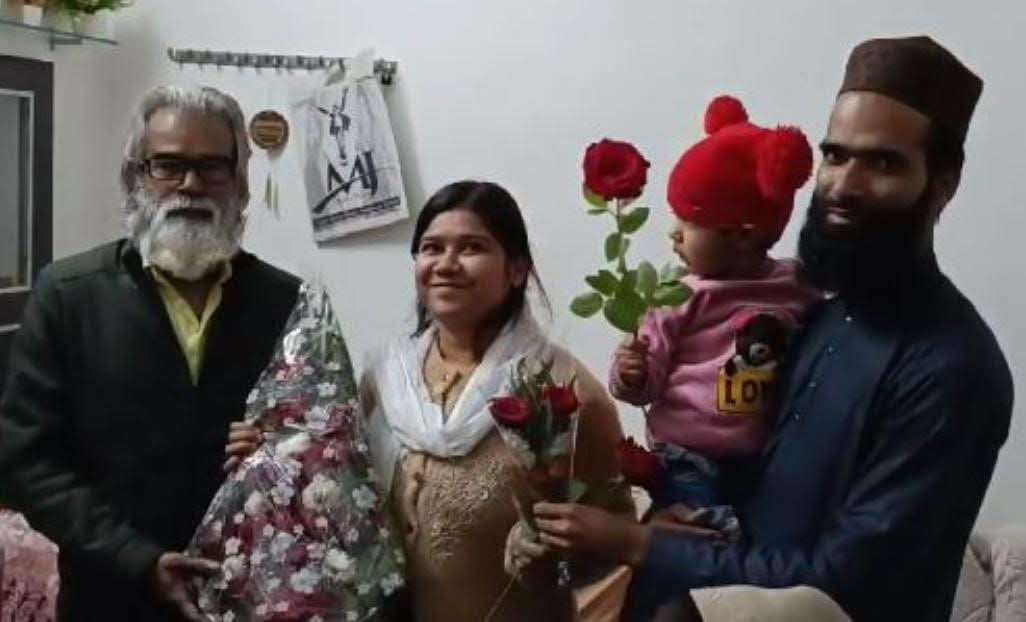
Giving back to the community that has supported them for over 30 years was so important to Tasneem and Shafiq Khaleel that they set up an endowed scholarship at MSU Billings in 2006. The Khaleels place a high value on education and where it can take you in life. From the moment Billings, Montana, became their home, they have reached out to the community to share their Indian culture and to offer help to those in need or educate those who would discriminate against them.
Since those early years at MSU Billings, Dr. Tasneem Khaleel has achieved full professor, was chair of the Biological and Physical Sciences department for many years, served as chair of Graduate Studies, and was Dean of the College of Arts and Sciences. Dr. Shafiq Khaleel has built a successful veterinary practice and a rose garden that is the envy of Billings. According to Tasneem, “We both came to this country with an education that has allowed us to be who we are today. If the scholarship allows even one student to achieve his/her goals, it will be one more educated citizen who will have the potential to make a difference.”
The Tasneem and Shafiq Khaleel Endowed Scholarship was designed to help motivated students achieve their goals and ease some of their financial burden in completing their education. The first scholarship was awarded in academic year 2008-2009.
Impact
I am humbled to have been given the opportunity to receive the special scholarship from you both. Dr. Tasneem Khaleel, you have been a role model for me since I had you as my first science class professor at MSUB. I was honored to meet Dr. Shafiq and shake your hand that one afternoon when you picked Dr. Khaleel up from work. The scholarship you both have provided will give me the opportunity to help pay for my college another year at MSUB; it will forever be remembered. Impacting my life to support one more year of school is a stepping stone that will forever support my future endeavors. Again, thank you.” — Sarah G., Biology and Pre-Professional Medicine major
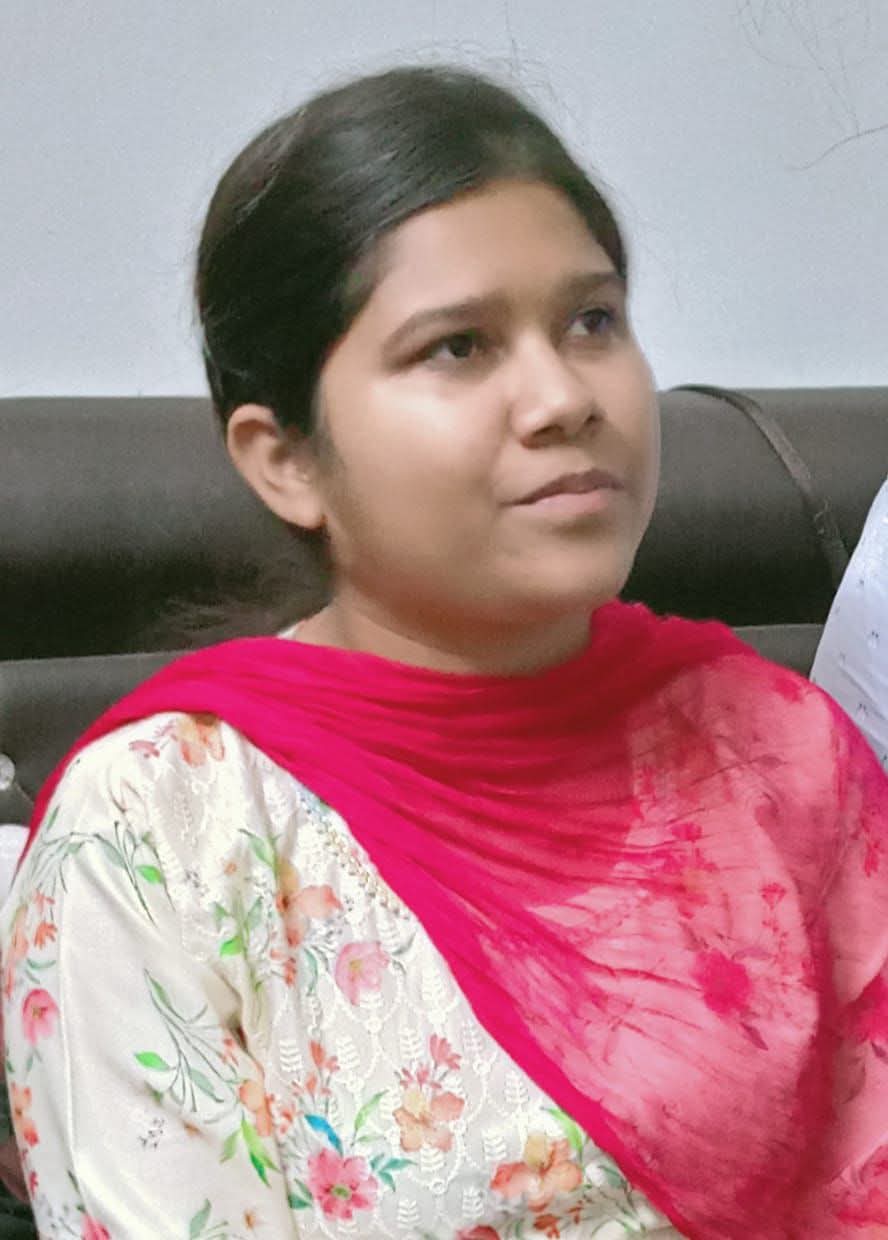
Humairah Shami, a young Karate champion from Kolkata, has recently earned the honour of representing India at the 7th World Meet, scheduled to take place on May 8, 2025, in Bangkok, Thailand, at the Royal Rattanakosin Hotel. This prestigious event is organised by the World Martial Arts Council. Although she is thrilled about this incredible opportunity, Humairah faces a challenge – the limited financial resources that may prevent her from attending.
Her father, Shami Ahmed, repairs footwear for a living. But due to poor health, he cannot work regularly. Her mother, too, has been battling a serious illness for the past three years. Despite these challenges, Humairah, along with her siblings, who are in grades 7 and 10, continues to pursue her education with the support of relatives.
However, these obstacles have not dampened her spirit. Humairah’s determination to follow her dreams led her to enrol in a self-defence course at the Indian Karate Association. Encouraged by the academy’s founder, M.A. Ali, who seems to have recognised her potential and took her under his wing, she was trained free of charges. Humairah’s agility and passion for the sport enabled her to quickly master the karate techniques. It led her to qualify in the 45 kg weight category. She triumphed in every competition she entered.
In 2023-24, Humairah earned a gold medal in Thailand. Her journey to Thailand was made possible thanks to the support of her schoolteachers and well-wishers who contributed to her travel expenses. She was also honoured with the International Sports Award by King Sany Wijaya Nata Kusuma of the Padjadran Kingdom of Indonesia.
His Majesty the King Sany Wijaya Natakusuma of Padjadaran Kingdom Indonesia honouring Humairah with International sports award 2024 in Bangkok Thailand
Humairah has once again proven herself by qualifying to participate in the 2025 World Meet. Though she is still a blue belt and has a long way to go before earning the coveted black belt, her commitment remains unwavering. “I took up Karate for self-defence, and I will continue to persevere until I achieve my black belt,” she says.
Humairah’s talents extend beyond Karate. During her holidays, she completed a crash course in Mehendi (henna) designing, and now, in her spare time after school and studies, she applies Mehdi to fulfil orders and earn some money.
A grade 11 student at Anjuman Girls High School, Humairah lives in the vibrant, bustling lanes of Mufidul Islam Lane in Kolkata. Her siblings look up to her, and her teachers hold high expectations for her future.
Deeply religious, Humairah dreams of becoming a doctor. She believes that her faith in God will help her overcome any challenge that comes her way. “Being able to go to Thailand last year was an impossible dream that came true. So, I am confident that the hurdles ahead will also be overcome, as I have utmost faith in Allah,” she says with a hopeful smile.
At present, Humairah is striving to raise the funds necessary to attend the 7th World Meet. In a remarkable show of resilience, she is using her mehdi art to raise money for her dream. Each intricate design is a testament to her determination to break through financial barriers and make her country proud.
“Despite coming from a financially disadvantaged family, Humairah has excelled in every field she has touched. Her dedication and perseverance have earned her a place in the prestigious 7th World Meet, where she will represent India on the global stage. This is a golden opportunity for her,” says her coach and mentor, M.A. Ali.
He further appeals to all philanthropists, sponsors, and kind-hearted individuals to help Humairah overcome her financial challenges: “Humairah’s story is a call to action for those who wish to invest in a bright young talent. Sponsoring Humairah isn’t just an act of charity—it’s an investment in a future filled with hope, ambition, and success. Let us unite as a community to ensure that financial constraints do not dim the light of this rising star.”
Those who wish to help Humairah in her journey can contribute to the following bank account:
Account Holder Name: Humairah Shami Bank Name: Punjab National Bank (PNB) Branch Name: Entally Account Number: 0088010367851 IFSC Code: PUNB0008820 Mobile Number: 7439884641
With the help of the community, Humairah can realise her dreams and take another step towards making India proud on the world stage.
source: http://www.twocircles.net / TwoCircles.net / Home> India News / by Nikhat Fatima, TwoCirlces.net / December 31st, 2024
Prof Farah Ghaus, Department of Anatomy, J.N. Medical College, Aligarh Muslim University with the Best Indian Golden Personalities Award, 2025
Aligarh:
Prof Farah Ghaus, Department of Anatomy, J.N. Medical College, Aligarh Muslim University has been honoured with the Best Indian Golden Personalities Award, 2025 by the Friendship Forum of India, New Delhi.
Prof Ghaus has been chosen for the award for her commitment to advancing educational excellence in India and empowerment through education, and for her relentless pursuit of innovation, creativity and quality of work on the educational landscape.
The award recognises her pivotal role in shaping the future of thousands of students through her deep commitment to educational reforms, mentorship, and for fostering a culture of lifelong learning.
source: http://www.radiancenews.com / Radiance News / Home> Pride of the Nation> Awards / by Radiance News Bureau / January 12th, 2025
Paigah decendent Faiz Khan with mother Begum Tahira Sirajuddin Khan, wife Nida Fatima Khan, sons Dr. Mohammed Faraaz Khan and Mohammed Kamil Khan
A visit to the scion of the Paigah family and the great-great-grandson of H.E. Nawab Sir Vicar- Ul-Umara Bahadur, Amir-e-Paigah and former Prime Minister of erstwhile Hyderabad state M A Faiz Khan grew up seeing their family as ardent patrons of homegrown textiles, superior garments, and spectacular gems even as history is witness to the global influence of Indian Prince and Princesses.
He says that a visit to Hyderabad’s Salarjung Museum is an exciting part of a scholar’s life, it becomes more meaningful and engaging to realize that the museum itself is an astounding part of history for those researching elite Indian menswear. A visit to his house can easily get one an insight into the Nizam and Paigah family pictures which gives one a peek into the refined taste of the family and made the family stand out in the pages of history.
Faiz Khan says, “India boasts of a rich tapestry of cultural diversity, each thread intricately woven into the fabric of its magnificent royal heritage but the royal families have since long been the custodians of not just history and tradition but also of opulent style and regal elegance.
“Their grandeur, opulence, and penchant for fashion continue to inspire modern-day designers, setting the stage for some stupendous ensembles that blend the allure of the past with contemporary flair.”
Scion of Paigah Mohammed Abul Faiz Khan wearing a sherwani of his great great grandfather H.E. Nawab Sir Vicar-ul-Umara Bahadur, the fifth Amir of Paigah
He says that the Dress and fashion during the era of the Nizams and the Paigahs included ‘angrakhas’, ‘neema’ and ‘jama’. During the last quarter of the 19th century the ‘achkan’, a fitted cape, and ‘angrakha’ developed with a few improvements into the sherwani which extended slightly below the knee and had four pockets, two upper and two on the sides, and seven buttons in front.
He said that the royals paid homage to the grandeur of their dynasty through their attire. Sherwanis were crafted from rich and regal fabrics like brocade, silk, and velvet which boasted of works like Karchobi, a kind of raised metallic thread embroidery, or Kimkhab a kind of brocade woven with silk and gold or silver threads sometimes set in precious stones too. Gold and silver metals were used in surface ornamentation. Even the weft yarns are said to be of gold and silver wire in himru, mashru and brocade fabrics.
These sherwanis reminiscent of historical figures like the 6th Nizam H.H. Nawab Mir Mahboob Ali Khan or the Paigahs were characterized by intricate embroidery and elaborate embellishments creating an aura of regal elegance. The ‘sherwani’ became very popular among all the public in Hyderabad during the rule of Nizam VI and Nizam VII during the first half of the 20th century. It used to be worn with ‘dastar’ (headgear). The Zari work the timeless elegance and regal grandeur of the noble including the Paigahs added a touch of luxury and opulence.
The colour palettes were inspired by the grandeur of the Nizam’s Palace or the Chowmohalla Palace the first official palace of the Nizam where darbars were held and dignitaries received and from where the administrative offices of the Nizam functioned, which included deep vibrant colours like rich maroon, royal blue and emerald green which symbolized grandeur and elegance then.
Faiz Khan says that the safa an important component of the royal’s attire added a touch of grandeur and lush. Intricately draped, it complemented the colour scheme of the ensemble and featured ornate broaches, echoing the meticulous elegance of the royal era then. Traditional pearls or jewelry including head broaches, often adorned with precious and semi-precious stones evoked the splendor celebrated by royalty and nobility.
Nida Fatima Khan Granddaughter of Major General Nawab Khusru Jung Bahadur CIE married to Faiz Khan of Paigah is wearing a Chowhashya/ Khafa Dupatta and traditional Jewelry.
Footwear like Mojris or juthis showcased elaborate embroidery and designs These designs continue to embrace these elements by grooms honouring the regal legacy of the then royals and embodying the same style during their weddings even today.
The Jama‘angrakhas’, ‘neema’ the Fez caps and even the head gears known as Dastaar or the Rumi topi have been taken over by the Western attire for day-to-day dressing. Though Sherwani continues to be still popular and worn with a loose ankle-length pyjama or a churidar (legging-like) during festive occasions and Friday prayers sadly it is no longer the power dressing of the 19th century
The Paigah grooms inspired by the then-historical figures adorned themselves with elaborate Polki jewellery head ornament, bajuband, armlets all featuring precious gemstones, which accentuated their royal allure The vibrant colour palette exuded grandeur with bright ruby reds, deep blues, and rich greens transforming grooms into timeless symbols of regal elegance.
The Kimkhab choga the achkans woven in luxury was a different ball game for these men.
Although in possession of immense wealth, it was their refined taste that made some of this Indian royalty and nobility stand out in the pages of history. While the Nizam was the more familiar figure who immediately comes to mind, the Paigahs and their predecessors like Faiz were equally proficient. Faiz Khan adds that the royals were also instrumental in deliberately straying from conventional style norms and introducing it to the women of Indian society at a time when restrictive customs such as the pardah system existed. Here we talk of the cohesive picture of Princess Durru Shehvar, Princess Niloufer, H.E.Lady Vicar –Ul-Umara their iconic style, and how it garnered the attention of designers, legacy brands, and publications from all over the world.
He says that the contribution of the Nizams to textiles is especially noteworthy as he was passionate about good clothes jewellery and delicacies. Nizam Mir Mahboob Ali Khan to store his large collections of clothes built a 240 feet long wardrobe at Purani Haveli Hyderabad in the hallway on either side it had 133 built-in cupboards to accommodate his large collections of clothes shoes, headgear, hats, and accessories.
Today the legacy of the Nizam and the Paigah royals lives on the fashion choices of modern brides and grooms. Inspired by the timeless style of their ancestors, modern brides opt for gharara, sarisKhadaDupatta and sharara that pay homage to the intricate embroidery in zardozi gotta patti work.
The safa reminiscent of the ornate turbans complete their royal look. Traditional leather jootis often in coordinating colours, offer a touch of authenticity making the ensemble a bridge between the past and present.
source: http://www.awazthevoice.in / Awaz, The Voice / Home> Story / by Raja Chotrani / January 05th, 2025
An award winning activist and trainer, Saleha is an inspiration to many !
Period. Just the word alone has the power to make people uncomfortable, but why?
Troubled by the ubiquity of this discomfort, young Saleha decided to take it upon herself to break the stigma and lead the change in her slum in Mumbai city. An inspiring change-maker at 15, the story of Saleha is the clarion call for society at large to start talking about menstruation. It is indeed high time to not just talk but also celebrate these celebrate small steps towards change.
It is shocking that less than half of India’s 355 million menstruating women use sanitary napkins (SNs). These are not mere statistics, but a reality we can no longer ignore. For millions of women in India, the struggle begins with the lack of basic awareness about menstruation and therefore not following the right menstrual health and hygiene practices.
Saleha lives in the Govandi slums, located close to Mumbai’s biggest dump yard, with one of the lowest human development indices of the city. Her brave efforts despite the odds she faces every day may not end the problem that Govandi and even India faces at large but she is surely a part of the solution!
How did it all begin?
Saleha’s journey was not an easy one. Initially, she had minimal support from her family. After marrying off her elder sister, the family was faced with financial difficulties. Then as they faced the choice of sending either Saleha or her brother to school, they did what many families do. She was in class 8th then.
Saleha’s family mindset was only able to change with her extraordinary perseverance coupled with months of consistent effort put forward by Save the Children’s team. Today, Saleha is in class 11th and an active member of Save the Children children’s group in her area.
She was 12 when she first attended a menstruation session in her school.
She recalls: “We were taken to a separate class for the session and boys were not a part of it. I think even if boys don’t menstruate, they too should be educated about it,” says Saleha.
The fact that menstruation is one hush-hush topic that is usually avoided by our parents, teachers and the community.
As an active member of the children’s group, Saleha stood at the forefront of a unique child-led campaign called WASH4LIFE. In this campaign she strongly advocated water and sanitation issues in her community. Saleha has conducted more than 250 sessions on menstrual hygiene and other issues related to water and sanitation-issues over the last three years. She has been able to influence more than 2,500 adolescent girls who have adopted healthy menstrual hygiene practices. She does it through innovative (and fun) methods of messaging such as street plays, photo exhibitions and talk shows – reaching out to over 10,000 community members.
When Saleha first joined the group, she was very fascinated by the program, as it provided an opportunity for her and other children to understand the changes in their body at the time of puberty – something that was not discussed elsewhere. The girls also learned how to use sanitary napkins. She aspired to and then became a trainer very quickly thereafter.
“Twice or thrice a month we conduct sessions for groups of 30 girls. We conduct these sessions after school hours, with each session lasting three to four hours. I made many friends here and also gained confidence.,” she beams proudly.
Saleha remembers, “My father did not speak to me for days when I went against his wishes and conducted training sessions. My mother has only now begun to understand what I stand for. It was tough convincing her, but now she acknowledges the change this has brought about in all our lives.”
Today she has the support from her family, peers, and community.
Her exceptional contribution in various community welfare activities got her the most prestigious award – Savitribai Phule Award. She was also selected as an Ashoka Youth Venturer and will be mentored in leadership skills for one year. More recently she was nominated for the International Peace Prize which she hopes will be a stepping stone for her future endeavours!
Global Citizen India campaigns for better access to menstrual health and hygeine awareness for young girls and women in India. Take action here.
Save the Children, India aims to catalyse a movement for and with children for achieving the greatest improvement in the child rights indicators related to survival, education, development and participation aligning with national and global commitments to tackle exclusion and inequalities.
source: http://www.globalcitizen.org / Global Citizen / Home> Partner> Demand Equity / from Save The Children / April 12th, 2018
Calm, caring and royal in her mannerisms. This is how those who knew Princess Saleha Sultan, the titular queen of Bhopal who passed away in Hyderabad and whose last rites were performed in the Madhya Pradesh city on Monday, described her.
Born in 1940, Sultan passed away on Sunday of a brain haemorrhage. Her mortal remains were taken to Bhopal on Monday where the funeral took place at the Saifia Masjid where her family members and ancestors are also buried.
She is survived by four sons Amer Bin Jung, Saad Bin Jung, Omer Bin Jung and Faiz Bin Jung. Her husband Paigah Nawab Bashir Yar Jung, whose father Nawab Sir Viqar-ul-Umra constructed the Falaknuma Palace, passed away in 2019.
Mohammed Safiullah, a historian said, “I had known her for at least 30 years. She was very calm, caring and carried herself really well. She made others feel comfortable around her and was full of grace.” Safiullah, who was informed of the tragic news by the Princess’ sons, said, “The last time I met her was on November 4, when her husband Bashir Yar Jung passed away. She was extremely heartbroken.”
Sultan and Jung were married in December 1957 at the Hyderabad House, New Delhi. The function was held under the patronage of the then Prime Minister Jawaharlal Nehru.
“As the eldest child of Nawab Ifteqar Ali Khan Pataudi and Begum Sajida Sultan of the princely State of Bhopal, she was the titular Begum of Bhopal. She was older to her brother Nawab Mansoor (Tiger) Ali Khan Pataudi, the cricket legend,” Safiullah said.
Although she was the eldest, she was never recognised as the head of the erstwhile Bhopal State, despite Bhopal being a matriarchal kingdom. After her mother Sajida Sultan’s death, the title of Nawab passed on to Tiger Patadui.
Sultan and her sons have been embroiled in a court case with Tiger’s son, Bollywood actor Saif Ali Khan to procure a share of the ancestral property in Bhopal. In contention is over 6,000 acre of property worth thousands of crores of rupees, including the Bhopal Jama Masjid that is estimated to be worth Rs 1,000 crore.
Another historian Vedakumar Manikonda expressing his condolences said, “For some time in early 90s, we were neighbours. We used to meet now and then.”
source: http://www.newindianexpress.com / The New Indian Express / Home> Hyderabad / by The New Indian Express Online Archive / January 21st, 2020
Rubina Rashid Ali with artisans (Source: Instagram)
Phool Patti embroidery or applique work has been the forte of women of Aligarh and Rampur regions of Uttar Pradesh since the Mughal period.
Rubina Rashid Ali from Aligarh told Awaz-the Voice that after she realised that women who are preserving this art were not getting due remuneration, she took up the cause of popularising this art form.
Rubina Rashid Ali works in the administrative department of Aligarh Muslim University. She lives on the AMU campus with her three children and husband. She did her Masters in Advertising and Communication from the National Institute of Advertising, Delhi.
Rubina Rashid Ali told Awaz-The Voice that she has been interested in ‘Phool-patti’ work and embroidery since 2003. However, only after becoming stable in her studies, job, and family life, did she dedicate her time and energy to promote it in 2019. She got connected to women who are into applique style. Now they take orders online and deliver them with their team on a contract basis.
Rubina Rashid Ali told Awaz-The Voice that women are mainly engaged in making articles with embroidery, while men take orders. This drained the earnings as a big part of the profit went to the middlemen.
“This craft suffers from a lack of design intervention and diversification and has to catch up with the contemporary aesthetics,” she said.
Rubina Rashid Ali said that the book Phool-Patti Ka Kaam is the first publication on this unique embroidery form. Phool-Patti Ka Kaam is the story of embroidery told through glimpses of Saleha Khan’s work with artisan women and girls during the 1970s and 1980s.
A beautifully illustrated book, it traces its background and scope. it takes us through the array of different floral patterns, designs, and materials. It covers experiments with ornamentation and innovations, including its use on various garments and home décor. And most importantly, it provides a glimpse of the artisans of Aligarh
This book is for art connoisseurs and those who appreciate, learn, promote, explore, and experiment with this unique applique style.
Apart from being a useful resource for craft lovers, the book aims to generate interest among designers, entrepreneurs, and policy planners to further the scope, popularity, and prospects of Phool-Patti, while ensuring a fair share of economic benefits and recognition for its artisans.
Rubina Rashid Ali told Awaz-the Voice that the suitable combination of flower leaf work with other crafts like Chinkara, Gota Patti work, hand-painting, tie and dye, Mukesh work, etc. needs to be widely explored in different colour palettes.
Product diversification not only in clothing and fashion accessories but also in home decor, lifestyle-based products, corporate gifts, souvenirs, etc. ensures its wide reach and penetration in various segments.
In the era of easy availability of fabrics, many people are interested in spending extra money for handmade applique work.
Rubina Rashid said that the original cotton, cambric cotton, Kota cotton, etc. are used for embroidery. However, these days it is also being done on Chanderi silk which is a unique silk from Madhya Pradesh. To promote the flower-leaf embroidery, she does new experiments every day in which sometimes she does the flower-leaf work using crochet, and sometimes other types of embroidery so that she can make that piece even better.
Rubina Rashid Ali and her artisans make articles like ladies’ kurtas, saree, dupatta, etc. for sale. She says this work involves designing it on fine fabric, cutting and skilfully folding these before shaping each piece into small petals and leaves by embroidering on the cloth.
This special applique work finds limited mention in the collection of Indian and global embroidery forms.
Rubina Rashid Ali prepares all her designs and also takes full care of the welfare of the artisans working with her. Rubina Rashid Ali told Awaz-The Voice that she exhibited her works at Delhi Haat, Kolkata Bazaar, Bangalore, Rajasthan, Kota, etc. She found people appreciated her work.
Rubina Rashid Ali told Awaz-The Voice that over time, crafts have become an integral part of the socio-cultural aspect of the country. Unfortunately, in the last few years, many crafts have reached the verge of extinction as fast fashion brands are dominating the market with their easily available cheap clothing options.
source: http://www.awazthevoice.in / Awaz, The Voice / Home> Story / by Onika Maheshwari, New Delhi / January 12th 2025
Muslim Mirror, in collaboration with the Minority Media Foundation, has released its highly anticipated list of the“100 Most Influential Indian Muslims of 2024.” This initiative, celebrated as a benchmark of excellence, acknowledges the remarkable contributions of Indian Muslims across various fields, showcasing their leadership and societal impact on a national scale.
A Mission to Shift Narratives
The project aims to counter the negative portrayal of Muslims often propagated by corporate-funded media serving political agendas. By curating this list, Muslim Mirror presents a positive narrative, celebrating the vibrant and diverse contributions of Indian Muslims to the nation’s development and society.
Comprehensive and Inclusive Representation
The selection process emphasizes inclusivity and diversity, representing achievers from Kashmir to Kanyakumari and Assam to Gujarat. The list spans a wide array of sectors, including politics, religion, activism, literature, entrepreneurship, academia, sports, and entertainment.
In an effort to reflect the broad spectrum of the Muslim community, individuals from all sects—Barelvis, Deobandis, Ahle Hadith, Shias, Bohras, and others—have been recognized. The selection underscores the community’s rich cultural and social diversity.
Spotlighting Leadership and Impact
The list features leaders from prominent Muslim organizations and unsung heroes who have made unparalleled contributions in their respective domains. Special attention was given to young achievers, whose recognition aims to inspire future generations of leaders.
Notably, the initiative also includes individuals facing legal challenges and imprisonment, underscoring the principle that they are accused, not convicted. This approach highlights their contributions despite the adversities they face, reaffirming the importance of justice and fairness.
A Rigorous and Ethical Selection Process
Selecting 100 individuals from a community of over 200 million posed significant challenges. Extensive consultations with grassroots representatives across India informed the process. A team of experts finalized the list, which is presented in alphabetical order due to the absence of a ranking mechanism.
While the team strived for accuracy and fairness, they acknowledged the possibility of unintentional exclusions. Readers and stakeholders are encouraged to provide suggestions for deserving individuals to be included in the 2025 list. To maintain ethical standards, members of the Muslim Mirror team and the Minority Media Foundation were not considered for the list.
The Muslim Mirror 100 serves as a testament to the exceptional contributions of Indian Muslims in shaping the nation. By shining a light on their achievements, the initiative not only celebrates their successes but also fosters a sense of pride and inspiration within the community.
As the list continues to evolve, it stands as a powerful reminder of the resilience, talent, and leadership within the Indian Muslim community, setting the stage for even greater accomplishments in the years to come.
source: http://www.muslimmirror.com / Muslim Mirror / Home> Big Story> Indian Muslim> Positive Story / by Muslim Mirror / January 03rd, 2025
Humayun’s Tomb introduced India to the Persian style of a domed mausoleum set in the centre of a landscaped char-bagh garden.
Humayun’s Tomb, Delhi | Photo: Commons
Humayun’s first wife was a Persian from Khorasan and a daughter of Humayun’s maternal uncle. She was also called Haji Begum, probably because she had gone on the Haj to Mecca. During Humayun’s reign, she appears in history at the Battle of Chausa, where the harem was captured by Sher Khan. In all the chaos of battle, a boat carrying women capsized and her young daughter, Aqiqa Begum, was drowned. Bega Begum did not have any more children. Today she is remembered for the tomb of Humayun that she built in Delhi. After the death of her husband, when she decided to build the mausoleum, she was encouraged in her endeavour by her stepson Akbar, who was very fond of her.
Among all Humayun’s wives, Bega Begum lived a life of surprising independence. She went off to the Haj and came back with Arab craftsmen who worked at the tomb. This was much before Gulbadan Begum and Hamida Banu Begum went to Mecca during the reign of Akbar, their trip getting much more coverage in contemporary writing. Bega Begum did not join the harem in Agra but remained in Delhi, supervising the building work. An episode described by Gulbadan shows that she was a spirited woman who even spoke sharply to her husband when he did not visit her.
Then Humayun replied, ‘It is a necessity laid on me to make them happy. Nevertheless, I am ashamed before them because I see them so rarely… I am an opium-eater. If there should be any delay in my comings and goings, do not be angry with me.’ However, Bega Begum was not reassured and said, ‘Your Majesty has carried matters to this point! What remedy have we? You are emperor. The excuse looked worse than the fault.’ Gulbadan ends her tale saying, ‘He made it up with her also.’
The contemporary historian Badauni writes that Akbar and Bega Begum were very close and he describes her as a ‘second mother to Akbar’. Once when the boy Akbar had a toothache, Bega Begum brought some medicine but Hamida was reluctant to give it to him. This was understandable since, in a harem that was often full of politics and jealousy, the mothers feared that their children could be poisoned. Abul Fazl quotes Akbar as saying, ‘As she knew what the state of feeling was, she [Bega Begum] in her love to me swallowed some of it without there being any order to that effect, and then rubbed the medicine on my teeth.’
Bega Begum would often travel to Agra to meet Akbar and she spent her allowance doing charity. The Jesuit Antoine de Monserrate wrote, with reluctant approval, of her good works, ‘Throughout her widowhood she devoted herself to prayer and to alms-giving. Indeed, she maintained five hundred poor people by her alms. Had she only been a Christian, hers would have been the life of a heroine.’
Bega Begum was the first of the Mughal women to become a builder, and many would follow to build mausoleums, mosques, madrasas, seminaries, bazaars and gardens. Humayun’s Tomb introduced India to the Persian style of a domed mausoleum set in the centre of a landscaped char-bagh garden, which would reach its peak with the Taj Mahal. Built near the dargah (mausoleum) of the Sufi saint Sheikh Nizamuddin Auliya, the mausoleum complex became the graveyard for many members of the dynasty. Bega Begum is buried in the mausoleum near her husband, and somewhere nearby is the grave of one of the most unfortunate princes of the dynasty – Dara Shukoh.
___________________________
This excerpt from Mahal: Power and Pageantry in the Mughal Harem by Subhadra Sen Gupta has been published with permission from Hachette India. Hardback Rs 599.
_______________
source: http://www.theprint.in / The Print / Home> Page Turner> Book Excerpts / by Subhadra Sen Gupta / November 30th, 2019
Syeda Mirza pens the legacy of Aly Asker, the man who put the city on India’s horse racing map and built iconic colonial bungalows
Bengaluru :
Once a quaint lane that housed colonial bungalows, Ali Asker Road (situated between Cunningham Road and Infantry Road) may now be a bustling street with commercial outlets, only retaining some of the old-world charm. But the street comes with a rich history, which Syeda Mirza (Aly Asker was her husband’s great-grandfather) is trying to re-tell through the story of Aly Asker in her first book, Agha Aly Asker.
Having heard of stories – Aly Asker leaving his homeland, Shiraz, as a 16-year-old to come to India in 1824 to trade Persian and Arab horses, building 100 bungalows around High Grounds, Cantonment, and Richmond Town, at the behest of Sir Mark Cubbon – Mirza felt the need to highlight his contribution to Bengaluru and Mysuru, which she had heard from elders. “A great-uncle of my husband had compiled some history and anecdotes which also came handy,” says Mirza, who is in her 80s. She adds that his legacy lingers in the family to this day among her grandchildren, with her grandson, equestrian Fouaad Mirza, getting prepared for the Tokyo Olympics.
Her book also mentions the key role that Aly Asker played in saving the then Mysuru state from being annexed by the British, with their policy at that time stating that if there was no direct heir, the state would be annexed.
“Here, Aly Asker played a crucial role in convincing Sir Cubbon and Krishna Raja Wadiyar-III about an adoption, but sadly it’s not remembered. Everyone in the family knows about it though,” says Mirza, who started work on the book 18 years ago, and completed it within 2-3 years. The manuscript, though, was in hibernation ever since.
While information was aplenty, the challenge lay in authenticating it. “It was like a thread, one thing led to another. But then again, everything was a family legend,” she says.
With Aly Asker being a historical figure, making a mark in the history of the city, they were particular that the information was verified. This meant going through several archives and hours of research, which was done by historians. “We kept getting bits and pieces and had to keep changing it. My three children did a lot of leg work to look up the records,” says Mirza, who got some information from unexpected sources, including the Ooty Library.
pix: ink-and-feathers.blogspot.com
Mirza, now keen to bring out a cookery book, decided to self- publish the book (printing 500 copies), to ensure that the story was told the way she wanted to. “I didn’t want anything changed. I’ve written it for my grandchildren,” says Mirza, who is currently working on translating the book into Urdu, and getting it translated into Kannada.
With several books having been written on Sir Mirza Ismail, the grandson of Aly Asker, and Diwan of Mysore, Mirza hopes this book on Aly Asker will highlight his history as well.
source: http://www.newindianexpress.com / The New Indian Express / Home> Bengaluru / by Vidya Iyengar / pix added: as above / January 14th, 2020