Category Archives: Women/Girls(since May26-2021)

Hyderabad Siblings Launch India’s First All-Women Taxi Bike Service

Hyderabad, TELANGANA :
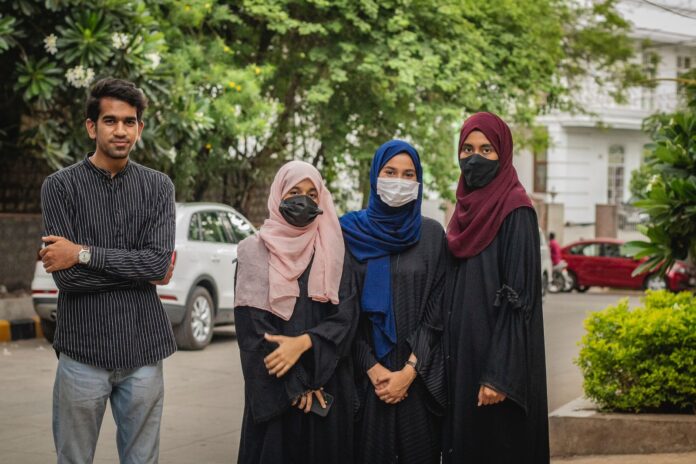
Founders of Dovely

Hyderabad: 

“It was while commuting to college that I began exploring ideas for safe travel for women after personally facing security issues. I researched extensively to find a way for women to commute without harassment and inconveniences,” said Zainab Khatoon, one of the founders of Dovely — India’s only bike taxi service for women, driven by women.

Zainab, along with her friend Masarrat and her siblings Obaidullah Khan and Uzma Khatoon, deliberated extensively and came up with the idea of running taxi bikes for women, where both the passengers and the service providers are women. Together they founded an app (Dovely) to cater to women and girls who want to travel safely in the city.

“‘DOVE’ is a bird, which represents peace and harmony, and ‘LY’ stands for ladies,” shared another founder, Uzma.

They launched the app on June 15, 2022, initially with very few users. However, they now have around 80-100 riders registered, with 20-25 working as full-fledged riders.

Zainab, who heads the company, personally interviews every candidate to ensure they have a valid license and can navigate Hyderabad’s busy streets. Their riding skills are also tested by a team of experts.

“All of the women who are registered with us share the same concern for women’s safety. Besides, they see this as an opportunity to earn income,” explained Zainab.

Most registered bikers are young women aged 18-50. Some are single mothers, seeking to support their families, while others are students — earning pocket money. Their passengers include working women, students and middle-aged women visiting relatives or doctors.

The initial stages were challenging, as many Hyderabad residents were unaccustomed to seeing women bikers, especially those wearing burqa (veil). Some questioned the young bikers why they needed to earn money by becoming drivers when there were other job opportunities. They perhaps overlooked the fact that many girls are passionate about riding.

“Once a woman passenger books a ride with Dovely, she often becomes a regular customer and subscribes to the app,” claimed Zainab.

“Many aunties give us lots of duas (blessings) after we drop them safely at their destination,” she said.
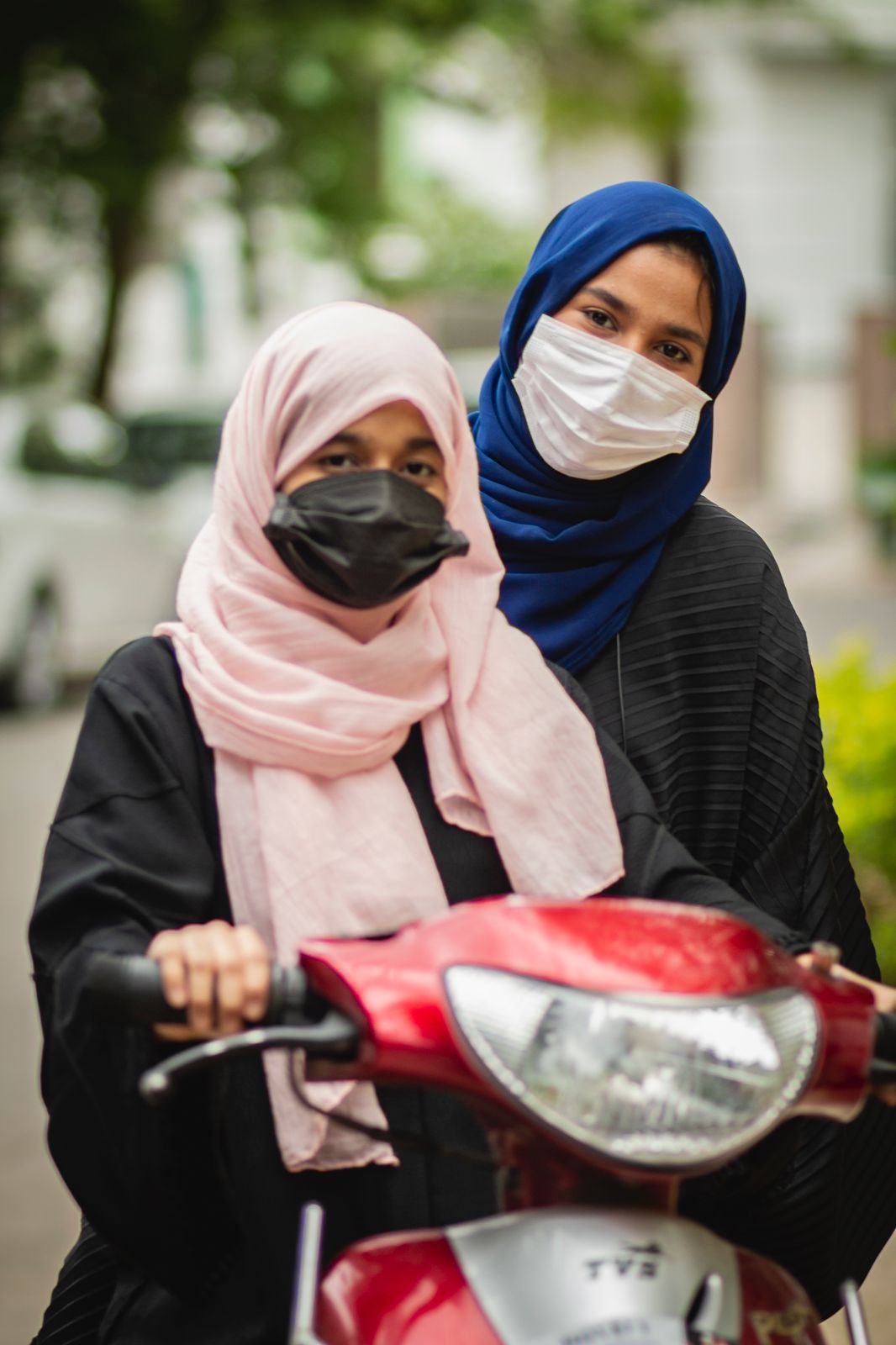
Uzma Khatoon, Zainab’s sister and co-founder of the firm, shared, “I am humbled to be part of many women’s stories and want to help them fulfill their passion through Dovely.”

One young woman, Tasneem (name changed), shared that she tried working with other delivery platforms but quit on the first day because she had to deal mainly with men. She said she feels safe and comfortable working with Dovely.

The founders claimed they get compliments for contributing to a safe commuting experience for ladies. “This feedback from our passengers and partners keeps us going. The feeling that we are empowering women in our own way and ensuring that at least 100 women travel safely every day makes us happy,” said Zainab.

A member of the Dovely team monitors rides, tracking the live location from pick-up to drop-off. However, some women are also unhappy due to the limited number of drivers and busy schedules. The Dovely team hopes to resolve this issue as they recruit more women drivers.

Currently, it provides services through WhatsApp and plans to launch the app on the Play Store after achieving the target of over 200 rides. The app is still being developed, and the four founders are funding their venture — taking baby steps for now.

Dovely operates at ‘zero’ commission, unlike other service providers — who charge drivers. The team feels they have a long way to go.

Currently, services run until 8:30 pm, but they may extend the time if more safety measures are in place for women commuting at night. In the future, they plan to expand to auto-rickshaws and cabs, all managed by women. They also aim to handle transport and logistics led by women.

The Dovely team is driven by the passion to empower women.

source: http://www.twocircles.net / TwoCircles.net / Home> Indian Muslim / by Nikhat Fatima, TwoCircles.net / June 03rd, 2024
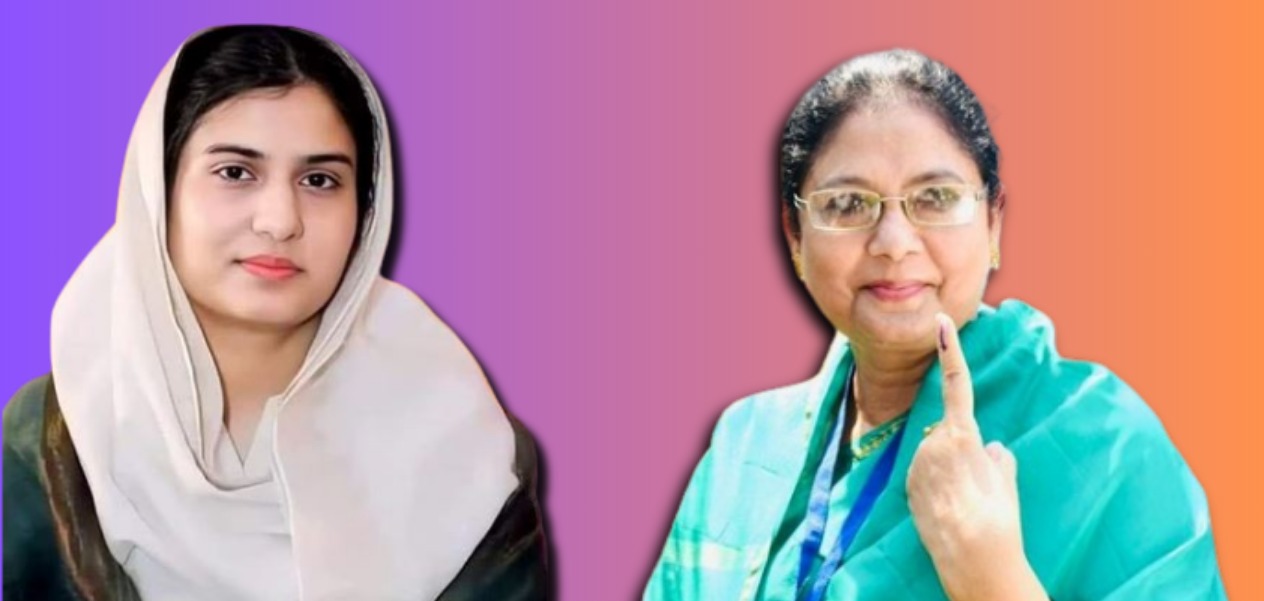
Sajda Ahmed and Iqra Hassan among 24 Muslim elected to Lok Sabha

WEST BENGAL / Kairana, UTTAR PRADESH / INDIA :

Iqra Munawwar Hasan Chaudhary and Sajda Ahmed

New Delhi :

Sajda Ahmed of the Trinamool Congress (TMC) and Iqra Munawwar Hasan Chaudhary of the Samajwadi Party are among the 24 Muslim members who have been elected to the 18th Lok Sabha in the just concluded election.

The entry of 24 Muslims in the Lok Sabha is seen as a positive move towards the participation of India’s second-largest religious community in Parliamentary democracy.

While the 27-year-old year Iqra is a law graduate who won from the Kairana constituency in Western Uttar Pradesh on the ticket of the Samajwadi party Sajda Ahmed is a veteran leader who has won for Lok Sabha election a third time.

Sajda Ahmed has been re-elected from the Uluberia constituency where she secured 694,945 votes and defeated her nearest rival of the BJP Arun Uday Pal Chaudhary.

Iqra, a debutant defeated her nearest rival BJP’s Pradeep Kumar by 69,116 votes in a closely contested election.

Iqra, an alumnus of the Lady Sri Ram College of New Delhi – she also graduated in law from the UK – hails from a political family of Shamli.

The number of Muslims elected to Lok Sabha doesn’t look as low as was feared by the Community. Muslims have been complaining about their diminishing presence in India’s political spectrum.

However, this time political parties had fielded only 78 candidates from the Muslim community as against 115 in the 2019 election.

The most well-known Muslim who successfully contested elections is cricketer Yusuf Pathan. He not only won his maiden political battle as the candidate of the Trinamool Congress (TMC) from the Baharampur constituency of West Bengal, he also turned out to be a giant killer as he defeated Congress veteran Adhir Ranjan Chaudhary.

Muslim leaders like the two former Chief Ministers of Jammu and Kashmir – Mehbooba Mufti and Omar Abdullah – were defeated in their respective constituencies. Omar was defeated by an independent candidate Abdul Rashid Sheikh who is known by his nickname of Engineer Rashid, whose campaign was run in absentia by his two sons.

Engineer Rashid, whose real name is Abdul Rashid Sheikh won the Baramulla seat by securing 4.7 lakh votes against his main rival Omar Abdullah, former Chief Minister and vice-president of the National Conference. He too is a giant killer in this election.

Interestingly, Engineer Rashid’s campaign was carried on by his two sons as he has been in Delhi’s Tihar Jail for five years facing trial for his alleged involvement in supporting terrorists in Kashmir.

In Jammu and Kashmir’s Anantnag-Rajouri seat, National Conference’s Mian Altaf Ahmed defeated Mehbooba Mufti by 2,81,794 votes, and in the Srinagar constituency, NC candidate Aga Syed Ruhullah Mehndi got 3,56,866 votes against PDP’s Wahid Para.

From Ladakh, Independent candidate Mohammad Hanifa won by a margin of 27,862 votes.

In Uttar Pradesh, Samajwadi Party’s Maulana Mohibullah fought the election for the first time and he won on the ticket of the Samajwadi Party from the Rampur seat by securing 4,81,503 votes.

Ziaur Rahman of the Samajwadi Party from Uttar Pradesh has been elected from the Sambhal constituency.

Afzal Ansari has won from the Ghazipur on the ticket of the Samajwadi party. He is the brother of the gangster Mukhtar Ansari who died while serving a sentence for murder in the jail.

Imran Masood of Congress won against his BJP rival Raghav Lakhanpal from Saharanpur.

From Hyderabad (Telangana) Asaduddin Owaisi of the All India Majlis-e-Ittehadul Muslimeen(AIMIM) won against BJP’s K. Madhavi Latha. He has won the Lok Sabha election for the fifth time.

In the 16th Lok Sabha, there were only 22 Muslim Members while the highest number of Muslims elected to the lower house – 49 – was in 1980 and most of them were from Congress. In the last General election 115 Muslim contested while only 22 won.

As against this, in the 2024 elections, only 78 Muslim candidates were fielded and 24 of them won.

West Bengal has elected the highest number of Muslim MPs in the just concluded elections. They are: Khalilur Rahaman,  Jangipur, Yusuf Pathan,  Baharampur, Abu Taher Khan, Murshidabad, S K Nurul, (Basirhat), Sajda Ahmed, (Uluberia), Isha Khan Choudhary, (Maldaha Dakshin).

Bihar: Muhammad Javed Kishanganj and Tariq Anwar Katihar (Congress)

Assam: Raqib Hussain Dhubri

Kerala: Shafi Parambil (Vadakara), ET Muhammad Basheer (Malappuram) and Dr. MP Abdul Samad Samdani (Ponnani)

Lakshdeep: Muhammad Hamdullah Saeed

Tamil Nadu: Nivas Kinis Ramanathapuram

source: http://www.awazthevoice.in / Awaz, The Voice / Home> Story / posted by Aasha Kosa / June 05th, 2024

Sofia Firdous of Congress, becomes first ever Muslim woman MLA in Odisha

Cuttack, ODISHA :

Following her victory from the Cuttack seat, Congress candidate Sofia Firdous has become the first Muslim woman MLA in the history of Odisha since Independence.

Sofia Firdous won the Barabati-Cuttack seat with a margin of 8001 after a neck-to-neck contest with BJP’s Purna Chandra Mahapatra. Firdous replaced her father and sitting MLA Mohammed Moquim from the seat.

In the Lok Sabha elections across the country, at least 15 Muslim candidates successfully secured seats in the lower house. The list includes TMC nominee and former India cricketer Yusuf Pathan who secured a comfortable victory over Adhir Ranjan Chowdhury in the Congress veteran’s Baharampur bastion. ( With Agencies Inputs )

source: http://www.muslimmirror.com / Muslim Mirror / Home> Indian Muslim> Politics> Women / by Muslim Mirror Staff / June 06th, 2024

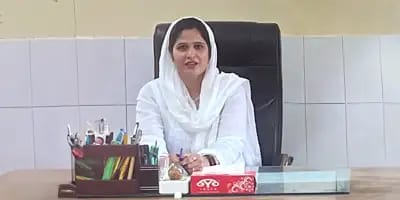
Jamia Middle School’s Headmistress Nusrat Jahan Awarded ‘Best District Principal for Promoting STEM Excellence’ by Academic Council of the Science Olympiad Foundation (SOF)

NEW DELHI :

Nusrat Jahan, the headmistress of Jamia Middle School at Jamia Millia Islamia (JMI), has been honored with the Best District Principal Award for the academic session 2023-24 by the Academic Council of the Science Olympiad Foundation (SOF).

This prestigious award recognizes her exemplary leadership, commitment to academic excellence, and innovative initiatives that have significantly enhanced scientific and mathematical aptitude among her students.

Under Jahan’s leadership, Jamia Middle School saw remarkable achievements, with 72 students earning Gold medals in the Olympiad during the 2023-2024 academic year.

The Science Olympiad Foundation, known for its dedication to promoting STEM education globally, acknowledged Jahan’s transformative initiatives and their positive impact on both students and faculty.

The award comes after a rigorous selection process, considering 79,400 schools from over 1,400 cities across 70 countries that participated in this year’s Olympiad examination. Jahan attributed this success to the collaborative efforts of the school’s dedicated teaching staff and the hard work of the students.

Prof Mohammad Shakeel, the officiating vice-chancellor of JMI, congratulated Jahan on her outstanding achievement and praised her relentless dedication to student success and school improvement. Jahan’s deep knowledge, leadership skills, and pleasant personality have been pivotal in driving the school’s achievements and earning this distinguished award.

source: http://www.radiancenews.com / Radiance News / Home> Pride of the Nation / by Radiance News Bureau (headline edited) / June 08th, 2024

Hardik Singh, Salima Tete conferred with Hockey India Player of the Year awards

JHARKHAND :

Hockey legend Ashok Kumar was accorded the Major Dhyan Chand Lifetime Achievement Award for his contribution to the sport.

Delhi:

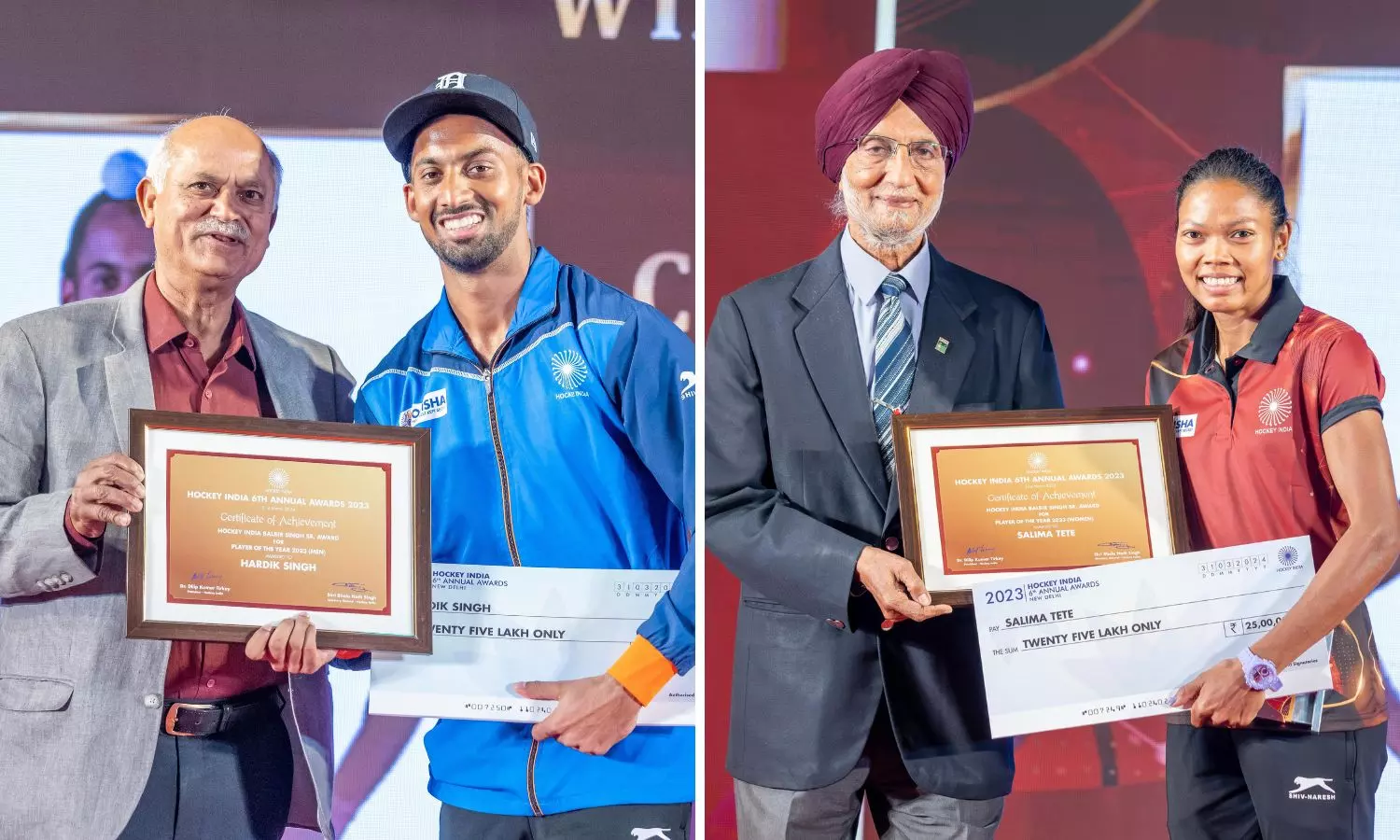
Hardik Singh and Salima Tete were named men’s and women’s players of the year at the 6th Hockey India Annual Awards in New Delhi on Sunday.

This year, the total award prize pool was INR 7.56 crores.

Surprisingly, the 2016 Junior World Cup gold medal-winning Indian men’s team was felicitated, with each player earning a cash prize of INR 5 Lakh along with a trophy.

The 2023 Junior Asia Cup gold medal-winning Indian men’s and women’s teams were also honoured, with each player earning a cash prize of INR 2 Lakh and all the members of the support staff earning a cash prize of INR 1 Lakh each.

Other gold medal-winning teams of men’s Hockey 5s Asia Cup, women’s Hockey 5s Asia Cup, men’s Asian Champions Trophy, and women’s Asian Champions Trophy were also felicitated along with the men’s team that won gold at the Asian Games and women’s team that won bronze.

Meanwhile, Hockey Haryana won the Best Member Unit of the Year Award 2023, earning a prize of INR 2.5 Lakh.

The award ceremony saw PR Sreejesh winning the prestigious Hockey India Baljit Singh Award for Goalkeeper of the Year, earning a cash prize of INR 5 Lakh along with a trophy.

For his consistent performances throughout the year, Harmanpreet Singh won the Hockey India Pargat Singh Award for Defender of the Year, earning himself a cash prize of INR 5 Lakh along with a trophy.

Hockey India Ajit Pal Singh Award for Midfielder of the Year was won by Hardik Singh, while Abhishek won the prestigious Hockey India Dhanraj Pillay Award for Forward of the Year, both earning themselves INR 5 Lakh and a trophy each.

The next generation was also honoured with youngster Deepika Soreng winning the Hockey India Asunta Lakra Award for Upcoming Player of the Year (Women – Under 21) earning a cash prize of INR 10 Lakh and a trophy.

Araijeet Singh Hundal was named the Hockey India Jugraj Singh Award for Upcoming Player of the Year (Men – Under 21), winning a cash prize of INR 10 Lakh and a trophy.

Hardik Singh, and Salima Tete, won the Hockey India Balbir Singh Sr. Award for Player of The Year Awards for men and women respectively, each earning a cash prize of INR 25 Lakh along with a trophy.

“It is a matter of great pride for me to win the prestigious award. This is truly reflective of the hard work and the commitment that our team displayed over the past year. I am thankful to everyone for their support and I will continue to work even harder in the coming year to justify the honour,” said Hardik Singh after winning the award.

Meanwhile, Salima Tete, on her win, said, “I wish to thank my teammates, coaches, and the support staff for showcasing their faith in me. It is a matter of great pride for me every time I get to wear the Indian jersey and step out on the field to represent the nation. This award will further motivate me to continue to do even better each day so I can continue to make the country proud.”

The ceremony closed with Hockey India celebrating the achievements of Ashok Kumar, honouring the Indian legend with the prestigious Hockey India Major Dhyan Chand Lifetime Achievement Award with a cash prize of INR 30 Lakh and a trophy.

Award winners at 6th Hockey India Annual Awards

Rs 5 Lakh each: PR Sreejesh (Goalkeeper of the Year), Harmanpreet Singh (Defender of the Year), Hardik Singh (Midfielder of the Year), Abhishek (Forward of the Year)

Rs 10 lakh each: Deepika Soreng (Women Under-21 Player of the Year), Araijeet Singh Hundal (Men Under-21 Player of the Year) Rs. 25 lakh each:

Salima Tete (Player of The Year Women), Hardik Singh ( Player of The Year Men) Rs 30 lakh: Ashok Kumar (Major Dhyan Chand Lifetime Achievement Award).

source: http://www.thebridge.in / The Bridge / Home> Hockey / by The Bridge Bureau / April 02nd, 2024

Salima Tete: From winning chickens and goats to becoming AHF Athletes Ambassador

JHARKHAND :

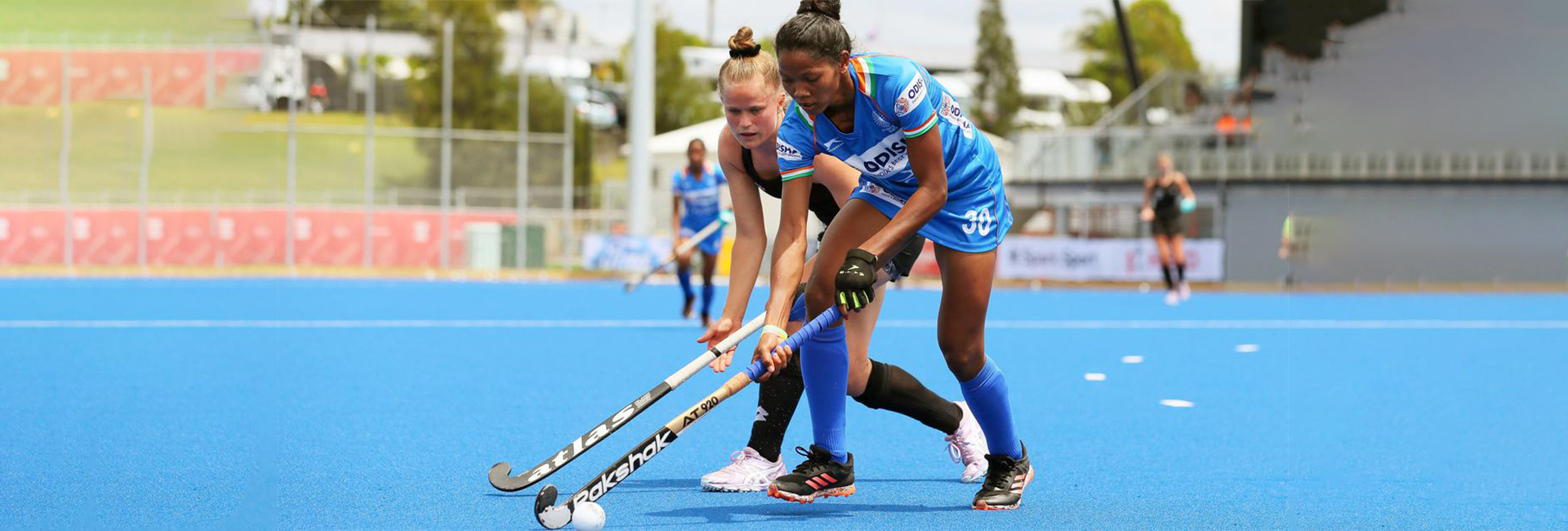
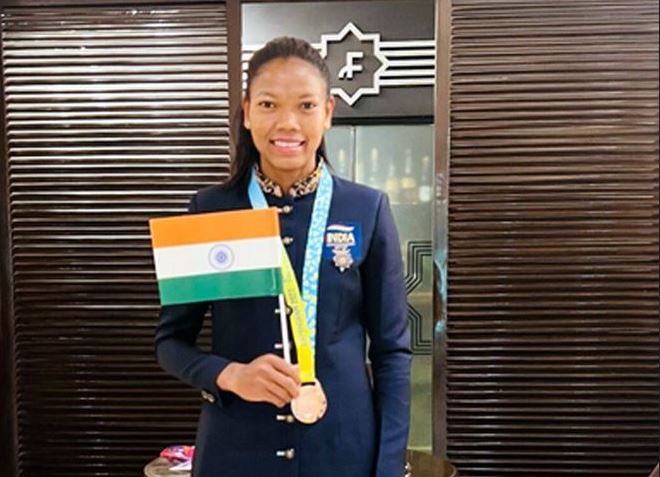
The girl who started playing hockey with bamboo sticks in the village grounds, travelled over 20-kilometres on her bicycle for matches, and won goats and chickens in village tournaments, has come a long way. Today, Salima Tete is an international hockey player, who was recently appointed by the Asian Hockey Federation (AHF) as its Athletes Ambassador from India. 

 The player has begun her two-year term along with three other players from Asia. 

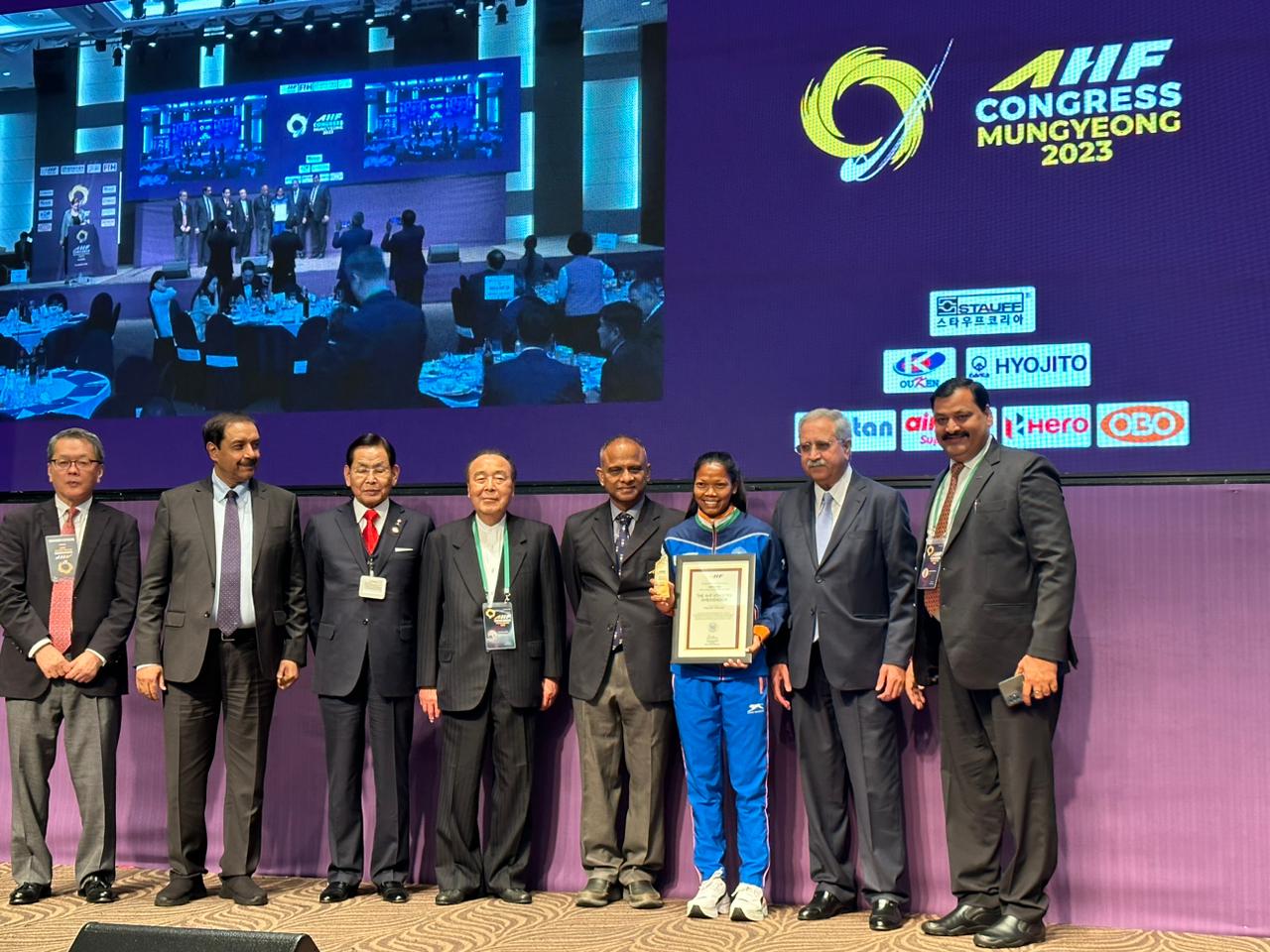
“I am honoured to be selected as one of the AHF ambassadors. As athletes from Asia, we face a lot of challenges in our careers. This position will allow me to bring our voices to the front,” Salima said during the AGM of AHF in Korea. “I hope to make a positive impact on the lives of athletes from the Asia region with this position,” she added. 

Salima Tete

Over the last several years, Salima has been an integral part of the Indian hockey team. She was named the ‘Rising Player of the Tournament’ at the Women’s Asia Cup tournament held in Muscat last year.

From rural Jharkhand to international hockey turfs 

The journey of the twenty-one-year-old hockey player from a nondescript village of Simdega district in Jharkhand is nothing short of an inspiration.  

Born to Sulakshan and Subani Tete, Salima and her five siblings grew up in extreme poverty amidst abundant love. It wasn’t just her family – the village was poverty-ridden, not a single home could afford a television set.  

Her farmer father ferried the aspirant hockey player for matches as far as 20 kilometres from their village on his bicycle. The awards at these local tournaments were chicken and goats – the only items that the local organisers could arrange to give away as prizes. It was on occasions like these that the Tete family would devour a non-vegetarian meal. On other days the meals were as simple as could be. 

Since there was no television or internet in their village, no one in the locality could watch Salima play her first major match. It was much later that her family started watching her play at national and international stadiums. By then, the midfielder was scaling her own mountains, and had made India proud on several occasions.  

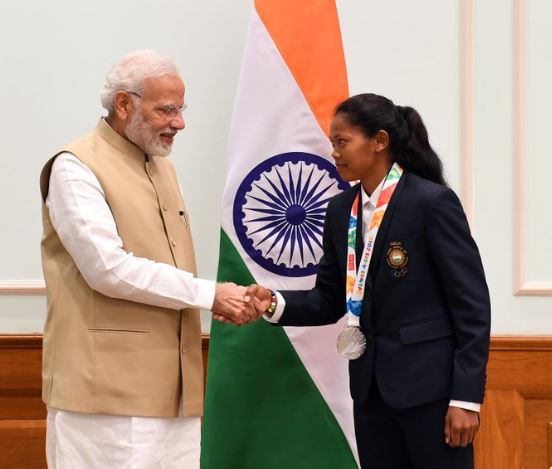
Salima Tete with PM Modi

In 2020, when Salima got the opportunity to play at the Tokyo Olympics, her village came into spotlight and better training facilities got introduced for the youth there. Her younger sister, Mahima, who had also been exposed to the sport thanks to her sister, began playing it too. Like Salima, Mahima is a national hockey player as well.  

“Before the Tokyo Olympics, no one knew about our village and after I came back, the focus on our native place increased a lot. We have people visiting us from different places. People recognising the village I come from is really heart-warming,” Salima said in an interview. “Even my family feel very good when people come to visit. The whole atmosphere has changed and it makes me very happy,” she added. 

The following year, in 2021 when Salima led the Indian women’s junior hockey team to a fourth-place finish at the Women’s Junior World Cup in Potchefstroom, South Africa she climbed the popularity charts further. 

Surging ahead as an ambassador 

After her appointment as AHF Athletes Ambassador, Salima remarked, “I sincerely thank the Asian Hockey Federation for showcasing their faith in me and also express my gratitude to Hockey India for their constant support in all my endeavours.” 

Salima Tete during the AHF AGM

In her two-year term (2023-25), Salima will be in a leadership role, facilitating the growth and international representation of athletes from Asia. She will also be working to promote awareness about athletes’ welfare and rights. 

 “Playing for India has really changed my life a lot, it has given me everything I could have asked for. I just want to keep performing for the country and winning more matches,” Salima had said in an interview. India is all praise for athletes like her for bringing laurels to the country. 

source: http://www.globalindian.com / Global Indian / Home> Story> Global Indian Exclusive / Compiled by Amrita Priya / March 31st, 2023

Bilkis Bano, old Congress hand and Siddaramaiah pick

Shivamogga , KARNATAKA :

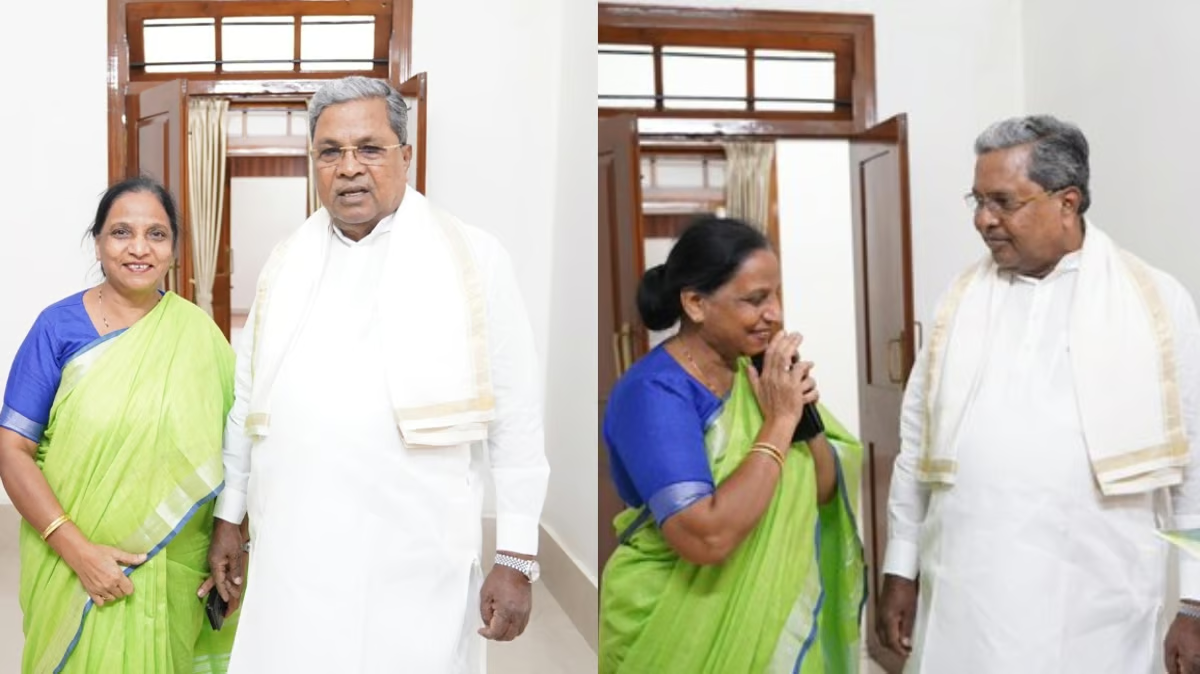
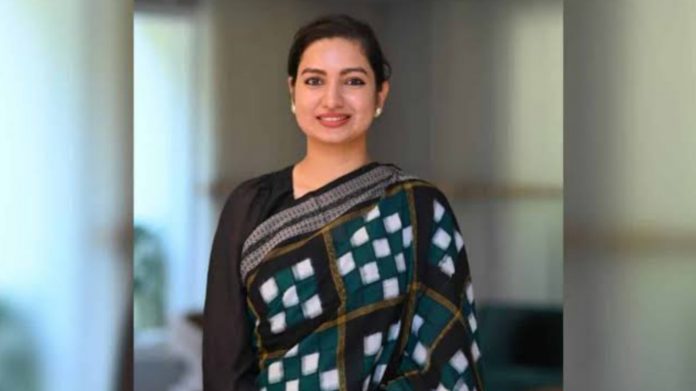
For the uninitiated, Bilkis Bano has no connection to Gujarat. She is a KPCC general secretary from Bhadravathi in Shivamogga, who once used to work closely with the Janata Parivar and has known Chief Minister Siddaramaiah from those days.

Bilkis Bano is KPCC general secretary from Bhadravathi in Shivamogga. Photo | X

Bengaluru :

With a certain Bilkis Bano figuring in the list of Congress nominees, the question on everyone’s mind is: Who on earth is she?

For the uninitiated, Bilkis Bano has no connection to Gujarat. She is a KPCC general secretary from Bhadravathi in Shivamogga, who once used to work closely with the Janata Parivar and has known Chief Minister Siddaramaiah from those days.

Sources said she is Siddaramaiah’s candidate while his’s son Yathindra, who sacrificed his Varuna seat for his father, is the high command nominee.

Other Siddaramaiah MLC nominees are minister NS Boseraju and K Govindraj. Vasanth Kumar and Basanagouda Badarli are AICC president Mallikarjun Kharge’s candidates while Ivan D’souza is said to be Krishna Byre Gowda’s man although he is said to be close to Siddaramaiah too.

It was a surprise that Deputy CM DK Shivakumar’s two nominees, Vijay Mulgund, who was also raided due to his closeness to the KPCC chief, and Vinay Karthik, who is an office bearer in the KPCC, did not make it to the final list.

The 10 Congress MLAs necessary for nomination of Bilkis Bano signed on her nomination and the proposer and seconders will be on Monday.

Sources said Bilkis Bano is respected as a loyal party worker. She is quite close to Bhadravathi MLA Sangamesh for whom she campaigned vigorously and personally led the canvassing in 2023. She has served formerly as the chairman of the Minorities Development Corporation during the previous tenure of Siddaramaiah as CM for about 18 months.

When TNIE tried to reach her on Sunday evening, all three of her numbers were either switched off or not reachable.

source: http://www.newindianexpress.com / The New Indian Express / Home> Karnataka / by Bansy Kalappa / June 03rd, 2024

Melkar Women’s PU College, bags MEIF’s ‘Excellence Award’

Bantwal (Mangaluru), KARNATAKA :

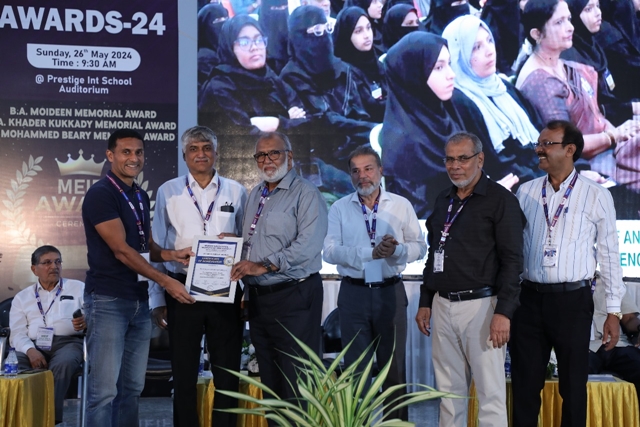
Melkar Women’s PU College, Marnabail, has been awarded with ‘Excellence Award’ by Muslim Educational Institutions Federation (MEIF) for achieving cent percent results in 2nd PUC in science, commerce and arts for the academic year 2024.

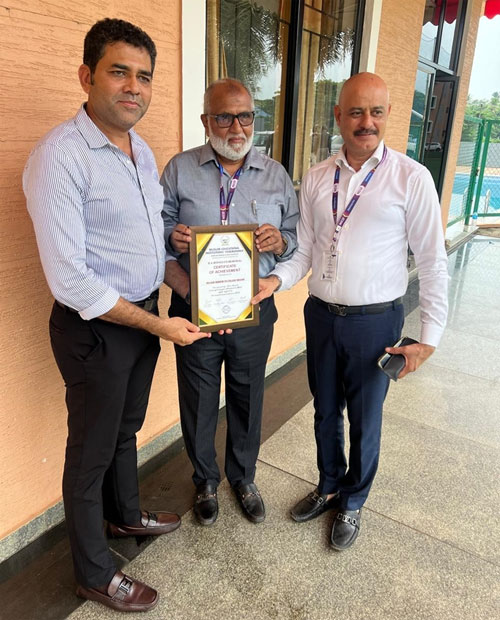
S M Rashid Hanji, chairman of Mangaluru Education Enhancement Trust (MEET) received the award on behalf of the management committee of the college during the recent MEIF annual conference held in Mangaluru.

Mohammed Farhaad, pro chancellor of Yenepoya University; Nisar Ahmed, chancellor of Presidency University; Syed Mohammad Beary, chairman of Bearys Group of Institution; Musabba Beary, chairman of MEIF; Iqbal Ahmed, Umar Teekay and others were present.

source: http://www.daijiworld.com / Daiji World / Home> Karnataka / by Daijiworld Media Network – Bantwal (VP) / June 03rd, 2024

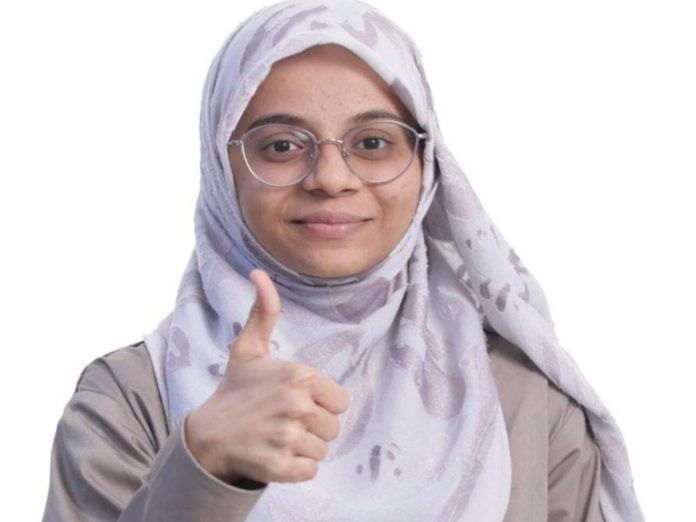
Amina Arif Kadiwala, an urdu medium student from Mumbai bags AIR 1 in NEET UG 2024

Mumbai, MAHARASHTRA :

Amina Arif Kadiwala

Amina Arif Kadiwala, an Urdu medium student, has achieved an extraordinary feat by securing the first position in the All India NEET UG 2024 examination. Hailing from Madni High School in Jogeshwari, Mumbai, Amina outshone approximately 25 lakh students across India to claim the top spot. Her success is particularly remarkable given the competitive nature of the exam and the high level of preparation required.

Amina’s journey to the pinnacle of NEET UG 2024 is a testament to her dedication, hard work, and perseverance. As an SSC student from an Urdu medium background, she faced numerous challenges but remained steadfast in her pursuit of excellence. Her achievement has not only brought pride to her family and school but also serves as an inspiration to countless other students from similar backgrounds.

Madni High School, known for its commitment to providing quality education, played a significant role in nurturing Amina’s talent. The school’s supportive environment and dedicated teachers provided her with the guidance and resources needed to excel in her studies. Amina’s accomplishment underscores the importance of providing equal educational opportunities to students from all linguistic and socio-economic backgrounds.

Aspiring to study MBBS, Kadiwala has studied till class 10 in Urdu and then took admission into SVKM’s Mithibai College. She completed her schooling at Madni High School, Jogeshwari.

She revealed that initially, it was a challenge for her as she was weak in English, but slowly she learned the language and aced the exam

Amina’s success story has garnered widespread acclaim and admiration. Her exceptional performance in the NEET UG 2024 has opened doors to some of the best medical colleges in the country, paving the way for a promising career in medicine. As she embarks on this new journey, Amina is determined to continue working hard and making a positive impact in the field of healthcare.

In an era where the importance of education cannot be overstated, Amina Arif Kadiwala’s achievement stands as a beacon of hope and motivation for aspiring students across India, demonstrating that with determination and hard work, any obstacle can be overcome.

source: http://www.muslimmirror.com / Muslim Mirror / Home> Indian Muslim> Positive Story / by Muslim Mirror Staff / June 05th, 2024

Rummana Hussain and the ghost of female Muslim heroes

Bengaluru, KARNATAKA / New York, U.S.A / Mumbai, MAHARASHTRA :

Rummana Hussain’s conceptual artistic imprint on the state of India is relevant now more than ever. Dealing in the currency of feminist expression, postcolonial thought and perennial ideas, Rummana’s India is both doubly colourful and doubly dark.

In an inaugural show in its new West Village location, New York’s Institute of Arab and Islamic Art presents The Tomb of Begum Hazrat Mahal an exhibition encapsulating Rummana Hussain’s artistic ruminations about the space our bodies occupy in present and past through one of India’s most prominent Muslim woman.

Bangalore-born Rummana Hussain (1952-1999) was a pioneer in conceptual and performance-based political art in India during the 1980s and 1990s.

She was part of the Sahmat collective, a platform for liberal, secular engagés multidisciplinary artists including Safdar Hashmi, Bharti Kher, and Manjeet Bawa among others.

In this recreation of The Tomb of Begum Hazrat Mahal (1997), the respectful visitor enters a one-room shrine.

“In seeing The Tomb of Begum Hazrat Mahal today, I remembered Hussain’s bold feminist reclamation of her Muslim body through the reincarnated aura of Begum Hazrat Mahal to question monolithic identity, national narratives, and systemic marginalisation”

Various objects signify a site of lamentation, pride, and remembrance.

On the floor, occupying a central location, 12 votive-like papaya halves sit atop a mattress of uncooked rice, evoking both an altar to womanhood and fertility, and a symbolic funerary pyre.

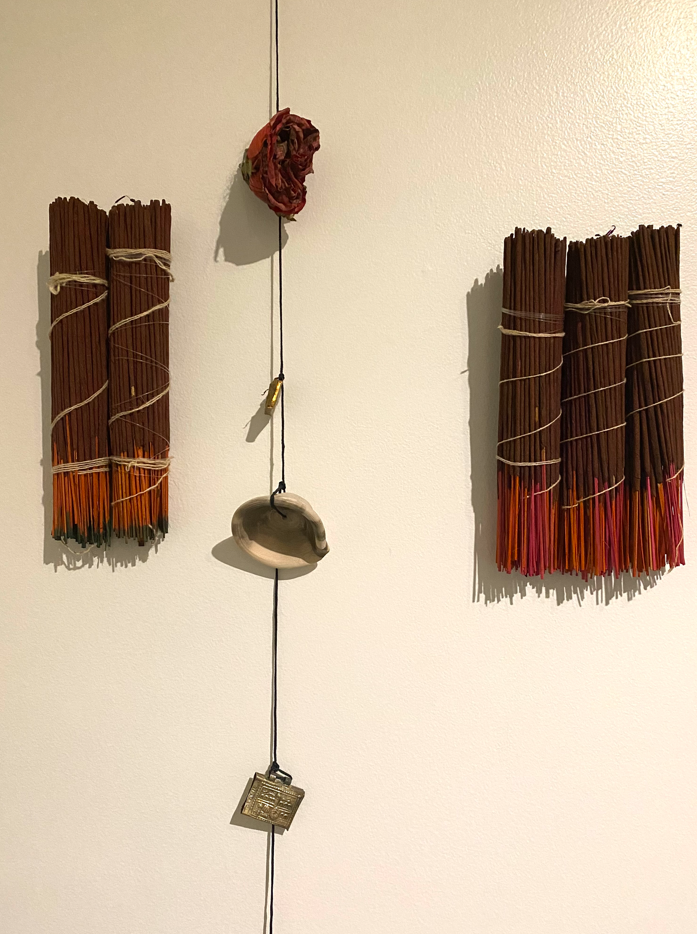
In front of them stands an installation of offerings comprising amulets, dried roses, shells, and incense sticks, tied in a rope.  

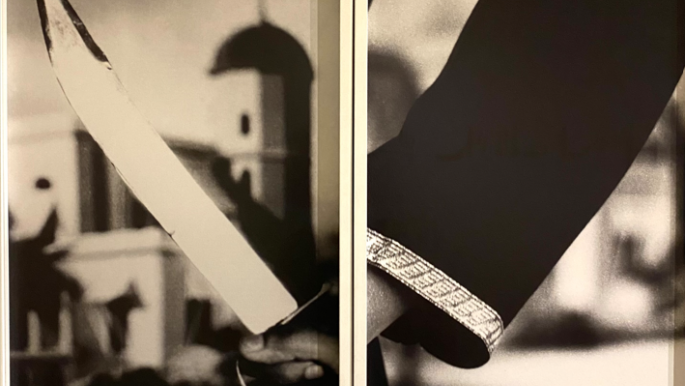
Against the three other walls is a calligraphic sculpture from rusty metal that reminds of a sacred spell and the embodiment of time, and an image frieze of detailed black and white triumphant photographs showing a woman’s arms, wrists, and hands.

In one of these frames, a woman raises her fist up as if calling others to join in. In another, she holds an ominous knife. Images of flames are interjected between the simulacra of archives.

Rummana Hussain, Tomb of Begum Hazrat Mahal (Detail) 1997 © Estate of Rummana Hussain. Image Courtesy Talwar Gallery

The room is devoted to a woman, an invisible physical body which radiates from each of the static objects. Begum Hazrat Mahal (1820-1879), née Muhammadi Khanum, was born into a poor family.

She was sold and entered the royal harem of art-loving Wajid Ali Shah, the last king of Awadh, a kingdom that occupied the area of the present-day northern Indian state of Uttar Pradesh. Trained as a harem attendant, she would eventually rise to become the king’s concubine – one of his favourites. Beyond her charms, Begum Hazrat Mahal owes her entrance on the historical stage foremost to her political prowess and courage.

The British-owned East India Company operated in Awadh since the early 19th century. The Company increased its grip in 1856, when it directly seized control of Awadh, citing poor governance and the need to uphold the rule of law to justify their annexation (an excuse known as the “Doctrine of Lapse”).

A Chief Commissioner was rapidly appointed. This caused the king to leave Lucknow and seek refuge in Calcutta. The Queen Mother of Awadh petitioned Queen Victoria in person for her son’s rights, in vain. Wives, including Begum Hazrat Mahal were left behind in occupied Lucknow.

Rummana Hussain, Tomb of Begum Hazrat Mahal (Detail) 1997 © Estate of Rummana Hussain. Image Courtesy Talwar Gallery

After this brutal annexation, discontent grew in several parts of India against the British and the interference of the Company, culminating in a mutiny and revolt in May 1857. Rebels looked to Awadh’s Crown Prince as a successor to his absent father when they captured Lucknow.

But Birjis Qadr, the son of Begum Hazrat Mahal and Wajid Ali Shah, was still a child then, too young to assume power. In his stead, Begum Hazrat Mahal took over Awadh’s revolutionary affairs, actively leading the armed revolt during her regency, towards the reinstatement of Indian rule over Awadh in July 1857.

She continued resisting British rule well after the retaking of Awadh by the occupying troops in 1858, as she refused various offers of collaboration. She died in exile in Kathmandu, Nepal, as an unwavering freedom fighter. Today, a humble stele near Kathmandu’s Jama Masjid marks her tomb.

Rummana Hussain, Living on the Margins, 1995, performance at the National Centre for Performing Arts, Mumbai

When Rummana Hussain first showed The Tomb of Begum Hazrat Mahal to the public in 1997, it was during a period marked by the tragic aftermath of inter-communal violence.

During the 1980s, radical Hindu nationalists campaigned to build a temple on the site believed to be the birthplace of Rama, where a mosque had been erected since the 16th century.

They took to the streets of Ayodhya, Uttar Pradesh, en masse in 1992. Security lost control of the crowd which eventually stormed into the site, demolishing the mosque.

This ignited weeks of violent clashes between Hindu and Muslim communities, causing the deaths of thousands. A later investigation on the destruction of Babri Masjid in Ayodhya pointed out the responsibility of leaders and supporters of the right-wing Bharatiya Janata Party (BJP), the political party of India’s incumbent Prime Minister, Narendra Modi.

Babri Masjid launched a turning point in Hussain’s artistic journey towards a more intimate, politically-conscious form of expression. In Dissected Projection (1993), she explored the multilayered meaning of ruins and dislocation through an allegorical work that exposes a fracture, a shattered piece of terracotta.

In her show Multiples and Fragments (1994), Hussain engaged with historical and domestic oppression in an installation of pigmented pieces of fabric on a clothesline, to denounce the colonial extraction of indigo in India and unpaid housework traditionally performed by women and girls. Labour is always physical and violence first hurts the most vulnerable.

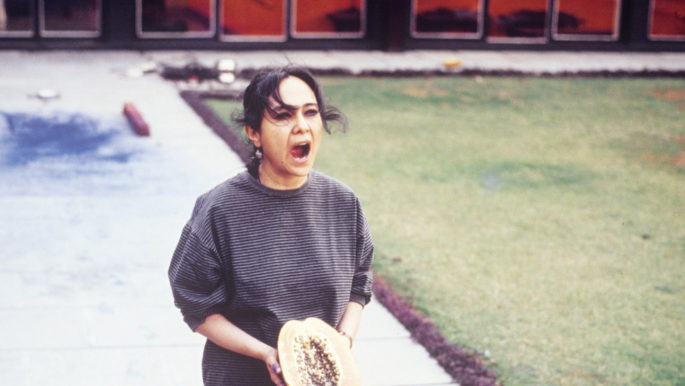
In her 1995 performance Living on the Margins, Hussain screamed while holding papaya halves, shapes that represent a universal vessel and the female anatomy.

Her works have been exhibited in the India Pavilion of the Venice Biennale in 2019, and in multiple institutions across India, Canada, Australia, Mexico, the United Kingdom and the United States during her lifetime and posthumously.

In seeing The Tomb of Begum Hazrat Mahal today, I remembered Hussain’s bold feminist reclamation of her Muslim body through the reincarnated aura of Begum Hazrat Mahal to question monolithic identity, national narratives, and systemic marginalisation. She wanted to say, we can turn the hate in love, we can turn the oppressed, the victims, into heroes they will one day celebrate. We can tell our own stories. They matter.

Outside, scores of brunch-goers live, love, laugh. If it’s dissonance we are meant to acknowledge, I acknowledge it. I closed my eyes in the silent white cube of the Institute of Arab and Islamic Art and saw images of the relentless violence and bullying Muslim women continue to face in Narendra Modi’s India.

In this reconstituted tomb, it’s hard to feel alone. Around me swarmed many other ghosts, of ordinary Muslim women – from Afghanistan to Iran and beyond – crushed and slain in their contemporary defence of freedom and justice against oppressors. Many have been killed in their fight.

A shrine calls for a quiet prayer, I realised.

Farah Abdessamad is a New York City-based essayist/critic, from France and Tunisia.

Follow her on Twitter: @farahstlouis

source: http://www.newarab.com / The New Arab / Home> Features>Culture / by Farah Abdessamad / December 08th, 2022