Category Archives: World Opinion

Assam’s Dr. Mustafa A. Barbhuiya among top 20 heroes of Pathology in US

Hailakandi District, ASSAM / Massachusetts, U.S.A :

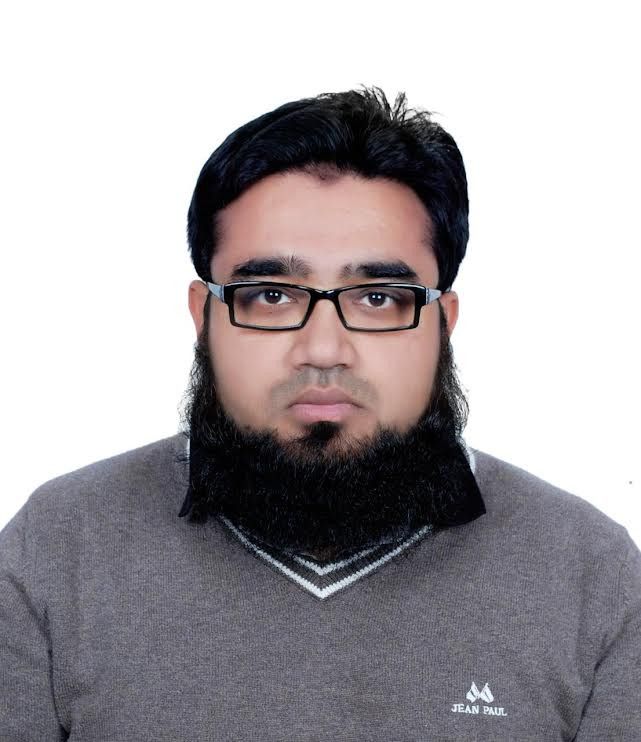
Dr. Mustafa A. Barbhuiya at his workplace in the US

Hailing from a remote village in southern Assam’s Hailakandi district, Dr. Mustafa A. Barbhuiya has been selected among top 100 most influential people in Pathology, specifically, as one of the Top 20 Heroes of Pathology in US for this year.

Featured in ‘The Pathologist Power List’ 2024, Dr Mustafa has demonstrated innovation, leadership, and achievement in the field of Pathology. But the journey of Dr Mustafa to achieve this coveted position was not so easy.

Dr Barbhuiya completed his elementary schooling (HSLC/10th) in Sanuhar Ali Memorial High School, Bahadurpur, a remote village in Hailakandi district of southern Assam. During those days in the early nineties, his village neither had electricity nor had motorable road communication.

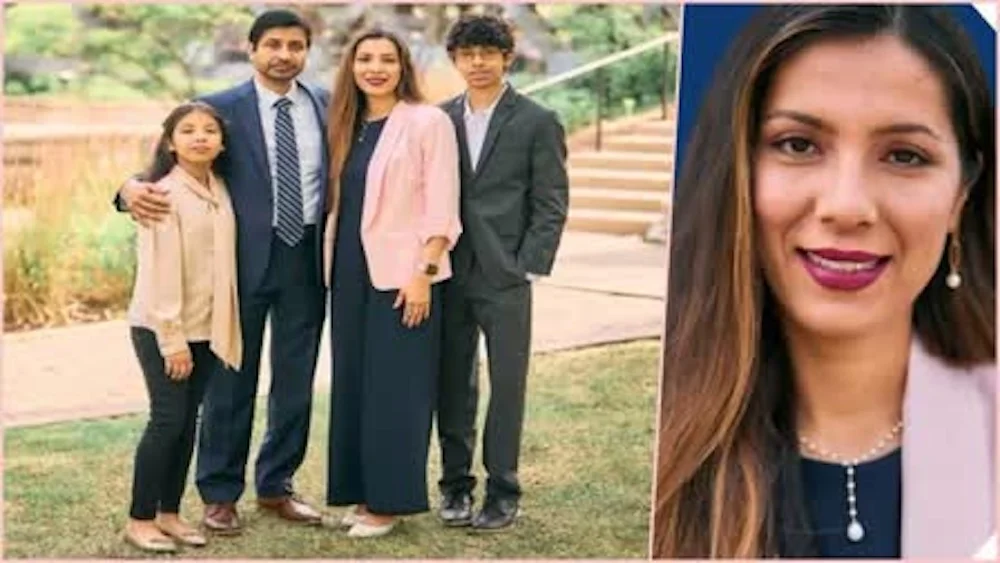
Dr Barbhuiya Mustafa with his family

“I used to cycle from my village on muddy roads to attend Advanced Mathematics and Science classes in Hailakandi town. I went to Gurucharan College, Silchar, Assam for 12th and Bachelor of Science with a major in Zoology and pass course in Botany, Chemistry and other science and language electives,” Dr Barbhuiya told Awaz – The Voice.

He studied further in Jiwaji University, Gwalior for Masters and PhD in Biochemistry which paved his way to become a Clinical Biochemist and a Molecular Biologist.

“I will remain ever grateful to two of my teachers who helped me to become what I am today. One is Prof. Baby Singha (Retired) of Department of Zoology, Gurucharan College, Silchar with whom I have specialized in the subject of Parasitology and I have never looked back. The other teacher who actually got me into Clinical Biochemistry was Late Prof. Meenu Rai, former Head of Biochemistry, College of Life Sciences, Cancer Hospital and Research Institute, Gwalior, Madhya Pradesh.

“My PhD guide Prof. Pramod K. Tiwari shaped me as the future molecular biologist with whom I have not only learnt about science of medicine, study of diseases but several life lessons that I continue to carry as of today,” Dr Barbhuiya said.  

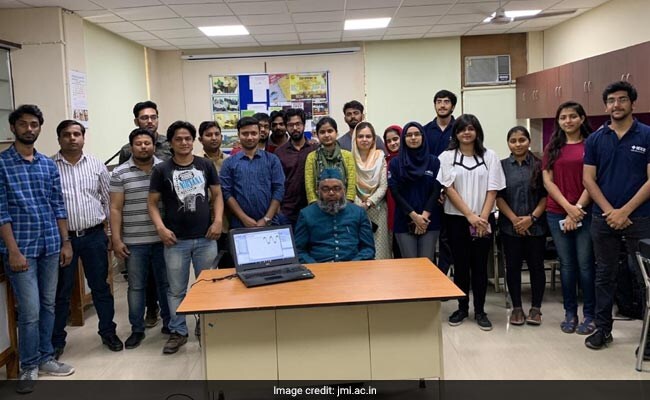
Dr Barbhuiya with his collegaues

Dr Barbhuiya completed his PhD in Biochemistry Jiwaji University, Gwalior, Madhya Pradesh in July, 2013. He went to Johns Hopkins School of Medicine, Baltimore, Maryland, USA in July 2013 to pursue advanced postdoctoral training.

“The ultimate goal was to return to India and set up my own laboratory around clinical biochemistry and molecular diagnostics in my home state Assam. But the circumstances after completion of my postdoctoral training in Johns Hopkins and lack of securing a suitable job back in India compelled me to pursue things in the United States. I further completed my clinical chemistry fellowship in Penn State College of Medicine, Hershey, Pennsylvania, USA and have become a practicing clinical biochemist and clinical laboratory director,” he said.

Dr Barbhuiya currently holds the position of section medical director overseeing the Clinical Chemistry and Point of Care Testing operations of Baystate Health Pathology services across Western Massachusetts, USA.  He provides clinical consultation to physicians and other healthcare providers regarding the laboratory test interpretations in the subspecialty area as systems consultant. 

Dr Barbhuiya with other renowned pathologists

He ensures that the clinical laboratory meets several US federal and local state regulations delivering timely and accurate diagnosis for patients. He is accountable for the effective management and administrations of clinical operations of the Clinical Chemistry and Point of Care Testing service within the Baystate Health Pathology operations. He also serves as Assistant Professor of Pathology; Healthcare Delivery and Population Sciences, UMass Chan Medical School- Baystate Regional Campus.

Dr Barbhuiya has set up a global non-profit organization, Foundation for Advancement of Essential Diagnostics, both in the USA and India. “My next goal is to take my non-profit foundation activities to low and middle-income countries around the world and locally serve in underserved areas of the United States,” he added.

Academically, Dr Barbhuiya is making efforts to continue his research areas of interest. His primary areas of research are studying biliary tract (liver and gallbladder) cancer mechanisms, discover biomarkers of diagnostic and therapeutic values.

source: http://www.awazthevoice.in / Awaz, The Voice / Home> Story / by Daulat Rahman, Guwahati / October 27th, 2024

Retired OFT machinist, son design and acquire patent for device to remove oil slick

 Chathiramanai village (Perambalur district) /Tiruchi, TAMIL NADU :

A. Basheer Khan, right, and his son Mohamed Imran, of Tiruchi demonstrate the oil spill filtration device that they have designed and obtained a patent. / | Photo Credit: SPECIAL ARRANGEMENT

A. Basheer Khan, 62, and his son B. Mohamed Imran, 28, of Tiruchi recently received a patent for a device that they designed to remove oil spill from seawater through filtration along coastal areas.

The recognition was given on September 24 by the Patent Office and is valid for 20 years from the date of filing.

“At present, the technology to deal with oil spill on land is limited. Our device uses a low-energy method to draw out the oil contaminated water from a targeted area, and after filtering, pumps cleaned water back into the sea. The filtered sediment has to be processed further for eco-friendly usage,” Mr. Khan told The Hindu.

Mr. Khan, who retired as a machinist at the Ordnance Factory Tiruchi (OFT) in 2023, was interested in engineering from a young age while growing up at Chathiramanai village, Perambalur district. “ I studied at an Industrial Training Institute in the 1980s and apprenticed at Bharat Heavy Electricals Limited (BHEL). I used to be inspired by mechanical objects and science concepts to invent my own machines. In 2017, when an outbound empty tanker collided with an inbound loaded oil tanker in Ennore, Chennai, the crude oil was spread all over the coastal areas. I decided to design something to deal with such situations, and started working on the concept from 2018,” he said.

A prototype of the device is available at his home. It consists of a metal tank with two sections for polluted and clean water. The inlet pipe is lined with fine nylon mesh and sieved sand to allow free movement of water contaminated with oil.

During a demonstration on Saturday, Mr. Khan mixed machine oil into water in one section of the device and created ‘waves’ in it with the help of a small steel snack plate fitted to a pulley and sewing machine motor. To guide the water into the filtering inlet pipe, a manually operated shutter fixed with multiple springs is placed at the mouth of the targeted area. In a matter of minutes, the oil and grease were separated from water.

Mr. Imran, who helped his father in research and trials, said the prototype had potential for commercial development. “In the event of an oil spill, our machine can help not only save the environment, but also keep salvage workers safe from direct exposure to harmful chemicals,” he said.

source: http://www.tartv.in / TARTV / Home / by admin / October 19th, 2024

Unsung Hero: Bhopal’s Syed Abid Helps Bring Stranded Citizens Home From Across The World

Bhopal, MADHYA PRADESH:

Abid, a painter, puts immense effort to help bring back stranded people to India, the act which brings cheers to the families. He has mastered the skill, how to deal with embassies, journalists, officials and celebs to raise each issue and bring back the lost person.

Syed Abid Hussain

Bhopal:

A man has been quietly helping Indian citizens caught in difficult circumstances in countries across the world for years.

Known for lending a helping hand to any family whose kin is trapped far away, he uses all his links and puts energy into the efforts to bring the person back home.

Syed Abid Hussain has mastered the skill to deal with the bureaucracy in different countries and with the use of social media, reunites such people with their families.

By profession, Abid is neither a bureaucrat nor a politician, who has contacts and departments to follow their instructions but he is just a painter and single man army.

And even not being associated with any government organisation, he has so far helped hundreds of people stuck in countries spread over the Middle East, West Asia, Europe and other parts of the world. Abid keeps getting calls and messages from families who have their kin caught in a country and even those whose whereabouts are not known.

The ‘Mesiah’ has developed a style of his own to resolve these cases. Whether it’s the case of a person who is untraceable or has been kept unlawfully by someone in a foreign land, Abid uses social media, particularly Twitter, to bring focus on the disappearance of the person or his plight. He tags officials of the particular country, their embassies and the Indian Embassy.

He also messages prominent personalities of the particular country, including peaceniks or activists, film actors, journalists and urges them to raise the issue. Subsequently, it comes in media in those countries, gets attention and opens the door to the person’s return.

During the Russia and Ukraine crisis, he helped dozens of youth to return with his efforts.

“I don’t have a strong financial background but I never take a penny for this work. It’s just for the sake of humanity and social work”, he says.

The number of people Abid helped bring back to the country is uncounted now. “I don’t do it for any number or statistics, I stopped counting, the figure is more than 500,” he says. “Whenever I get a call I start working on the mission. I feel that the victim’s family must not get depressed and lose hope”, he adds. One of the first cases that brought him nationwide attention was when he helped the family of a missing boy, Kailash Arjunwar.

“I found through a newspaper report about Kailash, who is from Madhya Pradesh that he had somehow overstayed on the other side of the border and was caught, and kept in jail. I began my efforts. After a long process, Kailash was rescued with the help of the foreign ministry. I constantly kept raising his issue until it got resolved”, he recalled.

Recently, Abid helped get 12 people from a country in West Asia to return to India. These people, Harendra Ram, hails from Siwan (Bihar), Jai Soorat (Ghazipur), Dharmendra Kumar (Deoria), Sheetal Singh (Kapurthala), Husan Lal (Jalandhar), Surendra Verma (Sant Kabir Nagar), Ved Prakash (Kushinagar), Hardas Prakash (Ghazipur) and Shiv Locahn of Mau along with others were reunited with their families.

From yet another country, he helped bring 48 persons back to India, in January.
A painter by profession, he was born in Faizabad, UP.

Abid, 38, says that when he started helping people stuck in foreign lands, he came to know about a lot of factors, especially how some people who are less educated are fooled by their employers or agents who take them to those countries but they end up working as bonded labourers sometimes & are even not allowed to contact families.

When Abid comes to know about a family that has a person ‘lost’ in a country, he takes documents and contacts the government, foreign ministry, the particular country’s consulate and embassies in both countries. Mostly he manages to get them returned. Former Minister for External Affairs Sushma Swaraj also used to know him for his efforts.
Sandeep Kumar, who was helped rescued by Abid recalls, “Our company had promised a job in the construction sector. After paying money to the agent, we were cheated.” “Our families told Abid bhai, who started the campaign because we couldn’t do anything. He also ran a hashtag to save us and this led to action (return),” says Sandeep, who is thankful to the activist for his role.

In the case of Babar Ali, who was stuck in Mozambique, the family approached Abid. “Babar was promised a big salary but when he reached there, he was not paid and made to work 18 hrs daily apart from harassment and torture”, said his family members. “He made a video and managed to send it. Then Abid took up the case and the Embassy acted, bringing Babar back”, a family member mentioned.

Abid has been felicitated many times and got awards too for his work.

Abid has been affectionately called ‘Bajrangi Bhaijan’ because of the movie and the similarity of his work with the Salman Khan starrer Bollywood flick.

source: http://www.enewsroom.in / eNews Room India / Home> Freshly Brewed> Madhya Pradesh / by Shams Ur Rehman Alavi / February 02nd, 2023

Rana Ayyub Bags 2024 Int’l Press Freedom Award

Mumbai, MAHARASHTRA / U.S.A :

Rana Ayyub, an Indian investigative journalist and Global Opinion Writer at The Washington Post, is the recipient of one of the two coveted 2024 International Press Freedom Awards, as announced by Canadian Journalists for Free Expression (CJFE). She has been named for this award for her reporting that tenaciously upholds press freedom while holding governments accountable.

Ayyub will attend the CJFE Gala: A Night to Celebrate Courage in Journalism, where she will accept the award in Toronto on October 23.

When Ayyub went undercover in 2010 to look into the government’s role in communal violence – which is defined as violence based on race or religion – she established her reputation for fearless reporting. Since then, she has provided news and investigative reports about the persecution of minorities, state-sanctioned violence, and communal politics for a variety of Indian and international publications, such as The Washington PostThe New York TimesThe GuardianThe Atlantic, and Foreign Policy. Her best-selling book, Gujarat Files: Anatomy of a Cover-up was released in 2016.

The Modi administration has reacted angrily to Ayyub’s political exposés. Ayyub is one of India’s most harassed and abused reporters, according to the International Centre for Journalists, and the UN special rapporteur has urged Indian government to stop the “relentless misogynistic and sectarian attacks” against her.

source: http://www.radiancenews.com / Radiance News / Home> Pride of the Nation> Awards / by Radiance News Bureau / October 04th, 2024

Abdul Ghani financed bank of Azad Hind Fauj

Rangoon, BURMA (now Myanmar) :

currency of Azad Hind Bank

Many believed that the Azad Hind Fauj or the Indian National Army led by Subhas Chandra Bose during the Second World War was made of Indian Prisoners of War captured by Japan. This is a misconception, far away from reality.

A Slice Of History

The reality is that INA was a military unit of Arzi Hukumat-i-Azad Hind (The Provisional Government of Free India). Popularly known as Azad Hind Sarkar, this government led by Subhas Chandra Bose had all the working departments of a civilian administration as health, women empowerment, research, civil services, and banks. It also has its currency. The provisional government was recognised by several countries.

Initially, the government was being run on crowdfunding from the Indian Diaspora of Malaysia, Singapore, Burma, and other Southeast Asian countries. Soon, Bose felt the need to have a central banking system and currency.

An official notification from the Azad Hind Sarkar declared, “His Excellency Netaji Subhas Chandra Bose inaugurated the National Bank of Azad Hind Ltd., on Wednesday, the 5th April, 1944. His Excellency the Finance Minister of Burma, His Excellency the Ambassador of Nippon, and other distinguished members of the Burmese Government and high ranking Officers of the Imperial Nipponese Army were also present.

“The aims and objectives of the National Bank of Azad Hind Ltd., are primarily two-fold Firstly this Bank will help to mobilise the financial resources of Indians as a part of our programme of Total Mobilisation, and secondly this Bank will serve the interests of Burma where it is now established.

“The Bank will also render service to the Provisional Government of Azad Hind by acting as its Agents.”

In April 1944, Bose was discussing plans to establish a central bank of Azad Hind Sarkar. Everyone was worried about the money. A woman officer of the INA in her book Jai Hind: Diary of a Rebel Daughter noted, “Netaji was discussing finance problems with a Muslim multi-millionaire here in Rangoon. He suggested to him that we must have our own Bank because a Government without a bank is unheard of. Again as soon as Imphal falls, our Government would be issuing its currency, and a bank would be invaluable then. Netaji asked our friend, the multi-millionaire, for his suggestions for it.

“The reply came in the form of a question “Netaji, with how much capital do you wish to make a beginning?” Subhas Babu suggested that fifty lakhs would suffice for the purpose. Prompt was the answer ‘Oh-ho, is that all you want? Then, I myself shall give 30 lakhs, and the rest of the twenty lakhs I guarantee to present to you in a week. And within a fortnight our Bank had taken legal shape and opened its doors to business.”

The man in question was Abdul Ghani. He was an Indian businessman settled in Burma, who had donated his wealth to Bose and Azad Hind Sarkar.

Lt. M. G. Mulkar of the INA later recalled, “Ghani paid more than what he said. He gave a contribution of 63 lakhs of rupees in cash and goods for the maintenance of the Indian National Army. In addition to his princely donation, he also gave an estate called the Ziawari Estate, which is worth several crores of rupees.”

S. A. Ayer was appointed Chairman of the bank while Dina Nath was one of the directors. When the war ended, the bank had 5,343,946 Dollars deposit. Apart from this, jewelry and gold worth 86,310 Dollars were also in the funds of Azad Hind Sarkar.

The bank issued its currency notes which had Subhas Chandra Bose, Mahatma Gandhi, Jawaharlal Nehru, and Lakshmi Sehgal printed over them.

source: http://www.awazthevoice.in / Awaz, The Voice / Home> Story / by Saquib Salim / October 07th, 2024

Lucknow boy Amir Ali to lead Indian junior hockey team

Lucknow, UTTAR PRADESH :

Lucknow :

City lad Amir Ali will lead the 18-member Indian junior men’s hockey team in the 12th edition of the Sultan of Johor Cup in Malaysia. The team, announced on Sunday by Hockey India, also includes Shardanand Tiwari, a defender also from Lucknow.

The team, which will play under newly appointed head coach PR Sreejesh, will have Rohit as Amir’s deputy, said a Hockey India press release.

India will begin their campaign against Japan on Oct 19, followed by matches against Great Britain (Oct 20), hosts Malaysia (Oct 22), Australia (Oct 23), and New Zealand (Oct 25). The top two teams will advance to the final, scheduled for Oct 26.

Amir, son of a motorcycle mechanic Tasawar Ali, used to help at his father’s makeshift shop as a child. He began his hockey journey at the age of 10 at the KD Singh ‘Babu’ Society ground, where he was groomed by his coach, Rashid Aziz Khan. He was also guided by veteran players Syed Ali and Sujeet Kumar, who run the ‘Babu’ Society.

Talking about Amir, Rashid said, “Amir and his brother Shahrukh learned the basics of hockey from me. Amir is a very hardworking boy, and his growth is commendable.”

“After being announced as the Indian junior captain, Amir called me to share the news. I wish him and Shardanand Tiwari a fantastic career,” Rashid added.

Meanwhile, Amir’s brother Shahrukh was ecstatic over the news. “I am very happy that Amir will lead the country in the Sultan of Johor Cup,” he said, adding that he couldn’t talk to Amir as he was representing the Uttar Pradesh team in the All India KD Singh ‘Babu’ Tournament, but he will meet him soon.

“I must thank Rashid Aziz, Sujeet Kumar, and Syed Ali, and express my gratitude to the chief selector of Hockey India, RP Singh, for promoting hockey in Uttar Pradesh and supporting the players,” he said.

THE TEAM: Goalkeepers: Bikramjit Singh, Ali Khan; Defenders: Amir Ali (C), Talem Priyobarta, Shardanand Tiwari, Sukhvinder, Anmol Ekka, Rohit (VC); Midfielders: Ankit Pal, Manmeet Singh, Rosan Kujur, Mukesh Toppo, Chandan Yadav; Forwards: Gurjot Singh, Sourabh Anand Kushwaha, Dilraj Singh, Arshdeep Singh, Mohd. Konain Dad.

source: http://www.timesofindia.indiatimes.com / The Times of India / Home> News> Sports News> Hockey News / by Fazal Khan, TNN (headline edited) / October 07th, 2024

Badsha Peer, King of Africa: Seeking India’s Deccan in South African Tales of Indenture

SOUTHERN INDIA / SOUTH AFRICA :

By Nikhil Mandalaparthy. Nikhil is a journalist, community activist, and consultant focused on religious pluralism and social justice in South Asia and North America. He is the curator of Voices of Bhakti, a digital archive that showcases translations of South Asian poetry and art on religion, caste, and gender. He recently served as Deputy Executive Director of Hindus for Human Rights and is currently conducting research as a 2024-25 Luce Scholar.

Editor’s Note: This story was supported by the Pulitzer Center for Crisis Reporting.

___________________________________

kitne pyare hai yeh badshah jis pe hum marte hain
yeh haqeeqat hai tasawwur mein unka deedar karte hain
unka roza hai beshaq maqaam-e-madad
hum ghareeb ki taqdeer ko acche mein badal dete hain

How loving is this Badsha whom we “die” for
The truth is: in our imagination, it’s him we see
Without a doubt, his tomb is the destination for help;
He changes our unfortunate destinies to good.

– Iqbal Sarrang (2002) 
(Translated by Goolam Vahed, with edits

_______________________________

Mazaar of Badsha Peer, Durban, South Africa / Source: Author

In the historic Brook Street cemetery in Durban, South Africa, a gleaming white and gold structure towers over dozens of tombstones. This is the mazaar (tomb) of Sufi saint Badsha Peer. Thousands of miles from his birthplace in southern India, he is said to have found his final resting place here in 1894.

Inside the shrine, an inscription declares that this is “The MAQAAM (Resting Place) Of The King Of Africa – HAZRATH SHAYKH AHMED BADSHA PEER (RA)”.

Visiting Badsha Peer’s shrine challenged much of what I was told about South African Indian identity and history. In my conversations with South African Indians, I was told that most Muslims in the community were Gujarati or Konkani, and that most South Indians were Hindu or Christian. But here I was, at the shrine of a Muslim saint who was also South Indian. I was intrigued—and confused.

Digging deeper, I found that the story of this “King of Africa,” Badsha Peer, is a tale of multiple migrations, across the Deccan, South India, and beyond. His story involves Konkani Muslims and Hyderabadi Sufi teachers traveling to colonial Bombay, and Tamil and Telugu indentured workers making the long and treacherous journey from Madras to South Africa.

Tracing the story of Badsha Peer—and Soofie Saheb, the man who popularized his memory—shines light on how Indian religious, linguistic, and regional identities were transformed in the Deccan and South Africa, during the colonial period and through indenture and migration.

Locating Badsha Peer in History

Pinning down the historical Badsha Peer is difficult. Goolam Vahed, a scholar of South African Indian and Muslim history, describes the saint as having a “sketchy biographical profile and unclear genealogy”.

Ashwin Desai and Goolam Vahed write of a Sheikh Ahmed who arrived from Chittoor (modern-day Andhra Pradesh) or Arni in North Arcot district (modern-day Tamil Nadu) on the first ship from India, the SS Truro, which arrived on November 16, 1860. On the other hand, Nile Green, a historian of Indian Ocean Muslim networks, points to a Sheik Ahmed from Machilipatnam (modern-day Andhra Pradesh) who arrived a month later, in December 1860, on the Lord George Bentinc

Either way, according to oral tradition and popular anecdotes, Badsha Peer is remembered as arriving with the first indentured laborers from India. A man of great spiritual power, he is popular for the miracles he performed on the colonial sugarcane plantations, such as accomplishing his tasks in the fields while simultaneously meditating all day.

According to Nile Green, South African oral traditions declare that he was “released early from his indenture due to ‘insanity’”, which was later given a Sufi interpretation as “spiritual rapture (jazb).” Following his release, he is said to have lived the rest of his life as a faqir (mendicant) around the Grey Street mosque until his death in 1894.

Muslims like Badsha Peer made up about 10 percent of the approximately 152,000 Indians who were brought to South Africa as indentured workers; over 80 percent were Hindu. Around 44 percent of indentured Muslims departed from Madras, and among these workers, over 60 percent came from four areas: Arcot (31 percent), Malabar (14 percent), Madras (11 percent), and Mysore (7 percent).

Indentured Muslims, like Hindus, largely came from marginalized castes. In his shrine, Badsha Peer’s caste is simply listed as “Muslim” and “Mohamedan”, which is how around half of indentured Muslims named their caste according to immigration records.

However, Desai and Vahed mention Badsha Peer’s caste as julaha (weaver). He may have been from the Dudekula community , a Telugu-speaking Muslim caste associated with weaving and cotton cleaning. 

Soofie Saheb and His “Overpowering Influence”

Shrine of Badsha Peer, Durban, South Africa / Source: Author

The reason that Badsha Peer is remembered today is due to the efforts of a non-indentured Indian migrant. This pivotal figure is Shah Ghulam Muhammad (d. 1911), popularly remembered in South Africa as “Soofie Saheb.”

Soofie Saheb was born into a Konkani Muslim family in the town of Ibrahimpatan in Ratnagiri district. The family held a high social status on account of its claim to descend from Abu Bakr, the first caliph of Islam. After studying in Kalyan, he departed for Bombay. Nile Green situates his move within “a much larger migration of Konkani Muslims to the city that had taken place over the previous decades”. 

In the early 1890s, Soofie Saheb became a disciple of Habib ‘Ali Shah (d. 1906), a Sufi teacher of the Chishti order. Habib ‘Ali Shah himself was a migrant from Hyderabad who developed a following primarily among Konkani Muslims in Bombay, particularly workers around the Mazgaon dockyard. In 1895, Soofie Saheb was instructed by his teacher to go to South Africa to spread the message of the Chishti order to the indentured Indian population. 

Soon after arriving in Durban in 1895, Soofie Saheb “encountered a situation of close proximity and mixing between Muslims and the large majority of Hindu laborers,” as anthropologist Thomas Blom Hansen writes . Faced with the fact that “Muslims participated widely in Hindu rituals and festivals”, Soofie Saheb began to promote a more “proper” Islamic identity for indentured Muslims. Similar efforts would soon take place among the Hindu community as well, led by Arya Samaj missionaries like Bhai Parmanand and Swami Shankaranand.

One of the first actions of Soofie Saheb in South Africa was to build a shrine over Badsha Peer’s grave, which he is said to have identified through a dream or vision. Shortly afterwards, in April 1896, he purchased a plot of land on the banks of the Umgeni river, upon which he built a complex that included a mosque, khanqah, madrasa, and Muslim cemetery.

Interestingly, the legal documentation for this purchase was prepared by a young Gujarati lawyer who had arrived in South Africa just a few years prior: Mohandas K. Gandhi. Vahed writes that “Between 1898 and his death in 1911 Soofie Saheb built 11 mosques, madrasas and cemeteries all over Natal.”

Reimagining South Asian Languages and Religions in South Africa

A book published by Soofie Saheb’s madrasa in 1970 includes this quote by a Hindu observer: “there were many Tamil-speaking Muslims who, but for the recitals of the Koran, were by tradition and culture typically South Indian. Soofie Saheb’s mystic personality had an overpowering influence on the Muslim community widely scattered.” (emphasis mine)

This framing positions South Indian and Muslim identities as mutually exclusive, with the suggestion that shifting towards a more explicitly Muslim identity necessitated shifting away from South Indian culture. The framing also implicitly links South Indian and Hindu identities together.

What was the nature of Soofie Saheb’s “overpowering influence” among indentured Muslims in South Africa? As Nile Green has noted, Soofie Saheb promoted the Urdu language as core to Muslim identity, even though few indentured Muslims spoke the language.

Green argues that Soofie Saheb was simply following “specific currents of linguistic change in his own Konkani community in India, in which the use of Urdu spread significantly during the early twentieth century, partly as a result of migration” from the Konkan coast to Bombay. Similar developments had taken place elsewhere in the Deccan, such as the rise of Urdu in Hyderabad State in the 1880s as the prestige language of education and social status. 

Soofie Saheb’s efforts made Badsha Peer the most revered Sufi saint in South Africa. At the same time, he promoted a cosmopolitan, Urdu-centric Muslim identity that likely would have been unfamiliar to Badsha Peer himself, as a Telugu- or Tamil-speaking indentured Muslim.

These shifts were perhaps aided by the fact that in decades following Soofie Saheb’s death in 1911, many South Indian associations in South Africa adopted explicitly Hindu orientations.

For example, a year after the Andhra Maha Sabha of South Africa was formed in 1931, the organization became an affiliate of the South African Hindu Maha Sabha. The Andhra Maha Sabha’s logo is a Telugu-script Om, and the organization’s headquarters in the Indian township of Chatsworth includes an elaborate Venkateswara temple, which was built in 1983.

Thus, on one side, Telugu cultural associations in South Africa defined Telugu and Hindu identities as synonymous, while Muslim leaders like Soofie Saheb consolidated an Urdu-oriented Muslim identity.

South Asian Legacies: Shared Devotion at Badsha Peer’s Shrine

Interior of the Shrine for Badsha Peer / Source: Author

Although Badsha Peer is remembered as coming from Andhra Pradesh or Tamil Nadu, Soofie Saheb’s emphasis on an Urdu-centric Muslim identity means there is little to no visible South Indian influence in the rituals and practices associated with his shrine today.

And yet, despite Soofie Saheb’s activities to consolidate a distinct Muslim identity among indentured Indians, Badsha Peer’s shrine became a site for prayer, pilgrimage, and worship for Indians across regional and religious identities. In a way, his shrine provided a conduit for older South Asian practices of multi-religious devotion, such as reverence for Sufi mazaars and dargahs. 

From the earliest years of the shrine, non-Muslim devotees played a role—Goolam Vahed notes that in 1917, “A corrugated iron structure was erected by a Hindu, Bhaga, around the dome” of the shrine. In 2002, one of the qawwali groups performing at the saint’s urs (death anniversary) was led by a Hindu singer. 

Community archivist Selvan Naidoo, director of the 1860 Heritage Centre, recalls that “In my early childhood days, such was the power of this place that my staunch Tamil mother would often take us there to pray at this great place of indentured reverence.”

This reverence for Badsha Peer continues to this day. Mark Naicker, an interfaith activist in Durban from a Catholic family, shared with me that “sometimes you hear Hindus also go to Badsha Peer … when people have a baby, they would go to that shrine” to seek blessings.

It has been over 160 years since Badsha Peer and the first indentured Indians set foot on South African shores. He is a unique figure in South African Indian history. Unlike most indentured Indians, he was Muslim. Unlike most Indian Muslims in South Africa, he was from southern India. And unlike nearly any other indentured Indian Muslim in South Africa, he is revered as a saint whose power is manifest even to this day. 

Badsha Peer’s story, intertwined with that of Soofie Saheb, provides us with a glimpse into how Indian identities were transformed and reconfigured in South Africa. “Muslim” and “South Indian” identities took increasingly divergent paths. And yet, despite these shifts, his memory lives on, drawing devotees from across religious and regional backgrounds who seek the blessings of this “King of Africa.”

source: http://www.maidaanam.com / Maidaanam / Home / by Nikhil Mandalaparthy / June 17th, 2024

Hyderabad’s Burhan Quadri who made a name to reckon with in Saudi Arabia passes away in US

Hyderabad, TELANGANA / SAUDI ARABIA / California, U.S.A :

Hyderabad:

Syed Burhan Badshah Quadri alias Salik, a well-known media person in the Kingdom of Saudi Arabia, lost a five-year long and painful battle with cancer in Santa Clara, California, the USA, on Thursday (December 22).


Burhan, as he was known among most of his friends, came from a traditional and elite family of Hyderabad.  He was 74 years old.

His father Syed Kaleemullah Qadri was the last Subedar of Hyderabad of the Nizam era. After the Police Action of 1948 he was arrested and released after some time.  After he was reinstated he worked as head of several departments before his superannuation.

Burhan is survived by his wife Shahnaz and four children–two daughters and two sons.

Burhan after completing his bachelor’s degree with the Nizam College had joined Nizams Sugar Factor as a management trainee and moved over to the Kingdom of Saudi Arabia somewhere in the mid-seventies.

Within few years of him arriving in the Kingdom, he became one of the topnotch executives from India.  He worked with several companies and finally began his own advertising agency Zee Ads which counted many major companies among its clients. He was one of the few Indian executives in the Kingdom at that time who owned a BMW and lived comfortable, if not luxurious, life. The company had to be closed down owing to some managerial issues.  From there started the next phase Burhan’s life.

Among a host of his close friends who are deeply bereaving his loss are Mohammad Majid Ali, Nadir Yar Khan, Zahyr Siddiqi and Syed Inamur Rahman Ghayur.

Burhan a photographer by passion took keen interest in the political developments taking place in India and expressed his opinion without any hesitation.  His talk which he considered free and frank was painful for many of his friends. Among his favourite personalities was Nawab Mir Osman Ali Khan, the last Nizam of Hyderabad. He would never keep quiet if he heard any negative comment about the Nizam. In his eyes the Nizam was a symbol of tolerance, development and Hindu-Muslim unity.

It is not yet known when and where he would laid to rest.

source: http://www.siasat.com / The Siasat Daily / Home> Obituaries / by Mir Ayoob Ali Khan / December 23rd, 2022

Wajid Khan: An artist’s unique obsession with Mahatma Gandhi

MADHYA PRADESH :

Wajid Khan Artist with the portrait of Mahatma Gandhi he made with nails.

Few artists are as passionately obsessed with Mahatma Gandhi as Wajid Khan, whose love and reverence for Gandhi manifest in extraordinary ways through his art. Wajid’s devotion to the Father of the Nation is evident not only in the subjects of his artwork but also in the innovative techniques he uses to create them. Whether by assembling nails, arranging goggles, or using other unconventional materials, Wajid Khan’s portrayal of Gandhi is a testament to his deep admiration.

Gandhi ji art by Wajid Khan #shorts

Wajid Khan  a multifaceted artist—a portraitist, sculptor, inventor, and patent holder—known for pushing the boundaries of traditional art. He specializes in creating intricate works of art using unconventional materials such as iron nails, bullets, metal, stones, automobile parts, medical equipment, iron rods, and more. His passion for creativity is boundless, and his art often reflects his deep emotions and thoughts about the world and the figures who have shaped it.

Among his many talents, Wajid’s ability to carve canvases using iron nails has garnered international acclaim. His work has earned him places in prestigious records such as the Guinness Book of World Records, Limca Book of Records, and Asia Book of Records. His artistic prowess is admired from Mumbai to Dubai, captivating both art connoisseurs and the general public with his exceptional nail art.

Although Wajid has made portraits of numerous iconic personalities, including Indira Gandhi, Jawaharlal Nehru, Sardar Patel, Dhirubhai Ambani, and Nelson Mandela, his fascination with Mahatma Gandhi stands out. His first portrait, fittingly, was of Gandhi—a powerful expression of his love and passion for the man who led India to independence. Wajid meticulously used thousands of iron nails to craft this portrait, each nail symbolizing the unwavering dedication and perseverance Gandhi embodied throughout his life.

Wajid’s connection to Gandhi goes beyond artistic inspiration. His admiration for Gandhi stems from the values of patience and truth that Gandhi represented. “There are many qualities in Gandhiji that impressed me deeply,” Wajid shared in an interview. “His power of patience and his commitment to truth are what stand out the most. For me, those who hold onto patience and never lie are truly great individuals.”

One of the moments that left an indelible mark on Wajid was when he visited a museum and saw letters written by Gandhi in which the leader openly admitted his mistakes. “It takes a big heart to admit one’s mistakes in public,” Wajid reflected. “I greatly admire Gandhi’s patience and steadfastness.”

Wajid’s connection to Gandhi also has personal roots. He fondly recalls stories from his grandfather, who would attend Gandhi’s meetings during the freedom movement in India. “My grandfather used to tell us about the time when he was very young and would participate in Gandhi’s meetings. Enthusiastic crowds would gather to listen to Gandhi, and when they returned, they were always calm and composed,” Wajid recounted. The calm demeanor Gandhi inspired in his followers left a profound impact on Wajid, influencing both his life and his art.

In one of his most ambitious projects, Wajid demonstrated the extent of his dedication to honoring Gandhi. He organized an event where 6,000 people were gathered in a stadium, carefully arranged in a formation that created a massive portrait of Gandhi. This live depiction showcased not only Wajid’s artistic genius but also his ability to bring people together to celebrate Gandhi’s legacy.

Wajid Khan’s artistic journey is a remarkable blend of creativity, innovation, and an unyielding devotion to Gandhi’s principles. Through his portraits, sculptures, and inventive techniques, he continues to keep the spirit of Gandhi alive, inspiring others with the same values of patience, truth, and perseverance that Gandhi embodied.

source: http://www.muslimmirror.com / Muslim Mirror / Home> Indian Muslim> Positive Story / by Syed Zubair Ahmad / October 02nd, 2024

USTM’s Dr. Faizuddin Ahmed among World’s Top 2% Scientists for Fifth Consecutive Year

MEGHALAYA :

In a remarkable achievement, Dr. Faizuddin Ahmed, an Assistant Professor in the Department of Physics at the University of Science and Technology Meghalaya (USTM), has once again been recognized among the world’s top 2% scientists by Stanford University, USA.

This marks the fifth consecutive year that Dr. Ahmed has received this prestigious honor, showcasing his unwavering contributions to scientific research, reported The Hindustan Times.

Despite ongoing political scrutiny of USTM, a Muslim-owned university, by Assam Chief Minister Himanta Biswa Sarma, the institution has continued to excel academically.

Under the leadership of founder Mahbubul Hoque, USTM has nurtured a diverse student body, with 80% of its students being Hindu. Dr. Ahmed’s recognition further affirms the university’s commitment to academic excellence and inclusivity.

The list, published on September 16, 2024, highlights global scientific excellence, with Dr. Ahmed being honored for his groundbreaking research in Theoretical Physics, particularly in the areas of General Relativity and quantum mechanics. Over the course of his career, he has published 165 research papers in top-tier Scopus-indexed journals, including the European Physical Journal C, Journal of Cosmology and Astroparticle Physics, and Annals of Physics.

Expressing his gratitude, Dr. Ahmed stated, “Being recognized by Stanford University for five consecutive years is a humbling experience. This honor is a testament to the value of persistence, research, and the pursuit of knowledge. I owe a great deal of gratitude to USTM and my colleagues for their unwavering support.”

Dr. Ahmed’s academic journey began at Bholanath College, Dhubri, where he completed his undergraduate degree in 2006. He went on to pursue his master’s and PhD at Gauhati University, receiving his doctorate in 2016.

His consistent recognition on the global stage not only highlights his individual brilliance but also positions USTM as a hub for scientific research and innovation, standing tall against the political challenges it faces.

source: http://www.radiancenews.com / Radiance News / Home> Latest News> Pride of the Nation / by Radiance News Bureau / September 21st, 2024