Category Archives: World Opinion

Indian Muslim cultural heritage is indelible

INDIA :

Like it or not, modern Indian culture is still heavily indebted to the legacy of the Mughals and the nawabs.

Stamps of both tangible and intangible heritage of India’s prosperous Muslim reign are still vivid, despite more than two centuries of indifference, ingratitude and insolence that followed.

From language and art to cuisine and architecture, every aspect of Indian cultural landscape has strong traces of Muslim sounds, flavours and colours that continue to trickle down from an era that drew the world to India.

Like it or not, modern Indian culture is still heavily indebted to the legacy of the Mughals and the nawabs. The Persianate culture that was dominant well into the decline of the Muslim dynasties, continues to influence our customs and traditions.

Intangible heritage
Whether we call it Hindi or Hindustani, the language that is spoken by most Indians, especially in North India, took shape in the hallowed halls of the Mughal Delhi and Nawabi Lucknow.

Though, it’s been nearly two centuries since the sun set upon the fortunes of the Mughals, their cuisine is still in the ascendancy and gaining in popularity everyday. Can a party be complete without the biryani and kebabs?

Urdu may not be a particularly favoured language of our times, but no Urdu basher could be averse from the influence of its sweet melody. Despite some serious attempts at its erasure from the public consciousness, Bollywood or Hindi Cinema still has some strong strands of Urdu in its rapidly morphing personality.

The indelible Urdu legacy lies at the very heart of ‘Hindi’ cinema’s golden era, with some of the best dialogues and songs that most of us swoon over being still its biggest treasure trove.

As much as its intangible legacy, the tangible legacy of the Muslim architects still remains the biggest tourist attractions in India. Not just the Taj Mahal and the Jama Masjid of Delhi, Muslim architects have left towering symbols of aesthetic excellence in architectural marvels such as the Qutub Minar and the Charminar.

Besides Delhi, Agra and Lucknow, cities such as Ahmedabad, Hyderabad, Aurangabad and Bijapur wouldn’t have existed without their Muslim patrons. Their Muslim character is hard to miss despite consistent attempts at altering their nature.

The magnificent monuments, among the greatest landmarks of the tangible human heritage, are so deeply etched on the landscape and the psyche of India, that they have become synonymous to the grandeur of the Muslim ascendancy in India.

Artisanal legacy
But, more than the glowing architecture, it is the enterprising artisanal traditions that continue to have the greatest traces of Muslim influence. Importantly, Muslims continue to preserve this legacy against all odds.

From the Pashmina Shawls and Banarasi Sarees to the Rogan Art and Bidriware, some of India’s best known handmade traditions are painstakingly preserved by Muslim artisans, maintaining a living heritage that can be traced to the patronage of the Great Mughals, the Bahamanis, the Adil Shahis, the Nizams and others.

It is no secret that the Mughals were the great patrons of art, craft and industry, with creativity, innovation and industry flourishing during their rule, making India the most prosperous country in the world.

Their generous patronage and facilitation meant artisans from different parts of the world made a beeline to India, adding new forms of craft to a landscape that was already full of life.

From muslin and brocade to diamonds and jewellery, the artisans of India produced some exquisite handmade goods that drew traders from all over the world to India.

Mughal India – World’s biggest economy

During the peak of the Mughal rule in India, when Aurangzeb Alamgir was at the helm, India accounted for 27 per cent of the world’s economy, greater than the GDP of the entire Europe combined.

Until the mid-18th century, when British started gaining greater control over some parts of the country, India was the biggest exporter of manufactured goods across the world.

Despite the unparalleled rapacity and depravity of the colonial administration that had led to the near extinction of the Indian craft traditions a century ago, Indian handicrafts survived largely through the resilience and industry of the artisans.

Though, the policy of erasure continued even after the British left India and continues till this day, Indian artisanal communities have shown remarkable resilience against the onslaught of monopoly, ruthlessly cruel economic policies and unfavourable terms and conditions.

Many craft clusters have also faced communal apathy, discrimination and prejudice.

Under such extreme conditions, it is nothing short of a miracle that ancient handmade craft traditions survive in India.

Story of Bidriware
The tale of the Bidriware, primarily practised by Muslims, is one such story of skill, struggle and survival.
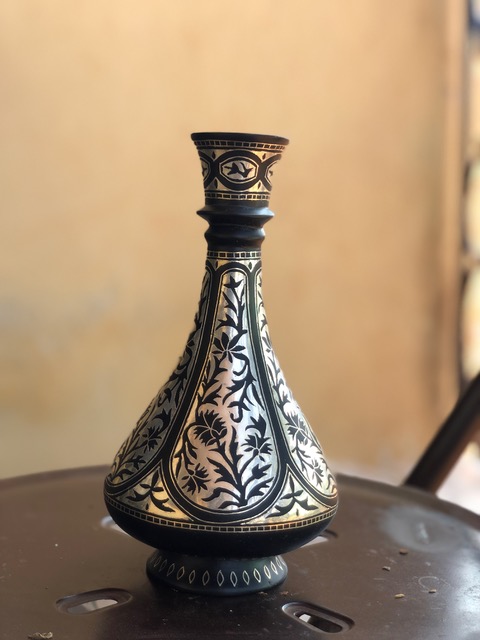
Bidriware is poetry crafted in metal

Cast in an alloy of copper and zinc, with silver and gold wires or sheets inlaid or overlaid, a Bidriware artefact is so graceful in its appearance that an indulgent heart longs to feel and touch it, if not wear it!

For more than five centuries, Bidriware objects have been must have pieces of adornment among the royalties and nobilities such as Mughal emperors, Rajput kings and Nawabs of Bengal to Bahmani, Adil Shahi and Vijayanagara Sultans (yes, the Vijayanagara kings loved to call themselves sultans!).

In the pre-modern era, the Nizams of Hyderabad have been the biggest patrons of this magical craft, not only collecting the artefacts such as hookahs (sheesha), vases, vanity boxes, ewers and pitchers, but also relocating several artisans to Hyderabad.

However, despite the early 20th century migration of artisans and losing patronage, Karnataka’s northern town of Bidar continues to remain a hub of Bidriware.

With all of the kingdoms and fiefdoms gone, ancient Bidriware items along with other surviving royal antique pieces are a collector’s treasure now, gracing the leading museums across the world.

The Origin
Though, the Bidri metal craft has its origins in medieval Persia, Bidriware in its distinct Indian form blossomed in the capital of the early 15th century Bahmani Empire.
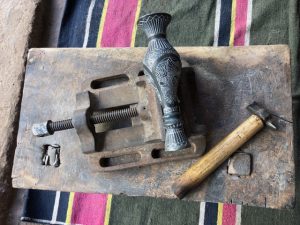
The tale of Bidriware, primarily practised by Muslims, is a story of skill, struggle and survival

The Bahmanis were renowned for their exquisite sensibilities for art and architecture, hence it is no surprise that a complex and intricate enterprise such as the Bidri metal craft originated in their royal atelier.

This, perhaps, is among the last few influences that the medieval Bahamanis continue to have on modern India.

Reinvention
Despite the spell Bidriware has on art aficionados and connoisseurs of craft, the enterprise has seen a steady decline over the last few decades, with only a few masters working their magic.

Currently, the city of Bidar has around 150 registered artisans, but only a handful of artisans in the town have the depth of knowledge and the deftness of skills required to be called a master.
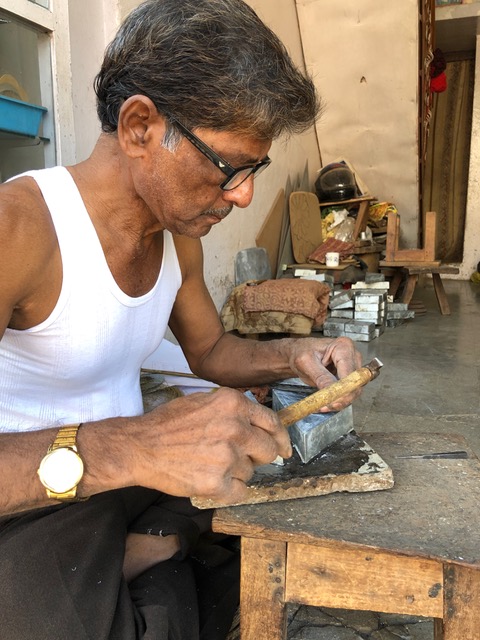
MA Rauf Siddiqui is a national-award winning master craftsman who is reinventing Bidriware, catering to the modern aesthetic sensibilities

Among the few masters is the national award-winning artisan MA Rauf Siddiqui.

Even as the overall scene of the Bidriware tradition is not particularly encouraging, the Shilpi Guru-winner is quietly reinventing the traditions, ably-assisted by his young and enterprising children.

Modernising the techniques, motifs and methods, the family has several generations involved in the craft, adopting latest softwares to come up with new patterns and using social media to reach new frontiers.

However, the traditional expression of the art-form continues to find patrons, even as the newer expressions in wearable forms give the craft a new lease of life.

Empowering the community
Many Muslim communities in India sit on a huge treasure trove of craft traditions that have been part of the country’s cultural, economic and political legacy for centuries.

Many of these traditions are withering away due to multiple factors, including lack of upgrade or inability to adapt to the changing landscape, little government support and poor marketing.

With necessary attention and support we can not just preserve this precious legacy of India and Indian Muslims, but can also make hundreds of these craft clusters economically independent and sustainable.

source: http://www.radiancenews.com / Radiance News / Home> Arts & Culture> Forces / by Shafaat Shahbadari / Radiance News Bureau / September 26th, 2023

Meet Hakim Hafiz Abdul Majeed, the man behind Rooh Afza: Know about his journey, family & net worth

Philbit , UTTAR PRADESH / NEW DELHI:

For the unversed, Rooh Afza was originally created by a Unani hakim as a herbal concoction to beat the heat, however, it went on to become a staple across India and Pakistan.

Hakim Hafiz Abdul Majeed, Rooh Afza, Rooh Afza net worth, Rooh Afza founder, Rooh Afza journey, Rooh Afza pakistan, Rooh Afza india, lifestyle

Hakim Hafiz Abdul Majeed is the founder of Hamdard that created Rooh Afza as a herbal drink that would help people stay cool in the summer. 

Hakim Hafiz Abdul Majeed’s education

Born in 1883, Hakim Hafiz Abdul Majeed studied the origin of Urdu and Persian languages. He went on to acquire the highest degree in unani system of medicine.

Hakim Hafiz Abdul Majeed’s career

In 1906, Hakim Hafiz Abdul Majeed decided to set up a herbal shop at House Qazi in Delhi. In 1920, his small shop turned into a production house. Selecting herbs and syrups from traditional Unani medicines, Hakim Hafiz Abdul Majeed created a drink to fight heat strokes – He named it Rooh Afza, which in Urdu means ‘something that refreshes the soul.”

In 1910, an artist called Mirza Noor Ahmad prepared the labels of Rooh Afza in several colours. It was printed under special arrangement by the Bolton Press of the Parsees of Bombay (Mumbai) since there were no coloured printers at that time.

Journey of Rooh Afza

The partition of India in 1947 played a role in the journey of Rooh Afza. Hakim Abdul Majeed’s eldest son decided to stay in India, but his younger brother Mohammad Saeed wanted to live in Pakistan. He started Hamdard from two rooms in Karachi and in no time the business flourished. As per Sadia Rashid, Hakim Mohammad Said’s daughter, her father gifted the business to the people of Bangladesh after their independence in 1971.

Having said that, Rooh Afza gained more popularity in India. The bottles were deigned in Germany and were initially introduced in a glass bottle, but was later changed to plastic. In 2019, Rooh Afza faced shortage in supplies owning to the lesser availability of herbs needed to make the drink.

Other brands under Rooh Afza

Over the years, Rooh Afza launched products like Pachnaul, Safi, Rogan Badam Shirin. 

source: http://www.financialexpress.com / Financial Express / Home> FE Leisure> Business News> Lifestyle / by FE Lifestyle / May 13th, 2023

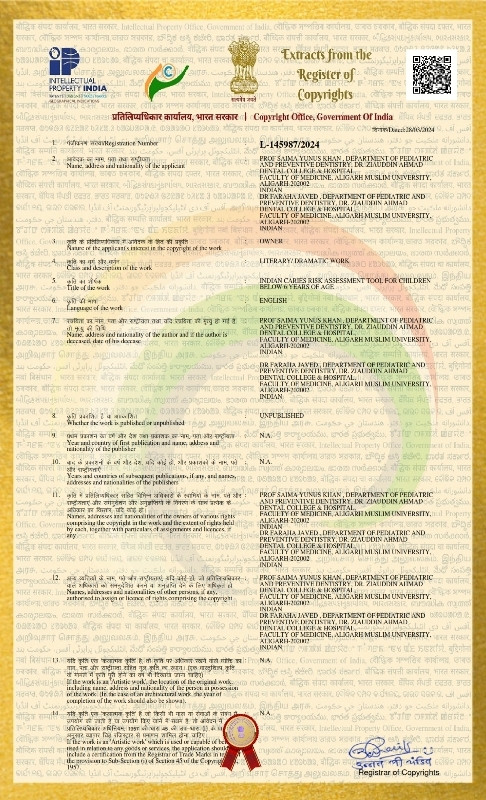
AMU Professor Saima Yunus Khan gets First Copyright from Government of India for her work on Dental Caries

Aligarh, UTTAR PRADESH:

AMU Faculty Becomes First Indian To Receive IADR Fellowship

Prof Saima Yunus Khan, Chairperson, Department of Pediatric and Preventive Dentistry, Dr. Z.A. Dental College, Aligarh Muslim University has been awarded the Copyright by the Government of India for her original innovative work on an evidence based Indian Caries Risk Assessment tool for the children up to 6 years of age.

She started to work on the project in 2021, on receiving the John Clarkson Fellowship from the Prestigious International Association for Dental Research.

Being the first Indian to receive this fellowship, she worked in collaboration with Dr. Gerald Niznick, College of Dentistry, Rady Faculty of Health Sciences University of Manitoba, Canada.

According to Dr. Saima, the CRA tool would be beneficial to the Indian children as it addresses the risk factors of early childhood caries of Indian preschoolers. It’s a small compact tool form which can be used with ease by the masses in hospital or field settings.

The Dean, Faculty of Medicine and the Principal, J.N. Medical College, Prof Veena Maheshwari, and the Principal, Dr. Z. A. Dental College & Hospital, Prof R.K. Tewari congratulated Prof. Saima on her exemplary achievement.

source: http://www.amu.ac.in / AMU, Aligarh Muslim University / Home> Public Relations Office (headline edited & additional pix edited) / April 02nd, 2024

A noble soul passes away

Aurangabad /Mumbai, MAHARASHTRA:

It was December 2001. I was at Dr Rafiq Zakaria’s beautiful, book-lined study at Cuffe Parade house in South Mumbai. In that spacious room Allama Iqbal vied for space with William Wordsworth and Mirza Ghalib sat alongside Shakespeare. World religions and their prophets and pundits were there in plenty. So were heroes and heroines of India’s freedom struggle. Present also were a few villains amidst a pantheon of popular leaders. Muhammad Ali Jinnah could not have been absent. He was there too.

In fact, Jinnah those days was in the intellectual air on both sides of the Indo-Pak border. The Outlook magazine had sent Dr Rafiq Zakaria’s book on Jinnah ‘The Man Who Divided India’ to noted Pakistani journalist Najam Sethi for review and he had panned the book. In the review Sethi had also suggested that Dr Zakaria should have heeded advice of his wife Fatma Zakaria who had tried to stop him from wiring the book, suggesting, “I think you should leave Jinnah alone for a while.” Dr Zakaria had written a rejoinder to Sethi’s piece and explained that he could not help but write about a man responsible for not just dividing India but breaking the social cohesion of the subcontinent Muslims. First, Muslims were divided between two countries–India and Pakistan. Subsequently, a part of Pakistan broke away, leaving Muslims divided in India, Pakistan and Bangladesh. The blood-curdling riots that accompanied these divisions had left Dr Zakaria deeply disturbed and could not rest till he took the grief off his chest.

While he gave an interview to me for the ‘Indian Express” on why he wrote this book and the debate it had generated, he told his office staff that he would not entertain any telephone calls or visitors for the next one hour. Dr Zakaria was holding forth forcefully in the closed room when unexpectedly and suddenly the door opened and Fatma Zakaria, in yellow salwar-kameez clutching a page, breezed in. “The secretary is so terrified after you asked her not to disturb you that she pleaded with me to come. This needs your signature and has to be faxed urgently,” Fatma said, got the paper signed and left quickly.

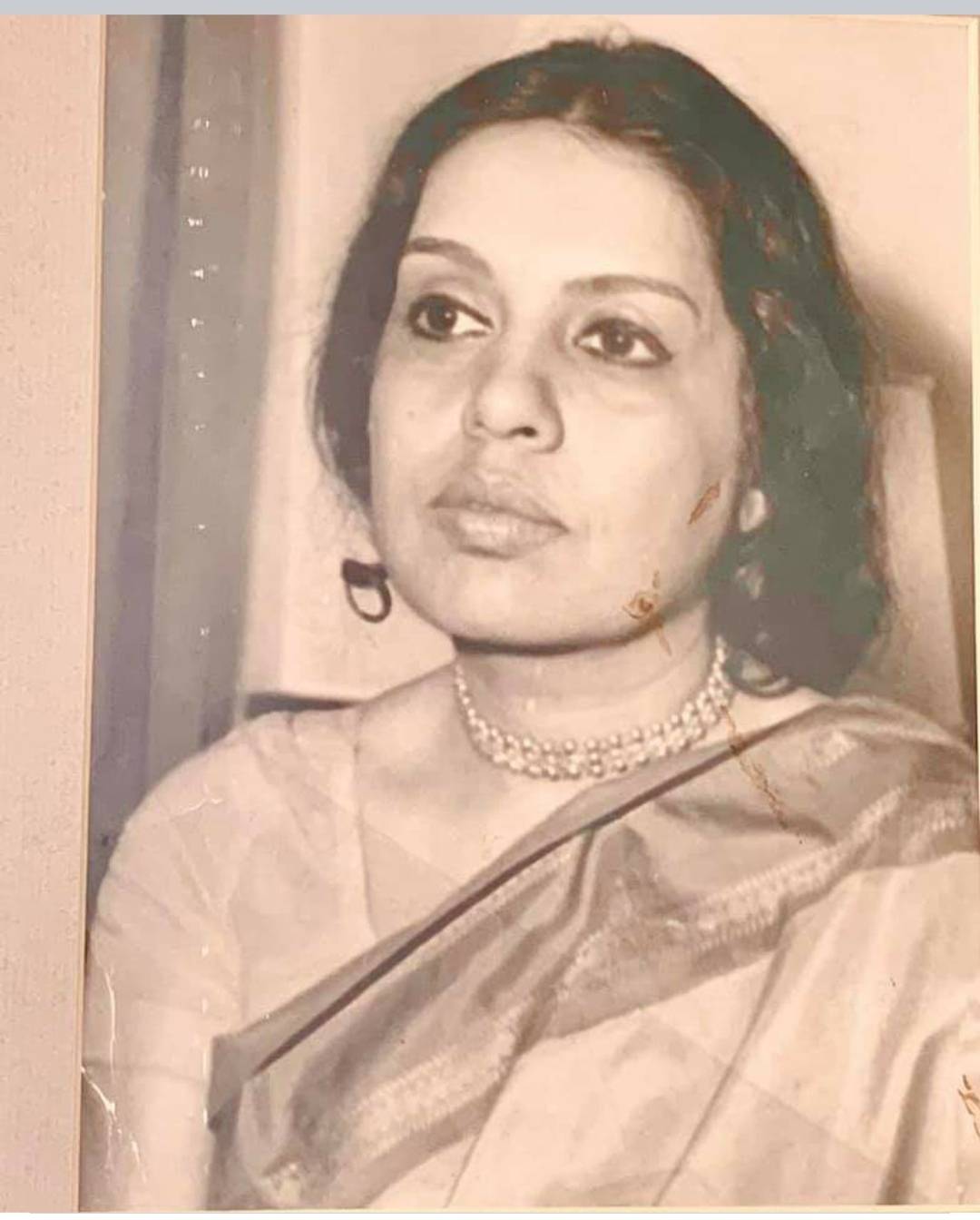
The Zakarias, husband and wife, complimented each other. One half left in 2005. The better half departed yesterday. She was 85. Her famous son, US-based author and Television anchor Fareed Zakaria couldn’t have encapsulated his feelings in a tweet better than this: “My mother, Fatma Zakaria, passed away last night at 85. She lived a long, rich, eventful life, with children and grandchildren whom she adored. She loved this photograph.” The photograph that I use with this essay is the one Fareed Zakaria tweeted. She is survived by, apart from Fareed, her son Arshad Zakaria and step son Mansoor Zakaria and step daughter Tasneem Mehta Zakaria.

Life was never the same again in Mumbai after Dr Rafiq Zakaria had exited. Life at the beautiful educational campus Dr Rafiq Zakaria built in Aurangabad will never be the same again after Fatma Zakaria’s departure. After Dr Zakaria’s death in 2005, Fatma had stepped in to carry on the educational legacy her famous educationist, politician and Islamic scholar husband had left behind.

As you enter the green campus, a sense of gratitude for the Zakarias grips you. For years, Dr Zakaria and then his wife Fatma nursed this seat of learning, endowing it with institutions of repute. Most politicians use their constituencies to scale heights and abandon them once they leave politics and walk into sunset. Few remain clung to their constituencies till they die. Dr Rafiq Zakaria belonged to the second category. “He is the architect of modern Aurangabad and Mrs. Fatma Zakaria was a big pillar of support to him. I don’t think Dr Zakaria could have done so much in the fields of politics, education and scholarship without her,” says eminent Urdu scholar and linguist Prof Abdus Sattar Dalvi who have known the Zakarias for the last five decades. Prof Dalvi had also translated Dr Zakaria’s seminal work Iqbal: Poet and Politician in Urdu.

Fatma was Dr Zakaria’s first reader and critic too. With their children flown out of the nest and into the wider world where they planted victory flags on as varied fields as Investment Banking and Journalism, it was Fatma who provided the much-needed inputs as well as emotional support to Zakaria who heads so many institutions and i wrote so prolifically till his end.

Fatma had worked under legendary editor and ‘dream boss’ of every fledgling journalist, Khushwant Singh, and knew how to curb verbosity in a sentence and straighten a complex paragraph. In book after book that Dr Zakaria churned out, he acknowledged the unpaid services of this able, inhouse editor. She knew Urdu too and could write on arts and literature with as much felicity as she could do political pieces. The biggies she had interviewed included Indira Gandhi, Margaret Thatcher and Jaya Prakash Narayan.

Bachi Karkaria, M J Akbar, Bikram Vora, Jiggs Kalra, Badshah Sen and Ramesh Chandran were her contemporaries when they worked with “The Illustrated Weekly of India” under the stewardship of Khushwant Singh. When I informed Akbar about Fatma’s death yesterday, he reacted with a few words: “What a tragedy. I am saddened.” Akbar was so close to the Zakarias that once I heard him saying, “I feel adopted by the Zakarias.” Perhaps no book launch of Dr Zakaria–and he had at least one or two every year—was held without Akbar as one of the speakers. The speed with which Dr Zakria wrote books, published and launched them left us youngsters amazed. I once joked when he informed me about the launch of yet another book: “Dr Sahab, now I have left count of the number of your book launches and book readings I have attended.” This couldn’t have been possible without the meticulous planning Fatma Zakaria did and tireless support she provided.

It was the launch of Zakaria’s book ” Indian Muslims: Where Have they Gone Wrong?” at the Nehru Centre in Mumbai. The 900-odd capacity auditorium was houseful with young college students (Dr Zakaria and, Fatma after him, was chairperson of the Maharashtra College in Mumbai) occupying a substantial number of seats. As always, Fatma Zakaria didn’t figure among those who graced the stage. When Akbar rose to speak, he inquired about Fatma Zakaria who was seated among the audience. Akbar requested her to come on stage. She refused and was seemingly embarrassed for being invited to the stage. Leaving her to where she felt comfortable, Akbar went on to say: “It is only Dr Rafiq Zakaria who can turn a book launch into a public meeting.”

A couple of years after Dr Zakaria’s death, Islamic scholar and secretary general of the Wisdom Foundation, Dr Zeenat Shaukat Ali, and I were in Aurangabad to participate in a seminar political scientist Dr Zaheer Ali had organized. Historian and ex-VC of Jamia Millia Islamia Prof Mushirul Hasan too had flown in from Delhi. After the seminar, Zeenat Shaukat Ali and I went to see Fatma Zakaria in her office. She was in fine fettle, command of things and ran the show meticulously. We chatted for a while and then she told us not to leave without visiting Dr Sahab’s grave on the same campus.

Zeenat Shaukat Ali and I walked down the paved pathway and reached a small patch of land where Dr Zakaria’s open-to-sky grave squats. With several couplets of Allama Iqbal adorning the place, it resembles a Sufi saint’s last resting place. After a long, eventful life, Fatma Zakaria joined her husband. They will be there till the creator calls them up, along with all of us, on the Judgement Day.

source: http://www.timesofindia.indiatimes.com / The Times of India / Home> India / by Mohammed Wajihuddin in Beyond the Burqa, India, TOI / April 07th, 2021

Meet Mohammad Furqan, Madrasa Graduate Selected for University of Notre Dame, Indiana

Darbangah District, BIHAR / Indiana, U.S.A:

From a humble beginning as a student of a Madrasa to being selected for Masters in Peace Studies at University of Notre Dame, one of world’s leading universities, Furqan’s journey is an answer to those critics of madrasas who refuse to accept their relevance and contribution to the society and academia.

Meet Mohammad Furqan, Madrasa Graduate Selected for University of Notre Dame  | ummid.com

While hundreds of Madarasas are being shut down allegedly for being non-productive, a good number of graduates of independent Madrasas are making great academic strides. One such Madrasa graduate, Mohammad Furqan has qualified for the Masters of Global Affairs in Peace Studies at the University of Notre Dame, Indiana, USA.

Furqan’s selection has been widely welcomed by graduates of different Indian madrasas and especially by the graduates of Madrasa Discourses Program run by the Keogh School of Global Affairs, University of Notre Dame.

Buoyed by the good wishes, Furqan said:

“It all started with the Madrasa Discourses, and it would have not been possible without the great leadership of Prof. Ebrahim Moosa and Dr. Waris Mazhari. Coming from an ordinary family, I could have never imagined to study in the USA with scholarship.”

Belonging to Darbhanga district of Bihar, Furqan graduated with a Fazilat degree from Madrasa Alia Arabia, Masjid Fatehpuri, Delhi in 2016, after which he did BA (Hons) in English Literature from Jamia Millia Islamia (JMI). In 2023, he completed Masters of Arts in Islamic and Arabic Studies from JMI.

[M Furqan with his friends at Jamia Millia Islamia New Delhi in a file photo.]

While continuing his formal studies, Furqan also pursued the three-year research program for Madrasa graduates namely “Advancing Scientific and Theological Literacy in Madrasa Discourses”, offered by the University of Notre Dame. It is where he made the most of his time and had the opportunity to interact with a number of renowned academicians and scholars from different countries.

Recalling those years Furqan says:

“It was indeed a life changing journey for me to connect with you all for more than five years”.

Extending his special thanks to his Madrasa Discourses fellows Mohammad Ali, Manzar Imam, Mohammad Ehtesham, Mohammad Fozail, Muhammad Zeeshan, Mohammad Aadil Affan, Ghulam Rasool, Md Khaleeque Rehmani, Abul Aala Subhani, Syed Abdur Rasheed, Tajammul Husain, Saif ul Hadi and others, Furqan expressed his intention to remain connected with what he called “our shared commitment for our society and madrasa community.”

From a humble beginning as a student of a Madrasa to being selected for Masters in Peace Studies in one of world’s leading universities, Furqan’s journey is an answer to those critics of madrasas who refuse to accept their relevance and contribution to the society and academia.

Indian madrasas need some reform but more than that they need to sustain and serve the society to carry forward the huge academic and intellectual legacy which has been the hallmark and pride of India’s story of diversity and open discourse.

(A graduate of Madrasa Discourses Program, the writer, Manzar Imam, is Director of MJ Achievers Academy LLP)

source: http://www.ummid.com / Ummid.com / Home> Education & Career / by Manzar Imam / April 01st, 2024

From Jamshedpur to UK, the inspiring journey of Khurshid Alam

Jamshedpur, JHARKHAND / London, U.K :

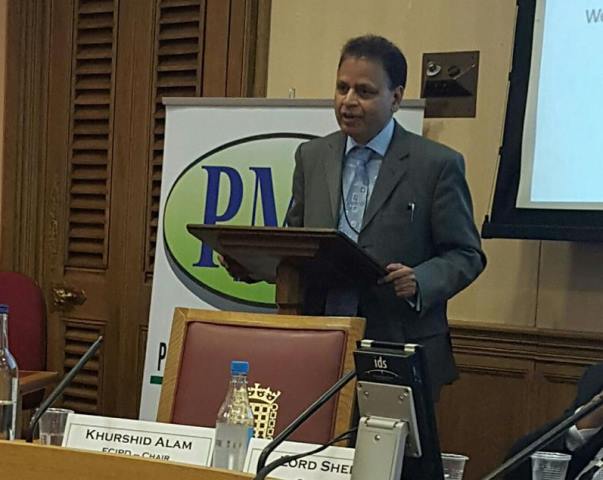
For ex-health commissioner of London Khurshid Alam, education is the only solution for all the problems currently gripping the Muslim community. Saira Aslam talks to Mr  Alam for muslimmirror.com about his life struggles, a tragic childhood and his growing up braving it all.

He has several feathers to his cap – from being the health commissioner of London, serving the Indian Army, setting up a vocational training institute in the UK to adopting a school in Nuh near Gurgaon, but Alam feels it is important to continue to learn.

Having lost his mother when he was just three years’ old and then later losing his father at six years’ old meant the end of the world for him. And if this wasn’t enough, he also witnessed the 1964 riots in Jamshedpur in which hundreds of people were killed. But, he says what kept him going and helped him immensely later in life was his education, which he managed to complete despite all the challenges that one could think of.

For over 20 years, Alam has been involved extensively in a variety of roles ranging from being an advisor to leading a wide range of charities and public services in health, education and social care. He has developed and implemented several policies and strategic plans of improving public services and access; and promoting good healthcare and education for community, including working with and giving advice to government bodies and other organisations internationally.

Currently based in London, he has adopted a school in Nuh district, about 45 kilometres (28 mi) from Gurgaon. He has also worked out collaboration between the institution and a school in London, and wants to see his school grow to be the region’s leading school in the next three years. Within six months of its adoption, the school has won two prestigious awards, giving him hopes that the future for the institution looks bright. He points out that the people of the district, who are mostly Muslims, are a marginalised lot and the literacy rate is extremely low.

“Muslims are today lagging so much behind than other communities, not only in India but across the world. And unfortunately, this gap is rising rapidly. Hence, a multi-pronged approach should be undertaken backed by innovative projects on the grass-root level by authorities as well as non-government organisations in coordination and support of each other,” he told MuslimMirror.com during his recent visit to India.

Alam, a Commissioner of the Healthcare Commission who currently holds two other ministerial appointments – Member of Employment Tribunal and Member of Mental Health Review Tribunal, has been running training courses on healthcare and business entrepreneurship skills development programme in the UK and UAE for the past few years but feels “most satisfied” by adopting the school in Nuh, which he describes as “a very deprived area”.

He has set up the AOC International and Academy for Advanced Studies & Training International, an institution specialising in education and training in the UK. He added that he has successfully launched skill development programmes in rural areas as well as initiated women empowerment drives focusing on health, adult education, equality and anti-dowry. He says all such community efforts should focus on the youth, women and other weaker groups.

“My one word answer to all misery of Muslims in India and the world is real and meaningful education. At the same time, the community should strive to become economically and scientifically strong,” he says, adding that all efforts should revolve around the unshaken belief in the Almighty. As part of his long-term plan, he remains passionate about bringing about quality education and value added training courses in different countries.

When asked about the skill development areas Muslims should focus on, Alam says innovative and unique skills that are industry-focused and those that will provide early employment or sources of earnings to themselves and the dependents are important. For example, handicraft, stitching and sewing would be helpful for women, and so will be the basic level training for healthcare nursing assistants, primary teachers, nannies, cleaners, cooks and others.

It is also important for the youth (men) to focus on the skills required for plumbing, plastering, tiling, crane operation, taxi or auto driving, guarding, refrigeration, mechanical work, electronics repair. A society with trained primary teachers, healthcare assistants, chefs, etc is extremely important, he points out, adding that entrepreneurship should be encouraged.

Small NGO groups should reach out to more remote areas under schemes like anganwadi with result-oriented programmes. The divisions and prejudices either based on caste or class systems have proved to be huge obstacles and barriers for a progressive society. Islamic learning or other forms of learning and awareness programmes must be undertaken, particularly in rural areas, says Alam.

Teaching the basic tenets of Islam on equality should be encouraged through awareness camps alongside tackling and working with the religious institutions, bringing all stakeholders under one umbrella tactfully and avoiding differences. However, this work must be undertaken with the sole purpose of helping the Muslim community progress on all fronts, he adds.

He says the positive thing is that “awareness is increasing and we must work relentlessly to make use of every window of opportunity presented to us but remaining focused to our goals through teamwork and equality”. “In fact, in my view it is more important for women to seek complete education and acquire necessary skills,” says Alam the father of two successful daughters (one is law graduate from LSE and another doing MBBS)  in his parting reply.

source: http://www.muslimmirror.com / Muslim Mirror / Home> Indian Muslim> Interviews / by Saira Aslam / January 14th, 2018

After 7 long years, teacher shines on world stage

Pegadapaly Village (Jagtial District), TELANGANA:

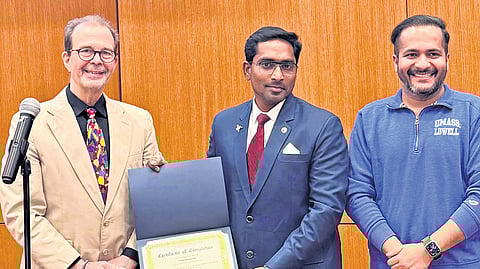
Irshad, with 11 years experience at Govt Model School, Pegadapally, was chosen as one of two TG educators for 2024 FTEA

Irshad receives a certificate

Hyderabad :

After seven years of perseverance, it’s a moment of celebration for 40-year old Syed Irshad Ali, a post graduate teacher from Model School and Government Junior College in Pegadapally village of Jagtial district, to have attended the Fulbright Teaching Excellence and Achievement (FTEA) programme at the University of Massachusetts, Lowell, US.

Headed by the Bureau of Educational and Cultural Affairs, US Department of State, the six-week FTEA programme opens doors for secondary school educators to partake in developmental initiatives at prestigious US universities.

Irshad was one of only two teachers chosen from Telangana and one of the seven teachers handpicked from across the country for the 2024 programme. Irshad was selected after attending national-level interviews and attempting the TOEFL (Test of English as a Foreign Language), scoring 61.

Irshad was aspiring and attempting to be a part of the programme for the past seven years and his efforts finally paid off when he was selected to attend the programme, where teachers from 19 other countries were also a part of the cohort.

Speaking to TNIE, Irshad said, “The six-week programme has been a one-of-its-kind experience which gave me an exposure to different cultures and people from various parts of the world. Besides exchanging teaching techniques and knowledge-sharing, the programme expanded my approach and gave me exposure to challenges faced by teachers in different countries, some of which were similar to what we face here in India, while others were extremes, which helped me understand the progress made by India in infrastructure, as well as the areas where we need to improve”.

Syed Irshad Ali speaks at Massachusetts University during the Fulbright
Teaching Excellence & Achievement programme
Syed Irshad Ali speaks at Massachusetts University during the Fulbright Teaching Excellence & Achievement programme

Irshad further said that discussions on gender rights, English pedagogy and visit to the Harvard University, which were a part of the programme were a significant value addition to his learning experience.

Irshad has 14 years of experience in teaching and has been working in the Model School for the past 11 years, where he teaches English language to students from classes 9 to 12.

He has also been a state resource person and has contributed in designing various training programmes for English teachers in the state and was also awarded the district-level best teacher award for 2022, for excellence in English teaching during the Covid-19 period.

Irshad, who is a father to a son and a daughter, stressed on the significance of empowering and fostering girl students, especially in the rural areas, where girls face several challenges, hampering their education and said that this achievement came as an added responsibility for him in creating awareness amongst teachers for improving the quality of education in the government schools.

source: http://www.newindianexpress.com / The New Indian Express / Home> Telangana> GoodNews / by Aarti Kashyap / April 07th, 2024

Dr Akhter Husain’s artwork chosen for London International Creative Competition

Mangaluru, KARNATAKA:

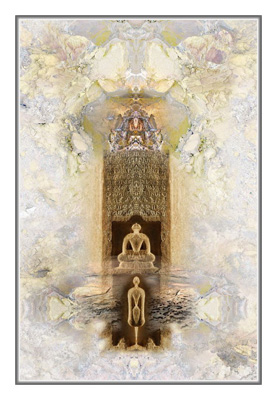
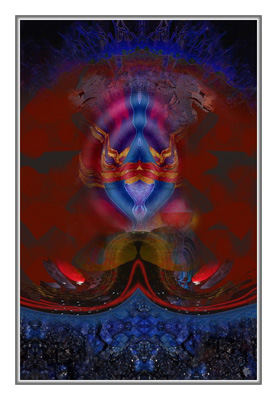
Dr Akhter Husain, former principal and dean of Yenepoya Dental College, adds another feather to his cap as his artwork from his series on Vedic inspirations has made it to the official selection by the jury for a prestigious prize in the London International Creative Competition.

The London International Creative Competition (LICC) which began in 2006 has been ‘Recognising and rewarding the world’s most fresh and progressive creative talents’ across various categories. 

An associate of the Royal Photographic Society, UK, his artistic prowess has earned him international acclaim including prestigious awards such as the Moscow International Foto Awards (MIFA) and the ‘Better Photography Magazine Photograph of the Year Award’ among others.

His artistic pursuits have also been punctuated by illustrious exhibitions at renowned venues such as the highly coveted Art Basel in Switzerland, Chitrakala Parishad in Bengaluru, and the India Habitat Centre in New Delhi. An intrepid explorer of various art forms and uses a combination of photography, digital technology and traditional paints.

source: http://www.daijiworld.com / Daijiworld.com / Home> Karnataka> Media Release / April 04th, 2024

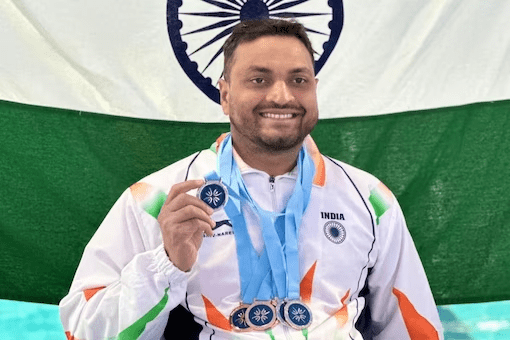
Meet Shams Aalam from Bihar who receives two World No.1 Rankings and Won 06 Gold Medals, at Reykjavik Games

BIHAR:

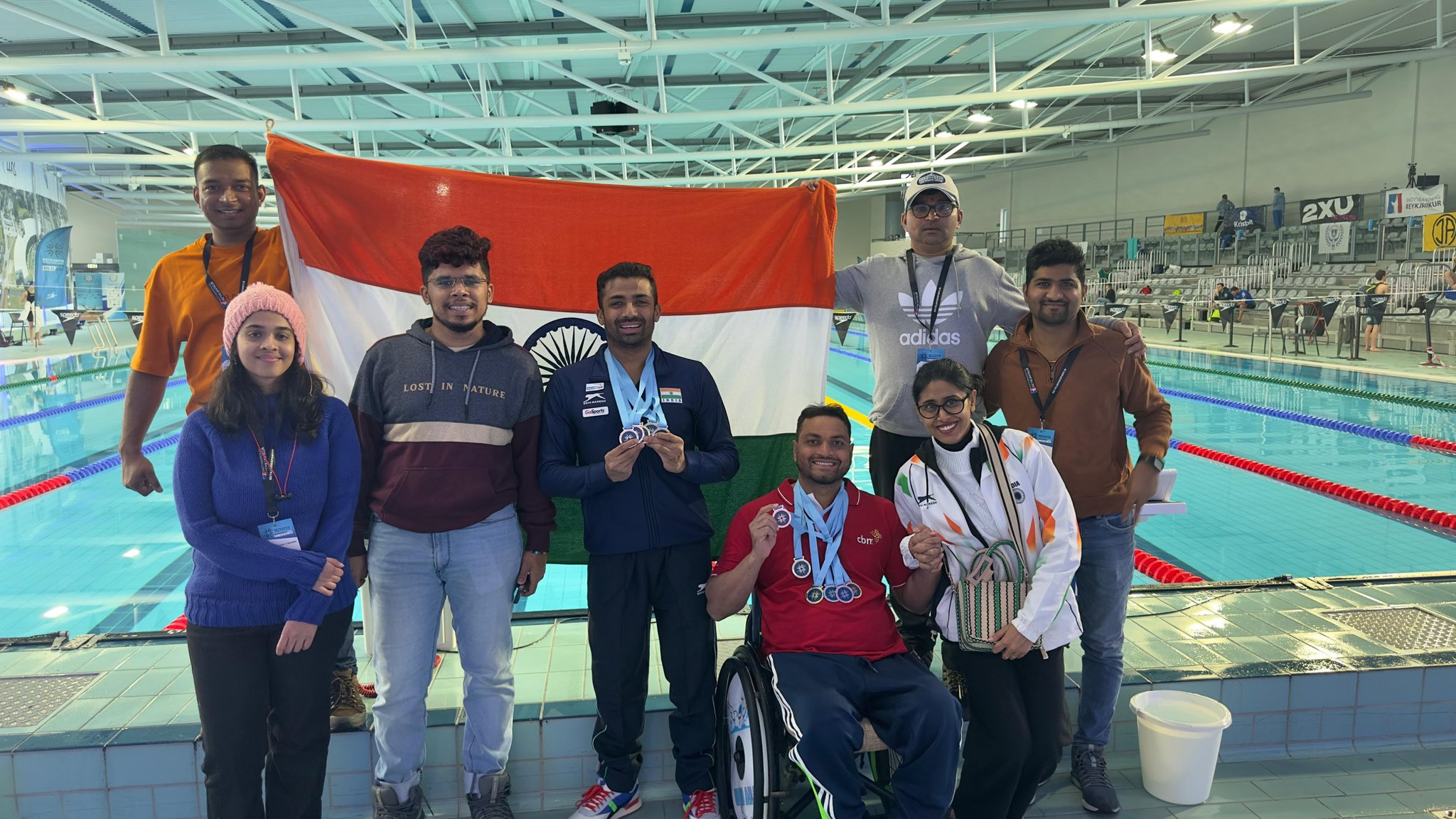
Mohammad Shams Aalam Shaikh won 6 gold medals at the Reykjavik International Games held at Laugardalslaug Iceland from 26-28 January 2024, whilst representing India.

Aalam has ranked no. 1 in men’s 100m butterfly stroke and men’s 50m breaststroke, according to World Para Swimming’s official world rankings for 2024.

In Iceland last month, Shams Alam won 6 medals, including one gold in 200m individual medley, one silver medal in 50m and 100m breaststroke and butterfly stroke, and three bronze medals in 50m and 100m backstroke and 100m butterfly stroke.

Aalam also broke Herojit Singh and Shreekant Desai’s time records in 100m butterfly and 100m backstroke, respectively.

In his interview with TOI, Alam seemed confident that he’d qualify for the Paris Paralympic Games 2024 by meeting the Paralympic time requirements soon enough. He will also be participating in the National Paralympic Games scheduled in March this year, in Gwalior. 

“I am yet to reach the Paralympic qualification mark with my timings at Reykjavik but I am confident that I will get enough opportunities to secure a berth at the Paris Games. The National Games will be my next shot at the Paris quota,” Aalam said in his interview with the Times of India.

Image

Mohammad Shams Aalam is a 37-year-old, paraplegic swimmer, who holds the world record in the longest open sea swimming by a paraplegic individual.

Born in Bihar, Alam was interested in sports as a child, particularly karate and swimming. However, after a spinal cord injury in 2010, Alam took up professional swimming and even went on to represent India at the Asia Para Games in 2018. 

source: http://www.maktoobmedia.com / Maktoob Media / Home> East India / by Maktoob Staff / February 27th, 2024

Oman boys emerge champions

INDIA / OMAN:

Rahil Habibulla-led team trounce Hong Kong, China by 100 runs in the final of ICC Men’s U19 CWC Asia Division 2 Qualifier in Bangkok.

Muscat :

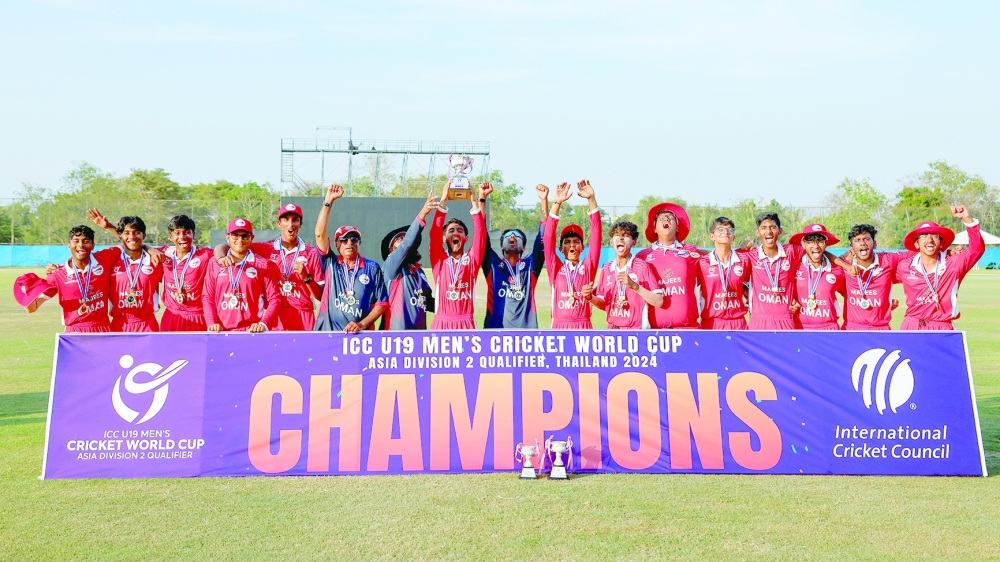
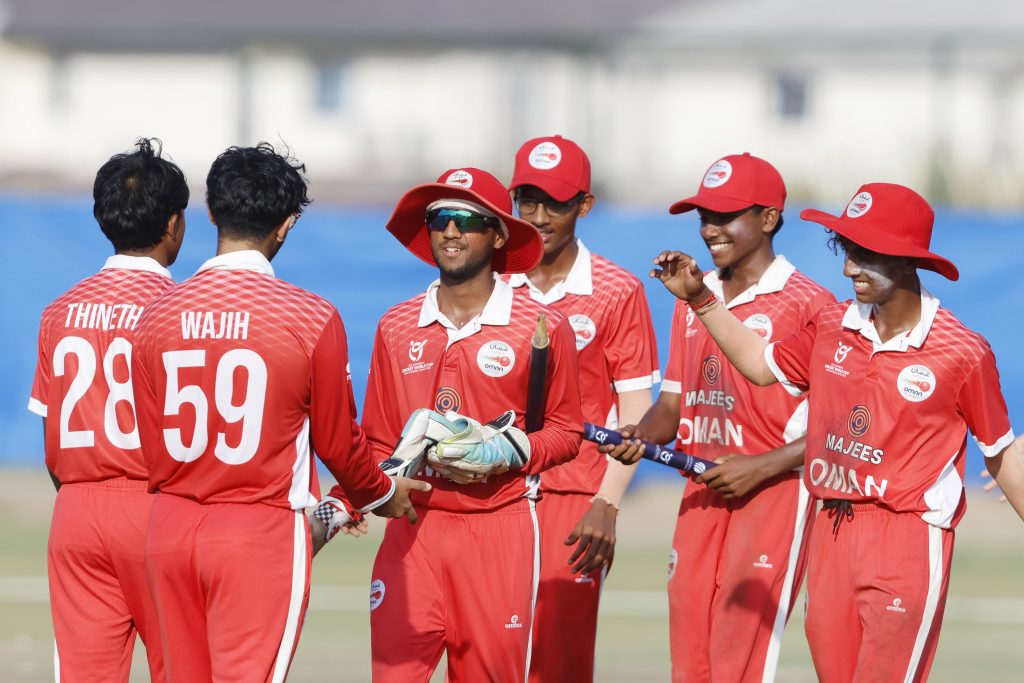
A dominating performance by Oman boys was capped with a spectacular victory in the final of the ICC Men’s U19 Asia Division 2 Qualifier as they routed Hong Kong, China by 100 runs at the TERD Thai Cricket ground in Bangkok, Thailand, on Tuesday.

Both Oman and Hong Kong, China, had already qualified for the ICC Men’s U19 Asia Division 1 ahead of the final. Tuesday’s victory for Rahil Habibulla-led Oman meant that the boys kept a clean slate in the tournament, winning a total of five games on the trot.

Rahil Daniyal Habibulla Of Oman receives the winning trophy during the Final of the ICC U19 Men’s Cricket World Cup Asia Division 2 Qualifier match between Hong Kong China and Oman held at the Terdthai Cricket Ground, Bangkok, Thailand on March 5, 2024. Photo by: Deepak Malik / Creimas RESTRICTED TO EDITORIAL USE
Nitish Nadendla Of Oman receives Player of the Tournament award during the presentation of the Final of the ICC U19 Men’s Cricket World Cup Asia Division 2 Qualifier match between Hong Kong China and Oman held at the Terdthai Cricket Ground, Bangkok, Thailand on March 5, 2024. Photo by: Deepak Malik / Creimas RESTRICTED TO EDITORIAL USE
Saumya Bhavin Sampat Of Oman receives Player of the Match award during the presentation of the Final of the ICC U19 Men’s Cricket World Cup Asia Division 2 Qualifier match between Hong Kong China and Oman held at the Terdthai Cricket Ground, Bangkok, Thailand on March 5, 2024. Photo by: Deepak Malik / Creimas RESTRICTED TO EDITORIAL USE

In the final, Oman’s Saumya Sampat stood out with his all-round performance as he missed a half-century (48 off 80 balls) in the team’s total of 249/5 in the allotted 50 overs.

Saumya then excelled with the ball as he picked up three wickets for 25 to be deservingly named the player of the final as Hong Kong, China, were restricted to 149/9.

Opting to bat first, Oman, coached by Syed Aamir Kaleem, rode on two century partnerships to set up a total to defend.

Oman players celebrate after winning the Final of the ICC U19 Men’s Cricket World Cup Asia Division 2 Qualifier match between Hong Kong China and Oman held at the Terdthai Cricket Ground, Bangkok, Thailand on March 5, 2024. Photo by: Vipin Pawar / Creimas RESTRICTED TO EDITORIAL USE

First, it was a 108-run second-wicket stand between Jeet Shah (50, 99 balls) and Saumya and then it was the unbroken 104-run sixth-wicket partnership between Nitish Nadendla (51 n.o., 35 balls) and Rohan Ramachandran (49 n.o., 53 balls) that saw Oman post a total of 249/5.

Both Rohan and Nitish  took over the run-charge after the fall of Rahil in the 37th over and slammed more than 100 runs in the next 13 overs with ten boundaries and a six.

Harry Hodgson and Arya Panjwani claimed two wickets each for Hong Kong.

Chasing a tough target, Hong Kong stumbled early on as they were down to 17/2 in the fourth over. Two quick wickets by the tenth over had Hong Kong reeling at 45/4 with Saumya, Varshieth Dinesh, Puladith Ralalage and Prathiesh Ramesh among wickets.

Mathew Clayton fought a lone battle with a half-century (50) as Oman bowlers picked wickets at regular intervals to restrict their rivals to 149/9 in 50 overs.

Aarez Dar (28), Arya Panjwani (15), and Rishan Shah (18) were the only other batters to get to double digits.

Oman tried out as many as eight bowlers and seven of them were successful with Saumya taking three. Varshieth, Puladith, Arya Sampat, Prathiesh, Gaurav Dinesh and Rohan Ramachandran claimed a wicket apiece.

Earlier, Oman had topped Group B with three straight wins as they beat Saudi Arabia, Hong Kong, China and Bhutan to make it to the semi-finals. In the semi-finals, Oman got the better of Malaysia before coming up with yet another stellar display to keep their winning streak.

Oman’s Nitish Nadendla was adjudged Player of the Tournament for scoring 164 runs in 5 innings.

Brief scores: Oman 249/5 in 50 overs (Jeet Shah 50, Saumya Sampat 48, Rohan Ramachandran 49 n.o., Nitish Nadendla 51 n.o.; Harry Hodgson 2/45, Arya Panjwani 2/51) beat Hong Kong, China 149/9 in 50 overs (Aarez Dar 28, Mathew Clayton 50; Saumya Sampat 3/25).

source: http://www.thearabianstories.com / The Arabian Stories / Home> Sports News / by TAS News Service / March 05th, 2024