Tag Archives: Afroz Alam Sahil

Where guns used to roar earlier, now ‘Shafqat Aamna’ has become an IAS

Adhakparia Village (East Champaran District), BIHAR :

Motihari: 

A village in East Champaran which was infamous for guns being pulled out on trivial matters and for fights, the village where last year a sarpanch was not only strangled by fearless criminals but also shot dead, now this same village will be known for the stories of Shafqat Amna becoming an IAS.  

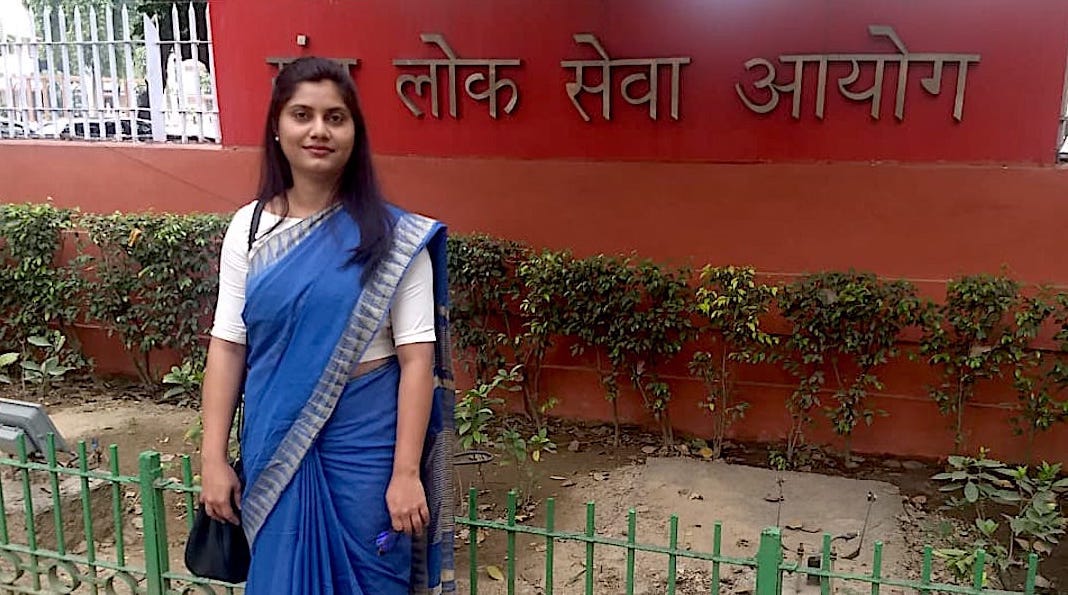
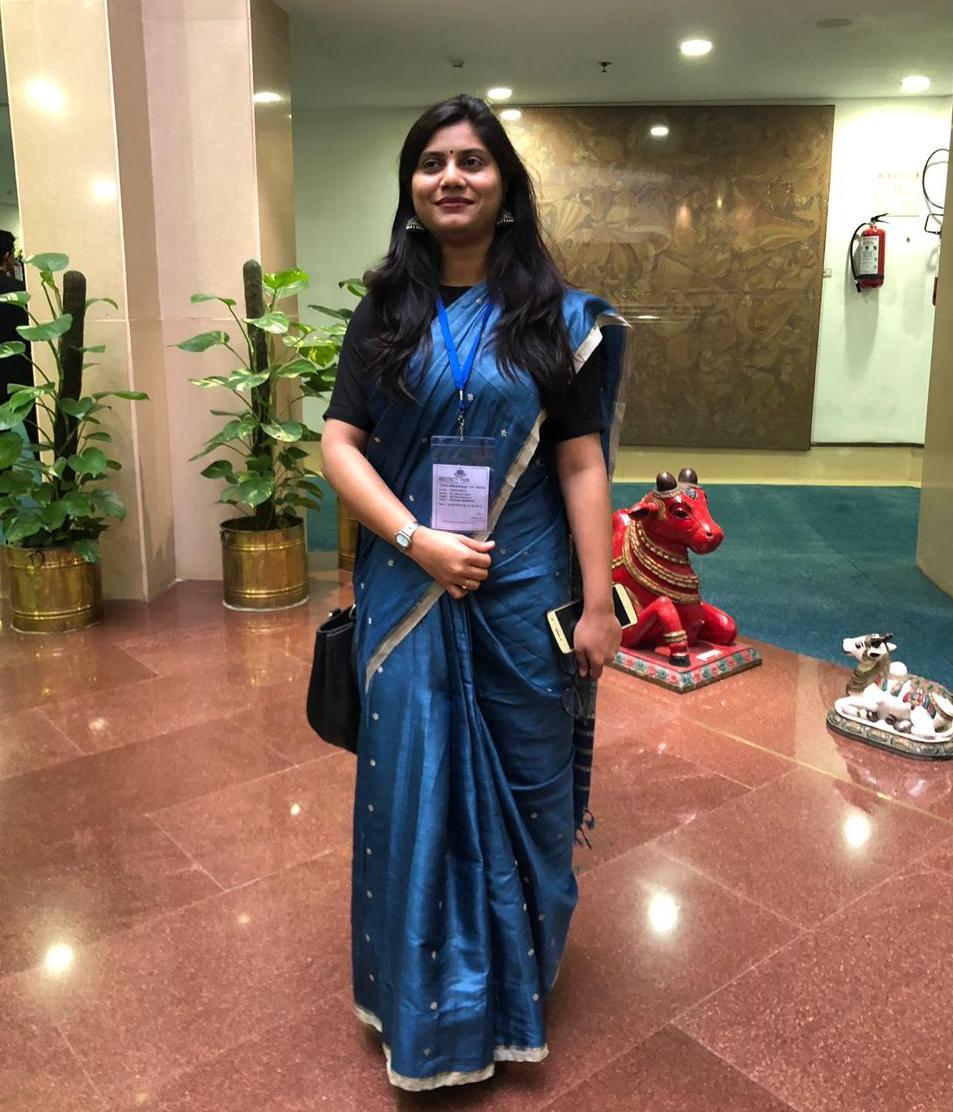
Shafqat Amna, daughter of retired teacher Mohammad Zafir Alam of Adhakparia village of East Champaran, has not only brought glory to her family by securing 186th rank in the UPSC Civil Services exam, but has also shown a path to lakhs of Muslim girls with the light of education. 

The whole village is rejoicing at Shafqat’s success. 65-year-old Zafir is not tired of thanking people for this success. 

In an exclusive conversation with BeyondHeadlines, Zafir Alam says, ‘We would like my daughter to work as an honest servant. She should strive for peace and prosperity in the society. And most importantly, she should take today’s new generation forward in the field of education.’

Let us tell you that Zafir Alam has retired as a teacher from an Urdu middle school in Agarwa village near Motihari. 
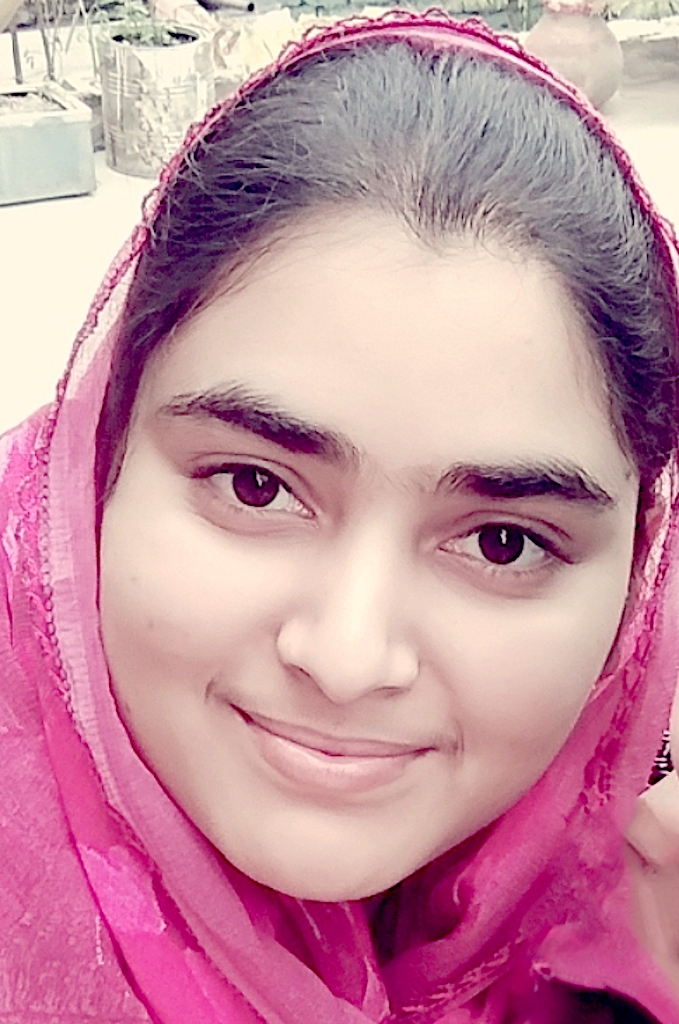
24-year-old Shafqat Amna says in an exclusive interview with BeyondHeadlines that the backwardness of the village and the lack of infrastructure always bothered me. That is why since childhood I wanted to live among the people and do something for them so that I could change their thinking and circumstances. My father, sensing this desire of mine, inspired me to join the civil service. 

Aamna says that my first choice is IAS and I am hopeful that I will definitely get IAS Insha Allah. 

When asked what will you do first after becoming an IAS? 

In response to this question, Aamna says that my first effort will be that whichever district I go to, I will first try to focus on education in the village. Since my father was a teacher, I understand the politics of teachers very well. I will inspire them to teach children honestly, away from that politics.  

What if I get IPS instead of IAS? 

On this question, Aamna pauses for a while and then after thinking says – I am hopeful that I will get IAS and I have not thought of anything else apart from this. But still if I get IPS instead of IAS then first of all I will pay special attention to law and order. I will try to maintain communal harmony in my district at all costs. I will try my best that there is never any fight or quarrel in my district, there is always mutual harmony.

When asked about preparing for civil services, Aamna says that, I would definitely like to tell those who want to join civil services that they should not start preparing for it suddenly, but first understand the syllabus well. If possible, try to take guidance from an IAS or IPS. Then start preparing for it thoughtfully with full courage and passion. Try to study smartly instead of studying like donkeys.

However, she also says that everyone’s way of preparing is different. The positive thing for me was that I had read NCERT books properly in school itself. So all the concepts were clear. I studied Geography very well in graduation as well. And yes, during my entire studies, I always had the habit of making short notes. These notes were very useful in my preparation. I paid full attention to its revision. Apart from that, I participated a lot in test series. 

Let us tell you that Shafqat Amna passed 10th from Jawahar Navodaya Vidyalaya in Bettiah, West Champaran. Then she went to Bokaro for 12th, passed 12th from DPS there. After that, circumstances became such that she had to return to the village. Here she got a BA Honors degree in Geography from a college of Bhimrao Ambedkar University in Motihari. After that, she came to Delhi in 2016 to prepare for civil services. Here she prepared by staying in the residential coaching of Jamia Millia Islamia and after failing twice, she succeeded this time in the third attempt.

Apart from her parents, Shafqat Amna’s family also has three sisters and a brother. Her younger sister is pursuing BA LLB from Jamia Millia Islamia. Her two elder sisters have completed B.Ed and are currently living with their mother in the village. 

Aamna says that the situation at home was never good. My father was the only breadwinner in the house. But he never neglected our education. Whatever I am today is because of my father. 

What would you like to say to the girls of the country? 

On this question, Aamna says that I would like to say that it is very important for you to get educated. And never underestimate yourself. Your hard work, your efforts can change your fate. But yes, for success you will have to make your own policy and your own routing. You will have to decide for yourself what things matter in your life…

source: http://www.beyondheadlines.in / Beyond Headlines / Home> India> Real Heroes / by Afroz Alam Sahil, Beyond Headlines / April 06th, 2019
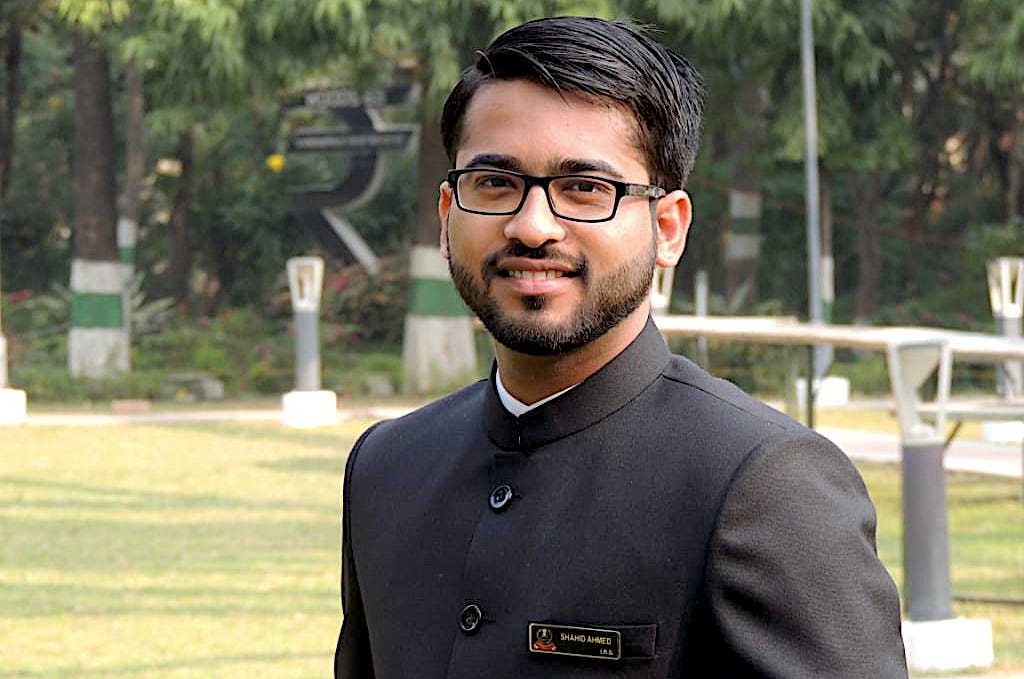
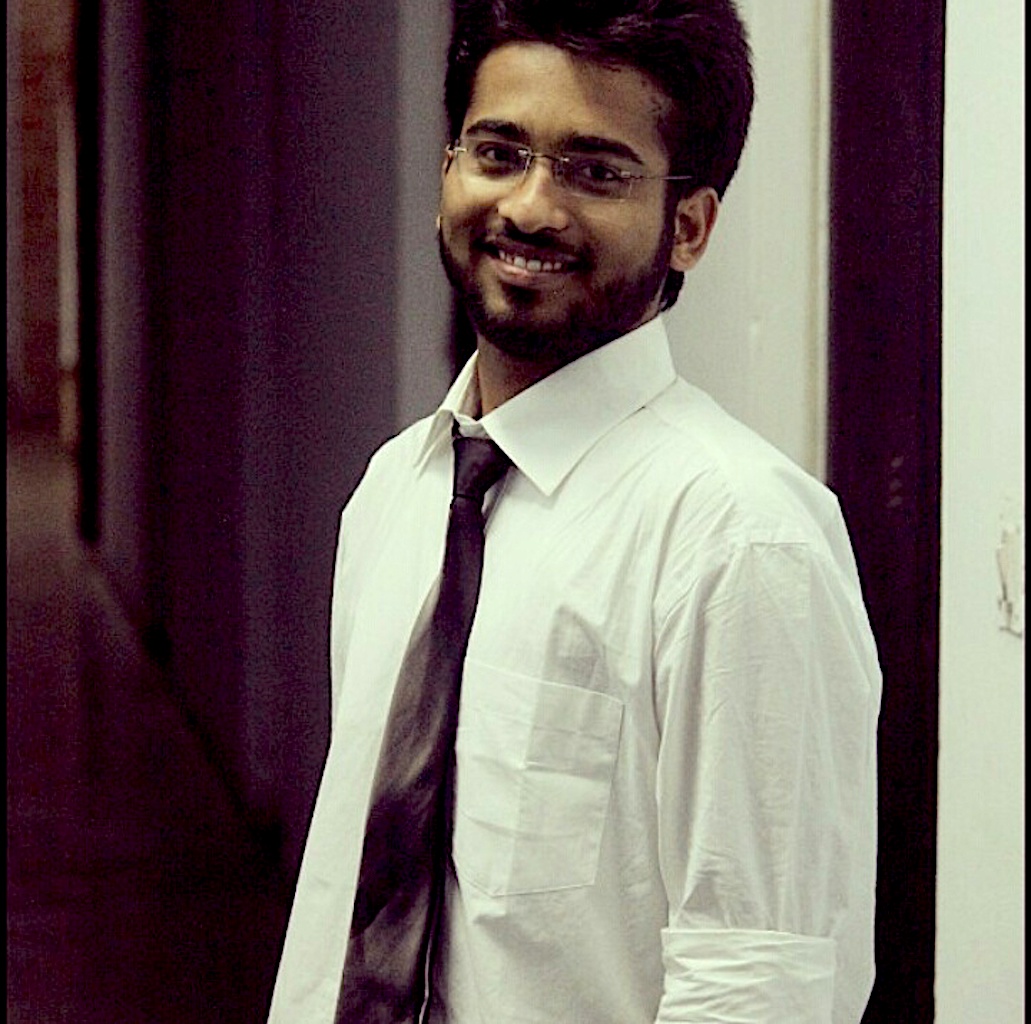
The story of Shahid Ahmed becoming IPS from IRS

Kanpur, UTTAR PRADESH :

If we have faith in ourselves, we can do anything. Shahid also believed that if everyone can do it, then I can also do it. And today Shahid is successful. This time he has got 475 rank in UPSC Civil Service Examination. Whereas in the previous examination he had secured 695 rank. 

Talking to BeyondHeadlines, Shahid says that last time I got IRS. But I want to become an IAS, so I continued my preparation. However, it is not so easy to prepare along with training, so this time I could only get 475 rank. On this rank you will get IPS. 

But you have to become an IAS? 

On this Shahid says, ‘Absolutely! I have to become an IAS. Insha Allah, I will continue my efforts next time as well. However, he also says that it may be difficult to appear in the exam next time because my training is going on in Nagpur right now. And it is almost impossible to appear in the exam during this time.’ But Shahid’s spirits are definitely high. 

It was not so easy for Shahid Ahmed of Kanpur city of Uttar Pradesh to do this. In 2016, his father suddenly passed away. The burden of responsibilities fell on him, despite this Shahid kept on preparing and succeeded in his second attempt last year. And now in the third attempt, he has also improved his rank. He is hopeful that in the future he will definitely become an IAS along with getting a good rank.

Shahid’s family earlier lived in Kidwai Nagar in Kanpur, but now they have shifted to Jajnu area. His father Haji Jameel Ahmed was a businessman. His mother Bano Ahmed takes care of the household chores. He is the fifth child in a family of six members. He has four elder sisters and a younger brother.

Shahid completed his 10th and 12th from Virendra Swaroop School in Kanpur. Then he came to Delhi for further studies. In 2015, he completed his BSc degree in Chemistry Honours from St. Stephen’s College, Delhi University. And now he is studying law from Delhi University. He is currently in the final year of BA LLB.

Shahid says that when I was in school, I had decided that I wanted to join the civil service because I always liked administrative things. I was a captain in the school. I used to manage many things in the school. That’s when my teachers told me that I should join the civil service. From there, I tried to learn about it. I read about it on the internet, then I decided that this is what I want to do.

Shahid had taken law as his subject. He says, because I am also studying law. This helps me a bit in other papers as well. That is why I thought it was better to take this.

Talking about his preparation, Shahid says, “I joined a coaching institute in 2016, but left it within a month. I did not think coaching was going to be of any use. I gave the test of Hamdard Study Circle and got selected. Then I stayed here and studied on my own. Here I got a chance to meet good people. I made friends with good people. The atmosphere here is very good. In 2017, I came to Jamia Millia Islamia. Here too I got a lot of guidance and help.

Shahid tells those who want to join civil service that before starting preparation, it is most important to research the syllabus and previous year question papers and understand them. Because there is a lot of material to study. But we have to study according to the syllabus very thoughtfully and with planning. It is also important to understand the demand of the exam.

He further says that, along with studying, it is also important that you know how to write. Whatever you have studied, if you are not able to write it in the mains paper, then there is no use. Nothing is going to happen to you.

Shahid is very interested in cricket. He also reads a lot of non-fiction books. Shahid says that this will not directly help you in the exam, but it definitely makes a difference to your personality. In such a situation, it can be beneficial for the interview. However, it is not necessary that it is beneficial for everyone. But it is certain that it creates a perspective to look at things.

Shahid says to the youth of his community, have you ever thought why we are less in government jobs. Ask yourself what is our percentage in civil service. Have you ever thought that there are not as many people here as there should be. What is the reason for this? Actually, lack of education is the real reason for this. The religion in which the importance of education has been emphasized the most, today the people of the same community are giving the least importance to education.

He further says that, my parents were also not educated, but they understood the importance of education and got all the brothers and sisters educated. In such a situation, it is important that all parents pay special attention to the education of their children. There is a need to pay special attention to the education of girls. They have a lot of potential. They just need to be allowed to move forward. If you support them a little and promote them to study, then in the future they will do the best. 

He further tells the youth that, first of all, you should believe in yourself that if everyone can do it, then we can also do it. Do not think that this is a very difficult exam. We will not be able to study. This thing should be removed from the heart and mind.

Finally Shahid says that, I always regret that if my father was here, he would have been happy with this success. He has educated me after a lot of struggle. I will have this regret in my heart throughout my life that I wish I could have seen my son doing this work or I could have achieved this success during his lifetime.

source: http://www.beyondheadlines.in / Beyond Headlines / Home> India> Real Heroes / by Afroz Alam Sahil, Beyond Headlines / April 20th, 2019

I had confidence in myself and kept working hard, that is why today I am an IAS…

Chhatabad Village (Dhanbad District), JHARKHAND :

Everything cannot always be in your hands. But working hard to achieve something is definitely in your hands. Rena Jameel also had to work hard, and today she has become an IAS because of her hard work. 

Born in Chhatabad village of Katras area of ​​Dhanbad district of Jharkhand, Rena Jamil has secured 380th rank in the UPSC Civil Service Examination this time. Whereas in the year 2016 examination, she had secured 882 rank.

Rena Jameel says that she got Indian Information Service in 2016. But she had dreams of becoming an IAS. It was also necessary to join training. That is why she gave UPSC again in 2017 along with training, but failed in the prelims itself. Still, I did not give up. I took a few days off and prepared. And as a result, I got 380 rank and now I have become an IAS.

Rena Jamil, UPSC Rank -380

Rena Jameel’s father Mohammad Jameel Ansari has retired from Tata Company. He was a mechanical engineer in Tata. While mother Naseem Ara is a home maker. She has four siblings. Elder brother Raunak Jameel Ansari is in Indian Revenue Service. He had secured 763 rank in 2014. Younger brother is an engineer and is currently working with Prasar Bharati. While younger sister is doing her masters and is preparing for admission in PhD. 

Rena studied in Urdu medium from Chhatabad Urdu Middle School till class 8. Then she completed her 10th and 12th from the same school. After that she did BSc in Zoology from S.S.L.N.T. Mahila Mahavidyalaya and M.Sc from P.K. Roy Memorial College. After this she also did B.Ed.  

Rena says, Ammi was always motivating for me. She never made me do household chores, rather she always insisted on studying. However, all this was not so easy for me. Just to study in college, I had to travel about 50 kilometers every day. Sometimes by bus, sometimes by auto or sometimes by walking for hours… I would leave in the morning and reach home only at night.

When asked that now you are an IAS, what will be your first task in the district you go to after training, Rena says that every district has its own problems. But my special focus will be on education and health sector. Because my experience with both these sectors has been very bad. I would not want that in my district someone loses his life due to health service and someone’s daughter’s education gets interrupted just because the college is very far away.  

Rena Jameel loves Urdu poetry. She has been reading Faiz, Ghalib and Iqbal in particular. The special thing is that Rena herself has written about 50 poems so far. All these poems are in Urdu language. 

What was the reason that made you decide that I have to join the civil service? 

In response to this question, Rena says that, generally, there is not much focus on the education of girls in our society. Even if the family is educating them, the only purpose is that they will get married in a good family. I also had many friends who were very sharp in studies, but somewhere they could not study further. Could not go ahead. Due to family pressure or other reasons. Many were not sent to college only because the distance to the college was too much, but in my case my family was a little supportive. In such a situation, I started thinking that I have to do something that becomes an example for others. Such people should listen to me who educate their girls only for marriages or do not educate them at all. Then I decided that I have to do something big so that I can become an inspiration for girls.  

How and where did you prepare for the exam? 

On this, Rena Jameel says that in 2014, my elder brother succeeded in this exam. I came to Jamia on his guidance. Before this, I had read NCERT thoroughly. I also used to read newspapers regularly. I took Zoology for this exam because I had done BSc and MSc in this subject. 

In a long conversation, Rena tells about her struggles that there were many ups and downs in my life journey. I could not succeed even after reaching the mains twice. I succeeded the third time but did not get what I wanted. Despite this, I had confidence in myself and kept working towards my goal. Today I am successful because of this. Although I was happy with this service too, but it was not my aim or goal. That is why I kept preparing along with the service. I only wanted to become an IAS and I became one.

What message would you like to give to those preparing for UPSC? 

On this question, Rena says that many things are not in your hands. Only hard work is in your hands. And yes! The fruit of hard work is always sweet. I also faced many problems. I also failed. All things kept happening with me. But I kept working hard continuously. I will tell you the same thing that always think about fulfilling your dreams. If I had not done this, then I would definitely not have been an IAS. I would have been doing the service of 2016. Therefore, patience is very important for success in this exam. 

Also I would like to say that you must read newspapers because it is important to read people’s thoughts, it helps you to develop your own thoughts. And yes! You should always keep your resources limited. If you keep yourself busy reading everything then you will never be able to complete your syllabus. Whatever you read, read it with all your heart and give it enough time. 

What would you like to say to the youth of the country, especially the girls of your community? 

On this, Rena says that education is everything today. So pay attention to education at all costs. Never shy away from working hard. If I can do it, then believe me anyone can do it. But for this you will have to come forward and work hard.  

She especially tells girls that you need to come forward and work hard. It is also the responsibility of the society to stop looking at girls with narrow mindedness. Rather, they should be encouraged. Girls have a lot of talent. If we just become a little open minded, they will go far ahead. It is also the responsibility of girls to work hard and fulfill their dreams… and yes, the dreams should be a little big. 

source: http://www.beyondheadlines.in / Beyond Headlines / Home> India> Real Heroes / by Afroz Alam Sahil, Beyond Headlines / June 19th, 2019

The Freedom Fighter and Labour Leader Abdul Bari Still Beloved in Jamshedpur

Shahbad District / Patna, BIHAR :

This May Day, remembering Abdul Bari.

Abdul Bari.

Abdul Bari is not a name that many Indians remember, but Munawwar, a committee member of the Tata Motor Workers’ Union in Jamshedpur, Jharkhand, holds the name in high esteem.

“I don’t see a leader like Abdul Bari [coming up] in the near future,” he said. “It is because of his efforts that we still get high tea at just six paisa.”

“Once, Bari went to the Tatas and he was offered tea. He asked them to first offer it to the workers, and then made an agreement which is still benefitting us. Upmaaloo chaapsamosa all for six paisa in the company’s canteens.”

Asked how they pay six paisa when currency that small no longer exists, he says, “We get token of Rs 2 or more and keep using it for weeks.”

Munawwar visits Bari’s grave every year on March 28, the death anniversary of the pre-independence labour leader, to offer flowers. This duty, he says, was assigned to him by the Tatas.

Thinking of labour in the days of capital

Despite the large numbers of workers who struggle to earn a square meal a day, major political parties remain hostile towards them. In the 55-page Congress manifesto, the words ‘worker’ or ‘workers’ appear 15 times; in the BJP’s 45-page manifesto, the words appears only five times – four while referring to Asha and anganwadi workers. ‘Labour’ figures 21 times in the Congress manifesto, and only twice in the BJP’s.

The Congress does talk about ending the workers’ exploitation and improving working conditions. The party’s manifesto details new schemes and promises to implement old ones related to organised, unorganised and contractual labour. But it is anyone’s guess how schemes that have been on hold for so long will suddenly spring to life.

Dilip Simeon, a founding member of the Association of Indian Labour Historians and former professor of history at Ramjas College, says that nobody talks about labour now because “in today’s context, the labour movement is influenced by communal sentiments”.

“If labour is with the BMS [Bharatiya Mazdoor Sangh] and Shiv Sena, then this is the weakness of the movement; if the labour movement wants to regain its power, then it has to face this challenge.”

Before independence, Simeon says, regardless of community, “leaders came together to advance the struggle of workers in India. Abdul Bari, Maneck Homi and Hazara Singh were their leaders. A Muslim, a Parsi and a Sikh could all be leaders of a workers’ movement.”

“Abdul Bari was so trusted that workers would start their protest first and then ask –what’s our demand?”

Bari was born in 1882, in Bihar’s Shahabad district. He was a student at Patna University in 1919 and was later appointed as a professor of history there, before he started studying law.

He quit to join the Khilafat movement, and actively participated in Gandhi’s civil disobedience movement and salt satyagraha. Bari did not restrict himself to the cause of one social group; he supported several political parties, including the Socialist Party and Swaraj Party, in parallel with the Congress. In addition, he was the voice of the labour movement in India and president of the Jamshedpur Tata Workers’ Union.

What Gandhi said about Bari

The journalist Afroz Alam Sahil has written a book on Abdul Bari, Professor Abdul Bari: Azaadi ki Ladaai Ka Ek Krantikaari Yodhha (Professor Abdul Bari: A Revolutionary Warrior of the Freedom Struggle). The author reveals several stories which won’t be found Indian history books. One such story is around Bari’s mysterious murder, and Gandhi’s reaction to it.

According to a report published by the Times of India on March 31, 1947, Bari was shot dead in the evening of March 28 while on his way home from Khushrupur, 24 miles from Patna. He was then the president of the Bihar Provincial Congress Committee. Following his death, a complete strike was observed, and Tata closed all its plants except essential ones.

Gandhi, in a speech on March 29, 1947, mentioned that he was struck by Bari’s simplicity and honesty. Gandhi added that he was planning to be more closely associated with Bari, and make an appeal to keep his short temper in check as it was not befitting of the highest office in Bihar. Gandhi referred to Bari in the same speech as “a very brave man with the heart of a fakir”. He declared that Bari’s death was the result of an altercation that had ensued between Bari and one Gurkha member of the anti-smuggling force, who was a former member of the Indian National Army.

The author mentions in this book that Bihar’s first Prime Minister (Premium) Barrister Muhammad Yunus had disclosed in an interview to the Orient Press of India that Bari had threatened to disclose the names of some prominent Congress leaders who were involved in the Bihar carnage – just three days before he was killed.

Yunus also said that Gandhi’s statement was given in haste. In his speech, Gandhi had told the audience that there was no politics of any kind in the death, and that it would be unjustified to associate the whole Indian National Army with Bari’s killing just because of one man’s actions.

In another incident discussed in the book, Gandhi arrives at Fatuaha station near Patna in the early morning of March 5, 1947. He travelled from Calcutta to Patna. Bari, chief minister Srikrishna Sinha and others welcomed him on the platform. As soon as Gandhi saw Bari, he laughed and said, “How is it that you are still alive?”

“This book is an attempt at bringing back his identity not just as a leader of the labour movement but a prominent leader of the freedom struggle of India,” the author says. “Professor Bari was one of the biggest leaders of the labour struggle in India. But limiting his role to even that would be unjust, because he was present in every chapter of the independence movement….The speciality of Abdul Bari is that he questioned his own party Congress when it came to the rights of workers.”

In a speech, Bari said, “We are in Congress to serve the poor of this country not to respect Gandhi, Rajendra Babu and Shri Krishna Babu…Lakhs of Indians who walk with them are not there to make them kings but to achieve freedom for this country.”

According to Sahil, “He criticised Gandhi and Rajendra Prasad many times because he was wholeheartedly committed to this struggle. He wanted to organise an all India conference for workers. He had formed the All India Mazdoor Sevak Sangh. He mentioned this in a letter written by him to Sardar Vallabh Bhai Patel on 22 June 1946.”

Why commemorate leaders like Bari today? Sahil has the answer. “Today when Muslim youth talk about Muslim representation, they must read more about Bari, the symbol of Hindu-Muslim unity, in order to understand their own political history and determine how it influences their future.”

Afshan Khan is a Delhi-based freelance journalist.

source: http://www.thewire.in / The Wire / Home> Analysis> Labour / by Afshan Syed (headline edited) / May 01st, 2019