Tag Archives: Bihari Muslims

Ali Hussain, the Unsung Bird Catcher Who Saved India’s Wings and Won Global Praise

Patna, BIHAR :

Born a bird trapper, Ali Hussain from Bihar became a guardian of India’s birds, working alongside top scientists and proving how traditional Muslim knowledge can serve the world’s wildlife
New Delhi / Patna :

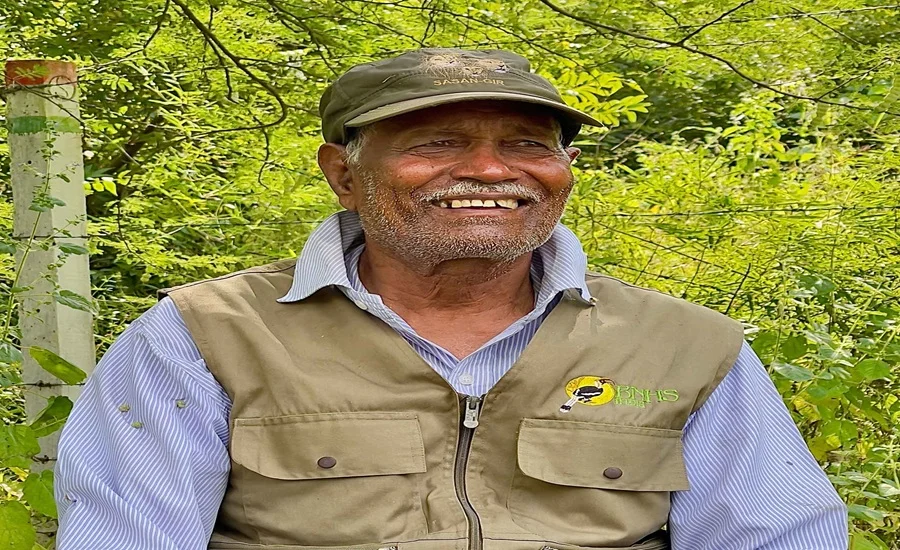
 When people first saw Ali Hussain walking through the fields of Bihar with bamboo cages and handmade nets, many thought he was just another bird catcher, and many called him that for years. But few understood what really made him special.

Ali Hussain, a quiet man from a family of traditional bird trappers, was more than what the eye could see. Behind his soft smile and weather-worn hands was a lifetime of wisdom passed down over generations. He had learnt to follow bird calls, understand their movements, and craft traps not to harm them, but to study and help them survive.

In the early 1960s, Hussain’s life changed forever. He met Dr Salim Ali, India’s most famous ornithologist, often called the “Birdman of India.” It was the start of a deep friendship and a shared mission. Instead of catching birds for trade, Hussain began working with scientists to catch birds for research and conservation.

“I had never met anyone like him,” Dr Salim Ali had once told colleagues at the Bombay Natural History Society (BNHS). “He handled birds like a doctor treats a child. Gently, with care. He knew more about them than many of us.”
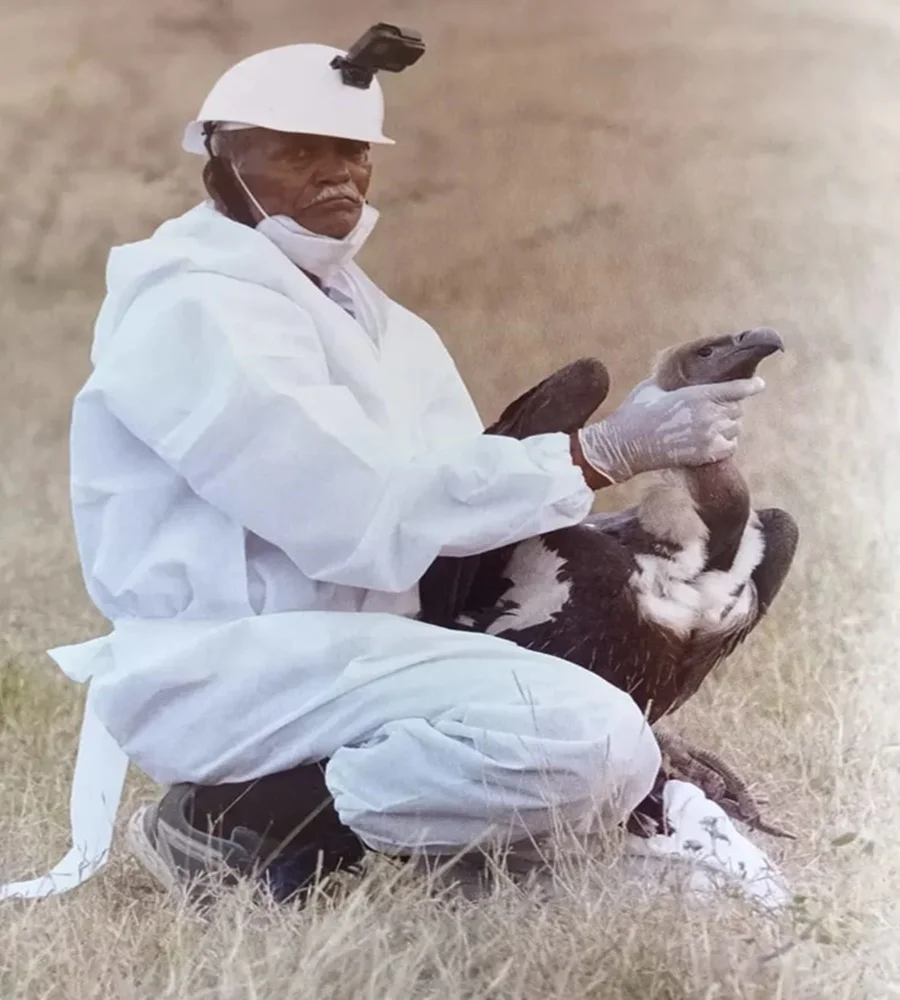
Ali Hussain helps capture and tag a vulture in Gir National Park. – Photo: Wildlife Division, Sasan-Gir, Gujarat

Hussain began travelling with BNHS teams across India, using his age-old skills to help ring thousands of birds. These rings, placed on birds’ legs, allowed scientists to track their migration and breeding patterns. And each bird was returned safely to the sky.

His fame didn’t stop in India. In the 1990s, American scientists from the Whooping Crane Recovery Programme invited him to the US. The whooping crane is one of the rarest birds in the world. Catching them was almost impossible until Hussain arrived there.

In just a few weeks, he safely captured 10% of the entire population without harming a single bird.

One American official said, “We were shocked. He caught birds we couldn’t even get close to. And they were all unharmed. It was a masterclass.”

For years, conservation efforts across the world relied mostly on modern technology — drones, satellites, and lab studies. But Ali Hussain showed that indigenous knowledge also has value.

“He never went to school,” said Mohammed Salim, one of his sons. “But he could read nature like a book. He knew where birds would land just by feeling the wind.”

His Muslim identity and simple lifestyle never stopped him from working with international scientists. In fact, it reminded many that people from rural and minority communities have a lot to offer when they are trusted and respected.

Even in his 80s, Ali Hussain never stopped helping. Young researchers from across India still come to his home in Patna, Bihar, asking him how to catch birds safely. His sons, trained under him, now assist with bird studies and continue the family’s work.

“Abba used to say, ‘Don’t hurt what sings. We’re here to protect, not harm,” recalled his eldest son, Iqbal Hussain.

For them, bird trapping was never about money. It was about respect — for life, for tradition, and for the Creator’s creation.

Despite his international praise, Ali Hussain was rarely honoured by Indian government bodies. No national award. No Padma Shri. No headlines on TV. Many believe this is because he was poor, Muslim, and from Bihar.

“People like him don’t fit the official image of a ‘scientist’,” said Prof Neelima Ghosh, an ornithologist from Delhi University. “But make no mistake, he taught us what our books couldn’t.”

Foreign universities invited him. Wildlife departments in the US and UK mentioned him in reports. Yet in India, he was mostly seen as “just a bird catcher.”

Ali Hussain’s connection with birds wasn’t just scientific — it was spiritual.

In many interviews, he said he felt that protecting birds was part of his faith as a Muslim. Islam teaches kindness to all living creatures, and he took that to heart.

“Birds pray too,” he once told a young researcher. “If we harm them, we stop their prayer.”
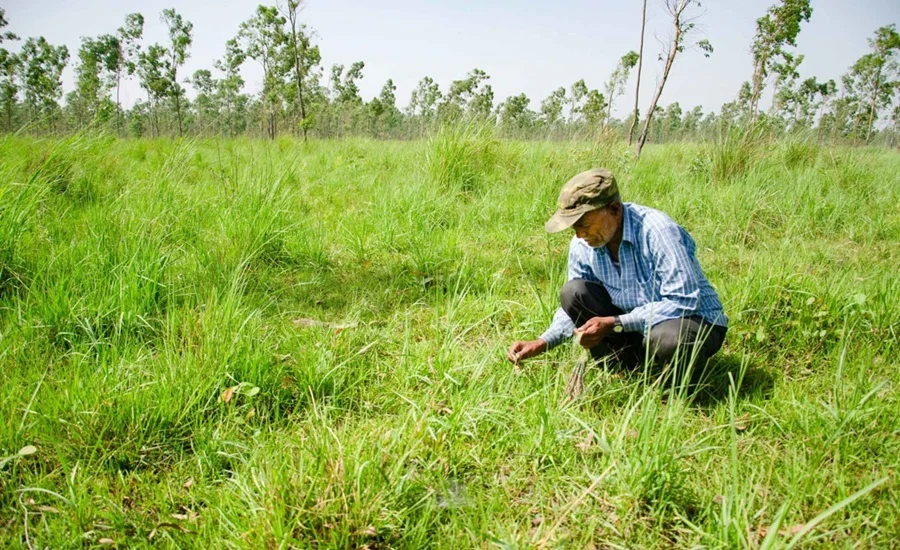
Ali Hussain sets traps to capture the Bengal florican in Pillibhit Tiger Reserve. Photo: Asad Rahmani taken from roundglas sustain

Today, his sons — Iqbal, Rashid, and Shafiq — run workshops on bird ringing and safe trapping. They continue to work with scientists from India and abroad.

“We grew up watching him work,” said Rashid. “He never rushed. He would wait for hours just to catch one bird the right way. Now we are doing the same.”

They are also trying to collect and record his trapping methods, which risk being lost as modern technology takes over. Many young Muslims from Bihar and West Bengal now visit the Hussain family to learn these skills.

In a country where Muslims are often shown in a bad light or made to feel like outsiders, Ali Hussain’s story is a powerful reminder of their quiet contributions. He didn’t protest, shout, or demand attention. He just kept working, helping both birds and humans.

“Ali Hussain should be in our school books,” said Dr Ramesh Gupta, a conservation writer. “Not because he was a Muslim, but because he was a great Indian.”

But maybe he deserves to be remembered because he was a Muslim too — a man who used his traditional knowledge, passed from father to son, to help save the very species others hunted.

He was not a scientist in the traditional sense. He didn’t wear a lab coat or speak English. He didn’t write research papers or held press conferences.

But to every bird that flew free because of him, and every student who learnt the gentle art of trapping from him, he was a scientist of the highest order.

He belonged to a generation of Muslims whose knowledge came from the land, who learnt by watching, listening, and respecting life around them.

India may not have celebrated him fully in his lifetime. But the birds did. And that’s something to think about.

source: http://www.clarionindia.net / Clarion India / Home> Editor’s Pick> Featured> Indian Muslims / by Mohammed Bin Ismail / July 08th, 2025

Where guns used to roar earlier, now ‘Shafqat Aamna’ has become an IAS

Adhakparia Village (East Champaran District), BIHAR :

Motihari: 

A village in East Champaran which was infamous for guns being pulled out on trivial matters and for fights, the village where last year a sarpanch was not only strangled by fearless criminals but also shot dead, now this same village will be known for the stories of Shafqat Amna becoming an IAS.  

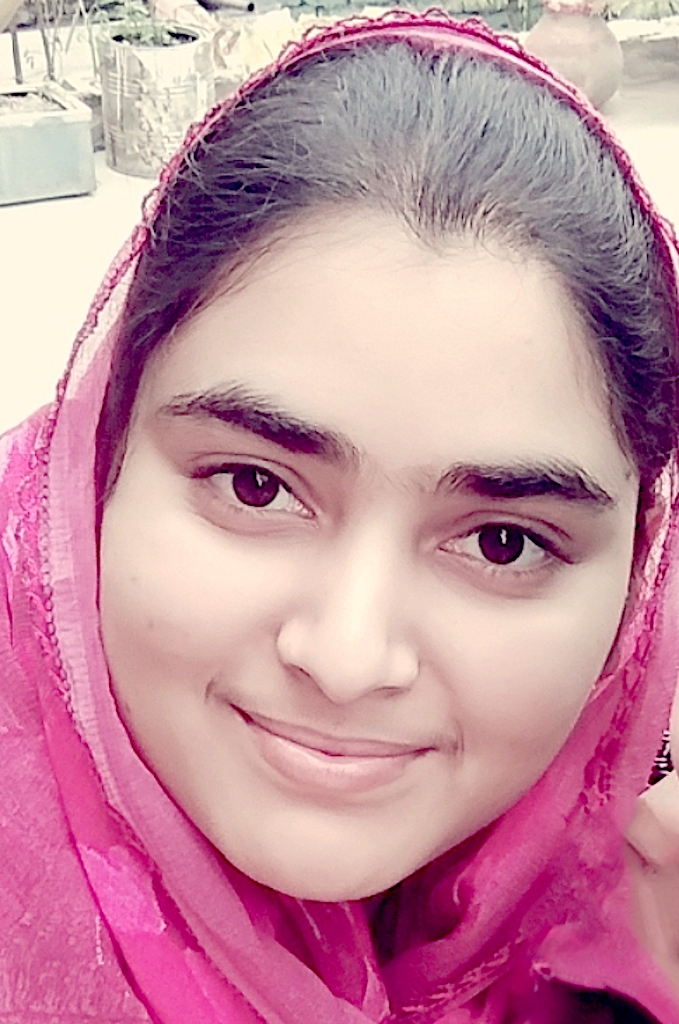
Shafqat Amna, daughter of retired teacher Mohammad Zafir Alam of Adhakparia village of East Champaran, has not only brought glory to her family by securing 186th rank in the UPSC Civil Services exam, but has also shown a path to lakhs of Muslim girls with the light of education. 

The whole village is rejoicing at Shafqat’s success. 65-year-old Zafir is not tired of thanking people for this success. 

In an exclusive conversation with BeyondHeadlines, Zafir Alam says, ‘We would like my daughter to work as an honest servant. She should strive for peace and prosperity in the society. And most importantly, she should take today’s new generation forward in the field of education.’

Let us tell you that Zafir Alam has retired as a teacher from an Urdu middle school in Agarwa village near Motihari. 

24-year-old Shafqat Amna says in an exclusive interview with BeyondHeadlines that the backwardness of the village and the lack of infrastructure always bothered me. That is why since childhood I wanted to live among the people and do something for them so that I could change their thinking and circumstances. My father, sensing this desire of mine, inspired me to join the civil service. 

Aamna says that my first choice is IAS and I am hopeful that I will definitely get IAS Insha Allah. 

When asked what will you do first after becoming an IAS? 

In response to this question, Aamna says that my first effort will be that whichever district I go to, I will first try to focus on education in the village. Since my father was a teacher, I understand the politics of teachers very well. I will inspire them to teach children honestly, away from that politics.  

What if I get IPS instead of IAS? 

On this question, Aamna pauses for a while and then after thinking says – I am hopeful that I will get IAS and I have not thought of anything else apart from this. But still if I get IPS instead of IAS then first of all I will pay special attention to law and order. I will try to maintain communal harmony in my district at all costs. I will try my best that there is never any fight or quarrel in my district, there is always mutual harmony.

When asked about preparing for civil services, Aamna says that, I would definitely like to tell those who want to join civil services that they should not start preparing for it suddenly, but first understand the syllabus well. If possible, try to take guidance from an IAS or IPS. Then start preparing for it thoughtfully with full courage and passion. Try to study smartly instead of studying like donkeys.

However, she also says that everyone’s way of preparing is different. The positive thing for me was that I had read NCERT books properly in school itself. So all the concepts were clear. I studied Geography very well in graduation as well. And yes, during my entire studies, I always had the habit of making short notes. These notes were very useful in my preparation. I paid full attention to its revision. Apart from that, I participated a lot in test series. 

Let us tell you that Shafqat Amna passed 10th from Jawahar Navodaya Vidyalaya in Bettiah, West Champaran. Then she went to Bokaro for 12th, passed 12th from DPS there. After that, circumstances became such that she had to return to the village. Here she got a BA Honors degree in Geography from a college of Bhimrao Ambedkar University in Motihari. After that, she came to Delhi in 2016 to prepare for civil services. Here she prepared by staying in the residential coaching of Jamia Millia Islamia and after failing twice, she succeeded this time in the third attempt.

Apart from her parents, Shafqat Amna’s family also has three sisters and a brother. Her younger sister is pursuing BA LLB from Jamia Millia Islamia. Her two elder sisters have completed B.Ed and are currently living with their mother in the village. 

Aamna says that the situation at home was never good. My father was the only breadwinner in the house. But he never neglected our education. Whatever I am today is because of my father. 

What would you like to say to the girls of the country? 

On this question, Aamna says that I would like to say that it is very important for you to get educated. And never underestimate yourself. Your hard work, your efforts can change your fate. But yes, for success you will have to make your own policy and your own routing. You will have to decide for yourself what things matter in your life…

source: http://www.beyondheadlines.in / Beyond Headlines / Home> India> Real Heroes / by Afroz Alam Sahil, Beyond Headlines / April 06th, 2019

Sir Fakhruddin (1868-1933): An Educational Visionary of Bihar

Dumri (Patna), BIHAR :

While working on my two books (soon to come: one on Muslim Politics in Bihar and another on Muzaffarpur Muslims, 1857-2011), while looking into primary and secondary sources I came across many personalities and institutions. One such person was Sir Fakhruddin whose contributions towards public life may interest many people. Hence I crave the readers’ indulgence.

[Sir] Syed Mohammad Fakhruddin [Khan Bahadur, 1868-1933] of Patna is credited to have the distinction of being the first Muslim Minister of Bihar and Orissa.

His father Md. Ali of the village Dumri, near Patna, took special care of his quality education. Having imparted elementary education in Arabic, Persian, and Urdu in the village Maktab, Fakhruddin was put under the tutelage of Md. Yahya, advocate, a big rais of Patna, with deep interest in music and literature. Yahya was the husband of Rasheedun Nesa (1855-1926, the author of the Urdu novel, Islahun Nesa, 1881/94, and a pioneer of modern education to women in Patna).

Fakhruddin did his BA from the Patna College in 1891, and B.L. in 1893, and started court practice under the guidance of Yahya in the district court of Patna. He was also associated with the Bihar Provincial Association.

Having earned good reputation as advocate he was elected member Bengal Council in 1910, which Fakhruddin quit after becoming the government pleader (1917-20) in the High Court of Patna, established in 1916-7. In 1921 he was elected member of the Bihar and Orissa Legislative Council, and he kept winning the elections till his death in 1933.

Thus, during 1921-33 he also served as minister of education besides few other significant departments. His contribution as minister in pushing the cause of education is distinctive. His efforts towards promoting primary and secondary education are noteworthy.

 The Deputy Directors of Public Instruction were made to undertake tours of Bihar and open schools. Fakhruddin worked hard towards enhancing the budgetary allocation for education. He also made efforts towards charkha operation in the government schools but remained largely unsuccessful in that. He mobilized funds for construction of college buildings and hostels. He was passionate about it.

Reconstruction of Patna’s BN College building and its three storeyed hostel, the imposing building of the Science College (Patna), two storyed hostel for the Science College, the Patna College Hostel (later became famous as Iqbal Hostel), two storeyed PostGraduate Hostel of Ranighat (Patna), Patna Training College are his creations.

Besides, he also allocated fund for the buildings and hostels of the Muzaffarpur’s GBB (LS) College, Cuttack’s Ravenshaw College, Bhagalpur’s TNB Colllege, two big buildings for the Madrasa Shams-ul-Hoda, which was taken over by the government, and eight professors’ quarters in Ranighat (Patna) are also his creations. For the cause of Urdu, he set up a Madrasa Board in 1922.

Madrasa Shams-ul-Hoda

Fakhruddin had also prepared an ambitious plan of converting the Patna University in a big residential university for which he also influenced the Nathan Committee to make favourable recommendations. This was to be established in the Phulwari Sharif. But it did not see the light of the day as a large number of the members of the Bihar and Orissa Legislative Council opposed it on the arguments that the campus will go far beyond the city; a member went on to allege that Fakhruddin was taking the University to the doors of his Pir. The Searchlight is said to have regretted this myopic opposition as the Bihar’s capital city was deprived of quality residential university.

He created and institutionalized Bihar Educational Service Class I, and went on talent hunt to recruit meritorious teachers for the Patna University.

With these efforts he brought in Dr Gyan Chand as professor of Economics, Prof. Taraporewala (History), Prof. Jamuna Prasad (Psychology), Prof. Hill (English), Prof. Shiv Parvati Prasad (Physics). They were posted on handsome salaries.

There used to be an insistence by the colonial regime to recruit only those candidates as Class I teachers who had obtained degrees from Europe.

Prof. Nayyar Laeeq Ahmad (who later became Principal, Andheri College, Bombay), and Prof. Jadunath Sarkar were also recruited. Sir Fakhruddin resisted this racism, without much success at the time, even though it was diluted subsequently in 1940s when Prof. K K Datta (History, 1944) was taken in.

Sir Fakhruddin brought a bright professor of Law from BHU to make him Principal, Law College, and Prof. Boman Sanjana of Bombay was brought in the Civil Engineering.

In order to overcome the dearth of talented teachers he also instituted State Scholarship programme on which promising students of BA and MA were sent oxford and Cambridge for higher degrees and they had to return back to teach in the colleges of Patna University.

Kishori Prasad Sinha, Fazlur Rahman, and Kalimuddin Ahmad for English literature; Ghanshyam Das for History, Balbhadra Prasad and Qamruddoja for Chemistry, Bhairavnath Rohtagi for Economics were few such luminaries. Sadly, with the death of Sir Fakhruddin this bright scheme also died.

The Bihar School of Engineering was upgraded to ‘College’ by him. He also established the Veterinary College of Patna and recruited many teachers from outside.

Besides education, he also held the portfolio of cooperative and he made it a movement of sorts, more particularly in Tirhut. He convened a conference of Cooperatives in Hajipur when Ahmad Husain (1886-1948), an Aligarh graduate of Muzaffarpur, was posted as SDO in Hajipur.

For all these unforgettable contributions, Dr Rajendra Prasad held him in very high esteem.

Sir Fakhruddin, a bearded, fair-skinned fellow was a devout practicing Muslim with punctualities of namaz. Sherwani, pajama, Turkish cap was his preferred dress. The masjid near the Patna Railway Junction was reconstructed by him by investing around Rs. 20-25 thousand, which is now the Jama Masjid of Patna; for long it was called ‘Sir Fakhruddin Masjid’.

As a minister, he never used government quarters; rather he preferred to work from his own house in Patna, nor did he accept police protection. He was a good orator in both English and Urdu.

His sons- Azizul Haq was a renowned advocate of Patna High Court, Anisul Haq was Deputy Collector, Habibul Haq was in judicial services.

(Mohammad Sajjad, Assistant Professor at Centre of Advanced Study in History, AMU, Aligarh)

source: http://www.twocircles.net / TwoCircles.net / Home / by Mohammad Sajjad / October 13th, 2025

Bihar Collective to Release Booklet “Remembering Muslim Makers of Modern Bihar” in Patna on Feb 23

Patna, BIHAR :

Patna :

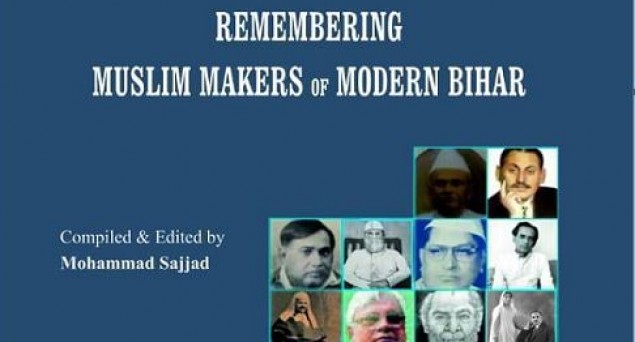
In an era of unprecedented majoritarian ascendance and anti-Muslim hatred, Bihar Collective, a platform of intellectuals and activists, has brought out a booklet highlighting the contribution of eminent Muslims in making the modern Bihar in the last 200 years.

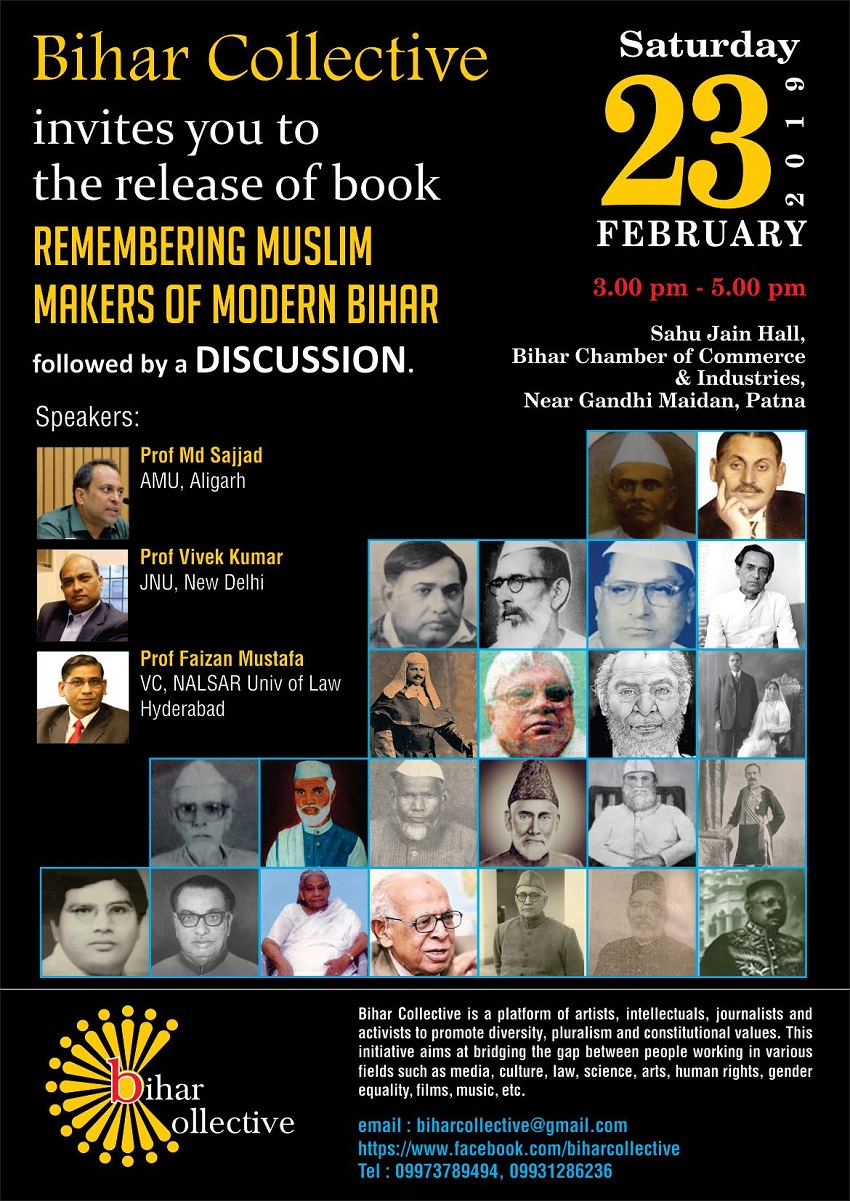
The booklet titled Remembering Muslim Makers of Modern Bihar has been compiled and edited by renowned academician and writer Prof. Mohammad Sajjad on the initiative of Bihar Collective.

The booklet will be released at an event in Patna on Saturday (February 23).

On the occasion, a discussion will also be held with Prof Faizan Mustafa, Vice Chancellor, NALSAR University of Law, Hyderabad; Prof Vivek Kumar, JNU, New Delhi; and Prof Mohammad Sajjad, AMU, Aligarh as panelists.

A Brief about Booklet:


Pre-empting a reasonable question about the title of the booklet, Prof Sajjad, who has compiled and edited it, writes in its preface: “A simple and obvious question that may readily arise is: why only Muslim makers of modern Bihar? Why not others too? This is indeed a valid and pertinent question.”

Responding to the question, he further says: “Candidly put, this is because of an unprecedentedly menacing rise of majoritarianism, bigotry, and anti-Muslim hatred, with open support of the state.

The Muslim identities are ominously threatened. There are also unabated attempts to dilute (or even take away) whatever little accomplishments have been made by the forces of social justice and secularism.

Only the Muslim segment however is threatened by the jingoist, exclusionary, violent nationalists, to be thrown out to another country. As if the other country is a dustbin, owned by these bigots, into which they can throw away everything they dislike! As if only the religious majority constitutes the nation! Notably, these jingoists had aligned with the British and had stayed away from the national movement.”

“Muslim contributions in the nation-making (and in the freedom movement) remain under-acknowledged, forgotten or even omitted. Erasure of their histories and memories seem to have become even more pronounced and vociferous, now, than ever before…The Bihar Collective therefore decided to compile a short profile of these inspiring role models, history-makers…This is small and humble step towards retrieving and restoring the nationalist provincial pantheons bearing Muslim identities,” says Prof Sajjad.

He, however, admits that the list of Muslim heroes of Bihar given in the booklet is not exhaustive as “…many have been left out essentially because of lack of documentations and researches. Not many have left their own accounts/memoirs; the available memoirs/accounts have not written much about all the personalities. In many cases, even otherwise “resourceful” descendants and/or associates of the history-makers have not been able to provide us with adequate (and credible/verifiable) details.”

Prof Sajjad hopes this small exercise may lead to some big academic work on these history-makers. “In short, this kind of venture may be said to be an ongoing exercise. This effort may hope to open up (and obtain) more details about such history-makers and would also get to know about many more of such peoples and processes, we failed to include here in this hastily prepared tiny volume, amidst constraints of resources and time.”

Names of Muslim Makers of Modern Bihar Mentioned in Booklet:
1. Syed Imdad Ali (d.1886]
2. Khuda Bakhsh (1842-1908)
3. Syed Amir Husain (1843-1910)
4. Imdad Imam Asar (1849-1934)
5. Shah Badruddin(1852-??)
6. Syed Ali Bilgrami (1853-1911)
7. Rasheed-un-Nesa (1855-1926)
8. Syed Noorul Huda (1855-1939)
9. Justice Syed Sharfuddin (1856-1921)
10. Shaikh Gulab (1857-1920)
11. Sarfaraz Husain Khan (1860-1931)
12. Maulana Mazharul Haque (1866-1930)
13. Batakh Miyan Ansari (1867-1957)
14. Sir Fakhruddin (1868-1933)
15. Syed Ali Imam (1869-1932)
16. Syed Hasan Imam (1871-1933)
17. Salahuddin Khuda Bakhsh (1875-1931)
18. Shafi Daudi(1875-1949)
19. Khwaja Md. Noor(1875-??)
20. Abdul Wadood (d.1955)
21. Syed Abul Hasan (1878-1960)
22. Sir Sultan Ahmad (1880-1963)
23. Maulana Sajjad (1880-1940)
24. Pir Mohammad Munis (1882-1949)
25. Abdul Bari (1882-1947)
26. Syed Sulaiman Nadvi (1884-1953)
27. Mohammad Yunus (1884-1952)
28. Shah Md. Zubair (1884-1930)
29. Syed Abdul Aziz (1885-1948)
30. Zubaida Begum Daudi (1886-1972)
31. Syed Tafazzul Karim (1886-1964)
32. Mr. Mohammad Shafi (1888-1955)
33. Qazi Ahmad Husain (1889-1961)
34. Dr. Syed Mahmud (1889-1971)
35. Ali Husain Aasim Bihari (1890-1953)
36. Shah Mohammad Umair (1894-1978)
37. Abdul Ahad Mohammad Noor (1894-1975)
38. Hakeem Md. Kabiruddin (1894-1976)
39. Maulana Usman Ghani (1896-1977)
40. Manzoor Ahsan Aijazi (1897-1969)
41. Shah Md Ozair Muni’mi (1899-1961)
42. Maghfur Aijazi (1900-1966)
43. Syed Jafar Imam (1900-1965)
44. Syed Badruddin Ahmad (1901-1983)
45. Mohammad Tahir (1903-???)
46. Syed Jafar Imam (1903-1979)
47. Syed Fida Husain (1904-80)
48. Abdul Qaiyum Ansari (1905-1974)
49. Wajihuddin Minhaji (1907-1984)
50. Syed Md. Aiyub (1910-1964)
51. Abdul Sami Nadvi (1913-????)
52. Abul Hayat Chand (1914-1958)
53. Ahad Fatmi(1915-1980)
54. Zawwar Husain (1916-80)
55. Shafiqullah Ansari (1917-1980)
56. Shah Mushtaq Ahmad (1917-2002)
57. Abdul Ghafoor (1918-2004)
58. Col. Mahboob Ahmad (1920-1992)
59. Taqi Raheem (1920-1999)
60. Zahra Daudi(1923-2003)
61. Shakoor Ahmad (1924-1981)
62. Syed Hasan (1924-2016)
63. Yunus Lohia (1925-2019)
64. Ghulam Sarwar (1926-2004)
65. Syed Shahabuddin (1935-2017)

A Brief about Author:


Prof Mohammad Sajjad teaches late-colonial and post-independent Indian history at the Centre for Advanced Study in History, Aligarh Muslim University. He has written several books including Muslim Politics in Bihar: Changing Contours; and Contesting Colonialism and Separatism: Muslims of Muzaffarpur since 1857.

His articles are published in reputed academic journals from Routledge, Sage, EPW etc. and also in anthologies from the Oxford University Press and Cambridge University Press.

Bihar Collective:
It is a platform of artists, intellectuals, journalists and activists to promote diversity, pluralism and constitutional values. It aims at bridging the gap between people working in various fields such as media, culture, law, science, arts, human rights, gender equality, films, music, etc.
Email: biharcollective@gmail.com
Facebook: https://www.facebook.com/biharcollective

source: http://www.indiatomorrow.net / India Tomorrow / Home> Society / by India Tomorrow / February 21st, 2019

Outstanding Students Honoured with Medals for Academic Excellence in Patna

Patna, BIHAR :

Patna :

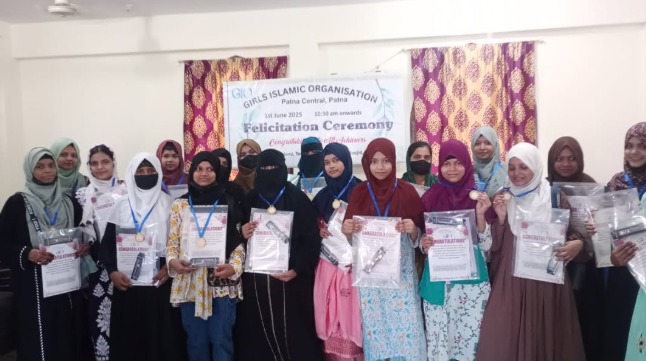
Girls Islamic Organisation (GIO), Sultan Ganj Unit, Patna, organised a felicitation ceremony on Sunday at Markaz-e-Islami, Tekari Road, to honour over 100 meritorious students who secured excellent marks in Class 10 and 12 examinations. The achievers were awarded medals and congratulatory cards in recognition of their academic accomplishments. The event also included guidance sessions to support their future educational journeys.

The chief guest, Mohammad Shehzad from Allied IAS, delivered a comprehensive guidance talk under the theme Care and Guidance, sharing professional and academic opportunities from an Islamic perspective along with practical insights.

Motivational speaker Shazia Ahsan emphasised the value of hard work, self-confidence, and positive thinking in her inspiring speech aimed at empowering the students.

Dr. Zubiesh Firdous, Secretary Women’s Wing Jamaat-e-Islami Hind Bihar, delivered a thought-provoking address on the topic Balancing Deen and Dunya (religion and worldly life). She stressed the need for a harmonious blend of religious and secular education.

Umme Kulsoom, President of GIO Sultan Ganj Unit, introduced the organisation and highlighted its mission of empowering girls and women through education and awareness.

The event was attended by teachers, students, and parents who appreciated the efforts taken by the organisation.

The program began with a spiritual reminder from the Qur’an by Anjum Mukhtar. A soul-stirring na’at (poem in praise of the Prophet ﷺ) was beautifully rendered by Musheerah Fatima, filling the atmosphere with a spiritual essence. Saima Parveen presented an emotionally resonant poem, which was well received by the audience.

The event concluded with closing remarks and a vote of thanks delivered by Shagufta Bano, City Secretary of Patna .

source: http://www.radiancenews.com / Radiance News / Home> Education> Report / by Radiance News Bureau / June 01st, 2025

Book Review: Reclaiming Syncretic Histories – A Journey Through Bihar’s Sufi Landscape

BIHAR :

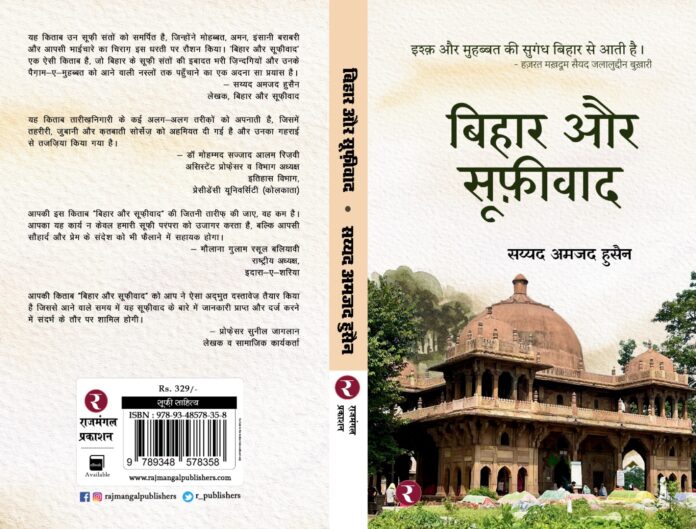
In a time marked by growing communal tensions and polarizing narratives, young author and scholar Syed Amjad Hussain’s book ‘Bihar Aur Sufivad’ arrives not only as a work of history but also as a much-needed spiritual intervention. Spanning more than 300 pages, the book immerses the reader in Bihar’s rich and pluralistic Sufi heritage, offering a profound counter-narrative rooted in peace, love and human dignity.

Bihar is generally remembered for its political agitations and socio-economic challenges, but beneath the surface lies an older, deeper history – a rich tapestry of sufi saints who arrived as early as the 12th century. Through systematic research and a respectful tone, Hussain revives this forgotten spiritual geography.

Beginning with the arrival of Hazrat Peer Shah Mushk Nafah, Hazrat Momin Arif Ansari Yemeni and Hazrat Imam Muhammad Taj Faqih Zubairi Hashmi, followed by the transformative presence of Hazrat Qazi Syed Shahabuddin Suhrawardi Peer Jagjot Kashgari in Fatuha (Patna), the book presents a chronologically overlapping map of Sufi presence in Bihar. These are not mere biographies; they are glimpses into a world where divine love was not only preached but lived, practiced and internalised.

Thematic Depth, Scholarly Rigor

Divided into well-organised sections, ‘Bihar Aur Sufivad’ details the lives of 20 influential sufi saints. Each chapter offers insights into their teachings (taalim), spiritual practices, miracles (karamaat) and most importantly, their social engagements. The saints in Hussain’s work are not passive mystics withdrawn from the world; they are reformers, healers, poets and bridges between communities.

The book also discusses the various sufi orders (silsilas) present in Bihar – Firdausi, Shattari, Husami, Warsi, Chishti, Qadri, Suhrawardi and Naqshbandi – illustrating how each infused its own spiritual philosophy into the soil of Bihar. Of special mention is Hussain’s inclusion of female figures such as Hazrat Bibi Kamal of Kako Sharif, a rare and valuable recognition of women’s contributions to Bihar’s mystic culture.

Language, Tone and Accessibility

Hussain’s writing flows with a gentle rhythm that recalls classical Urdu and Hindi scholarship yet remains accessible to contemporary readers. The prose is rich and poetic without sacrificing academic precision. His background as a researcher is evident in the meticulous citation of works in Persian, Urdu, Arabic, Hindi and English, many of which are obscure or little known to the general public.

This is not a dry academic treatise; it is a living, breathing narrative of spiritual heritage, crafted to engage scholars, young seekers and general readers alike.

Relevance in Today’s India

What makes the book particularly significant is its timing. At a moment when histories are being erased or rewritten to suit political agendas, this book affirms that India’s collective spiritual heritage must not be forgotten. The sufi saints of Bihar transcended caste, creed and religion. Their khanqahs were open to people of all faiths. They preached service, not supremacy.

In this age of ideological divisions, Hussain’s work reminds the bridges that once united communities. It is a call to return – not to nostalgia, but to the ethics of inclusiveness, humility and compassion that the sufis embodied.

‘Bihar Aur Sufivad’ is more than a book; it is a spiritual journey and a historical reclamation. In reviving the voices of Bihar’s forgotten sufi saints, Hussain does more than pay tribute; he builds a bridge for contemporary readers to reconnect with a heritage that offers solutions to some of our most pressing problems.

This book deserves a place not only on library shelves but also in classrooms, living rooms and community discussions. It is an invitation to think, to remember and to heal.

Hussain has not merely authored a book – he has attempted to revive a spiritual legacy and present it afresh to the modern world. This work warrants a place of honour in the study of Indian Islam, Sufism and regional spiritual histories. It is hoped that it will inspire further research, dialogue and, most importantly, personal transformation.

It is strongly recommended for scholars, spiritual seekers and anyone interested in the rich diversity of India’s syncretic traditions.

Book Name: Bihar Aur Sufivad / Author: Syed Amjad Hussain / Publisher: Rajmangal Prakashan / Published: April 27, 2025 / Language: Hindi / ISBN: 978-9348578358 / Pages: 308 / Price: Rs 329

(Dr. Shujaat Ali Quadri is an Indian journalist, deputy director of the Indo-Islamic Heritage Center and the chairman of the Muslim Students Organisation of India)

source: http://www.twocircles.net / TwoCircles.net / Home> Arts & Culture> Book Review / by Dr Shujaat Ali Quadri / May 07th, 2025

Abdullah Bihar Topper in JEE (Main), Says Miles to Go

Aunsi (Bisfi – Madhubani District), BIHAR :

Patna:

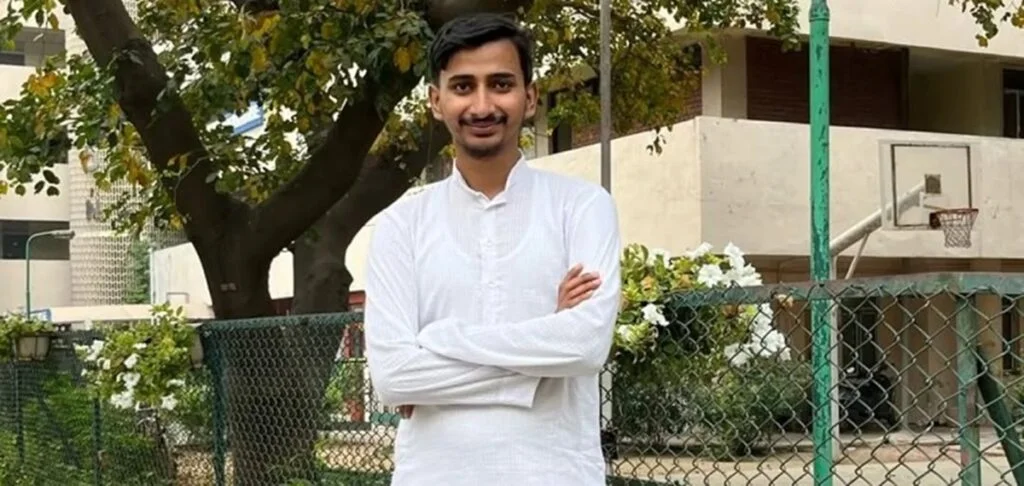
Abdullah, known by only his single name, topped the list of successful candidates from Bihar who appeared for the JEE (Main) 2025, Session 2. The result was announced late at night on Friday. He scored 99.9945499 percentile, but he is not in a celebratory mood. He wishes to top the JEE (Advanced), which ensures admission in the best IIT.

Abdullah hails from Aunsi in Bisfi under Madhubani district. His father, Mohammad Sabir Hussain, is an assistant teacher, while his mother, Tarannum, is a homemaker. Abdullah is the eldest among five siblings.

Abdullah is preparing for the next stage of JEE – JEE (Advanced) at Kota, Rajasthan. He is very keen to study Computer Science. He wants to do better in the upcoming test, while his father says that Abdullah also aims to qualify UPSC.

Abdullah, after getting the result, said that he felt very good for it but it was just beginning and he has miles to go. He said that his routine continues to be the same and he was focusing on completing his daily assignments.

Abdullah completed his matriculation from Madhubani and then moved to Kota for his preparation. He secured 90 percent marks in his I.Sc. examination. Abdullah keeps from smartphone as he considers it a distraction.

source: http://www.radiancenews.com / Radiance News / Home> Education / by Radiance News Bureau / April 20th, 2025

Dr. Ejaz Ali: The Patna Doctor Who’s Been Charging Rs 10 for 30 Years

Patna, BIHAR :

Patna : 

In an era where medical expenses are skyrocketing, a doctor from Patna has been a beacon of hope for the poor and underprivileged.

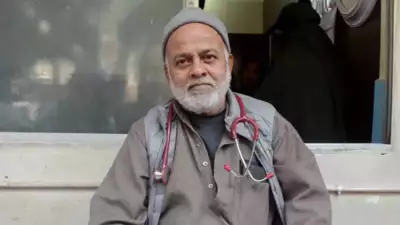
For an astonishing three decades, Dr. Ejaz Ali has been charging a mere Rs 10 for consultation, earning him the revered title of “messiah” among his patients.

From March 20, 2008, to July 7, 2010, he represented the Janata Dal (United) in the Rajya Sabha from Bihar. He has also served as the National Convenor of the All-India Backward Muslim Morcha, an organization dedicated to campaigning for Dalit Muslims since its founding in 1994.

Since 1984, Dr. Ali has worked as a general surgeon in Bikhna Pahari, Patna. The kind physician took a different approach, while the others around him charged exorbitant fees. By keeping his fees at Rs 10, he made himself available to those in need.

His clinic, which is situated in Bikhna Pahari on Ashiana-Digha Road, draws patients from all across Bihar who are looking for reasonably priced healthcare.

With more than 100 patients every day and multiple surgeries completed, Dr. Ali’s dedication to affordable healthcare is clear. He emphasizes his consistent commitment to aiding people in need. In order to save them money on lodging and other costs, he makes sure that every patient who has travelled to visit him receives a consultation that same day.

In addition to charging minimal fees for consultations, Dr. Ali performs surgeries at a reasonable cost. He permits his patients to pay in installments and even declines to charge them.

The late wife of Dr. Ali was a doctor as well. His three children now work in the same field, truly carrying on their father’s legacy. They asserted that their father has always put patients first.

His daughter, Gynecologist Dr. Suraiya Anjum, says, “He is the type of person who never yells or becomes agitated. Patients frequently regard him like a messiah.

Despite his fame and recognition, Dr. Ali remains humble and dedicated to his work. His clinic continues to attract patients from all over the state.

source: http://www.twocircles.net / Two Circles.net / Home> Articles> Indian Muslim / by TCN News / February 03rd, 2025

From a Village to Google: Zoriz Ahmed’s Journey of Perseverance and Success

Jalwara Village (Darbhanga), BIHAR :

The success story of a villager in Bihar reflects the transformative power of education. secured a prestigious position at Google with an impressive annual package of ₹39 lakh

Jalwara, BIHAR :

Zoriz Ahmed, a bright student from Rahmani30 educational movement started in Bihar state’s capital city of Patna, has recently achieved a remarkable milestone. After completing his engineering degree at IIT Delhi, Zoriz secured a prestigious position at Google with an impressive annual package of ₹39 lakh. His journey, marked by perseverance and dedication, has become a beacon of hope for others.

Hailing from Jalwara, a small village in Darbhanga, Zoriz’s path to success was anything but easy. The QT assembly constituency, where his village is located, has historically struggled with low educational attainment. Despite these challenges, Zoriz’s parents, Shakeel Ahmed and his wife, a homemaker, prioritised their son’s education. Shakeel rented a room in Darbhanga to ensure Zoriz had better schooling.

Zoriz’s aptitude for mathematics and problem-solving became apparent early on, and in 2019, he was selected for Rahmani30, the institution focused on preparing underprivileged students for the IIT Joint Entrance Examination (JEE).

At Rahmani30, Zoriz found the environment that would shape his future. “The teachers at Rahmani30 were exceptional, but what truly set it apart was the combination of a disciplined, religious atmosphere and a laser-sharp focus on academic excellence,” Zoriz shared. The institution’s rigorous training, combined with its focus on values, helped Zoriz hone both his technical skills and personal growth, ultimately leading him to IIT Delhi.

Zoriz’s family faced constant financial difficulties. “There were times when we struggled to make ends meet, but my father never let me feel the burden. His sacrifices and unwavering belief in my potential kept me going,” Zoriz recalled. Despite these hardships, he remained committed to his education, believing that challenges foster growth. “The darkest moments of the night come just before the dawn,” he said, quoting a Chinese proverb that mirrors his journey.

Now, Zoriz stands at the threshold of a new chapter with Google, where he will work with an annual package of ₹39 lakh. “It’s not just about succeeding academically,” Zoriz emphasised. “Education shapes us into better individuals and that is the true measure of success.”

His success is not only a reflection of his academic excellence but also of his values, discipline, and hard work. “The teachers, the values, the hard work — it all comes together to shape the person you become,” Zoriz said.

Zoriz’s journey reminds us of the power of education and perseverance. He encourages others, especially those from underprivileged backgrounds, to remain dedicated to their goals. “If I can make it, so can others. The road may be tough, but it’s worth every bit of effort,” he said.

Zoriz’s success highlights the critical role of institutions like Rahmani30 in shaping the futures of talented youth from underserved communities. “Rahmani30 allowed me to realise my potential. Without it, I wouldn’t be where I am today,” he said, emphasising the importance of mentorship and access to quality education.

Zoriz Ahmed’s story is a powerful testament to the transformative power of education and the importance of perseverance. His success is not just his own; it is a symbol of the potential that lies within every young mind, regardless of background.

source: http://www.clarionindia.net / Clarion India / Home> Featured> India> Indian Muslim / by Team Clarion / December 26th, 2024

These Biharis left their luxurious life for imparting education to the underprivileged

Siwan, BIHAR :

Siwan (Bihar): 

Malcolm X rightly said, “Education is the passport to the future, for tomorrow belongs to those who prepare for it today.”

Dr Wasim and Tanweer Ahmad perhaps had the same thoughts in their minds as they came up with the idea of providing an enriching environment to those who cannot afford the luxury of education. They along with their colleagues left their comforts of life and well-established occupation to impart education to the underprivileged children of their home district i.e. Siwan.

Dr Wasim along with Tanweer Ahmad, Sharique Ahmad, and Sana Hussain, were keen to establish an institution that would serve as a ladder to the children who were underprivileged and could not afford basic education due to the paltry amount of resources.

Dr Wasim is a doctor from Aligarh and has completed his education from Aligarh Muslim University (AMU). He worked in a government hospital but gave up his job, to educate the children who are the leaders of tomorrow and who are the faces of our future.

Tanweer Ahmad, who hails from Siwan itself has completed his MBA from Williams college of LONDON and holds the post of the Director and he juggles between the tasks of administration as well as imparting knowledge to the children.

Sana Hussain, who holds the post of the Principal at the school, has achieved her master’s degree from South Korea. She works hard to maintain the smooth functioning of this institution’s administration and imparts education to the blooming buds.

Sharique Ahmad, who is also a pillar of this school, has achieved his double master’s degree in Education and English from Delhi University and AMU respectively. He works as a student counsellor and teachers’ trainer at the school. He aims at not only providing efficient educators but also endeavours to become a patient listener and a solution provider to these curious and creative minds.

They established a school named ‘bloombuds’ in Barharia, Bihar. Bloombuds was an idea born due to the concerns of its founders over rising illiteracy rates in certain parts of Bihar. The school came into existence in January 2016.

“This school has been established with the idea of providing an enriching environment to those who cannot afford the luxury of education”, says Dr Wasim, the chairman of the school.

Sana Hussain says, “We are constantly endeavouring to provide all essential facilities for the children. We aim at providing every facility that we couldn’t get while we were students; we are constantly working to educate the young minds. We are often told that we shouldn’t have left our jobs and compromised on our well-settled future but the contentment we derive out of imparting knowledge to these underprivileged children and providing them with resources that could help them  lead a better life is unmatchable.”

These four pillars of bloombuds are in a constant endeavour at providing all essential facilities for the children. They aim at providing every facility that they couldn’t get while they were students; they are constantly working to educate the young minds. They are continuously struggling to impart knowledge to these underprivileged children, so as to provide them with resources that could help them to lead a better life.

This institution has not only provided educational aid but has also stood by its children through all thick and thins.

These mentors took complete responsibility of their students from selecting the students for the entrance exam to allowing them a stay at the hostel and preparing them from beforehand.

Dr Wasim says, “We brought these students to Delhi for their exam and stayed with them until they were back safe. To promote girls’ education, Bloombuds provided 50% discount on the admission fee for girls in the last couple of years. The bloombuds family has set an example of what overall support and aid should be like.”

“Due to the collective support, hard work and indulgence, the Bloombuds family feels very proud of the selection of its six students. These students of bloombuds have cracked the Jamia Millia Islamia School’s class 9th entrance examination. We couldn’t be happier”, he added.

When we inquired about the background of these students, we came to know that all these students belong to families where they believe that education is only for the rich and the upper class.  The parents due to insufficient resources are not able to provide their children with adequate facilities, almost all the mothers are homemakers, fathers either work as drivers or in chemist shops or are shopkeepers, some even work as farmers and have little or no educational qualifications. Nevertheless, these students with their hard work and a little encouragement proved that one can achieve anything with the help of committed guidance and supervision. The parents at first were sceptical to send their children to this university, but when they saw the environment, they at once knew that this was the best for their children.

The parents due to insufficient resources are not able to provide their children with adequate facilities, almost all the mothers of these students are homemakers, and one of them is a teacher in a government school. The fathers either work as drivers or in a chemist shop or shopkeepers, some even work as farmers and have little or no educational qualification. But these students with their hard work and a little encouragement proved that one can achieve anything with the help of committed guidance and supervision. They made their parents and teachers proud after cracking the entrance exam. Four out of six students are girls, and all belong to rural areas.

On how important this result was to him, Sharique Ahmed says, “For the people belonging to a small town like Siwan, Jamia and Aligarh are a dream place to study not just for students but also for parents. Siwan is a place which is known for coaching centres and too expensive, but this school made it easy. They used to organize free coaching in summer vacation for the students as well,”

Talking about the obstacles faced in this journey, he adds, “In this blooming, there is only one hurdle and that is a hostel for girls. Parents are ready to send their children to Jamia, but their main concern is the hostel. While interviewing Zeba’s father, Mr Wahabuddin who is working in the Gulf also has only one condition and that is a hostel. So, the movement which has been started by Bloombud is becoming smooth day by day, but accommodation is one obstruction in this metro city.”

(Mehwish Matloob is pursuing MA History from Jamia Millia Islamia.)

source: http://www.beyondheadlines.in / Beyond Headlines / Home> India / by Mehwish Matloob for Beyond Headlines / August 03rd, 2019