Tag Archives: Mohammad Ali

Muslim Students Shine Nationwide in 2025–26 Exams, Scaling New Academic Heights

INDIA :

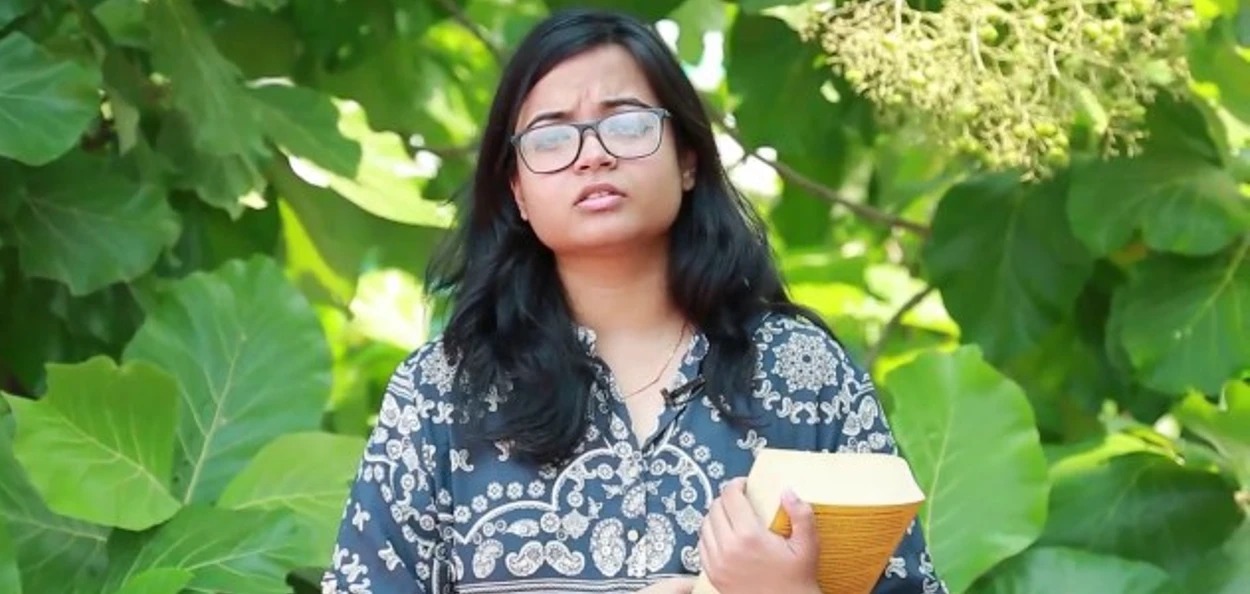
Photo Credit: The Hindu

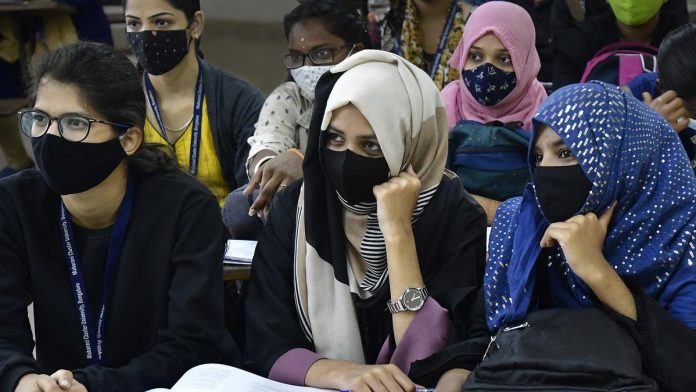
A quiet but significant academic shift is unfolding across India, as Muslim students register notable successes in some of the country’s most competitive examinations. From civil services and national-level entrance tests to state and central board results, the 2025-26 academic year has emerged as a milestone, reflecting both individual perseverance and gradual systemic improvements in access to education.

One of the clearest indicators of this progress is visible in the Union Public Service Commission (UPSC) Civil Services Examination 2025 results. A total of 53 Muslim candidates successfully cleared the exam, the highest number in nearly a decade. Out of 958 successful candidates, this represents approximately 5.5%, marking a steady increase compared to previous years. While still below the community’s population share of 14-15%, the rise signals a growing presence in India’s administrative framework.

Several candidates secured top ranks, underscoring the depth of talent emerging from the community. A.R. Rajah Mohaideen secured Rank 7, placing him among the top 10 achievers, while Ifra Shams Ansari (Rank 24), Nabiya Parvez (Rank 29), and Hassan Khan (Rank 95) featured within the top 100. These achievements highlight a shift in a field historically marked by underrepresentation, offering new role models for aspiring civil servants.

Parallel success stories have emerged in engineering entrance examinations. Majid Mujahid Hussain from Madhya Pradesh secured an exceptional All India Rank 3 in JEE Advanced 2025, one of the most challenging engineering entrance exams globally. His accomplishment stands out not only for its academic merit but also for challenging the perception that top ranks are reserved for students from elite urban coaching ecosystems. Majid’s journey, built on disciplined self-study and determination, reflects a broader democratisation of opportunity in competitive education.

In the medical field, Muslim students have also demonstrated competitive strength. Umaid Khan from Maharashtra secured All India Rank 21 in NEET-UG 2025, contributing to the state’s strong overall performance. While comprehensive nationwide data on religious representation in NEET remains limited, individual achievements such as these point to increasing participation in high-stakes medical admissions.

At the school level, Muslim students have consistently excelled in both central and state board examinations. The CBSE Class 10 and 12 results for 2025 recorded an overall pass percentage of 88.39%, within which minority students have shown increasing competitiveness. Across states such as Uttar Pradesh, Kerala, Telangana, and West Bengal, Muslim students have frequently appeared among district and state toppers, particularly in science and commerce streams.

Regional trends further underline the importance of educational ecosystems. Southern states like Kerala and Telangana, known for their robust literacy rates and institutional support, continue to produce high-performing Muslim students. In several districts, pass percentages among Muslim students have reportedly exceeded 85-90%, particularly where access to coaching and academic resources is more developed.

Among the standout individual stories this year is that of 15-year-old Syed Zaid Sadiq from Nashik, who topped JEE Main 2026 with an impressive percentile of 99.927. A Hafiz who has memorised the Qur’an, Zaid successfully balanced madrasa education with mainstream academic studies, scoring above 99% in both sessions of the examination. His achievement challenges common stereotypes surrounding religious education and highlights the potential for integrated learning approaches. He now aims to clear JEE Advanced and secure admission to an Indian Institute of Technology (IIT).

In Bihar, Sabreen Parveen emerged as a joint topper in the Class 10 board examinations, scoring 492 out of 500 (98.4%). A student from Vaishali district and the daughter of a tyre shop owner, Sabreen’s achievement exemplifies how determination and family support can overcome financial constraints. Aspiring to become a doctor, her success has inspired students in her community and beyond.

Equally inspiring is the story of Zainab Bilal from Srinagar, who scored 95% in her CBSE examinations despite being visually impaired. Relying on auditory learning, memory techniques, and assistive technology, she independently prepared for her exams. Her journey underscores the role of resilience and innovation in overcoming physical challenges, offering a powerful message about inclusivity in education.

From Jamia Millia Islamia schools, Md Fauzan topped JMI Class 10 2026 exams with 98.71%. Mohammad Ali and Mohammad Arham shared second place scoring 98.43%, from Syed Abid Hussain Senior Secondary School. Atiqua Zia and Ansari Zeenat Fatima secured third with 98.29%, representing Syed Abid Hussain Senior Secondary School and Jamia Girls Senior Secondary School.

Another noteworthy development is the increasing participation and success of Muslim women. In the UPSC 2025 results, 13 of the 53 successful Muslim candidates were women, indicating a positive shift toward gender inclusion. Notably, 38 students from Jamia Millia Islamia qualified UPSC this year thus setting example before all major universities. This trend also is mirrored in school-level examinations, where girls consistently outperform boys across communities. Initiatives encouraging girls’ education are also gaining momentum at the grassroots level.

In Rajasthan’s Sikar district, a unique initiative by philanthropist Adil Khan recognised the achievements of top-performing girls from government schools, irrespective of religion. Rewards included a car for one student and cash prizes of ₹1 lakh for others. The initiative not only celebrates academic excellence but also promotes awareness about the importance of girls’ education, particularly among underrepresented communities.

Experts attribute these encouraging trends to multiple factors. Increased awareness about the importance of education, greater parental support, and the expansion of coaching facilities into smaller towns have all contributed. Additionally, digital learning platforms and scholarship programs have made quality resources more accessible to students from economically weaker backgrounds.

Mentorship initiatives by non-governmental organisations and community groups have also played a critical role. By providing guidance for competitive exams such as UPSC, JEE, and NEET, these programmes have helped bridge long-standing gaps in access to information and preparation strategies.

However, challenges remain. Despite the visible progress, Muslim representation in elite institutions and services still lags behind proportional levels. Socio-economic barriers, disparities in school infrastructure, and limited awareness in certain regions continue to affect outcomes. Addressing these issues will require sustained policy efforts, community engagement, and investment in education at the grassroots level.

Educationists emphasise that the current momentum must be nurtured. “The improvement is real, but it needs continuity,” said one academic expert. “Access, affordability, and awareness are the three pillars that must be strengthened to ensure long-term change.”

The achievements of 2025-26 collectively tell a story of aspiration and gradual transformation. Whether it is a civil services aspirant securing a top rank, a student from a modest background topping a state board, or a visually impaired learner excelling against the odds, each success contributes to a larger narrative of empowerment.

As India continues to evolve as an educational hub, the rising performance of Muslim students reflects not only community progress but also the broader democratisation of opportunity. While the journey toward equitable representation is far from complete, the trajectory is unmistakably upward.

In classrooms, coaching centres, and homes across the country, a new generation of students is quietly rewriting expectations – one exam, one rank, and one success story at a time.

source: http://www.radiancenews.com / Radiance News / Home> Education> Focus / by Mohd Naushad Khan / May 08th, 2026

Sir Fakhruddin (1868-1933): An Educational Visionary of Bihar

Dumri (Patna), BIHAR :

While working on my two books (soon to come: one on Muslim Politics in Bihar and another on Muzaffarpur Muslims, 1857-2011), while looking into primary and secondary sources I came across many personalities and institutions. One such person was Sir Fakhruddin whose contributions towards public life may interest many people. Hence I crave the readers’ indulgence.

[Sir] Syed Mohammad Fakhruddin [Khan Bahadur, 1868-1933] of Patna is credited to have the distinction of being the first Muslim Minister of Bihar and Orissa.

His father Md. Ali of the village Dumri, near Patna, took special care of his quality education. Having imparted elementary education in Arabic, Persian, and Urdu in the village Maktab, Fakhruddin was put under the tutelage of Md. Yahya, advocate, a big rais of Patna, with deep interest in music and literature. Yahya was the husband of Rasheedun Nesa (1855-1926, the author of the Urdu novel, Islahun Nesa, 1881/94, and a pioneer of modern education to women in Patna).

Fakhruddin did his BA from the Patna College in 1891, and B.L. in 1893, and started court practice under the guidance of Yahya in the district court of Patna. He was also associated with the Bihar Provincial Association.

Having earned good reputation as advocate he was elected member Bengal Council in 1910, which Fakhruddin quit after becoming the government pleader (1917-20) in the High Court of Patna, established in 1916-7. In 1921 he was elected member of the Bihar and Orissa Legislative Council, and he kept winning the elections till his death in 1933.

Thus, during 1921-33 he also served as minister of education besides few other significant departments. His contribution as minister in pushing the cause of education is distinctive. His efforts towards promoting primary and secondary education are noteworthy.

 The Deputy Directors of Public Instruction were made to undertake tours of Bihar and open schools. Fakhruddin worked hard towards enhancing the budgetary allocation for education. He also made efforts towards charkha operation in the government schools but remained largely unsuccessful in that. He mobilized funds for construction of college buildings and hostels. He was passionate about it.

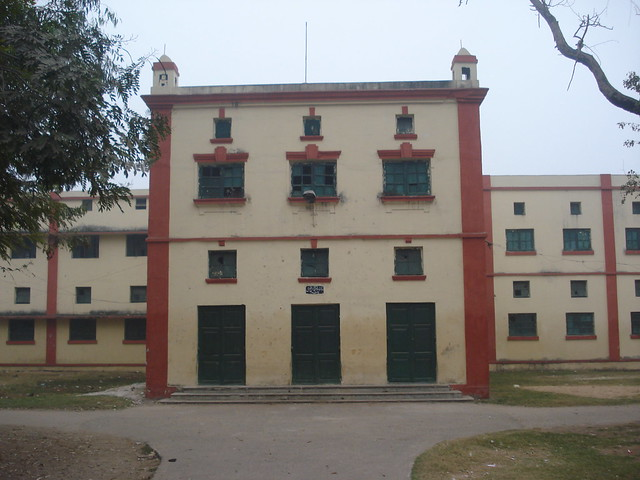
Reconstruction of Patna’s BN College building and its three storeyed hostel, the imposing building of the Science College (Patna), two storyed hostel for the Science College, the Patna College Hostel (later became famous as Iqbal Hostel), two storeyed PostGraduate Hostel of Ranighat (Patna), Patna Training College are his creations.

Besides, he also allocated fund for the buildings and hostels of the Muzaffarpur’s GBB (LS) College, Cuttack’s Ravenshaw College, Bhagalpur’s TNB Colllege, two big buildings for the Madrasa Shams-ul-Hoda, which was taken over by the government, and eight professors’ quarters in Ranighat (Patna) are also his creations. For the cause of Urdu, he set up a Madrasa Board in 1922.

Madrasa Shams-ul-Hoda

Fakhruddin had also prepared an ambitious plan of converting the Patna University in a big residential university for which he also influenced the Nathan Committee to make favourable recommendations. This was to be established in the Phulwari Sharif. But it did not see the light of the day as a large number of the members of the Bihar and Orissa Legislative Council opposed it on the arguments that the campus will go far beyond the city; a member went on to allege that Fakhruddin was taking the University to the doors of his Pir. The Searchlight is said to have regretted this myopic opposition as the Bihar’s capital city was deprived of quality residential university.

He created and institutionalized Bihar Educational Service Class I, and went on talent hunt to recruit meritorious teachers for the Patna University.

With these efforts he brought in Dr Gyan Chand as professor of Economics, Prof. Taraporewala (History), Prof. Jamuna Prasad (Psychology), Prof. Hill (English), Prof. Shiv Parvati Prasad (Physics). They were posted on handsome salaries.

There used to be an insistence by the colonial regime to recruit only those candidates as Class I teachers who had obtained degrees from Europe.

Prof. Nayyar Laeeq Ahmad (who later became Principal, Andheri College, Bombay), and Prof. Jadunath Sarkar were also recruited. Sir Fakhruddin resisted this racism, without much success at the time, even though it was diluted subsequently in 1940s when Prof. K K Datta (History, 1944) was taken in.

Sir Fakhruddin brought a bright professor of Law from BHU to make him Principal, Law College, and Prof. Boman Sanjana of Bombay was brought in the Civil Engineering.

In order to overcome the dearth of talented teachers he also instituted State Scholarship programme on which promising students of BA and MA were sent oxford and Cambridge for higher degrees and they had to return back to teach in the colleges of Patna University.

Kishori Prasad Sinha, Fazlur Rahman, and Kalimuddin Ahmad for English literature; Ghanshyam Das for History, Balbhadra Prasad and Qamruddoja for Chemistry, Bhairavnath Rohtagi for Economics were few such luminaries. Sadly, with the death of Sir Fakhruddin this bright scheme also died.

The Bihar School of Engineering was upgraded to ‘College’ by him. He also established the Veterinary College of Patna and recruited many teachers from outside.

Besides education, he also held the portfolio of cooperative and he made it a movement of sorts, more particularly in Tirhut. He convened a conference of Cooperatives in Hajipur when Ahmad Husain (1886-1948), an Aligarh graduate of Muzaffarpur, was posted as SDO in Hajipur.

For all these unforgettable contributions, Dr Rajendra Prasad held him in very high esteem.

Sir Fakhruddin, a bearded, fair-skinned fellow was a devout practicing Muslim with punctualities of namaz. Sherwani, pajama, Turkish cap was his preferred dress. The masjid near the Patna Railway Junction was reconstructed by him by investing around Rs. 20-25 thousand, which is now the Jama Masjid of Patna; for long it was called ‘Sir Fakhruddin Masjid’.

As a minister, he never used government quarters; rather he preferred to work from his own house in Patna, nor did he accept police protection. He was a good orator in both English and Urdu.

His sons- Azizul Haq was a renowned advocate of Patna High Court, Anisul Haq was Deputy Collector, Habibul Haq was in judicial services.

(Mohammad Sajjad, Assistant Professor at Centre of Advanced Study in History, AMU, Aligarh)

source: http://www.twocircles.net / TwoCircles.net / Home / by Mohammad Sajjad / October 13th, 2025

There is no shortcut but to study hard ,Assam civil services topper Rashika Islam

ASSAM:

Rashika Islam, ASC topper

Rashika Islam has topped the Combined Competitive Examination (CCE), 2022 conducted by the Assam Public Service Commission (APSC). The results of the CCE which were declared on Wednesday also saw 54 Muslim candidates crack the tough examination to become civil servants, police officials, and administrators in allied State services. Rashika Islam, daughter of Colonel (Retd) Saidul Islam and Raihana Islam, of Matiabag, Gauripur in Dhubr district, has secured the highest marks in the CCE exam conducted by the APSC. Rashika’s achievement has delighted the residents of Gaurpur and the entire Dhubri district.

“I am elated after seeing my name on the top of the APSC results. In 2020 I had cleared the final of the CCE. But my rank was low and I got the job of a Tax Inspector posted in Dhubri district. However, I was not happy and wanted to improve my rank in the APSC exam. Though it was tough to study for such a tough exam while serving the job of tax inspector, my husband and parents were supportive. I took no coaching in any institute to prepare for the CCE 2022. I prepare a lot for the exam by watching free YouTube channels and websites on success mantra in civil service examination,” Rashika Islam told Awaz-The Voice soon after the results were declared on Wednesday evening. 

Rashika Islam has been selected for the Assam Civil Service (ACS) category. When asked about study tips to crack the exam like CCE Rashika said there is no definite answer to such a question.

“There is no shortcut but to study hard for the exam. Despite my hectic schedule as the tax inspector I managed to study four to five hours a day before the CCE-2022,” Rashika said.

Raashika’s husband who is also a bureaucrat with the Assam Government had been very supportive of his wife’s success. Due to her father’s pan-India job, Rashika studied in different army schools in different parts of the country, including the Army Public School, Narengi, Guwahati.

Besides Rashika, 53 other Muslim students cracked the APSC exam and have made it to the civil police and allies services of the government of Assam.

The Muslim candidates selected for the Assam Civil Services are Rashika Islam, Wahiduz Zaman, Zamanur Islam, Asfaq Laskar, Benazir Ilyas, Abu Saeed Mohammad, Golzar Hussain, Affan Khan, and for the Assam Police Service: Fayez Ahmed, Rubina Begum, Arshad Wasim Ahmed and SK Sajidur Islam.

Rashika islam

Shabnu Rahman and Shahjahan Ali have been selected as Superintendent of Taxes while Mohammad Abdul Wakil has been selected for the Assam Finance Services.

Others selected candidates are:

Block Development Officers: Mohsin Siddiqui, Zahid Hussain Hazarika Khorshida Khanam, and Antra Hussain.

Assistant Manager, District Industries Center: Farida Yasmin.

Assistant Registrar of Co-operative Societies: Pinaj Rahman. Tax Inspectors

Pakiza Begum and Javed Akhtar Laskar.

For Inspector of Excise posts Mohammad Tazim Ahmed, Imran Hussain, Sarnaz Mehboob. Sub Register, Mudrika Jhabiullah Hindi. Assistant Audit Officers Shabiha Shabnam, Tanveer, Parvez, Hamidur Rahman, Salim Majid, Anjum Parbin, and Jahangir Alam Barbhuiya have been selected.

For Assistant Account Officers posts Philorina Begum, Tanveer Amin, Wasim Ahmed, Syeda Tamanna Yasmin, Manin Uddin Ahmed, Nekib Zaman Ahmed, Zaffrin Rahman, Firdaus Rahman, Jackie Ahmed, Rauchna Parbin Akand, Mirza Kausar Ahmed, Shamsur Rahman, Abdul Ullah Ahmed, Khandkar They are Khairul Islam, Shabana Rakia Ahmed, Mohammad Ali and Abu Bakar Siddique have been selected.

Ahmed Faraz will be a Research Assistant in the Transport Service Department. For Assam Urban Administrative Service Azharul Alam, Asif Ali Khan, Baitul Alam Rahman, and Ajmal Hussain have been selected.

So far, 68 Muslim candidates have cracked the CCE conducted by the APSC between 2013-18.  This year, 54 Muslim candidates cracking the same exam in a single year is considered a very encouraging and positive development for the minority community in Assam. 

The number of Muslim candidates selected for ACS and Allied Services would be more in the future provided quality education spreads among them,” eminent surgeon and Padmashri Dr Illias Ali said.

source: http://www.awazthevoice.in / Awaz, The Voice / Home> Story / by Ariful Islam, Guwahati / January 19th, 2024

AMU satellite project named after Sir Syed Ahmad Khan gets IN-SPACe nod

Aligarh, UTTAR PRADESH:

The “SS AMU SAT” is a Nanosatellite Project which began in November 2021 under the AMU Robo Club.

AMU satellite project named after Sir Syed Ahmad Khan gets IN-SPACe nod

Aligarh Muslim University: 

The Indian National Space Promotion and Authorization Centre (IN-SPACe), working under the Department of Space, Government of India, has approved the proposal for development of “SS AMU SAT” – Aligarh Muslim University’s first satellite programme.

The leading university’s first satellite programme is to be named after its founder Sir Syed Ahmad Khan.

About SS AMU Sat

The “SS AMU SAT” is a Nanosatellite Project which began in November 2021 under the AMU Robo Club. The satellite is a 3U CubeSat with multiple objectives which include the study of economic growth in India’s poorest districts using satellite imagery and implementation of an in-house developed image compression technology for a faster multimedia transmission.

In addition to this, the satellite will also test various satellite sub-systems that have been built in-house.

SS AMU Sat Team

The project was submitted to IN-SPACe in January 2023, for approval, registration, frequency allocation and launch of SS AMU SAT.

In September 2023, the Student Satellite Committee, chaired by Dr. P K Jain, Director (PMAD), IN-SPACe, reviewed the design and approved the proposal with a condition that AMU will sign a Memorandum of Understanding (MOU) with IN-SPACe for all activities from the development of the SS AMU SAT to its launch into the Lower Earth Orbit.

The project is headed by Prof. Ekram Khan, Chairman, Department of Electronics Engineering, under the leadership of Prof. M.M. Sufiyan Beg, Principal, Zakir Husain College of Engineering and Technology.

The students’ team which is involved in the development of the project, is led by Ms Poorti Varshney and mentored by Dr. C. A. Prabhakar (Former Project Director, ISRO) and Er. Faraz Ahmad (A 2013 batch alumnus). The project has received technical support from AMU alumni working with ISRO and several industrial experts across the globe.

The team of students comprises Kulsum Ilyas, Anant Agarwal, Tarun Singh, Rabiya, Mohammad Ali, Ilma Shah, Ahsan Waseem, Azhan Kamil, Tanu Attri, Mohd. Arquam, Kanuj Chitranshu, Munira Sultan, Atifa Saeed, Kanika, Asif Ali, Syed Muhammad Suhaib, Azam, Gulam Fareed, Samad, Varun Yadav, Mudassir Ali, Tehreem Fatima, Tarannum Zafar, Yashra, Mansha and Binish Kashif

The project is tentatively scheduled to be launched in 6 months.

source: http://www.ummid.com / Ummid.com / Home> Education & Career / by ummid.com news network / October 28th, 2023

Bussy’s Charminar home

Hyderabad :

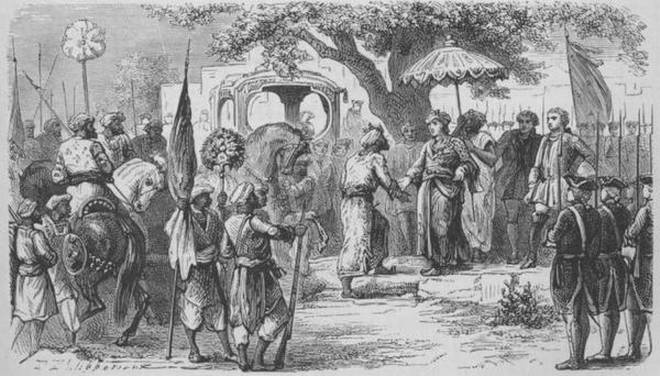
Dupleix_meeting_the_Soudhabar_of_the_Deccan

General Bussy enjoyed an unassailable position in the Nizam’s court

If Pondicherry was a colonial trading pocket for the French, Hyderabad by the middle of the 18th century became their nerve centre of great political activity much before the British could establish their power in this part of the country.

The French were the first European power in Hyderabad state to have huge territorial gains when they were granted the Circars (present coastal Andhra) for their military support to the Nizam, thus becoming the forerunner for the Subsidiary Alliance the British replicated decades later.

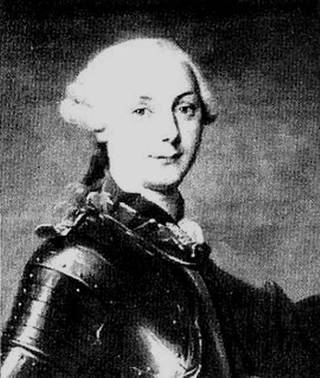
The architect of this French policy of Indirect Rule in Hyderabad was the indomitable General Bussy, the French commander, who at the express orders of Dupleix, the Governor of Pondicherry, arrived in Hyderabad in February, 1751 at the head of a strong French contingent. It was Bussy who declared Salabath Jung as the new Nizam, after the murder of Muzafar Jung. Bussy enjoyed an unassailable position in the Nizam’s court at Hyderabad.

War of succession

Bussy02MPOs29mar2018

After the death of Nizam-ul-Mulk the first Asaf Jah, in May 1748, there was political turmoil in Hyderabad due to war of succession among his immediate descendants.

The Nizam had six sons and an equal number of daughters. Ghazi ud din, the first son was a representative of his father at the Imperial Mughal court in Delhi and was not inclined to be his father’s successor. The second son, Nasir Jung therefore proclaimed himself as the Nizam of Hyderabad. But an ambitious, Muzafar Jung, grandson of the dead Nizam, (son of his favorite daughter, Khairunnisa begum) claimed the throne for himself.

The French governor at Pondicherry, General Dupleix, saw an opportunity to fish in troubled waters at Hyderabad.

There was also a war of succession brewing at Arcot, where Chanda Sahib laid claims to the Nawabi as successor to his father-in-law, Anwar ud din, against the claims of Mohammad Ali, Anwar ud din’s son. Dupleix decided to side Chanda Sahib at Arcot and Muzafar at Hyderabad.

He asked Muzafar Jung to come to Arcot to first settle the dispute there, promising to make him the Nizam at Hyderabad later.

Muzafar and French armies under Dupleix defeated Anwar ud din in a battle at Ambur and Chanda Saheb was declared as Nawab of Arcot.

The British at Madras who wanted to arrest the growing French power, advised Nasir Jung, the Nizam to come to south to check Muzafar- Dupleix nexus. Nasir Jung accordingly went with his forces but when engaged in a fight, was killed in one of the minor skirmishes near Arcot on 25 December, 1750. Muzafar Jung immediately was declared the Nizam of Hyderabad by Dupleix.

Victorious Muzafar was taken in great pomp by Dupleix to Pondicherry where a grand Durbar for the new Nizam was held. Muzafar was toasted, feasted and entertained by the French General.

In return, Muzafar was so pleased that he made Dupleix as a jagirdar of Villianallur with a personal grant of 80 villages. He also conferred the title, “Subedar”, and the French governor was happy to be addressed as Dupleix Sahib. After a month of festivities, and French hospitality, Muzafar set out to Hyderabad accompanied by a strong French contingent sent for protection by Dupleix headed by his close confident and an able commander, General Bussy.

However, on way back to Hyderabad, Muzafar Jung, 38 days after becoming the Nizam, was treacherously murdered in a spine chilling melodrama. As the contingent came close to Cuddapah and entered Lakkireddypalle pass, Muzafar was assassinated on February 3, 1751, by the Nawab of Kurnool, who earlier supported him but was disillusioned when the new Nizam, he thought, was not keen to keep the promises made.

An astute diplomat that he was, Bussy continued his journey with his French armies to Hyderabad and made Salabath Jung, an younger brother of Nasir Jung as the new Nizam. The death of Muzafar and the march of French armies to Hyderabad through the territories carrying fire and thunder under Bussy, made him such an object of terror that even now in the Telugu States the mothers try to silence their crying babies with the arrival of “Booochi”, a corrupted version for Bussy!

Marquis de Bussy worked under Dupleix at Pondicherry for a long time. He married Marie, a step daughter of Dupleix. His arrival in Hyderabad marks a new era of French connections with Hyderabad and the northern Circars.

Bussy wanted to make use of the opportunity to the best of the French advantage as the new Nizam, Salabath Jung was at his mercy. He decided to stay back with his army to give protection to the Nizam. His army consisted of 900 European and 4000 of sepoys and was a strong instrument of war fare.

In order to meet the expenses for the maintenance of army, estimated at ₹21 lakhs a year, Bussy got the entire coastal Andhra, from Guntur to Srikakulam, which yielded an annual income of ₹31 lakhs. Masulipatam and Yanam were granted as personal jagirs to Bussy.

Charminar as home

When Bussy arrived in Hyderabad, as there was no immediate accommodation worthy of his position and importance, he decided to put up in the very Charminar, the majestic, sturdy and the “tallest structure in the entire city”, then. Huge curtains were tied on all sided making Charminar as his home.

Muhammad Quli Qutub Shah who built Charminar in 1591 must not have ever dreamt that it would one day serve as home to a French General, Bussy. When the beautiful Charmahal on the banks of Musi got readied, Bussy shifted there and Salabath Jung built Khilwath Mahal (part of Chowmahal palace complex) for his own stay. Charmahal, where Bussy finally shifted to, was a multi floored beautiful palace with cloth of gold used as door curtains, (Charmahal stood on the grounds where now the High court buildings are located.)

When the Seven Years War ( 1756- 73) broke out in Europe, the French and English armies in India also started to fight. Robert Clive buoyed by his stunning victory at Plassey in 1757, sent Col. Forde who with his armies occupied Northern Circars, held by the French.

Count de Lally, the French General who arrived from France to fight the English, on reaching Pondicherry, recalled Bussy from Hyderabad to make a combined attack on the British at Madras. However, in the battle at Wandiwash, the French armies were defeated and both Lally and Bussy were taken prisoners. They were let off later and Pondicherry was returned to the French.

The French influence in Hyderabad steeply declined on the departure of Bussy. His name is immortalised in the Hyderabad dominions for his participation in the famous Bobbili battle that took place in January, 1757.

Bussy supported Vijayarama Raju of Vizianagaram in vanquishing Bobbili. There is a street in Yanam today named after Bussy. He became the French governor at Pondicherry two years before he died in 1785. Thus, while Bussy’s rise in Hyderabad heralded the high watermark of French power in India, his withdrawal from here marked the collapse of its political power.

After the departure of Bussy from Hyderabad, the British with the tacit agreement with Shah Alam, the Mughal emperor, deposed Salabath in September and made his younger brother, Nizam Ali Khan as the new Nizam in 1762. Salabath Jung was imprisoned by the new Nizam in the fort at Bidar, and was killed a year later.

By recognizing Nizam Ali as Asaf Jah II, the Mughal emperor has derecognized the three predecessors, Nasir Jung, Muzafar Jung and Salabath Jung who all had violent deaths as the rulers, though between them they had a rule of 14 long years from the death of Nizam ul Mulk in 1748 up to the accession of Nizam Ali II in 1762. If those three Nizams were also counted, there were ten Nizams who ruled Hyderabad ; and the last Nizam, Osman Ali Khan must have been the X th Nizam and not the VII, as he is generally considered.

source: http://www.thehindu.com / The Hindu / Home> Society> History & Culture / by K S Seshan / March 24th, 2018