Tag Archives: Mehbooba Mufti

Muslim Mirror Releases List of 100 Most Influential Indian Muslims 2025; Young Faces Gain Prominence

INDIA :

Muslim Mirror’s 100 Most Influential Muslims of 2025

New Delhi: 

Muslim Mirror has released its much-anticipated annual list of the “100 Most Influential Indian Muslims of 2025,” spotlighting individuals who have made significant contributions to India’s public life across a wide spectrum of fields including politics, culture, education, business, media, religion, sports, and social service. Now in its second edition, the list aims to document influence not merely as power or popularity, but as sustained impact, leadership, and the ability to shape public discourse.

A defining feature of the 2025 edition is the growing prominence of younger achievers, signalling a visible generational shift within Indian Muslim leadership. Alongside established national figures, the list includes emerging voices who have built influence through grassroots activism, professional excellence, digital platforms, legal advocacy, education, and community engagement. Editors associated with the project said this was a deliberate attempt to recognise new centres of influence beyond traditional hierarchies.

The list reflects the diversity and plural character of Indian Muslim society, cutting across geography, ideology, profession, and language. From seasoned politicians and religious scholars to artists, entrepreneurs, academics, and social reformers, the compilation offers a broad snapshot of leadership trends at a time when issues of representation, constitutional values, and social justice remain central to national debate.

Representation Across Sectors

The 2025 list features several eminent academicians and intellectuals who have shaped higher education, policy discourse, and social research. Among them are Abul Qasim Nomani, Ameerullah Khan, Furqan Qamar, Shahid Jamil, and Ubaid-ur-Rahman, recognised for their contributions to education, public policy, and academic leadership.

In the business and entrepreneurship category, the list includes influential names such as Azad Moopan, Azim Hashim Premji, Farah Malik, Irfan Razack, M. P. Ahammed, Mecca Rafiq Ahmed, Meraj Manal, Syed Mohamed Beary, P. Mohammed Ali, Shahnaz Hussain, Tausif Ahmad Mirza, Yusuff Ali, and Ziaullah Sharif. Their inclusion underlines the growing economic footprint of Indian Muslim entrepreneurs, both domestically and globally, spanning sectors from retail and healthcare to infrastructure and consumer goods.

Community leadership remains a strong pillar of the list, with figures such as Arshad Madani, Mahmood Madani, Malik Motasim Khan, Mehmood Pracha, Syedna Mufaddal Saifuddin, Navaid Hamid, Pirzada Md Abbas Siddiqui, Qasim Rasool Ilyas, Sadatullah Husaini, Umer Ahmed Ilyasi, and Yusuf Mohamed Abrahani recognised for their roles in religious guidance, legal advocacy, social mobilisation, and institutional leadership.

Culture, Media, and Public Discourse

In arts and entertainment, globally recognised names such as A. R. Rahman, Aamir Khan, Mammootty, Munawar Faruqui, and Shah Rukh Khan continue to command immense cultural influence, shaping narratives that extend well beyond cinema and music into social consciousness.

The list also acknowledges the growing importance of media and journalism in shaping opinion and challenging dominant narratives. Journalists and commentators such as Arfa Khanam, Irfan Meraj, and Seema Mustafa are recognised for their consistent engagement with issues of democracy, minority rights, and constitutional values.

Religious and Intellectual Scholarship

A significant section of the list is devoted to Islamic scholars and religious thinkers, reflecting their continued influence on moral leadership and intellectual discourse. Names such as A. P. Aboobacker Musliyar, Qasim Nomani, Prof. Akhtarul Wase, Asghar Ali Imam Mahdi Salafi, Asjad Raza Khan, Ibraheem Khaleel Al-Bukhari, Javed Jamil, Khalid Saifullah Rahmani, Khaleelur Rahman Sajjad Nomani, Qamaruzzaman Azmi, Rashid Shaz, Shakir Ali Noori, Shamail Nadvi, and Yasoob Abbas find place for their scholarly work, writings, and public engagement.

Politics and Governance

The political category features leaders cutting across party lines and regions, including Asaduddin Owaisi, Ghulam Nabi Azad, Hamid Ansari, Mehbooba Mufti, Omar Abdullah, Salman Khurshid, Najeeb Jung, Syed Naseer Hussain, Engineer Rashid, Akhtarul Iman, Iqra Hasan, Zameer Ahmed Khan, Rakibul Hasan, K. Rahman Khan, Kadir Mohideen, Mohibullah Nadvi, Md Shafi, Agha Mahadi, Asim Waqar, and Sadiq Ali Shihab Thangal. Their inclusion reflects influence exercised through electoral politics, governance, diplomacy, and legislative advocacy.

Changemakers and Social Reformers

One of the most dynamic sections of the 2025 list is that of changemakers and social reformers, featuring individuals such as Safeena Husain, Shahabuddin Yaqoob Quraishi, Syeda Hameed, Zameer Uddin Shah, Mahbubul Hoque, Sabahat S. Azim, Mehmood Pracha, Faiz Syed, and Zahir Ishaq Kazi, among others. Many of these figures have earned recognition through long-term grassroots work rather than formal authority.

International Booker Prize 2025 winner Banu Mushtaq for Heart Lamp, along with renowned poet Wasim Barelvi, has been placed in the category of Literary Figures.

In sports, iconic names Sania Mirza and Irfan Pathan continue to inspire younger generations through excellence and public engagement beyond the playing field.

Beyond Rankings

The editors emphasised that the list does not claim to be exhaustive, nor does it measure influence solely through fame, wealth, or official position. Instead, it seeks to capture real-world impact, moral authority, intellectual contribution, and the ability to shape conversations within and outside the community.

The annual list has increasingly become a reference point for understanding evolving leadership patterns among Indian Muslims. By foregrounding both established figures and rising talents, the 2025 edition reflects continuity as well as change, underscoring how Indian Muslims continue to contribute meaningfully to India’s democratic, cultural, and social field.

source: http://www.muslimmirror.com / Muslim Mirror / Home> Indian Muslim / by Muslim Mirror / January 15th, 2026
18 Muslim Women Made It To Lok Sabha Since Independence; 13 Of Them Dynasts: Book

INDIA :

18 Muslim Women Made It To Lok Sabha Since Independence; 13 Of Them Dynasts: Book

New Delhi :

That women were always under-represented in the Lok Sabha is a known fact, but Muslim women members have been a greater rarity with only 18 making it to the Lower House since independence, according to a new book.


And while dynastic politics may not be conducive for democracy to deepen its roots, it has played a positive part in giving chances to Muslim women, with 13 out of the 18 being from political families.

pix: sapnaonline.com

From royalty to a tea vendor-turned-politician’s wife and from a first lady to a Bengali actress, the 18 Muslim women who treaded the hallowed corridors of power in the Lok Sabha are an eclectic mix, with each of them having an interesting backstory, but one common thread — their path to power was always strewn with struggle and hurdles.


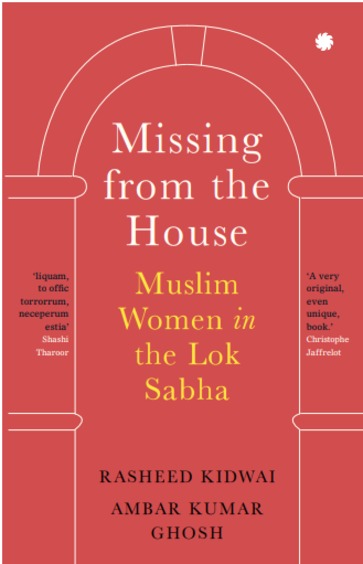
The story of these 18 Muslim women has been chronicled in an upcoming book– ‘Missing from the House — Muslim women in the Lok Sabha’ by Rasheed Kidwai and Ambar Kumar Ghosh.
Kidwai says he wanted to document the profile of 20 Muslim women who made it to the Lower House, but two of them — Subhasini Ali and Afrin Ali — had openly proclaimed that they did not follow Islam.


“Only eighteen Muslim women have made it to the Lok Sabha since the first parliamentary polls in 1951-52. It is a shockingly abysmal figure, considering Muslim women are about 7.1 per cent of India’s 146 crore population. Out of the 18 Lok Sabhas constituted till 2025, five times the Lok Sabha did not have a single Muslim woman member,” Kidwai and Ghosh write in their book, published by Juggernaut and will be released next month.


Equally shocking is the fact that the number of Muslim women elected to Parliament in one tenure never crossed the mark of four in the 543-seat lower house of Parliament, the book points out.
The book also notes that none of the five southern states — Kerala, Tamil Nadu, Karnataka, Andhra Pradesh and Telangana — otherwise known for better political representation than the North and with better literary levels and other socio-economic indicators, have not yet sent a single Muslim woman MP to the Lok Sabha.


The 18 Muslim women who made it to the Lok Sabha include Mofida Ahmed (1957, Congress); Zohraben Akbarbhai Chavda (Congress, 1962-67); Maimoona Sultan (Congress, 1957-67); Begum Akbar Jehan Abdullah (National Conference, 1977-79, 1984-89); Rashida Haque (Congress 1977-79); Mohsina Kidwai (Congress, 1977-89); Abida Ahmed (Congress, 1981-89); Noor Bano (Congress, 1996, 1999-2004); Rubab Sayda (Samajwadi Party, 2004-09); and Mehbooba Mufti (People’s Democratic Party, 2004-09, 2014-19).


The other Muslim women who entered the Lower House are Tabassum Hasan (Samajwadi Party, Lok Dal, Bahujan Samaj Party 2009-14); Mausam Noor (Trinamool Congress 2009-19); Kaisar Jahan (Bahujan Samaj Party, 2009-14); Mamtaz Sanghamita (Trinamool Congress 2014-19); Sajda Ahmed (Trinamool Congress 2014-24); Ranee Narah (Congress, 1998-2004, 2009-14); Nusrat Jahan Ruhi (Trinamool Congress, 2019-24); and Iqra Hasan (Samajwadi Party, 2024-present).


A dominant political figure who made an indelible mark on Indian politics was Mohsina Kidwai.
She not only entered the Lok Sabha but also went on to join the council of ministers and hold several portfolios, including labour, health and family welfare, rural development, transport and urban development.


Another fascinating personality that the book talks about is the wife of Mohammad Jasmir Ansari, a tea vendor-turned-politician. In 2009, Kaisar Jahan, wife of Ansari, won a fiercely fought four-corner contest even though she had barely thirty-five days to prepare and campaign.
As 2009 Lok Sabha polls neared, Mayawati summoned MLA Jasmir and Kaisar Jahan to Lucknow.
“Jasmir and Kaisar stopped at ‘Sharmaji ki Chai’ in Hazratganj before heading to the chief minister’s residence. Jasmir was anticipating a ministerial position, but instead, Mayawati came straight to the point by asking him to contest the polls. The lingering taste of chai vanished quickly as Jasmir struggled, looking tentatively at his wife for an answer. Mayawati, a politician among politicians, sensed his unease. She directly asked Kaisar: ‘Tu ladegi? The answer came immediately and spontaneously from both Jasmir and Kaisar-yes,” the book narrates.


There is also a first lady among the 18 Muslim women – Begum Abida Ahmed, wife of the country’s fifth president, Fakhruddin Ali Ahmed.


Over four years after Ahmed passed away in 1977, Abida Ahmed agreed to fight a Lok Sabha by-election from Bareilly, Uttar Pradesh, in 1981 and won, becoming the first and only First Lady of India to have entered the competitive arena of politics.
She won again in 1984, making it two in a row from Bareilly.


Begum Noor Bano, originally Mahatab Zamani and the widow of the former ruler of Rampur, was royalty who was a key figure in the political landscape of that area and fought many battles with Azam Khan of the Samajwadi Party and Jaya Prada, who also contested on an SP ticket.
Her husband, Nawab Syed Zulfikar Ali Khan Bahadur, belonged to the Rohilla dynasty and was popularly addressed as ‘Mickey Mian’. He was killed in a freak road accident in 1992 while returning from New Delhi to Rampur.


Noor Bano won the 1996 and 1999 Lok Sabha polls, but her electoral battles with Jaya Prada in 2004 and 2009 ended in defeats.


Among the 18 Muslim women, Bengali actress Nusrat Jahan Ruhi also broke a number of glass ceilings as she went on to win the Lok Sabha polls on a TMC ticket in 2019.


In the current Lok Sabha, there is just one Muslim woman MP, and that is SP’s Iqra Hasan Choudhury. From earning the distinction of being one of the youngest MPs after defeating a veteran leader from the BJP to becoming the centre of social media discussion as a young, London-educated Muslim woman leader, Iqra Hasan has appeared to have carved out a space for herself in the public imagination.


In his foreword to the book, Congress MP Shashi Tharoor writes, “Nearly seventy-eight years have passed since that portentous stroke of midnight on 15 August 1947, when Pandit Jawaharlal Nehru proclaimed a ‘tryst with destiny’ and India awakened to ‘life and freedom.’ …Yet even after almost eight decades, a shameful reality, which should deflate our self-congratulatory fervour over our democratic track record, still haunts us.”


“Not everyone has found ‘utterance’ in the world’s largest democracy, many of whose towering leaders eulogize it as the ‘Mother of Democracy.’ This self-serving description is enabled, in part, by a too-pliant news media, an ineffectual civil society and a menaced academic class, so that no one dares point out the irony inherent in the claim,” Tharoor says.


“Although we depict India as a doting mother nurturing and nourishing a clamorous, combative and chaotic republic, corrupt and inefficient, perhaps, but nonetheless flourishing, the truth is that throughout our democratic history, we have consistently failed our women citizens: failed to afford them, in the thoroughfares of our country, a life of dignity and decency,” he says. (Agencies)

source: http://www.dailyexcelsior.com / Daily Excelsior.com / Home> Latest News / by DailyExcelsior.com / book pix edited: sapnaonline.com / July 20th, 2025

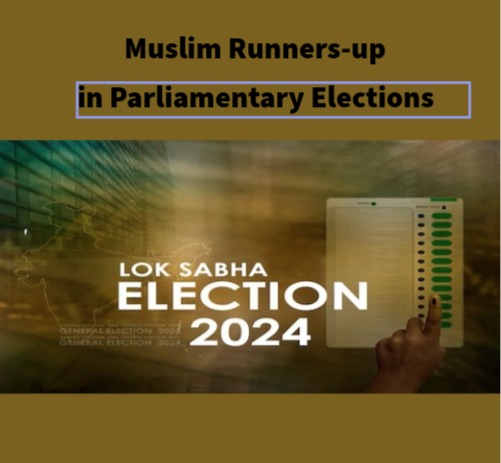
Muslim Runners-up in Parliamentary Elections 2024

INDIA :

Around 20 Muslim candidates were runners-up in the 18th Lok Sabha elections. Of them 7 lost to other Muslim candidates and the rest to other candidates.

Two of these were knocked out by Muslim candidates which made a cakewalk for BJP. In Amroha, UP, Danish Ali of INC secured 447836 votes against BJP’s Kanwar Singh Tanwar who got 476506, just 29670 more votes. Whereas BSP’s Mujahid Husain secured 164099 votes and finished third. Another four Muslims were also in the fray as independent candidates who together poled only 4503 votes.

Hafiz Rashid Ahmed Choudhry of INC from Karimganj, Assam lost to BJP’s Kripanath Mallh by just 18360 votes. Whereas the third in row was a Muslim from United Front, Shahbul Islam Choudhry who secured no less than 29205 votes. There were another 10 Muslims in the fray as independent candidates who secured 20162 votes combined. This invites the apolitical Muslim influential individuals’ and organizations’ role in making one strong Muslim candidate winnability bleak.

Shahnawaz of Rashtriya Janata Dal, in Araria, Bihar lost to BJP candidate by 20094 votes. There were five Muslim independent candidates totally scoring 39992 votes.

Mohammad Badruddin Ajmal, AUDF, in Dhubri Assam lost by 1012476 votes. He secured 459409 against the winning candidate Rakibul Hasan’s 14,71,885 votes. There were other eight Muslim candidates from seven different outfits and one independent. All of them put together pooled 486319 votes. Zabed Islam of Asom Gana Parishad who stood third alone secured 438594 votes.

The former Chief Minister of Jammu and Kashmir Mehbooba Mufti lost to National Conference candidate Mian Altaf in Anantnag-Rajouri by a margin of 2,81,794. Another 18 candidates were there to fish in the troubled waters.

Omar Abdulla, National Conference, Baramula lost to Engineer Rasheed, an independent who got 268339, lost by 204142. There were another 19 candidates in the fray.

Waheed ur Rehman Para, Peoples Democratic Party, Srinagar finished second 168450, lost by 188416 votes to Aga Syed Ruhulla of National Conference. Another 19 candidates tried their luck.

Mujahid Alam, Janata Dal (United), Kishanganj, Bihar, ranked second position against Tariq Anwar of INC who secured 343158 votes, lost by 59692 votes. There were another five Muslim candidates who together could not score beyond 45000 votes.

Md Ali Ashraf Fatmi, Rashtriya Janata Dal, Madhubani, Bihar, 2nd position. Lost to BJP. Secured 41483 votes and lost by a margin of 151945 (other Muslim candidates – Md. Waquar Siddiqi of AIMM and Sarfaraz Alam of Akhil Bhartiiya Parivar Party).

Hena Shahab was the only Muslim candidate among the 16 in the fray in Siwan, Bihar. An independent candidate, she scored an impressive figure of 296351 votes but lost to JD(U)’s Vijaylakshmi Devi by 92857 votes.

Mansoor Ali Khan, Indian National Congress, Bangaluru Central, Karnataka finished second, lost to BJP, secured 626208 votes still lost by 32707 votes. It was a straight fight and laser finish despite there were around 21 candidates who together could not cross 45000. In his first attempt, Mansoor has made a tremendous dent in the citadel of three-time BJP MP, Mohan.

AM Ariff of CPI(M) from Alappuzah, Kerala gave a tough fight to one of the general secretaries of Congress, KC Venugopal and secured 341047 votes only to lose by a margin of 63513.

Elamaram Kareem, CPI(M), Kozhikode, Kerala finished second against INC, got 374245 but lost by 146176 votes.

  1. Vaseef and KS Hamza of CPI(M), from Malappuram and Ponnani in Kerala respectively lost to IUML candidates.

Mohammed Faizal PP from Nationalist Congress Party – Sharadchandra Pawar in Lakshadweep fought against Hamdulla Sayeed of INC and lost by 2647 votes.

Imtiaz Jaleel Syed, All India Majlis-E-Ittehadul Muslimeen, Aurangabad, Maharashtra, lost to Shiv Sena, by 134650 votes.

Mohammed Mubarak from All India Anna Dravida Munnetra Kazhagam, Dindugal, Tamil Nadu stood second against CPI(M) candidate.

Md Salim, CPI(M), Murshidabad West Bengal, lost to Abu Taher Khan of TMC by 164215.

source: http://www.radiancenews.com / Radiance News / Home> Latest News> Report / by Mohammed Atherulla Shariff (headline edited) / June 10th, 2024

‘This is the prize for working for the nation,’ says Brother of BSF personnel and civilian killed in Poonch

Baffliaz (Poonch District), JAMMU & KASHMIR:

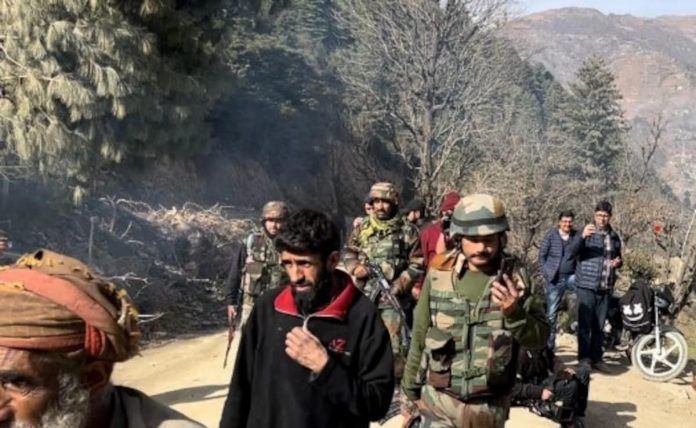
In Jammu and Kashmir’s Poonch district, three civilians, previously detained for questioning in connection with a militant ambush on Army vehicles, were found dead in the Topa Pir area. The victims were identified as Safeer Ahmed (48) and his cousins, Mohammad Showkat (28) and Shabir Ahmed (25).

The militant attack, which occurred on Thursday evening, claimed the lives of four Army soldiers and left three others injured.

Noor Ahmed, brother of one of the deceased civilians and a Head Constable in the Border Security Force, expressed profound grief, stating, “This is the prize we have got for working for the nation.”

Details surrounding the civilians’ deaths remain unclear, leading to unprecedented restrictions on movement and the suspension of mobile internet services in affected border districts. The government announced compensation and compassionate appointments for the families of the deceased.

“The death of three civilians was reported yesterday in Baffliaz of Poonch District. The medico-legal formalities were conducted, and legal action has been initiated. The Government has announced compensation for each of the deceased. Further, compassionate appointments to the next of kin of each deceased have also been announced,” informed the Information & PR, J&K in a statement.

While the Army’s Public Relations Officer in Jammu claimed no knowledge of the incident involving the civilians, allegations of torture marks on the bodies surfaced, accompanied by unconfirmed graphic videos circulating on social media. Relatives asserted that the injured were left by security forces on the roadside.

Former Chief Minister and President of the Peoples Democratic Party (PDP), Mehbooba Mufti, expressed concern over the reported civilian killings and called for a comprehensive and unbiased investigation. Mufti highlighted the shocking state of the victims’ mutilated bodies and widespread reports of torture on detained villagers.

“The ongoing miseries faced by the people of Jammu and Kashmir have reached a horrifying peak. Three innocent lives have been snatched away, their bodies said to be bearing brutal marks of torture while authorities have maintained a criminal silence,” Mufti said at a press conference.

In response to the tragedy, the local administration assured financial assistance, government jobs, and other support to the affected families. Poonch Deputy Commissioner pledged Rs 30 lakh to the next of kin of each deceased, along with a 10-marla plot at Surankote and a government job.

source: http://www.muslimmirror.com / Muslim Mirror / Home> India> Indian Muslim> Politics / by Muslim Mirror / December 24th, 2023

Four policemen killed in militant attack in Kashmir’s Shopian

Shopian District, South Kashmir, JAMMU & KASHMIR :

Police officers said that the policemen who were killed were guarding a minority picket, meant for security of a few Kashmiri pandit families in Zainapora area of Shopian.

Three policemen were killed by militants in Shopian on Tuesday. (File photo)

Four Jammu and Kashmir policemen were killed in a militant attack on a police picket in South Kashmir’s Shopian district on Tuesday. The attack was the first one by militants in the Valley after they suffered several blows in multiple encounters over the last one month in South Kashmir.

Police officers said that the policemen who were killed were guarding a minority picket, meant for security of a few Kashmiri pandit families in Zainapora area of Shopian. Four weapons belonging to the policemen were also taken by the militants after the attack, officials said. The four policemen have been identified as Abdul Majeed, Mehraj-ud-din, Anees and Hameed-ul-lah.

Majeed was a selection grade constable and a resident of Gandebal district, Mehraj-ud-din was a resident of Bandipora district in North Kashmir, while as Anees and Hameed-ul-lah were residents of Kulgam and Anantnag districts of South Kashmir respectively, officials said.

“We pay rich tributes to our colleagues Abdul Majeed, Mehraj-ud-din, Anees and Hameed-ul-lah who were #martyred in a #terror attack at #Shopian today. Our thoughts and prayers are with the grieving families at this juncture. RIP,” the state police tweeted.

Shopian district has witnessed a spurt in violence in the last one month. Apart from multiple encounters between security forces and militants, over a dozen civilians were abducted from South Kashmir villages by militants and two of them were killed on suspicion of being informers. The state police has recently claimed that they eliminated the top militant leadership in South Kashmir.

About the militant attack on Tuesday, police sources told The Indian Express that a group of militants entered the guard post of the minority picket. The militants fired indiscriminately, killing three policemen on the spot and injuring one. The injured policeman succumbed on way to the hospital, a senior police officer said.

After the attack on Tuesday, militants also posted pictures of the weapons taken by them from the police picket.

Senior state police officers, however, told The Indian Express that they are verifying the pictures that have appeared on social media. A senior police officer in Shopian said that they suspect JeM militants for the attack.

The mainstream political parties in the Valley condemned the killing.

National Conference leader Omar Abdullah said, “State has been at the receiving end with deaths, whether of a civilian, a policeman or a militant, becoming order of the day over the past three decades.”

Former CM Mehbooba Mufti tweeted, “Strongly condemn attack on policemen in Shopian claiming 3 precious lives…. Solidarity with families of jawans .Relieved that no harm caused to any civilians in the minority pocket they guarded.”

source: http://www.indianexpress.com / The Indian Express / Home> India / by Adil Akhzer / Srinagar – December 12th, 2018

Mehbooba Mufti wins Anantnag bypoll

JAMMU & KASHMIR :

Jammu and Kashmir Chief Minister Mehbooba Mufti.

In the 2014 polls, Mr. Sayeed defeated Congress candidate Mr. Shah by 6,000 votes and the margin has doubled this year.

Chief Minister Mehbooba Mufti on Saturday won the Anantnag Assembly seat by 12,085 votes, driving home a point that her popularity remains unaffected by the Peoples Democratic Party’s decision to join hands with the BJP in Jammu and Kashmir.

Of 28,500 polled votes, the PDP candidate Ms. Mufti has secured 17,701 votes, followed by Congress’ Hilal Shah with 5,616. National Conference (NC) Iftikhar Misger stood a distant third with 2,811 votes.

The PDP’s winning margin has considerably gone up in Anantnag despite the NC and the Congress pegging its campaign on the anti-BJP wave and cornering Ms. Mufti over her alliance partner.

In the 2014 polls, Mr. Sayeed defeated Congress candidate Mr. Shah by 6,000 votes and the margin has doubled this year with 12,000 lead by Ms. Mufti.

Earlier in the day, the counting was stopped immediately after the first round results were announced because of the Congress’ protests.

“An Electronic Voting Machine (EVM) was not properly sealed and should not be counted at all,” alleged Mr. Shah, as he and his supporters left the counting hall in protest.

However, after 15 minutes the counting was restarted.

The NC also alleged EVM tampering. “A lot of EVMs in Anantnag (were) without mandatory seals/locks. Electoral staff says since teachers were incharge, their inexperience is the reason!” alleged NC spokesman Junaid Azim Mattu, who later congratulated Ms. Mufti on her victory.

However, district magistrate Syed Abid Rasheed Shah refuted the allegations of tampering of EVMs.

The Anantnag seat, which fell vacant after sitting chief minister Mufti Muhammad Sayeed died on January 7, went to polls on June 22. Around 28,500 voters participated in the election out of 80,000 registered voters, with poll percentage pegged at 34 per cent, down by five per cent compared to the 2014 Assembly polls amidst separatists’ boycott call.

Considered bastion of the PDP, it’s Ms. Mufti’s fourth win to the State Assembly from south Kashmir since 1996, when she started her political career as Congress candidate and contested from Bijbehara constituency.

She was also elected to the Lok Sabha from Anantnag Parliament seat in 2014 general elections but returned to the State politics in April this year to take over as the State’s chief minister after her father’s demise.

source: http://www.thehindu.com / The Hindu / Home> National> Other States / Peerzada Ashiq / Srinagar – June 25th, 2016

Mehbooba Mufti Sworn In As First Woman Chief Minister Of Jammu And Kashmir

Srinagar, JAMMU & KASHMIR :

Srinagar :  

Mehbooba Mufti  of the Peoples Democratic Party or PDP took oath this morning as the first woman Chief Minister of the country’s only Muslim majority state, Jammu and Kashmir, at the head of a coalition government that includes the BJP.

The 56-year-old succeeds her father Mufti Mohammad Saeed who died in January this year. 23 ministers are taking oath along with Ms Mufti , including members of the BJP, whose Nirmal Singh will be Deputy chief minister.

In an indication of the struggles that lie ahead for Ms Mufti, senior PDP leader and lawmaker Tariq Karra boycotted the oath ceremony.

“I had a meeting Mehboobaji till late last night. I wanted three ministers who have played a dubious role and are responsible for the failure of Mufti Mohammad Saeed to be dropped,” Mr Karra told NDTV.

Mr Karra wanted Ms Mufti to exclude key PDP leaders Altaf Bukhari, Naeem Akhtar and Haseeb Drabu from her council of ministers. He alleges that they plotted to form government in alliance with the BJP without Ms Mufti as she refused to take oath for three months after her father’s death.

Ms Mufti dropped Mr Bukhari, but not the others. She has instead replaced two lawmakers who were junior ministers in Mufti Saeed’s team.

Mr Karra is no lightweight. In 2014, he defeated former union minister Farooq Abdullah of the National Conference in the general elections.

Ms Mufti has been criticised for delaying government formation as she wanted the BJP-led Centre to agree to several demands. But  the BJP stood its ground saying it would agree to no pre-conditions for an alliance .

Last week, after a long stalemate, Ms Mufti’s meeting Prime Minister Narendra Modi cleared the way for a PDP-BJP government to take oath. But her struggle to manage a difficult coalition remains.

Former J&K chief minister and Ms Mufti’s main rival Omar Abdullah has prophesied that Mehbooba will face “more alliance contradictions” in the partnership with the BJP, an ideological opposite.

State elections in December 2014 gave no party a majority in the 70 member J&K assembly. The PDP, with 28 seats and the BJP with 25 had formed government after weeks of hard negotiations last year.

source: http://www.ndtv.com / NDTV / Home> All India / by Surabhi Malik / April 04th, 2016

Video Link : http://www.youtube.com

Mehbooba Mufti stakes claim to form government in Jammu and Kashmir

Peoples Democratic Party president Mehbooba Mufti.

PDP leader Mehbooba Mufti on Saturday met Governor N.N. Vohra and staked claim for government formation in Jammu and Kashmir.

Ms. Mufti later thanked the BJP for extending support to her for formation of the new government.

Ms. Mufti said focus of her new government would be on peace, reconciliation and development in Jammu and Kashmir.

She said the date for oath-taking is being finalised.

Leader of the BJP legislative party Nirmal Singh also met the Governor and handed over letter of support from the BJP to Ms. Mufti.

source: http://www.thehindu.com / The Hindu / Home> News / b y PTI / Jammu – March 26th, 2016

Mufti Mohammad Sayeed : A Life In Full

Kashmir, JAMMU & KASHMIR :
The late bloomer Mufti Mohammad Sayeed (1936–2016) leaves behind a legacy of reconciliation. Make use of it
 

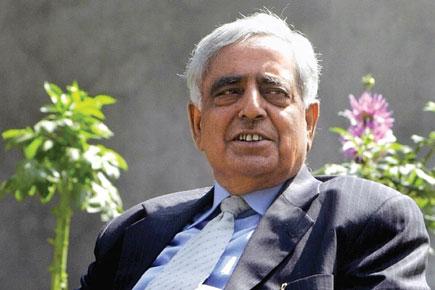
Mufti Mohammad Sayeed (Photo: SAJJAD HUSSAIN/GETTY IMAGES)

Sheikh Mohammad Abdullah, the ‘Lion of Kashmir’, died in September 1982. He was three months short of seventy-seven. He had been ailing, especially since a heart attack in 1977. Sheikh Abdullah’s funeral procession was gigantic. It may have been the single largest ever seen in the Subcontinent. The mass outpouring of grief was a measure of the stature he commanded among his people even in the twilight of his life. He had, after all, been the dominant figure of Jammu & Kashmir’s politics for a full half-century.

A decade later, Abdullah’s grave—near Srinagar’s Hazratbal shrine, on numerous occasions his base and pulpit over that turbulent half-century—was under guard by Indian paramilitary forces to prevent its desecration by armed militants and angry mobs.

The apparent reversal in the Sheikh’s standing among his people was not as astounding as it might seem. The accord he made with Indira Gandhi’s Government in 1975 in return for his personal liberty and political restoration—after 22 years mostly spent in prison—was widely viewed among his popular base and in his own organisation as an abject surrender to and for power. The Abdullah of 1975-1982 was a lion in winter, a far cry from the leader who had long defied and dared New Delhi. In his last years, he even fell out with a lifelong loyalist like Mirza Afzal Beg, the only one of his four cabinet colleagues who had stood with him against the Delhi-sponsored palace putsch of 1953 that deposed him from power (Beg also signed the 1975 capitulation on his behalf). The grand farewell he got from his people on his death was in recognition of his decades of suffering in the cause of ‘self-determination’. The same sentiment, coupled with his party’s grassroots machine, propelled his resounding election victory in 1977 and his son’s equally emphatic win in 1983.

Mufti Mohammad Sayeed, who has died a few days short of eighty, is not comparable to Sheikh Abdullah. For all his faults and flaws, the Sheikh is in a league of his own in Kashmir’s political history—the leader who brought mass political mobilisation to the Valley in the 1940s, emancipated the peasant masses from generations of serfdom through land reforms in the early 1950s, and challenged New Delhi’s machinations and stooges in Kashmir for more than two decades after his removal from power. Abdullah’s political capital was his mass base. The Mufti, for most (over two-thirds) of his nearly six decades in politics, was distinguished by the reputation he gained as a Machiavellian schemer and operator; he had almost no standing among his people and was disliked, distrusted, and perhaps even detested by most of his fellow-Kashmiris.

While I have not seen a single proper obituary of Mufti Mohammad Sayeed in the Indian (or specifically the Kashmiri) media, it has emerged in piecemeal life- sketches that he began his political life in the late 1950s in something called the ‘Democratic National Conference’. This was a dissident faction of a cabal that was installed in office in Srinagar after the 1953 coup, which was formally executed by the barely-adult Karan Singh in his Sadr-e- Riyasat capacity and was followed by the suppression through police and military action of massive protests against it, with dozens killed in firing and thousands arrested.

The cabal, which comprised many though not all of Abdullah’s former comrades (there were important exceptions like Afzal Beg and Maulana Masoodi), falsely appropriated the National Conference name. The real NC was reconstituted as the Jammu & Kashmir Plebiscite Front in 1955 with Beg as its first president and the incarcerated Abdullah as its ‘patron’, and existed under that name until 1975. But the cabal in power developed a schism in 1957 when Bakshi Ghulam Mohammad, Abdullah’s successor as J&K’s Prime Minister, failed to appoint any members of the faction clustered around GM Sadiq to cabinet positions after the first elections to the J&K Legislative Assembly. The ruling pseudo-NC had ‘won’ 69 of the assembly’s 75 seats in these elections; of the Valley’s 43 seats, 35 had been won without any contest (‘elected unopposed’). After the rift, 15 of the 69 legislators joined the rebel group led by Sadiq. The rift was papered over in late 1960 through New Delhi’s intervention and the pseudo- NC entered the 1962 Assembly elections formally re-united.

The young, ambitious Mufti Sayeed entered the Assembly in 1962 from his hometown, Bijbehara. It was not difficult— the official NC ‘won’ 68 of the 74 seats, and 32 of the Valley’s 43 constituencies were won without any contest. It was after these elections that Prime Minister Nehru, worried by adverse international media coverage, famously wrote to Bakshi Ghulam Mohammad mildly rebuking him for not having ‘lost a few seats to bonafide opponents’.

Mufti retained his seat in 1967. It was again a cakewalk. By this time Bakshi was in the doghouse and the ruling party—led since 1964 by Sadiq (who made Mufti a deputy minister in his government)—had metamorphosed in 1965 into the Jammu & Kashmir Pradesh Congress. The Congress won a four-fifths majority— 60 of the 75 seats—in the J&K Assembly in 1967. Of the Valley’s 42 constituencies, 22 saw no contest, and 118 candidates who filed nominations were rejected, 55 because they had not taken the compulsory oath of allegiance to India and the rest with no reason given.

Only a very few undesirables got through this gauntlet. A young Plebiscite Front leader, Ali Mohammed Naik, took the oath of allegiance, managed to get his papers approved, and was elected to the Assembly as an independent from Tral, a southern Valley town fairly close to Bijbehara. Another successful opposition candidate was none other than Bakshi Ghulam Mohammad, disgraced and sulking since his fall from power in late 1963. In 1967, J&K elected Lok Sabha members for the first time. The Congress won five of the six Lok Sabha seats, including two of the Valley’s three. The exception was Srinagar, where Bakshi stood on a platform of Kashmiri pride and won despite attempts by intelligence operatives sent from Delhi to ensure his defeat. When he turned chameleon and ran from Srinagar as a Congress candidate in the 1971 Lok Sabha elections, he lost badly to Shamim Ahmed Shamim, a journalist and Plebiscite Front supporter who contested as an independent.

The people’s interest and allegiance lay elsewhere, outside this ‘democratic process’. On 18 April 1964, Sheikh Abdullah arrived in Srinagar after being released from prison. The Central and J&K governments had decided to free him in a desperate bid to calm down the Valley, which had been in a state of uprising since end-1963, turmoil triggered by the temporary disappearance of Prophet Muhammad’s hair from the Hazratbal shrine but rooted in pent-up rage at the police-state repression and fraudulent governments since 1953. It was reported that Abdullah ‘entered Srinagar and was greeted by a delirious crowd of 250,000 people. Srinagar was a blaze of colour and everyone seemed out on the streets to give him a hero’s welcome… Addressing a gathering of 150,000 people on 20 April, Abdullah said that in 1947 he had challenged Pakistan’s authority to annex Kashmir on grounds of religion, and now he was challenging the Indian contention that the [Kashmir] question had been settled’. Abdullah remained at liberty until May 1965, when he was re-arrested under the Defence of India Rules, a colonial-era regulation used by the British against Indian freedom fighters.

In March 1968, during another, shorter spell out of prison, ‘almost the entire population of Srinagar turned out to greet him’ as he arrived in the city, The Times of India reported. It added that the hundreds of thousands were chanting: “Sher- e-Kashmir zindabad, Our demand plebiscite!” Days later, Abdullah told a 100,000-strong gathering in Anantnag that “repression will never suppress the Kashmiri people’s urge to be free”. In 1968, Abdullah also said: “The fact remains that Indian democracy stops short at Pathankot. Between Pathankot and the Banihal [Pass] you may have some measure of democracy, but beyond Banihal there is none. What we have in Kashmir bears some of the worst characteristics of colonial rule.”

Consistent with the normal pattern of progression of politicians, Mufti Mohammad Sayeed became a cabinet-rank minister in the J&K government after the 1972 state Assembly polls. The Congress had won a three-fourths majority, 57 of the 75 seats, under the leadership of Syed Mir Qasim, who became Chief Minister after Sadiq’s death in 1971. The 1972 election had a back-story. In 1969 the Plebiscite Front had run as independents in panchayat elections and swept the Valley. Then, in December 1970, the Front announced that it would contest both the Lok Sabha polls in March 1971 and the state polls in 1972. Qasim later wrote in his autobiography, My Life and Times (1992), that since its formation in the mid-1950s the Plebiscite Front had ‘reduced [the ruling group] to a non-entity in Kashmir’s politics’ and ‘if the elections were free and fair, the Front’s victory was a foregone conclusion’.

+++

Speaking in Jammu city on 23 December 1970, Prime Minister Indira Gandhi made it clear that she would not tolerate this scenario. Asked by journalists how it could be prevented, she replied cryptically: “Ways will be found.”

On 8 January 1971, ‘externment orders’ were served on senior Front leaders Afzal Beg and GM Shah (the Sheikh’s son-in- law), which required them to leave J&K. During the night of 8-9 January, 350 leading Front activists were arrested across the state under the J&K Preventive Detention Act. On 12 January, the Centre declared the Front illegal under the Unlawful Activities (Prevention) Act. The only reason the Congress did not cross the four-fifths majority mark in 1972 was that five Valley seats were given to the Jama’at-i-Islami in an underhand deal. The fundamentalist pro-Pakistan fringe entered J&K’s legislature through the backdoor.

During the subsequent phase of Indira Gandhi’s wary accommodation of the Abdullahs—on her own terms—Mufti Sayeed emerged as her chief in-state henchman as J&K’s top Congress leader. The Congress-NC rapprochement famously broke down in 1983 and it is more than plausible that Mufti was a key player in the Delhi-sponsored conspiracy that brought down Farooq Abdullah’s democratically elected government in mid-1984. When Farooq’s brother-in-law GM Shah, the Congress-backed replacement, had outlived his usefulness and needed to be disposed of two years later, an episode of rioting targeting Pandits in villages around Bijbehara in March 1986 provided the pretext for his government’s dismissal under Article 356 and Governor Jagmohan took over. Mufti bitterly quit the Congress and joined VP Singh’s bandwagon after Rajiv Gandhi cut his own deal, with its well-known disastrous consequences, with Farooq Abdullah in end-1986.

During the political and human tragedy that engulfed Kashmir through the 1990s, the small town of Bijbehara became one of numerous sites of massacres of civilians. In October 1993, BSF troops fired on a march in the town taken out in solidarity with Jammu & Kashmir Liberation Front (JKLF) militants besieged by the Army in Srinagar’s Hazratbal shrine. Some three dozen people were killed and double that number seriously injured.

The Mufti’s re-emergence at the end of that bloody decade in a brutalised Kashmir in a completely new political avatar alongside his campaigning daughter was nothing short of extraordinary. The platform and rhetoric—dignity, self-respect, rights, and ‘self-rule’—were reminiscent of the Sheikh Abdullah of yore, albeit expressed in a less confrontational, more measured tone. By standing—at last—with his distressed, traumatised people instead of serving the masters in New Delhi, Mufti was able to build a genuine popular following.

The metamorphosis can and does have different explanations, from the romantic to the cynical. Yet one thing is certain. The septuagenarian Sheikh Abdullah was a spent, defeated politician. The septuagenarian Mufti was not. He performed competently as Chief Minister from late 2002 to late 2005, as J&K struggled to move beyond the violence of insurgency and counter-insurgency, until he was compelled to prematurely step down. A decade later, he was able to negotiate, in a spirit of equality, an ‘agenda of alliance’ document with the BJP, which embodies a concrete vision of resolving the Kashmir conflict in its multi-dimensional totality. Because of his past, he retained credibility among Jammu Hindus and Ladakhi Buddhists even while seeking to give voice to the grievances and aspirations of the Valley’s Muslims.

The later political life of Mufti Mohammad Sayeed— 1999- 2015 —has left a genuinely valuable legacy. Jammu & Kashmir, and India, cannot afford to—and must not—lose this legacy.

source: http://www.openthemagazine.com / Open / Home> Open> Voices> Open Essays / by Sumantra Bose / January 15th, 2016

 SumantraMPOs02feb2016Sumantra Bose is Professor of International and Comparative Politics at the London School of Economics and Political Science. His most recent book, Transforming India (2013), includes an analysis of contemporary Kashmir as one of Indian democracy’s unresolved challenges