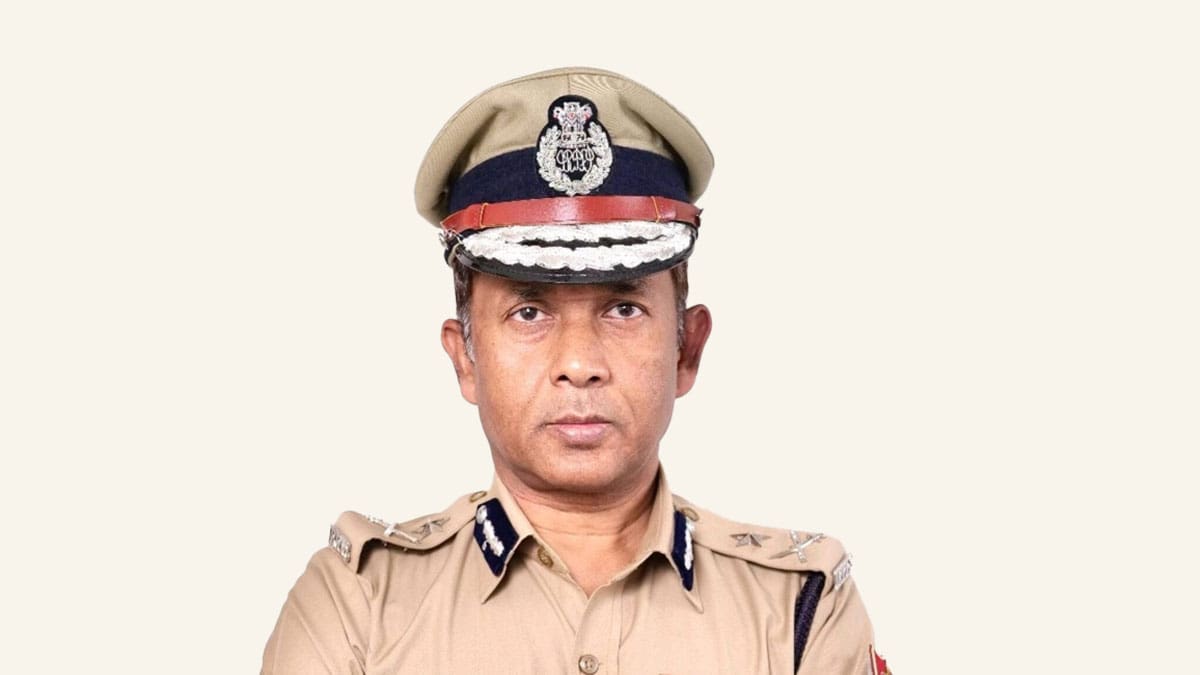
Alam died after a cardiac arrest at a private hospital in Mohali; last rites at Sirhind on Wednesday.
Mohd Izhar Alam, a former DGP, prisons, of Punjab Police, was inducted into the Shiromani Akali Dal after his retirement. His wife, Farzana Nissara Khatoon, is a former SAD MLA from Malerkotla. (HT file photo)
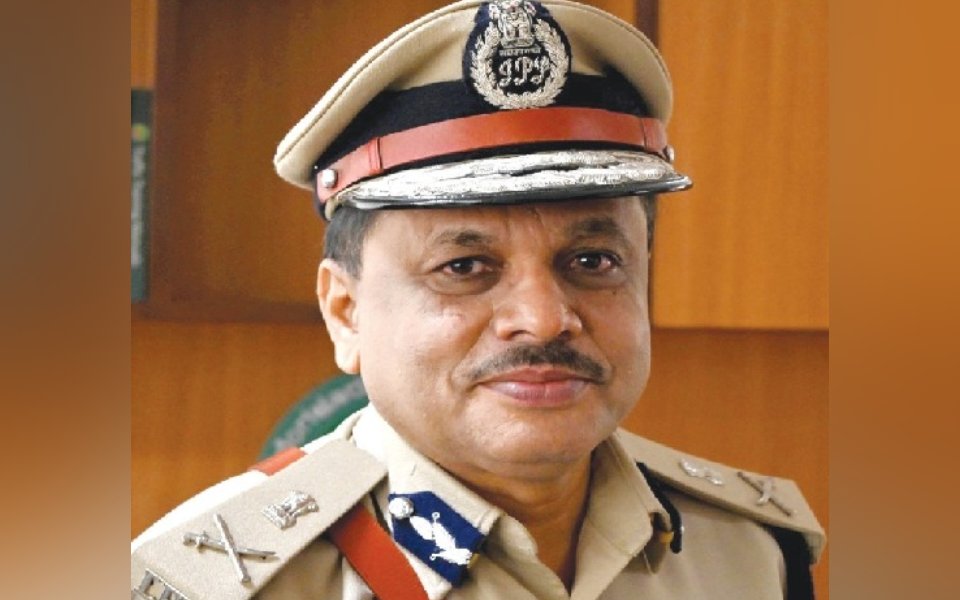
Mohammad Izhar Alam, 73, a former director general of police, prisons, died after a cardiac arrest at a private hospital in Mohali on Tuesday.
He is survived by wife Farzana Nissara Khatoon, a former Shiromani Akali Dal MLA from Malerkotla, three sons and two daughters.
The 1972-batch Indian Police Service officer was a Padma Shri awardee.
He had a controversial stint during the decade of militancy in Punjab.
Despite opposition, former chief minister Parkash Singh Badal inducted Alam into the SAD on November 18, 2009, and appointed him chairman of the Punjab Wakf Board.
In the 2012 assembly elections, Farzana won the Malerkotla seat on the SAD ticket, defeating Razia Sultana of the Congress.
Chief minister Captain Amarinder Singh also mourned the former DGP’s death.
The last rites will be performed in Sirhind on Wednesday.
source: http://www.hindustantimes.com / Hindustan Times / Home / by HT Correspondent / July 06th, 2021
Muslim-majority Malerkotla has been declared as the 23rd district of the state, with the Punjab government fulfilling a decade-long demand of its residents.
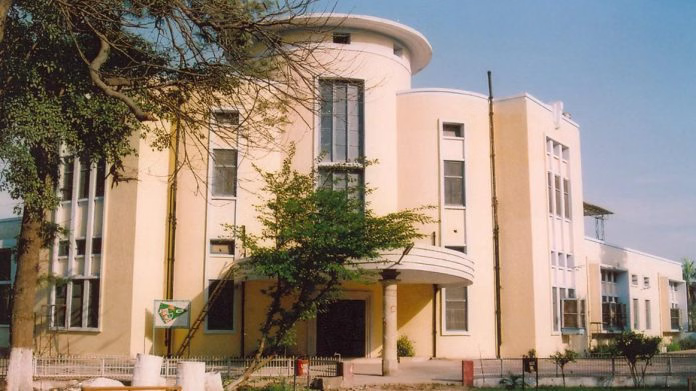
The government college in Malerkotla | Wikimedia commons
Chandigarh:
On the occasion of Eid-ul-Fitr Friday, Punjab Chief Minister Captain Amarinder Singh declared the Muslim-majority Malerkotla as the 23rd district of the state, while announcing a slew of projects for the development of the historic city.
The move fulfils an at least decade-old demand in Malerkotla and a promise that the ruling Congress had made in its manifesto ahead of the 2017 assembly elections.
Punjab’s decision, however, hasn’t gone down well with the BJP, particularly Uttar Pradesh Chief Minister Yogi Adityanath.
Adityanath tweeted Saturday that the move was “proof of the Congress’ divisive politics”.
“Any distinction on the basis of religion is contrary to the basic spirit of the Constitution of India,” the Uttar Pradesh CM said. “Presently, the formation of Malerkotla (Punjab) is a reflection of the divisive policy of the Congress.”
मत और मजहब के आधार पर किसी प्रकार का विभेद भारत के संविधान की मूल भावना के विपरीत है।
इस समय, मलेरकोटला (पंजाब) का गठन किया जाना कांग्रेस की विभाजनकारी नीति का परिचायक है।
Tarun Chugh, the BJP’s national secretary from Punjab, weighed in, saying the decision was clearly “communal” and that it was for the first time in the history of Punjab that an administrative decision was taken to further communal interests.
None of these charges, however, will find any resonance in Punjab, where Sikhs and Malerkotla’s Muslims share historically harmonious ties. So entrenched is this solidarity, that the Muslim-majority region saw no violence even as the rest of Punjab went up in flames during Partition in 1947.
The Punjab chief minister even alluded to this while responding to his UP counterpart.
“What does he (Yogi Adityanath) know of Punjab’s ethos or the history of Malerkotla, whose relationship with Sikhism and its Gurus is known to every Punjabi? And what does he understand of the Indian Constitution, which is being brazenly trampled every day by his own government in UP?” Amarinder asked in a statement issued Saturday evening.
A 300-year-old legacy
Punjab Sikhs’ reverence for the Muslims of Malerkotla dates back chiefly to one singular event in history.
According to Anna Bigelow, associate professor of Islamic Studies in the Department of Religious Studies at Stanford University, the Nawab of Malerkotla, Sher Muhammad Khan, had in 1705 opposed the death penalty handed out to nine-year-old Baba Zorawar Singh and seven-year-old Baba Fateh Singh — the sons of Guru Gobind Singh, the 10th Sikh Guru.
Bigelow, who has researched Malerkotla’s history, writes that despite Khan’s protests, the then Mughal governor of Sirhind, Wazir Khan, bricked alive the two children.
The Malerkotla nawab’s defiance, referred to as “ha da naara (cry for justice), however, earned him the respect and adoration of Sikhs.
“Guru Gobind Singhji blessed Sher Muhammad Khan and ever since Malerkotla has become an icon of Sikh-Muslim brotherhood,” said the Shiromani Akali Dal (SAD) general secretary Dr Daljeet Singh Cheema. “Even during Partition, this town remained completely peaceful.”
The new district will also have a government medical college in the name of Nawab Sher Muhammad Khan.
The Opposition SAD has backed Chief Minister Amarinder, with Cheema issuing a statement that Adityanath’s tweet was in bad taste and symbolic of his complete lack of historical knowledge about Malerkotla town and its significance for Sikhs.
“Malerkotla town is a unique example of Sikh-Muslim communal harmony that has lasted for over 300 years,” Cheema said.
A Muslim-majority region
Malerkotla was part of a jagir of several villages that the then Delhi Sultan Behlol Lodhi granted as dowry to the Afghani Sufi Saint Sheikh Sadruddin-i-Jahan (also called Haider Sheikh) in 1454.
According to Bigelow, the original settlement was called “Maler” and it remains the name of the neighbourhood surrounding the Sheikh’s tomb.
Following the advent of Mughal rule in India, the descendants of the Sheikh became the nawabs of Malerkotla.
Bigelow writes that Kotla came to be in 1657 when Mughal emperor Aurangzeb granted permission to Bayazid Khan, the first ruler of Malerkotla, to build a fortified city.
Bigelow also states that during British rule, Malerkotla was as turbulent as the other smaller principalities of the time, marked by infighting and ever-changing loyalties. The last ruler of Malerkotla was Nawab Iftikhar Ali Khan.
During Partition in 1947, Malerkotla remained absolutely peaceful and when the princely state merged with India, Iftikhar Ali Khan was its first chief minister.
Malerkotla was later merged with other princely states of the region to form the Patiala and East Punjab States Union (PEPSU). During the reorganisation of states in 1956, Malerkotla became a part of Punjab.
Modern-day Malerkotla
With almost 70 per cent of its population comprising Muslims, the Malerkotla assembly constituency has always been represented by a Muslim.
Nawab Iftikhar Ali Khan served as MLA twice while his second wife Begum Yusuf Zamani and fourth wife Begum Sajida were legislators as well. All of them were part of the Congress party.
The Malerkotla seat has, in the last few decades, been alternating between the Congress and the Akali Dal.
Razia Sultana, the current Congress MLA from Malerkotla, is representing the constituency for the third time (2002, 2007 and 2017). She is the wife of former Punjab DGP Mohammad Mustafa. In 2012, however, Farsana Alam, the wife of another IPS officer, Izhar Alam, was elected as the Akali MLA from here.
The constituency’s politics has not been without its intrigue. In 1981, the last nawab divorced Sajida Begum. She then went on to marry Anwar Ahmed Khan of the Shiromani Akali Dal, against whom she had fought multiple elections.
The nawab died in 1982 and Sajida Begum in 2006. The legacy of the last nawab continues as an ugly family litigation for property and palaces.
On Friday, Chief Minister Amarinder Singh, himself the scion of the Patiala royal family, recalled his ties to the last nawab of Malerkotla, whom he fondly called Chachaji (Uncle) and who he said lovingly addressed him Bhateej (nephew).
Amarinder also said he had written to the Aga Khan Foundation to undertake conservation and restoration of Mubarak Manzil Palace, occupied by Begum Sahiba Munawwar ul-Nisa, the wife of the last nawab.
The Punjab government, the chief minister said, has acquired the Mubarak Manzil Palace, adding that “its restoration and upkeep would be a fitting tribute to the nawabs of Malerkotla”.
A decade-long demand
The demand for district-hood is not new.
Malerkotla falls on the Ludhiana-Sangrur road and is part of Sangrur district. It’s almost equidistant from the district headquarters of Ludhiana and Sangrur and for every administrative work residents had to go to Sangrur, which is over 40 km away.
The town is full of small steel units and is specially known for manufacturing badges and uniforms.
The Congress’ manifesto had also promised district status for Malerkotla.
According to the government’s order Friday, the subdivisions of Malerkotla and Ahmedgarh, as well as the sub-tehsil of Amargarh, would be included in the newly-created district. The process of bringing villages under the jurisdiction of Malerkotla district would begin later, after the conclusion of the census operations, the order said.
The chief minister has also directed the Sangrur deputy commissioner to find a suitable building to immediately start the functioning of the district administration office. The deputy commissioner for the newly-carved district would be appointed soon.
(Edited by Arun Prashanth)
source: http://www.theprint.in / The Print / Home> India / by Chitleen K Sethi / May 16th, 2021
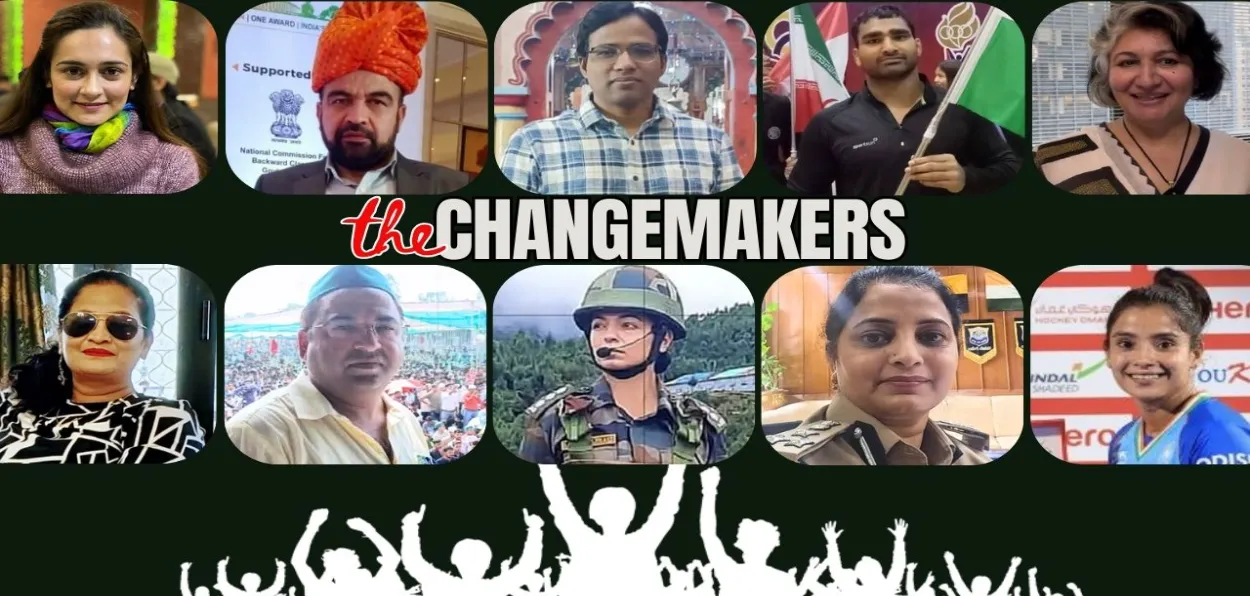
While media spotlight often shines on celebrities and politicians, the real engine of India’s progress runs on the resolve of countless unsung heroes who, away from limelight, quietly transform society.
From national defense to grassroots education, sports, science, and civil service, these individuals from Uttar Pradesh show how courage, compassion, and conviction can drive extraordinary change. Here are 10 such trailblazers whose stories deserve to be heard:
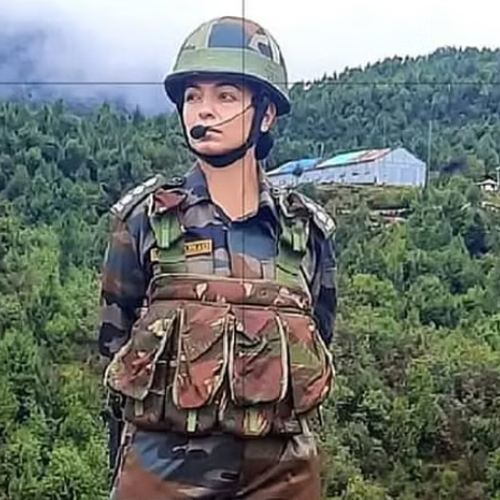
Captain Sariya Abbasi: A Woman in Uniform on the Frontlines
Hailing from a small city of Gorakhpur, Uttar Pradesh, Captain Sayria Abbasi broke every convention to join the Indian Army. A graduate in Genetic Engineering and with plenty of job offers and career opportunities from big companies was not enough for her to pursue in life. The call of service for the motherland was too strong to be sacrificed.
The world noticed her as a soldier deployed at the Line of Actual Control (LAC), India-China temporary border, manning an Air Gun. Today, Sariya leads drone-killer teams and operates L-70 anti-aircraft guns on the border. Her journey from an academic achiever to a defender of the nation’s borders is not just about military precision; it’s about shattering glass ceilings and reshaping how India imagines women in uniform.
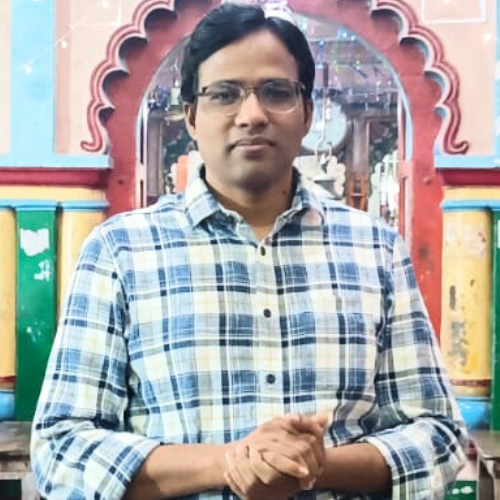
Dr. Faiyaz Ahmad Fyzie: Voice for the Voiceless Pasmanda Community
Dr. Faiyaz Ahmad Fyzie, an AYUSH physician, is more than a healer—he is a public intellectual, columnist, translator, and relentless advocate for the Pasmanda (socially backward) Muslim community. Raised in modest conditions, his rise to national recognition is built on fearless writing and tireless grassroots work.
When even the Prime Minister refers to Pasmanda voices, Fyzie’s years of advocacy resonate. His pen continues to empower those whose struggles were long silenced. His work is a call to conscience—and a roadmap for inclusive discourse.
Mohammad Luqman Ali: Wrestling His Way to Glory and Degree
Wrestler Mohammad Luqman Ali, a student of Social Work at Jamia Millia Islamia, is balancing body and brain. Born in Amroha’s tiny village of Mohraka Patti, his father worked on the railways, and his mother gave him religious grounding. Despite limited resources, Luqman’s grit has earned him recognition in India’s wrestling circles.
From the mat to the classroom, his dual commitment shows that excellence doesn’t require compromise. It requires discipline, heart—and a family’s belief in you.
Rubina Rashid Ali: Reviving Mughal-Era Art with a Modern Mission
In a sun-drenched corner of Aligarh, Rubina Rashid Ali has quietly built a movement. Her work in floral appliqué embroidery, a legacy of Mughal art, now supports dozens of women in Aligarh and Rampur. What was once an undervalued craft monopolized by middlemen has been transformed by Rubina into a vehicle for women’s economic empowerment.
Her home resonates not only with the sound of needles and threads but also with the hum of independence. “Real artists were reduced to laborers,” she says. Today, she ensures their hands are not just working — but also earning.
Babban Mian: A Gaushala Keeper Inspired by His Mother’s Love
At Madhu Sudan Gaushalla in Bulandshahr, Babban Mian tends to cows not out of ritual, but reverence — inspired by his late mother Hamidunnisa Begum. “She loved cows like her own children,” he recalls. After she passed away in 2015, Babban vowed to preserve her legacy.
Despite being a Muslim in a Hindu-dominated tradition, he runs a government-recognized shelter rooted in compassion, not controversy. For him, animal welfare is a universal value — not a communal issue. His work quietly redefines what shared culture and interfaith harmony look like.
Khushboo Mirza: From Amroha to the Moon with ISRO
Khushboo Mirza, scientist at ISRO and part of the Chandrayaan-1 and Chandrayaan-2 missions, is a stellar example of perseverance. After her father’s death when she was just seven, her mother raised three children alone, running a petrol pump and defying social norms.
Khushboo earned a Gold Medal in Electronics Engineering from AMU and was the youngest member of the Chandrayaan-1 checkout team. A practicing Muslim and a symbol of India’s scientific aspirations, she turned down corporate offers to reach for the stars—and took a whole generation of girls with her.
Zaheer Farooqui: A People’s Leader with a Vision for Purkazi
In western UP’s Purkazi, Zaheer Farooqui is rewriting what local leadership means. As Nagar Panchayat Chairperson, he donated land worth ₹1.5 crore for the area’s first Intermediate College and modernized local schools into PM Shri-certified institutions.
His initiatives go beyond classrooms. From India’s first double-storey government-run cow shelter to a gym for Muslim women, and one of the most sophisticated rural CCTV networks in the region — Farooqui’s governance is a blend of tradition and tech, equity and empowerment. His Tiranga Yatra revives local history, reminding citizens that patriotism is inclusive and action-oriented.
Dr. Farah Usmani: From AMU to Global Health Leadership
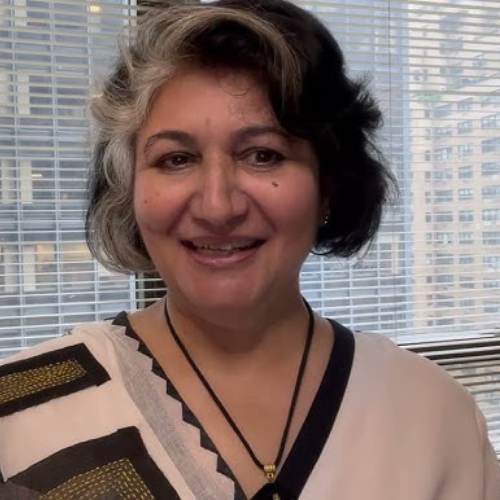
On a cold morning in New York, Dr. Farah Usmani stood outside an apartment, a folder in hand, her eyes bright with resolve. The daughter of Uttar Pradesh, she is today a formidable presence in global health policy.
n M.D. in Obstetrics & Gynecology from AMU, Farah sought impact beyond hospital walls. Armed with a Master’s in Health Policy from LSE and the London School of Hygiene & Tropical Medicine, she’s led transformative health initiatives around the world. Her journey is one of intellect guided by idealism — a doctor who chose not just to heal individuals but to reform systems.
Anjum Ara: Bridging Communities Through Compassionate Policing
Hailing from Azamgarh’s Kamharia village, Anjum Ara, a 2012-batch IPS officer, has redefined the image of policing with a human touch. A computer engineer by training, her journey from Integral University to Senior Superintendent of Police in Shimla has been marked by integrity and reform. Known for her work in cybercrime and her community-focused policing model, Anjum is also a fierce advocate for girls’ education.
Together with her husband, IAS officer Yunus Khan, Anjum adopted the cause of Khushdeep, the daughter of a martyred soldier, pledging to support her upbringing. This act of empathy mirrors her professional ethos, proactive, principled, and deeply people-centered.
Mumtaz Khan: From Vegetable Stall to World Hockey Stage
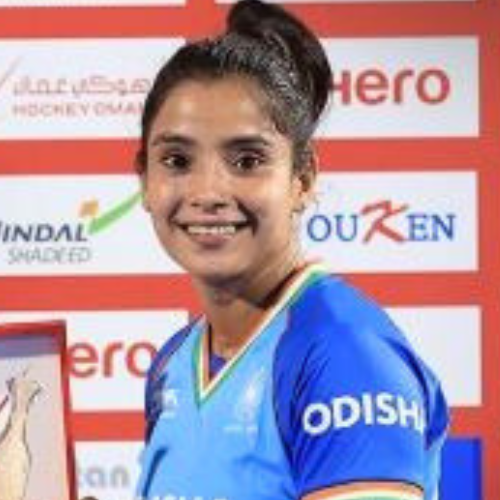
From the bustling alleys of Lucknow’s Cantt area to the turf fields of South Africa, Mumtaz Khan’s journey is pure grit. Once helping her father at a vegetable stall, a single race at school changed her life when Coach Neelam Siddiqui noticed her speed. That moment set her on a course to become a leading forward in India’s Junior Women’s Hockey Team.
Her standout performance at the 2018 Youth Olympics, where she scored 10 goals, earned her national acclaim. Yet, Mumtaz remains rooted, balancing hope and humility as she eyes the Olympics. She is proof that dreams born in dusty streets can blaze across international arenas.
These ten changemakers hail from Uttar Pradesh, from narrow village lanes to bustling metros, from battlefields to laboratories. But they are united by one thing: quiet, relentless courage. In their lives, we find the India that persists, uplifts, and transforms—not with headlines, but with hard work.
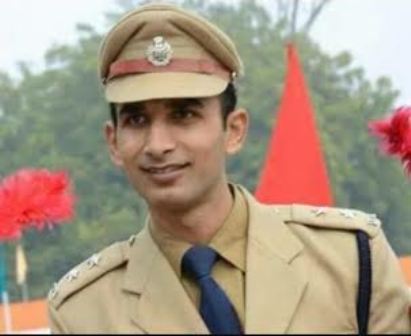
In 2012 Salman Taj Patil cracked the UPSC exam in first attempt and became the first Muslim IPS officer from Solapur. In this candid conversation with Imran Inamdar the 31 year old talks of issues concerning the Muslim community, of the state of education among Muslims and of his own preparation for UPSC a few years ago.
How did you manage to achieve this feat?
I immersed myself into the preparation completely. There was only one aim in my mind and that was to crack UPSC. My parents provided very good emotional support and my father Mr. Jafar Taj always encouraged me saying that ‘you are too energetic and brilliant, you can easily crack UPSC, just focus on your studies and be consistent.’
Who is your role model and Why?
Being a Muslim obviously Prophet Mohammed (PBUH) is my role model. He has showed us the complete way of life. My parents are also firm pillars of support for me. They are always there to guide me.
How to study to appear for UPSC exam?
The preparation starts at school level. Reading news papers, taking part in extracurricular activities, essay writing, debate competition play a key role. One needs to be updated about all current events. Critical analysis is also very important and it improves and polishes writing skill. Practice makes a man perfect. Nobody comes to the world with all the knowledge and skills. Effort, positive atmosphere, focus and support of near and dear ones matters most.
Why are Muslim youths far behind in cracking UPSC exam?
This is very important question. In my opinion our educational infrastructure and negative mentality are fully responsible for this. It has been hammered that qualifying this exam is very difficult or nearly impossible for minority community youth. This type of thinking is damaging and we should come out from this depressing thinking. It is a very fair competition. Achievement is a result of hard work only. It’s time to change our direction of thinking. When we focus and work hard Allah also helps us.
How do you feel serving as an IPS officer?
It’s a wonderful experience. In fact working as a police officer is a great social work itself where one gets an opportunity to help the oppressed, put criminal behind bars and provide safety and security to women and children. For this service we are getting salary from the government and will surely get Ajar (reward) from Allah too.
Sachar committee reports reveal tremendous decline of Muslims in India inallwalks of life. What are the reasons behind it?
We are ourselves responsible for this backwardness. We don’t follow the path of Prophet Mohammed (PBUH) and teachings of Quran which shows the complete way of life. We don’t read, and think over it. ‘Iqra’ which means read was the very first Quranic word to be revealed. How many of us follow the same? Education should be on our top priority specially girls’ education.
During studies what did you do to relieve stress?
I used to study for about 10 to 12 hours a day. That was hectic so I played cricket with friends and took a walk in the park to get myself mentally fresh again. And horse riding is also my hobby.
source: http://www.muslimmirror.com / Muslim Mirror / Home> Exclusive Reports> Indian Muslim> Interviews / by admin / June 26th, 2016
1993 batch IPS Officer M.A. Saleem is new DGP of Karnataka | PC: @Gulbarga Ki Awaaz/FB
Bengaluru :
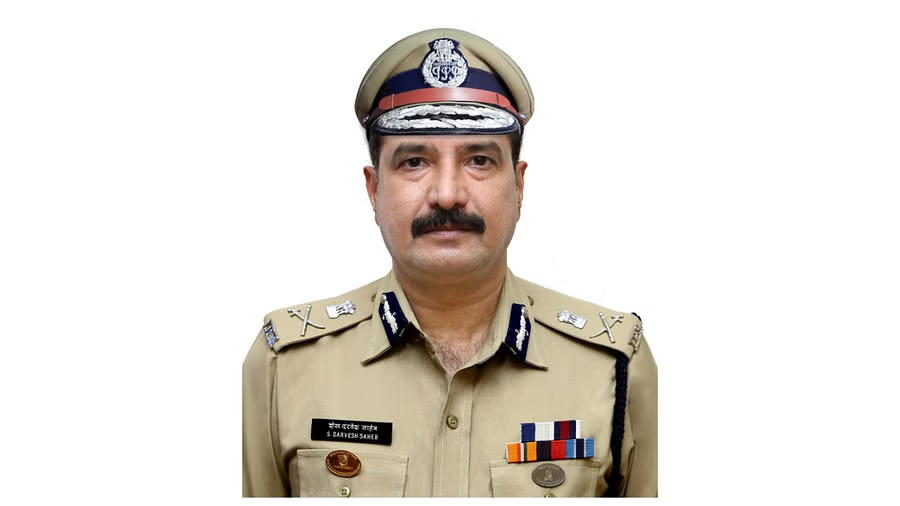
The Karnataka government on Wednesday issued orders appointing M.A. Saleem, a senior IPS officer from the 1993 batch, as the new Director General and Inspector General of Police (DG-IGP) of Karnataka. He replaces Dr. Alok Mohan, who retired from service today.
Until now, Saleem was serving as the Director General of the Criminal Investigation Department (CID).
There had been speculation over who would succeed Dr. Alok Mohan, with two key contenders in the race — M.A. Saleem and Prashant Kumar Thakur, DGP of Fire and Emergency Services. Thakur, a 1992-batch officer, is senior to Saleem by one year.
Saleem will have a one-year tenure, retiring in June 2026.
A seasoned officer, Saleem is known for his strong administrative skills and has previously served in various key positions across the state, including as Bengaluru City’s Special Police Commissioner.
source: http://www.english.varthabharati.in / Vartha Bharati / Home> Karnataka / by Vartha Bharati / May 21st, 2025
Senior IPS officer Nurul Hoda has resigned from the Indian Police Service in protest against the controversial Waqf law. On Wednesday, he joined the Vikassheel Insaan Party (VIP) led by former minister Mukesh Sahni.
Formerly serving as an Inspector General (IG) in the Railways, Hoda is now set to enter the political battlefield with a mission to represent and lead the Muslim community in Bihar.
Hoda, a 1995 batch officer from Sitamarhi, Bihar, is known for his sharp and dynamic approach.
With 28 years of service in sensitive areas like Dhanbad, Asansol, and Delhi, he has earned awards for his work in railway security, Naxal control, and crime prevention.
He was awarded the Vishisht Seva Medal twice and Director General Chakra.
Hoda’s resignation comes at a time when political tensions in Bihar are escalating as the state approaches its Assembly elections scheduled for October-November 2025, with the Waqf (Amendment) emerging as a central point of contention.
The ruling JD(U) has faced a wave of resignations from its Muslim leaders in April 2025, in a protest against the party’s support for the Waqf (Amendment) Act, 2025.
source: http://www.maktoobmedia.com / Maktoob Media / Home> East India / by Maktoob Staff (headline edited) / April 19th, 2025
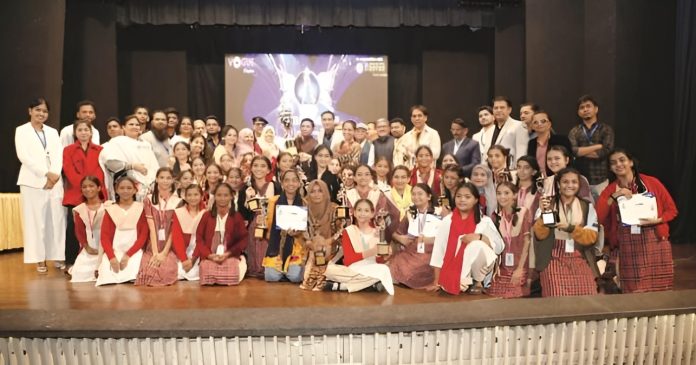
The sixth annual festival, “Discover,” celebrated young creative talents with enthusiasm, recognizing efforts to provide them a platform.
Organized by Vogue Theatre in collaboration with Bharatiya Vidya Bhavan, the state-level Urdu drama competition and children’s festival successfully took place at Bharatiya Vidya Bhavan. The event showcased the richness of Urdu language and literature while offering young talents an opportunity to express their creativity. Schools from Mumbai, its suburbs, and other districts participated, making it a vibrant confluence of artistic expression.
Engr. Adnan Sarkhot, President of Vogue Theatre, who has been associated with Urdu theatre for over 30 years and actively works for children’s creative development, led the event to its grand success. Notable guests, including Padma Shri Dr. Zaheer Kazi, IPS Qaiser Khalid, Dr. Sheikh Abdullah, Zahid Khan, and Zakir Khan, lauded Team Vogue’s initiative, emphasizing the importance of such programs in preserving Urdu for future generations.
As in previous years, “Discover” featured various competitions, including drawing, mono-acting, Urdu and English story writing, quizzes, and drama. More than a contest, the festival served as a learning experience, building confidence and refining students’ artistic skills. The participants’ creative performances left a lasting impression on the audience.
Experts from Mumbai, Bhiwandi, and Solapur judged the competitions.
Awardees included Principal Saba Patel, who received the Innovative Principal Award, while Raja Baghban (Solapur) and Sajid Dolar (Malegaon) were honored with the Lifetime Achievement Award for their contributions to education and literature. Additionally, for their outstanding performances in Urdu drama and academic excellence in SSC exams, Zara Feroz Shaikh (Mira Road) and Aashna Wahid Ansari (Mumbra) received the Rising Star Award.
source: http://www.radiancenews.com / Radiance News / Home> Arts & Culture / by Radiance News Bureau / February 08th, 2025