Tag Archives: Muslim Scientists of Uttar Pradesh

Remembering Prof Rais Ahmed

Aligarh, UTTAR PRADESH :
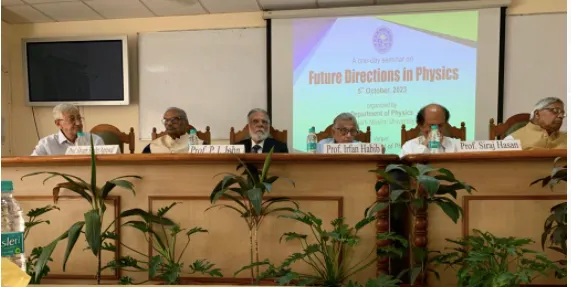
We celebrated the 100th birth anniversary of Prof Rais Ahmed, the former head of the Physics Department, Aligarh Muslim University and the person to whom I owe a great deal for starting me off on my career path in plasma physics research.

A one-day memorial cum seminar on Future directions in Physics was held at the University on 5th October 2023 Venue. Prof. Irfan Habib, Prof. of History, AMU, Prof. Siraj Hasan (Former Director, Indian Institute of Astrophysics), Prof. Naresh Dadhich (Former Director, IUCAA), Prof. S. K. Singh (Former VC, HNBU), Prof. Wasi Haider and Prof. Shyam Sunder Agrawal (Director General, KIIT Group of Institutions) spoke on the occasion. I spoke about my association with him and the future of Plasma Physics and Thermonuclear Fusion Research in India.

It was a forenoon in July 1964 when I first met Prof Rais Ahmed, who had become the Head of the Department that very year. I had travelled from Kerala seeking an opportunity to do research. He asked me a few questions on Physics, and I suppose I answered them reasonably well. But then he wanted to know why I wanted to pursue research.

I had rather romantic ideas like research leading to new knowledge and our responsibility to seek pure knowledge etc. It was clear that he did not take me seriously as he went on to say that science is what drives social transformation by changing our perception of our relationship with nature. Another observation was about science leading to technology which improves the quality of life.

Our conversation covered many things. I suppose he was gauging my mind and trying to find what kind of person I was. If it was a test, I passed it as he said that I could join for research. He made sure that I had no preference for Nuclear Physics or Spectroscopy, the areas of ongoing work in the department. He talked to me about Plasma Physics as an emerging field and about the work which was going on in Harwell and Oxford on Thermonuclear Fusion Research.

I did not know about Plasma Physics even at an elementary level. However, I was willing to learn and was asked to talk to Prof. D C Sarkar about the thesis work in more detail. I went through an intense learning programme, primarily reading Physical Review and Review of Scientific Instruments. There was no previous laboratory I could walk into and start work and I had to start from scratch. Looking back, I was taking an enormous risk as I had to build an entire laboratory for me to start the thesis work.

I rigged up a Radiofrequency generator with Japanese power tubes scavenged from the Electrical Engineering Department. Prof Venkateswarlu’s lab was full of microwave equipment, which Rais Sab allowed me to borrow. With all this, I set up an experiment and after a struggle of five years, put together a thesis which got me a degree. Almost immediately he gave me a regular job as a lecturer in the department as some vacancies were due to be filled.

As the Head of the Department, he did much to expand research and teaching in Physics in new areas. As Director of Academic Programmes, he organized the Semester System designed to update courses and provide more rigorous instruction to students. He made an alliance with Uppsala University in Sweden for faculty members to do research there. He arranged for PhD scholars to start teaching postgraduate students.

I recalled my interaction with university life during my eight years there. At first, Aligarh gave me a culture shock. My inability to comprehend Urdu was the first barrier to appreciating the culture. The exalted forms of addressing, and the too formal and exaggerated ‘Tehzeeb’, the gestural ‘adaabs’ strewn around were all alien. The food, though delicious, was completely unfamiliar. But the campus was a dream with beautiful buildings, stately halls, verdant lawns, and lush gardens. The library gave me all the books I wanted to read. The accommodation I got at the Sulaiman Hall was quite adequate. The students from central Travancore preferred this. There was a South Indian mess catering our preferred food. Tea at the Paradise restaurant with friends was fun.

Rais Ahmed had interests ranging from his specialization in Electronics to varied areas of science and education. He published over 100 papers on Electronic Circuit Analysis. Analogue Computers. Speech Recognition and Production, and Creative Teaching of Physics. The work he started in the 1970s on speech perception would eventually become an important branch of artificial intelligence and machine recognition of speech.

I recall a symposium he had organized on higher education, where we were asked to be volunteers to help the organization. The attendees were all academics from Universities and IITs and I was fortunate to listen to many of them. The remarkable skill with which Rais Sab generated consensus on many issues which were debated was an eye-opener for me.

In a department seminar, when his student Moonis Ali spoke on the design of an analogue computer system, some of us, ridiculed the idea calling it a paper machine. Rais Sab defended the presentation vigorously, saying that new ideas were what drove science forward and that they had as much importance in science as building new instruments.

His remarkable organizational skills were brought to bear at the prestigious Annual Meeting on High Energy and Nuclear Physics, sponsored by the Department of Atomic Energy. Prof Roy Daniel from TIFR was the coordinator of the meeting, and his being from Kerala, we used to chat about the preparations for the meeting. The participants included bigwigs like Vikram Sarabhai, Prof M G K Menon and Dr Raja Ramanna. The meeting was hailed as very successful thanks to the planning and preparations led by Rais Saheb.

All of us in the department rejoiced when he was made a member of the Science Advisory Committee to the PM, then Mrs Gandhi. After each meeting, he would call all of us to the lawn near the workshop to convey to us the flavour of the meeting. We had the vicarious pleasure of being informed about the thinking in the places of power.

He would call me occasionally to his office to find out how I was doing. In one of these meetings, he advised me to read journals other than those dedicated to pure physics. He cited the Bulletin of Atomic Scientists as an example.

Rais Sab had an abiding faith in Scientific Socialism and felt strongly about the increasing global dominance of the multinationals and about what he saw as a retreat by India from its independent position both in the Economic and Intellectual fields. He had a strong belief that human capital, in the form of expanding knowledge and scientific spirit, held the key to India’s salvation. For this ideal, he worked tirelessly both as an individual and in administrative capacities.

In the 1950’s he was an energetic organizer of the Association of Scientific Workers of India. Once when I asked him about the ethics of unionizing scientific workers, he defended it by saying that collective bargaining need not be about wages and working conditions only. Professional bodies of scientists had a role in influencing public policy.

After I left Aligarh in 1972 to join the Physical Research Laboratory in Ahmedabad, I had occasional interactions with him. He made me a member of the UGC Committee to visit Marathwada University to make an academic assessment. He funded my proposal to have an orientation programme for university teachers in the emerging field of Plasma Physics.

I had an exciting and eventful life contributing to Plasma Physics in India, right from its inception at the Physical Research Laboratory, during the Plasma Physics Programme and its eventual transformation to the Institute for Plasma Research and when India became a proud partner in the ITER project of building the world’s first Thermonuclear fusion reactor in France. I owe a debt of gratitude to Rais Saheb for initiating me into the research path, which made all this possible.

source: http://www.john-pucadyil.medium.com / Medium.com / Home / by John Pucadyil / October 06th, 2023
AMU PMRF Scholar Mohd Zeeshan Named Among India’s Top 40 for Research Excellence

Aligarh, UTTAR PRADESH :

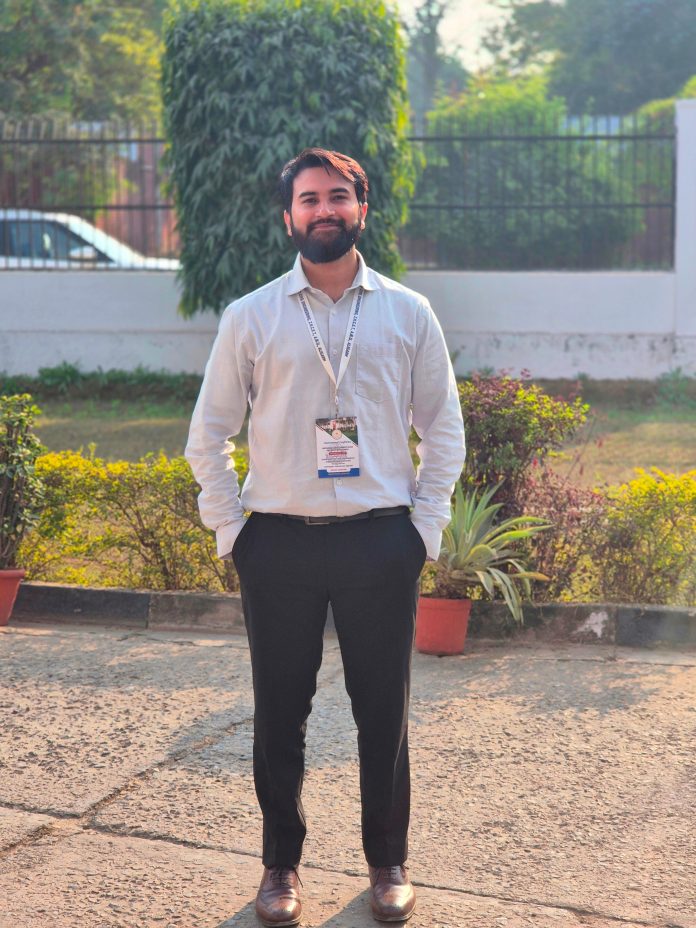
Mohd Zeeshan, a PMRF and doctoral researcher at Department of Chemistry, AMU, has earned national recognition as one of the Top 40 PMRF scholars across India for his exemplary contributions to cutting-edge research in CO₂ fixation

Aligarh:

Mohd Zeeshan, a Prime Minister’s Research Fellow (PMRF) and doctoral researcher at the Department of Chemistry, Aligarh Muslim University (AMU), has earned national recognition as one of the Top 40 PMRF scholars across India for his exemplary contributions to cutting-edge research in carbon dioxide (CO₂) fixation.

Zeeshan’s research is centred on the development of heteroatom-functionalised linkers and metal–organic framework (MOF)-based materials for CO₂ capture and wastewater remediation. The selection was based on the national impact of his work, which combines experimental innovation with real-world applicability, addressing pressing environmental challenges.

His research has been conducted under the mentorship of Dr. M. Shahid, a noted scientist with over 170 publications.

Zeeshan acknowledged the constant academic and moral support of Professor Zeba N. Siddiqui, Chairperson of the Department of Chemistry, who congratulated him on receiving this prestigious honour. He also thanked Professor Aasim Zafar, PMRF Coordinator at AMU, for his dedicated mentorship, proactive engagement, and seamless coordination.

Zeeshan has authored 13 peer-reviewed research papers published in leading international journals, including Dalton Transactions and CrystEngComm (Royal Society of Chemistry), and Coordination Chemistry Reviews (Elsevier), with impact factors reaching up to 20.3. He has also contributed two book chapters, holds a granted patent, and has received multiple accolades for best poster and oral presentations at national and international conferences.

In recognition of his achievements, Zeeshan has been invited by the Ministry of Education, Government of India, for a high-level interaction with senior officials, where he will represent AMU and share insights on enhancing the PMRF scheme.

source: http://www.radiancenews.com / Radiance News / Home> Latest News / by Radiance News Bureau / June 21st, 2025

AMU Professor Dr Nishat Afroz gets International Award as ‘Distinguished Researcher in Histopatholgy’ for Research and Innovation in Medical Sciences

Aligarh, UTTAR PRADESH :

Dr Nishat Afroz receives the international award for research and innovation in medical sciences

Aligarh:

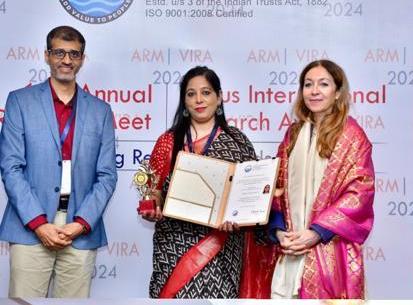
Dr Nishat Afroz, Professor, Department of Pathology, JN Medical College, Aligarh Muslim University (AMU) has been honoured with the award of “Distinguished Researcher in Histopathology” for her contribution and achievement in the discipline of Health and Medical Sciences by the Venus International Foundation.

The award was bestowed upon her at the 10th Annual Research Meet – ARM 2024 on the theme “Diverse Approach to Address Societal Challenges and Deliver Novel Solutions”, organised by the Centre for Research and Innovation – Venus International Foundation at Chennai.

Earlier, Dr Nishat Afroz attended the Pathology Conferences at Subharti Medical College Meerut, Narayana hospital & RN Tagore Medical College, Kolkata and SMS Medical College, Jaipur as guest speaker and workshop convener.

source: http://www.radiancenews.com / Radiance News / Home> Pride of the Nation. Awards> Focus / by Radiance News Bureau / December 12th, 2024

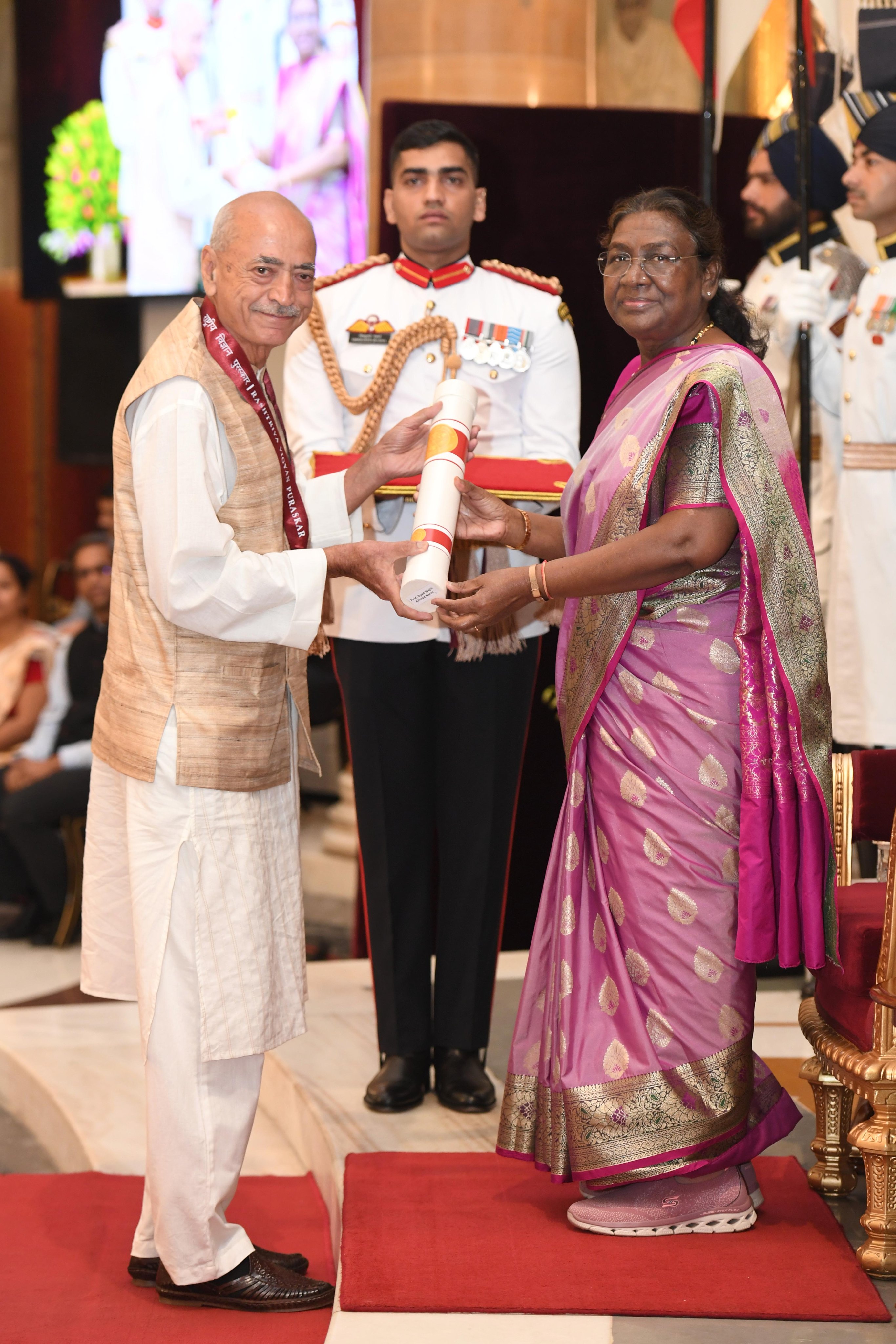
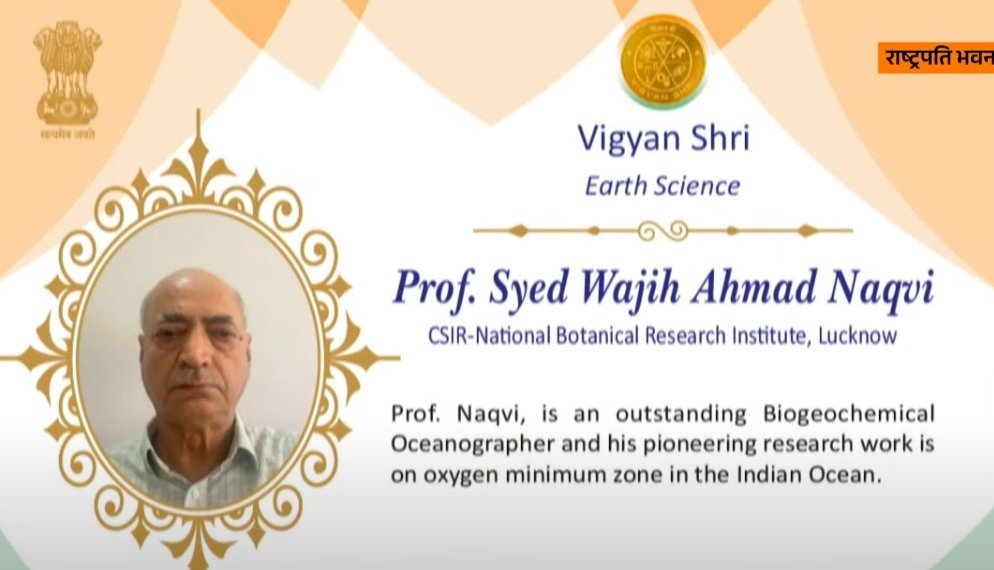
President Droupadi Murmu confers the Vigyan Shri Award 2024 on Prof. Syed Wajih Ahmad Naqvi in the ‘Earth Sciences’ Category

Lucknow, UTTAR PRADESH / NEW DELHI :

pix: x.com/rashtrapatibhvn

President Droupadi Murmu confers the Vigyan Shri Award on Professor Syed Wajih Ahmad Naqvi in Earth Sciences during the Rashtriya Vigyan Puraskar-2024, at Rashtrapati Bhavan, in New Delhi on Thursday August 22nd, 2024 .

Prof. Syed Wajih Ahmad Naqv from CSIR-National Botanical Research Institute (NBRI), Lucknow receives Vigyan Shri award in Earth Science from President Droupadi Murmu / pix: x.com/DDNewslive

New Delhi :

President Droupadi Murmu confers the Vigyan Shri Award on Professor Syed Wajih Ahmad Naqvi in Earth Sciences during the Rashtriya Vigyan Puraskar-2024, at Rashtrapati Bhavan, in New Delhi on Thursday August 22nd, 2024 .

source: http://www. pix: x.com/rashtrapatibhvn

Agricultural scientist Moinuddin started his journey from Madrasa

Jalalpur Town (Ambedkar Nagar District) , UTTAR PRADESH :

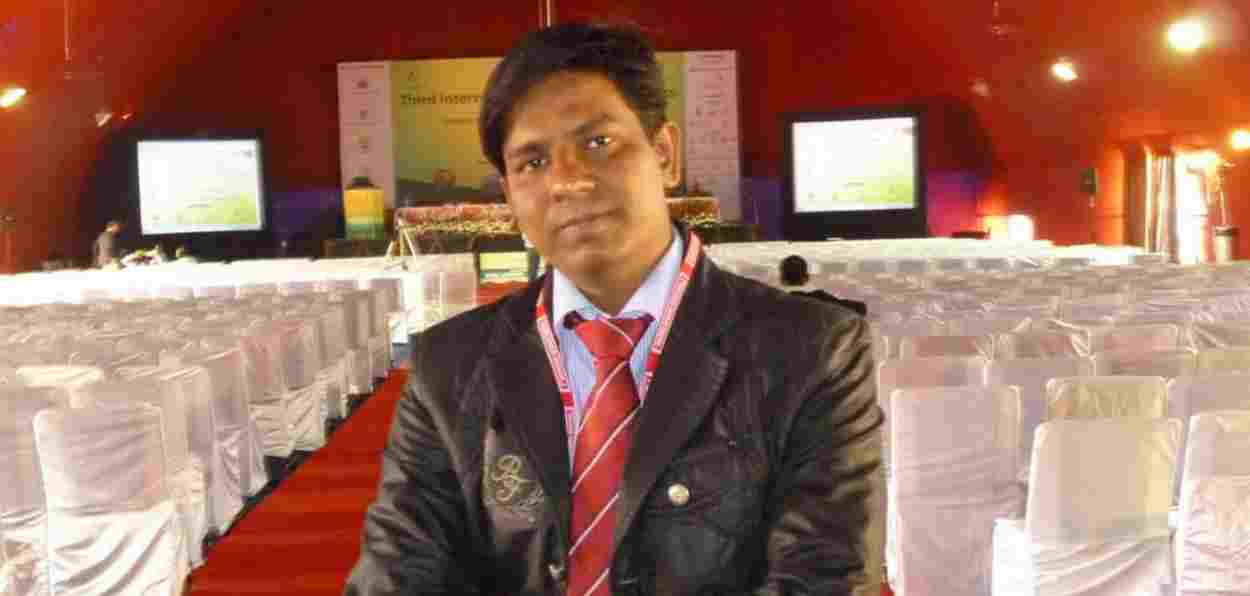
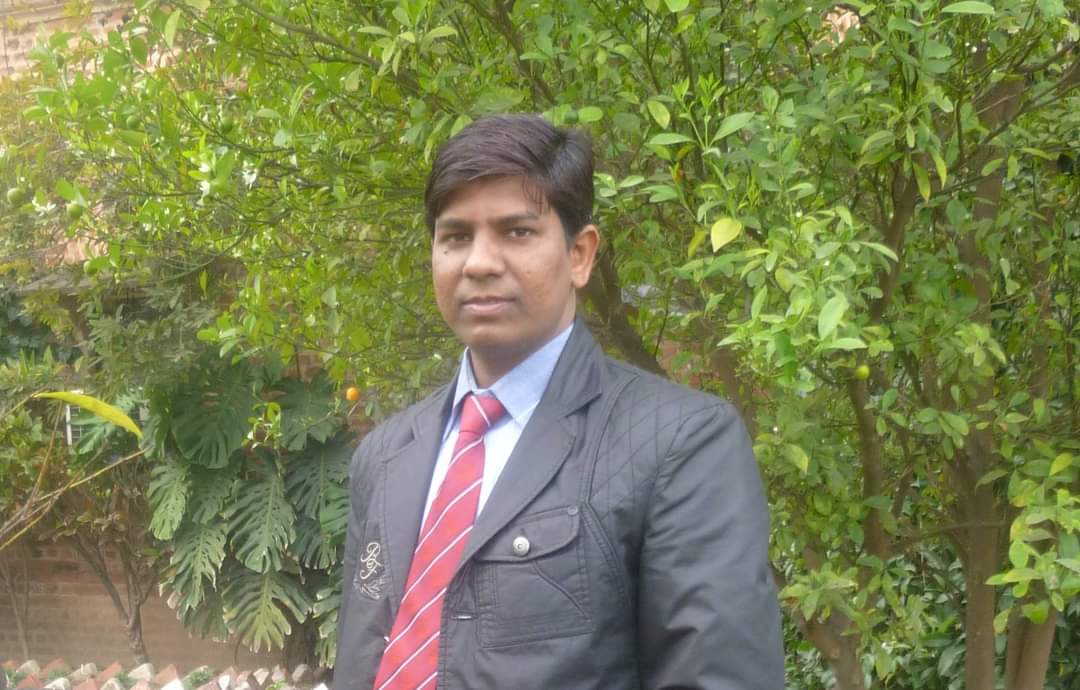
Agricultural scientist Dr. Moinuddin

Dr. Moinuddin’s life is a testimony to the fact that education is the key to changing lives and resolving the present-day problems of societies. This Madrasa-educated agricultural scientist Is an inspiration for those who want to grow in life no matter how many odds are stacked against them.

Dr. Moinuddin was born in Ambedkar Nagar, Jalalpur town, Uttar Pradesh. He joined Madrasa Nida Haq in his town where he completed his primary education. Driven by a desire to study, he continued his education beyond the Madrasa.

He completed his Ph.D. degree from Allahabad (Prayagraj), UP and is today posted as an Associate Professor in the Department of Agricultural Sciences, Sri Guru Ram Rai University of UP.

Not that his journey was smooth.  Moinuddin says that during his student days, life was quite hard for him.  When he was studying at the NPG College Barhalganj, run by Deen Dayal Upadhyay Gorakhpur University, he was not able to rent out a house. “Wherever I went for renting a house, I was met with refusal, and finally had to live in the Bhimsawa Ashram for two years.”

Thereafter a kind-hearted Hindu family offered him their house for rent.

Dr. Moinuddin

Dr. Moinuddin obtained his Ph.D. from Sam Higginbottom Institute of Agriculture, Technology, and Sciences, Allahabad on the topic “Effect of different organic sources of nitrogen on growth, yield and oil content of groundnut”. He also presented his thesis for his MSc degree on ‘Growth and yield behavior of mustard under different sowing methods and sulfur levels’.

Today Dr. Moinuddin is working as a teacher and also continuing his research. He is currently posted as an Assistant professor of Agriculture at Maya College of Agriculture Science and Technology, Dehradun, College of Agriculture and Technology, Dehradun, Uttarakhand.

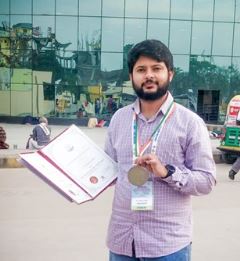
Dr. Moinuddin received many national and international awards for his work on agricultural research. He was awarded the Young Scientist Award for the first time by the Bioweed Research Institute of Agriculture and Technology, Allahabad, Uttar Pradesh on the occasion of the “15th Indian Agricultural Scientists and Farmers Congress” at Allahabad University in 2013.

He attended the 3rd International Conference on “Global Initiatives in Agriculture and Applied Science for Green Environment”.

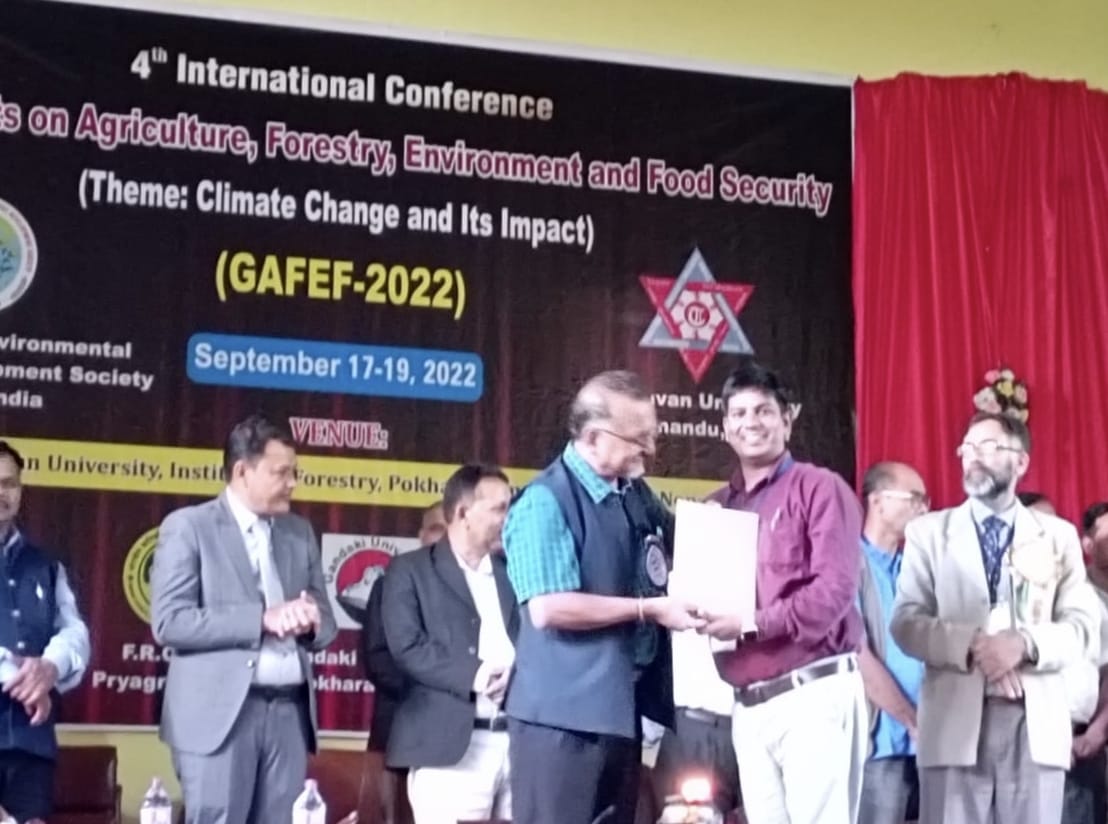
He was awarded the Best Agricultural Scientist Award at Shobhat Deemed University, Meerut, Uttar Pradesh in 2021 on the occasion of the 4th International Conference on Global Perspectives in Climate Smart Agriculture Natural Resource Management during the coronavirus pandemic. He was awarded the Outstanding Scientist Award at the Institute of Forestry, Tribhuvan University, Pokhara, Nepal in 2022 on the occasion of the 4th International Conference on Global Efforts on Agriculture, Forest, Environment and Food Security.

Dr Moinuddin receiving an award

Dr Moinuddin says, “I cannot explain my feelings of gratitude at the respect I have received from people at such a young age. Today if I am considered worthy, it is because of my education. Education can lift anyone from the ground to the sky. Everything was not easy for me when I was getting my education. Rather often have to face adverse environments. But I completed my studies. And today this education made everything suitable for me.”

Dr. Moinuddin is also a life member of the Indian Society of Agronomy, Agronomy Division, Indian Agricultural Research Institute, New Delhi. He is also an active member of the Society of Agronomy, Department of Agriculture, Sam Higginbottom Institute of Agriculture, Technology and Sciences, Allahabad. He is also an active life member of the Agricultural Technology Development Society, Ghaziabad, Uttar Pradesh.

Dr. Moinuddin has participated in several important seminars, and conferences including the National Seminar on “Livelihood Generation in Hill Statistics of India based on Agriculture and Allied Sectors” organized by Uttaranchal (P.G.) College of Technology and Biomedical Sciences, Dehradun, UK in 2014.

Dr. Moinuddin asks the youth “to recognize the value of time and avoid wasting it; always be in good company. Also, those who don’t value their time will be left behind.”

His father Haji Munir Ahmed was the Principal in Mirza Ghalib Inter College Jalalpur and now leads a retired life.

He told me on the phone that his son Dr. Moinuddin was always a studious child. Unlike other children of his age, he did not make many friends and never wasted his time hanging out and having fun.

He was always focused on his education. He says that his early studies were in the madrasa till the fifth grade. “After he completed his matriculation, a friend told me that “your son is very intelligent and extremely sincere in studies”. He advised me to put him in the field of agriculture studies. After this, I discussed it with my son and he also agreed. And with his hard work today, he is a scientist in agriculture and serving the country,” the proud father said.

(The Author is a Lucknow based Freelance Journalist)

source: http://www.awazthevoice.in / Awaz, The Voice / Home> Story / by Irshad Saqafi, Lucknow / April 15th, 2024

AMU Professor Saima Yunus Khan gets First Copyright from Government of India for her work on Dental Caries

Aligarh, UTTAR PRADESH:

AMU Faculty Becomes First Indian To Receive IADR Fellowship

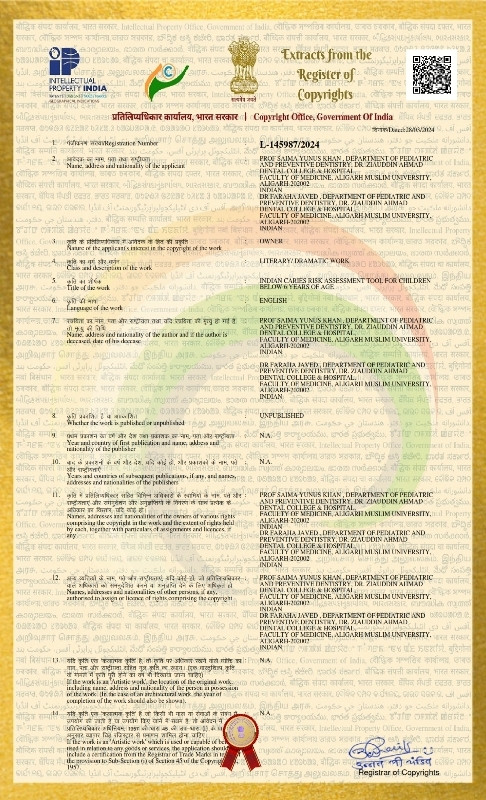
Prof Saima Yunus Khan, Chairperson, Department of Pediatric and Preventive Dentistry, Dr. Z.A. Dental College, Aligarh Muslim University has been awarded the Copyright by the Government of India for her original innovative work on an evidence based Indian Caries Risk Assessment tool for the children up to 6 years of age.

She started to work on the project in 2021, on receiving the John Clarkson Fellowship from the Prestigious International Association for Dental Research.

Being the first Indian to receive this fellowship, she worked in collaboration with Dr. Gerald Niznick, College of Dentistry, Rady Faculty of Health Sciences University of Manitoba, Canada.

According to Dr. Saima, the CRA tool would be beneficial to the Indian children as it addresses the risk factors of early childhood caries of Indian preschoolers. It’s a small compact tool form which can be used with ease by the masses in hospital or field settings.

The Dean, Faculty of Medicine and the Principal, J.N. Medical College, Prof Veena Maheshwari, and the Principal, Dr. Z. A. Dental College & Hospital, Prof R.K. Tewari congratulated Prof. Saima on her exemplary achievement.

source: http://www.amu.ac.in / AMU, Aligarh Muslim University / Home> Public Relations Office (headline edited & additional pix edited) / April 02nd, 2024

AMU Research Scholar Rizwan Ahmad Won ‘Young Innovator Award-2023’ from Indian Academy of Bio-Medical Sciences held at AIIMS, Patna

Aligarh, UTTAR PRADESH:

Aligarh : 

Rizwan Ahmad, a research scholar, working under the supervision of Prof. Moinuddin in the Department of Biochemistry at the Faculty of Medicine, Aligarh Muslim University has won the “Young Innovator Award-2023” from the Indian Academy of Biomedical Sciences, held at AIIMS, Patna.

Ahmad’s outstanding poster presentation, titled “Modified Fibrinogen Entraps Blood Cells and Induces Oxidative Stress, Leading to Deposition of Arterial Clot: Possible Pathway in Metabolic Disorder and Development of a Novel Biomarker,” secured the second prize.

His research sheds light on the effects of fibrinogen protein under diabetes-induced stress, potentially aiding in the early detection of metabolic diseases.

Ahmad also attained first prize in an oral presentation at a symposium organized by the Endocrine Society of India and third prize at the Hematology conference organized by the Department of Pathology last year.

source: http://www.indiaeducationdiary.in / India Education Diary / Home> National News> University News / by India Education Diary (headline edited) / March 05th, 2024

Prof Dr. Qudsia Tahseen appointed as National Representative for the International Union of Biological Sciences (IUBS)

Azamgarh / Aligarh, UTTAR PRADESH:

Prof Qudsia appointed as National Representative for IUBS© Provided by The Times of India

Agra:

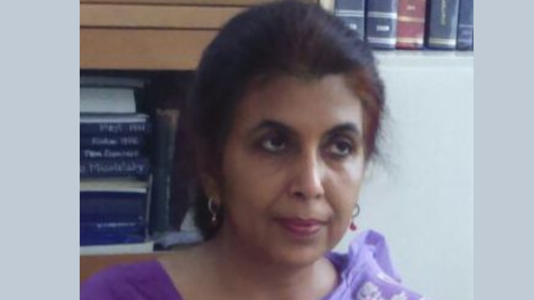
Prof. Qudsia Tahseen, Department of Zoology at Aligarh Muslim University has been named as the National Committee representative for the International Union of Biological Sciences (IUBS), announced by the Indian National Science Academy (INSA).

Commencing her three-year term on January 1 this appointment emphasizes Prof. Qudsia’s contributions to the fields of Taxonomy and Biodiversity. She has the distinction of holding fellowships in all three prestigious National Academies.

The IUBS, founded in 1919, is a global non-profit organization dedicated to facilitating and coordinating biological research worldwide. Its mission spans diverse areas, with the goal of addressing global biological challenges. Prof. Qudsia’s appointment to the newly formed INSA National Committee for IUBS, consisting of seven experts, solidifies her role as a representative for India in the realm of biological sciences.

Prof. Qudsia while acknowledging her appointment said the committee, serving as the national arm of IUBS, is pivotal in advancing IUBS initiatives at a domestic level. This includes policy advocacy, tackling global challenges, setting research priorities, fostering collaborations, and promoting the sustainable use of biological resources.

source: http://www.timesofindia.indiatimes.com / The Times of India / Home> News> India News / by TNN (headline edited) / January 05th, 2024

IIT Kanpur professors Bushra, Nitin awarded INSA Fellowship for 2023-24

Kanpur, UTTAR PRADESH:

Professor Bushra Ateeq is Special Senior Fellow, and teaches at the Department of Biological Sciences and Bio-Engineering (BSBE) of the IIT Kanpur.

IIT Kanpur professors Bushra, Nitin awarded INSA Fellowship for 2023-24

Kanpur: 

Two professors of the Indian Institute of Technology (IIT) Kanpur, Bushra Ateeq and Nitin Saxena, have been awarded with the prestigious Indian National Science Academy (INSA) Fellowship for the year 2023-24.

Professor Bushra Ateeq is Special Senior Fellow, and teaches at the Department of Biological Sciences and Bio-Engineering (BSBE) of the IIT Kanpur.

Professor Nitin Saxena, Founding Coordinator of the Center for Developing Intelligent Systems (CDIS) at IIT Kanpur, is from the Computer Science and Engineering Department of the institutions.

“I am delighted to share that two distinguished members of our faculty, Prof. Bushra Ateeq from the Department of Biological Sciences & Bioengineering, and Prof. Nitin Saxena from the Department of Computer Science & Engineering, have been honoured with the prestigious Fellowship of the Indian National Science Academy (INSA) for the year 2023-24”, Director IIT Kanpur, Abhay Karandika, wrote on social media platform X, earlier known as Twitter.

“The INSA Fellowship recognizes the research of scientists from diverse fields and supports them to further their research with necessary assistance”, he added.

Professor Bushra Ateeq

Dr. Bushra Ateeq joined Department of Biological Sciences and Bio-Engineering (BSBE) at the IIT Kanpur in February 2013. She was trained as a postdoctoral fellow in Dr. Arul Chinnaiyan’s group at Michigan Center for Translational Pathology, University of Michigan. Prof Bushra also served there as a Research Investigator (Junior Faculty) before joining IIT Kanpur.

Prior to this, she was a postdoctoral trainee in Dr. Shafaat Rabbani’s group at McGill University, Montreal. She served a brief stint as a Research Associate at All India Institute of Medical Sciences, New Delhi and National Institute of Immunology, New Delhi. She received her Ph.D. from Aligarh Muslim University (AMU).

Dr. Ateeq is primarily interested in exploring the genetic and epigenetic changes that initiate cancer and its progression by employing novel strategies and approaches. Her overarching goal is to explore the molecular events that drive cancer and facilitate the process of acquiring resistance towards chemotherapeutic drugs, in hopes that these discoveries can lead to the development of more effective therapies against specific causative pathways or alterations.

Professor Nitin Saxena

Professor Saxena has completed Bachelors in Computer Science from IIT Kanpur in 2002 and completed PhD under Manindra Agrawal in 2006. His interest area is Computational Complexity Theory, Algebra, Geometry and Number Theory.

Professor Saxena is a visiting Graduate Student in Princeton University (2003-2004) and National University of Singapore (2004-2005); a postdoc at CWI, Amsterdam (2006-2008) and a Bonn Junior Fellow (W2 Professor) at Hausdorff Center for Mathematics, Bonn (2008-2013).

source: http://www.ummid.com/ Ummid.com / Home> Education & Career / by Ummid.com news network / September 18th, 2023