Jubuni Village (Rampurhat subdivision of Birbhum District), WEST BENGAL :
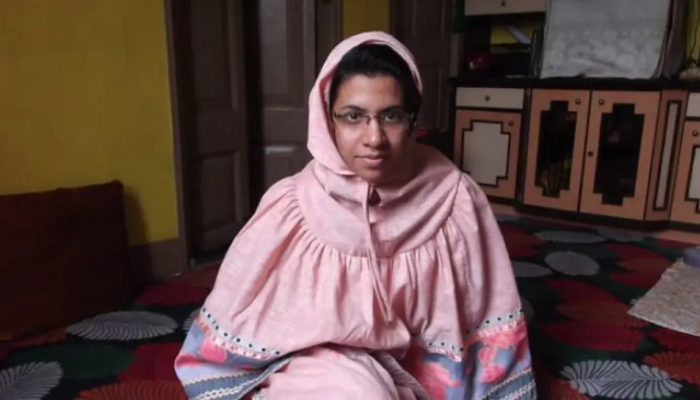
Feroza Begum
Firoza Begum’s language of protest against the harsh realities of rural India, gender inequality, and family adversity is a strong statement. The poet and writer in her, though, has emerged from a phase of struggle.
She was born into a respectable family in Jubuni village of Rampurhat subdivision of Birbhum district, West Bengal. Her parents, Abdul Hakim Mallick and Arestun Bibi, faced poverty, disease, and social uncertainty, due to which her childhood was difficult.
The struggle for survival of her family and relatives during the terrible smallpox epidemic influenced and triggered a humanitarian spirit in her.
In her childhood, when women’s education was neglected in rural society, she completed her schooling. She broke many social barriers. The discrimination and neglect she faced while in school ignited the spirit of rebellion in her, which, in due course, made the language of her writing sharp, protestant and sensitive.
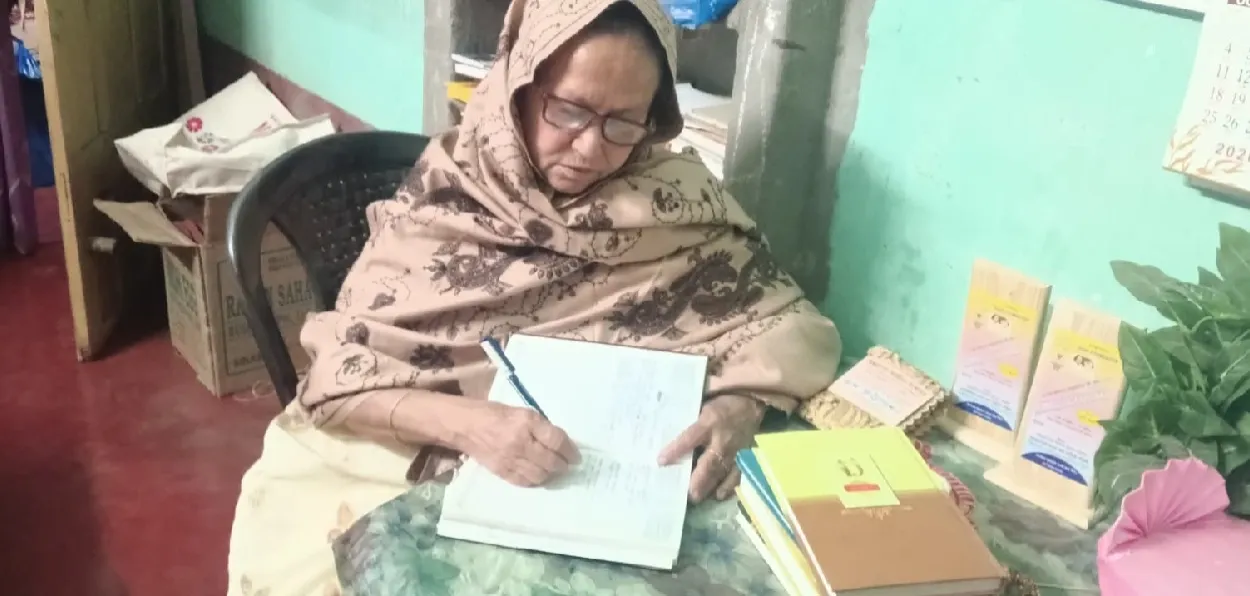
Feroza Begum with an award
In 1974, she married Nurul Haque Mallick, a science-minded teacher. With her husband’s liberal attitude and inspiration, she managed to balance both her family life and pursuit of literature. She made sure her four daughters got educated and financially independent, self-reliant. Although her husband’s death in 2016 left a deep void in her life, she did not stop pursuing literature.
Since 1992, Firoza Begum has been regularly writing poems, songs and essays. Her writings have been published in various literary magazines of Murshidabad, Rampurhat and Kolkata, Pragati, Trinayani, Kalam, Bhabbana, Sangbad Darpan, Roddur, Arpan, etc.
Besides, she is also a regular participant in the radio and television programs and has received recognition beyond her hometown and community.
The poetry collection “Nayantara” published in 2010) and “Aparajita” published in 2014) clearly reflect the struggle of women, the adversities of life, and the human spirit.
She proofread and published the book, despite illness and limitations, and it reflected her perseverance.
Firoza Begum has received several honours and awards in recognition of her contribution to literary endeavours.
The reception by the Bhabna O Anubhavber Dana newspaper of Rampurhat, the Rokeya Award from the Roddur newspaper, certificates from various radio stations in Kolkata and Baharampur, the Ambedkar Shilpi Ratna Award from New Barrackpore, and the recent “Best Bengali” award from the Asha Foundation are important recognitions of her literary and humanitarian activities.
The life of poet Firoza Begum is not just the autobiography of a writer, it is a courageous document of a struggling woman. Her pen still bears witness to the fact that even in the deep darkness of adversity, education, humanity and literature are capable of illuminating the path of humanity.
source: http://www.awazthevoice.in / Awaz, The Voice / Home> Stories / by Dev Kishore Chakraborty / February 03rd, 2026
Katwa Town (Purba Bardhaman District) , WEST BENGAL :
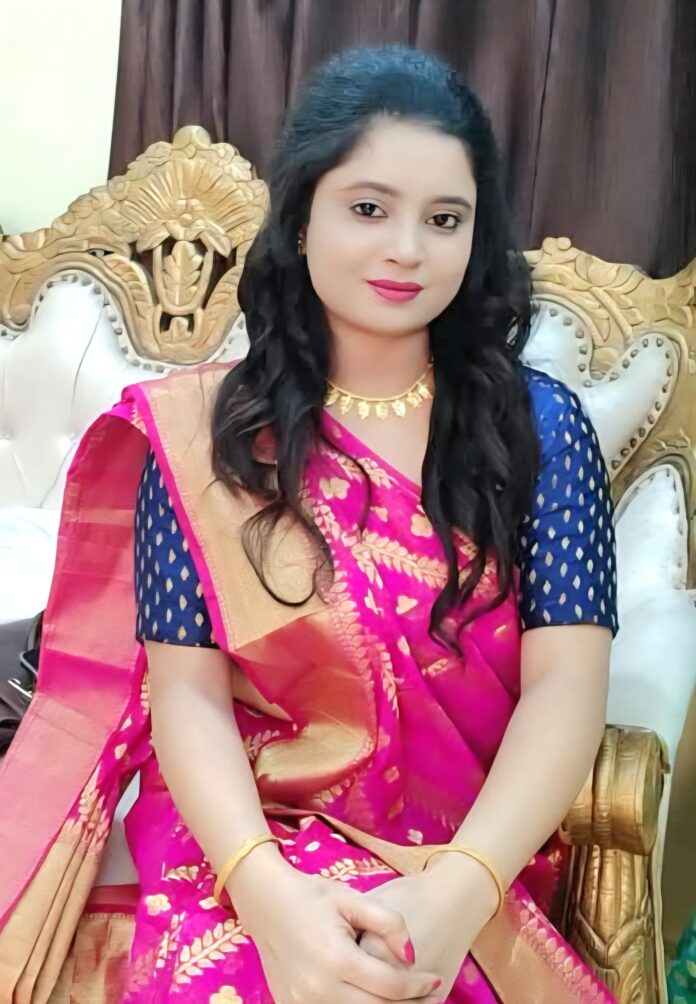
Nilufa Yasmin
Kolkata :
Nilufa Yasmin has scored a perfect 100% in the University Grants Commission National Eligibility Test (UGC NET) held in June 2025. She has qualified for the Junior Research Fellowship (JRF) in Bengali.
The UGC NET is a national-level exam that determines eligibility for the award of the JRF, a scholarship awarded to postgraduate students to pursue research that leads to a PhD.
Her result is being celebrated as an achievement. It came after two previous unsuccessful attempts. She appeared for the exam along with more than 7,52,000 candidates. Her score of 100% has placed her right at the top.
Belonging to the state of West Bengal, she feels proud of her language and identity.
“I am proud to be a Bengali. I take even greater pride in my subject, which is Bengali language, and I am determined to hold onto it as I move forward in life,” she told TwoCircles.net, with a sense of pride.
Nilufa, 26, comes from Katwa town in Purba Bardhaman district of West Bengal. Her academic performance from school through college has been excellent.
Lauding her success, Chief Minister Mamata Banerjee wrote on X (formerly Twitter), “Congratulations to Nilufa Yasmin of Katwa in Purba Bardhaman for scoring 100 percentile and securing first position in India in UGC-NET June, 2025 in Bengali and to Rikta Chakraborty of Kolkata for securing second position in India in UGC-NET June, 2025 in Mass Communication and Journalism. Your achievements have made our State proud. Congratulations to your parents/ guardians and teachers too.”
Nilufa said this recognition from the chief minister is an honour and a reminder for her to strive even harder in the future.
She is currently pursuing her PhD on Sangeet O Sahityer Melbondhon from the Burdwan University. Her research explores the connection between music and literature.
She has an interest in music. She learnt Rabindra Sangeet during her school years and has taken part in many singing competitions. She has won prizes in various categories, including a gold medal in Rabindra Sangeet, Nazrul Geeti and classical ‘bhaktigeeti’.
“I am inspired by legendary singers like Mohammed Rafi and Lata Mangeshkar,” she says.
She is a singer herself and has hosted a musical show titled ‘Eto Sur Eto Gaan’ on Doordarshan. She shares her singing performances on her You Tube Channel.
Her ambition is to become a professor in Bengali literature.
An avid reader who is inspired by her favourite authors such as Sarathchandra Chattopadhyay, Rabindranath Tagore, Procheta Gupta, among others, she aspires to be a professor of Bengali language and literature.
She has written 16 stories on themes such as women, social issues and romance. She hopes to publish them one day. She also wants to write a book.
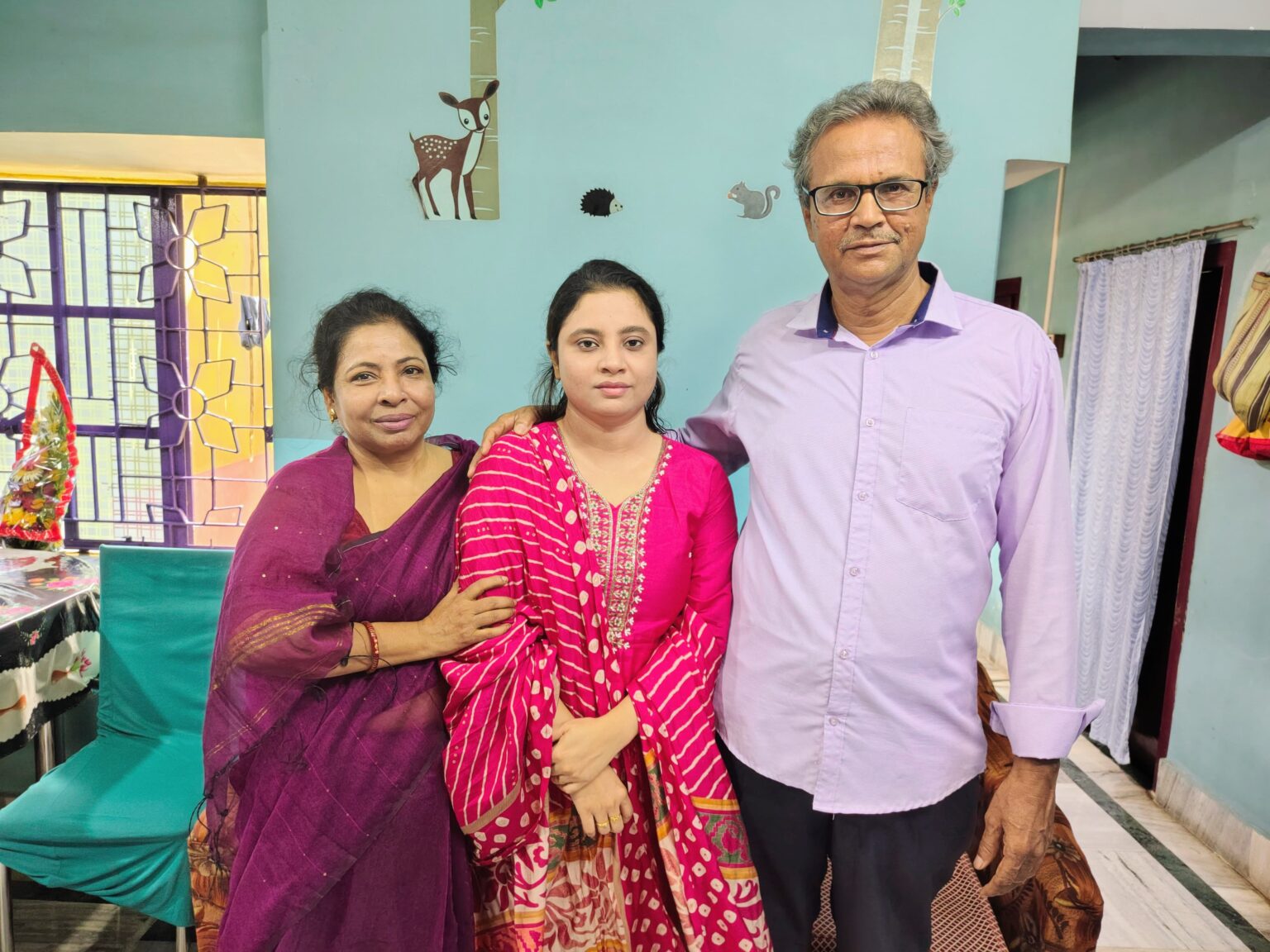
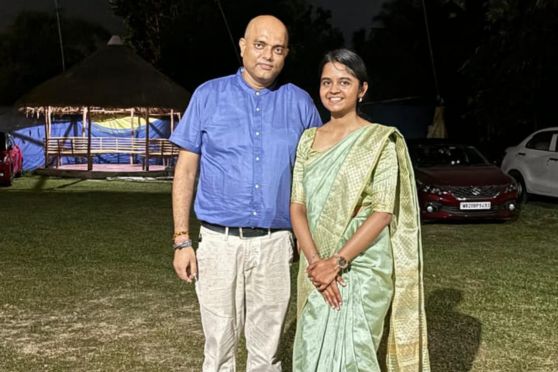
Nilufa Yasmin with her parents
Nilufa says she owes her success to her sister and her parents who are in the field of education. She has a message for aspiring young girls and women: “Stand on your own feet first as financial freedom is the greatest form of freedom. Education brings dignity and teaches us to respect others. It is more important to be truly educated than just formally literate.”
She believes that food and language should not be used to create barriers.
Speaking about the alleged harassment and targeting of Bengali-speaking Muslims in different parts of the country, she says, “I am heartbroken by these incidents. One’s language, food and attire are personal choices and fundamental rights. Even though our country is independent, our mindset is yet to attain that freedom. Had we been free in thoughts, then no one would attack another for their language. This causes pain.”
source: http://www.twocircles.net / TwoCircles.net / Home> India News> India Politics> Indian Muslim> Lead Story> TCN Positive / by Nikhat Fatima, TwoCircles.net / August 10th, 2025
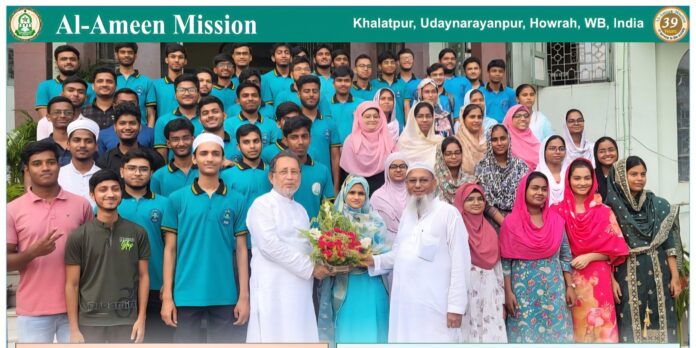
M. Nurul Islam with some of the future doctors at Al Ameen Mission Khalatpur campus
M. Nurul Islam is a proud man as 472 students of Al Ameen Mission have qualified for free medical seats in government medical colleges across West Bengal through NEET (UG) 2025.
Muslims remain one of the most disadvantaged communities in India. In West Bengal—among the more underdeveloped states—their educational and socio-economic struggles are even more pronounced. Districts like Murshidabad and Malda, with significant Muslim populations, rank among the most backward in the country.
When the NEET results were announced, 154 students from Murshidabad and 77 from Malda scored above 500 marks, making them eligible for free medical education in the state’s government colleges.
What stands out is the socio-economic background of these students. Of the 472 successful candidates, 278 (59%) come from modest backgrounds: 194 (41%) belong to middle and upper-middle-income families, 152 (32%) to lower-middle-income groups, and 126 (27%) are from poor and Below Poverty Line (BPL) families.
The success of these students reflects not only academic excellence but also the transformative impact of Al Ameen Mission in empowering underprivileged communities through education.
“This year’s exam was comparatively tougher than in previous years, but by the grace of Allah, our students performed even better,” said M. Nurul Islam, founder general secretary of Al Ameen Mission, while speaking to Muslim Mirror.
Nurul Islam, the visionary general secretary of Al-Ameen Mission—often referred to as the Sir Syed of West Bengal—is widely recognized among the 100 most influential Indian Muslims. He pioneered an educational movement aimed at uplifting underprivileged Muslim students in West Bengal, significantly increasing their representation in medical colleges, even exceeding their population proportion in the state.
Born in 1959 in the small village of Khalatpur in Howrah district, Nurul Islam came from a humble background. His passion for education and community service became the foundation of a lifelong mission. In 1986, while he was a student, he started a hostel with just seven students inside the madrasa building. This initiative was sustained by a grassroots campaign—collecting a fistful of rice from every household in the village. In January 1987, this effort took shape as Al-Ameen Mission.
Today, the Mission has 77 branches across 23 districts of West Bengal, housing nearly 23,000 residential students. Over 49,000 students have passed from Al Ameen Mission, which follows the WBBSE, WBHSE, and CBSE curricula. In 2015, the West Bengal government honored M Nurul Islam with the Banga Bhushan Award for its contributions to education.
The Mission also engages in charitable work, offering financial aid and scholarships to unemployed Muslims. Under Nurul Islam’s leadership, it has become a beacon of holistic education, blending academic excellence with Islamic ethical values. The institution has produced hundreds of successful NEET and JEE candidates, changing the lives of many.
Nurul Islam’s resolute commitment to education and empowerment continues to inspire generations, reshaping the future of Muslim youth in Bengal and beyond.
source: http://www.muslimmirror.com / Muslim Mirro / Home> Education> Indian Muslim> Positive Story / by Jasmine Nehar / June 25th, 2025
Ohida Khandekar’s Dream Your Museum, an installation and film about her uncle’s collection won the V&A’s Jameel Prize for contemporary art and design inspired by Islamic traditions.
Selim Khandakar with his grand-niece and the trunks housing his collection. | Photo Credit: Anand Kumar Ekboty
Selim Khandakar, 71, has always dreamt of making a museum in his village for the 12,000-plus objects he has collected over 50 years. A small portion of that collection has now reached one of the best museums in the world — the Victoria & Albert Museum (V&A) in London — thanks to his artist niece, Ohida Khandakar.
Ohida, 31, has turned her uncle’s lifelong obsession into an installation and film — Dream Your Museum — which won the V&A’s prestigious Jameel Prize for contemporary art and design inspired by Islamic traditions. The work is not just a tribute to what seems to be her uncle’s calling; it also challenges colonial museum structures and asks whether ordinary, personal objects deserve a place in museums. Can museums be flexible and inclusive spaces, showcasing the narratives of minority communities and customs? Are private collections the exclusive privilege of the rich?
The installation and film, ‘Dream Your Museum’, at the Victoria & Albert Museum (V&A) in London.
Selim worked as a doctor’s compounder in Kolkata and started collecting random objects from the year 1970. A stamp exhibition piqued his interest first, prompting him to start collecting them. He also came across an exhibition of vintage objects from Mallik Bari, one of Kolkata’s heritage homes. “It was a record of what objects were used in the ancient times and how lives were led,” Selim tells me over a Zoom call from his home in Kelepara, a village near Hooghly, West Bengal. “It inspired me to start collecting whatever felt like a record of the common person’s life and times. From bus tickets to stamps to refills of pens, I wouldn’t throw anything away.”
An assortment of rare and mundane items makes up Selim’s collection. Old clocks, inscribed ceramics, vintage records and music players, letters dating back to Partition, perfume bottles, crystal rocks, hand fans, stamps, handbills, ink pots, cameras, train tickets, receipts, even matriculation answer sheets from the 70s!
Selim Khandakar surrounded by the objects he has collected over the years. | Photo Credit: Anand Kumar Ekboty
Gramophones to baby clothes
Much of Selim’s collection is housed in tin trunks and scattered across his home in Kelepara. It sometimes becomes a ‘travelling museum’ for people in the village to explore and interact with the objects as Selim takes them around. There is curiosity, awe, some ridicule, some laughter, and from those who understand history and record keeping, even encouragement.
Ohida’s film captures Selim walking through village fields with his trunk, stopping by the river to rinse some crystal stones, and holding them up to the sun. “Where did you find these, nanu?” asks Maria, his grand-niece, who appears in the film. “In the graveyard,” Selim replies.
Selim Khandakar walking through village fields with his trunk. | Photo Credit: Anand Kumar Ekboty
Ohida, who studied art at the Government College of Art & Craft, Kolkata, and Jamia Millia Islamia, New Delhi, says it is sometimes hard to understand what keeps her uncle going. Is it hoarding, as his exasperated family has often believed? She and Selim don’t think so. Instead, he thinks his collection, much like Dream Your Museum, is about storytelling. “Collecting is my way of showing people from my village a glimpse of things from around the world,” Selim notes. “Like rare coins dating back to the Mughal period or vintage perfume bottles from around the world. Often people here do not get a chance to go to cities to see such things. That’s what has always kept me going.”
Selim Khandakar’s house that was destroyed after a cyclone.. | Photo Credit: Anand Kumar Ekboty
Once displayed in his modest mud house, now destroyed after a cyclone, Selim’s possessions came close to being discarded by his family until Ohida decided to document it digitally. She reacquainted herself with both her uncle and his collection when stuck at home during the pandemic. To her artist’s eye, it is a compelling one, given its range — from gramophones to baby clothes from the 80s. “It even has a bunch of fingernails [Selim’s own] in a box. It reminds me of Marcel Duchamp’s Dadaist Fountain exhibit [1917], where he displayed an upside-down urinal. Such objects challenge conventional notions of what belongs in a museum. These items, including a broken plate passed down through generations, show the power of storytelling through objects.”
Selim laughs when asked about the fingernails. “I had once visited an exhibition where I saw art made with fingernails and thought I would do the same with mine. It made me curious, so I kept them.”
What makes a museum?
Curiosity has been the driving force behind Selim’s obsession and this is what Ohida celebrates in her work. Maria accompanies Selim throughout the film, asking him curious questions about the objects in his collection, an attempt to peek into his mind. Ohida started filming Dream Your Museum as an entry for the 2022 Berlin Biennale, where it was received well, eventually landing her the V&A award.
Filmmaker Ohida Khandakar
Growing up in Kelepara, Ohida hadn’t stepped inside a museum until she came to study art in Kolkata. “I had achieved my dream of studying art and moving beyond a village where many women still had no voice and were married off early. It made me wonder — was there a limit to our dreams? Was there a limit to the dreams of my uncle, a rural, aged Muslim man?”
With the funds from the award, Ohida is now hoping to create a museum for her uncle’s collection and a cultural space in the village. “We need accessible museums that work as alternative spaces for the narratives of rural minority communities; as safe spaces for women without opportunities; to engage those who might not typically visit traditional museums due to a lack of knowledge, distance or financial constraints.”
In Dream Your Museum, her camera gently films Selim among his collections in his crumbling ancestral home. He expresses frustration at having no permanent place even after 50 years to showcase his prized collection. “I’ll now make a museum on the moon,” he declares.
The writer is a freelance journalist and the co-author of ‘Rethink Ageing’ (2022).
source: http://www.thehindu.com / The Hindu / Home> Entertainment> Art / by Reshmi Chakraborty / April 20th, 2025
Taldi Village (South 24 Parganas District), WEST BENGAL :
Photo Credit: enewsroom
Kolkata:
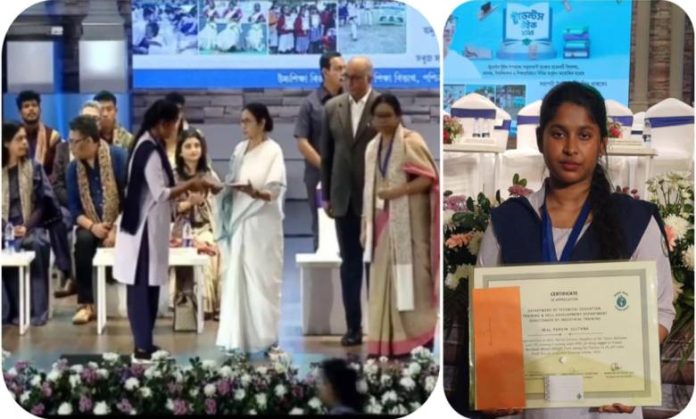
Parvin Sultana, a young woman from West Bengal, has secured the top position in the All India Industrial Training Institute (ITI) examination 2024 in the Mechanic Diesel Trade, scoring an impressive 599 out of 600 marks.
Despite financial struggles, she achieved this remarkable feat without private coaching. Recognizing her exceptional performance, Chief Minister Mamata Banerjee felicitated her, and she also received official recognition from Delhi.
Hailing from Taldi village in South 24 Parganas district, Parvin ranked first among female candidates nationwide. However, her academic success contrasts with her family’s financial difficulties. Her father, Taziur Rahman Sardar, works as a daily wage laborer in a fish market, striving to support their seven-member household.
Parvin’s educational journey has been one of determination. She completed her schooling at Taldi Surabala Sikshayatan for Girls’ School, securing 42% in her Madhyamik exams in 2017 and 76% in her Higher Secondary exams in 2019. In 2023, she earned a Political Science degree with 66% marks.
Despite financial hardships, Parvin remained focused on her studies, preparing for the ITI exam with the guidance of her college teachers instead of opting for private tutoring. “I couldn’t afford a tutor, but my teachers supported me. I want to prove that girls can excel in every field,” she said.
Lokman Mollah, a social worker in Canning, praised her perseverance, stating, “Many talented students in the Sundarbans go unnoticed due to financial constraints. Parvin’s success is proof that determination can overcome any obstacle.”
Parvin was honored at a public reception in Canning, organized by the Trinamool Congress (TMC) and led by MLA Paresh Ram Das. Canning Panchayat Samiti President Uttam Das also recognized her achievements, while her mother, Rijia Bibi, voiced concerns about financial constraints. “She wants to study further, but we lack the resources,” she said.
Assuring assistance, MLA Paresh Ram Das stated, “Just as Chief Minister Mamata Banerjee supports meritorious students, we, too, stand by them.”
While excelling in the ITI exam, Parvin’s ultimate goal is to serve society through the civil services. Inspired by her recent success, she has decided to prepare for competitive exams. “Initially, I wasn’t sure what to study for a secure job, but after my ITI results, many suggested civil services. Now, I am enrolling in a coaching center in Kolkata to prepare,” she said.
Parvin’s journey from a small village to national recognition serves as an inspiration, proving that resilience and hard work can overcome financial hardships.
source: http://www.radiancenews.com / Radiance News / Home> Pride of the Nation> Markers of Excellence / by Radiance News Bureau / February 13th, 2025
Human trafficking is the illegal process of moving or luring a person from one place to another using deception, threats, pressure, duress, or other abusive means for financial gain. Most of them trafficking children are pushed into the sex trade.
Fifteen years before, she was a victim of human trafficking. Today, leaving her past behind, Naseema Gain, 28, has rescued more than 4,000 women from the flesh trade and is helping them lead a normal life, reports Awaz The Voice.
“It was 2009. I remember there was a Puja function at my school on that day. I was happy. I have known him since childhood, as his uncle lived in our village. I and my friend happily sat in his car when he offered to drop us at our place. Little did I know this incident was going to change my life. When I regained consciousness, we found ourselves at an unfamiliar place. I had no idea where I was.” The 13-year-old Naseema Gain had no idea that she had landed in the net of human traffickers.
Born in Maslandpur, West Bengal, Naseema Gain had a happy childhood till an acquaintance kidnapped her on the pretext of offering her a ride to school.
Fortunately, she was released after 10 months. However, she faced a bigger tragedy on her return home when she found people looked at her and treated her differently. Due to prejudices, people didn’t treat her as a victim.
Naseema didn’t give up. Today she is helping hundreds of girls who are victims of human trafficking by rescuing and rehabilitating them.
Narrating the incident of her kidnapping, Naseema says, “He asked me and one of my friends if we would like to go home in his car. There was also another person in the car. Not knowing his intentions, we happily sat in the car. He took us to a deserted place and dropped us saying that he would return after some time.
“After a while, a person came in another car and said that he would drop us home. It was dark, so we accepted his offer least knowing that this lift would turn was going to change our lives.”
They sold Naseema and her friend in Bihar. On her life in a brothel, Naseema says, “They taught us to dance and sing. If anyone did not obey them, they were beaten, tortured, and made to starve. We had lost all hope of returning home.”
She says violence, torture, and starvation were routine punishments for the inmates of a brothel. One day Naseema and her friend were sold as maids. This gave them a chance to escape.
Naseema worked as a house help for a professor. “Slowly I started following their language. One day I told him about my story of being kidnapped and sold and asked him to help me return to my home. I somehow managed to gather the courage to tell this to him.”
She also told the professor that if he didn’t help them and sent them back to the agency, the girls would face torture and be resold.
The professor asked her to provide him contact number of her home. Naseema didn’t remember hers but her friend had memorised her telephone number. The kind-hearted professor called the number and both the girls were rescued with the help of the police.
However, before the police and the parents could reach Naseema and the other girl, the trafficker came to know about this. He called the Professor who shifted them to different secret locations for safety. After tracking them for several weeks, Naseema and her friend were finally freed after 10 months.
Naseema says, “It still feels surreal to be rescued and taken home. I had lost all hope, but our and the police’s efforts would be successful. I am very grateful to those professors.”
Her family was happy at her rescue and return home but the villagers were not ready to accept her.
“This is the sad truth of our society. I was a victim of circumstances, and yet had to face ostracism.” She adds, “Parents would tell their children not to speak with us,” she says.
She said, “We were not allowed to go to school because the school refused to admit us.”
“Ten months of torture and then this kind of treatment from society alienated me. I didn’t leave my house for the next five years,” she says, “Even after coming out of the quagmire of human trafficking, I was saddened by the ostracism by society.”
Naseema’s parents contacted an NGO which was into counselling of human trafficking survivors. Naseema says that counselling gave her a lot of strength. She was convinced that she could only counsel those who had survived this inhuman quagmire. She contacted girls and women who had been rescued from human traffickers and brothels and helped them.
Naseema says, “I have tried to build a life with whatever I have. Call it courage, hope, or luck. That is why I dare to help others. To help more girls like me, I started working with ‘Utthan Collective’, an organisation that provides training, counselling, and support to girls and victims.
She says victims like her are treated like criminals even after their rescue. She wants to create a new identity for all such victims.
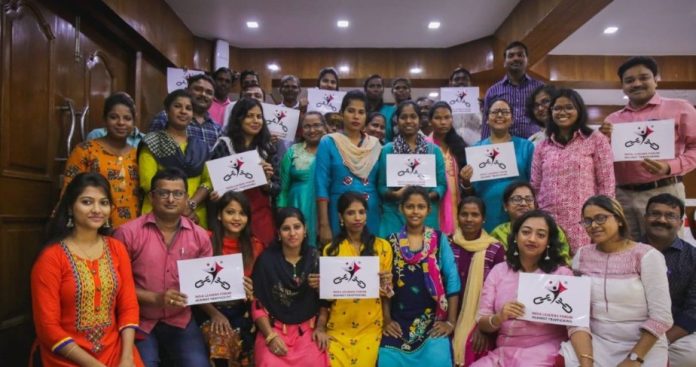
In 2019, Naseema co-founded the Indian Leadership Forum Against Trafficking (ILFAT) with similar anti-trafficking groups across the country. The organisation’s work spans across nine states and has given a new direction to the lives of more than 4500 victims.
She adds, “A person who has gone through such a situation needs a lot of care, love, and respect. In the process of trafficking, they have lost all their self-esteem. Often, society rejects them; in many cases, even their families disown them. We provide them with the necessary help and shelter.”
The organisation trains victims in various skill-based jobs and helps them earn a livelihood. “We reach out to victims and provide them with mental health support and counselling. Through outreach programmes, their trauma and grief connect. So, they don’t feel any loss there. This helps them move forward,” Naseema says.
About her work, Naseema says, “Many times different NGOs approach me and learn how ILFAT and Utthan work. This is a huge inspiration and victory for me.” She adds, “With the organisation, I want to create a safe environment for the victims, ensure that the culprits get proper punishment and all the surviving girls are rehabilitated.”
Naseema, along with her colleagues, helps improve the mental health of the girls who have been rescued from the quagmire of human trafficking, provides compensation, makes the girls aware of their skills, and nurtures them by giving them necessary training.
source: http://www.radiancenews.com / Radiance News / Home> Education> Latest News / by Mohammed Atherulla Shariff, Radiance News Bureau / January 28th, 2025
Shagufta Hanaphie’s story is incredible, starting from a child as a shy girl who could barely speak, chronically ill with many complications to the point she would fall unconscious. Yet, at one point in her life, a “magic wand” touched and transformed her. She rose to become an Event Curator, Storyteller, Digital Creator, Author, Womenprenuer, Award Curator, and Philantropist.
She is also the co-founder of Best Friendz Society along with her friend Rajiv, and founder of SHE – Shagufta Hanaphie Events – which is a PR and event boutique, and many other organizations.
A turnaround came during COVID 19 – pandemic when Shagufta along with a team provided food for a village of 400 people in Ernakulam, Kerala.
Post Cyclone Amphan that hit Bengal, she and her team also traveled to places in Sundarbans where they provided food, dry rations, and clothes to the needey persons.
Again, during the Covid-19 pandemic, Best Friendz Society reached Sundarbans.
She started a campaign with her team called Hunger Free Bengal. She coaches people who are emerging with startups and does personal counseling for the lonely, and divorcees, and on occasions, has even match-fixed singles. She works with suicidal people and conducts counseling sessions with young girls and boys.
Titled with many monikers such as Event Organizer, Author, founder and Director, CEO at Teacher’s Excellence Award, Founder Director, Owner of SHE Founder, Director, CEO at Inspiring Women Achievers Awards – IWAA, she tells Awaz-the Voice, “I am not a brand but I want to honour, felicitate people for their outstanding work. While I may not be able to give a formal award, I want to prize people for the recognition for their incredible work and dedication which otherwise gets overshadowed by other giants.”
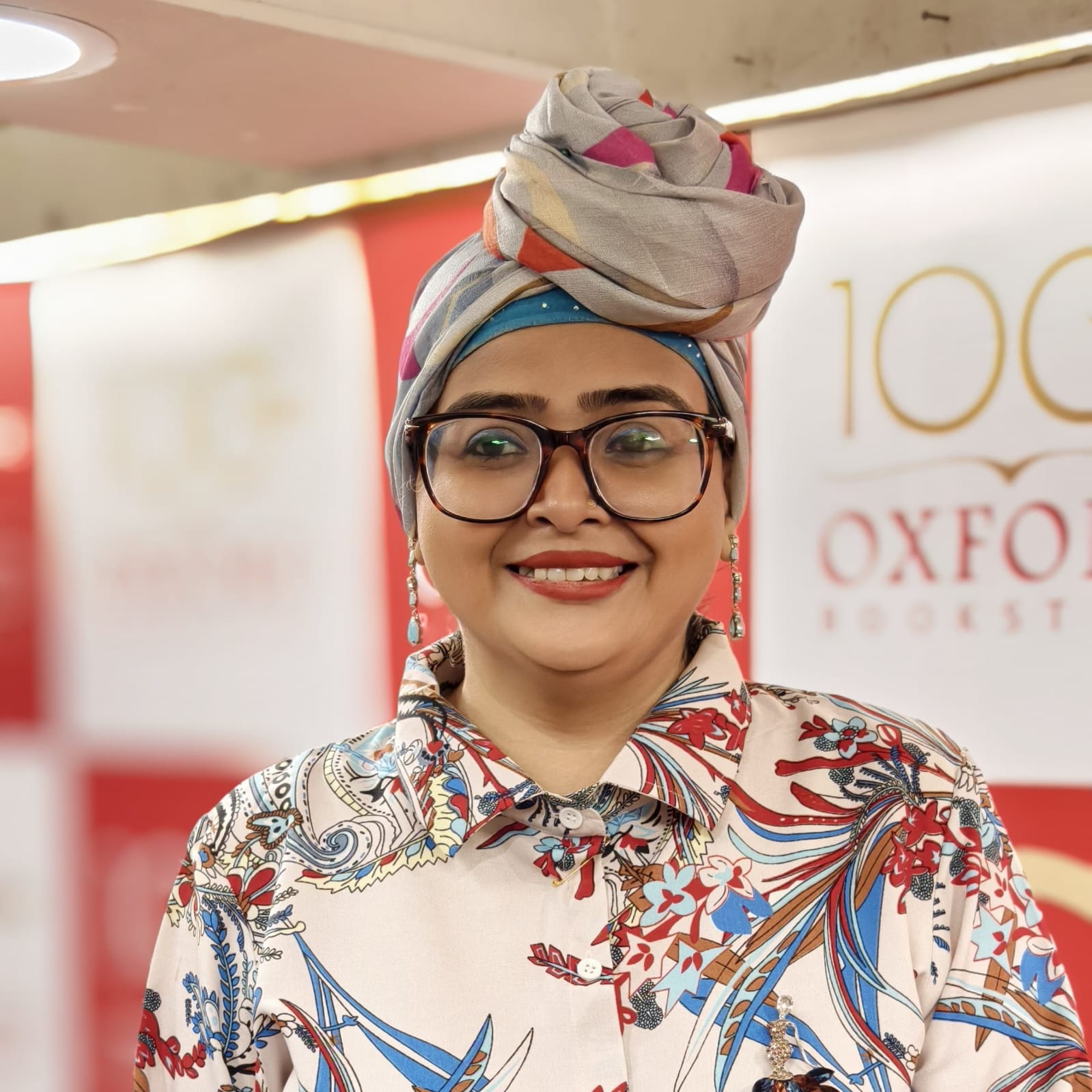
Shagufta Hanaphie
Shagufta lived with her parents and three sisters in a joint family of 17 members in the 100-year-old bungalow-style British-styled house in Kidderpore, South Kolkata.
Her uncle and aunt adopted her. As a little girl, Shagufta was emotional and shy, she hid behind her mother; and never spoke to people outside the family circle. She struggled with illnesses, and due to this could not study well.
“We say bhagwan ka ishara alag hota hain, maybe if a person does not do well in early life, perhaps later in life he will do something different or great.I was a very sick child right from the beginning making me heavily pampered and if I didn’t want to study, they would say don’t put pressure on her. My mom was very strict but others were soft on me. We lived in an extended family, Baarey Papa, Baari Ma used to lavish love on me, to the point that I became lethargic. I had a ligament injury in class 6 which affected the left side of my body. I sometimes even became unconscious.
“When I was 9, I underwent surgical removal of gall bladder; it had 72 stones.This story was reported by newspapers. When I was in class 8, I did not take my exams so I lagged one year. At that time, an angel in the form of my Dad’s friend, Uncle Junaid took the imitative to help me to study saying, “Let us bring back her motivation to study and let me teach her.
“Bedridden, with traction around my neck, my body aching, lying down, he taught me Maths and I started to like the subject. After being bedridden for three months, I returned to school in a robotic dress. My principal called my father and asked him to take me home saying, “You don’t understand, she is going through a mental trauma right now.
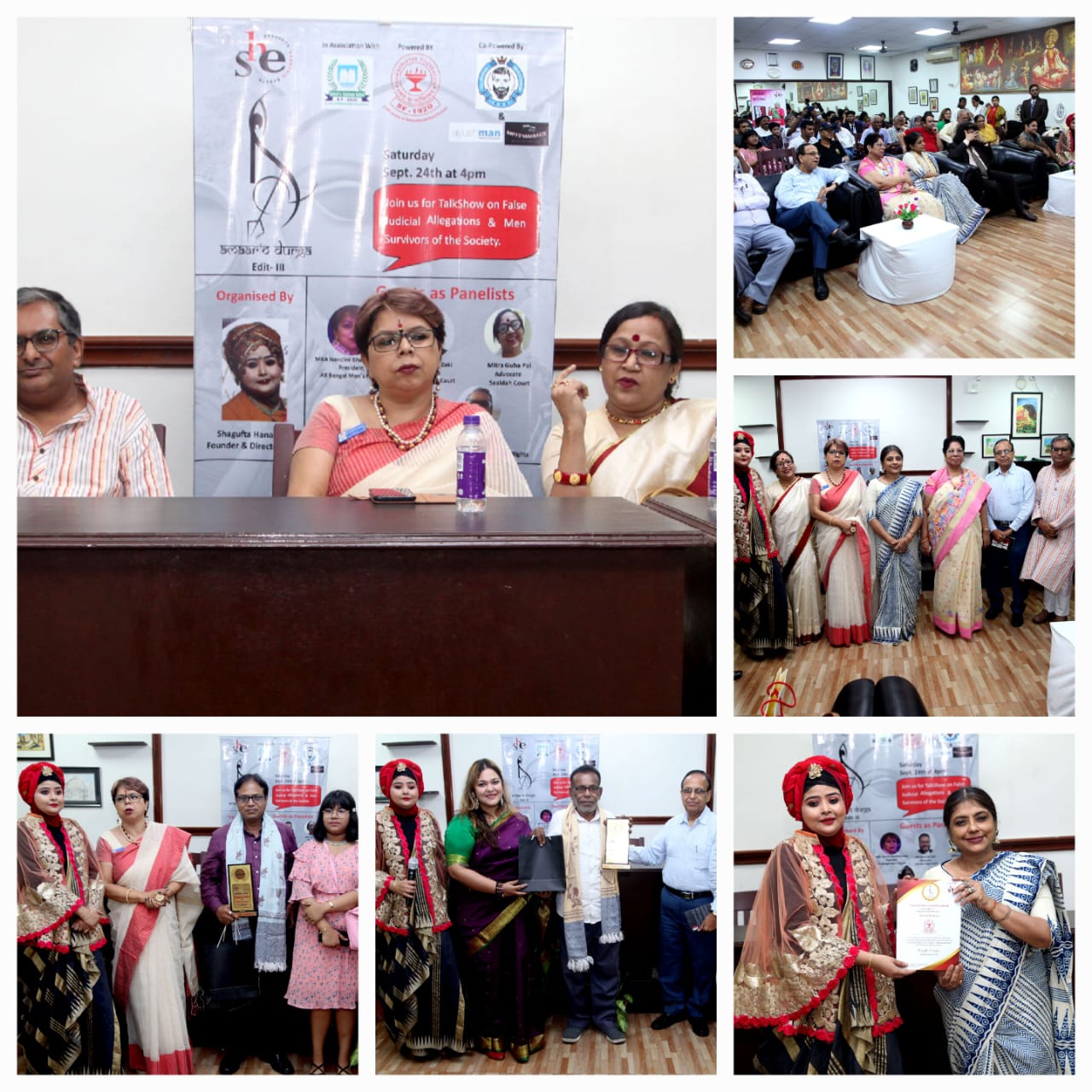
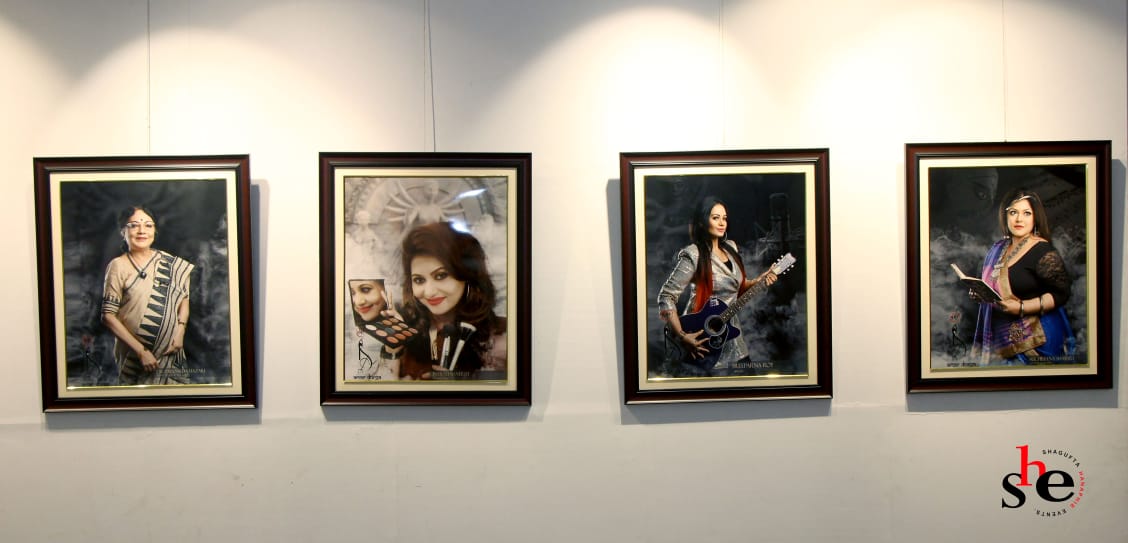
Glimpses of events organised by Shagufta’s NGOs
“I repeated classes, and with mocking classmates around, I changed the school and got an A. I could not believe it and thought the mark sheet got mixed with someone else!
“The talk of marriage exasperated me and decided to go to Ranchi and stay at my Aunt’s home to do college.
“After Baari Ma had a fall, I returned in 2002 and refused to go back to Ranchi. Dropping out of college, one day I attended a workshop where Ruby Bhatia and Michele Pinto came to Kolkata. That was a defining moment in my life because I never knew what the other world was.
“This workshop was a beautiful learning experience where I met these amazing people who told me, “Since you don’t want to study higher, help us, since your English is good.” With them, I learned oratory skills. Earlier, I never spoke to anyone outside, but presently, not only am I doing public speaking but now everyone meets me and I am well known.
“My first salary was Rs. 3200 and I spent more money going by taxi to reach my workplace. My Baari Papa used to say, “Let her travel so at least she will learn to talk and mix with people.” All these were life-learning lessons. It falls into place later on in life.
“After this, Rajiv, a good friend and I launched a new brand called Launchers. I have worked with Rajiv for 17 years as a PR Director in a partnership firm.
“My parents got hold of a very handsome boy, who is my husband now. My husband works the whole day; he is very supportive, most of my photographs are clicked by him, travels with me to all the places, and my parents stand right behind me.
“My life changed in October 2018 when my Baarey Papa was diagnosed with cancer. We spent long hours talking till he passed away in 2019. I was shattered.I felt uprooted and disconnected and took a break from work. It was a break tha my Baari Papa used to encourage me to take.
“In 2020 I did my first event and soon went on to do 5 events. On March 22, 2020, lockdown closed everything. People say lockdown was bad, for me lockdown was a boon. Our NGO called Best Friendz Society was helping people.
A wall celebrating women from dfference backgrounds in Shagufta’s office
“One day, one of my friends Nisha, a fashion designer, asked me to help people in an area in Kerala during the COVID 19 Pandemic. I was into PR and media. First I wondered how could I reach out to people in Kerala. I told myself: Okay, we will find a way to them even though we are not into this.
“At first, we heard there were four people, turned out to be 40, and finally they turned out to be 400 people stuck in Bengali Para in Ernakulam. While the BSF was providing food in the general area they were not reaching out to the red done. We had to locate the exact place and then Nisha and I arranged for food for 400 people for a month. I felt new energy and joy rising in me. I started gathering people, and communicating with them.
“While people speak up for daily wagers, I started to have a burden for a class of people that are largely ignored such as models who barely get Rs. 2,000 for an assignment which may be all they have for that month, photographers, and even school teachers. I started to post about and for them and personally WhatsApp them telling them if they need help, let me know. I assured them help will reach theirplace, they don’t have to let anyone know about it.
“I got a huge response from many photographers and models.I learned that many people were on the verge of suicide, and sitting at home. I started helping them and listening to their woes. Under the umbrella of Best Friendz Society, we started a campaign called Phone a Friend.
“I am blessed to have amazing clients. I would message PR clients who were on Facebook and tell them, “Sir, I am going to this area to help so-and-so, if you can help me out, it will be a big support to this person. They were responsive and kind, some sent sacs of rice, dal, and many other goods. They told me that they wanted to help but had no idea what to do. Here, many NGOs are misusing funds and are running corruption rings. They told me that they knew could trust me and that I would use their money honestly. They stood behind me while I ran around with their help. This is how our connection happened.
“I organize a philanthropic club, which is a virtual club and I tell our helpers that they don’t have to go around; just help us with money or goods. Those days, I used to get out of the house at 4 a.m. and visit Sundarbans, and other areas during COVID-19 almost 18 times in 2020, and attend to everyone. Sanjay Mondal, a photographer and boat owner told me point blank that he doesn’t want money, only cash for the diesel tu run his boat. He travelled with us. He had three boats. We went to the village where we found their homes submerged under water. We helped the boat owner families.
“We returned from Sundarbans at 11:30 night, reached home by 12:30 night and my mother woke me up at 3:30 a.m. to tell me to catch the vehicle going for another trip for the COVID team. She said, “They are waiting for you. Since you promised, you have to go, whether it is raining or whatever it is, even if you are sick, you have to go.”
“You need parents like that. While we went out so much during COVID, by the blessings of Allah we never got COVID, but people in 5-Star Hotels got COVID. Believe in yourself, believe in your God who has that specific blessing on you, keep doing good to others, and good will return to you and you don’t have to look back, all blessings are there, and people’s prayers are on your life. Just keep doing your work. When the government is doing 98 percent, I am doing my 2 percent.”
On the difficulties they face, she said, “Bengal is a politically disturbed area so to meet the right person is very difficult. In the last five years since 2020, I have opened small centers in every place I have worked with around 20 people or more in each center. We have adopted 23 orphans, senior citizens, teachers, and daily wagers who sum up to over 70 people and every month we send them food and other goods to help them run their daily lives. Nothing is fixed on what we send, but it is enough to ensure them good nourishing food and other commodities so that they can sleep peacefully without going to bed hungry.
A Poster of the event of Shagufta’s NGO
“In October 2020, the Phone a Friend campaign opened our lives to many people. Each night, we got calls from senior citizens- 65 or 70 years old – or young girls or men, and I listened to and counselled them over the phone. One woman did not even have time to have a cup of coffee and was always serving others suffering mental and physical abuse. Due to this, I launched my new campaign called Abuse Durga, which became Amar Durga, Amar O Durga, with a question mark. I asked the public a lot of questions, such as, “If this is my Durga, who are you to ask me a question whether I should celebrate or not?” Being a Muslim, people found it unusual.
“I felicitated people who had running cases against them for 15-20 years who were not guilty and celebrated 11 people. Last year, we held an exhibition to give table space to NGOs which cannot invest; awarded the LGBT community and single mothers. We will be holding another event for the LGBT community soon.
“My NGO is my charity partner. I did this because I was feeling bad to keep asking people to fund my NGO, so I decided to promote my events, and whatever money I got would go to my NGO so I could help the maximum people with the blessings of the Almighty. I do not want to work to mint money, want to work to make my stand.
“My breakthrough came when an old client called and invited me to his office. He is Rajendra Khandelwal, MD, Dhanwantary. During my meeting, he kept saying, “Very nice, very nice,” I asked him, “Who are you speaking about and he answered, “The event you held, the Teachers Excellence Award, I am going to support you,” and to my amazement, he handed over a cheque. At that moment, I knew I was doing the right thing. He asked me, “Why did you choose this topic, I replied, I am alive because of my teachers. Uncle Junaid who taught me how to hold a pencil and I want to do something in his memory. Without teachers’ investment, I would not be where I am today.”
“I do not work with an experienced group of people because there are a lot of young people looking for work, always take new people and give them scope, If they say, we cannot speak, I tell them you will learn to speak, If they are graphic designers, content writers, etc, I take them on board.
‘While we are a modern family, where I used to wear sleeveless and backless clothes, and my father even took us to Trincas to get us on the dance floor, I got to wearing hijab permanently unexpectedly. On my birthday in 2013 or 2014, my Baari Maa gifted me a hijab. I wore it to my office that day and since then, I have been wearing it. I changed as a person totally after that. While earlier, I was highly strung and emotional, I started to calm down after wearing the hijab believing it was my symbol of strength. My family was cool about my hijab.
“My dream is to meet 10,000 people with their inspiring stories and lift them on all my platforms. I highlight lives through events or writing about them. During the lockdown, I started to write in 2020. While my target is global, I also want to cover the map of West Bengal. I believe everyone can do anything but they just need a spark inside with a belief they can conquer the world, and they end up doing great things. Sometimes, to create that spark, that road is blocked so I just need to push these people and bring that change within them.”
Rita Farhat Mukand is an independent writer and author
source: http://www.awazthevoice.in / Awaz, The Voice / Home> Story / by Rita Farhat Mukund / August 24th, 2024
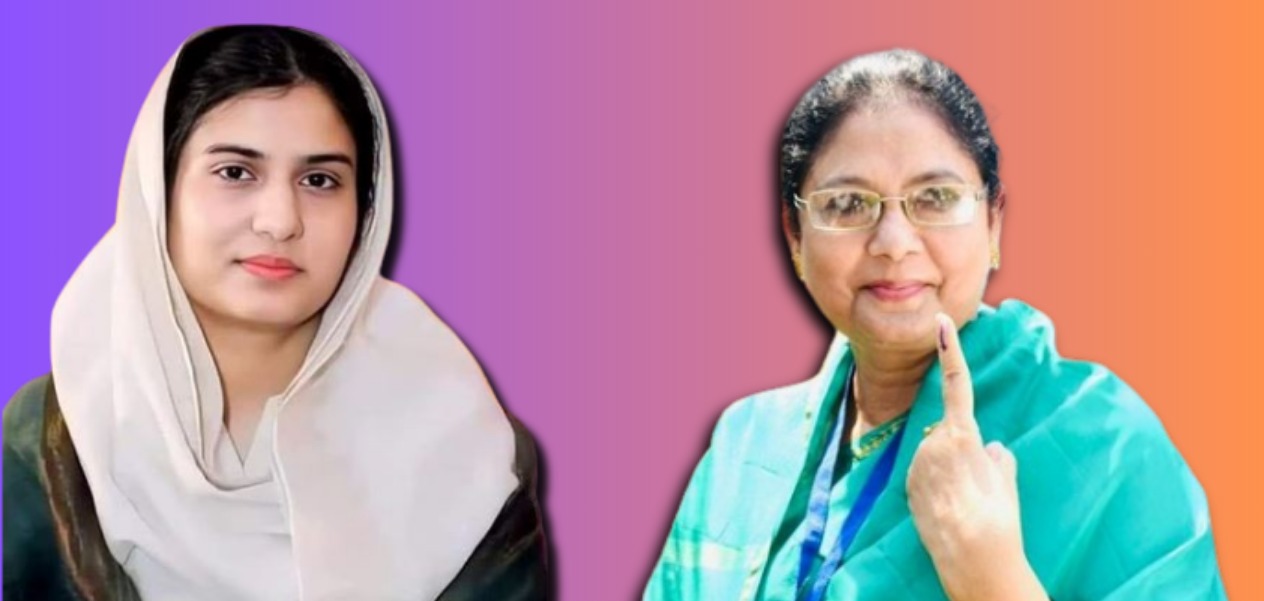
Sajda Ahmed of the Trinamool Congress (TMC) and Iqra Munawwar Hasan Chaudhary of the Samajwadi Party are among the 24 Muslim members who have been elected to the 18th Lok Sabha in the just concluded election.
The entry of 24 Muslims in the Lok Sabha is seen as a positive move towards the participation of India’s second-largest religious community in Parliamentary democracy.
While the 27-year-old year Iqra is a law graduate who won from the Kairana constituency in Western Uttar Pradesh on the ticket of the Samajwadi party Sajda Ahmed is a veteran leader who has won for Lok Sabha election a third time.
Sajda Ahmed has been re-elected from the Uluberia constituency where she secured 694,945 votes and defeated her nearest rival of the BJP Arun Uday Pal Chaudhary.
Iqra, a debutant defeated her nearest rival BJP’s Pradeep Kumar by 69,116 votes in a closely contested election.
Iqra, an alumnus of the Lady Sri Ram College of New Delhi – she also graduated in law from the UK – hails from a political family of Shamli.
The number of Muslims elected to Lok Sabha doesn’t look as low as was feared by the Community. Muslims have been complaining about their diminishing presence in India’s political spectrum.
However, this time political parties had fielded only 78 candidates from the Muslim community as against 115 in the 2019 election.
The most well-known Muslim who successfully contested elections is cricketer Yusuf Pathan. He not only won his maiden political battle as the candidate of the Trinamool Congress (TMC) from the Baharampur constituency of West Bengal, he also turned out to be a giant killer as he defeated Congress veteran Adhir Ranjan Chaudhary.
Muslim leaders like the two former Chief Ministers of Jammu and Kashmir – Mehbooba Mufti and Omar Abdullah – were defeated in their respective constituencies. Omar was defeated by an independent candidate Abdul Rashid Sheikh who is known by his nickname of Engineer Rashid, whose campaign was run in absentia by his two sons.
Engineer Rashid, whose real name is Abdul Rashid Sheikh won the Baramulla seat by securing 4.7 lakh votes against his main rival Omar Abdullah, former Chief Minister and vice-president of the National Conference. He too is a giant killer in this election.
Interestingly, Engineer Rashid’s campaign was carried on by his two sons as he has been in Delhi’s Tihar Jail for five years facing trial for his alleged involvement in supporting terrorists in Kashmir.
In Jammu and Kashmir’s Anantnag-Rajouri seat, National Conference’s Mian Altaf Ahmed defeated Mehbooba Mufti by 2,81,794 votes, and in the Srinagar constituency, NC candidate Aga Syed Ruhullah Mehndi got 3,56,866 votes against PDP’s Wahid Para.
From Ladakh, Independent candidate Mohammad Hanifa won by a margin of 27,862 votes.
In Uttar Pradesh, Samajwadi Party’s Maulana Mohibullah fought the election for the first time and he won on the ticket of the Samajwadi Party from the Rampur seat by securing 4,81,503 votes.
Ziaur Rahman of the Samajwadi Party from Uttar Pradesh has been elected from the Sambhal constituency.
Afzal Ansari has won from the Ghazipur on the ticket of the Samajwadi party. He is the brother of the gangster Mukhtar Ansari who died while serving a sentence for murder in the jail.
Imran Masood of Congress won against his BJP rival Raghav Lakhanpal from Saharanpur.
From Hyderabad (Telangana) Asaduddin Owaisi of the All India Majlis-e-Ittehadul Muslimeen(AIMIM) won against BJP’s K. Madhavi Latha. He has won the Lok Sabha election for the fifth time.
In the 16th Lok Sabha, there were only 22 Muslim Members while the highest number of Muslims elected to the lower house – 49 – was in 1980 and most of them were from Congress. In the last General election 115 Muslim contested while only 22 won.
As against this, in the 2024 elections, only 78 Muslim candidates were fielded and 24 of them won.
West Bengal has elected the highest number of Muslim MPs in the just concluded elections. They are: Khalilur Rahaman, Jangipur, Yusuf Pathan, Baharampur, Abu Taher Khan, Murshidabad, S K Nurul, (Basirhat), Sajda Ahmed, (Uluberia), Isha Khan Choudhary, (Maldaha Dakshin).
Bihar: Muhammad Javed Kishanganj and Tariq Anwar Katihar (Congress)
Assam: Raqib Hussain Dhubri
Kerala: Shafi Parambil (Vadakara), ET Muhammad Basheer (Malappuram) and Dr. MP Abdul Samad Samdani (Ponnani)
Lakshdeep: Muhammad Hamdullah Saeed
Tamil Nadu: Nivas Kinis Ramanathapuram
source: http://www.awazthevoice.in / Awaz, The Voice / Home> Story / posted by Aasha Kosa / June 05th, 2024
Farheen Masood with her family.The Telegraph Online Edugraph
Summary
In the heart of bustling Kolkata, where the cacophony of life reverberates through narrow alleyways, there lies a tale of grit, determination and unyielding hope.
Meet Farheen Masood, a champion of resilience whose journey from humble beginnings to corporate corridors is as inspiring as it is extraordinary.
In the heart of bustling Kolkata, where the cacophony of life reverberates through narrow alleyways, there lies a tale of grit, determination, and unyielding hope. Meet Farheen Masood, a champion of resilience whose journey from humble beginnings to corporate corridors is as inspiring as it is extraordinary.
Chapter 1: A Dream Ignited
She was raised in a modest household by hardworking parents who were filled with aspirations – her father a security guard and her mother a homemaker.
“My mother could not complete her schooling although she was a good student. That is why she was always keen on us (she and her two siblings) completing our education. Despite our financial struggles, she instilled in us the belief that education was the key to unlocking a better future. My mother became my source of inspiration,” reminisced Farheen, her voice reflecting the unwavering resolve that would come to define her journey.
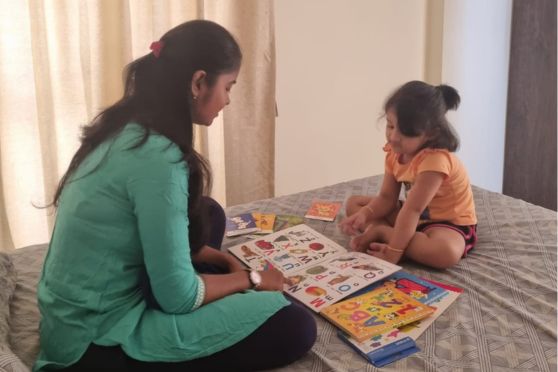
Farheen giving tuition to a child in her neighbourhood.The Telegraph Online Edugraph
Chapter 2: Echoes of Empowerment
As the days unfolded, Farheen found inspiration within the corridors of AK Fazlul Haq School and Khalsa English High School. It was there that she discovered her passion for public speaking. “What I am today, in terms of my confidence in speaking and everything else, is due to the education I received in my schools. I used to participate in monthly debates and extempore competitions and my teachers would always motivate me. That helped sharpen my communication skills,” she shared with us in words that echoed the profound impact of her formative years.
Busy with her art and craft engagements.The Telegraph Online Edugraph
Chapter 3: A Path Revealed
Today Farheen stands tall empowered with a Post Graduate Diploma in Management (PGDM) degree with specialisation in Analytics and Marketing from Praxis Business School and working as a Management Trainee (Operations) at DHL Global Forwarding. So what inspired her to pursue studies in this field?
She recalled, “Though I initially opted for the science stream in my plus 2, I soon realised that my heart was not in it. That is when my uncle guided me to consider management studies. He told me about all the career opportunities that would open up for me if I did a PGDM/ MBA degree; and that would help me achieve the success I had always dreamed of.”
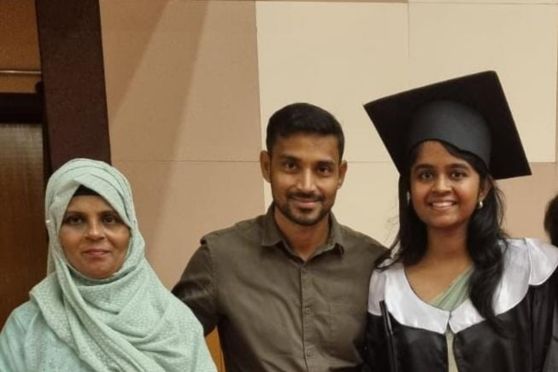
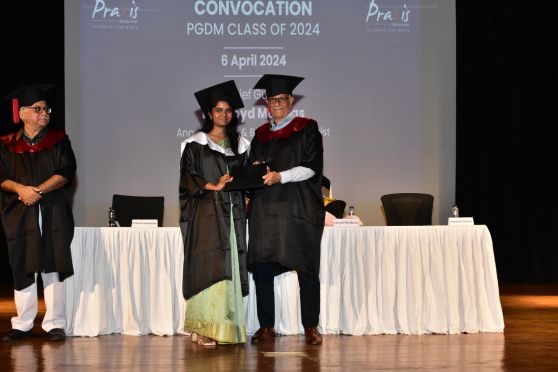
A shot from her convocation ceremony day.The Telegraph Online Edugraph
Chapter 4: Praxis: A Journey Within
At business school, amidst the nurturing learning environment, Farheen’s metamorphosis began. “After joining , I was made a Placecom member. I was responsible for coordinating the students’ placement process, acting as a bridge between them and our college’s placement cell. It gave me the opportunity to connect with various HR heads, thereby helping me make connections. I felt more confident through meeting and speaking with new people. Moreover, I learned management skills which gave me the confidence to handle challenging situations,” she said while recounting the perks of studying in a truly enabling educational environment.
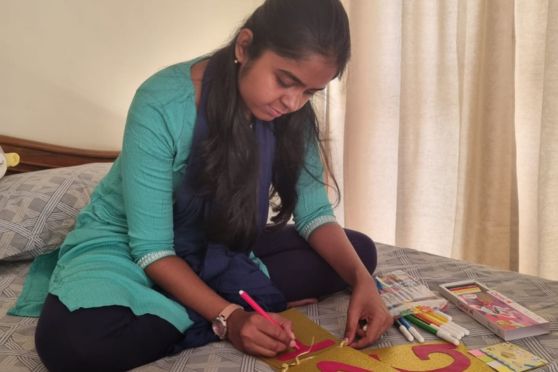
Farheen posing with her teacher.The Telegraph Online Edugraph
Chapter 5: The Tapestry of Experience
Further into the conversation we learned that, in her bid to craft a successful career path, alongside excelling in her PGDM programme at Praxis, Farheen had also gained real world experience through an array of internships with reputable brands spanning fundraising, sales and digital marketing. “Internships gave me practical training before entering the corporate workplace. I had done fieldwork too. That opened up different aspects of business management to me. I met new people and expanded my network. Also, I learned that if one has an idea, one needs to voice it. Not wait for the person on the other side to ask,” she affirmed, emphasising the importance of hands-on learning.
Farheen with Charanpreet Singh, Co-founder and Director, Praxis Business School, Kolkata.The Telegraph Online Edugraph
Farheen with Praxis management.The Telegraph Online Edugraph
Chapter 6: Words of Encouragement
While Farheen gazed upon the gamut of her achievements, we asked what would her advice for young people who are striving against life’s challenges be.
“One should not stop dreaming!” she proclaimed, her words infused with the determination of a go-getter. “Always be eager to learn, stay kind and just keep going. The avenues will open up sooner than later,” she said confidently.
As the sun set over the city of Kolkata, casting its golden hues upon the distant horizon, Farheen Masood appeared before us as an embodiment of the indomitable human spirit!
From humble beginnings to soaring heights, Farheen’s journey reinforces the transformative power of education yet again and serves as a source of hope for generations to come, irrespective of their challenging circumstances!
source: http://www.telegraphindia.com / The Telegraph Online / Home> Edugraph> Career / by Sejuti Roy / April 17th, 2024
Her hard work paid off and she eventually clinched success on her third attempt. She cleared both her Prelims and Mains and went on to top the interview round as well.
IAS Zainab Sayeed
New Delhi:
Do you happen to know who holds the prestigious title for achieving the highest marks in the interview round of the UPSC exam over the last decade? If you’re guessing it’s Tina Dabi, Srushti Deshmukh, Kanishka Kataria, or Shruti Sharma, you might be surprised.
It’s none other than Zainab Sayeed who stands as the record-holder for securing the highest marks in the UPSC interview round. This remarkable individual from Kolkata attained an outstanding score of 220 out of 275 marks in the interview segment. Her remarkable achievement took place in 2014 when she successfully navigated the UPSC Civil Services Exam, amassing 731 marks in the main examination.
Zainab clinched the All-India Rank (AIR-107) and to this day remains unparalleled in terms of interview performance. However, Zainab’s journey with UPSC wasn’t without its challenges. She encountered setbacks in her initial two attempts, failing to clear even the Prelims in her first endeavours.
Despite these early setbacks, Zainab refused to be deterred and remained steadfast in her belief in herself. Her relentless dedication and perseverance eventually paid dividends, culminating in her triumphant success on her third attempt. She not only cleared both her Prelims and Mains but also emerged as the top performer in the interview round.
According to Zainab’s account, the interview lasted for approximately 25 minutes and revolved around a diverse array of topics, including current affairs, international affairs, foreign direct investments, and discussions on the European Union.
It’s noteworthy that Zainab hails from Kolkata and completed her graduation in English literature from St. Xavier’s College. Subsequently, she pursued her MA in mass communication at Jamia University, Delhi, graduating in 2011.
Following her post-graduate studies, Zainab made the decision to embark on the rigorous journey of UPSC exam preparation. Despite facing disappointments in 2012 and 2013, she persisted and ultimately tasted success in 2014.
source: http://www.zeenews.india.com / Zee News / Home> India> UPSC Success Story / by Zee Media Bureau, edited by Mahi Mishra / February 13th, 2024





)