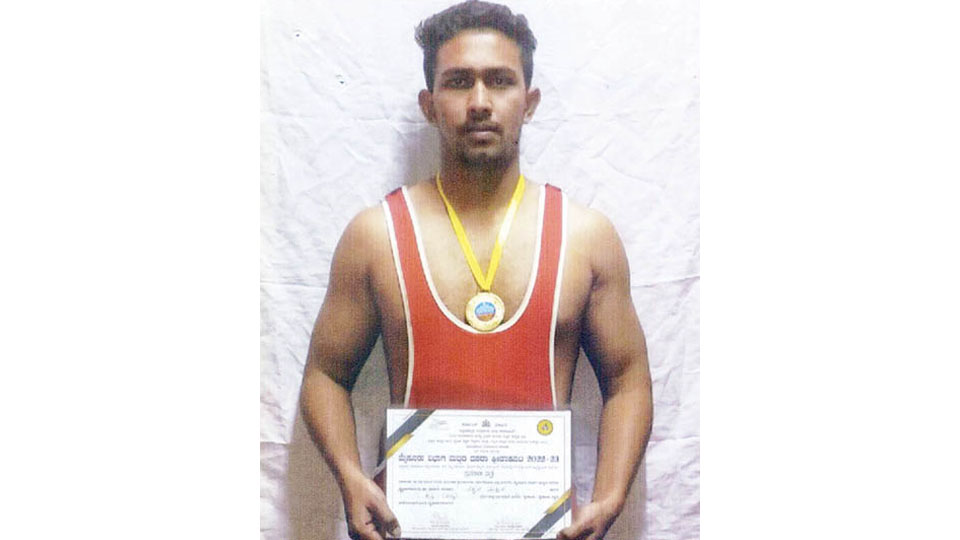
City’s Saqlin Mushtaq has bagged 1st prize in wrestling (86 kg) contest in the Mysuru Division level Dasara Sports Meet 2022-23 held at Mangaluru recently.
He had also bagged second place in the District-level Dasara CM Cup Sports Meet (2022-23) wrestling (Men).
He is the son of Khaleel Qureshi, who is also a wrestler and a resident of Usmania Block, Ghousia Nagar, Udayagiri.
source: http://www.starofmysore.com / Star of Mysore / Home> Photo News / October 19th, 2022
Muffadal Zahra Deesawala and Bhavtegh Singh Gill won India’s third medal of the International Shooting Sport Federation Shotgun World Championship in Osijek, Croatia. The duo picked up a bronze in the Skeet Mixed Team Junior event here at the Olympic Shooting Range ‘Pampas’ on Tuesday.
They beat the American pair of Aidin Burns and Mikena Grace Fulton 5-1 in the second bronze medal match. They were declared winners by Golden Hit after Bhavteg and Mufaddal shot seven out of eight targets in the last series, enough to ensure that the Americans cannot win the series after Burns missed one out of his four targets.
The first pair to six points usually wins the match but the Indians were up 5-1 already and a tied last series would have given the Indians the point needed to win.
Deesawala and Gill finished sixth in the qualifiers shooting a combined 132 out of 150 targets. Deesawala shot 62 out of 75 and Gill shot 72 out of 75 shots to secure the last position for the bronze medal matches.
The British pairing of Mitchell Brooker Smith and Sophie Herrmann won the Gold in the event beating Haolei Zhao and Dan Wang of China 6-4.
Areeba Khan, on Tuesday, had won India’s second medal of the World Championship after the Junior Men’s Trap Team had won a gold.
Bhowneesh Mendiratta had also won a Paris Olympic quota, India’s first for the 2024 Games, earlier in the championship. He finished fourth in the event.
source: http://www.scroll.in / Scroll.in / Home> The Field> Shooting World Championships / by Scroll Staff / October 04th, 2022
The art was created with plywood sheets, screws, and spray paint. It is constructed of 20 frames and three lakh screws. The installation weighs 460 kilogrammes, is 444 centimetres tall, and is 555 centimetres wide.
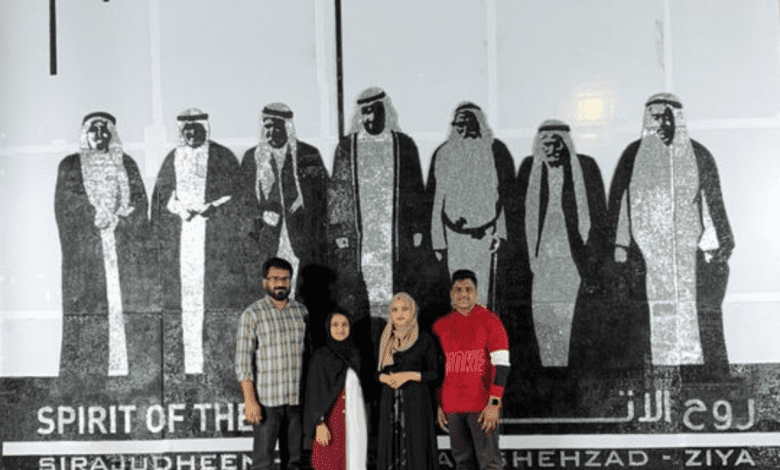
Giant screw art piece featuring the UAE’s ‘Spirit of the Union’ picture, as well as the Expo 2020 Dubai emblem.
An Indian family in the United Arab Emirates (UAE) has created a giant screw art piece featuring the UAE’s ‘Spirit of the Union’ picture, as well as the Expo 2020 Dubai emblem. The three lakh screw art piece has been inscribed in the Arabian Book of World Records as the world’s largest screw art.
According to Gulf News, EA. Sirajudheen, a 45-year-old and his 39-year-old wife Badariya, both from Kerala, chose to make the massive art piece as a homage to the UAE on its 50th National Day.
Sirajudheen was a former aeronautical engineer who transitioned to business after moving to the UAE 24 years ago and is now the owner of Brightway Tyres and Auto Service in Abu Dhabi.
The art was created with plywood sheets, screws, and spray paint. It is constructed of 20 frames and three lakh screws. The installation weighs 460 kilogrammes, is 444 centimetres tall, and is 555 centimetres wide.
According to the couple, the Guinness World Record was for a piece of art that used 250,000 screws. They said that they first utilised sticker printouts of the photos to adhere to various portions of the boards, and then used hand drills to repair the screw. After being spray-painted with black, red, green, and gold paints, the boards were assembled to form the full-frame.
The couple has two children, 14-year-old Shehzaz and 11-year-old Zia, who helped their parents in the massive screw art. The family finished the project in one month.
Zenith Wheel Alignment, the art piece, is now on show at the Abu Dhabi Malayali Samajam in Musaffah, after the National Day exhibition. The duo stated that they wanted to show their artwork to a larger audience at the Sheikh Zayed Festival in Al Wathba.
source: http://www.siasat.com / The Siasat Daily / Home> Kerala / by News Desk – Sumaya Junaid Ahmed / January 07th, 2022
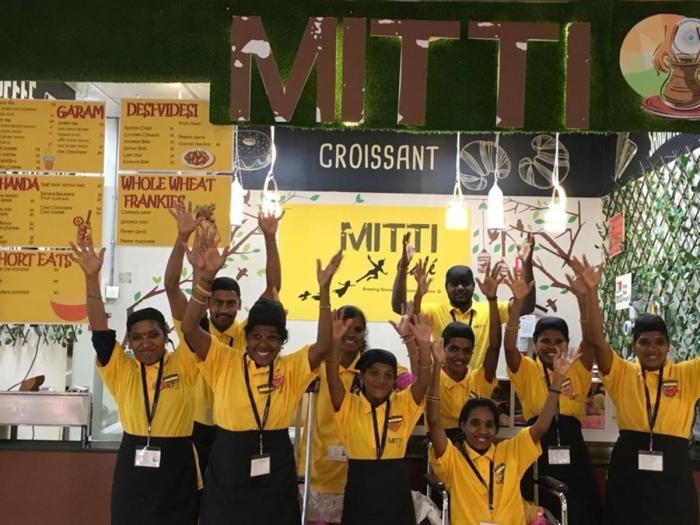
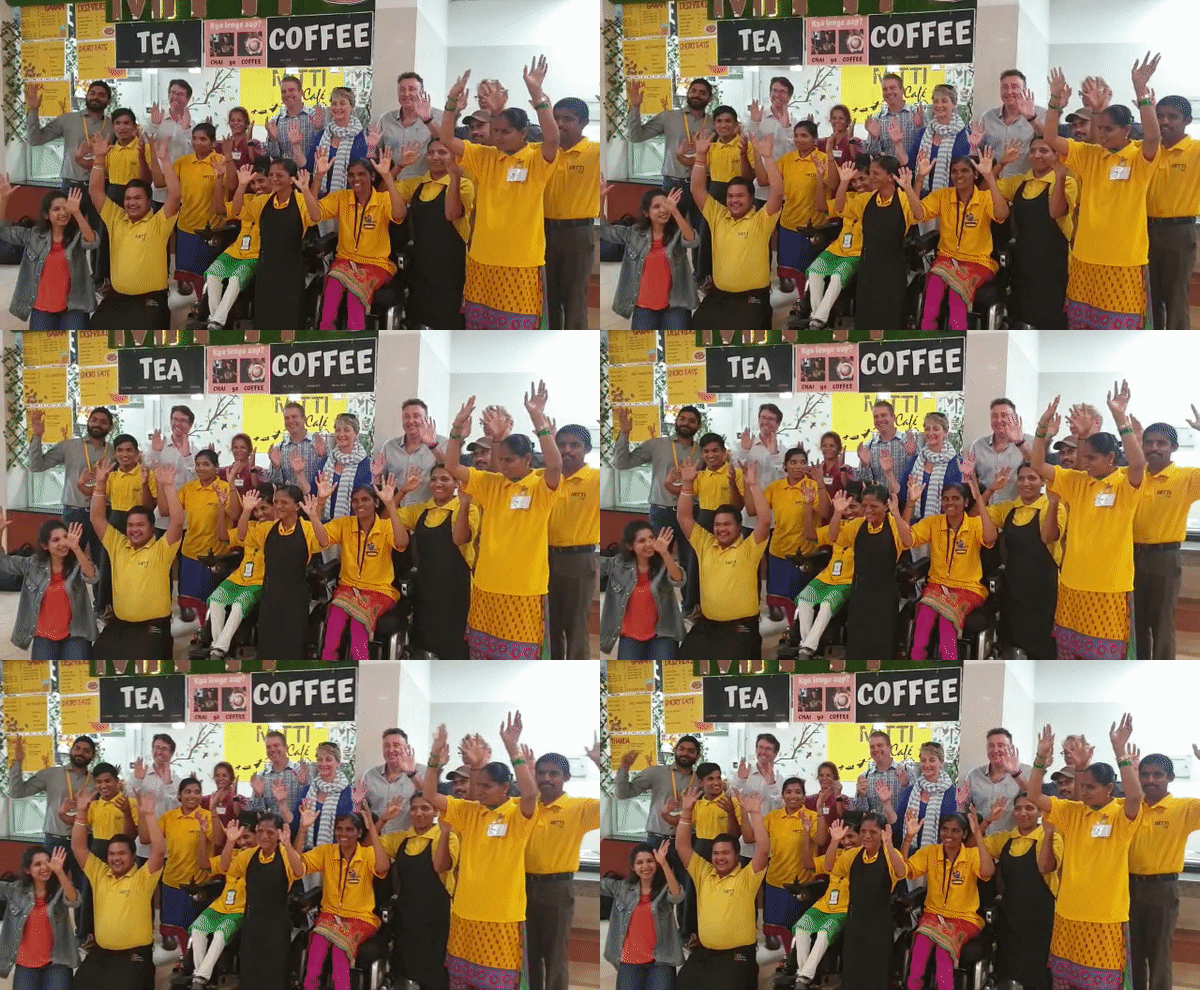
When we talk of youngsters in their early twenties, of course, we think that it’s time for them to work hard and party harder. Right? But we are seeing a lot of youngsters take up entrepreneurship at a young age to make it big. But there are some like Alina Alam from Kolkata, who took to social entrepreneurship to make the world a better place for the differently-abled. All of 27 years of age, Alina started with her ‘Mitti Cafe’ when she was 23, which is run entirely by a staff of persons with a disability, ranging from visual and hearing impaired to Asperger’s and to Down’s syndrome.
The Mitti Cafe
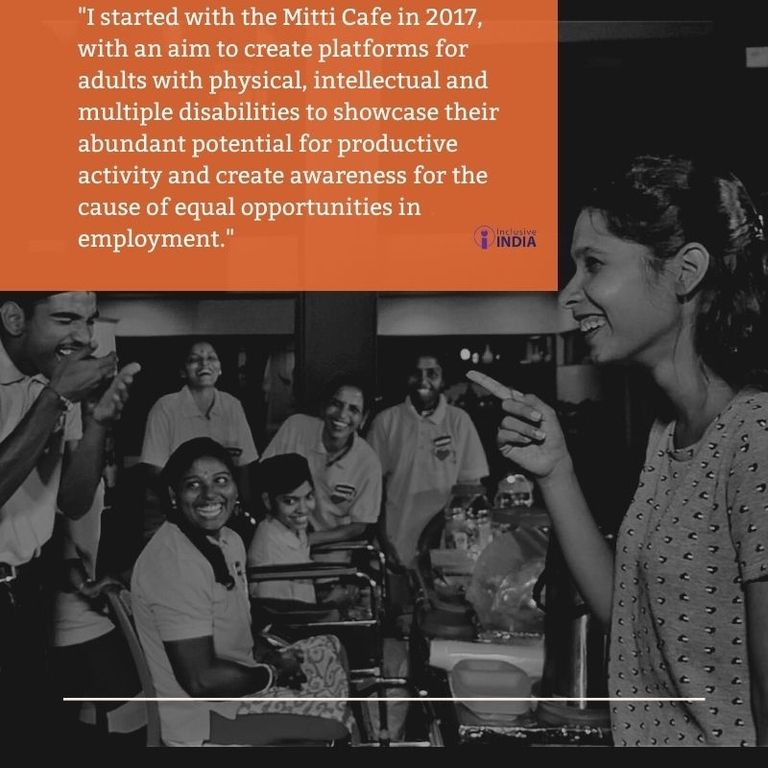
While pursuing her graduation from Azim Premji University, Alina volunteered in an organisation that works with adults with a disability. That’s when she realised that the problem is not their ability but the disability in our perception, which needs to change. Talking to us about the cafe, Alina said, “I started with the Mitti Cafe in 2017, with an aim to create platforms for adults with physical, intellectual and multiple disabilities to showcase their abundant potential for productive activity and create awareness for the cause of equal opportunities in employment.”
Not every enterprise needs a VC funding, as Alina started this venture with funding from her friends, family and partnerships with Deshpande Foundation, NSRCEL-IIM Bangalore & N-Core Foundation. And now she has several branches of the cafe in both Kolkata and Bengaluru.
Facilities Enabling The Staff One can find menus printed in braille, food orders written on sheets of a note pad, self-explanatory placards and flicker lights that signal the staff when a customer calls for them, and more such unique ideas to facilitate the differently-abled staff at the Mitti Cafe.
Apart from remuneration, Alina explained how they have additional benefits like accommodation for the staff, “Since most of our employees along with having a disability come from a low-income background, apart from salaries, we also provide them with accommodation, food and logistics. We provide wheelchairs to those who cannot afford it. There are placards in the cafe for communication with our HSI staff and menu as well as instructions in Braille for our staff with visual impairment. The training methodology for our adults with an intellectual disability involves innovative techniques that involve songs, poetry and pictorial training.”
Impact & Help With The COVID-19 Outbreak Talking about the impact of her venture, Alina said, “We currently have a total of 71 adults with disability employed at the various cafes branches and we provide experiential training to adults with a disability who is placed in the hospitality sector, retail sector or decide to start their own business.” Not only that, currently Alina and her team is also helping the vulnerable sections of the society affected by the Coronavirus lockdown. Talking about the same, she added, “The MITTI team is working on a war footing currently to help in the COVID 19 crisis by providing the most basic of the necessities: food to 2000 of our Frontline Heroes-daily wage labourers every day.”
Alina runs the social enterprise with the help of her amazing team members who left their cushy corporate jobs for the cause, including the COO & Director- Swati, another Director- Anjani Gupta and Area Operations Heads- Sanidhya Bindal & Amruta Wadekar.
She also shared her future plans with us which include, “Creating awareness about economic empowerment and dignity-one cafe at a time, till Mitto Café becomes outdated. We are hopeful that should be soon.”
source: http://www.inclusiveindia.in / Inclusive India / Home> Feature> Inclusivity / by Shobita Dutt / April 17th, 2020
Purabgul Village (Karimgang District), ASSAM / Shillong, MEGHALAYA :
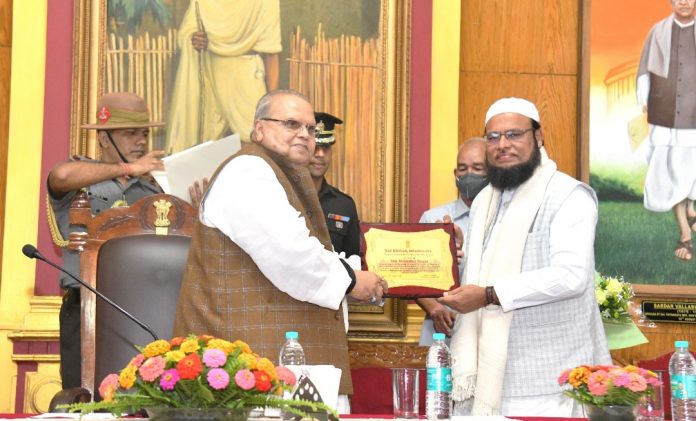
Governor of Meghalaya Shri Satya Pal Malik conferring “Governor’s Award for Excellence in Public Service-2022” upon Shri Mahbubul Hoque, Chancellor of the University of Science and Technology Meghalaya.
Raj Bhavan, Shillong :
Acknowledging and expressing appreciation for outstanding accomplishments, the Governor of Meghalaya Shri Satya Pal Malik has conferred the highest and prestigious award, “Governor’s Award for Excellence in Public Service-2022” upon Shri Mahbubul Hoque, Chancellor of the University of Science and Technology Meghalaya for his pioneering and outstanding contribution in the field of Higher and Technical Education, , one who established all his educational institutions mainly in rural areas of Meghalaya and Assam.
Padma Shri Ms Trinity Saioo, a school teacher who led a silent revolution mobilising more than 800 rural women to set up Self Help Groups for growing turmeric through organic farming methods, also received the Governor’s Excellence Award on the same occasion.
The conferment of the awards by the Hon’ble Governor was held yesterday evening at the Raj Bhavan Shillong in the presence of an august gathering.
Accepting the Award, Mahbubul Hoque thanked the Hon’ble Governor and the people of Meghalaya for giving him the opportunity to serve the society spreading higher and technical education as well as various outreach activities.
He recalled the cooperation extended by Late Dr Donkupar Roy, former LS Speaker and Chief Minister P. A. Sangma and the former Governor R.S. Mooshahary and overall support by the officers.
Conferring the excellence awards, the Hon’ble Governor Shri Satya Pal Malik said that Mahbubul Hoque is a visionary educationist and passionate in institution building targeting rural areas. His dedication, selfless contribution for the cause of education has created an impact in the education sector which has been observed by every person. “Shri Hoque is a passionate visionary who relentlessly works to build a self-reliant society through need-based education by establishing institutions”, he said.
Earlier, delivering the welcome address, Shri Pravin Bakshi, IAS, Commissioner & Secretary to the Governor said that this Award is the first step taken by the Meghalaya Governor’s office as a part of Azadi Ka Amrit Mahotsav in recognizing individuals for their remarkable public service.
Born to a rural family at the remote Purabgul village in Assam’s Karimganj district, Mahbubul Hoque had a turbulent early life as he lost his parents and supportive elder brother during childhood. He had to earn by doing private tuitions and selling home grown vegetables in the local market to continue his studies. A Masters in Computer Science from the prestigious AMU, he got lucrative job offers from MNCs and IT industries of the country as well as abroad but he decided to come back to his native place with a vision and embarked on a career of educational entrepreneurship.
His humble journey began with 1 computer and 4 students from a rented room in Guwahati, with only 85 rupees in his pocket. He assembled computers and sold them in the market to earn revenue to set up a computer lab. Initially, challenge was such that even landlords were unwilling to rent him in view of his financial condition. However, his study center Central IT College became the second-best study‐center of Manipal Group in the whole country. There was no looking back.
In order to strengthen the education infrastructure of the North East, Mahbubul Hoque set up the Education, Research and Development Foundation (ERDF) in 2005 under his chairmanship. A number of pioneer educational institutions were established under ERDF umbrella catering education from KG to PG to Ph.D. through two CBSE affiliated Senior Secondary Schools, one AICTE approved Engineering College, two PCI approved Pharmacy Colleges, one BCI approved Law School, one AICTE approved Business School, one NCTE approved B. Ed. College, one Women’s College and his largest dream venture—University of Science & Technology Meghalaya where more than 5000 students are now pursuing higher education. The University has been accredited “A” Grade by NAAC in its 1st Cycle of assessment in 2021, a rare achievement. USTM is now placed among the top 200 universities of India in NIRF-2022 Ranking.
The institutions set up by him are imparting quality education to more than 10,000 students, of which 35% are from indigenous tribes, 20% belong to underprivileged backward classes and receive Free Education, 80% from rural areas, 57% are girl students. More than 1200 teaching, administrative and non-teaching staffs are working for the growth of the institutions under his dynamic leadership. One of the most important features of the university is that more than 30 community and tribe students from the whole of north eastern states are studying in the university.
A recipient of ‘Shikshacharya Award-2019’ bestowed by Asam Sahitya Sabha and many such awards for his contribution in the field of higher education including the recent Community Excellence Award to USTM by UNESCO.
Mahbubul Hoque has initiated numerous welfare activities such as Endowment Funds, Emergency Medical Assistance, Interest-Free Loans, Relief drives, Health camps, etc.
He is extremely sensitive about environmental protection and efficient use of energy which reflects in adopting Green Campus Initiative for which USTM has already received many awards under the sustainable development goals of the UN.
Under the USTM Neighbourhood Mission, various departments of USTM have adopted neighbouring villages and children from these villages are availing free and concessional education in the University. A unique initiative of Mahbubul Hoque is the introduction and implementation of the Pay Back Policy under which students who clear competitive examinations are given back their entire course fee.
The future roadmap of USTM encompasses Research and Extension activities focussing on rural education and achieving its Milestones. He has set up Milestones to make USTM a World Class university by 2030 facilitating the state of Meghalaya as a global education destination by attracting students and scholars from across the world and nurturing local youths creating a global community. His current dream project is a Medical College and Hospital in Meghalaya with cutting edge research facilities. Establishing a women’s university in his native place Karimganj is another dream project submitted to Govt of Assam for enactment.
source: http://www.muslimmirror.com / Muslim Mirror / Home> Education> Positive Story / by Muslim Mirror Network / August 27th, 2022
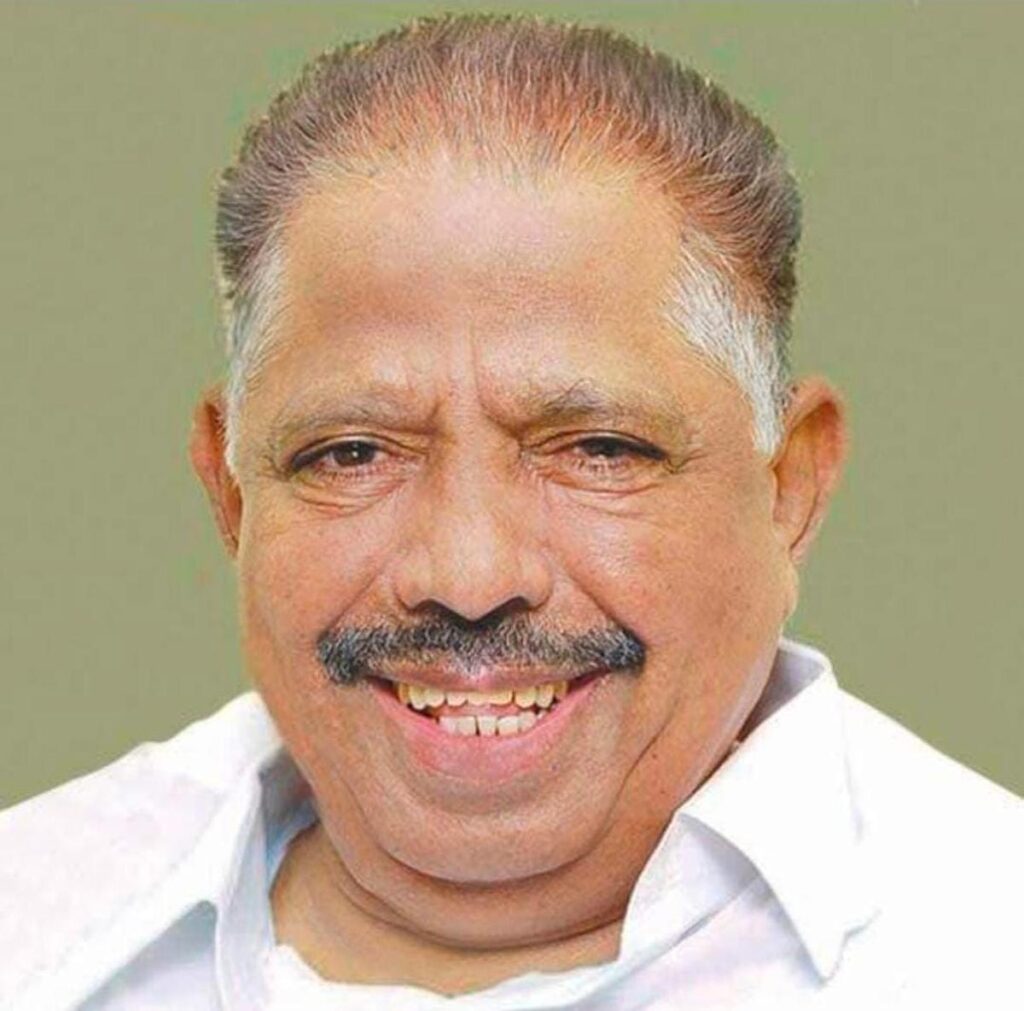
Aryadan Mohammed was under treatment at a private hospital at Kozhikode. File
Veteran Congress leader and former Minister Aryadan Mohammed was a towering figure of the Congress in Eranad for several decades
Veteran Congress leader and former Minister Aryadan Mohammed, 87, passed away on Sunday morning. Mr. Aryadan was under treatment at a private hospital at Kozhikode.
Endearingly called Kunjakka by the people of Nilambur, Mr. Aryadan had represented Nilambur constituency in the Kerala Assembly eight times. Mr. Aryadan was a towering figure of the Congress in Eranad for several decades.
Mr. Aryadan was the Minister for Power and Transport in the United Democratic Front (UDF) cabinet headed by Oommen Chandy from 2011 to 2016.
Mr. Aryadan was the Minister for Labour and Forests in the cabinet headed by E.K. Nayanar from January 1980 to October 1981.
From April 1995 to May 1996, Mr. Aryadan was the Minister for Labour and Tourism in the Ministry headed by A.K. Antony.
In the first Oommen Chandy Ministry from 2004 to 2006, Mr. Aryadan was the Minister for Power.
Ever since his political entry in 1952, Mr. Aryadan remained an active Congress leader until he retired as an MLA in 2016. Mr. Aryadan had held several party positions, including Malappuram District Congress Committee president.
Mr. Aryadan is survived by two sons and two daughters. The funeral will take place on Monday morning. Mr. Aryadan will be buried at Mukkatta Juma Masjid graveyard.
source: http://www.thehindu.com / The Hindu / Home> News> India / by The Hindu Bureau / Malappuram – September 25th, 2022
The Kerala Governor is in the midst of a controversy after he launched an attack on the State government in a press conference
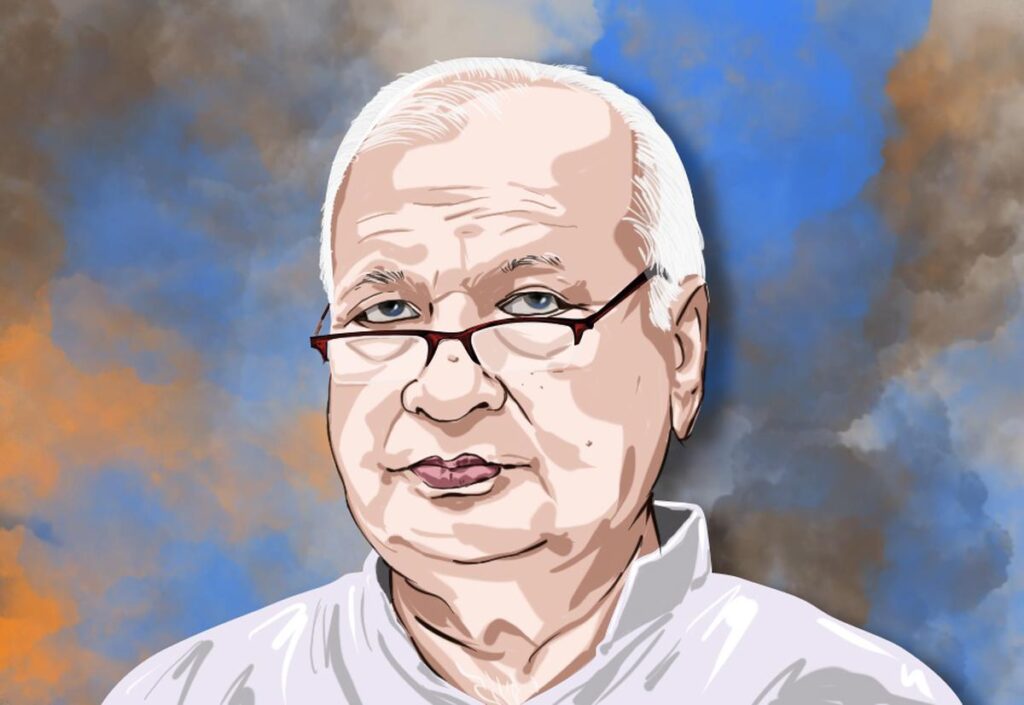
What’s unfolding now in Kerala is merely the latest episode in Arif Mohammed Khan’s lifelong story of being his own man, whatever the stakes, whichever the stage. Often loathed, sometimes loved but hard to ignore, Mr. Khan was that way when he entered student politics in Aligarh Muslim University (AMU) in the early 1970s and rose to be the president of the students union. It wasn’t any different when he became an MLA in 1977, aged 26. Or a Minister of State during the Rajiv Gandhi Government. It is scarcely any different now when he is into his 70s and occupies the august, if increasingly controversial, office of the Governor of Kerala. He is his own man.
Another matter not everyone shares his view of what’s right. Least of all Kerala Chief Minister Pinarayi Vijayan. There is little, if any, love lost between the two. There is a reason: Mr. Khan has been publicly critical of the appointment of Mr. Vijayan’s private secretary’s wife as an Associate professor in Kannur University, where Mr. Khan is the Chancellor. So upset was Mr. Khan that casting custom aside, he called a press conference at Raj Bhawan where he fumed against the elected LDF government.
Unsurprisingly, the LDF government can barely stand him today. It is unlikely to worry Mr. Khan a bit. He is known to express himself even at the risk of social opprobrium. His old friends in AMU and Jamia Millia Islamia, where the Bulandshahr-born young man sought education, remember him as a frank and fearless person who was reasonable and open to debate. He is said to have been a good host who loved his Mughlai food and served it with relish to his guests. Today, they are both surprised and a shade speechless at the ideological and political vicissitudes in Mr. Khan’s life.
Indeed, what is happening today in Kerala is not without precedence in Mr. Khan’s multi-layered career which has seen him making pit stops over the Bharatiya Kranti Dal (the predecessor of Rashtriya Lok Dal), the Congress, the Janata Dal, the Bahujan Samaj Party before finally finding a bit of an echo to his views in the BJP. His stint in Kerala, his vehement opposition to noted Marxist historian Irfan Habib and constant run-ins with the Kerala Chief Minister are all attributed to his saffron leaning. Never mind the fact that he has won elections, notably from Kanpur and Bahraich on the tickets of non-BJP parties and has lost elections, as in Kaiserganj, on the BJP ticket in 2004.
Clash with clerics
Back in the mid-1980s, a section of Muslim clerics had no love lost for him at the height of the Shah Bano controversy when he risked it all in opposing Prime Minister Rajiv Gandhi’s move to virtually overturn the Supreme Court verdict on maintenance to divorced Muslim women.
Faced with calls for social boycott and possibility of political oblivion, Mr. Khan did not equivocate then. He is not likely do that now too.
Mr. Khan is a redoubtable scholar of Islam with a uniquely his own interpretation of religion. One could question his interpretation of scripture, not his facts. Equally, unlike many clerics, he is open to being corrected. Faizur Rehman, an independent Chennai-based Islamic scholar himself, at one time agreed with him on the Shah Bano case, but later made his disapproval known when Mr. Khan supported the criminalisation of triple talaq following the Shayara Bano verdict. “Our friendship was not affected by my criticism of his views on criminalisation of talaq,” Mr. Rehman recalls.
One may disagree with Mr. Khan but there is merit in listening to him, even if he himself could do with being a better listener. In the Shah Bano case, the Muslim clerics had agreed for the husbands to pay a substantial one time alimony to a divorced wife. They later retracted. If the maulanas had listened to him then, India’s political trajectory would have been very different.
As for Mr. Khan, he would do well to remember the letter of the rule book he quotes against the Kerala government expects a certain spirit, a certain decorum from the Governor too. It’s time to listen to Mr. Khan as much as for him to listen to voices of constitutional propriety.
source: http://www.thehindu.com / The Hindu / Home> News> India / by Ziya Us Salam / September 25th, 2022
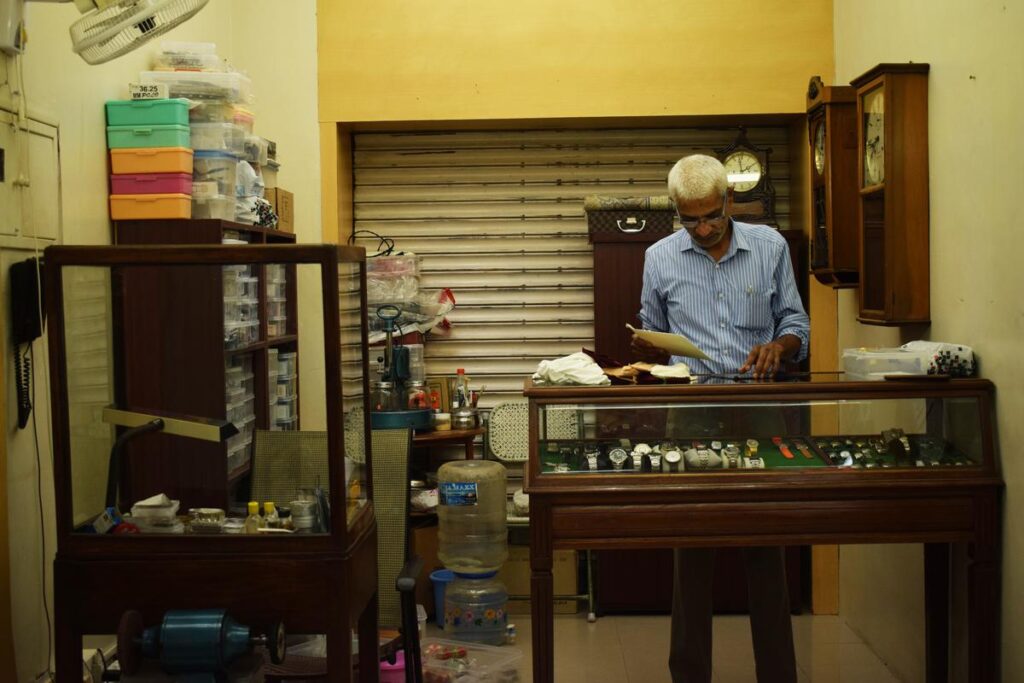
B Abdul Haq at the counter of Connoisseur Collection, originally the Bharath Watch Company, Chennai | Photo Credit: S Aswini Rao
The Connoisseur Collection family has been the guardian of innumerable timepieces in Chennai for the past 64 years. This Madras Week, they share a few memories.
It is easy to lose yourself in the labyrinth that is Spencer Plaza, with its narrow alleys and seemingly identical corridors. But it is worth it, for tucked away between stores selling T-shirts, phone covers and silver jewellery is a quaint space where time has stopped.
Connoisseur Collection, originally the Bharath Watch Company, was launched in 1958 in Pondy Bazaar by R Abdul Bari, then shifted to Spencer Plaza in 1999. It is now run by his son B Abdul Haq who holds aloft the 64 years of legacy single-handedly.
”My father’s work intrigued me, so I entered the field after discontinuing my education,” says Haq, who learned the craft from his father when he was just 12 years, at the shop. Here, dead watches and clocks come alive at the hands of their knowledgeable and skilled owner.
A six-decade-old timepiece at Connoisseur Collection, Chennai | Photo Credit: S Aswini Rao
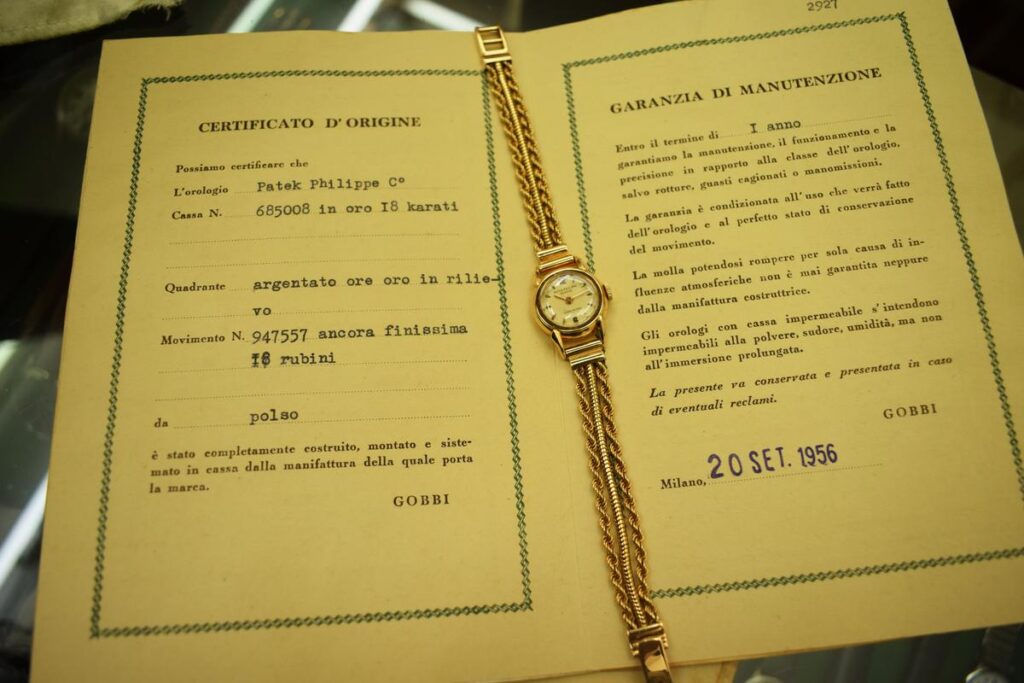
Haq’s passion is evident in the way he handles the watches, and shows off his collection of rare luxury pieces from brands like Patek Philippe and Rolex. He opens a case to reveal a Patek Philippe Nautilus 5711, made in the mid-1970s by the legendary watch designer Gerald Genta. He moves on to reveal similar vintage watches like Patek Philippe Geneve watches made of 18k gold, and a Patek Phillipe 2583 specially made in 1956.
As he carefully places these prized possessions back in a box and locks them away, he reminisces about the late Chief Minister J Jayalalithaa, and actress Sowcar Janaki visiting his father’s shop with timepieces of their own.
“The rarest watch I have repaired is a Moon Phase by Patek Philippe,” he says, adding, “Customers bring in mechanical watches, Rolex, Omega, and other expensive Swiss watches for servicing, usually to fix broken glass dialsor button malfunctions.”
The entrepreneur reminisces the earlier times of Spencer’s Mall, saying it used to be an international hub with tourists from all over the world visiting in search of high-end brands. Those brands have since migrated to other malls, and visitors to Spencer’s have dwindled. But this shop stays put, he says, as the cost of running a business in Spencer’s is reasonable, and those in the know can always find their way to him.
As the self-styled “police officer in the field of watches” fastidiously wipes dials, he disapprovingly speaks of those who run businesses motivated only by money, with no technical knowledge. Gently wrapping each watch in velvet-lined covers he states, “Custom-made watches have no value, there is no originality left in them. When a company manufactures a watch you should not change anything.”
He wears a Rolex Deepsea watch and says his one of his favourite pieces is the Nautilus series from Patek Philippe. His father bestowed him a Vulcain cricket solid gold wrist alarm from the 1950s— his most prized possession.
source: http://www.thehindu.com / The Hindu / Home> Life & Style / by Shivani Illakiya PT / August 20th, 2022
Meanwhile, BJP is deliberating upon the reasons for the failure of operation lotus in Bihar and the future course of action in the changed situation there
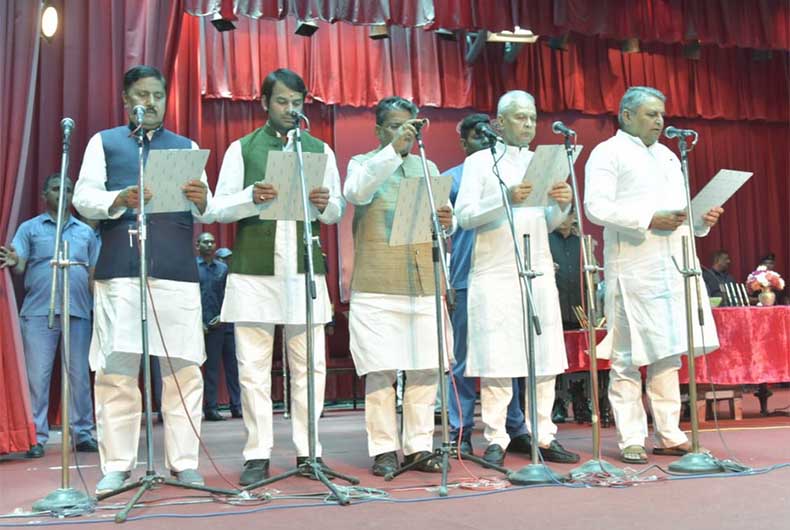
Bihar Chief Minister Nitish Kumar after the expansion of his cabinet has made public that there will be 5 Muslim ministers in his cabinet of 31 Ministers that took oath on August 16, 2022.
The JD-U broke away from the BJP and was successful to retain power in the newly formed government with the RJD and other allies. The JDU gave only one ministerial berth to its member from the minority community from its quota. Jama Khan was made Minister of Minority Affairs.
In Contrast, the RJD gave three Ministerial berths to the minority community from its quota. Shamim Ahmed made sugarcane minister, Shahnawaz Alam got disaster management, and Mohammad Israil Mansoori got information technology.
Congress, the alliance partner of the JDU-RJD combined government has given only one ministerial berth to a member of the minority community. Afaq Alam has become the animal husbandry and fisheries minister of Bihar.
If we compare 2022 with 2020 when the JDU aligned with the BJP to form the government in Bihar, there was not a single Muslim Minister in Nitish Kumar’s cabinet. Even the Minority Affairs Ministry was held by Ashok Chaudhary, a close confide of the Bihar CM. This was worse than in Uttar Pradesh where the lone BJP Muslim MLA was made Minister of Minority Affairs.
In the cabinet expansion, the Rashtriya Janata Dal (RJD) got 16 ministerial berths. The Janata Dal-United (JDU) got 11, the Congress got 2 ministerial berths. Jitin Ram Manjhi’s Hindustani Awam Morcha and an Independent MLA Sumit Kumar Singh also found a place in the new cabinet.
It is learned from the sources that 5 ministerial berths are kept reserved for future expansion of the Bihar cabinet that can have up to 36 ministers, including the Chief Minister.
The Grand Alliance in Bihar has a strength of 163. Now it has climbed to 164 after Sumit Kumar Singh an Independent MLA extended his support to the JDU-RJD alliance and got a ministerial berth in the new government. The RJD- JDU government in Bihar is likely to prove a majority in the Assembly on August 24.
Earlier Chief Minister Nitish Kumar pulled the rug below the BJP’s feet when the saffron party was set to launch a surgical strike code-named operation lotus. Buoyed by the success of its operation in Maharashtra last month with his man Friday Eknath Shinde the BJP propped up RCP Singh the former Union minister who was to plot a coup by taking JDU MLAs to some safe haven in the BJP-ruled state.
However, before he could make any moves, the Chanakya of Magadha got the wind of the ‘Gujarati trap.’ He first exposed RCP Singh’s ill-gotten wealth and sought his explanation. This made BJP’s ‘Mohra’ resign from the primary membership of JD(U). This happened on August 7.
Even before the BJP could launch a strike on Nitish Kumar with the help of RCP Singh, the Vikas Prush of Bihar parted his ways with the BJP. He hems a new alliance with the RJD and other political parties and took oath on August 10 with RJD’s Tejashwi Yadav as his deputy. This is how Nitish Kumar becomes the Chief Minister of Bihar for the seventh time.
The BJP got the taste of its own medicine in Bihar. Now the BJP top brass is holding meetings with the party’s leaders in Bihar. The saffron party is to deliberate upon the reasons for the failure of operation lotus in Bihar and the future course of action in the changed situation there.
[Syed Ali Mujtaba is a journalist. He can be contacted at syedalimujtaba2007@gmail.com]
source: http://www.ummid.com / Ummid.com / Home> India / by Syed Ali Mujtaba / August 18th, 2022
Indians and other historians have either tried to whitewash the revolutionary movements for freedom or presented these as disjointed localised efforts.
Even the largest movement of Azad Hind Fauj led by Netaji Subhas Chandra Bose has been narrated in a staggered manner and an episodial manner like the battle of Burma (Mayanmar) and the battle of Imphal. The picture thus presented is of an army fighting at a frontier with no support elsewhere. This history needs to be revisited.
In 1930, Sayyid Sibghatullah Shah Al-Rashidi called Pir of Pagaro, a Muslim Saint from Sindh with a huge following, was arrested by the British Government for ‘creating disturbances’. He was accused of instigating anti-colonial feelings among his followers known as ‘Hurs’ (literally meaning free). The decision to send him to a prison away from Sindh rather shaped this anti-colonial Muslim saint into a nationalist revolutionary.
In the Bengal hail, he met several revolutionaries and realised that what he had experienced in his area was the same being experienced by others. He understood that British colonialism was destroying the nation and Hindu-Muslim unity was the only weapon to fight them.
From the prison, he started preaching nationalist messages. Sarah F. D. Ansari of the University of London in her book Sufi Saints and State Power: The Pirs of Sind, 1843 – 1947, writes, “messages strongly coloured with a radical nationalist tinge were smuggled out in the form of notes written in the margins and between the lines of books and magazines. They condemned the British for treating ‘Indians like donkeys’, loading them down with ‘England’s burdens’, and pointed out that the only reason why the British were able to rule over 300,000,000 people was that Indians were ‘cowards’.”
In 1936, when he returned to his seat at Khairpur in Sindh, Pir of Pagaro had turned a revolutionary.
He started establishing links with revolutionary leaders of Bengal as well as those living in Europe, especially Germany. He started inviting Congress leadership to his area and organise Hindu-Muslim unity meetings. We must keep in mind that it was 1938 and Subhas Chandra Bose was the President of Congress. Unsurprisingly when Subhas formed Forward Bloc after his famous differences with Mahatma Gandhi, Pir of Pagaro asked his followers to back Forward Bloc and denounced the stand of Congress.
In 1939, the centuries-old Hindu-Muslim unity of Sindh was severely shattered over the Manzilgah mosque dispute and the riots that followed. Pir of Pagaro ordered his large following of armed followers known as ‘ghazis’ to save Hindus from the Muslim fanatics. Sarah F. D. Ansari writes, “In his newspaper, the Pir-jo-Goth Gazette, he (Pir of Pagaro) called for Hindu-Muslim unity: ‘My forefathers’, he wrote, ‘treated Hindus and Muslims alike as a sacred trust. The same is my principle . .. Allah is the same as Parmatma, though with different names. I will be happy when I see temples and mosques together with only a wall dividing them and everyone [worshipping] according to their rights so that no one may have a grievance against the other’. In a similar vein, he denounced the Hindu Sabha and the Muslim League as divisive communal movements. Only when Hindus and Muslims combined would ‘peace . . . be achieved and satanic deeds . . . stopped’: Indians had to be ‘national minded’ and regard India as a country which belonged to all its inhabitants.”
An intelligence report dated October 1940 says, “Pir of Bharchundi is not liked by the Pir Pagaro, who disrespected the Pir of Bharchundi and sent him away from his ‘Kot’ when the Pir of Bharchundi last visited the Pir Pagaro… the reason for such treatment of the Pir to the Pir of Bharchundi was that the Pir of Bharchundi would not assist in getting the murderers of Hindus arrested.”
It further says, “Pir Pagaro has won great sympathy of the Hindus.” Sarah also points out how the Pir came out in support of a Muslim man’s right, who had earlier converted into Islam from Hinduism, to reconvert into Hinduism. “
Another intelligence report noted that Pir of Pagaro has enlisted at least 6,000 militants to fight with an oath to die for the cause. These militants were called ghazis. Ghazis had paraded and displayed their military skills in front of him during his visits to Jaisalmer and Jodhpur as well. The nationwide presence was a threat for the British. The report further noted, “the Pir was renewing his contacts with terrorists (terrorists was a term used by the English for revolutionaries) who had been in prison along with him in Bengal. His visits to Calcutta (Kolkata) were, it is said, performed for no other reason.”
The British apprehension was not wrong. Pir Pagaro had contacts with Bengali revolutionaries and Subhas. If Subhas raised an army on Eastern Front, Pir of Pagaro raised another on the Western Front. An intelligence report from 1941 noted, “He (Pir of Pagaro) has got his electric plant and radio set at which he and his followers hear Hindustani programs from Germany and then spread the German news in the villages which has a disquieting effect on the local people.” The report also pointed out that “the villainous activities of the Pir and his growing contempt of authority are becoming a byword throughout India”.
Pir of Pagaro was running an independent government in that region of Sindh with the help of his militia. The British Government arrested him in Karachi on the pretext of holding talks with him. His ghazis would not stop and kept attacking the British infrastructure. They were so much feared that the Legislative Assembly members did not want their names to become public for voting in favour of an act against Hurs (followers of Pir of Pagaro).
Sarah notes, “The level of fear which existed in Sind at the time even inside the Legislature was reflected in the session being held in camera. Members of the Assembly were not prepared to vote openly in favour of the act ‘lest they were marked down for the Pir’s future vengeance’.” The fear was not unfounded as soon after Ghazis killed the son of Hidayatullah, one of the tallest Sindh leaders in that Legislative Assembly, by derailing a train.
It did not take much time and within weeks Martial Law was declared. The British had to open a war front at the time of World War II. Sarah writes, “The area north of Sanghar and the Thar desert (Rajasthan) were thoroughly reconnoitered from the air; paratroopers and bombs were used against bands of armed men. Hur villages were raided, wells stopped up and their cattle herded into other districts.” On the other hand, the Pir was being tortured to ask his followers to put down their weapons.
Did the nationalists concede defeat? No. The Pir of Pagaro, Sibghatullah, embraced martyrdom at the gallows on 20 March 1943, after a sham of a court trial. Hurs kept fighting the British till 1946 even after their Pir was gone.
source: http://www.awazthevoice.in / Awaz, The Voice / Home> Culture / by Saquib Alim / July 23rd, 2022


.webp)