Mairaj Ahmad Khan wins a spectacular gold from nowhere in the Digvijay Singh shotgun championship in Delhi on Sunday. | Photo Credit: Kamesh Srinivasan
New Delhi:
Darshna Rathore had a chance to fight for gold but missed the last two birds and thus had to settle for the bronze.
Olympian and World Cup gold medallist Mairaj Ahmad Khan asserted his class yet again as he accelerated to a smart finish in grabbing the skeet gold in the Digvijay Singh shotgun championship at the Dr. Karni Singh Range, Tughlakabad, on Sunday.
The 46-year-old Mairaj beat Arjun Thakur 35-30 for the gold, as he missed only one bird in the medal round. He had qualified on top in the semifinal with 27 hits, after having made the final with a modest score of 115, six point behind qualification topper Gurjoat Khangura.
‘’Final and semifinal are great. I am going to work only on qualification for the next three months’’, said Mairaj, understandably happy about the way he had competed despite not being at his best.
It was a similar case during the last World Cup in Changwon, when Mairaj had to win a shoot off with four others after being tied on 119 for the last two berths, before racing to the gold.
Anantjeet Singh Naruka who had shot 120 in qualification lost the shoot off against Amrinder Singh Cheema for a berth in the medal round.
Raiza Dhillon won both the women’s and junior skeet gold medals. | Photo Credit: Kamesh Srinivasan
It was Raiza Dhillon all the way as she won both the women’s and junior gold. Raiza beat qualification topper Ganemat Sekhon 36-35 for the women’s gold, and beat Parinaaz Dhaliwal 33-32 for the junior gold.
Darshna Rathore had a chance to fight for gold but missed the last two birds and thus had to settle for the bronze.
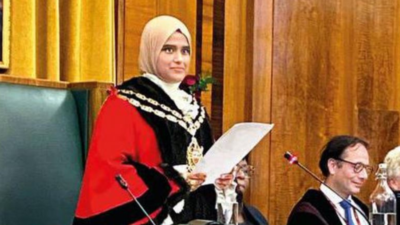
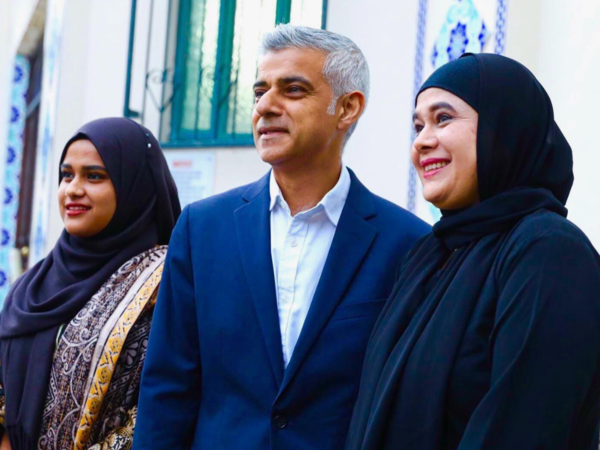
Humaira Garasia, whose family roots are in Valsad, was .elected speaker of London borough of Hackney in May
Surat :
Rishi Sunak might be in news for being the frontrunner for the post of Prime Minister of the UK and he will create history if he is elected for the post of the country that once ruled India.
But Indian origin Humaira Garasia (25) has already created a history by becoming the youngest-ever speaker of council in London Borough of Hackney.
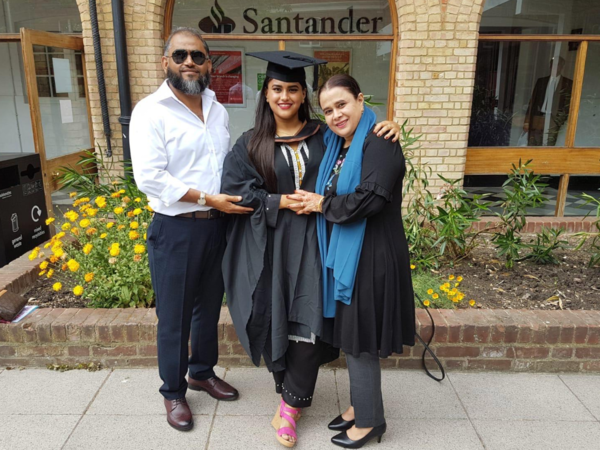
Garasia’s family is originally from Valsad and her father had migrated to the UK at a young age. Garasia was determined to enter active politics when she was 15 and wanted to represent the marginalised population.
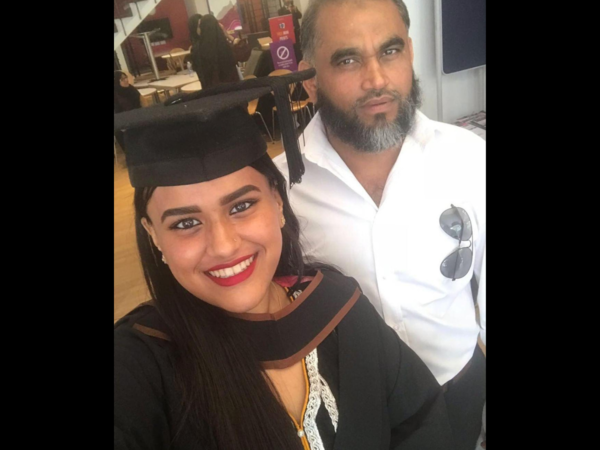
She identifies herself as a Gujarati of Indian origin. She studied BA politics from the University of London. Her father Rafik Ahmed, a warehouse worker, is from Nana Taiwad in Valsad while her mother Najma, a housewife, is from Bharuch.
“I am the youngest-ever speaker/civic mayor of Indian origin in the whole of the UK and the youngest speaker to have ever been elected for the London Borough of Hackney,” says Garasia.
“I was elected at the age of 21 as a councillor in 2018 and completed a four-year term. I was the youngest person of Indian origin to be elected as a councillor then. I was successfully re-elected as a councillor in May 2022,” she added.
She said: “I will be working with leaders, residents and communities from across the borough to address issues of inequalities, while also helping to tackle long-term issues such as racism and discrimination. I will focus on providing support to the most vulnerable members of society and helping young people to feel both empowered and safe.”
Born and brought up in London, Garasia’s parents migrated around 35 years ago. Garasia visits Valsad every year with her family.
source: http://www.timesofindia.com / The Times of India / Home> News> City News / by Yagnesh Bharat Mehta / July 23rd, 2022
Ariba Khan is the founder of Jumping Minds, which promotes mental well-being. Image courtesy: Ariba Khan
Technology and human emotions may seem a mismatch, but at Ariba Khan has fused them for a mental health platform.
As a young, spirited and ambitious 30-year-old, Ariba Khan can relate to mental health challenges that people her age are fighting. The lack of a safe space where such people could open up about their thoughts anonymously is what spurred her business idea – an artificial intelligence-based deep tech mental health app.
With Jumping Minds, this IIT-Rourkee and IIM-Bengaluru alumnus, along with co-founder Piyush Gupta, built a space where people could chat with individuals in a similar situation without exposing their identity.
“All of us require a safe space where you can talk about the challenges you may be facing. It doesn’t have to be clinical stress, but all of us are facing one stress or another – a bad breakup, difficult time at work, adjusting with the family. So, we thought of creating a digital space where you connect to people who may have gone through similar stressors, share your experiences, and release emotions,” Khan tells Health Shots.
Mental health matters
In the past few years, global celebrities have broken their silence on facing mental health issues. Somewhere, destigmatization has happened, but there’s a long way to go. It is because of the continued stigma around mental health that Khan chose to make Jumping Minds an anonymous space.
“Otherwise, there’s always a judgment factor,” says the Delhi dweller, adding that even though her platform is all about tech, at the heart of lies human interaction through technology.
“It helps people to release emotions, clear their head and find solutions,” asserts Khan.
Just five years ago, talking about stress and feeling burnt out at work would have been unimaginable. But the Covid-19 pandemic has pushed people into taking their mental health more seriously.
“The Gen-Z, especially, is more unapologetic about their mental health. They have an aspirational lifestyle, they want to live a well-balanced, happy life. And so, I would say the younger generation is leading the change in mindset and the positive shift towards wellness. Still, there’s a stigma around mental health and limited safe spaces where people don’t feel ashamed or guilty about sharing their story. Instead, people should feel empowered that there are so many other people going through the same,” Khan says.
“It’s okay to not be okay,” believes Ariba Khan. Image courtesy: Ariba Khan
Mental health issues of the young generation
As someone who believes in the adage that “it’s okay to not be okay”, Khan outlines the most common health problems that youngsters in the 20-30 age group are going through these days.
1. Relationship troubles:
Whether you are stressed at work or family life, it directly impacts your interpersonal relationships. People are getting increasingly stressed about how to maintain relationships.
2. Anxiety
This is why people need a digital detox from time to time! “Anxiety is the after-effect of social media. The need to be perfect, with filters on all the time,” explains Khan, stressing on how social anxiety and social comparison are turning out to be spoilers.
“People tend to think, ‘Maybe I am not enough’, ‘I am working so much, but I am not upto that level.’ And that social anxiety has become very prominent in the post-Covid era,” she explains.
3. Sexual wellness:
This is the age when early professionals and college students explore their body and preferences. So, people have a lot of questions around sexual wellness.
4. Career:
The desire to reach career milestones leads to undue pressure and stress on people. They overthink things like, ‘Are we in the right job? Are we working with the right people?’ But talking about these things, instead of keeping the thoughts to yourself, will give you a feeling of validation.
3 happiness hacks for women, suggested by Ariba Khan
Khan has three simple suggestions for women to follow for the sake of their mental peace.
1. Find peaceful breaks in a day
“I know we are women of the 21st century, always leading the way – whether it is in personal life or professional life. But it is very important to have time in a day when you are by yourself, living in the moment,” she suggests.
Khan assures that doing so even for a few minutes every day will help people become more productive and more appreciative of the positive results of the everyday hustle.
2. It’s okay, to err is human
Even research says women tend to have higher stress levels than men ! “The society has made women accustomed to keeping everyone around them happy – be it colleagues, friends, family.
But it is okay to sometimes make mistakes, feel bad or low. We may think we are superwomen, but we are humans after all! We should’t expect ourselves to be perfect all the time, because there’s true beauty in being imperfect,” she adds.
3. Talk it out
Don’t keep your thoughts to yourself. If you are stressed, talk about it. “Don’t feel ashamed about it, and who knows, it may give courage to others to talk about their journey. Once you start releasing the monster from your head, it becomes smaller. And if you do it in a community, you will see magic!”
source: http://www.healthshots.com / Health Shots / Home> She Says> by Radhika Bhirani / August 02nd, 2022
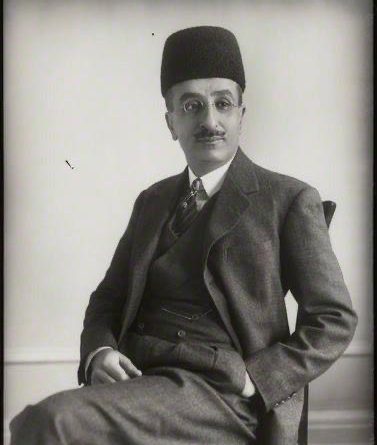
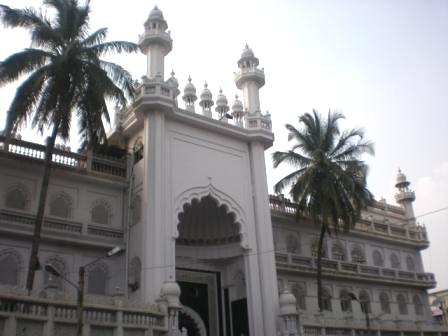
“I believe deep down in my heart that the great reality of spiritual revelation given to humanity by the Prophet (blessed be His name) is an infinitely greater thing than any sectarian difference (Shia & Sunni) imposed upon it by subsequent human feeling and by lesser vision than his of the inner realities from which the external life of humanity has developed.” Mirza Ismail, a Shia Muslim by faith, who was the Prime Minister of Mysore had spoken these words at the inauguration of Jamia Mosque, a Sunni mosque, in Bengaluru on 30 May 1941.
Jamia Masjid, Bengaluru
Mirza Ismail remained one of the most important politicians in India as he held the position of Prime Minister (PM) of the second wealthiest state, Mysore, from 1926 to 1941 after which he became PM of Jaipur and Hyderabad.
A Shia by his faith whose foreparents had migrated from Iran and stayed in India, Ismail remained committed to the unity of humans. He believed that Shia and Sunni, Hindu and Muslim, or any caste difference among humans could not stop them from living together harmoniously.
Ismail inaugurated the mosque at Bangalore, which was one of the most important cities in Mysore state, as his last public ceremony in the capacity of the PM of Mysore after resigning from the post. On the occasion he noted, “I am particularly happy that this function, which is the last of my period of service as Dewan of Mysore, gave me the opportunity of expressing an ideal of my life which has been foremost in the past and will remain foremost in the future.”
What was the ideal Ismail talking about? Making a mosque or something else?
The ideal he was talking about was the unity of Shia and Sunni as one Muslim community. He told the people gathered there that the non-Muslims observing this ceremony would not think much about it. In their view a Muslim had come to lay the foundation stone of a mosque of his fellow Muslims. “But to you”, Ismail argued, “fellow-Musalmans, it is not so simple. You know that in the historical development of Islam I belong to a section of the organised expression of the Faith that for centuries has been in sharp opposition to the section to which you, who are going to build this mosque, belong.” He expressed satisfaction that Sunnis had invited him for this event. He told the people that since its very inception he had taken “the greatest possible interest” in this mosque where Sunni Muslims would pray in the manner they wanted.
Ismail went on to tell the people;
“At the centre of Islam is the teaching and practice of brotherhood. You would have been false to the truth of life if, because I am a Shia by birth, you had not invited me to this function, and I would have been equally false to the brotherhood of Islam if, because you are Sunnis, I had not accepted your invitation. Our differences are transient, even trivial, in comparison with the spiritual reality which these differences tend to obscure and weaken.”
Ismail went on to state that love and peace are the essence of Islam and Muslims should stop fighting among themselves as well as with their coreligionists in the country. The mosque is one of the most important mosques in Bengaluru today.
(Author is a neurobiologist with a keen interest in history, society and culture of India)
source: http://www.heritagetimes.in / Heritate Times / Home> Featured Posts> Heritage> Leaders / by Mahino Fatima / March 08th, 2022
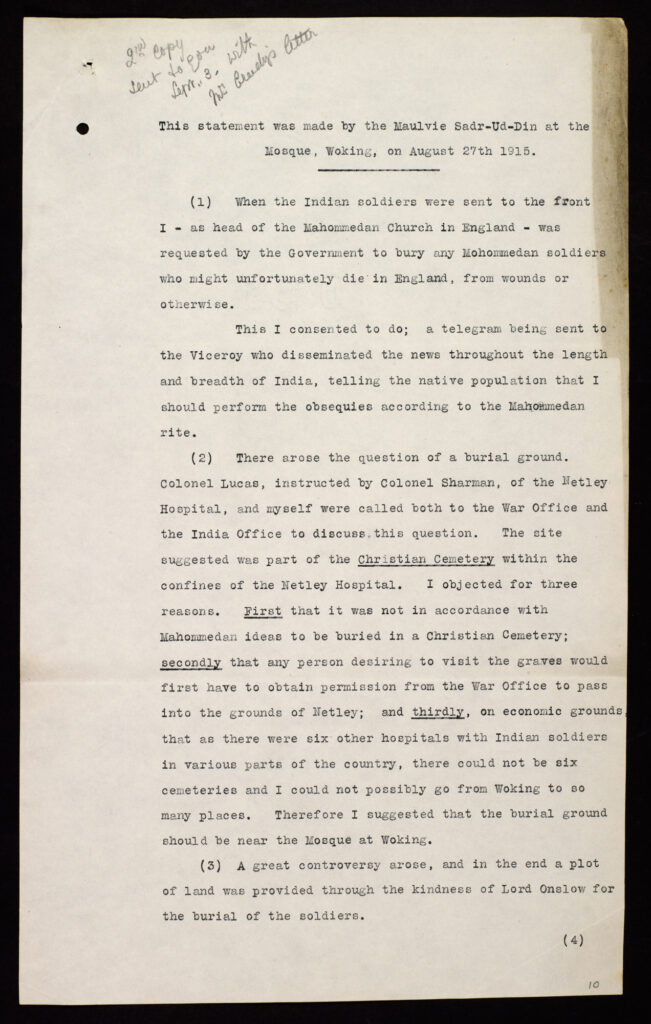
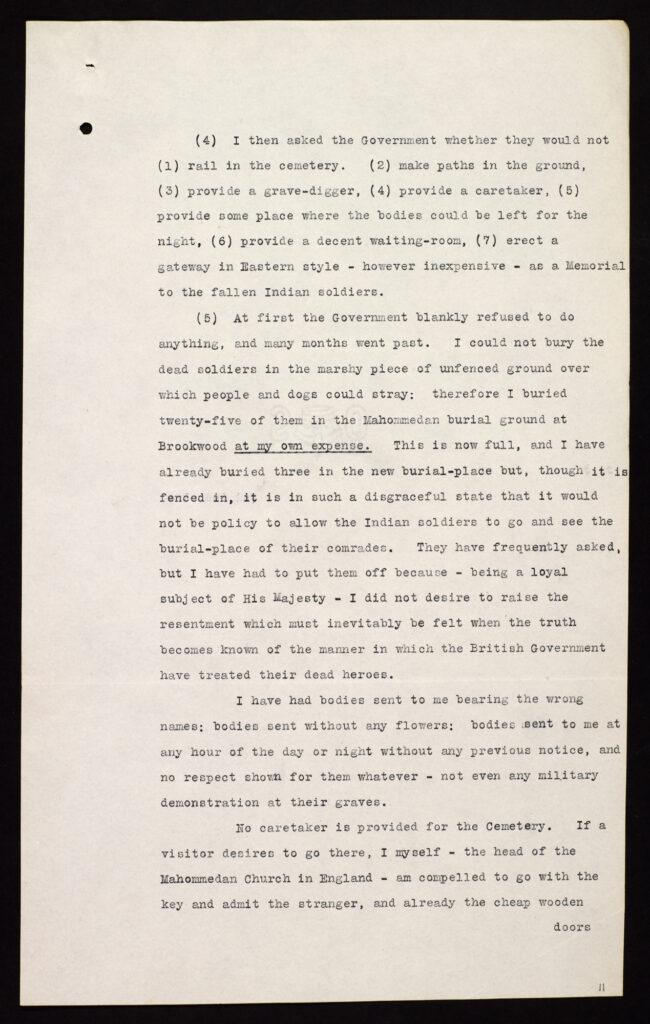
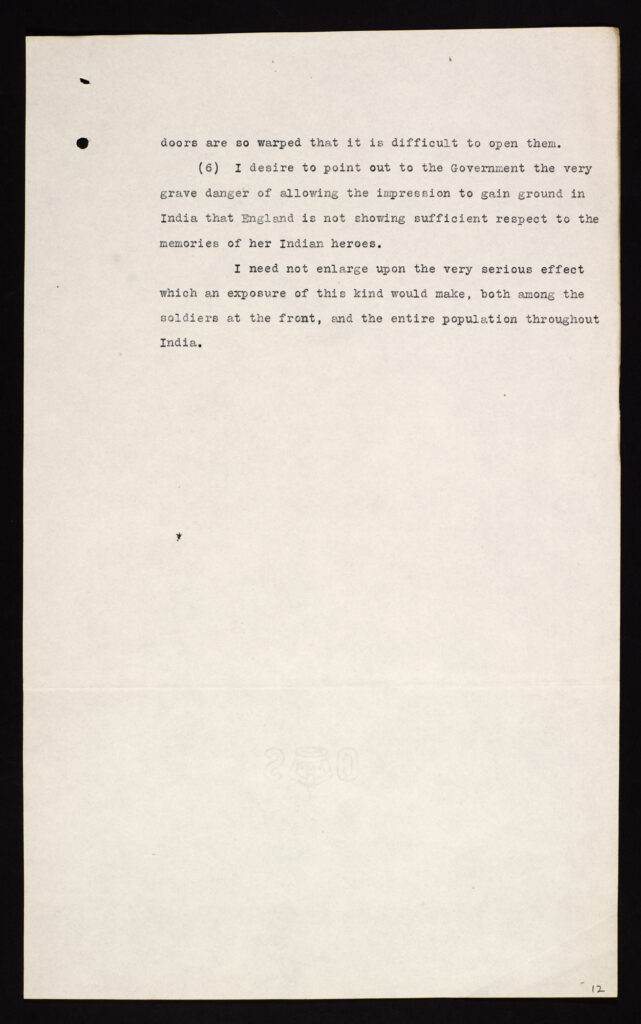
This statement, made by Maulvi Sadr-Ud-Din, provides an insight into the treatment of Muslim Indian soldiers who had fought during World War One and died in hospitals in Britain. Sadr-Ud-Din, from the Shah Jahan Mosque at Woking, was charged with overseeing their burial in England.
What does the statement reveal?
From 1915, there were nine sites in the South of England set up specifically for the treatment of wounded Indian soldiers. This included the Dome Hospital in Brighton and the convalescent camp at Barton-on-Sea. These were hospitals of high standards with up-to-date medical facilities, as well as services dedicated to catering for every religious need.
The Maulvi’s statement, however, raises issues with the posthumous treatment of soldiers who died in these hospitals. He states that the bodies of Muslim soldiers were often sent to him with the wrong name; without flowers; or with no provision for a military demonstration at the grave. Although Sadr-Ud-Din had been allocated a plot of burial land at Woking on Horsell Common, he describes it being in a poor state and maintains that his requests for improvements have been ignored.
Sadr-Ud-Din warns of the ‘grave danger of allowing the impression to gain ground in India that England is not showing sufficient respect to the memories of her Indian heroes’. His concluding words hint at the unease in Indian-British relations at this time and, in particular, the growing nationalist movement which was campaigning against British rule. In response, the government – in a public-relations exercise – commissioned improvements to the burial site at Woking.
These improvements were led, in part, by the suggestions made in Sadr-Ud-Din’s statement. These included a permanent enclosure of the piece of land; making paths in order to distinguish between grave and ground; to employ members of staff in the everyday running of the cemetery; and to build three structures: a morgue, a waiting room and a gateway to not only simplify the burial process, but to also give the area precedence. The gateway, at Sadr-Ud-Din’s request, was designed ‘in Eastern-style […] as a Memorial to the fallen Indian soldiers.’
The majority of these requests were realised, although the morgue and waiting room were never built.
________
source:
Full title:Correspondence about Moulvi Sadruddin, Imam of the Woking Mosque, and the burial of Muslim soldiers in England.
source: http://www.bl.uk / British Library / Home> Collection Items / (This item I feature in ‘All South Asians in Britain Collections’ and ‘All World War One Collection Items’ / (date viewed July 09th, 2022)
Navabharat Night High School, considered the first night school in the country, has been serving society for last 8 decades.
Mangaluru :
As a high school boy, Khalid Mohammed used to often find illiterate people knocking on his doors to read letters for them. The visitors were mostly elderly and disadvantaged whose children had migrated from Mangaluru to Mumbai and elsewhere in search of greener pastures.
It was then that the young Khalid, motivated by Mahatma Gandhi’s call for adult education movement, decided to teach such people how to read and write. Mohammed, a tin maker in the neighbourhood who was also not educated, was generous enough to spare his courtyard for a few hours each day for the noble cause.
Five adults — Khader, Krishna, Kusappa, Rahiman and Mohammed himself — were the first students when the night school came into existence on March 15, 1943.
Buoyed by the good response, the next year Khalid started primary classes in a building opposite KRK Shet Building on BEM High School Road in Mangaluru and named it Noubahar Night School. Gradually, middle and high school classes were added. Later, during its golden jubilee celebration in 1992, the school managed to get its own three-storeyed building on Car Street.
Called Navabharat Night High School now, it is run by the Navabharat Education Society. Said to be the first night school in the country and the only one still functioning, it is celebrating 80 years of its existence this year. Khalid, who was an English teacher at Badriya High School for a while, later became the headmaster of the night school and continued in the same post till he passed away a few years ago. The school, which does not charge any fee from students, has seen a lot of transformation over the last eight decades.
During its initial years, the school got a stream of adults who did not know how to read or write. Later it started getting adults who had dropped out of schools due to financial constraints but wanted to complete their schooling to get a job or promotion. Those who study here write the SSLC examination by enrolling as private candidates.
The institution now has over 60 students, who are mostly children of labourers. Almost all these kids go to day schools, but also come to the night school as their parents are away at work in the evenings.
Dr Vaman Shenoy, president of the Navabharat Education Society, beams with pride when he says many students from here have gone on to become doctors, engineers, advocates and also are employed abroad. There was a time when the school used to brim with 250-300 students, who used to stand outside the doors and windows of classrooms to listen to lectures. Bicycles used to be parked on both sides of the narrow road in front of the school building in Bunder.
The school has not received any government grant since its inception and runs only on donations. “Our founder Khalid Mohammed’s son Dr AR Nazeer who is a professor at a university in Saudi Arabia, Dr Vinay Hegde of Nitte, Kind Foundation, Canara Foundation and others contribute to the cause,” said M Ramachandra, secretary of the Society. Ramachandra himself was a student at the school. He later became its manager before he became secretary. “I dropped out of school after Class 8 because of poverty. After a gap of five years, I joined the night school,” he says.
The free school has six teachers and two office staff. Dinesh Kumar, a clerk at Canara College, has been teaching at the night school for the last 25 years. “I wanted to contribute something for society and that is the reason I am here,” he says. He teaches at the school from 6 am to 8.30 pm. Varkady Ravi Alevoorya, the present headmaster, says they have not kept the count of the total number of students educated in the school, but it could be in thousands.
“The student strength has dwindled over the last few years as the government now lays a lot of stress on education and makes regular follow-ups on absentee students to bring them back. But we still keep our doors open as there may be people who still need our help,” he adds. The school has a computer centre and also teaches Yakshagana. Dr AR Naseer says the school belongs to the public and they need to take it forward.
“As a teenager, my father was drawn to Mahatma Gandhi’s adult education movement which led him to start this school. It was the first home for my father and he used to spend most of his time here,” he recalls.
source: http://www.newindianexpress.com / The New Indian Express / Home> Good News / by Vincent D’Souza, Express News Service / June 26th, 2022
There’s no stopping Jumaila Haris, a 38-year-old mother of three who is on a path-breaking journey of exploring and teaching heavy vehicle driving, reports Vishnuprasad K P.
Malappuram :
At 38, Jumaila Haris is on a mission to explore a new path. Well, not just to find a way forward in her life. Rather something that would break barriers and inspire women to unshackle themselves.
A mother of three, she recently obtained a heavy vehicle licence. Her next target is driving tanker lorries. And she wants to help fellow women improve their driving skills. The Marakkara resident has already set that process in motion in her area.
“I used to commute on private buses during my school days. The one thing that amazed me was the manner in which the mighty vehicles were controlled by the drivers. I made up my mind then that I would drive these big vehicles one day,” Jumaila says.
However, she had to wait two decades before her dream could be realised. “Some women believe marriage ends their freedom to strive towards their goals. But if you find a supportive life partner, marriage is not going to be a barrier in pursuing your dreams,” she says.
Putting her knowledge to good use, Jumaila has started helping other women gain the confidence required to take control of the steeringwheel in any condition. “Many women obtain driving licences after picking up the skills from a driving school. However, they won’t be able to drive through narrow roads, hilly areas, and roads that are chock-a-block. After completing training, they give me some fees that they are capable of providing. I am planning to help more such women,” she says.
She is set to apply with the motor vehicles department to acquire a licence to drive tanker lorries. “Driving tanker lorries will help me improve my skills further,” she says.Jumaila married Onathukkattil Haris in 2000. For the past six years, she has also been working as a volunteer at the palliative care centre under CH Centre, Marakkara.
She obtained a four-wheeler licence in 2009. “My husband was working in the Gulf. So I had to manage the family affairs mostly by myself. My driving skills helped me in many ways as I could move around on my own. I was also able to take the elderly people in my family to hospitals. Also, I doubled as a driver of the palliative centre when the regular driver went on leave,” she says.
Jumaila has three daughters, Fathima Rinsha, Fathima Gazal and Ayisha.
source: http://www.newindianexpress.com / The New Indian Express / Home> Good News / by Vishnuprasad KP, Express News Service / July 03rd, 2022
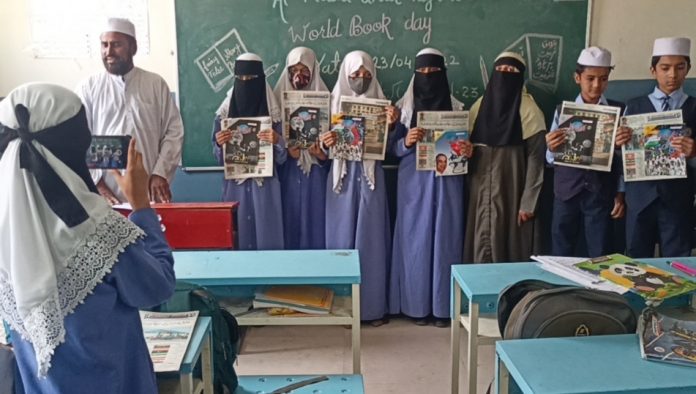
On World Book Day, the Maryam Mirza Mohilla (neighbourhood) library movement commemorated the occasion with zeal. Several book reading and distribution activities were held in city mosques and Urdu schools under the auspices of the Read & Lead Foundation.
The Foundation’s President, Mirza Abdul Qayyum Nadvi, announced the commencement of a “Book at Home, Book at Every Home” campaign at the event. He stated that the book-reading awareness campaign is only getting started because today’s young generation is losing interest in reading due to the introduction of new electronic gadgets, particularly smart phones
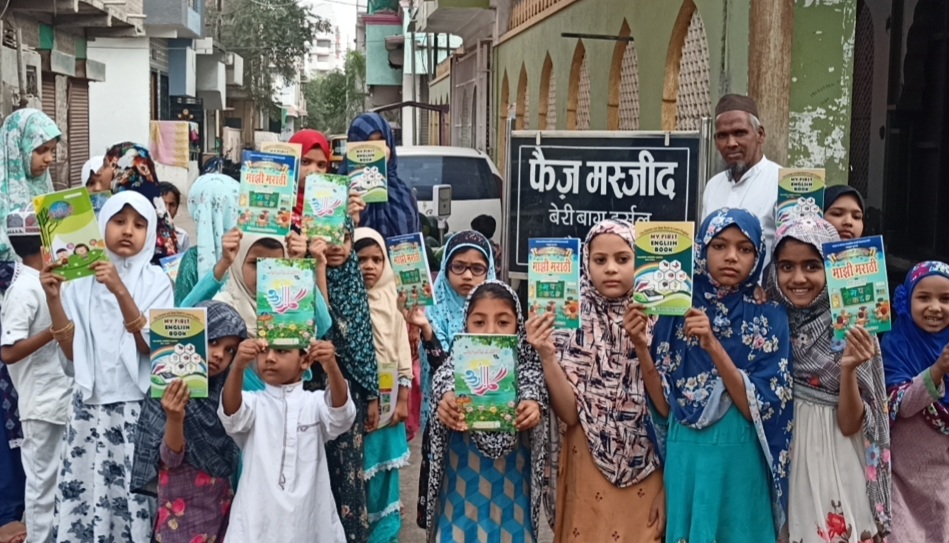
Urdu, Marathi, English books were distributed to the children members of Maulana Syed Abul Hassan Ali Nadvi Mohalla Library situated in Masjid Faiz Beri Bagh, Harsol area of Aurangabad.
It should be noted that for the past year in Aurangabad, 28 libraries have been working under the aegis of the Read & Lead Foundation in various sections of the city, slum mosques, Urdu schools, and neighbourhoods. More than 5,000 children are connected to these libraries.
It’s worth noting that eleven (11) of the 28 libraries are dedicated to children are located in mosques. Masjid Shadab Hina Nagar, Ahmadi Masjid, Shatabdi Nagar, Maulana Hasrat Mohani Mohalla Library, Misrarwadi, Qazi Iqbaluddin Mohalla Library, Bismillah Masjid, Madrasa Falah Darin Ghulam Mustafa, Sher Khan Pathan Mitra Mandal Library, Narey Village Mohalla Library and other places. In addition to this, Al-Huda Urdu High School Baijipura, Dr. APJ Abdul Kalam Mohalla Library Baijipura and other libraries celebrated World Book Day.
Maulana Sheikh Yusuf Nadvi, Imam of Masjid Faiz, where the Maulana Syed Abul Hassan Ali Nadvi Mohalla Library is located, stated that he would do everything in his power to ensure that the library benefits the children and women of the area as much as possible. After Friday prayers, he also declared the start of the door-to-door book drive.
Sheikh Nargis Fatima, Headmistress of Al-Huda Urdu High School, stated that her school’s students and instructors would be more active in the campaign and would offer all available assistance. Farhat Jahan, a school teacher, and other teachers took part in the presentation and offered their opinions..
Children’s monthly periodicals such as “Bachu ki Dunia,” “Umang,” “Taleemi inquilab,” “Majhi Marathi,” “Meri English Kitab,”,” “Gulzar Urdu,” and other books, magazines, and journals were distributed to members of the aforementioned libraries.
source: http://www.muslimmirror.com / Muslim Mirror / Home> Positive Story / by Special Correspondent / April 26th, 2022
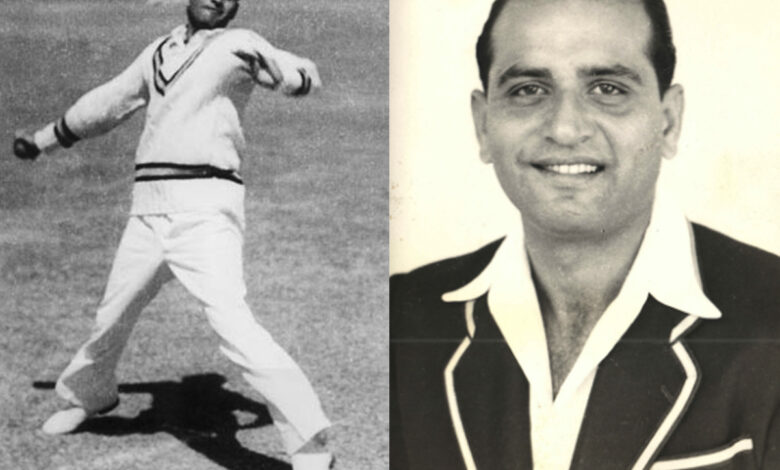
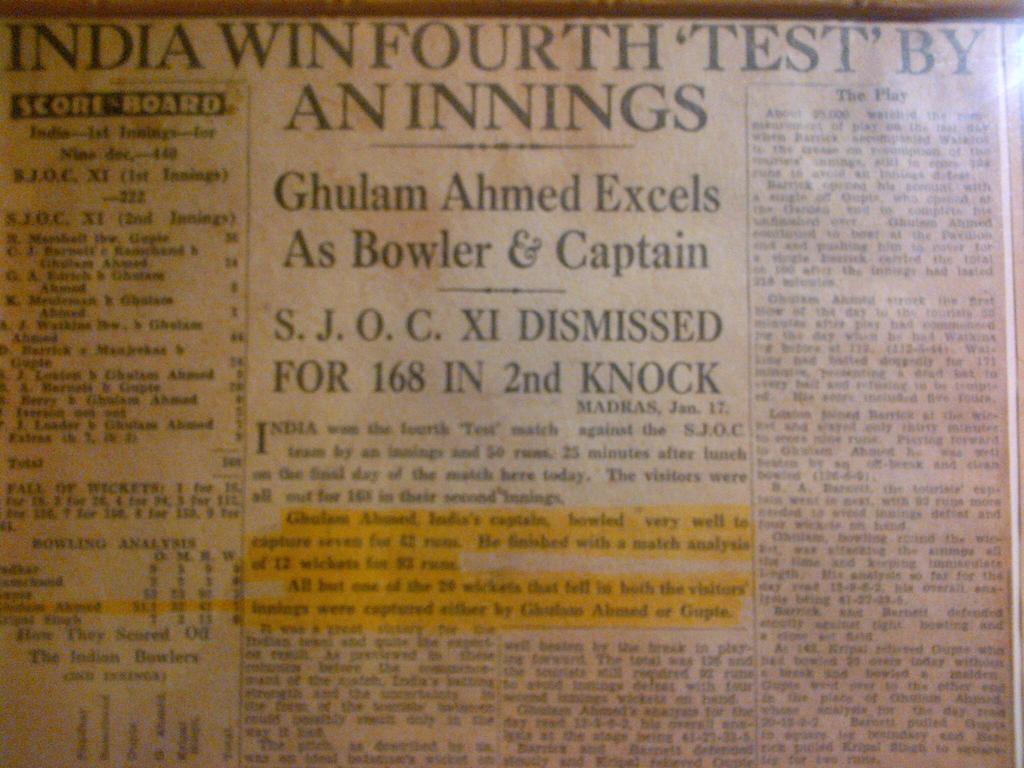
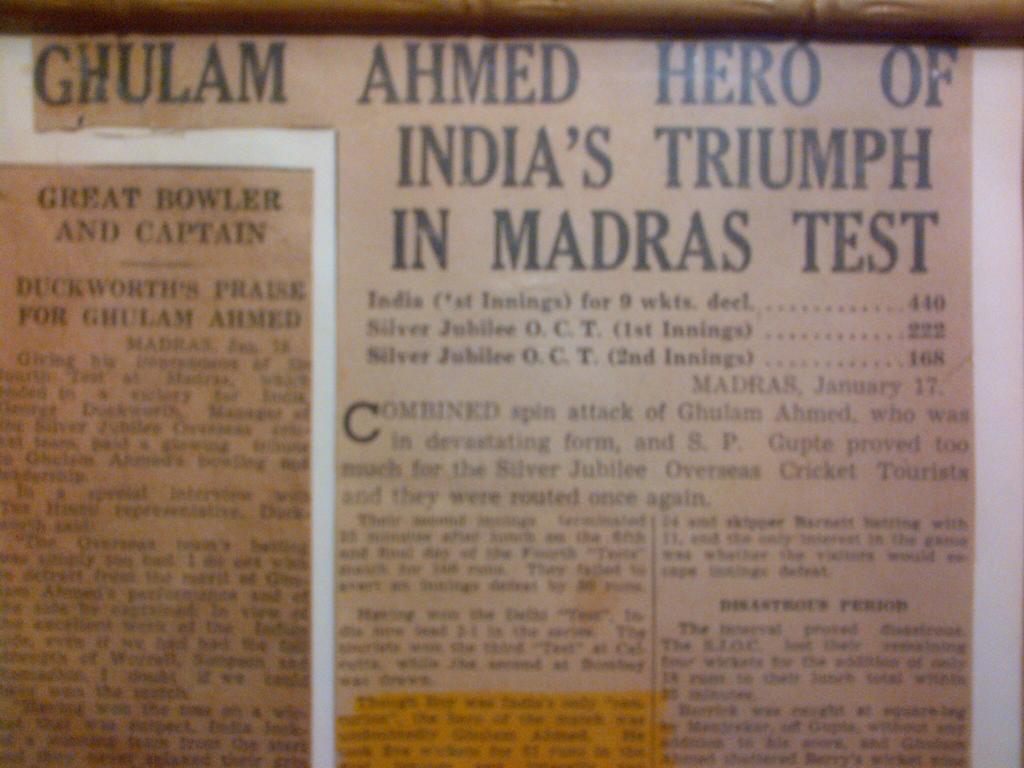
The contribution of Ghulam Ahmed to cricket in Hyderabad and India is extremely difficult to quantify in mere words.
He was a legendary player, inspirational leader, far thinking administrator and a very capable manager. Whichever role he played, he did so with a measure of excellence that was unmatchable. The Greek philosopher Aristotle once said: “Excellence is never an accident. It is always the result of high intention, sincere effort and intelligent execution. Choice, not chance, determines our destiny.” The words can be applied most aptly to the life and career of Ghulam Ahmed, one of Indian cricket’s most accomplished off spinners and administrators, whose 100th birth anniversary falls on 4th of July, 2022.
But any person who knows about the family from which Ghulam Ahmed emerged, will not be surprised by the fact that this gentleman cricketer achieved so much in his lifetime.
In a way, this illustrious family can be called the first family of Hyderabad sports. Others who are connected to the Razvi family are Pakistan’s former captain Asif Iqbal, India’s former captain Mohammed Azharuddin and tennis champion Sania Mirza. Since Sania’s husband is an ace Pakistan cricketer Shoaib Malik, he too is connected to this family by marriage. So that makes it two captains of India, two captains of Pakistan and a tennis Grand Slam winner in doubles and mixed doubles, all belonging to or connected to one family.
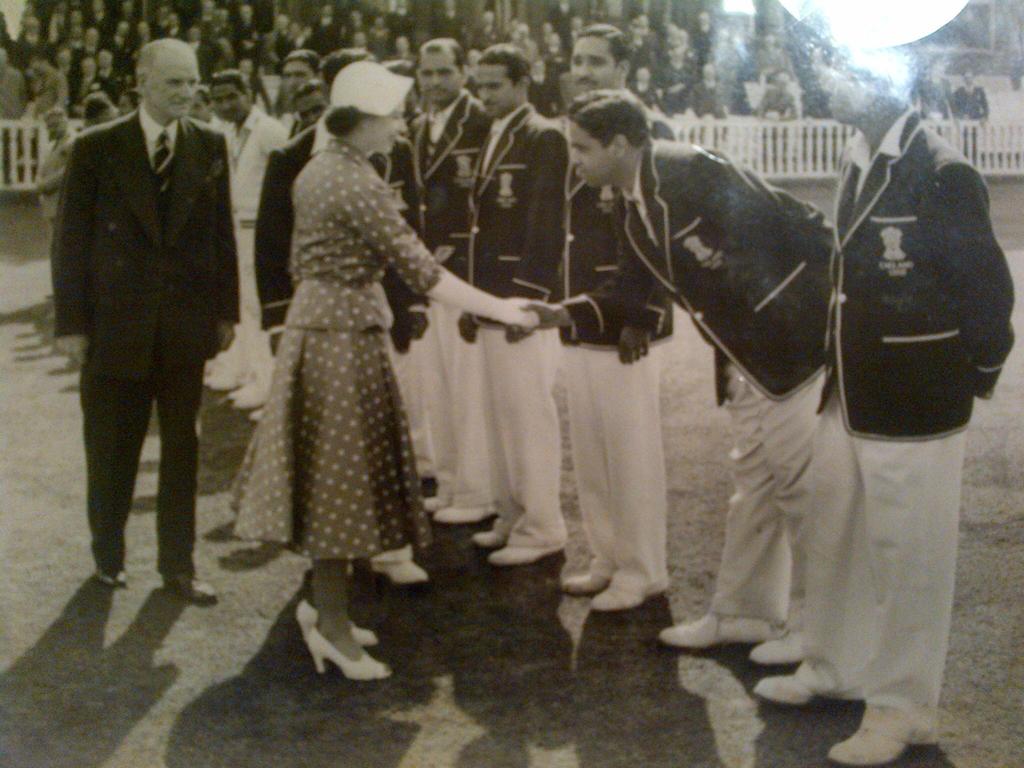
Ghulam Ahmed meets the queen
We all know about the famous off spinner’s exploits on the cricket field. But what was he like as a person? Was he a disciplinarian or was he indulgent? Was he a strict parent or a friendly person who could be addressed as Dad? After siasat.com spoke to several persons who knew him well, an interesting picture emerged.
Apparently Ghulam Ahmed was a person whose character and conduct were unblemished. It was his most outstanding trait. He was painstakingly honest and fair in his thought and judgement. If he made a decision, everyone would accept it because they knew his reputation for being impartial and equitable. As a parent he was not the old fashioned taskmaster. Instead he obtained the love, affection and friendship of all his children. As a person he stuck to his principles but did so with a measure of kindness and tact that earned the willing cooperation of his colleagues.
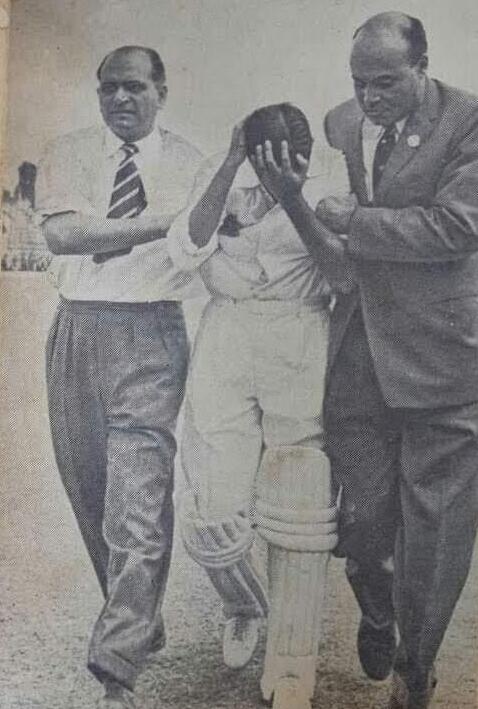
When Nari Contractor was injured
He hailed from a family wherein the male members had mostly served in the civil services. Ghulam Ahmed himself chose the same path. He was the chairman of the A.P. Public Service Commission and then also the Hyderabad Race Club. He handled sensitive issues with graceful prudence. He had a large group of friends and was well loved and respected by all. Often there would be large gatherings of his friends at his house. The men would play cards and sometimes go out on hunting trips which was a popular pastime among young men of those days.
Ghulam Ahmed studied at the famous Madrasa-E-Aliya and then at Nizam College. In his cricket career, his seniors were the well known brothers S.M. Hussain and S.M. Hadi. The latter was an all round sportsman who excelled at many sports while the former was a member of the Indian cricket team. When he was a raw beginner, he once sought permission to bowl against Hussain. After he was allowed to do so, he bowled the experienced batter with his very first delivery leaving Hussain highly impressed.
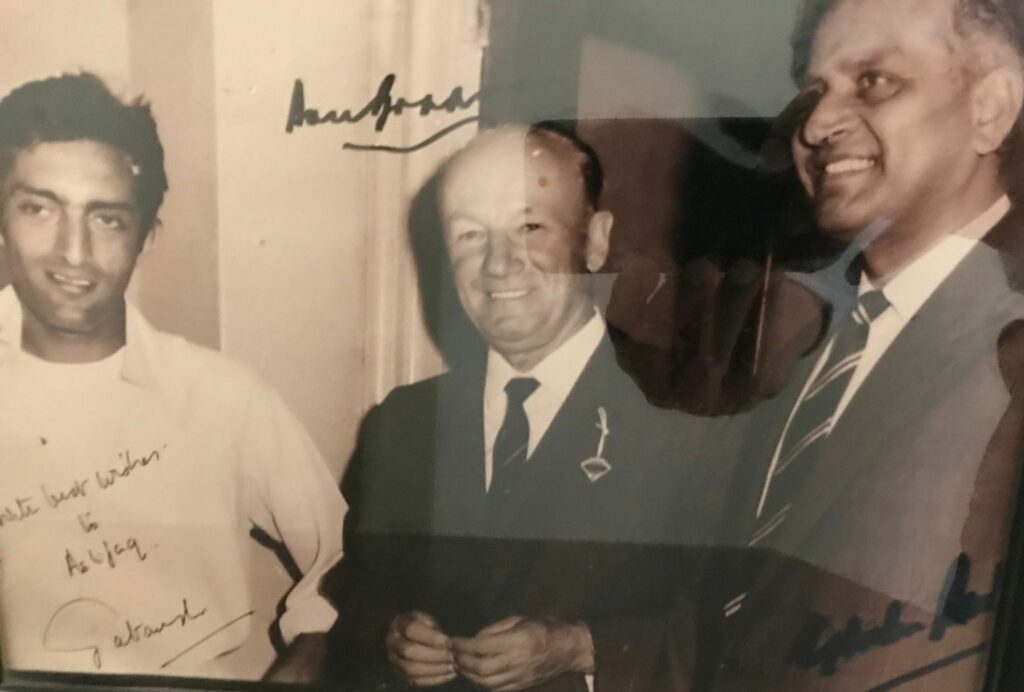
Later Ghulam Ahmed grew up and became a very renowned player himself. He grew to be very close to some of the most famous names of those days. They often dropped in at his house. Cricket administrators such as M.A. Chidambaram, M. Chinnaswamy and Kishan Rungta visited him regularly.
The legendary Lala Amarnath, Test cricketers C.D Gopinath, Hemu Adhikary and Polly Umrigar – all these people used to visit his house.
Later, Ghulam Ahmed also served as a cricket administrator both in Hyderabad as well as the BCCI.
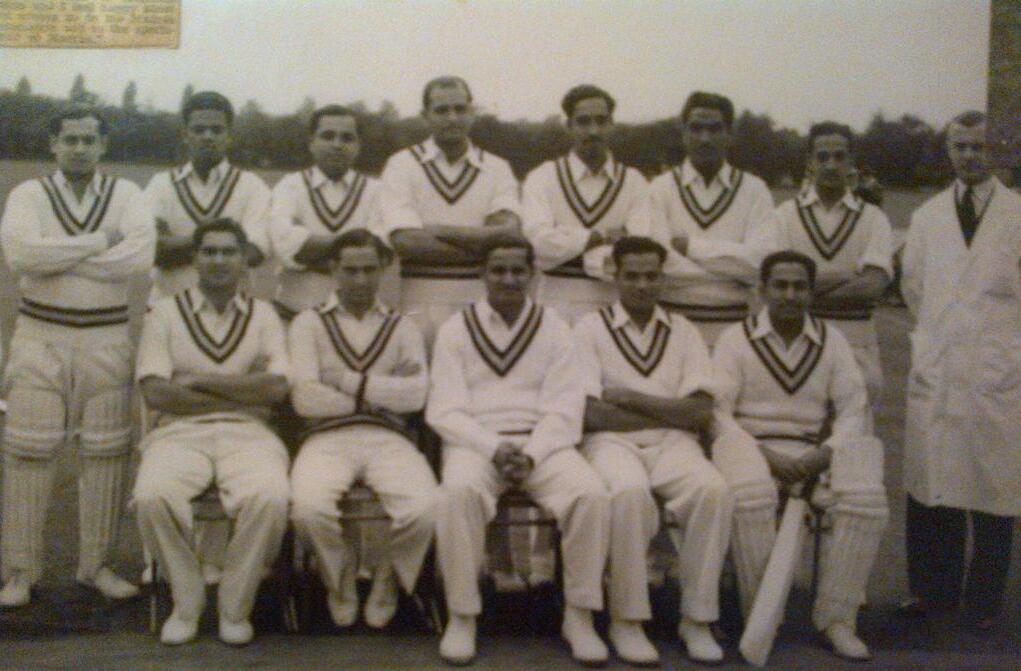
Besides serving as the Secretary and Vice President of the BCCI, he was the Chairman of the BCCI selection committee which selected the Indian team that won the World Cup in 1983. He was also given honorary membership of the prestigious Marylebone Cricket Club (MCC).
When Ghulam Ahmed passed away after a long and illustrious life, encomiums flowed in from all parts of the world.
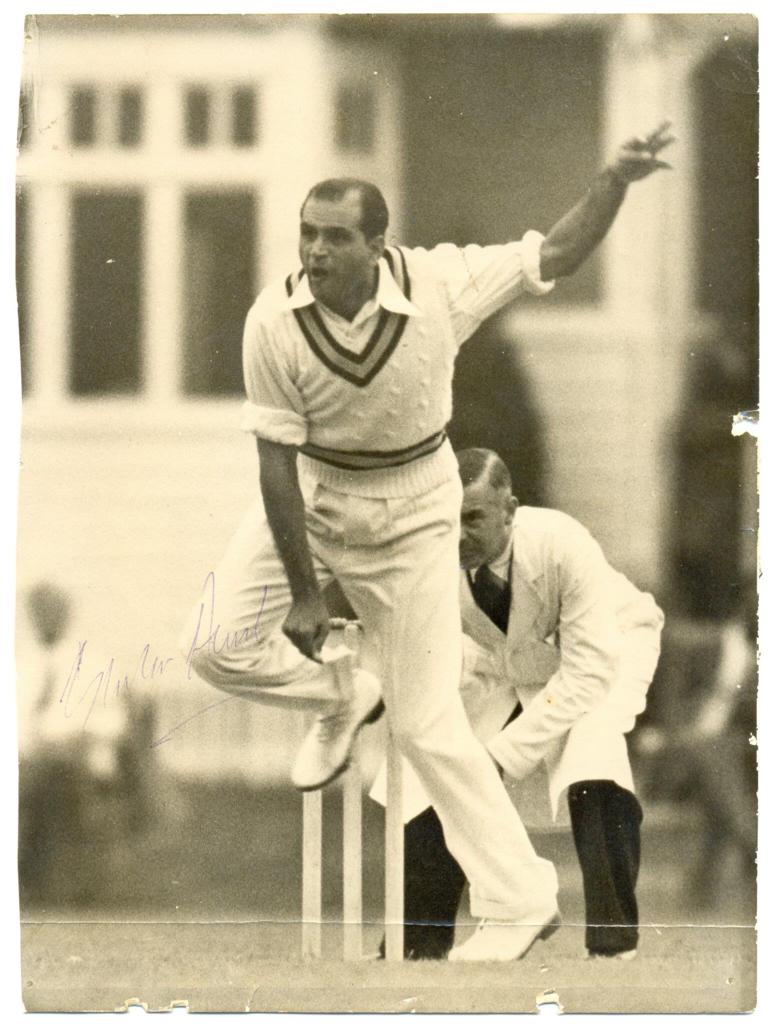
This is what The Independent (UK) wrote: “His smooth action enabled him to bowl for long spells while his clever flighting and variations of pace, length and line brought him comparisons with Jim Laker. He made his debut at 17 for Hyderabad but the second world war interrupted his further progress so that he did not appear in Test cricket until 1948 when he was chosen for the third Test against West Indies in Calcutta. He captained India against New Zealand in 1955 and also twice against the West Indies in 1958-59.”
In Shakespeare’s play Caesar, the character of Mark Antony says about his dear departed friend: “Here was a Caesar! When comes such another?” Meaning that Rome will probably never have another outstanding and upright personality like Caesar. The same can be said of Ghulam Ahmed. Like Caesar, Ghulam Ahmed too can never be replaced. His 100th birth anniversary is an occasion to remember with pride and affection, the excellent achievements of the man who was the first cricketer from Hyderabad to lead the nation in the international cricket arena.
source: http://www.siasat.com / The Siasat Daily / Home> News> Sports / by Abhijit Sen Gupta / July 04th, 2022