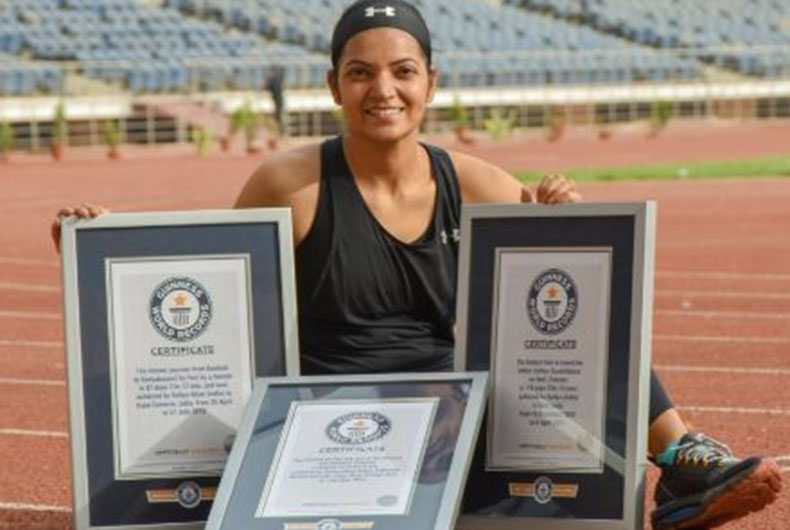
Calling it ‘The Tribute Run’, Sufiya Sufi is dedicating this challenge to the Bravehearts of the Indian Army.
Guinness record holder Sufiya takes on Siachen to Kargil run; to salute sacrifices of Indian Army.
New Delhi:
Indian Ultrarunner Sufiya Sufi ‘Runner’ is no stranger to challenges. After entering the Guinness Book of World Records for the third time earlier this year, Sufiya is now set for her next challenge — a run from Siachen Base to Kargil War Memorial.
Calling it ‘The Tribute Run’, she is dedicating this challenge to the Bravehearts of the Indian Army who have made unmatched sacrifices for our country. The 7-day-long expedition will begin at Siachen War Memorial on July 17 and conclude at Kargil War Memorial, on July 23, ahead of the 23rd Kargil Vijay Diwas.
During the 470 km long expedition, Sufiya will navigate through difficult terrain and hostile conditions. The run will begin at an altitude of 3400m, reaching up to 5359m at Khardung La with oxygen levels dropping 40 to 60 percent and temperature dipping much below zero degrees.
Commenting on her upcoming run, the Under Armour athlete said, “Ever since I have taken up the discipline, I have worked continuously towards pushing my limits and encouraging more people to take up running.
“My upcoming run is special and close to my heart and through this run, I want to pay tribute to the deeds of our soldiers and their selfless service to our nation.”
“As I prepare for this run, I have a great team, be it my coaches or Under Armour, who have supported and motivated me to take up every challenge including this expedition. I have put in the work training continuously for the past 6 months.”
In 2018, Sufiya took up running to break away from her aviation job, to relax and de-stress. Since then, she has entered the Guinness Book of records three times and has set several benchmarks for ultrarunning in India.
She holds the records for covering the Manali-Leh stretch on foot in the year 2022, the fastest time by a female to complete the Golden Quadrilateral in 2021, and the fastest woman to traverse from Kashmir to Kanyakumari in 2019. Sufiya has been an Under Armour Athlete since her first big achievement in 2020.
source: http://www.ummid.com / Ummid.com / Home> Life & Style / by IANS / June 28th, 2022
The photo-book ‘Har Shaam Shaheen Bagh’, comprising visual stories of resilience and resistance, isolates individuals from the image of the mass movement as was seen on prime-time news and press photographs.
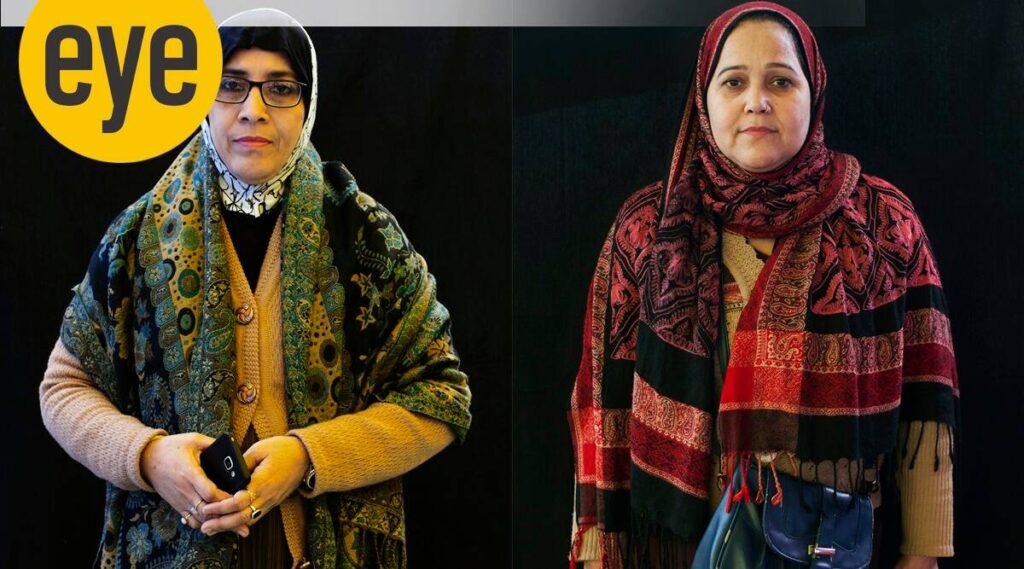
Portraits from Har Shaam Shaheen Bagh (Credit: Prarthna Singh)
Who is the perfect protester? We imagine raised fists, hurt faces, angry stances. We imagine climbing barricades, braving tear gas. If we go by this visual vocabulary, Har Shaam Shaheen Bagh (Every Evening Belongs to Shaheen Bagh) takes us by surprise. With over 150 portraits of non-violent protesters, the photo-book gently challenges the imagery of contemporary resistance movements.
Har Shaam Shaheen Bagh is Mumbai-based photographer Prarthna Singh’s first solo photo-book (she had earlier teamed up with the authors of Sar: The Essence of Indian Design in 2016). In December 2019, after the Delhi police reportedly assaulted students of Jamia Millia Islamia University who were challenging the Citizenship Amendment Act (CAA), a sit-in protest led by Muslim women started in Shaheen Bagh. Under a tent, with hundreds of women and children on any given day, the peaceful protest lasted for 100 days, until the pandemic struck.
Har Shaam Shaheen Bagh; By Prarthna Singh; 143 pages; Rs 3,300
Singh joined the anti-CAA protest in January 2020, spending most of her time on ground. Known for her women-centric narratives and portraiture work, she taps into her speciality to create portraits in an on-site photo studio, cobbled together with whatever was available at Shaheen Bagh. The result is these portraits of women, either looking directly at the camera or away, but always with a sense of pride. Poised and calm, the unnamed sitters indicate trust in the space, the purpose and the photographer.
Har Shaam Shaheen Bagh is Mumbai-based photographer Prarthna Singh’s first solo photo-book (she had earlier teamed up with the authors of Sar: The Essence of Indian Design in 2016).
Our collective memory of Shaheen Bagh, as is often the case with resistance movements, is of the masses, as seen on prime-time news and press photographs. Indeed, mass resistance movements give rise to the most recognisable images in the documented history of the world. Vulnerability and resilience coalesce into one defining moment — people standing up to power and confrontation, whether it’s one man blocking a row of tanks or a girl offering a flower to an armed soldier. Har Shaam Shaheen Bagh trades the monumental for the intimate, asking us to reconsider what we mean by “iconic”. It isolates individuals from the sea of faces, almost as if to say that a movement’s power lies not in numbers but in the will of its people.
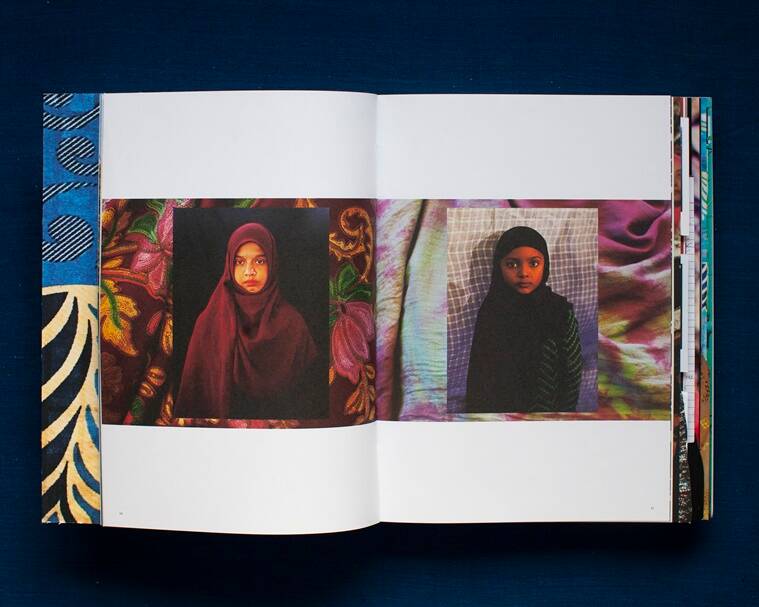
Har Shaam Shaheen Bagh takes the form of a personal diary or a scrapbook.
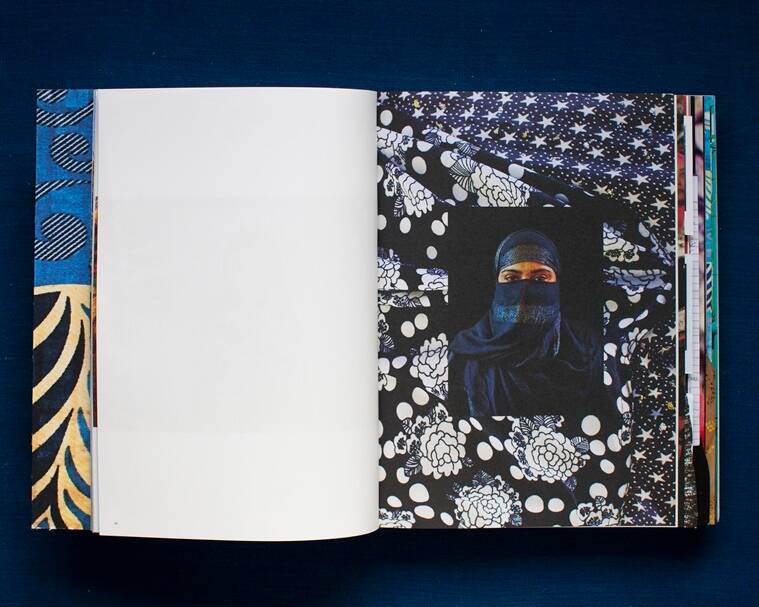
Har Shaam Shaheen Bagh takes the form of a personal diary or a scrapbook. It contains drawings, a painting by artist Sameer Kulavoor, whose company Bombay Duck Designs has also designed the book, verse and a letter from one of the protesters, available in Urdu, English and Hindi. Some pages are deliberately uneven, recalling the makeshift quality of the Shaheen Bagh tent. While the book’s cost makes it inaccessible to some socioeconomic groups, Singh has shared copies with the protesters. A portion of the book sales goes towards Jeevan Stambh, an NGO working on the rehabilitation of the victims of the Jahangirpuri demolition last month.
During the pandemic, the Delhi police cleared the Shaheen Bagh site, painting over its graffiti and dismantling its art installations. In a country that is determined to erase and rewrite its history, one could say that a photo-book on a citizen protest is as good as an act of protest itself.
source: http://www.indianexpress.com / The Indian Express / Home> Books & Literature / by Benita Fernando / New Delhi – May 21st, 2022
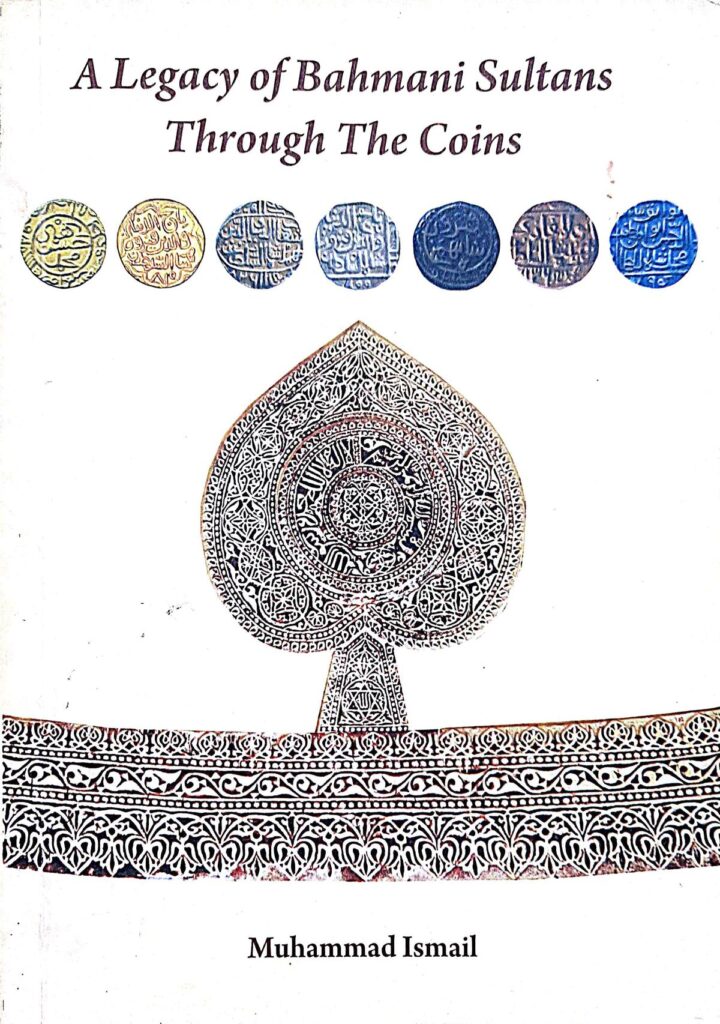
Cover page of the book ‘A Legacy of Bahmani Sultans through Coins’ published by the Gulbarga Bahmani Numismatics Research and Educational Trust. | Photo Credit: ARUN KULKARNI
Mohammad Ismail has got a rare treasure of coins dating back to Bahmani Sultans from 14th to 16th Century
The Gulbarga Bahmani Numismatics Research and Educational Trust recently published a book titled ‘A Legacy of Bahmani Sultans through coins’ authored by Numismatist Mohammad Ismail in which he depicts the numismatic journey of Bahmani Sultans through his collections.
The book traces the journey of coins belonging to all the 18 Bahmani Sultans starting from Alauddin Hasan Bahman Shah (1347-58), till the last Sultan – Kalimullah Shah (1526-1538). Mr. Ismail has meticulously worked, richly illustrated, about each coin issued during Bahmani Sultans period.
Mr. Ismail has got a rare treasure of antique coinage, belonging to Bahmani Sultans from 14th Century to 16th Century. The numismatist has more than 2,500 coins in his collection of various rulers, dynasties and kingdoms. Among his treasury are also coins dating back to 1,600 years ago.
The numismatist also organises a campaign “Save Coin Save Heritage.” The objective of this campaign is to spread awareness about ancient coins at schools and to take forward the legacy to younger generations.
Speaking to The Hindu, the numismatist explained the legacy of Bahmani Sultans and displayed a collection of nearly 80 copper coins issued in one year period between 1378-1379, and said that all the four Sultans including Dawood Shah-I, Muhammad Shah-II, Ghiyasuddin Tahmathan Shah, Shamshuddin Dawood Shah–II (4th, 5th, 6th and 7th sultans, respectively), have ruled for less than a year. His collection has got nearly 500 coins issued during Tajuddin Firoz Shah (8th Bahmani sultan), followed by 400 coins of Muhammad Shah-I (the second Bahmani sultan), and 300 coins of Kalimullah Shah (18th Bahmani sultan) Period.
According to Mr. Ismail, the study of coins gives insights into history as no other source does. The enthusiast numismatist tries to enhance his collection by getting in touch with collectors across India. His collection includes coins of various shapes, sizes and weights issued during different reigns made up of gold, silver, bronze and copper, some very rare.
When asked about the estimated value of coins in his collection, Mr. Ismail said that the value of each coin varied depending on its age, rarity and material. “But for me, as a numismatist, it is the coin’s age and rarity which matters more than its price,” he said.
Some of the rarest coins in his collections are of Tahmatun Shah, Dawood Shah, Ahmed Shah III, Muhammad Shah IV and Mujahidin Shah. Mr. Ismail’s rare collection includes 10 copper and one gold and silver coin minted during the Tahmatan Shah period. It took him eight years to find those coins. His collection also includes the rare gold and silver coins of Ahmed Shah II and Mujahidin Shah.
He also has coin collections belonging to Chalukyas, Kakatyas, Rashtrakutas, and the Vijayanagara Kingdom. Mr. Ismail wants to bring out a catalogue of these collections too.
source: http://www.thehindu.com / The Hindu / Home> News> National> Karnataka / by Praveen B Para / Kalaburagi – July 03rd, 2022
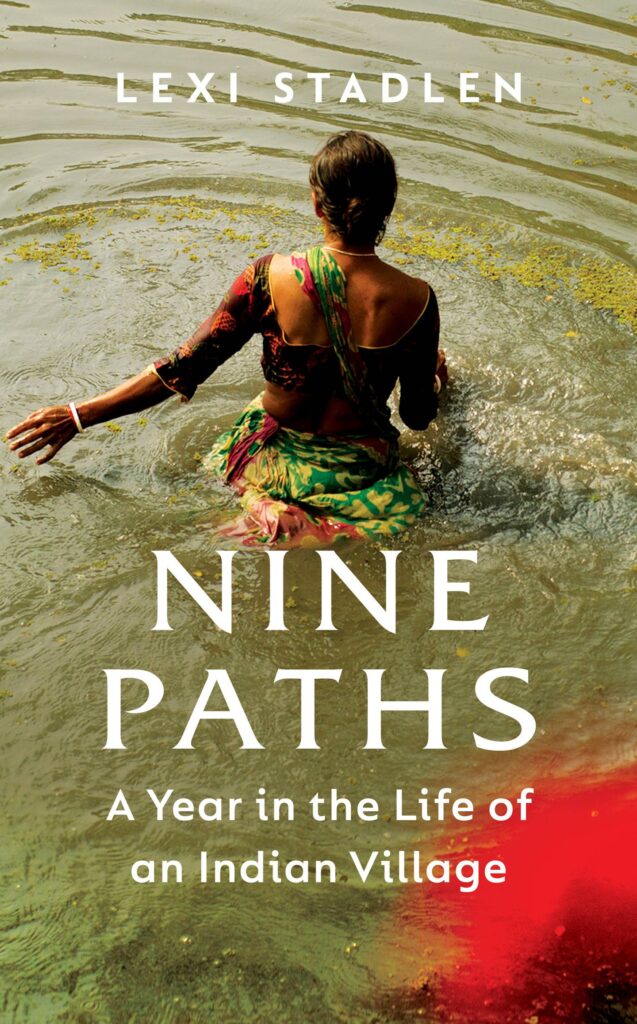
Lexi Stadlen, an author in Dubai, moved to one of ‘the last splutters of land’ for her debut non-fiction book ‘Nine Paths’.
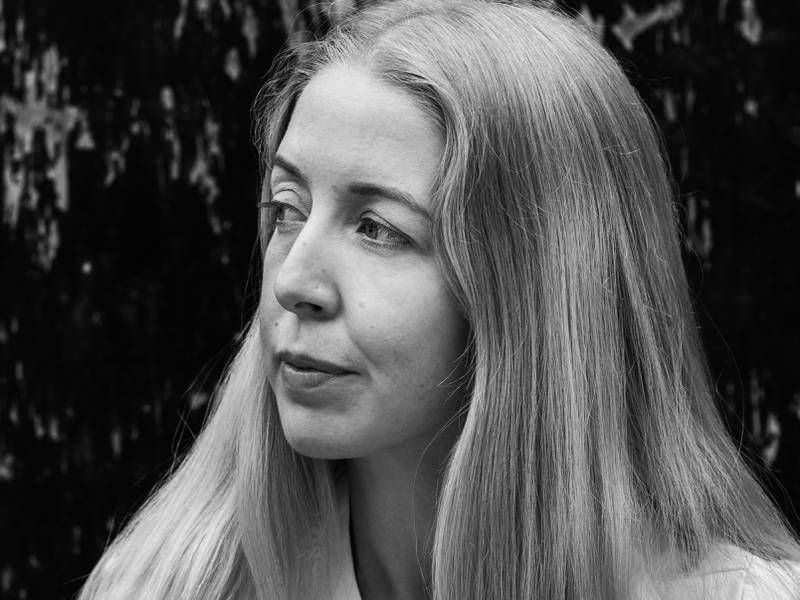
British author and anthropologist Lexi Stadlen has released her first non-fiction book. Photo: Penguin Random House UK
Anthropologists are caretakers of stories,” writes Lexi Stadlen at the beginning of her insightful and absorbing first book Nine Paths.
It’s a memorable description and one that perfectly sums up Stadlen, an anthropologist and ethnographer who has gathered and collated a rich variety of stories from nine Muslim women.
UK-born Stadlen spent 16 months living in a Muslim village on a remote island, one of “the last splutters of land” at the eastern edge of India.
There, speaking the inhabitants’ mother language of Bangla, she visited more than 100 households.
Gradually, she homed in on, and won the trust of, nine women who admitted her into their private worlds and allowed her to record their histories, chart their daily experiences, and relay their hopes and fears for the future.
“These women showed me such beautiful hospitality that was rooted in their Islamic faith,” Stadlen tells The National.
Some of the women were more forthcoming than others at the outset.
“One of them, Kalima, marched up to me almost immediately and declared herself my ‘kaki’ or aunty, so I very quickly became an adopted part of her family,” says Stadlen.
“That said, like all relationships, it took a lot of time and patience on both sides to build up a sense of intimacy between us, though their curiosity outweighed any mistrust.”
Along with Kalima, Stadlen got to know indomitable matriarch Maryam, forthright Tabina and glamorous Sara — one of the few who has managed to leave the island, in her case to study in Rajasthan.
“Theirs are houses that don’t like to keep secrets,” Stadlen reveals in the book.
Since her research was focused on women’s intimate lives, it was important for her that they became comfortable enough to open up to her.
Some shared their secrets, or dispelled and confirmed rumours that surrounded them.
Stadlen discovered that all had been the subject of gossip at some point, perhaps none more so than Roshini, who was treated as a pariah with a tarnished reputation for defying convention and marrying out of love.
‘Nine Paths: A Year in the Life of an Indian Village’ by Lexi Stadlen. Photo: Penguin Random House UK
“For some,” Stadlen says, “I was an arbitrator in disagreements, for others a confidante. In two cases, the rumours about them were so unspeakable, we simply could not discuss them.”
Two women in particular, Rani and Aliya, loom large in the book. Unsurprisingly, it was those women who Stadlen was most drawn towards.
“Rani was the one I felt most protective over,” she explains. “She was at the point in a young woman’s life when so much is happening, her body changing, her mind struggling to keep up.
“She had passions and dreams that were so extraordinary for a young Muslim woman in her community. She loved athletics and all she wanted was to become a police officer.
“Aliya was the woman who I felt nothing but admiration for. Her story was heartbreaking.
“Her family had suffered a terrible tragedy that is revealed towards the end of the book, and she had lost everything. Yet with six children and a husband to support, she never complained, worked harder than anyone else in the village and was sought out by all for her wise counsel.”
Stadlen observed pairings and partings at weddings and funerals. She followed her subjects to tea shops, matchmaking sessions, madrasa meetings and into their homes.
She heard about women’s lives impaired by poor living conditions and venal authorities, or destabilised by jinni (a spirit in Arab mythology), monsoons and violent husbands.
“They were hungry for so much more,” she says. “They wanted the opportunities, the infrastructure, the equality that they’ve been promised for so long but that is sadly yet to materialise.”
In some ways, Stadlen was surprised by what she found.
“As a rural, socially conservative Muslim community, I had naively assumed that women would not have much chance to engage with local politics. I could not have been more wrong,” she reveals.
“The women were often the ones who visited government offices on behalf of their families, and while they let the men think that they dictated which political party a household should vote for, it was the matriarchs who were really in charge behind the scenes, giving instructions to their children, wooing politicians and building political alliances with their neighbours.”
Stadlen has gone on to swap one Muslim culture for another. Last September she moved to Dubai.
“I love the beaches and the area around Al Quoz, and there is an incredible yoga community here,” she says.
She has taken with her fond memories of her time in India, and a deeper understanding of humanity.
“One thing I learned will stay with me always,” she says. “That women’s experiences are, at their heart, so similar, no matter where they live and what their circumstances.”
source: http://www.thenationalnews.com / The National / Home> Arts & Culture> Books / by Malcolm Forbes / June 07th, 2022
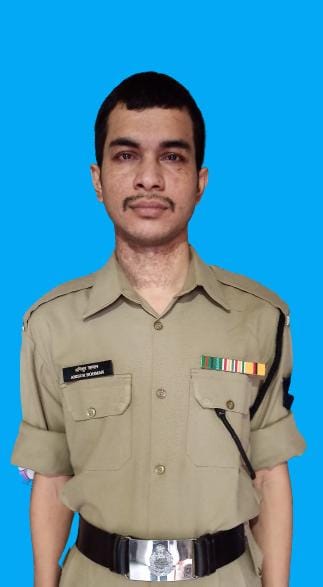
Constable Anisur Rehman of 41 Bn of FTR HQ BSF Guwahati received Police Medal for Gallantry on the occasion of #75thIndependenceDay for showing utmost bravery at Indo- BD International border for saving the life of Ambush cum patrolling party.
Otta Chora (Same Blood) by Shuhaib Alanallur, a student of Madin Academy in Malappuram, is being quoted by speakers in their programmes all across Malabar.
Kozhikode :
A poem that celebrates the warmth of the relationship between Hindu and Muslim families, penned by an upcoming writer, has become an instant hit after it was published in a magazine recently. Otta Chora (Same Blood) by Shuhaib Alanallur, a student of Madin Academy in Malappuram, is being quoted by speakers in their programmes all across Malabar.
In the poem, a Hindu woman, Narayani, finds solace in Nabeesu’s Islamic prayers while enduring the labour pain, and the ‘Mollakka’ (Muslim cleric) recites a verse from Quran to help her husband Velu quit drinking. Finally, Velu refuses to take his usual quota of toddy because the ‘Mollakka’ had donated his blood when he got injured after falling in a gutter. “I will not pollute Mollakka’s blood that runs in my blood by mixing it with toddy,” declares Velu at the end of the poem.
“Such relationships were quite common in our country-sides few decades ago. We are celebrating the bonding because it is fast fading away from our midst,” said the poet.
“The poem was written during the ‘Sahithyolsavam’ conducted by the Sunni Students Federation last year,” he said. It was the patronage given by Syed Ibrahimul Khaeel Al Bukhari Thangal, chairman of the Madin Academy, that shaped the writer in Shuhaib.
“Muslim Youth League leader Shibu Meeran quoted my poem in an impassioned speech that made it a discussion point on the social media,” Shihaib said. It was the fond memories that he spent with his Hindu friends in Alanallur near Mannarkkad that inspired Shuhaib to write the poem.
“There are people who argue that such relationships are normal in our midst and they need not be highlighted. But I believe that such voices should be amplified at a time when dark forces are lurking in our society,” said Basheer Faizy Deshamangalam, Islamic scholar and the leader of Samastha Kerala Sunni Students Federation.
“Narayani didn’t refuse to take the Islamic blessing saying that it is from another faith nor did Velu say no to verses from Quran. Such innocent virtues should be underlined when there are deliberate attempts to divide us,” he said.
source: http://www.newindianexpress.com / The New Indian Express / Home> Good News / by MP Prashantah, Express News Service / June 07th, 2022
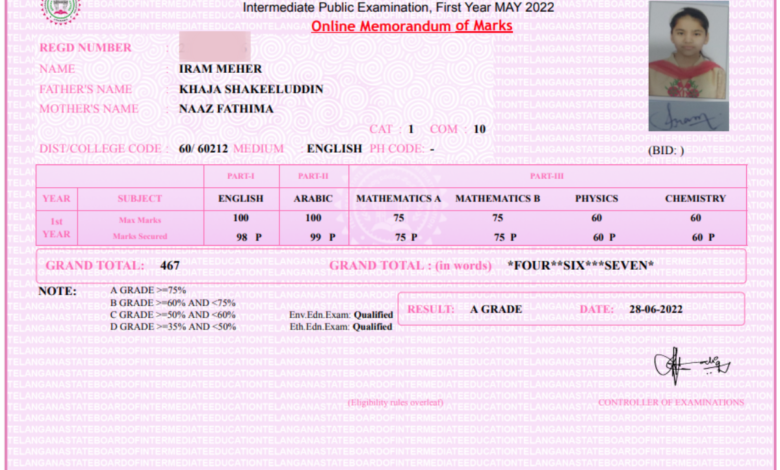
Iram Meher, is a first-year intermediate student who topped in the state by scoring all A’s in the subjects of Mathematics, Physics, and Chemistry.
Iram Meher Khaja Sahkeeluddin is a student at the St. Joseph’s Junior College in Hyderabad’s Tolichowki Branch. Meher’s first-year tests resulted in a 467 out of 470.
She received 75 out of 75 in maths scoring an A grade and the same in maths scoring a B, 60 out of 60 in physics, the same in chemistry, and 98 and 99 out of 100 in English and Arabic languages.
The TSBIE Intermediate First and Second Year Results 2022 were released at a press conference hosted by the Telangana State Education Board at 11 AM, on Tuesday. 63.32 percent of the overall number of students who took the TS Inter examinations in 2022 passed and were promoted from the first year, while 67.16 percent passed the second year.
Girls once again outperformed males in the Telangana Intermediate examinations, according to the board’s website, tsbie.cgg.gov.in, where students can also view their scorecards and TSBIE IPE scores memo.
source: http://www.siasat.com / The Siasat Daily / Home> News> Telangana / by News Desk / posted by Marziya Sharif / June 30th, 2022
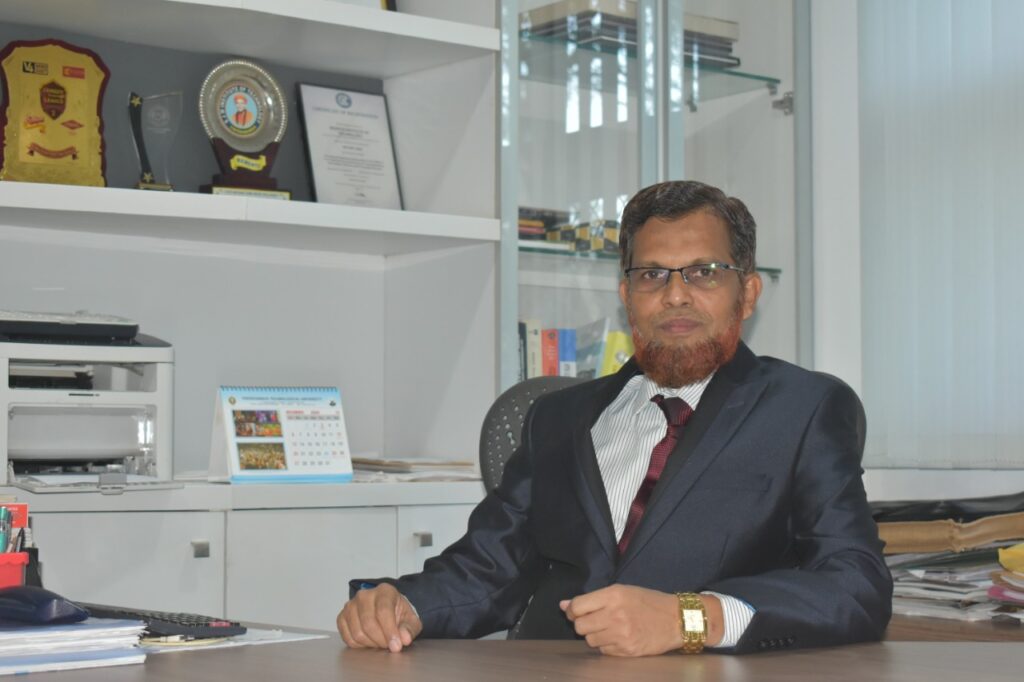
Dr. SI Manjur Basha, Principal of Bearys Institute of Technology, Mangalore
Dr. SI Manjur Basha, Principal of Bearys Institute of Technology, Mangalore, was on Wednesday nomiated as the member of Academic Senate of Visvesvaraya Technological University Belgavi by Governor of Karnataka.
The governor of Karnataka and Honorable Vice-chancellor of the University have nominated Dr. SI Manjur Basha as the member of the Academic Senate, a release from the college added.
This is the 8th academic senate of VTU Belgavi.
The management, faculty and staff of Bearys Group of Institutions congratulated him on his feat.
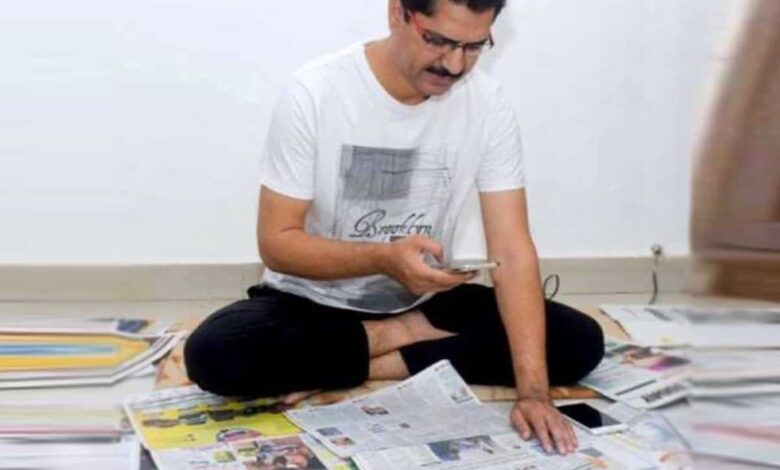
At a modest house in South Delhi’s leafy Sarita Vihar colony, a tall, handsome man woke up early in the morning to read a bunch of newspapers religiously. He didn’t only read whatever “readable” news and views a dozen newspapers in Hindi, Urdu and English carried, but also shared them with the wider world. For five years–ceaselessly, tirelessly.
His huge circle of friends, from Birmingham to Barabanki, Miami to Mumbai, Seattle to Singapore devoured the selected news and views this selfless, soft spoken news warrior shared with such dedication and devotion. I don’t know any other person on the planet doing this with such consistency for five long years. Yes, some of us news premi pick up news randomly and share them with a few friends.
Shafique Ul Hasan, a senior journalist-turned-advertising professional, completed five years of sharing the news clippings on June 24 this year. Among hundreds of friends who value his work and have congratulated Shafique Bhai—that is how most of us address him—on reaching this milestone include filmmaker Mahesh Bhatt, writer-politician Shashi Tharoor, former bureaucrat and ex-VC of Jamia Millia Islamia Najeeb Jung. They all underlined the importance of Shafique Bhai’s work—making available some of the important news and opinion pieces at one place. In our crazily busy schedule, many of us have forgotten what and how to read news. In the age of social media explosion, it has become very important to decide what news and views one should consume. At a time when fake news and viral videos are shared with an ulterior motive, Shafique Ul Hasan’s work assumes significance.
It all started with the news of Hafiz Junaid’s lynching. The young, kurta-pajama clad maulvi was returning home after shopping for Eid when a group of boys accosted him in train, beat him up so badly that he succumbed to injuries. The news shocked us. Most of us silently mourned the loss of an innocent’s life due to demonization of Muslims. Had fellow passengers intervened, young Junaid’s life could have been saved. But the hate-mongering has made us so insensitive and numb that we don’t react till the trouble reaches our own doorsteps. “This is not our problem,” we dismiss and move on. We forget the episode till a fresh case of mob violence hits the headlines.
Shafique Bhai reacted to the lynching of young Junaid in a different way. It affected him so deeply and intensely that he decided to do something beyond mourning his death silently. He made clippings of the horrific news and shared them with some of his friends on WhatsApp. And then he thought more. “What can I do to stop this madness? What power do I possess to make an intervention?”, he asked himself.
Most of us don’t realise the hidden power we possess. The strength lies in communicating the pain too. If we share some genuine, truthful news, this too is a service. Taking out morchas and petitioning authorities are not the only forms of protest. A protest is registered if news about an unkind, unjust thing or event is shared with a purpose to create awareness and help form an informed opinion. Shafique Ul Hasan decided to share the news clips from newspapers in the morning daily.
He made it part of his daily routine. So, he didn’t miss sharing the clippings even if he was travelling, in India or abroad, attending wedding celebrations or birth parties, vacationing in Europe or in the Middle East. “Once during our holiday in Europe I ensured that I woke up in the morning according to Indian time and made clippings from digital editions of the newspapers while my wife was fast asleep. Not many of my friends realized that they had shared those clippings sitting in Paris or London,” he told me recently.
Significantly, Shafique Bhai’s services have been acknowledged and appreciated widely. Many individuals and organizations have feted him for this yeomen service. Among those who have awarded him for this service include Sirajuddin Qureishi of New Delhi-based India Islamic Cultural Centre (IICC), several NGOs and organisers of a programme celebrating 200 years of Urdu Journalism recently in New Delhi.
Meanwhile, sticking to a fixed schedule for long and sitting for a few hours without a break daily began to take a toll. Shafiqul Hassan’s health got affected. His BP shot up and had to be hospitalized before his condition could have worsened. He didn’t stop from doing what he loved to do even while he recuperated in a hospital. Despite protests from his lovely family, he didn’t take a break. He resolved to complete at least five years of sharing the news and views clippings. He fulfilled the promise he had made to himself.
Meanwhile, a few well-meaning friends advised him to monetize it. Since many websites and other news outlets charge money for their products, it would have been quite fair had Shafiqul Hassan too put a price to his services. “No. I don’t want to make any money out of it. It will be free of cost till whatever time I do it,” he told me.
But he had to take a break. Many of us told Shafique Bhai to take a long break after completing five years of this selfless service. He deserves to pay attention to his health, his business and spend more quality time with family. He has announced that much-deserved break. I suggest he finds a mechanism through which he resumes this service in a more organized way. He needs to get a team of computer savvy individuals who can work with him. Rather than doing everything himself, he should delegate work to subordinates. He should now work more as a supervisor. But to create such a team, some funds will be needed. Shafique Bhai is a self-respecting man. He will never seek charity or any other funds to set up a professional team for news/views gathering and dissemination. It is the duty of all concerned citizens to ensure that such a corpus is created and this work resumes.
Mohammed Wajihuddin is a senior journalist, now associated with the Times of India, Mumbai. His write-ups are popular with wide range of readers.
source: http://www.siasat.com / The Siasat Daily / Home> Opinion / by Mohammed Wajihuddin / June 27th, 2022
Employment opportunities have dipped down drastically but students of Fullstack Academy have been placed in esteemed companies with jobs fetching as high as RS.7 lac per annum.
Fullstack Academy is an institute that imparts the right courses in software technology that are always in demand in the software industry.
In the words of the founder of Fullstack Academy Md Aijaz, “There is a huge gap between the IT industry and the academia. There are a lot of opportunities to build successful careers but the newly graduated youth lacked the necessary skills. We wanted to fill that gap, hence we started our academy.”
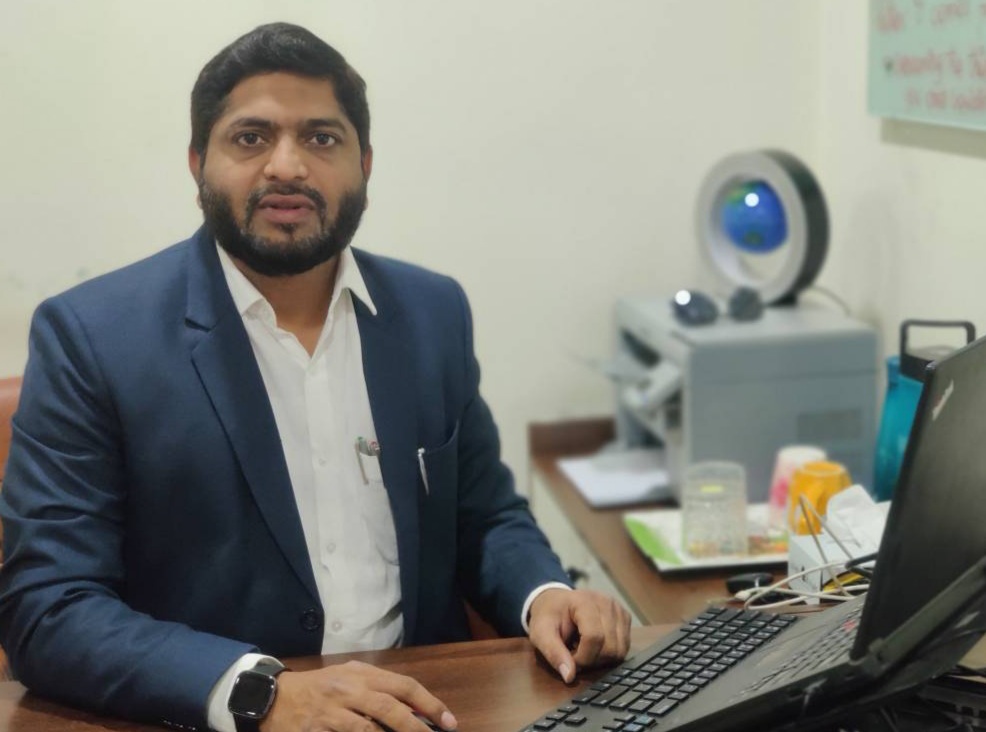
Md Aijaz , the founder of Fullstack Academy.
“Hardly 1% of the youth were employed in the top companies like cognizant, Microsoft, Mindtree, Infosys, HCL, Accenture, Skuad, TATA consultancy services and so on, explained Aijaz Ahmed, while talking to Muslim Mirror “More so in Hyderabad despite the fact that there are so many top multi nationals here. Some even have their Head Office in Hyderabad. But still we could see that there were no takers in our own city”, he added.
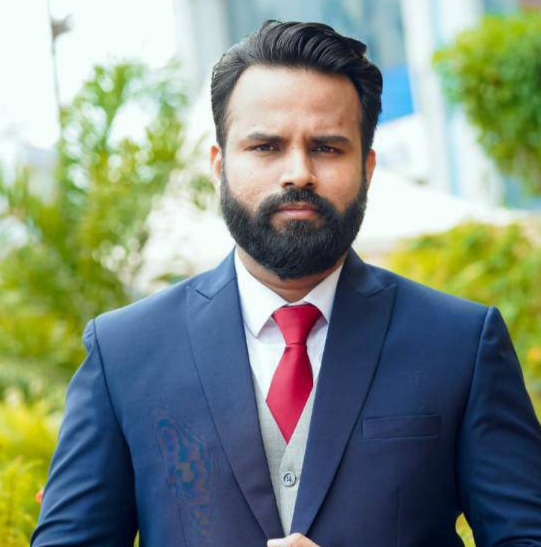
Abu Bakar , co-founder of Fullstack Academy, also owns a software company.
So, in order to ensure that the youth from the Muslim community are not left out, Mohammad Aijaz and Abu Bakar Aijaz started the Fullstack Academy.
The academy has been founded in the year 2019 by industry veterans who have more than 25 years of experience in Microsoft and Tech Mahindra. They wanted to ensure that the youth of the community are not lagging behind in terms of skills required in communication, spoken English, software skills. Students coming out of college lack the qualification or skills needed to crack the type of jobs that are in demand and land up in mediocre jobs.
But unfortunately within months of initiating this dream venture, the lockdown was announced. But instead of being disheartened by this, the duo went ahead with their plan and announced online courses. Interested youth began enrolling for the online classes and the academy functioned smoothly.
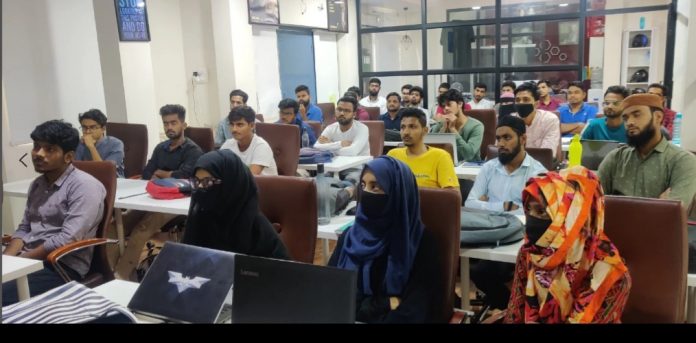
Today they have gone offline and admissions are on filling every batch. So far they have trained 800 Youth and placed 55% in top companies. Some have gone abroad to pursue higher studies armed with the courses from FSA with which they get good paying jobs while they continue their studies.
Most of the courses students going abroad do courses in programming and development area. These courses are in demand globally.
“Web application is the latest technology and in high demand with every company wanting to develop web applications. Fullstack Academy specializes in mobile app technology the resource of which is not commonly available” explained Mohammed Aijaz.
Another salient feature of this academy is that the trainers are working professionals who come and demonstrate the real time scenarios. This helps the students while applying for jobs. Every course offered by the academy has different professionals already employed in top positions in world class companies.
The courses offered by the Full Stack Academy that are the need of the present times for software industries can be broadly categorized are programming, MERN, cloud computing, Data science – predictive business analytics, Android App development, Amazon web services, UI/UX designing courses, Selenium Automation testing and many more.
Khaja Wasiq Mohiuddin, a student who passed out in December 2021 shared that he has been employed in Skuad with a salary of 7 lacs per annum, the highest so far among the students placed in jobs. “I took the training in MERN from Full Stack Academy and I had not even completed the course when I was interviewed and was selected by Skuad. After completion I joined them as developer. I received full support from the trainers and today I have made my parents happy with my achievement” said Khaja.
The students are not taught just the professional courses, Aijaz and Abu Bakar ensure that they are groomed for interviews and also learn to communicate in English which is another weak area of most of the students from the community.
Another student Ayesha Moiz who has been employed as Assistant system engineer at Infosys said, “ I received support from Fullstack academy not only when I was doing the course but even now when I am employed. I am in a probation period here and whenever I am stuck with some programming, I call up my Aijaz sir and seek his support to trouble shoot the problem. I am very happy with the training and assistance in job placement and I highly recommend Fullstack Academy, she told Muslim Mirror.
The students from economically poor backgrounds are provided with an opportunity to apply for scholarship from IMRC (Indian Muslim Relief and charities). The Full Stack Academy (FSA) facilitates a written exam for the applicants to qualify for scholarship from IMRC. After the written tests there is an interview after which qualifying students are assisted with scholarship wherein they pay just 25% of the fees while the IMRC pays 75% of the fees.
Students enroll here not just from Hyderabad but also from different states of India.
“Every time one of our students gets a placement in a coveted company, it is like we have climbed one notch of the high ladder of success. The success of our students is like our own success, it is as if we have bagged the job. Each success story fills our hearts with happiness and makes us want to better ourselves” shared Md Aijaz.
source: http://www.muslimmirror.com / Muslim Mirror / Home> Education> Positive Story / by Nikhat Fatima, Muslim Mirror / June 24th, 2022