Tag Archives: Muslims of Maharashtra

Portrait of a journalist as a national icon

Mumbai, MAHARASHTRA :

Inquilab and Mid-Day founder Abdul Hamid Ansari is an inspiration not just for journalists but millions of youngsters … A special report by Siraj Ali Quadri.

Indian journalist and Muslim nationalist Abdul Hamid Ansari founded Inquilab, an Urdu daily in Mumbai in l937. The newspaper soon became a landmark in Urdu journalism which caught the attention of Muhammad Ali Jinnah, the founder of Pakistan. But when Jinnah asked Ansari to come to Karachi to publish the newspaper in the new country, Ansari said that he would prefer to live in India like the many million Muslims who would rather stay in the country than join Jinnah. Those who joined Jinnah undoubtedly left everything behind. Some flourished while others got established. But that’s another story, which has never ended since l947.
Today’s story is about the veteran journalist, publisher and businessman Khalid A.H. Ansari, son of Abdul Hameed. After passing out from St. Xavier’s in Mumbai, Khalid did his master’s at Stanford University in the US.

Khalid returned to Mumbai to establish Sportsweek, a weekly sports magazine, which became a huge success soon after its launch. The magazine’s immediate success can be attributed to the fact that its founder was himself an excellent sportsman and did a great job with the magazine, in addition to his father’s paper Inquilab.

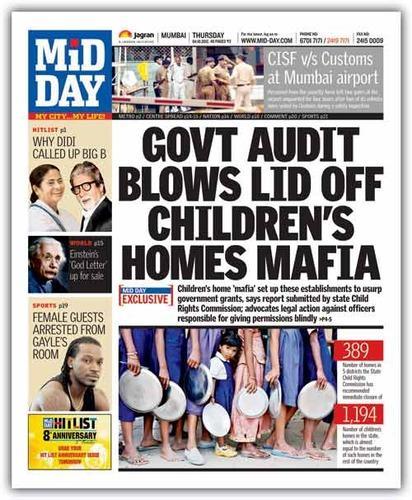
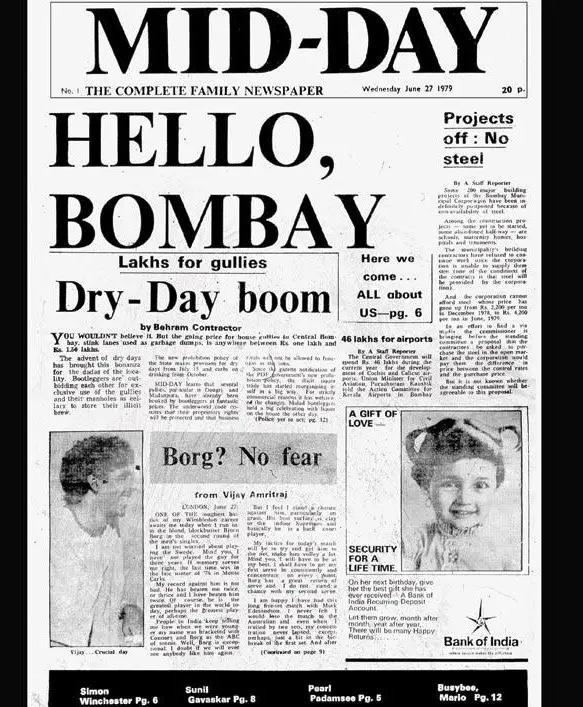
Meanwhile, the idea came to launch India’s first daily tabloid, Mid-Day, which he modelled in many ways after the English tabloids from Fleet Street. During the planning phase of their new venture, he spent hours discussing it with staff and mulled over its format to ensure success, especially since there were already two eveningers in Mumbai, one by The Times of India and the other by the Indian Express. Both suffered from a lack of innovation to attract large numbers of readers. So when Mid-Day appeared with a new face and content, the two old ones just collapsed. Although the ToI eveninger protested the pace of time for a while, it eventually perished as it had already become obsolete.

Mid-Day became a resounding success, with many comparing it to the British Daily Mirror and Daily Mail. However, being an Indian tabloid, it was much quieter and a whole lot more civilized, without the British fondness for nudity and sex, and nonsensical stories of stupidity.

Khalid was helped by his wife, Rukaya. She was very active on the administrative side and contributed to the editorial content and layout, which helped the paper sustain itself in the demanding market of Mumbai. She knew what was going on in the office and in the newspaper that was fast becoming India’s flagship eveninger.
Meanwhile, Khalid accepted an offer to become editor-in-chief of the Dubai-based Khaleej Times, and handed over the paper to his son, Tariq. After a few years in Dubai, Khalid returned to Mumbai and launched Mid-Day in Bangalore and Delhi and a regional Gujarati version for millions of Gujaratis in the country.

He has been involved in various programmes with the Indian government during conferences in Delhi and New York, launching and editing newspapers, and was awarded the Padma Shri in 2001 while continuing to play and write about his old passion, cricket.
Writing about his eveninger, Khalid says, “Mid-Day is a light-hearted, easy-to-read, entertaining, and ‘naughty’ paper that now has a new purpose which is to make work fun. Gives young professionals an entertaining newsbreak. The focus is on young, urban, mobile professionals across India and the company is leaving no stone unturned to engage with them. Today’s workplace’s fast-paced work style and crazy deadlines are full of stress and pressure. Mid-Day as a brand believes in spreading the message of reducing stress and making work fun.”

“What’s on, a host of addictive, fun sections like Hit List Crosswords, Horoscopes, and Fun at Work ensure that the newspaper remains a welcome diversion for young professionals,” he adds.

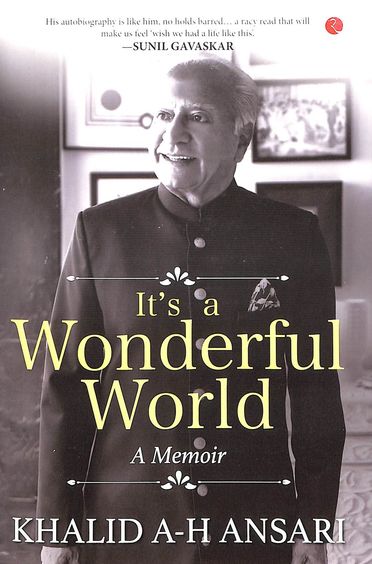
Khalid’s Sportsweek later was shut down with the television boom making it hard to garner advertisements and interest. Khalid has also published his memoir (It’s A Wonderful World) and continues to inspire a stream of journalists apart from various generations to keep the boat afloat and touch new heights.

 (The Author is Journalist & associated with Dainik Bhaskar)

source: http://www.asianlite.com / Asian Lite / Home / by Siraj Ali Quadri / October 10th, 2022

Tailor’s Son Kashif Becomes First Muslim CA in Maharashtra’s Dhule

Dhule, MAHARASHTRA :

Coping with financial issues, Muhammad Kashif Ghulam Rabbani aced the tough CA exam in his first attempt, becoming an inspiration for many youths in Dhule and beyond

Dhule :

A young man from a humble background has brought pride to his city and community by becoming the first Muslim Chartered Accountant (CA) in the Maharashtra city of Dhule. Muhammad Kashif Ghulam Rabbani, son of a tailor, has successfully passed the final CA examination, considered one of the toughest professional exams in the country.

Kashif’s journey to success was not easy. Coming from a financially struggling family, his father, Ghulam Rabbani, worked tirelessly as a tailor to ensure that his son’s education continued uninterrupted.

“Despite the tough circumstances, Kashif’s father did not let poverty stop his son from chasing his dreams,” said Advocate Sheikh Zubair. “He supported Kashif in every way, and today the result is in front of us.”

Kashif began his education at Muhammadiya Boys Urdu School in Dhule. He completed his 12th Science at SSVPS College and then studied BCom for a year at Jay Hind College. But later, he left traditional studies and shifted his focus entirely to preparing for the CA exam.

Under the guidance of CA Ijaz Sir at Anam & Associates in Pune, Kashif started his onward journey. He did his internship at the ‘Association of Indian Chartered Accountant Firm’ and later studied for the final exam at the Asim Khan Study Centre in Dhule.

Speaking to the media, Kashif shared, “Most children choose fields like engineering, teaching, or law. But when I looked around in our society, I saw a lack of chartered accountants. I decided to step into this field to fill that gap.”

He added, “I worked hard and stayed focused. I had only one goal—to become a CA. I’m happy I passed in my first attempt.”

Kashif’s achievement is not only a personal victory but also a proud moment for the entire city. His success has been widely celebrated by community leaders and educators, who see it as a message of hope for many underprivileged students.

“This is not just a personal success story,” said Advocate Zubair. “It is a message to all youth—especially those who give up studies due to financial problems—that with strong willpower, nothing is impossible.”

Muhammad Kashif’s success has brought honour to his family, school, and city. He now stands as a role model for others who want to achieve big dreams.

With this achievement, Kashif has proved that passion, hard work, and determination can break all barriers.

source: http://www.clarionindia.net / Clarion India / Home> Editor’s Pick> India> Indian Muslim / by Team Clarion / July 10th, 2025

Unsung Hero: Pav-seller Nazim Sheikh saves lives on Mumbai shores

Mumbai, MAHARASHTRA :

Mohammed Nazim Sheikh

Mohammed Nazim Sheikh, 51, is a silent saviour of lives on the Mumbai shores. After selling pav (Mumbai bread) at the Colaba, from early monring till noon, the 51-year-old Mumbaikar, leaves for the beach at the Gateway of India to keep an eye on the sea lovers who might be unknowingly putting their lives at risk.

Like a silent sentinel, he has been guarding the dangerous beach at the Gateway of India for 35 years and has saved more than 300 persons so far.

Nazim says,”They (tourists) come closer to the sea to feel the splash. Once they slip, the tide pulls them into the water,” he says. “If somebody doesn’t rush for their help, they’re gone.”

Nazim started rescuing drowning people at the age of just 16. With the skills of a trained lifeguard and a sense of mission, he pulls people out of the water who are unaware of the dangers and are carelessly near death.

“They come just to feel the splash or to see the view, but one slip is enough, and the wave takes them away. If immediate action is not taken, it is not possible to save them,” he says.

Nazim says he has also recovered about 25 to 30 bodies so far—mostly men. He has witnessed many accidents during festivals.

Nazim’s most memorable rescue operation was in 1996 when he swam across during high tide. For this feat, he was awarded the title of ‘Best Swimmer’. In recent years, especially during the 2022 Ganpati immersion, he saved two people from drowning.

According to hawkers who set up shop around the Gateway of India, Nazim is always the first to arrive. Nowadays, due to social media, tourists often start making videos by crossing the safety barrier, which proves to be dangerous. In such a situation, when someone falls into the sea, the first name that comes to everyone’s mind is Nazim – even before the police or the fire brigade.

A 60-year-old woman who runs a stall in front of the Taj Hotel says: “I have been seeing Nazim for years. He has saved countless lives. Everyone working at the gateway knows that he is the one to call immediately in an emergency.”

A local photographer says, “Earlier they used to patrol right in front of the gateway, but now that area is closed for security reasons. Nowadays they are seen in front of the Taj Hotel where people come to enjoy the ocean waves.”

Another 51-year-old cameraman says: “Everyone working at the gateway knows the moderator and knows when to contact him. The best thing is that whether you call him or not, he arrives on his own.”

However, despite his selfless service Nazim has not received any official government recognition or honor till now. The Nazim said that he has written letters to the Prime Minister and the Chief Minister (Devendra Fadnavis), but no action has been taken.

“Still waiting, nothing has happened,” he shrugs. Many of Nazim’s awards and newspaper clippings have also been lost during the renovation of his house. He finishes selling pav by noon, but as soon as the tide comes in, he becomes alert.

“When someone is in trouble, be it locals or the police, they call me. I am not afraid of the sea. Allah has given me this strength, I just do my job,” he says humbly. Nazim was also part of the rescue team during the 2003 Gateway bombing and helped recover bodies from there.

Today, while beach safety has improved and suicides have declined, Nazim still stands as a silent sentinel on Mumbai’s beaches. “If anything happens, I’m ready,” he says resolutely.

Colaba Senior Police Inspector Pramod Bhaute said, “Nazim works as a lifeguard for us. He is always active and alert. His help has proven invaluable in many cases. He lives in the Jetty area. Mumbai Police says it’s grateful to him for him selfless mission in saving lives.

source: http://www.awazthevoice.in / Awaz, The Voice / Home> Story / by Onika Maheshwari, Mumbai / July 13th, 2025

Adiba Anam becomes Maharashtra’s first Muslim woman IAS officer, daughter of an auto-rickshaw driver

Yavatmal Town, MAHARASHTRA :

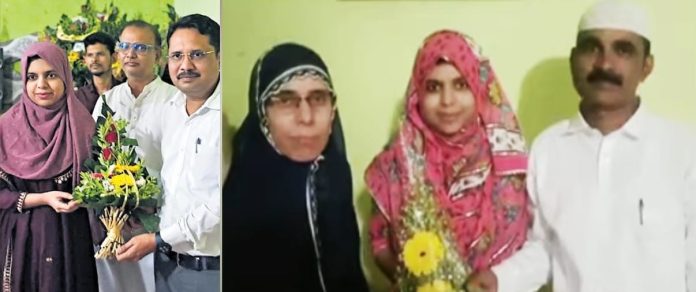
Adiba Aman in the centre.

New Delhi :

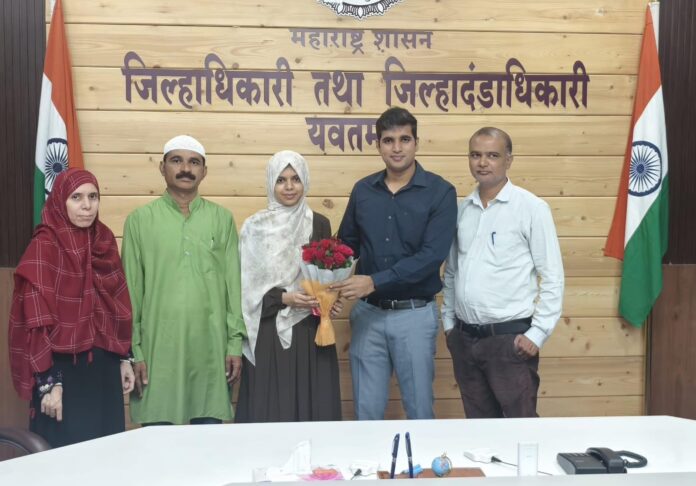
 The Union Public Service Commission (UPSC) declared the results of the 2024 Civil Services Examination on April 22, with 1009 candidates clearing one of India’s most competitive exams. Among them, Adiba Anam has made history by becoming the first Muslim woman from Maharashtra to be selected for the Indian Administrative Service (IAS).

Hailing from Kalam Chowk in Yavatmal, a small town in eastern Maharashtra, Anam secured an all-India rank of 142. Her achievement has been widely hailed as a breakthrough for both women and minorities in the state. Her father, Ashfaq Ahmed, earns a living by driving an auto-rickshaw.

Raised in modest circumstances, Anam completed her schooling in Urdu medium from a local Zilla Parishad school. Despite limited resources, she consistently excelled academically—scoring 94% in her Urdu board exams and 92% in 12th grade with a science stream.

Speaking to India Tomorrow, Anam recounted her journey through UPSC. Her first attempt in 2021 ended at the preliminary stage. Undeterred, she progressed to the mains in her second attempt, and finally, in her fourth attempt, clinched success with a rank likely to earn her an IAS cadre.

“My parents never asked me to give up on my education. There were people who suggested I take up a small job to ease our financial burden, but my parents never let those voices affect me,” she said.

Anam noted the social barriers women often face in her community. “Yes, girls do face restrictions. But these challenges only overpower us if we allow ourselves to feel weak. Once we build our mental strength, those obstacles lose their power,” she said. Her message to young women: “Stay mentally strong. Chase your dreams with courage and determination.”

Initially aspiring to become a doctor, Anam couldn’t clear the NEET exam. It was then that her uncle, Nizamuddin Sheikh—a local NGO secretary in Yavatmal—encouraged her to consider civil services as a way to serve the public.

Adiba Anam draws inspiration from the poetry of Allama Iqbal. Two couplets, in particular, fuel her determination:

“Khudi ko kar buland itna ke har taqdeer se pehle, Khuda bande se khud pooche, bata teri raza kya hai, ” meaning, “Elevate your selfhood to such heights that even destiny, before shaping your fate, is compelled to ask you: ‘Tell me, what is it that you desire?’”

This powerful verse emphasizes self-empowerment, urging individuals to strengthen their character and willpower to such an extent that even fate bows before their determination.

“Amal se zindagi banti hai jannat bhi jahannam bhi, Yeh khaaki apni fitrat mein na noori hai na naari hai.” This translates in English as “Through actions, life can become either a paradise or a hell. This being (the human) made of dust is by nature neither angelic nor demonic.”

The couplet underscores the idea that our actions determine the quality and direction of our lives. Human beings are not inherently good (like angels) or evil (like demons); it is their actions (amal) that shape their destiny and define their identity.

Explaining the two couplets, she said, “These lines remind me of the power of action. If you just sit still, nothing will change. But if you act, if you try to change your situation, something will definitely happen,” she said.

Anam’s journey—from a small-town Urdu-medium student to a future IAS officer—stands as a powerful story of resilience, ambition, and the transformative potential of education.

Here is the list of 26 Muslim candidates who cleared the UPSC Civil Services Examination this year, with their ranks written in front of their names.

•             Iram Chaudhary – Rank 40

•             Farkhanda Quraishi – Rank 67

•             Mohammad Muneeb Bhatt – Rank 131

•             Adiba Anam Ashfaq Ahmed – Rank 142

•             Wasim ur Rehman – Rank 281

•             Md. Nayab Anjum – Rank 292

•             Mohammad Haris Mir – Rank 314

•             Mohammad Shaukat Azeem – Rank 345

•             Alifa Khan – Rank 417

•             Nadia Abdul Rashid – Rank 429

•             Najma Salam – Rank 442

•             Shakeel Ahmed – Rank 506

•             Shah Mohammad Imran Mohammad Irfan – Rank 553

•             Mohammad Aftab Alam – Rank 560

•             Mohsina Bano – Rank 585

•             Syed Mohammad Arif Moin – Rank 594

•             Ghulam Haider – Rank 633

•             Hasan Khan – Rank 643

•             Ghanchi Gajala Mohammad Hanif – Rank 660

•             Mohammad Salah T.A. – Rank 711

•             Sadaf Malik – Rank 742

•             Yasir Ahmed Bhatti – Rank 768

•             Javed Mev – Rank 815

•             Nazeer Ahmed Bijran – Rank 847

•             Arshad Aziz Quresh – Rank 993

•             Iqbal Ahmed – Rank 998

source: http://www.indiatomorrow.net / India Tomorrow / Home> Education / by Mohammad Akram / April 2025

Taxi Driver’s Daughter Iqra Wins Gold Medal in Maharashtra Medical Exams

Nashik, MAHARASHTRA :

A Muslim girl from Nashik tops the university in audiology and speech therapy, thanks to hard work, parental support and help from MESCO Educational Trust

New Delhi / Mumbai :

A young Muslim girl from a low-income family in Nashi has brought pride to her community by topping her university exams. Ansari Iqra Marzban, daughter of a taxi driver, secured the highest marks in the audiology and speech therapy course at the Maharashtra University of Health Sciences (MUHS). She was awarded the gold medal for her outstanding performance.

“I had never imagined I would be the university topper. It’s only because of my parents’ duas (prayers) and the help I received that I reached here,” Iqra told Clarion India over the phone.

Iqra comes from a simple home where her father, Marzban Ansari, drives a taxi to support the family. Despite financial struggles, Iqra worked hard and refused to give up on her dream of becoming a medical professional.

She completed her SSC from Anjuman Islam Begum Sharifa Kalsekar Girls English High School and her HSC from Peace Science College in Dadar. Though she failed to clear the NET entrance exam on her first try, she did not lose hope. On her second attempt, she scored 486 marks and gained admission to Topiwala National Medical College (Nair Hospital) in Mumbai.

Her father was overcome with emotion when he learned of her success.

“I had tears in my eyes when I heard she topped the university. We couldn’t afford the course, but Iqra insisted on continuing her education. She’s our pride,” he said.

Iqra’s achievement also shows the silent but strong role of Muslim organisations that help students in need. After getting admission, Iqra faced a major problem — a lack of funds for her studies. That is when MESCO Educational Trust came forward and paid for all her education expenses.

“I had lost hope, but when MESCO came forward, it felt like Allah had opened a door for me,” Iqra said with emotion.

A MESCO official said, “Iqra is one of hundreds of students we help every year. Her achievement proves that with a little help, our children can do wonders.”

Iqra scored 950 out of 1,200 marks in her first and second semester exams — the highest in the state. She received the gold medal and praise from her teachers and classmates alike.

Dr Shaikh Aamir, a faculty member at Nair Hospital, said, “Iqra is a dedicated and humble student. Despite all odds, she kept performing well in class and in exams. We’re proud to have her.”

Iqra’s story is important at a time when Muslims often face discrimination or are shown negatively. Her success proves that Muslim girls can do well when they get the right support.

Iqra had a message for other girls facing struggles: “Don’t give up. Work hard, pray regularly, and look for help from the right places. Allah will make a way.”

She also said more awareness is needed about support systems in the Muslim community. “Many people don’t even know that groups like MESCO are ready to help. Our people should come forward and ask for help when needed,” she added.

Prof Azra Fatima, a social activist and educationist, praised Iqra’s success. “Iqra’s victory is a strong reply to those who say Muslim girls are not interested in education. It’s not interest that’s lacking, it’s opportunity.”

Now, Iqra plans to continue studying and work in speech therapy to help children with speech problems. But for many, her biggest achievement is the inspiration she gives to other Muslim girls.

“We didn’t have money, but we had faith. And today that faith has brought us respect,” said her father.

Iqra’s gold medal is more than a personal victory. It is proof of what Muslim youth can achieve with faith, family support, and community help.

source: http://www.clarionindia.net / Clarion India / Home> Editor’s Pick> India> Indian Muslims / by Mohammad Bin Ismail / June 19th, 2025

A Madrasa Like No Other: Inside India’s First Inclusive Madrasa for the Deaf, Mute and Blind

Pune, MAHARASHTRA :

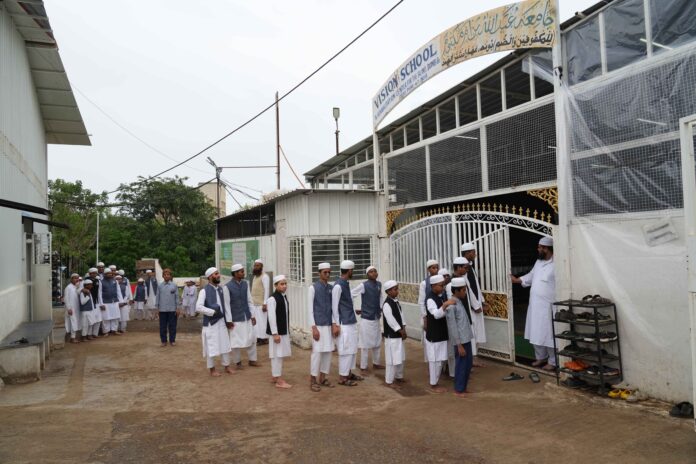
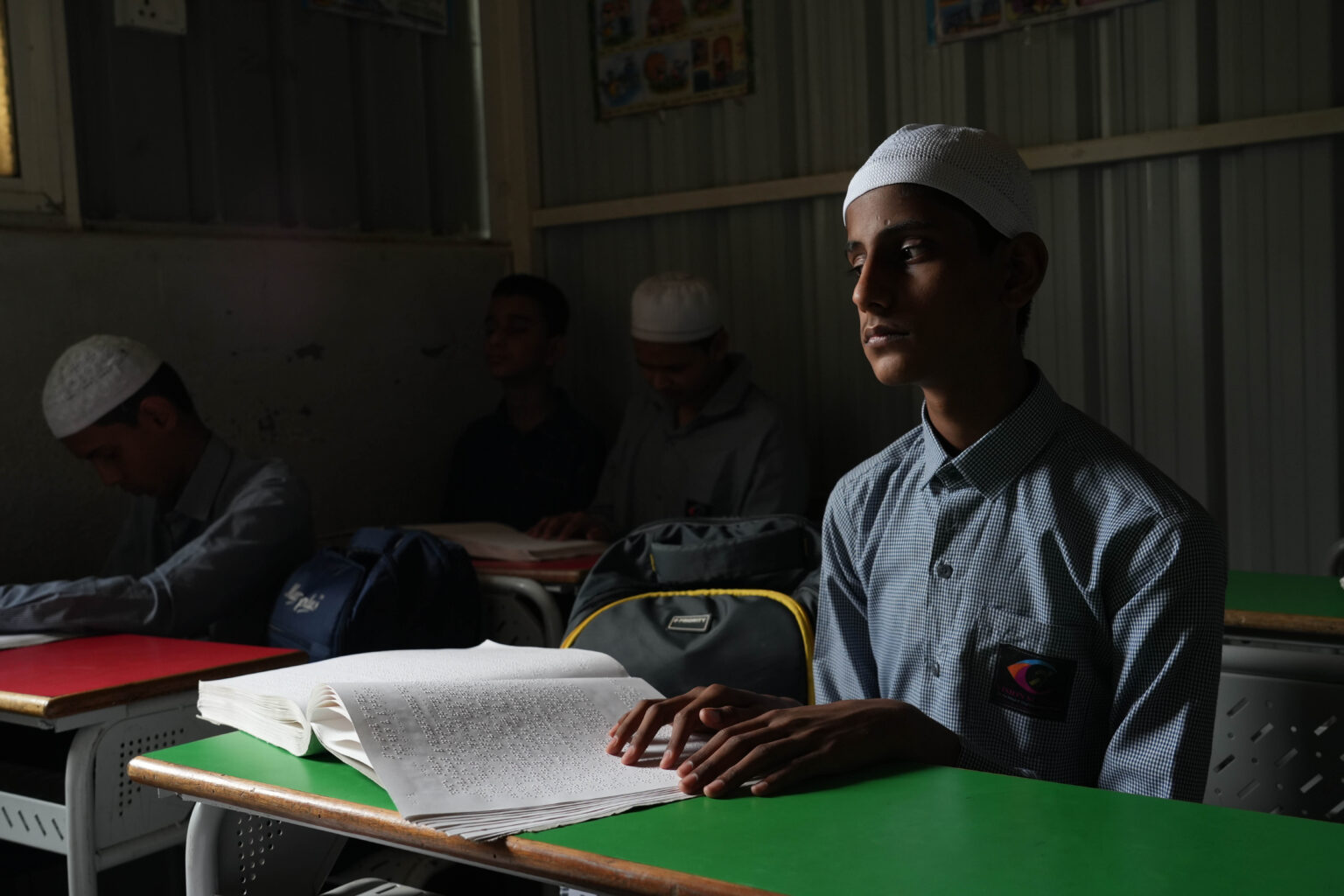
Students at Jamia Abdullah Ibne Umme Maktoom, India’s first inclusive madrasa for differently-abled children in Pune, Maharashtra, walk in a queue as they enter the Vision School campus. The madrasa provides free Islamic and contemporary education to mute, deaf and visually impaired students from 17 states across India.

In Pune, Maharashtra, Jamia Abdullah Ibne Umme Maktoom offers free Islamic and contemporary education to mute, deaf, and blind children from across 17 states—proving that disability is no barrier to dignity, faith, or ambition.

Pune (Maharashtra): 

In a small park in Maharashtra’s Pune, on a Thursday morning in May, a group of well-dressed uniformed students stood barefoot, wearing white skull caps. Many of them were mute or visually impaired. As the national anthem played in the background, the students stood in solemn attention, while others – mute and deaf – used sign language to express the lyrics. It turned the moment into a display of patriotism and unity.

This is the usual beginning of the day at Jamia Abdullah Ibne Umme Maktoom (a religious seminary in Pune), where hundreds of mute, deaf and blind students receive free Islamic and contemporary education.

“It took us years to convince families of the importance of education for their special children,” says Nayeem Ahmad Qasmi, a secretary of the madrasa.

The institution was founded in 2013 with only two children with the vision to uplift differently abled children from across India through inclusive education.

According to the Census of 2011, approximately 2.2% of the population, around 26.8 million people, were identified as living with disabilities.

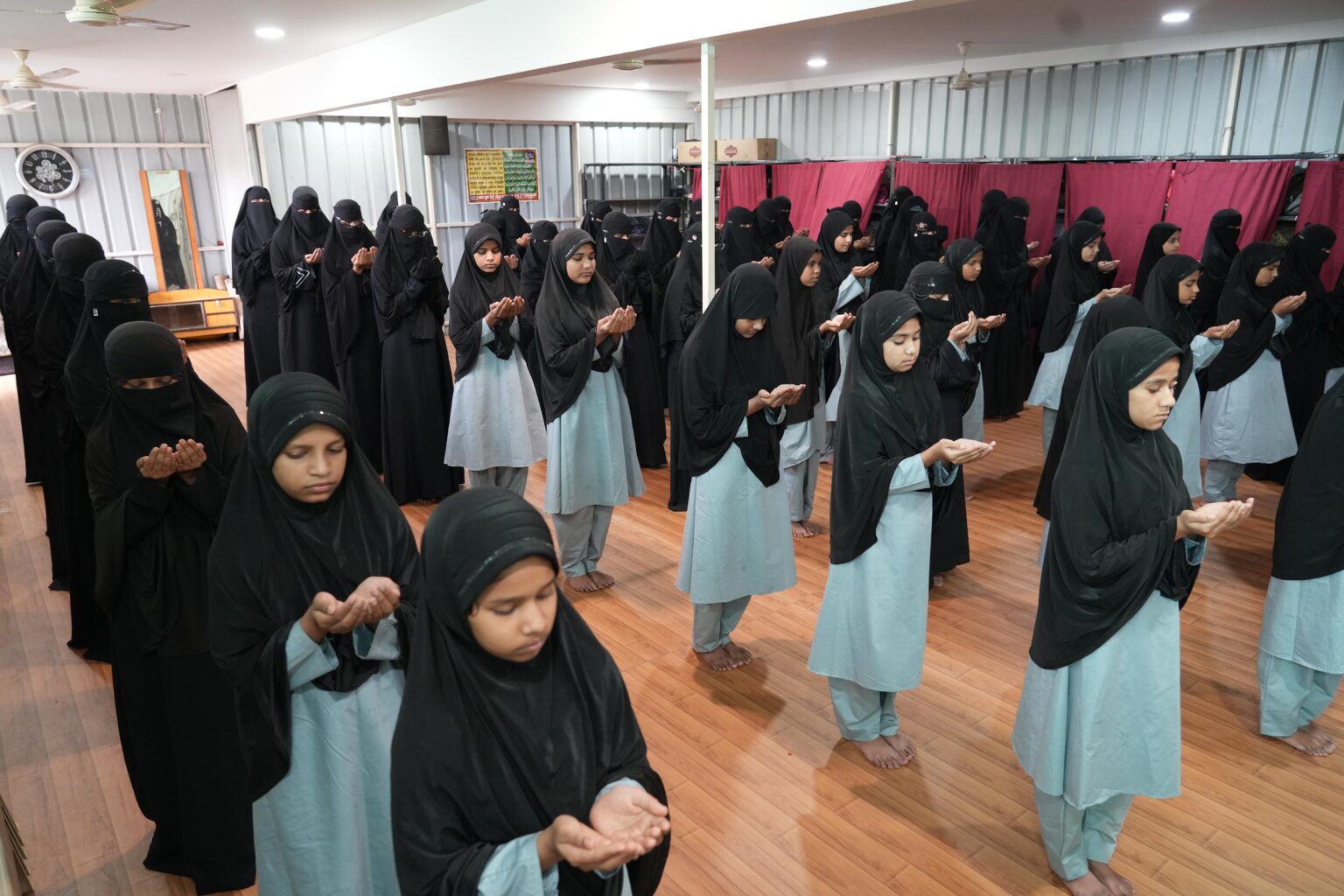
Female students at Jamia Abdullah Ibne Umme Maktoom in Pune, Maharashtra, offer prayers during school hours. The madrasa currently educates over 70 differently-abled girls – many of whom are mute, deaf or visually impaired – providing them with a safe and inclusive environment for both Islamic and contemporary learning.

Unfortunately, many families abandon differently abled children or keep them confined at home – considering them a burden.

“It is the duty of every person to support differently abled children so they can prove their capabilities,” he adds.

Many students come from rural areas in different states, where families often do not know the value of education or the opportunities available to them.

“Before coming to Jamia, I did not know anything about Islamic and contemporary education,” says 18-year-old Rehan Saleem from Jalgaon in Maharashtra.

Many students have received opportunities to present their skills on different platforms across India. Several have represented their school and secured positions in various sectors.

“By the grace of God, I have completed the Hifz-e-Quran (memorisation of the entire holy Quran) at this Jamia and got the opportunity to perform Umrah,” says Rehan.

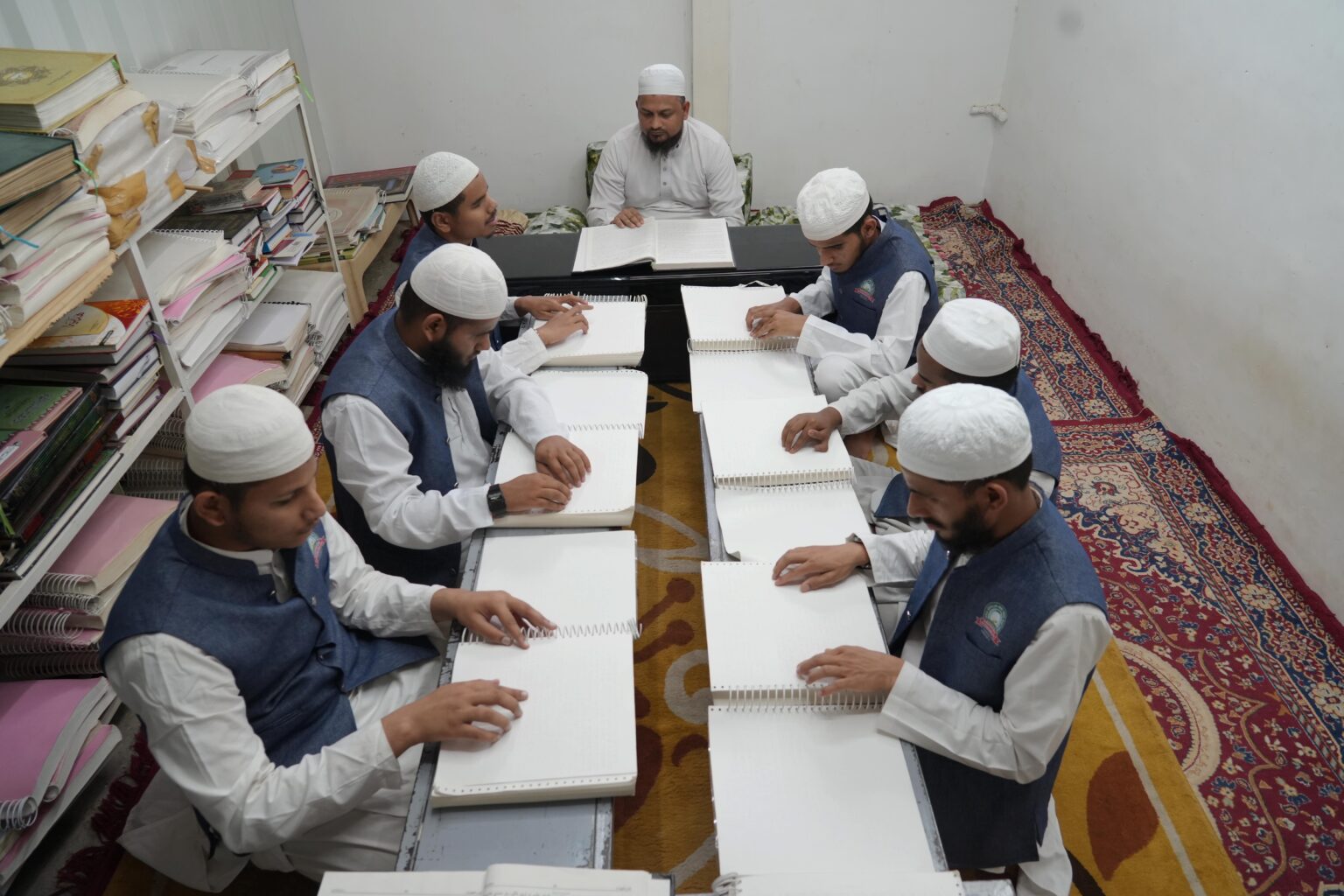
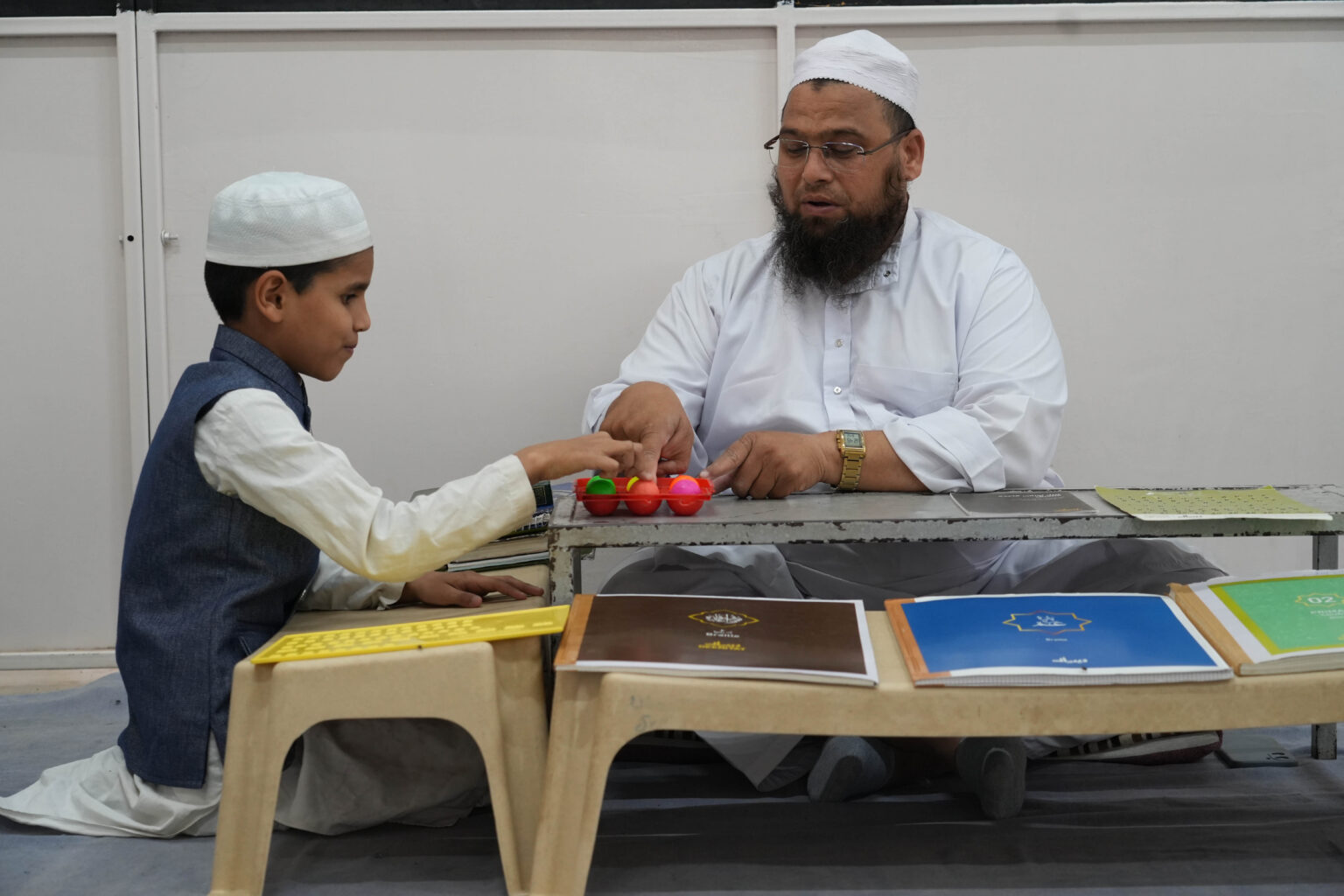
Students at Jamia Abdullah Ibne Umme Maktoom in Pune attend a classroom session where they receive both Islamic and contemporary education, guided by their teacher.

Today, the Jamia hosts 210 mute, deaf and blind students from 17 states across India. The seminary provides free education from Grade 1 to Grade 12, including subjects like science, computers, Islamic studies and advanced education.

Many students have gone on to study at various universities and colleges. For those unable to attend in person, the madrasa has launched an online education programme. Children here are provided with education, food, accommodation and even uniforms free of cost.

“Our mission is to see these children represent the country on every platform one day,” says Qasmi.

Despite the struggle, they have succeeded in building a thriving institution. In 2021, the madrasa launched separate sections for mute, blind and deaf women to ensure inclusive learning environments. Women’s education is just as important as men’s, and this initiative reflects that commitment.

Mubashira Sadiya Khan, who teaches specially abled girls at the madrasa, says, “Women’s education is equally important as male education. These girls are usually occupied with household work at their homes, but we are giving them better education and showing them the purpose of life.”

A young visually impaired student sits attentively in class, beside a Braille slate and stylus used for writing. At Jamia Abdullah Ibne Umme Maktoom, visually impaired children are given tools and support to receive religious and formal education in an inclusive environment.

Since safety is a major concern for women in the country, the madrasa has provided separate rooms for them, with all female helpers to ensure a secure learning environment.

Mubashira adds, “Usually, women are not safe in the country, but here we have created a safe space where they can learn and grow with confidence.”

Despite progress in education, children with disabilities in India often remain invisible – excluded from schools, denied opportunities and treated as burdens. Many end up begging or isolated at home, not by choice, but because society offers them no alternatives.

“We often see them begging on the roads, not because they want to, but because the society has failed to give them a chance,” says Qasmi.

Students in uniform attend class at Jamia Abdullah Ibne Umme Maktoom in Pune, where multiple sessions are held simultaneously in a shared hall to support inclusive learning.

The Jamia has been working to ensure that students with disabilities receive quality education, access to proper infrastructure and opportunities to engage in play and creative activities on campus. Its vision is to provide them with equal opportunities so they can compete and thrive like any other student.

“Our goal was simple – give them dignity, knowledge and a future,” Qasmi explains.

The Jamia is already offering digital learning tools, smart boards and inclusive facilities to ensure that the students receive a modern and accessible education. The institution continues to innovate and expand its reach through technology and tailored teaching methods.

“We have introduced smart boards, digital tools and inclusive classrooms because every child no matter their ability deserves access to quality, modern education,” says Qasmi.

In the current political climate in India, the Muslim community has often been portrayed in a negative light, and madrasa education is frequently misunderstood or dismissed. Despite these challenges, Jamia Abdullah Ibne Umme Maktoom continues to provide quality Islamic and contemporary education to differently-abled children, aiming to empower them with knowledge and confidence.

source: http://www.twocircles.net / TwoCircles.net / Home> Disability / by Suhail Bhat, TwoCircles.net / June 21st, 2025

In a first, Maharashtra gets first Muslim female IAS officer – Adeeba Anam Ashfaque Ahmed

Yawatmal (Vidharba Region), MAHARASHTRA :

Do it again and again. Consistency makes the raindrops create holes in the rock. Whatever is difficult can be done easily with regular attendance, attention, and action. Perhaps imbibed by the words of Israelmore Ayivor, an inspirational writer, blogger and LifeSkills Entrepreneur, Adeeba Anam Ashfaque Ahmed from Yavatmal in Maharashtra created a record of sorts to become the first female Muslim IAS officer after successfully clearing the civil services with All India Rank 142.

The success saga of Adeeba only proves the awareness shown by Muslim girls to take up civil services exams breaking the barriers.

On cloud nine are Adeeba’s parents, relatives, friends and more particularly her teachers on seeing her victory after three failures. She came out with flying colours in her fourth attempt after getting the necessary guidance and coaching from Jamia Millia Residential Coaching Academy in Delhi.

Can’t imagine a girl hailing from a parched and drought-prone Yavatmal district bringing glory to her native. All because of her patience and consistency as to the quote of American business honcho Robert Kiyosaki – “Successful people don’t fear failure but understand that it’s necessary to learn and grow from.” It is learnt that Maharashtra hardly witnessed any female Muslim IAS officers in the last one decade or so.

Kudos to her dad Ashfaq Ahmed, an auto driver, who despite financial constraints strained his nerves to make his daughter’s civil service dream a reality. Of course, her mom and uncle were very supportive in ensuring she achieved her IAS after successive failures. Adeeba started her early education at Zafarnagar Zilla Parishad Urdu Primary School, where she studied from Class 1 to Class 7. Thereafter, she finished schooling from Class 8 to 10 at Zilla Parishad Government Girls High School. And she completed her 11th and 12th grades at Zilla Parishad Ex-Government College in Yavatmal.

Armed with BSc Mathematics from Inamdar Senior College in Pune, she joined a coaching academy in Pune to take UPSC foundation classes based on the advice of her maternal uncle Jan Nizamuddin Sahib, who works as secretary at Seva NGO.

She got interested after meeting a few IAS officers and was determined to become an IAS. The road to civil services wasn’t smooth for her as she faced many obstacles. However, she was firm and worked relentlessly to taste success.

Noteworthy to mention that her dad Ashfaq Ahmed dropped out of school after tenth standard due to family circumstances. But decided not to let her daughter face the same fate, left no stone unturned and encouraged Adeeba to do her UG. Right from her school days, she had a fascination for civil services inspired by the young IAS officers’ remarkable feat through newspapers. Since then, she has been working towards her civil service dream.

In an interview to a local television channel, she is reported to have said that studying isn’t easy, especially for girls in patriarchal communities like Muslim, but her parents stood by her. She expressed her gratitude to mom, who extended support for her in her endeavours. The community was against girls pursuing higher studies, but her dad told her not to worry about society, and focus on her goal.

It is interesting to infer that she chose Urdu Literature as her optional subject despite having a science background. However, she displayed her prowess in clearing the civil services with confidence. A total of 32 candidates from Jamia Millia Islamia and 3 from Aligarh Muslim University (AMU) Residential Coaching Academy (RCA) have figured in the UPSC Civil Services 2024 Merit List. Of the 1009 candidates selected, only two Muslim candidates figured in the top 100.

She said that IAS is the first step to serve the society and added that her area of interest is to work for the underprivileged, more specifically girls. And she wanted to contribute to the education and health sector as a civil servant. Jamia Millia Islamia (JMI) and Aligarh Muslim University (AMU) RCAs are renowned academies in the field of coaching students for Civil Services. They provide free coaching and training for preparing for the Civil Services Examination for candidates from SC, ST, Women, and Minority communities.

source: http://www.radiancenews.com / Radiance News / Home> Focus> Markers of Excellence / by M Rafi Ahmed, Radiance News Bureau / April 28th, 2025

Dr. Iqbal Urdu Primary and Middle School Adds Another Feather to Its Cap

Malegaon (Nashik District), MAHARASHTRA :

Malegaon:

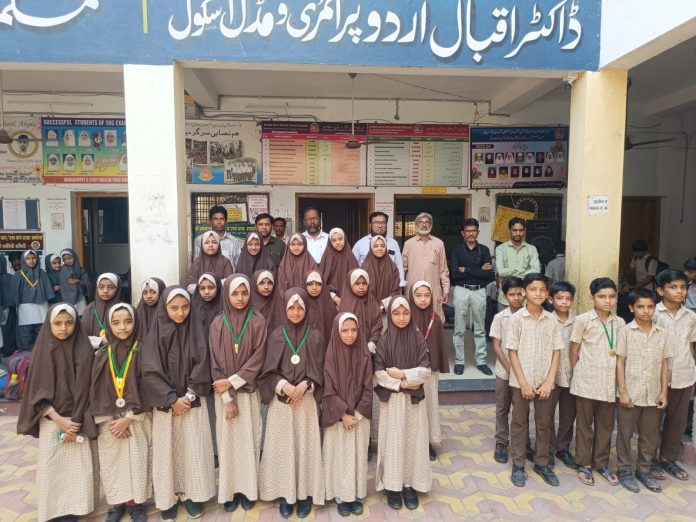
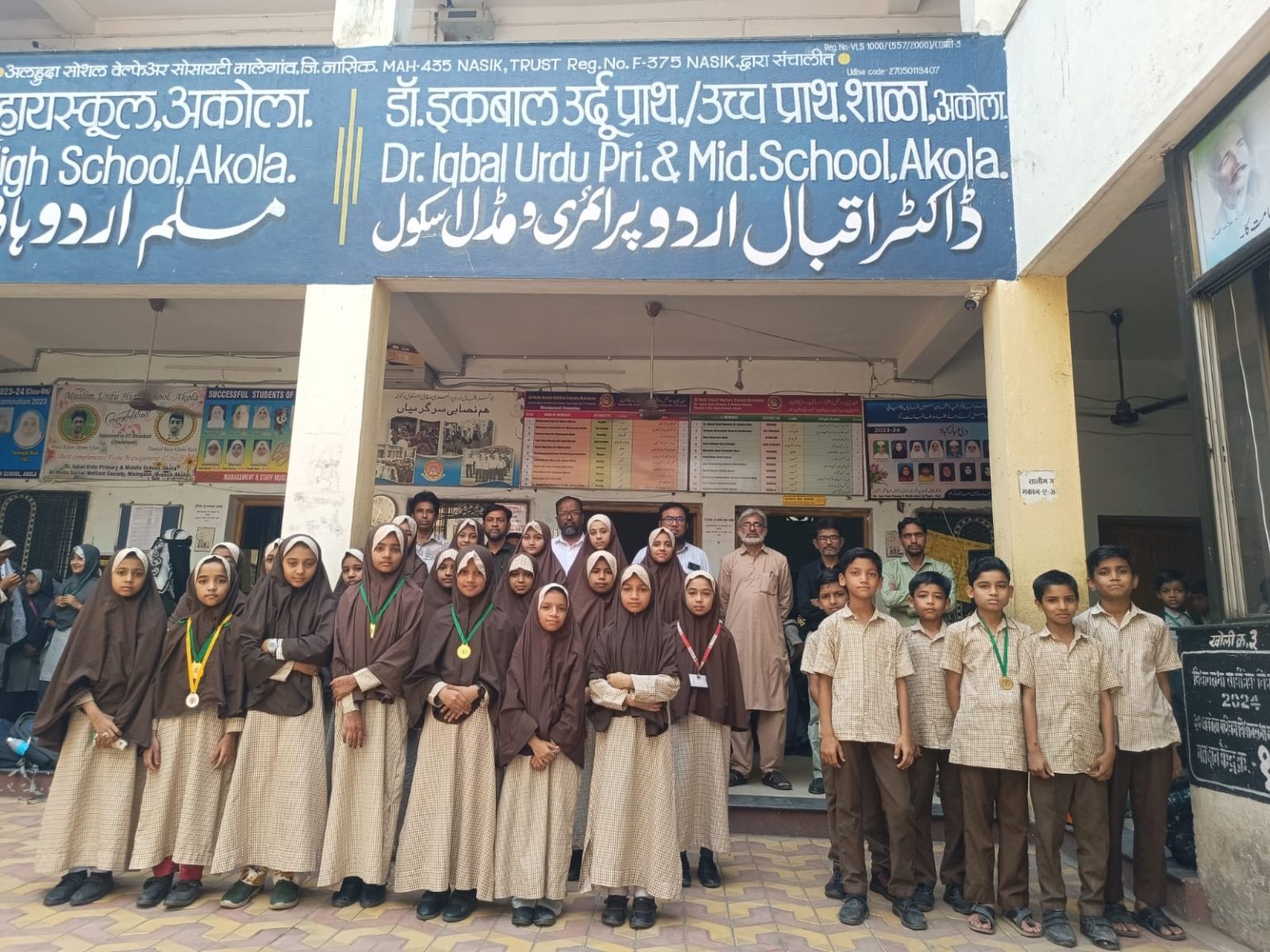
Every year, the Government of Maharashtra conducts a scholarship examination for students of Grade 5, in which lakhs of students from across the state participate. Recently, interim results of this exam were announced. In this examination, 48 students from Dr. Iqbal Urdu Primary School – a renowned and quality institution run by Al-Huda Social Welfare Society, Malegaon, District Nashik – participated. Out of these, 31 students achieved outstanding success.

Hafsa Saman Mohammad Mujahid secured 212 marks out of 300. Fatima Sitwat Azhar Hussain and Zobia Anam Mohammad Mujahid both secured 188 marks respectively, while Sheikh Umar Sheikh Sabir obtained 186 marks.

The school administration always strives not only to encourage students to participate in competitive exams but also to ensure their thorough preparation. For this purpose, the school arranges special classes throughout the year specifically for scholarship students, providing them with extensive practice.

Behind this success lies the significant role of competent and dedicated teachers. The school has expert teachers for this competitive scholarship activity, and the Headmaster is always ready to guide the students. In addition, the parents extended full support.

The institution’s President Dr. Ahmed Urooj, Vice President Khwaja Nizamuddin, Secretary Riyaz Khan, Headmaster Mohammad Ateeque ur Rahman, and the school staff congratulated the students and their parents and expressed their best wishes for great success in the future.

source: http://www.radiancenews.com / Radiance News / Home> Education> Latest News / by Radiance News Bureau / April 26th, 2025

Wakeel Najeeb: Prolific author who leads the Urdu literary caravan in Vidarbha

Nagpur, MAHARASHTRA :

When he is not writing a novel, he writes stories for children. And, when he is not penning these stories, he may compose poetry for a change of taste or suddenly come up with a  book on personalities of his city.

Wakeel Najeeb is not just among the most prominent authors, he is the most prolific writer in the region. For people interested in Urdu litrature across the country, when the conversation shifts to this region, it’s his name that instantly comes to minds.

And a visit to Nagpur is incomplete until one meets him. In the serpentine lanes near his house, ask anyone–an elderly man or a young boy, everyone knows him and can guide you about the address or directly take you to his house.

Th writer is at the centre of Urdu literary activities in Nagpur. On my visit to the town, I tried to locate his house and almost everyone I came across on way, was ready to take me to his place. Apart from novels, he has several collections of stories and short-stories, poems and two travelogues to his name. Also, there is a collection of plays and hold your breath–20 novels.

He is among the few authors who have focused on writing for the children. Many of his novels are for children apart from nazms and stories. Though he started his literary journey with ‘afsana’ [short story], he got more fame because of writing for children as he also gets published in the magazines across India.

“Somehow a label was put on me that I write stories for children and a I am writer exclusively for kids, though I have collections of short stories and have written fiction, not just for children”, he explains. Of course, Najeeb, has written extensively and also writes critical pieces, essays and articles.

His most recent work is a book, ‘Meri Basti, Mere Log’. The book contains his write-ups on interesting personalities he saw around him as he grew up and others in his city. The profiles include people from diverse fields–wrestlers to clerics and writers to sufis. Already hundreds of copies of the book have been sold.

“Frankly, I do my best to publicize my books. When I write, my aim is to make people aware about the book. You see this, he points towards the banner outside his house, which announces publication of his book. People come to know, arrive and buy”, he further says.

That’s a far cry from the writers who bemoan lack of readers or rue that there books are not being sold. Born on July 1, 1946, Wakeel Najeeb, studied at the local Urdu school. He went on to become a teacher and retired as principal of Islamia School. He is socially active, associated with institutions, literary groups and attends their meets. And, literally holds the literary fort in the region.

source: http://ww.newsbits.in / Newsbits.in / Home> Special / by Shams Ur Rehman Alavi, Bhopal / December 22nd, 2021

Ayan Sheikh Gets 12th Rank in GATE Exam, Dreams of Joining IIT Bombay

Mumbai, MAHARASHTRA :

Mumbai student overcomes cramped living conditions to achieve national success in the prestigious entrance exam.

Mumbai:

Ayan Sheikh, a 20-year-old student from a modest 96-square-foot house in Byculla, has achieved an extraordinary feat by securing the 12th rank in the Graduate Aptitude Test in Engineering (GATE) in his first attempt. Ayan, currently in his third year of a computer science degree, hopes to follow in his elder brother’s footsteps and secure admission to IIT Bombay for his master’s degree.

Living in a cramped chawl in Mustafa Bazaar’s Haji Alana with his parents and elder brother, Ayan’s journey to success is a testament to determination and hard work. With limited space at home, Ayan and his brother Aman, who previously cracked the Joint Entrance Examination (JEE) and graduated from IIT Bombay, often studied on a makeshift platform built in their small house.

“My success is the result of my parents’ prayers and their constant hard work,” Ayan told Clarion India. “Even with a limited income, my father tried his best to give both of us brothers a better and higher education. Despite the lack of space, we made the most of what we had. This platform has been our study spot for years, and it holds a special place in our hearts.”

Ayan scored an impressive 89.04 percent marks in the exam, which is considered one of the toughest national-level entrance tests for postgraduate engineering courses. Out of 1.8 lakh candidates who appeared for the exam, Ayan’s 12th rank is a remarkable achievement.

His father, Akhtar Sheikh, a senior fitter at BEST’s Mumbai Central Depot, expressed his joy and pride. “Ayan’s result is like the blessings of Ramadan for us,” he said. “One lakh 80 thousand students appeared for the GATE exam, and Ayan secured the 12th position. This is a huge achievement for our family.”

Ayan’s academic journey has been marked by consistent excellence. He scored 90% in his SSC exams from Enza English High School in Byculla and 78% in his HSC exams from Peace College in Dadar. He is currently pursuing a computer science degree at DJ Sanghvi College in Vile Parle and will complete his four-year course next year.

Ayan’s elder brother, Aman Sheikh, is an inspiration for the family. Aman secured 90% in SSC and 89% in HSC before cracking the JEE exam with a rank of 1,023 out of 1.5 lakh candidates. He went on to complete his B.Tech and M.Tech in electrical engineering from IIT Bombay and now works for an American company in Bengaluru with an annual package of Rs 12 lakh.

“I hope to get admission to IIT Bombay, just like my brother,” Ayan said. “This platform in our house has been our study corner for years. Even today, I sit here and study for three to four hours daily. It’s a part of our lives.”

Ayan’s story is a shining example of how perseverance and family support can overcome even the most challenging circumstances. As he prepares to take the next step in his academic journey, his family and community are filled with pride and hope for his future.

source: http://www.clarionindia.net / Clarion India / Home> India> Indian Muslim / by Team Clarion India / March 24th, 2025