Jubuni Village (Rampurhat subdivision of Birbhum District), WEST BENGAL :
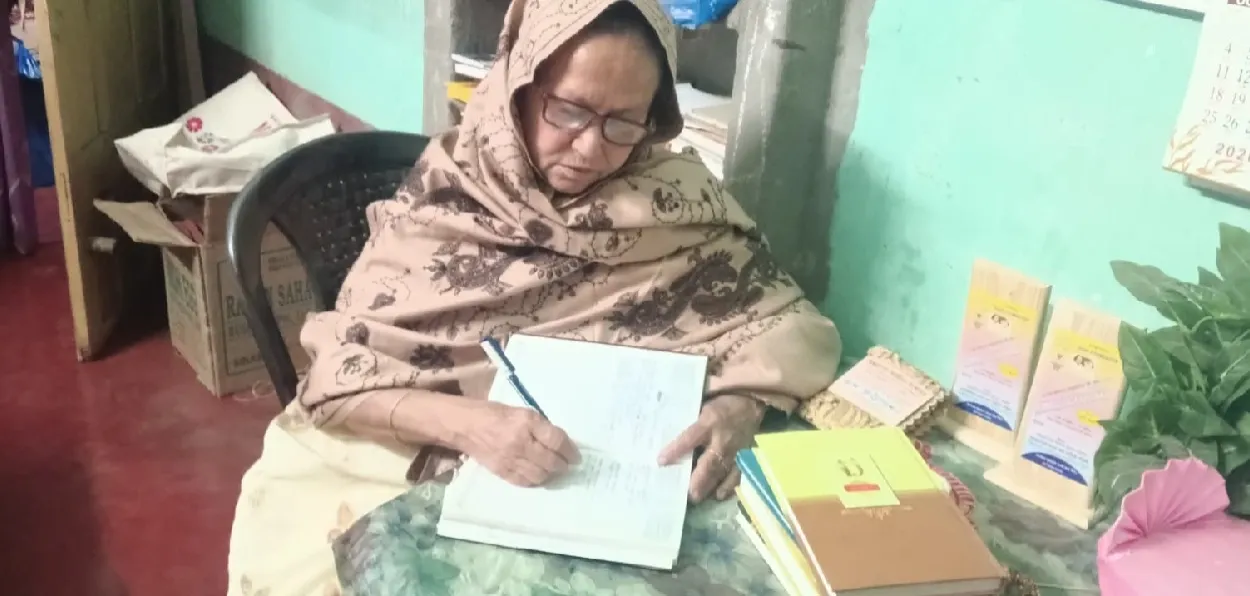
Feroza Begum
Firoza Begum’s language of protest against the harsh realities of rural India, gender inequality, and family adversity is a strong statement. The poet and writer in her, though, has emerged from a phase of struggle.
She was born into a respectable family in Jubuni village of Rampurhat subdivision of Birbhum district, West Bengal. Her parents, Abdul Hakim Mallick and Arestun Bibi, faced poverty, disease, and social uncertainty, due to which her childhood was difficult.
The struggle for survival of her family and relatives during the terrible smallpox epidemic influenced and triggered a humanitarian spirit in her.
In her childhood, when women’s education was neglected in rural society, she completed her schooling. She broke many social barriers. The discrimination and neglect she faced while in school ignited the spirit of rebellion in her, which, in due course, made the language of her writing sharp, protestant and sensitive.
Feroza Begum with an award
In 1974, she married Nurul Haque Mallick, a science-minded teacher. With her husband’s liberal attitude and inspiration, she managed to balance both her family life and pursuit of literature. She made sure her four daughters got educated and financially independent, self-reliant. Although her husband’s death in 2016 left a deep void in her life, she did not stop pursuing literature.
Since 1992, Firoza Begum has been regularly writing poems, songs and essays. Her writings have been published in various literary magazines of Murshidabad, Rampurhat and Kolkata, Pragati, Trinayani, Kalam, Bhabbana, Sangbad Darpan, Roddur, Arpan, etc.
Besides, she is also a regular participant in the radio and television programs and has received recognition beyond her hometown and community.
The poetry collection “Nayantara” published in 2010) and “Aparajita” published in 2014) clearly reflect the struggle of women, the adversities of life, and the human spirit.
She proofread and published the book, despite illness and limitations, and it reflected her perseverance.
Firoza Begum has received several honours and awards in recognition of her contribution to literary endeavours.
The reception by the Bhabna O Anubhavber Dana newspaper of Rampurhat, the Rokeya Award from the Roddur newspaper, certificates from various radio stations in Kolkata and Baharampur, the Ambedkar Shilpi Ratna Award from New Barrackpore, and the recent “Best Bengali” award from the Asha Foundation are important recognitions of her literary and humanitarian activities.
The life of poet Firoza Begum is not just the autobiography of a writer, it is a courageous document of a struggling woman. Her pen still bears witness to the fact that even in the deep darkness of adversity, education, humanity and literature are capable of illuminating the path of humanity.
source: http://www.awazthevoice.in / Awaz, The Voice / Home> Stories / by Dev Kishore Chakraborty / February 03rd, 2026
Tragically, Munawar Ali Khan Sahib died at the peak of his career, at the age of 59 in Kolkata in 1989.
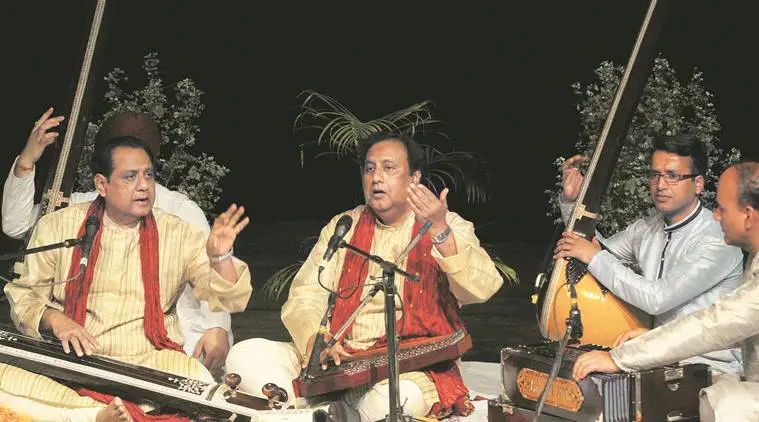
Artistes perform at Tagore Theatre in Sector 18, Chandigarh, on Saturday. Express
Triveni Sangeet Sabha paid a homage to late Ustad Munawar Ali Khan of Kasur Patiala Gharana on Sunday evening at Tagore Theatre. An audio-visual presentation on Ustad Munawar Ali by Niharika Popli was projected. This was followed by vocal recitals by Ustad sahib’s son Raza Ali Khan and his two nephews Ustad Mazar AlI and Awaad Ali Khan. Chandigarh-based Primila Puri, his disciple, also sang.
Ustad Munawar Ali Khan was born in 1930 in Lahore. He was the son of the legendry maestro Padmabhushan Ustad Bade Ghulam Ali Khan and trained under his father and his uncle Ustad Barkat Ali Khan. Munawar Ali Khan had a full-throated, powerful voice with open aakar, which adapted itself to different styles of bandishes like khayal, thumri, dadra and after his father’s death in 1968, he became a worthy representative and the ‘Khalifa’ of the Kasur Patiala Gharana. He created many khyals, thumris, geets and ghazals and sang brilliantly difficult ragas of his gharana and also created a new raga named Malini Basant.
Tragically, Munawar Ali Khan Sahib died at the peak of his career, at the age of 59 in Kolkata in 1989. The Kasur Patiala legacy is now carried on by his son Raza Ali Khan and his nephews Jawaad Ali Khan, Mazhar Ali Khan and Naqi Ali Khan.
source: http://www.indianexpress.com / The Indian Express / Home> News> Cities> Chandigarh / by Express News Service / March 18th, 2018
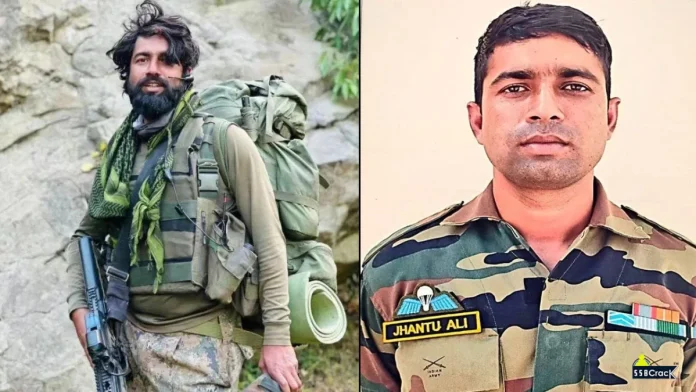
The Indian Army has posthumously awarded the Sena Medal to Havaldar Jhantu Ali Shaikh of the elite 6 Para Special Forces, recognising his exceptional courage and sacrifice during a counter terrorism operation in Jammu and Kashmir. The gallantry award was announced on the occasion of Republic Day 2026.
Havaldar Shaikh, a resident of West Bengal, laid down his life during a fierce encounter with terrorists in the Udhampur district on April 24, 2025. He served with the 6 Para Special Forces, one of the Army’s most demanding combat units. During the operation, he faced heavy fire and suffered grave injuries. He continued the mission despite his condition and ensured pressure on the terrorists until his final moments.
Army officials said his conduct reflected discipline, courage, and devotion to duty. His actions helped protect fellow soldiers and upheld the operational objective. The Sena Medal recognises acts of bravery and exceptional service. His name features among 70 gallantry award recipients announced this year, highlighting the continued sacrifices of armed forces personnel.
The White Knight Corps paid tribute to Havaldar Shaikh and acknowledged his role in counter insurgency efforts in the region. Fellow soldiers described him as committed and fearless, with a strong sense of responsibility toward his unit and the nation.
Havaldar Jhantu Ali Shaikh’s sacrifice holds deep meaning for the country. His story reflects service guided by faith, duty, and courage. His legacy stands as a reminder of the price paid by soldiers who protect national security and civilian lives, even at the cost of their own.
source: http://www.radiancenews.com / Radiance News / Home> Latest News> Report / by Radiance News Bureau / January 27th, 2026
Katwa Town (Purba Bardhaman District) , WEST BENGAL :
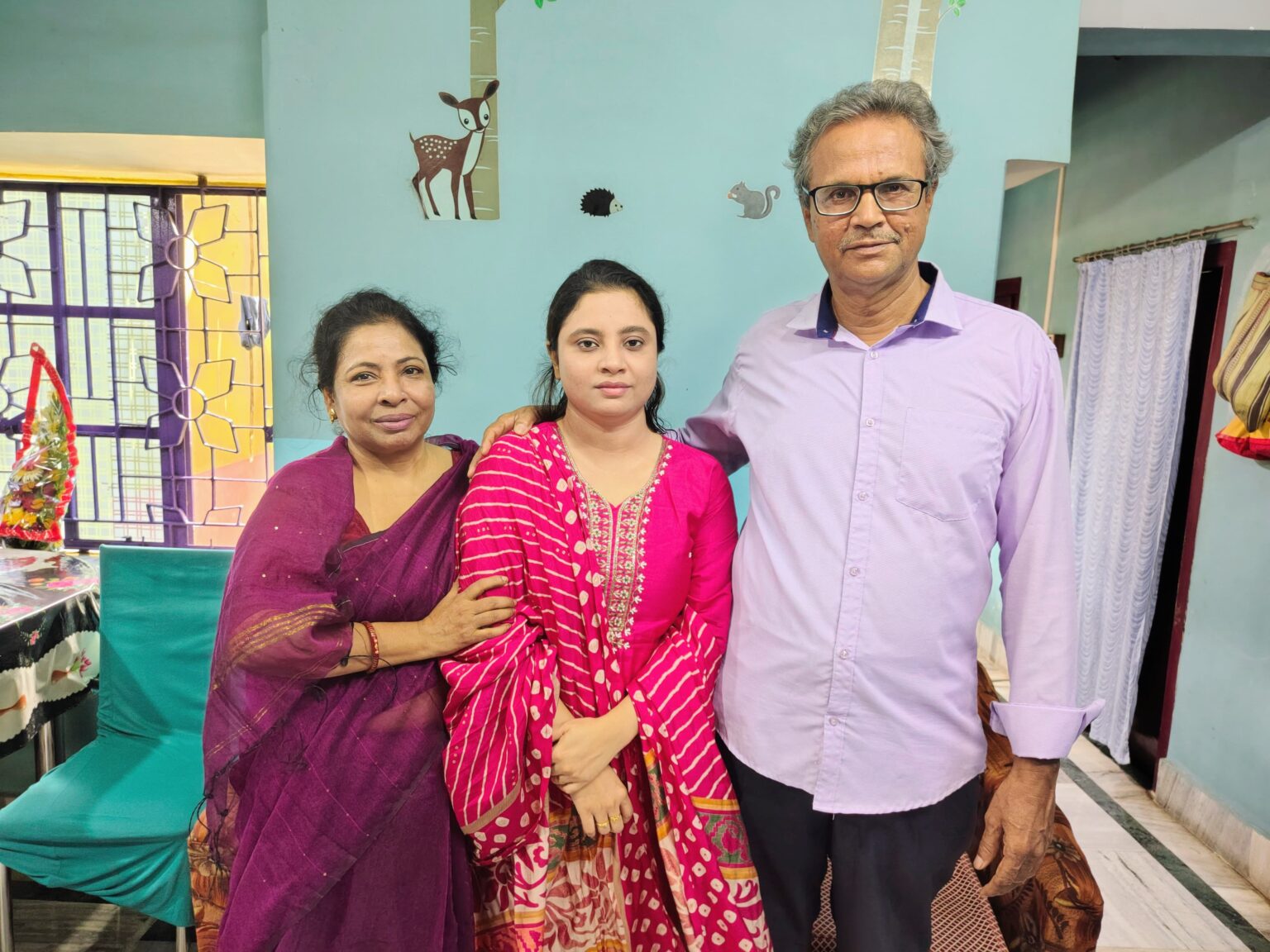
Nilufa Yasmin
Kolkata :
Nilufa Yasmin has scored a perfect 100% in the University Grants Commission National Eligibility Test (UGC NET) held in June 2025. She has qualified for the Junior Research Fellowship (JRF) in Bengali.
The UGC NET is a national-level exam that determines eligibility for the award of the JRF, a scholarship awarded to postgraduate students to pursue research that leads to a PhD.
Her result is being celebrated as an achievement. It came after two previous unsuccessful attempts. She appeared for the exam along with more than 7,52,000 candidates. Her score of 100% has placed her right at the top.
Belonging to the state of West Bengal, she feels proud of her language and identity.
“I am proud to be a Bengali. I take even greater pride in my subject, which is Bengali language, and I am determined to hold onto it as I move forward in life,” she told TwoCircles.net, with a sense of pride.
Nilufa, 26, comes from Katwa town in Purba Bardhaman district of West Bengal. Her academic performance from school through college has been excellent.
Lauding her success, Chief Minister Mamata Banerjee wrote on X (formerly Twitter), “Congratulations to Nilufa Yasmin of Katwa in Purba Bardhaman for scoring 100 percentile and securing first position in India in UGC-NET June, 2025 in Bengali and to Rikta Chakraborty of Kolkata for securing second position in India in UGC-NET June, 2025 in Mass Communication and Journalism. Your achievements have made our State proud. Congratulations to your parents/ guardians and teachers too.”
Nilufa said this recognition from the chief minister is an honour and a reminder for her to strive even harder in the future.
She is currently pursuing her PhD on Sangeet O Sahityer Melbondhon from the Burdwan University. Her research explores the connection between music and literature.
She has an interest in music. She learnt Rabindra Sangeet during her school years and has taken part in many singing competitions. She has won prizes in various categories, including a gold medal in Rabindra Sangeet, Nazrul Geeti and classical ‘bhaktigeeti’.
“I am inspired by legendary singers like Mohammed Rafi and Lata Mangeshkar,” she says.
She is a singer herself and has hosted a musical show titled ‘Eto Sur Eto Gaan’ on Doordarshan. She shares her singing performances on her You Tube Channel.
Her ambition is to become a professor in Bengali literature.
An avid reader who is inspired by her favourite authors such as Sarathchandra Chattopadhyay, Rabindranath Tagore, Procheta Gupta, among others, she aspires to be a professor of Bengali language and literature.
She has written 16 stories on themes such as women, social issues and romance. She hopes to publish them one day. She also wants to write a book.
Nilufa Yasmin with her parents
Nilufa says she owes her success to her sister and her parents who are in the field of education. She has a message for aspiring young girls and women: “Stand on your own feet first as financial freedom is the greatest form of freedom. Education brings dignity and teaches us to respect others. It is more important to be truly educated than just formally literate.”
She believes that food and language should not be used to create barriers.
Speaking about the alleged harassment and targeting of Bengali-speaking Muslims in different parts of the country, she says, “I am heartbroken by these incidents. One’s language, food and attire are personal choices and fundamental rights. Even though our country is independent, our mindset is yet to attain that freedom. Had we been free in thoughts, then no one would attack another for their language. This causes pain.”
source: http://www.twocircles.net / TwoCircles.net / Home> India News> India Politics> Indian Muslim> Lead Story> TCN Positive / by Nikhat Fatima, TwoCircles.net / August 10th, 2025
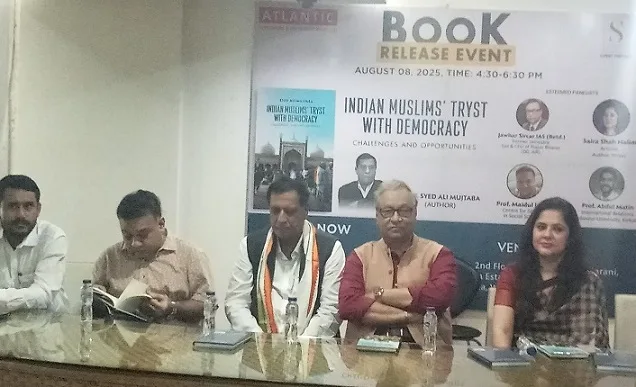
At the launch of the book Indian Muslims’ Tryst with Democracy: Challenges and Opportunities at ICCR Library, Kolkata, academics and public figures underlined that meaningful improvements in government schools and hospitals could significantly uplift India’s Muslim community, especially its poorest segments.
Professor Abdul Matin of Jadavpur University stressed that socio-economic realities leave many Muslims dependent on failing public services. “We keep saying Muslims lag in education — but how do we fix it? When families earn only ₹8,000–₹10,000 a month, they cannot afford private schools. They rely on government schools, which have deteriorated so much that students rarely move up in life,” he said.
Matin pointed out that this crisis is not limited to rural Bengal but also affects Muslim-majority urban areas such as Metiabruz, Khidirpur, Topsia, Park Circus, and Raja Bazar. Once-active Kolkata Municipal Corporation schools, he noted, have shut down, worsening access. The state’s public education system, weakened by years of political interference, has hit all low-income communities hard — with Muslims among the worst affected.
He also painted a bleak picture of healthcare: “In rural Bengal, people travel overnight and queue from midnight for a doctor’s appointment. We must revive mohalla-level schools and clinics.”
Jawhar Sircar, former Rajya Sabha MP and bureaucrat, urged the community to prioritise education over religious symbolism and to resist being reduced to a political vote bank. He encouraged Muslims to join democratic, secular movements fighting to restore India’s plural ethos. On the castecensus, Sircar advised patience, saying its 2026 release could be a “game changer” for the community.
Political activist and CPM leader Saira Shah Halim spoke bluntly about systemic discrimination, citing examples from both Delhi and Kolkata. On housing bias, she noted: “People say Muslims are ghettoised — but do they have a choice?” She also criticised the absence of certain MPs, including secular leaders, during critical parliamentary debates on Muslim concerns such as the CAA and the abrogation of Article 370.
From a historical and political perspective, Prof Maidul Islam of the Centre for Studies in Social Sciences, Calcutta, traced a steady decline in Muslim political representation — in the Lok Sabha since 1980 and in the Bengal Assembly since 2011. He alleged that parties deliberately withhold tickets from Muslim candidates, echoing warnings made decades ago by B.R. Ambedkar. The lack of progressive leadership, he argued, further limits the community’s advancement.
The book itself — Indian Muslims’ Tryst with Democracy — offers a detailed examination of these socio-political dynamics, combining historical insight with policy recommendations. Described by speakers as “a guide for collective action,” it lays out both the challenges and the concrete opportunities available for India’s Muslims to achieve equitable development.
You can order a copy from Atlantic Publishers & Distributors Pvt. Ltd 7/22, Ansari Road, Darya Ganj, New Delhi – 110002. Email- aparna@atlanticbooks.com – Phone: 011-40775252 Website: www.atlanticbooks.com
source: http://www.theindianawaaz.com / The Indian Awaaz / Home> Quami Awaaz / August 13th, 2025
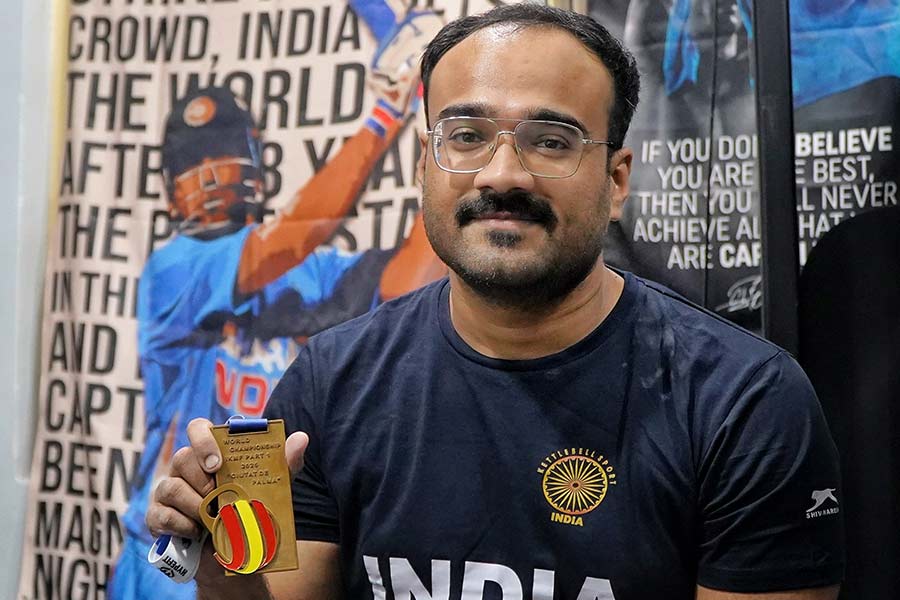
From a modest Kolkata gym to the world podium, kettlebell champion Danish Naushad lifts dreams without the weight of support — just sheer will.
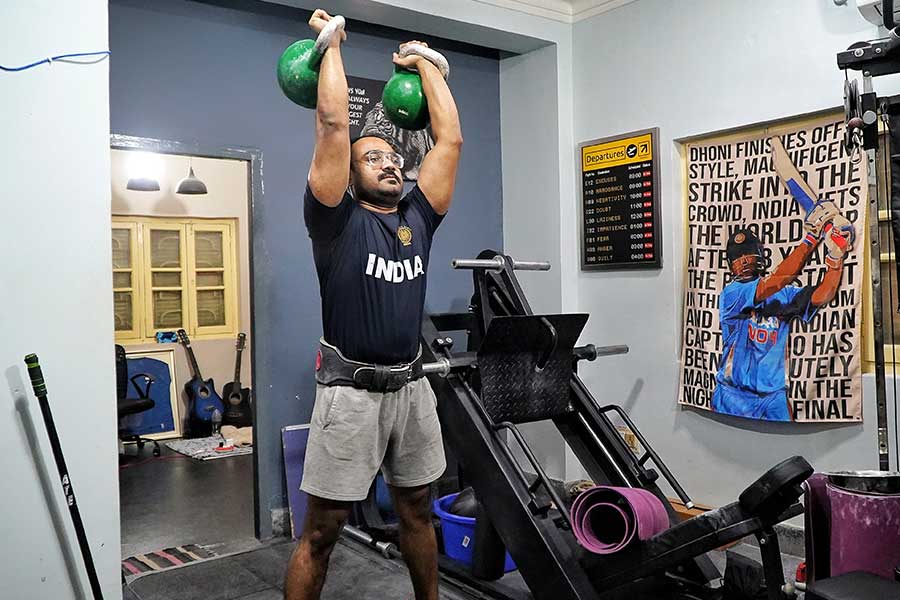
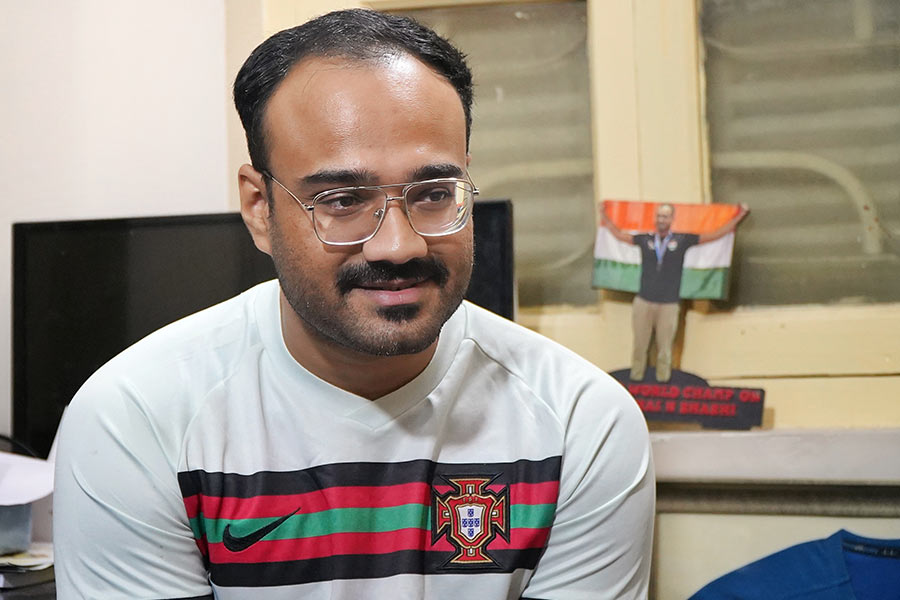
Danish Naushad is raising the tricolour at an international level, one lift at a time / All pictures by Soumyajit Dey
In 2017, Danish Naushad was training for the National Defence Academy (NDA) and following standard hypertrophy routines at a modest Kolkata gym. It was there that a chance encounter with a little-known piece of equipment — a kettlebell — set him on a path he had never imagined.
“A trainer named Saikat introduced me to it. It was kept in a dusty corner. We started with swings, and I found it refreshing, different,” said 28-year-old Danish.
Kettlebell: The unseen sport
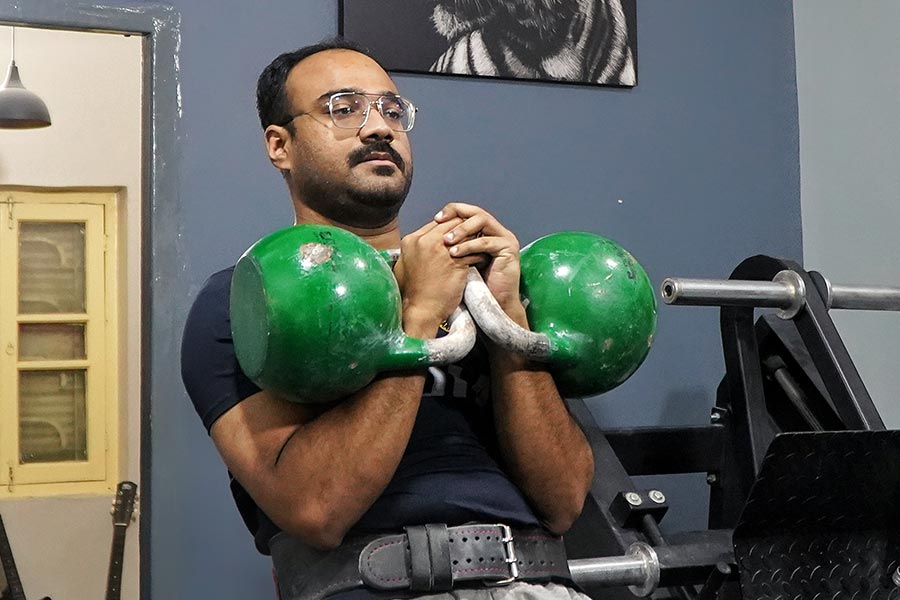
Kettlebell lifting — or Girevoy Sport as it’s known in Russia — is an endurance-based strength sport. Unlike Olympic weightlifting that focuses on one-rep max lifts, kettlebell events run for 10 minutes or more, demanding relentless reps without setting the weight down.
Danish Naushad practicing at his home gym
“You need technique, lungs, and legs — not just muscle. That’s what people don’t understand,” Danish explained.
From NDA dream to a new calling
Danish was on track to join the NDA but couldn’t pursue it due to personal reasons. He fell into depression and briefly left home. But his family pulled him back — and his gym community, too. “My gym owner said, why not go ahead with fitness? That changed my life.”
He became a certified trainer under NASM (National Academy of Sports Medicine) and began coaching clients worldwide. Danish is also a certified strength training specialist under ISSA (International Sport Sciences Association). He reinvested his earnings into his athletic journey — even selling his dream Kawasaki Z900 to build a home gym.
Early Failures and the Ego Check
Danish’s raw strength took him through his first competitions, but failure at a 2018 state meet — where he only received a participation certificate — deeply affected him. “That shook me. I was overconfident, relying only on my shoulders.”
Danish built his home gym by selling off his dream bike, a Kawasaki Z900
That humbling led him to coach Arnab Sarkar, a pioneer of the kettlebell sport in India. “From 2019, real training began. I learnt that patience and technique matter more than brute strength.”
National records and online competitions
Danish’s breakthrough came in 2020 with a national record of 155 jerks using double 16 kg bells. When Covid hit, he embraced the new normal — online competitions.
“We hosted the world’s first online kettlebell championship from India. Judged live over video calls. Over 100 athletes joined. It kept the sport alive.”
Setbacks and redemption
In 2022, a missed visa meant he couldn’t compete at the IGSF (International Gira Sport Foundation) World Championship in Greece. But luck turned when the IUKL(International Union of Kettlebell Lifting) hosted a world event in Delhi later that year. Danish won bronze — his first world medal.
From missing a tournament due to visa issues to securing gold at the next, Danish’s story is an inspiring one
He followed that up with an emotional win at the 2024 IKMF (International Kettlebell Marathon Federation) World Championship in Denmark, clinching gold in the double pentathlon — an event he hadn’t prioritised. “I was shocked. I was going to the washroom and heard my name being called.”
Spain 2025: Against the odds
Preparing for Spain’s 2025 IKMF Championship, Danish dropped nearly 8kg in weight and doubled down on training. He lifted 52 reps in the 40 kg event — a personal best, finishing fourth against heavier European lifters.
Danish posing with his most recent gold won at Spain’s IKMF Championship 2025
But once again, it was the pentathlon — the side event — where he struck gold. “The event I didn’t bet on gave me the biggest reward. It’s always like that.”
Kettlebell in India: No support, all heart
Despite multiple international medals, Danish receives no government support. “There’s no funding, no recognition. We pay for our own visas, travel, gear.”
He dreams of a future where kettlebell lifters are backed by the government like in Russia — where athletes are promoted in the army or railways for their achievements. “Here, we don’t even get a pat on the back. But we keep going.”
Training the next generation
Danish now coaches aspiring athletes, including those who can’t afford international travel. “I’ve taken athletes to nationals on my own dime. One under-60 kg lifter I train could be among India’s best.”
He sustains himself as a full-time online coach, training clients across the US, Mexico, and Canada via Zoom. “I do assessments, build personalised programs — some people just have a rope or dumbbell at home. I make it work.”
Faith, focus and Bernabeu dreams
Danish credits his spiritual journey — one that deepened post-Ramzan in 2024 — for helping him stay grounded. “I pray before every event. Not to win, but to not come back sad. That matters more.”
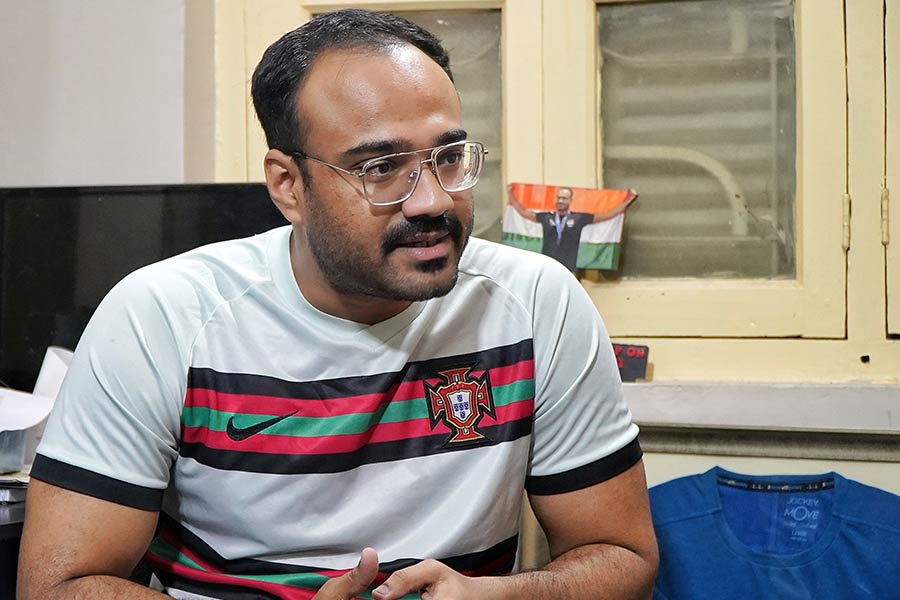
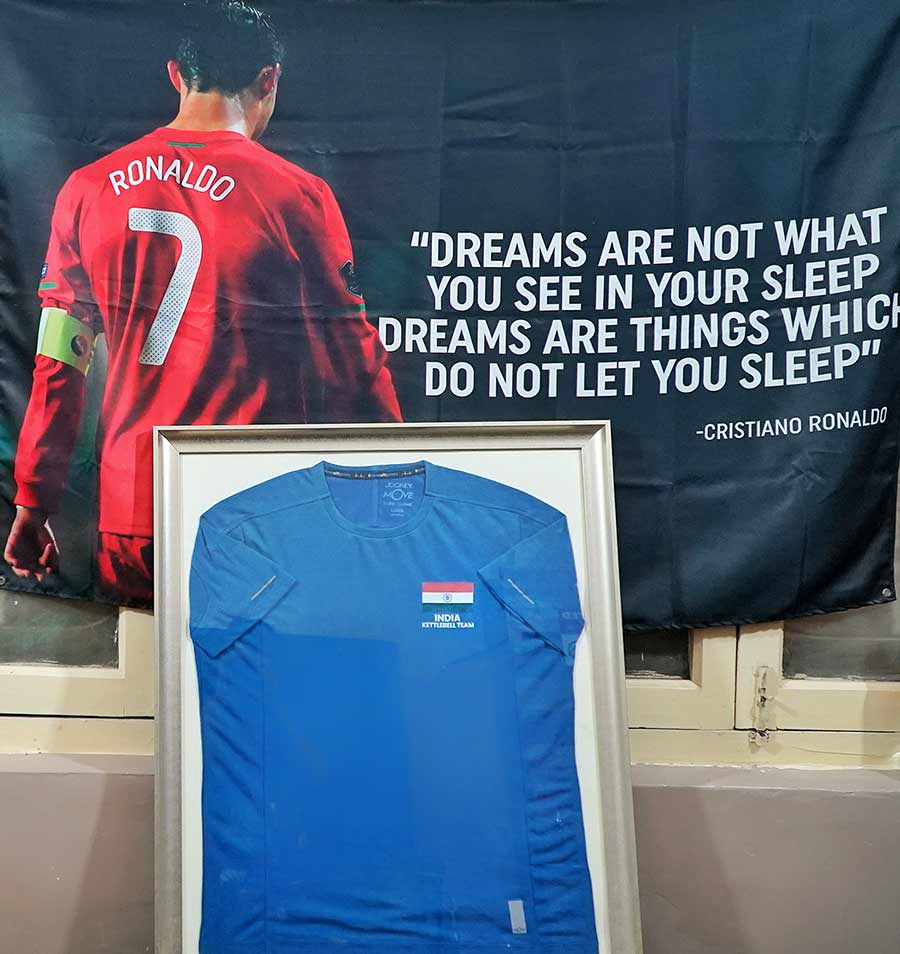
Danish has his gold winning jersey from Denmark framed. His idol is Cristiano Ronaldo and being able to see Real Madrid’s stadium was a dream come true for him
In Spain, he fulfilled a childhood dream — visiting Real Madrid’s Santiago Bernabeu stadium. “The quote I remember is, ‘The jersey can be stained with blood, sweat, and mud — but never with shame.’ That’s how I see my Indian jersey too.”
The road ahead: Hungary and beyond
Next stop: Hungary, for the IKMF World Championship in November 2025. For now, he’s training without a coach — building his own programs and aiming to hit CMS (Candidate for Master of Sport) and then MSWC, the highest global kettlebell rank.
“We dream of beating a Russian in Russia one day,” he says with a smile. “That’s the moment we’ll know we’ve done something.”
A final word
Danish has made his aspirations clear and he hopes backing will come at some point in his career
Eight years into his journey, Danish Naushad still doesn’t consider himself accomplished. “When I win a world medal under the Indian flag — with government recognition — only then will I say I’ve made it.”
Until then, the man from Kolkata will keep lifting. Not just weights — but the hopes of a sport still struggling for a place under India’s sporting sun.
source: http://www.telegraphindia.com / The Telegraph Online / Home> My Kolkata> People / by Debrup Chaudhuri / June 25th, 2025
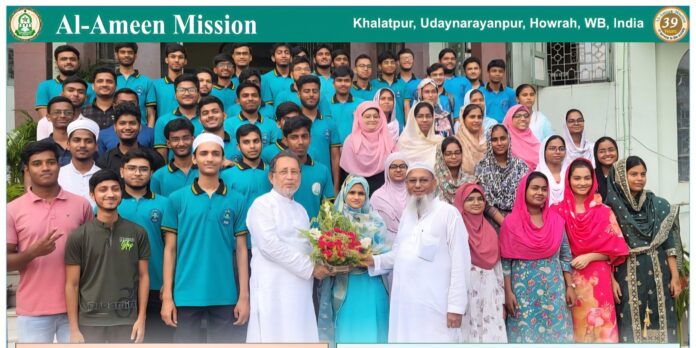
M. Nurul Islam with some of the future doctors at Al Ameen Mission Khalatpur campus
M. Nurul Islam is a proud man as 472 students of Al Ameen Mission have qualified for free medical seats in government medical colleges across West Bengal through NEET (UG) 2025.
Muslims remain one of the most disadvantaged communities in India. In West Bengal—among the more underdeveloped states—their educational and socio-economic struggles are even more pronounced. Districts like Murshidabad and Malda, with significant Muslim populations, rank among the most backward in the country.
When the NEET results were announced, 154 students from Murshidabad and 77 from Malda scored above 500 marks, making them eligible for free medical education in the state’s government colleges.
What stands out is the socio-economic background of these students. Of the 472 successful candidates, 278 (59%) come from modest backgrounds: 194 (41%) belong to middle and upper-middle-income families, 152 (32%) to lower-middle-income groups, and 126 (27%) are from poor and Below Poverty Line (BPL) families.
The success of these students reflects not only academic excellence but also the transformative impact of Al Ameen Mission in empowering underprivileged communities through education.
“This year’s exam was comparatively tougher than in previous years, but by the grace of Allah, our students performed even better,” said M. Nurul Islam, founder general secretary of Al Ameen Mission, while speaking to Muslim Mirror.
Nurul Islam, the visionary general secretary of Al-Ameen Mission—often referred to as the Sir Syed of West Bengal—is widely recognized among the 100 most influential Indian Muslims. He pioneered an educational movement aimed at uplifting underprivileged Muslim students in West Bengal, significantly increasing their representation in medical colleges, even exceeding their population proportion in the state.
Born in 1959 in the small village of Khalatpur in Howrah district, Nurul Islam came from a humble background. His passion for education and community service became the foundation of a lifelong mission. In 1986, while he was a student, he started a hostel with just seven students inside the madrasa building. This initiative was sustained by a grassroots campaign—collecting a fistful of rice from every household in the village. In January 1987, this effort took shape as Al-Ameen Mission.
Today, the Mission has 77 branches across 23 districts of West Bengal, housing nearly 23,000 residential students. Over 49,000 students have passed from Al Ameen Mission, which follows the WBBSE, WBHSE, and CBSE curricula. In 2015, the West Bengal government honored M Nurul Islam with the Banga Bhushan Award for its contributions to education.
The Mission also engages in charitable work, offering financial aid and scholarships to unemployed Muslims. Under Nurul Islam’s leadership, it has become a beacon of holistic education, blending academic excellence with Islamic ethical values. The institution has produced hundreds of successful NEET and JEE candidates, changing the lives of many.
Nurul Islam’s resolute commitment to education and empowerment continues to inspire generations, reshaping the future of Muslim youth in Bengal and beyond.
source: http://www.muslimmirror.com / Muslim Mirro / Home> Education> Indian Muslim> Positive Story / by Jasmine Nehar / June 25th, 2025
Ohida Khandekar’s Dream Your Museum, an installation and film about her uncle’s collection won the V&A’s Jameel Prize for contemporary art and design inspired by Islamic traditions.
Selim Khandakar with his grand-niece and the trunks housing his collection. | Photo Credit: Anand Kumar Ekboty
Selim Khandakar, 71, has always dreamt of making a museum in his village for the 12,000-plus objects he has collected over 50 years. A small portion of that collection has now reached one of the best museums in the world — the Victoria & Albert Museum (V&A) in London — thanks to his artist niece, Ohida Khandakar.
Ohida, 31, has turned her uncle’s lifelong obsession into an installation and film — Dream Your Museum — which won the V&A’s prestigious Jameel Prize for contemporary art and design inspired by Islamic traditions. The work is not just a tribute to what seems to be her uncle’s calling; it also challenges colonial museum structures and asks whether ordinary, personal objects deserve a place in museums. Can museums be flexible and inclusive spaces, showcasing the narratives of minority communities and customs? Are private collections the exclusive privilege of the rich?
The installation and film, ‘Dream Your Museum’, at the Victoria & Albert Museum (V&A) in London.
Selim worked as a doctor’s compounder in Kolkata and started collecting random objects from the year 1970. A stamp exhibition piqued his interest first, prompting him to start collecting them. He also came across an exhibition of vintage objects from Mallik Bari, one of Kolkata’s heritage homes. “It was a record of what objects were used in the ancient times and how lives were led,” Selim tells me over a Zoom call from his home in Kelepara, a village near Hooghly, West Bengal. “It inspired me to start collecting whatever felt like a record of the common person’s life and times. From bus tickets to stamps to refills of pens, I wouldn’t throw anything away.”
An assortment of rare and mundane items makes up Selim’s collection. Old clocks, inscribed ceramics, vintage records and music players, letters dating back to Partition, perfume bottles, crystal rocks, hand fans, stamps, handbills, ink pots, cameras, train tickets, receipts, even matriculation answer sheets from the 70s!
Selim Khandakar surrounded by the objects he has collected over the years. | Photo Credit: Anand Kumar Ekboty
Gramophones to baby clothes
Much of Selim’s collection is housed in tin trunks and scattered across his home in Kelepara. It sometimes becomes a ‘travelling museum’ for people in the village to explore and interact with the objects as Selim takes them around. There is curiosity, awe, some ridicule, some laughter, and from those who understand history and record keeping, even encouragement.
Ohida’s film captures Selim walking through village fields with his trunk, stopping by the river to rinse some crystal stones, and holding them up to the sun. “Where did you find these, nanu?” asks Maria, his grand-niece, who appears in the film. “In the graveyard,” Selim replies.
Selim Khandakar walking through village fields with his trunk. | Photo Credit: Anand Kumar Ekboty
Ohida, who studied art at the Government College of Art & Craft, Kolkata, and Jamia Millia Islamia, New Delhi, says it is sometimes hard to understand what keeps her uncle going. Is it hoarding, as his exasperated family has often believed? She and Selim don’t think so. Instead, he thinks his collection, much like Dream Your Museum, is about storytelling. “Collecting is my way of showing people from my village a glimpse of things from around the world,” Selim notes. “Like rare coins dating back to the Mughal period or vintage perfume bottles from around the world. Often people here do not get a chance to go to cities to see such things. That’s what has always kept me going.”
Selim Khandakar’s house that was destroyed after a cyclone.. | Photo Credit: Anand Kumar Ekboty
Once displayed in his modest mud house, now destroyed after a cyclone, Selim’s possessions came close to being discarded by his family until Ohida decided to document it digitally. She reacquainted herself with both her uncle and his collection when stuck at home during the pandemic. To her artist’s eye, it is a compelling one, given its range — from gramophones to baby clothes from the 80s. “It even has a bunch of fingernails [Selim’s own] in a box. It reminds me of Marcel Duchamp’s Dadaist Fountain exhibit [1917], where he displayed an upside-down urinal. Such objects challenge conventional notions of what belongs in a museum. These items, including a broken plate passed down through generations, show the power of storytelling through objects.”
Selim laughs when asked about the fingernails. “I had once visited an exhibition where I saw art made with fingernails and thought I would do the same with mine. It made me curious, so I kept them.”
What makes a museum?
Curiosity has been the driving force behind Selim’s obsession and this is what Ohida celebrates in her work. Maria accompanies Selim throughout the film, asking him curious questions about the objects in his collection, an attempt to peek into his mind. Ohida started filming Dream Your Museum as an entry for the 2022 Berlin Biennale, where it was received well, eventually landing her the V&A award.
Filmmaker Ohida Khandakar
Growing up in Kelepara, Ohida hadn’t stepped inside a museum until she came to study art in Kolkata. “I had achieved my dream of studying art and moving beyond a village where many women still had no voice and were married off early. It made me wonder — was there a limit to our dreams? Was there a limit to the dreams of my uncle, a rural, aged Muslim man?”
With the funds from the award, Ohida is now hoping to create a museum for her uncle’s collection and a cultural space in the village. “We need accessible museums that work as alternative spaces for the narratives of rural minority communities; as safe spaces for women without opportunities; to engage those who might not typically visit traditional museums due to a lack of knowledge, distance or financial constraints.”
In Dream Your Museum, her camera gently films Selim among his collections in his crumbling ancestral home. He expresses frustration at having no permanent place even after 50 years to showcase his prized collection. “I’ll now make a museum on the moon,” he declares.
The writer is a freelance journalist and the co-author of ‘Rethink Ageing’ (2022).
source: http://www.thehindu.com / The Hindu / Home> Entertainment> Art / by Reshmi Chakraborty / April 20th, 2025
Marui Village (Nawada District), BIHAR / Kolkata, WEST BENGAL :
A young Jamal who met Gandhi in 1947 later shaped Kolkata’s hospitality scene and contributed to renowned chains like Arsalan and Mezban.
A scholar of Sanskrit, he is a well-known figure in the city’s literary circles. However, despite his generous donation of 15 katthas of land for a government hospital, the Bihar government has yet to honor the donors, leaving his legacy unacknowledged.
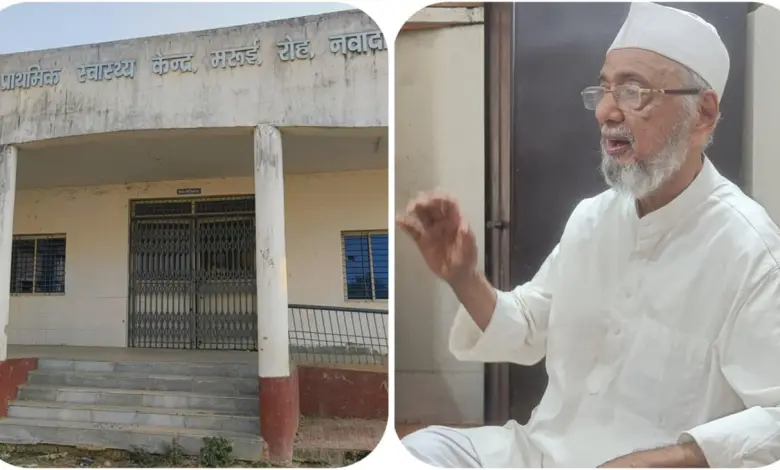
Primary Health Centre in Marui, Nawada and Jamal Ahmed ‘Jamal’
Kolkata:
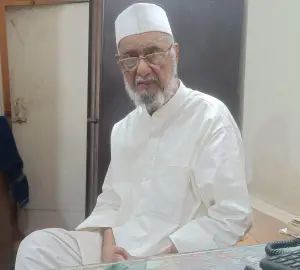
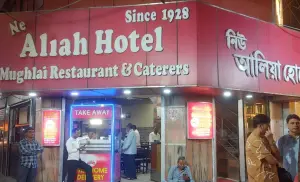
In the heart of Kolkata’s vibrant Prafulla Sarkar Street, Jamal Ahmed, the 98-year-old hotelier and poet, sits in the backroom of Aliah Hotel, his voice resonating with the same intensity as the lively street outside.
Jamal Ahmed, a nonagenarian, is known in the city as a poet and a concerned citizen. But the 98-year-old is also a philanthropist. He has donated 15 Katthas of land in his native village in Bihar for a government hospital, which last year became operational.
A Philanthropic Legacy: Land Donation for a Government Hospital in Bihar
“The land (in Marui village, Nawada district) was the costliest in the adjoining areas. But my father, who decided to donate it to the government to build a hospital there, did not hesitate,” informed Firdaus Jamal, son of Jamal Ahmed.
The market rate for land in Marui village is at least Rs 20 lakhs per kattha. In Bihar’s Nawada district, one kattha of land is equivalent to 3 decimals.
“I had told my mother that one day there will be a hospital in your name. So I had to do it,” Jamal Ahmed told eNewsroom. The family proposed the name of the hospital as QZJ Government Hospital, incorporating the names of Jamal and his parents. There is a board at the hospital where Jamal Ahmed Jamal’s name as the donor is mentioned. However, the Bihar government has yet to adopt the name suggested by the donors’ family.
The 20-bed primary hospital is now operational.
Poet Jamal Ahmed ‘Jamal’ | eNewsroom
When donating, I did not make any demands, such as asking for government jobs for my family members or insisting that a doctor from my family should practice here,” he said.
“I demand that either the Bihar Chief Minister (Nitish Kumar) or the Health Minister inaugurate the hospital,” the donor added.
Jamal Ahmed, a multifaceted personality, knows five languages and completed his Master’s in Sanskrit from Banaras Hindu University (BHU) and his Bachelor’s in Science (BSc) from Patna University. He frequently uses Sanskrit shlokas in his poetry. Much of his poetry focuses on communal harmony in the country.
A major event in his life was meeting the Father of the Nation, Mahatma Gandhi, on August 13, 1947 in Kolkata.
A Life of Literature and Peace: Jamal Ahmed’s Encounter with Mahatma Gandhi
“I was just 18 years old, but Gandhiji was desperately seeking peace for the country. When I heard that Gandhiji was in Kolkata and my uncle, Kareem Sahab, was going to meet him, I joined my uncle and reached Beleghata,” recalled the nonagenarian, quickly adding that he has no picture with Gandhiji.
“In my brief interaction, I requested Gandhiji for peace in the country and to stop the riots. Gandhiji replied that he came to Kolkata for this very purpose and would be traveling to other parts of the country for the same reason.”
The well-known hotelier has great command over recipes and dishes. “I have helped several hotel outlets in Kolkata and abroad set up their centers. Some of them are now big names, like Arsalan and Mezban.”
Jamal Ahmed’s sons run several hotels in Kolkata, including the famous Arafat Hotel on Rafi Ahmed Kidwai Road, which is managed by Firdaus Jamal.
Aliah Hotel on Prafulla Sarkar Street—where Jamal Ahmed feels he gains the wings to fly.
Preserving Harmony Through Poetry: The ‘Tatkal’ Poet’s Message for Unity
But in Kolkata’s literary circles, ‘Jamal’ is known for his ‘Tatkal’ poetry. A ‘Tatkal’ poet is one who can deliver a poem instantly, depending on the situation.
“I was very young when I met Gandhiji, and still, I recited a poem for him:
Andhi Tawaf Karti Hai, Gandhi Ki, Aye Jamal. Ye To Bhanwar Se Laye Hain Kashti Nikal Ke
(The storm circles around Gandhi, O Jamal. He is the one who has brought the boat out of the whirlpool.)”
The poet ‘Jamal’, an Acharya in Sanskrit often uses the couplet to promote communal harmony.
Yem niza pro weti ganna laguchetshaam udarnaam chatrinantu, washudhew kutumbakam.
A rough translation of this Sanskrit couplet is:
“This is ours, that is yours—those who think this way have small hearts. But for the great ones, the entire world is one.”
He also mentioned that the shloka is written at the entrance of the old Parliament building’s gate. Eleven members of Parliament, including Maulana Azad, had agreed to imprint it there.
source: http://www.enewsroom.in / eNews Room India / Home> Art & Culture> Bengal / by Shahnawaz Akhtar / February 19th, 2025
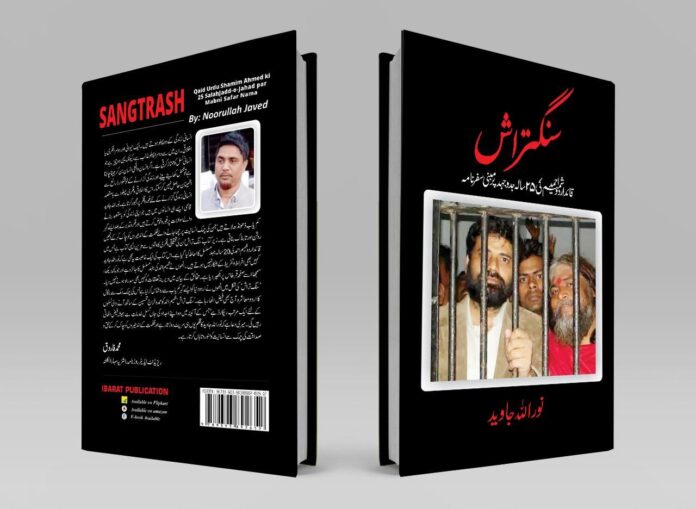
“The Book SangTrash: Shamim Ahmed’s account of the fight for human rights and Urduh” penned by Nurullah Jawaid is an immersive and powerful exploration of the life and activism of Shamim Ahmed, one of India’s most distinguished human rights advocates. As a pioneer of the Urdu movement, Shamim Ahmed’s story is one of unwavering dedication to social justice, human rights, and the preservation of cultural identity in the face of systemic injustice and political turbulence. This book, rich in historical and cultural context, offers an in-depth look at the life of a man who was not only a visionary leader but also a symbol of courage and resilience in the fight for equality and dignity.
The book delves into Shamim Ahmed’s lifelong struggle to address some of the most pressing socio-political issues of his time. Set against the backdrop of India’s dynamic and ever-evolving socio-political landscape, “SangTrash” chronicles Shamim Ahmed’s tireless efforts to combat the deeply ingrained inequalities that plagued the country, particularly the discrimination faced by marginalized communities. These efforts were not limited to his work as a human rights advocate but extended to his role as a cultural leader, educator, and innovator. Through the lens of his activism, the book paints a vivid picture of the complexities of Indian society during times of immense political and social upheaval.
Shamim Ahmed was not merely a passive observer of the struggles faced by the oppressed and underprivileged. He was a relentless force working to bring about tangible change. From his early days as a young idealist, Shamim Ahmed was deeply moved by the plight of the marginalized—those whose voices were suppressed by both society and the political elite. His passion for human rights led him to establish the Human Rights Protection Association (HRPA), an organization dedicated to addressing human rights violations across India. Through this platform, Shamim Ahmed sought to mobilize citizens to stand up for justice, regardless of their background, religion, or ethnicity.
In addition to his advocacy for human rights, Shamim Ahmed is best known for his work with the Urdu Movement. At a time when the Urdu language was facing marginalization and disintegration due to political pressures, Shamim Ahmed took it upon himself to revitalize and protect the language as an integral part of India’s cultural and literary heritage. His campaigns to promote Urdu literacy and its inclusion in educational institutions were not just about language preservation; they were about the empowerment of communities who saw Urdu as an essential part of their identity. Through this movement, Shamim Ahmed demonstrated that language is not merely a means of communication but also a symbol of cultural resistance and resilience.
As the narrative unfolds, “SangTrash” brings into focus the challenges Shamim Ahmed faced along the way. His activism was not without its detractors. Political opposition, societal resistance, and personal sacrifices were all part of the price Shamim Ahmed paid for his unwavering commitment to justice. The book sheds light on the obstacles he encountered, from the government’s attempts to suppress his initiatives to the skepticism and hostility from those who feared change. Yet, despite these challenges, Shamim Ahmed’s resolve remained unshaken. His determination to bring about social change and protect the rights of the disenfranchised never faltered, even when his own safety was threatened.
Shamim Ahmed’s legacy is further immortalized through his initiatives such as the “Food for All” campaign, which aimed to address hunger and poverty in India’s rural and urban areas. The campaign sought to ensure that food was available to every citizen, regardless of their social status, and to promote sustainable agricultural practices that would reduce reliance on outside aid. Through his leadership, the campaign brought together communities, activists, and policymakers, resulting in significant strides towards alleviating food insecurity in many regions.
Nurullah Jawaid’s writing not only brings Shamim Ahmed’s efforts to life but also contextualizes them within the broader historical and cultural milieu of India. By delving into the political, social, and economic landscape of Shamim Ahmed’s era, the book offers readers a nuanced understanding of the obstacles that activists and marginalized groups faced during this turbulent period.
“SangTrash” is a deeply informative and educational work that highlights the interconnectedness of human rights, cultural preservation, and social justice. It challenges readers to reflect on the ways in which systemic inequalities continue to shape society and the moral responsibility that each individual bears in addressing them.
The book also pays tribute to the human rights defenders who, like Shamim Ahmed, dedicate their lives to advocating for justice in an often hostile environment.
In telling Shamim Ahmed’s story, Nurullah Jawaid brings to the forefront the importance of collective action. The struggles faced by Shamim Ahmed were not his alone; they were shared by countless others who, inspired by his work, joined in the fight for a more equitable and just society. This collective action is central to the book’s message—individual activism can spark movements, but only through solidarity and collective efforts can lasting change be achieved.
“SangTrash” is not merely a biography of a prominent figure in Indian history. It is a call to action. By recounting Shamim Ahmed’s life and the impact of his work, the book challenges readers to engage with the pressing social issues of today, particularly those related to human rights, inequality, and cultural identity. The lessons of Shamim Ahmed’s life are timeless, and the values he fought for—equality, dignity, and mutual respect—remain as relevant as ever.
This book is also a reminder that activism is not always glamorous or celebrated in its time. Often, it is the courage of individuals like Shamim Ahmed, whose actions go against the grain of societal norms that change the world for the better. “SangTrash” is, therefore, more than just the story of one man; it is an inspiration for anyone who believes in the power of activism to bring about positive, meaningful change. It challenges readers to question the status quo and to take responsibility for shaping the future in a way that is more inclusive and just for all.
In conclusion, “SangTrash” is a tribute to Shamim Ahmed’s life and legacy. It is a book that encourages readers to consider the ways in which activism, grounded in human rights and social justice, can transform society. By examining the key moments in Shamim Ahmed’s life and the challenges he overcame, the book underscores the enduring importance of standing up for what is right, even in the face of adversity. Through this compelling narrative, “SangTrash” becomes not just a biography but a powerful call for activism in today’s world.
source: http://www.muslimmirror.com / Muslim Mirror / Home> Books> Positive Story / Reviewed by Kulsum Farooque / February 14th, 2025