Tag Archives: Positive News of Muslim Women of Maharashtra

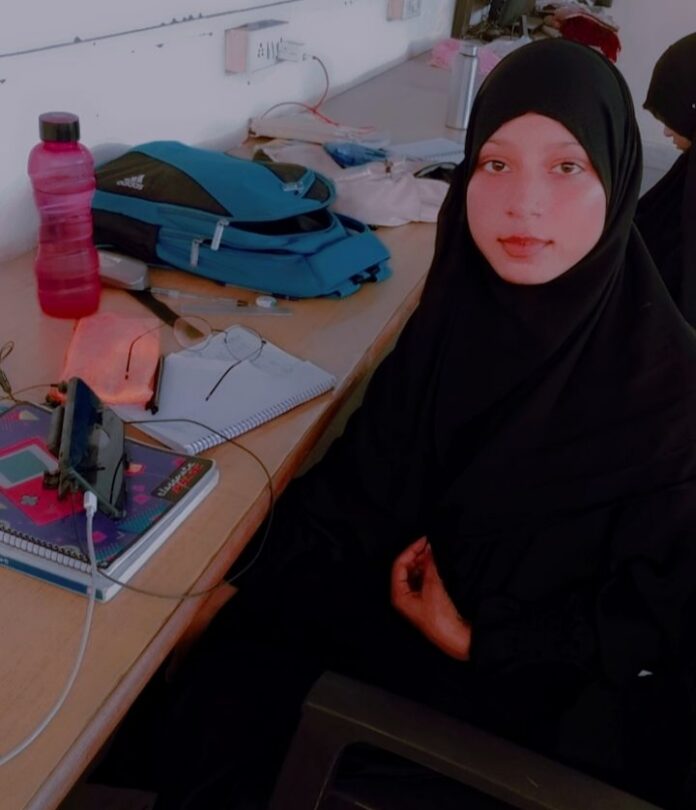
In a first, Maharashtra gets first Muslim female IAS officer – Adeeba Anam Ashfaque Ahmed

Yawatmal (Vidharba Region), MAHARASHTRA :
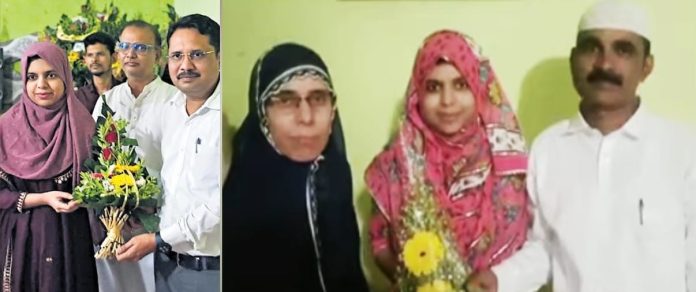
Do it again and again. Consistency makes the raindrops create holes in the rock. Whatever is difficult can be done easily with regular attendance, attention, and action. Perhaps imbibed by the words of Israelmore Ayivor, an inspirational writer, blogger and LifeSkills Entrepreneur, Adeeba Anam Ashfaque Ahmed from Yavatmal in Maharashtra created a record of sorts to become the first female Muslim IAS officer after successfully clearing the civil services with All India Rank 142.

The success saga of Adeeba only proves the awareness shown by Muslim girls to take up civil services exams breaking the barriers.

On cloud nine are Adeeba’s parents, relatives, friends and more particularly her teachers on seeing her victory after three failures. She came out with flying colours in her fourth attempt after getting the necessary guidance and coaching from Jamia Millia Residential Coaching Academy in Delhi.

Can’t imagine a girl hailing from a parched and drought-prone Yavatmal district bringing glory to her native. All because of her patience and consistency as to the quote of American business honcho Robert Kiyosaki – “Successful people don’t fear failure but understand that it’s necessary to learn and grow from.” It is learnt that Maharashtra hardly witnessed any female Muslim IAS officers in the last one decade or so.

Kudos to her dad Ashfaq Ahmed, an auto driver, who despite financial constraints strained his nerves to make his daughter’s civil service dream a reality. Of course, her mom and uncle were very supportive in ensuring she achieved her IAS after successive failures. Adeeba started her early education at Zafarnagar Zilla Parishad Urdu Primary School, where she studied from Class 1 to Class 7. Thereafter, she finished schooling from Class 8 to 10 at Zilla Parishad Government Girls High School. And she completed her 11th and 12th grades at Zilla Parishad Ex-Government College in Yavatmal.

Armed with BSc Mathematics from Inamdar Senior College in Pune, she joined a coaching academy in Pune to take UPSC foundation classes based on the advice of her maternal uncle Jan Nizamuddin Sahib, who works as secretary at Seva NGO.

She got interested after meeting a few IAS officers and was determined to become an IAS. The road to civil services wasn’t smooth for her as she faced many obstacles. However, she was firm and worked relentlessly to taste success.

Noteworthy to mention that her dad Ashfaq Ahmed dropped out of school after tenth standard due to family circumstances. But decided not to let her daughter face the same fate, left no stone unturned and encouraged Adeeba to do her UG. Right from her school days, she had a fascination for civil services inspired by the young IAS officers’ remarkable feat through newspapers. Since then, she has been working towards her civil service dream.

In an interview to a local television channel, she is reported to have said that studying isn’t easy, especially for girls in patriarchal communities like Muslim, but her parents stood by her. She expressed her gratitude to mom, who extended support for her in her endeavours. The community was against girls pursuing higher studies, but her dad told her not to worry about society, and focus on her goal.

It is interesting to infer that she chose Urdu Literature as her optional subject despite having a science background. However, she displayed her prowess in clearing the civil services with confidence. A total of 32 candidates from Jamia Millia Islamia and 3 from Aligarh Muslim University (AMU) Residential Coaching Academy (RCA) have figured in the UPSC Civil Services 2024 Merit List. Of the 1009 candidates selected, only two Muslim candidates figured in the top 100.

She said that IAS is the first step to serve the society and added that her area of interest is to work for the underprivileged, more specifically girls. And she wanted to contribute to the education and health sector as a civil servant. Jamia Millia Islamia (JMI) and Aligarh Muslim University (AMU) RCAs are renowned academies in the field of coaching students for Civil Services. They provide free coaching and training for preparing for the Civil Services Examination for candidates from SC, ST, Women, and Minority communities.

source: http://www.radiancenews.com / Radiance News / Home> Focus> Markers of Excellence / by M Rafi Ahmed, Radiance News Bureau / April 28th, 2025
Dr. Iqbal Urdu Primary and Middle School Adds Another Feather to Its Cap

Malegaon (Nashik District), MAHARASHTRA :

Malegaon:

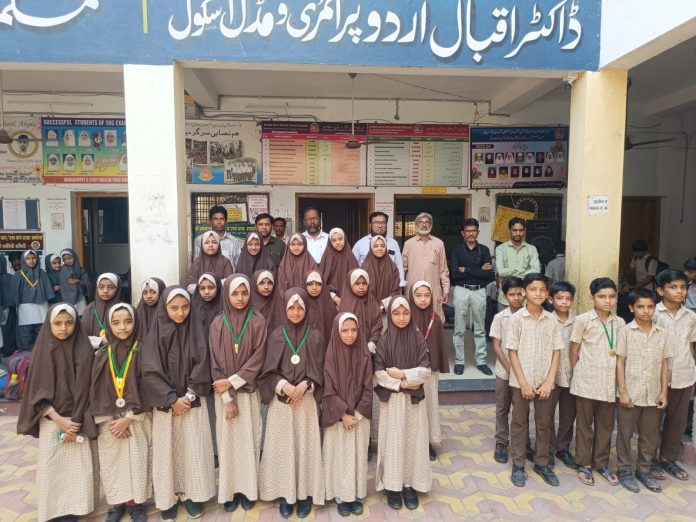
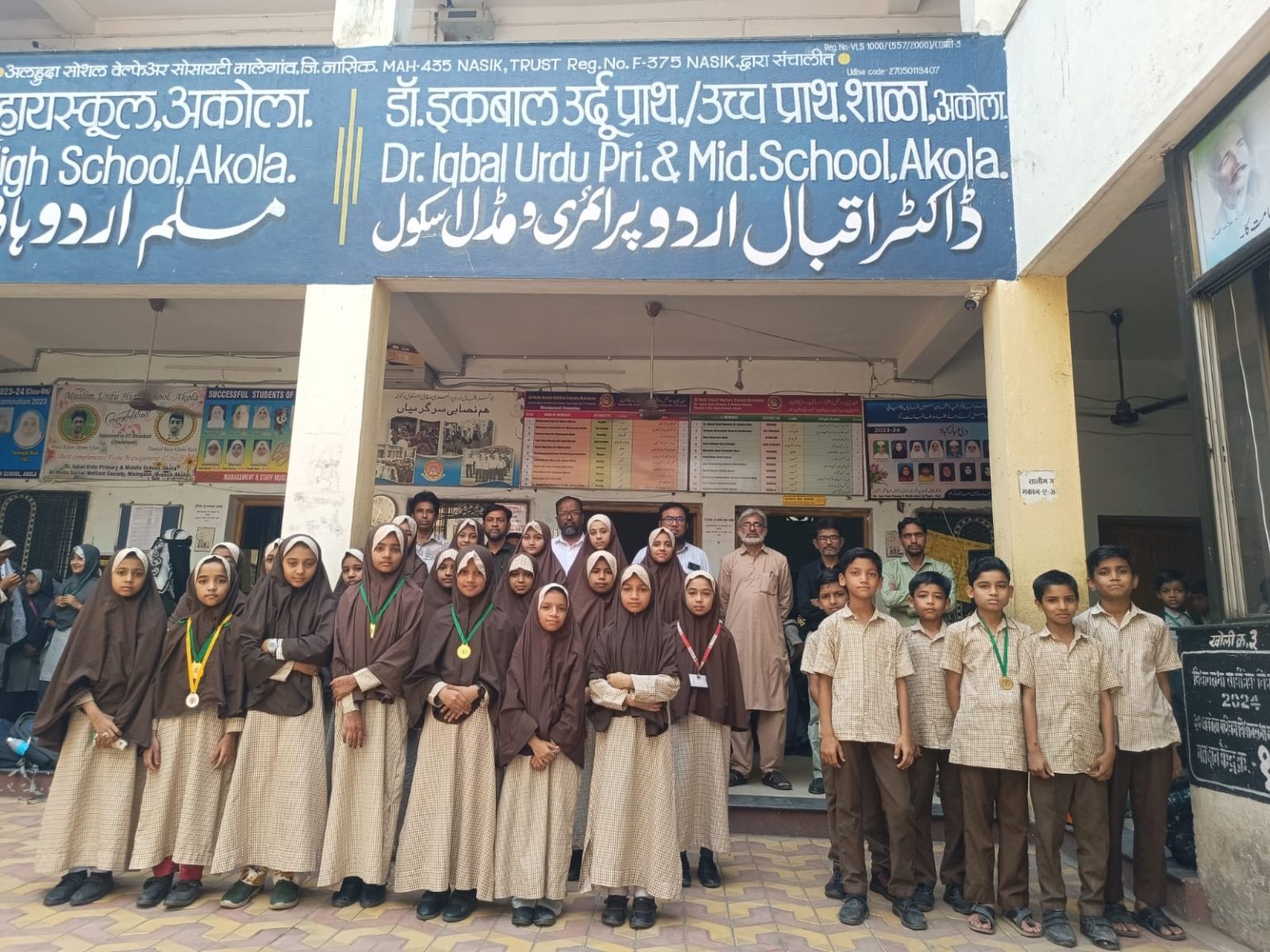
Every year, the Government of Maharashtra conducts a scholarship examination for students of Grade 5, in which lakhs of students from across the state participate. Recently, interim results of this exam were announced. In this examination, 48 students from Dr. Iqbal Urdu Primary School – a renowned and quality institution run by Al-Huda Social Welfare Society, Malegaon, District Nashik – participated. Out of these, 31 students achieved outstanding success.

Hafsa Saman Mohammad Mujahid secured 212 marks out of 300. Fatima Sitwat Azhar Hussain and Zobia Anam Mohammad Mujahid both secured 188 marks respectively, while Sheikh Umar Sheikh Sabir obtained 186 marks.

The school administration always strives not only to encourage students to participate in competitive exams but also to ensure their thorough preparation. For this purpose, the school arranges special classes throughout the year specifically for scholarship students, providing them with extensive practice.

Behind this success lies the significant role of competent and dedicated teachers. The school has expert teachers for this competitive scholarship activity, and the Headmaster is always ready to guide the students. In addition, the parents extended full support.

The institution’s President Dr. Ahmed Urooj, Vice President Khwaja Nizamuddin, Secretary Riyaz Khan, Headmaster Mohammad Ateeque ur Rahman, and the school staff congratulated the students and their parents and expressed their best wishes for great success in the future.

source: http://www.radiancenews.com / Radiance News / Home> Education> Latest News / by Radiance News Bureau / April 26th, 2025

A Hijabi’s Rise: Alfiya Ansari’s Success Story in the Face of ‘Bias’ at Mumbai College

Mumbai, MAHARASHTRA :

Mumbai : 

Hijab-clad Alfiya Ansari allegedly faced discrimination at NG Acharya College, the first educational institution in the city that banned wearing headscarves and veils on the campus. Despite the decision reportedly forcing several Muslim women to drop out or discontinue attending classes, she remained dedicated to her education.

Her perseverance and determination led her to achieve the top rank in her class, serving as a powerful testament to her resilience and a strong rebuke to those who “discriminated” against her.

Alfiya’s achievements highlight her unwavering commitment to her goals, demonstrating that “bias” and “prejudice” cannot diminish true talent and hard work.

A Dream of Becoming a Doctor

Living with her parents and two siblings in Mumbai’s Govandi slum, Alfiya’s story is one of remarkable resilience and determination. Her father, a tailor earning Rs 20,000 per month, worked hard to support his family.

As the eldest sibling, Alfiya took her role seriously. She completed senior secondary school from a local English medium school, scoring an impressive 85% and chose to enroll in an aided college for further studies.

From a young age, she aspired to become a doctor. This ambition led her to choose the science stream in junior college, where she began preparing for the National Eligibility-cum-Entrance Test (Undergraduate) or NEET examination.

However, as she advanced to her second year, she decided to focus primarily on her board exams, dedicating much of her time to studying in the library to achieve her academic goals.

Despite facing health issues from eating outside food while spending long hours in the library, Alfiya’s family, particularly her mother, provided unwavering support. Her mother ensured she had home-cooked meals and timely medication, allowing her to maintain her focus.

Alfiya credits her success to her mother’s support, highlighting the crucial role her family played in her academic achievements.

‘Harassment’ at College

Initially cooperative, the staff at Acharya College allegedly changed their attitude drastically once the hijab issue arose. Teachers purportedly began harassing Muslim girls, making them stand outside during lectures and using various other methods.

Alfiya was mentally disturbed for many days. Fifteen-twenty girls, she alleged, stopped attending college.

However, she could not easily give up on her dream of becoming a doctor. With her parents unable to afford another college, she continued at Acharya, removing her hijab outside but still wearing a dupatta.

“This is how I struggled,” she told TwoCircles.net.

Maintaining Focus Amidst Adversity

Alfiya remained focused on her goals despite the challenges. “Life brings many issues, sometimes in the form of the hijab and sometimes due to narrow-minded views about girls,” she said, adding, “When we are focused, problems do not seem as overwhelming.”

She stayed focused on her aim and plans to continue facing challenges head-on without stepping back from her goals.

A Message to Girls

Alfiya has a powerful message for girls: “If we want to change our current situation, education is the most important part. Achieve it, but always remember the importance of both academic and religious knowledge. Only then can you become a better role model in this society. Your identity should be defined by your character, which for a girl is always defined by her modesty. Be whatever you want to be, but stay within the bounds of modesty.”

Advice for Youth

To the youth, Alfiya advises, “You are your own saviours, and your own adversaries. Keep yourself engaged in productive activities, or else negative influences will keep you busy with useless and immoral activities. Use your mobile phones positively but within a specific time limit. Learn skills to keep pace with the present situation.”

Family’s Joy and Support

After the results, Alfiya’s family was overjoyed. “Before 12th grade, I did not receive much financial support from anyone; but after 12th grade, I received immense support from an elder sister, whom I consider an angel. She has been a great source of motivation for me,” she said, though she could not mention her name due to her sister’s request for anonymity.

source: http://www.twocircles.net / TwoCircles.net / Home> Careers / by K K Ahmed, TwoCircles.net / June 10th, 2024

Malkapur Student Nazifa Namus Wins Top Prize in District Speech Competition

Malkapur (Buldhana District) , MAHARASHTRA :

Malkapur, Buldhana :

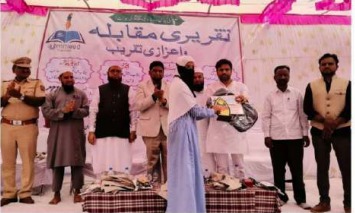
In a district-level speech competition organized by the Umeed Foundation, Malkapur’s Al-Huda Urdu Girls School and Junior College student, Nazifa Namus, emerged victorious, securing the first position.

Daughter of Tariqullah Khan, Namus impressed judges and spectators alike with her eloquence.

She was awarded an honorary certificate and a cash prize of eleven thousand rupees.

The event, held on Sunday, garnered attention from dignitaries such as Abdul Karim Salar, President of the Education Society, and Rajesh Akde, a prominent member of the Provincial Assembly.

Also present were Maulana Ashfaq Qasmi, Haji Rasheed Khan and senior police officials from the city.

source: http://www.radiancenews.com / Radiance News / Home> Education / by Zaina Aman (headline edited) / Radiance News Bureau / March 06th, 2024

Meet India’s richest Muslim woman, who owns property worth crores, runs company worth of 28,773 crore, her business is..

Mumbai, MAHARASHTRA :

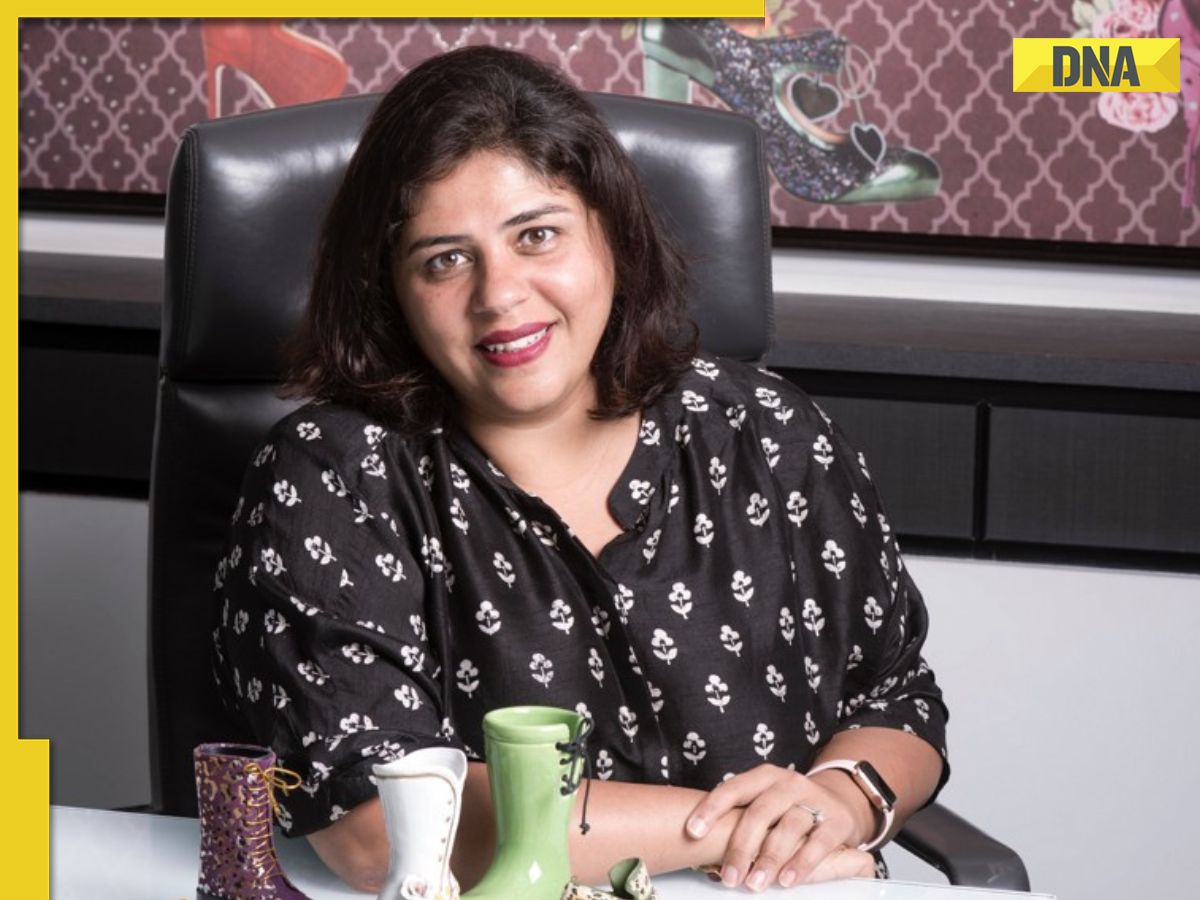
She is the daughter of billionaire Rafique Malik, the company’s chairman. Her grandfather, Malik Tejani, founded it in 1955 in Mumbai. Farah has guided Metro Shoes into a new era of modern retail. The company’s brands include Mochi, Metro, and Walkway.

article-main
(Image source: LinkedIn)

Eid Ul Fitr was celebrated throughout the country. Amid celebrations, you may be left wondering if you are asked about the wealthiest Muslim woman in the country. The name of the country’s richest Muslim woman is Farah Malik Bhanji. She is the managing director of the Metro brand, which sells premium shoes. Her net worth is more than Rs. 26000 crore. Farah Malik plays an important role in giving the Metro brand a new identity.

She is the daughter of billionaire Rafique Malik, the company’s chairman. Her grandfather, Malik Tejani, founded it in 1955 in Mumbai. Farah has guided Metro Shoes into a new era of modern retail. The company’s brands include Mochi, Metro, and Walkway.

As of December 8, the company’s market capitalisation was Rs 35,117 crore. Farah is the second of five daughters. His father, Rafique, has a real-time net worth of Rs 21697 crore as of 12 April.

Farah has more than 20 years of experience in the footwear industry. She has played a key role in reimagining the company for the new era. She began her career in marketing before moving on to revamp Metro Brands Limited’s technology roadmap and supply chain. The company was listed in December 2021. The late billionaire investor Rakesh Jhunjhunwala’s wife, Rekha, owns a minority stake in Metro Brands.

She pays close attention to detail, is well-versed in business, and has a sense of style. The footwear company has experienced growth for both the company and its employees under her leadership. She has played a crucial role in forging connections with international companies like Skechers, Crocs, and Clarks in addition to forging close bonds with more than 250 reliable vendors. She contributed to the network’s growth from 100 stores in 2010 to 598 locations across 136 Indian cities.

At the close of trading on Wednesday, Metro Brands Ltd. saw a rise to Rs. 1058. Rs. 1,440.45 is the stock’s 52-week high level, and Rs. 784.45 is its 52-week low. Metro Brands’ shares opened at Rs 1044 at the start of the trading session on Wednesday. Subsequently, it increased by over 20 rupees, closing at 1058. The company cap is of Rs 28,773 crore. 

source: http://www.dnaindia.com / DNA / Home> Business / by Varnika Srivastava / April 12th, 2024

Dr. Sara Shaikh bags gold in Masters in Obstetrics and Gynecology

Mumbai, MAHARASHTRA:

Mumbai :

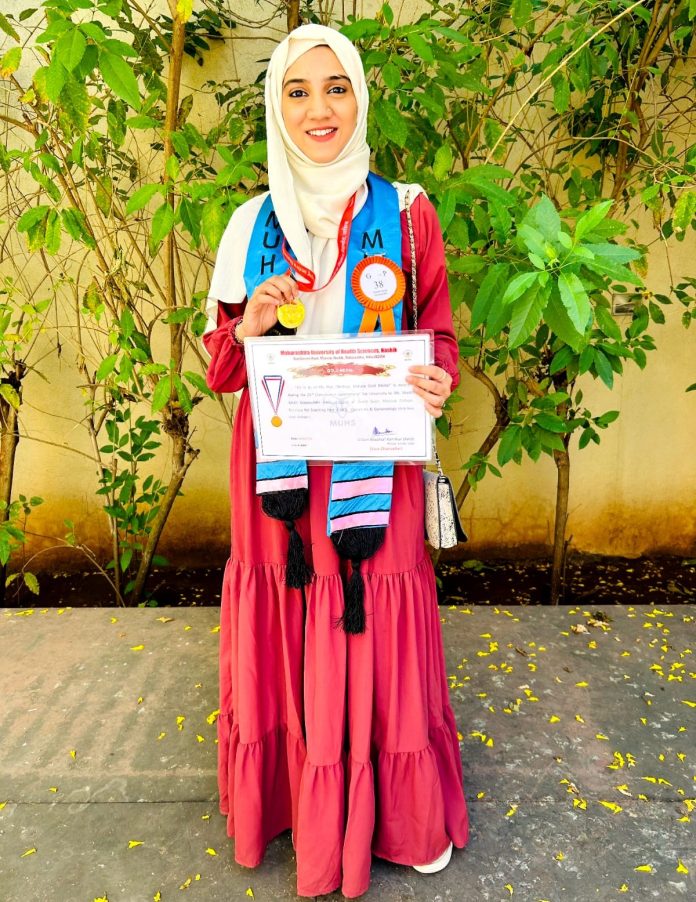
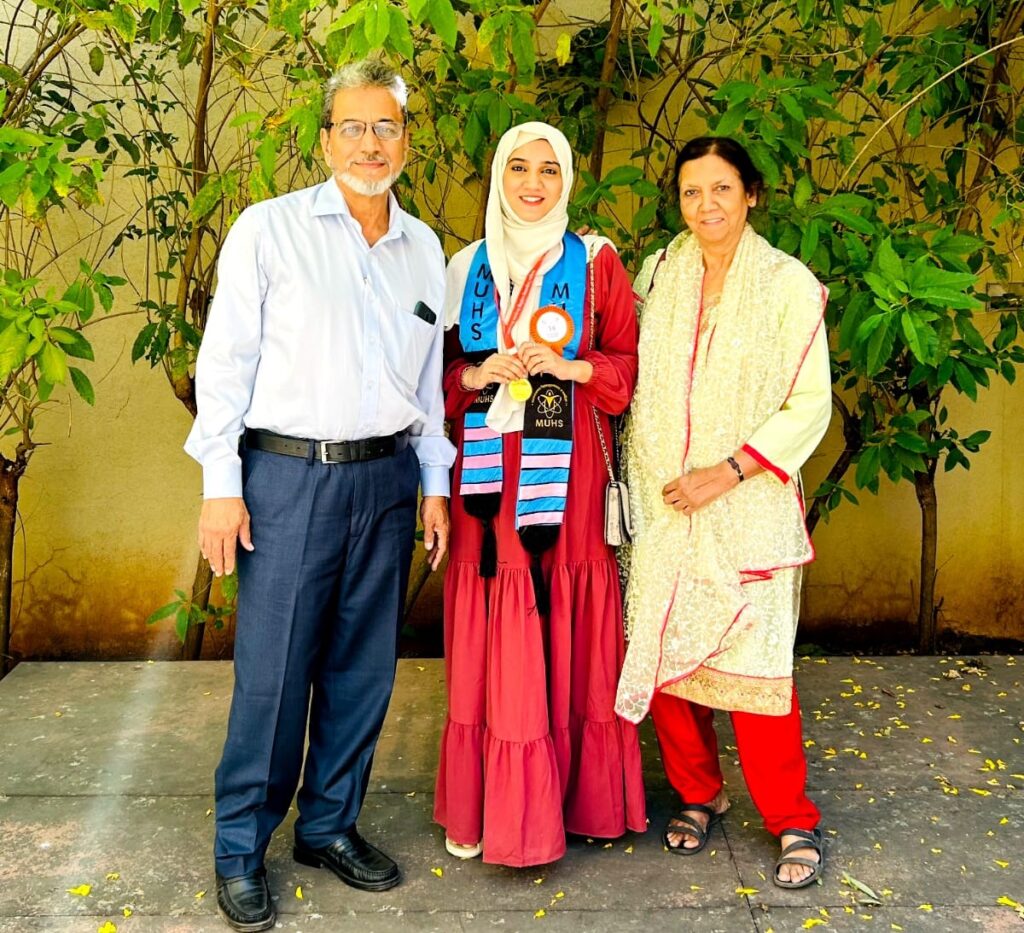
In a proud moment for the Muslim community of Maharashtra, Dr. Sara Shaikh secured the top position in Masters in Obstetrics and Gynecology in all the Medical Colleges of Maharashtra.

This remarkable feat was recognized with the prestigious Gold Medal during the convocation ceremony of Maharashtra University of Health Sciences (MUHS) held in Nashik. The convocation ceremony was graced by distinguished guests, including Vice Chancellor retired Lt Gen Madhuri Kanitikar and State Cabinet Minister for Medical Education Hasan Mushrif. State Governor Ramesh Bais addressed the event online.

Dr. Sara Shaikh, a beacon of excellence and perseverance, hails from a family deeply rooted in the medical profession. Graduating from MIMER Medical College, Pune, she embarked on a journey marked by determination and dedication. Her pursuit of knowledge led her to excel in All India Quota of NEET PG examination, through which she chose to specialize in Obstetrics and Gynecology at the esteemed Grant Government Medical College and Sir JJ Group of Hospitals, Mumbai.

Throughout her academic journey, Dr. Sara’s brilliance shone brightly, earning her accolades for presentations and even international publications. Notably, she obtained qualifications in DNB, Obstetrics, and Gynecology, further solidifying her expertise. Last year, she achieved another milestone by passing MRCOG Part 1 from the Royal College of England.

Dr Sara Shaikh with her parents

In an exclusive conversation with Radiance News, Dr. Sara Shaikh attributed her success to her unwavering determination and the solid support of her family. She expressed gratitude to her mother, Dr. Nasreen Shaikh, father, Dr. Gayasuddin Shaikh, and husband, Dr. Muhammad Kashif Ali, for their steadfast encouragement throughout her educational journey.

Addressing the significance of her choice to wear hijab, Dr. Sara emphasized that it never hindered her path to success. Firmly committed to her principles, she remarked that adhering to the conditions of Purdah had never been a barrier in her academic or practical life.

Dr. Sara Shaikh urged Muslim students to forge ahead with diligence and determination, assuring them that success awaits those who persevere. She emphasized the importance of overcoming adversity and the pride that comes with accomplishing one’s goals. Dr. Sara’s journey serves as an inspiration to aspiring medical professionals, transcending boundaries and proving that dedication and perseverance can lead to remarkable achievements, regardless of challenges faced along the way.

She stands as a torchbearer for others, igniting hope and determination in the hearts of countless students aspiring to follow in her footsteps.

source: http://www.radiancenews.com / Radiance News / Home> Latest News / Markers of Excellence / by Radiance News Bureau / March 14th, 2024

Shabnam Shaikh is India’s first doctorate in wrestling studies

Aambijalgaon, Kajrat (Ahmednagar District), MAHARASHTRA:

Dr. Shabnam Shabbir Sheikh

Shabnam Shabbir Shaikh of Aambijalgaon, Maharashtra, trashes stereotypes of Indian women. Having picked wrestling as her field, this 28-year-old woman has broken all the shackles that a girl child faces while growing up in a small village.

Hailing from the village Aambijalgaon, Karjat, of the district Ahmednagar Shabnam was born in Jammu where her father Shabbir Sarabhai Shaikh was posted in the Indian Army. She is the third child of her parents and she grew up seeing her mother Rizwana Begum looking after the house and the family. However, Shabnam’s father always wanted his daughter to be brave, self-reliant, and break social stereotypes.

A great votary of women’s education Shabbir Shaikh encouraged his wife Rizwana Begum to complete her MSc degree after their marriage.Due to her father’s frequent postings across the country, Shabnam did her schooling mostly at the Army schools in Ambala, Udhampur, Srinagar, and Ahmedabad. After her father’s retirement, the family settled in their native village and Shabnam joined the local school.

She joined the 11th class in the Dada Patil College, Karjat, in the science stream. despite an irregular and sluggish bus service to Karjat, she somehow managed to study and also attend coaching for wrestling.

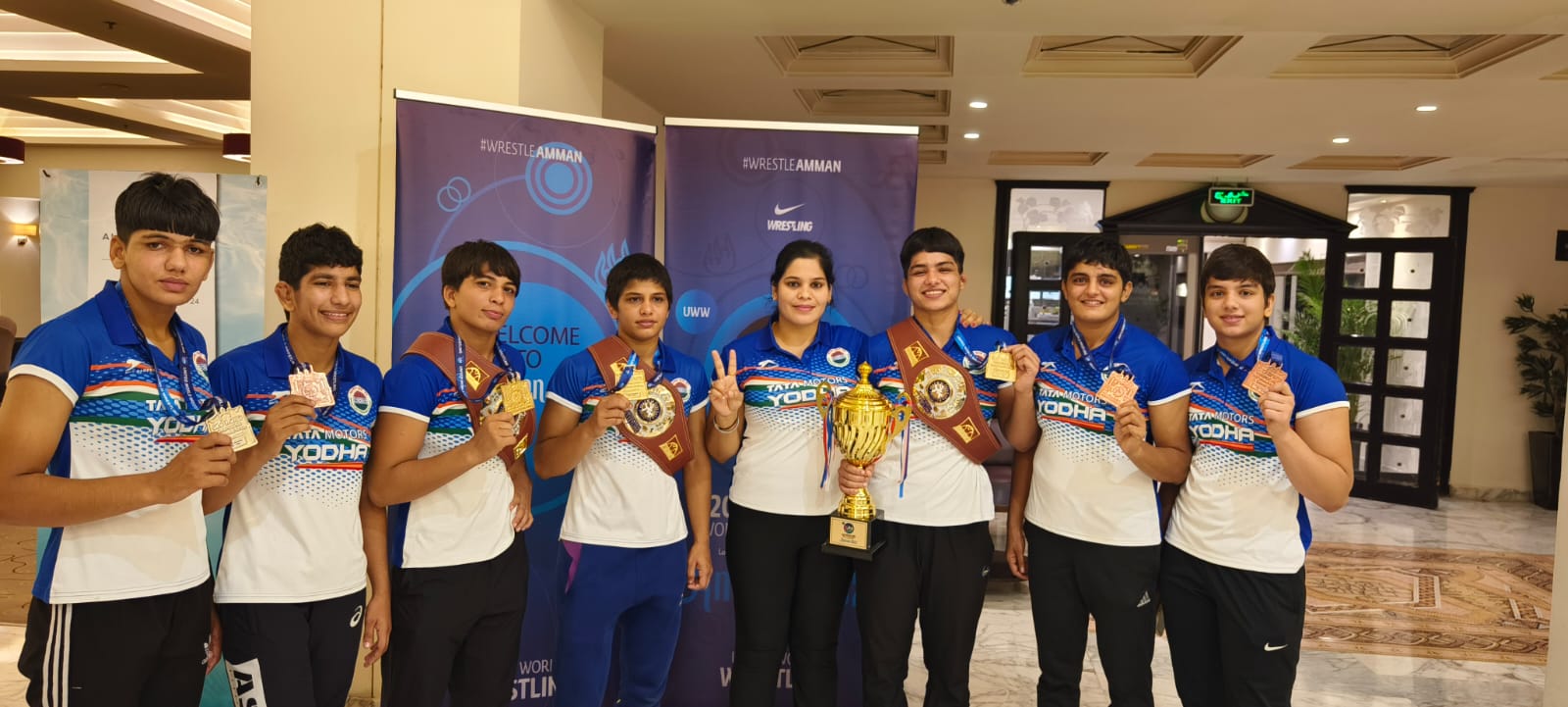
Coach Shabnam with her team

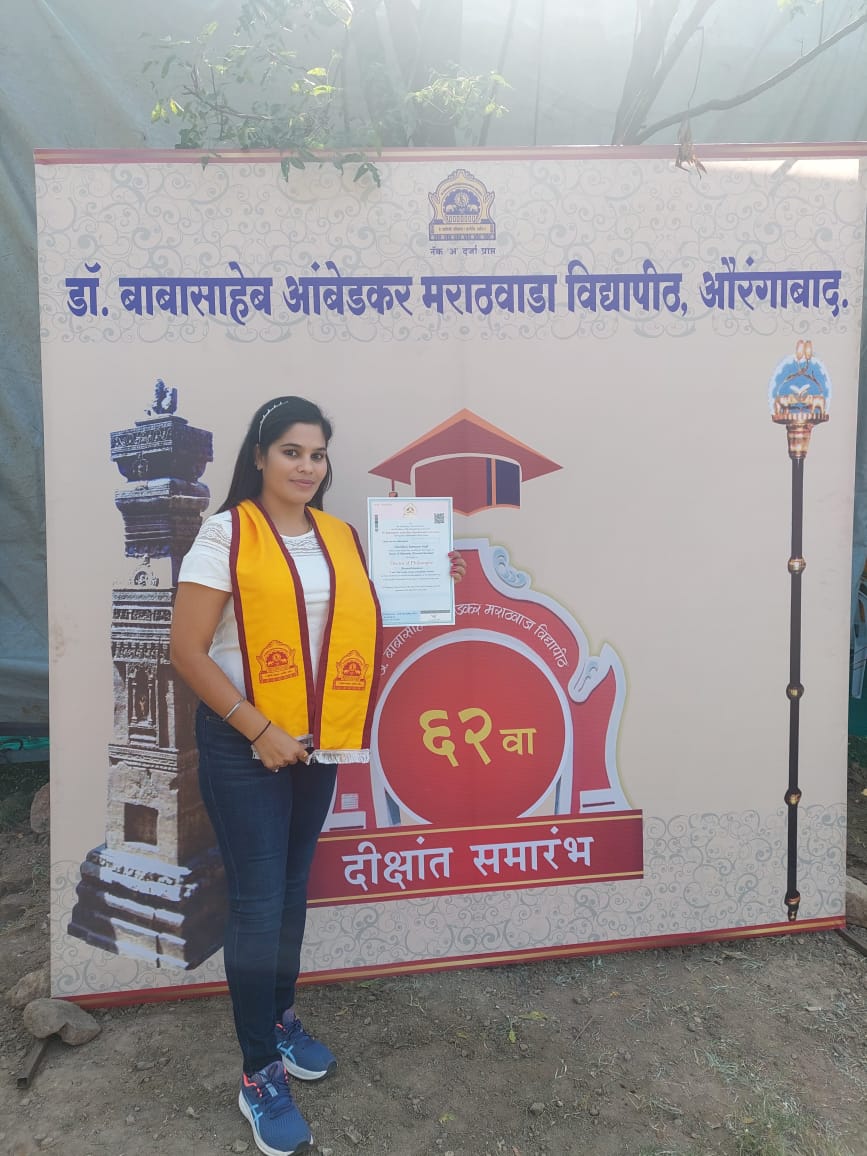
Shabnam completed her Bachelor of Physical Education (BPE) from Aurangabad (Sambhajinagar). She also got a diploma certificate in Coaching from the National Institute of Patiala, Punjab, and later did her Master’s from Babasaheb Ambedkar Marathwada University and then registered for her PhD studies.

Shabnam’s wrestling career began at the age of seven with her father as her coach. Shabnam says, “’My father is my first guru.”

Shabnam came from a family of wrestlers: her grandfather Sadarbhai Shaikh and great-grandfather were well-known wrestlers in the area. Their ancestral house has a wrestling arena where she watched male members of her family and neighbours practice wrestling. 

Shabnam had to face the scorn and disapproval of her extended family and relatives when she started practicing wrestling. People even asked her family why she was allowed to wear shorts.

Shabnam at the convocation of the University

Shabnam started with Kabaddi, a game that requires a lot of alacrity and stamina.

Initially, she did not get to enter the arena where her brothers wrestled, so she took to Kabbadi. “I used to think that if I wrestle and win that will be my victory. Even if I lose, it will also be my failure. Will happen… I expressed my desire to wrestle to my father. He responded positively.”

Shabnam’s father had a precondition for training her. He wanted her to concentrate on training and practice for the first two years. She started receiving training from her father and two elder brothers.

Every morning at 4 o’clock she was sent to pick lemons from their farm located about 10 km away. She learned the nuances of wrestling and participated in her first competition in Ludhiana (Punjab). She bagged a silver medal and there started her winning streak.

Shabnam says, “Once in my village, my father came to know about a competition in Delhi. I was just 10 years old at that time. He gave me a paper with the address written on it and a train ticket and wished me good luck for the journey.”

At that time she wondered why she was going alone, ‘Why don’t my parents come with me? But my father always used to tell me that some battles in life have to be fought alone,” she says going down memory lane.

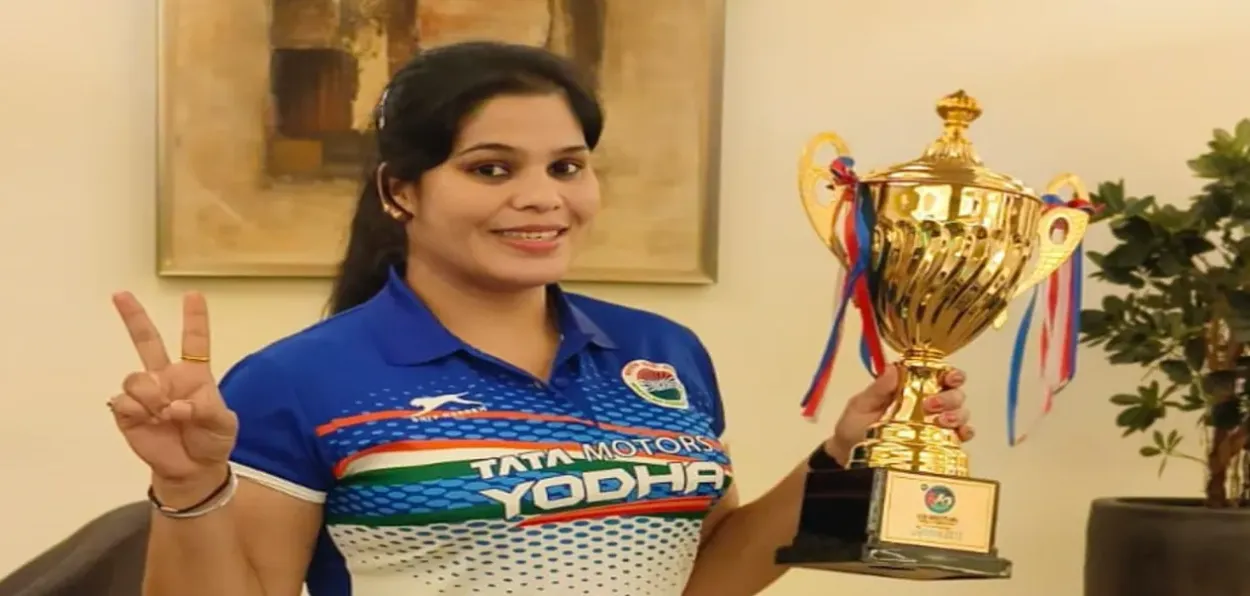
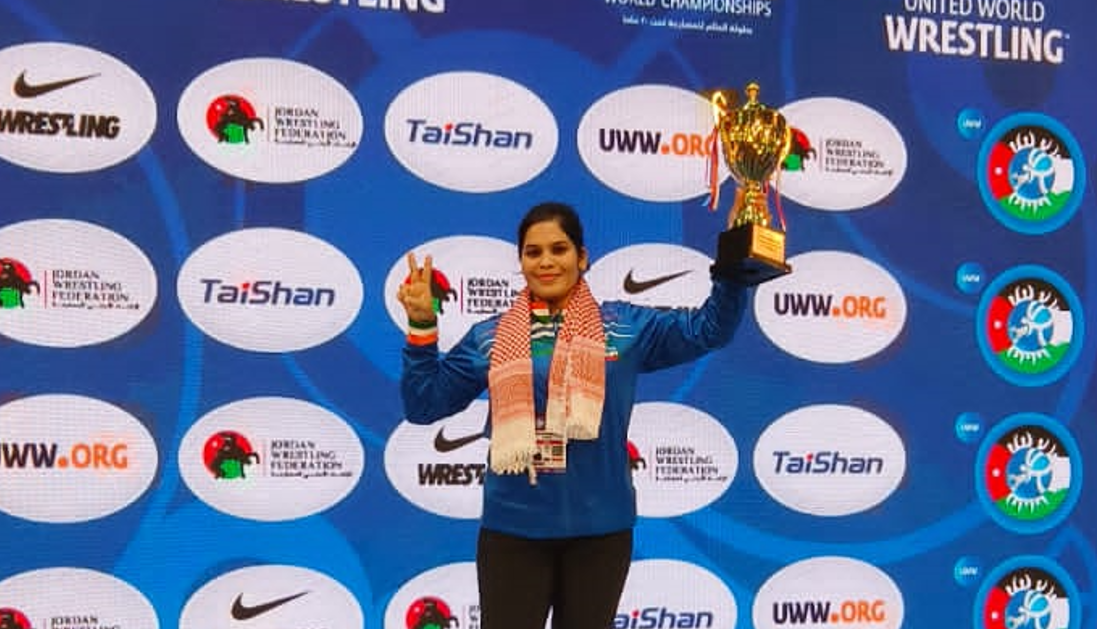
Shabnam Shaikh with her trophy

Shabnam won the title of ‘Women Maharashtra Kesari’ in 2010. She has won the gold medal in ‘Shirdi Kesari’ for three consecutive years since 2009, the gold medal in ‘Latur’ in 2011, gold medal in the ‘Maharashtra State Kustigir Parishad’ competition for six consecutive years.

She has also participated in four inter-university competitions, 10 national competitions, and more than 15 state-level competitions. In the national level ‘Great Bharatkumari Wrestling Competition’, Shabnam is the first winner not only from the Muslim community but also from Maharashtra.

Shabnam says her father taught her that one doesn’t need an outer veil. “Always keep the veil that differentiates between good and bad people in front of your eyes!” he told her.

Shabnam says, “People used to question my parents’ ways. A girl should not play sports like wrestling. Teach her to fast (during Ramazan) and pray. Don’t you want only boys to play wrestling? Hundreds of questions were asked but my parents did not let the pressure of society affect me.

“My father never changed his opinion under the pressure of society. He never let these things affect my game. I always got the support of my parents and my elder brothers.”

Shabnam’s mother Rizwana Begum says, “I have not two, but three ‘sons’! My brothers did not give me a share of our parents’ property. But, I will not let this injustice happen to my daughter. I will give her everything she deserves. Shabnam has brought glory to us. As a mother, I will always be proud of her.”

Shabnam’s thesis for her Ph.D. degree is ‘Comparative study of emotional maturity of rural and urban women wrestlers in Maharashtra’. She toured the entire state for research.

Shabnam is the first woman in India to do a doctorate in sports studies. While doing her Ph.D. in Wrestling, there were often deliberate attempts to embarrass and thwart her effort to earn a doctorate.

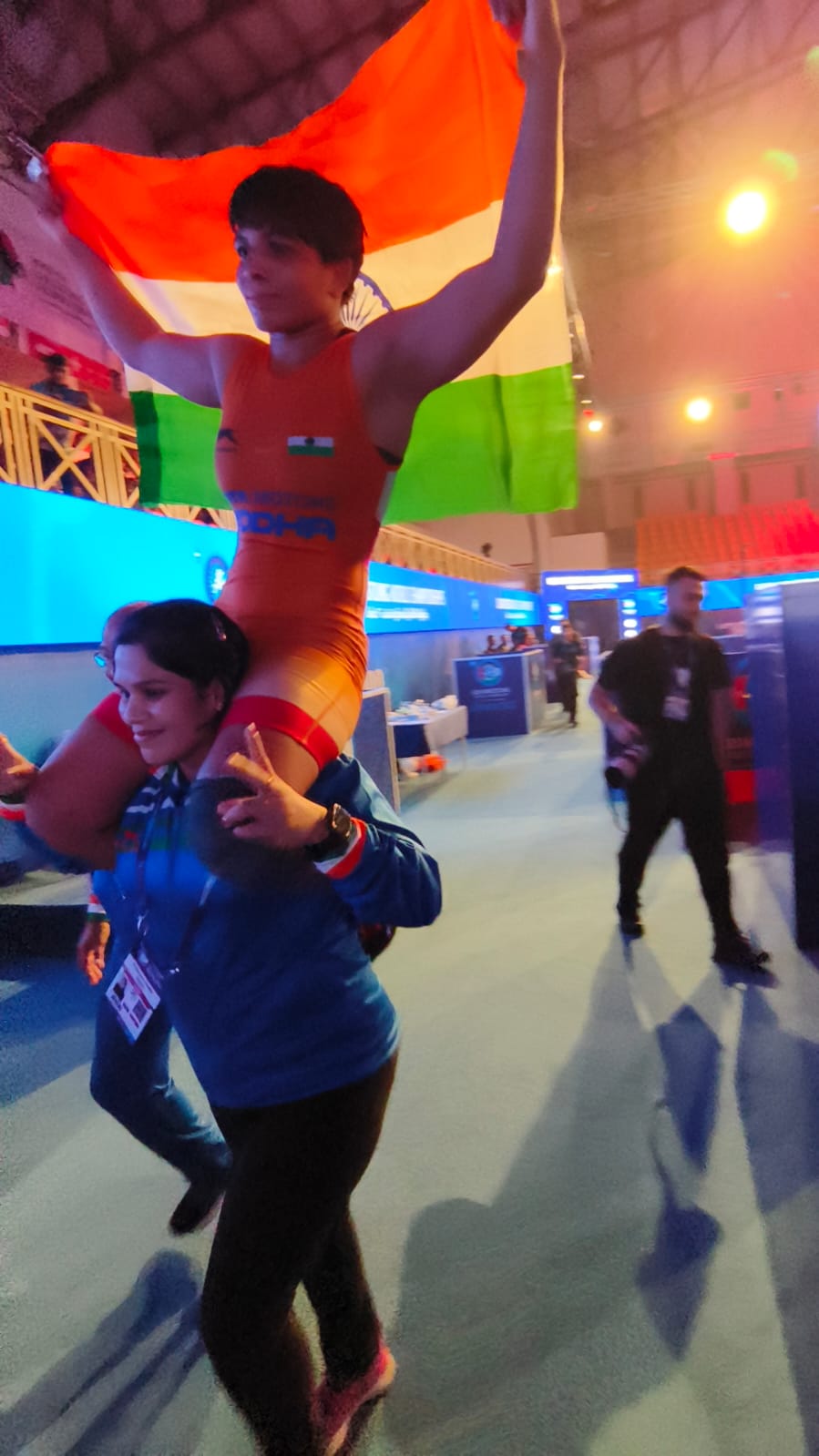
In the year 2017, Shabnam was selected as the junior coach of the Wrestling Women’s Association of India; she imparted wrestling training to Anushka Sharma and Salman Khan for the film ‘Sultan‘. Shabnam has represented India in Kazakhstan, and Uzbekistan.

She currently works as a ‘Senior Trainer’ in the ‘Wrestling Women’s Association’ of India. India has never had success in the ‘World Women’s Wrestling Championship’ till now. However, in the ‘Under-20 World Championship’ of 2023 India won seven medals in ‘Women’s Wrestling’. Out of these, three are gold medals.

Shabnam Shaikh after her victory in a foreign location

Dr. Shabnam Shaikh is today known as the ‘International Wrestling Coach.

Shabnam says, “I was selected as the coach of ‘Maharashtra Team’ for the national tournament held in Gujarat last year. Twenty-four hours ago, my name was canceled! I was not given any idea about this.”

“Many times, despite having the right credentials and qualifications, I am not given a chance. Probably, because I live with self-respect! I always think that when someone asks me, “How did you get all this?’ I should proudly tell him, ‘I have earned it through my hard work.’

Shabnam says, “Wrestling gave me identity. Sometimes I wonder, ‘Is wrestling a curse or a blessing for me?’ Initially, relatives and other people of the society hated seeing me wrestle.

“Later, when I started winning competitions, people would post the news of my success on their ‘status’ on various social media platforms and write the caption, ‘Congratulations and best wishes to our sister or relative.’

After reading the news of my winning, I became everyone’s relative at that time! But, they speak against me on behind my back! However, now they hesitate to speak against me openly!”

Shabnam says, “Most of the time I am rejected for marriage. I play wrestling. The suitors who come to see as a potential candidate for marriage, see my trophies and see ‘Doctor’ written next to my name. When they go home their answer is, ‘We don’t want such an educated girl.'”   

Shabnam continues to work hard to ensure that other girls do not face what she has.

Her advice to the youth: “No matter what happens, do not get tired. Do not give up the fight.” Her dream is to build a wrestling center for girls.

source: http://www.awazthevoice.in / Awaz, The Voice / Home> Story / by Chaya Kaveri / February 29th, 2024

Javed Shaikh lights up the homes of the poor in Pune

Yerawada, Pune, MAHARASHTRA:

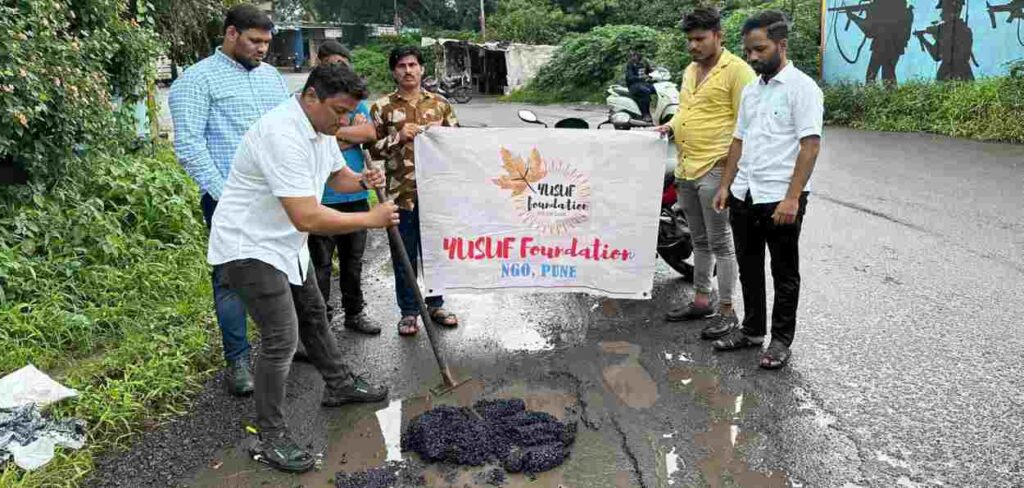
Javed Shaikh filling potholes of the roads in Pune

‘Make a sacrifice for others’ happiness; God will surely reward you..’. Such remarks are read in the stories of Saints and Sufis. However, some people around us are silently walking this talk. Javed Shaikh, a young man from Pune, Maharashtra, is one of them.

Javed’s work has changed the lives of many people and inspired others to be changemakers.

Pune is a bustling city that shines in the night under the impact of electricity. However, some bastis in this city continue to remain enveloped in the darkness and inconspicuous. Those living in the brightness of electricity often tend to overlook the dark houses and huts.

While most tend to ignore these dark spots, Javed Shaikh was drawn to them.

Javed lives in the Yerwada area of Pune. In his locality when he spotted human dwellings without electricity, he knocked at the doors and inquired why the inmates lived in darkness. Their reply invariably was: “We have no money to get an electricity connection; the connection has been removed due to non-payment of bill.”

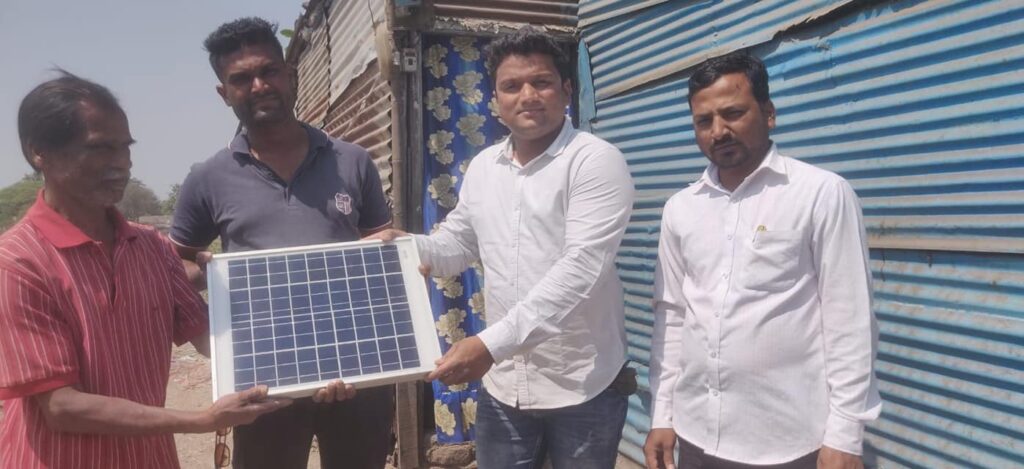
Javed Shaikh gifting a solar panel to a beneficiary

It made him sad; the helplessness of poor people was overwhelming. He decided to use his knowledge to help them. He thought of using solar energy to get these people rid of the cycle of paying electricity bills.

Growing up in Pune, the 34-year-old Javed had grown up with frequent power disruptions due to shedding by electricity suppliers. He graduated from the Sinhagad College of Engineering, Pune.

Philanthropy was always part of his family’s culture and therefore he too was keen to contribute to making a difference in society.

As against the tendency to seek a job after completing studies and setting down, Javed started his business like his uncle Sadiq Sheikh whom he always admired.

Javed lives with his mother, wife, and elder sister. Like Javed, his sister Wazia also wanted to do social service. Therefore, both the siblings set up the ‘Yusuf Foundation’ in memory of their father. The Foundation was set up in 2020 during the peak of the Covid-19 pandemic.

With the idea that the Foundation must start with fulfilling the basic needs of the people, he paid attention to the missing electricity in the lives of the poor.

He started researching low-cost options for providing electricity and zeroed in on solar energy. He thought that if solar panels were installed at the roof of each house, the poor could get electricity and also rid of the recurring bills.

​Javed started from his neighborhood. To begin with, he chose families where either the male head was missing or non-working due to unemployment or disability.

Initially, the foundation installed solar panels on the houses of 10 families.

The solar panels were selected to provide continuous power for eight hours on a single charge. The inmates of the houses could use electric bulbs, run fans, and also charge their mobiles with it.

Javed Shaikh and his sister serving people

When the first solar panel lit a bulb in front of a big crowd, people instantly called Javed “Allah ka banda: (Allah’s man). However, his help is not for people of a specific religion. Poverty is the sole criterion for the foundation to provide solar panels to the people.

Yusuf Foundation took another initiative to fill the potholes on the main roads, which are dangerous and have resulted in many accidents.The problem of potholes becomes even more deadly during the rainy season. The Yusuf Foundation filled potholes on many busy roads of Pune with the help of modern technology ‘cold mix’. This saved many lives. His initiative was greatly appreciated.

On the plans of the Yusuf Foundation, Javed told Awaz-the Voice that he would like to work on the environment.

During the COVID-19 pandemic, the Yusuf Foundation distributed essential items like facial masks, food, and water in large quantities to the needy. It also organised a competition for orphans in the Azam Campus College in collaboration with the Center of Arts, Pune.

Javed is responsible for raising funds for such programs.

Javed keeps a part of his income from business aside from social work. The families believe in giving back to society and thanking the Almighty by helping others.

source: http://www.awazthevoice.in / Awaz, The Voice / Home> Stories / by Panmamd, Pune / February 10th, 2024

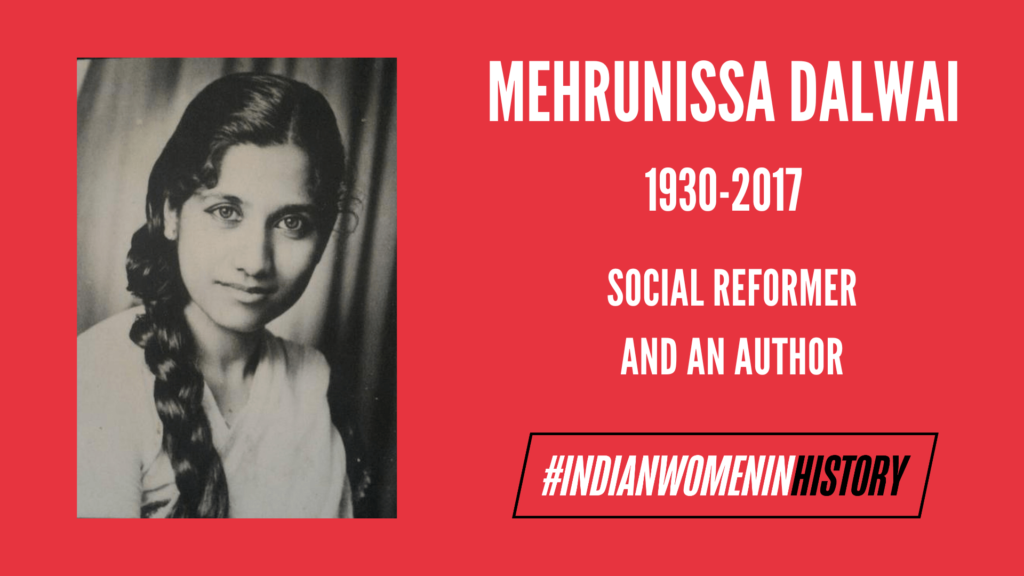
Mehrunnisa Dalwai: An Unsung Muslim Activist | #IndianWomenInHistory

Pune / Mumbai, MAHARASHTRA:

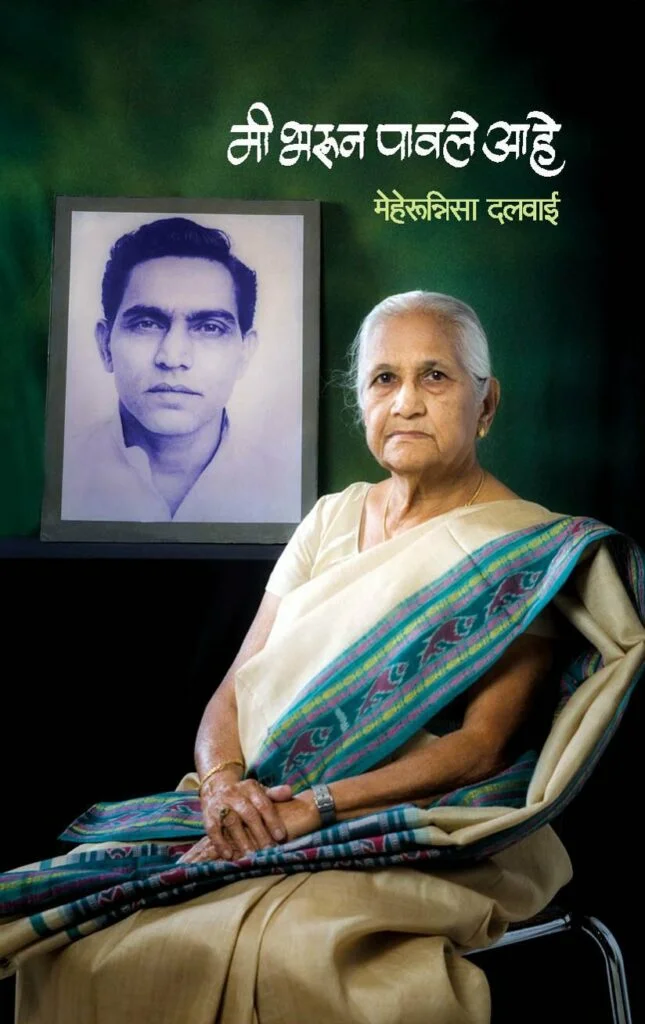
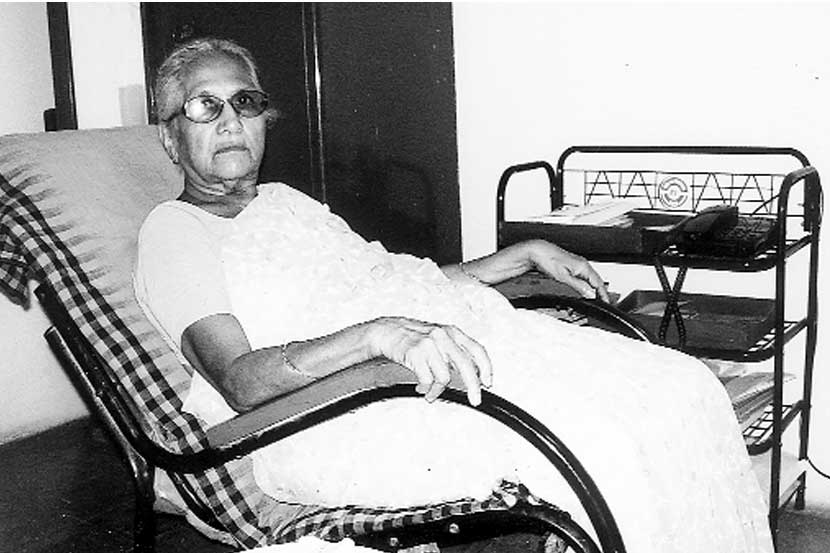
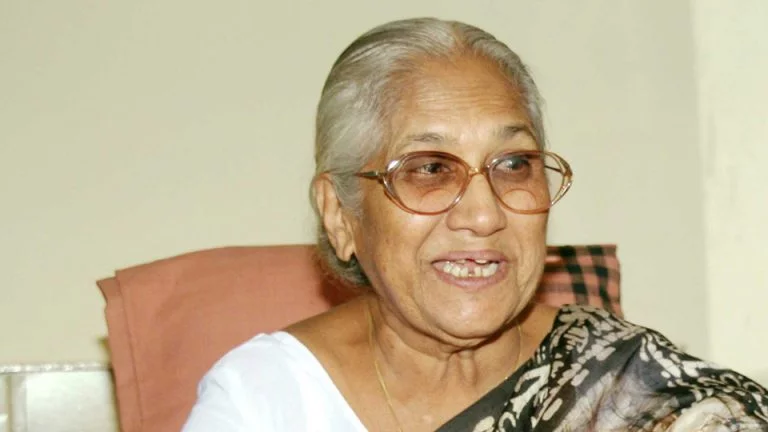
Mehrunissa Dalwai is not a common name heard amongst the slew of activists & yet she played an integral role in the Muslim reformist movement.

India, as a nation, treasures the ‘image‘ of women. There is a great sense of respect and reverence for female goddesses, traditional housewives and of course, the concept of our ‘motherland‘. Yet, when this image of a woman intersects with religion, caste and class, this view gets blurry and distorted. Similarly, being a Muslim woman in India is a battle unlike any other and brings with it a series of struggles, discrimination and prejudice. The nation is graced with a history of several prominent social activists who have been instrumental in bringing about change across the country, with several of them being unhonoured and forgotten, such as Mehrunnisa Dalwai. 

Mehrunnisa Dalwai: An Unsung Muslim Activist | #IndianWomenInHistory |  Feminism in India
Source: The Hindu

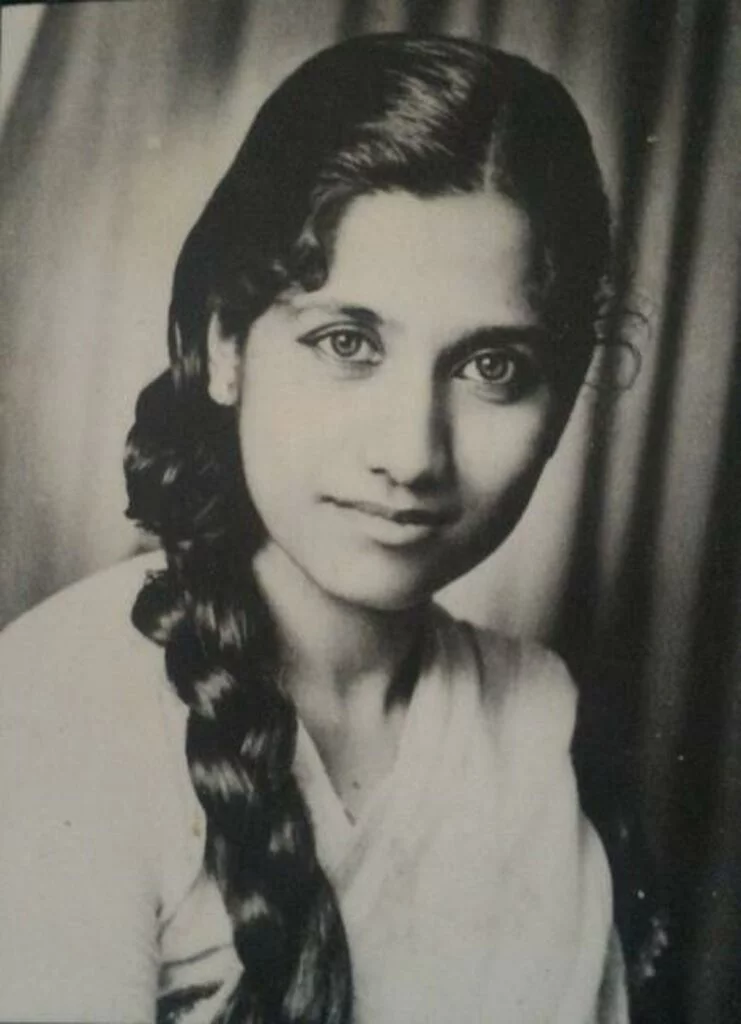
Mehrunissa Dalwai is not a common name heard amongst the slew of social reformers and activists that are popular in Indian society. Yet here we have a woman who played an integral role in the Muslim reformist movement. Born on May 25, 1930, and brought up in Pune, Dalwai came from a conservative, Urdu-speaking Muslim family.

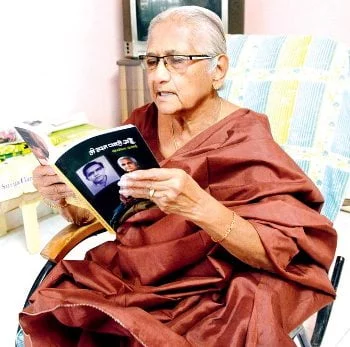
While Mehrunnisa Dalwai underwent a traditional Urdu education, she still managed to master the language of Marathi. She later went on to write her autobiography ‘Mi Bharoon Paavle Aahe‘ in the Marathi language (where she also writes in detail regarding food and recipes). After completing her matriculation, she worked at the Khadi and Village Industries Commission (KVIC) in the city of Mumbai.

The beginning of her journey

After moving to Mumbai, it was here that Mehrunnisa Dalwai met the progressive Muslim reformer, Hamid Dalwai, and thus her fate as a future representative of the Muslim community was sealed. Hamid came from a poor Konkani Muslim family, a stark difference from Mehrunissa, and worked for the upliftment of the poor status of women in the Muslim community.

His name was established in the community for his daring stances like the condemnation of practices of triple talaq, alimony and polygamy. He was also an author, publishing the classic, ‘Indhan’ in 1965 and was courageous to take a stand against Brahmanical Hinduism as well as radical Islam and the two of them contributed greatly towards the liberalisation of the Muslim community. 

Being a Muslim woman in India is a battle unlike any other and brings with it a series of struggles, discrimination and prejudice.

However, being such a controversial figure, he remained unemployed. His most controversial take yet was when Mehrunnisa Dalwai declared that she would marry him. The large class disparity and general stigma of an upper-class woman marrying beneath her caused quite the stir which Hamid of course was used to. The two were married through traditional Muslim rituals and after a month also married through the ‘Special Marriage Act‘ (1954), which possibly made them one of the first marriages of a Muslim couple to be registered that way.

Mehrunnisa Dalwai: An Unsung Muslim Activist | #IndianWomenInHistory |  Feminism in India
Source: Jargon Josh

The Special Marriage Act was one of Independent India’s methods of maintaining a secular fabric in society, mainly to protect and legalise interreligious and inter-caste marriages that were atypical to the usually arranged marriages of dominant Indian culture. The newly married couple found a space for themselves in the Majaswadi area of Jogeshwari. They resided in a small room which got even smaller as they were joined by Hamid’s younger siblings, one of whom was Hussain Dalwai, the Rajya Sabha MP of the Congress party, who had completed his education in Mumbai. 

The social work of the Mehrunnisa Dalwai

In his wife, he found a partner in crime, a fellow crusader and together they took many bold stands for justice and equal rights of Muslim women. Mehrunnisa Dalwai continued working as well as remaining dedicated to her ascribed role of a housewife, maintaining their life at home. Although juggling the two seems like a modern concept of a 21st-century working woman, Mehrunissa was ahead of her time and supported her husband’s endeavours.

Mehrunnisa’s salary was their only stable and regular source of income, but along with this she still found the time to put a part of herself into Hamid’s work of the organisation of movements, social protests and campaigns along with bringing about a rational and scientific school of thought to the forefront to eradicate the rigid and blind dogmas within Muslim community which caused an unequal balance of power and rights of men and women. 

Mehrunnisa Dalwai: An Unsung Muslim Activist | #IndianWomenInHistory |  Feminism in India
Source: Amazon

In Mehrunissa Dalwai’s autobiography, she mentions her husband’s gratitude for her role and the satisfaction that she was able to economically support her family during these times. The life of a social activist and reformer is not one of ease. Dalwai also mentions the tensions within the protest movements and the threats that were posed against her husband by the orthodox Muslim community. Although she herself was not actively involved in the movement until after his death, through her writing, it is visible that being tied to Hamid meant being under the fire.

Source: The Indian Express Marathi

Sadly, Hamid passed away from kidney failure in 1977 at the age of 44. After the tragic death of her husband, she threw herself into his work. She dedicated her time to the Muslim Satyashodak Mandal which was the reformist organisation founded by Hamid in Pune, focussing on providing solutions to the Muslim community and creating a space for its history and socio-cultural transformation.

Mehrunissa Dalwai dedicated a good part of her life to this organisation and was the first executive President and later served as President for several decades.

Mehrunnisa’s journey of leadership

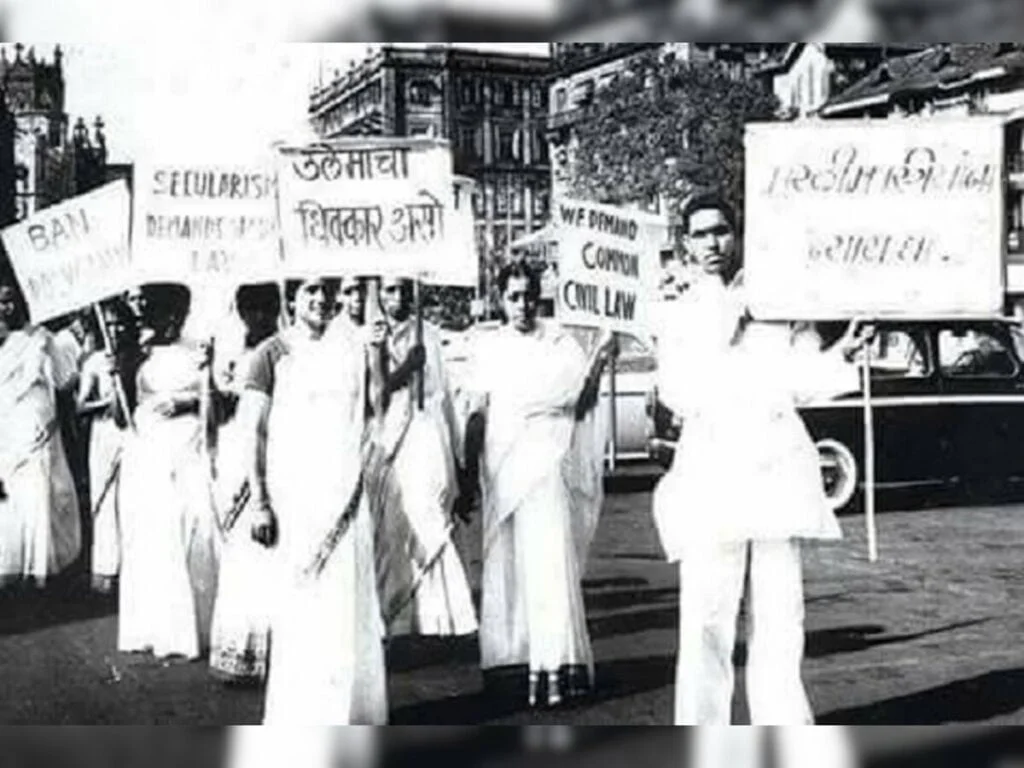
In April 1996, Mehrunissa Dalwai boldly led a march to ‘Mantralaya’ in Mumbai along with six other women carrying on the work of her late husband in the abolition of triple talaq. There, they met Vasantrao Naik, the Chief Minister of Maharashtra at the time and gave him their memorandum of demands. This caused a big stir leading to strong opposition, meetings being constantly interrupted and even reached the extent of death threats.

Mehrunnisa Dalwai: An Unsung Muslim Activist | #IndianWomenInHistory |  Feminism in India
Source: News 18

Mehrunissa Dalwai continued to lead the movement of protecting the rights of Muslim women and the modern reformation of the Muslim community. She later founded the Hamid Dalwai Islamic Research Institute as well as the Maharashtra Talaw Mukti Morcha.

The Shah Bano case

During Dalwai’s leadership of the Muslim Satsyashodak Mandal, the organisation played an important role in the Shah Bano case. This case was seen as a milestone in the fight for equal rights of Muslim women in India as well as the ongoing battle against the orthodoxy of Muslim personal law. The case was unprecedented and paved the way for other women to make similar legitimate claims. 

In 1978, a 62-year-old Muslim woman, Shah Bano filed a petition in court against her divorced husband Mohammed Ahmad Khan, demanding maintenance (alimony) after she was given talaq by Khan. After a series of detailed sessions in court, in 1985, it was taken to the Supreme Court where Chief Justice Y. V. Chandrachud upheld the decision made in the High Court, ensuring that maintenance would be given to Shah Bano (under CrPC, the Code of Criminal Procedure). However, the Congress led by Rajiv Gandhi overturned the decision of the Supreme Court under serious pressure faced by Ulemas and Maulavis but the Muslim Satyashodak Mandal boldly opposed this action and through a series of protests, insisted that it be implemented.

Mehrunnisa Dalwai: An Unsung Muslim Activist | #IndianWomenInHistory |  Feminism in India
Source: One India One People

Mehrunissa Dalwai passed away at the age of 87 at her home in Pune, survived by her two daughters and as per her last wishes, her body was donated. Maharashtra has had a history of significantly active social reformers and social activists, especially in Pune. They have been important in altering the culture and norms of the city with their hard work and effort and have brought about positive change in society.

In this process, there are many names that get lost, therefore it is essential to remember those like Mehrunissa Dalwai so as to not forget that they are an important and enriching part of our history. 

source: http://www.feminisminindia.com / Feminism In India / Home> History / by Gia Alvares / April 10th, 2023

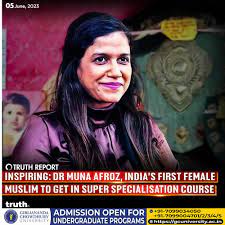
Meet Dr Shaikh Muna Afroz; India’s first female Muslim Gastroenterologists surgeon

Aurangabad, MAHARASHTRA:

truth. on Instagram: "⚡INSPIRING: Success comes to those who believe in  hard work, and this expression applies to Dr Shaikh Muna Afroz, who is  about to attend the All India Institute of
pix: instagram.com /thetruth.india

Success comes to those who believe in hard work and this sentence fits the case of Dr Shaikh Muna Afroz, who is all set to join the All India Institute of Medical Sciences (AIIMS) and probably become the first Muslim female Gastroenterologist (GI) surgeon in India.


In a message to the youth, Dr Muna says, “Perseverance and determination are the keys to success. I have experienced that my consistent efforts have enabled me to surmount every obstacle on my path to success.” Intending to become an academic surgeon, she struck an optimum balance between patient care, teaching, and research. She has authored more than five indexed research publications.


Dr Muna has presented her research papers at numerous conferences and won many accolades. Her inspiration is her grandfather, who is a General Surgeon and has been serving the community since 1967.


Dr Afroz hails from Maharashtra’s Aurangabad and bagged the All India Rank (AIR) third in MCh GI-HPB Surgery in the INI-SS 2023 and she also secured an All India Rank (AIR) – 10 for the Minimal Invasive Surgery Fellowship in 2021.

Prior to it, she aced CET-UG by securing the 93rd rank and completed her MBBS in 2017 from GMC Aurangabad.


In 2022, she acquired the Membership of the Royal College of Surgeons (MRCS) in Edinburgh, UK. Having cleared the licensing examination from Dubai Health Authority (UAE) in 2022, Dr Muna is currently licensed to practice medicine in India, the United Arab Emirates, and the United Kingdom.

This report is filed by ANI news service.

source: http://www.thenewsmill.com / The News Mill / Home / by ANI / pix: edited / June 04th, 2023