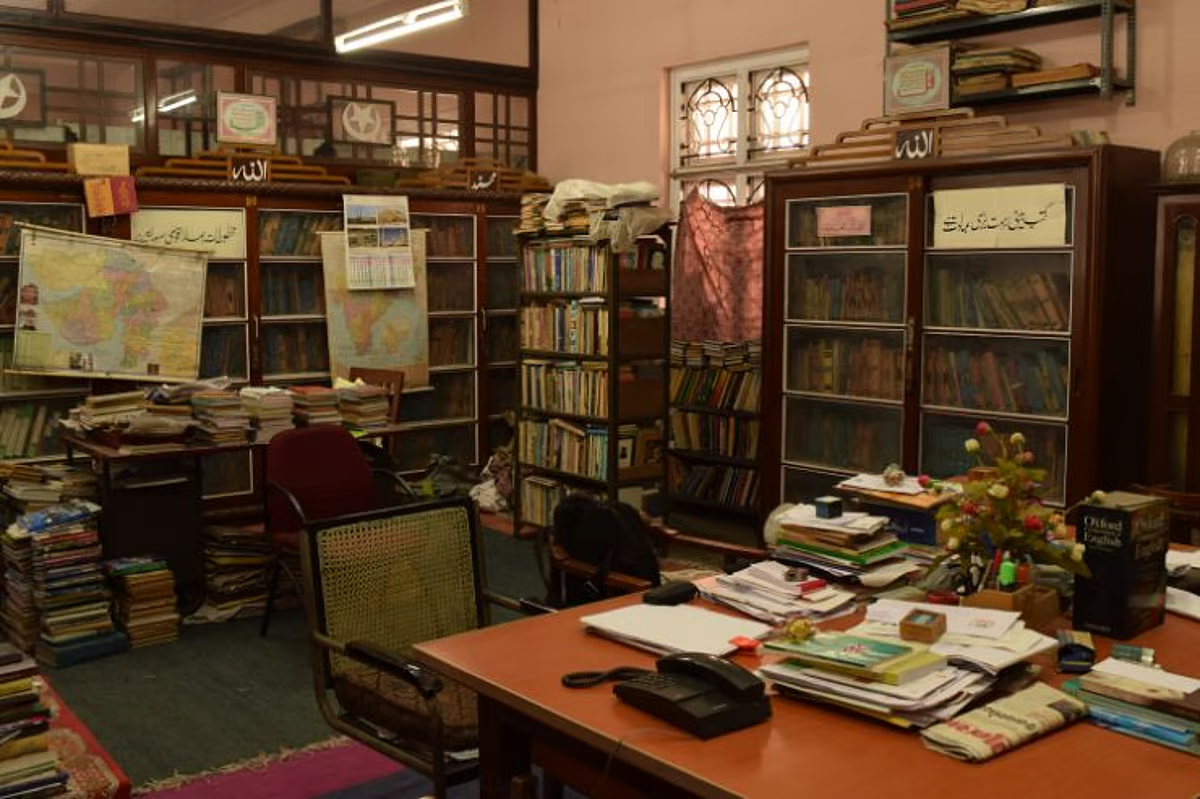
With over 4,000 manuscripts and 25,000 books, Hazrat Pir Mohammad Shah Library is a sanctuary of knowledge and wisdom.
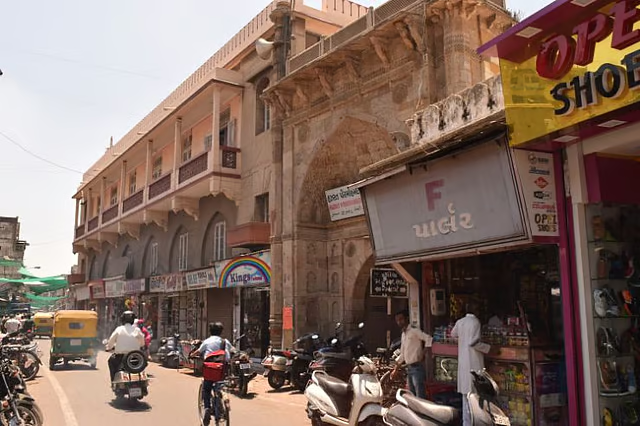
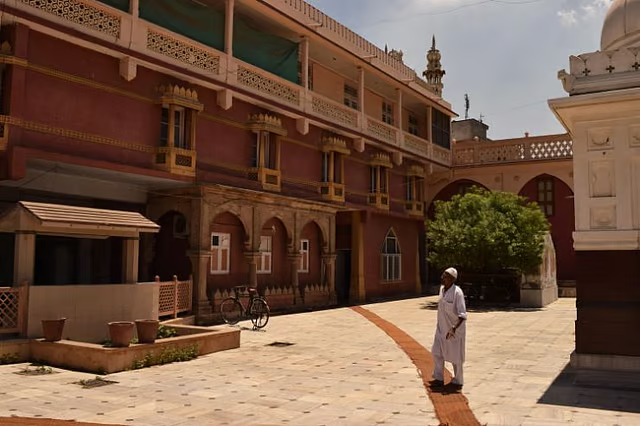
Stepping into the Hazrat Pir Mohammad Shah Library, the oldest library of the city, feels like entering a secret realm concealed within the narrow lanes of Pankora Naka, Ahmedabad. This hidden sanctuary of wisdom resides within the majestic tomb-shrine complex dedicated to the esteemed Pir Muhammad Shah.
The library’s journey commenced over 250 years ago when Pir Mohammad Shah and his devoted disciples gathered a humble collection of 300 manuscripts. Now, this literary haven proudly safeguards an expansive repertoire of over 4,000 manuscripts, establishing its position as such largest collection in Western India. Moreover, it boasts an impressive assortment of over 25,000 books.
About Mohammad Shah
Let us delve deeper into the enigmatic figure of Mohammad Shah, the driving force behind the library. Born in Bijapur in 1688 AD, he embarked on a transformative journey to Mecca, where he immersed himself in the teachings of practical Sufism.
Eventually, he settled in Ahmedabad in 1711, where he would offer his daily prayers in the Jama Masjid and rest in the humble hut of a benevolent elderly woman. It is in this very location that the awe-inspiring mausoleum-mosque-library complex now stands.
A treasure trove of manuscripts and books
During his lifetime, Pir Muhammad Shah, along with his devoted disciples, amassed a treasure trove of manuscripts and books, encompassing a wealth of academic and spiritual wisdom. This invaluable collection finds its residence in the esteemed “kutubkhana”. The Pir himself was a gifted bilingual poet, penning abundant verses in Persian and Dakhani.
Today, the library stands as a testament to its illustrious past, harboring more than 4,000 manuscripts—the largest collection in Western India, alongside a rich trove of over 25,000 books. Its extensive catalog covers diverse subjects such as spirituality, Quran Knowledge, music, literature, history, geography, language, astronomy, astrology, agriculture, and more.
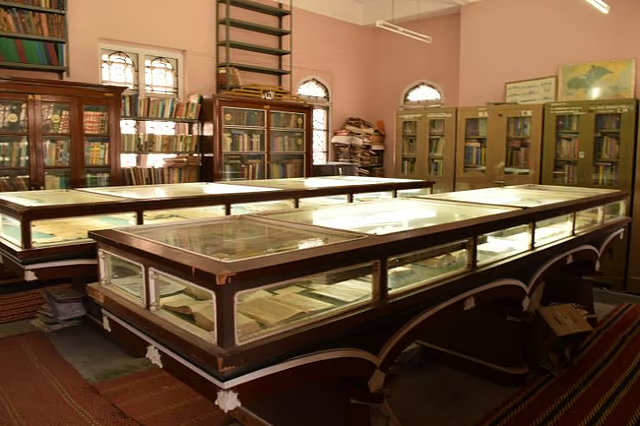
Within its hallowed halls, one can explore literature in Urdu, Gujarati, Arabi, Parsi, Hindi, and English. The library features a special chamber dedicated to ancient manuscripts, some dating back 800 years, as well as a display of Hazrat Pir Mohammad Shah’s personal belongings, carefully encased in glass to ensure their preservation.
Translations of sacred texts and unique manuscripts
The library’s treasures extend beyond its own collection, offering translations of sacred texts such as the Bible, Rigveda, and Geeta. Visitors are also privileged to behold unique manuscripts, including a handwritten Quran by the illustrious Mughal Emperor Aurangzeb.
This historic repository not only embodies a wealth of knowledge, wisdom, and heritage but also exudes an aura of serenity and tranquility. Explore the mosque, wander through the tranquil courtyard, lose yourself in the pages of ancient tomes, marvel at rare manuscripts, and surrender to the enchantment of bygone era. A captivating journey back in time awaits within these hallowed walls.
source: http://www.knocksense.com / Knock Sense / Home> Ahmedabad / by Zeal Jani / June 27th, 2023
The World Heritage City of Ahmedabad saw many revered men who silently documented the various tales the city’s monuments, structures and literature had to tell.
One such relentless pursuit was that of publisher, author and a keen student of the medieval history of Gujarat, Shahed Kalimi, who not just ran the nearly-century old Kalim Book Depot but also spent 20 years of voluntary service to set up the library at Sarkhej Roza.
A little over a month after he passed, Kalimi’s contributions to Ahmedabad’s heritage were remembered by academicians, renowned historians and heritage enthusiasts at a remembrance meeting organised in the city on Sunday.
Kalimi was the sole force behind revamping the library at one of the ASI-protected monuments of the Heritage City of Ahmedabad, Sarkhej Roza.
AS Saiyed, President of the Sarkhej Roza Committee, narrated Kalimi’s two decades of voluntary contribution at the Sarkhej Roza and lauded him for his dedication and perseverance. “Kalimi was instrumental in reviving the library at the Sarkhej Roza and setting up a publishing department at the Roza through which many books were translated and published under the aegis of the Sarkhej Roza Committee,” Saiyed said.
During his lifetime, Kalimi had translated nearly 50 books from Urdu, Persian and Arabic, into Gujarati, in a bid to bring forth the little pieces of history about Gujarat to the people here.
In fact, two of his last books – A Bird’s Eye View of Sarkhej Roza and Yaad-e-Ayyam, were released during the remembrance meet.
“Kalimi’s sole aim was to bring forth anecdotes of Gujarat’s history to the state. Being an ardent reader of history himself, he translated many books written about Gujarat and its history, Persian and Arabic to Gujarati. He has translated close to 50 works by now about various aspects of Ahmedabad and Gujarat which the state would have otherwise lost,” said Professor MH Bombaywala, curator and founder, Peer Mohammad Shah Library, one of the oldest in Ahmedabad who was present at the meeting.
Being an ardent enthusiast of medieval history of Gujarat, Kalimi turned his place of work – the Kalim Book Depot – around by diligently sourcing, procuring, even translating if needed to make history books available to people here.
Students of History and even architecture and design often frequented his book store, which was once upon a time, a fulcrum for intellectuals to gather and discuss new, radical ideas through expressions of poetry and Shayari.
The Kalim Book Depot will be a century old in 2026 and till date is known for rare books. “We have retailed the Urdu versions of Ramayana, Mahabharata and the Bhagavad Gita to people. Father used to procure a series of Urdu books from warehouses of libraries, book exhibitions, flea markets including the Gujari Bazar and wherever he travelled and patiently sorted them, to find the right kind of books for history students and later translate them,” said Mushir Kalimi, Shahed’s son.
“Father’s interest was not in the business but instead in letting the younger generation read and delve into the history about Gujarat to the people of Gujarat by translating works of authors from Persian, Arabic and Urdu languages. Therefore, if he realised someone’s interest in books, he would gift them a second book for free besides the ones they’ve bought,” said Mushir.
Kalimi was working on one of his last books just before he passed — Makbaras and Masjids of Ahmedabad. Mushir along with members of the Sarkhej Roza Committee are working towards publishing the book which will soon be out.
source: http://www.timesofindia.indiatimes.com / The Times of India / Home> News> City News> Ahmedabad News / by Niyati Parikh / TNN / March 28th, 2022
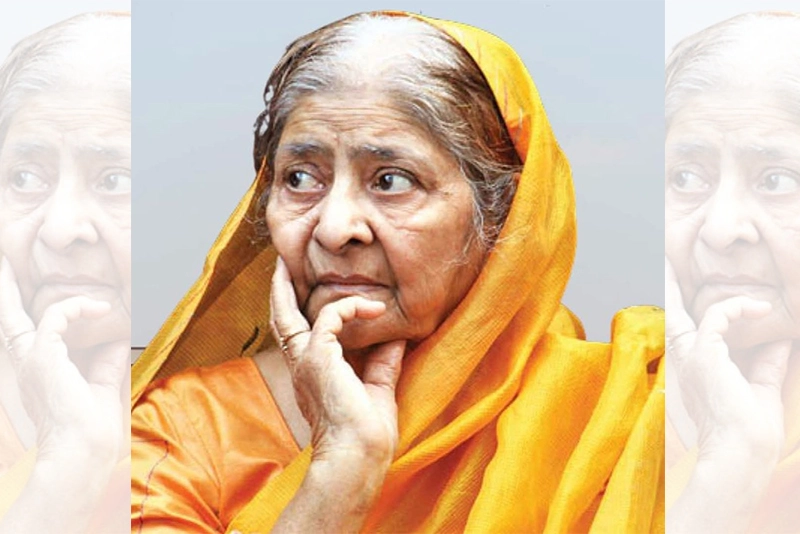
Zakia Jafri, wife of former Congress MP Ehsan Jafri – the Legal Crusader who became a Symbol of Resistance, died at her residence in Ahmedabad Saturday February 01, 2025.
Mumbai:
Zakia Jafri, wife of former Congress MP Ehsan Jafri – the Legal Crusader who became a Symbol of Resistance, died at her residence in Ahmedabad Saturday February 01, 2025.
Zakia Jafri was 86.
Zakia Jafri is survived by sons Tanveer and Zubair, and daughter Nishrin. “Mom passed away at around 11:30 AM”, she told media.
Zakia Jafri’s sad demise was later shared with the world by Rights Activist, Journalist and Author, Teesta Setalvad.
“Zakia Appa a compassionate leader of the Human Rights Community passed away just 30 minutes ago!” Teesta Setalvad wrote on her X account around 01:30 PM Saturday.
“Her visionary presence will be missed by the nation, family. friends & world! Rest in Power and Peace Zakia appa!” Teesta wrote while condoling Zakia Jafri’s death.
Originally from Khandwa district of Madhya Pradesh, Zakia Jafri had shifted to Ahmedabad, Gujarat in 1971. This after living in a refugee camp after her home in Khandwa was burnt during the 1969 communal riots.
Zakia Jafri’s husband Ehsan Jafri was a freedom fighter and Member of Parliament.
Ehsan Jafri and his family had provided shelter to dozens of Muslim families at their Gulbarg Society in Ahmedabad during the 2002 Gujarat riots.
But, the society, considered to be a safe haven because of Jafri family’s stature, too was targeted by the rioters who burnt alive and killed at least 68, including Ehsan Jafri.
Zakia Jafri later fought a long legal battle to seek justice for the 2002 Gujarat riot victims. She had also challenged the SIT clean chit given to Prime Minister Narendra Modi, who was Chief Minister Gujarat, during the riots.
During the long legal battle she was threatened and later cajoled by different means and tactics. She however remained firm.
Zakia Jafri is likely to be laid to rest beside her husband in Ahmedabad.
Condolences pour in
Meanwhile, condolences are pouring in from different circles after the demise of Zakia Jafri.
Kerala Chief Minister, Pinarayi Vijayan, in his condolence message said, “Zakia Jafri, an unwavering voice for the victims of the 2002 Gujarat riots, is no more. The widow of former MP Ehsan Jafri, who was brutally murdered by a Sangh Parivar-led mob, she dedicated her life to the pursuit of justice. Her relentless fight leaves behind a legacy of courage and resilience. Her memory will continue to inspire us in our fight against communalism and divisive forces.”
Congress Spokesperson, Pawan Khera, wrote, “Zakia Jafri died today. Her Hope for justice had died in her life time. She chronicled the history of ‘New India’ through her tears, her sobs, her fight and her defeat.”
Hyderabad MP and AIMIM Chief Asaduddin Owaisi in his condolence message wrote, “Zakia Jafri watched her husband being murdered by a mob in 2002. For nearly two decades, she fought a lonely legal battle against some of India’s most powerful men, never showing fear. She passed away today. May Allah grant her peace and strength to her loved ones.”
Sanjiv Bhatt (IPS) who was posted in Gujarat during the 2002 Godhra Riots condoled Zakia Jafri’s death in these words.
“Zakia Jafri Ji was an unshakable voice of truth against power. For decades, she fought not just for justice, but for truth, dignity and the very soul of our democracy. Her strength in the face of unimaginable loss will forever inspire us. Today, India has lost a true warrior, but her courage will live on! Rest in power, Zakia Ji!!”
Condoling the death of Zakia Jafri, Journalist and TV Anchor Rajdeep Sardesai worte: “Sad news: Zakia Jafri, whose husband and former Cong MP Ehsan Jafri was brutally killed in the 2002 Gujarat riots passed away today. For years, she fought a valiant battle for justice. When even an MP’s wife struggles to be heard, imagine the plight of an ordinary citizen. And yet, she remained steadfast and courageous till the end. Refused to give up.”
Mumtaz Patel, daughter of Congress leader Ahmed Patel, condoled Zakia Jafri’s death in these words.
“Zakia Jafri ji, symbol of resilience and an unwavering voice for justice, is no more. Her fight for truth and accountability in the face of unimaginable tragedy will always be remembered. May she rest in power.”
My heart goes out to the brave lady #ZakiaJafri who fought against these devils and those three judges who betrayed you . But they all will have to pay for their karmas before they depart from this world,this also includes the supreme leader . pic.twitter.com/JQUZTueTuI— Ravinder Kapur. (@RavinderKapur2) February 1, 2025.
“Zakia Jafri, widow of former parliamentarian Ehsan Jafri, who was killed by a Hindutva mob in the 2002 Gujarat genocide, Zakia Jafri Survived in genocide and become the relentless voice of Justice”, Noor Mahvish, a lawyer, wrote on X.
“Zakia Jafri . A life time of a fight for justice 23 years out of the 85 she spent on this earth ,waiting for justice for the killing of her husband along with the people they tried to protect inside Gulberg Society in Gujarat 2002”, a social media user, who identifies her as Realm of Bohemia, wrote.
“Brave and fearless, she fought for Justice till the end”, an activist wrote.
“She left this world fighting for justice and showing the whole world how to never give up”, Razia Pathan, an activist, wrote.
source: http://www.ummid.com / Ummid.com / Home> India / by ummid.com News Network / February 01st, 2025
During the months of lockdown last year, NSS units in colleges across Gujarat mobilized resources for food, masks, sanitation.
More than 5,000 student volunteers associated with NSS units in universities carried out COVID relief projects during the initial phase of lockdown
New Delhi :
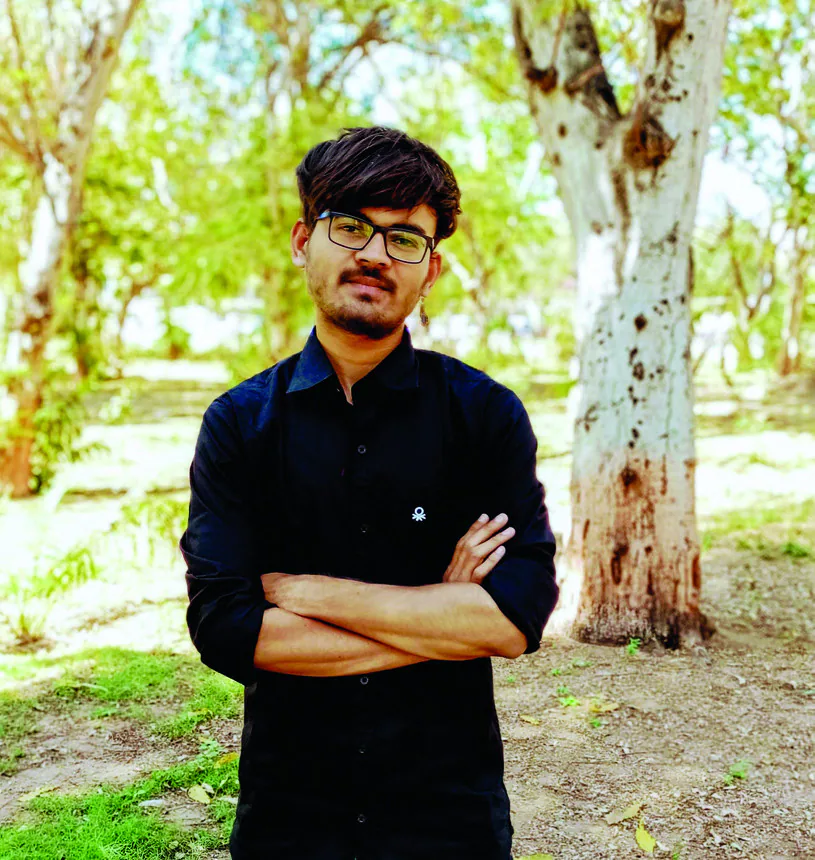
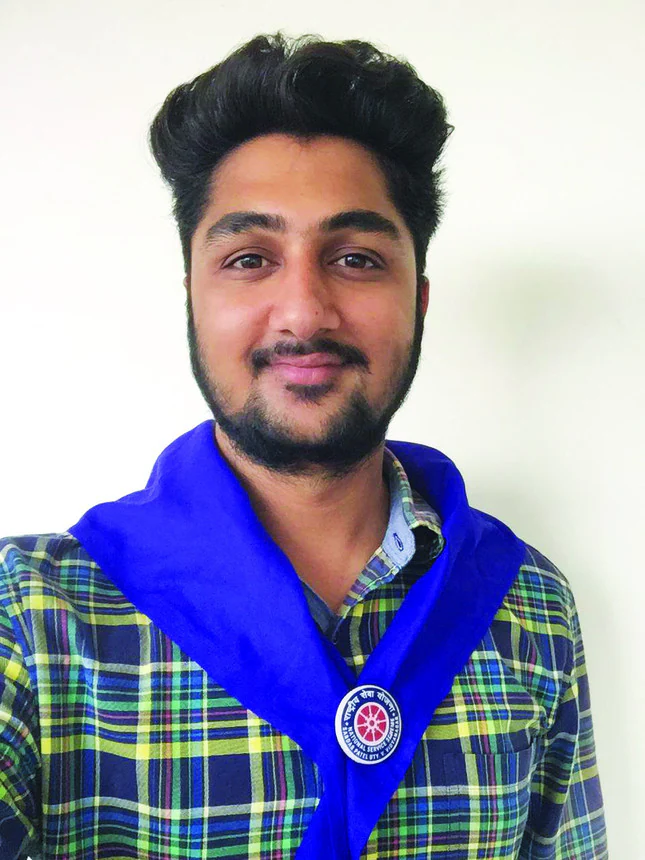
The risk of contracting a life-threatening virus and the lockdown did not discourage Shaikh Afzal, a final year student of LD Engineering College, Ahmedabad from stepping out to collect food grain for the people in need.
A volunteer with the government-led National Service Scheme, in his case the NSS unit of Gujarat Technological University, Afzal felt the need to be on the ground despite the inhibitions of his family members. While the country was under a nation-wide lockdown in March last year, volunteers like Afzal risked their lives to help migrant workers stranded for days without supplies.
“I have faced a shortage of food for days at home during the lockdown and I understood their situation. They have extremely limited means. I decided to help them despite the risks,” said Afzal who resides with his 70-year-old grandmother and five other family members. He spent two months distributing food kits in various parts of Ahmedabad.
Soon after the central government announced the countrywide shutdown to control the spread of the coronavirus, a wide range of problems emerged, especially for the working class. The lockdown was extended for nearly four more months. Having lost their jobs, thousands of migrant workers attempted to leave major cities for home. In the absence of food reserves, many were pushed into starvation and others struggled to make ends meet.
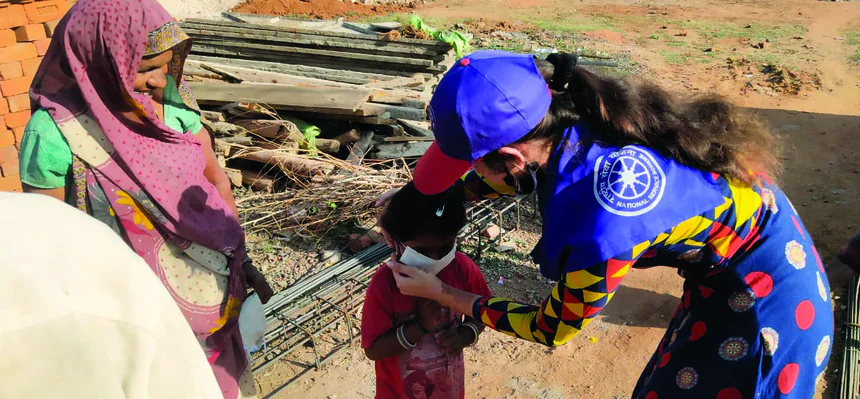
Like Afzal, more than 5,000 student volunteers associated with NSS units in universities across Gujarat carried out COVID relief projects during the initial phase of lockdown. From providing masks, hand sanitizers and dry ration kits, to managing large crowds along with the police, students participated in several measures.
Prompt relief in Ahmedabad
Ahmedabad, one of the major cities employing daily wage workers and construction workers from bordering states, experienced food shortages amid the extended lockdown. NSS units in various colleges kicked into action to provide ground relief.
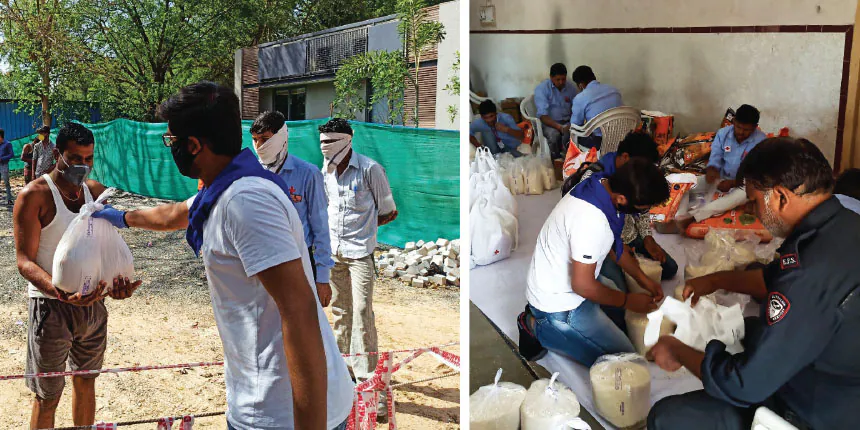
Along with Afzal, a team of 15 NSS and National Cadet Corps (NCC) volunteers in coordination with Ahmedabad’s district magistrate’s office conducted an extensive COVID relief drive. The team under the leadership of Chaitanya Sanghvi, the college’s NSS program officer, raised Rs. 3.69 lakh in donations from teachers and students’ parents to arrange for food kits. The volunteers distributed more than 12,500 kits in two months.
“A lot of parents were concerned about their [students’] health but my personal assurance that COVID safety measures will be taken while helping others made them feel confident,” said Sanghvi. “The students were given training by the GIDM [Gujarat Institute of Disaster Management] on how to respond to various challenges on the field,” he added.
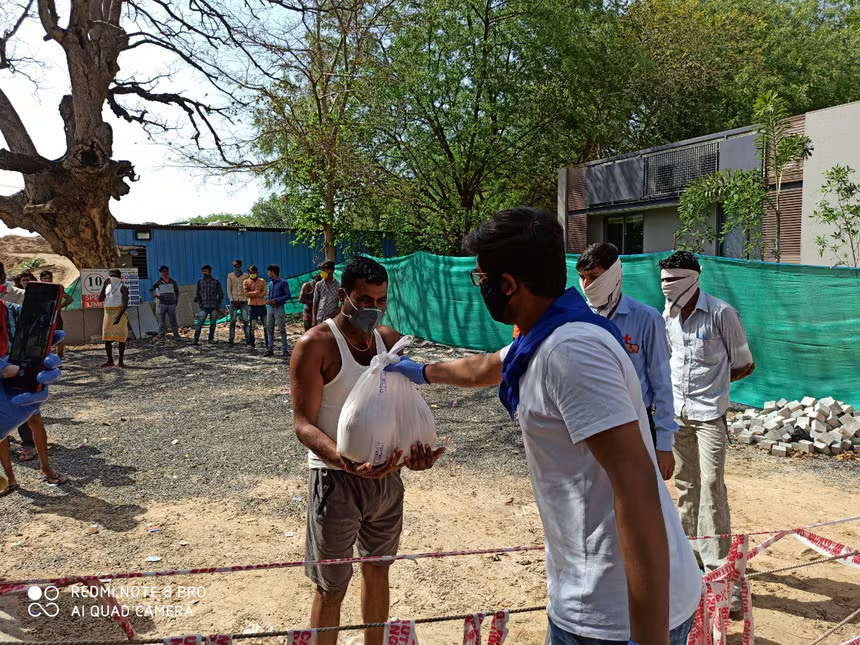
Student of LD Engineering College, Ahmedabad distributing ration kits
Each day, for nearly two months, the team distributed 500 kits that sustained families of four for at least 10 days. On several occasions, the team members recalled being overwhelmed by the gravity of the situation on the ground. “Every day we would find a new challenge before us. We had to be cautious about our own safety while maintaining safe distance among those who came to collect the kits. The chaos escalated at times and we had to call the local police to maintain order,” said Deval Naika, a final-year mechanical engineering student.
The relief work began with 16 volunteers but the group expanded into a large team of 100 students after the initial phase of the project ended in success. The students were asked to work on the field in rotation. The effort, according to Sanghvi, helped families that were severely starved amid the lockdown. “I remember providing a food kit to a migrant worker’s family of 12 members. They told me that they were going to eat solid food after 12 days of starvation. There were small kids delighted at the sight of food. I will never forget that day,” recalled Sanghvi.
The team, in a tie-up with the Indian Red Cross Society, also conducted a blood donation drive for thalassemia major patients who were facing a shortage of blood supply during the lockdown. To allay the fear of blood donors, the team remotely reached out to the willing donors on mobile donation vans in various parts of Ahmedabad.
Porda village, Anand
Another NSS volunteer, Kishan Nileshkumar Dave, studying in Natubhai V. Patel College of Pure and Applied Sciences, Vallabh Vidyanagar, managed to provide relief to 100 families in his village, Porda, in Anand district. The volunteers carried out a multifaceted relief drive which included the distribution of food, masks, sanitizing common gathering areas and distribution of Ayurvedic immunity boosters.
Dave and his group of 10 volunteers started a fundraiser to provide relief to the families struggling without any financial help in the period of lockdown. With the help of the village sarpanch and some of its well-heeled families, Dave managed to collect enough funds to feed the hungry for more than a month.
“The money was utilized to cook food and deliver to each villager in need. We also maintained meticulous records of people who require urgent help and avoided missing out on anyone who needed attention,” said Dave. This group also served food to the policemen and health-workers on COVID-19 duty.
The team also engaged local tailors to sew 2,100 masks to be distributed in the community. In this way, they supplied masks to 920 families of the village and surrounding areas.
The volunteers also prepared herbal tonic under the supervision of the Ayurvedic Aushadhi Kendra of a nearby village, Aradi, and distributed it in Porda and the surrounding areas. Around 1,500 villagers received the immunity booster.
In addition, Dave also conducted a sanitization drive for 20 days. “Providing food and masks was not enough, we also used a sprayer machine and fogging machine provided by the Gram Panchayat and sanitized all the streets, milk collection centres, banks, and other areas of the village,” said Dave. Close to 900 houses of the village were sanitized. The volunteers also raised awareness among the villagers about the significance of personal hygiene, wearing the mask, washing hands frequently, and maintaining social distance.
As the lockdown caused huge losses for the farmers, this group brought vegetables from the village farmers and sold them at fair price to the villagers and residents of slum areas of the village like Indira Nagari. While some group members sold the vegetables, others helped maintain social distancing among the buyers.
Food delivery on national highway
With education institutions shut for months, many students had left the college campuses. They planned to contribute from home. Several NSS volunteers of Vishwakarma Engineering College, Ahmedabad, stepped up to help the migrant workers heading home along the National Highway eight. “Our NSS volunteers living close to the NH provided home-cooked food whenever possible to several families traveling on foot. Since the lockdown was sudden, it was difficult to provide funds. Therefore, each student utilised their own resources,” said Shiza Sheikh, a second-year student of electronics and communication.
At the beginning of COVID-19 lockdown, to meet the sudden rise in demand of masks, the students also distributed 1,500 hand-stitched masks from unused cloth they found at home and distributed it in various parts of Gujarat. “Even though students were scattered throughout the state, the NSS volunteers of our college were determined to help people who were in need. The students learned how to make masks through YouTube videos or by learning stitching from their parents,” Sheikh added.
source: http://www.news.careers360.com / News Careers360 / Home / by R Radhika / April 24th, 2021
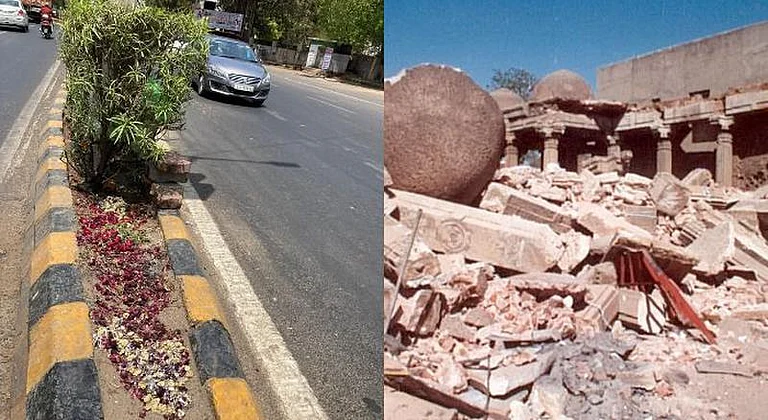
Amidst the busy roads of Gujarat that have thousands of cars passing by every day, there lies a neglected divider that holds reverence for many. A petal-strewn corner on a broken divider signifies the tomb of an Amdavadi poet credited for the advent of Urdu poetry that gave rise to a league of poets like Zauq, Mir, and Mirza Ghalib.
The poet in question is none other than the father of Urdu poetry, Wali Muhammad Wali, whose contribution towards uplifting Urdu poetry to being at par with its Persian counterpart is considered indispensable.
Challenging the notion that elite poetry can only be Persian, Wali opened up a world of poetic possibilities for Urdu poets and his influence can be seen in a piece penned by the Poet Meer Taqi Meer as a tribute to the Urdu Chaucer.
Khugar nahin kuch yun hi hum Rikhta-goi kay/ Mashooq jo apna tha, bashinda-e-Dakhan tha”
(It isn’t casually that I began dabbling in Urdu/I picked it from my lover, a native of the Deccan).
The poetic legend who died 300 years ago was buried in his family graveyard in Ahmedabad after his demise. Post Independence, Wali’s grave was separated from the graveyard and found itself situated in the middle of the road.
While the death and origins of Wani might be disputed, the razing of his grave has been linked to the communal past of Gujarat. Destroyed during the Gujarat violence of 2002, Wali’s grave was part of the riot that saw thousands murdered and the demolition of many significant Muslim shrines and Dargahs. Eliminating any and all signs of the Dargah, roads were built overnight and the atrocities of communal violence were swept under the layers of tar and repairs that ensued.
A Twitter user recently went searching for the shrine and impressively remarked on the presence of the Urdu poet’s legacy that remains etched in the mind of locals. Street vendors, shoemakers, and locals seem happy to guide and give precise directions to the grave for those looking to visit the shrine. Once an ornate shrine, the grave now portrays a sad picture of desolation and jarring neglect that can be blamed on the political powerplay as well as the ‘divide and rule’ ideologies that plague the nation.
One cannot miss the imprint of Wali’s work on Urdu poetry. It remains immortal in the hearts of people and keeps the light of consciousness alive.
source: http://www.homegrown.co.in / Homegrown / Home> #HGExplore / by Riya Sharma / August 08th, 2022
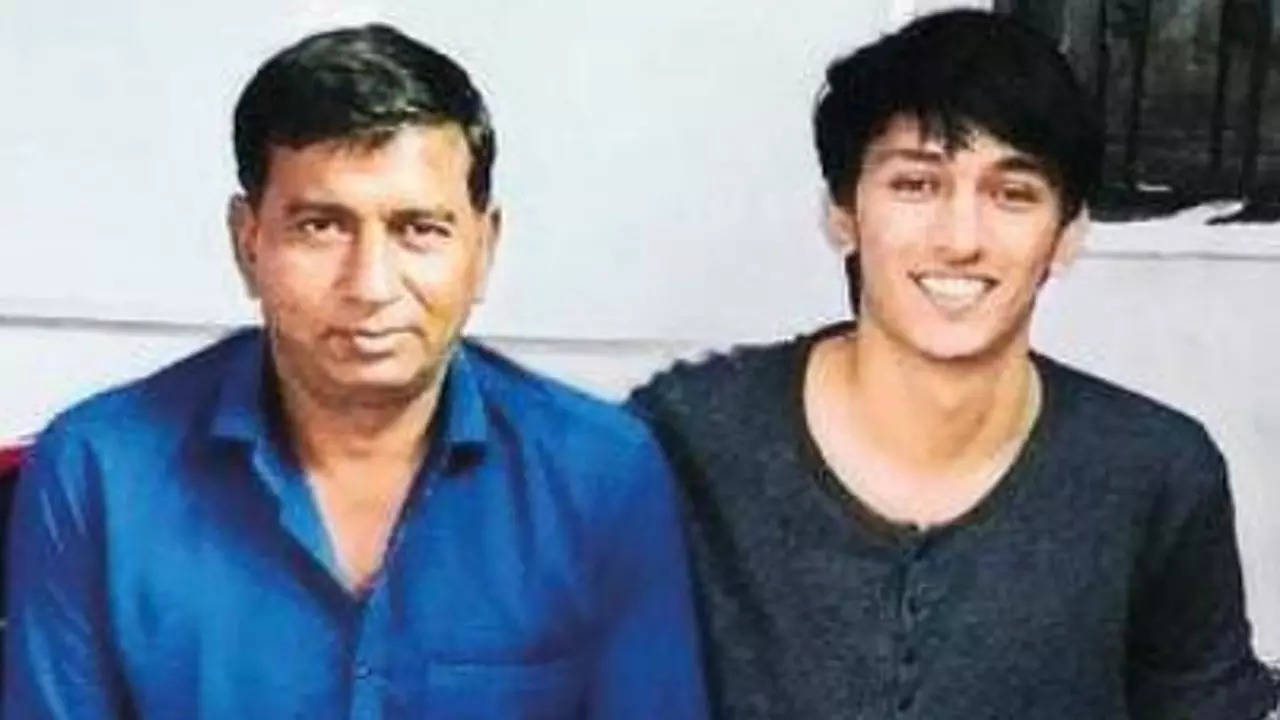
Razin Mansuri, 22, son of an air conditioner repairman and a resident of Ahmedabad, had scored 96.2 percentile in the Common Admission Test ((CAT) 2021 and was eligible for admission in IIM-Udaipur.
But Mansuri was not satisfied with his results so he decided to give it another shot and his efforts paid off as Mansuri scored 99.78 percentile making his chances for an admission in IIM-Ahmedabad or IIM-Bangalore quite high.
Mansuri completed his engineering in IT from Ahmedabad University in May this year. His father earns about 25,000 per month. Razin, his father Irfan Mansuri, mother Sabiha, and his younger brother Rehan live in a one-bedroom house in Juhapura.
Razin Mansuri
As my family’s economic condition is weak, right from high school I have mostly studied on scholarships. After completing high school from CN Vidyalaya, I took admission in Ahmedabad University and completed engineering in IT. I again got a scholarship in AU as my performance was good,” Mansuri told TOI. He said that after he completed engineering he was offered jobs with a Rs 6 lakh annual salary. “I did not take the offer as my dream was to get admission in IIM, preferably in IIM-A or IIM-B.
I started preparing for CAT and took the test in 2021. However, as I did not take any coaching I got 96.20 percentile. I was not satisfied with the result and decided to take the exam again in 2022,” Mansuri said.
He added that he enrolled for a coaching class for CAT 2022 as it charged him only half the fees. “It is an exceptional achievement given his family background and financial struggles. I am sure he will be a great student for any top IIM,” said Satish Kumar, head of the coaching class where Mansuri trained.
Once I pass out from IIM, I want to give back to society what I received from it. I want to help as many students as I can in their education,” Mansuri said.
source: http://www.timesofindia.indiatimes.com / The Times of India / Home> News> City News> Ahmedabad News / by Bharat Yagnik / TNN / December 22nd, 2022